National Postal Museum in Washington DC

| | | |

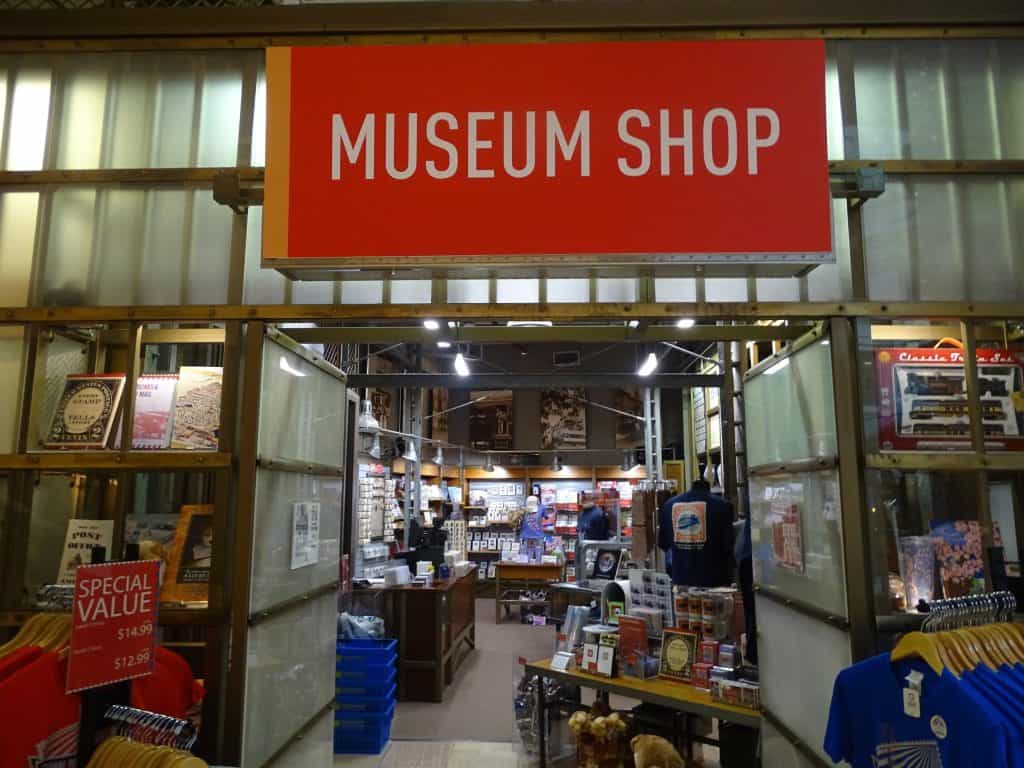
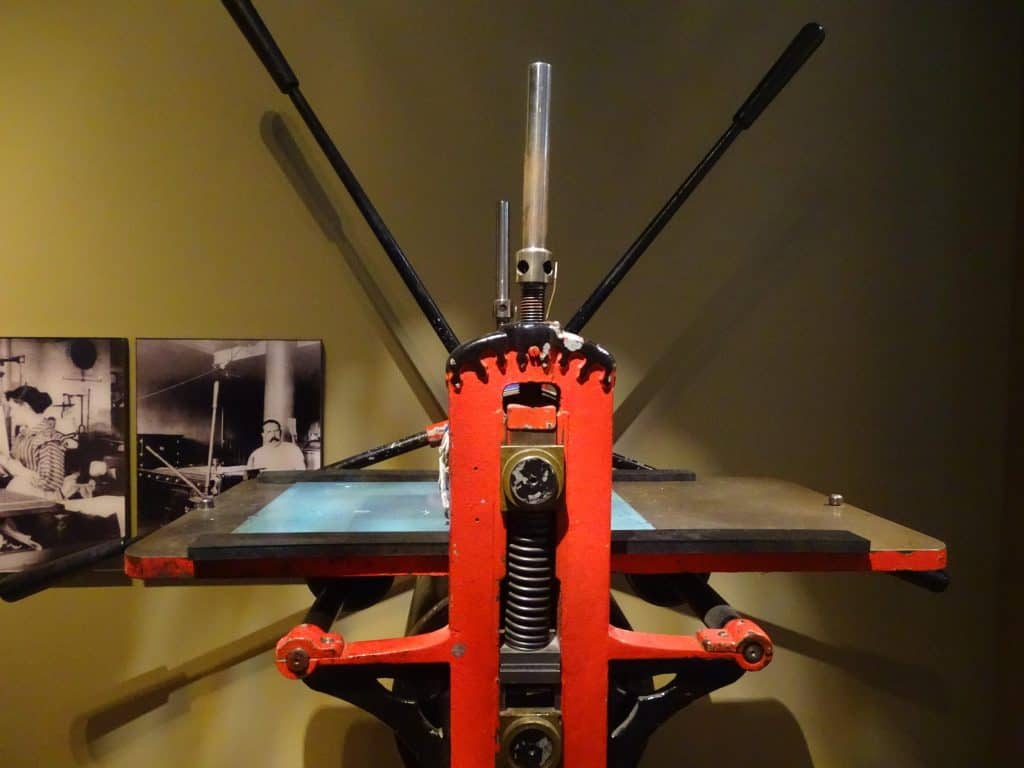
The National Postal Museum, housed in a building that opened in 1914 as the city’s post office until 1986, opened as a museum in 1993. In addition to the 35,000 square foot public museum, the building is home to a 6,000 square foot research library, stamp store, and museum shop. The museum is part of the Smithsonian Institute, the world largest museum complex, encompassing 19 museums (and a zoo!) in Washington DC and New York City. The Postal Museum is one of my favorite museums in Washington DC and one of the most kid friendly places in town.

Traveling with Kids:

  • The museum is FREE and open 364 days a year (closed on Christmas)- check here for seasonal hours. 
  • There is limited, metered street parking nearby- Union Station is the closest paid parking garage (4 levels!). Take the Metro Red Line to Union Station. More information here.
  • The museum is handicap accessible. I would not recommend a stroller- kids will want to climb and explore in all the exhibit halls.
  • FREE, docent led tours of the museum are offered each day at 11am and 1pm- check here for more information. Self guided tour information can be found here. 
  • Make sure children pick up a scavenger hunt to complete- see it online here. 
  • A small gift shop and stamp store is located on the lower level, as well as restrooms, water fountains, lockers, and a working post office. 
  • The museum is located next door to Union Station, which, in addition to being the main transportation hub for trains, buses, and tours, also has tons of dining and shopping options- there are more than 30 possible dining options. See the list here. 
  • Plan on 60-90 minutes to explore the exhibits and lower level.
10 Things Kids Should DO at the Postal Museum:

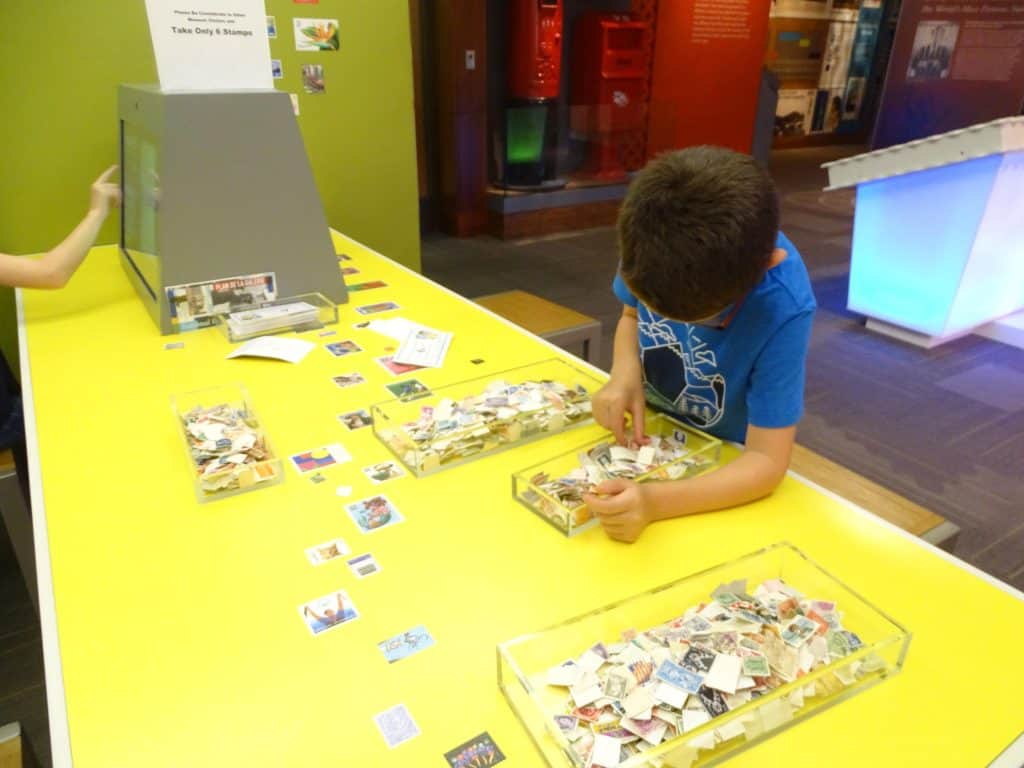
1. Learn about stamps in the Gross Stamp Gallery. Create your own stamp design and grab up to six cancelled stamps to start your own collection. 

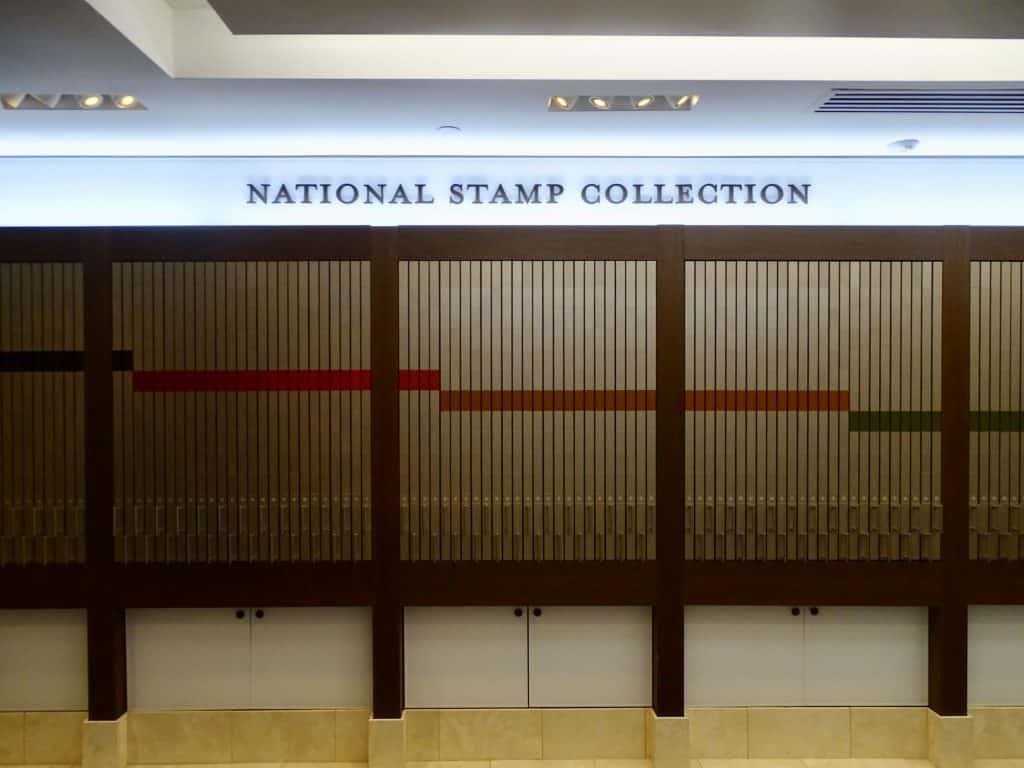
2. Check out the National Stamp Collection– there are over 4,000 stamps in chronological order, in sets of ten years. Pick a special year and check out the issued stamps.

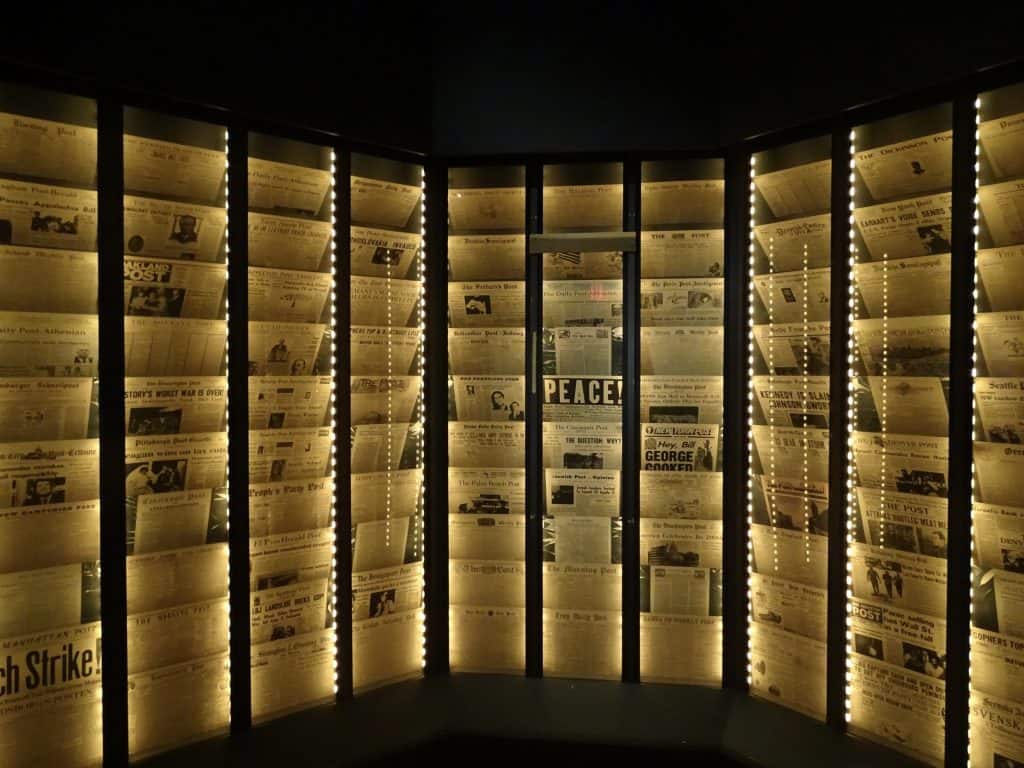
3. Follow the trail in Binding a Nation by starting at the 1673 route between Boston and New York the first post rider followed. Continue to the Pony Express in the early 1860s and the Postman Takes Flight gallery. Read the front page headlines from dozens of city newspapers.

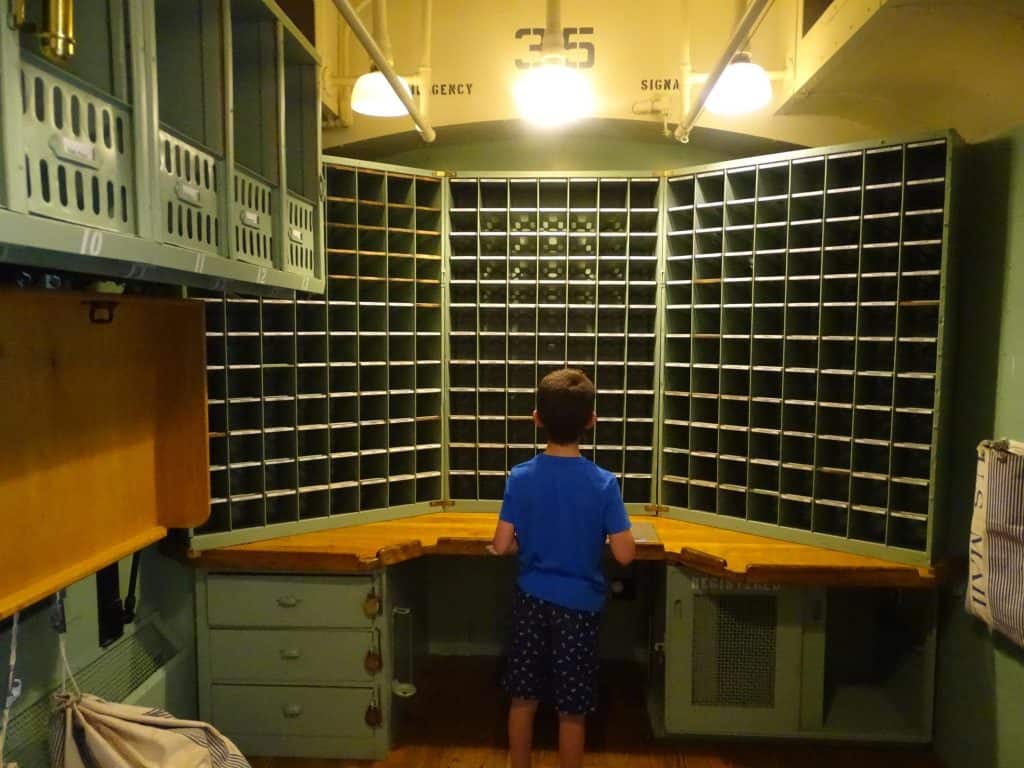
4. Watch the evolution of the mailbox and the expansion of the postal service in the System at Work exhibit. Learn how barcodes work and read about the expansion of the mail in the 1980s. 

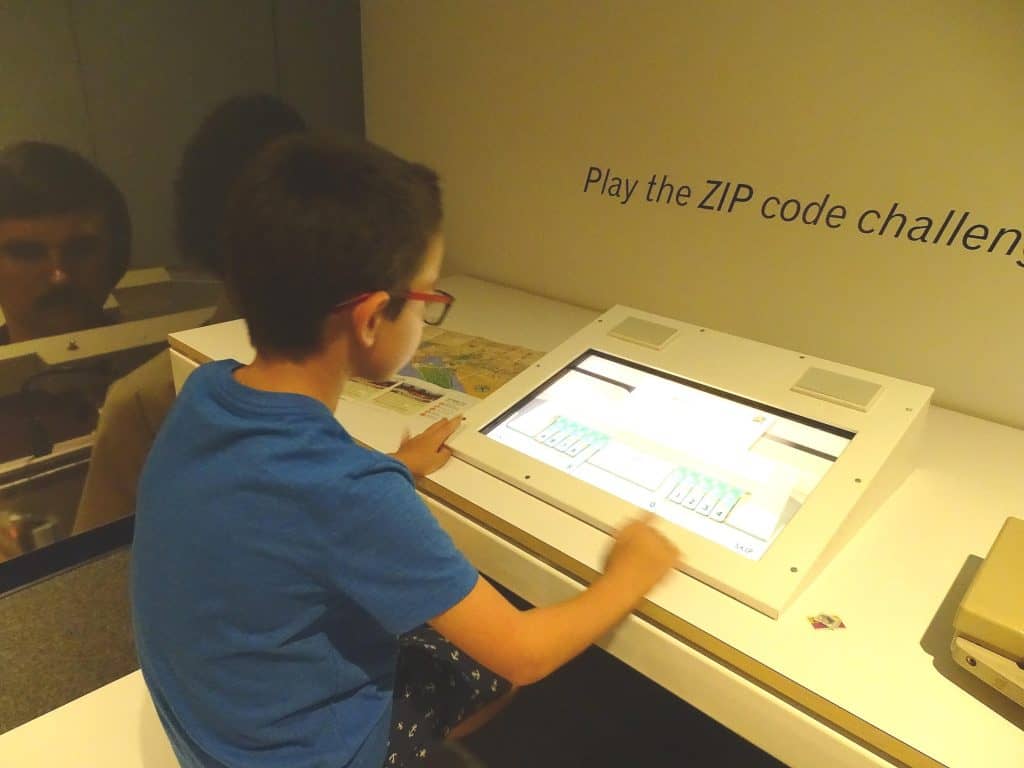
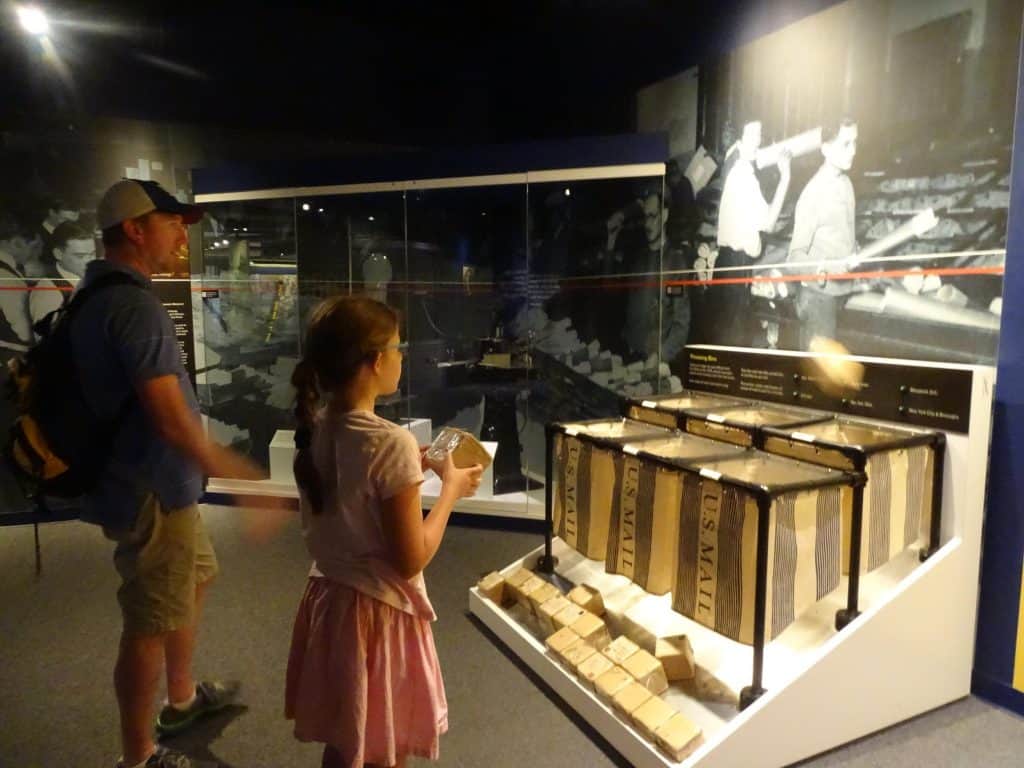
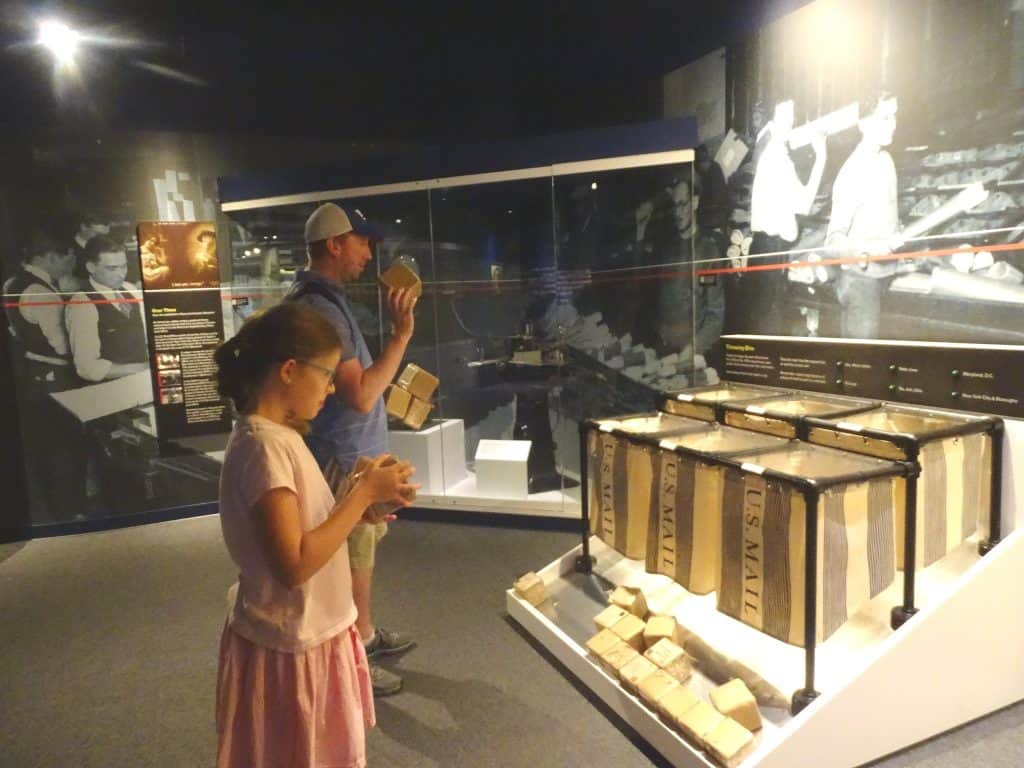
5. Play the Zipcode Challenge and toss packages in the correct state. 

Would you like to save this?

We'll email this post to you, so you can come back to it later.

6. Scan packages with an electronic scanner from the 2000s and learn about automated mail in the 1990s.

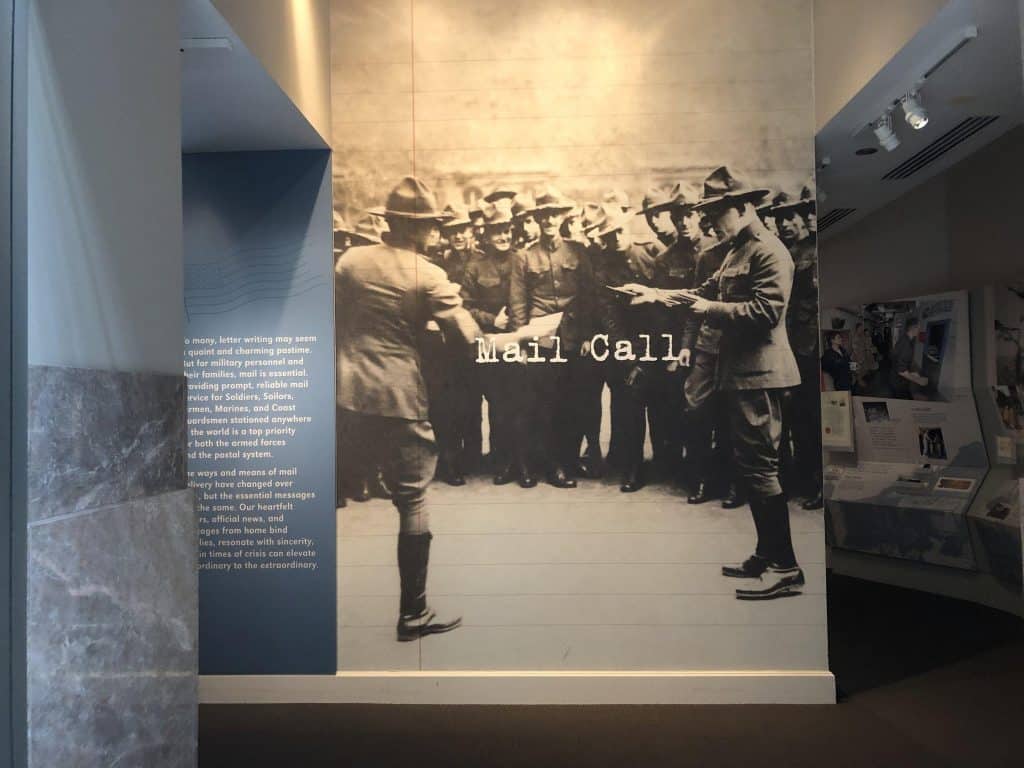
7. Ponder the importance of mail correspondence for the military in the Mail Call exhibit. Consider how mail was the only connection to friends and family to servicemen abroad and sailors at sea. 

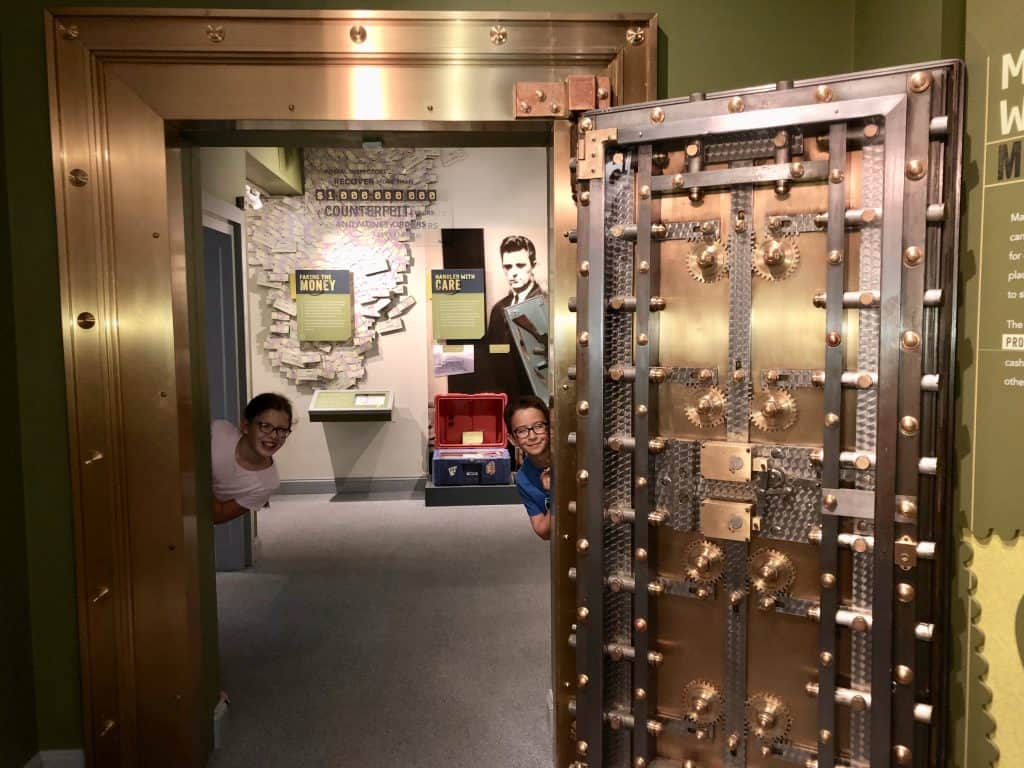
8. Walk through the vault door and read about the security measures taken to protector mail, packages, and privacy in Behind the Badge. Learn about past crimes and investigations, including counterfeit postage stamps. Honor the postal workers who have died in the line of duty.  

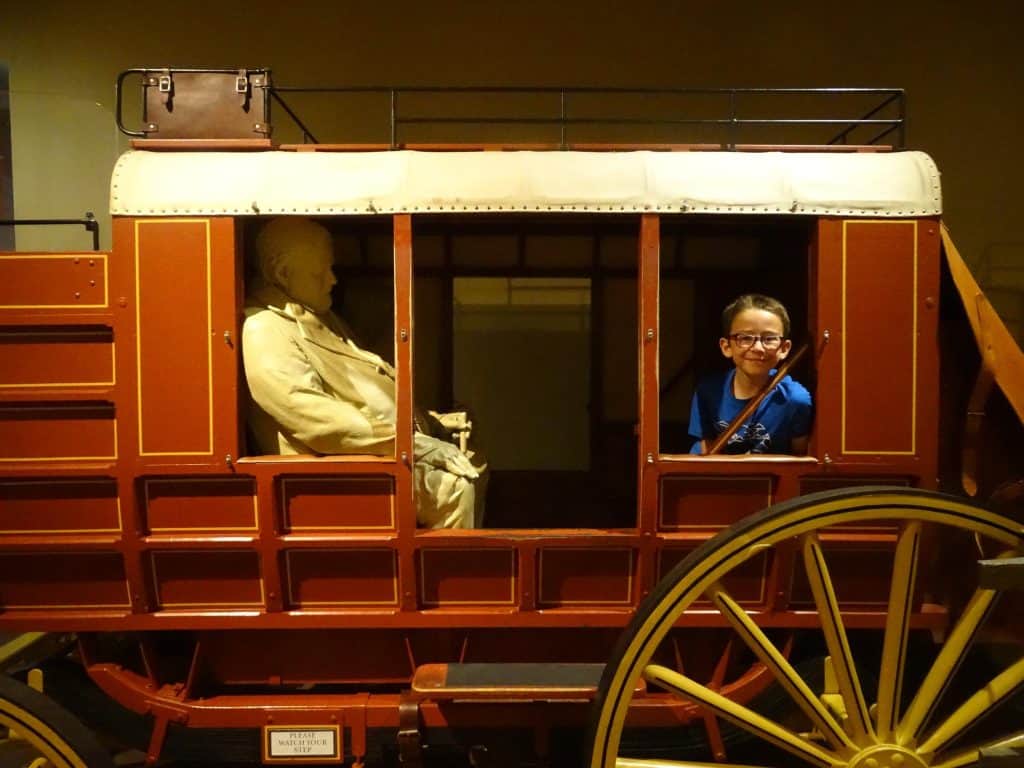
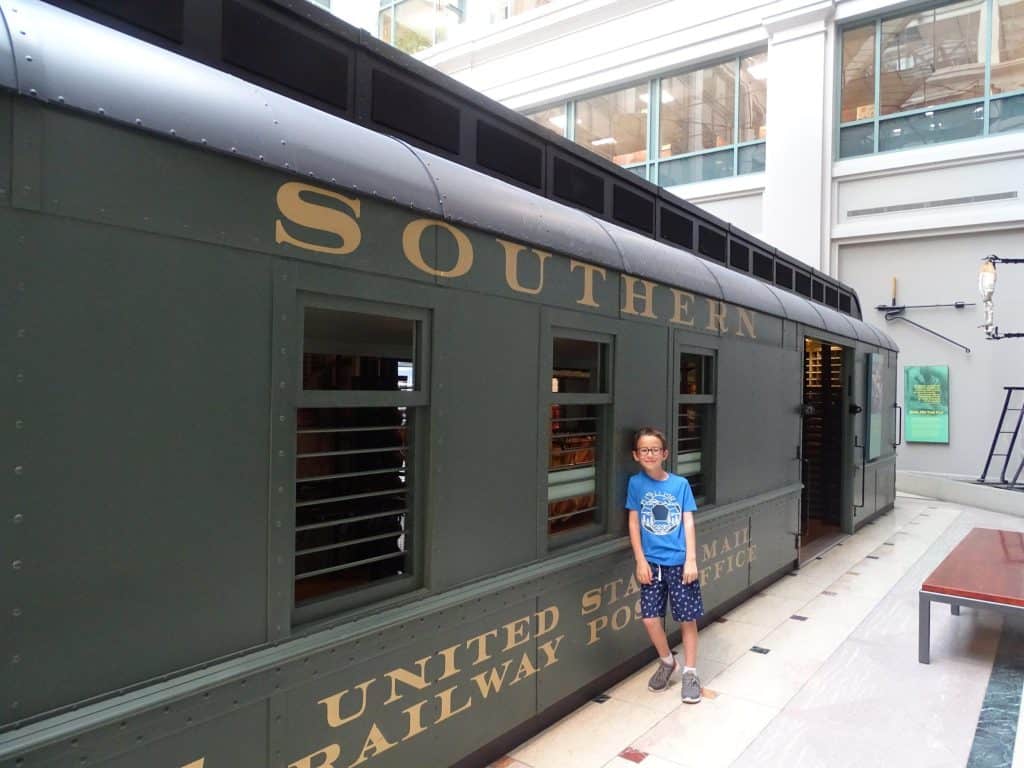
9. Come aboard a red mud wagon for Old West mail delivery, a Railroad Service Car, and the front cabin of a tracker trailer. 

10. Check out John Lennon’s childhood stamp album dating back to 1950- he had more than 550 stamps in his collection! Other popular museum memorabilia include Amelia Earhart’s flight suit and the “Inverted Jenny”, the most famous stamp error in history. 

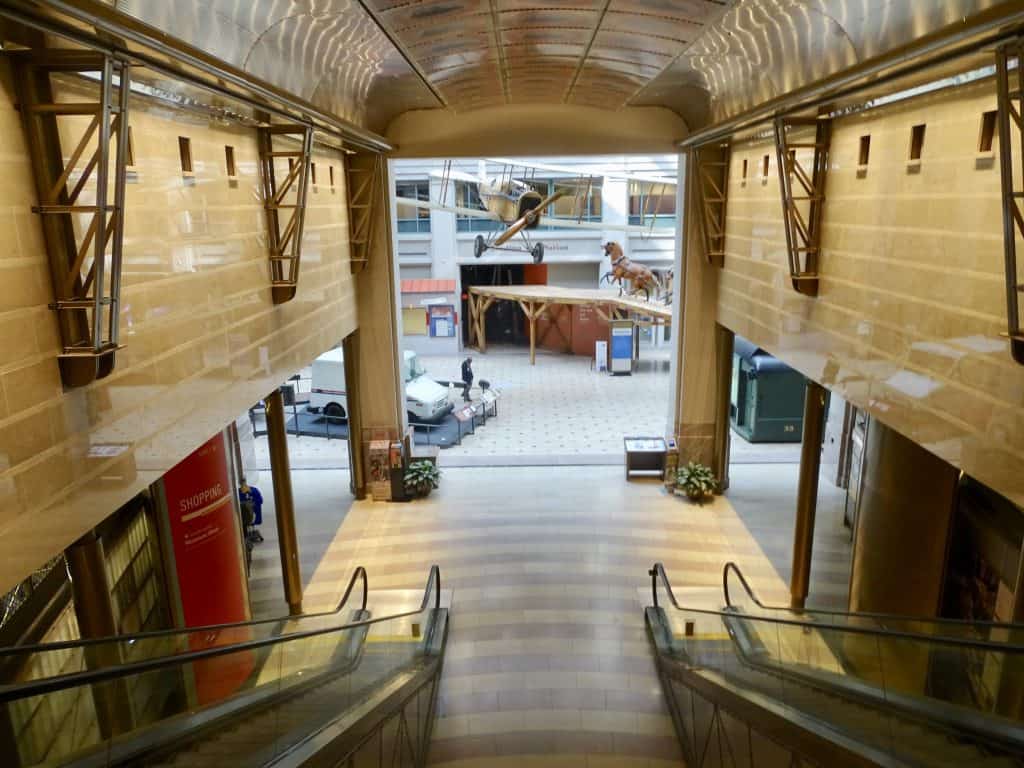
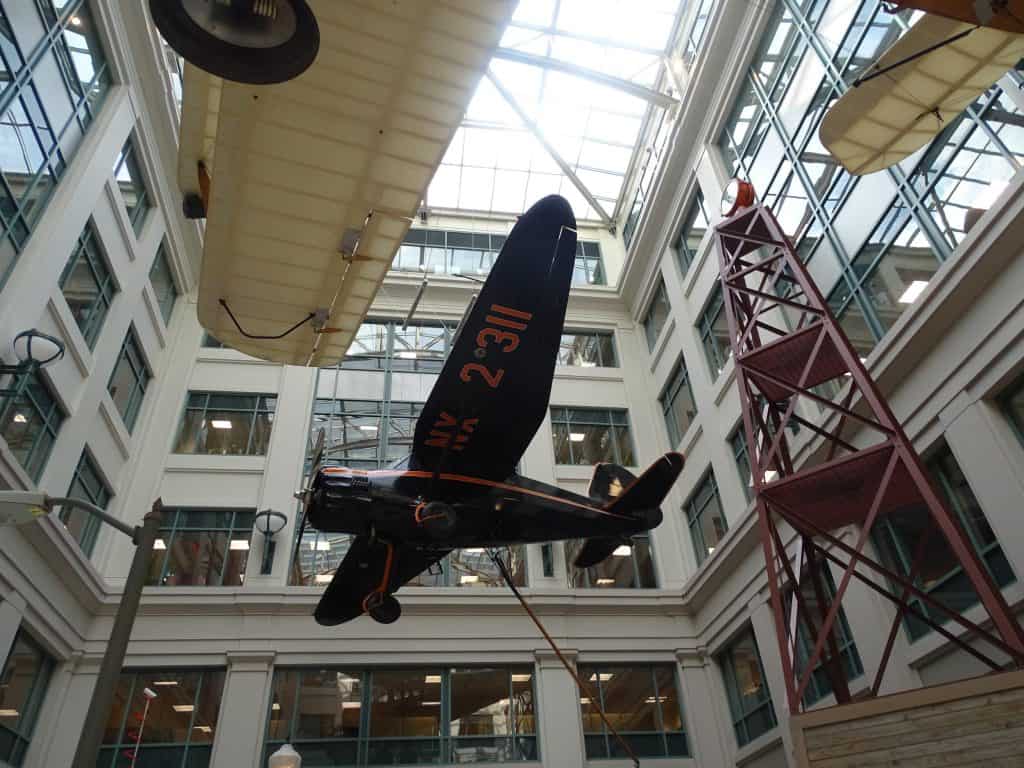
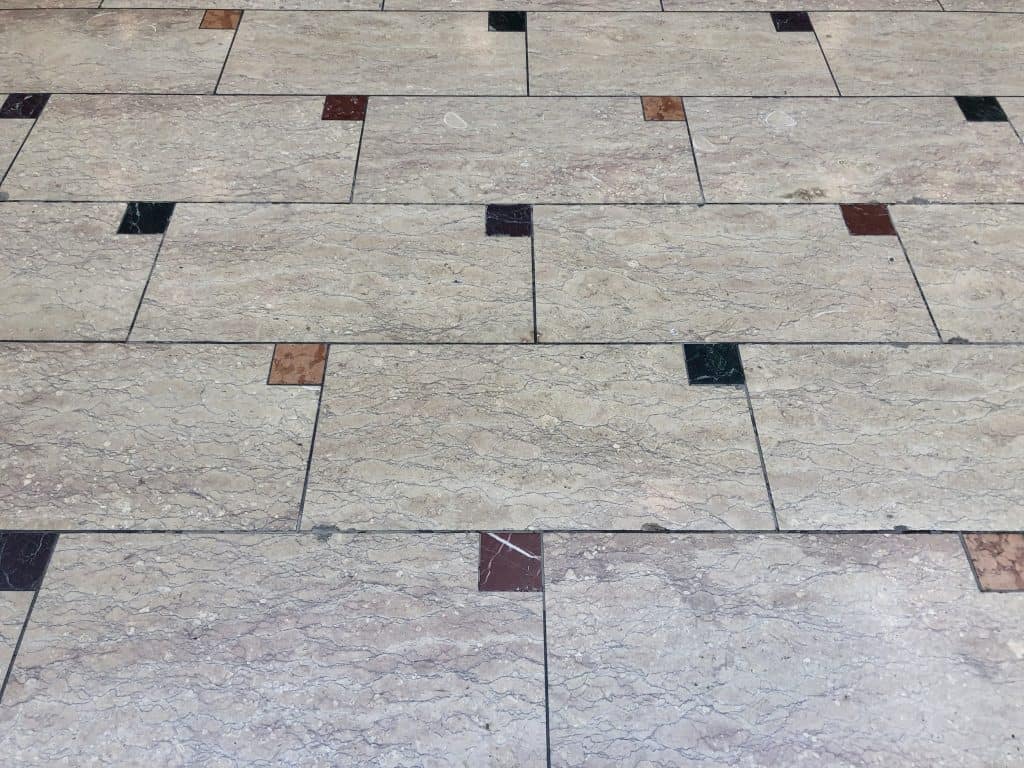
Bonus: Look DOWN at the floor of the lower level- what do you notice about the pattern of the titles? And then look UP and check out three hanging aircrafts used in postal delivery dating back to 1911!
Note: At the time of our visitor in summer 2019, the Postmaster’s Gallery was unavailable for visit.

Looking for other adventures in Washington DC? See our index of posts here, our full Washington DC City Guide here, and our posts featuring the Kennedy Center for Performing Arts, the National Zoo, the Library of Congress, the Smithsonian American Art Museum and National Portrait Gallery, the National Museum of African American History & Culture, the National Museum of the American Indian, the International Spy Museum, the National Building Museum, and Mount Vernon. And follow along on our adventures on Instagram, Facebook, Pinterest, and X.

Similar Posts

  • | | | | | |

    Exploring the New Hampshire Historical Society in Concord, NH

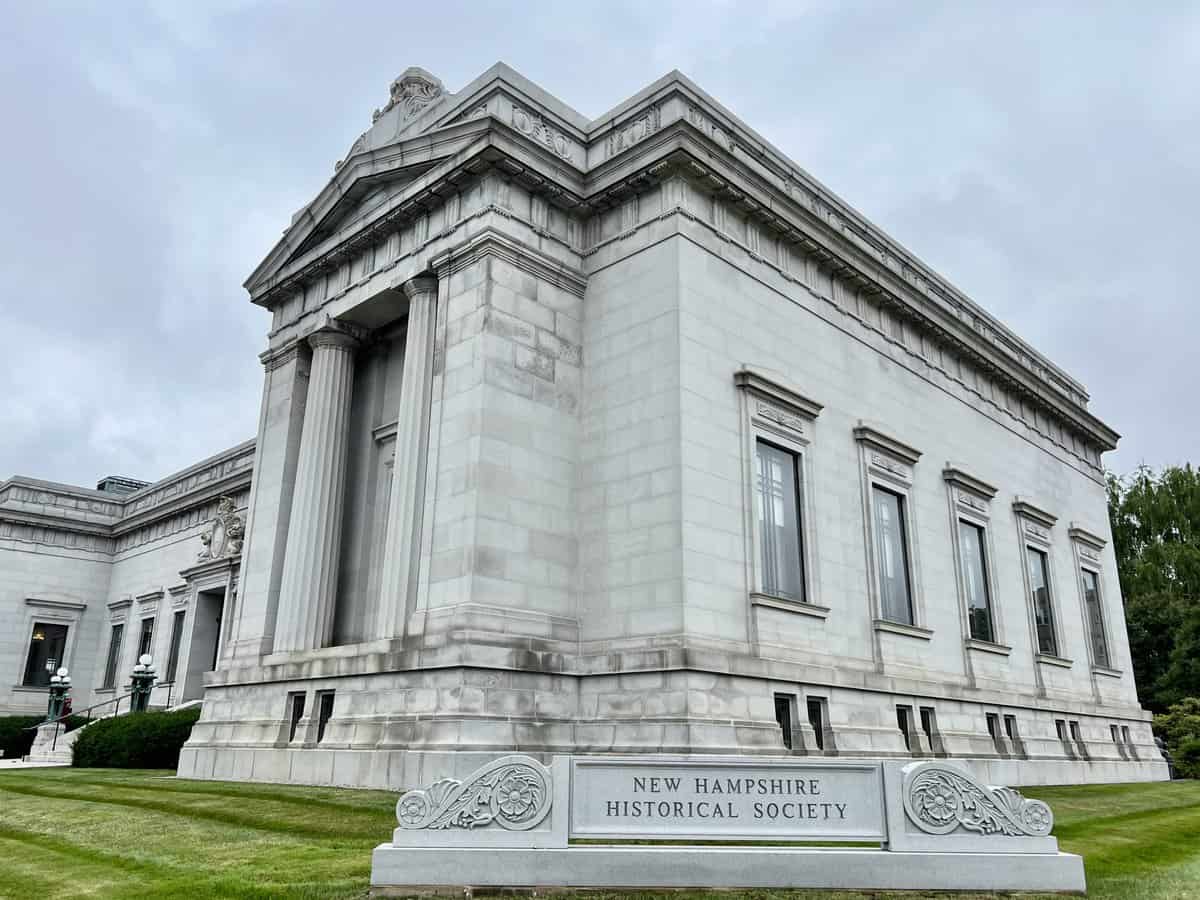
    While visiting the New Hampshire state capitol of Concord recently, we enjoyed a tour of the New Hampshire Historical Society, which celebrates the rich history of the Granite State.

    Celebrating its 200th birthday in 2023, the New Hampshire Historical Society was a gift of Edward Tuck, son of a wealthy businessman who founded the Dartmouth Business School, to the state of New Hampshire. Tuck gave most of his lifetime of fortune back to various charities in New Hampshire and ultimately wanted to build (what he called) a “temple” to the Granite State near the State House. Finished in 1911, the building takes up an entire city block and is diagonal to the State House in downtown Concord. Over the past century, several renovations have been made to the building to make it more energy efficient and accessible for all visitors. 

    The building was built in a Greek revival style, including the ceiling and walls of the rotunda, which are made of Siena marble from a quarry in Italy that was owned by the monks of the Old Convent and shipped to America. The floors and staircase are made of Hauteville marble from France. Make sure to stand in the middle of the atrium and look up at the Oculus and have children complete our “I Spy” game while touring the exhibits.

  • 10 Stops on the Ultimate Tour of Acrisure Stadium in Pittsburgh, Pennsylvania

    This week we’re celebrating the start of football season by sharing our tour of Acrisure Stadium, home of the Pittsburgh Steelers and UPitt Panthers. On a recent trip to Pittsburgh, Pennsylvania, we had the opportunity to tour the 68,000 seat stadium and many popular areas of the stadium, as well as a few spots the typical ticket holder doesn’t get to see.  The tour is fun and engaging and everyone (even us Giants fans!) will have a good time.

  • | | |

    New York State Capitol Building

    Albany, New York, located just two hours north of famed New York City, was established by the Dutch in the early 1660s. I recently did some research for family centered activities in the area, as my family drives past Albany a few times a year on our way to visit close friends in Utica, New York. On a recent trip, we stopped to explore the New York State Capitol building, at the top of the State Street hill. The “current” Albany State Capitol took over 20 years to build, post Civil War. The building has gone through many phases of of restoration, as recently as the early 2000s.

    Tours of the Capitol are offered four times a day during the week and twice on Saturday. Tours are free, but reservations are highly recommended (go here), as they are usually limited to 25 people and quickly fill up. Tours are very different during the week, when everything is in session and the entire building is bustling with elected officials. If you prefer a calmer experience, the weekend tour is a safer bet, but you’ll miss the chance to possible see elected governmental officials.

  • | | |

    Patriot Place in Foxborough, Massachusetts

    Gillette Stadium, which opened in 2002, is privately funded by the Kraft family, owners of the New England Patriots. The stadium covers 17 acres and includes over 500 concession locations and 1,000 tv monitors. The New England Patriots have grown in popularity in recent years, winning the Super Bowl in 2001, 2003, 2004, 2014, 2016, and 2018. While the stadium is not open to the public for tours, visitors and sports fan can get their fix of Patriots fever by visiting the Patriots Hall of Fame, an interactive museum that sports fan will enjoy.

  • | | | |

    Nine Ways to Explore the Sailing Museum in Newport, Rhode Island

    On a recent visit to Newport, Rhode Island, we enjoyed exploring one of Newport’s newest museums- The Sailing Museum. Opened in the spring of 2022 on Thames Street in the heart of Newport, the Sailing Museum celebrates the sport of sailing, the individuals who have made sailing popular, and the pure joy that comes from enjoying “life on the open seas”. The seaside town of Newport is the ideal location for sailing, with its deep harbor in Narragansett Bay. Newport was home to the US Naval Academy in the 1860s and  is well known for its summer “cottages” (aka historic mansions) of the Gilded Age and its rich history with the sports of both sailing and tennis (the International Tennis Hall of Fame is also located in Newport.)

  • | | | | | | |

    10 Things to Do in Alexandria, Virginia

    Alexandria was established as a town along the northernmost part of the Potomac River in 1749, named after the Alexander family whose land formed the majority of the area. It was considered the first major seaport of British America. Known for its 18th and 19th century architecture (we could have spent days just walking the neighborhoods and checking out window boxes and front doors), it is a nationally designated historic district.

3 Comments

  1. Sounds like s really fun place to visit with children . They can easily relate since they see mail delivered everyday. Great idea and helpful blog.

  2. Sounds like s really fun place to visit with children . They can easily relate since they see mail delivered everyday. Great idea and helpful blog.

  3. Sounds like s really fun place to visit with children . They can easily relate since they see mail delivered everyday. Great idea and helpful blog.

Leave a Reply

Your email address will not be published. Required fields are marked *