
Radio City Music Hall Backstage Tour in New York City
Radio City Music Hall was the largest theater in the world at the time it opened in December of 1932. With a seating capacity of 5,931 guests (over 6,000 when they used the orchestra area for additional seating) and a stage that spans 130 feet across, it’s one of the largest, and most recognizable, entertainment venues in the world. Radio City Music Hall hosts hundreds of events each year and is home to the famous Rockettes (who were actually founded in St Louis Missouri in 1925, when Radio City Music Hall founder Roxy Rothafel brought them to New York City). Today, guests can see performances in music, theater, comedy, and sports 365 days a year, with over two million annual visitors. The Hall also offers daily Backstage tours with a behinds the scene look at how it all comes together.
Travel Tips:
- I would not recommend this tour for the toddler set; elementary aged children and older will be engaged, and any child who performs (especially aspiring dancers) will love it!
- Tours are offered several times during the day- check the schedule here– and are limited to 25 people.
- The tour involves climbing up and down many sets of stairs, but is handicap accessible with elevators.
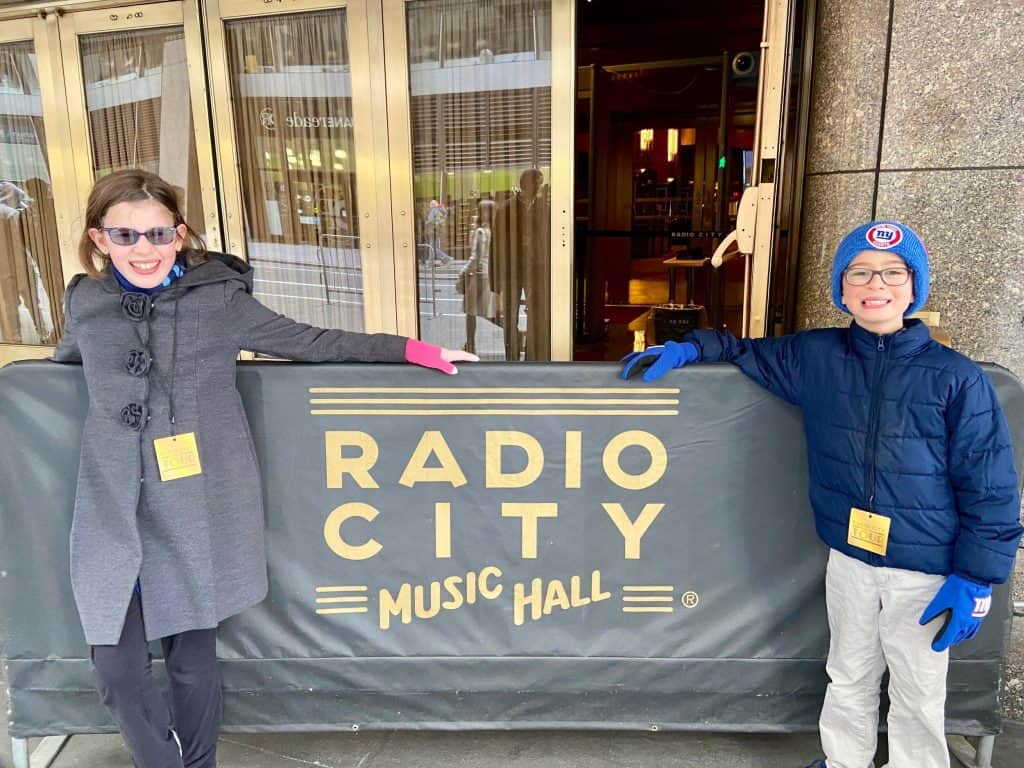
- Check in for the tour is at the 51st Street entrance (between 5th and 6th Avenues) and tours last 75 minutes
- Access to restrooms is offered about ⅓ of the way through the tour.
- Tickets are part of many New York City attraction tickets including the New York Pass and New York City Explorer Pass.
- We always take the train into New York City, but information on parking and subway stops can be found here.
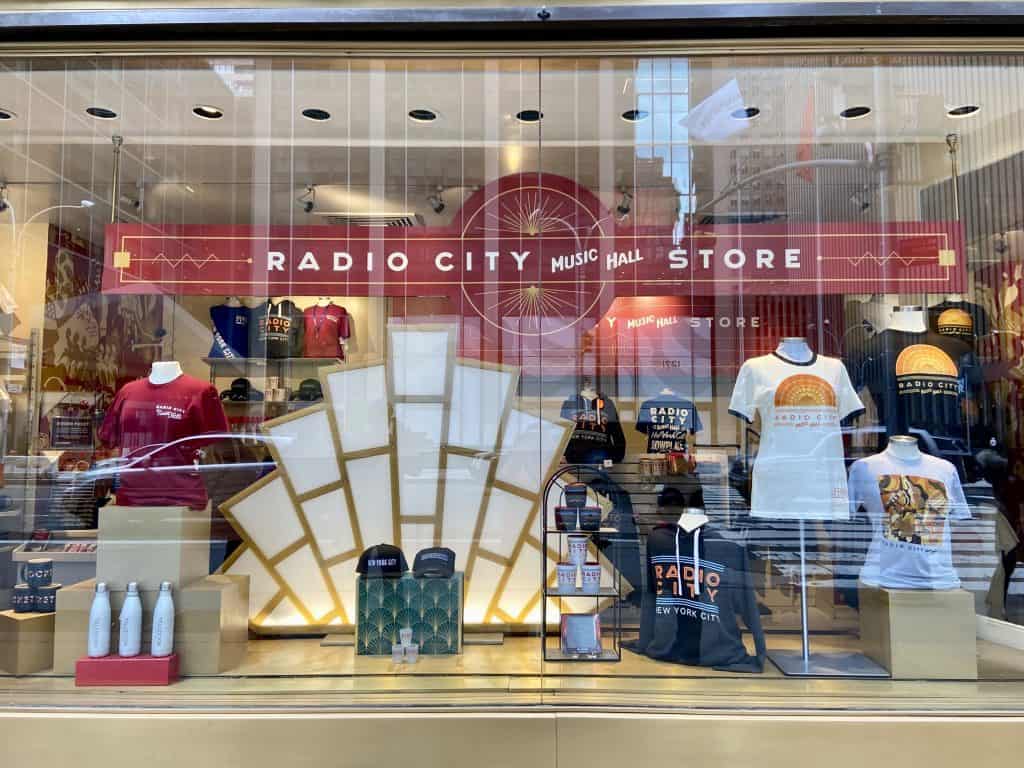
- Make sure to visit the Radio City Music Hall store after the tour, located at 1260 Avenue of the Americas, close t the hall. More information here.
10 Can’t Miss Things on the Backstage Tour:
1. The grand foyer with 60 foot ceilings and a mural by Ezra Winter above the grand staircase. Check out the stainless steel doors that lead into the theater- there are no door handles
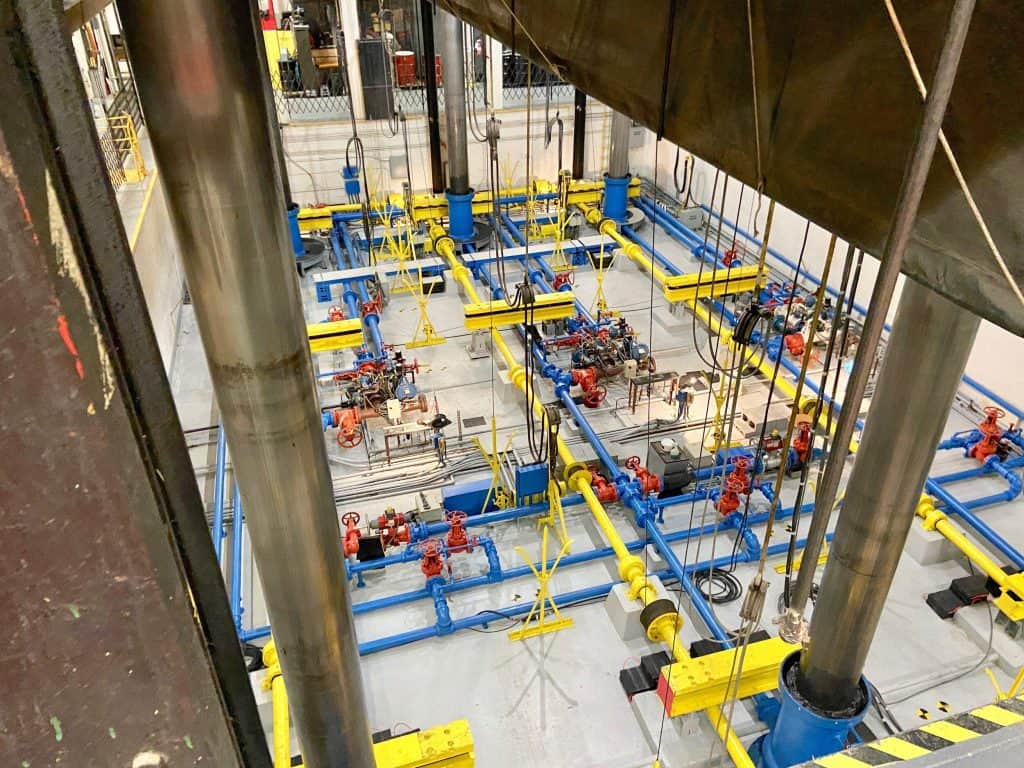
2. Elevator platforms beneath the stage and the hydraulics system of blue pipes that help move tons of platforms, stage parts, and equipment.
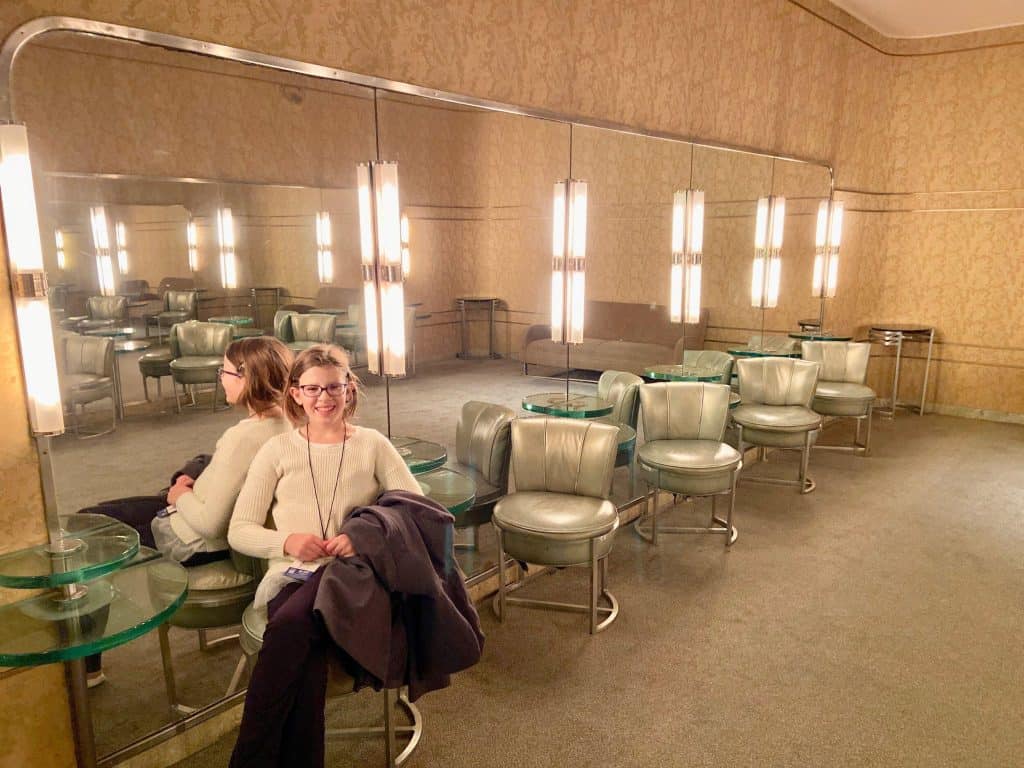
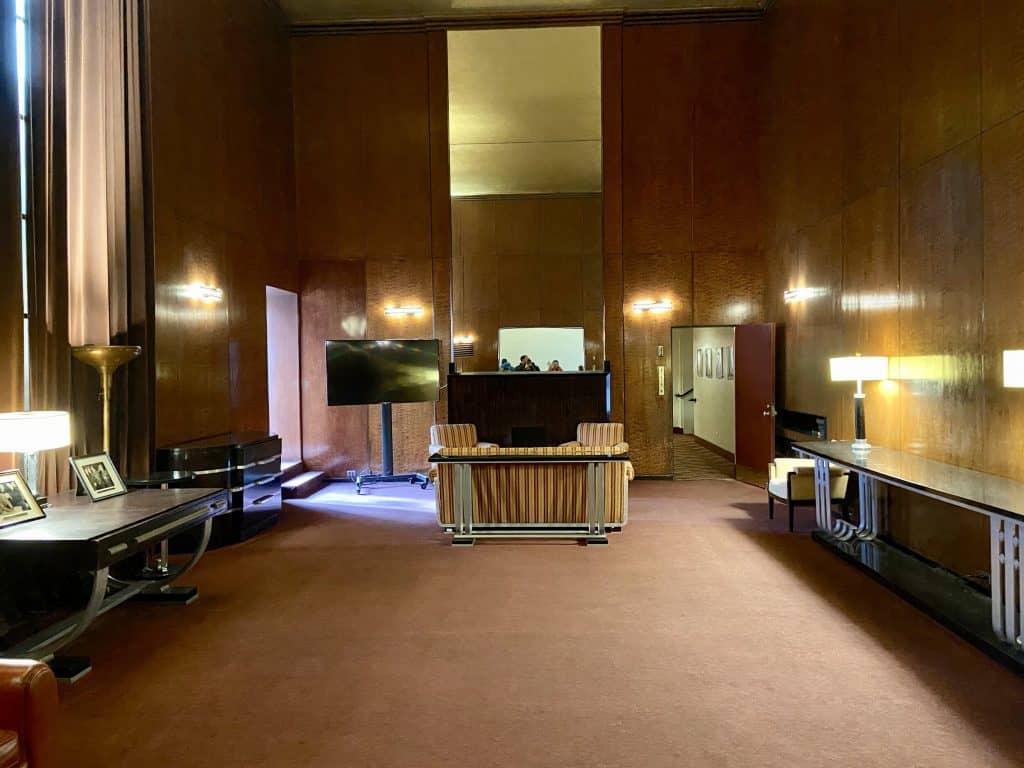
3. The Grand Lounge on the lower level, which was decorated in darker decor to encourage guests to “dim” their voices. Check out the “Spirit of the Dancer” sculpture by William Zorach and make sure to check out the bathrooms- they are from a bygone era.
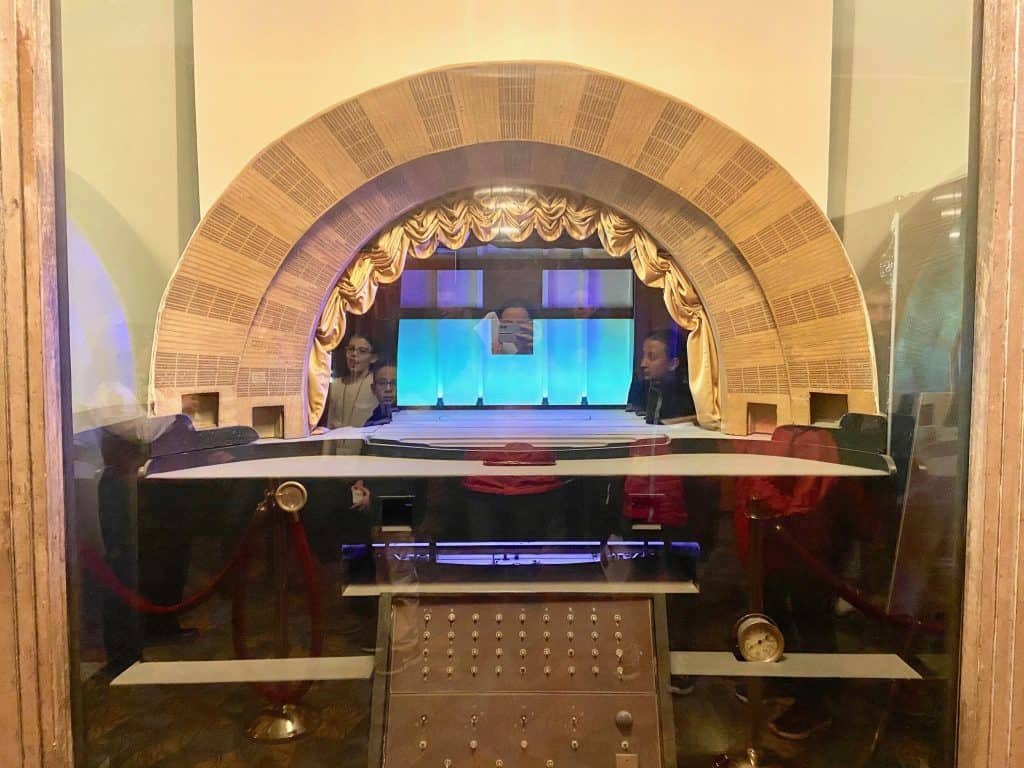
4. Fully functional stage model used by to plan every element of an upcoming performance.
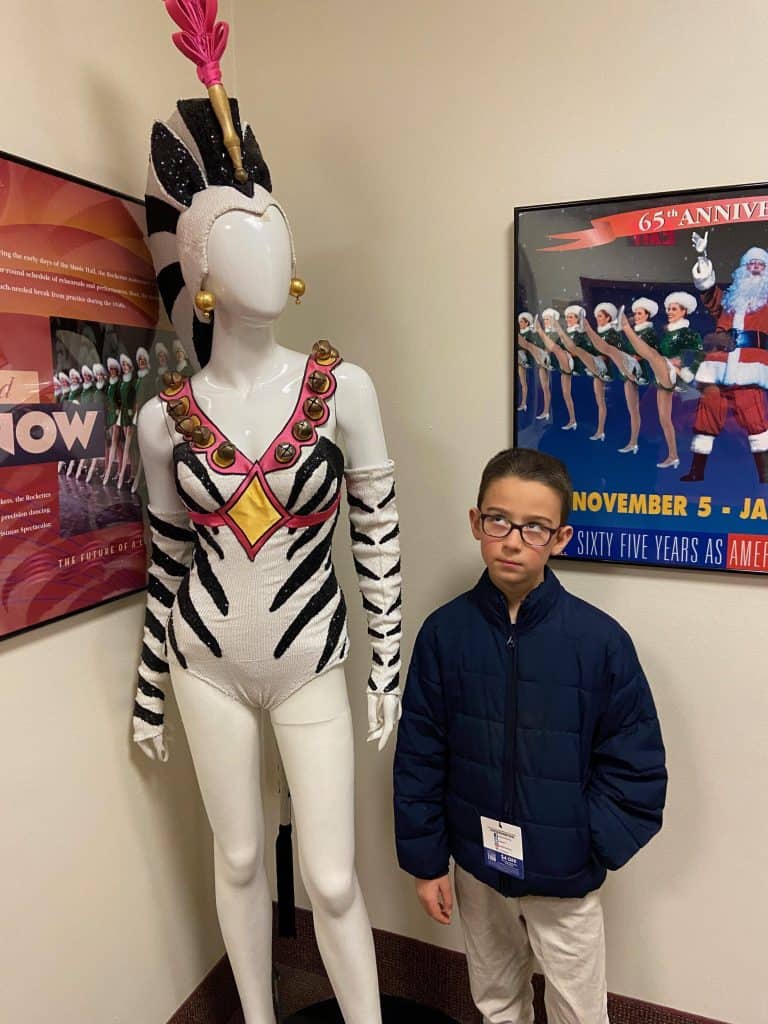
5. Various sketches of costumes from the past 90 years of the Rockette performances displayed throughout the tour.
Would you like to save this?

6. The Hall- take a seat in the 3rd mezzanine and marvel at how every seat is a good seat at radio City Music Hall. Look for over 5,000 house lights hidden behind the iconic arches that create the walls and ceilings and check out the organs on either side of the stage- there are over 4,000 pipes in each organ.
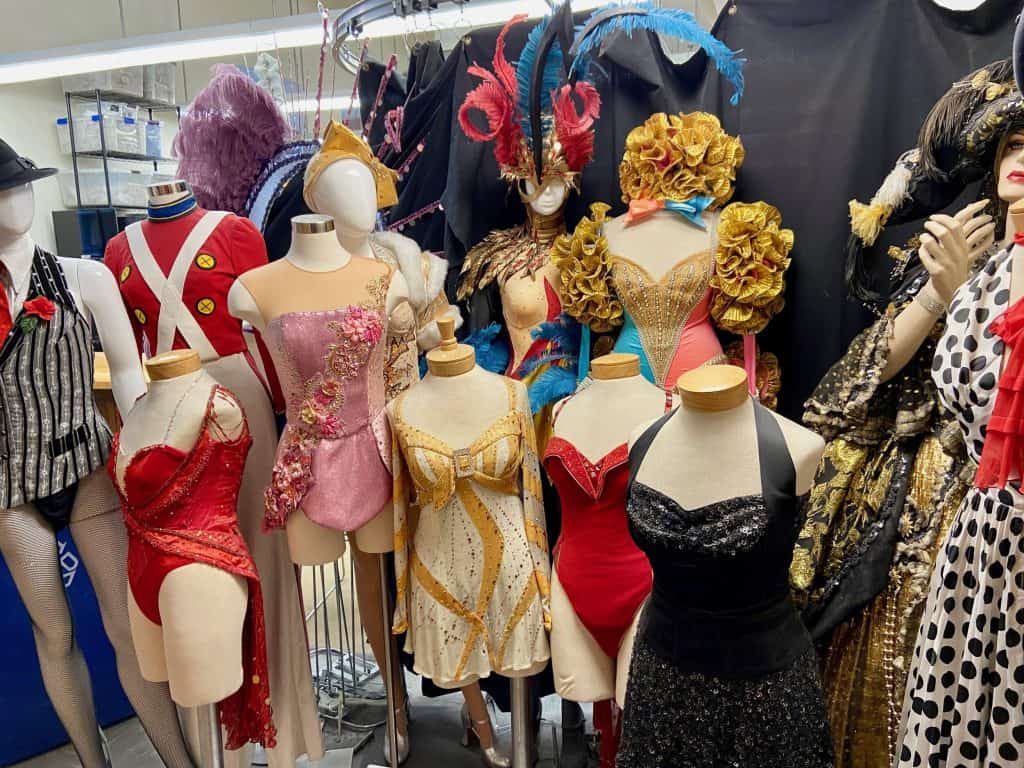
7. The costume shop, which houses all of the Rockettes’ costumes (my son was losing patience with my photography!)
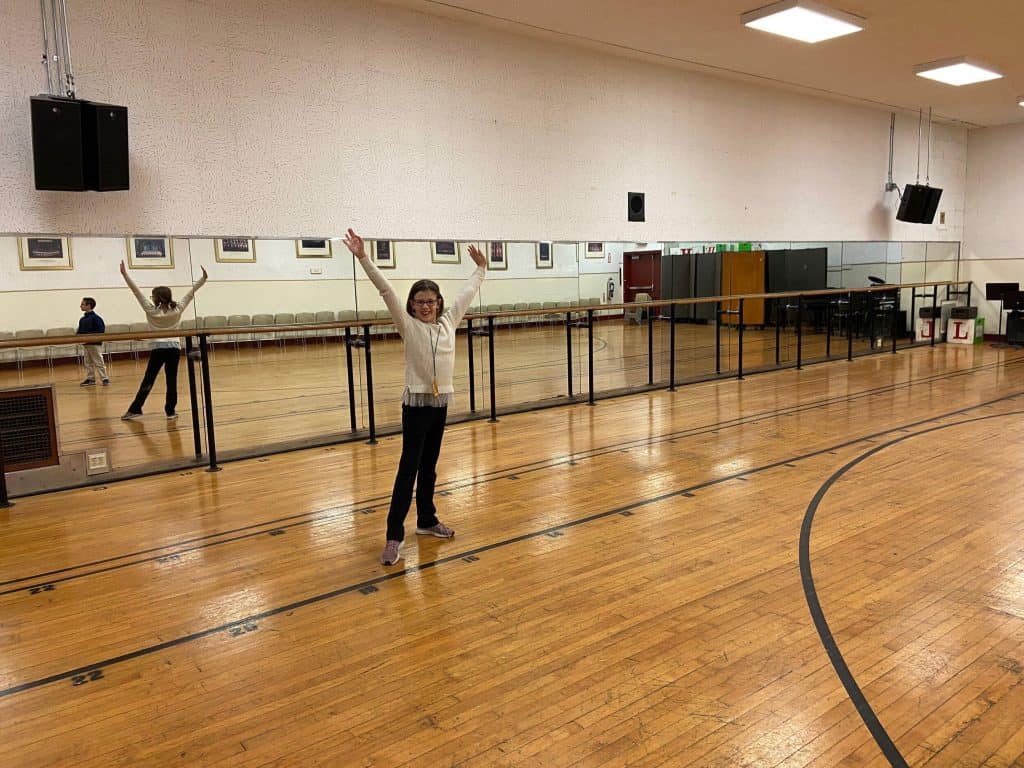
8. The large rehearsal hall used by performers to practice. Check out the metal ruler mounted to one door frame- it’s used to check the height of Rockette auditioners (who must be between 5’6” and 5’10.5” inches tall)
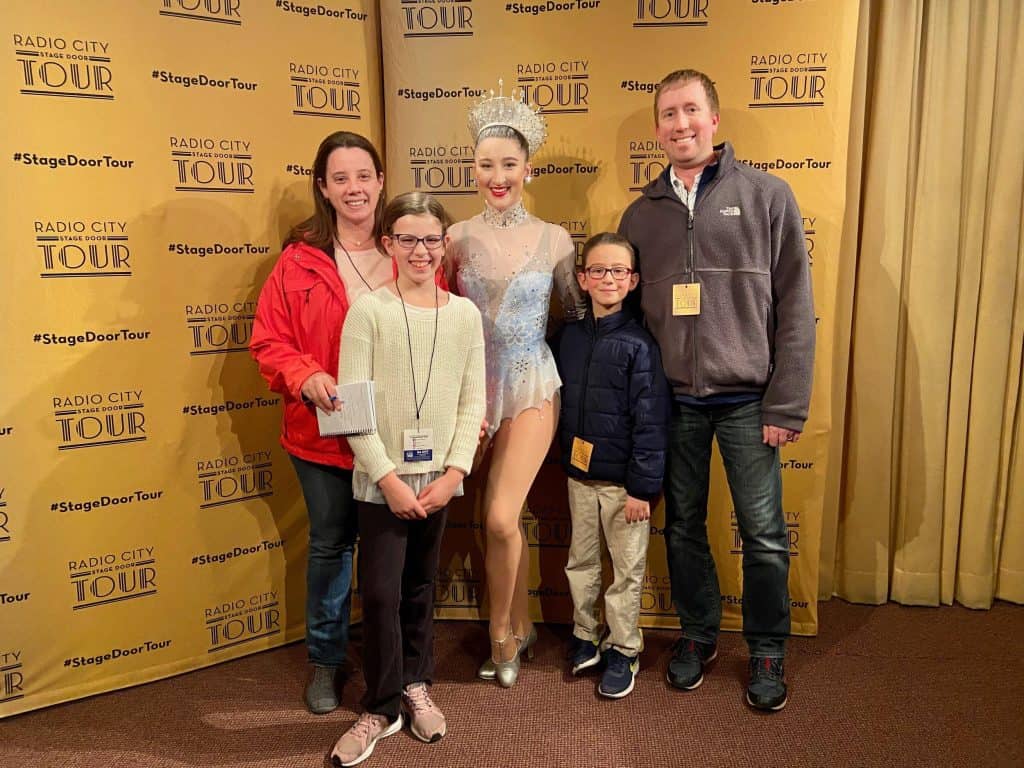
9. Screening room with original seats from 1932. View a short film that reviews the history of the Hall and the Rockettes. Guests also have the opportunity to meet with a Rockette and have photos taken.
10. Private reception room, now used to host celebrities and dignitaries attending shows, located in the Roxy Suite on the 5th floor. Check out the large dining room and back kitchen.


Bonus: On rare occasions, guests are able to access the stage briefly on the tour. For more fun in New York City, check out our travel tips to dozens of places here. Looking for tours of other music venues? Check out our posts featuring the Boston Symphony, Wang Theatre in Boston, Radio City Music Hall in New York City, Carnegie Hall in New York City, Met Opera House in New York City, and The Bushnell Performing Arts Center in Hartford, Connecticut. And follow along on our adventures on Instagram, Pinterest, Facebook, and Twitter.
Disclaimer: My family was given a media pass for the tour. The photos of the hall are used with permission from Radio City Music Hall. All opinions expressed are my own.


Being a former New Yorker Radio City music hall was always a wonderful place to visit with great shows. I never took the backstage tour but it’s definitely some thing on my list for our next trip. Thank you for such a great description and beautiful pictures.
Being a former New Yorker Radio City music hall was always a wonderful place to visit with great shows. I never took the backstage tour but it’s definitely some thing on my list for our next trip. Thank you for such a great description and beautiful pictures.
Being a former New Yorker Radio City music hall was always a wonderful place to visit with great shows. I never took the backstage tour but it’s definitely some thing on my list for our next trip. Thank you for such a great description and beautiful pictures.
Great place! shared great tips