Playing “I Spy” at The Bushnell Performing Arts Center in Hartford, Connecticut

| | | |

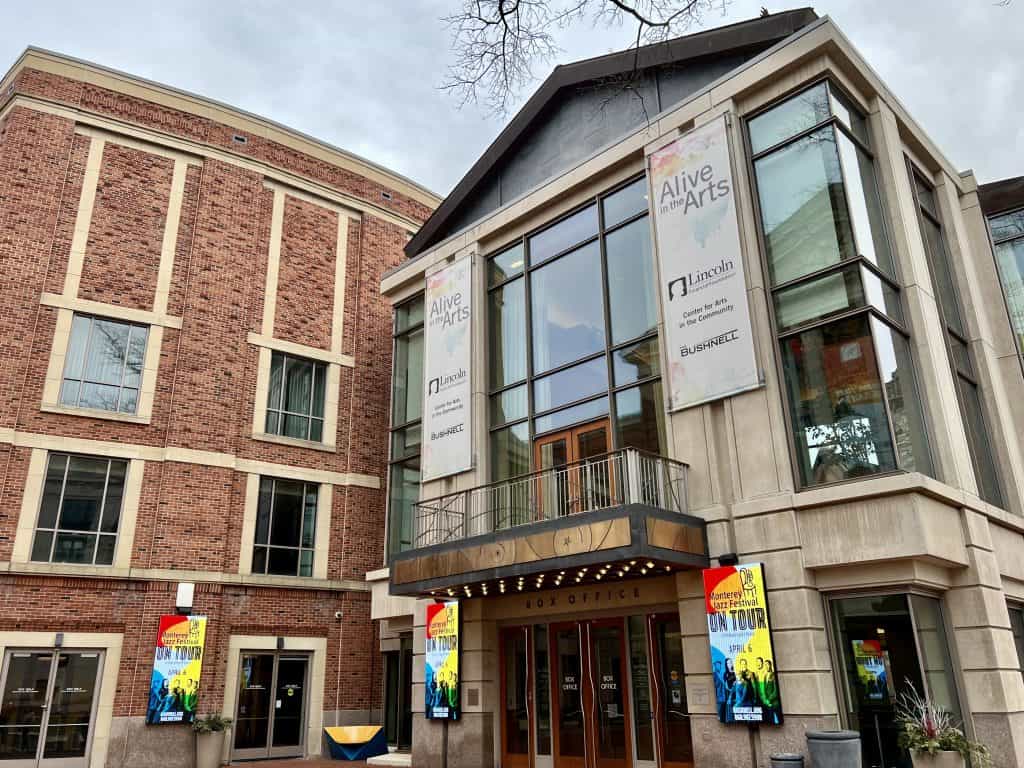
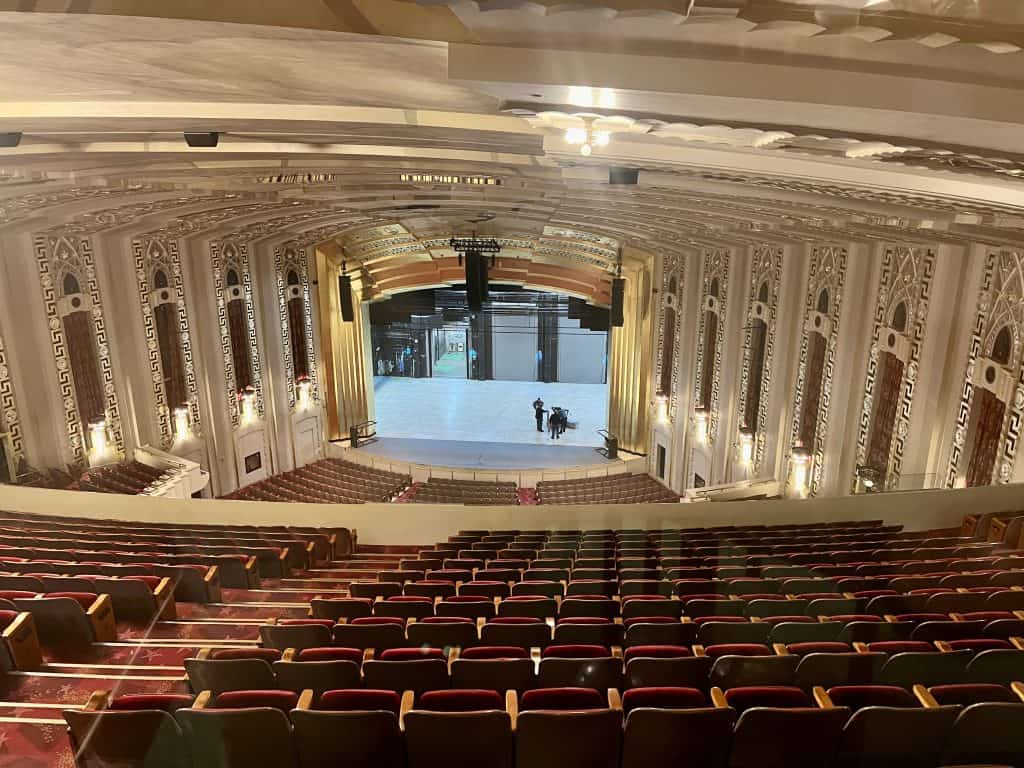
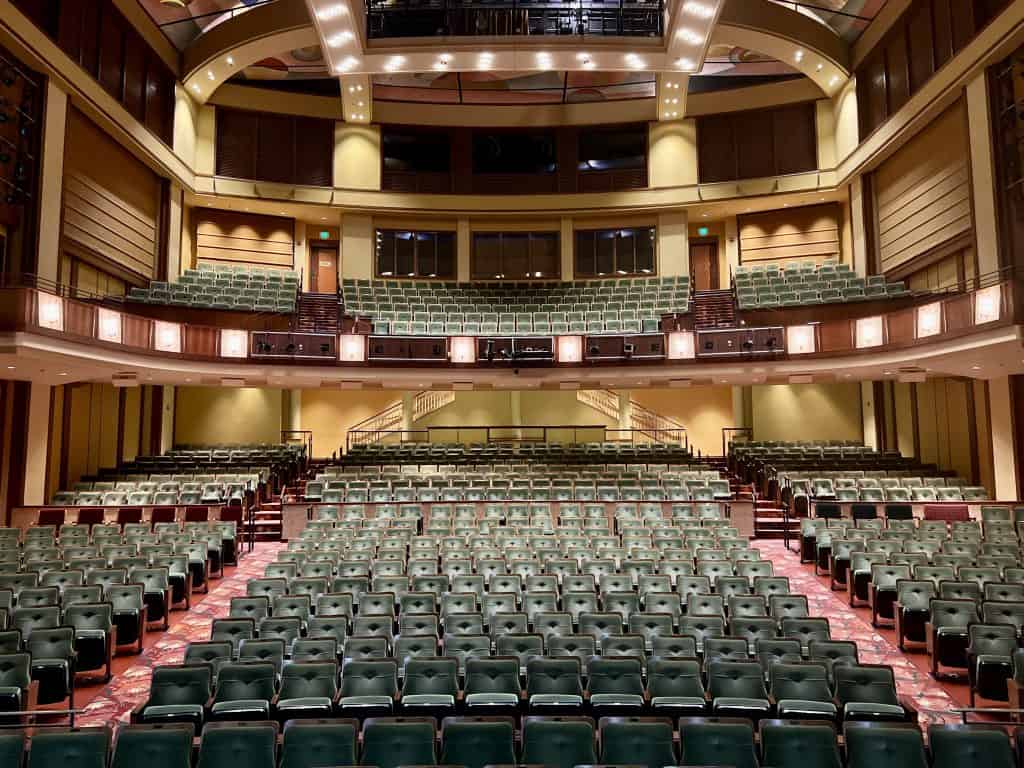
Named after local civic visionary Horace Bushnell, The Bushnell Performing Arts Center opened as Bushnell Memorial Hall in 1930, less than two years after the groundbreaking ceremony,  and was fully restored in 2005 for its 75th anniversary. Known as a presenting center (because all sets and costumes are brought in for each show), The Bushnell is home to the 2,799 seat Mortensen Hall, the 907 seat Belding Hall, which opened in 2001, and several small halls and suites for concerts, lectures, weddings, corporate events, and performances.

Horace Bushnell, who attended both Yale Law and Divinity Schools, was an ordained minister and prominent city planner for Hartford in the mid 1800s. Bushnell and his wife, Mary Apthorp, had five children, all of whom championed for clean, public spaces, community gardens, and civil rights throughout the Hartford area in the 19th and 20th centuries. Their youngest daughter, Dotha Bushnell Hillyer, was inspired by a performance at the Springfield (Massachusetts) Symphony Hall to bring reputable performers to a cultural and community center in Hartford, as well as to honor her late father. 

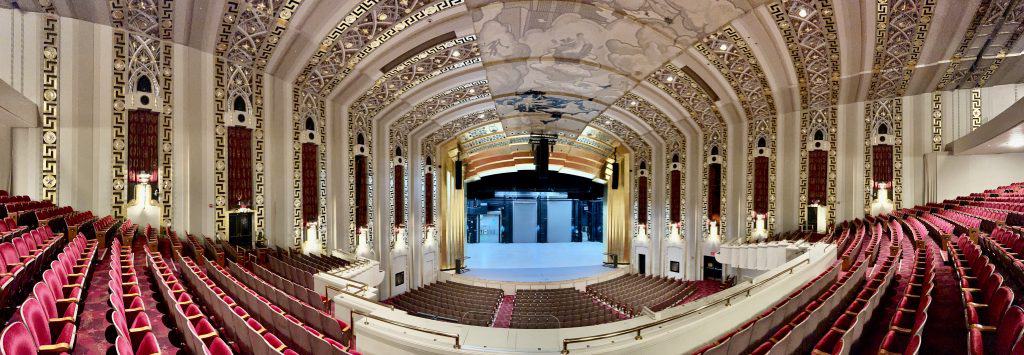
Built by the same architect, although about half the size in stage size and seating, of Radio Music City Hall, The Bushnell is listed on the National Register of Historic Places. The 2005 restoration included the preservation of many art deco elements, like portholes, ceiling angles, grand staircases, and vivid colors.

Today, The Bushnell offers free behind-the-scenes tours by appointment. Tours are extremely kid friendly, with knowledgeable guides who engage the entire family.
Travel Tips:

  • Visitors can request tours by filling out this form; we received an email back confirming our ideal date less than 24 hours after our initial request.  However, tours are scheduled around the center’s performance schedule. Tours are hosted by knowledgeable, friendly volunteers who are passionate about The Bushnell’s mission and the arts.
  • Free night and weekend parking is available in the lot along Capitol Avenue and at Buckingham Garage (corner of Buckingham and Washington Streets). Other options and a map of the area can be found here.
  • The theater is handicap accessible via an elevator, and restrooms are located on each floor and in the lobby.
  • There are tons of dining options surrounding the theater and throughout Hartford- see a good index here. The Bushnell Max Cafe is located on the first floor of the Center and is open two hours before a performance.
  • Other nearby family friendly fun includes the Connecticut Science Center, the Connecticut Capitol Building, the Wadsworth Atheneum Museum of Art, the Mark Twain House
  • This is a good map of the complex. Tours typically last 90 minutes.

Would you like to save this?

We'll email this post to you, so you can come back to it later.

Find the following items while touring The Bushnell:

  1. The portrait of Dortha Bushnell Hillyer, who was inspired to create the Bushnell Center, in the Gray Lobby.
  2. The missing letter in the quotes from Bushnell’s writing, engraved above the doors of the Gray Lobby. (Hint: think about the Latin alphabet)
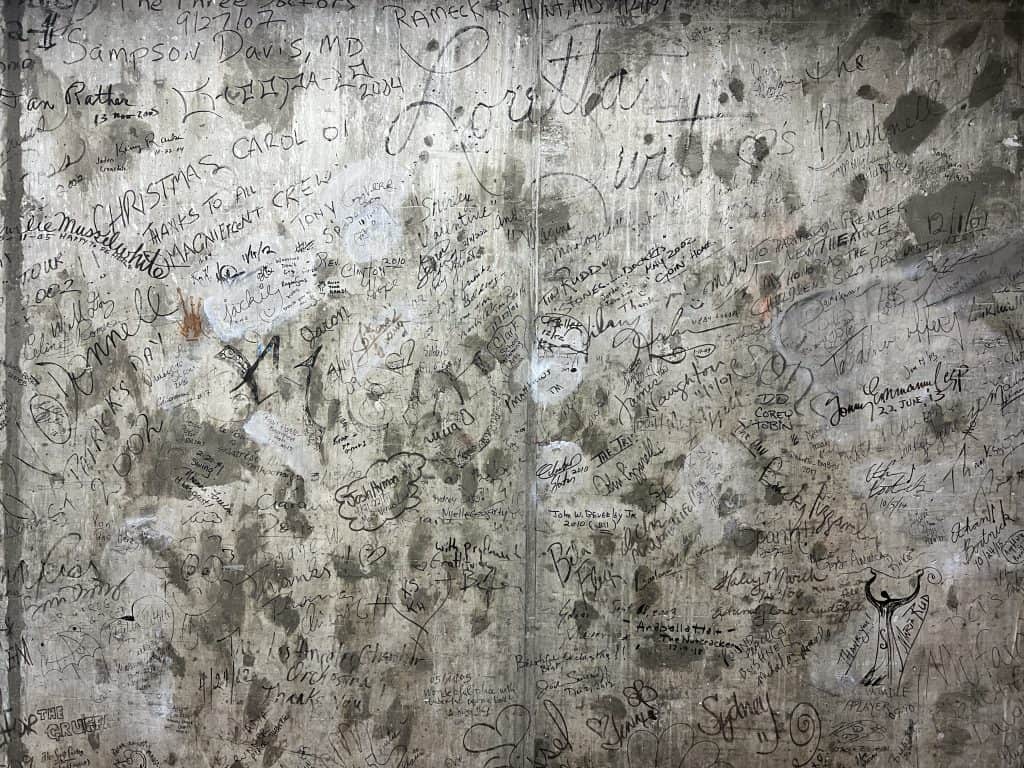
  3. The cast signatures from dozens of shows in the Projection Room. Located five stories up and 200 feet across from the stage, the Projection Room  has the names of various union workers including lighting and staging (their union affiliate numbers are listed next to their names; the local Hartford chapter is #84)
  4. The Chamber Stage in the Seaverns Room, and the balcony overlooking the outdoor courtyard, which is used for special events and socializing during intermission. 
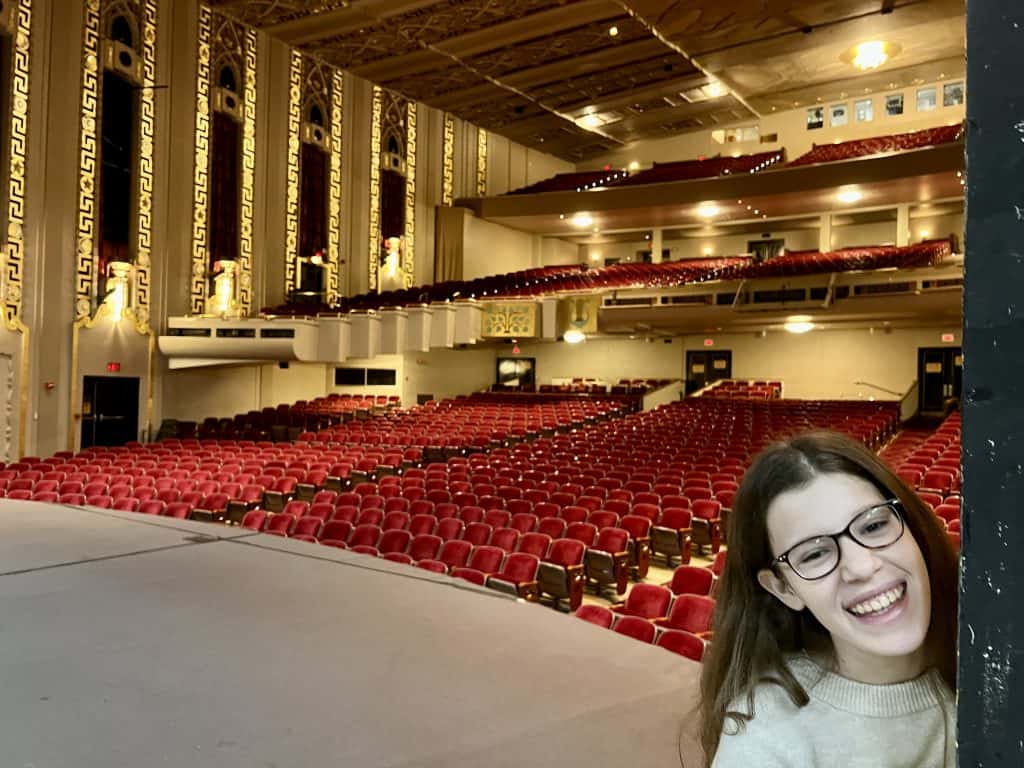
  5. The spotlight on the 3500 square foot stage of the Mortensen Hall, perfect for a selfie!
  6. The largest ceiling mural, called Drama, in a theater in America on the ceiling of Mortensen Hall. Painted in 1929 on panels, the mural includes several distinct scenes, including a night sky. 
  1. The 5,263 organ pipes of the Austin Organ hidden behind the curtains on the side panels of Mortensen Hall.
  2. The numerous amenities added over the years to the Dressing Green Room. Various performers (who shall remain nameless) requested everything from addition of air conditioning and a private bathroom, to cable television and even for the color of the walls to be changed (this happened frequently!)
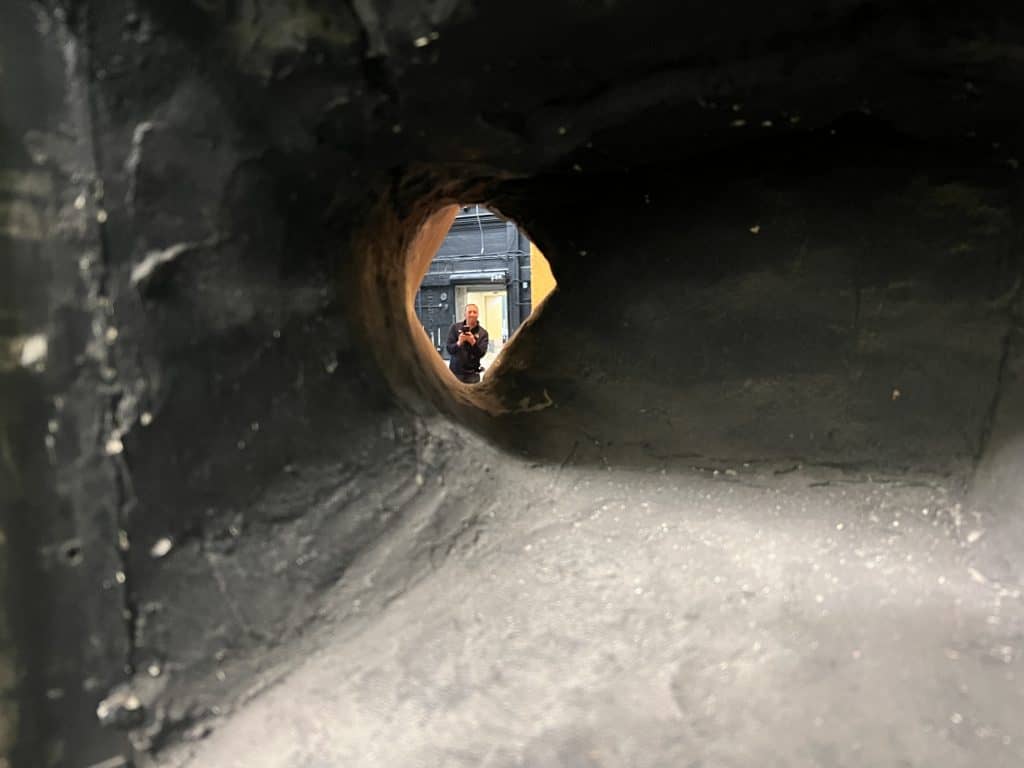
  3. The peephole in the Head Electrician’s Room that allows staff to check out the stage and make adjustments. Be sure to check out the walls of the room that are covered with hundreds of signatures from ONLY head stars from performances over the year.
  4. The cement wall of signatures  leading to the Belding Hall. The smaller of the two theaters is home to the Hartford Symphony Orchestra.
  5. The 600 pound draperies on the stage of the Belding Hall.
  6. The 14 foot long and eight foot wide Chihuly chandelier, called Ode to Joy, on display in the Autorino Great Hall. The 2800 pound chandelier is constructed from 600 individual pieces of fire red glass. 
Looking for more adventures in Hartford? Check out our Hartford City Guide, and our index of dozens of posts featuring family friendly spots throughout Connecticut.

Looking for tours of other music venues? Check out our posts featuring the Boston Symphony, Wang Theatre in Boston, Radio City Music Hall in New York City, Carnegie Hall in New York City, Met Opera House in New York City, and The Bushnell Performing Arts Center in Hartford, Connecticut. And follow along on our adventures on Instagram, Pinterest, Facebook, and Twitter.

Disclosure: Our family was given a private tour of the Bushnell; all opinions expressed are my own.

Similar Posts

  • | | | | |

    Hogpen Hill Farms in Woodbury, Connecticut

    Hogpen Hill Farms, a 234 acre sculpture farm in the Litchfield County town of Woodbury, Connecticut, is home to a landscape park with over 100 pieces of beautiful landscape art created by Edward Tufte. 

    The works of art are positioned along a 1.5 mile diagonal and visitors can get up close (but don’t touch!) to the artwork by following some of the five miles of walking trails throughout the property (follow the signs and mowed grassy paths that traverse the property).  The property is open to the public during late spring, summer, and fall months and is a wonderful way to enjoy the beauty of nature and art.

  • | | | |

    Playing “I Spy” at the Connecticut State Capitol

    Visiting state capitol buildings is one of the first things we do when visiting the capital city. It’s a little ironic that it took our family, who has lived in Connecticut for almost 20 years, this long, but we recently, finally made it to the CT Capitol for a tour.

    Connecticut was founded in 1662 and is known as the Constitution State, as it was the first state to adopt a constitution.  Built in 1878, the Connecticut Capitol building, located in downtown Hartford, was designed by Richard M. Upjohn to replicate a Victorian Gothic style. The building overlooks Bushnell Memorial Park’s 41 acres in the heart of Hartford and was restored in the 1980s to the original colors and design. The addition of the Legislative Office Building (LOB), which opened in 1988, allowed for office space for Connecticut’s 151 Representatives (each representing approximately 25,000 constituents)  and 36 State Senators (each representing approximately 90,000-100,000 constituents). The “LOB” also allows for more public meeting spaces and opportunities for state officials to meet as committees and with public interest groups. The first and second floors of the LOB and the first floor of the Capitol are both open to the public; upper level floors house private offices and chambers and guests must be accompanied by officials. 

  • | |

    10 Must Have Hiking Supplies

    Our 2020 rescheduled road trip is coming up soon and our whole family is getting excited. While we’re keeping our itinerary a secret, you’ll be able to gather from this post, and some of our most recently themed posts, that we will be doing a lot of hiking (which our family defines as walking outside for a few miles on a well marked path). You can read about some of the Connecticut places we have explored for hiking (again, we’re using that term loosely) in this post, this post, this post, and this post. We are NOT serious hikers, and at first thought we didn’t necessarily need anything other than sneakers for a hike.

  • | | | | |

    10 Family Friendly Ways to Explore Jamestown Settlement and Chippokes Plantation State Park in Virginia

    One of the most popular living history museums in America, Jamestown Settlement tells the story of the first permanent English settlement in 1607 and the cultures that converged there. It originally opened as a museum in 1957 and was expanded in 2007, in commemoration of its Quadricentennial. Named in honor of King James I of England, the complex includes immersive indoor and outdoor exhibits, and daily interactive demonstrations.

  • | | | | |

    8 Ways to Explore the Ben & Jerry’s Factory in Waterbury, Vermont

    Started in 1978 in a renovated gas station in Burlington, Vermont, Ben & Jerry’s Ice Cream has become one of the most popular ice cream brands in the world, now with over 500 Scoop Shops worldwide (more than 200 in the United States alone!) and almost 100 varieties of ice cream.

    Ben and Jerry’s has three factories which produce their famous ice cream: two in Vermont (Waterbury and St. Albine’s) which distribute ice cream throughout the United States, and one factory in Hellendoorn in Holland, which distributes ice cream throughout Europe. The first factory opened in Waterbury in 1985 and guided tours began in 1986. The Waterbury Factory, the only factory open to the public, produces 300,000-400,000 pints a day and welcomes close to a quarter million people each year (up to 800 people on a busy summer day!). Even cooler?  Every employee is allowed to take home 3 pints a DAY!

  • | | | | |

    Mount Vernon in Virginia

    Mount Vernon, home to George and Martha Washington and their family, is the most popular home in America- over one million people visit each year. The home, located twenty minutes outside downtown Washington DC in Mount Vernon, Virginia, was originally a 8,000 complex with five farms: Dogue Run, Muddy Hole, River, Union, and Mansion House Farms. Washington also built a gristmill and distillery on the property, which is on the banks of the Potomac River, with Maryland on the other side of the river.  Washington took possession of the home in 1739 and completed a major renovation by 1787.  After George and Martha died in 1779 and 1802 respectively, the home was passed on to family until 1860, when the home was open to the public.  The now 50 acre site includes over two dozen areas to explore. We’ve included ten spots children will most enjoy.

8 Comments

  1. Very well done! I am a volunteer at the Bushnell and thought you did a wonderful job of informing on and highlighting all the B has to offer.
    Thanks for all your efforts,
    Holly Mathews

  2. The Bushnell looks like a beautiful theatre and I’d love to see a production. The free behind-the-scenes tours looks like a great way to learn more about the theatre.

  3. This looks like such an interesting and beautiful theatre – and obviously was a hit with the kids! They look like they were thoroughly enjoying themselves.

  4. I love the idea of behind-the-scenes tours and would want to visit the Bushnell Performing Arts Centre. I am always intrigued by the technical aspects of putting on a performance. How fun to do it with kids and do “I Spy”. Some fun things found. I will have to check out your other suggestions for tours.

Leave a Reply

Your email address will not be published. Required fields are marked *