Touring the Met Opera House in New York City

| | | | |

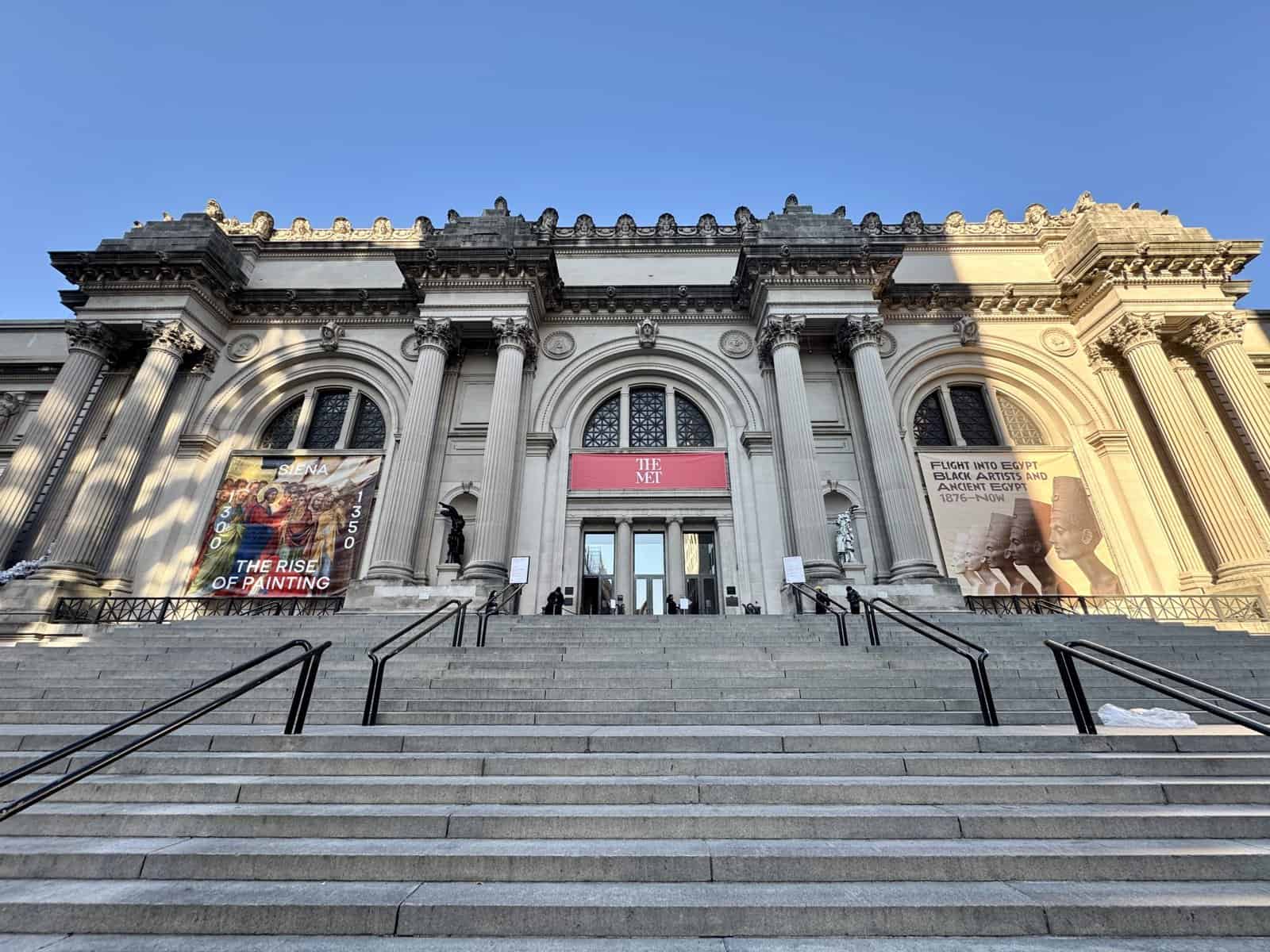
On a recent trip to New York City, we enjoyed a tour of the largest opera house in the world, the Metropolitan Opera House. Now part of the Lincoln Center for the Performing Arts, the Metropolitan Opera was founded in 1883 and the first opera house was located at Broadway and 39th Street. As the Met Opera grew in popularity, it needed more space and joined other organizations to form The Lincoln Center for the Performing Arts, a 16.3 acre complex on the Upper West Side of Manhattan. Lincoln Center first opened in 1962 with the New York Philharmonic, adding the New York City Ballet in 1964 (in the Koch Theater) and then the inauguration of the Opera House in 1966. Across the complex, Lincoln Center is home to 30 indoor and outdoor facilities, including water features and a grassy hill across from the Juilliard School

A traditional Met season, which includes 18-22 operas and approximately 200 shows for over 800,000 patrons, begins in October, breaks during February, and concludes in May. The Met Opera has performed 32 world premier operas and is its popular radio and television broadcasts are seen by millions each week. Today, there are over 3,000 employees (more than half are full time!) and 17 different unions represented at the Met Opera House.
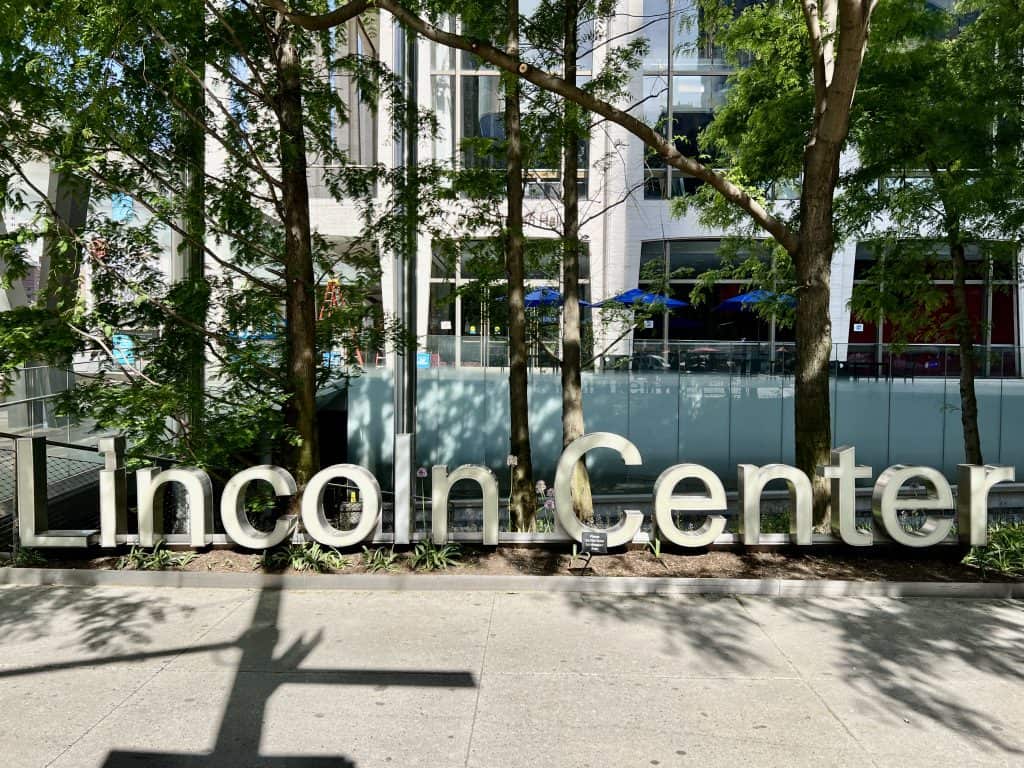
There are several tours offered throughout the Lincoln Center complex. We enjoyed the family friendly tour of the Met Opera House and appreciated the opportunity to see so many elements of a performance. 

Travel Tips:

Would you like to save this?

We'll email this post to you, so you can come back to it later.

  • Tours of the Met Opera House are for visitors ages eight and older; Each tour usually has 10-12 people plus a tour guide. Check here for up to date information on dates (based on the Opera’s schedule) and pricing.
  • The Met Opera House is located on the grounds of the Lincoln Center complex. See the diagram above for location. 
  • Restrooms are not routinely available while on the tour. Some tours do stop at a bank of restrooms if time allows, but visitors should not expect to stop while on the tour. Some areas of Lincoln center have bathrooms available after the tour.
  • Guests may not bring large backpacks or packages on the tour and there is no place to securely store them (so leave shopping for after the tour!).
  • Lincoln Center has its own devoted garage on campus (entrance on 62nd between Columbus and Amsterdam). Check here for more information on other garages nearby.  Info on public transportation to Lincoln Center can be found here.
  • Dining options at Lincoln center are not typically available during tour times, but check here at the Grand Tier Restaurant before the show.  Check here for a good index of restaurants around Lincoln Center; PJ Clarke’s is directly across from Lincoln Center and is a favorite spot for our family when in the city. 
  • Tours typically last 75 minutes; note that visitors must stand for a majority of the tour. Wear comfortable shoes. 

Note: Photography is not allowed inside the Met Opera while on tour. 

Six Stops on the Tour of the Met Opera House:

  1. The Sybil Harrington Auditorium: The wooden panels on the walls are African rosewood and have strong artistic sound properties for an opera house. Note the small screen on the back of each chair, installed in 1995. The screens translate the operas in four languages: English, Spanish, German, and Italian. Be sure to look up and count the (12) chandeliers hanging from the ceiling, a gift from Austria, and the sculpture above the stage (there’s a tiny window with shutters hidden behind the sculpture, used by a sharp shooter guard if the presidents ever come to the opera). And peek down into the orchestra pit, which can fit up to 110 musicians.  On the way out of the auditorium, look out for seat BB1, which is reserved for the doctor on call, who attends every performance in case of an emergency. (There’s a waiting list to be the MD on call!)
  2. Costume Shop (2nd floor): The Met Opera uses over 8,000 costumes a year, with over 2,000 new costumes made every year in house by the tellers (who make costumes for male singers) and seamstresses (who make costumes for female singers). Each costume can cost up to ten thousand dollars. The shop has (seemingly endless) racks and bins (well organized!) of everything from costumes to stockings, shoes, and accessories. Over 100 wigs are also made, in house, every season, for specific singers. Make sure to hold the demo costume to get a feel for how heavy the costumes are. 
  3. Prop Room (4th floor): Some of the most popular props include weapons and umbrellas. Many operas also include animals such as horses, donkeys, and dogs, all of which are fed a special diet before and during the show. 
  4. Behind the stages: Get up close to all five stages, including the main stage, three side wagon stages that rotate over the main stage and the fifth stage that rises above the main stage. During any given show, there are 90 people working on and behind the stage, including electricians, stage hands, and prop assistants. The ceiling of the stage is 14 stories high!
  5. The rehearsal spaces: There are two main rehearsal spaces (The Orchestra Room for the orchestra and the “C Stage” for the dancers) used each day by various casts. 
  6. The Set Studio and Carpentry Department: The space includes huge woodshop rooms and machines. See if you can find a discarded bent nail, which is considered a lucky charm since it is the most used item in set design. 

Looking for tours of other music venues? Check out our posts featuring the Boston Symphony, Wang Theatre in Boston, Radio City Music Hall in New York City, Carnegie Hall in New York City, Met Opera House in New York City, and The Bushnell Performing Arts Center in Hartford, Connecticut. And follow along on our adventures on Instagram, Pinterest, Facebook, and Twitter. And see our full index of Manhattan attractions.


Similar Posts

  • | | | | |

    10 Things Kids Will Want to Do at Hancock Shaker Village

    Traveling during a still present pandemic: If you’ve been following our adventures this summer, you know that our family has taken precautions to stay safe. We’ve limited our exploration to nearby states with lower COVID cases and to mainly outdoor spaces that take proper precautions to keep staff and visitors safe. Hancock Shaker Village was an easy choice- tons of open space to socially distance, only one family in a building structure at a time (with all doors and windows open to allow for better ventilation), and absolutely nothing to touch. While Hancock Shaker Village is a great place to visit anytime, it’s a very safe bet for family fun during these uncertain times.

    Celebrating its 60th anniversary in 2020, the Hancock Shaker Village is the oldest working farm in the Berkshires part of western Massachusetts. The Village was originally home to the Shaker community from the late 1700s until 1959, when it was turned into a museum that includes over 22,000 original artifacts and a research library. The 750 acre complex has a 20 acre working farm, 20 buildings with live interpreters, a massive garden with a very popular Community Supported Agriculture (CSA), and tons of hiking trails, meadows, and woodlands that abut the Pittsfield State Forest.

  • | | |

    Five U.S. Travel Books Kids Will Love

    Our children have always enjoyed reading and will spend hours a day reading, no matter where we are. Fortunately, they can read in the car and we often make a big Barnes and Noble order before a road trip. And while they mainly stick to fictional series, they do like to take a break for a puzzle or a game, or ask us trivia. 

    This week, we’re sharing some of our favorite travel books. You’ll notice a common theme of the National Park system, one of our favorite destinations on any road trip. (You can read about some of the dozens of posts featuring National Parks and National Park service sites here). And be sure to check out the special giveaway at the bottom of the post.

  • | | | | | | | |

    City Guide: Sag Harbor, New York

    The village of Sag Harbor, located on the northern part of the South Fork of Long Island, is typically home to under 3,000 year round residents but swells during peak summer months, as the area is a popular vacation spot. Considered part of “The Hamptons” (which includes the towns and villages of Westhampton, South Hampton, Sagaponack, Sag Harbor, East Hampton, Amagansett, and Montauk), the area is under two hours from the hustle and bustle of Manhattan (or a short ferry ride from Fairfield County, Connecticut). Sag Harbor became a US port of entry in 1789 with a growing population involved in servicing whalers and West Indian trade ships. and became a thriving whaling industry in the 1800s. There are many historic homes, museums, outdoor recreational areas, and dining and retail options throughout Sag Harbor and the surrounding towns that the whole family will enjoy.

  • | | | | | |

    10 Ways to Have Fun at The Wild Center in New York

    Located in Tupper Lake in northern New York, The Wild Center is part natural history museum, part aquarium, part series of nature trails, part massive outdoor playground, and 100% FUN! We first read about The Wild Center when Wild Walk opened in 2015 and it has been on our bucket list until last week! During our visit to the Lake Placid area (The Wild Center is about 30 miles west), we enjoyed a busy morning on campus and wished we could have stayed all day!

  • | | | | | | |

    10 Ways to Explore Berkeley Plantation in Charles City, Virginia

    Our family loves visiting presidential sites and learning more about America’s history, so when we made plans to visit the Williamsburg, Virginia area we started researching new-to-us spots to explore. At the top of our list was Berkeley Plantation, the birthplace of Benjamin Harrison V (member of the Continental Congress, signer of the Declaration of Independence and three time governor of Virginia) and William Henry Harrison (the 9th American President), and the ancestral home of his grandson Benjamin Harrison (the 23rd American President).

  • | | |

    Food Trail #6: Tacos in Stamford, Connecticut

    This week, we’re sharing a loop we’ve made throughout parts of Stamford, Connecticut that features 7 great spots for tacos. Full disclosure: There are some additional spots for tacos we did not try: Tomatillo Taco Joint opens at 3pm on weekends and Ole Mole was a bit far off our loop. (close to the Merritt Parkway). Stamford has dozens restaurants and we hope to return soon to explore more locations. Every person we met at each of the following spots was warm, inviting, and enthusiastic about their passion for making good tacos. Truth be told, we loved them all! Note: Call ahead to check current pandemic restrictions regarding indoor dining versus takeout/delivery options. While we ordered take out at each location, many of these locations are offering safe options for indoor dining.

6 Comments

  1. I’ve spent a substantial amount of time in New York, but never made it to the Met Opera House. I’d love to see an opera there next time I am in town. The tour you suggested is a good option too!

  2. This is such a great write up of the Opera House, the facade is quite different for a “classical” building, it would be so fascinating to see the inside! Sounds like a guided tour is a great idea, would love to see it in real life 🙂

  3. The Met Opera House is truly magical. I had no idea they offered tours, but it’s a one of kind experience if you’re able to go. I’ll have to take a tour one day for the behind the scenes experience.

  4. It was wonderful to read about the metropolitan opera, which I visited many decades ago. I love the interesting facts about a window for a sharp shooter, the screens that translate into various languages, and the number, and cost of all the costumes.among so many interesting facts. Thank you so much.

  5. When I go to New York, I usually go to a Broadway show. However, this looks like a great alternative. While I’m not much into opera,I think the tour would be fascinating.

Leave a Reply

Your email address will not be published. Required fields are marked *