Fun in Waterbury, Connecticut: Mattatuck Museum and Fascia’s Chocolates

| | | |

Waterbury, Connecticut is Connecticut’s 5th largest city, located in the western part of the state on the Naugatuck River. The “Brass City” is known for its waterways and was once the heart of the American brass industry, employing over 50,000 brass workers in the early 1900s. 

Waterbury was once part of the Mattatuck Plantation, so it is fitting that the museum, situated directly across from the Waterbury Green, that celebrates the history of the area is called the Mattatuck Museum. The museum showcases the industries, culture, arts, and history of Waterbury and the surrounding Naugatuck Valley area with three floors of exhibits and rotating displays.

Mattatuck Museum in Waterbury CT

Travel Tips:

  • The museum is open six days a week (closed on Mondays) from 11am-5pm; updated information on hours and admission fees here (kids under 5 free)
  • There are three parking lots (lots on Park Place and Gaffney Place, and YMCA lot) that are free for museum visitors. There is also metered street parking around the Waterbury Green.
  • The museum is handicap accessible with an elevator. Strollers are not allowed in the exhibition galleries. Plenty of restrooms on each floor and a locker room to store backpacks and bags is located near the admission desk.
  • A gift shop is also located on the first floor foyer; see the online store here.
  • The Art of Yum Cafe, located inside the main entrance to the museum, is open from 11am-3pm Tuesday- Sunday and serves sandwiches, salads, snacks, and drinks. See the full menu here. 
  • Get up to date information on rotating exhibits here and family friendly programs like cooking decorating classes, Family Fun Dayz, and storytime here; plan on 60-90 minutes to explore all exhibits

Five Exhibits Kids Will Enjoy at the Mattatuck Museum:

  1. Watch old, industrial machines used in the Waterbury factories in the exhibit on Industrial Expansion with the Naugatuck Railroad. (Camp History Gallery)
  2. Listen to the stories of people growing up during different generations in Waterbury. (Camp History Gallery)
  3. Scan the QR codes to learn how to make various ethnic meals, representing over a dozen different cultures that make up Waterbury neighborhoods. (Camp History Gallery)
  4. Check out the extensive (we’re talking hundreds!) of buttons showcased in the Waterbury Button Museum. The manufacturing of buttons was a booming industry in Waterbury in the late 18th and 19th centuries. The museum showcases buttons made locally in a variety of materials, including glass, porcelain, pearl, wood, and metal, as well as buttons from around the world. (3rd floor)
  5. During warmer months, take a peek out on the Rooftop Terrace, used for special events and programs. There is also a classroom for family friendly programs, like printmaking and art workshops, yoga for kids, and storytime. See the full calendar here.  (2nd floor)

Would you like to save this?

We'll email this post to you, so you can come back to it later.

Fascia’s Chocolates:

Nearby (less than three miles and a five minute drive) is the famous Fascia’s Chocolates retail store, factory, and event space. Locals know, and love, Fascia’s chocolates, and we had heard about their chocolate making classes for a while. So when in Rome Waterbury, you must stop at Fascia’s 19,000 square foot facility to at least shop for some of their 100+ items (see hours here– the shop is often closed on Sunday and Monday), but ideally, bring the kids for a chocolate bar experience class or chocolate painting class. For adults only, there’s also the chocolate decadence train ride or beer and wine pairing class. 

The Chocolate Experience class is perfect for the whole family. The one hour class ($10 per person, and we recommend registering ahead of time, as they do sell out) includes a great view of the production floor (guests are not allowed inside) and the story of the company as told by a family member (we met the son in law of John and Helen Fascia, the owners who began making chocolate in their Waterbury home in 1964). Guests will learn about cacao pods and beans, the difference between a chocolatier and a confectioner (spoiler: just about everyone who says they are a chocolatier is actually a confectioner), the best temperature to melt chocolate (spoiler: it’s 98 degrees) and what happens if the temperature is too high or too low. The workshop also includes the complete step by step instructions on where and how chocolate is made and guests have the chance to sample three types of chocolate during the presentation.

The best part? Making your own chocolate bar. Each guest can choose two toppings for their bar, which the staff sets and packages to bring home.  Head’s up: Guests will have exposure to nuts during the class and Fascia’s is not a nut free facility.

Looking for other adventures around Connecticut? Check out our index of dozens of places, our Hartford City Guide, our New Haven City Guide, our Coastal Connecticut City Guide, and our Mystic City Guide. And follow along on our adventures on Instagram, Pinterest, Facebook, and Twitter. 

Disclosure: Our family was given a media pass to explore the Mattatuck Museum. All opinions expressed are my own. 

Similar Posts

  • | | | |

    12 Ways to Explore the American Revolution Museum at Yorktown

    Adjacent to the Colonial National Historical Park which includes the Yorktown Battlefield, the American Revolution Museum at Yorktown brings to life one of the most consequential battles of the American Revolution. In October of 1781, American General George Washington and French General Comte de Rochambeau cornered British troops, forcing General Cornwallis to surrender at Yorktown. Yorktown, a small town on the banks of the York River, is close to Williamsburg and Jamestown. The three towns are known as the “Historic Triangle.”

  • | | |

    Fort Adams in Newport, Rhode Island

    This is the 3rd post in a series detailing my recent visit to Newport, Rhode Island. To read about celebrating the holiday season in Newport, click here and to read about the International Tennis Hall of Fame, click here.

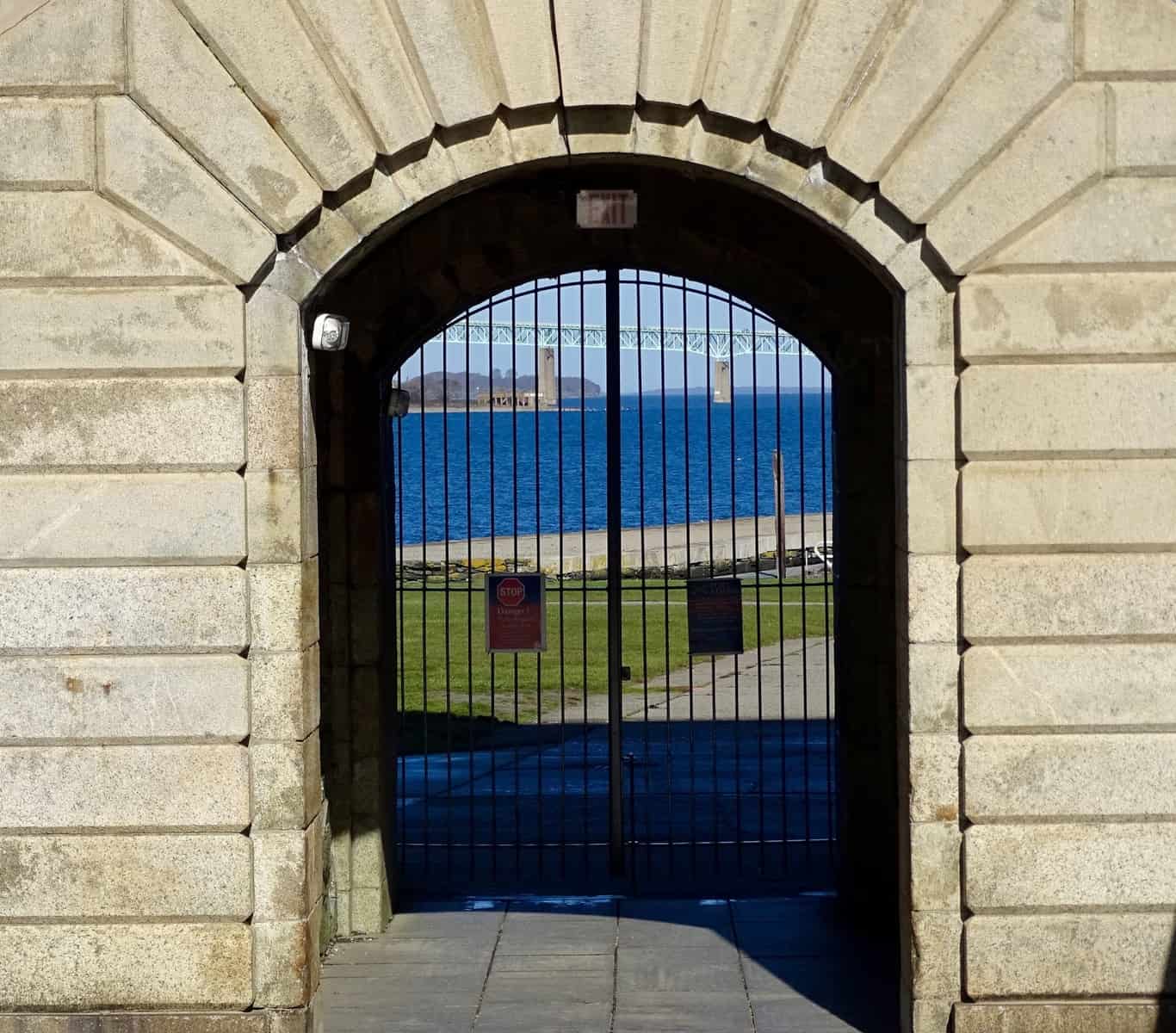
    Fort Adams has the honor of being both the largest fort in the United States and the only fort never attacked. Although, because it was never attacked or “officially in use”, it is not part of the National Parks program like many other forts throughout America. Fort Adams, located in Newport, Rhode Island, is one of twenty fortresses built after the War of 1812, took over 30 years (from 1820-1850) to complete, and is named after the second American President, John Adams. It was most effectively used as a training facility for West Point graduates before their official postings.

    The entire complex is a state park and open to the public, free of charge.  The public is welcome to use the restrooms, walk (leashed) dogs, fish, picnic, and even use the public beach. Sail Newport, housed on the property, rents sailboats and also gives lesson.

    On a recent visit to Newport, my family took the 90 minute, guided tours. We loved it. All of us, adults and children alike, found it interactive, informative, and even a little scary.  Steve Marino, our tour guide, made sure to engage our children throughout the tour.  You’ll need to start in the Visitor’s Center to purchase tickets. They offer a AAA discount. There are restrooms and a gift shop with snacks, drinks, and souvenirs. Strollers are allowed on most aspects of the tour, and you can leave strollers outside some “indoor” and tight spaces. 

  • | | | | |

    Naumkeag in the Berkshires

    The summer home of attorney Joseph Choate, his wife Caroline, and their five children in the late 1800s, Naumkeag is the perfect representation of a country estate of the Gilded Age. The estate is named after the Algonquin word (meaning “good fishing spot”) used for Salem, Massachusetts where the Choat family originally lived.

    The original gardens included two terraces, a topiary garden, and an arborvitae alley. A farm, greenhouse, orchards, and vegetable gardens provided much of the food for the family. The family also enjoyed hiking, swimming, and horseback riding on many of the 48 acres of the estate, which is located in Stockbridge in western Massachusetts. The Choate’s daughter, Mabel, inherited the property and spent significant time creating many additional gardens. She deeded it to the Trustees of the Conservation upon her death in 1958 and the 44 room estate was turned into a museum opened to the public in 1960.

  • | | | |

    Playing “I Spy” at the Connecticut State Capitol

    Visiting state capitol buildings is one of the first things we do when visiting the capital city. It’s a little ironic that it took our family, who has lived in Connecticut for almost 20 years, this long, but we recently, finally made it to the CT Capitol for a tour.

    Connecticut was founded in 1662 and is known as the Constitution State, as it was the first state to adopt a constitution.  Built in 1878, the Connecticut Capitol building, located in downtown Hartford, was designed by Richard M. Upjohn to replicate a Victorian Gothic style. The building overlooks Bushnell Memorial Park’s 41 acres in the heart of Hartford and was restored in the 1980s to the original colors and design. The addition of the Legislative Office Building (LOB), which opened in 1988, allowed for office space for Connecticut’s 151 Representatives (each representing approximately 25,000 constituents)  and 36 State Senators (each representing approximately 90,000-100,000 constituents). The “LOB” also allows for more public meeting spaces and opportunities for state officials to meet as committees and with public interest groups. The first and second floors of the LOB and the first floor of the Capitol are both open to the public; upper level floors house private offices and chambers and guests must be accompanied by officials. 

  • | | | |

    10 Tips for Visiting Wind Cave National Park in South Dakota

    The 28,295 acres of Wind Cave National Park in the Black Hills of South Dakota are home to the 7th longest cave in the world, and the 3rd longest cave in America. The cave was discovered by Jesse and Tom Bingham in the early 1880s and 21 Native American tribes associated with the Wind Cave. President Theodore Roosevelt established Wind Cave as the 8th National Park in 1903, naming it after the barometric winds at the entrance to the cave. There are 156.3 miles of passageways in Wind Cave and 95% of the world’s boxwork hangs inside the cave, along with 12 species of bats (although we didn’t see any on our visit).

    We spent a summer morning on 4th of July weekend exploring the park and taking a Natural Entrance Cave tour and loved it! The park is fairly isolated, with no dining options, so plan ahead and bring food. Here are our 10 tips if you’re planning a visit to Wind Cave National Park.

  • Top 10 Disney Planning Tips

    We’re coming up on our third visit to the “mice” in Orlando this summer and our children are so excited! We were definitely bitten by the Disney World “bug” and keep coming back for more magic. It truly is (one of) the happiest places on Earth, no matter how old you are.

    Regular readers and followers know I am a planner. I start planning a trip to Disney World even earlier than I plan most other trips. Lately, I have found myself sharing some advice with friends who are going to Disney for the first time. I thought I would share my tips:

6 Comments

  1. Another interesting experience to explore with children. Connecticut seems to have an unending amount of museums and fun places where children can learn and enjoy a variety of good times within a reasonable amount of time. Of course don’t forget the chocolate if possible.

  2. I am generally not a museum person but this looks amazing…did you say Chocolate Experience? That would be such a cool experience!!!! Also, $10 is pretty reasonable for something like that.

  3. I love museums, especially when they have activities to hold children’s attention! It looks like you had a great time with the family, and I LOVE that you included the warning for anyone with a nut allergy. I don’t have to worry about this, but I have plenty of friends with kids who do. Such a thoughtful piece of information. Thanks for sharing, Leila

Leave a Reply

Your email address will not be published. Required fields are marked *