
Mount Vernon in Virginia
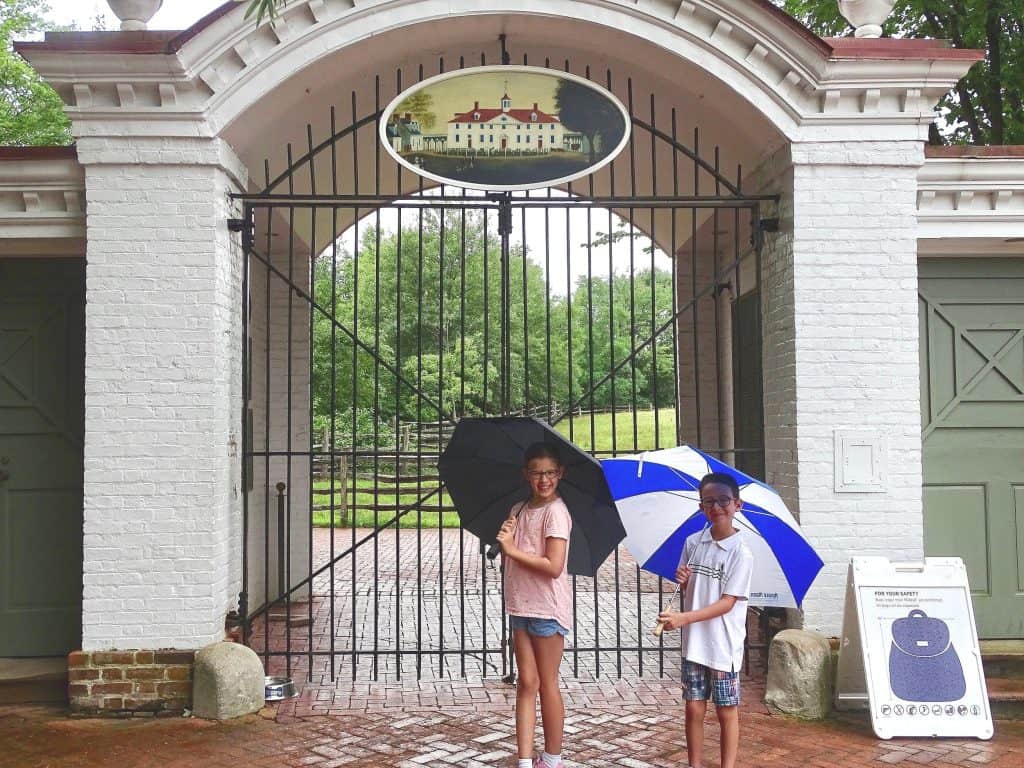
Mount Vernon, home to George and Martha Washington and their family, is the most popular home in America- over one million people visit each year. The home, located twenty minutes outside downtown Washington DC in Mount Vernon, Virginia, was originally a 8,000 acre complex with five farms: Dogue Run, Muddy Hole, River, Union, and Mansion House Farms. Washington also built a gristmill and distillery on the property, which is on the banks of the Potomac River, with Maryland on the other side of the river. Washington took possession of the home in 1739 and completed a major renovation by 1787. After George and Martha died in 1779 and 1802 respectively, the home was passed on to family until 1860, when the home was open to the public. The now 50 acre site includes over two dozen areas to explore. We’ve included ten spots children will most enjoy.
Mount Vernon offers numerous activities and special events throughout the year, from the Revolutionary War weekend in spring to an American Celebration in July to Colonial Market and Fair in the fall and Christmas at Mount Vernon. There are so many reasons to return each season!
Traveling With Kids:
- Check here for hours and plan on at least 3-4 hours to explore the areas we share, more time to explore the whole complex. Children might want to spend up to two hours in the museum and Educational Center alone. Use these itineraries for suggestions and consider taking an in-depth guided tour.
- Have children pick up an adventure map scavenger hunt to complete while exploring more of the sites we mention below to earn a prize.
- The complex is accessible via car (large parking lot on site, including an area for RV parking) or public transportation: more information here.
- Backpacks must be smaller than 16” x 16” to be carried throughout the complex. All bags are checked when entering the Orientation Center.
- A free shuttle (operational between April and October) is available to visit the Distillery and throughout the complex to the Pioneer Farm and the Wharf.
- The Orientation Center offers a $7 audio tour, with 29 stops located around the complex.
- Restrooms are located in the Orientation Center, near the museum and Education Center, and near the wharf. There is a nursing room located near the Education Center.
- Wear sneakers, as many of the paths are gravel or dirt. Bring a stroller for younger children, although strollers must be parked outside during the main house tour.
- The Orientation Center, museum, and Educational Center are handicap accessible, as is the main floor of the Mansion.
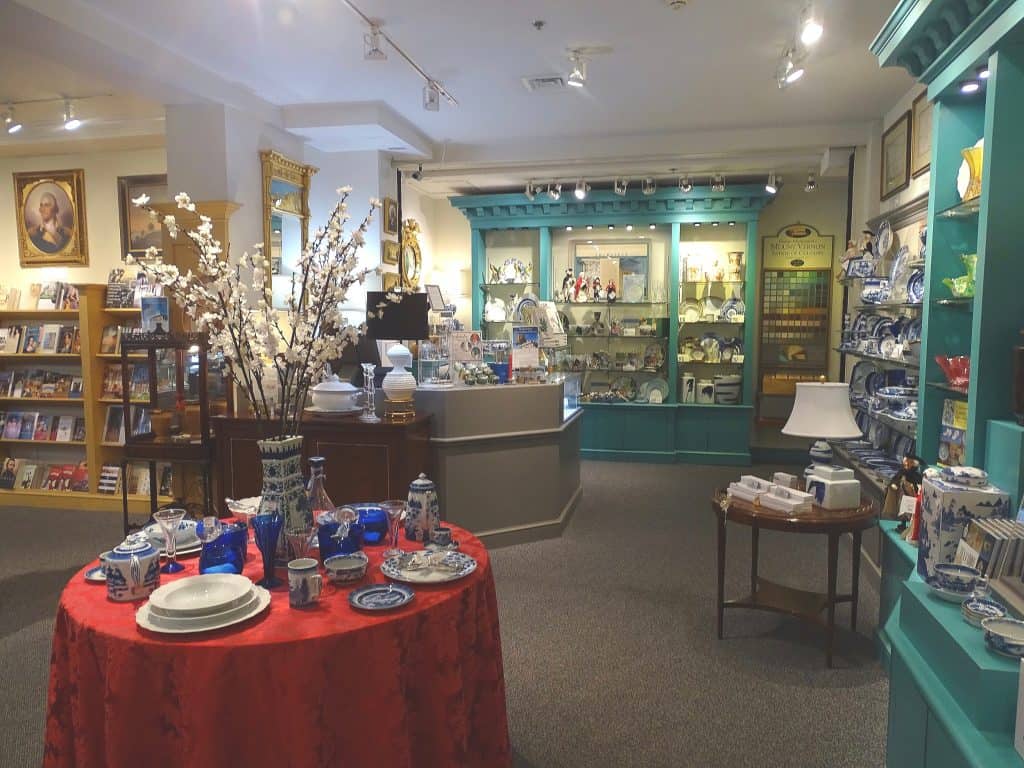
- Two gift shops are located to the right of the main entrance and attached to the Educational Center and sell a wide variety of souvenirs, apparel, books, and housewares. The public can even purchase Estate of Colours paint colors used in the home, and grain products and distillery products made on site.
- We found the entire staff of Mount Vernon to be incredibly friendly and helpful- one of the most welcoming places we have visited. Staff answered questions, offered suggestions, and helped fellow visitors with iPads and children.

10 Spots at Mount Vernon Children Will Love:
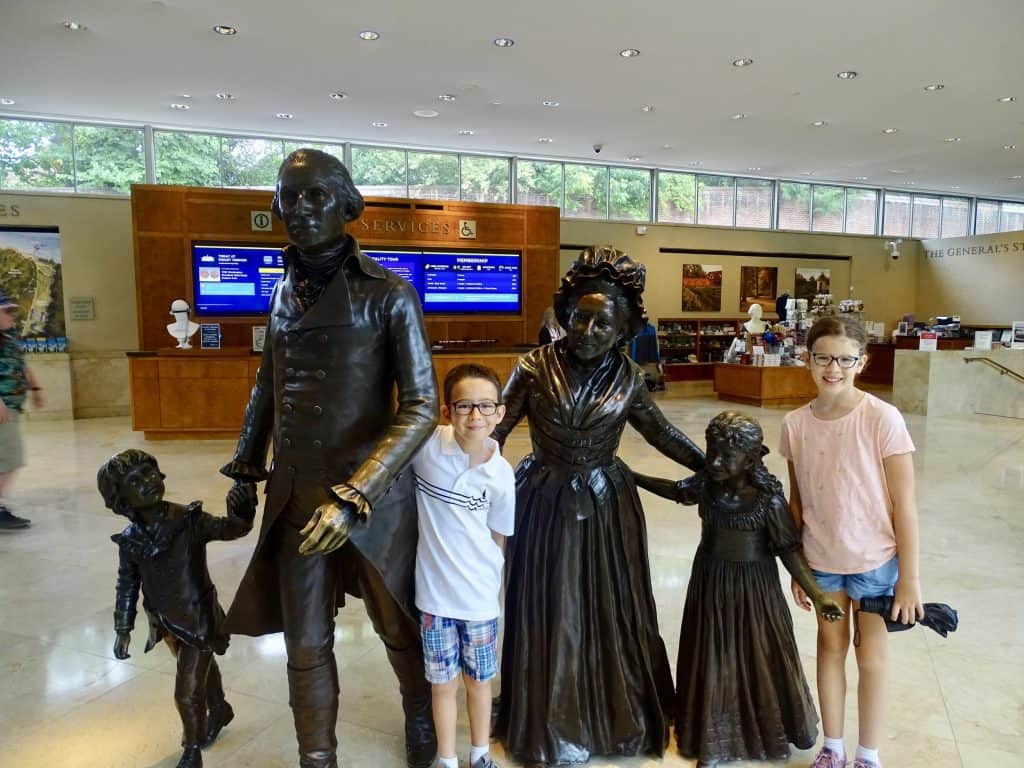
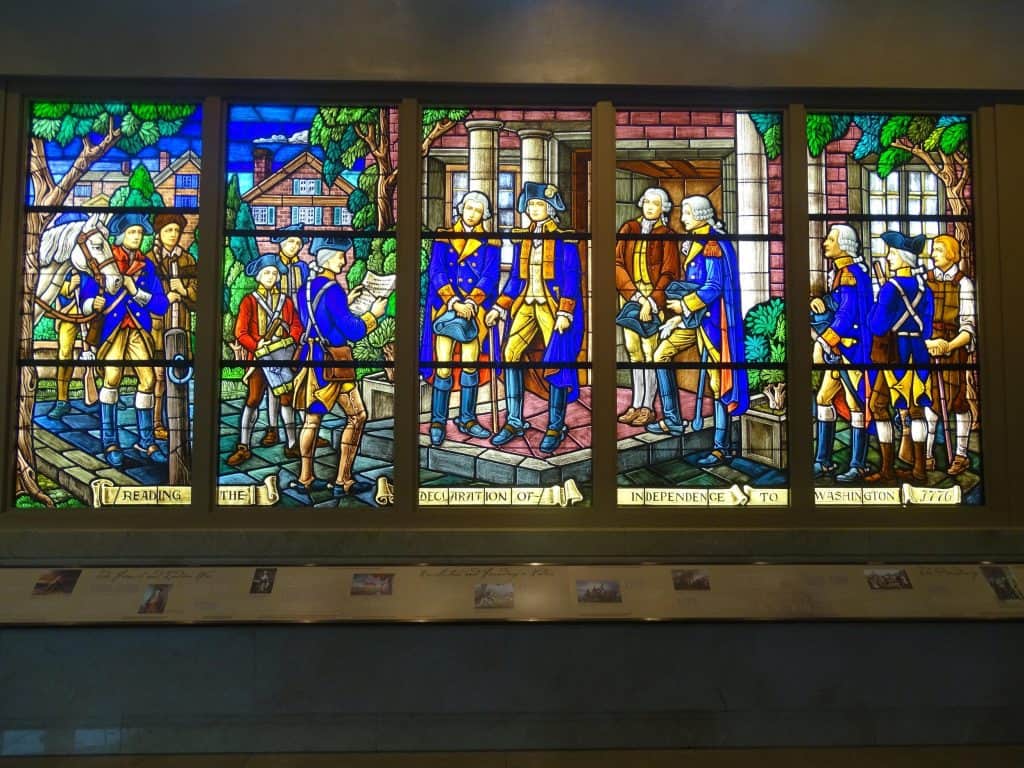
1. The Orientation Center: Check out the miniature dollhouse version of the mansion and the five stained glass murals depicting important moments in Washington’s life. Watch the “We Fight To Be Free”, a 25 minute video that describes Washington’s involvement in the French and Indian War. Grab a daily schedule of events.
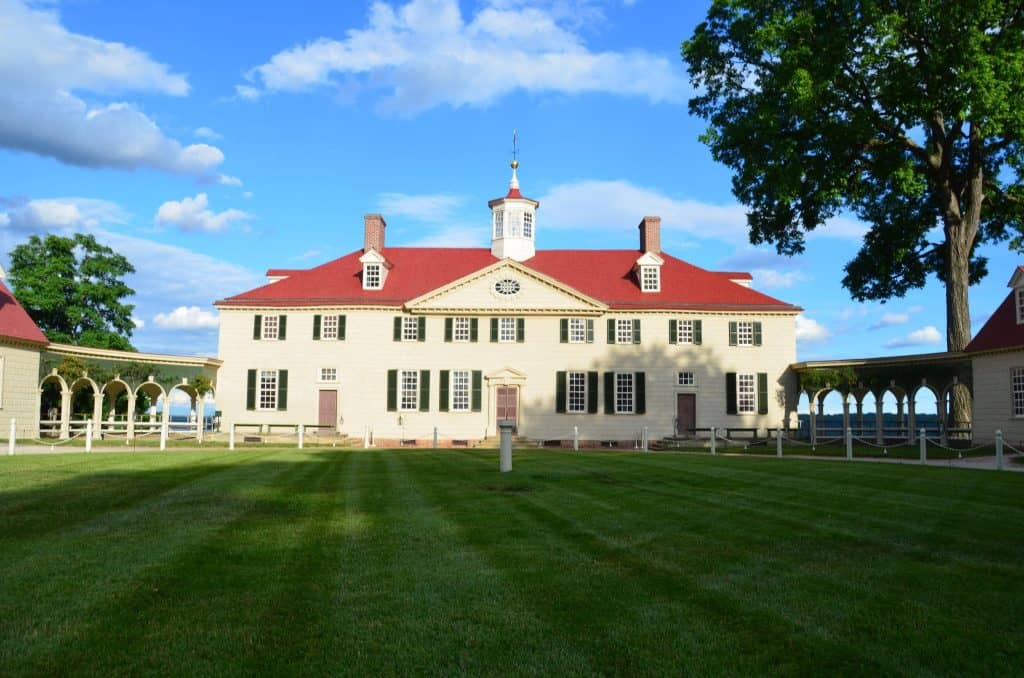
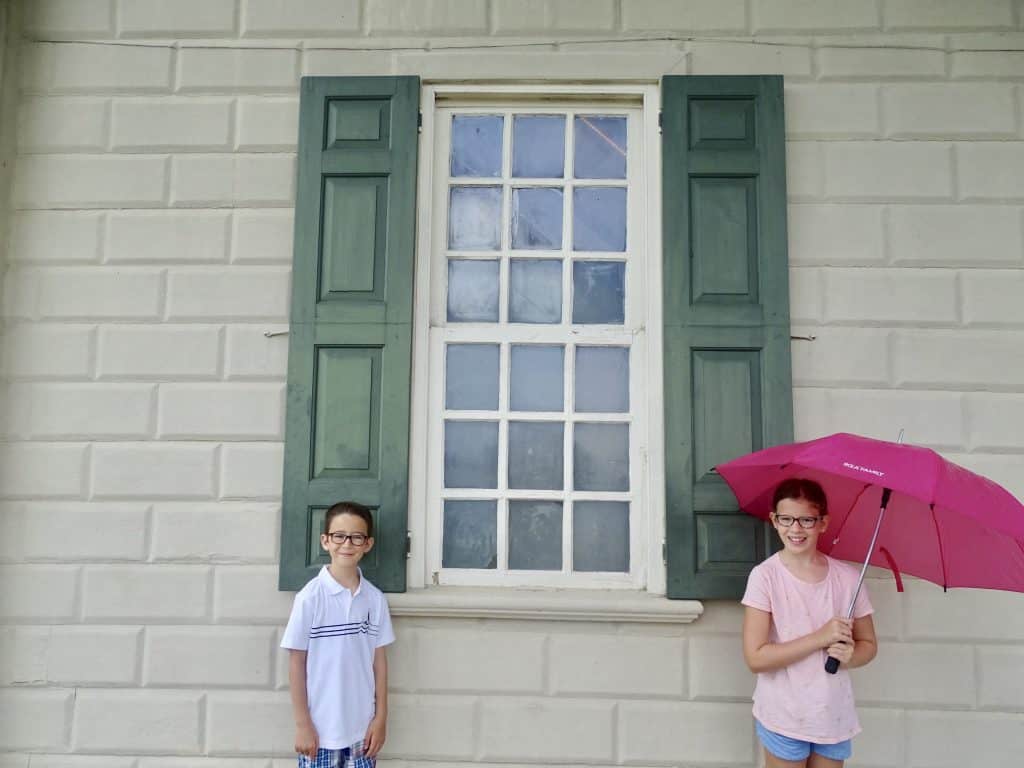
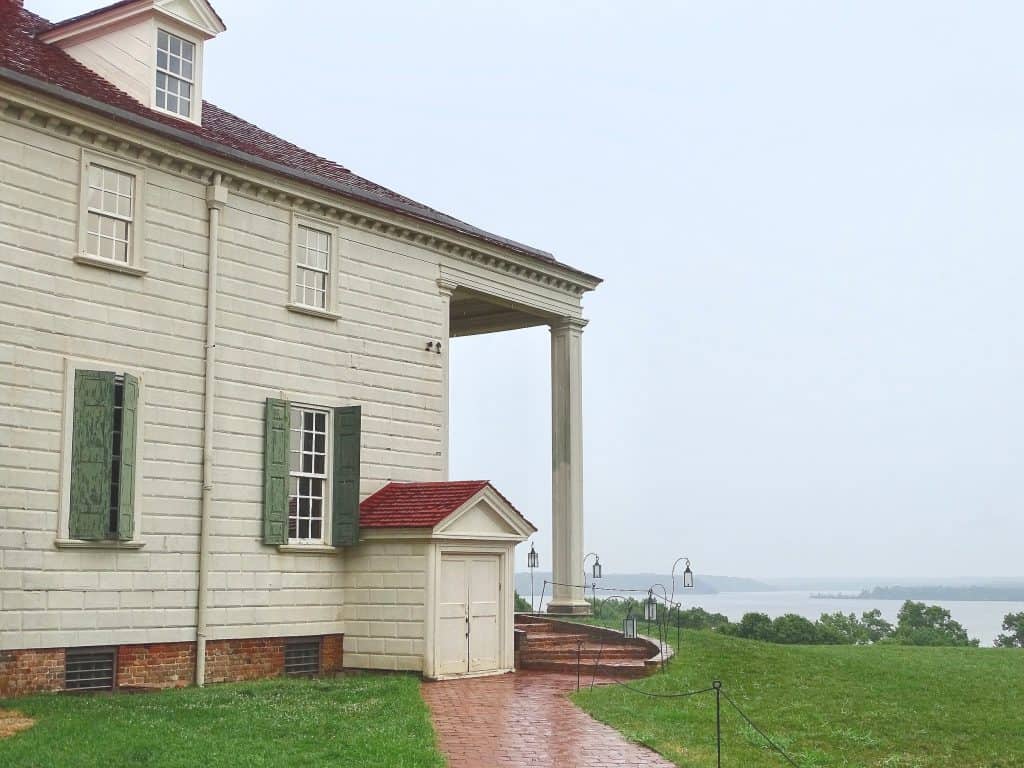
2. The Mansion: Guided tours are timed and offered every 5-10 minutes and include up to 15 people. It’s a short, five minute walk from the Orientation Center to the Main House and the home is air conditioned and heated. The home includes 21 rooms on three floors, with public access to the first and second floors. The first floor is handicap accessible and while the second floor is not, guides have iPads with full digital tours online. These iPads are also a great option if toddlers get antsy on the tour. Approximately half of the objects on display in the mansion are original to the Washington family. Children will especially enjoy seeing the:
- Harpsichord
- Washington’s bedroom (where he died in 1779)
- Portraits of the Washingtons’ grandchildren
- Fan chair” in Washington’s private study
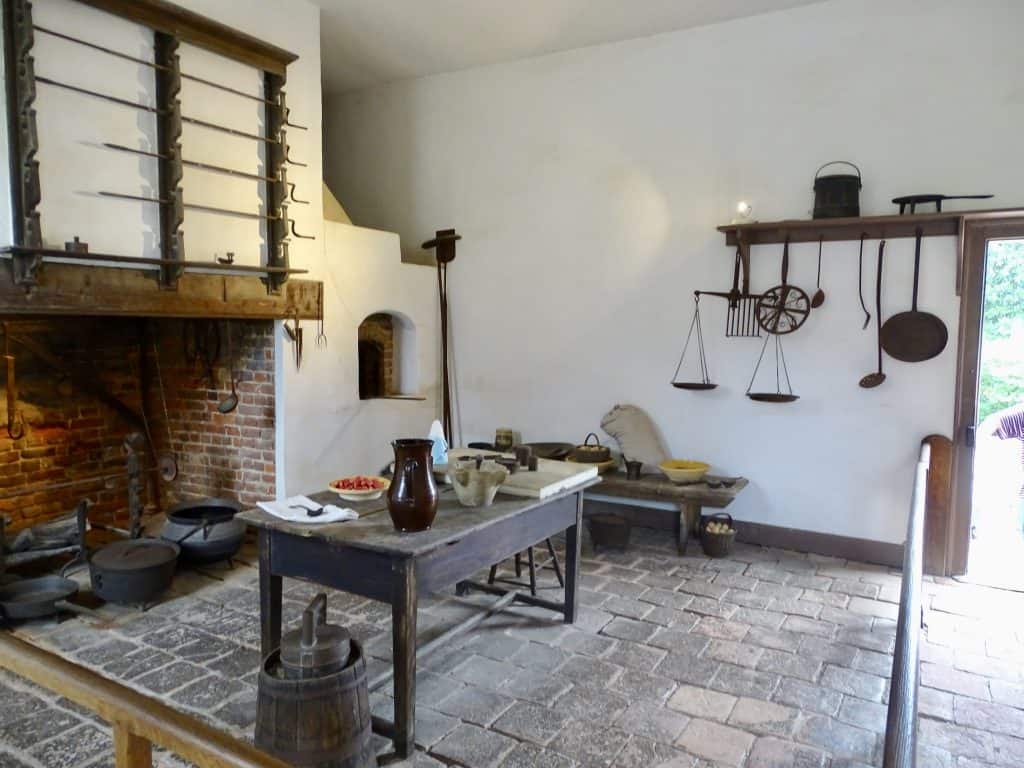
- “Spits”, pieces of steel used to cook the meat and clean the smoke stack in the kitchen
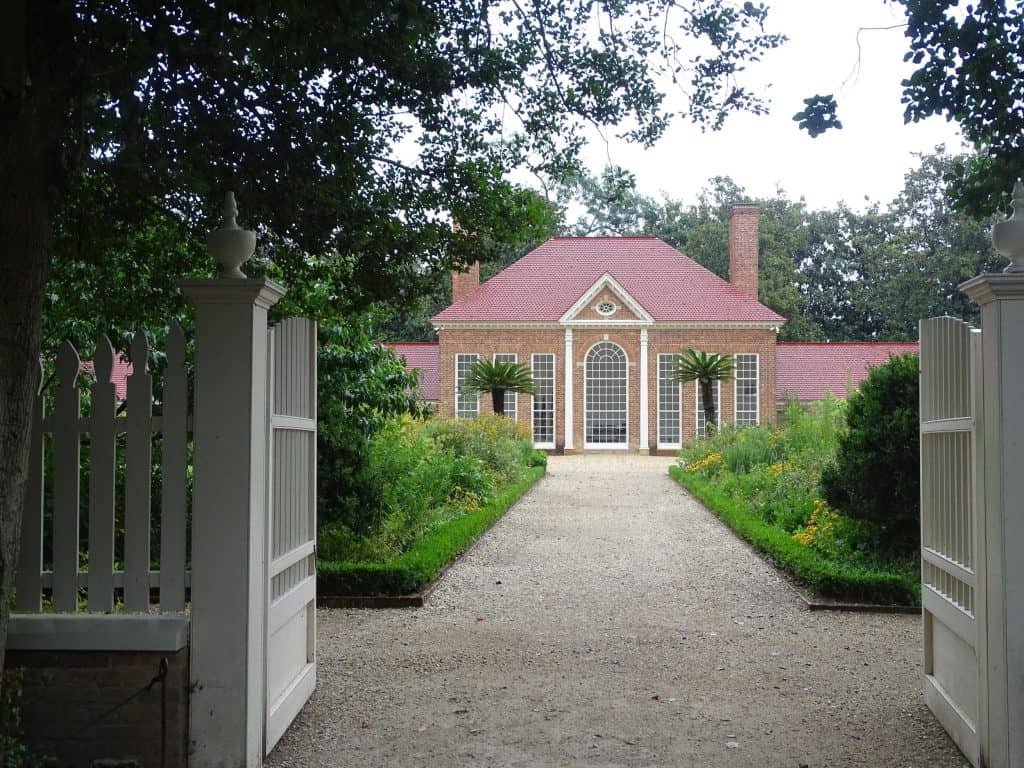
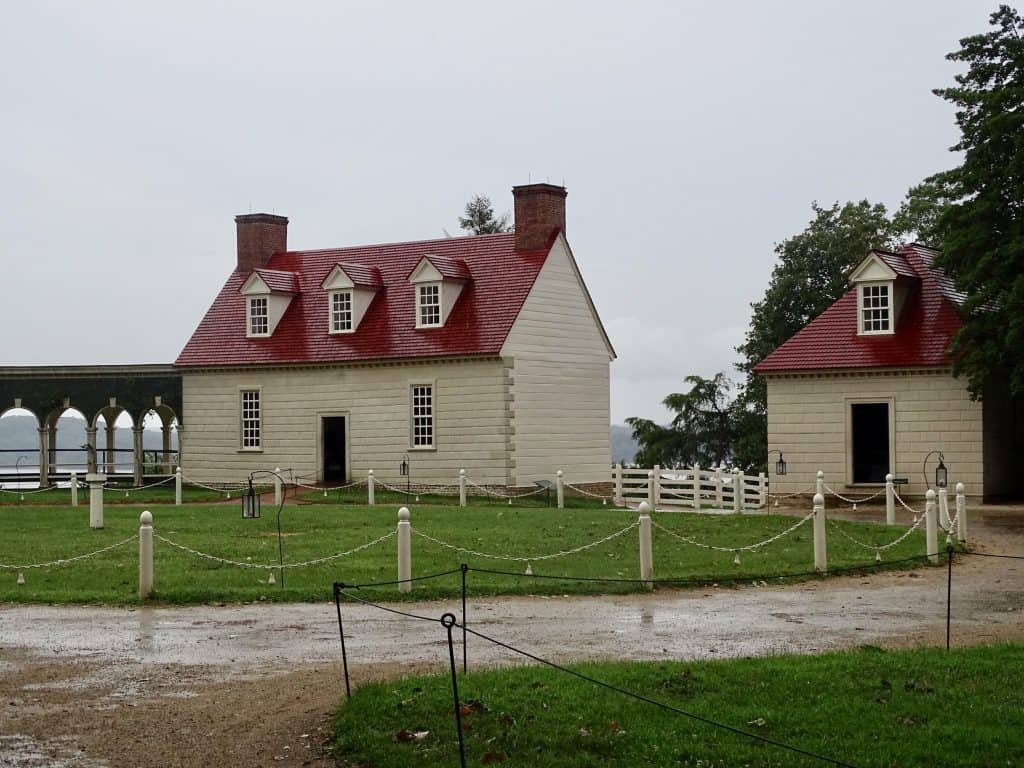
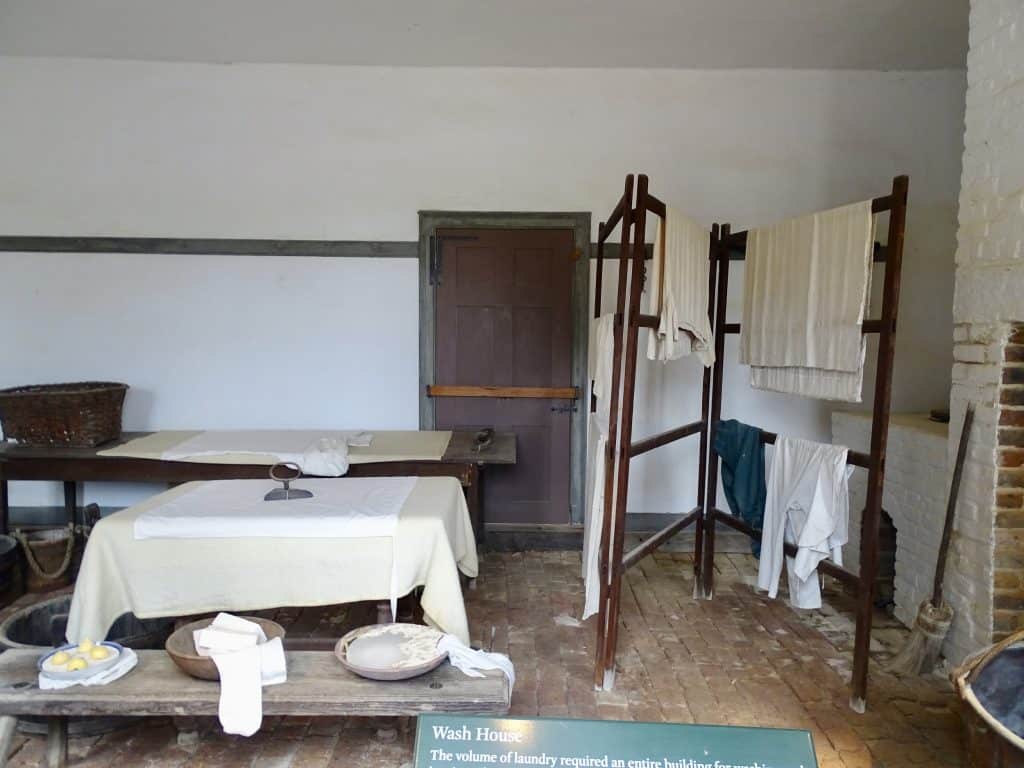
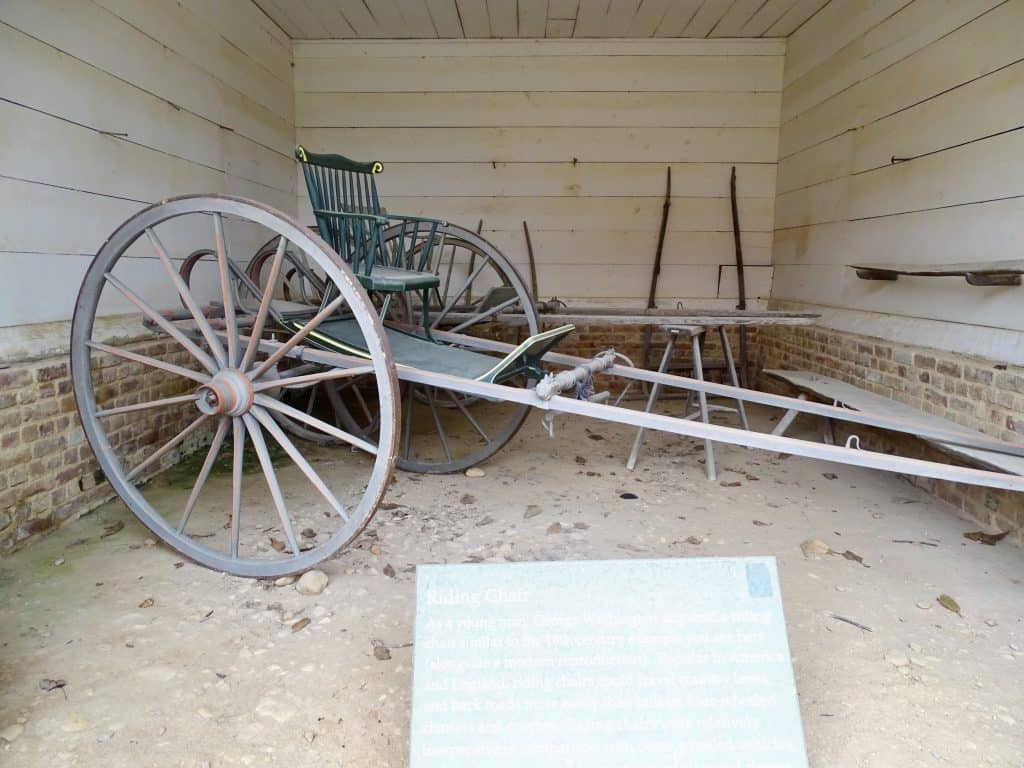
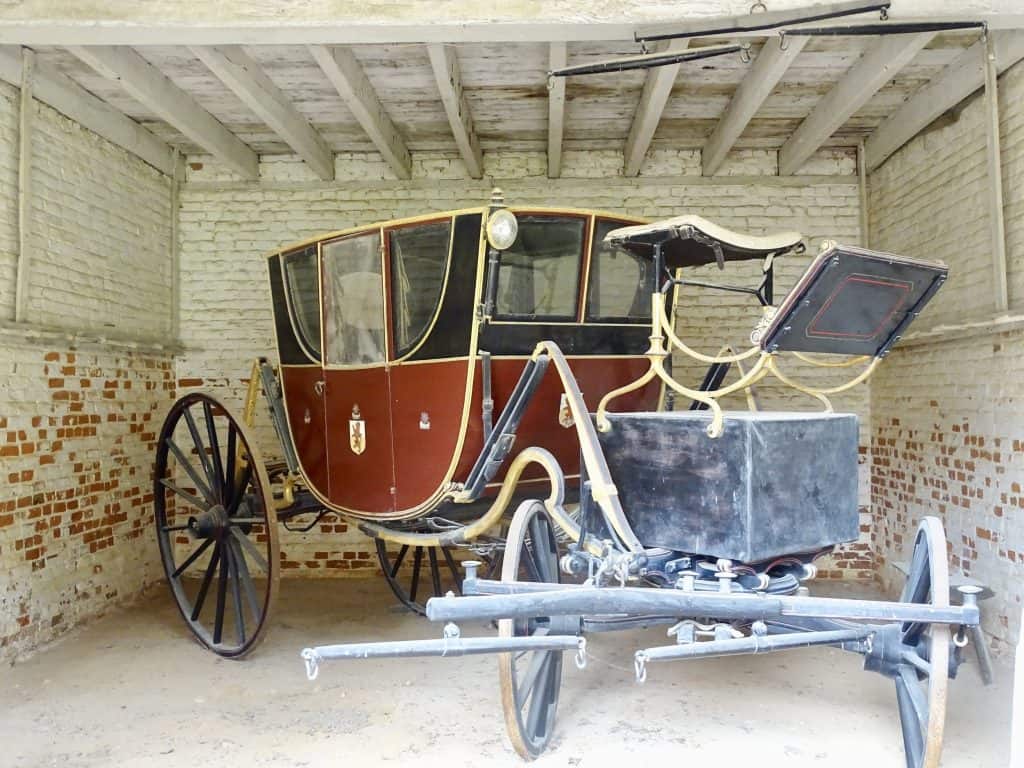
3. Outside structures to the right of the house: Peek inside the Clerk’s Quarters, Smokehouse, Washhouse and Coach house and check to see if any animals are being housed in the coach house.
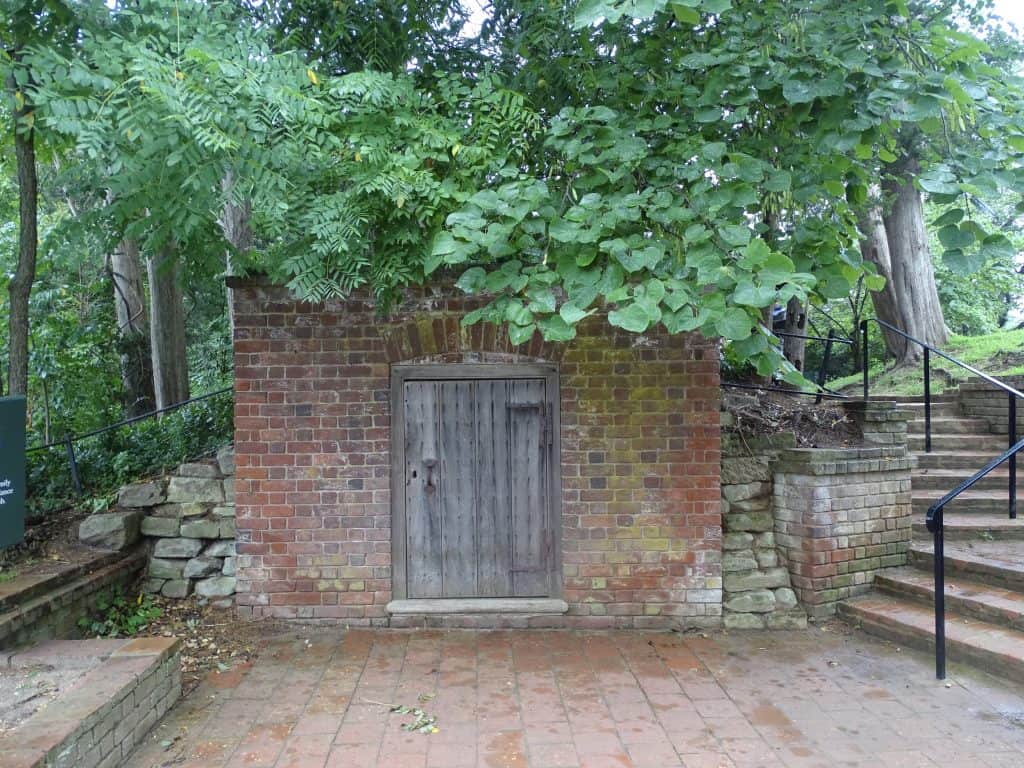
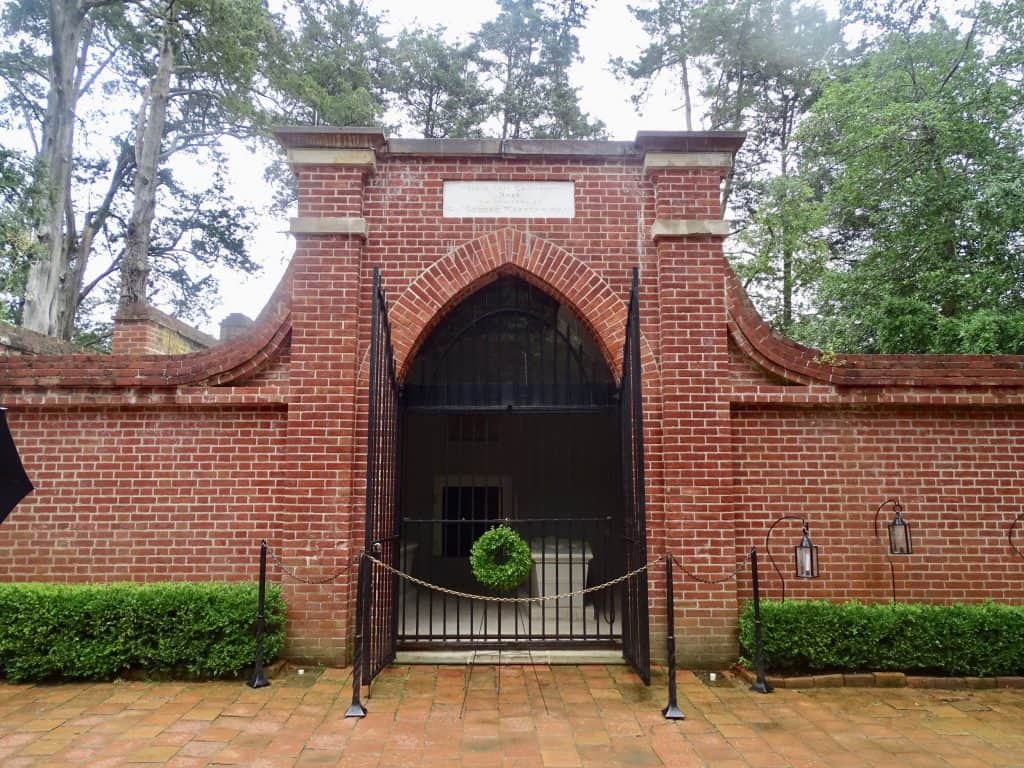
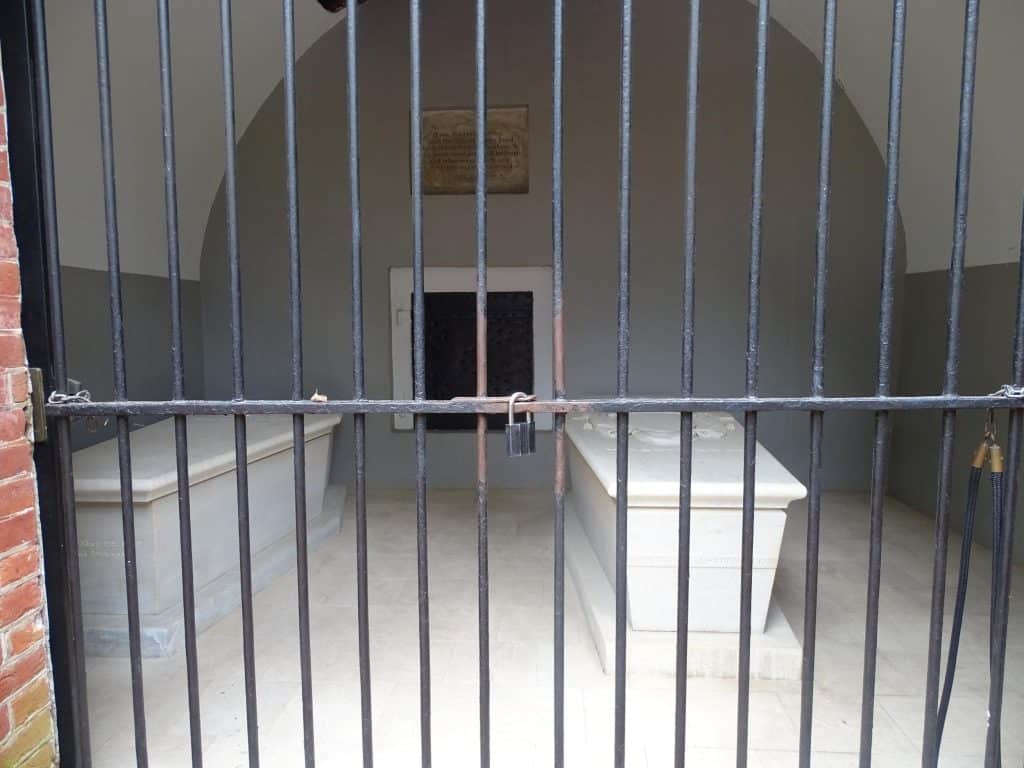
4. Tomb of Washington’s family: Start at the Old Tomb vault where George, Martha, and 20 other family members lay in repose until 1831 when they were moved to the current tomb. George is buried on the right, Martha on the left, and family members in the vault in the back.
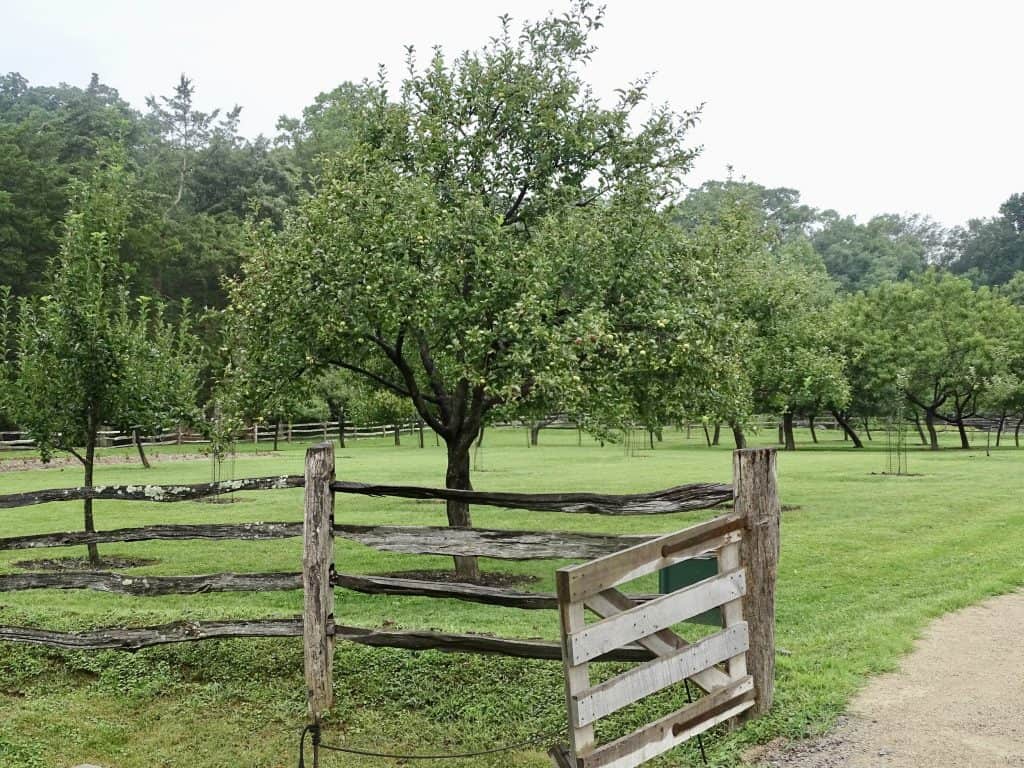
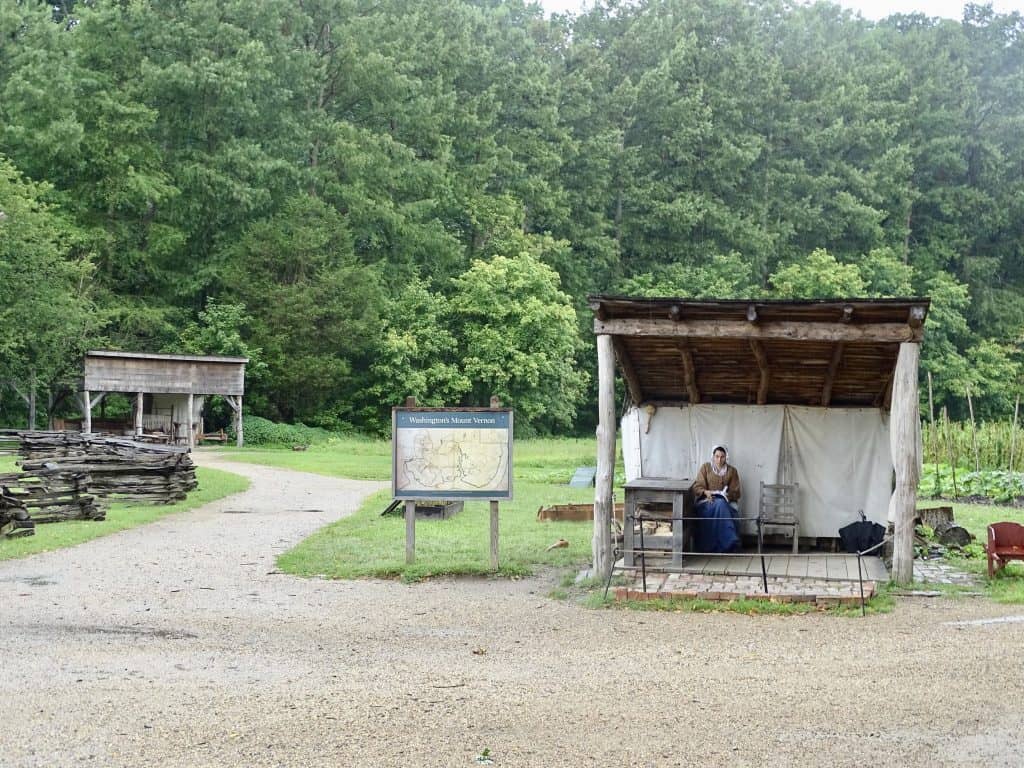
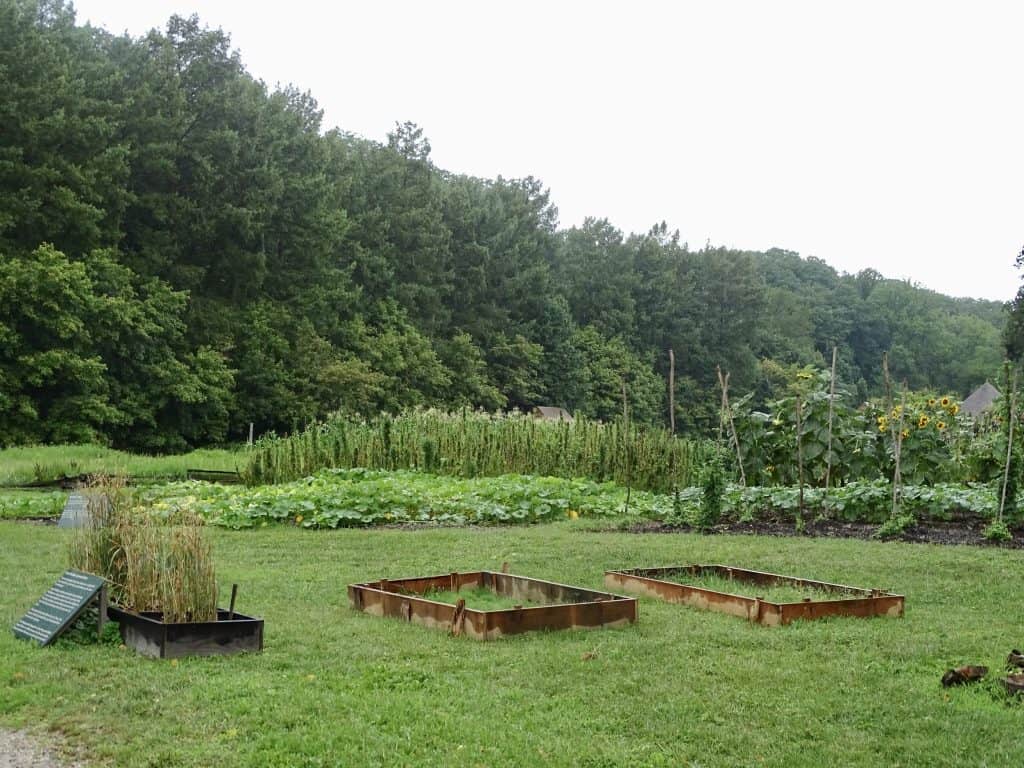
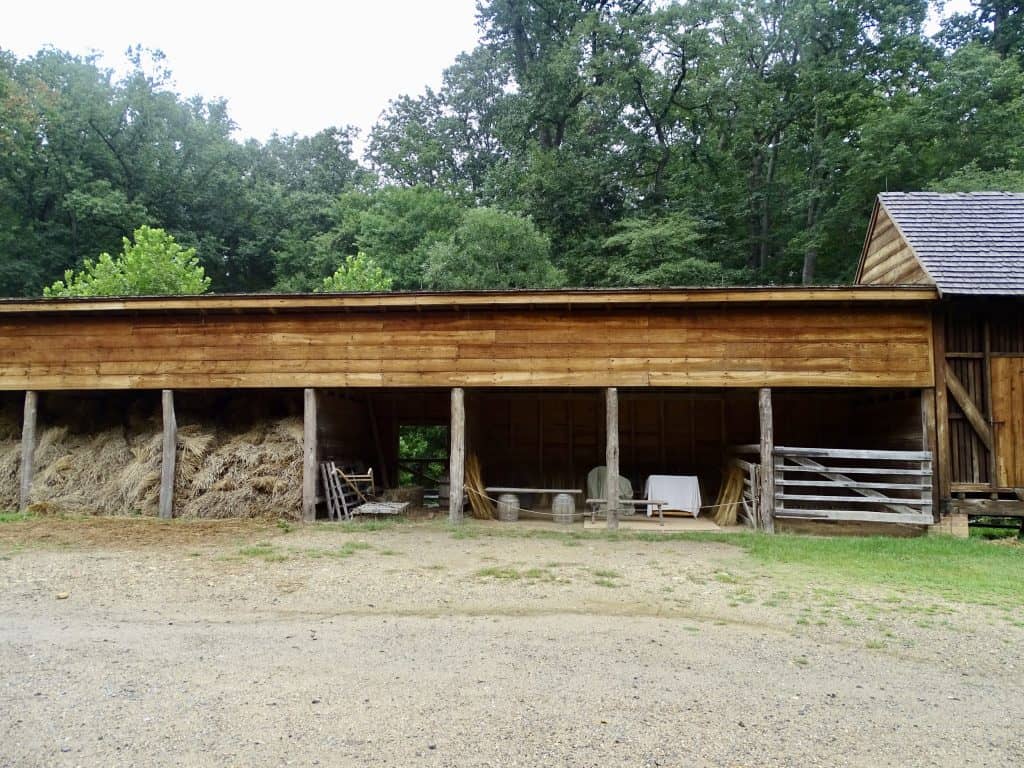
5. Pioneer Farm and various fruit farms: Washington planted apples, cherries, peaches, and many vegetables, as well as wheat, his most profitable crop. The farm includes animals like sheep and hogs and live interpreters who share personal stories.
Would you like to save this?
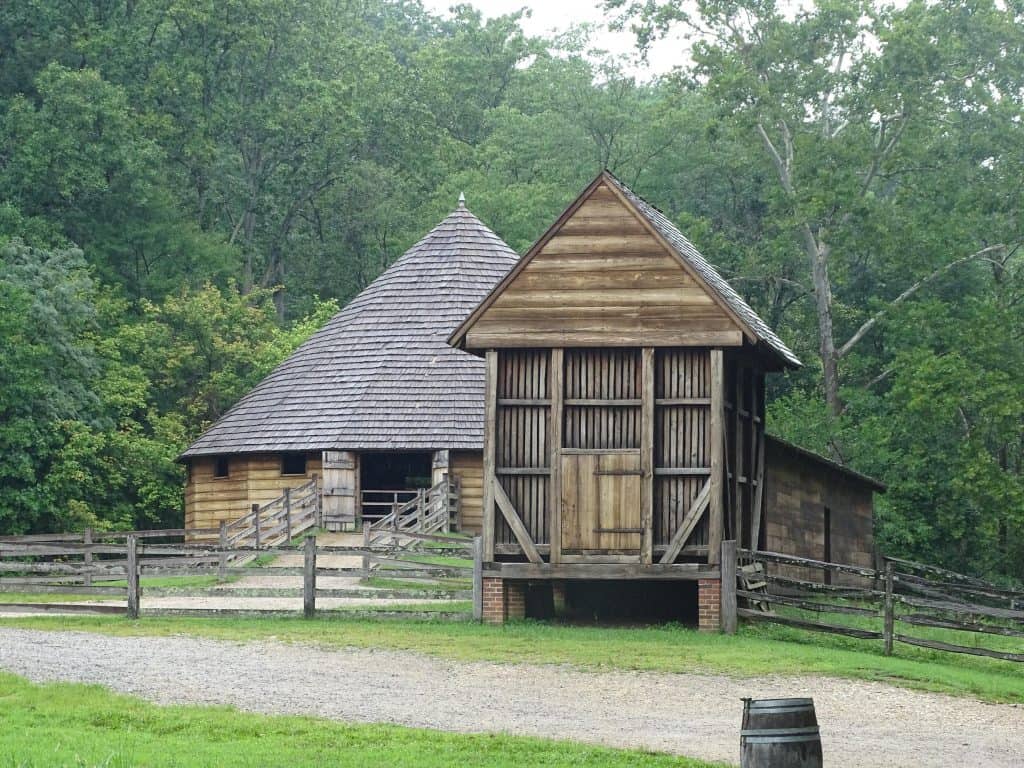
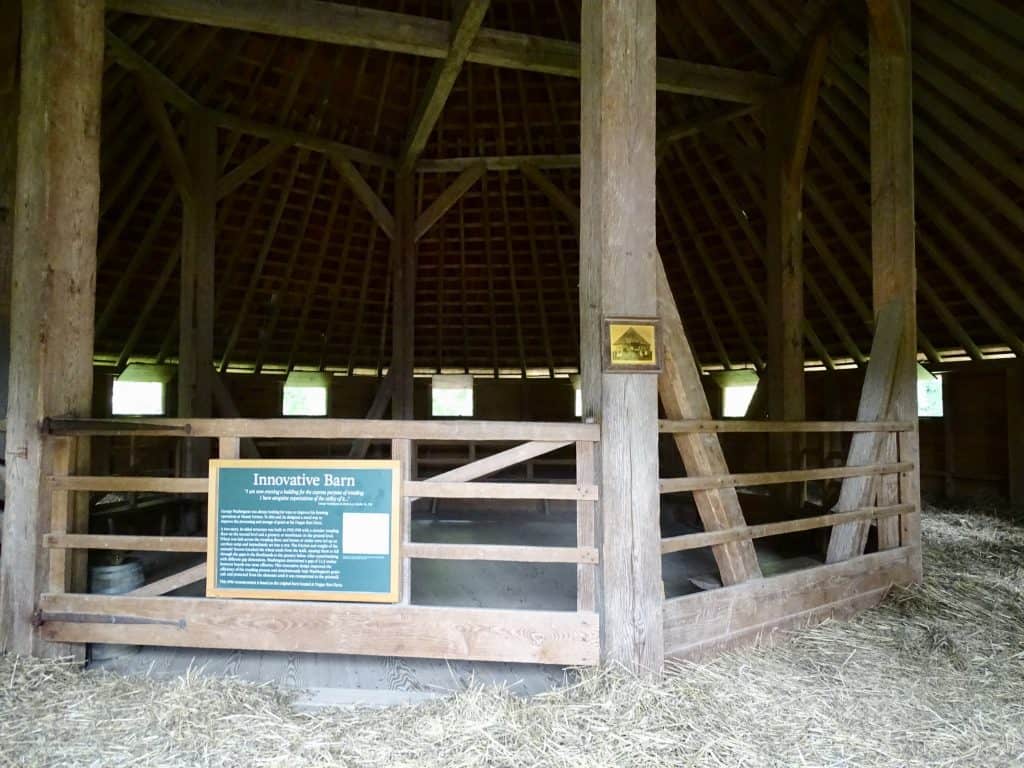
6. A 16 sided Innovation Barn used to protect the grain produced from thieves: It was originally built in 1792 and then reconstructed in 1996 to look like the original barn. Washington’s handwritten plans for the barn can be seen in the museum’s collection. Throughout the summer, there are daily demonstrations of wheat treading at the barn.
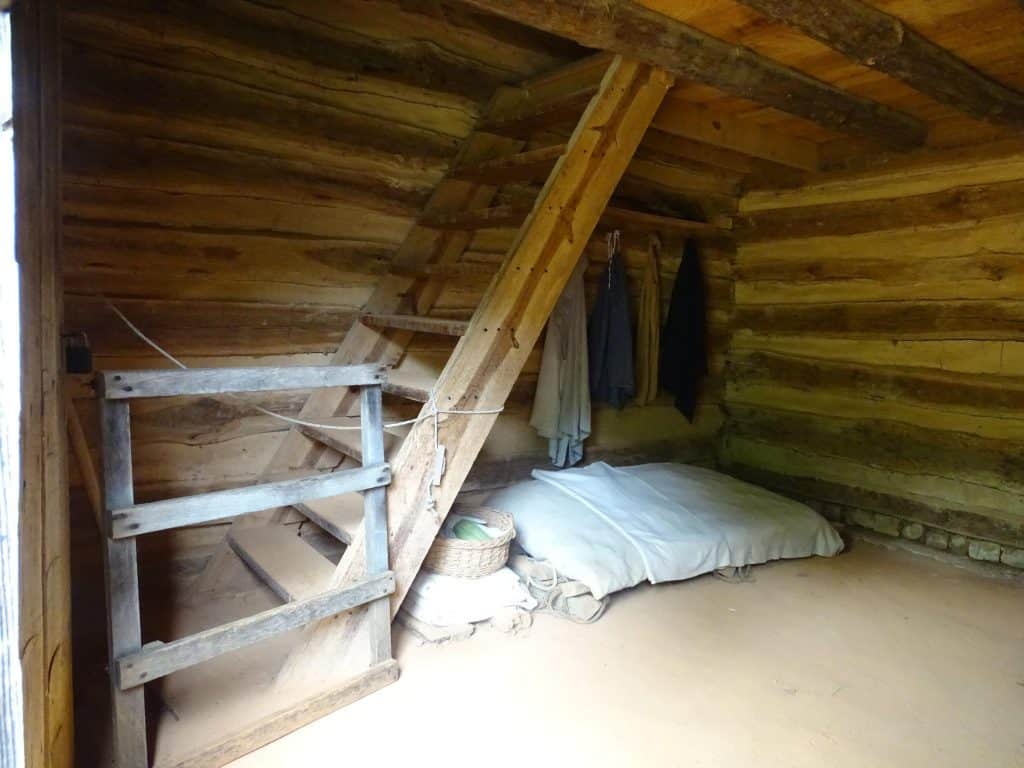
7. Slave Cabins: Mount Vernon had over 300 enslaved people, most of whom were field workers. An average of 6-8 people lived in one cabin. The cabins were reconstructed based on documents and 19th century photographs.
8. Walking trails: There are several throughout the complex. Children will most enjoy the Forest Trail, which should take about fifteen minutes to travel between Pioneer Farm and the Education Center. There are some steeper inclines so make sure to walk carefully and wear sneakers.

9. Reynolds Museum: It includes 500 original objects and documents in seven galleries of history. There are tons of interactive touch screens with information about the artifacts and Washington family. Note: photos are not allowed in most of the museum. Children will be especially interested in:
- coffee and chocolate pots
- a fully set dining room
- some of Martha Washington’s jewelry
- pocket telescope “spy glass”
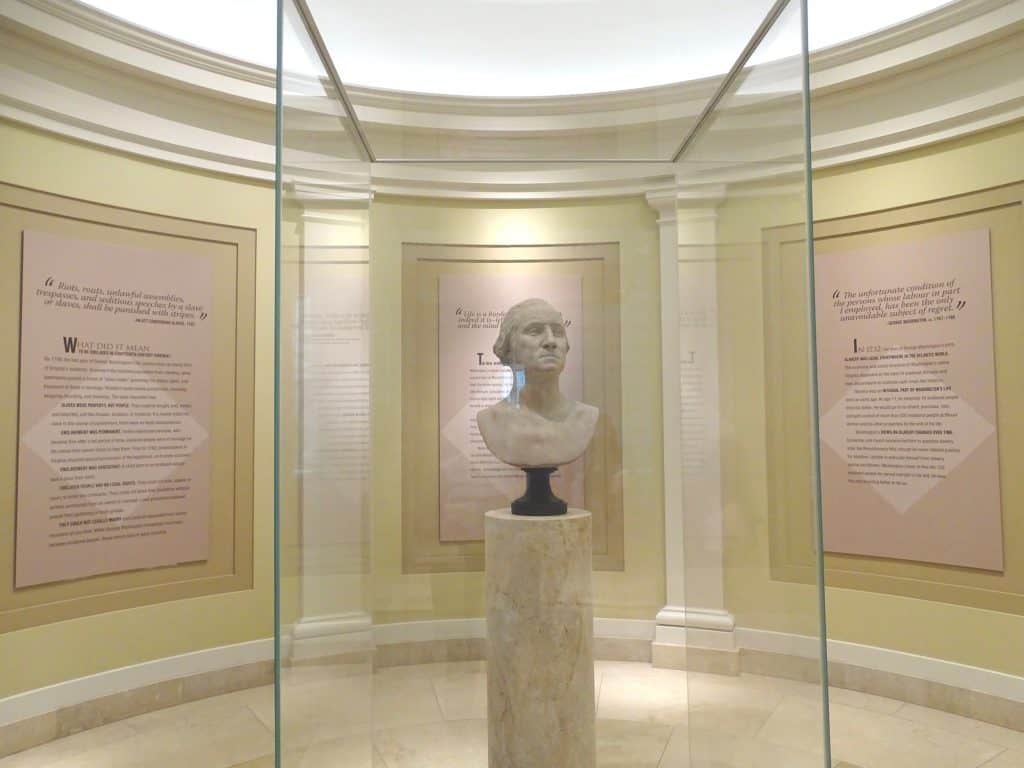
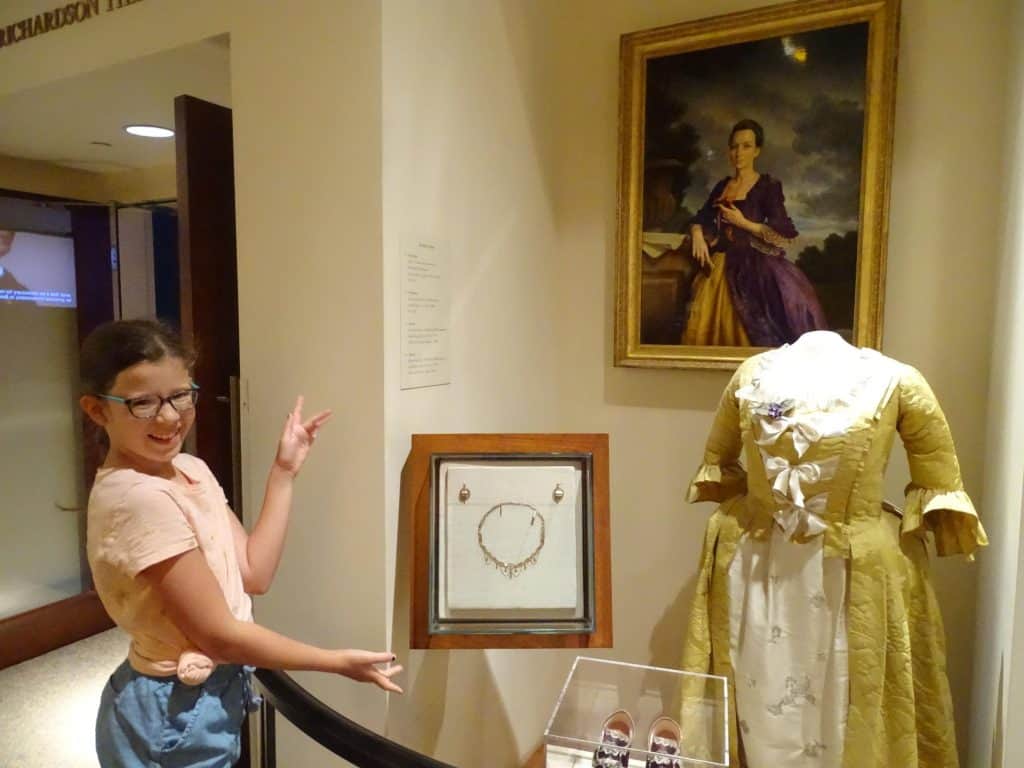

10. Education Center: A very popular spot which has 15 immersive, multimedia galleries and three theater experiences. This will surely be the place children linger the longest. There are so many engaging ways for children to learn about Washington’s beliefs, battles, and the birth of America. Some of our favorite exhibits include:
- Learning the rules of Civility
- Studying the diorama of the Battle of Fort Necessity
- Examining a 1753 Smallsword Washington used in the French and Indian War
- Viewing a replica of Martha Washington’s dress
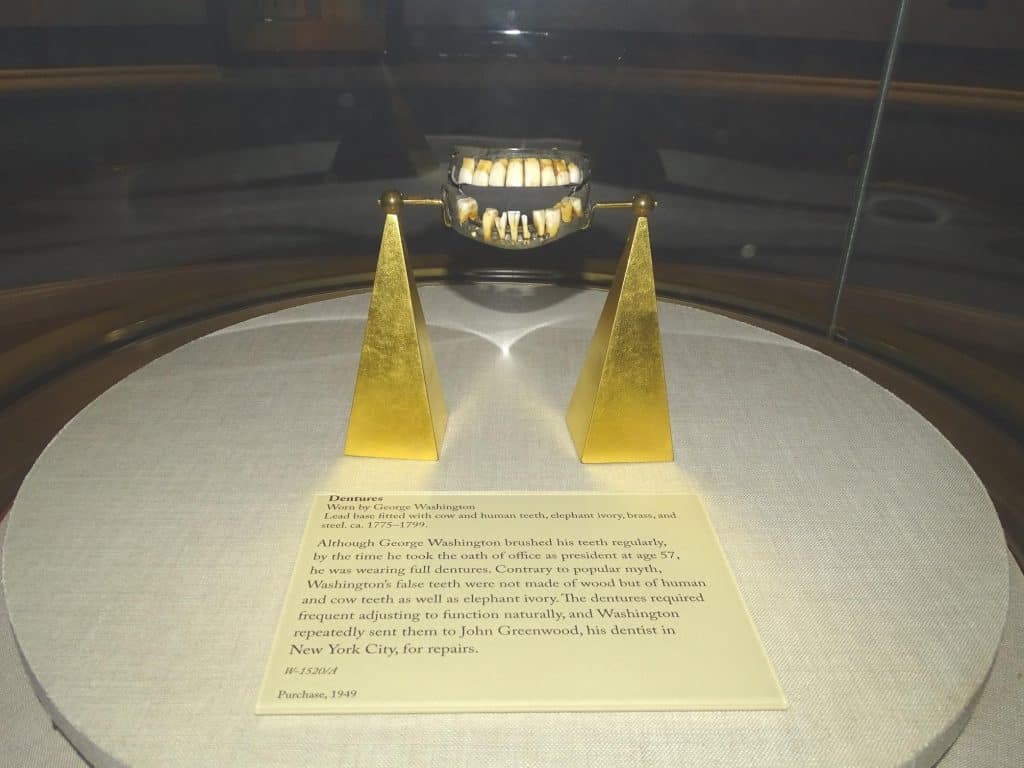
- Seeing George Washington’s dentures!
- Watching the “Revolutionary War” 4D film explaining the American Revolution and Washington’s victories in Boston, Yorktown, and Trenton. This film is 22 minutes long and includes falling “snow”. Note: there are several loud noises, flashing lights, and many scenes of war with death and violence. Younger children may be scared.
- Thinking like Washington in the “Be Washington” interactive theater. Sit at a desk with a touch screen and see if your decisions regarding war match Washington’s decisions. This activity takes 10 minutes
- Choose a favorite medal from the collection of 30 peace medals.
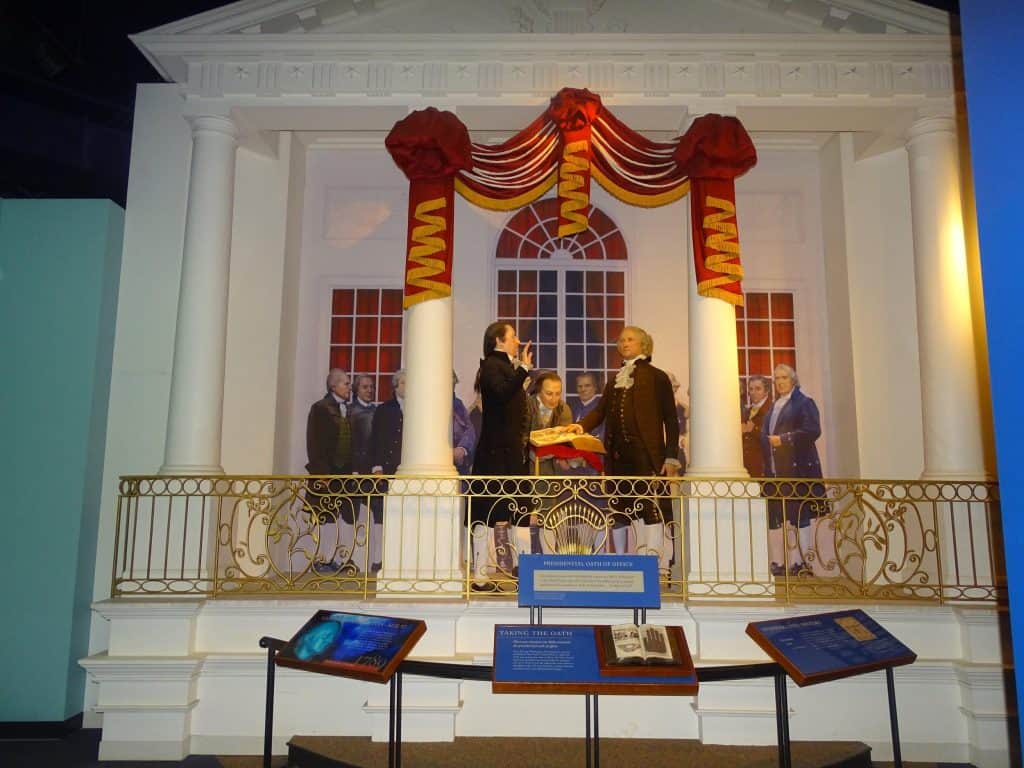
- Checking out Washington’s Inauguration at Federal Hall in New York City
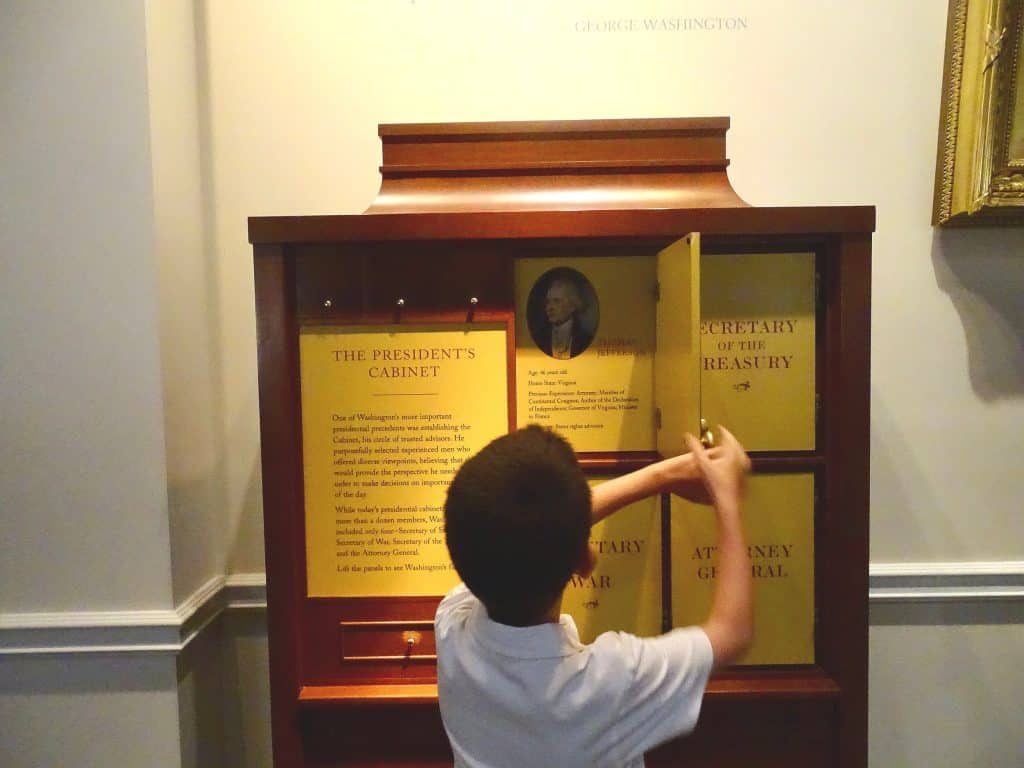
- Opening up Washington’s “Cabinet” to learn more about his important confidants
- Seeing the map of the 1793 plan to make Washington DC the permanent capital of America.
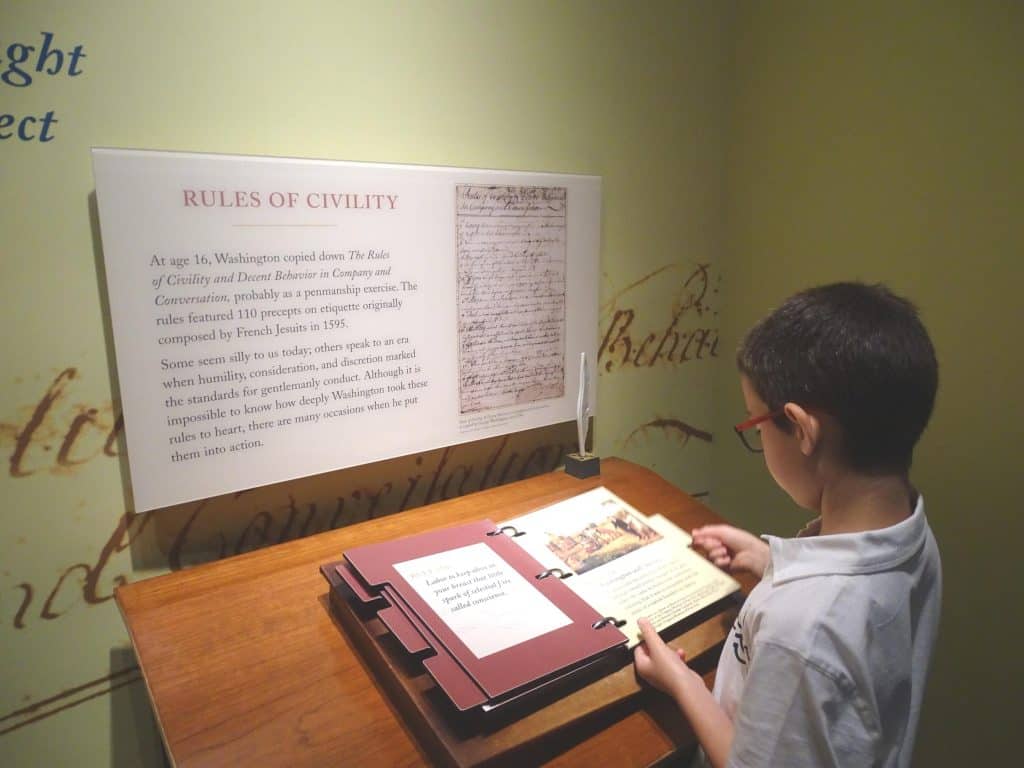
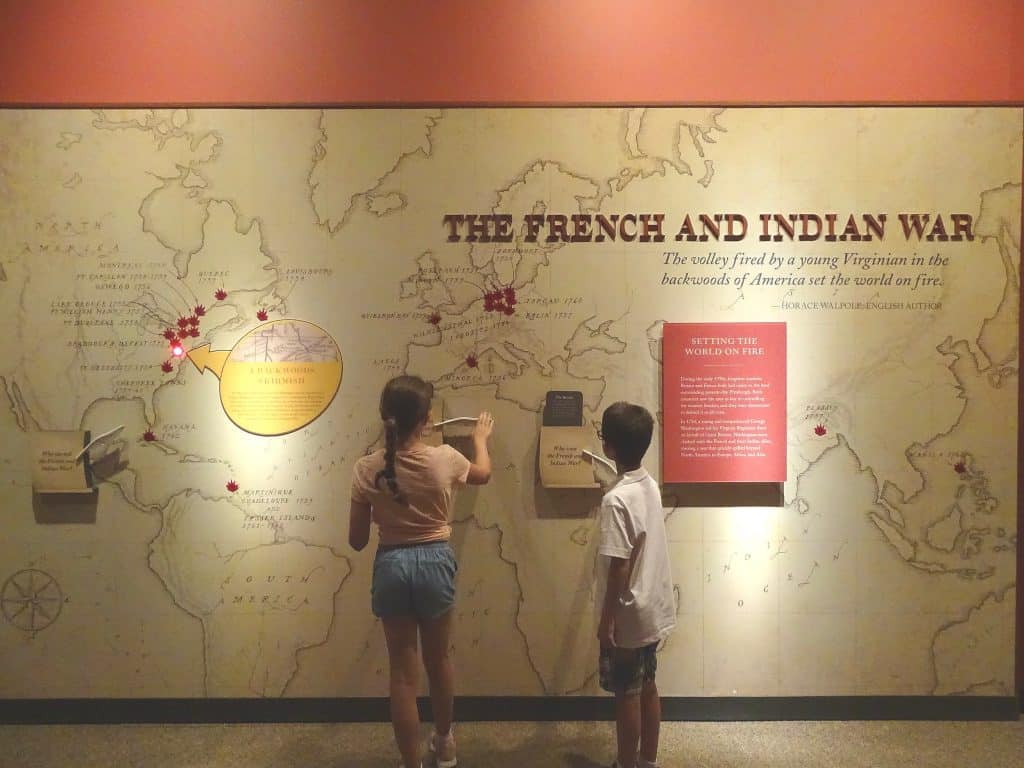
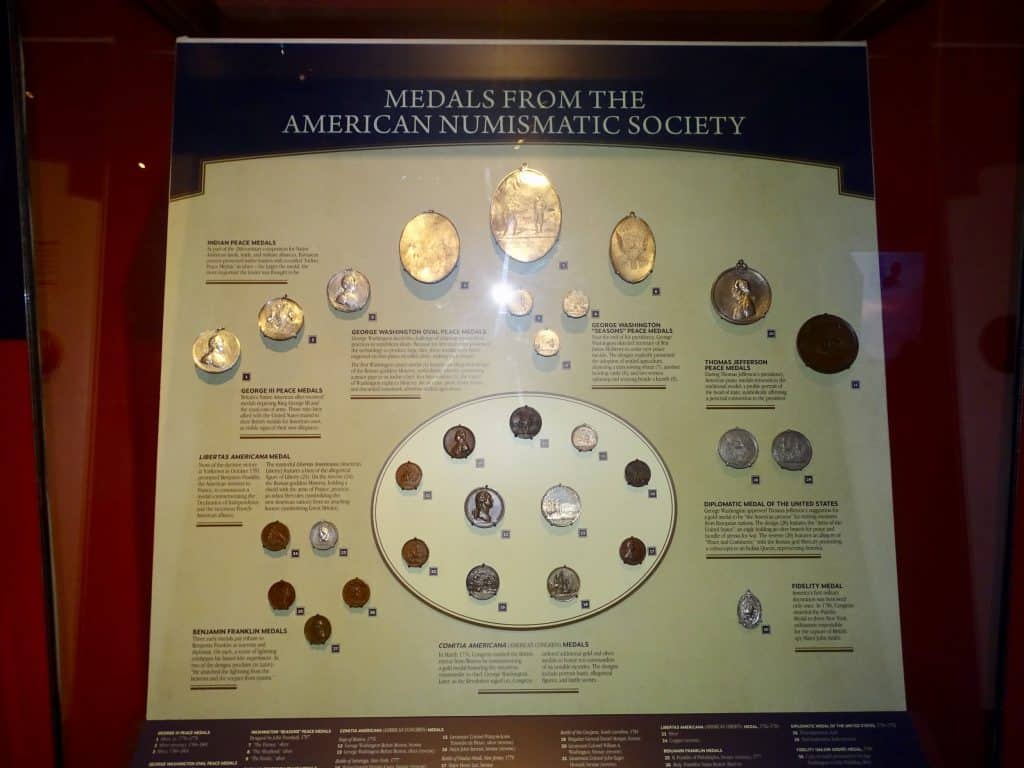
Other areas of interest: We didn’t find these areas relevant for our children but other guests might enjoy:
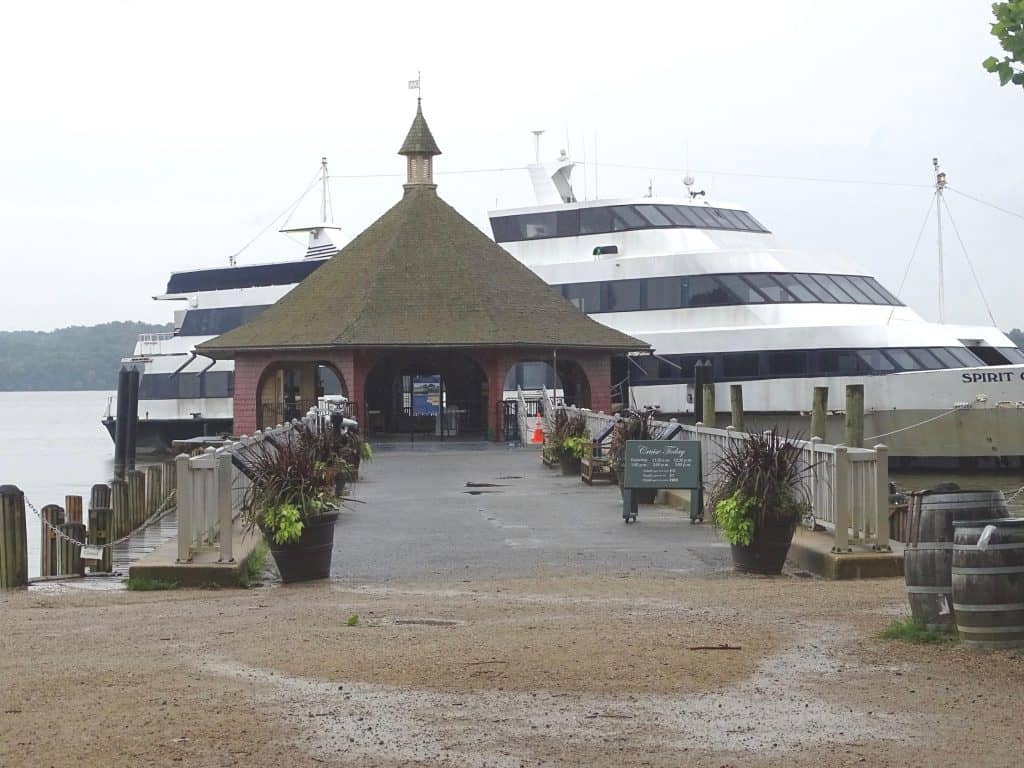
- Wharf, where the Spirit of Mount Vernon is docked. Daily cruises on the Potomac are offered- check here for more information.
- Distillery and Gristmill– take a 5 minute (free) shuttle ride from the main lot to the Distillery and Gristmill. Washington built the gristmill in 1770 to produce corn and wheat and then added the distillery in 1798. The following year, it was one of the largest distilleries in America, producing nearly 11,000 gallons of whiskey. Visitors can see the entire 18th century distilling from seed to barrel. Some of the grain products and whiskey made on site are even available in the gift shops.
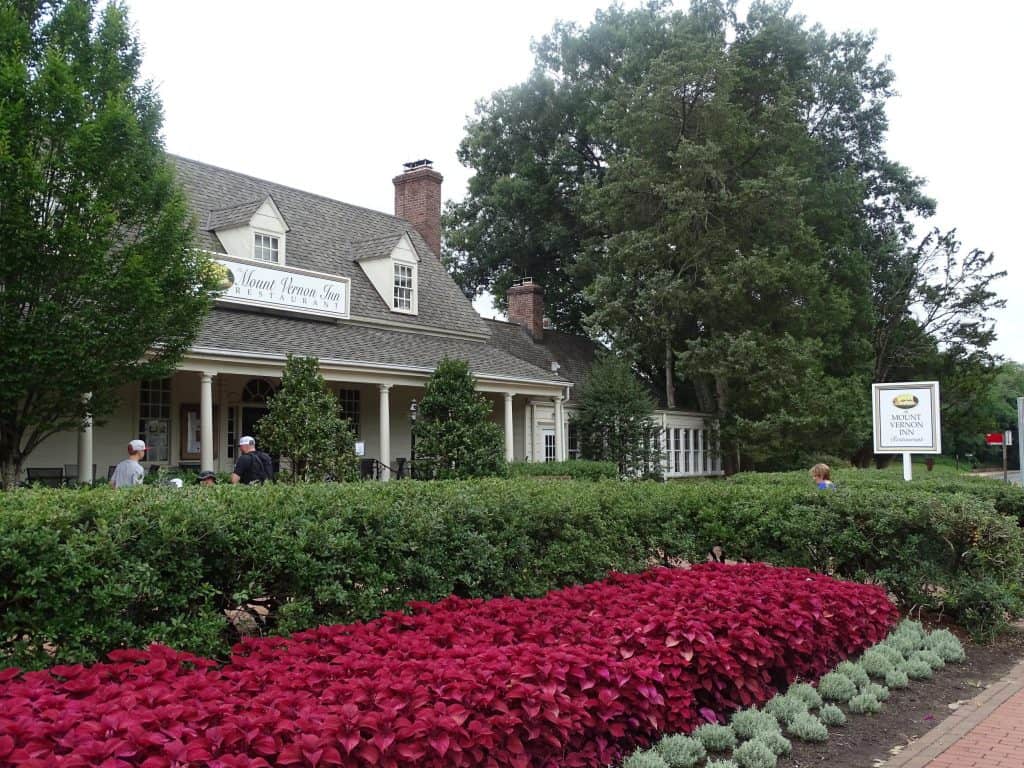
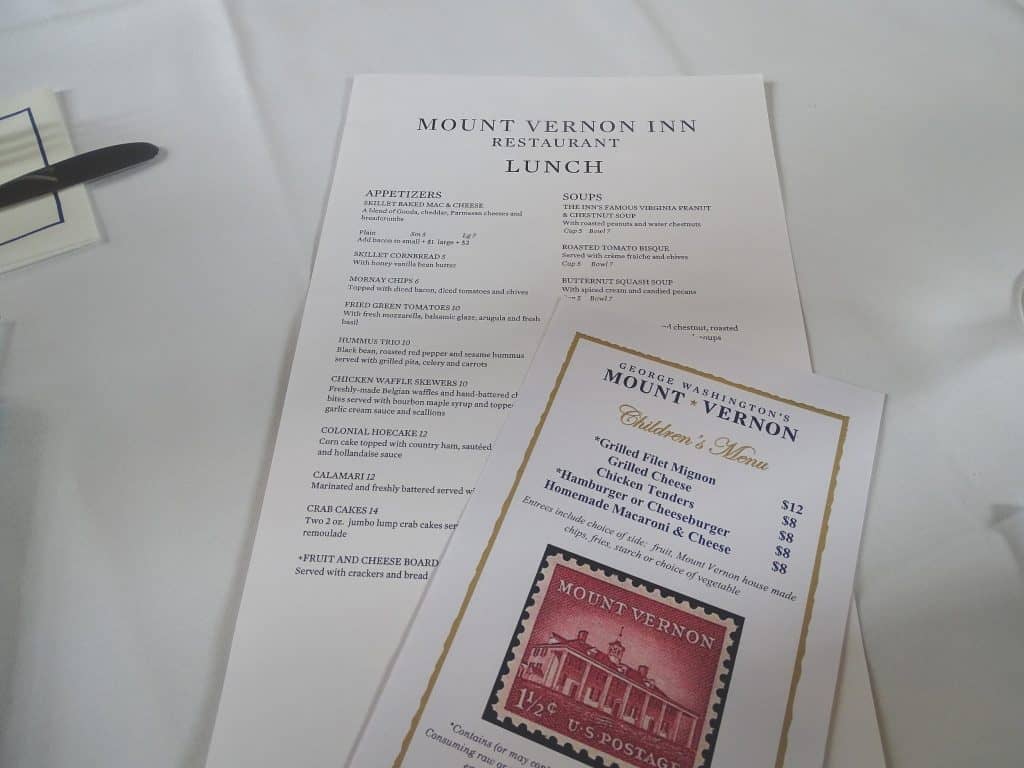
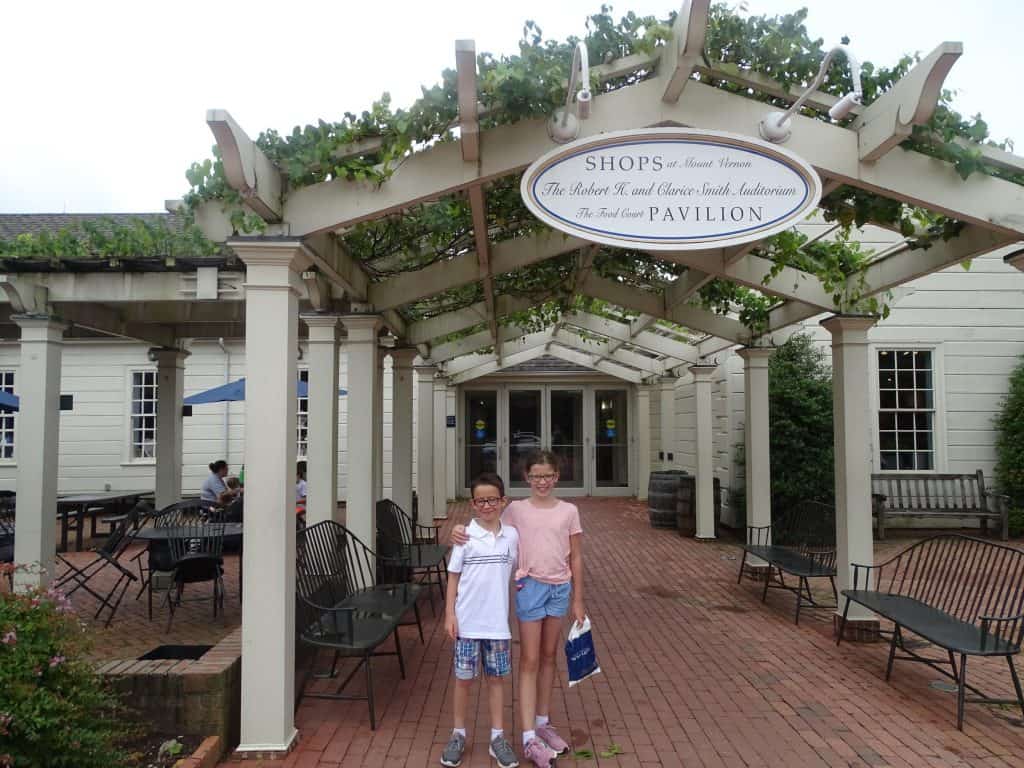
Eating at Mount Vernon: The Mount Vernon Inn Restaurant opens each day at 11am and offers lunch and dinner. The menu has a wide variety of options and extensive wine list. The kids menu has great choices, too! There is also a food court which offers faster service for breakfast and lunch items and is a peanut free facility- check here for the menu.
If you’re interested in other “living history” locations, check out our adventures at Mystic Seaport in Connecticut and Old Sturbridge Village in Massachusetts.
Looking for other adventures in Washington DC? See our index of posts here, our full Washington DC City Guide here, our posts featuring the Kennedy Center for Performing Arts, the National Zoo, the Library of Congress, the Smithsonian American Art Museum and National Portrait Gallery, the National Museum of African American History & Culture, the National Museum of the American Indian, the International Spy Museum, the National Building Museum, the National Postal Museum, and follow along on our adventures on Instagram, Facebook, Pinterest, and X.
Disclosure: My family was given a media pass to visit Mount Vernon. All opinions expressed are my own.

I’m sorry I never visited Mount Vernon. It seems that the museums address so many aspects of living in that era. I’d be interested in seeing the 16th sided Innovation Barn, the Education Center, and so much more.This is a very thorough explanation of everything both adults and children would enjoy. It sounds like it’s done quite a thorough job of the era, the person, and the culture.
I’m sorry I never visited Mount Vernon. It seems that the museums address so many aspects of living in that era. I’d be interested in seeing the 16th sided Innovation Barn, the Education Center, and so much more.This is a very thorough explanation of everything both adults and children would enjoy. It sounds like it’s done quite a thorough job of the era, the person, and the culture.
I’m sorry I never visited Mount Vernon. It seems that the museums address so many aspects of living in that era. I’d be interested in seeing the 16th sided Innovation Barn, the Education Center, and so much more.This is a very thorough explanation of everything both adults and children would enjoy. It sounds like it’s done quite a thorough job of the era, the person, and the culture.