The Grand Ole Opry in Nashville, Tennessee

| | |

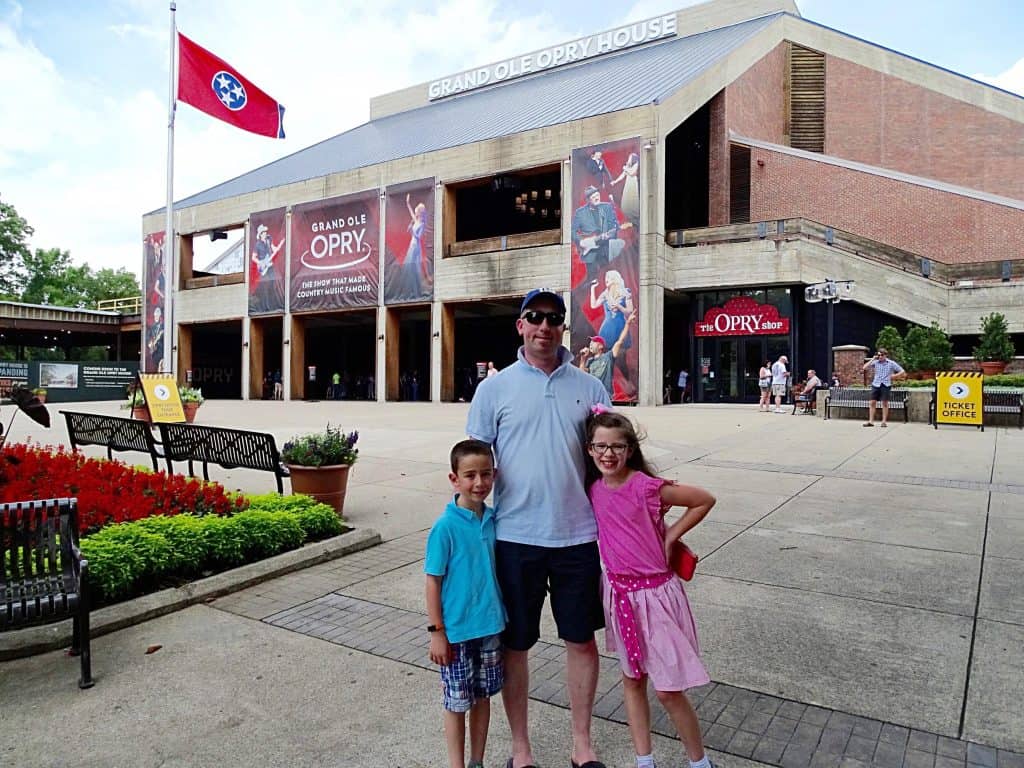
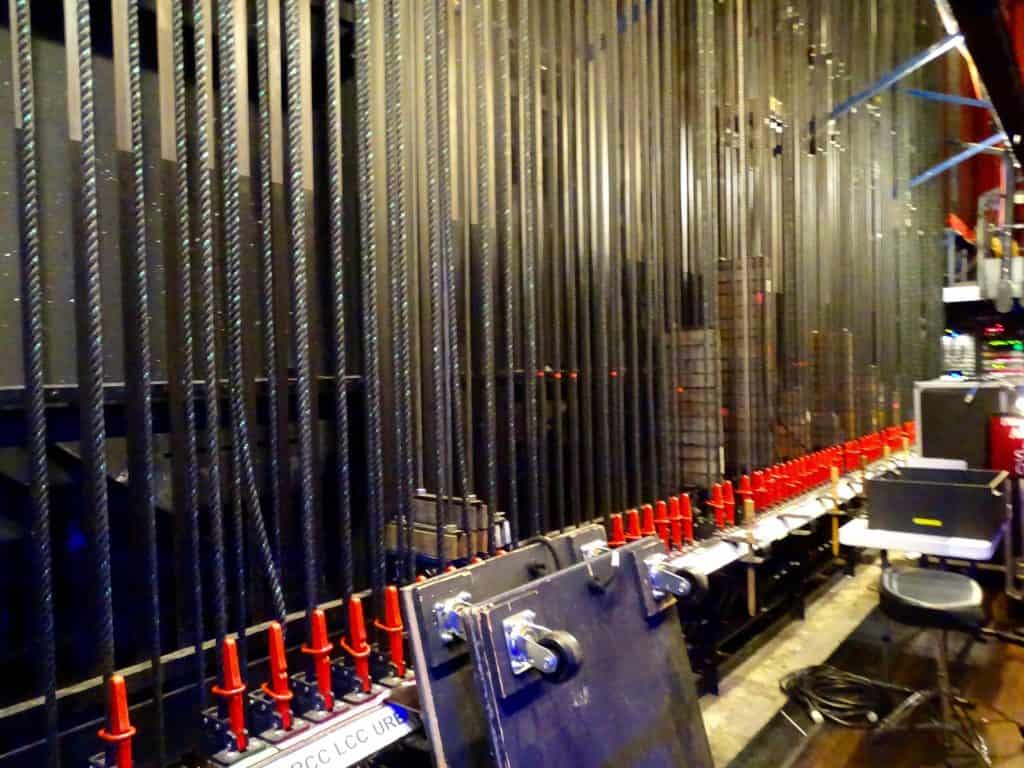
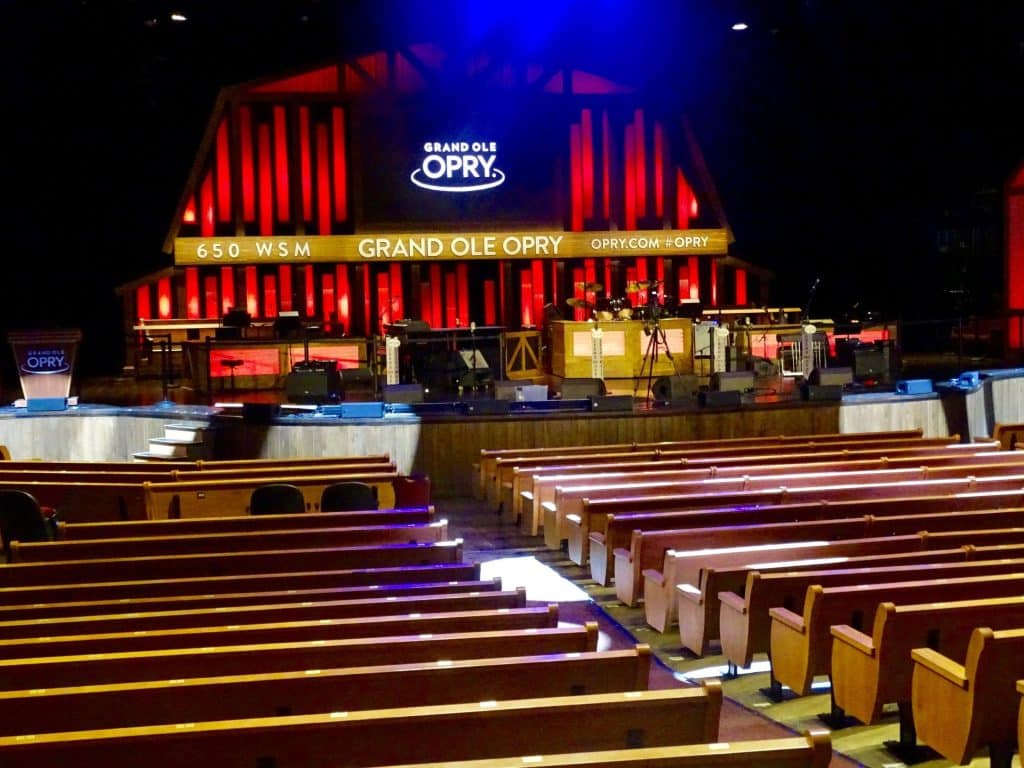
My family received most of their country music education when we visited the Country Music Hall of Fame and Museum on a recent trip to Nashville. However, no education would be complete without a trip to the Grand Ole Opry. The backstage tour gave us an insider’s perspective to what it’s like for one of the 64 living, active cast members who perform at the Opry. Since its inception, the Opry has invited (invitation is a must) 215 musicians to become members, 74 of whom are women.

The Opry started as a barn dance in 1925 and provided radio music to rural areas of the south. In 1943, the Opry moved to the Ryman Auditorium, known as the “Mother Church of Country Music” where it stayed until debuting at its current location in 1974. In 2010, the 4400 seat Opry was devastated by over four feet of flooding, but was quickly rebuilt and reopened in September of 2010.  It’s located about fifteen minutes north east of downtown Nashville.

Traveling with Kids:

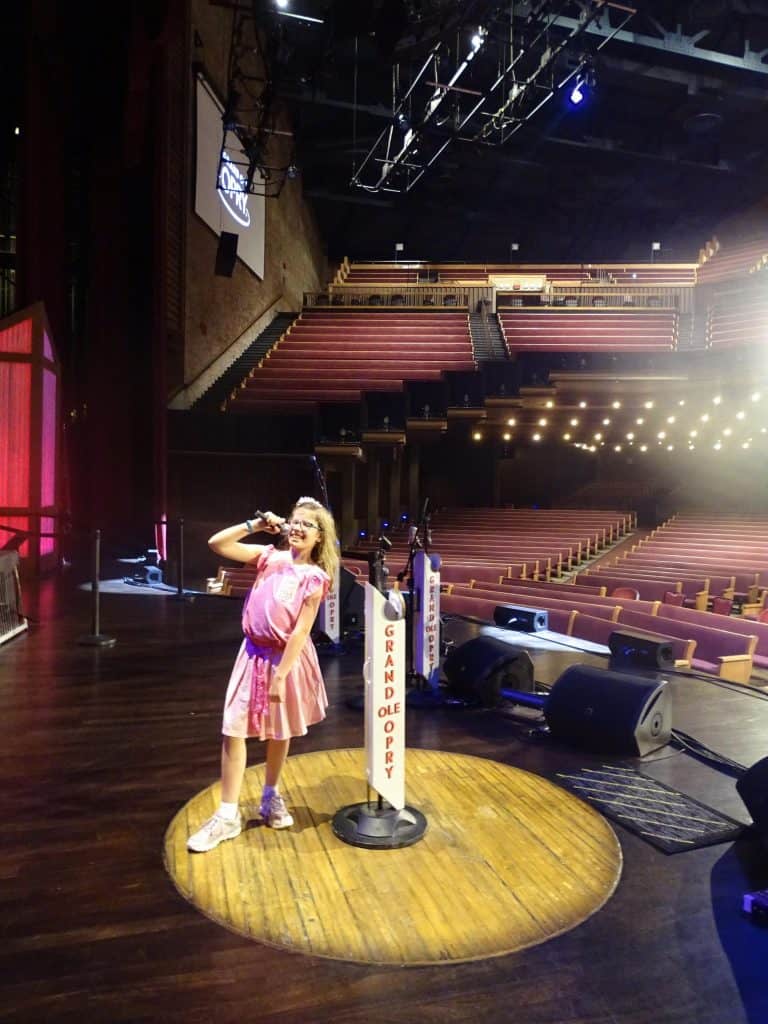
  • Younger children might not be super engaged in this tour. There is a lot of listening to a tour guide, but not a lot of interaction (guides are friendly and will answer questions anytime). My 8 and 10 year old enjoy the tour, esp. when they got to go on stage.

  • Use the restrooms at the ticket office or right before the tour officially starts- restrooms are located in the spot where you’ll watch the first video.

  • The tour lasts one hour and ends in the gift shop.

  • Strollers are allowed on the tour and the entire tour is on one floor.

Ten Can’t Miss Spots on the Backstage Tour of the Grand Ole Opry:

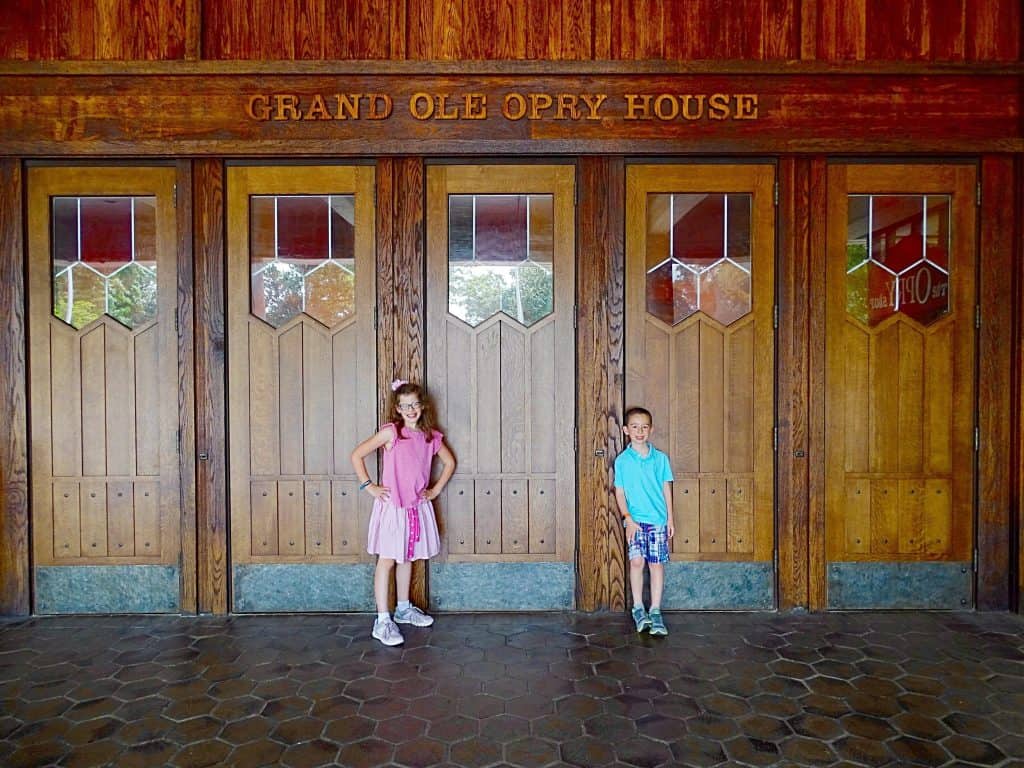
  1. Photo opt spots outside the Opry, like the two giant guitars and wooden doors.

  2. Blake Sheldon’s video introduction of the history of the Opry.

  3. Star Walk, the entrance performers take into the Opry before nightly shows.

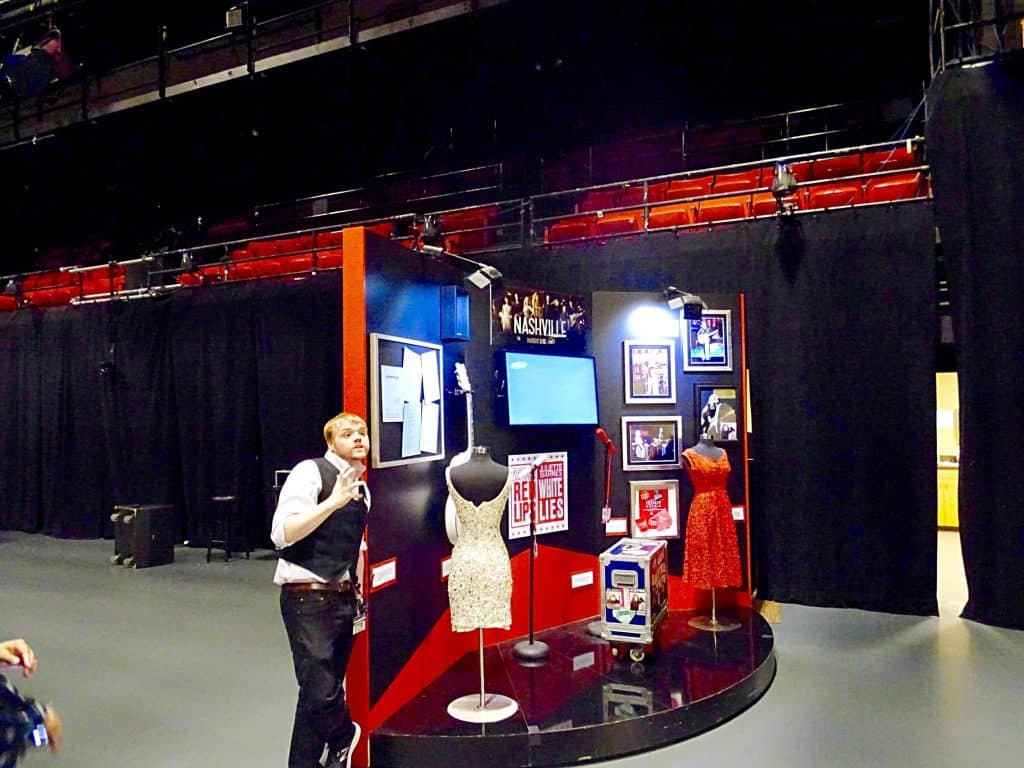
  4. Sound Stage, where the television show “Hee Haw” was taped. Your tour guide will quiz the group on their old television show knowledge.

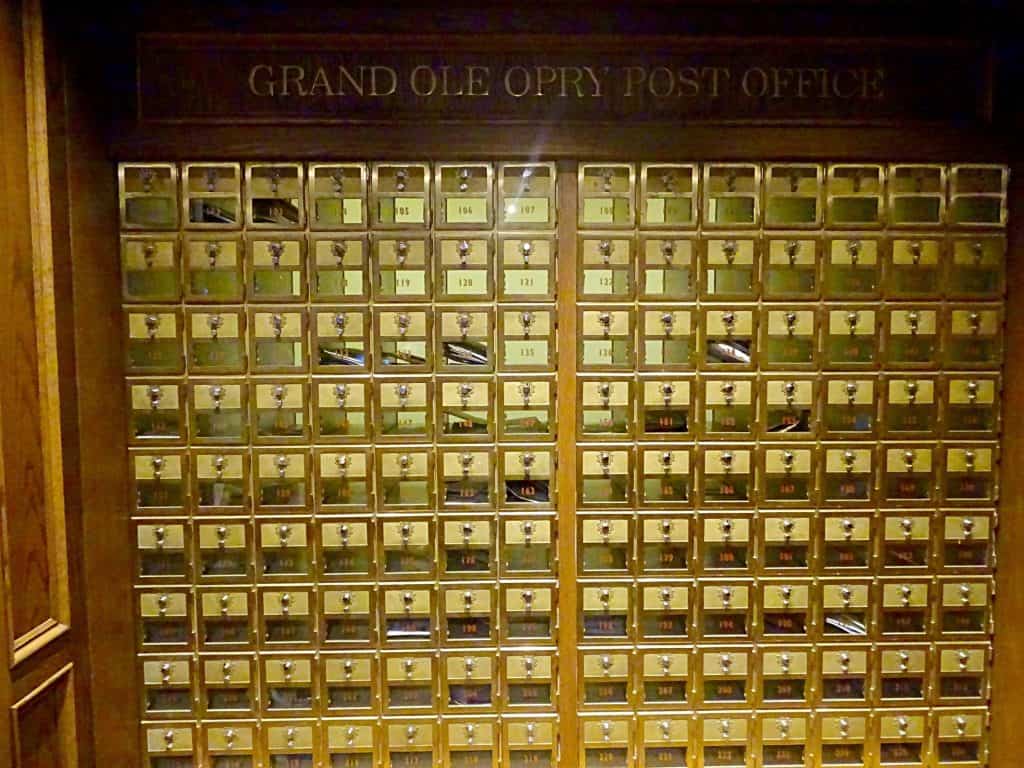
  5. US Post office for each member of the Opry- all fan mail gets delivered to those mailboxes (Alan Jackson got his start as a mailroom attendant!)

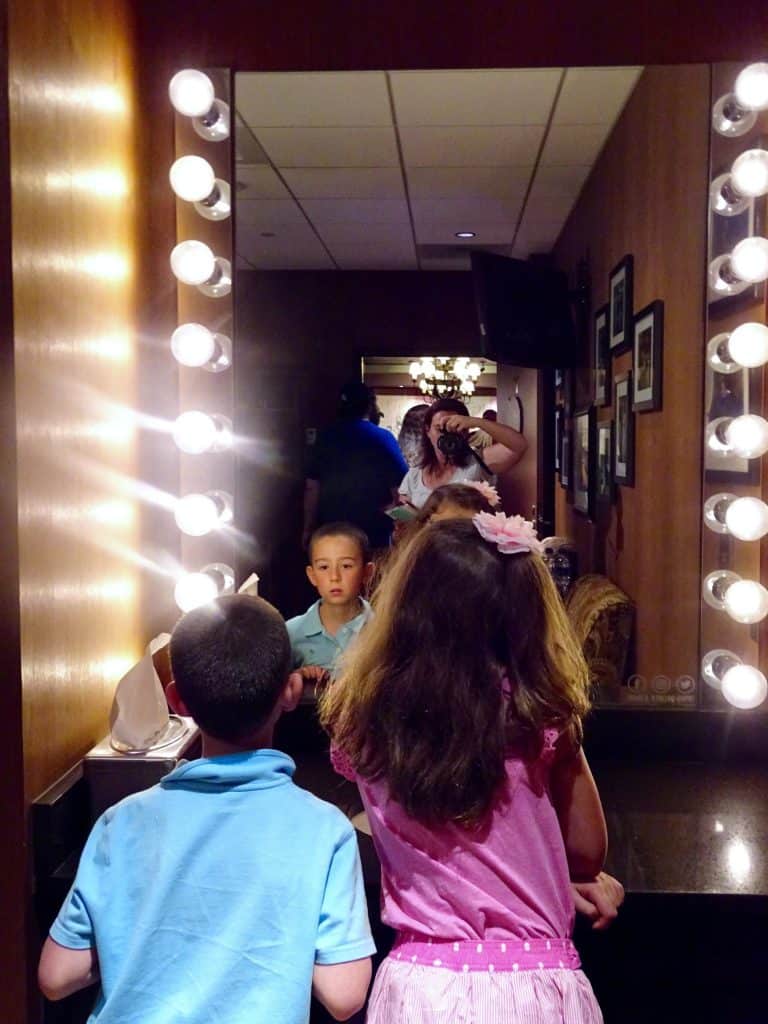
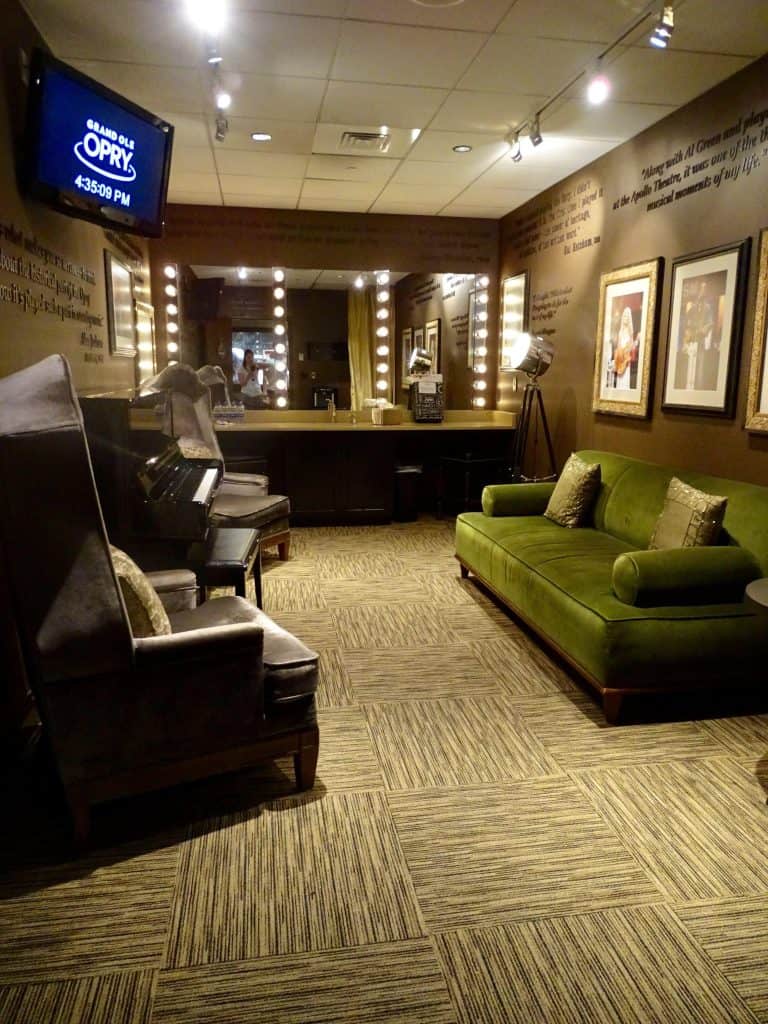
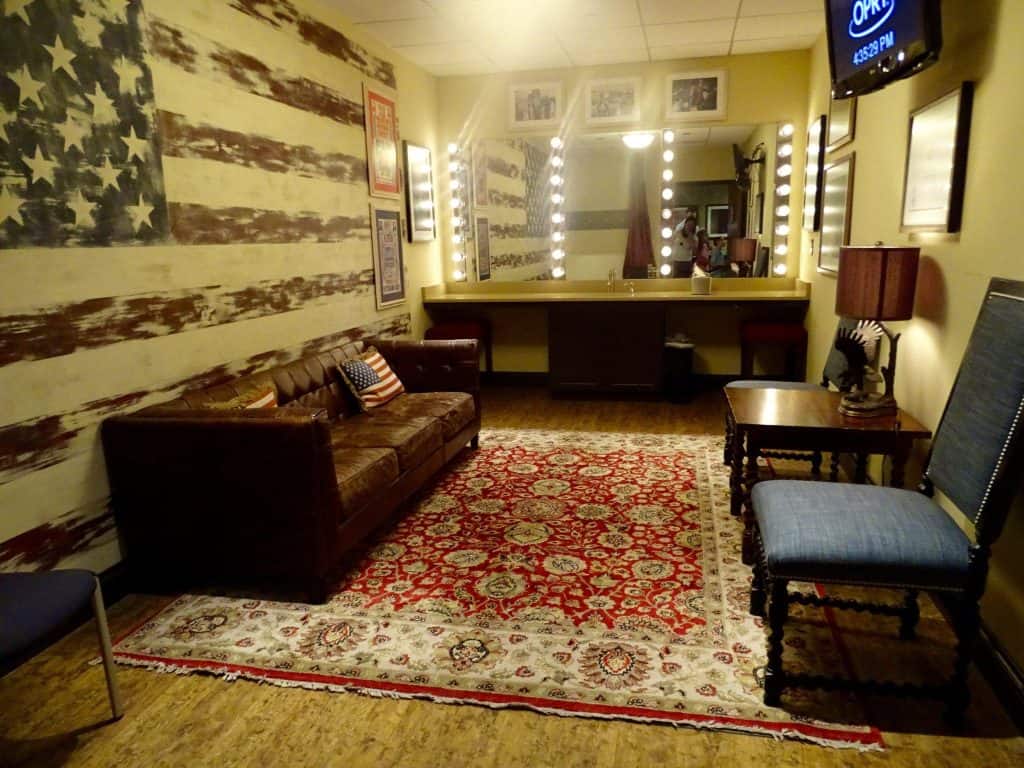
6. Eighteen dressing rooms, each with a different theme for decor.

Would you like to save this?

We'll email this post to you, so you can come back to it later.

7. Green Room, with areas to relax before a show- check on the flood water marks.

8. On stage pews, where special guests of performers can seat and look out to the audience.

9. The six foot “circle” of wood  in the center of the stage where all musicians stand when they perform- it’s from the original Opry. There is a photographer to take family photos inside the circle, which will be available at the end of your tour.

10. Gift shop, filled with clothing, ornaments, and souvenirs of your visit. Read about why we like collecting souvenirs from our trip here.
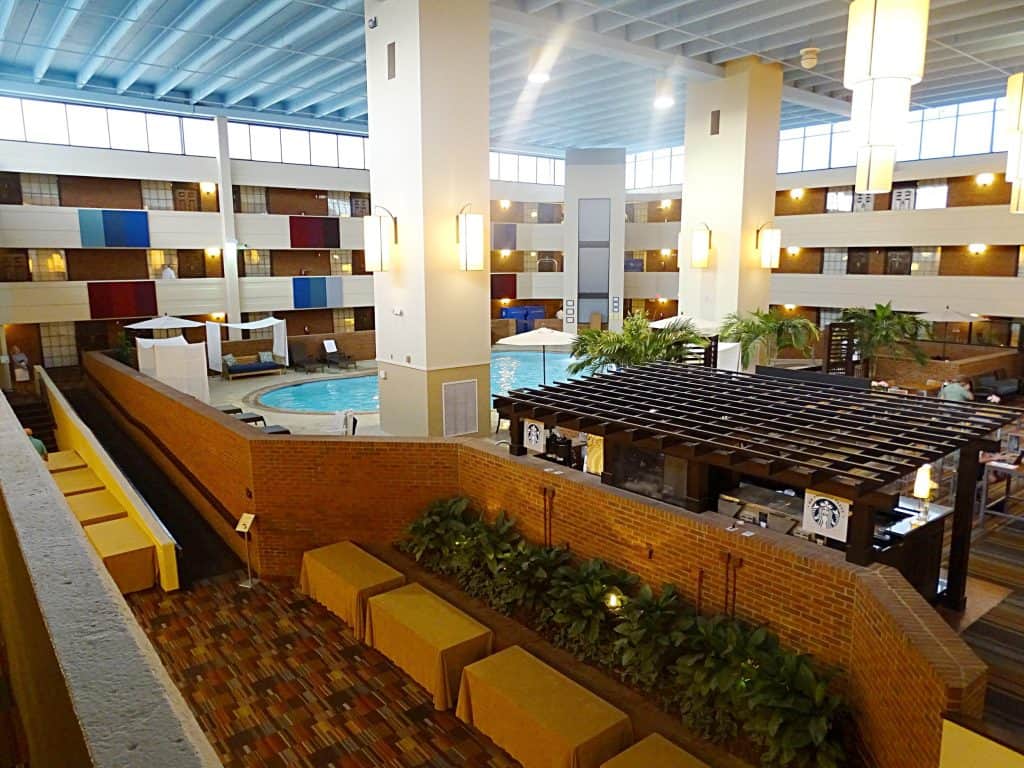
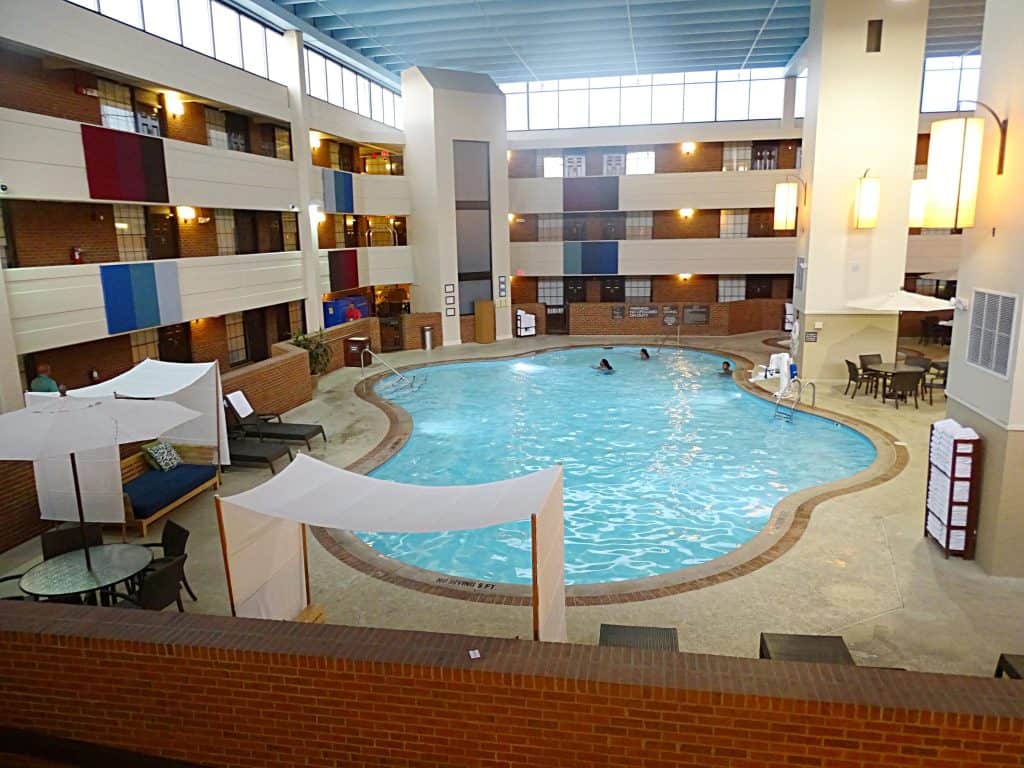
Parking , Eating, and Staying Nearby: Literally across the road from the Opry is the Opry Mills Mall, with a Madame Tussaud’s Wax Museum, Aquarium restaurant, Dave and Buster’s, and Mission BBQ. We ate at Mission BBQ and liked the laid back atmosphere; the company’s commitment to honor soldiers, police and fire officers and first responders; and, of course, the yummy food. It’s best to park for the Opry at the mall and walk through the crosswalks.  You could drive around the mall, about a mile, and on McGavor Pike there are popular restaurants like the Caney Fork and Opry Backstage Grill, attached to the Inn at Opryland. We stayed at the Marriott property (read about why we love Marriott here), Inn at OpryLand, which is centrally located, and has a great indoor pool in the center of the hotel.
For our list of top 10 spots in Tennessee, check out our post here

Similar Posts

  • Five Whaling Museums in the Northeast Kids Will Love

    For our family, there are two necessary ingredients for a perfect adventure: water and history. We love being by, on, and even IN the water (ocean water is our favorite) and we love studying history. Even better, we love when we can combine them and learn a little nautical history. A couple of years ago, we featured this post with over a dozen attractions dedicated to boats and the boating industry and it received a lot of great feedback.  This week, we’re sharing five museums in the Northeast that include the important history of the whaling industry. The northeast has a rich history of whaling, and some ports were once known as the Whaling Capitals of the World. All five spots offer plenty of hands-on ways to engage the entire family.

  • Presidential Libraries & Museums

    Don’t let the word “library” misguide you. While there are thousands of papers and personal records of the presidents to read, and spaces for scholarly research, there are just as many opportunities to explore, touch, see, listen, and learn about American history at the 13 presidential libraries located throughout the country. (President Obama’s Chicago library and museum is currently under construction.)

    Franklin D. Roosevelt was the first to establish a presidential library, followed by each succeeding president, as well as predecessor Herbert Hoover. The National Archives and Records Administration oversee the 13 presidential libraries. I first wrote about presidential libraries for Kidventurous in 2014, but have since visited more libraries and museums and learned lots of new things! At your first stop, be sure to pick up the passport for all 13 libraries so you can collect the stamps.

  • | | | | | |

    The Amazing World of Dr. Seuss, Springfield, MA

    Springfield, Massachusetts, located about 90 minutes west of Boston, is known as the birthplace of basketball and is home to the Basketball Hall of Fame; a post on the Hall of Fame is coming soon. However, there are plenty of other places to visit if you’re in town; especially if you’re visiting with young children.   

    Since 2002, the Dr. Seuss National Memorial Sculpture Garden has been a popular spot for children to enjoy climbing and exploring 14 Seuss-themed sculptures.  Featured in a grassy “quad”, the sculptures are surrounded by five museums: the George Walter Vincent Smith Art Museum, the Springfield Science Museum, the Michele & Donald D’Amour Museum of Fine Arts, the Lyman & Merrie Wood Museum of Springfield History, and the brand new Amazing World of Dr. Seuss Museum.  Purchasing one ticket (or a membership) will allow you to explore all five museums and there is lots of free parking in nearby parking lots. 

  • 20 Ways to Have Fun at the Pittsburgh Children’s Museum

    One of the most impressive children’s museums we have ever visited (and our children aren’t even school age anymore!), the Pittsburgh Children’s Museum is a MUST visit for any family exploring (or living) in Pittsburgh, Pennsylvania. We had planned on a quick stop during our recent week in Pittsburgh and ended up spending over two hours exploring all the exhibits .

  • | | | | | | | |

    Playing ‘I Spy” in Gettysburg, Pennsylvania

    Gettysburg, Pennsylvania, a town of less than 10,000 people, is the site of the largest Civil War battle ever fought, lasting three days in early July 1863. Over 51,000 soldiers were captured, wounded, or killed. The Battle is considered the turning point of the American Civil War, as the Union won the battle over Robert E. Lee and the Confederate army.

    Each year, over three million people visit Gettysburg to learn about American history; to explore the museums, shops, and restaurants; and to enjoy the outdoors- there are over 31 miles of hiking trails. Many locations around town honor the people who fought in the battle and the civilians who supported them during and after the battle. The town also has strong ties to former Presidents Lincoln and Eisenhower.

  • | | | | | |

    Exploring the New Hampshire Historical Society in Concord, NH

    While visiting the New Hampshire state capitol of Concord recently, we enjoyed a tour of the New Hampshire Historical Society, which celebrates the rich history of the Granite State.

    Celebrating its 200th birthday in 2023, the New Hampshire Historical Society was a gift of Edward Tuck, son of a wealthy businessman who founded the Dartmouth Business School, to the state of New Hampshire. Tuck gave most of his lifetime of fortune back to various charities in New Hampshire and ultimately wanted to build (what he called) a “temple” to the Granite State near the State House. Finished in 1911, the building takes up an entire city block and is diagonal to the State House in downtown Concord. Over the past century, several renovations have been made to the building to make it more energy efficient and accessible for all visitors. 

    The building was built in a Greek revival style, including the ceiling and walls of the rotunda, which are made of Siena marble from a quarry in Italy that was owned by the monks of the Old Convent and shipped to America. The floors and staircase are made of Hauteville marble from France. Make sure to stand in the middle of the atrium and look up at the Oculus and have children complete our “I Spy” game while touring the exhibits.

3 Comments

  1. Just got caught up and love this post. A trip further south than we have gone by car is on the agenda. Great job.

  2. Looks so cool! I remember visiting here once and nashville in general, I’m checking your posts on the City Of Nashville to see if they match up to mine! Can’t wait to see your newest adventures!

Leave a Reply

Your email address will not be published. Required fields are marked *