Exploring the Chesapeake Bay Maritime Museum in St Michaels Maryland

| | | | |

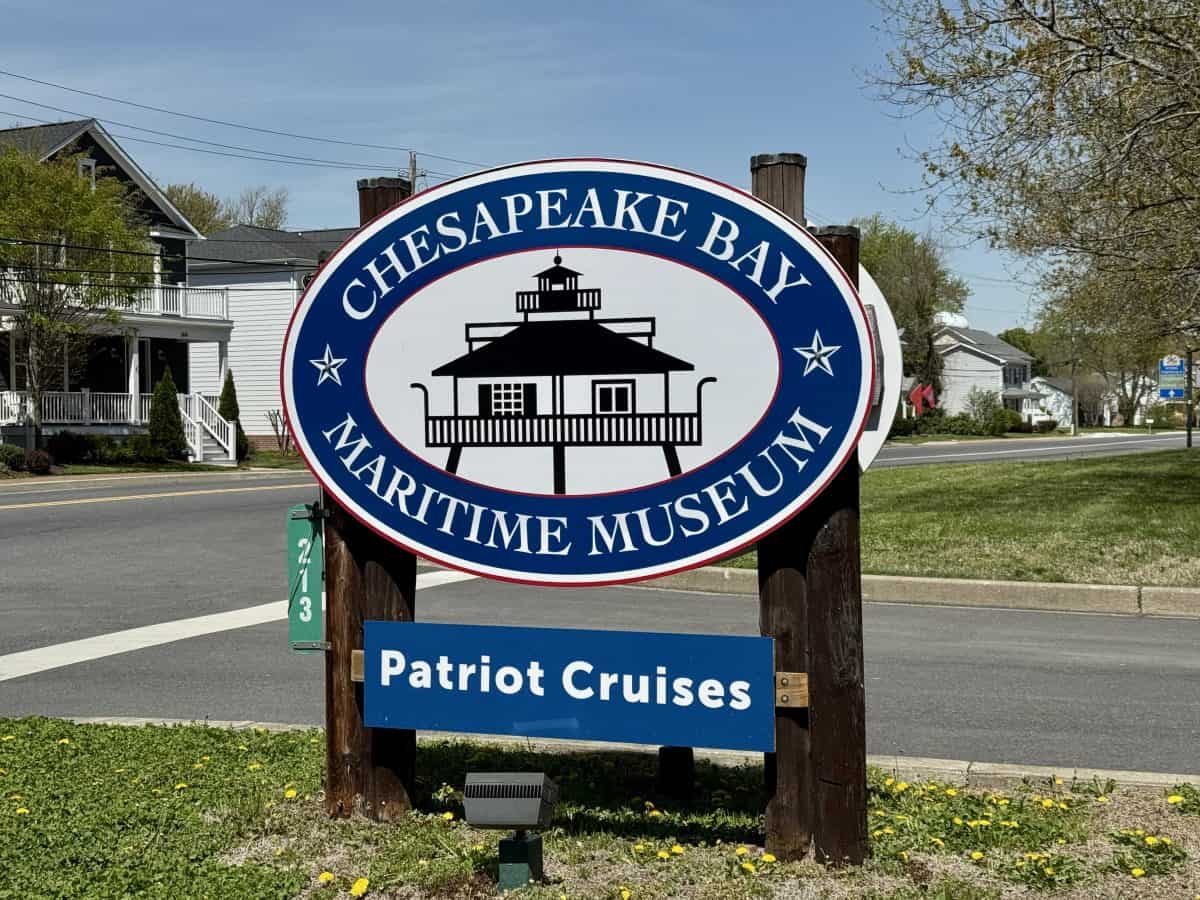
A 15 acre campus in the heart of the beautiful, riverside town of St Michaels Maryland, the Chesapeake Bay Maritime Museum celebrates the environmental, historical, and cultural impacts of the Chesapeake Bay and its many maritime industries on communities throughout the East Coast. There are personal stories of individuals who helped shape the land and industries, hands-on learning and exploring of various vessels, rotating exhibits, and plenty of opportunities to get out on the water.
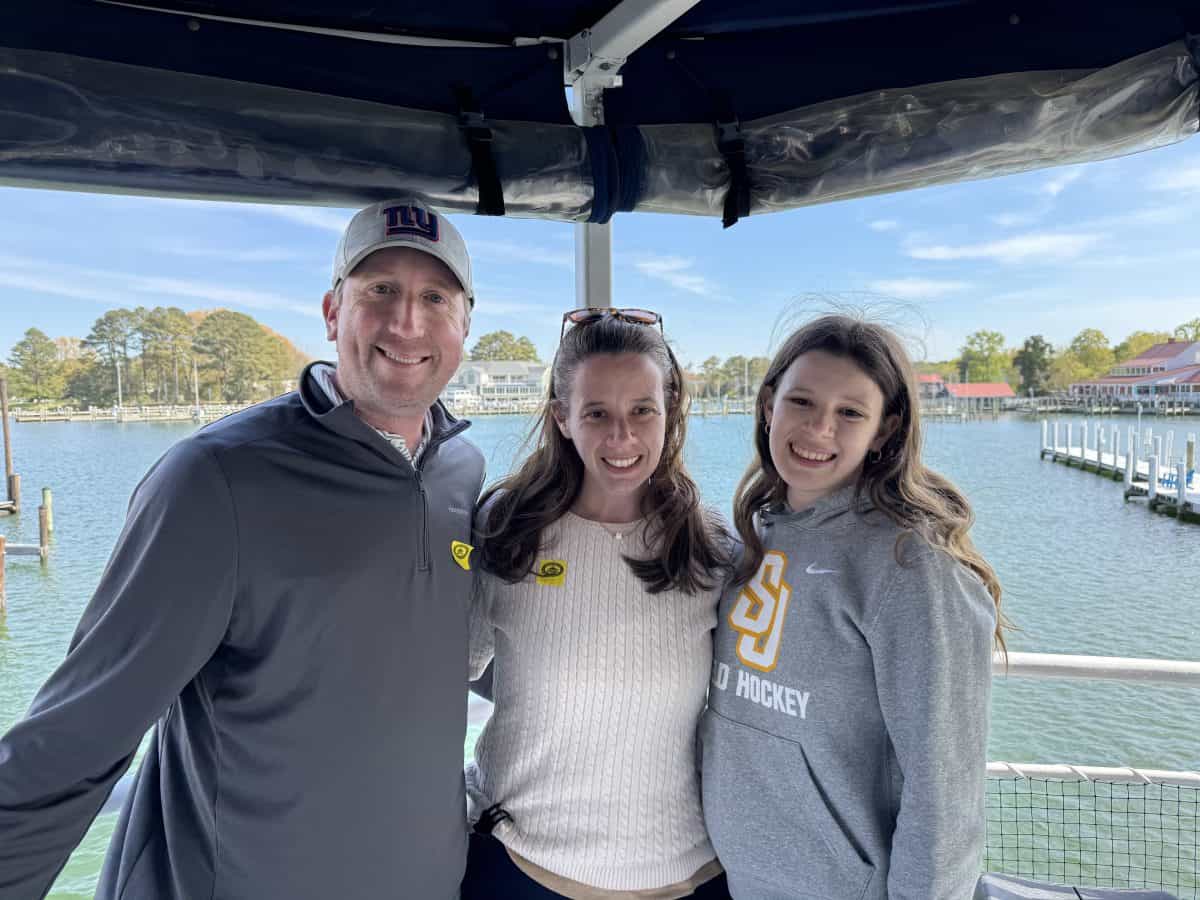
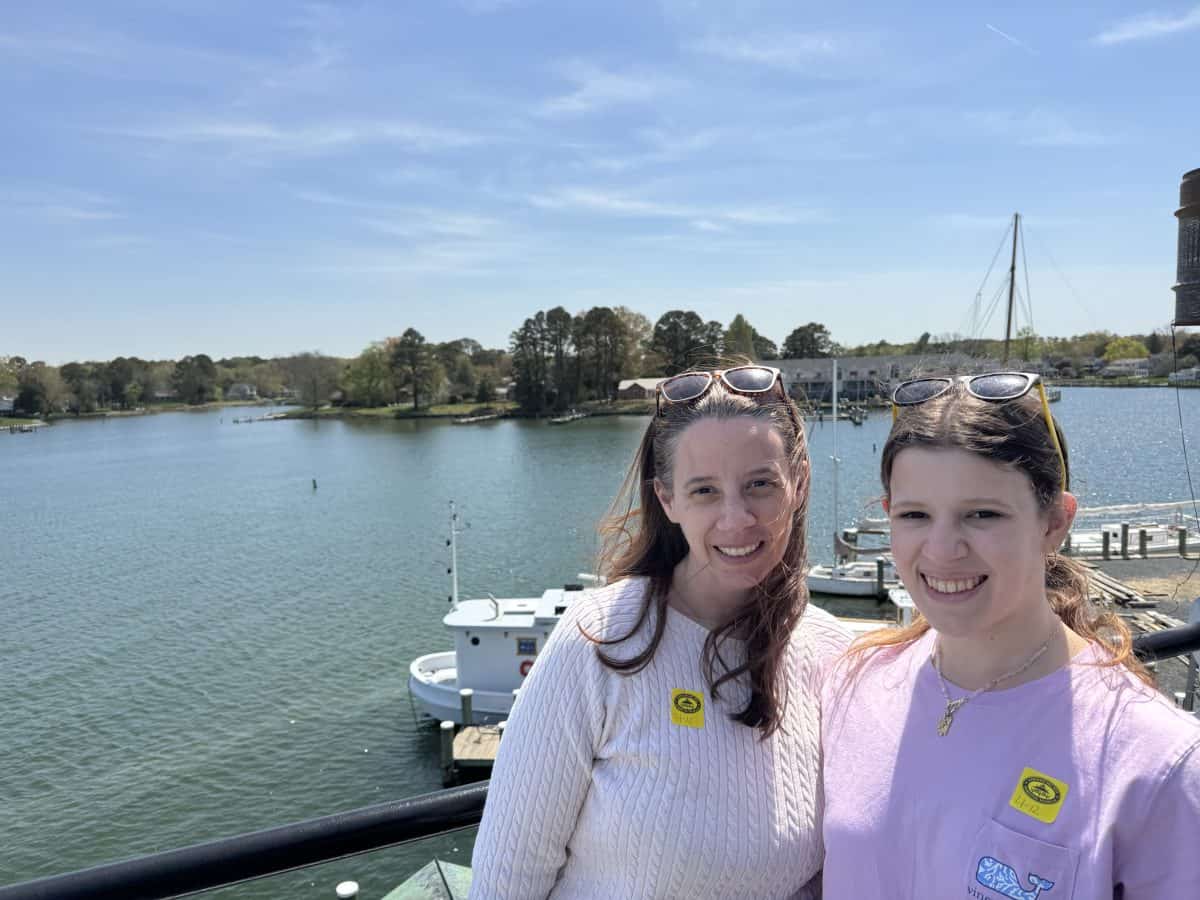
posing on board the Patriot ship at the Chesapeake Bay Maritime Museum in St Michaels, MD

The museum first opened in 1965 with a collection of boats decades old that had sailed and fished on the Chesapeake Bay. Over the decades, the museum’s collection expanded and now includes over 90,000 objects related to the Chesapeake Bay, history of the surrounding St. Michaels area, and maritime industries.

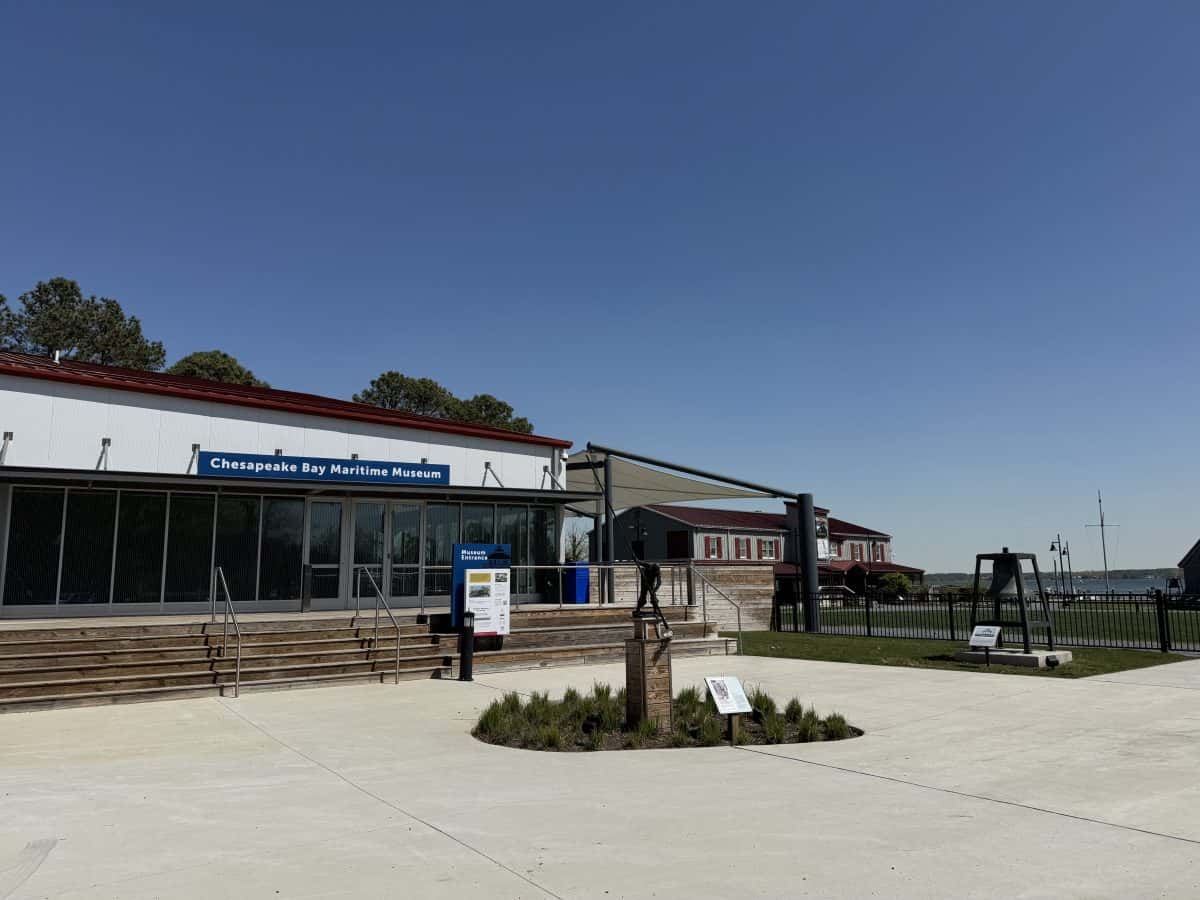
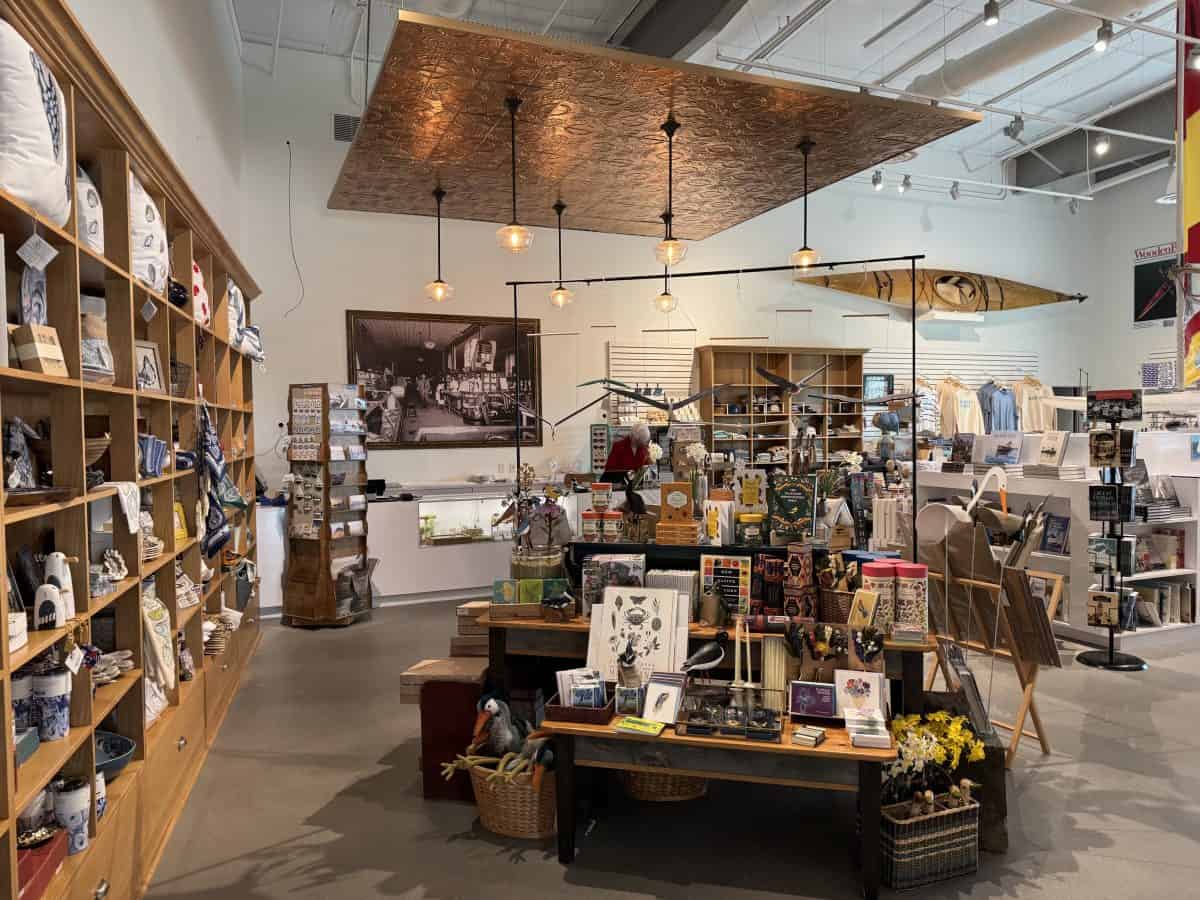
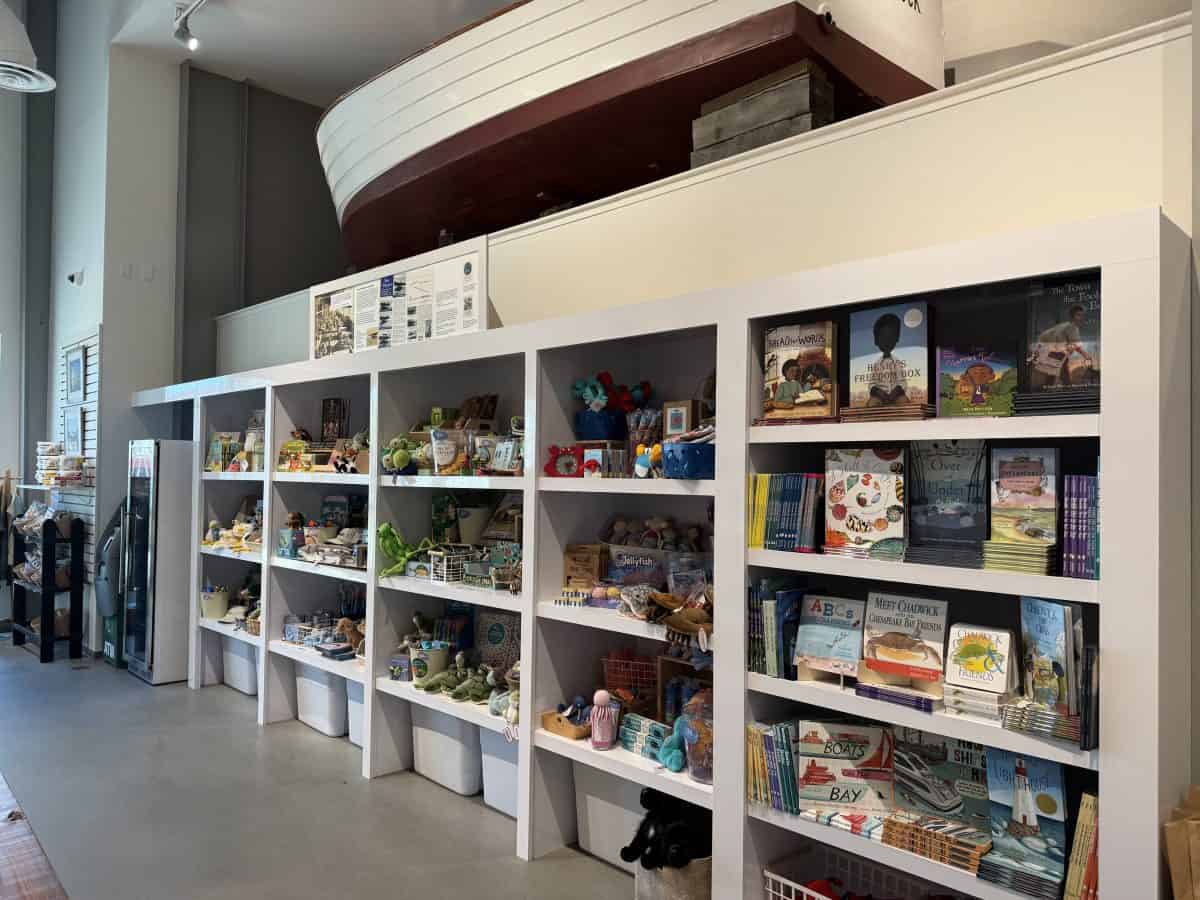
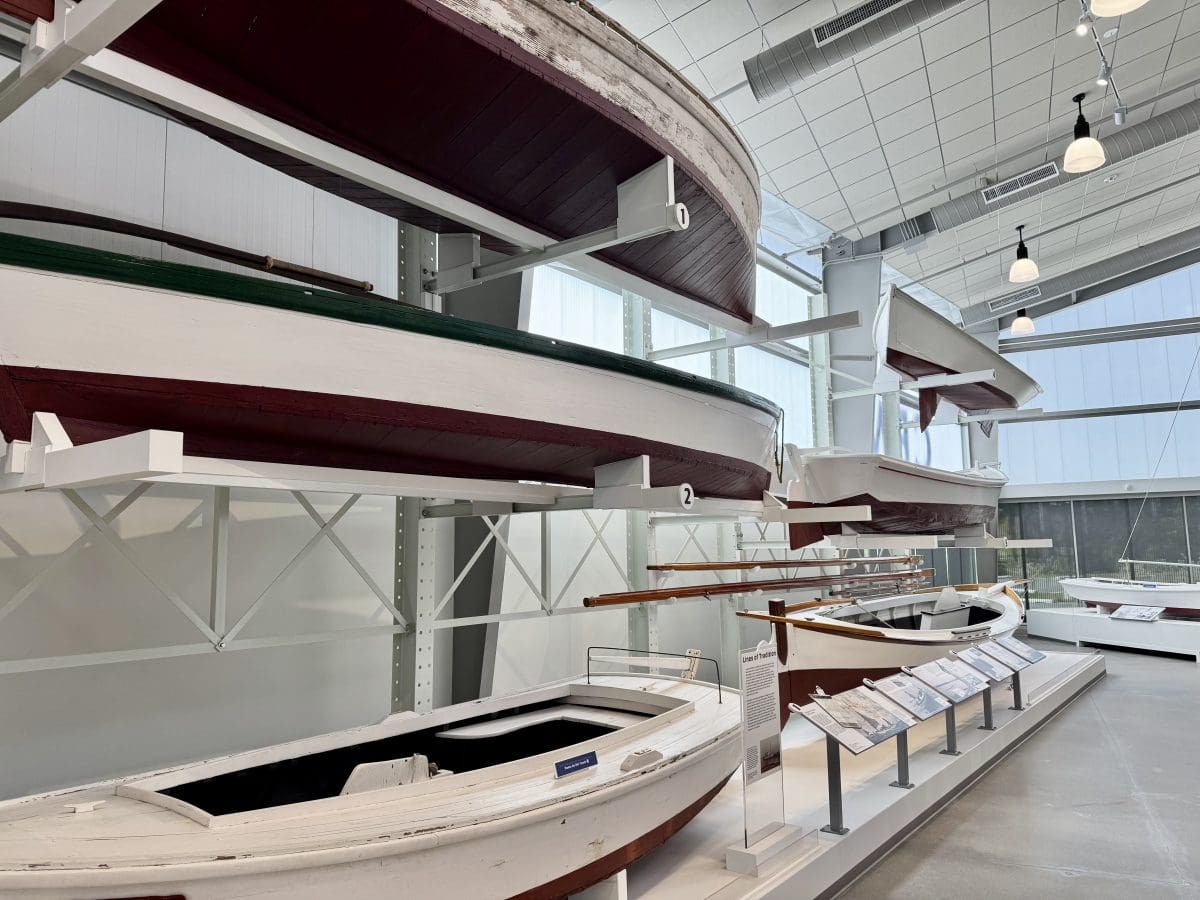
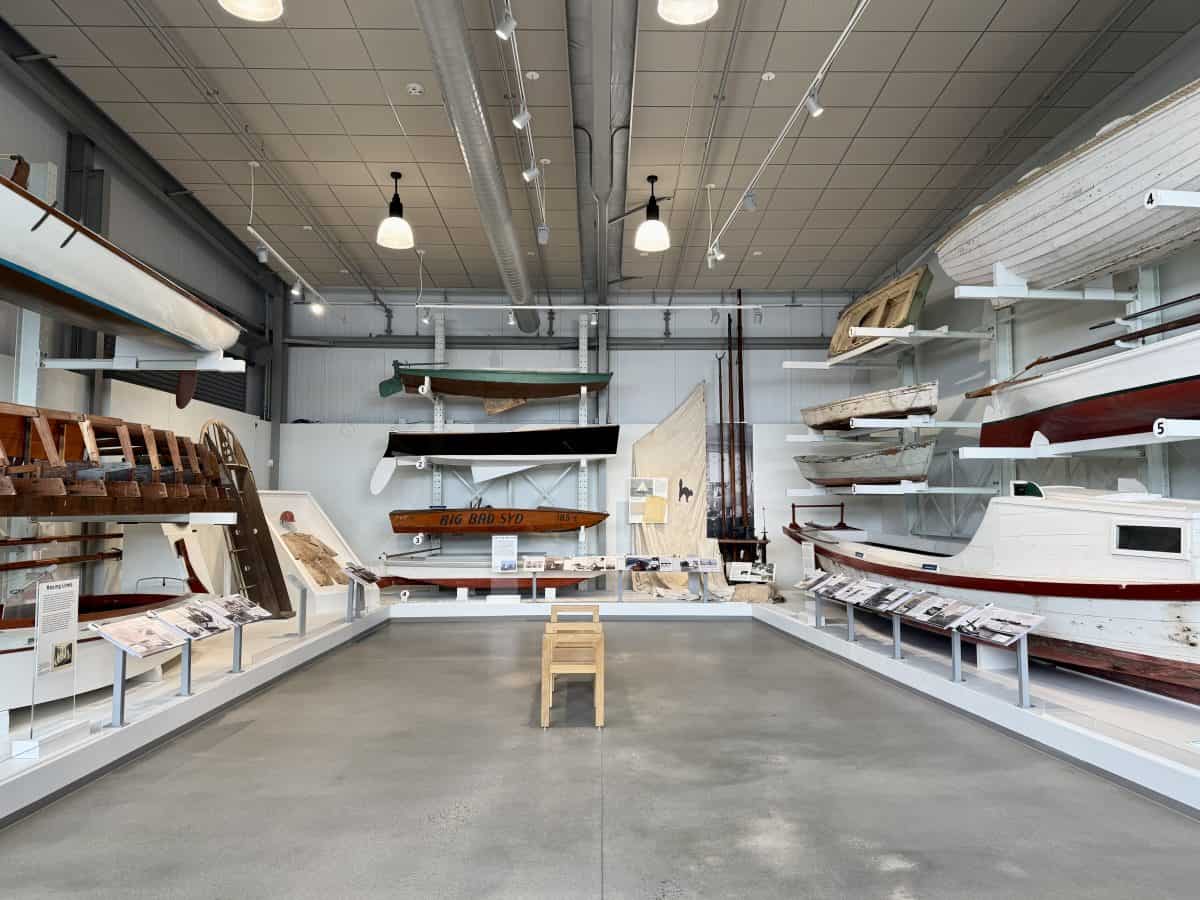
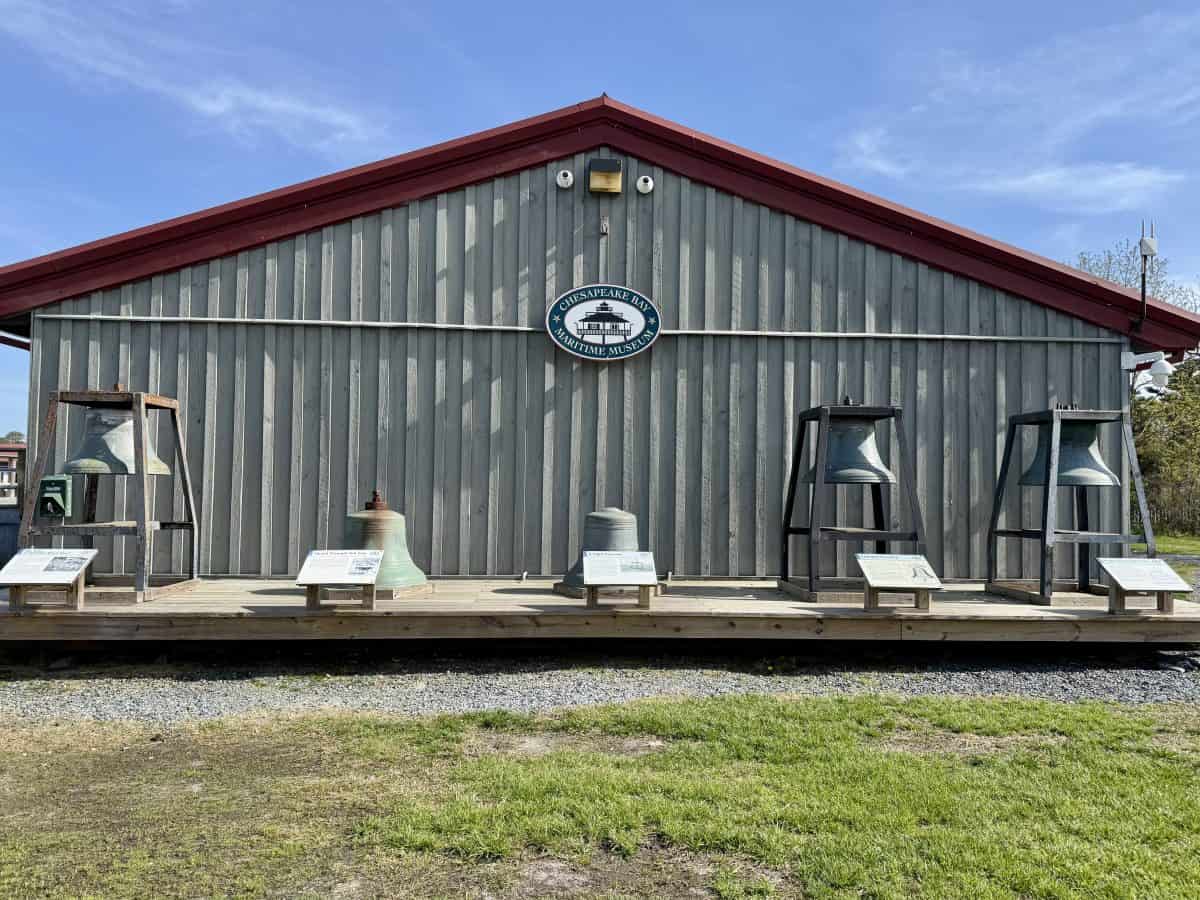
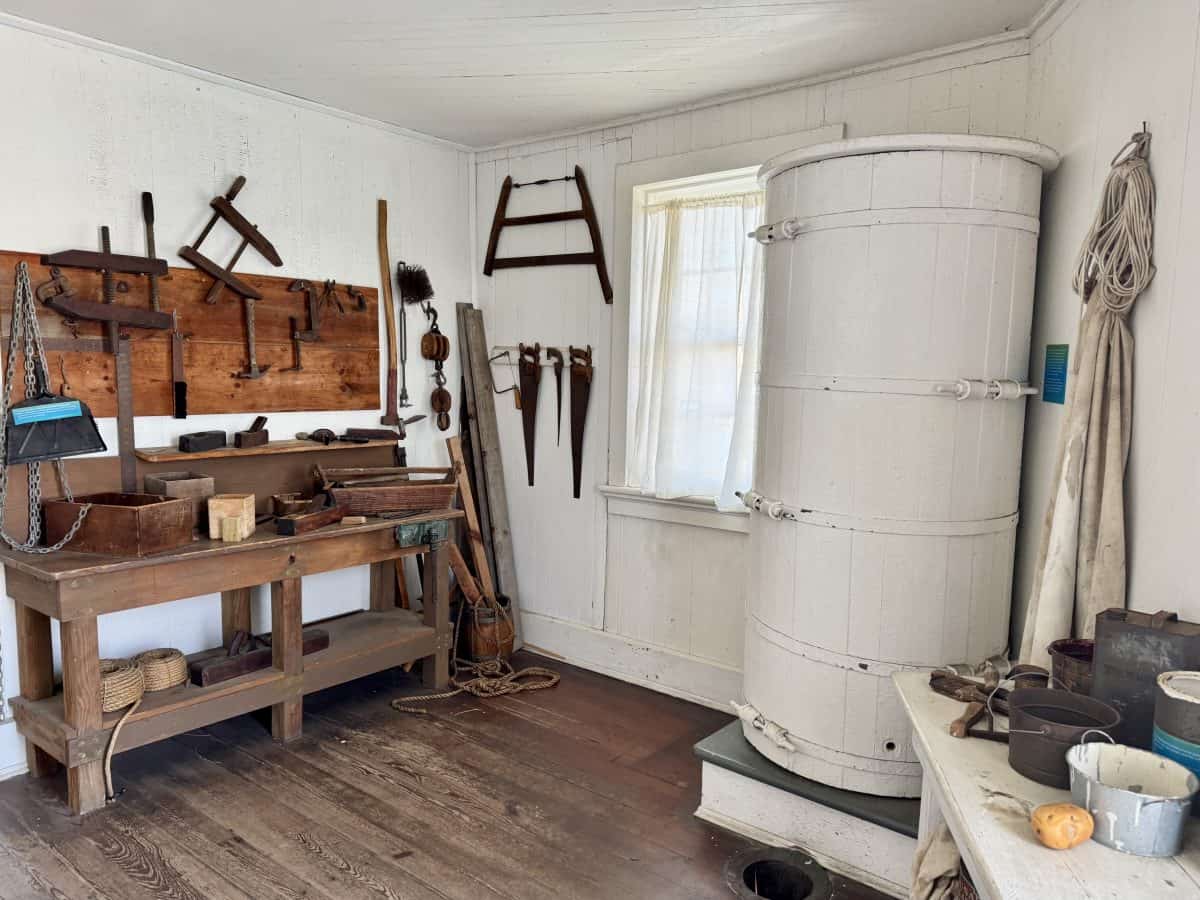
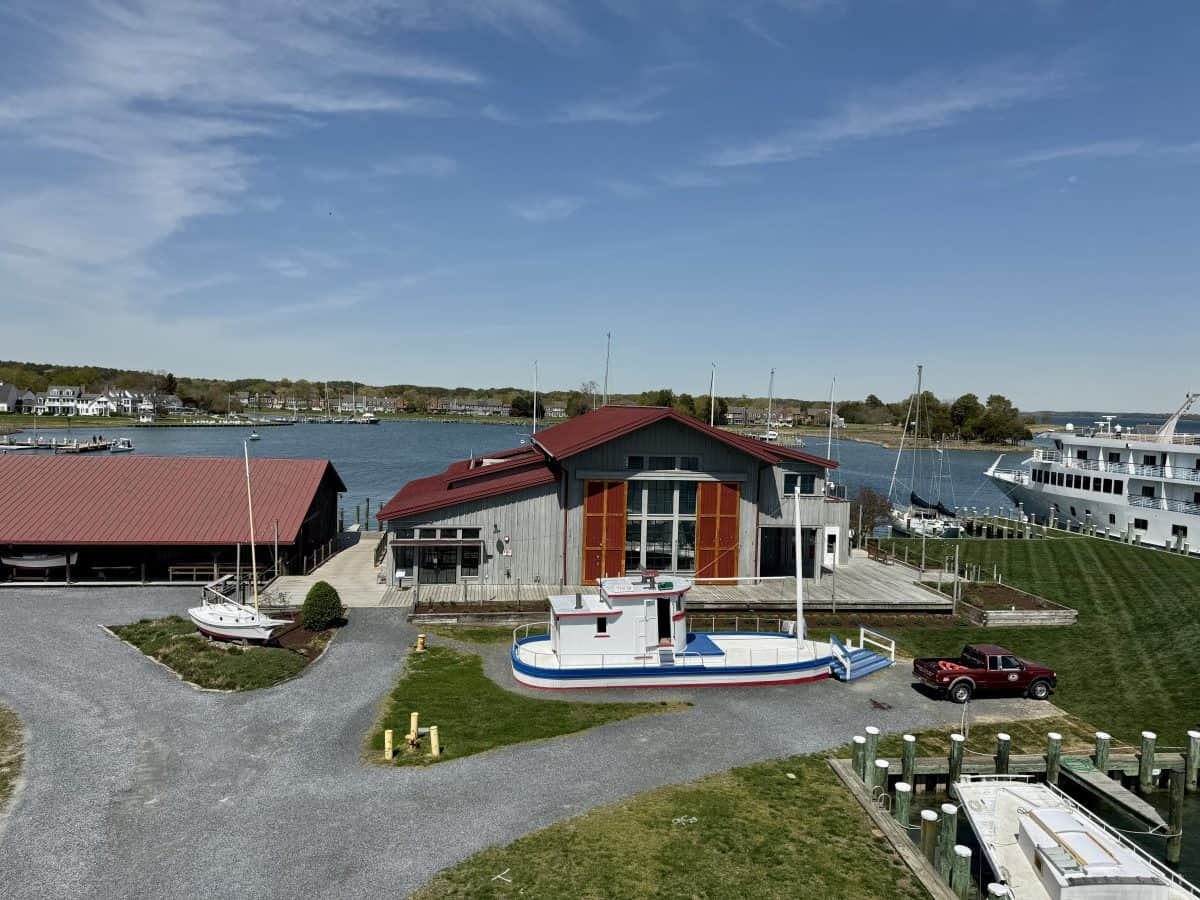
Most recently, the new Visitor Center opened in 2023 with a large exhibit of boats, Museum Store, restrooms, a covered deck with plenty of seating, and friendly knowledgeable docents who can help guests make the most of their visit. The Chesapeake Bay Maritime Museum offers a dozen buildings (some centuries old and preserved by historians) with authentic, and often interactive, exhibits the whole family will enjoy. Leave time for one of the many live demonstrations, workshops, and on the water learning opportunities. 
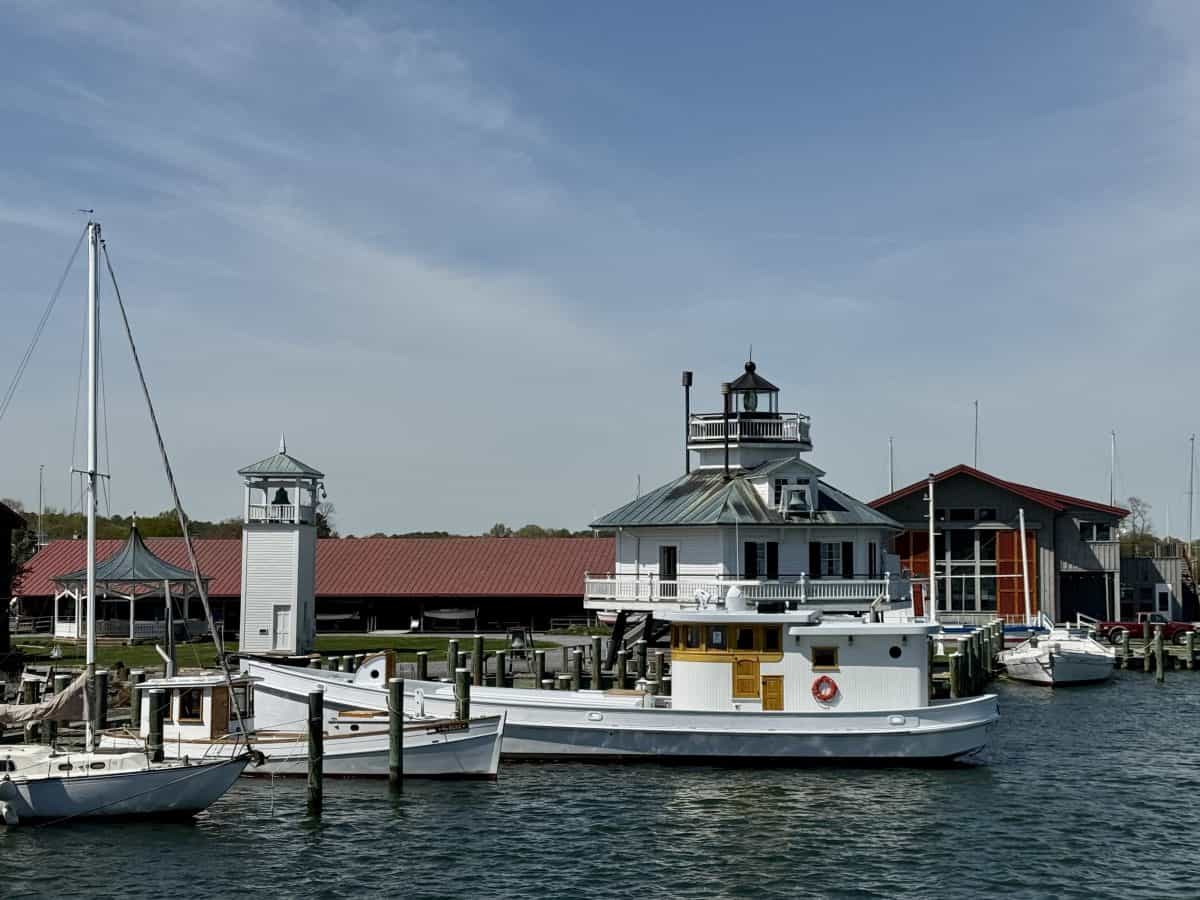
the Chesapeake Bay Maritime Museum in St Michaels, MD

Travel Tips:

  • The museum is open year round from 10am-4pm, with extended hours in warmer months; check here for up to date information on hours and admission fees. Bonus: Tickets are valid for two consecutive days and on Family Funday Sundays, kids under age 18 receive FREE admission!
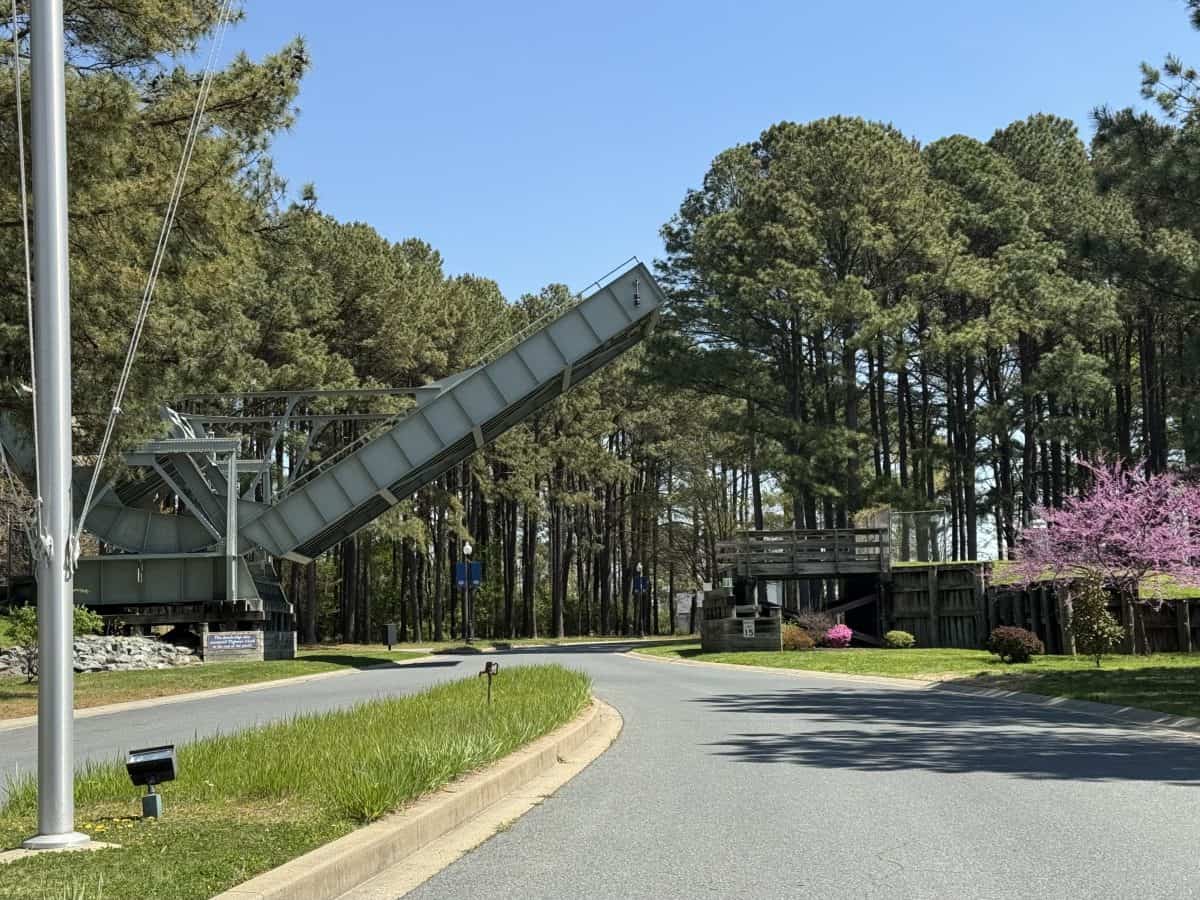
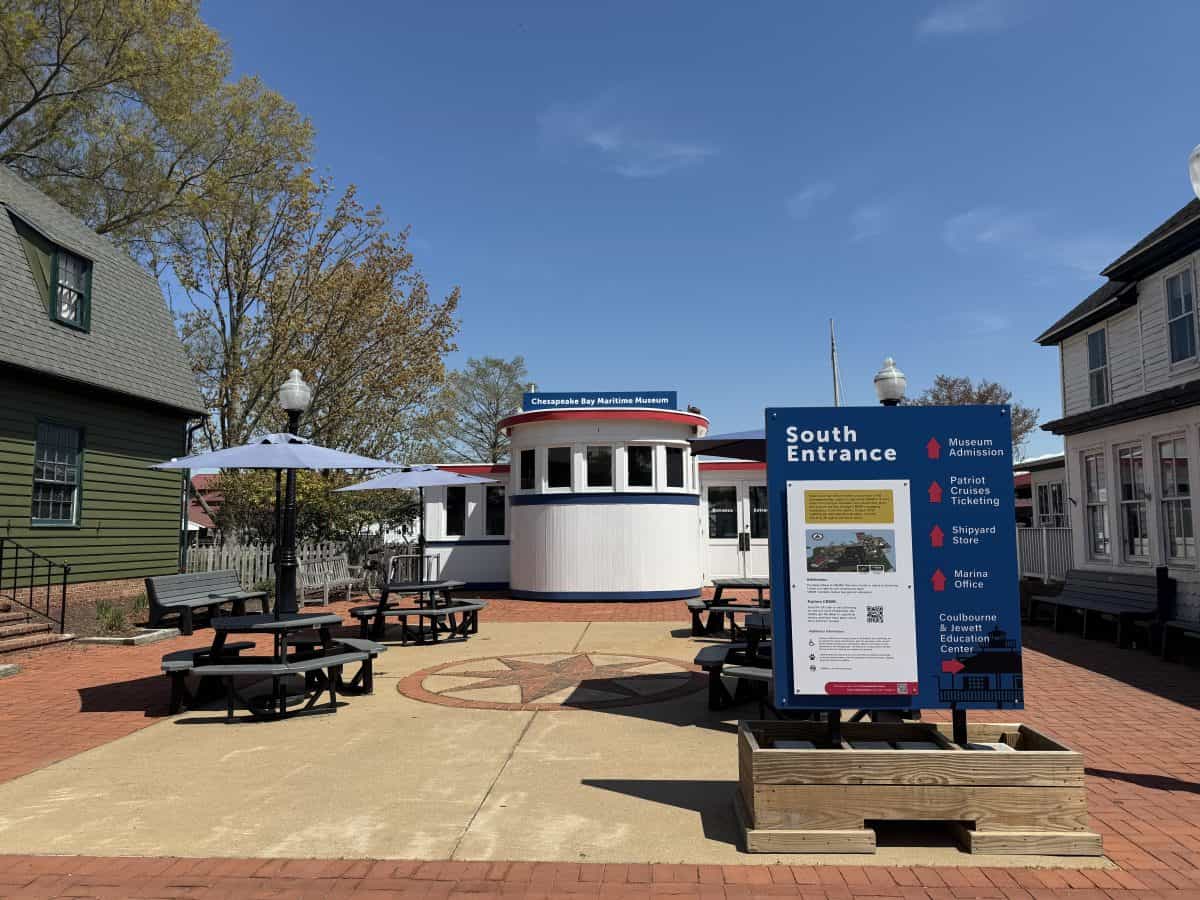
  • The main entrance to the complex is located (check out the Tilghman Island Drawbridge that cars must drive under!) on North Talbot Street, just past the downtown shops. The South Entrance is located on Cherry Street near the Crab Claw Restaurant.
  • Plenty of free parking in front of the Welcome Center. Check here for information on driving directions and arriving by boat.
  • Restrooms are located throughout the complex, including in the Welcome Center, E Dock, and rotating exhibit hall. 
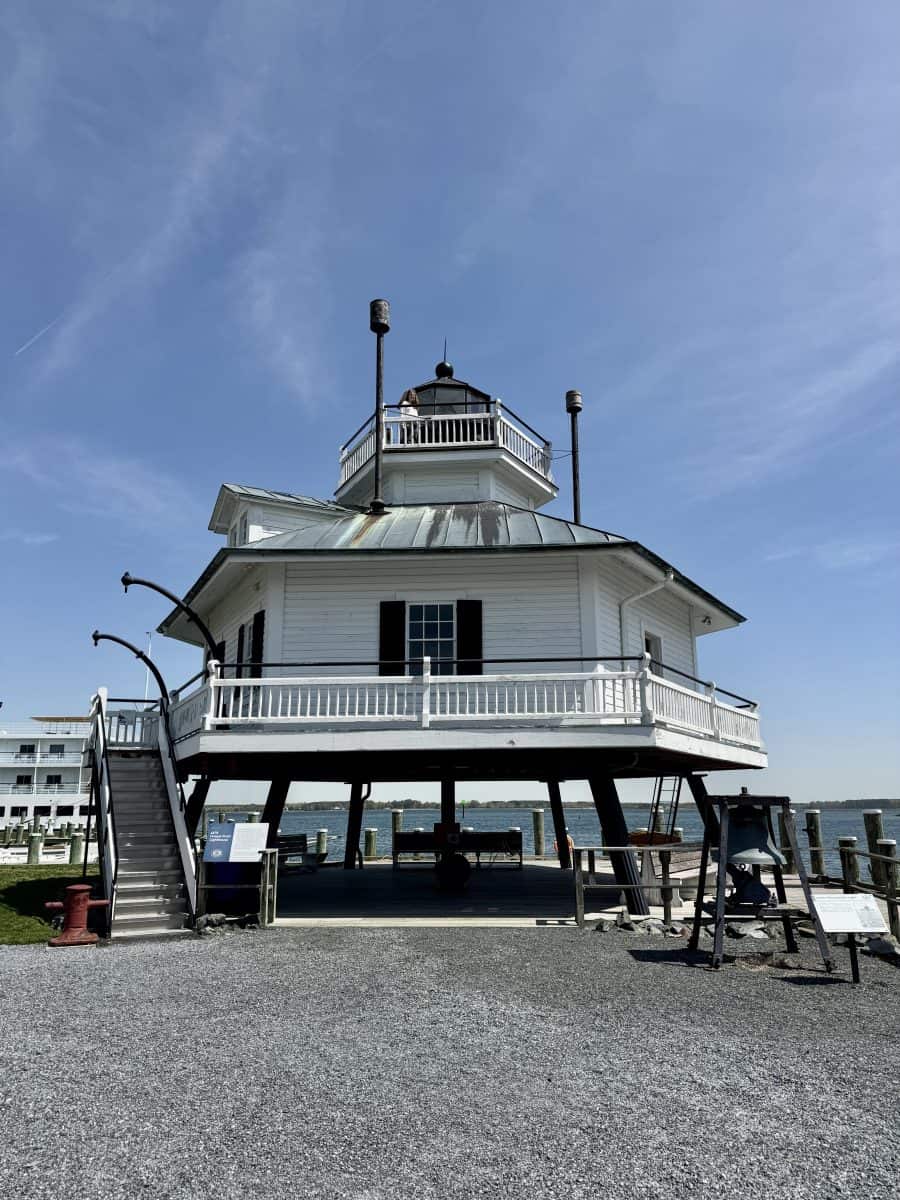
  • Most of the complex is handicap accessible via ramps and elevators, with the exception of the lighthouse. Bring a stroller for the toddler crew and wear sturdy shoes as the outdoor paths are mainly gravel. 
  • The main dining option in the complex is the Crab Claw Restaurant (closed on Tuesdays; museum admission is not necessary); there are also drinks and snacks available in the Welcome Center and South Entrance. Picnic tables under an awning are available adjacent to the Welcome Center. Check here for a comprehensive list of dining options in the town of St. Michaels. 
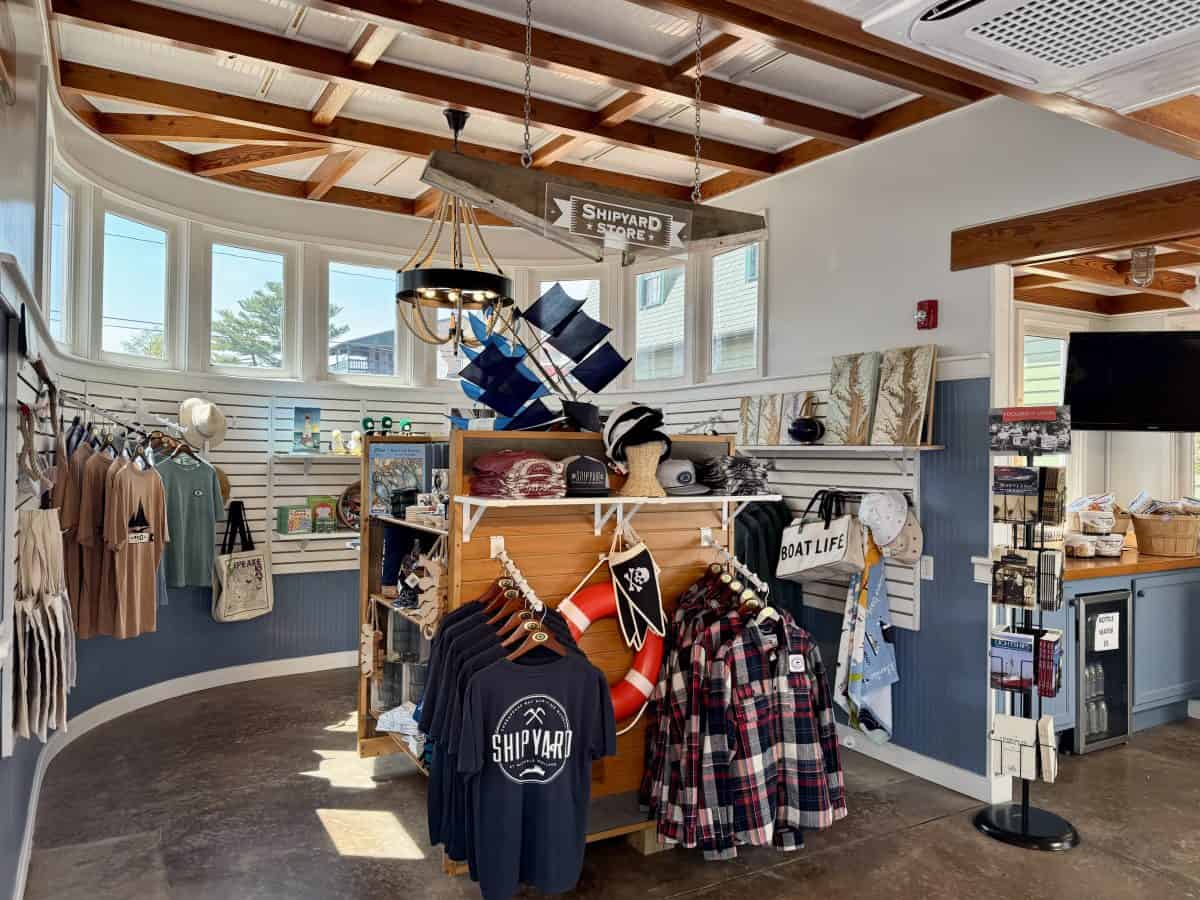
  • The Museum Store is located inside the Welcome Center (museum admission is not necessary) and there is a smaller gift shop at the South Entrance. 
  • Check here for the full calendar of festivals and events and here for special programs, including guided tours, water adventures, speaker series, and historic workboat experience.  
  • Plan on a good three hours to tour all 12 exhibit buildings, plus more time for live demonstrations, films, programs. See a complex map here.
  • A Special Note for the toddler and preschool crowd: The museum complex is set next to the Miles River and many areas are open to the water; Keep a close eye on little ones near the docks and boardwalk.

13 Ways to Explore the CBMM:

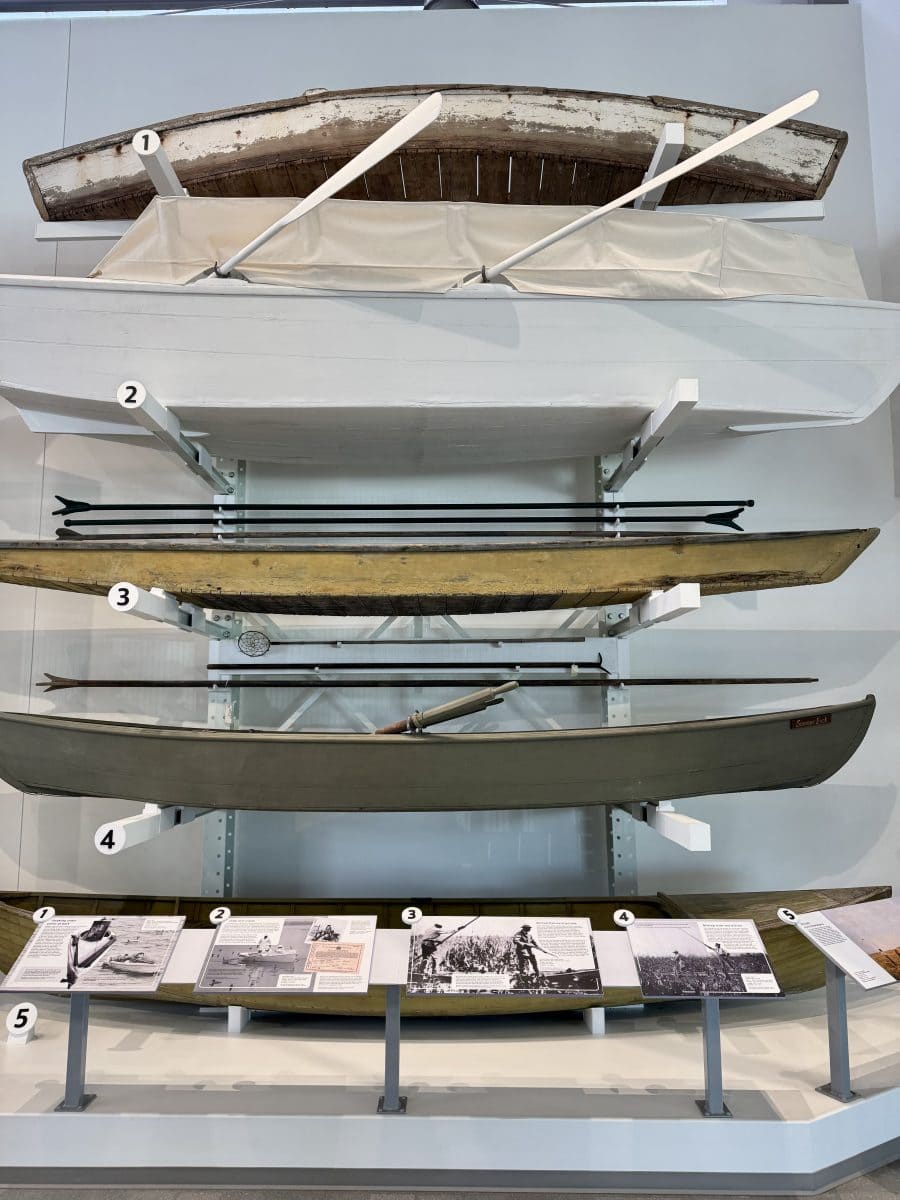
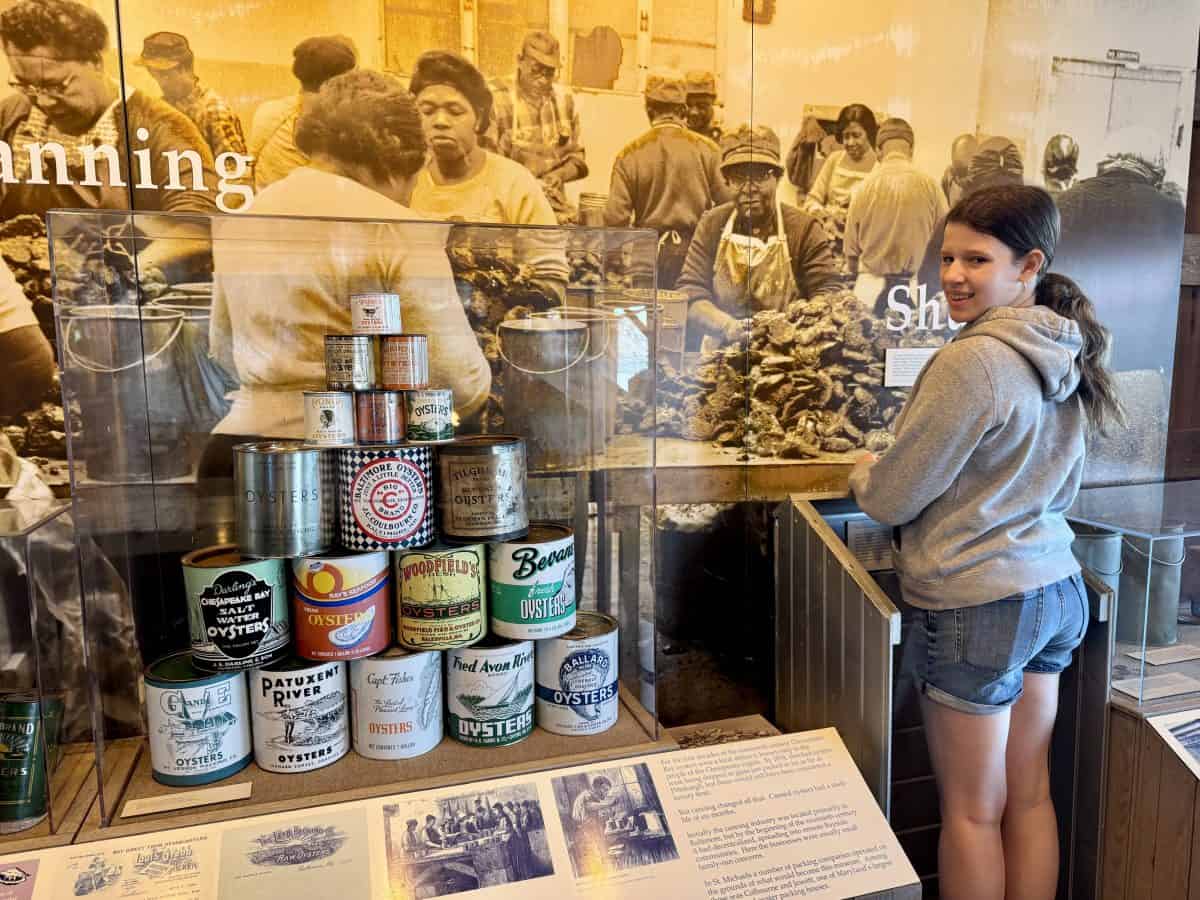
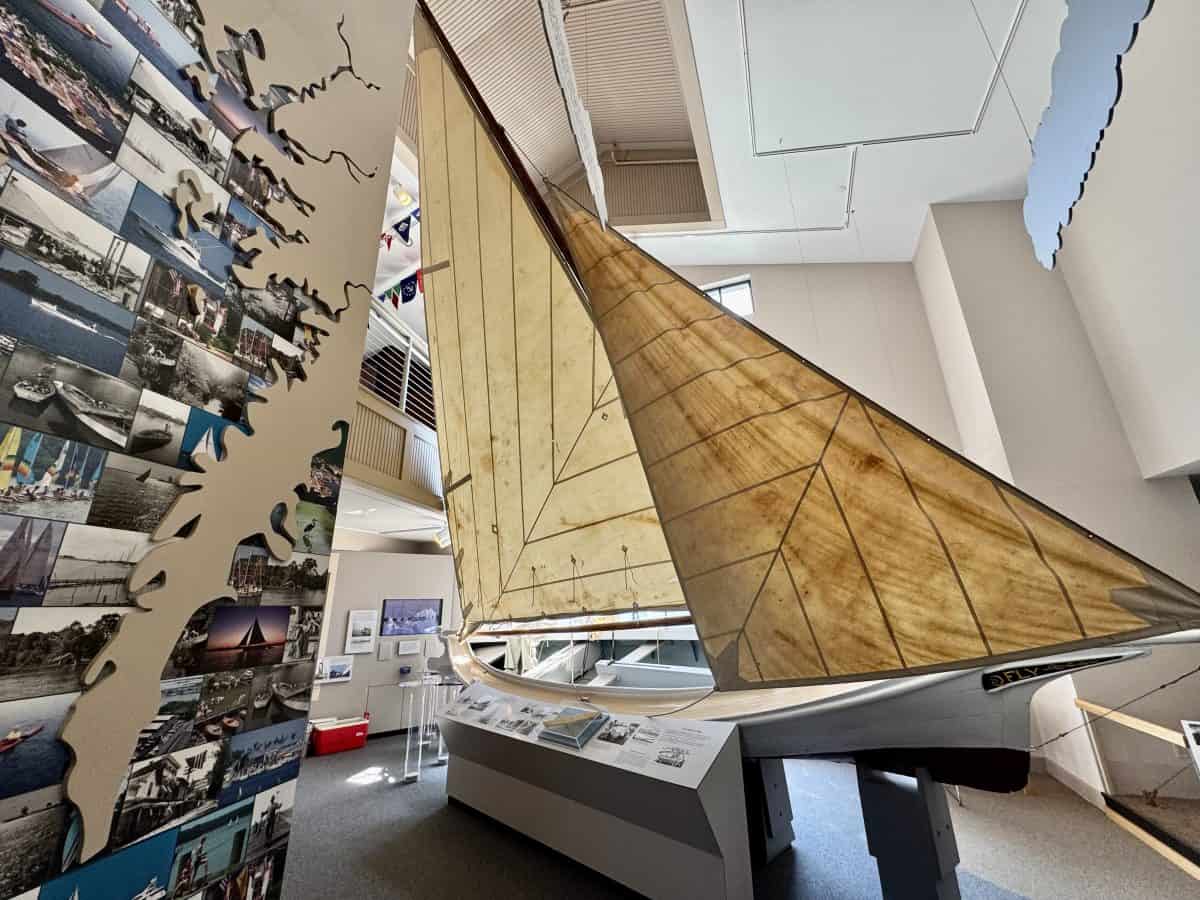
  1. Count the number of various sailing skiffs, one design boats, sailing scows, and canoes on display in the Water Lines exhibit in the Welcome Center. The gallery also has exhibits on shucking oysters (workers were paid by how many cans they could fill with oysters and could customize their standing location so they would not be permanently hunched over), “sinkboxes” and how they were used to hunt geese, and the history of the Keene family set to an original song.
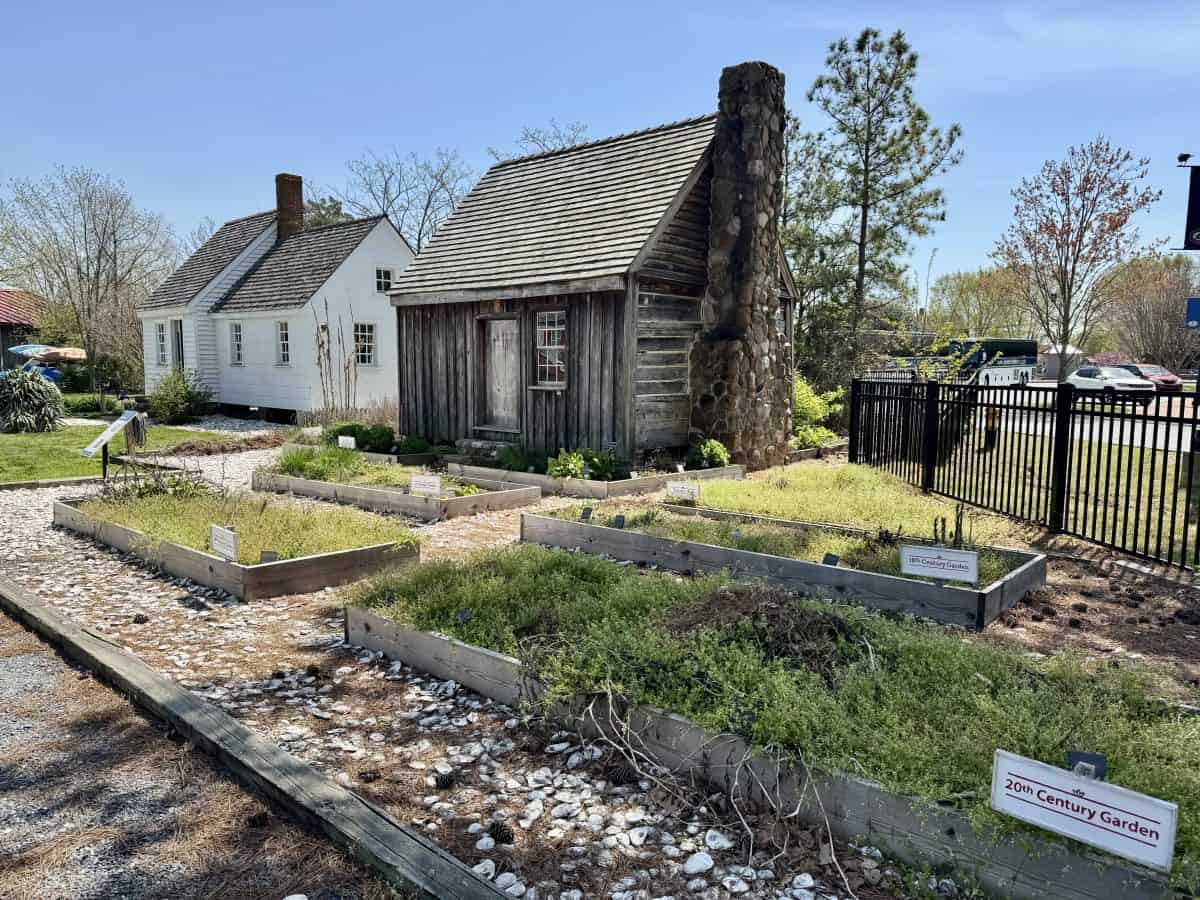
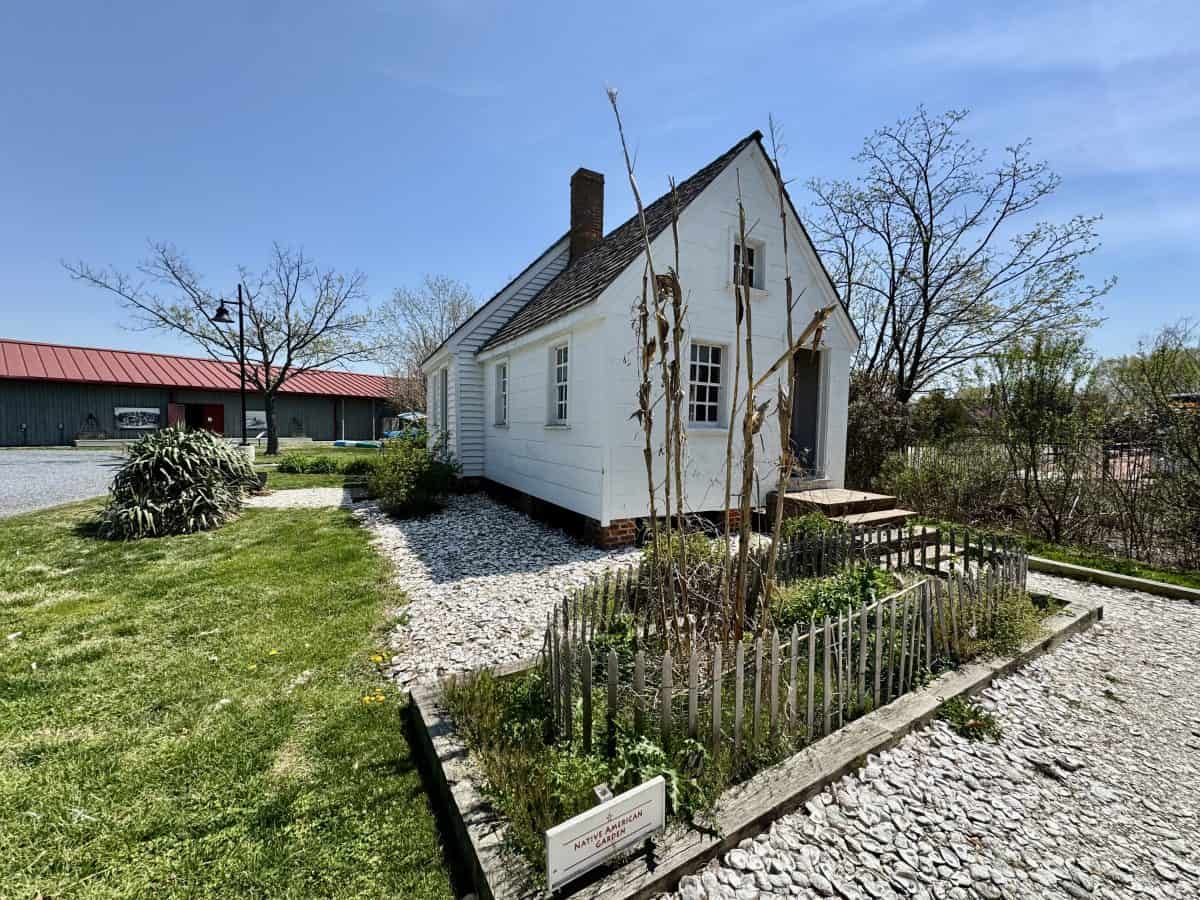
  2. Smell the various herbs and heirloom vegetables in the Heirloom Garden. Gardens are organized by century (dating back to the 1600s!) and include tobacco beds. Check here for a full list of what is grown in the gardens.
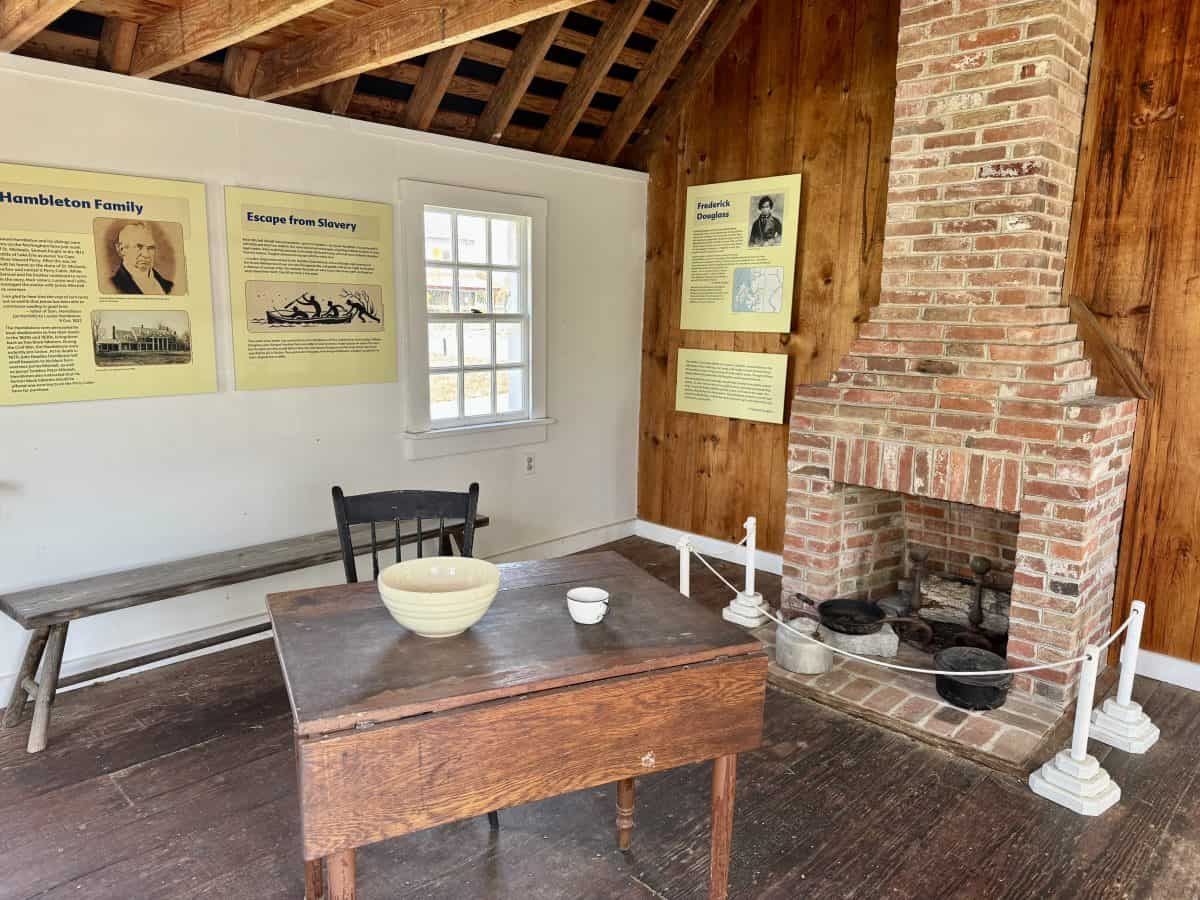
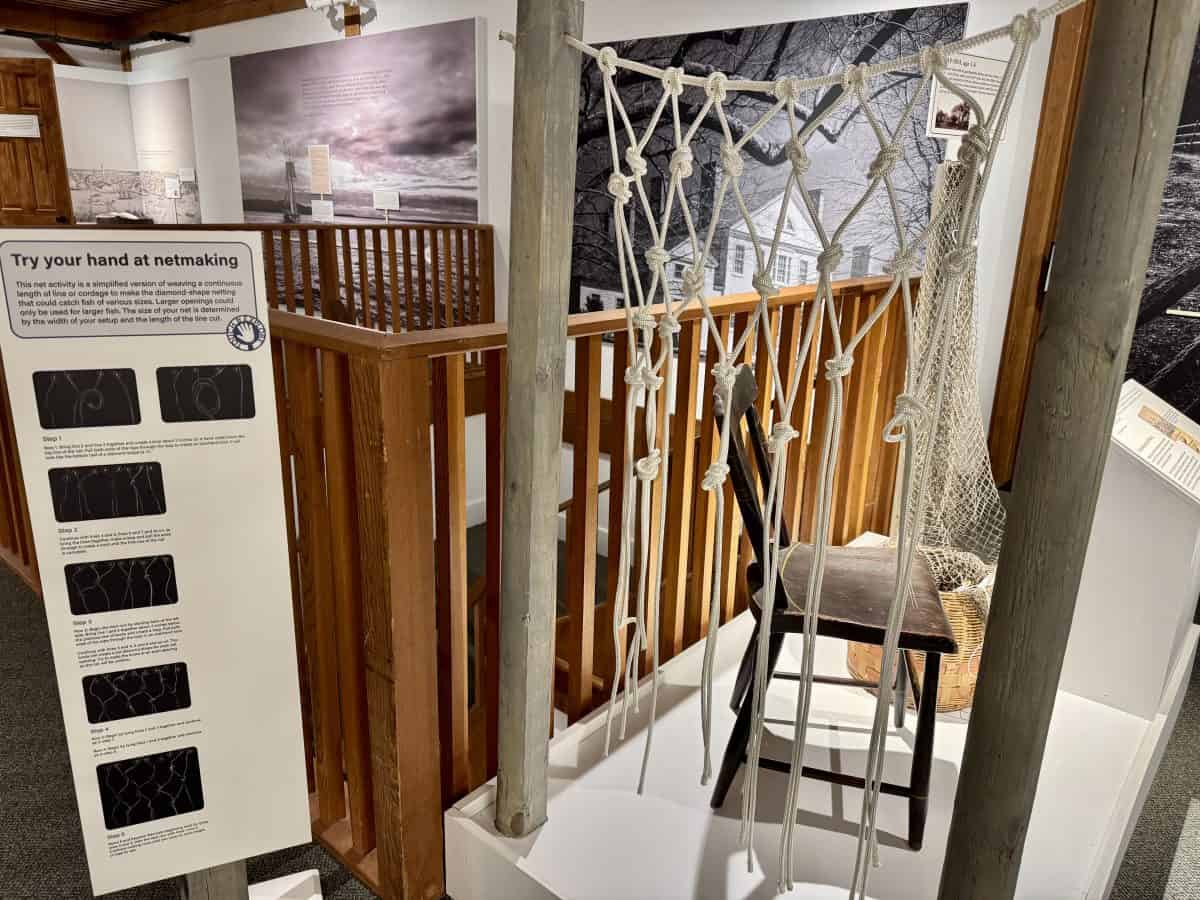
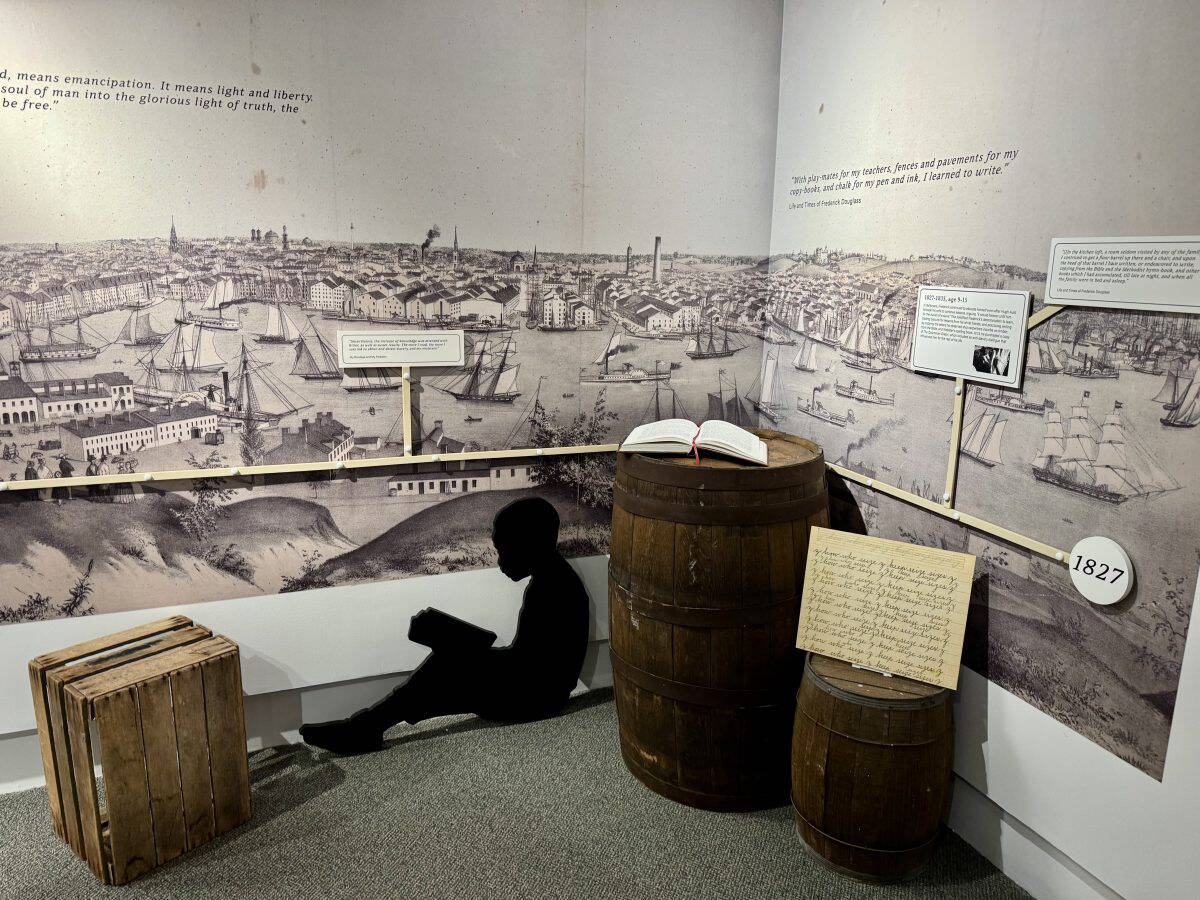
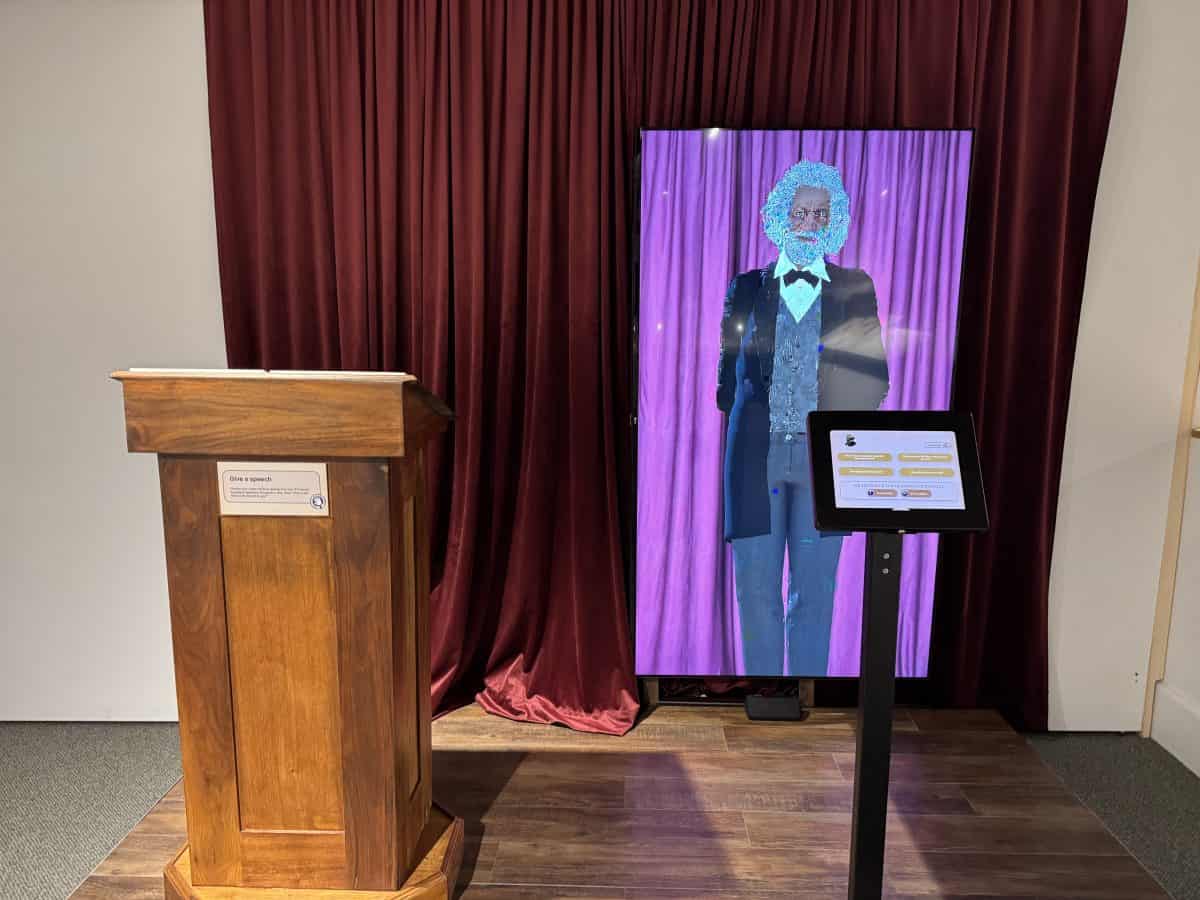
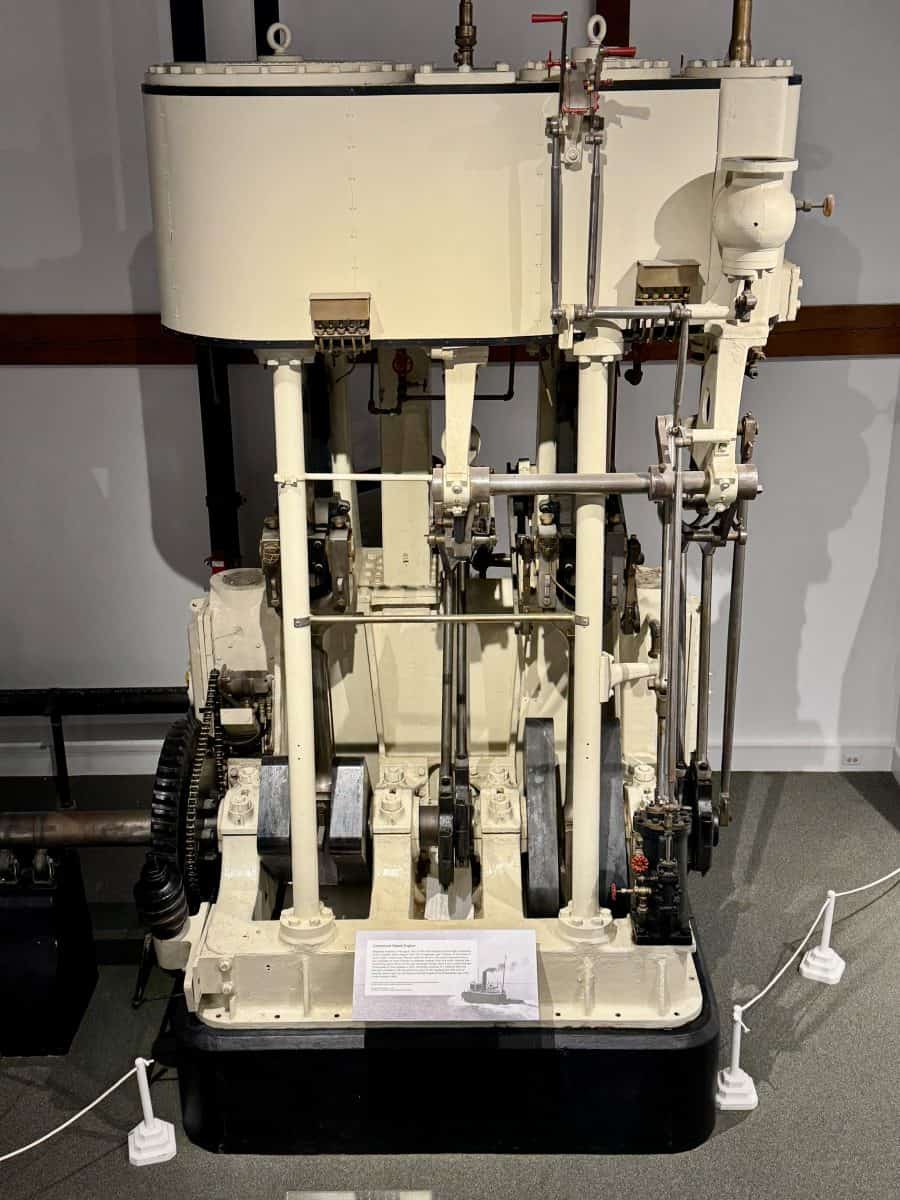
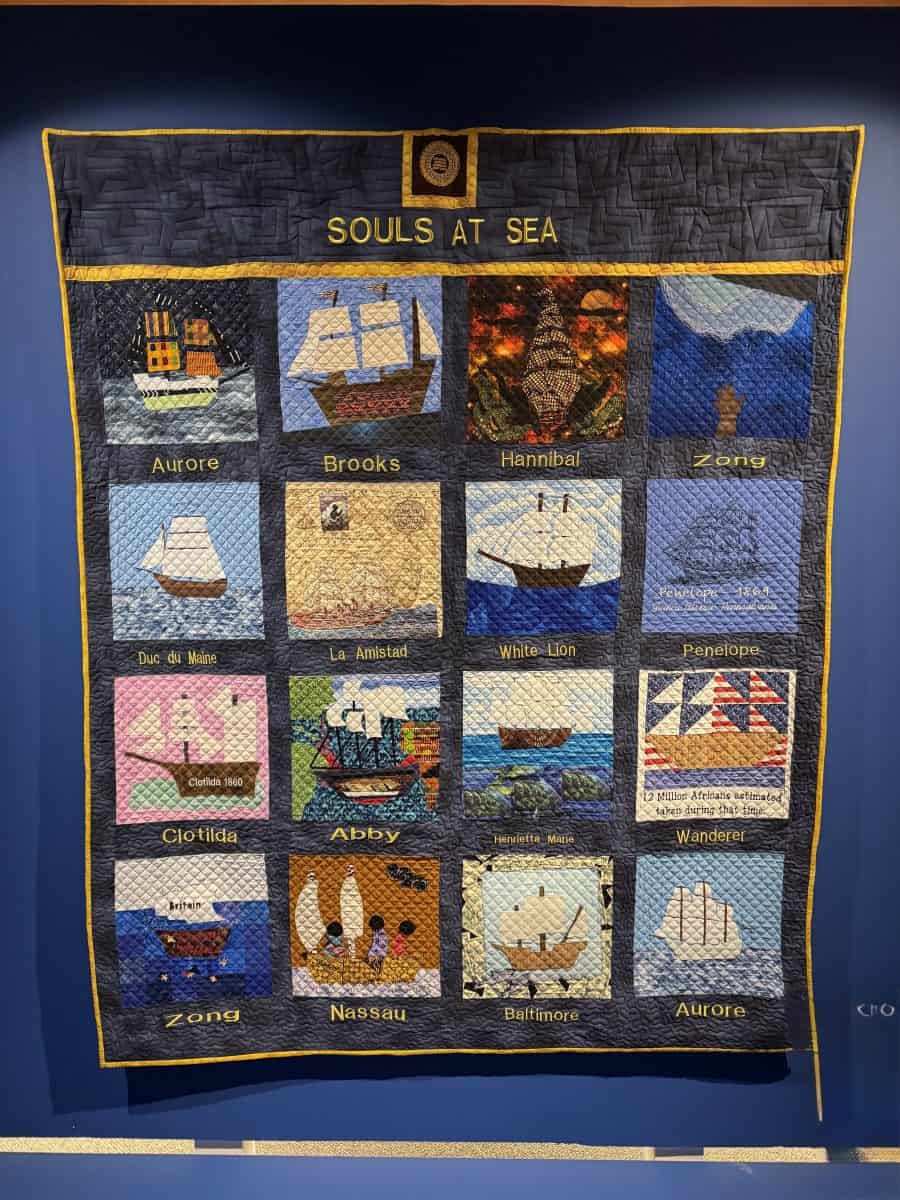
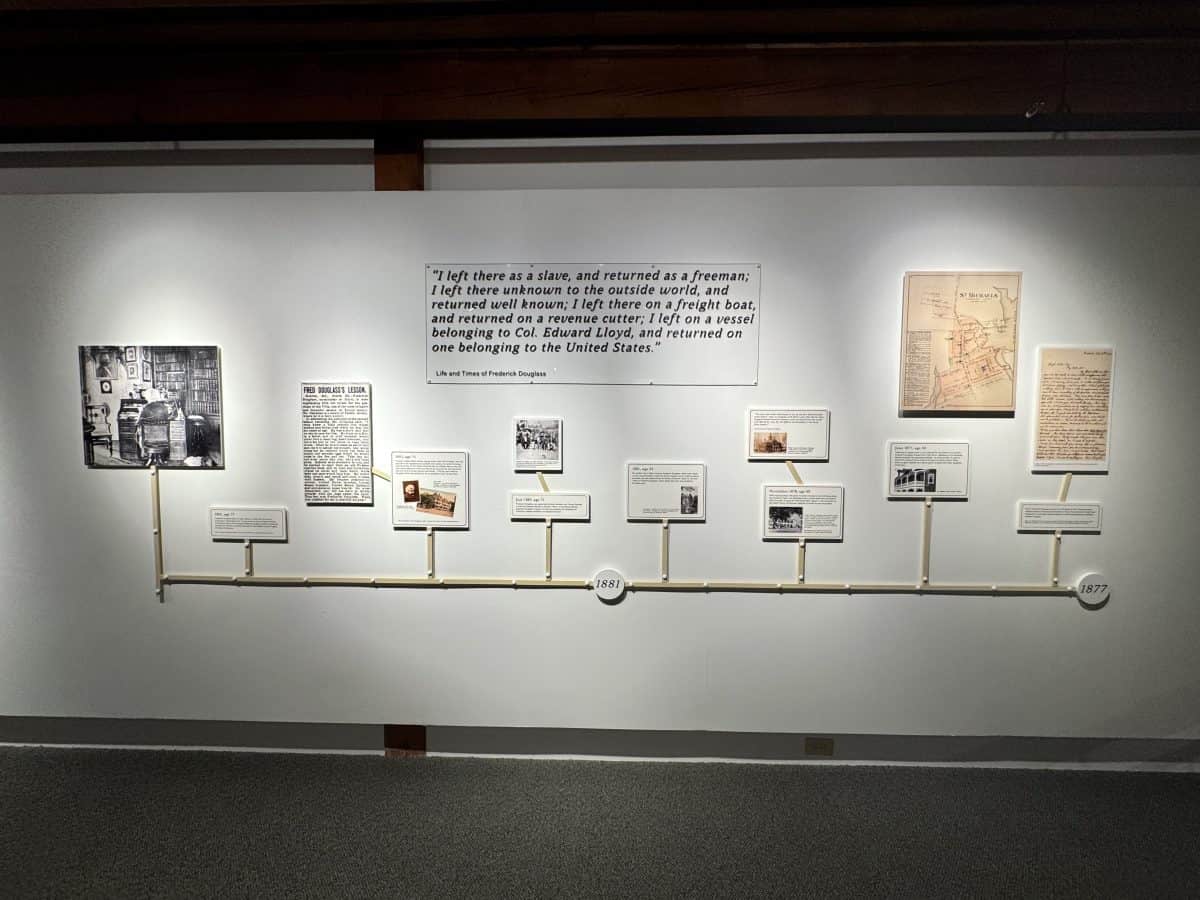
  3. Follow the chronological timeline (start on the second floor) of Frederick Douglas in the Bear Me Into Freedom and Sailing to Freedom special exhibits (through the end of 2027). The exhibit uses a historic map to trace Frederick Douglas’s life in Talbot County, starting in 1818 through his experiences as an abolitionist and writer. Try interactive parts of the exhibit, including netmaking and waving skills, caulking the ship to fill in the gaps between planks, pretending to give a speech, and asking a question to a hologram electronic version of Douglas. The first floor exhibit Sailing to Freedom honors the African American lives lost at sea and while building the underground railroad and maritime villages, and the Freedom Seekers. Check out the 12 foot compound steam engine from 1924.
  4. Walk through the Mitchell Douglas House, where Frederick Douglas’s sister, Eliza Bailey Mitchell, lived with her husband and children, and learn about their family’s lineage and their emancipation. 
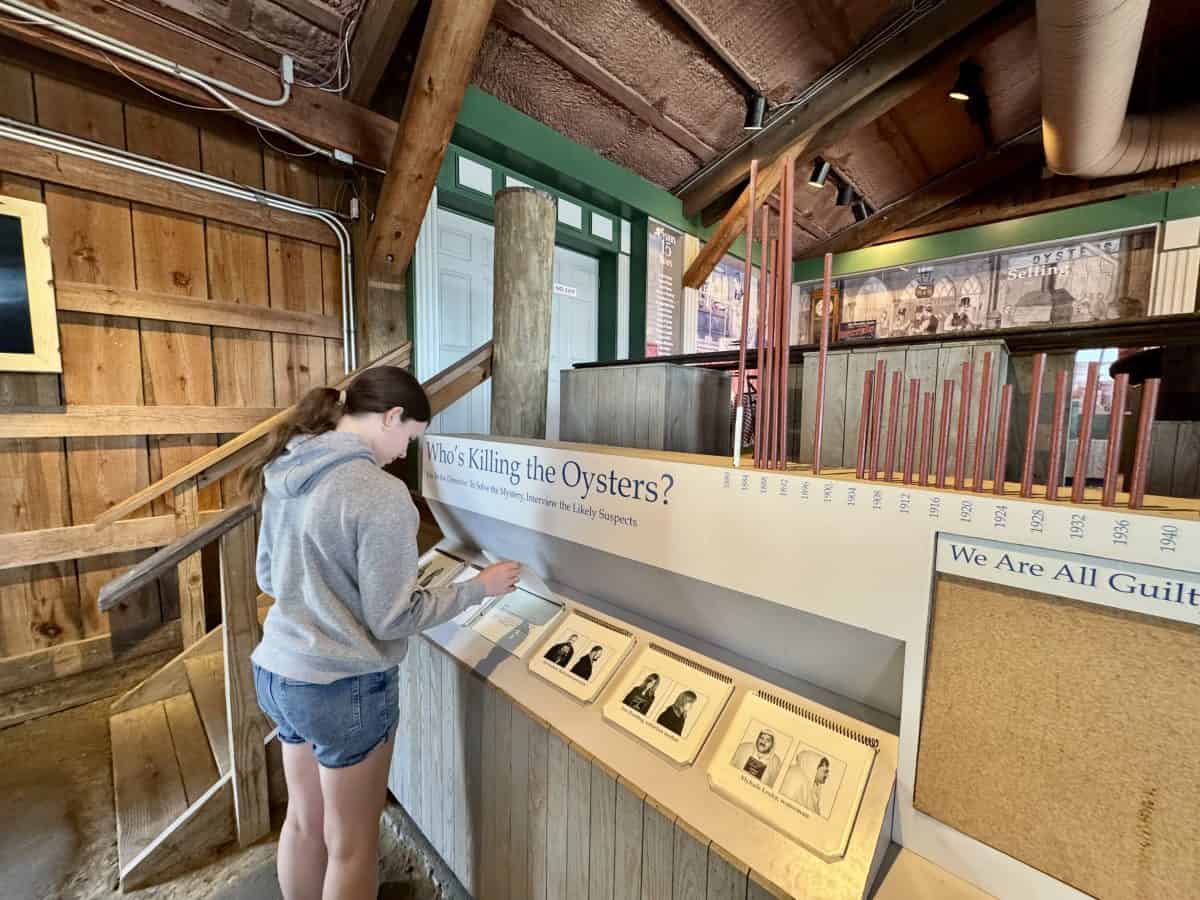
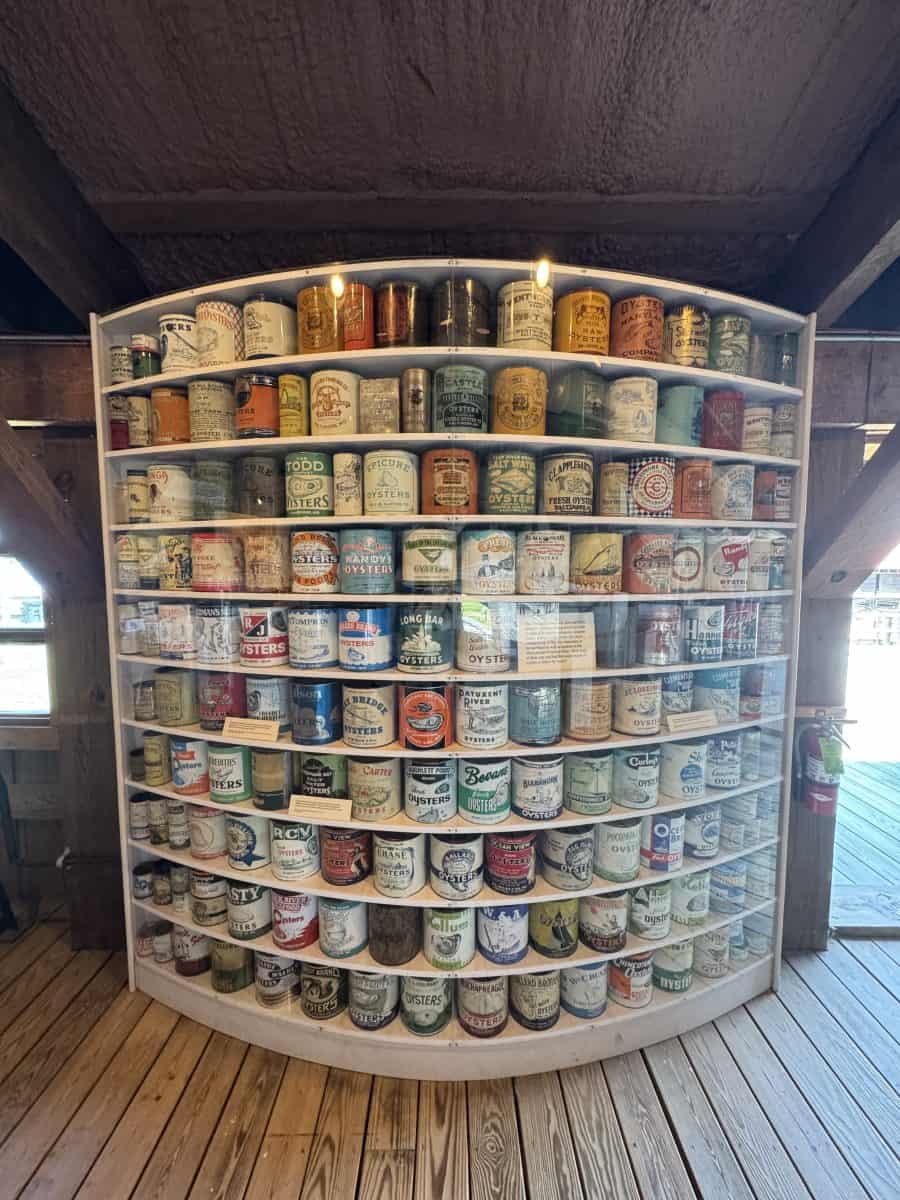
  5. Learn about the oystering industry in the Oystering on the Chesapeake exhibit by opening drawers to see maps, guessing answers to fun oyster trivia (oyster blood is blue!), seeing how the oyster industry was mined in the 19th century, and learning 15 ways to prepare oysters and how to pack as many oysters as possible in a can. 
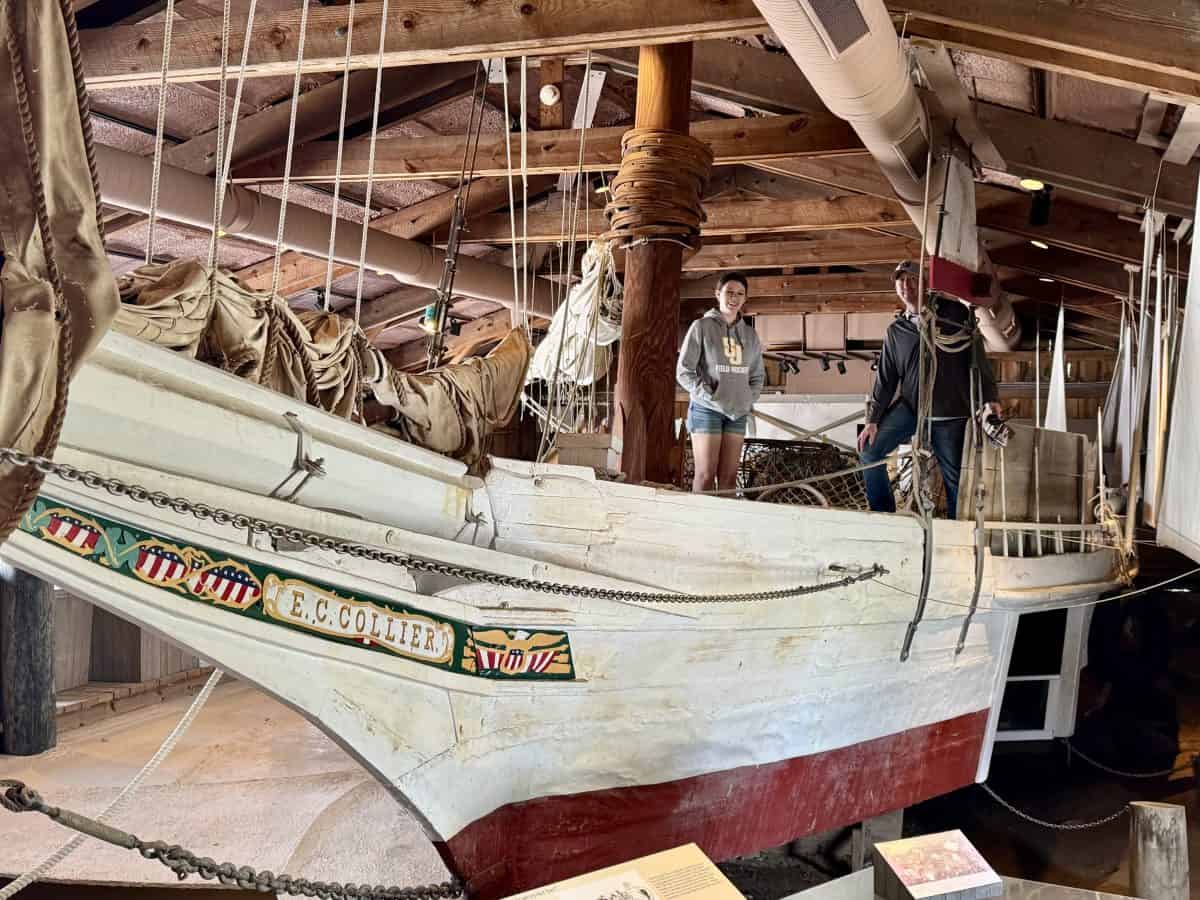
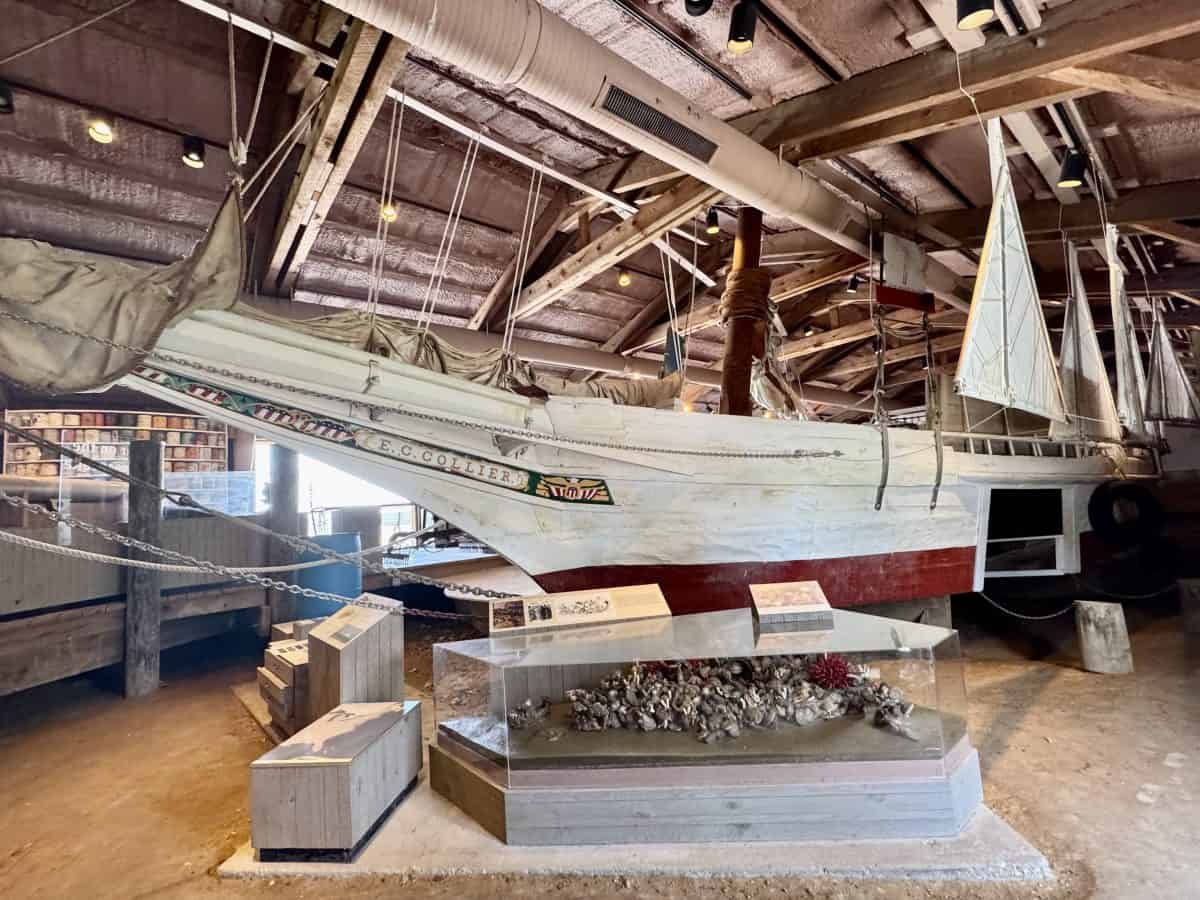
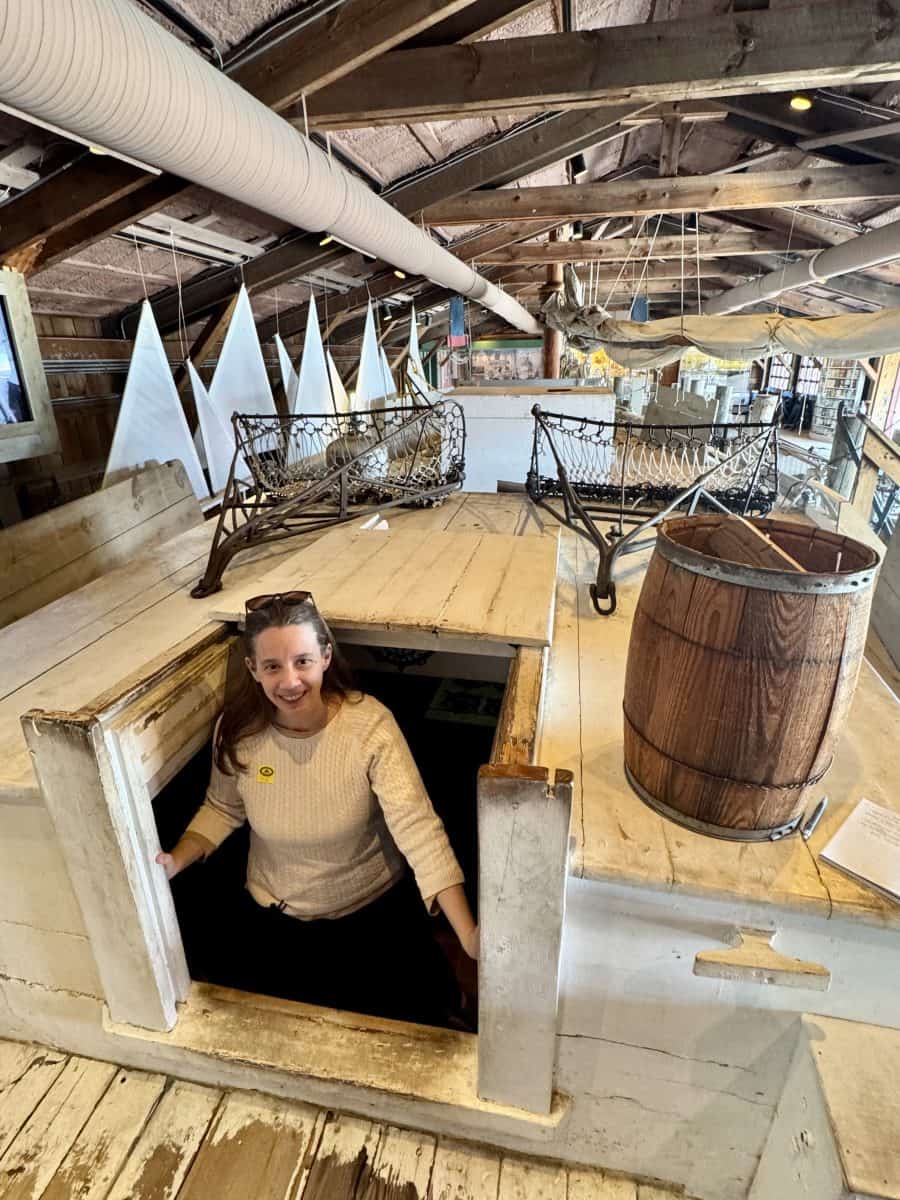
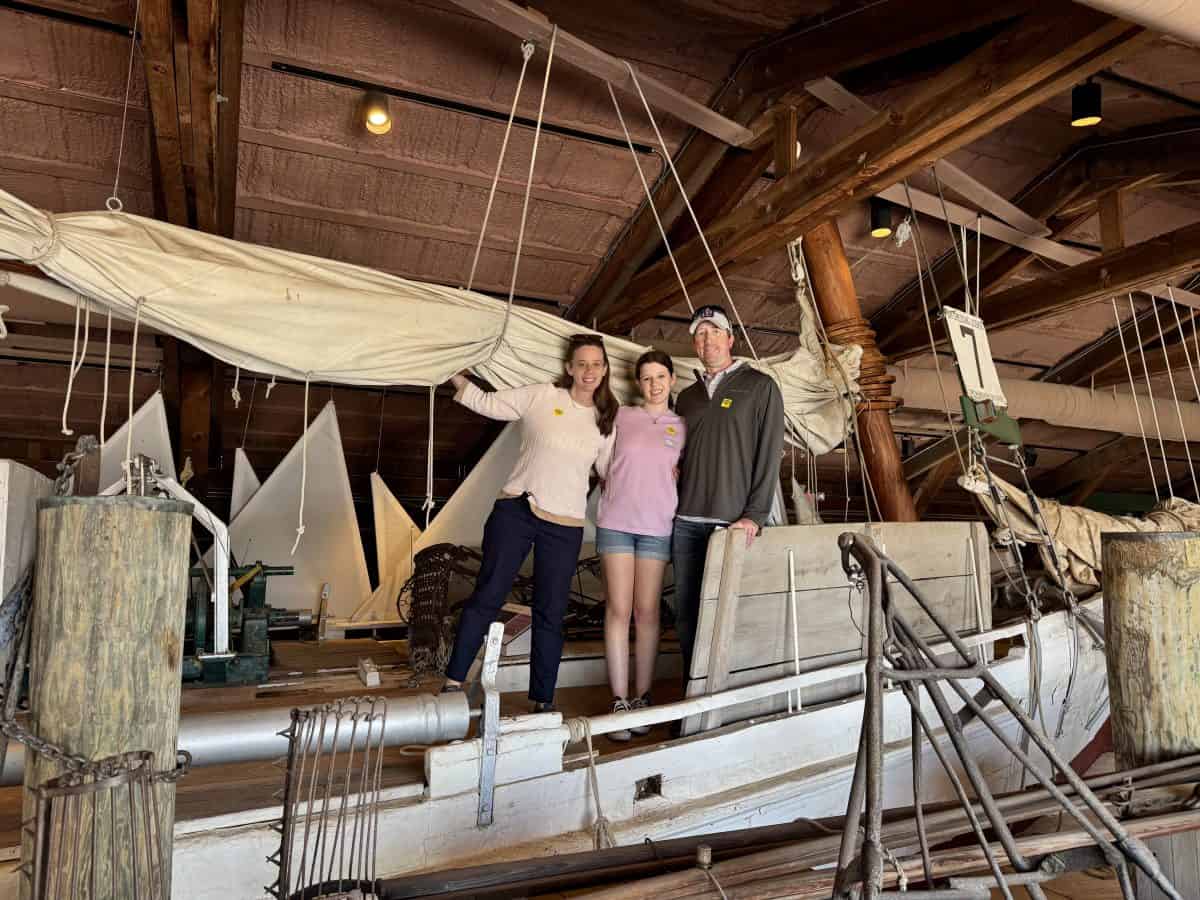
  6. Hop aboard the EC Collier, a real skipjack, and explore the boat by climbing down below deck in the Oystering on the Chesapeake exhibit.

Would you like to save this?
We'll email this post to you, so you can come back to it later.

posing on the EC Collier boat at the Chesapeake Bay Maritime Museum in St Michaels, MD

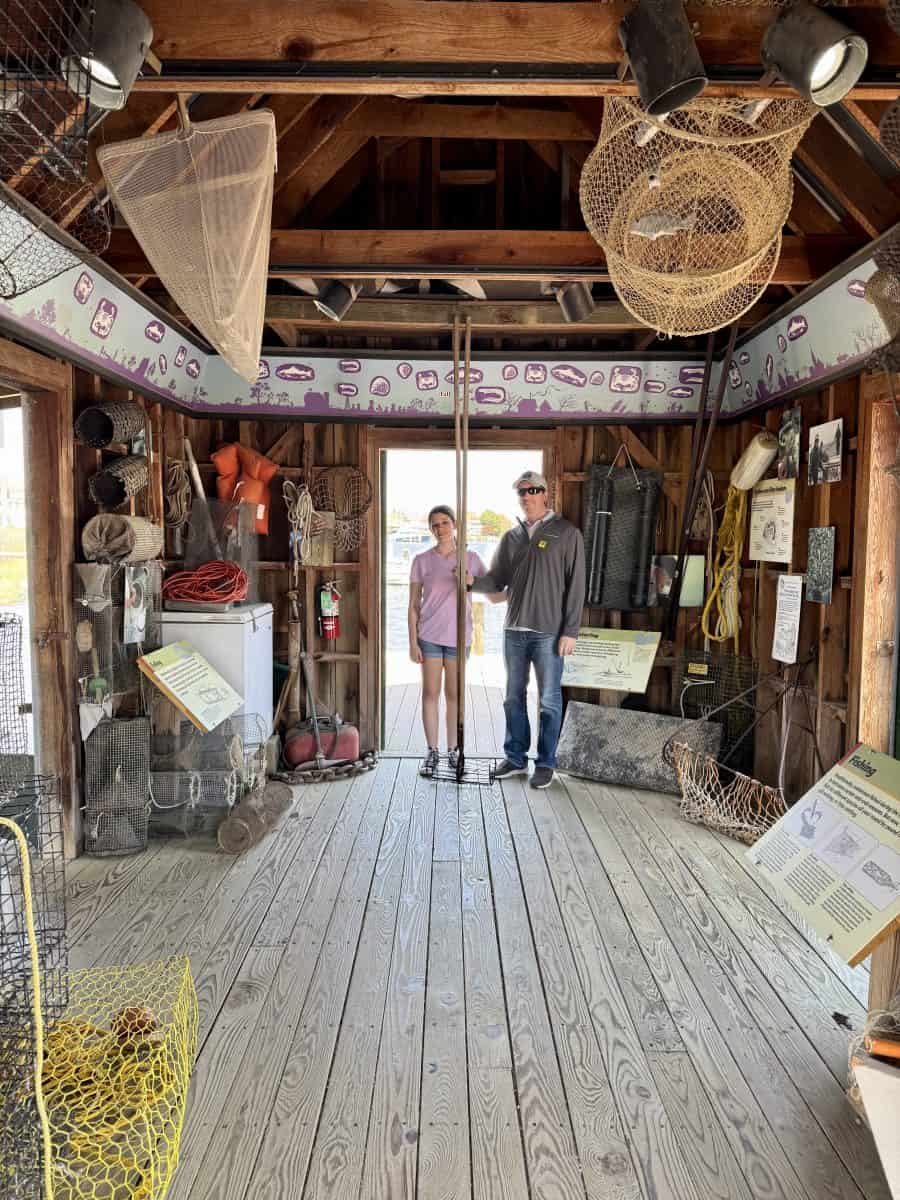
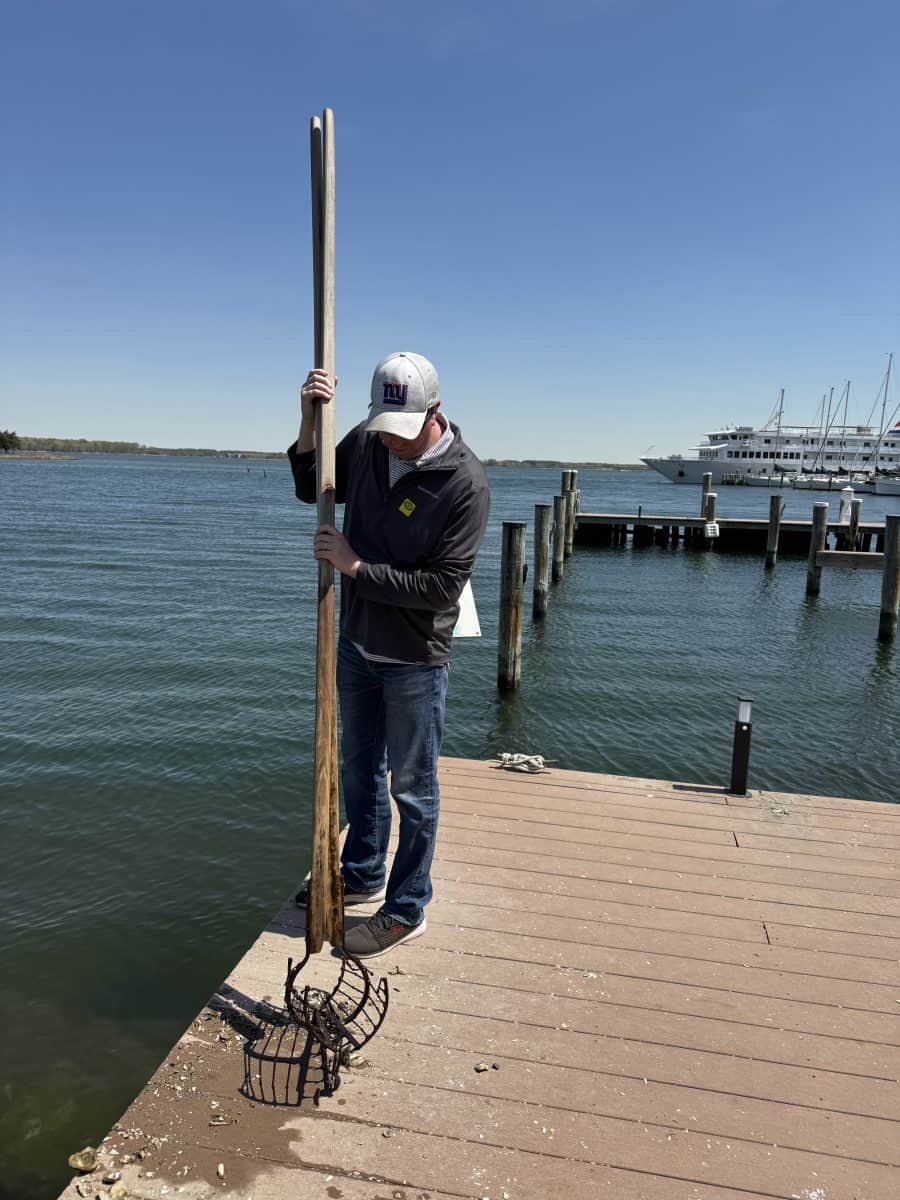
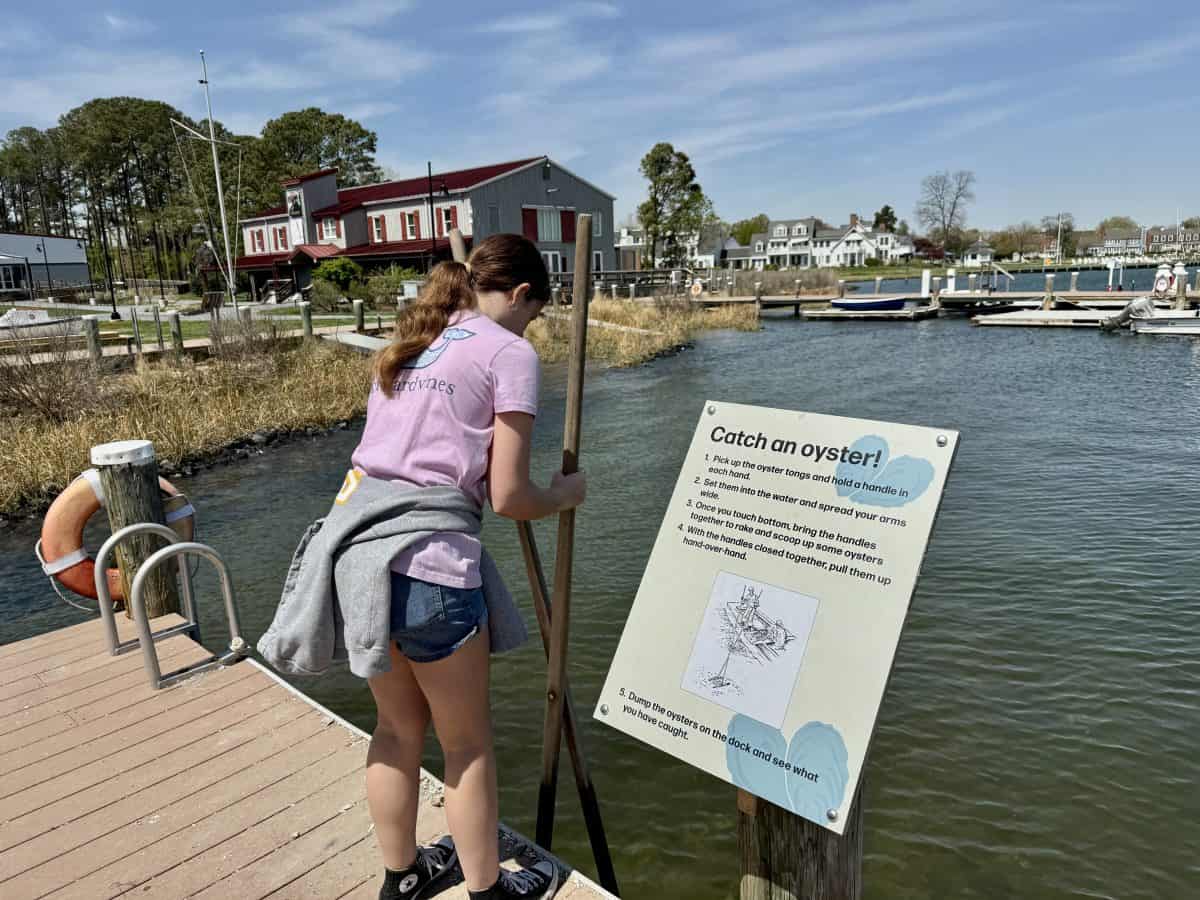
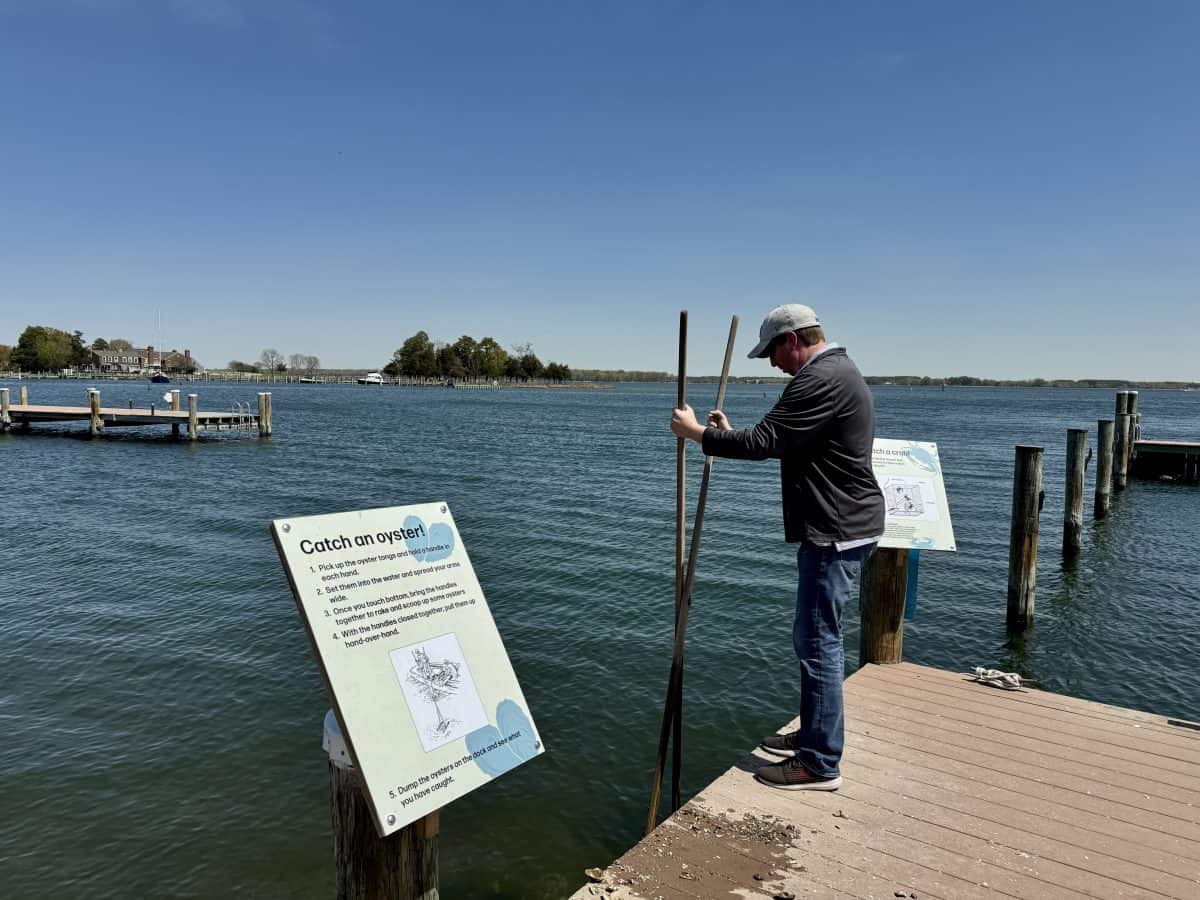
  1. Practice seafood harvesting techniques in the Waterman’s Wharf. Visitors can pull up an eel pot, use tongs to find oysters, and try and catch crabs. 
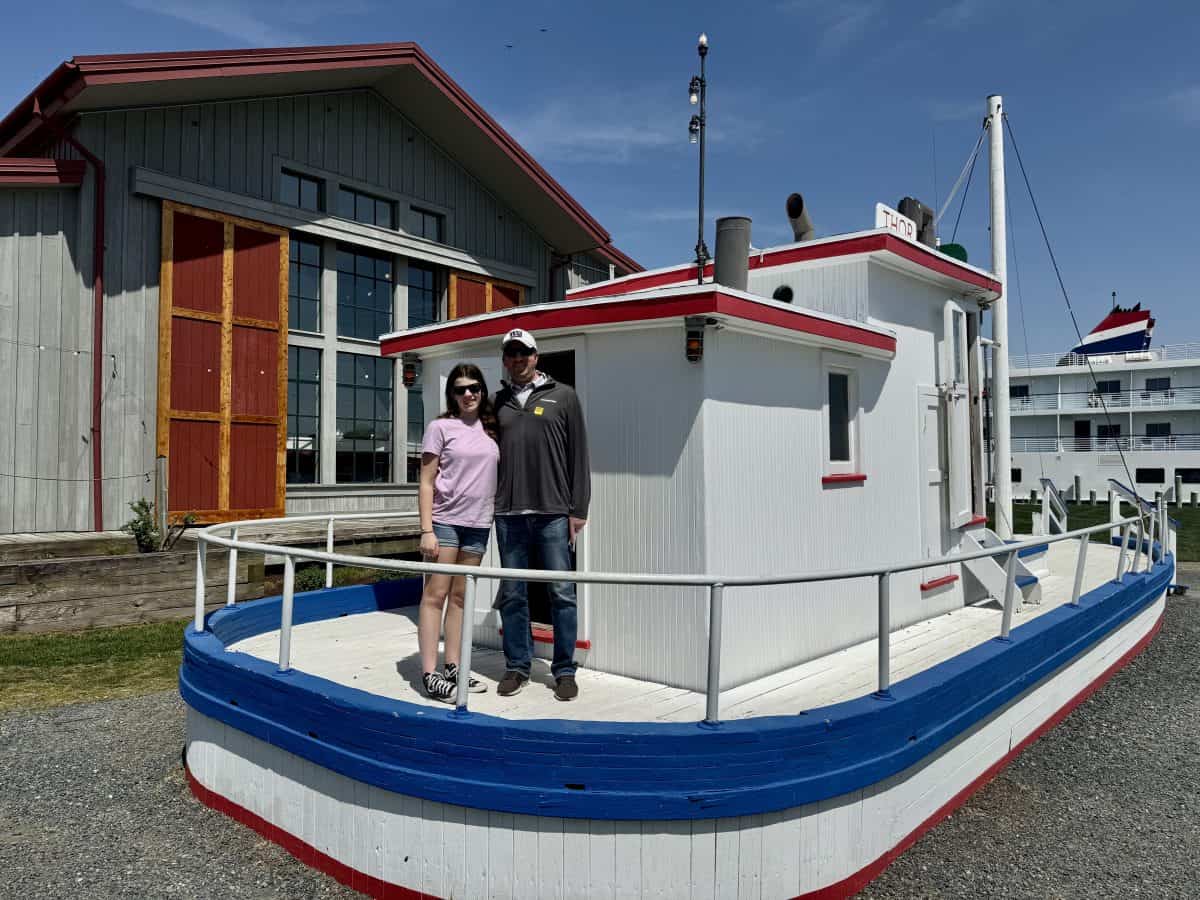
  2. Pretend to navigate your own miniature ship with the Katie G and Buy Boat Thor replicas.
  3. Watch a film (most range from 20 minutes to 45 minutes) on a variety of topics related to the Chesapeake Bay in the Water Fowling Building. 
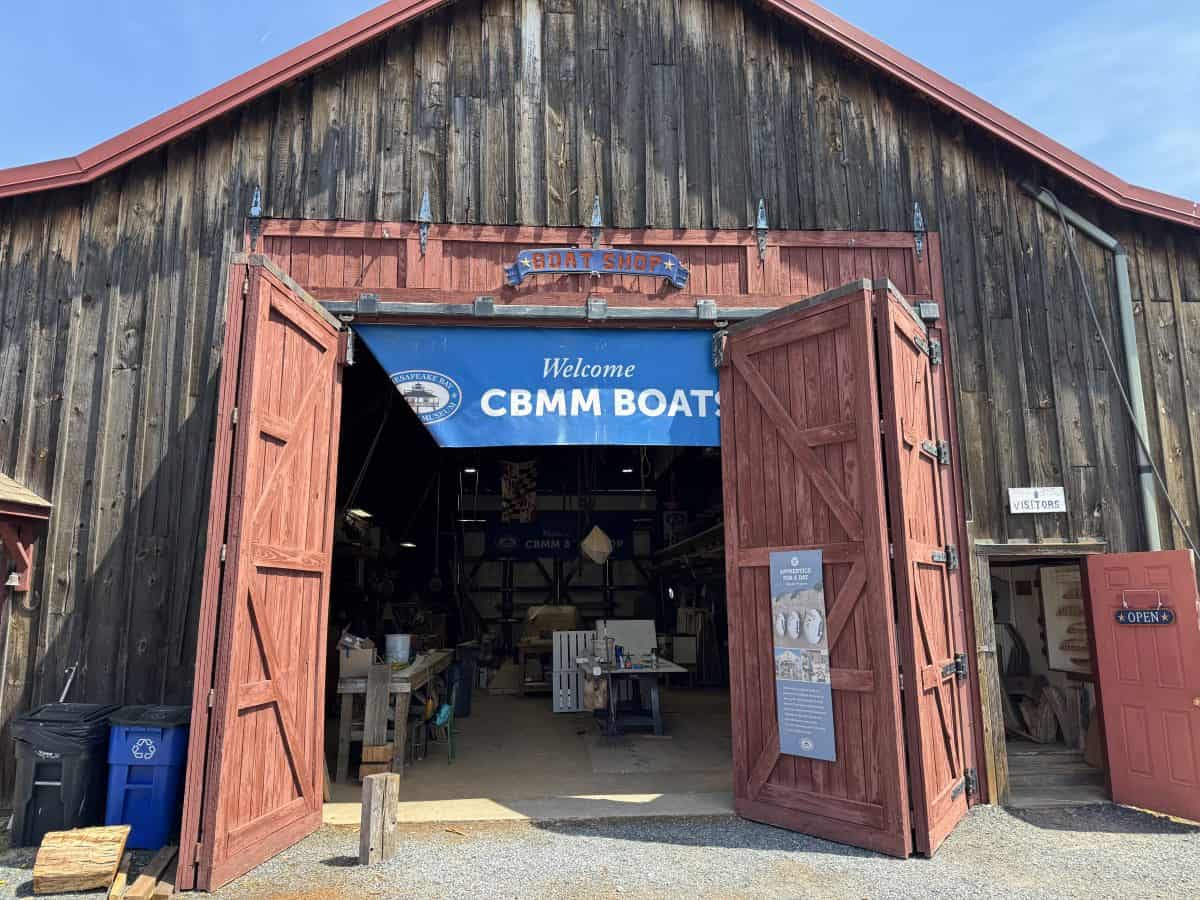
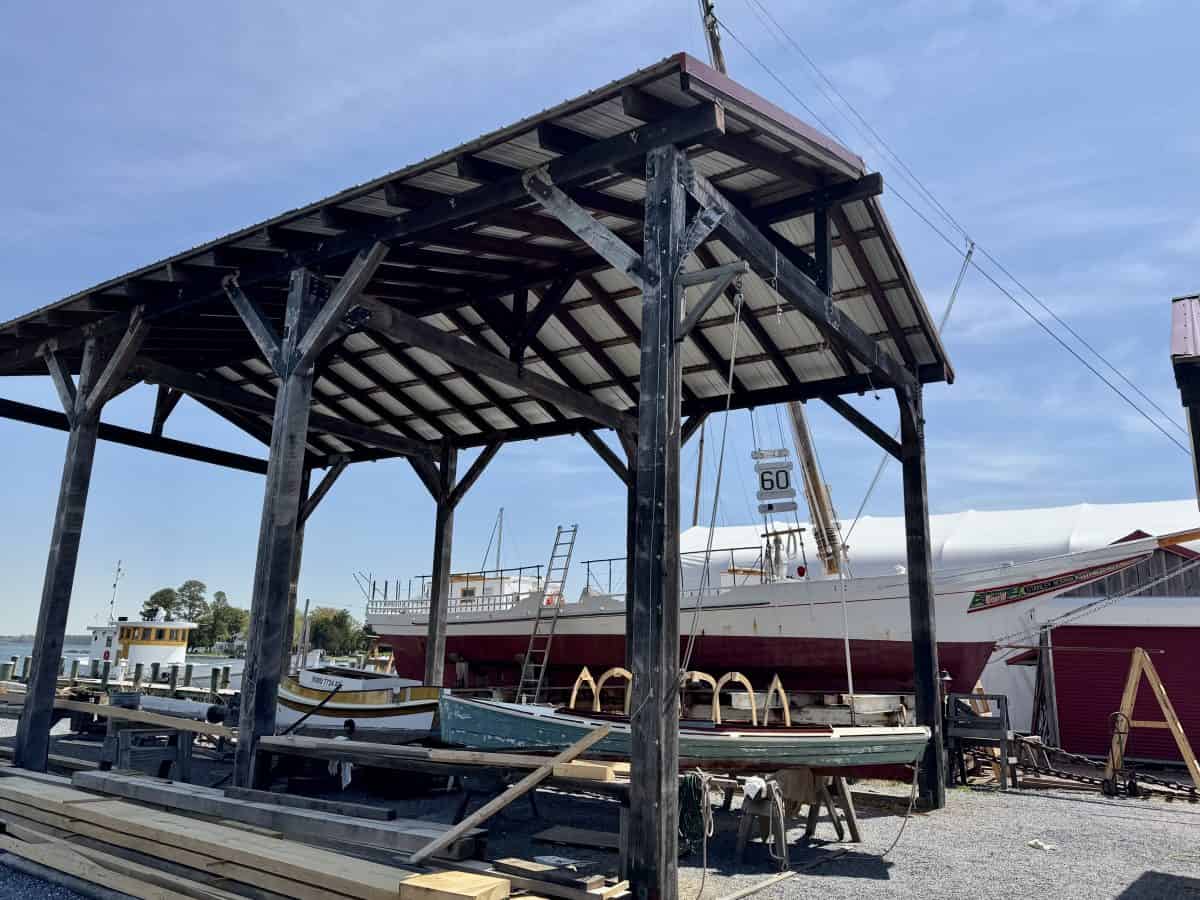
  4. Observe shipwrights and restorers and apprentices at work in the Shipyard. The team works on both wooden boats for the museum’s collections and repairs for private boat owners and can repair up to 18 boats a week (although some older boats can take months or years to repair!). We observed work being done to repair a “Buy Boat” that was used to pick up oysters from fishermen and bring them to land to be sold. See the schedule for the museum’s apprenticeship program here
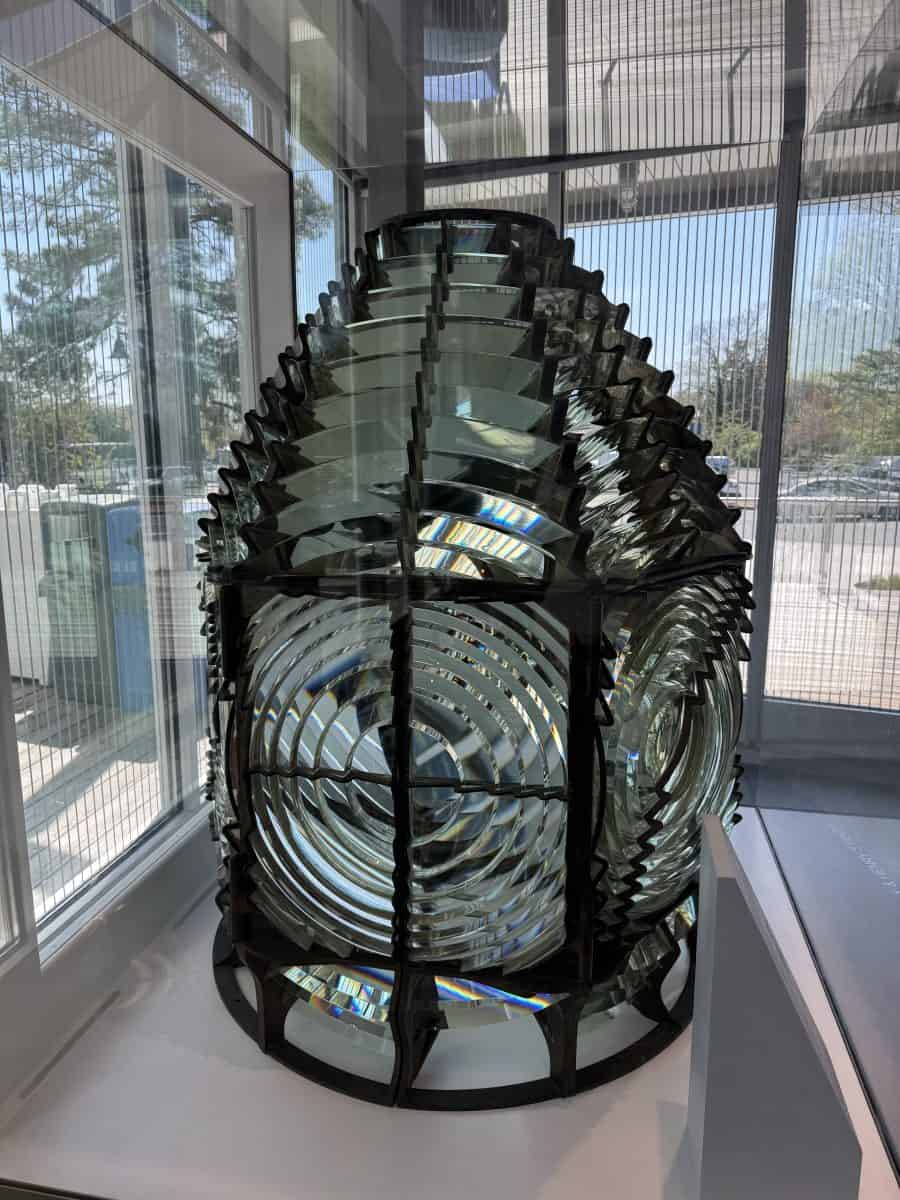
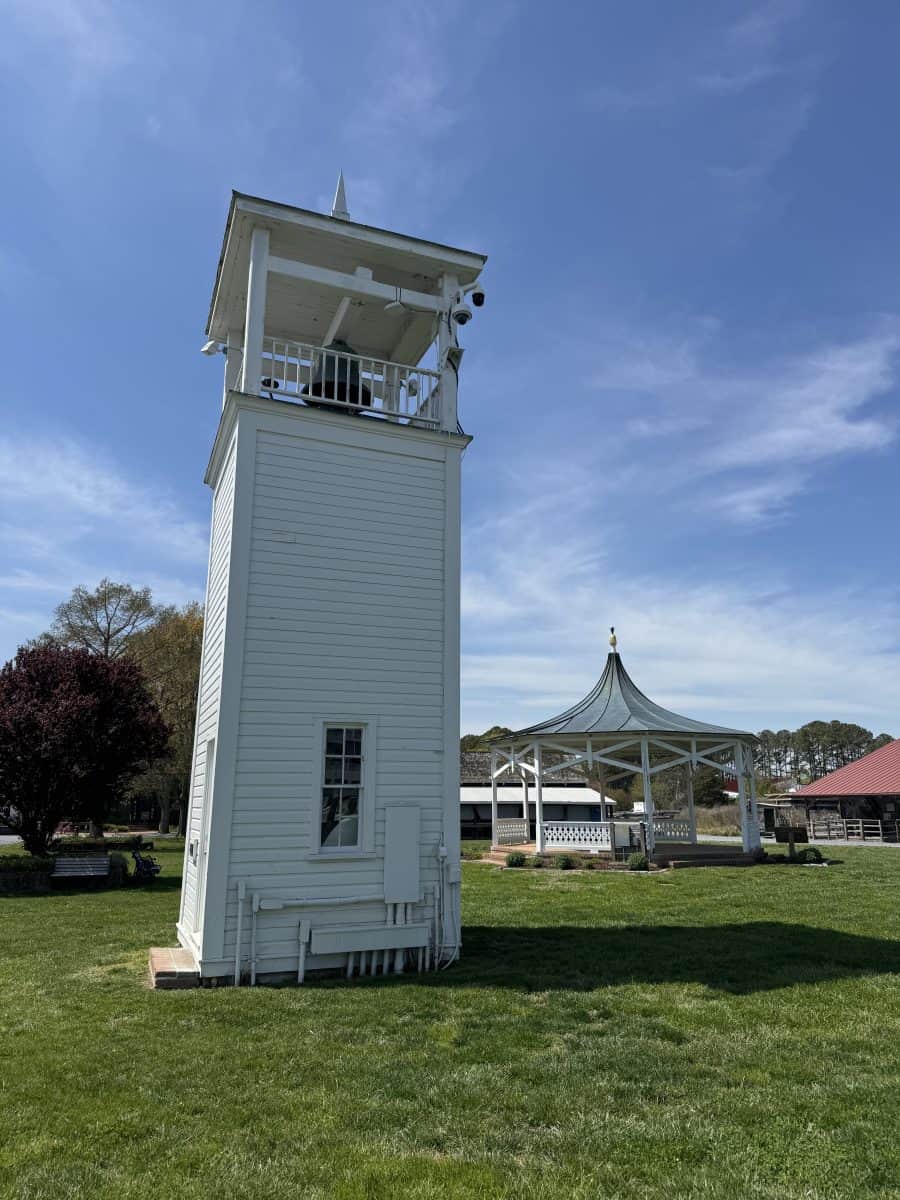
  5. Climb the stairs in the 1879 Hooper Strait Lighthouse. The lighthouse keeper guided boats through the Hooper Strait to Deal Island or other rivers. Check out the display of over 70 lighthouses throughout the Chesapeake Bay. Note: the steps are narrow and steep.
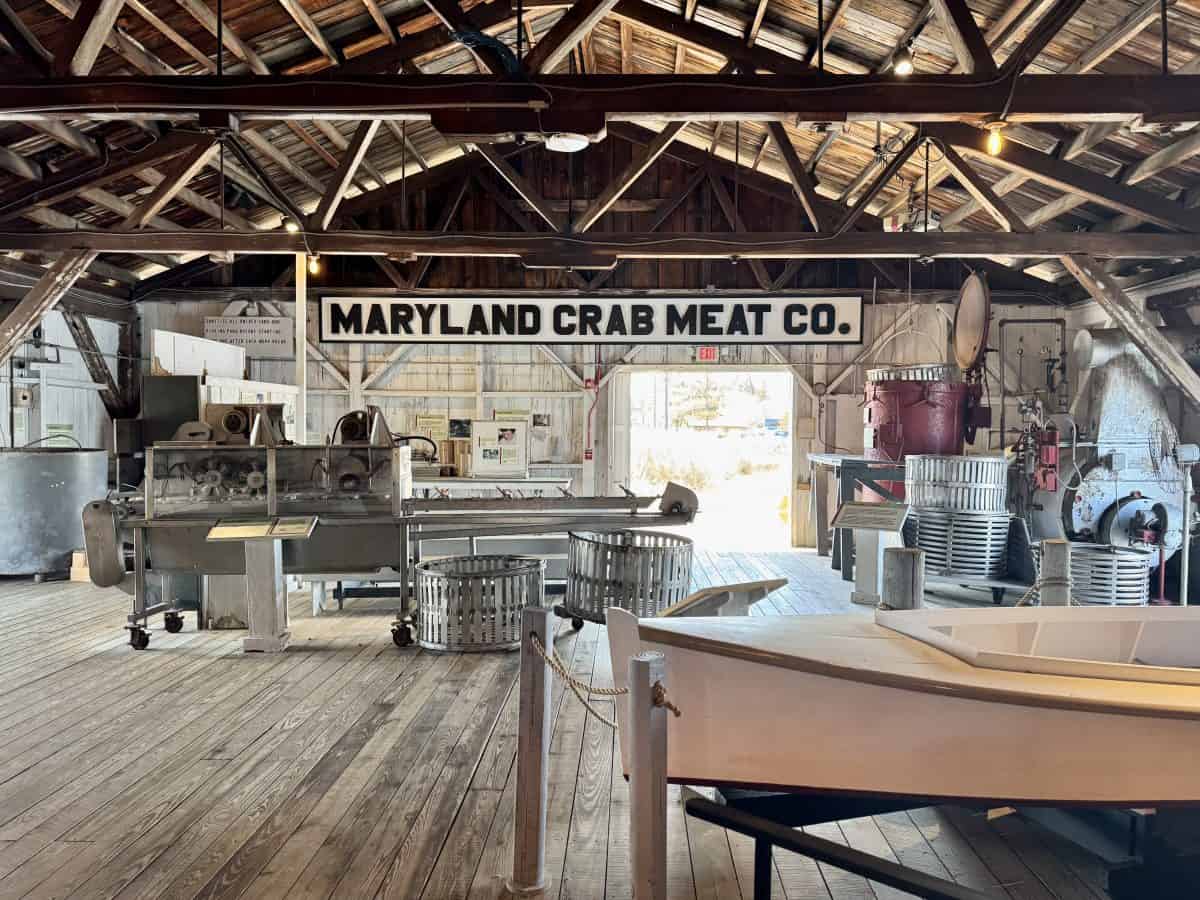
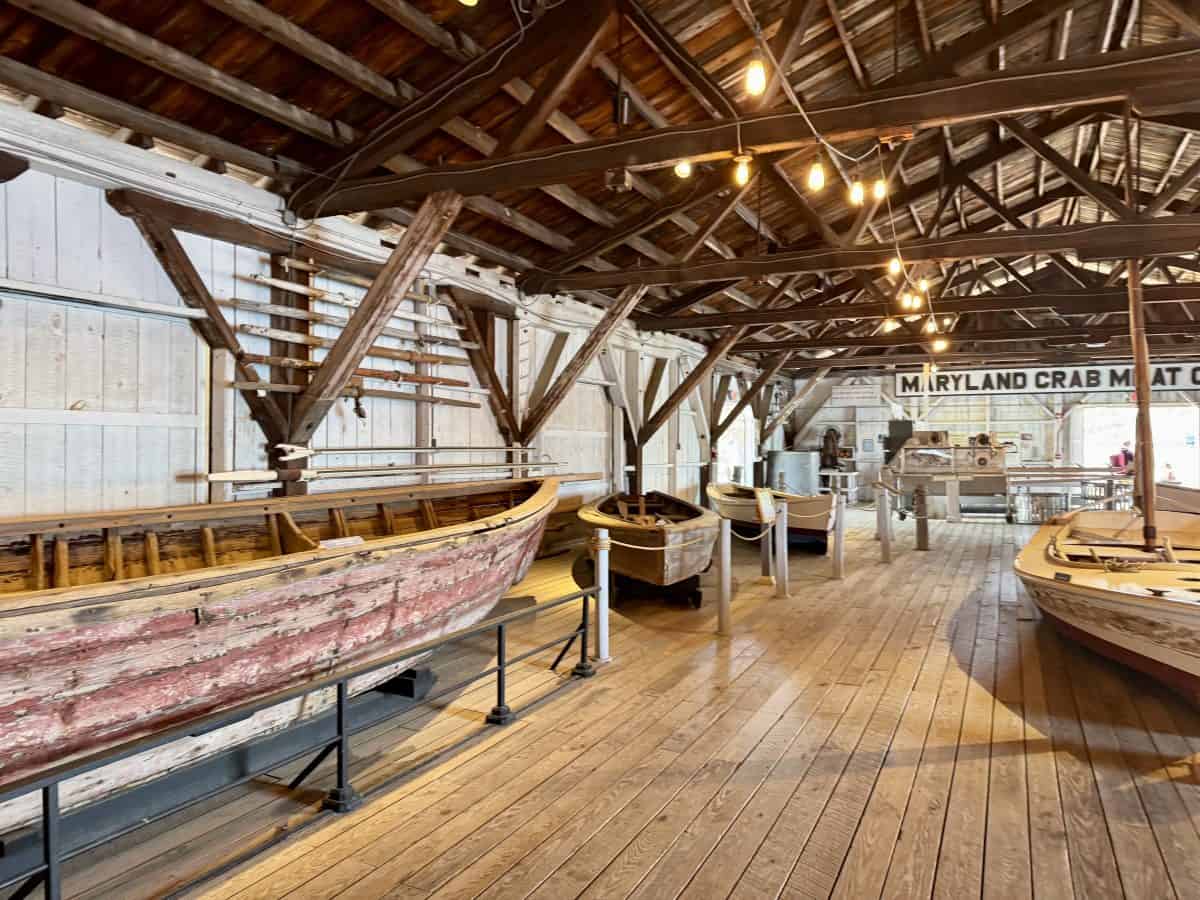
  6. Check out ten fishing vessels and a recreated crab picking machine in the Small Boat Shed, originally built in the 1890s in Clairborne, Maryland and moved to St Michael’s in 1971.
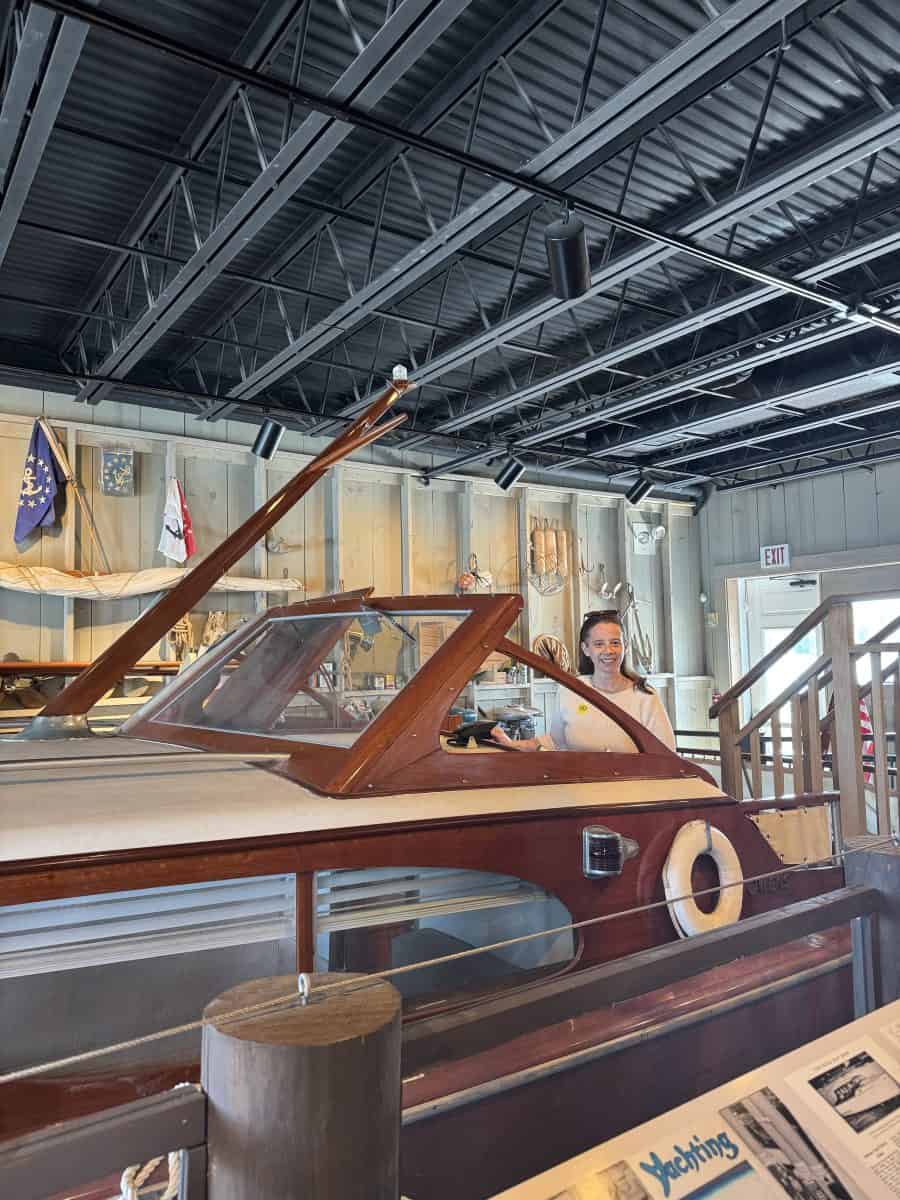
  7. Steer a 1951 Owens Six Sleeper Express in the At Play on the Bay exhibit near E Dock. The exhibit includes several outboard and inboard motor boats on display.
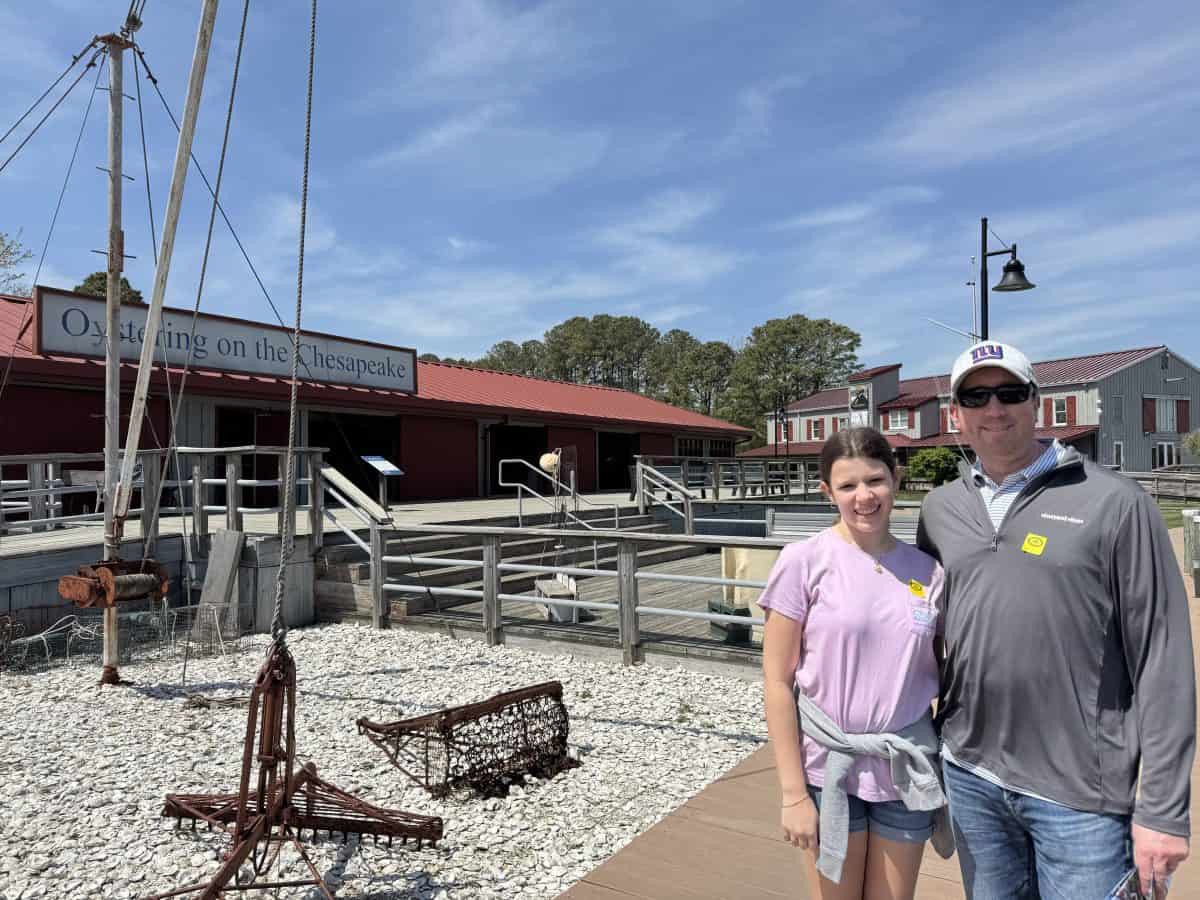
posing outside an exhibit at the Chesapeake Bay Maritime Museum in St Michaels, MD

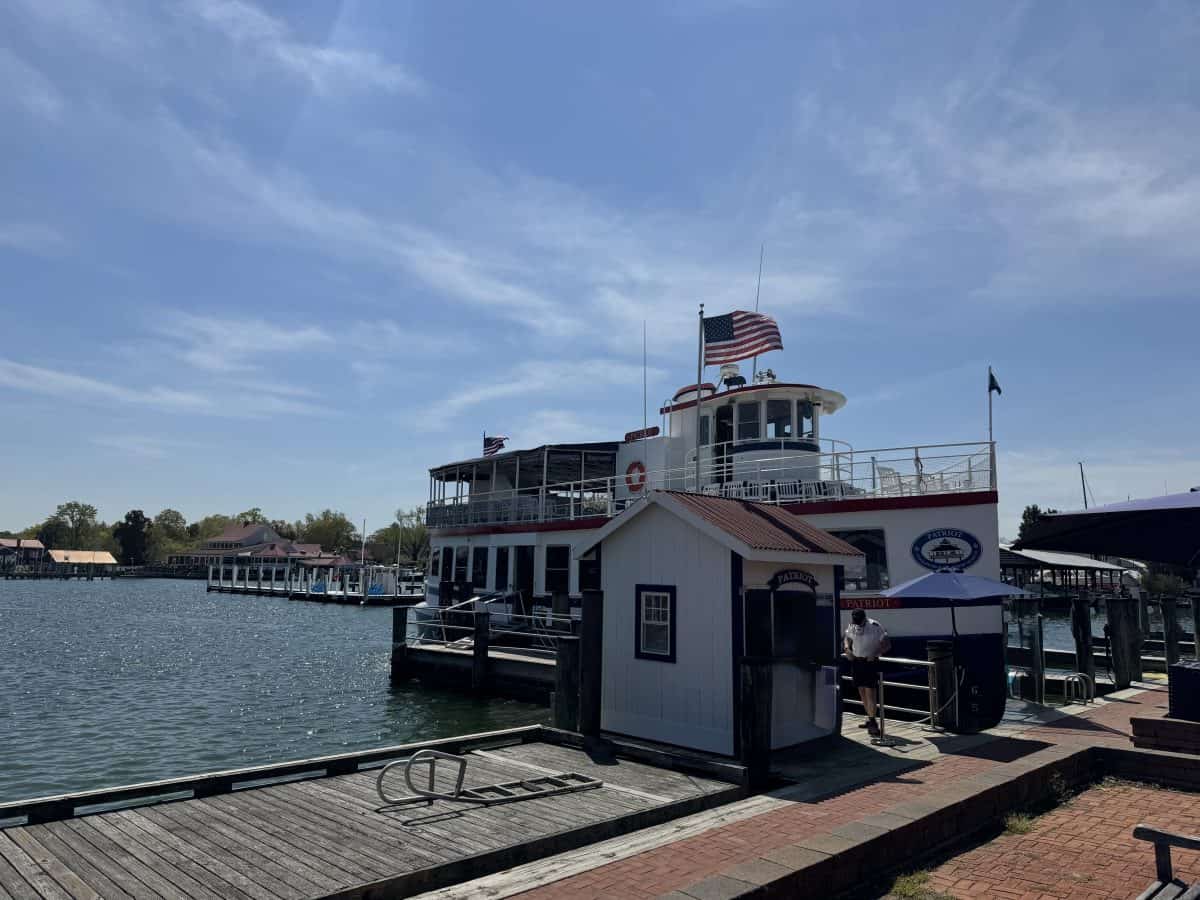
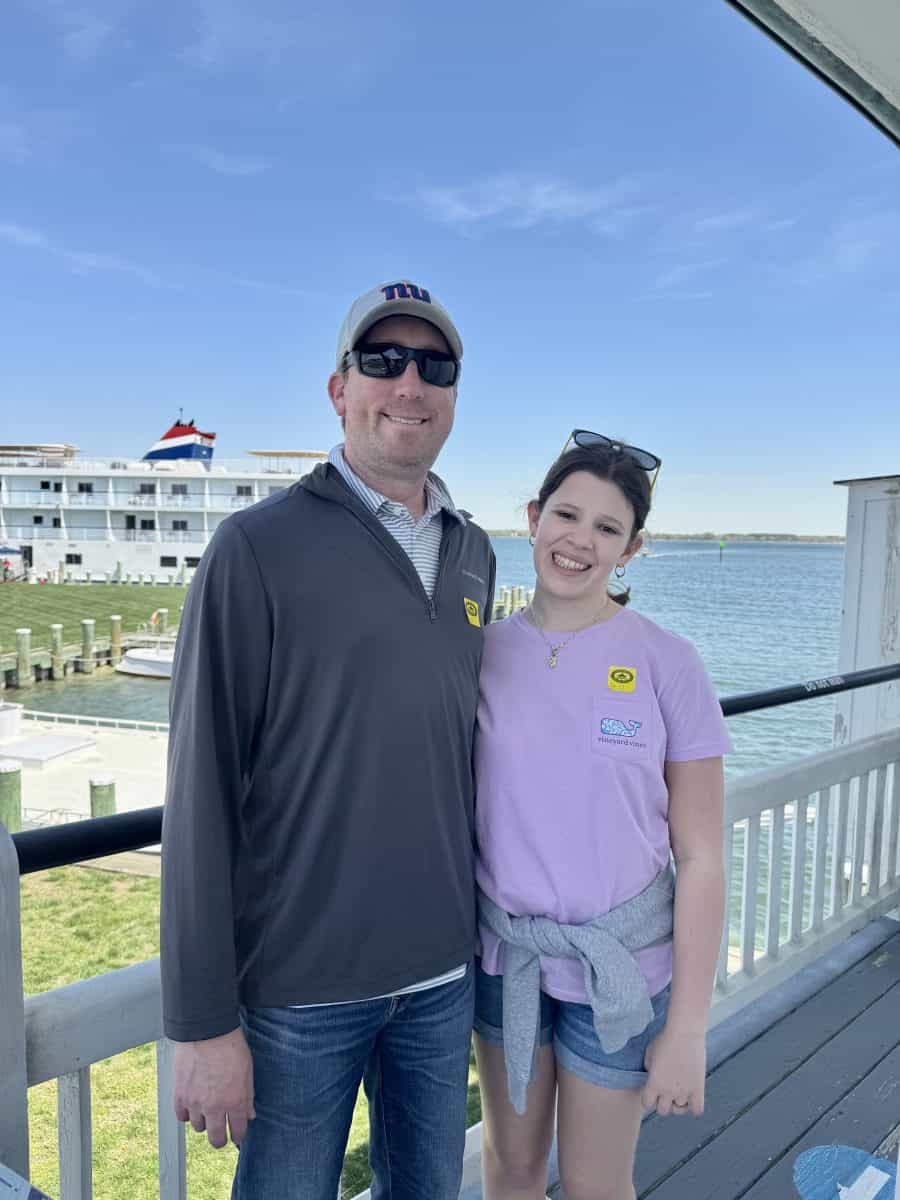
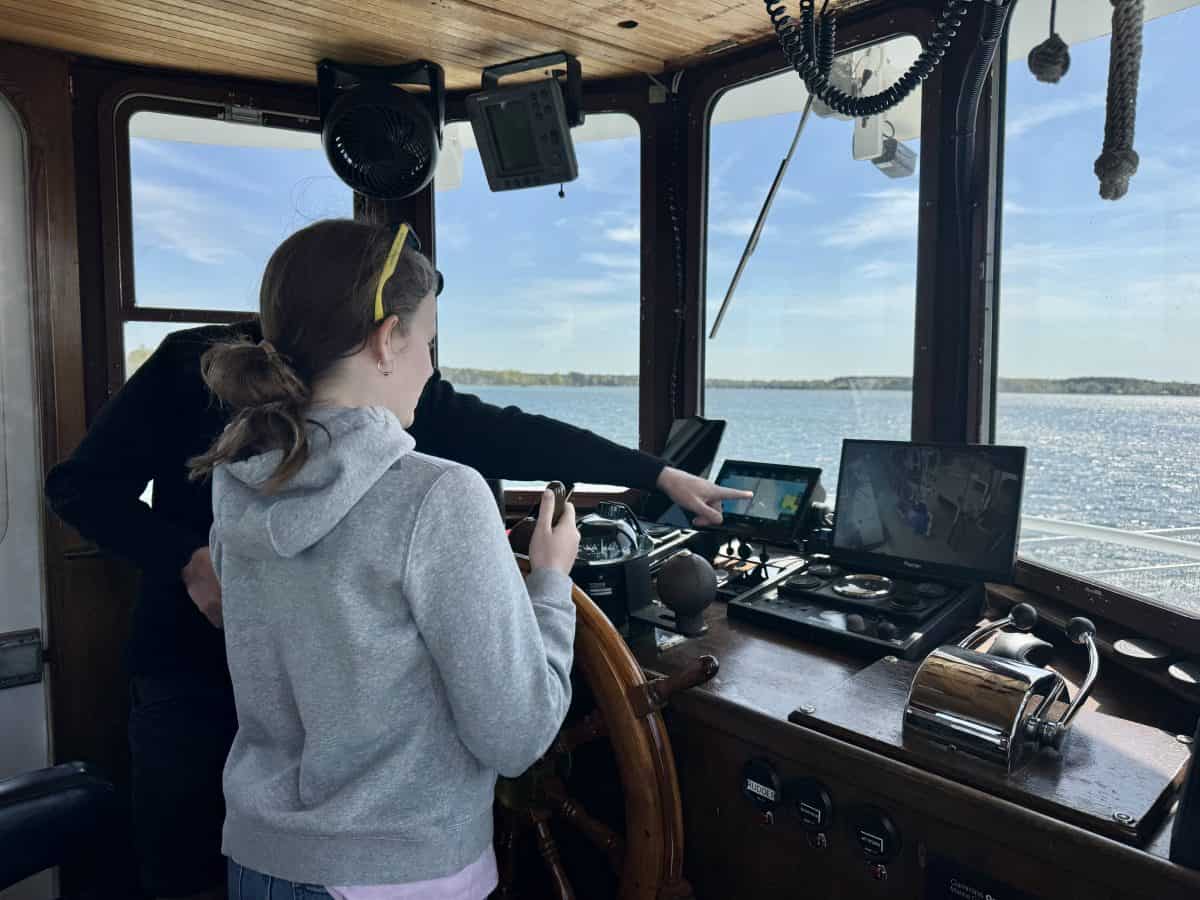
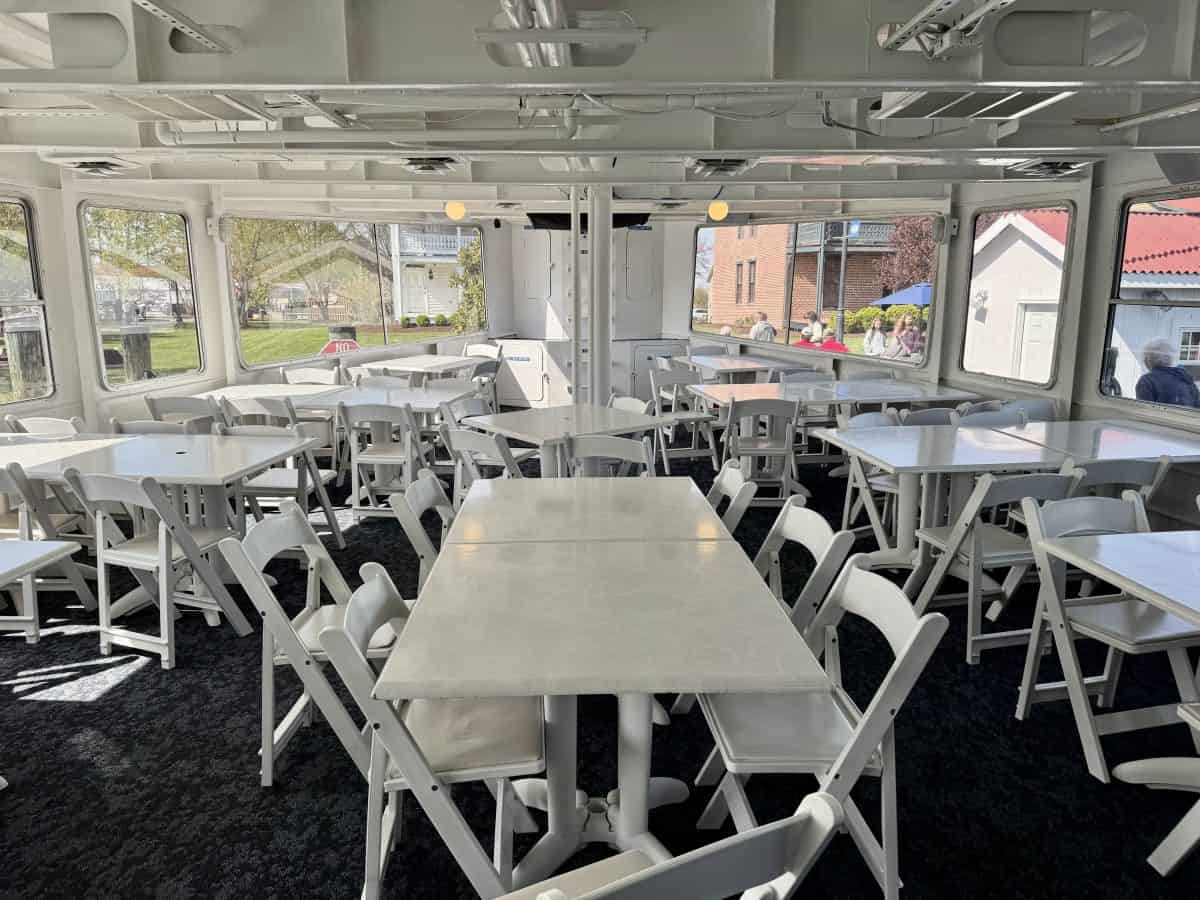
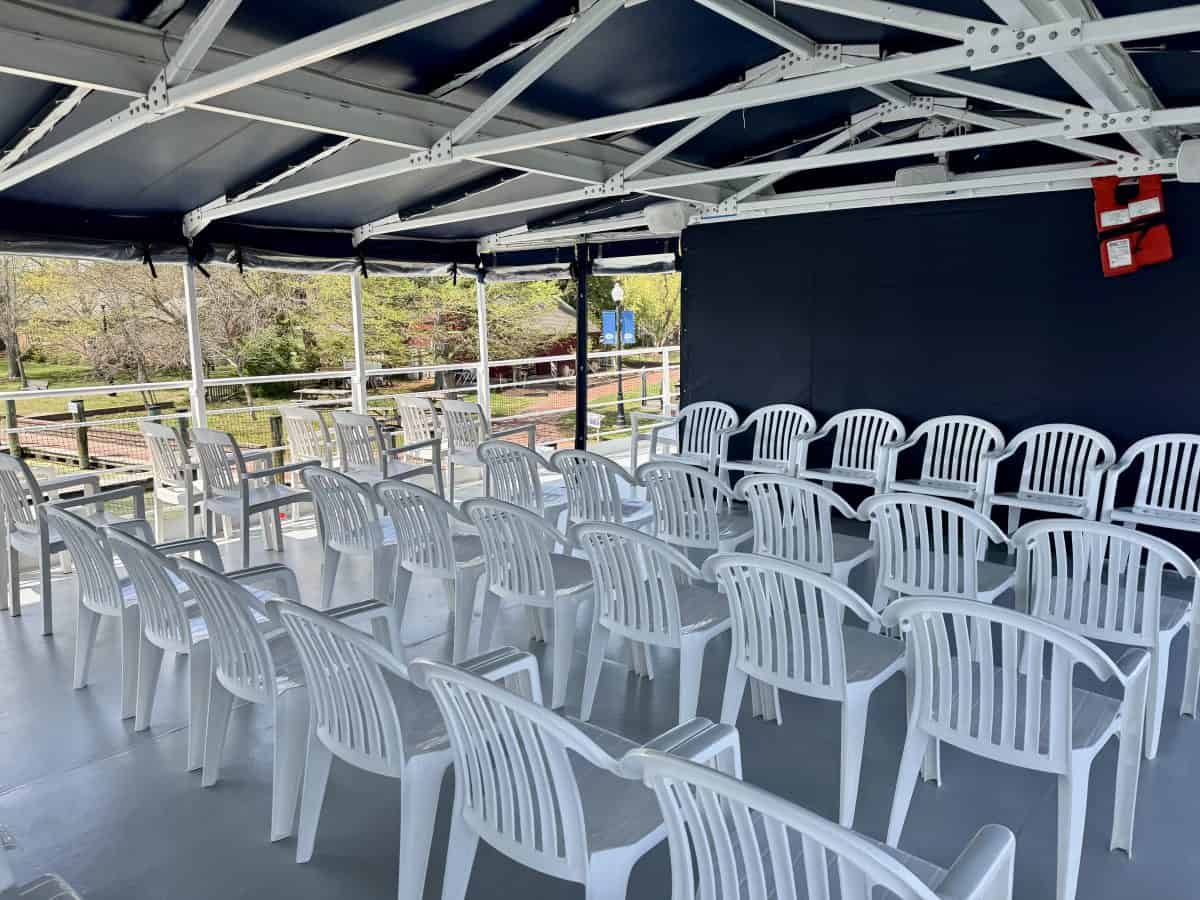
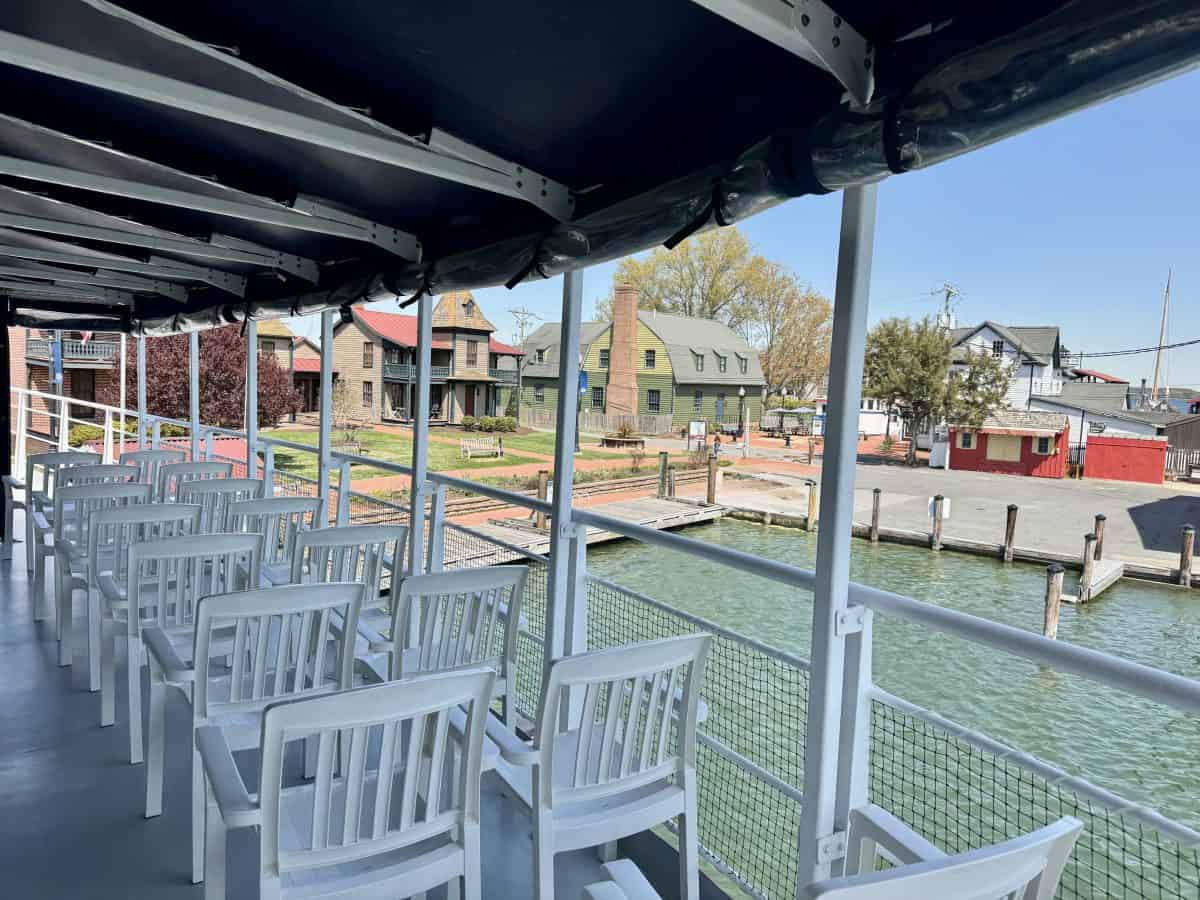
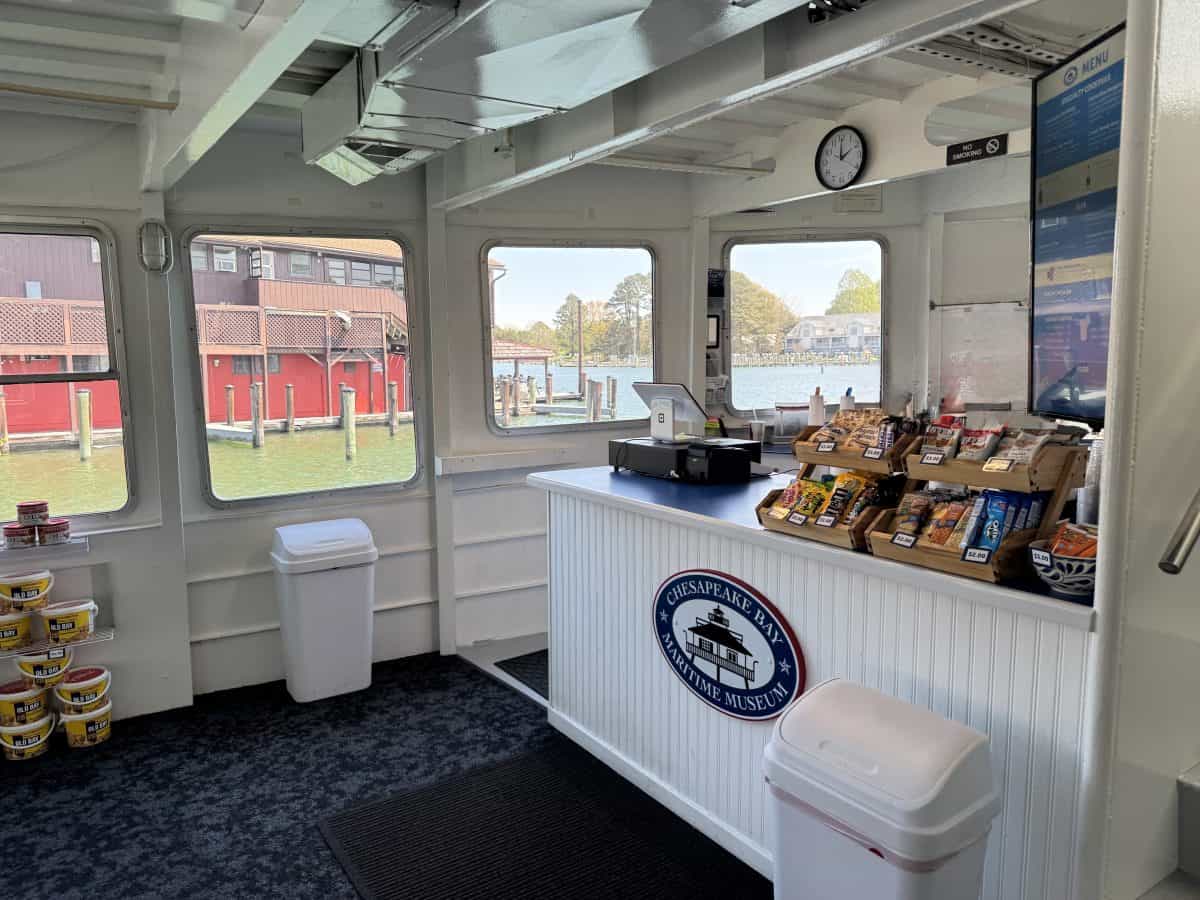
Bonus: Take a boat tour aboard the Patriot down the Miles River. The 65 foot steel hulled cruise ship holds 140 people with upper deck shaded and sunny chairs and plenty of tables and chairs on the lower level. There are also restrooms and a full concession stand aboard the Patriot (guests are also welcome to bring non-alcoholic drinks and snacks aboard). The staff is super friendly and knowledgeable and will point out various wildlife and sea life and share the history of the Miles River and St Michaels area. Free parking is available in the main lot for the Chesapeake Bay Maritime Museum and museum admission is not necessary to take the 70 minute cruise.
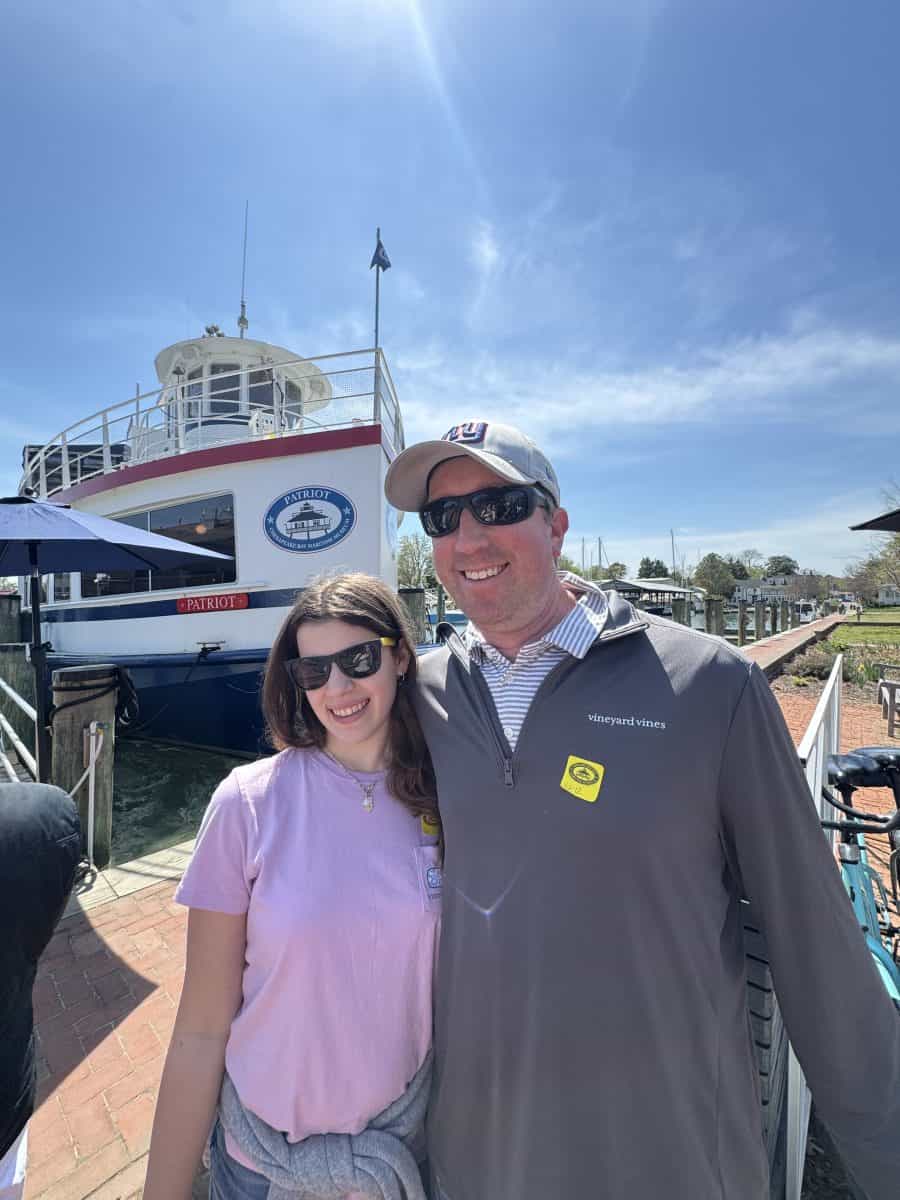
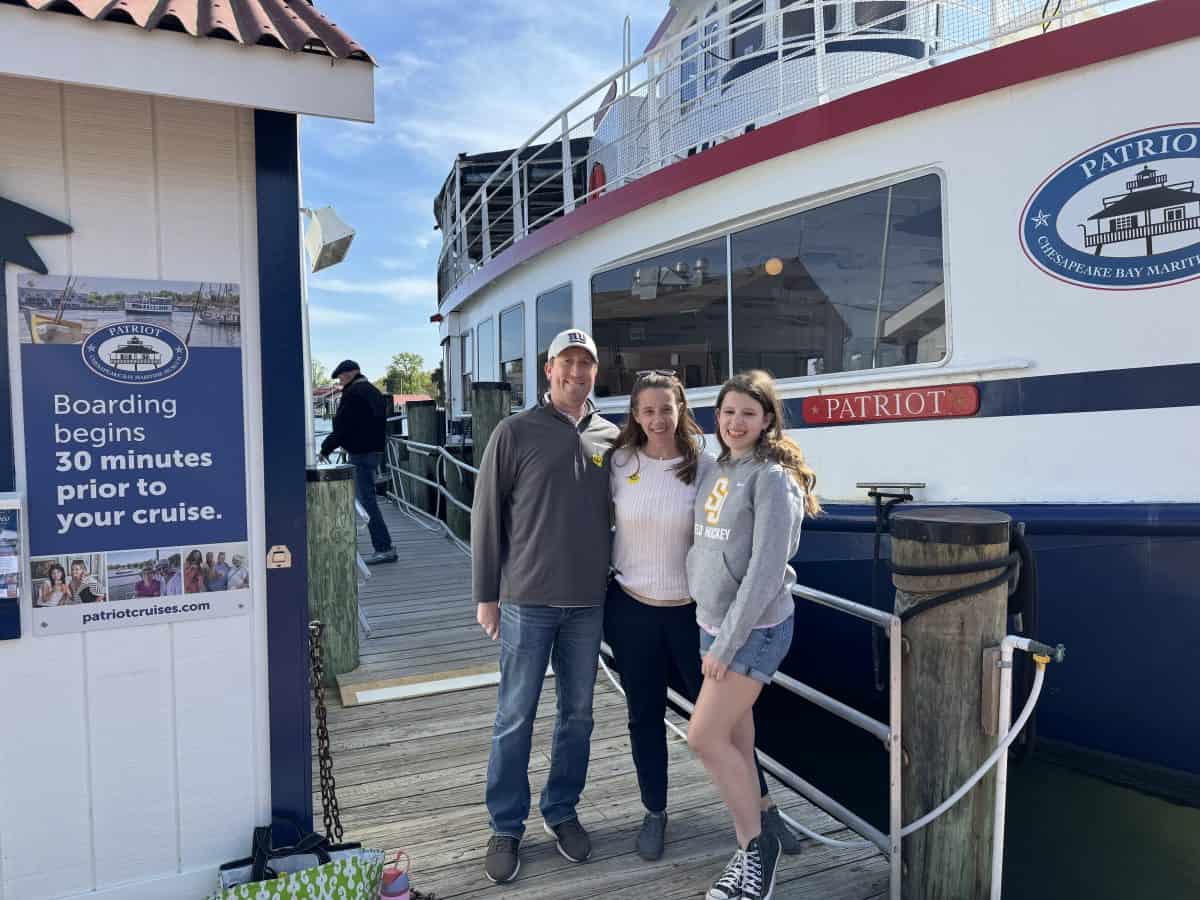
posing in front of the Patriot boat at the Chesapeake Bay Maritime Museum in St Michaels, MD

Looking for other maritime museums? Check out our features of Mystic Seaport in Connecticut, Battleship Cove in Massachusetts, South Street Seaport in New York City, the Maine Maritime Museum in Maine, and the Independence Seaport Museum in Pennsylvania. And follow along on our adventures on Instagram and Facebook.

Disclosure: Our family was given a media pass to explore the Museum; all opinions expressed are my own. 

Similar Posts

  • | | |

    10 Tips for Visiting Mount Rushmore National Memorial

    Known as the “Shrine of Democracy”, Mount Rushmore is located in the Black Hills region of South Dakota and attracts over two million visitors each year. The Black Hills are known for the ponderosa pine trees that give the illusion of darkness from a distance.

    The concept of an attraction that would drum up business for the economy and bring visitors to South Dakota was the idea of Doane Robinson, the state historian of South Dakota. He originally wanted to honor western heroes, like Lewis and Clarke and Chief Red Cliff. Robinson sought out mountain carvers and found well known sculpture Gutzon Borglum, who was working on a project in Georgia. Borglum changed the scope of the project by switching the location and the profiles to feature American presidents that best represent 150 years of American history. He chose Mount Rushmore, named for New York attorney Charles Rushmore who inspected the mountain for mining in the 1880s, because of its location: it was big enough for the scale of the project, it was made of hard rock, and it faced southeast, which provided good daytime light.

  • | |

    Touring the Assemblée Nationale du Québec in Québec City

    On a recent trip to Québec, Canada, we made sure one of our first stops was a visit to the Parliament Building, home of the National Assembly, to learn all about French Canadian government.

    A National Historic Site, the National Assembly Parliament Building was built between 1877 and 1886 on Parliament Hill, inspired by the architecture of the Louvre in Paris. Old Quebec housed the first three parliament buildings but all three burnt down before the current building was built from 1877-1886 and designed by Eugéne-Étienne Taché. In the early 1900s, the government added several buildings for additional office space.

  • | | |

    Exploring the Annapolis Maritime Museum

    On a recent visit to Annapolis (check out our post featuring one of the BEST tours we have ever taken- the historical walking tour of the US Naval Academy.) we stopped at the Annapolis Maritime Museum to learn about the nautical history of the area. (Looking for other great, seaside spots? Check out our posts featuring New Bedford, Massachusetts; Gloucester, Massachusetts; and Newport, Rhode Island).

    What was once the home of the McNasby Oyster Company throughout most of the 20th century, the property became the Eastport Historical Committee and Barge House Museum in the 1980s and then developed Annapolis Maritime Museum in 2000 with expansions less than a decade later. The museum showcases the history of  the local watermen (the term for men who ) and the harvesting, and over-harvesting of oysters. By the start of the 21st century, less than one percent of oysters were left  and today there is a massive restoration project to save the oysters, with the goal to reharvest 10 BILLION oysters by 2035.

  • | | | | |

    Ocean Edge Resort on Cape Cod in Massachusetts

    I grew up less than an hour from Cape Cod, which is located south of Boston- it’s the “flexed arm” in the Massachusetts state outline. We often took day trips to various villages and beaches on the Cape but rarely stayed on site overnight. I didn’t know what I was missing out on until our recent visit to the Ocean Edge Resort.

    Located in Brewster, Massachusetts, in the middle of the Cape, Ocean Edge Resort is a world class resort spread over 400+ acres with its own private beach, 18 hole golf course, 9 tennis courts, 5 pools, and endless amounts of family fun. During the popular summer season, the resort offers daily programming in sports, fitness, dining, and kid friendly activities. There’s a seasonal shuttle throughout the complex so guests can simply “pahk the cah” (you are in Massachusetts, of course) and immediately get into vacation mode.

  • | | | | | | | | |

    10 Rainy Day Activities in Manhattan Teenagers Will Love

    New York City, and specifically Manhattan,  is a magical place any season and in any weather and for any age. But our recent storms in the Northeast inspired a reader to ask us for recommendations for rainy day activities in the Big Apple. And knowing that she has teen-aged kids, we offered suggestions that we thought would be most engaging for that age. This week, we’re sharing those 10 activities that will (in theory) especially appeal to the teenage crowd.

  • | | |

    Playing “I Spy” at the New Britain Museum of American Art in Connecticut

    One of the oldest museums dedicated to American art, the New Britain Museum of American Art began in 1853 as the New Britain Institute, a cultural resource for the vibrant city of New Britain. Located in the Historic section of New Britain on the edge of Walnut Hill Park, known at one time as the Hardware City of the World, New Britain was booming as a manufacturing industry in the 20th century. 

Leave a Reply

Your email address will not be published. Required fields are marked *