
7 Stops on the Tour of the Massachusetts State House
Located in downtown Boston, on the south side of Beacon Hill and overlooking the Boston Common and Back Bay, the Massachusetts State House was constructed in 1798 and served as the state house until the mid 1880s. The land where the capitol was built was donated by John Hancock, the first elected governor of Massachusetts and the building remains the oldest on Beacon Hill. The complex covers almost seven acres- two city blocks. Paul Revere covered the (then wooden) dome in copper in 1802. Years later, in 1874, when it had turned green from rust, it was covered in gold. Now, every 30 years, the dome has to be recovered in gold. Note the pinecone at the top of the dome, commemorating the timber industry of Massachusetts.
This past summer, when visiting family in town, we spent some time in Boston. State Capitol buildings are one of our favorite places to explore whenever we’re in a new city. (Check out our posts featuring the Capitol buildings in Wyoming, Rhode Island, Connecticut, New York, Maryland, Pennsylvania, Arkansas, and Colorado.

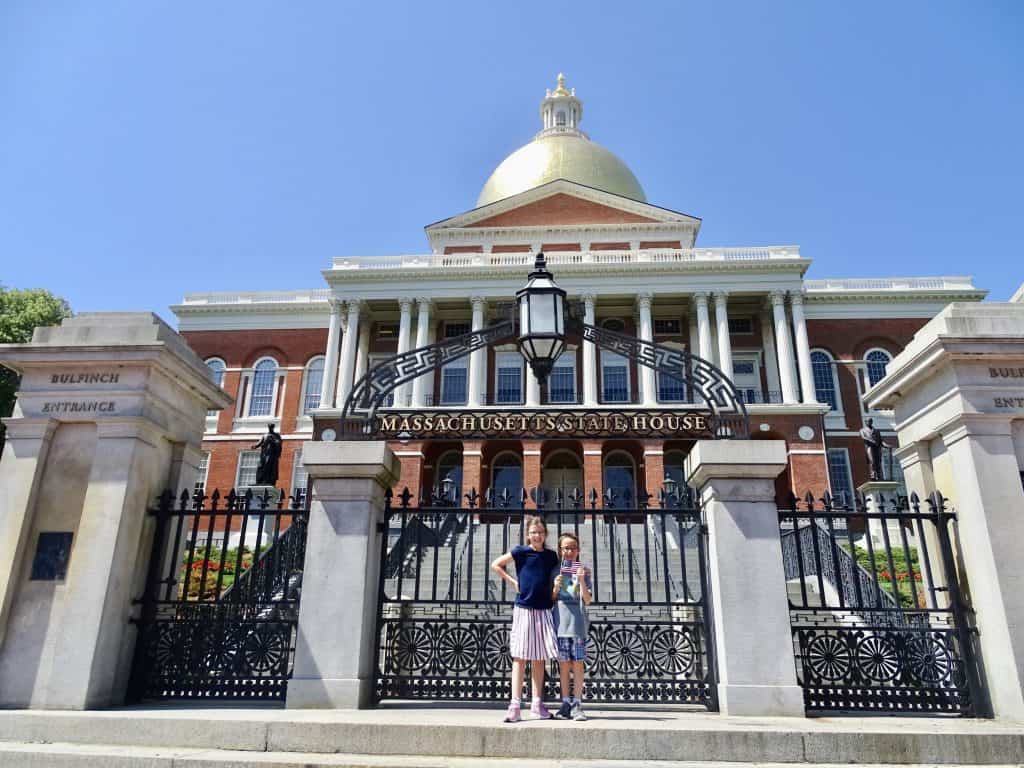
Traveling with Kids:
- Guided tours are offered Monday- Friday from 10-3:30am and leave every 15 minutes. Tours meet at Doric Hall on the 2nd floor. Self guided tour brochures are also located in Doric Hall. Guided tours last one hour.
- Tours are handicap accessible by elevator; strollers are allowed.
- Enter through the east wing entrance behind the statue of General Hooker on Beacon Street. All visitors must pass through security and metal detectors.
- Parking is available in nearby garages (check here) and the closest subway station stop is the Park Street Stations at either the Red or Green lines. More information can be found here.
- Restrooms are located on the lower level. There is a cafeteria, open to the public, on the 4th floor.
- I would recommend this tour for ages 5+. The tour guides are engaging and informative, but I don’t think most toddlers will enjoy it. There are several spots to rest weary feet on the tour.
7 Can’t Miss Spots on the State House Tour:
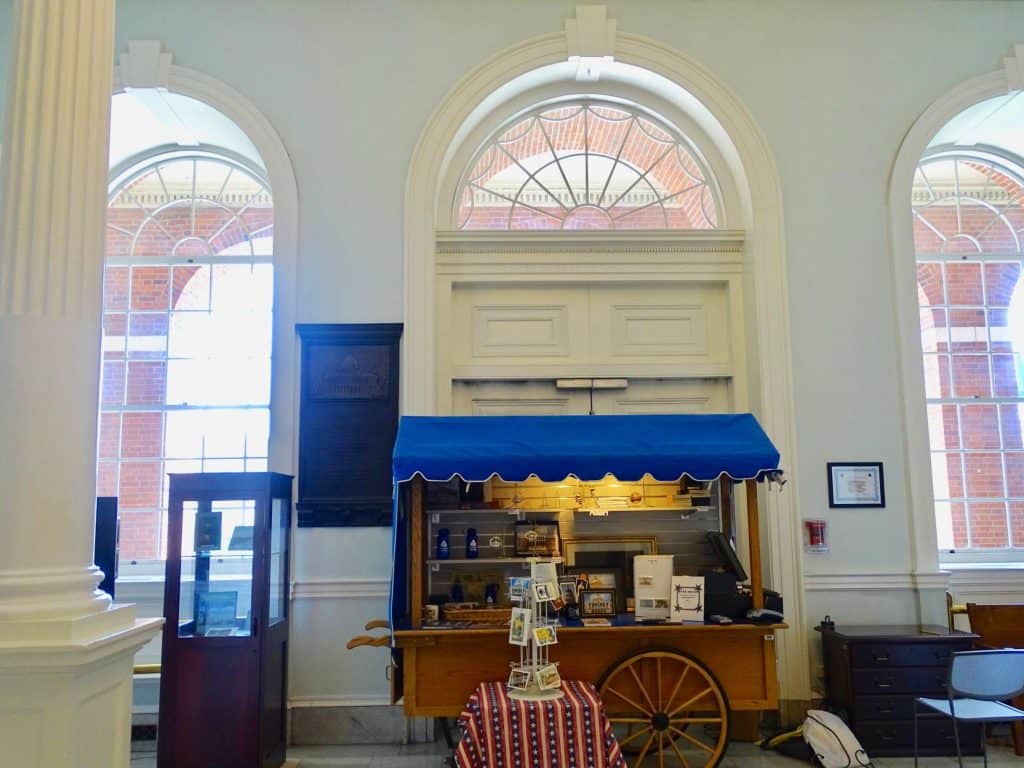
1. Doric Hall, which used to be the main entrance to the State House and now serves as a museum and meeting spot for tours. Be sure to check out:
- The ceremonial doors use for three reasons: when presidents and foreign heads of state visit, when outgoing governors take the “lone lonely walk” on his or her last day in office, and to restore regiment flags in office
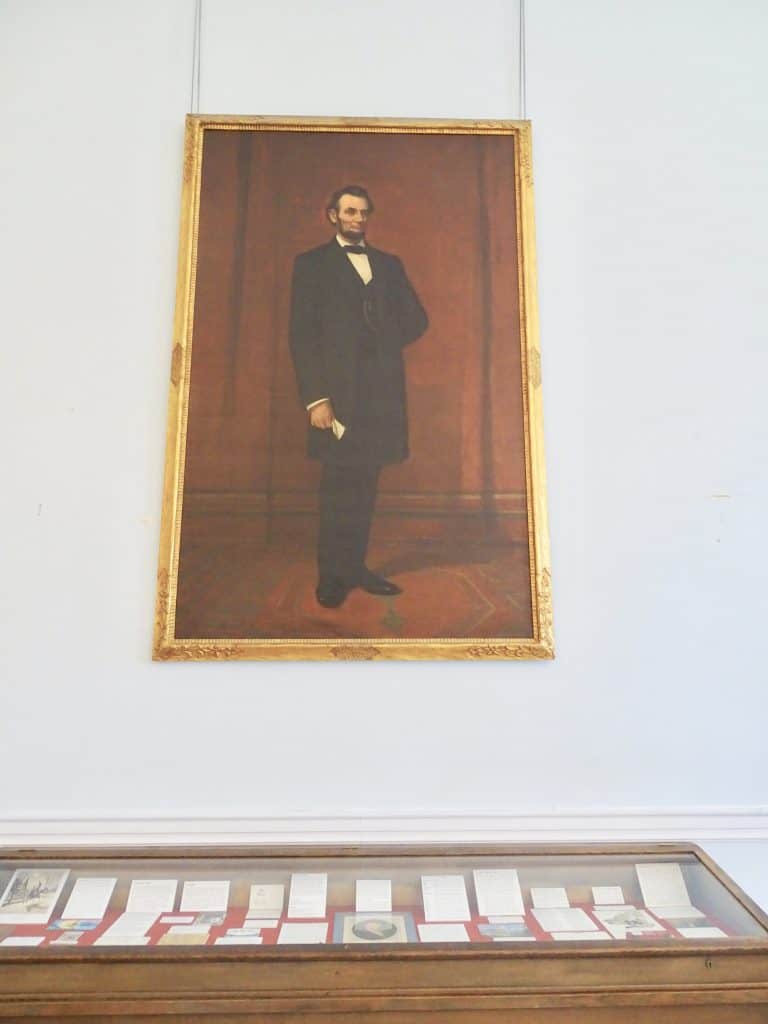
- The Abraham Lincoln portrait, one of only a few full body portraits of Lincoln.Lincoln is hiding his left arm behind his body because portrait artists charged by the limb (hence the term “it cost an arm and a leg”)
- Numerous busts, portraits, and sculptures of famous Boston politicians and military artifacts
- Stained glass etchings of the Republics established before the United States
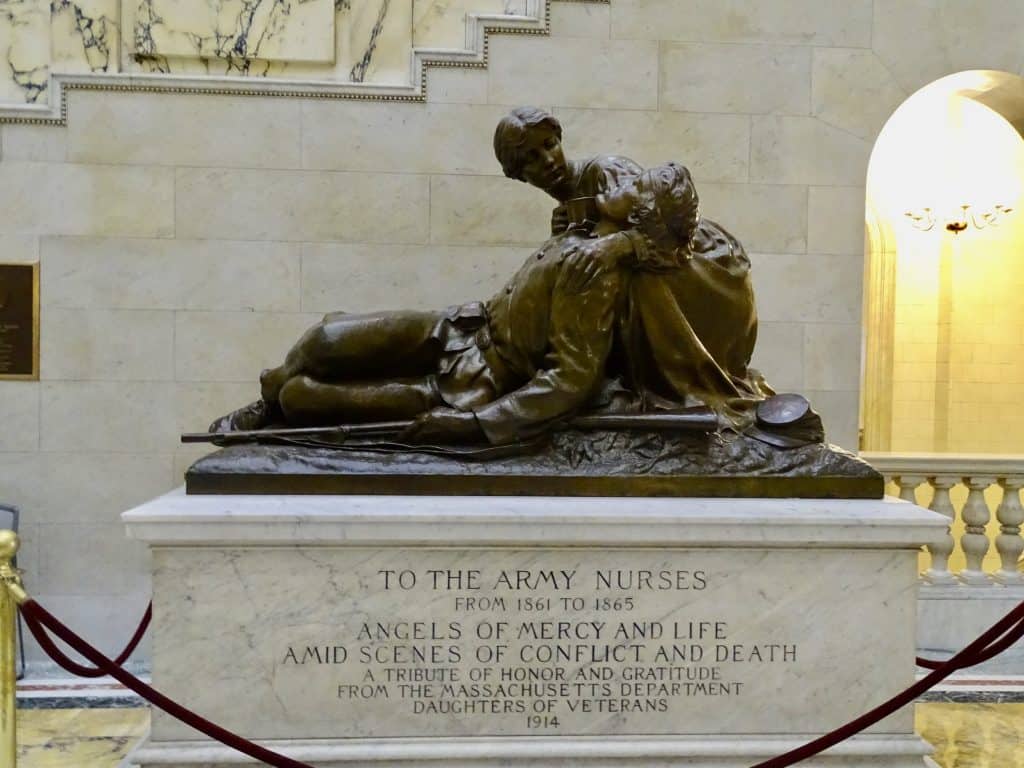
2. Nurses Hall, one of the first additions to the State House, which honors the role of nurses in American society. Be sure to check out:
- The large statue commemorating nurses’ role in the Civil War
- Several murals, including one of Paul Revere’s Midnight Ride and the Boston Tea Party on the side walls
- The 45 lights hanging from the ceiling
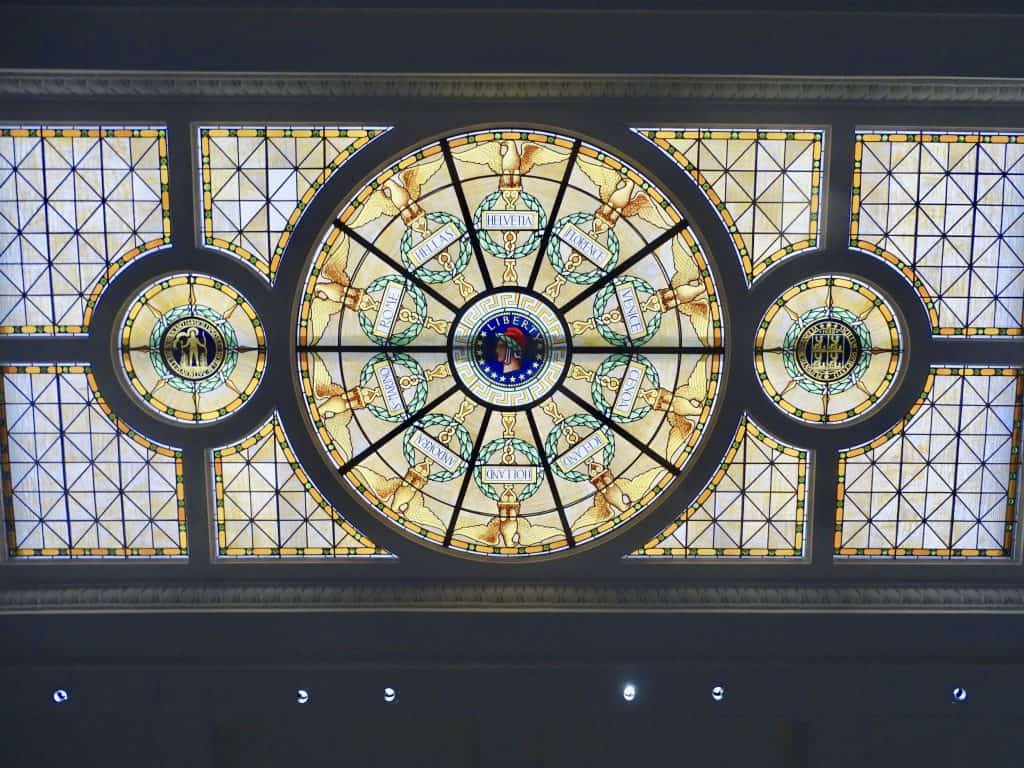
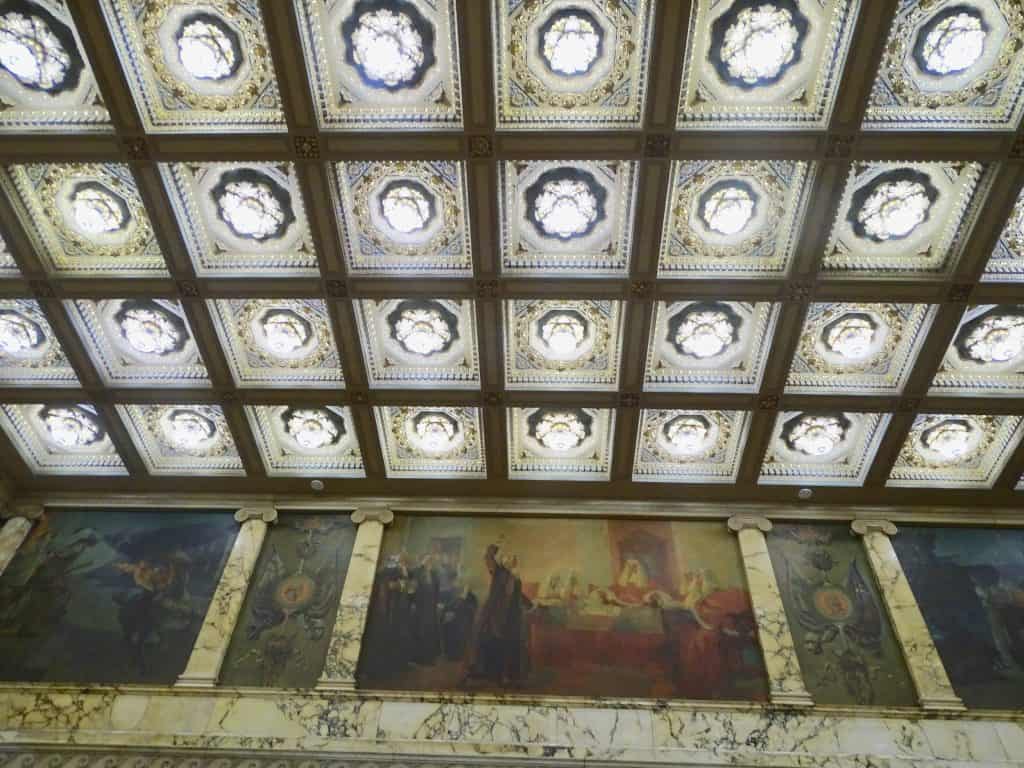
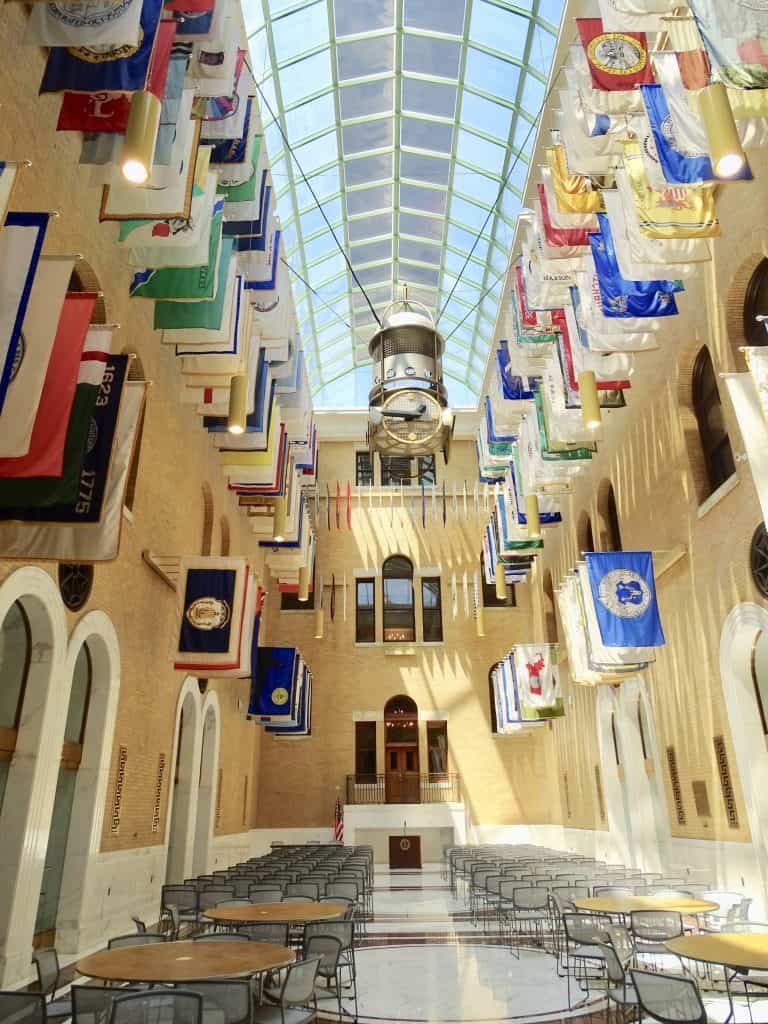
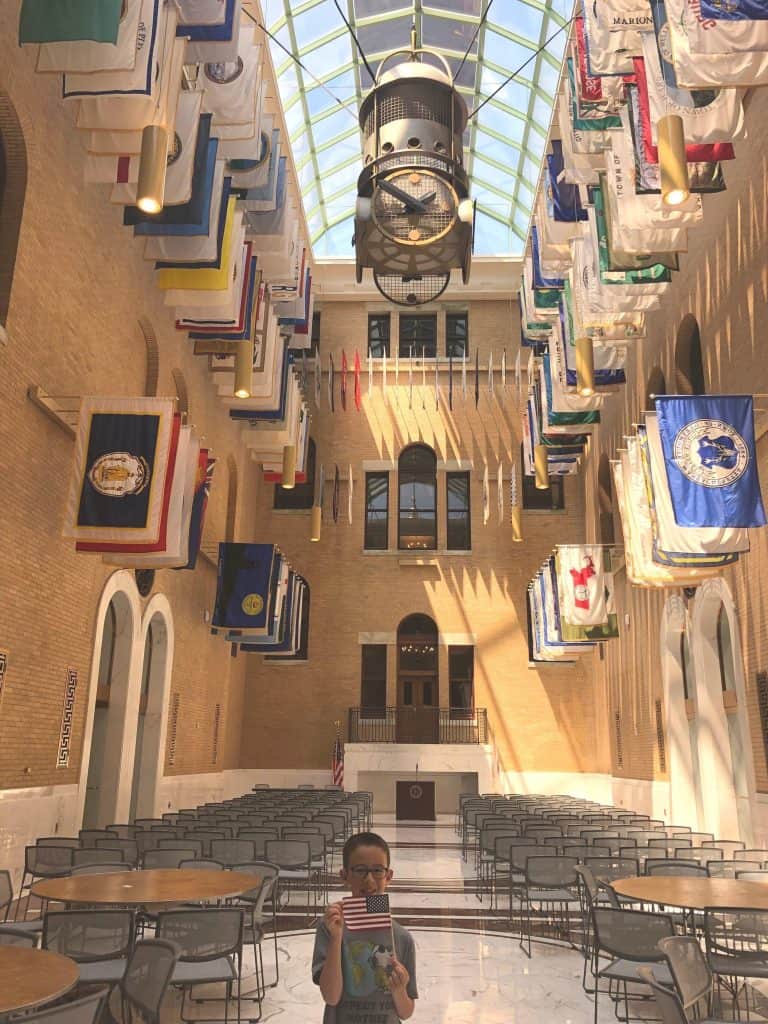
3. The Great Hall, which was originally used as an outdoor courtyard. Massachusetts is one of only a few states that does not have a governor’s mansion and nor a place to hold large, public receptions. In 1990, Governor Dukakis ordered that the courtyard be enclosed so that it could be used to host large functions. Be sure to check out:
- All 351 flags which represent every city and town of the state in order of incorporation, from Plymouth to East Brookfield. Check on the location of your local town using the touch televisions at the end of the rooms.
- The clock hanging from the ceiling, which was created to appease a 1990s law that all government buildings had to display functional pieces of art.
Would you like to save this?
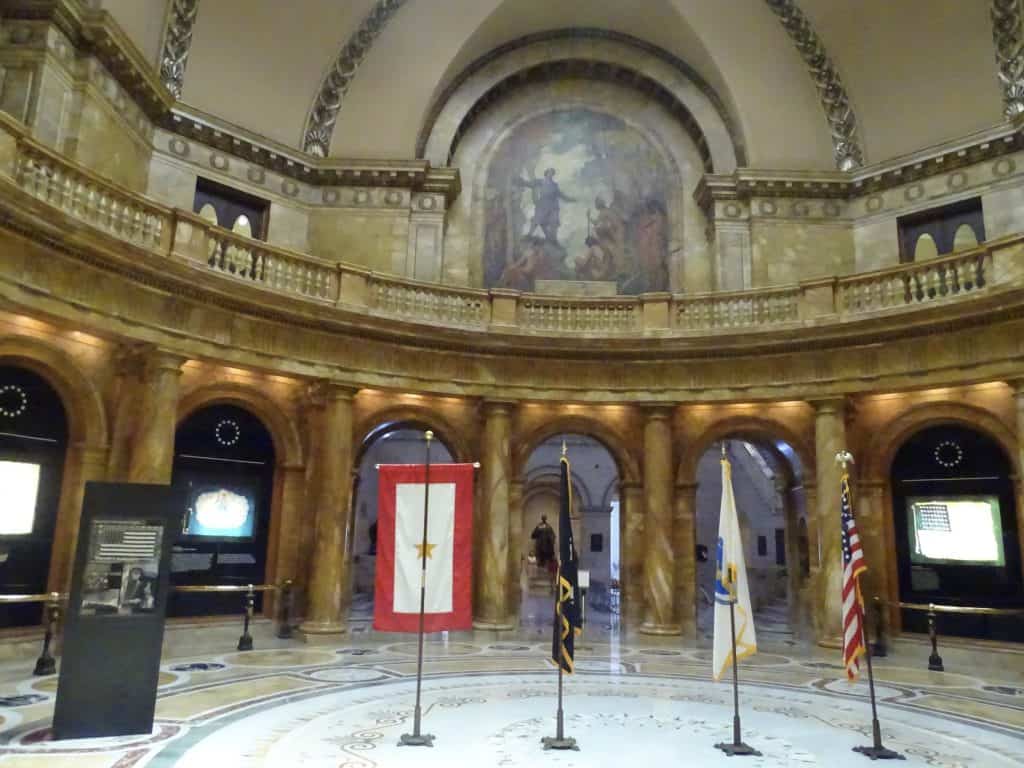
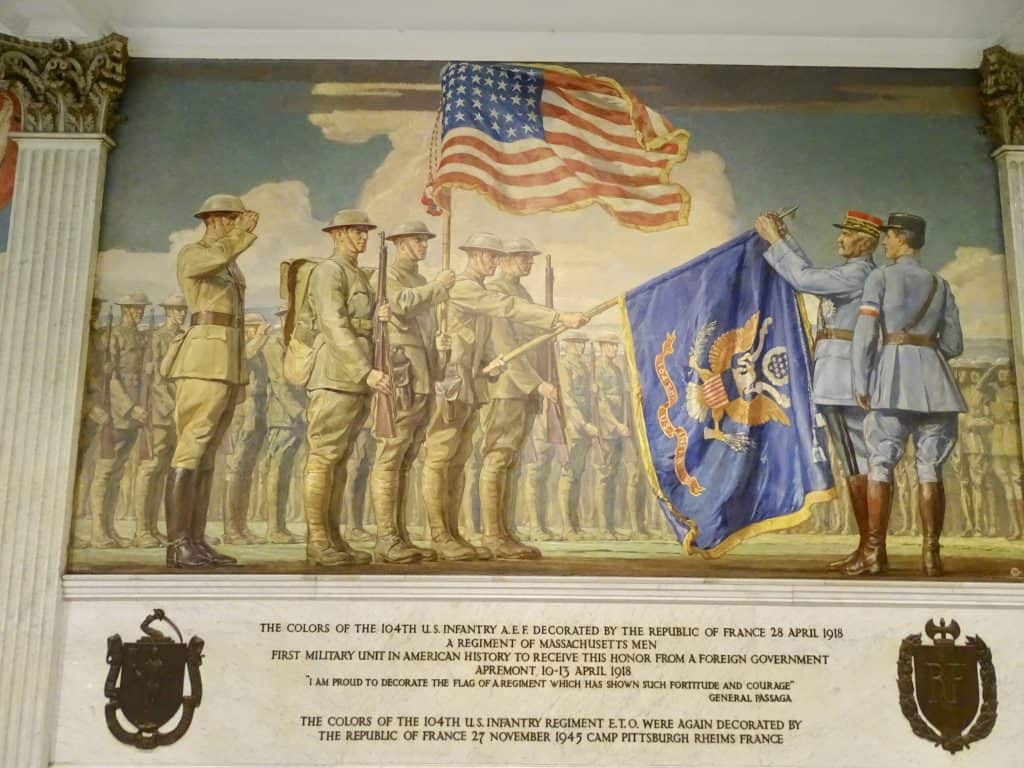
4. Memorial Hall, known as the Hall of Flags, honors Massachusetts Soldiers from every major war, from the Spanish American War to the Vietnam War. The Italian marbled room includes:
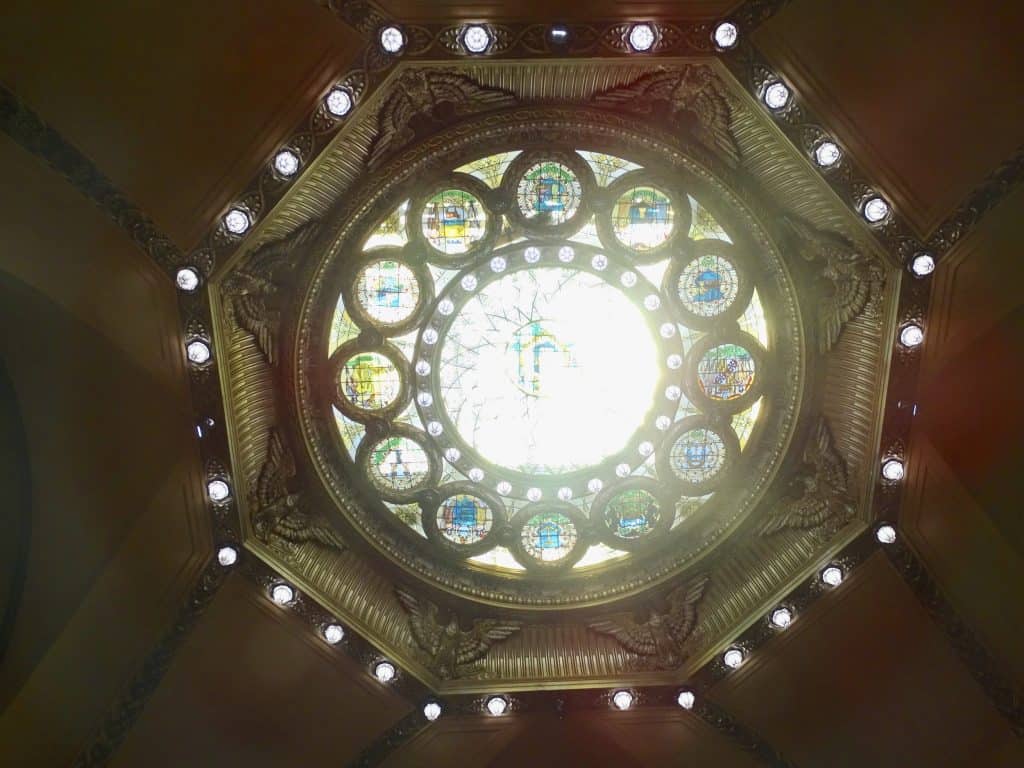
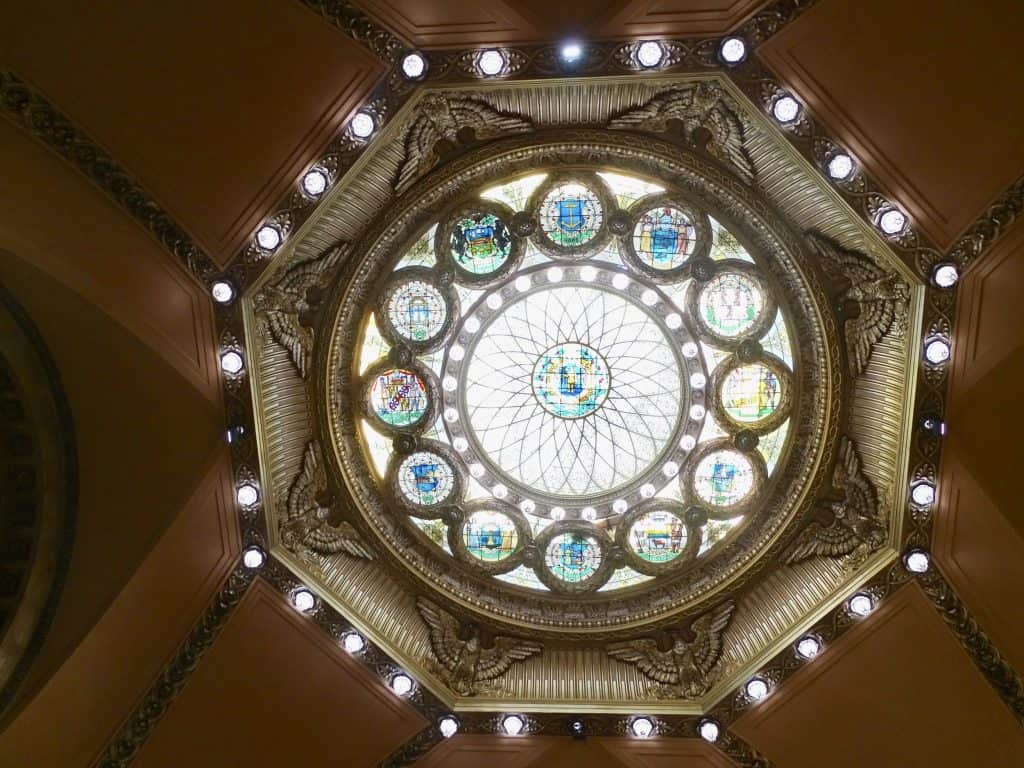
- The interior dome with the seals of the original 13 colonies
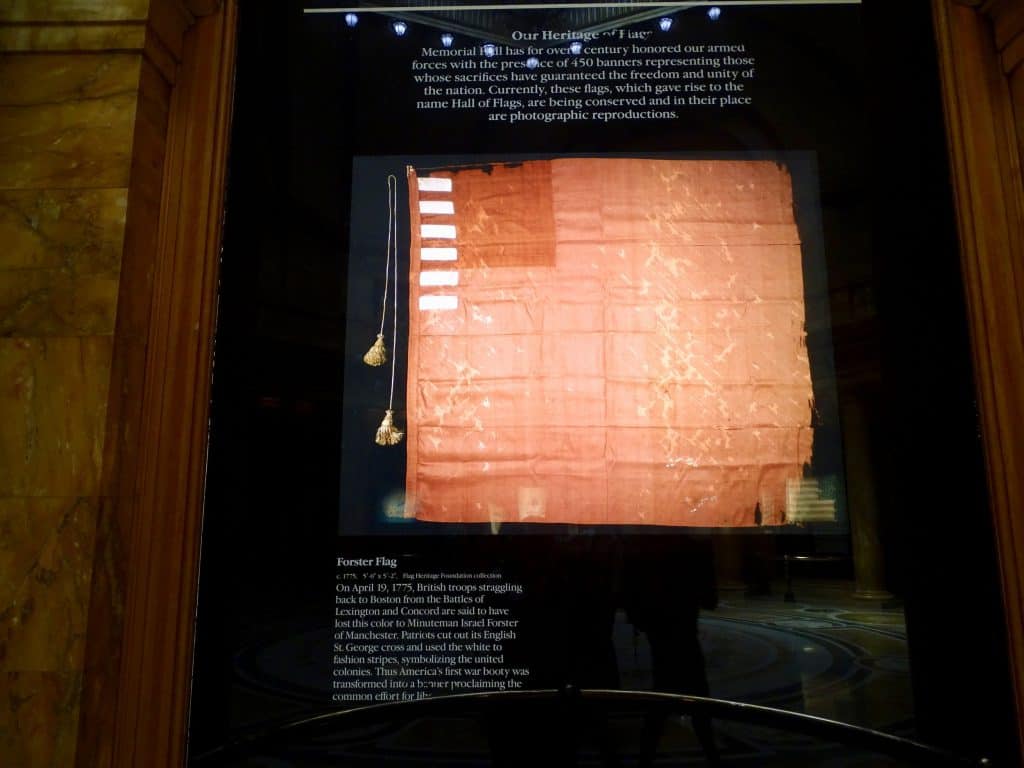
- Display of replica flags from various wars Massachusetts participated in, including the flag from the Battle at Lexington and Concord. (The original ones are preserved in the lower level of the building- there are over 400 flags in the collection!)
- Four large murals on the side walls, including a depiction of the Pilgrims landing at Plymouth Rock
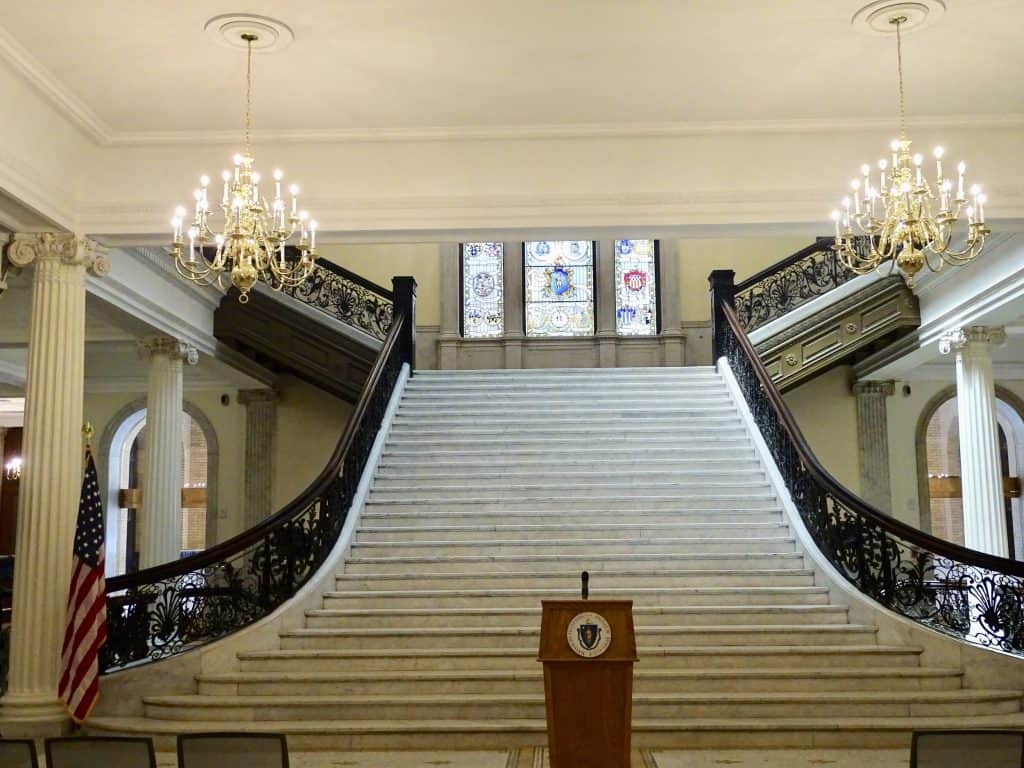
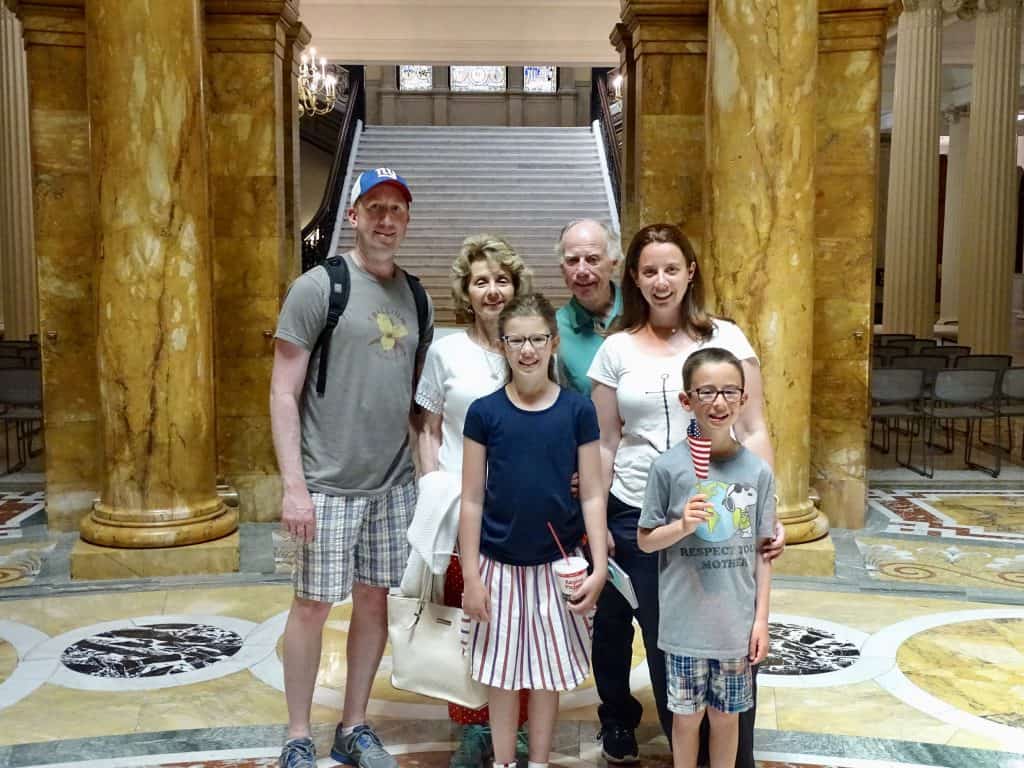
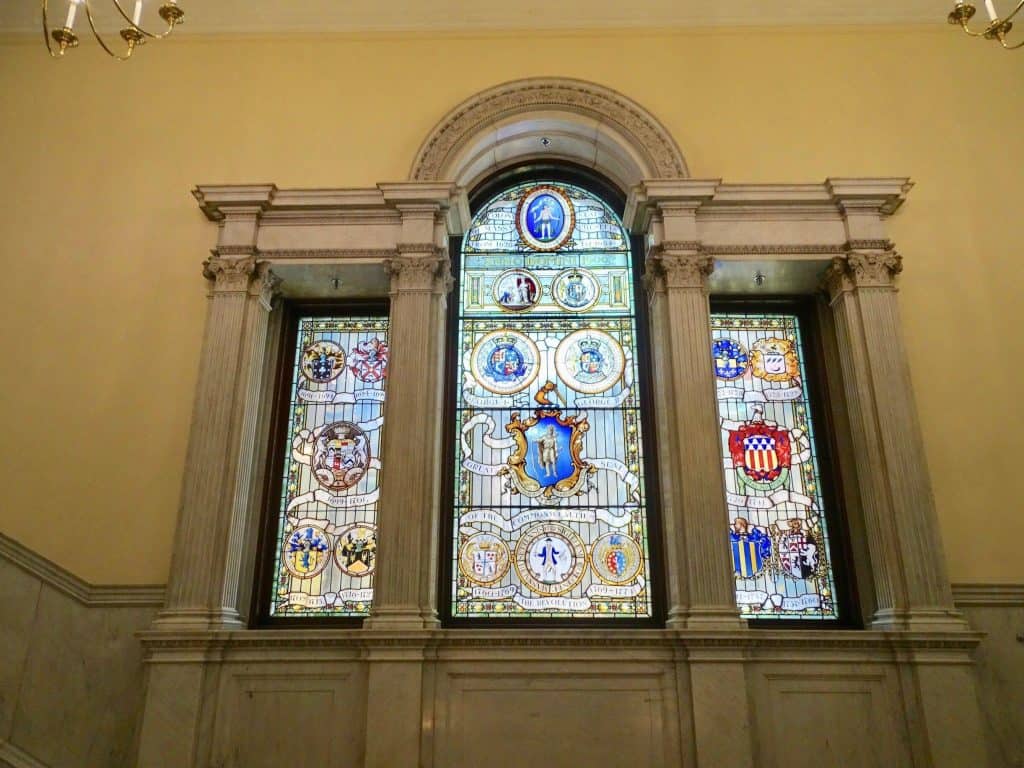
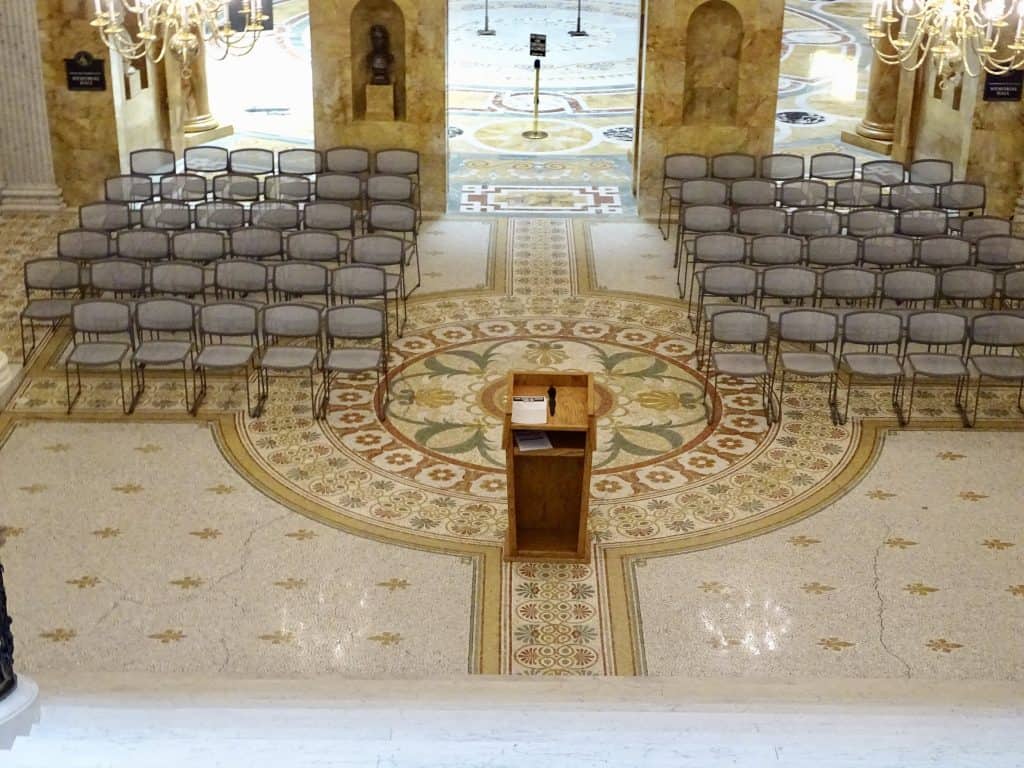
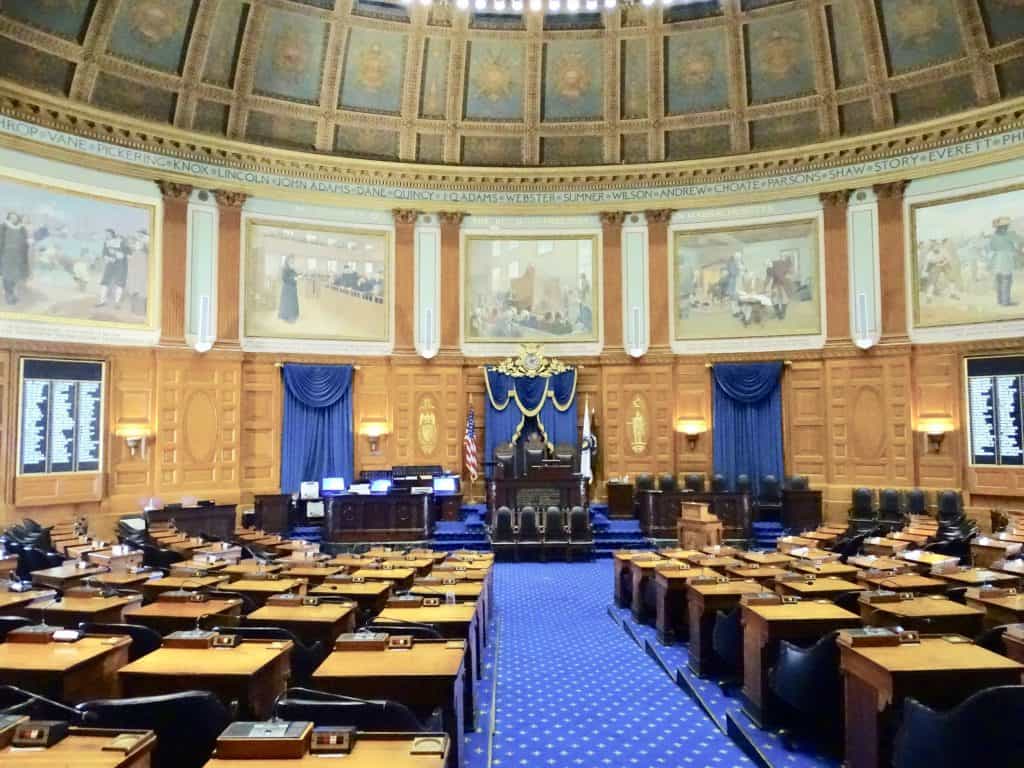
5. The House of Representatives Chamber, the “Blue Room”, is home to 160 state representatives, who each represent 40,000 people. Democrats sit on either side and Republicans sit in the middle. Be sure to check out:
- The series of buttons on each desk that representatives use for voting (green for “yea” and red for “nay”) and to call pages to run errands for them
- The wooden Cod fish displayed since the 1870s. The wooden fish represents the fishing industry, an important Massachusetts industry, and was once stolen by Harvard students as a prank. The House of Representatives refused to meet until it was returned.
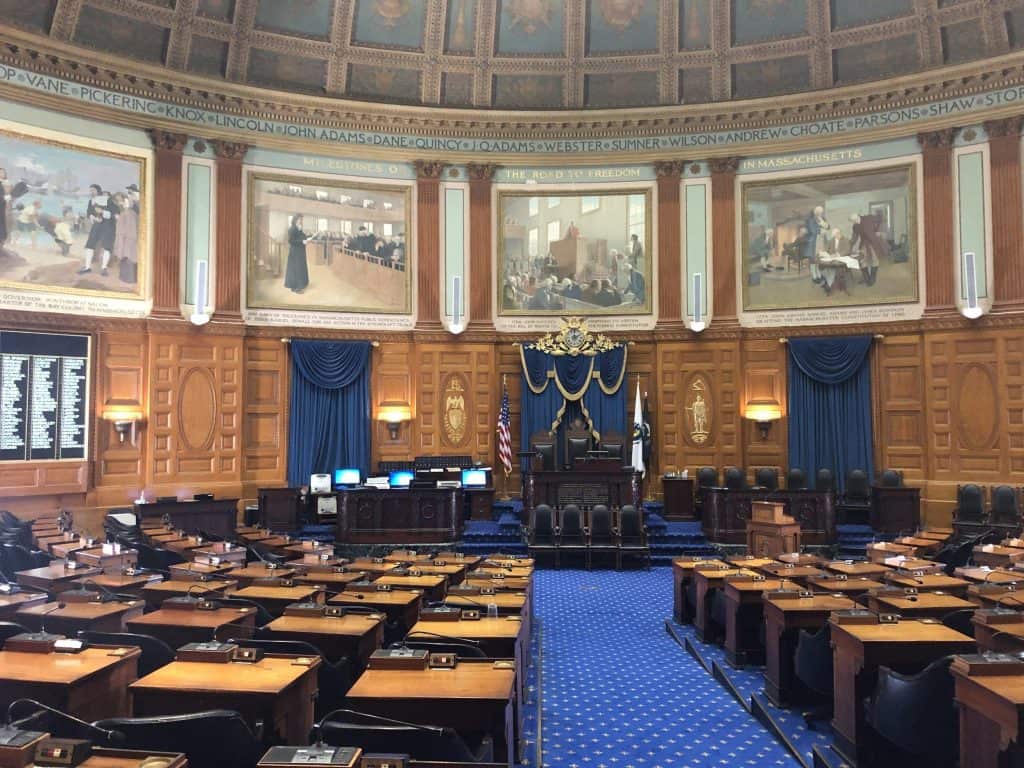
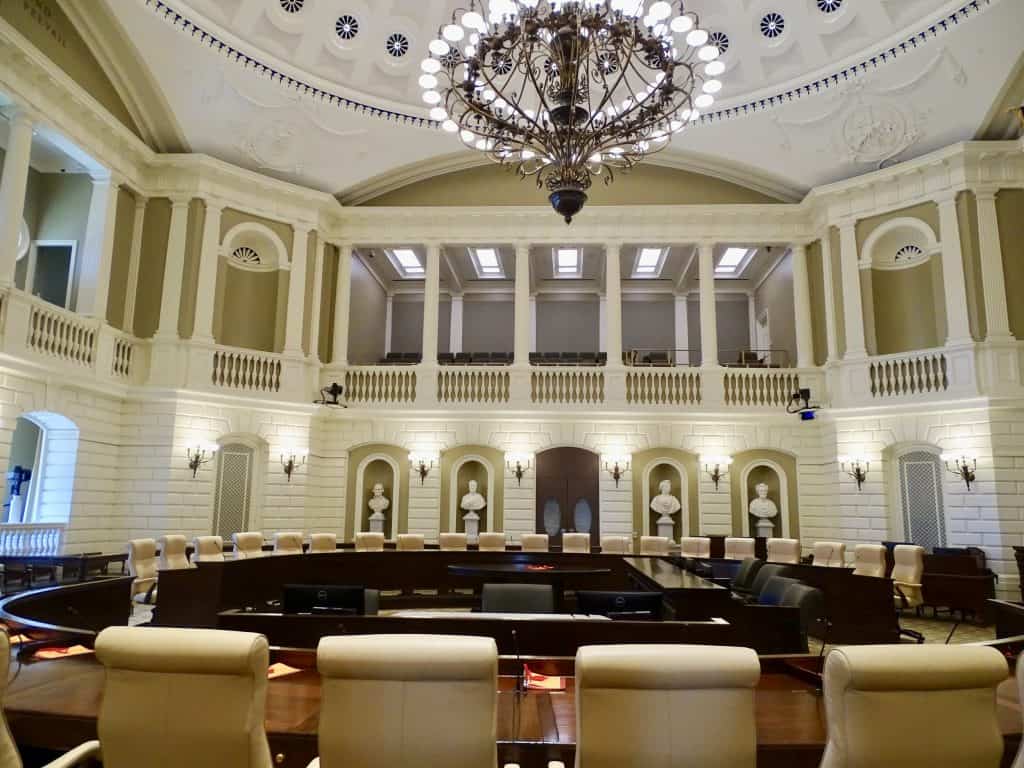
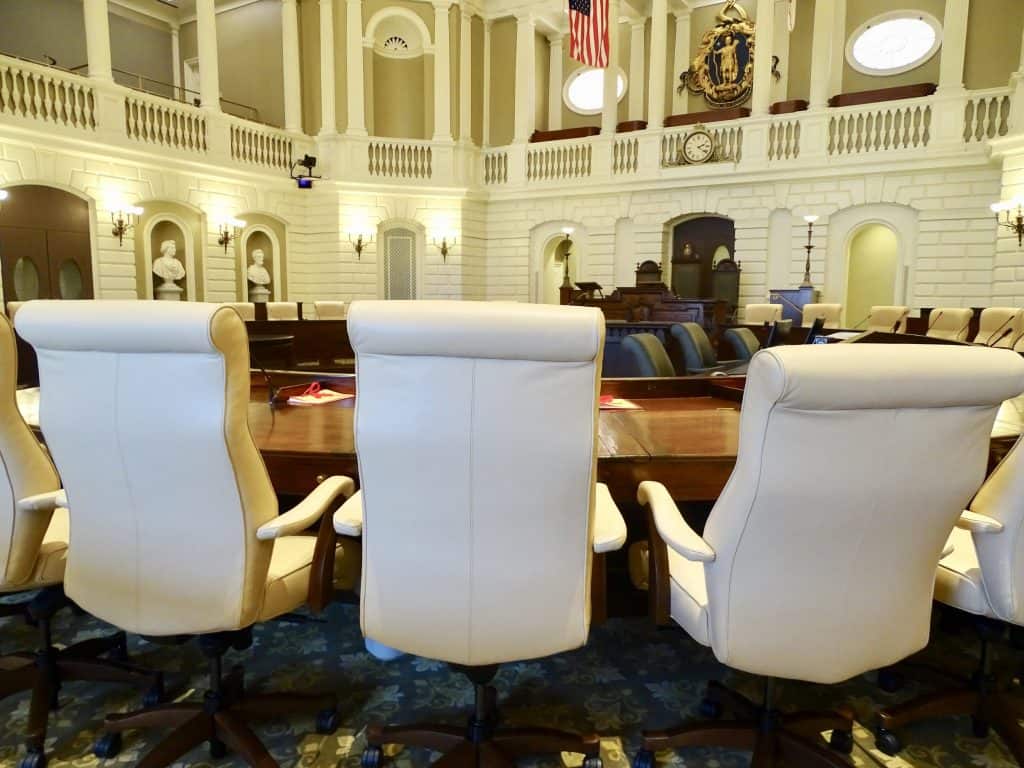
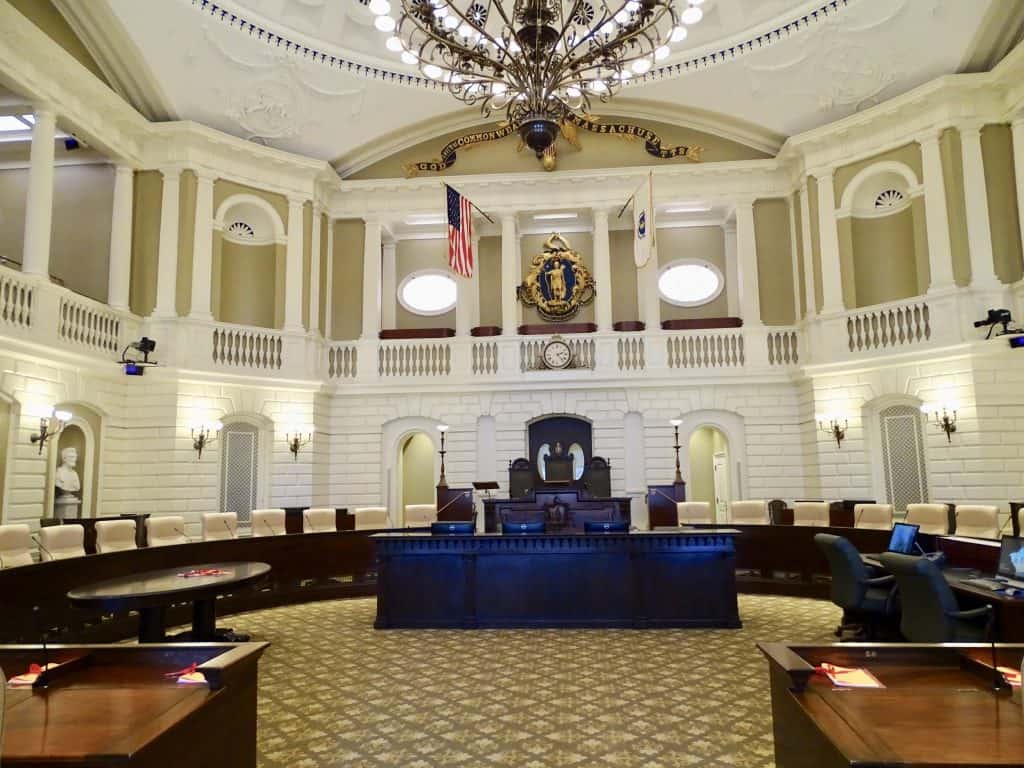
6. The Senate Chamber, home to 40 state Senators, is located directly below the golden dome of the State House. The elected Senate President sits under a golden eagle. Senators still vote orally (no buttons!) Be sure to check out:
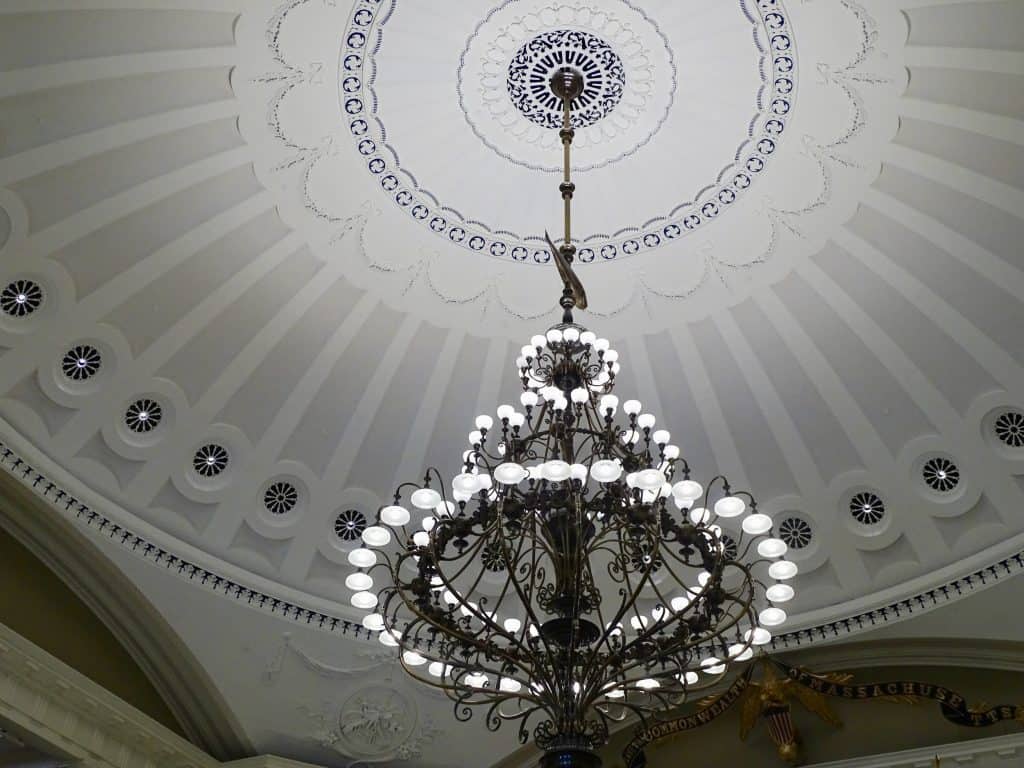
- The Holy Mackerel displayed atop the chandelier in the middle of the room. It’s the mackerel to the House’s Cod fish.
- The size and height of each Senator’s seat. All 40 senators receive a customized seat so they are “eye to eye” during debates.
7. Executive Office Waiting Room is located outside the governor’s office. The room displays portraits of former governors. Make sure to check out: Note: photos are not permitted in this area of the building
- Mitt Romney’s wife appearance in his portrait (only the subject is allowed in the portrait, but Romney snuck in his wife by sitting next to a framed portrait of her in his portrait)
- The armadillo hiding in William Weld’s portrait
While exploring the grounds of the complex, be on the lookout for six outdoor statues honoring influential public figures like
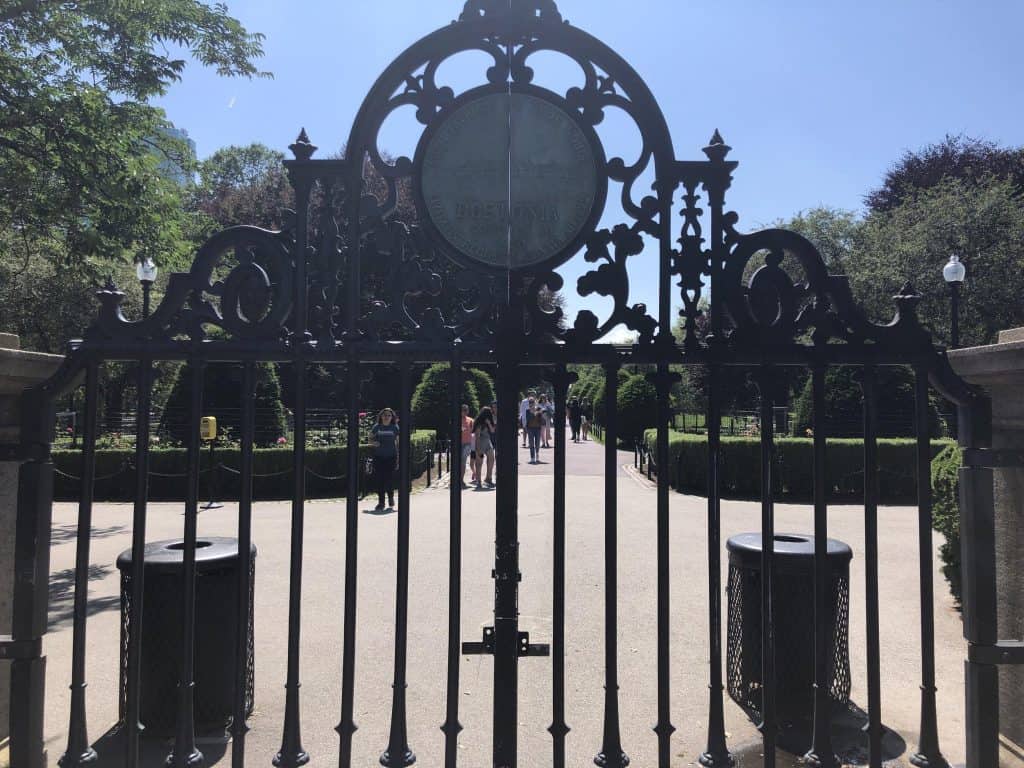
When exiting the complex, Boston Common, the oldest public park in America, will be right in front of you. Kids will love exploring 50 acre park, which includes:
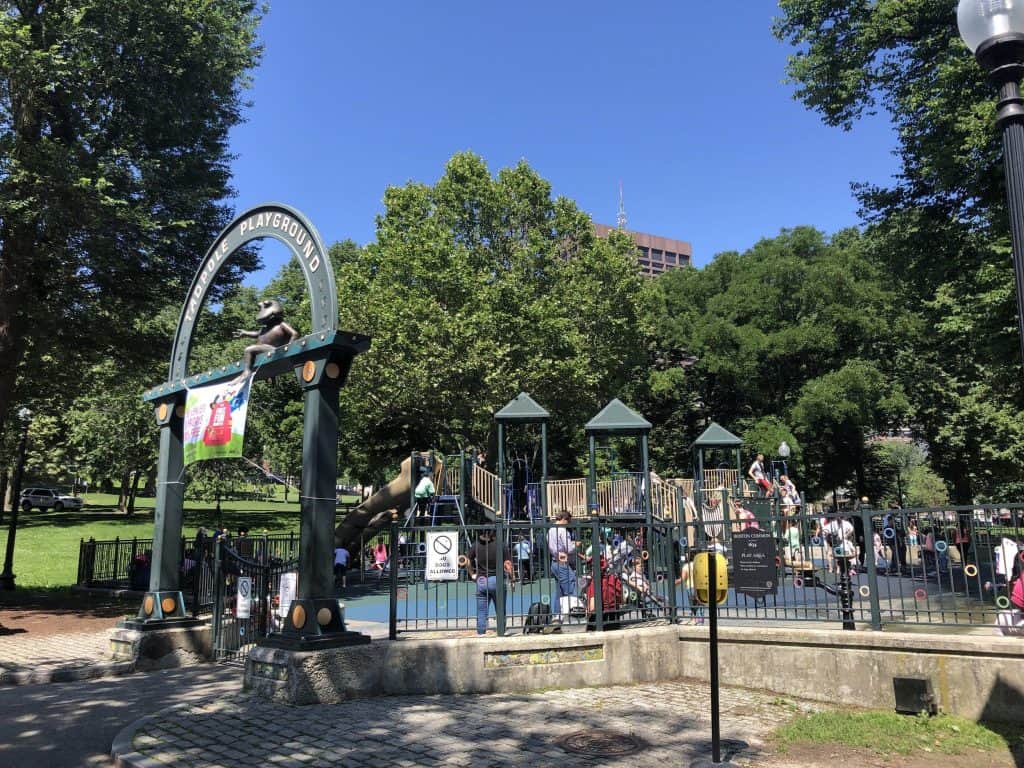
- The TADpole playground: Climb, swing, and splash in the water features, slides, and climbing structures. The playground is (mostly) fenced in, making it easier to keep track of little ones.
- Frog Pond Carousel is open mid April through mid October. Nominal fee to ride.
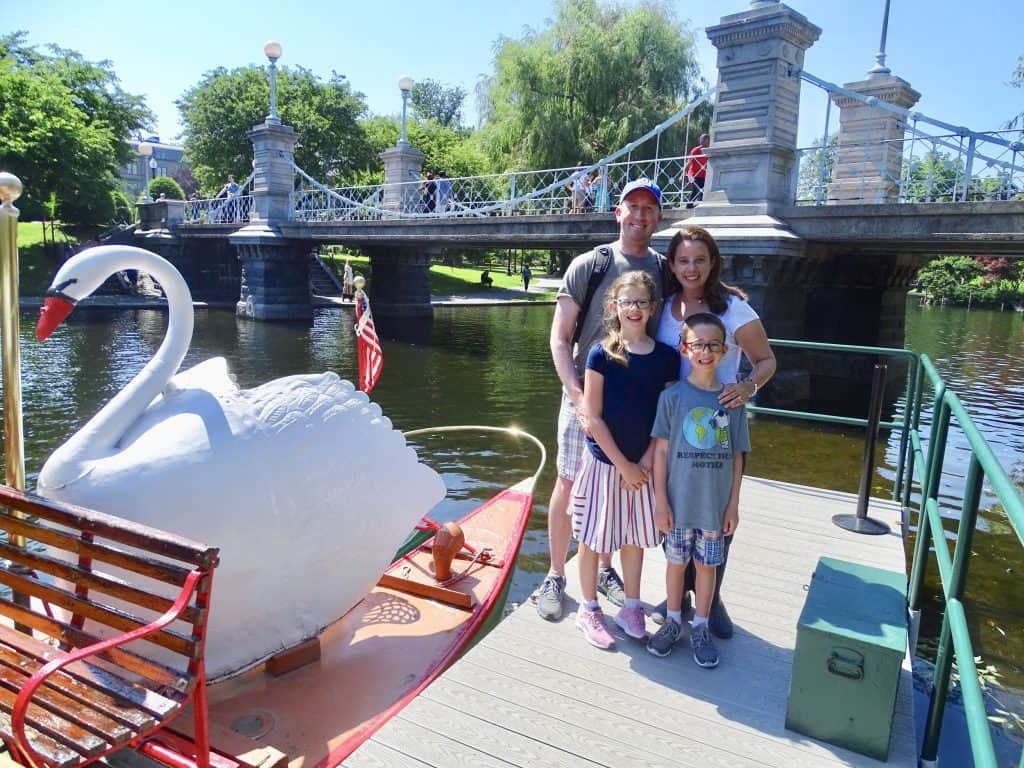
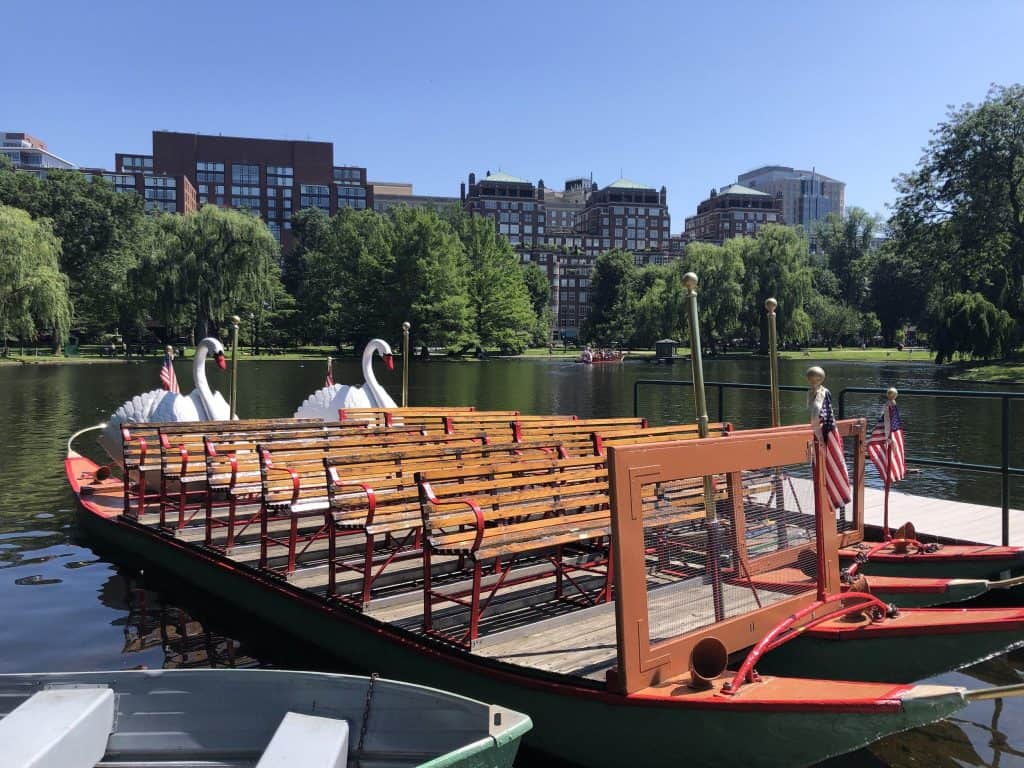
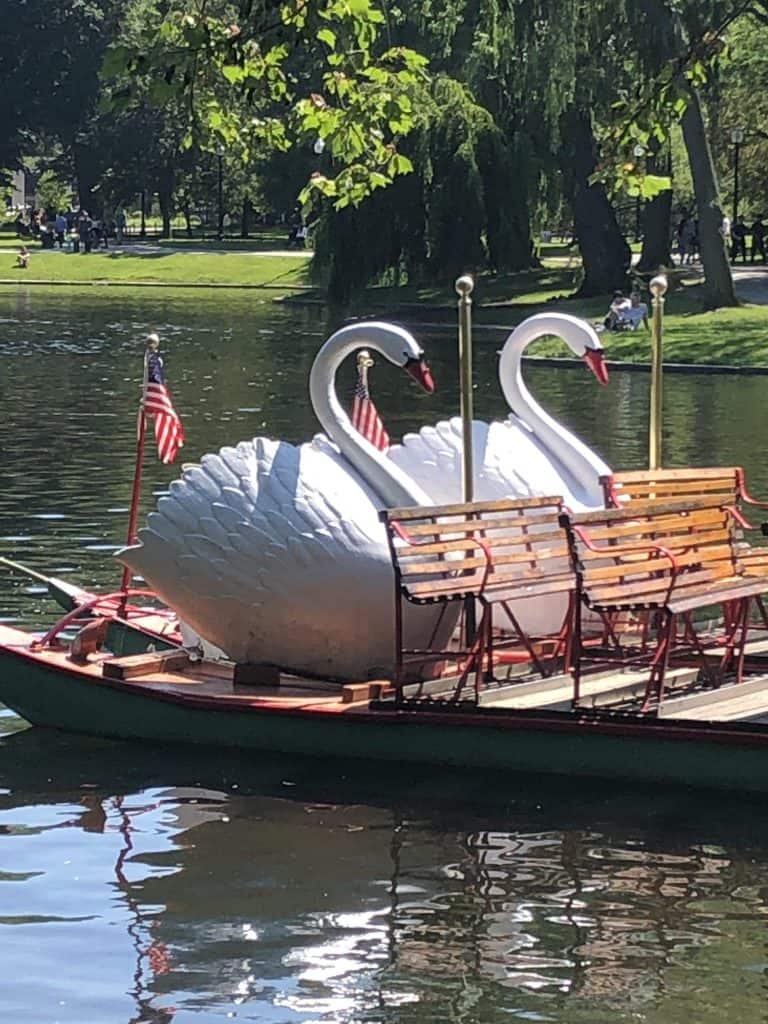
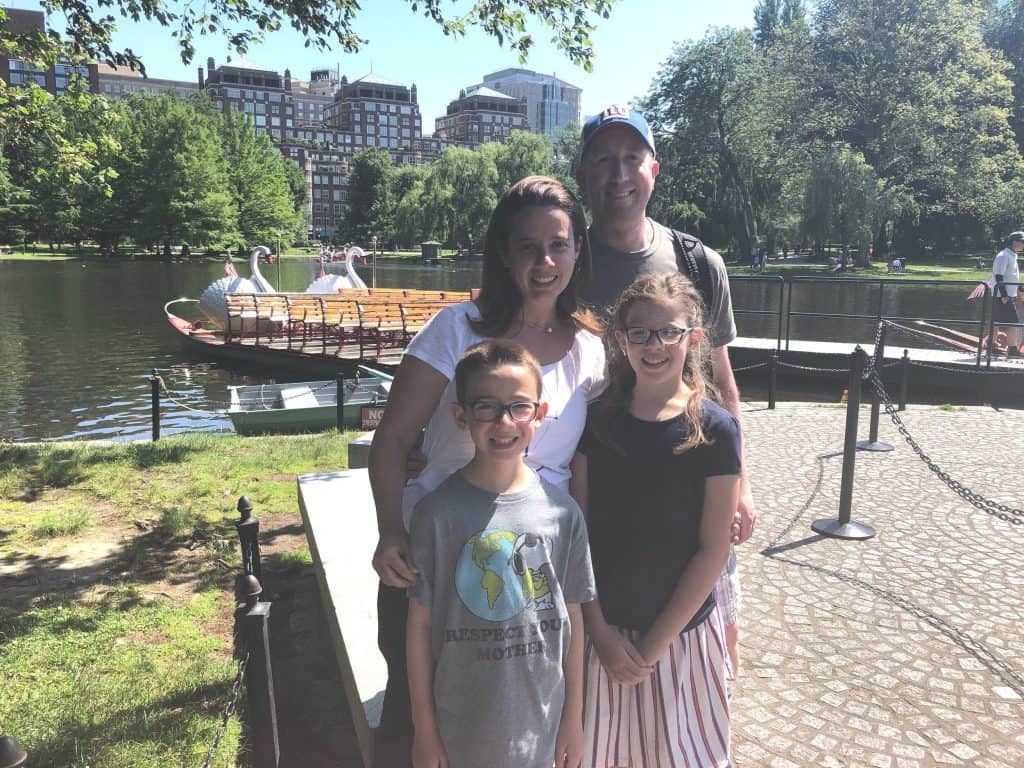
- Swan boats: Take a 15 minute boat ride around the pond. Technically located in Boston Public Garden, it’s adjacent to the Common. Swan boats were created in the late 1870s by Robert Paget and his family and operate every year from mid April through Labor Day. Nominal fee to ride
- Tons of family oriented programming like free guided tours. Check here for more information.
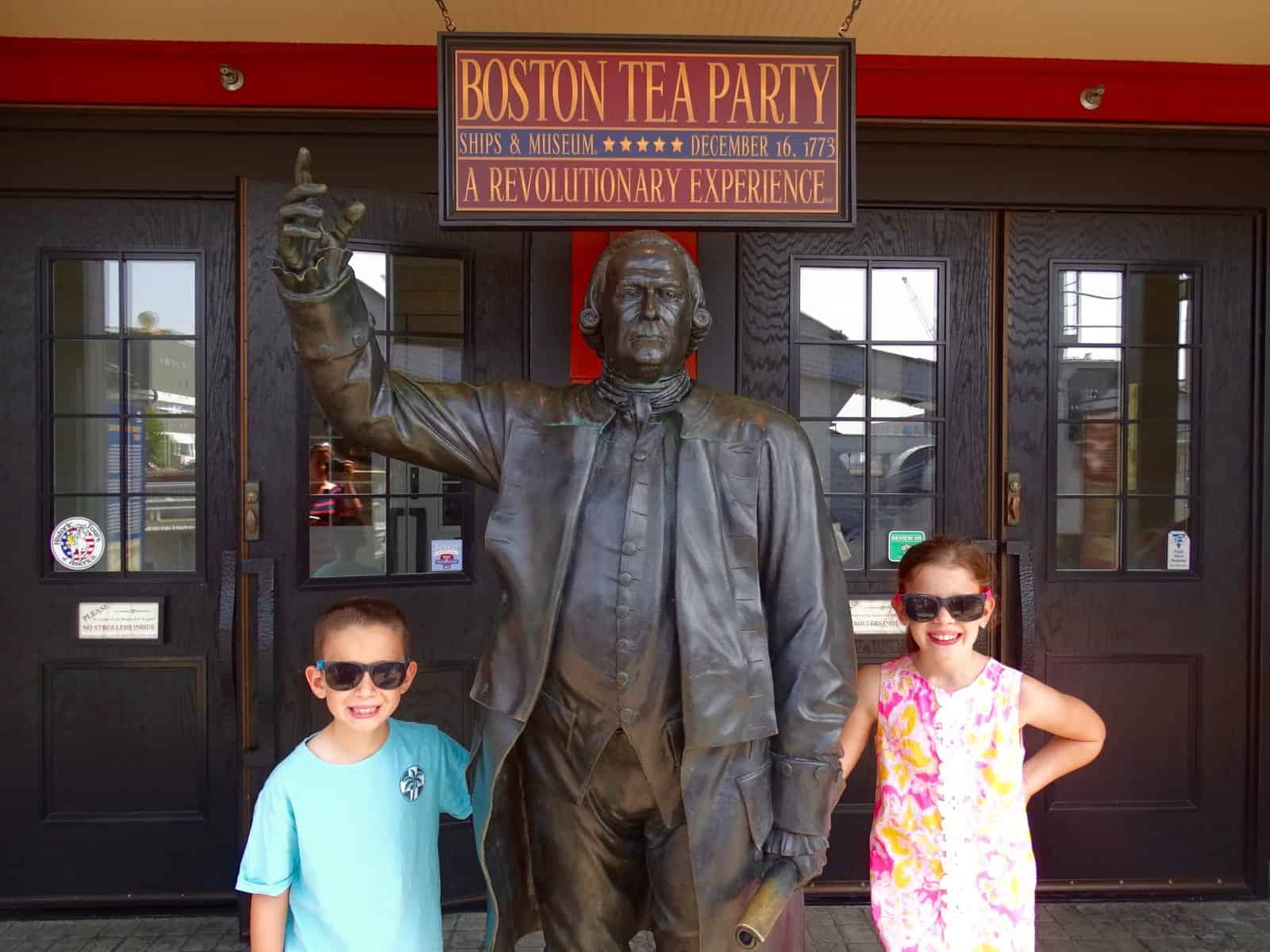
If you’re looking for more Boston fun, check out our adventures at the Boston Tea Party Ship & Museum, the Charleston Navy Yard and USS Constitution, Old State House and Boston National Historic Park, the Boston Symphony Orchestra, the Wang Theatre, and nearby Legoland Discovery Center.



Great blog. Took the tour and loved it. A great visit to have with children.