Five Things to Do at the Yorktown Battlefield in Yorktown, VA
| | | |

In the fall of 1781, British General Lord Cornwallis, and over 8,000 British troops, surrendered to General George Washington at Yorktown, ending the Revolutionary War and solidifying independence. The site of that battle and and surrender is now part of the Colonial National Historic Park, one of the first parks created, in 1930. The park includes a 23 mile scenic parkway that connects Yorktown Battlefield and Historic Jamestown. Both Yorktown and Jamestown have Visitor Centers with museums, outdoor activities, and many ranger led programs to showcase important events in our nation’s history.

Traveling with Kids:

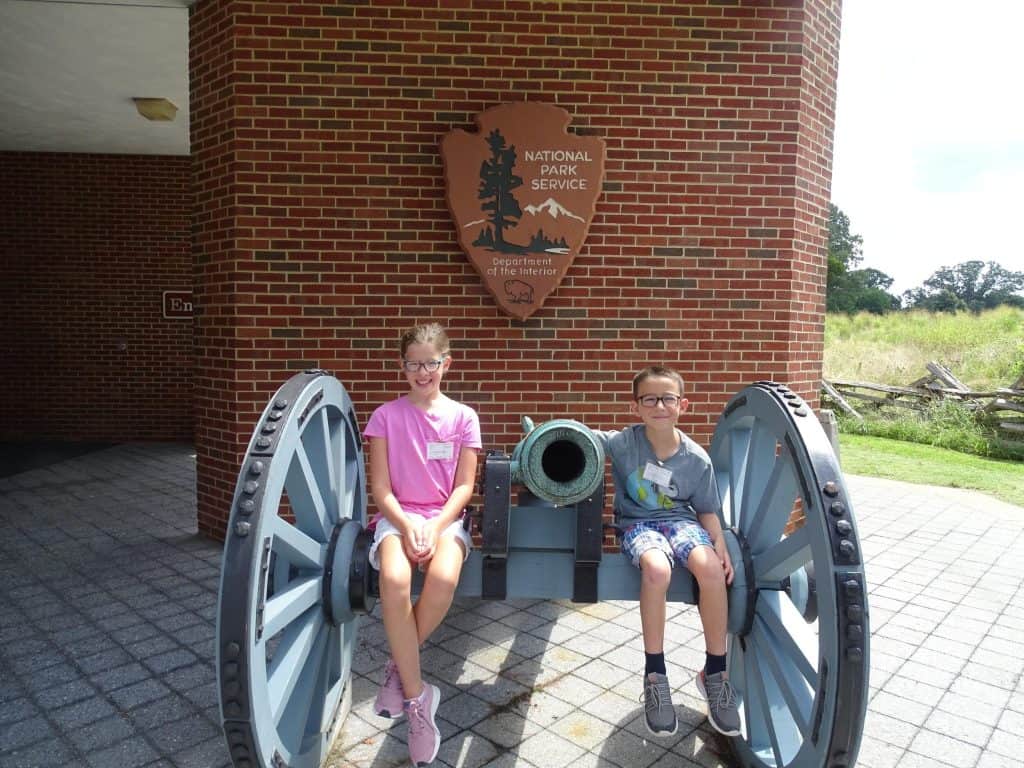
  • Start at the Visitor Center to purchase ticket and check schedules and ranger led programs, and get your National Parks Passport stamps. Restrooms are also located in the Visitor Center
  • Kids will want to complete a Junior Ranger booklet to earn a badge. Purchase one in the gift shop, located in the Visit Center.
  • Consider taking a ranger led tour for in depth history- check here for more information and schedules. Kids will be most interested in the Young Soldier Program with a costumed interpreter (usually offered during summer months).
  • The museum is partially handicap and stroller accessible (the exhibit inside the ship is not handicap accessible).
Five Things to do at the Yorktown Battlefield:

1. Watch the 16 minute orientation film (shown every half hour) shown in the auditorium in the Visitor Center.

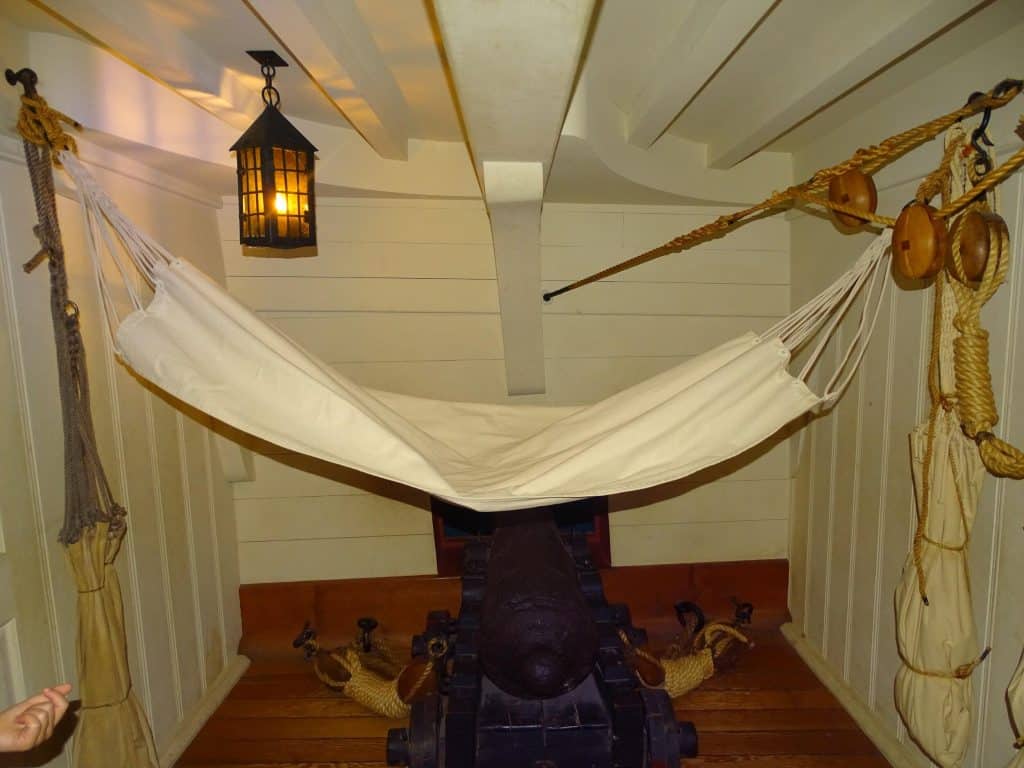
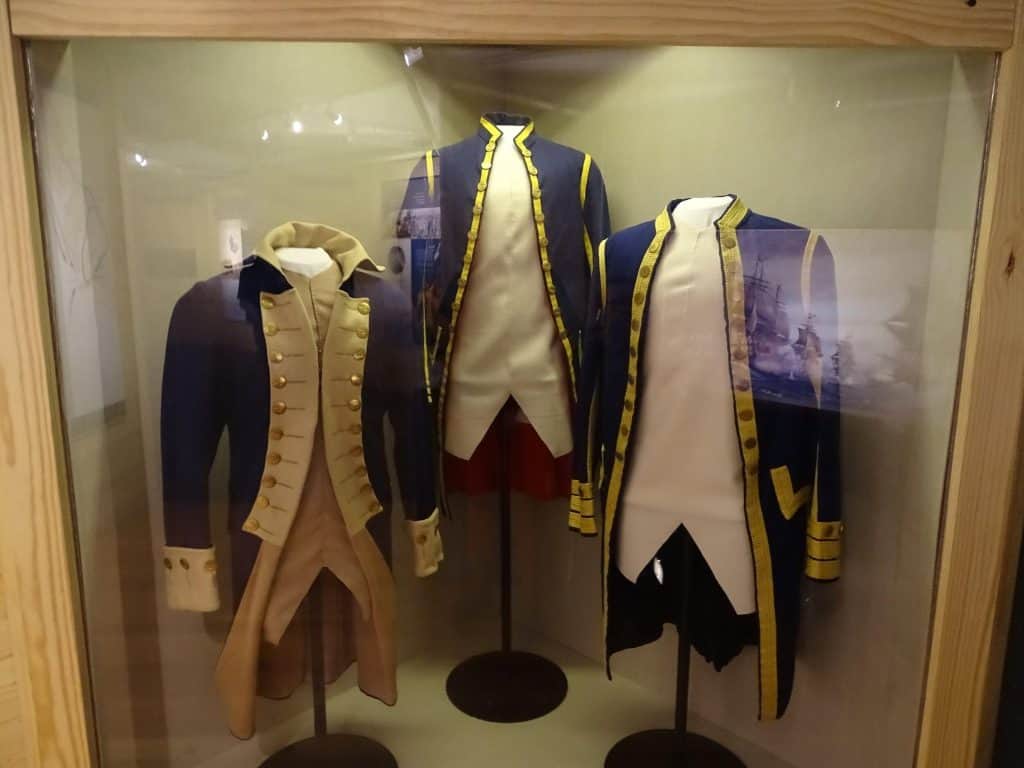
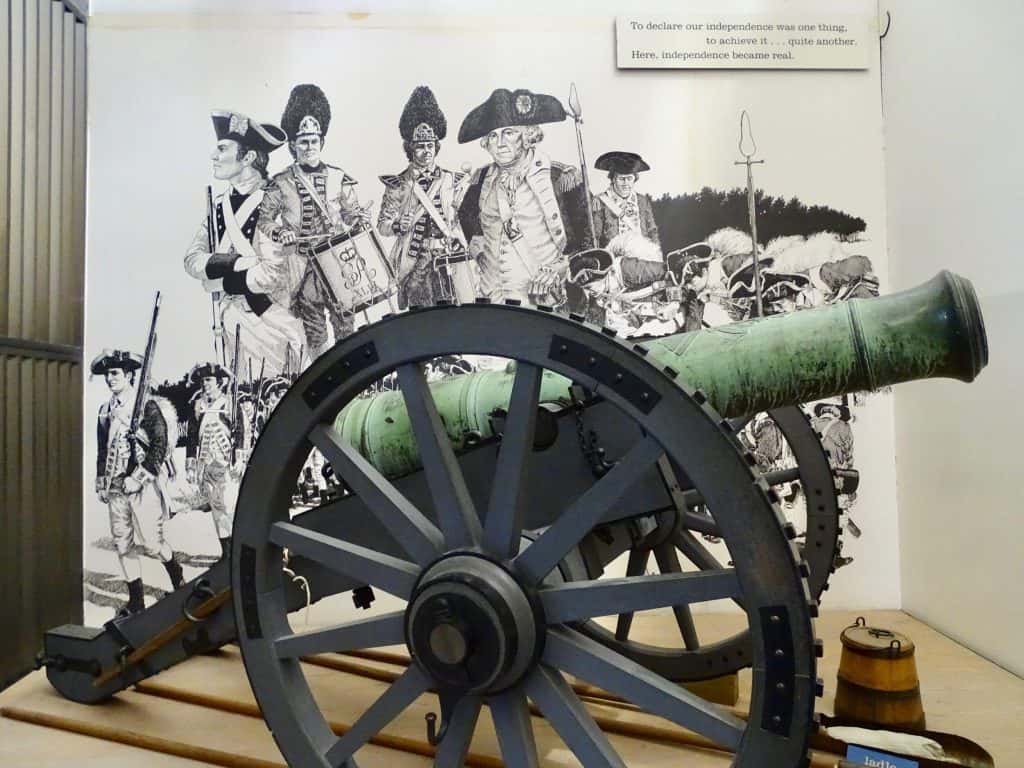
2. Explore the museum, which is situated in and around a replica HMS Charon, a 44 gun Frigate ship. Highlights from the museum include

Would you like to save this?

We'll email this post to you, so you can come back to it later.

  • a Lafayette cannon and parts
  • short video with highlighted 3D map of the battle, and 
  • Dioramas depicting various scenes of the battle
  • An explanation of the difference between a battle and a siege
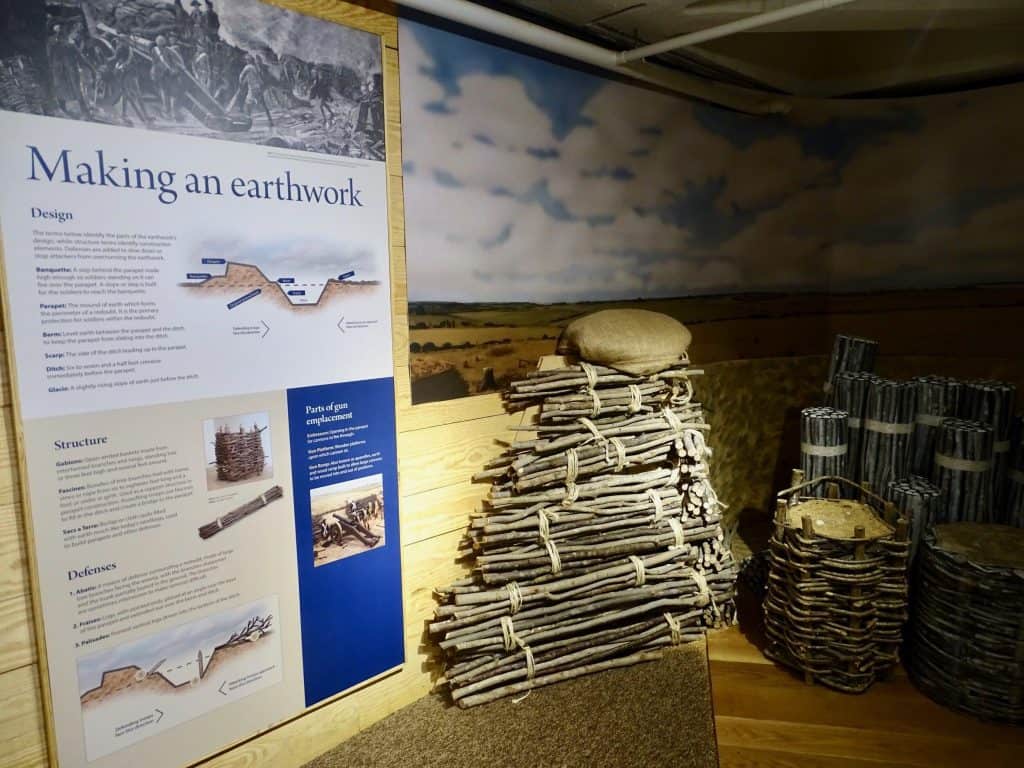
  • The instructions for making an earthwork
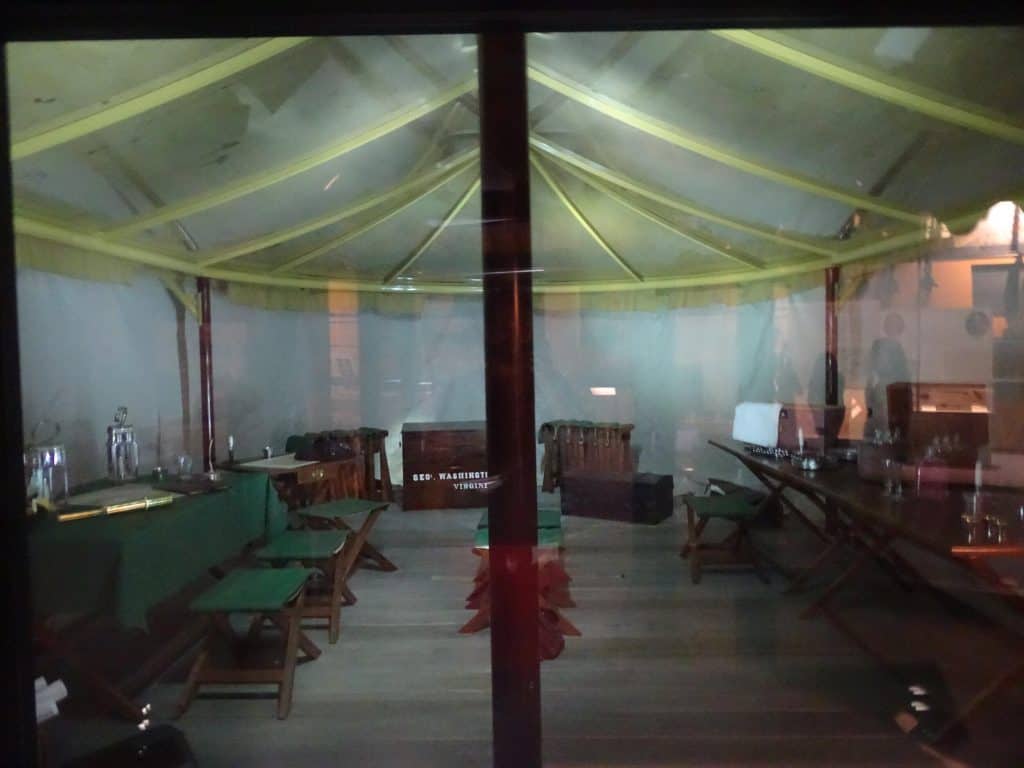
  • A reproduction of George Washington’s command tent headquarters

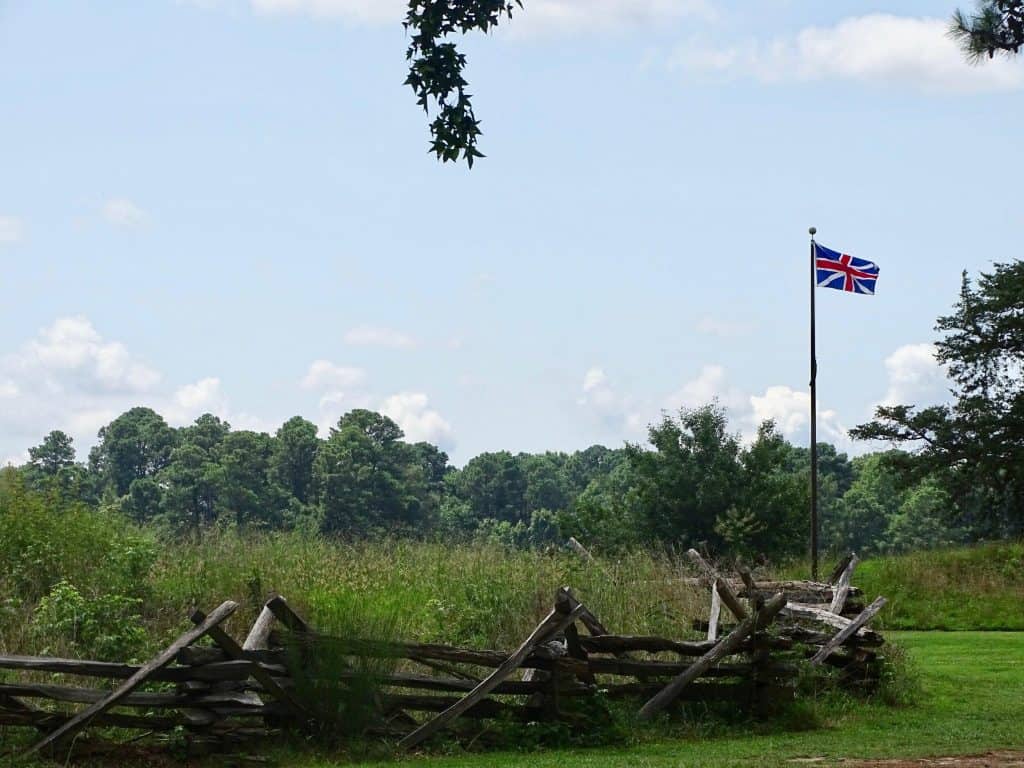
3. Take one, or both, driving tours through the battlefield. Each route (red and yellow) includes six stops over the course of seven miles and takes approximately 45 minutes to complete. Follow the road signage and grab a map at the Visitor Center.

4. Visit at least one of three homes on the driving tour: Moore House, Nelson House, or George Washington’s headquarters. The home of Augustine Moore was where officers from both armies met to negotiate the surrender of Cornwallis’ army. Thomas Nelson Jr. was one of Yorktown’s most famous residents, known for leading the local “tea party” in 1774 and later becoming the 3rd governor of Virginia and commanding Virginia militia at the siege of Yorktown. His home is open to visitors throughout the year.  Washington’s Headquarters is positioned between the American and French camps. 

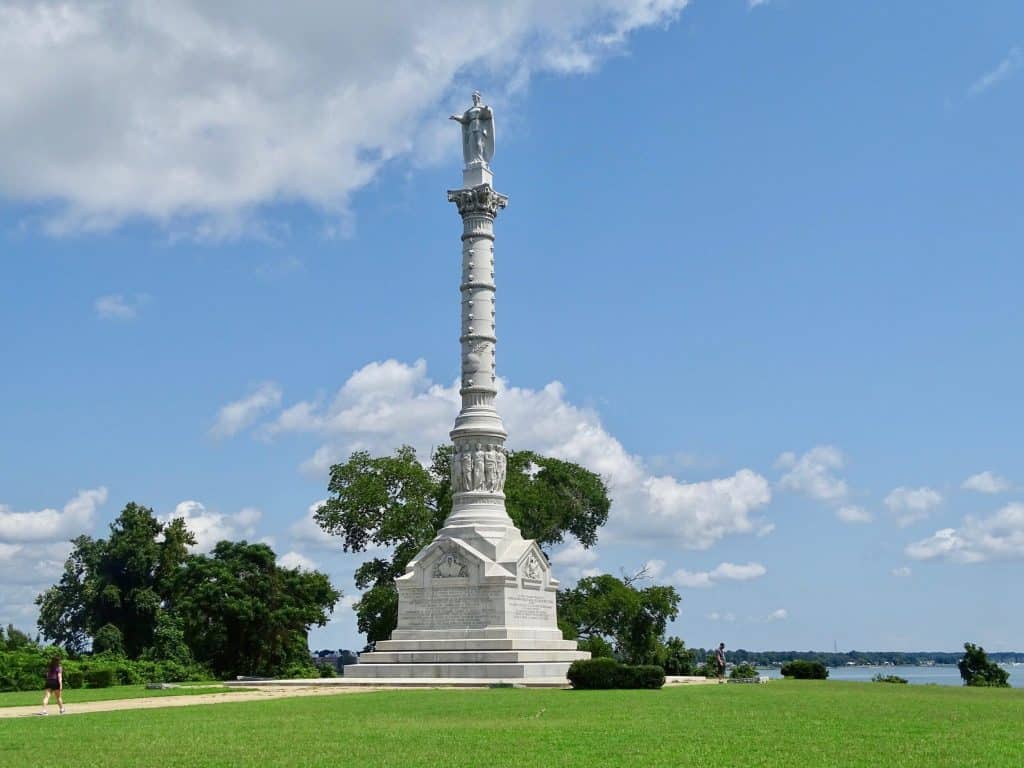
5. Pay your respects at the Yorktown Victory Monument, which overlooks the York River, about a quarter mile from the harbor district, and at the Yorktown National Cemetery, next to the where the British surrendered to Washington. The cemetery includes over 2,000 graves, only 1600 are marked. A majority of the graves are for unknown persons, many of whom were Union Army soldiers.
There is plenty to do in downtown Yorktown- check out shopping, tours, and dining options here. For more historical fun in Yorktown, check out our visit to the American Revolution Museum at Yorktown, nearby Jamestown Settlement, and nearby Colonial Williamsburg.

Similar Posts

  • | | |

    30 Ways to Enjoy the Woodloch Resort this Fall

    Our visit to Woodloch is easily one of our favorite adventures of 2020. We visited in 2012 and vowed to return when the kids were older and could better enjoy all of the amenities. We finally got our chance this past week and enjoyed a beautiful fall weekend in the Poconos. Established in 1958 by the Kiesendahl family, Woodloch Pines is a resort in the northwest section of the Poconos in Pennsylvania. The 350 acre property has grown over the years to now include a lakeside resort with 160 rooms and suites, times shares and private homes, a championship 18 hole golf course, a luxury spa, and a seemingly infinite amount of ways to have fun.

    A visit to Woodloch focuses on family “togetherness”- most activities encourage families to work together, laugh together, and play together. There is a genuine sense of community that the staff brings to every meal, activity, and celebration. Members of the Kiesendahl family visit with guests at every meal (look out for the crazy patterned suits!). Every staff member we encountered greeted us with a warm welcome, an invitation to join in on the fun, and a sincere desire to be inclusive. We witnessed several, multi generational families vacationing together and overheard so many conversations that started with “Last year, when we did this..” or even better, “When I was your age and we played this game….”. It is clear that many, many families return to Woodloch every year to make memories, and we’re hoping to become one of those families.

  • | | | | | |

    15 Ways to Explore the Seacoast Science Center in New Hampshire

    On a recent weekend in Portsmouth, New Hampshire we had the opportunity to explore the Seacoast Science Center, a marine science nonprofit with a beautiful, hands-on museum  located inside Odirone Point State Park, in Rye, New Hampshire. Opened in 1992, the center offers several, hands on indoor exhibits featuring maritime life, conservation programs, and the history of the area, as well as numerous programs and special events on (and in!) the water that the whole family will enjoy.

  • Presidential Libraries & Museums

    Don’t let the word “library” misguide you. While there are thousands of papers and personal records of the presidents to read, and spaces for scholarly research, there are just as many opportunities to explore, touch, see, listen, and learn about American history at the 13 presidential libraries located throughout the country. (President Obama’s Chicago library and museum is currently under construction.)

    Franklin D. Roosevelt was the first to establish a presidential library, followed by each succeeding president, as well as predecessor Herbert Hoover. The National Archives and Records Administration oversee the 13 presidential libraries. I first wrote about presidential libraries for Kidventurous in 2014, but have since visited more libraries and museums and learned lots of new things! At your first stop, be sure to pick up the passport for all 13 libraries so you can collect the stamps.

  • | | | | | |

    Exploring the New Hampshire Historical Society in Concord, NH

    While visiting the New Hampshire state capitol of Concord recently, we enjoyed a tour of the New Hampshire Historical Society, which celebrates the rich history of the Granite State.

    Celebrating its 200th birthday in 2023, the New Hampshire Historical Society was a gift of Edward Tuck, son of a wealthy businessman who founded the Dartmouth Business School, to the state of New Hampshire. Tuck gave most of his lifetime of fortune back to various charities in New Hampshire and ultimately wanted to build (what he called) a “temple” to the Granite State near the State House. Finished in 1911, the building takes up an entire city block and is diagonal to the State House in downtown Concord. Over the past century, several renovations have been made to the building to make it more energy efficient and accessible for all visitors. 

    The building was built in a Greek revival style, including the ceiling and walls of the rotunda, which are made of Siena marble from a quarry in Italy that was owned by the monks of the Old Convent and shipped to America. The floors and staircase are made of Hauteville marble from France. Make sure to stand in the middle of the atrium and look up at the Oculus and have children complete our “I Spy” game while touring the exhibits.

  • | | | | |

    Hogpen Hill Farms in Woodbury, Connecticut

    Hogpen Hill Farms, a 234 acre sculpture farm in the Litchfield County town of Woodbury, Connecticut, is home to a landscape park with over 100 pieces of beautiful landscape art created by Edward Tufte. 

    The works of art are positioned along a 1.5 mile diagonal and visitors can get up close (but don’t touch!) to the artwork by following some of the five miles of walking trails throughout the property (follow the signs and mowed grassy paths that traverse the property).  The property is open to the public during late spring, summer, and fall months and is a wonderful way to enjoy the beauty of nature and art.

  • | | | | |

    Bryant Park, New York City

    My family is fortunate enough to live a short train ride away from New York City, and we frequently take advantage of this opportunity. We enjoy visiting Bryant Park, a quick walk from Grand Central Terminal. There are literally dozens of things to do in the nine acre park, located between 5th and 6th Avenues and 42 and 44th Streets in Midtown Manhattan. Here are some of my seasonal favorites:

4 Comments

  1. Seems like much have changed Since we were there 20+ years ago. Great information and can be included with trips to Washington and so many places.

  2. Seems like much have changed Since we were there 20+ years ago. Great information and can be included with trips to Washington and so many places.

  3. Seems like much have changed Since we were there 20+ years ago. Great information and can be included with trips to Washington and so many places.

  4. I remember working on this place when it was built (the victory center) I don’t recall the year, but thinking it was the early 90’s. I need to go back and see how they finished off the inside with history aspect.

Leave a Reply

Your email address will not be published. Required fields are marked *