Eight Ways to Explore Loxahatchee National Wildlife Refuge in Boca Raton, Florida

|

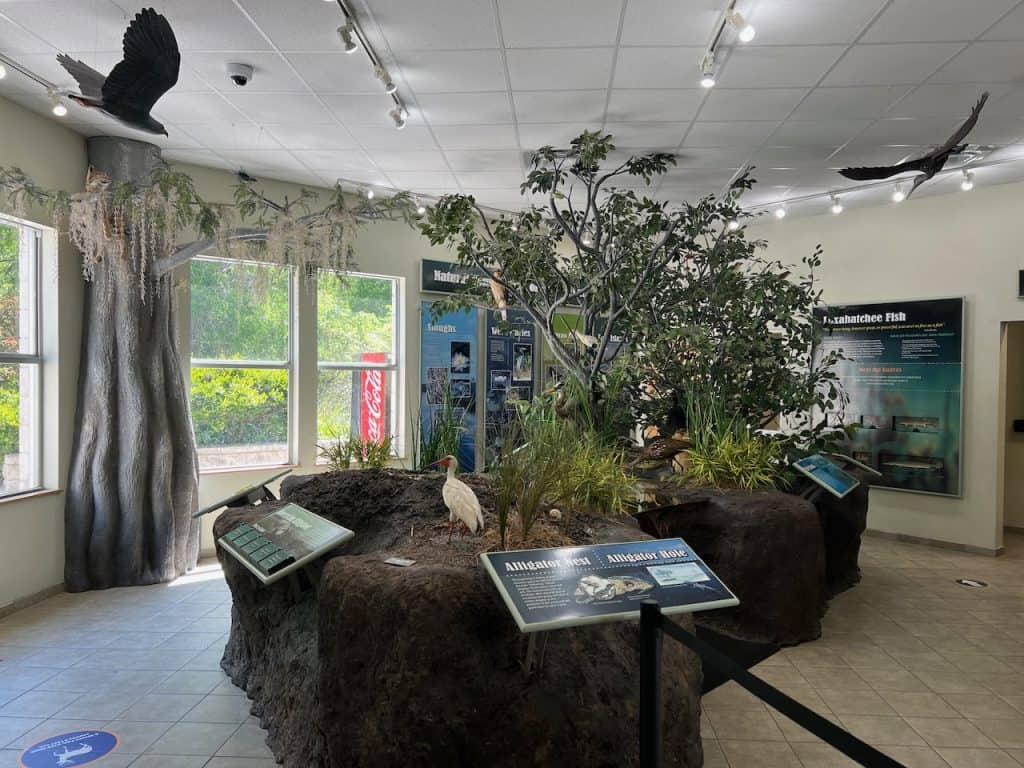
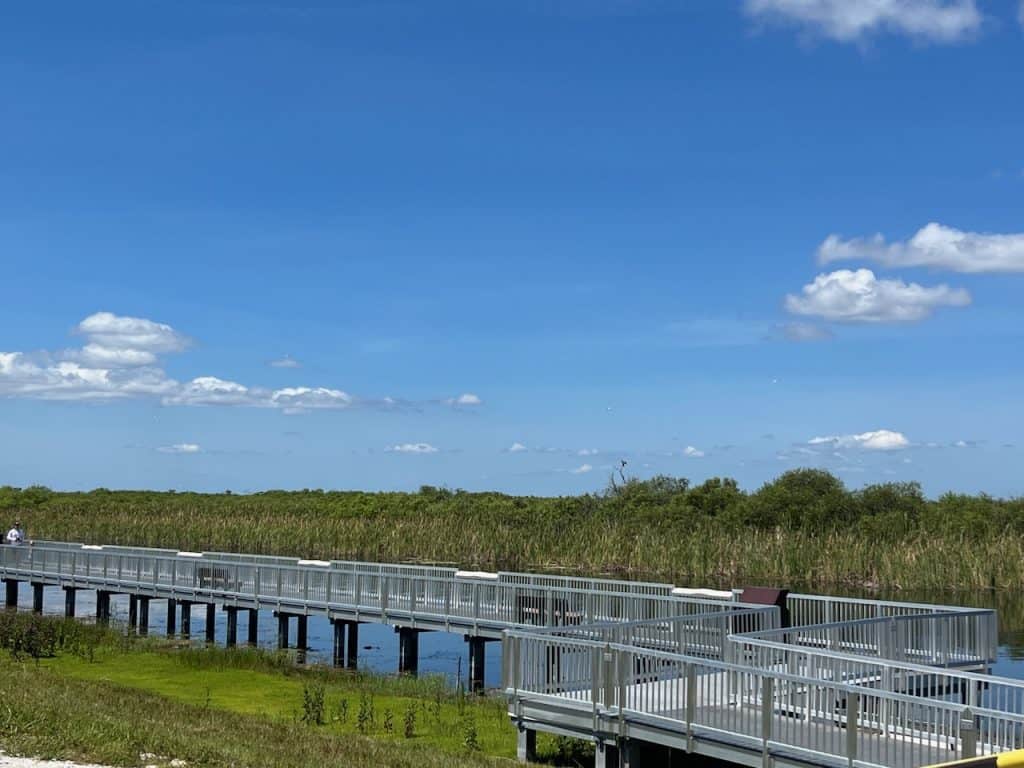
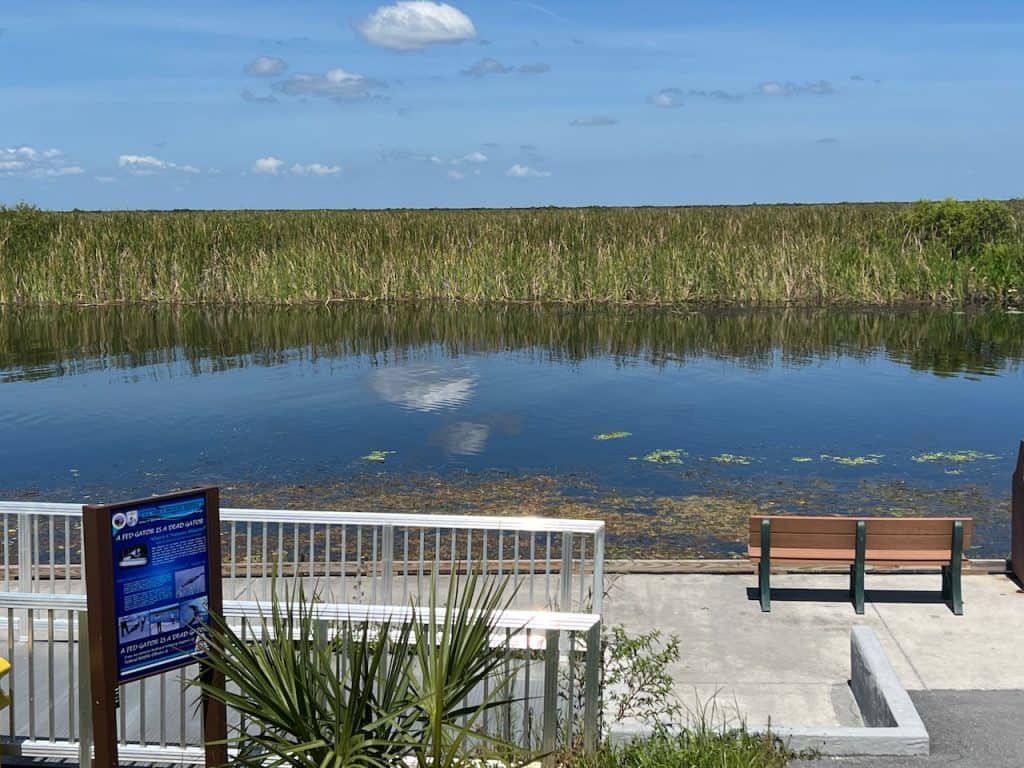
Established in 1951, the 145,000+ acre (one of the largest in America!) Loxahatchee National Wildlife Refuge preserves the remnants of the northern Everglades, which includes a cypress forest for 250+ species of birds; indoor, interactive exhibits; access to boat launches; and tons of hiking, biking, and paddling trails. Located in Boca Raton, Florida in the northernmost part of the Everglades, the 221+ square mile preserve is also home to a wide variety of reptiles and amphibians, from frogs and salamanders to alligators, crocodiles, and turtles. The Visitor Center is a great place to start exploring and make sure to leave time for outdoor trails and recreation. 

Travel Tips:

  • The grounds are open from sunrise to sunset and the Visitor Center is open from 9am-4pm. Check here for updates. 
  • There is a per-vehicle entrance fee payable at the Visitor Center or all three entrance self pay booths. More information on fees and various passes here
  • There is plenty of free parking in front of the Visitor Center and in smaller lots near the three boat launches.
  • Restrooms are located just outside the Visitor Center; a gift shop is located near the admission desk.
  • A variety of programs are offered throughout the week, including 90 minute tram tours, Wellness Walks, and Boardwalks. Check here for more information. 
  • Plan on 90 minutes to explore the Visitor Center and Boardwalk; more time for exploring the trails.

Would you like to save this?

We'll email this post to you, so you can come back to it later.

Loxahatchee National Wildlife Refuge in Boca Raton, Florida

Eight Ways to Explore the Loxahatchee Refuge:

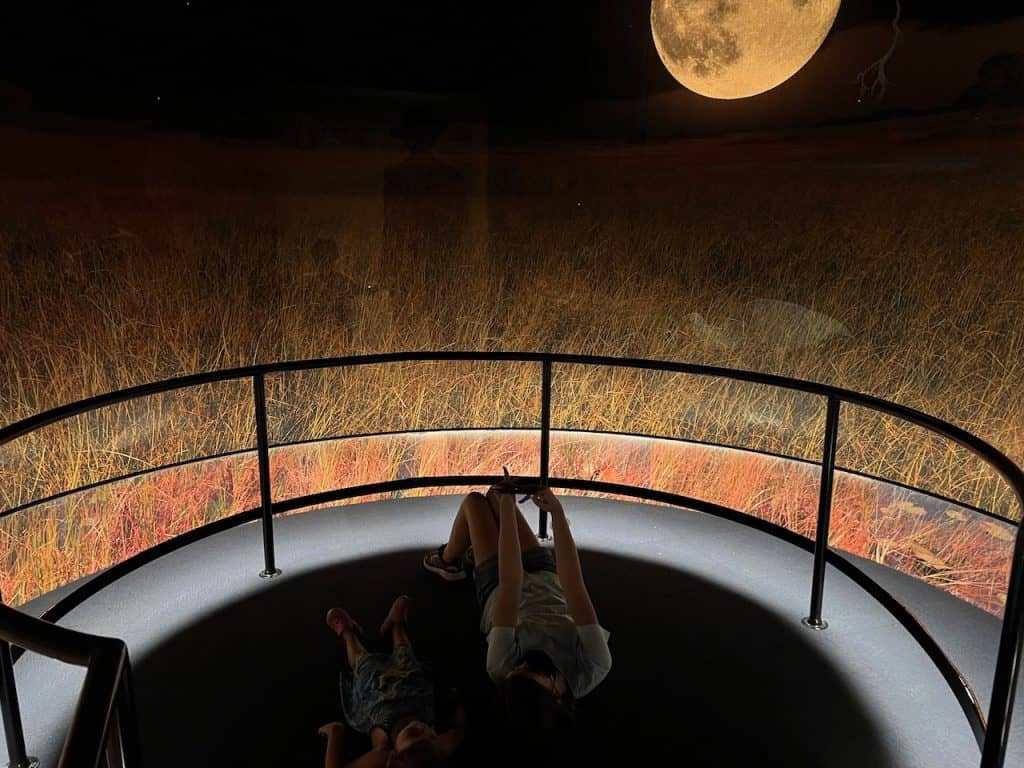
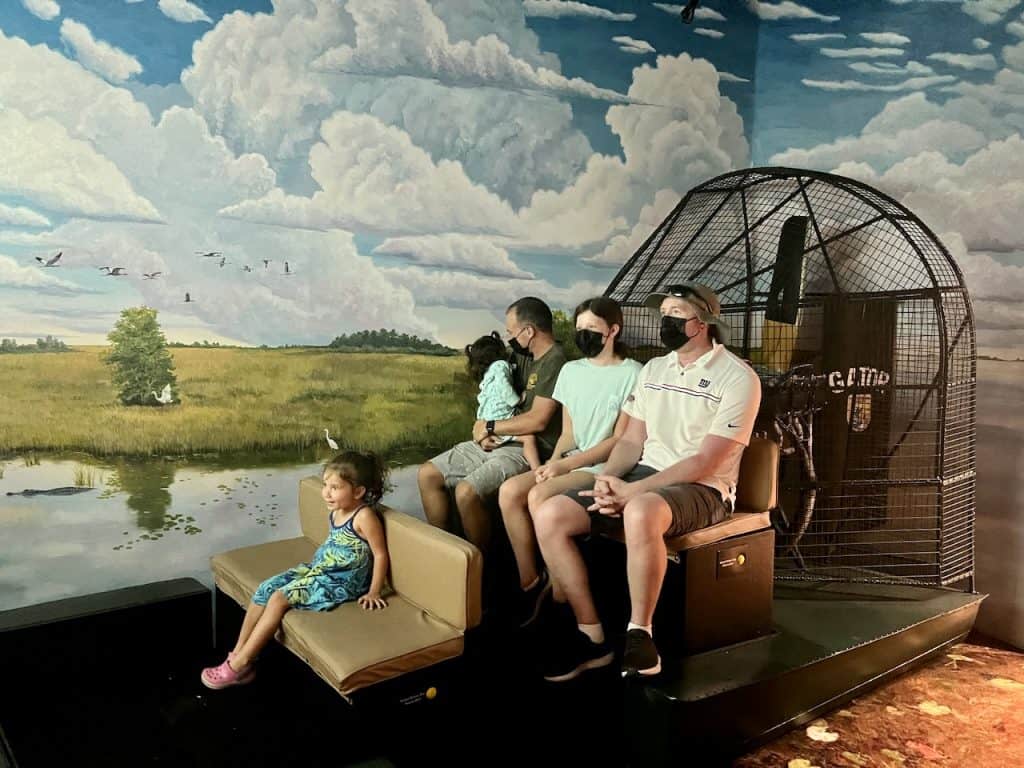
  1. Hop aboard the airboat simulator in the Visitor Center for a virtual tour of the refuge
  2. Listen to the nighttime “symphony” of sounds from various animals on the refuge.
  3. Learn how the Everglades are valuable to the Earth and humans from a variety of interviews from people with different perspectives.
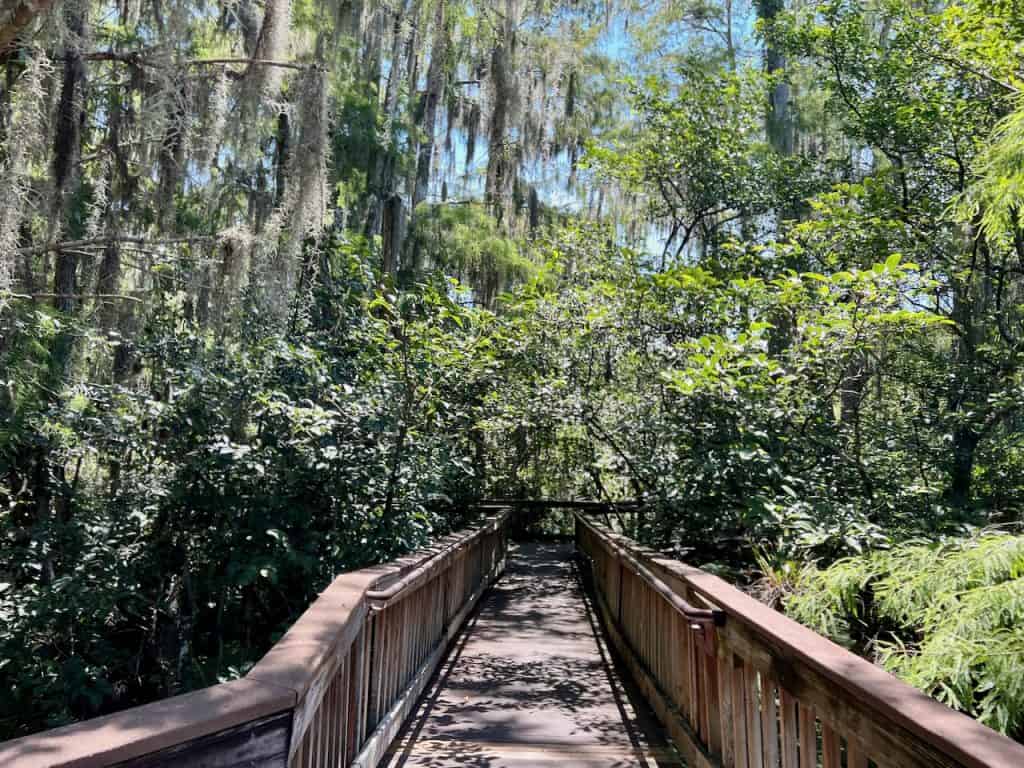
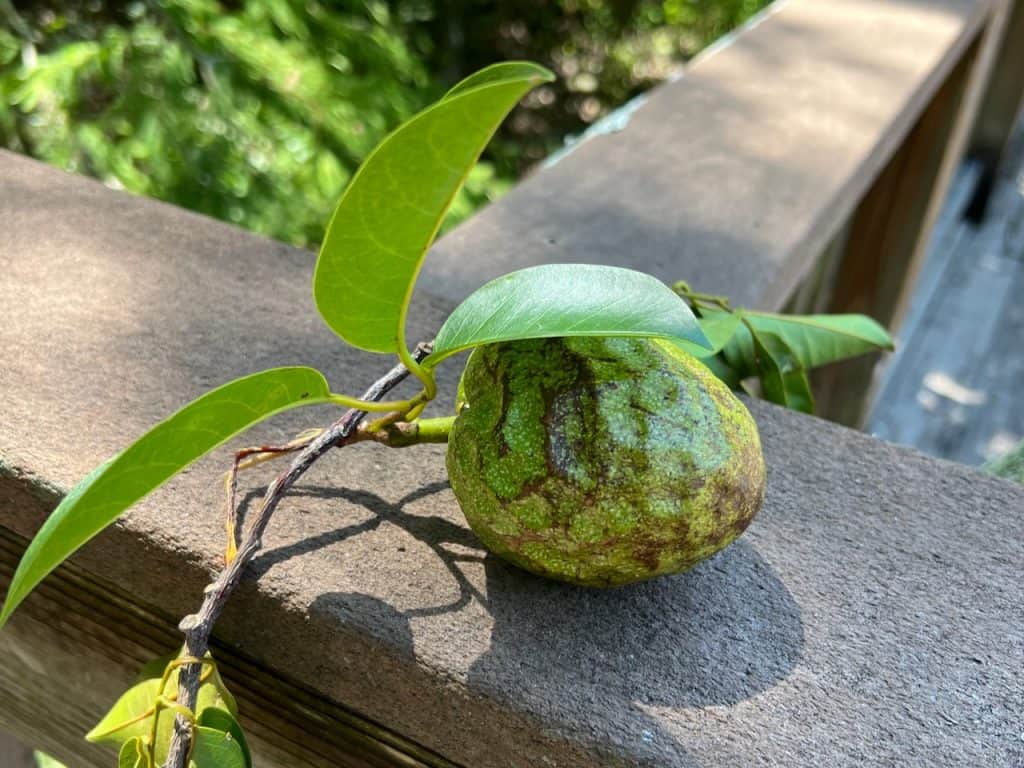
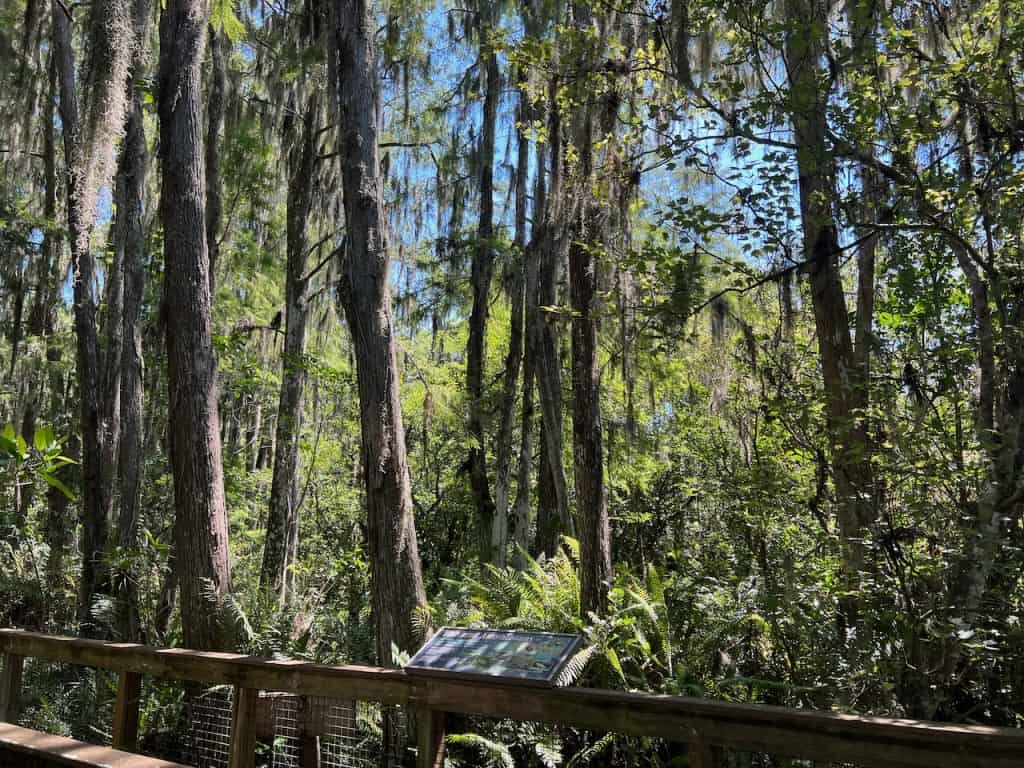
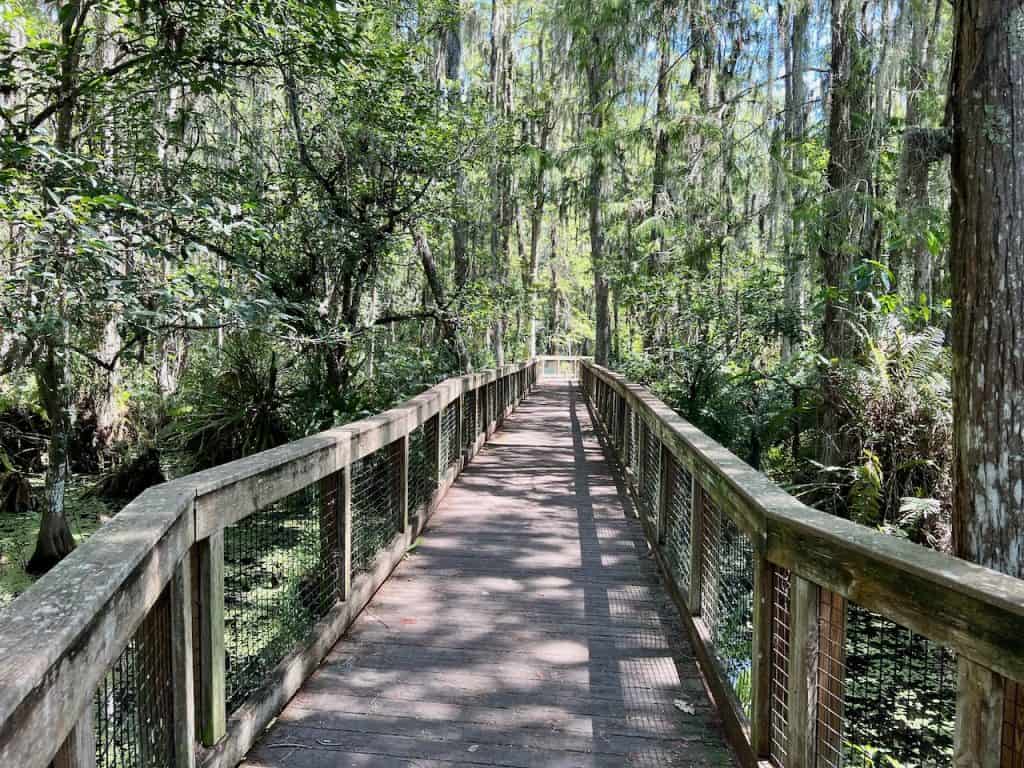
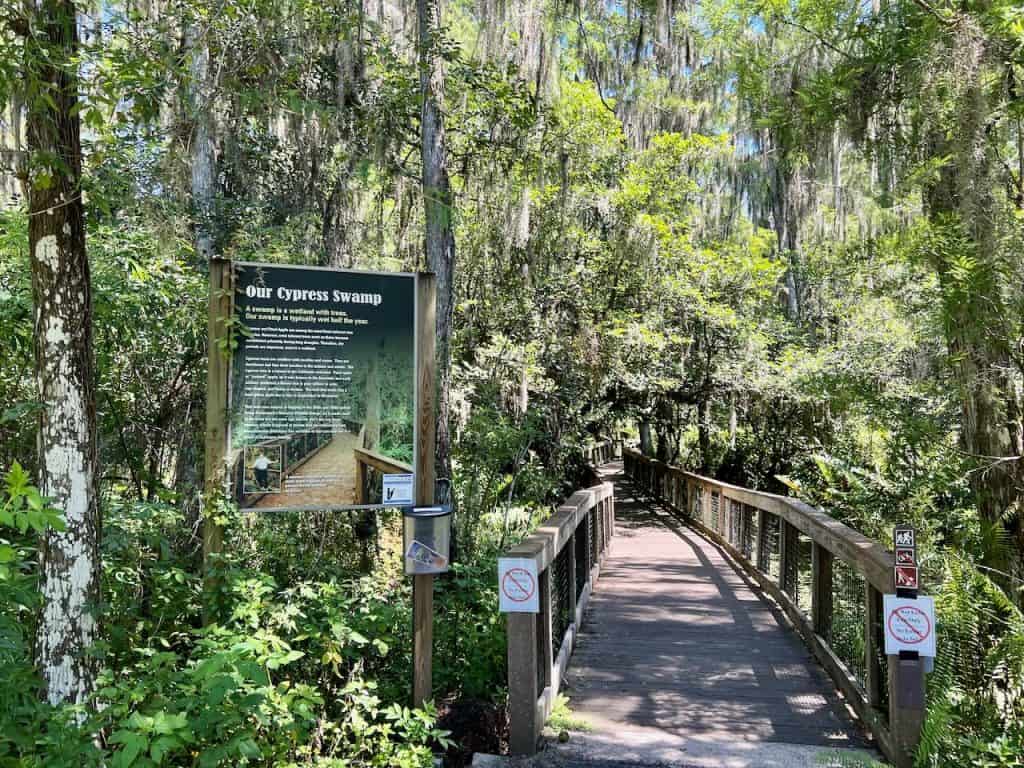
  4. Walk the almost half mile accessible Cypress Swamp Boardwalk. The swamp, over 400 acres, is the largest in Palm beach County. Keep an eye out for a variety of birds, like woodpeckers and owls, fish, turtles, and more. Note that the depth of water varies throughout the year as the swamp is rain fed.  
  5. Bike on almost 40 miles of trails throughout the refuge, including the popular 36 mile Perimeter Trail. Bikers are welcome on all hiking trails except the Boardwalk.  
  6. Drive one mile from the Visitor Center to the Lee Road boat ramp, one of three boat ramps at the refuge. Visitors are allowed to drop water cooled boats, canoes, and kayaks in designated areas (check online and at the Visitor’s Center for specific regulations). 
  7. Count the number of reptiles, amphibians, and butterflies camouflage (or out in the open) throughout the refuge on a self guided tour. Hint: there are dozens of each!
  8. Attend a guided activity, like a tram tour or Wellness walk. Check here for the calendar and to sign up. 
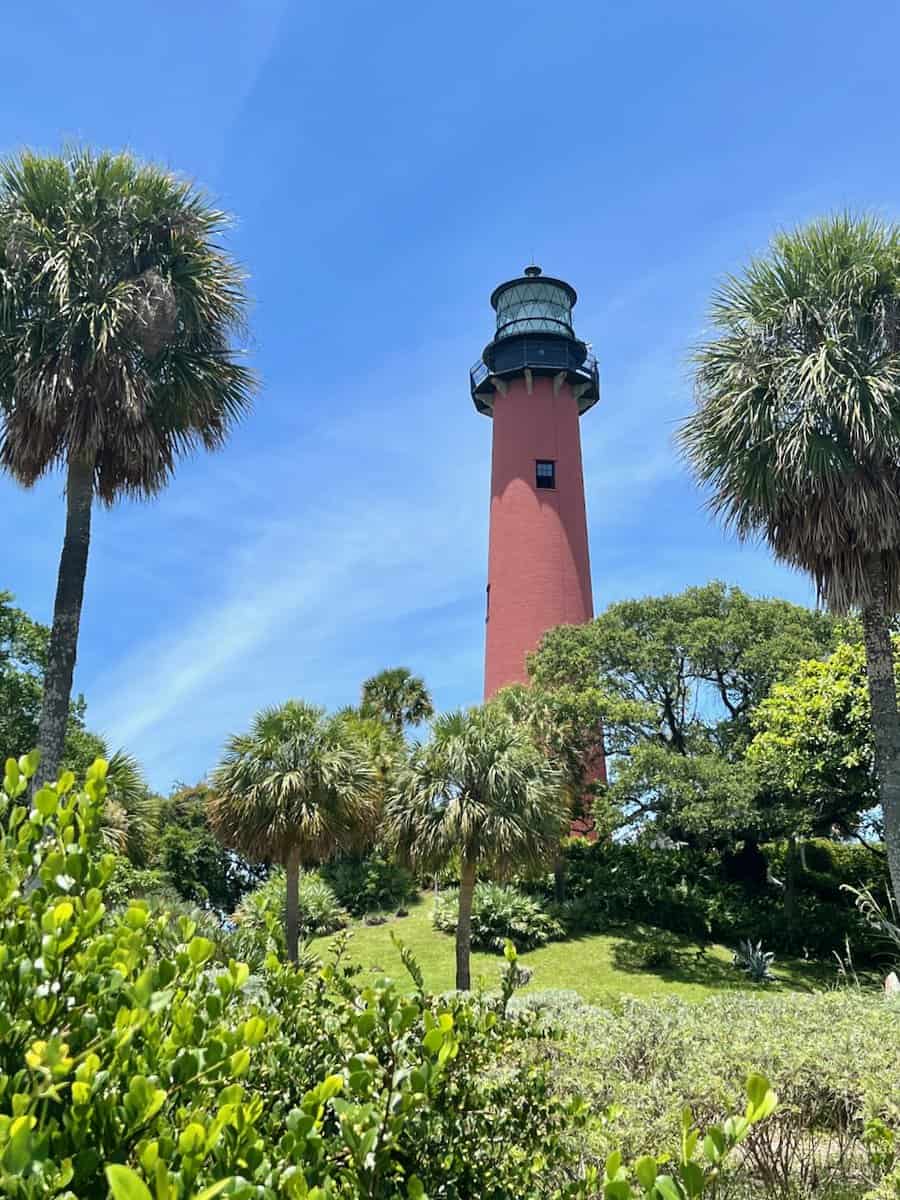
Looking for more fun throughout Palm Beach County? Check out our full City Guide to Palm Beach County and dedicated posts to Jupiter Inlet Lighthouse and Museum, Palm Beach Zoo, Green Cay Nature Center, and Sandoway Discovery Center, and Butterfly World. And follow along on our adventures on Instagram, Facebook, Pinterest, and Twitter.

Similar Posts

  • | | | |

    5 Ways to Explore the Castillo de San Marcos National Monument in St. Augustine, Florida

    The oldest masonry fort in the United States, Castillo de San Marcos National Monument was built from 1672 to 1695 (with various interrupted breaks due to disease and conflict) to guard St Augustine, the first permanent European settlement, from both pirates and English troops. The fort was made from local coquina shell stone quarried in the area that is now Anastasia State Park and is up to 19 feet thick in some ocean side walls. The shell-stone walls helped up against cannon firing and helped the Spanish protect the fort.  

    In 1821, the United States acquired Florida from Spain and renamed the fort Fort Marion, later adding Florida’s first golf course on the grounds in 1895, and then declared a national monument in 1924. After being deactivated in 1933, the 21 acre fort was used as a US Coast Guard training base during World War II. The fort celebrated its centennial in 2016.

  • | | | | |

    Tidal Cove at the JW Marriott Turnberry Resort and Spa in Miami

    On a recent holiday visit to see family who live in southern Florida (we’ve visited many times- see our West Palm Beach City Guide here), we were looking for a new spot to explore. My brother shared that the JW Marriott Turnberry Resort and Spa always received high praise from people in the area and would be a great fit with our families. We booked an overnight stay at the Turnberry and had a wonderful time!

  • | | |

    Sandoway Discovery Center in Delray Beach, FLA

    Opened in 1998 in a former private residence in downtown Delray Beach, Florida, Sandoway Discovery Center is a nonprofit center focused on the native coastal environment and its inhabitants. The Center, which is on the National Register of Historic Places, has plans to expand the outdoor area with an additional touch tank for stingrays in the coming year.

  • | |

    10 Ways to Explore the St. Augustine Lighthouse & Maritime Museum in Florida

    Located across the street from Lighthouse Park and Cox Recreation Facility (both maintained by the city of St. Augustine), the St. Augustine Lighthouse and Maritime Museum complex  features indoor and outdoor exhibits, walking trails, and the opportunity to climb to the top of the lighthouse.

    Built in 1856, the first watchtower was 350 yards closer to the ocean than the current complex. The second tower, 165 feet tall, followed less than 20 years later, including the addition of the 1876 home for Head Keeper William Farn, Assistant Keeper Joseph Rantia and their families. Lightkeepers tended to the lighthouse until the mid 1950s when the light became automated.  The Junior Service League saved the property from being bulldozed in the 1970s and spent almost 20 years restoring the lighthouse tower, innkeeper’s home, and the original Fresnel lens. The museum officially opened in 1994 with a collection of over 19,000 artifacts and documents providing a timeline of the history of the lighthouse, its occupants, and the greater St. Augustine area.

  • | | |

    Playing “I Spy” at the Flagler Museum on Palm Beach Island, Florida

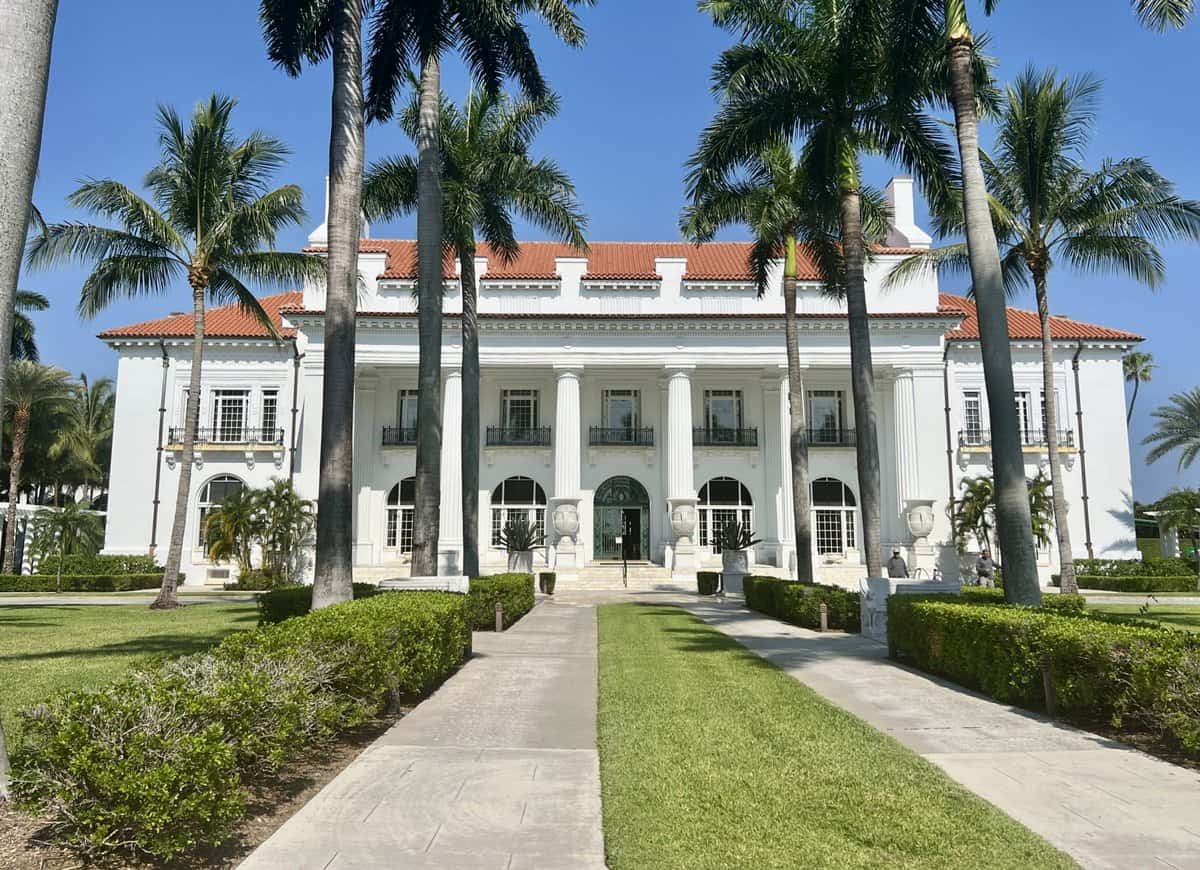
    We recently spent time exploring St. Augustine Florida, a city that Henry Flagler basically built after the start of his 1912 Florida East Coast Railway and subsequent hotels, hospitals, schools, churches, and farms. (Read more about our adventures in St. Augustine in these posts. So, it was fitting when we also traveled to the West Palm Beach area of Florida in the same trip, we spent the morning at Flagler’s “winter cottage”

    Henry Flagler was successful in the grain and salt mining industries before he helped to found the Standard Oil Company with John D. Rockefeller and Samuel Andrews in 1867.  When he married his third wife, Mary Lily Flager, in August 1901, he promised her a “waterfront winter cottage” and had “Whitehall”, as it was named, built in a record 18 months. The Flaglers spent approximately two months there each year until Flagler’s death in 1913. 

  • | | |

    10 Ways to Explore Alligator Park in St. Augustine, Florida

    We’re not a huge zoo family, but every guide we read about St Augustine, Florida, as well as a couple of fellow travel writers, all suggested visiting Alligator Farm Zoological Park. So, on our recent visit to St. Augustine, we started one of our mornings at the park and agreed it’s a special place the whole family will enjoy.

    Established in 1893, Alligator Farm is one of the oldest zoos in the country. Originally opened as an exhibition space of native Florida reptiles at South Beach on Anastasia Island, Alligator Zoo quickly became a popular spot for tourists. After both a storm and fire destroyed much of the area in 1920, the owners moved the animals to the current, nine acre space. The zoo is home to 24 species of crocodilian, 40 species of birds, dozens of reptiles, and many other animals. The park has shaded paths that weave through the exhibits, with plenty of viewing areas and places to sit and enjoy the beauty of nature. There’s also a zip lining course, daily animal feedings, and various programs and special events that offer plenty of new things to see with each visit.

4 Comments

  1. Loxahatchee National Wildlife Refuge is such a wonderful (and underrated) place to visit. Everyone heads to bigger name spots – the Everglades, the safari park – put this place is just as wonderful. Thanks for sharing and highlighting it!

  2. Loxahatchee National Wildlife Refuge seems like a great place to be in contact with nature. I would love to relax in a place like this and take some nice pictures!

  3. So many great ideas! I like the sound of biking along the trails and seeing as many of the reptiles as possible. Listening to them at night sounds really cool too, was it loud?

Leave a Reply

Your email address will not be published. Required fields are marked *