New York Public Library, New York City

| | | |


dsc01232-1163747

Patience (and his counterpart, Fortitude) greet visitors outside the New York City Library, Stephen Schwarzman Building.

My children are OBSESSED with reading (good problem to have, I know). They can’t get enough of books. Exactly one year ago, we were in New York City to see a Broadway play for my daughter’s birthday. We were exploring Bryant Park and saw the New York City Library. We had an hour before the show and it was too cold to “walk around the city” so we decided to check out the library. We ended up spending most of our time in the children’s room, but I made note of the tour group that passed us and vowed to return. We did, exactly one year later.

The Stephen A. Schwarzman Building of the New York City Library opened in 1911 and probably the most well known of the 92 properties in the library system. It’s one of four research centers, in addition to the 88 circulation branches located throughout Manhattan, the Bronx, and Staten Island. Some areas of the library are open to the general public and some are reserved for credentialed people who visit to complete research. The library offers audio tour for a nominal fee at any time the library is open, but also offers free, guided tours tour twice a day. Check in at the docent desk in Astor Hall. Make sure you check times and get there early, as tour spaces are limited.

Traveling with Children:

  • As an English teacher, I found the tour fascinating. My children enjoyed parts of it, but I don’t think younger children (aka under the age of 7) would be as engaged as older children.

  • You’ll be walking and climbing a lot of stairs (elevator are an option). Strollers are not allowed.

  • There are several banks of restrooms throughout the library (one set is located directly outside the children’s room).

  • Coat check is available near the children’s room.

  • Security will check your bags when you enter AND exit the library and no food or drink is allowed (they’ll ask you to throw it out before you leave the lobby).

  • There is a small cafe with a few tables in Astor Hall next to the gift shop.

Highlights from our Tour:

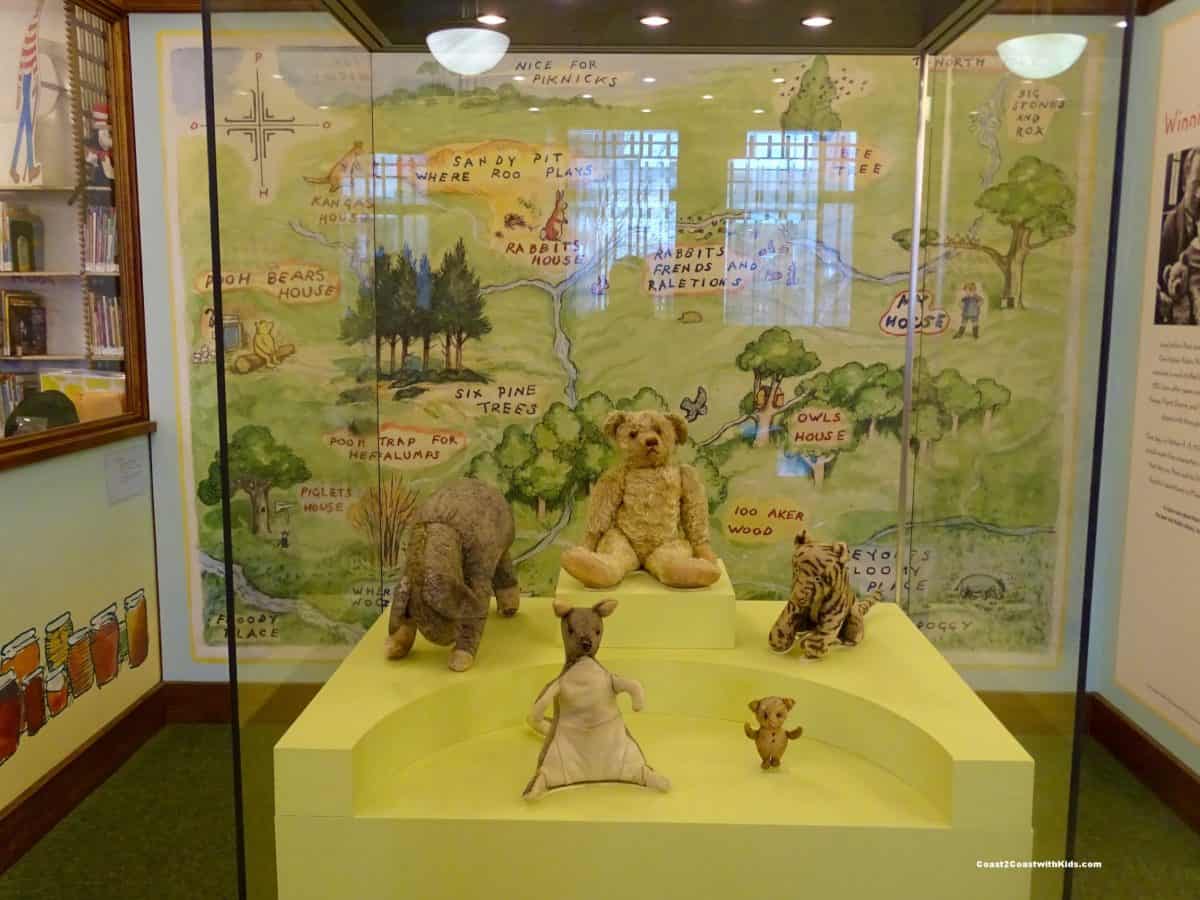
  • Not technically part of the tour, but a must see if you have children, is a visit to the Children’s Center, located on the ground floor (you can enter on 42nd street). Make sure to check out the display of the original stuffed animals that inspired the Winnie-the-Pooh characters. There’s almost daily programming for children of varying ages, a bank of computers for research, and, of course, thousands of children’s books.

  • Dewitt Wallace Periodical Room, named after the founders of Reader’s Digest, has original architecture and furniture and is open to the public for research and studying.
  • Gottesmann Exhibition Hall has the only wooden ceiling in the library and columns made of single slabs of marble- be sure to look for these elements. Gottesmann is the largest exhibition space in the library and features a rotating exhibit. When we visited, it was the start of a 1960s Counterculture exhibit, which looked cool, but not totally child appropriate.

  • The Wachenheim Gallery, the smallest exhibition space, showcases items from the library’s permanent collection on a rotating basis. One of the most popular items, displayed every July, is an original copy of the Declaration of Independence.

  • The Visitor’s Center has a couple of classrooms where you can attend free classes on a wide variety of subjects, as well as a theater which runs a 23 minute video about the history of the library.

  • The third floor Special Collections space is not typically open to the public. There is a variety of research rooms where thousands of items from the permanent collection, ranging from Charles Dickens’ letter opener and an annotated copy of A Tale of Two Cities to Elizabeth Barrett Browning’s shoes to Sylvia Plath’s diary, are housed.

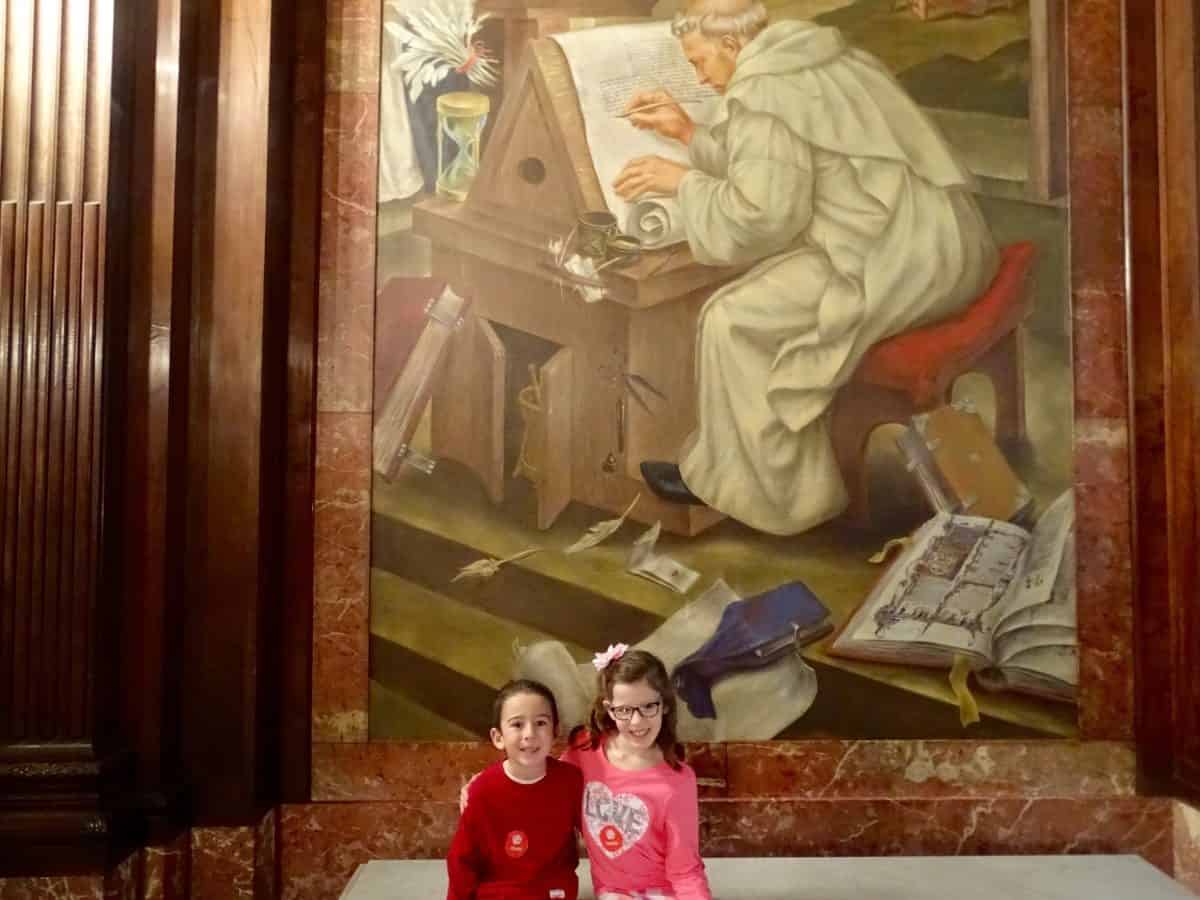
  • The McGraw Rotunda is stunning. There are four replica murals by Edward Laning illustrating the history of the recorded word.

  • The Bill Bass Catalog Reading Room is a public space where you can request periodicals in a most unique way: Once you look up the call number for a text via computer, a note is sent to librarians stationed five flights of stairs below Bryant Park where over a million periodicals- 90% of the collection- are housed. The librarian will find the text, put it in a “library train” and send it back up to the reading room to be delivered to you. The whole process takes about 15 minutes. Take note of the library train in the photo below-left.
Once you’ve explored the library, why not walk around the building and check out Bryant Park? There is always something fun going on, every day of the year. Check out my tips and suggestions here.

If you want to follow along on my family’s adventures, like us on Facebook and follow us on Twitter and Instagram.

Similar Posts

  • | | | | |

    10 Things Kids Will Want to Do at Hancock Shaker Village

    Traveling during a still present pandemic: If you’ve been following our adventures this summer, you know that our family has taken precautions to stay safe. We’ve limited our exploration to nearby states with lower COVID cases and to mainly outdoor spaces that take proper precautions to keep staff and visitors safe. Hancock Shaker Village was an easy choice- tons of open space to socially distance, only one family in a building structure at a time (with all doors and windows open to allow for better ventilation), and absolutely nothing to touch. While Hancock Shaker Village is a great place to visit anytime, it’s a very safe bet for family fun during these uncertain times.

    Celebrating its 60th anniversary in 2020, the Hancock Shaker Village is the oldest working farm in the Berkshires part of western Massachusetts. The Village was originally home to the Shaker community from the late 1700s until 1959, when it was turned into a museum that includes over 22,000 original artifacts and a research library. The 750 acre complex has a 20 acre working farm, 20 buildings with live interpreters, a massive garden with a very popular Community Supported Agriculture (CSA), and tons of hiking trails, meadows, and woodlands that abut the Pittsfield State Forest.

  • | | |

    The Portland Observatory in Portland, Maine

    Earlier this summer, we enjoyed a few days in Portland, Maine, a beautiful seaside city on Casco Bay. One of the highlights of our visit was a guided tour of the Portland Observatory.

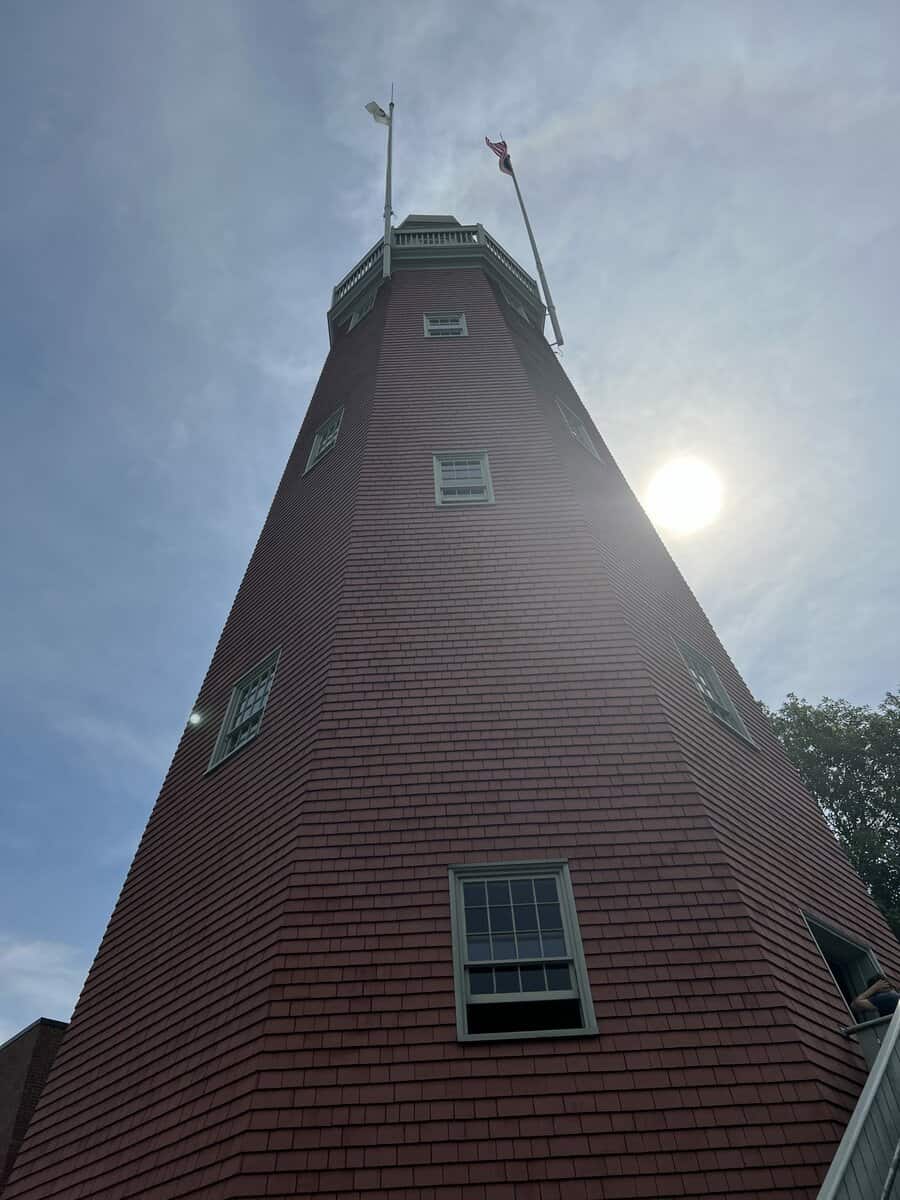
    Built in 1807 by Captain Lemuel Moody and one of the oldest marine signal stations in America, the six floor tower was used commercially until 1923 when it was abandoned. It is not technically considered a lighthouse because, although it does light up at night from the interior rooms, it does not emit light outwards. In the late 1930s, the tower was used as a lookout in World War II. The location of the observatory, and the unique octagonal shape, offered numerous views of the harbor. The Observatory went through several restorations throughout the 20th century and finally opened as a museum in 2007. 

  • | |

    15 Tips for Planning a Family Reunion

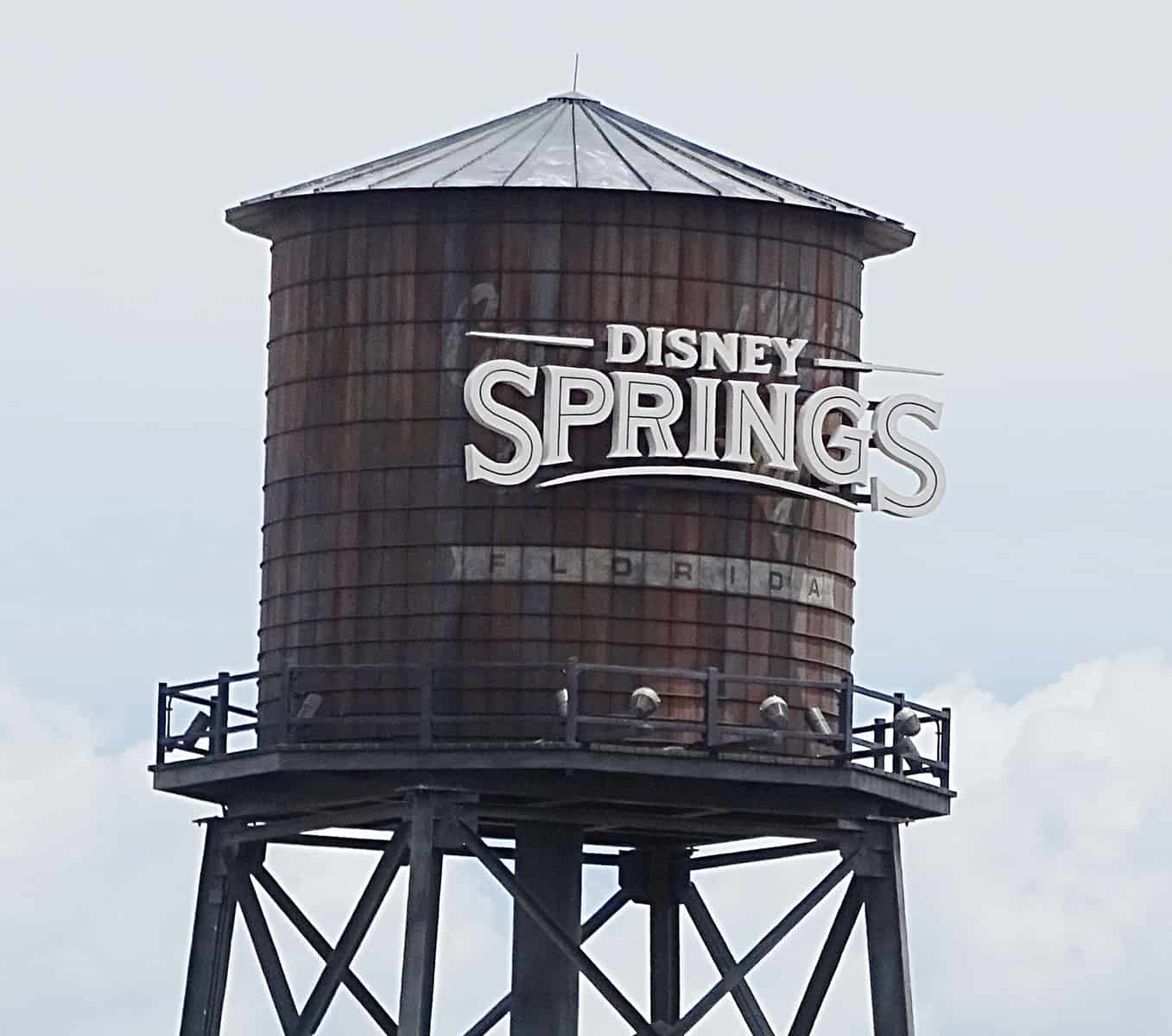
    This time of year, many families are thinking ahead to school breaks and summer as perfect opportunities for a family reunion. I’ve helped organize several family reunions in Maine, North Carolina, Wisconsin, and Massachusetts, and also planned multigenerational trips to special places like StoryLand in New Hampshire, Woodloch in Pennsylvania, Martha’s Vineyard, and New York City. One special highlight is our 2016 trip to Disney World that included BOTH sets of grandparents.

  • | | | | |

    The Health Museum in Houston, Texas

    Opened in 1996 in Houston, the John P. McGovern Museum of Health and Medical Science, aka The Health Museum for short, welcomes over two million visitors each year. Recently renovated, the museum also has plans to expand the four permanent exhibits in the near future.  The Health Museum is located in the Houston Museum District, an area encompassing 19 different museums and recreational spots, along with plenty of restaurant options.  On a recent trip to Houston (stay tuned for an upcoming post on all things family-friendly in Houston), we had the chance to explore The Health Museum.  If you’re local to the Houston area, I recommend checking out their programming schedule; there is a wide variety of classes and camps offered throughout the year (they even have real organ dissections!!).

  • | | | | | | | | | | | | |

    Dutchess County, New York

    Dutchess County, located in southeastern New York, spans from Fishkill and Beacon to Rhinebeck and Red Hook covering (in total) thirty cities, towns, and villages. There are literally hundreds of ways to explore the area, but I thought I would share twelve ways families can enjoy all that Dutchess County has to offer together. The county borders western Connecticut and is about 90 minutes from Manhattan. Driving from the north end of Red Hook south to Beacon takes less than an hour, so you won’t spend days in the car exploring the area.

    Start your planning by checking out DutchessTourism.com, which is a well organized, well informed network of suggestions for eating, staying, and exploring the county.  They have a section dedicated to family fun and even have itineraries broken up in one, three, and five day stays (in additional to organizing suggestions for shopping, craft beer, spa, LGBT and other themed trips).

  • | | | |

    10 Things to Do at theAfrican Burial Ground National Monument in New York City

    The African Burial Ground National Monument, located in Lower Manhattan (New York City) honors the millions of enslaved men, women, and children who made up more than a quarter of New York’s labor force in the 17th and 18th centuries. In the early 17th century, Dutch settlers, who founded “New Amsterdam”, brought slave laborers to (what would become) Lower Manhattan, where they were forced to work clearing farmland and building the city, and fulfilling domestic jobs in the homes; even children, as soon as they could walk, were forced to work. 

Leave a Reply

Your email address will not be published. Required fields are marked *