Exploring Trinity Church and St. Paul’s Chapel in New York City

| | |

Our family is fortunate to live a short drive from New York City and we frequently enjoy driving into Manhattan to explore historical sites and museums. On a recent visit, we enjoyed the morning exploring the grounds of the famous Trinity Church and near by St. Paul’s Chapel in the Financial District of Lower Manhattan.

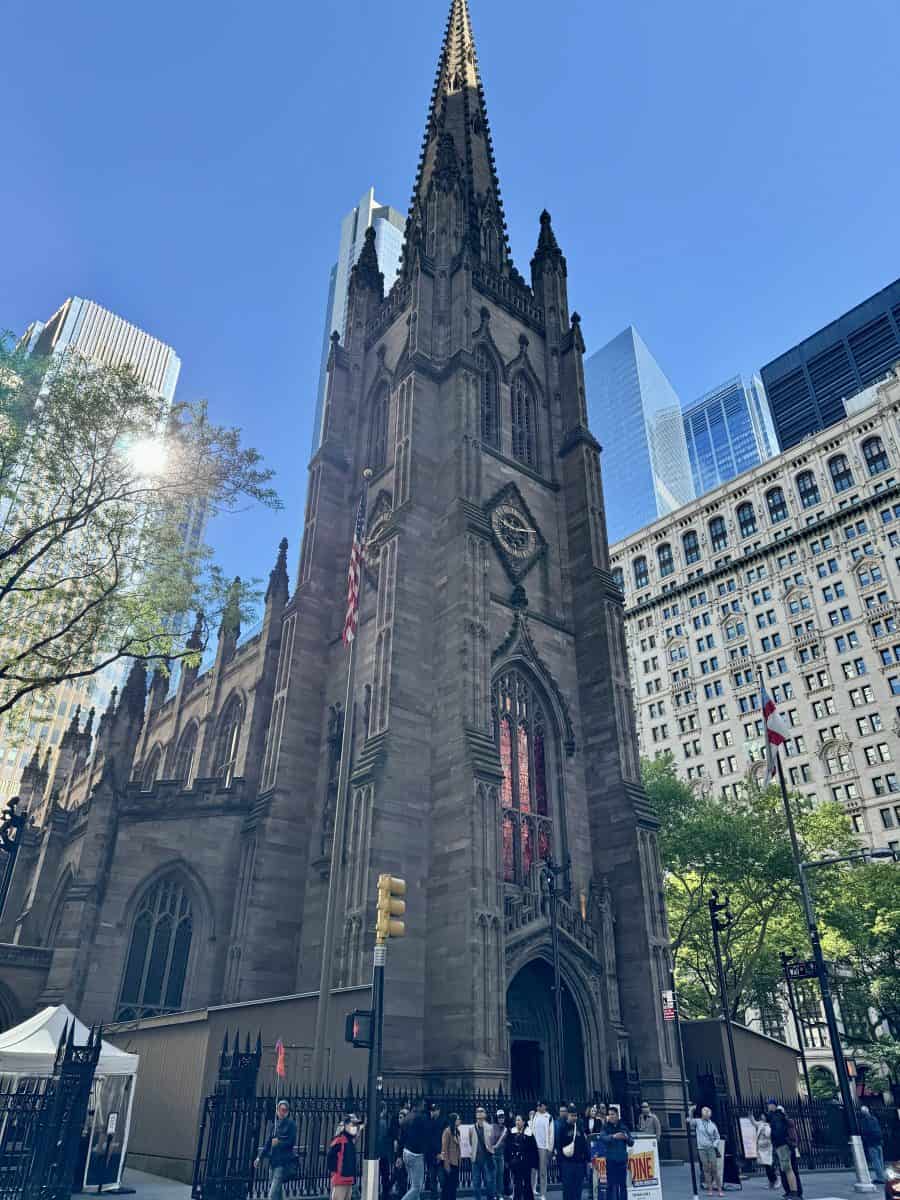
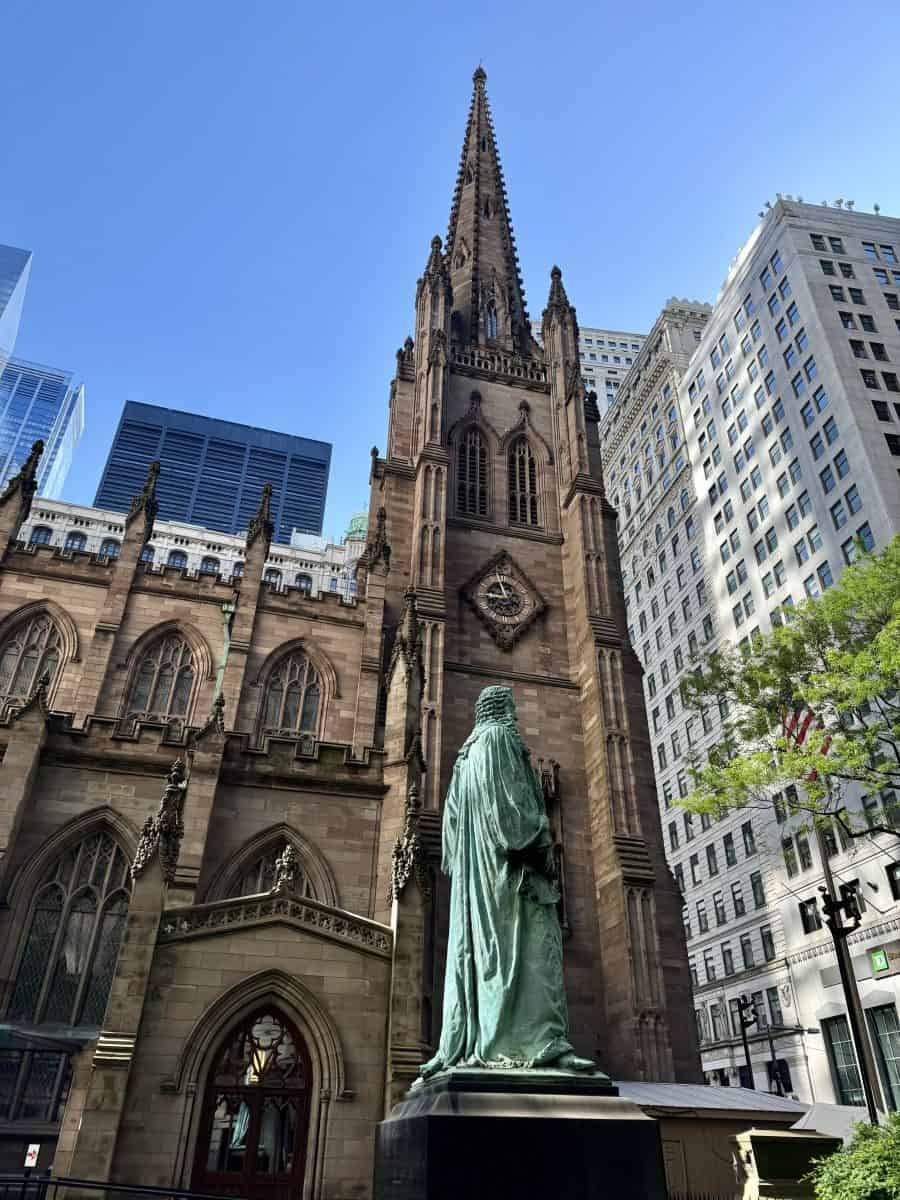
In the late 17th century, a group of Anglicans wanted to form their won parish in the colony of New York. In 1697, Trinity Church received its charter from King William III, helping to establish its incorporation and establish the rules of the parish. The land to build the church, now Fulton Street to north Christopher Street and Greenwich Street east to Broadway, was leased by Queen Anne in the early 1700s. The current church, built in 1846 as the tallest building in America at the time (the steeple is 281 feet tall!), is actually the third church on the property (the original 1698 church burned in the Great Fire of New York in 1776 and the second church, built in 1790, was destroyed by snow in the late 1830s). The church is located on Wall Street facing west towards the Hudson River.
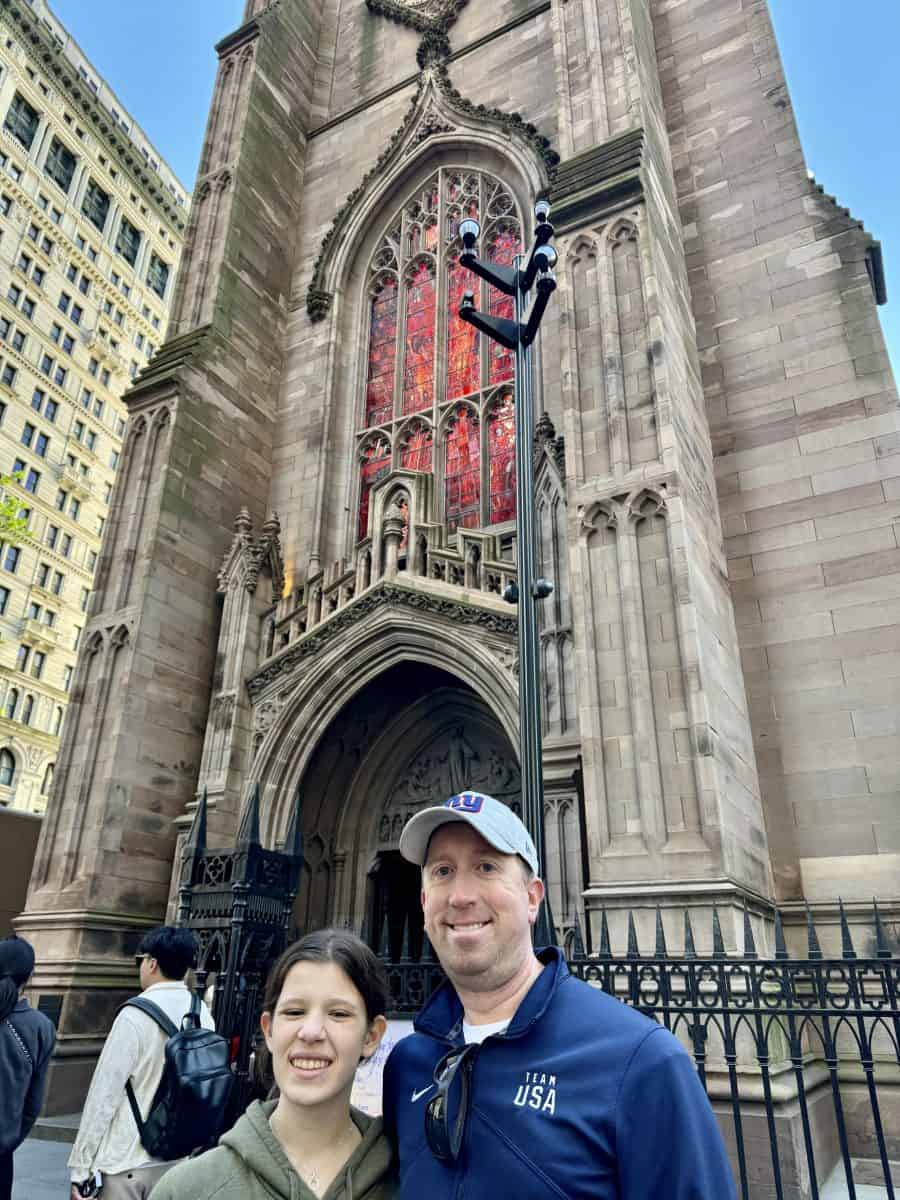
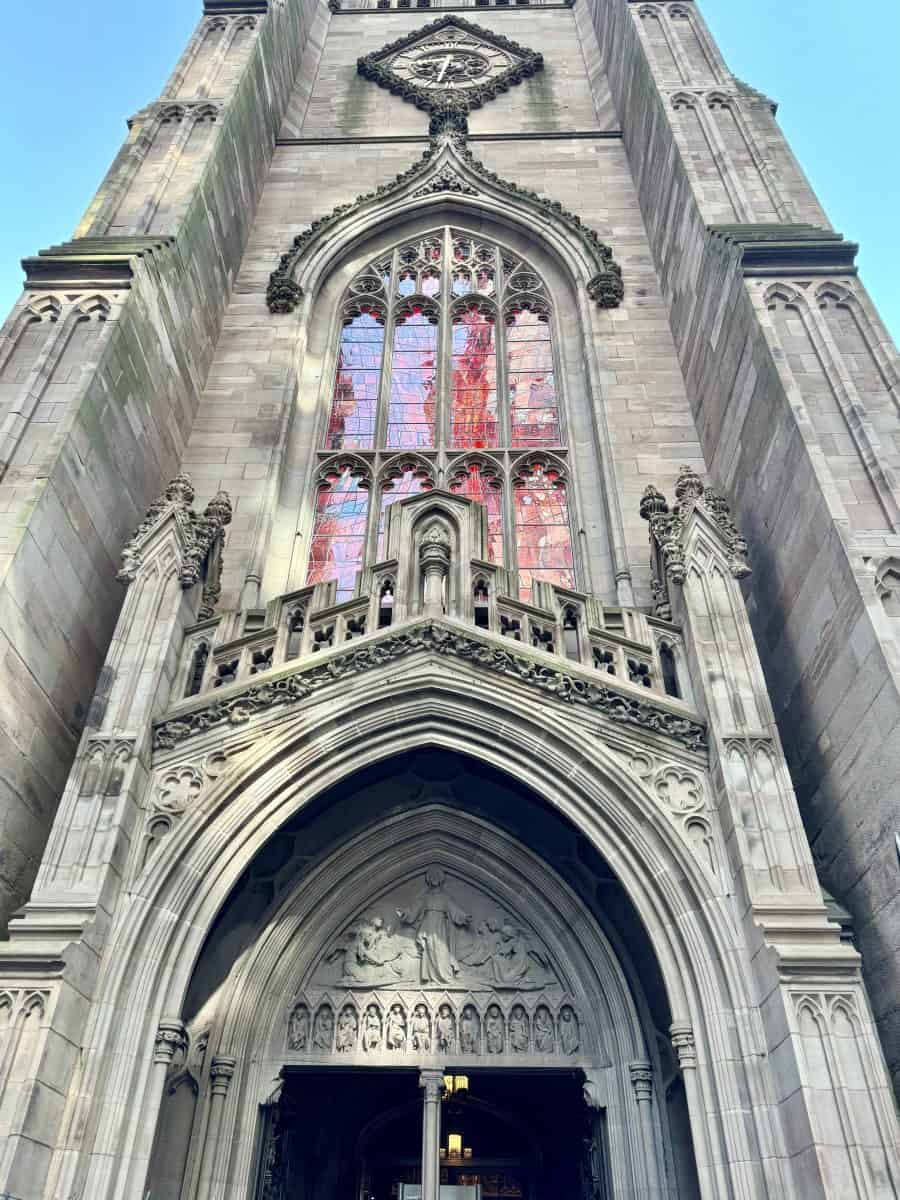
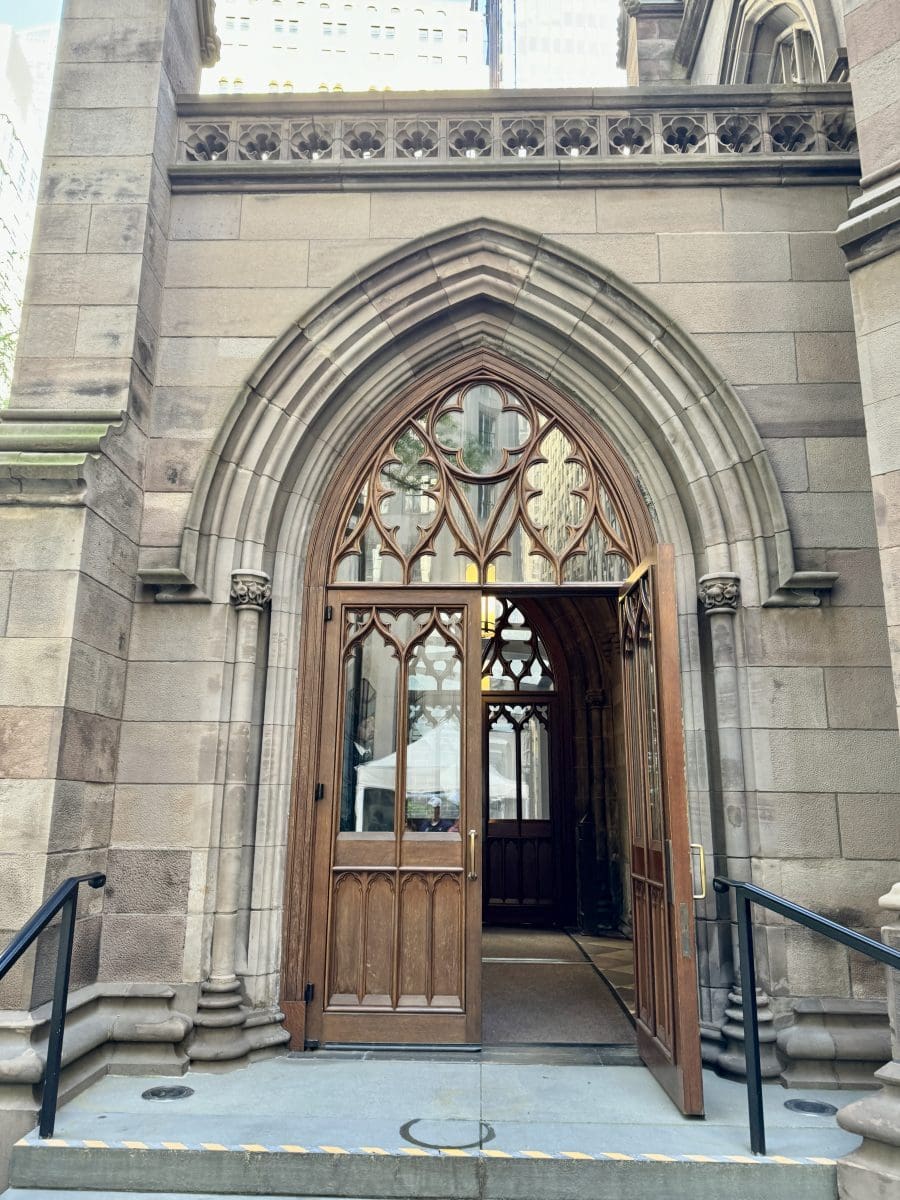
front entrance to Trinity Church in NYC

Trinity Church increased in size rapidly as the city grew, and St. Paul’s Chapel, just up the street at the corner of Broadway and Vesey Street, opened in 1766. St. Paul’s Chapel survived the Great Fire of 1776 thanks to the work of firemen. St. Paul’s was the main home of Trinity Church until the second church was rebuilt in 1790; George Washington attended services at St. Paul’s Chapel after taking the oath of office to become the nation’s first president. St. Paul’s Chapel is one of the oldest public buildings in Manhattan still in use today. Located only 100 yards from the World Trade Center, St. Paul’s Chapel was literally at the epicenter and home to the rescue crews and volunteers for months after the terrorist attacks of September 11, 2001.

Both Trinity Church and St. Paul’s Chapel welcome visitors every day of year for worship services, outreach programs, and community engagement. Visitors are welcome to explore the grounds and learn about the church’s support of the community.  
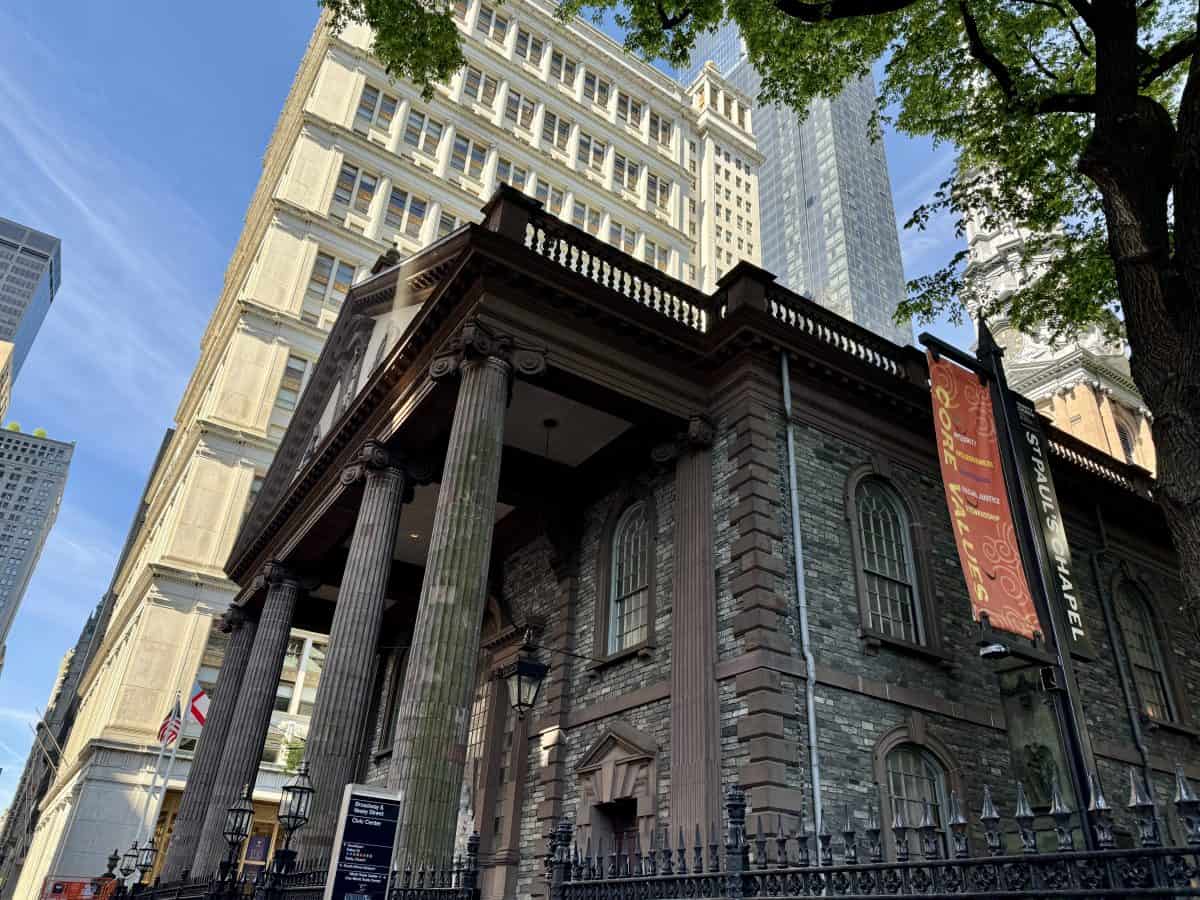
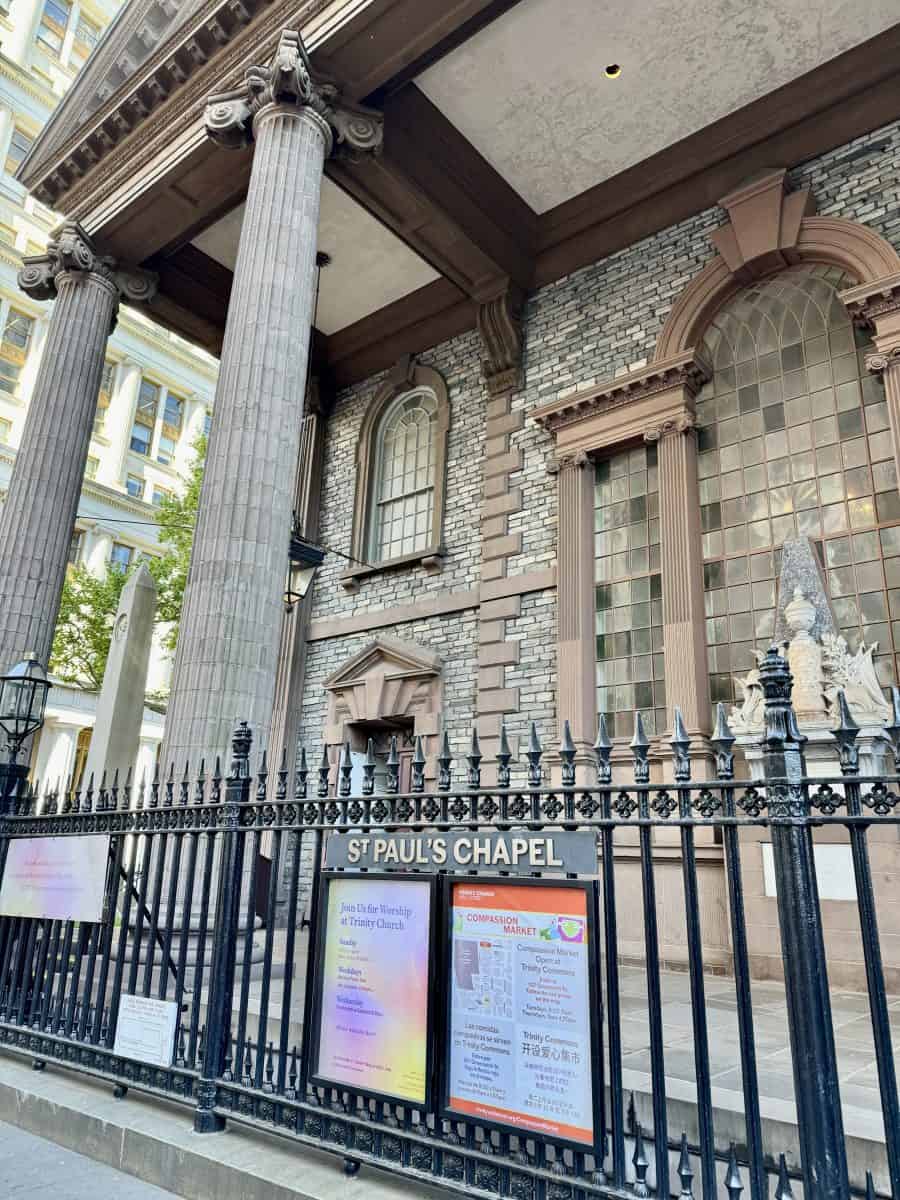
St. Paul's Chapel in NYC

Travel Tips:

  • Trinity Church and its Churchyard are open from 8:30am-4pm. Pay attention to the schedule for Sundays masses and outreach programs- check here for up to date information on Trinity Church and check here for up to date information on St. Paul’s Chapel.
  • Enter Trinity Church via the main gate on Broadway at Wall Street and St Paul’s Chapel via 209 Broadway.
  • Visitors must pass through a security check to enter the grounds of both churches.
  • Public restrooms are located inside both churches.
  • Note the Trinity Commons Building across the street (with a skywalk from the Churchyard) is only open for staff. The Cafe on the main floor is open to the public Monday through Friday from 9am-3pm.
  • Good options for a snack are Liberty Bagels and Whole Foods near Trinity Church, and Shake Shack and Pret a Manger near St. Paul’s Chapel
  • Be sure to download the virtual tour app for lots of fun info about both churches.
  • Plan on 30-45 minutes to explore Trinity Church and another 20 minutes to explore St Paul’s Chapel.

Highlights of Exploring Trinity Church:

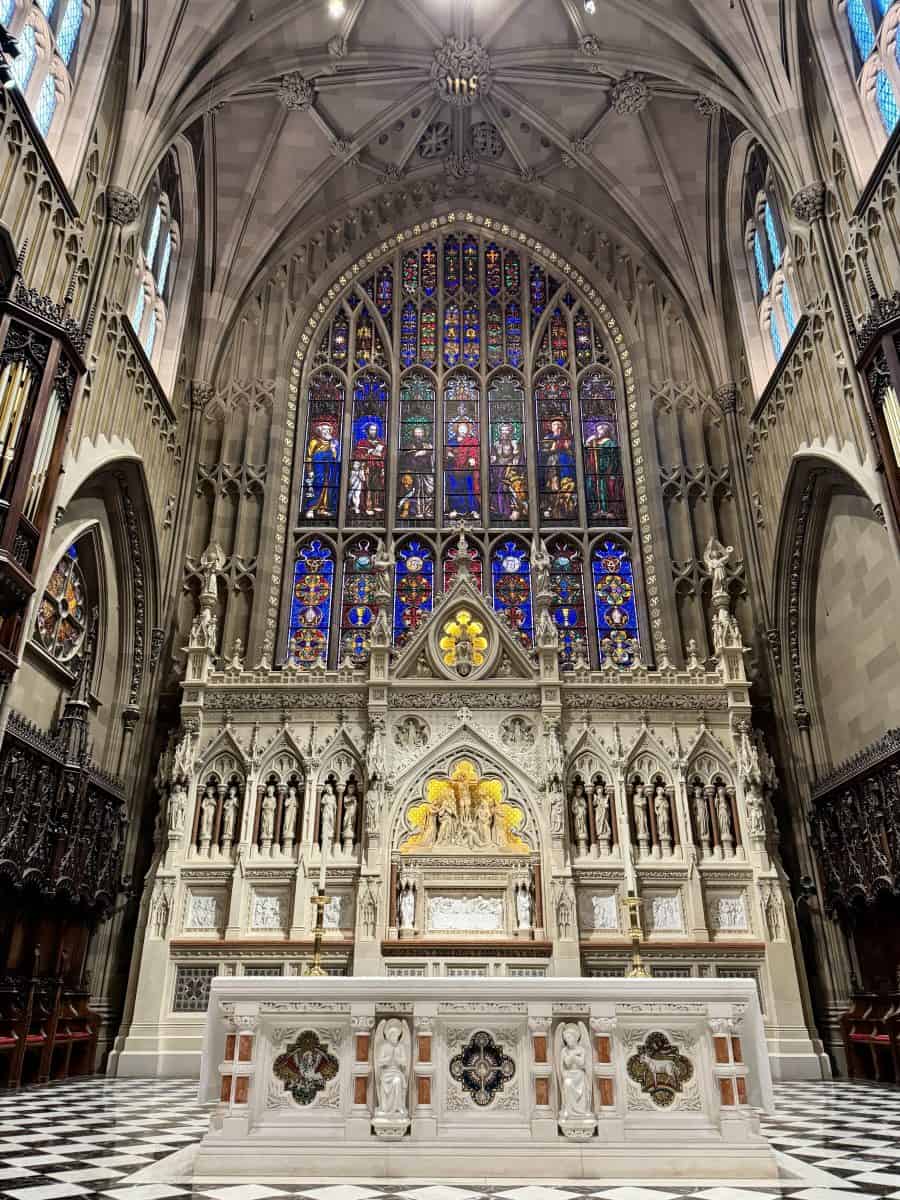
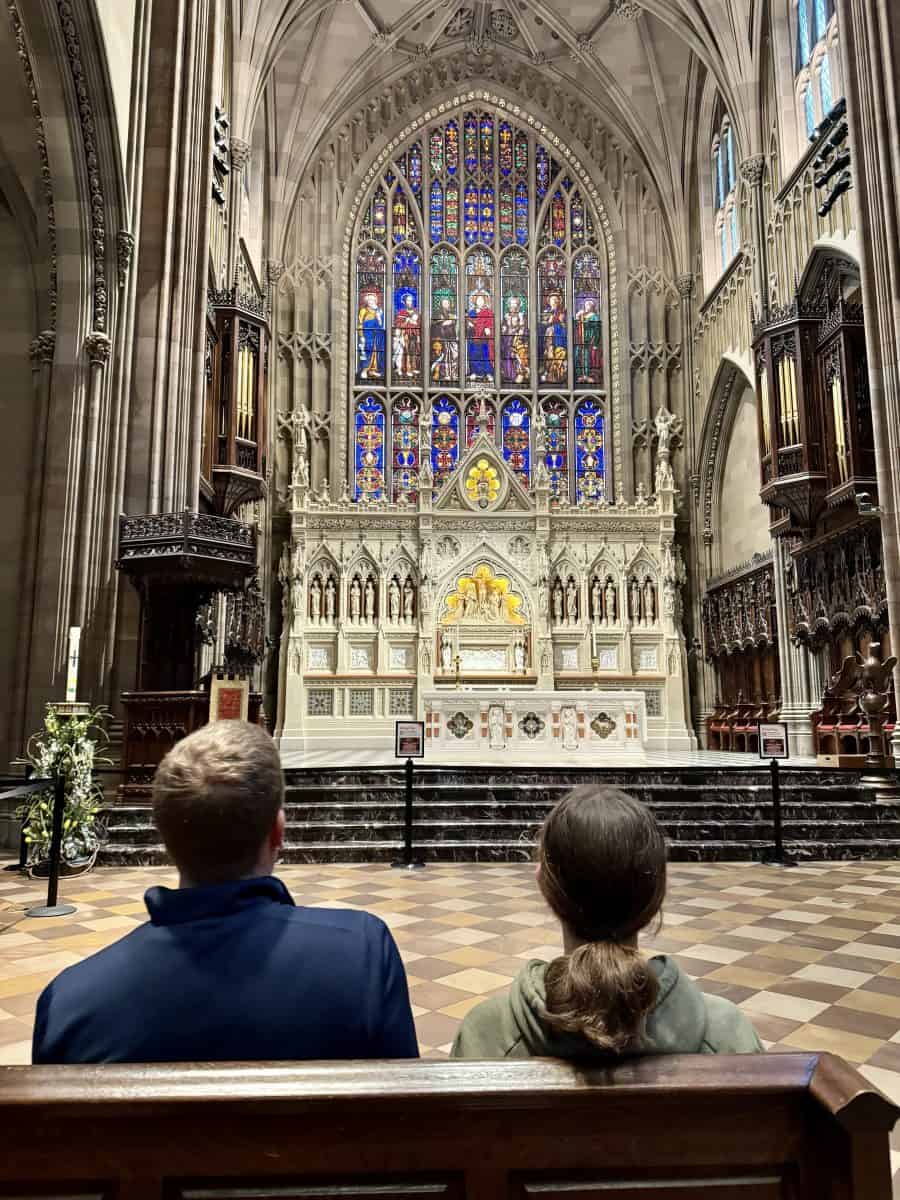
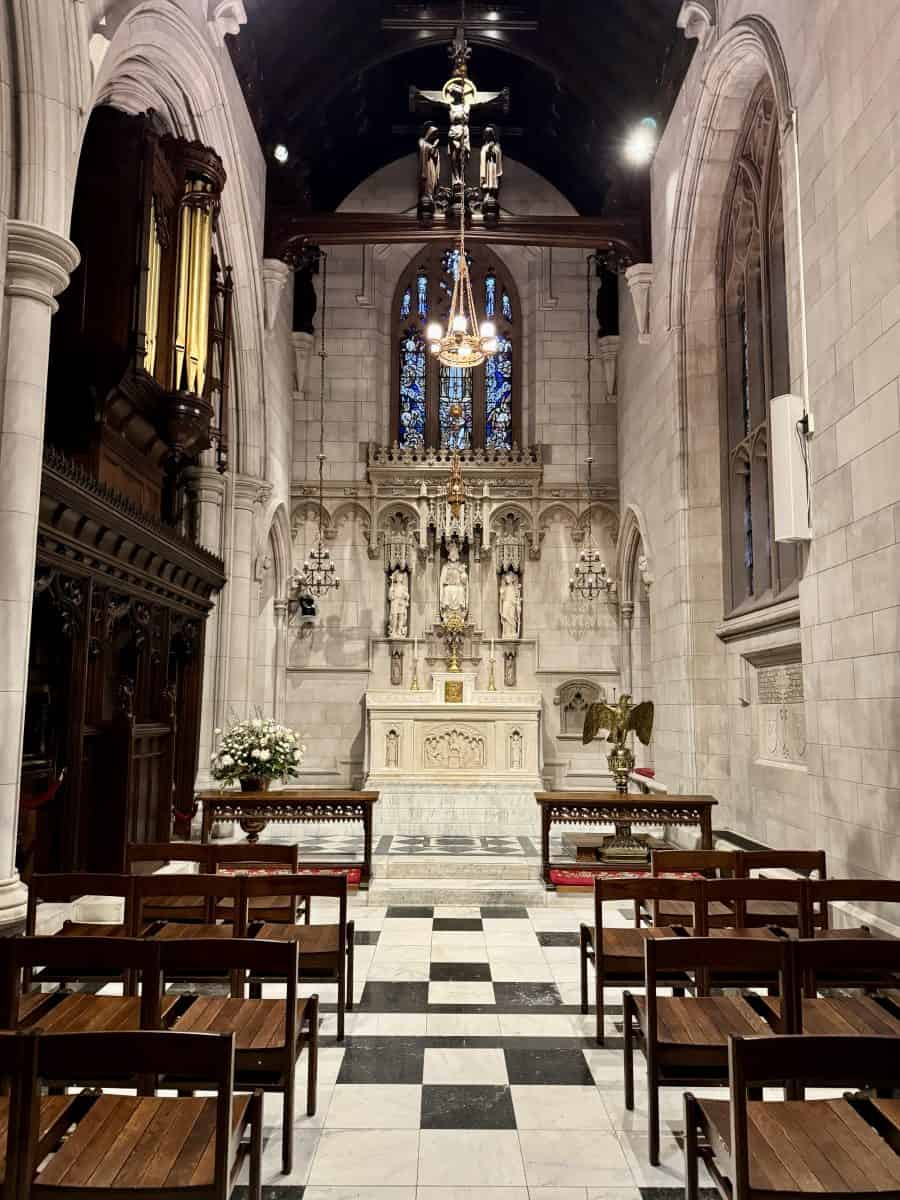
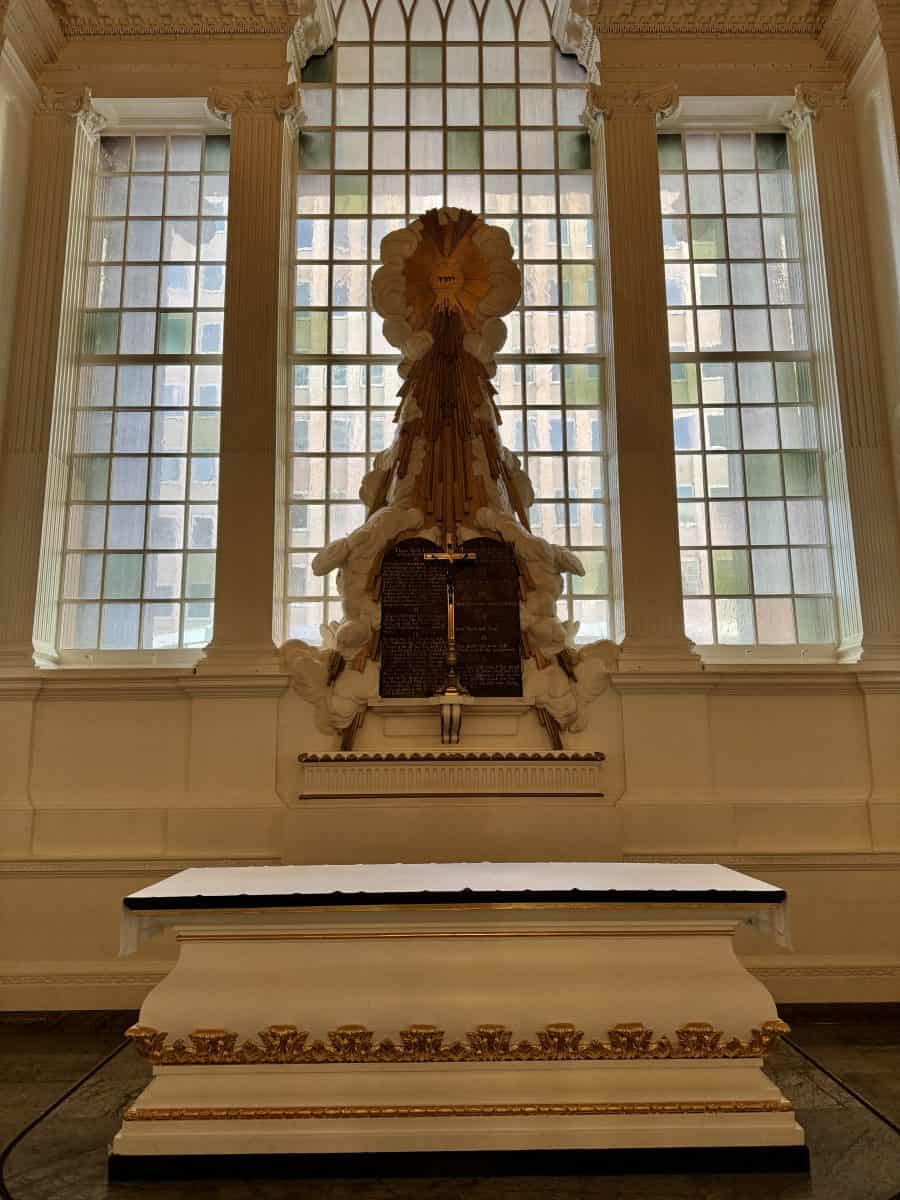
  1. The altar of the Trinity Church. Note the Astor Reredos, a marble carved screen behind the altar, given by John Jacob Astor III in memory of his father. The sanctuary of the church is a National Historic Landmark.
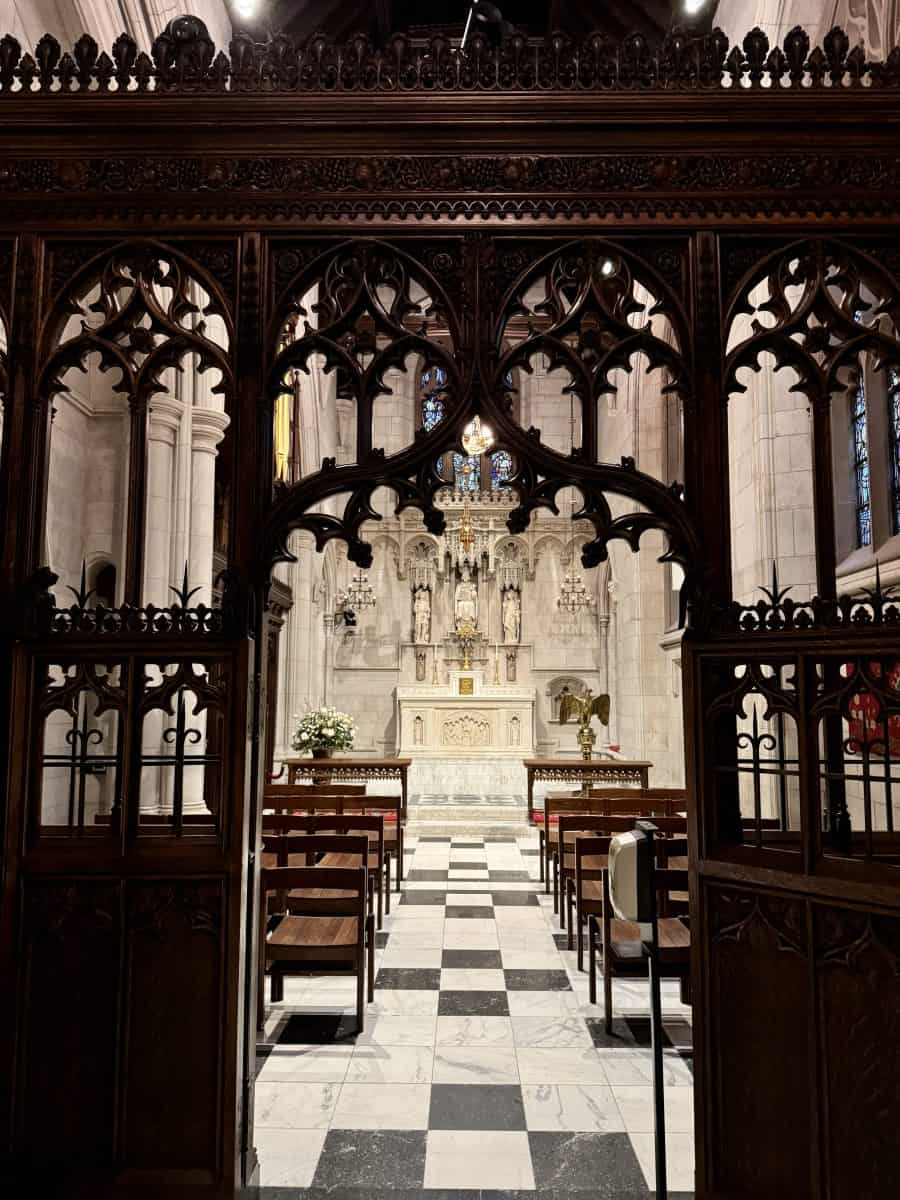
  2. The Chapel of All Saints (to the right of the main altar), which has about 40 seats and a smaller altar.
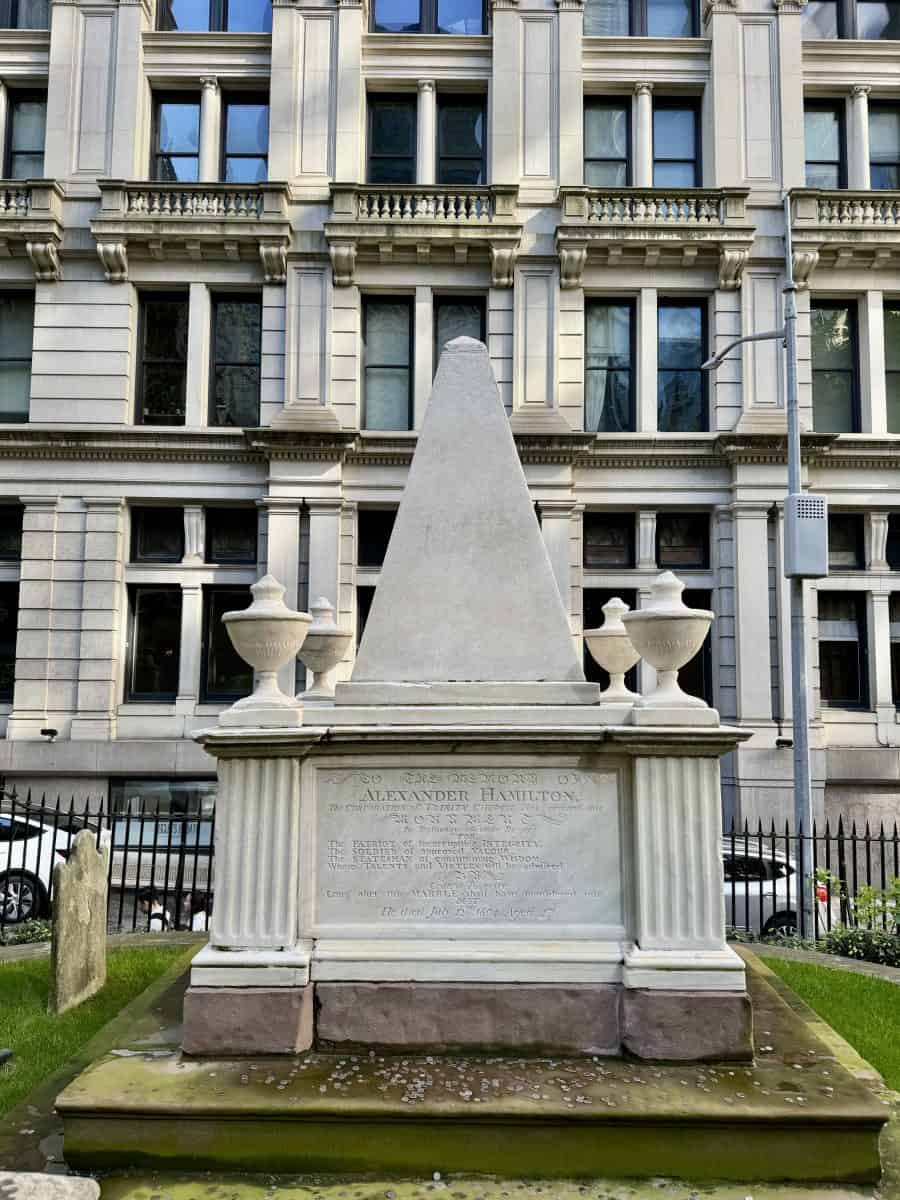
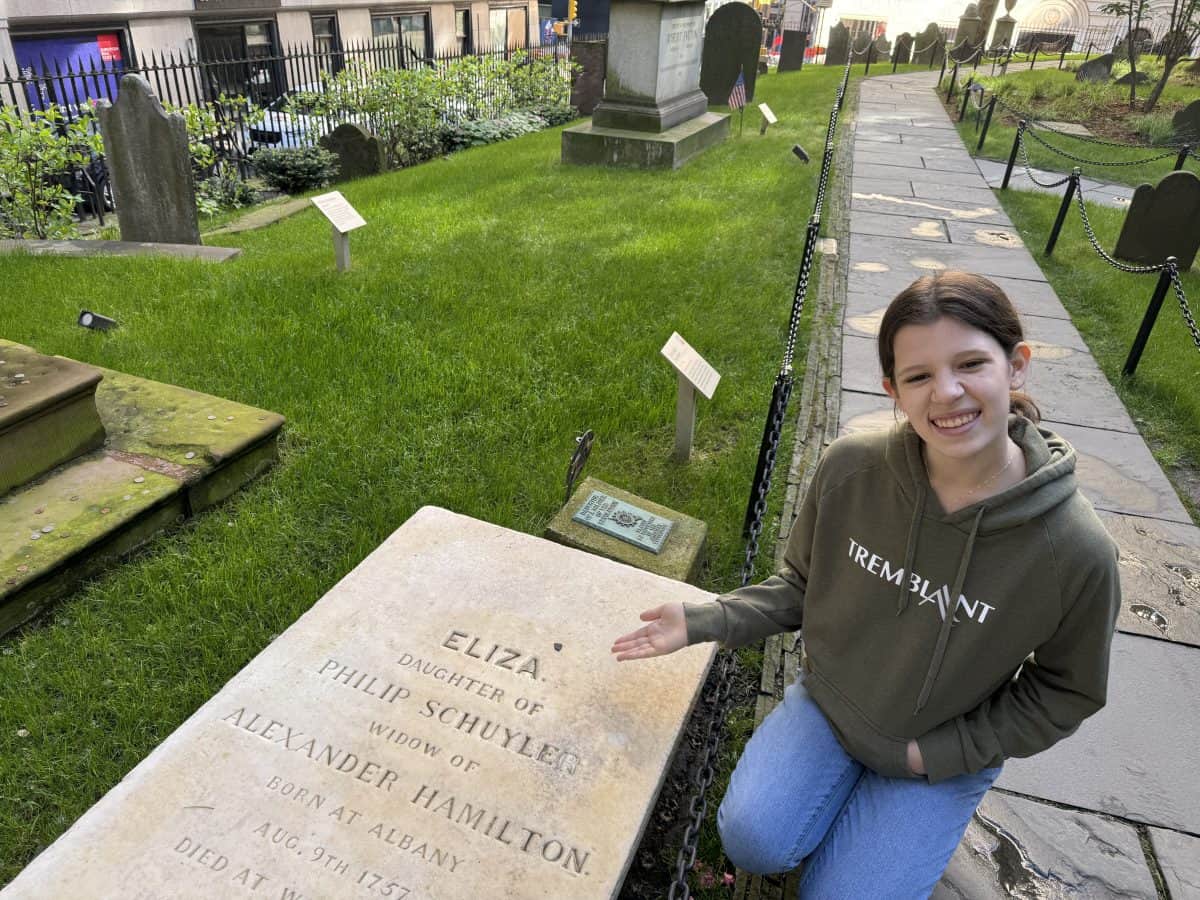
  3. The South Side of the Churchyard, which includes the tomb of Alexander Hamilton (First Secretary of the Treasury) and his wife Elizabeth Schuyler Hamilton, and their daughter Angelica Schuyler Church. Toss a coin on Hamilton’s tomb for good luck.
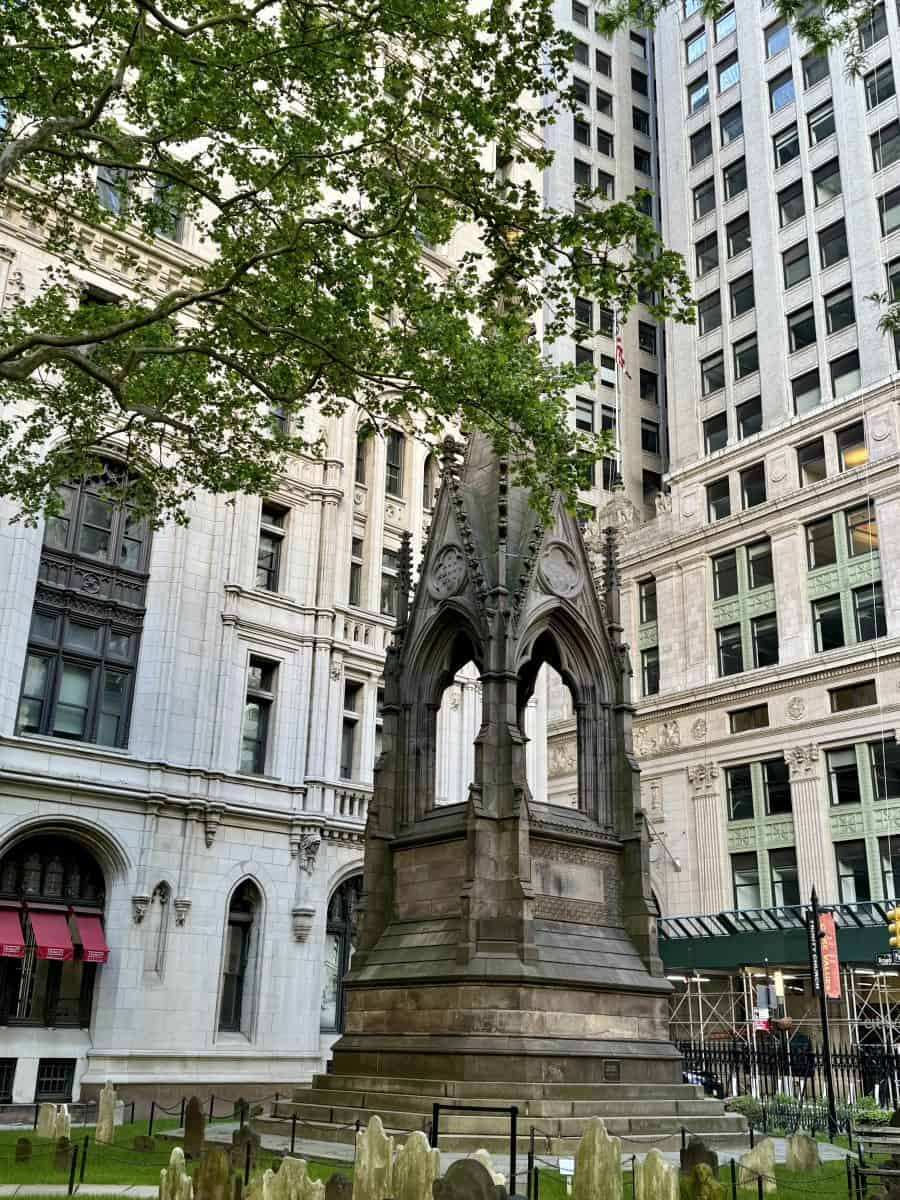
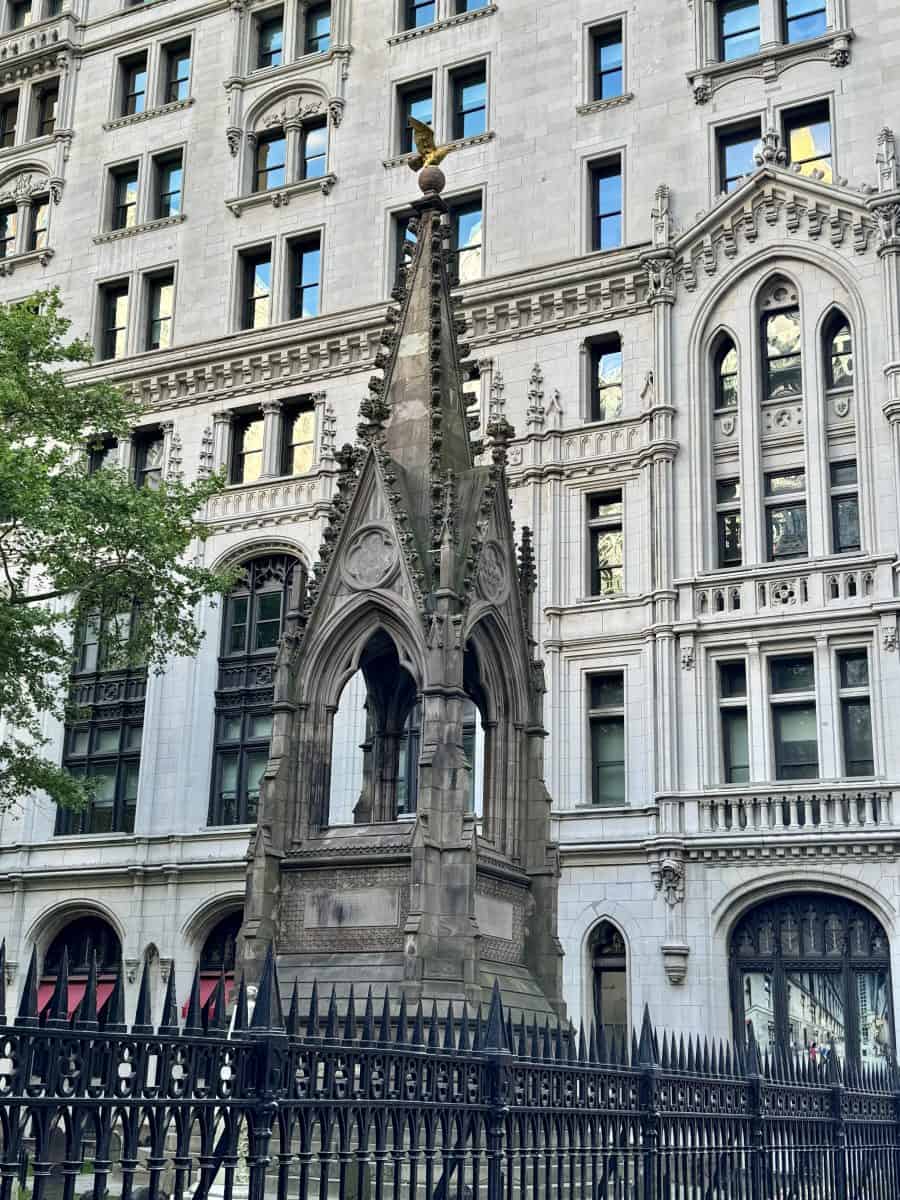
  4. The North Side of the Churchyard, which includes the Soldiers’ Monument of 1852 (honoring Revolutionary War soldiers held in captivity and thought to be buried on church grounds)
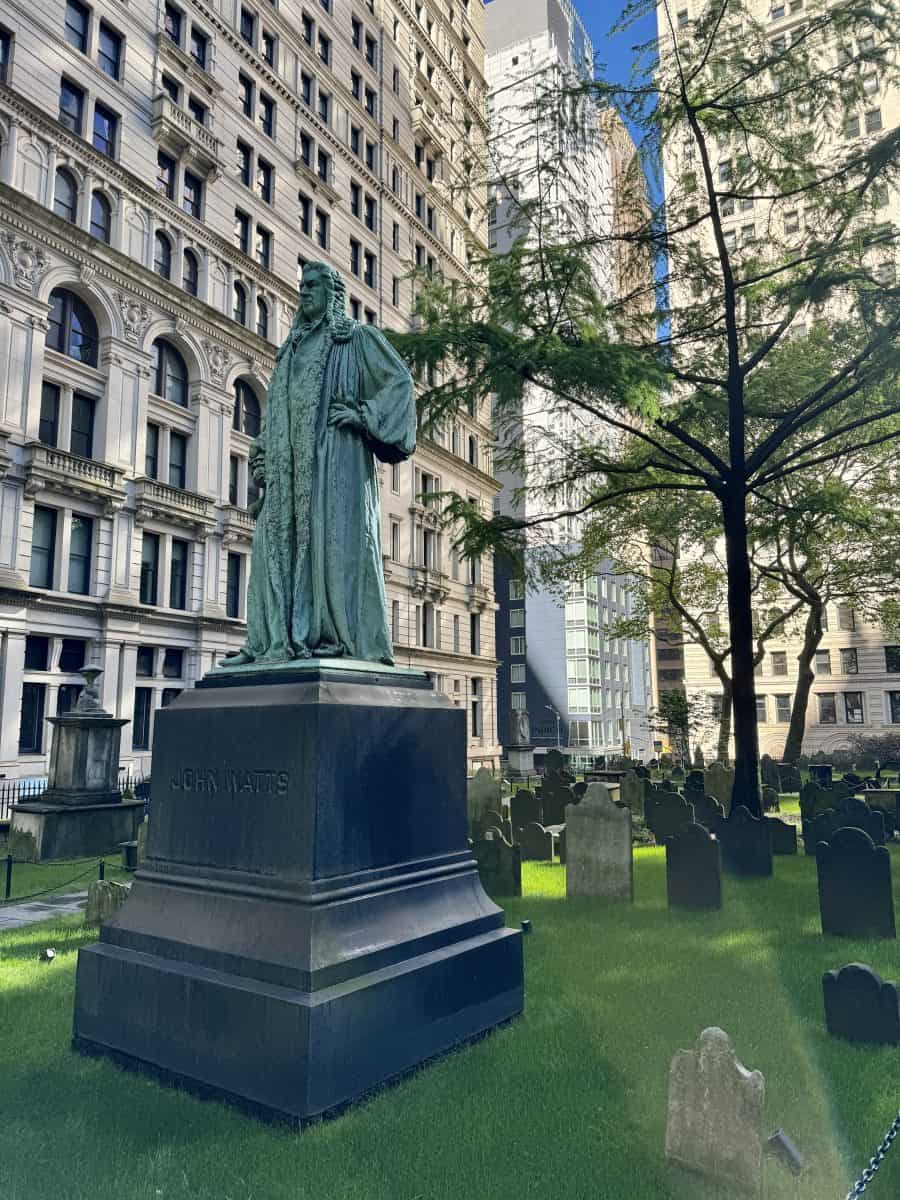
  5. The Churchyard also includes a statue of Honorable John Watts (a member of the Third US Congress), and the tomb of William Bradford (printer).
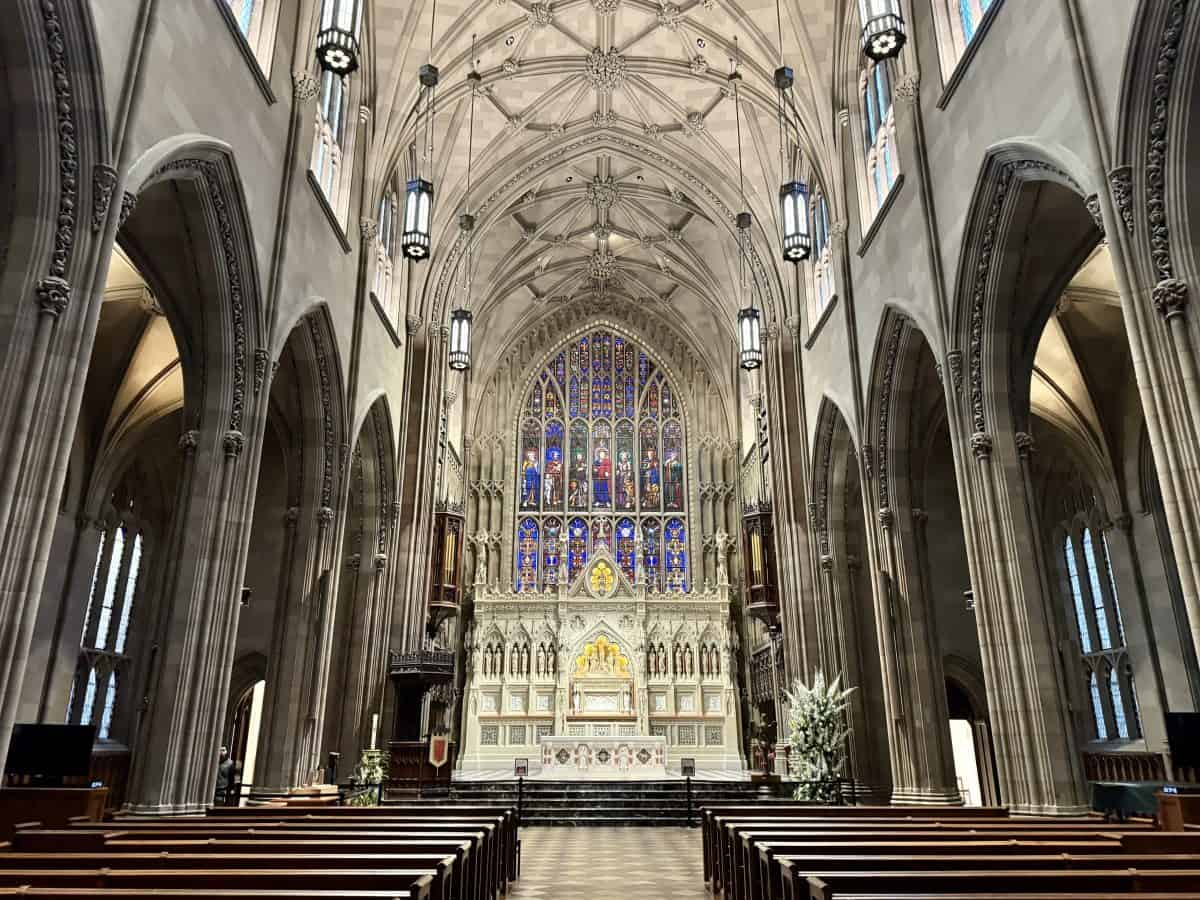
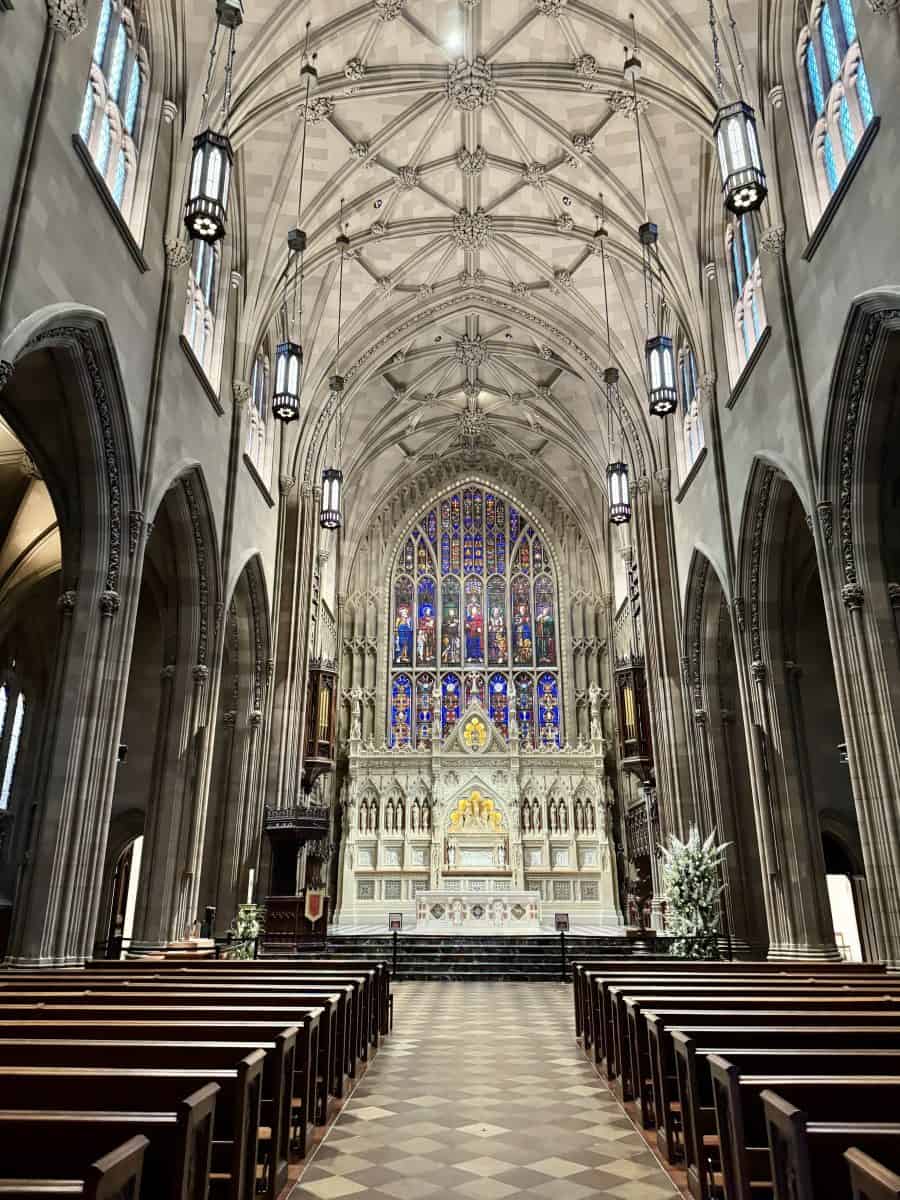
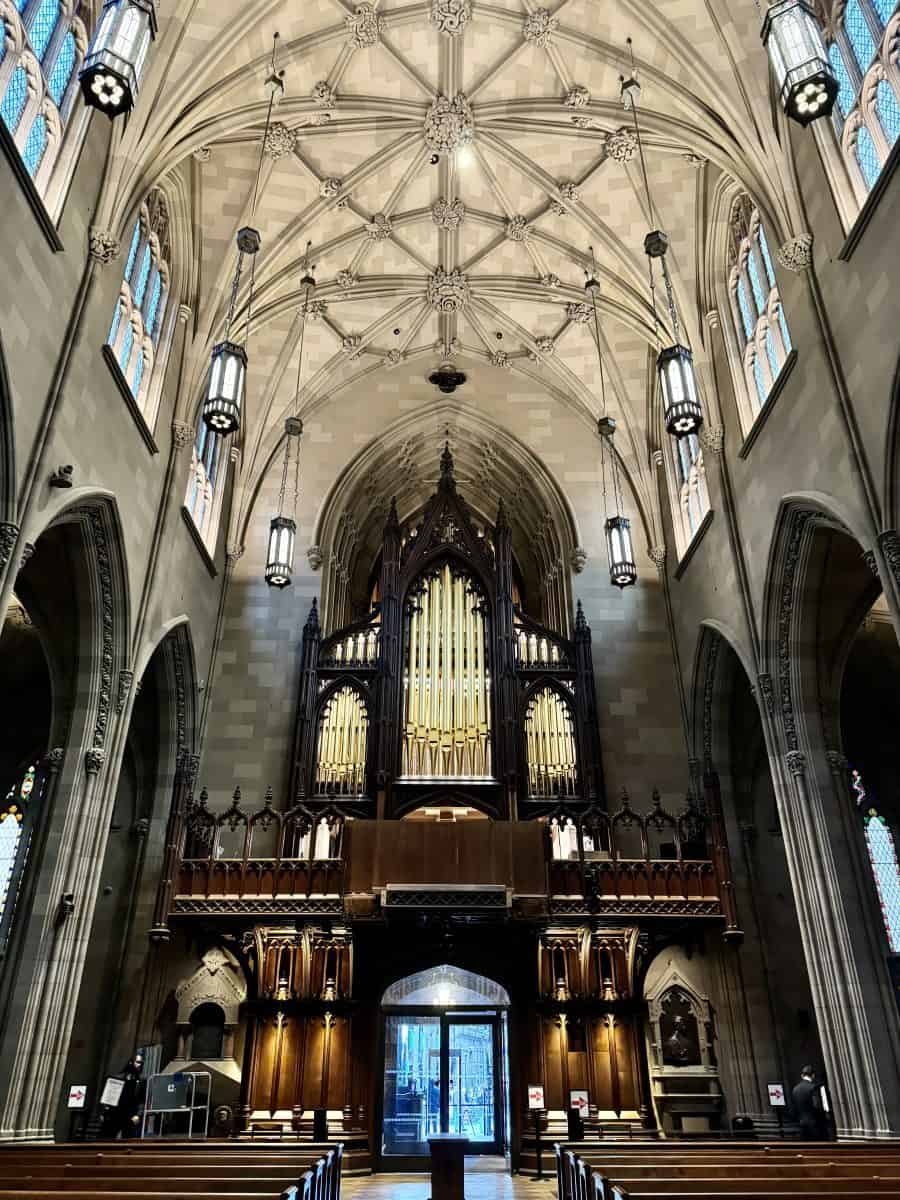
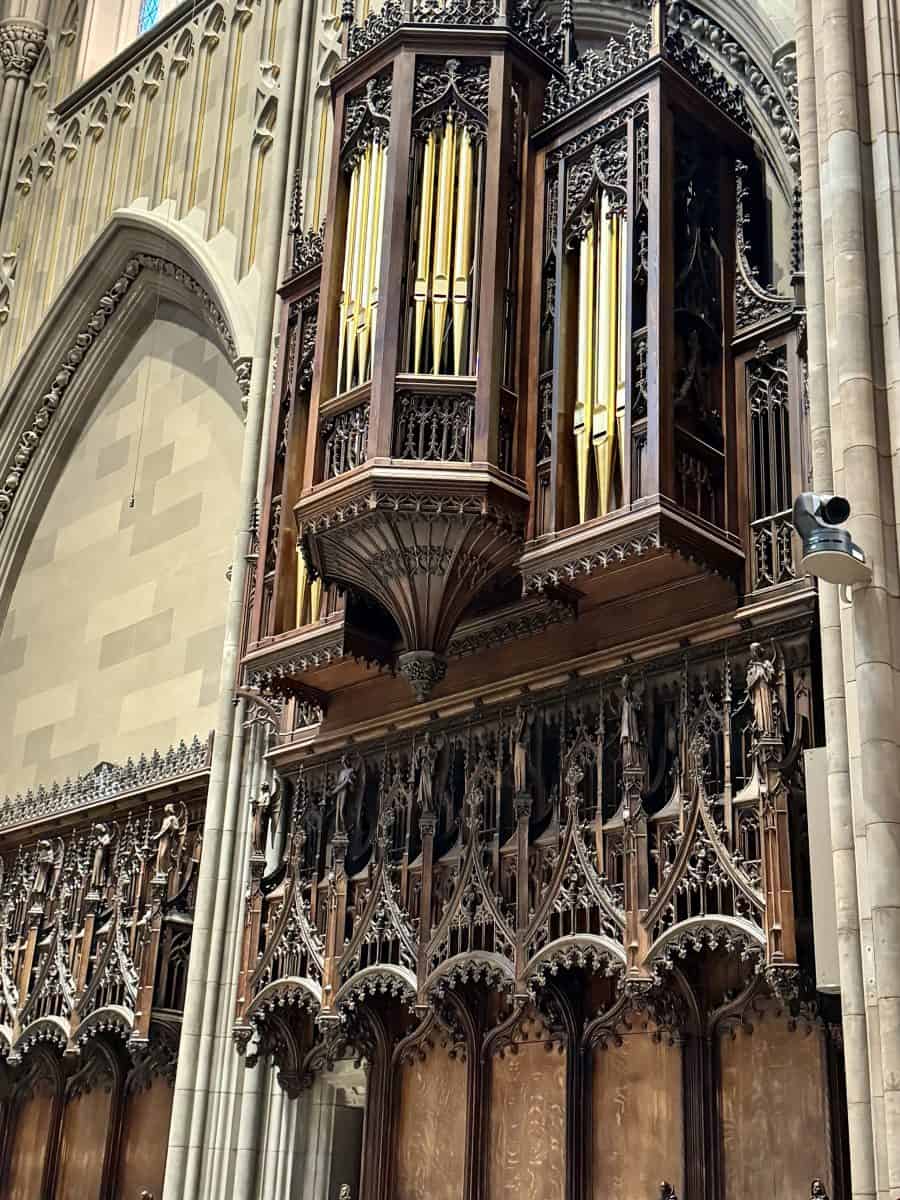
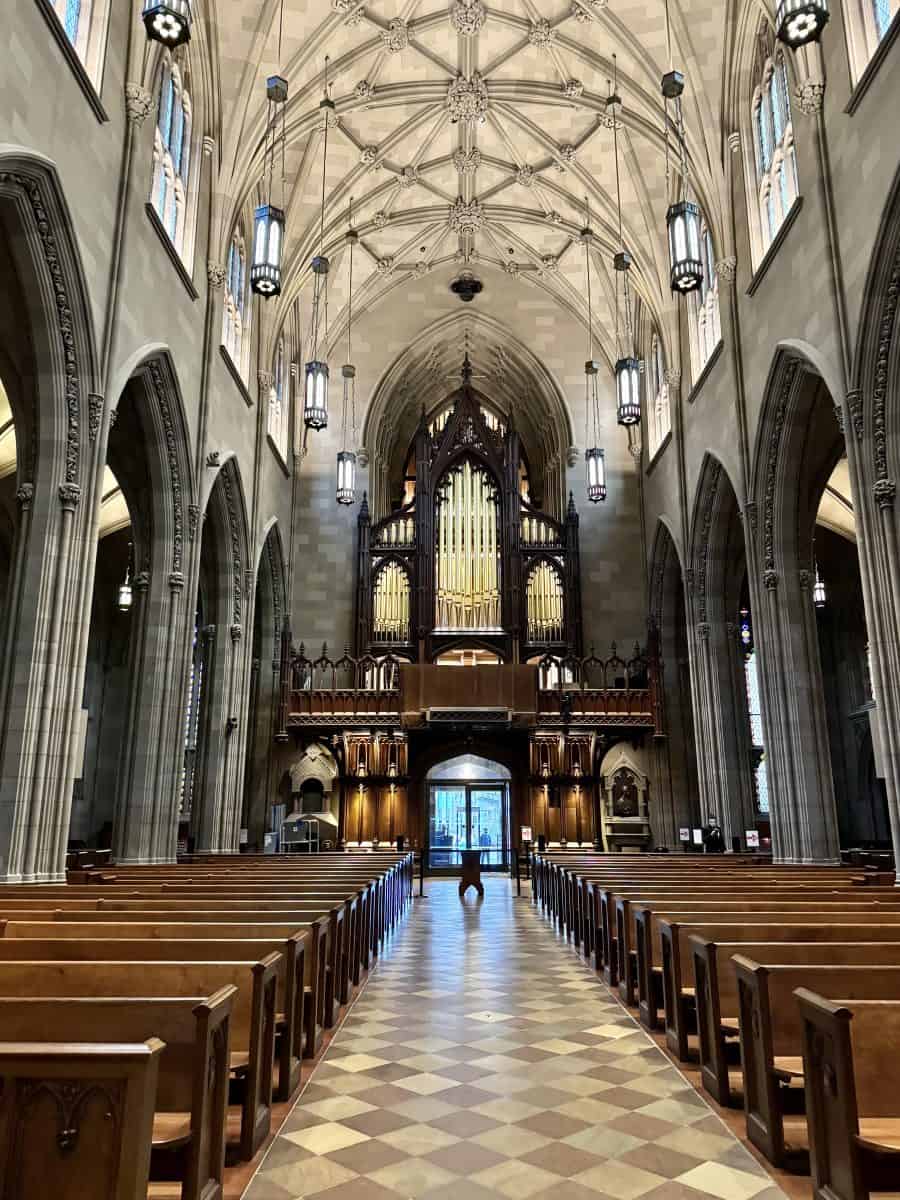
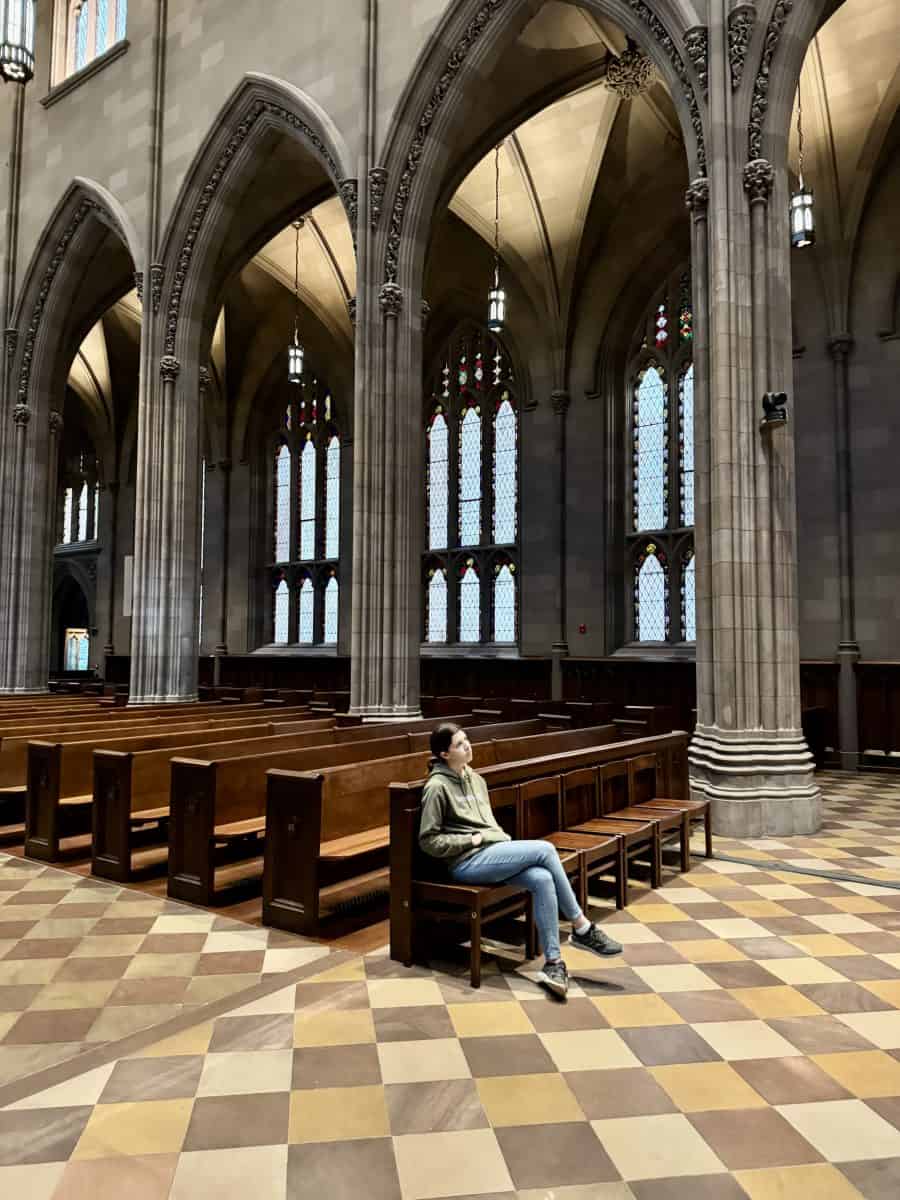
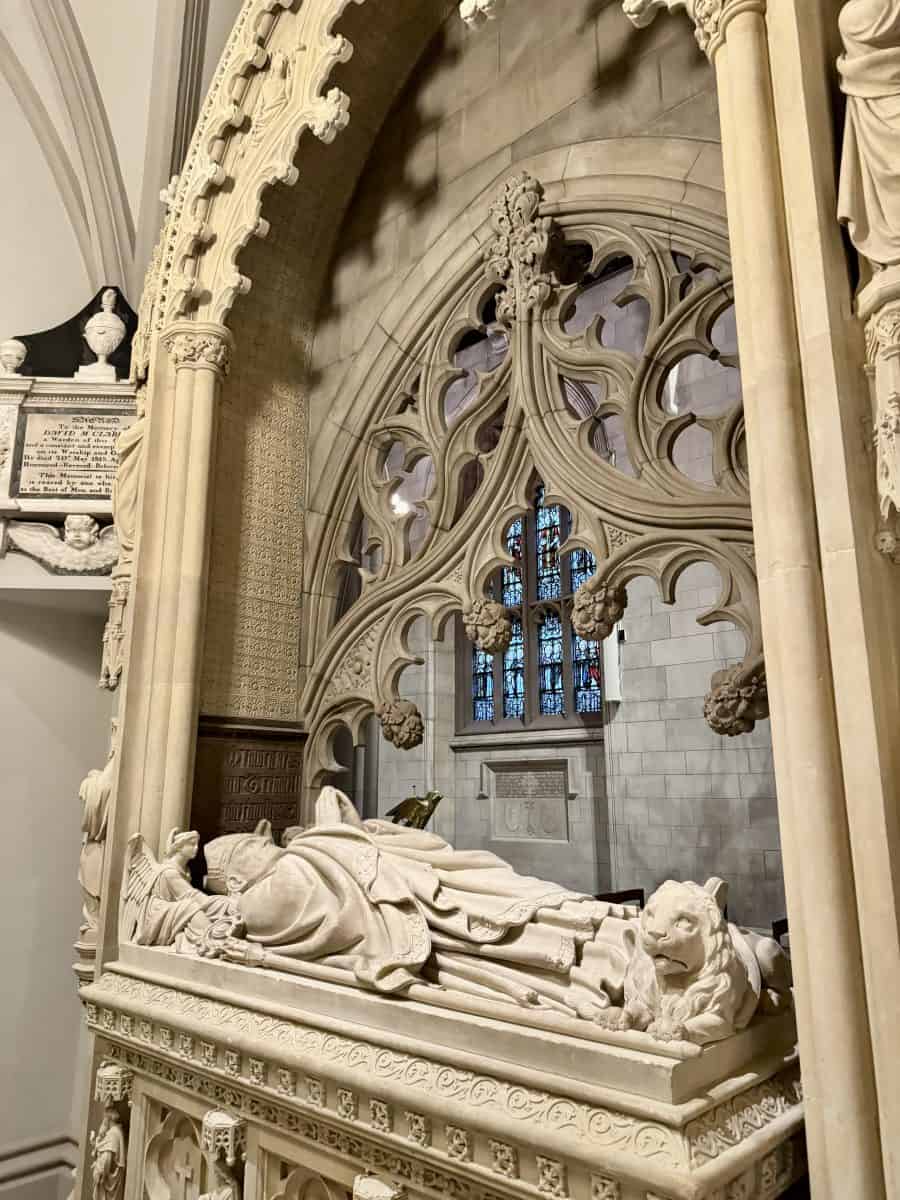
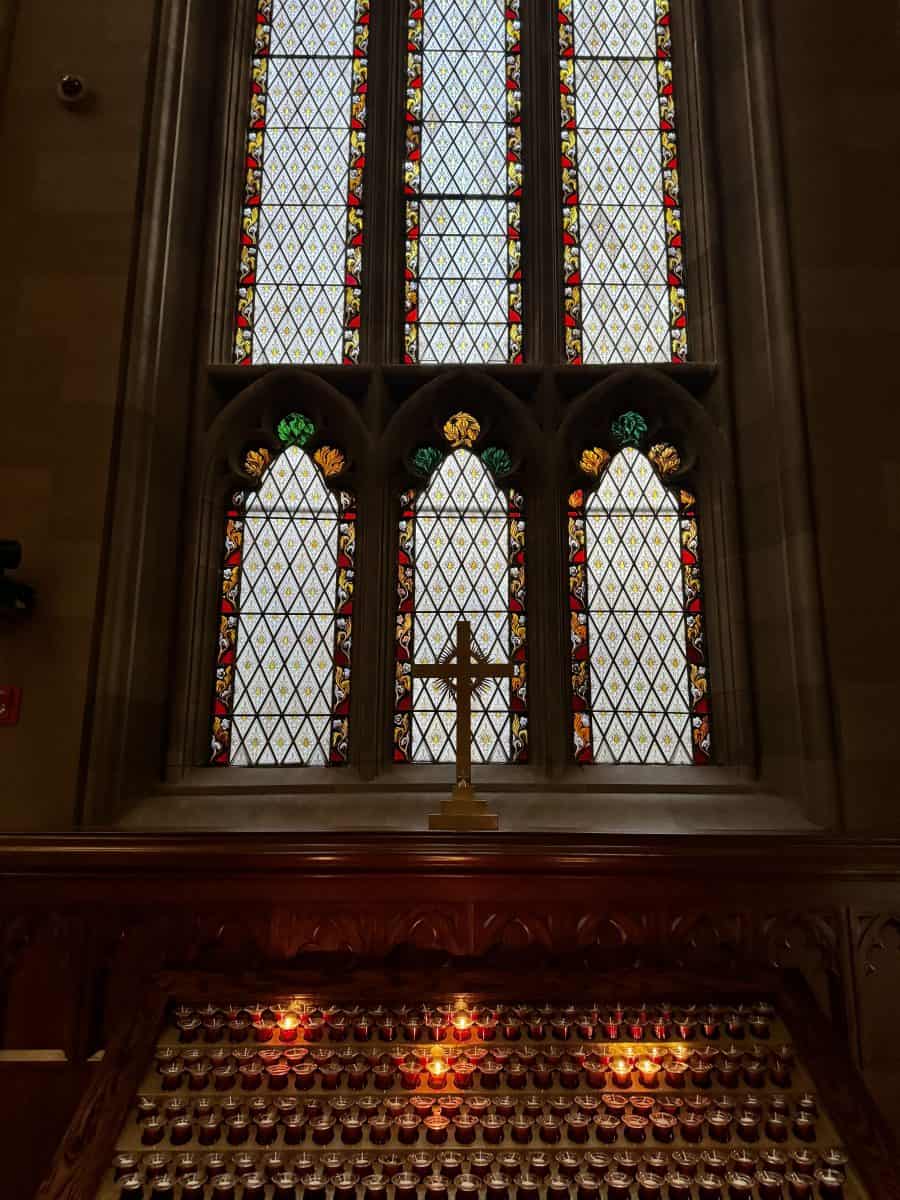
inside Trinity Church in NYC

Would you like to save this?
We'll email this post to you, so you can come back to it later.

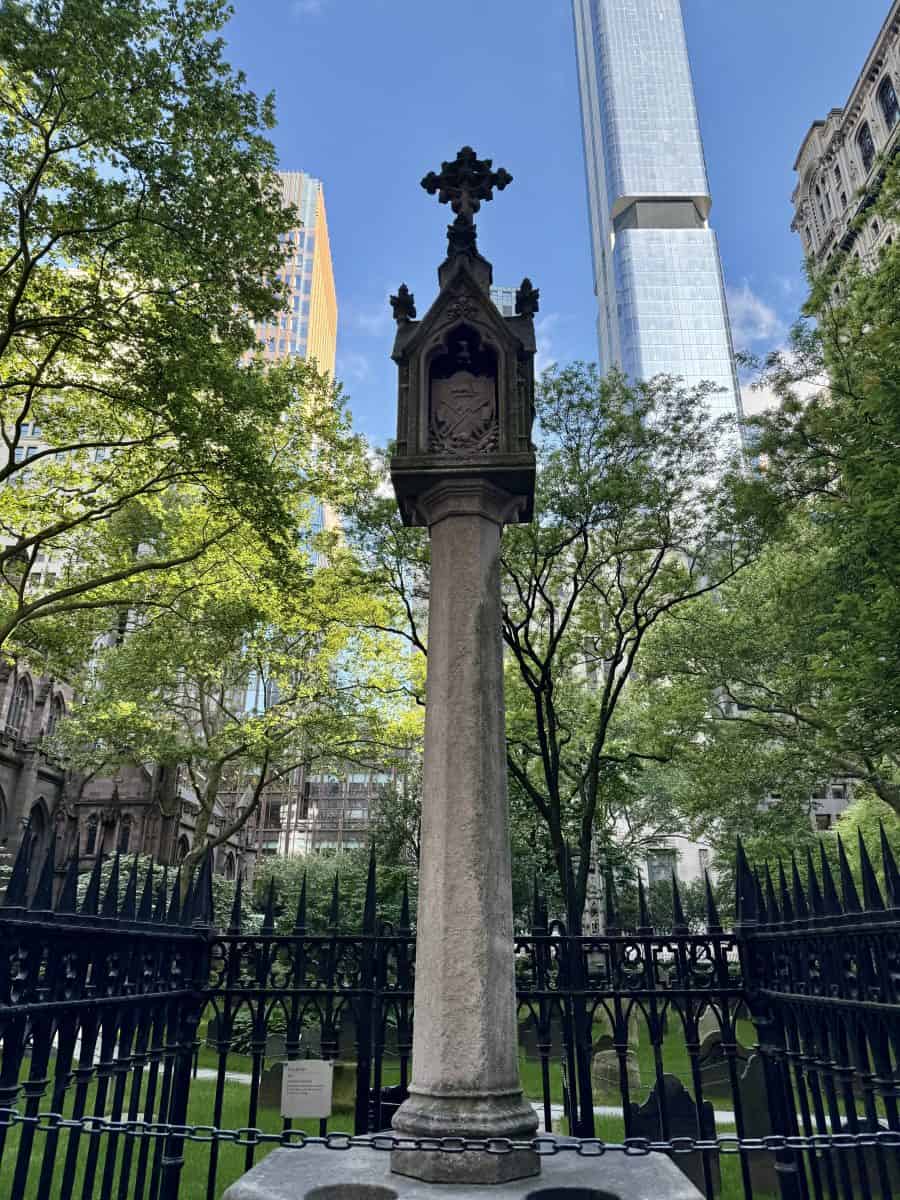
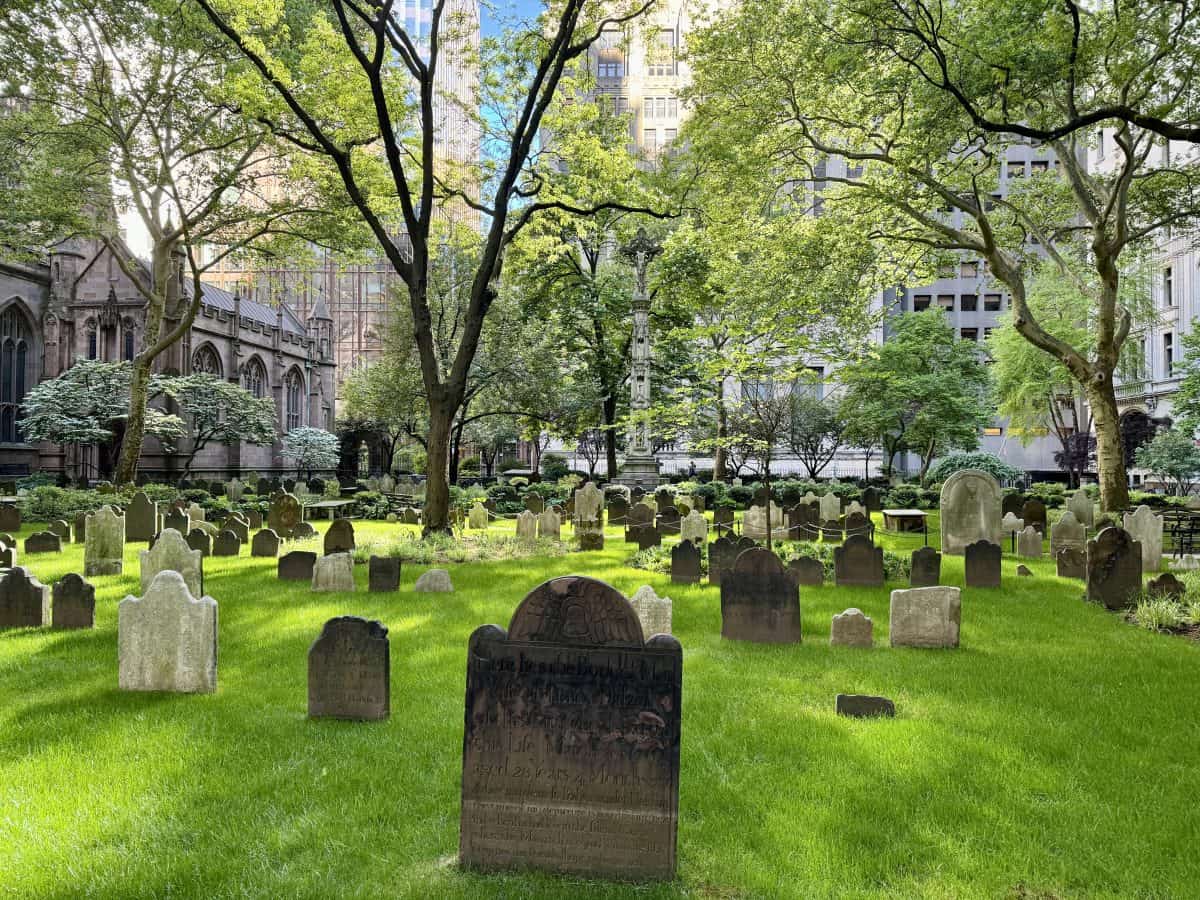
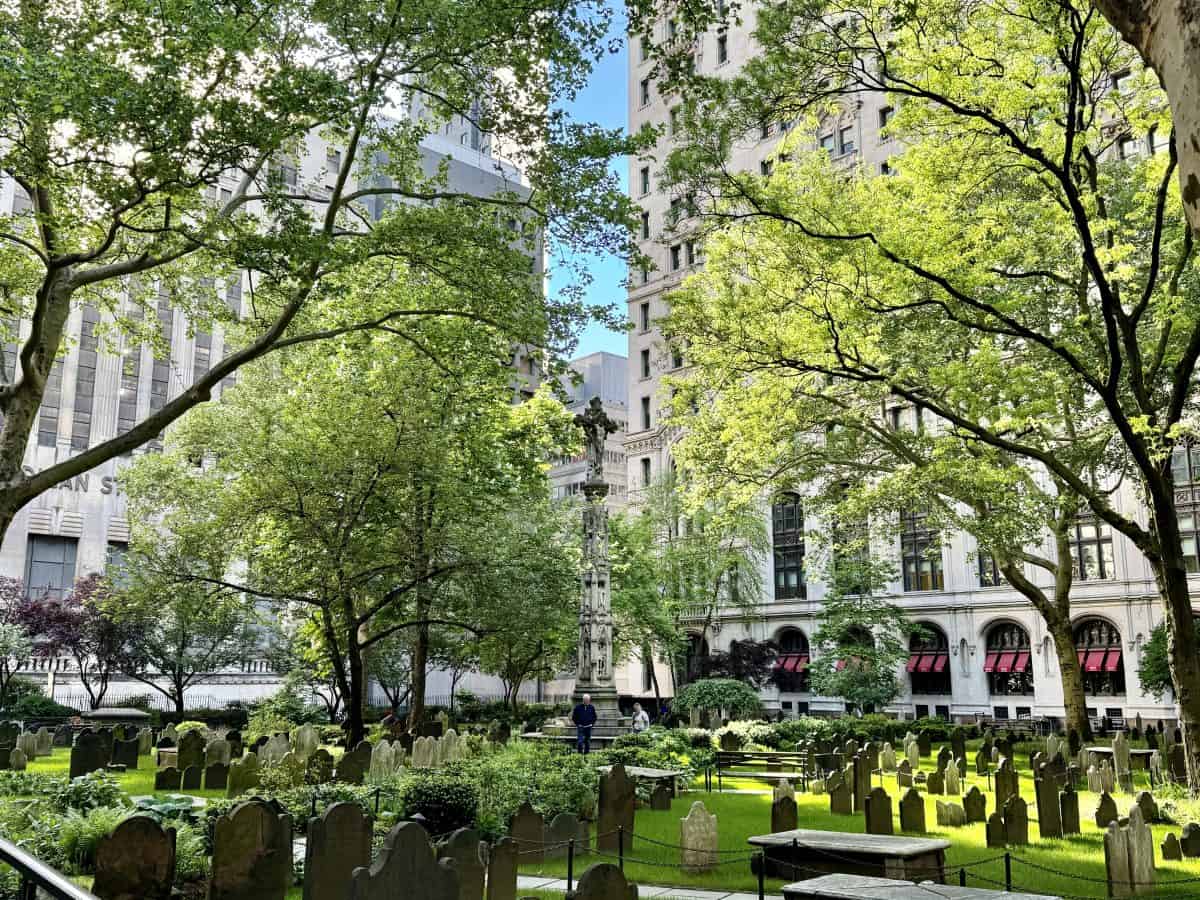
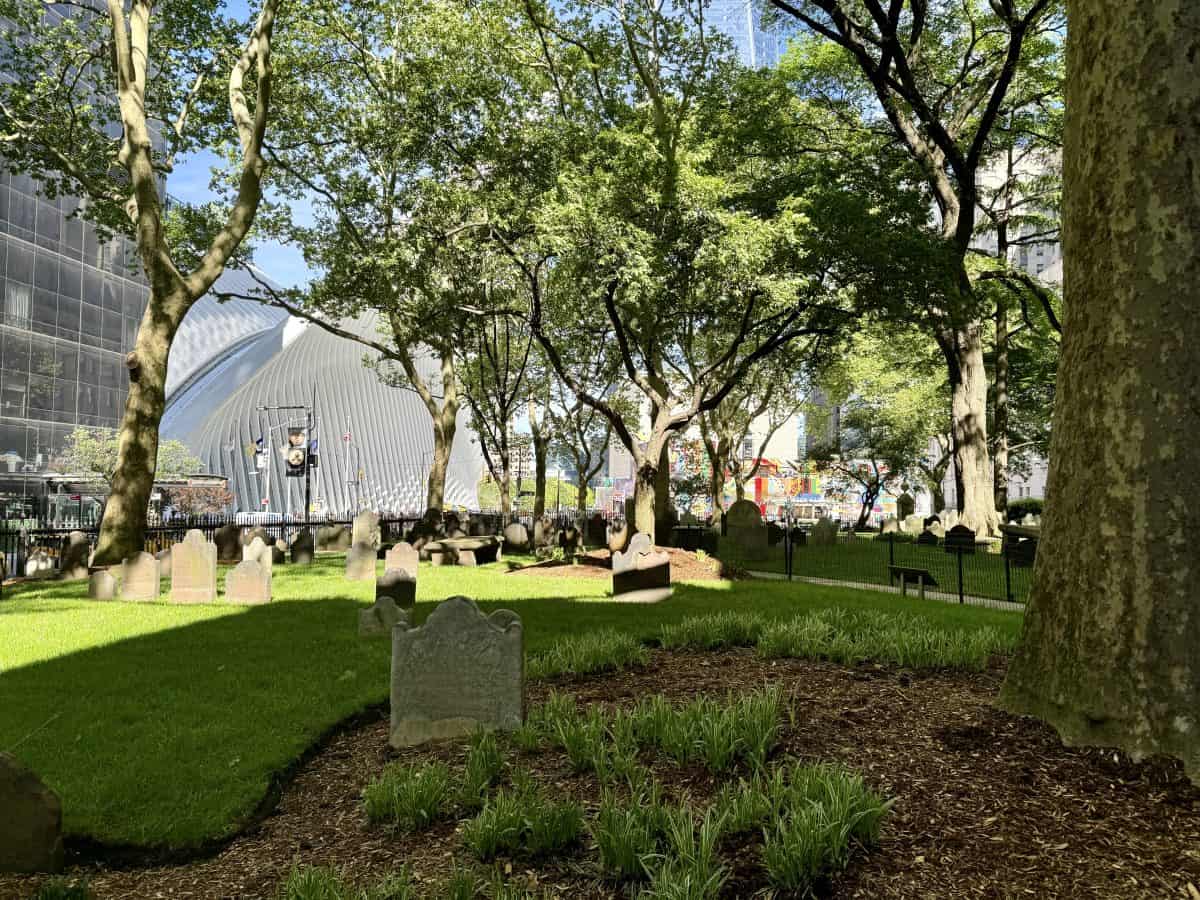
cemetery of Trinity Church in NYC

Highlights of Exploring St. Paul’s Chapel:

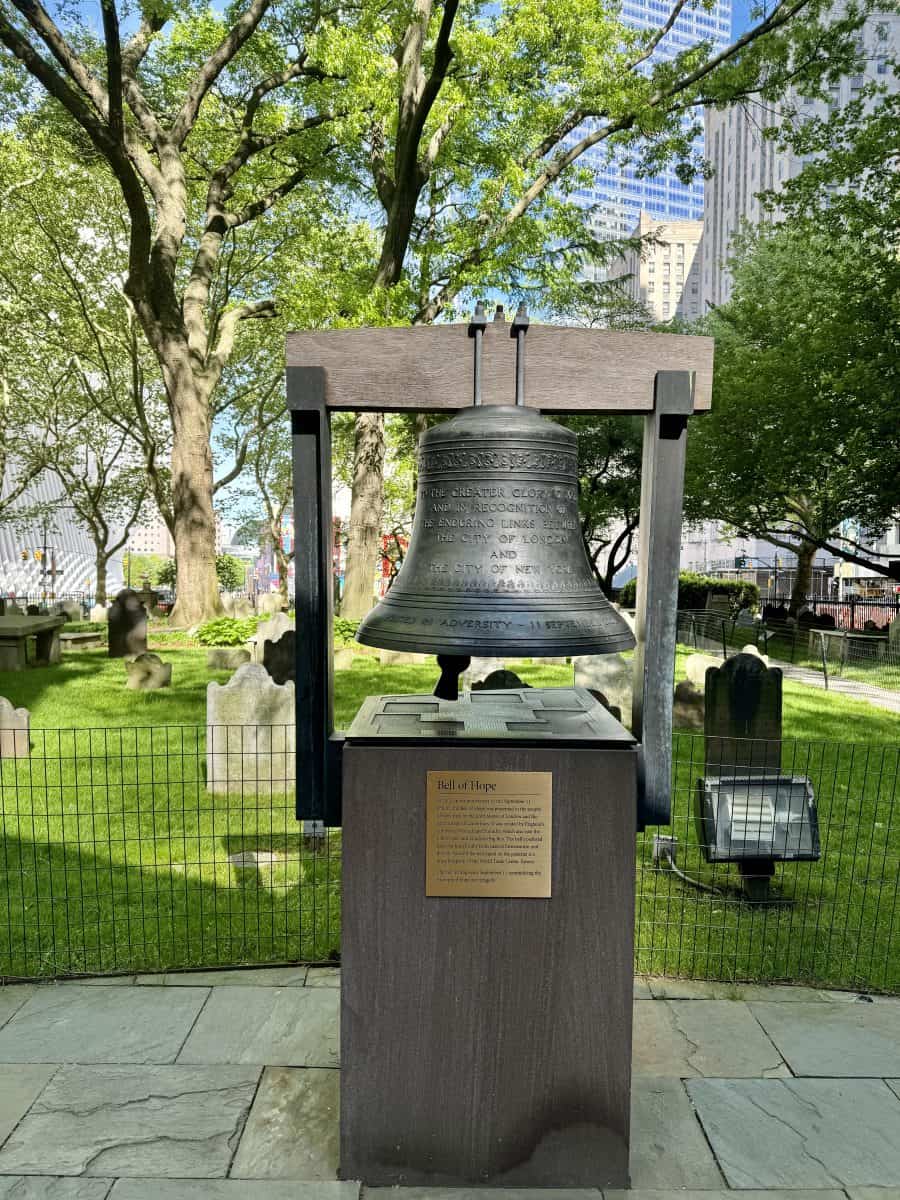
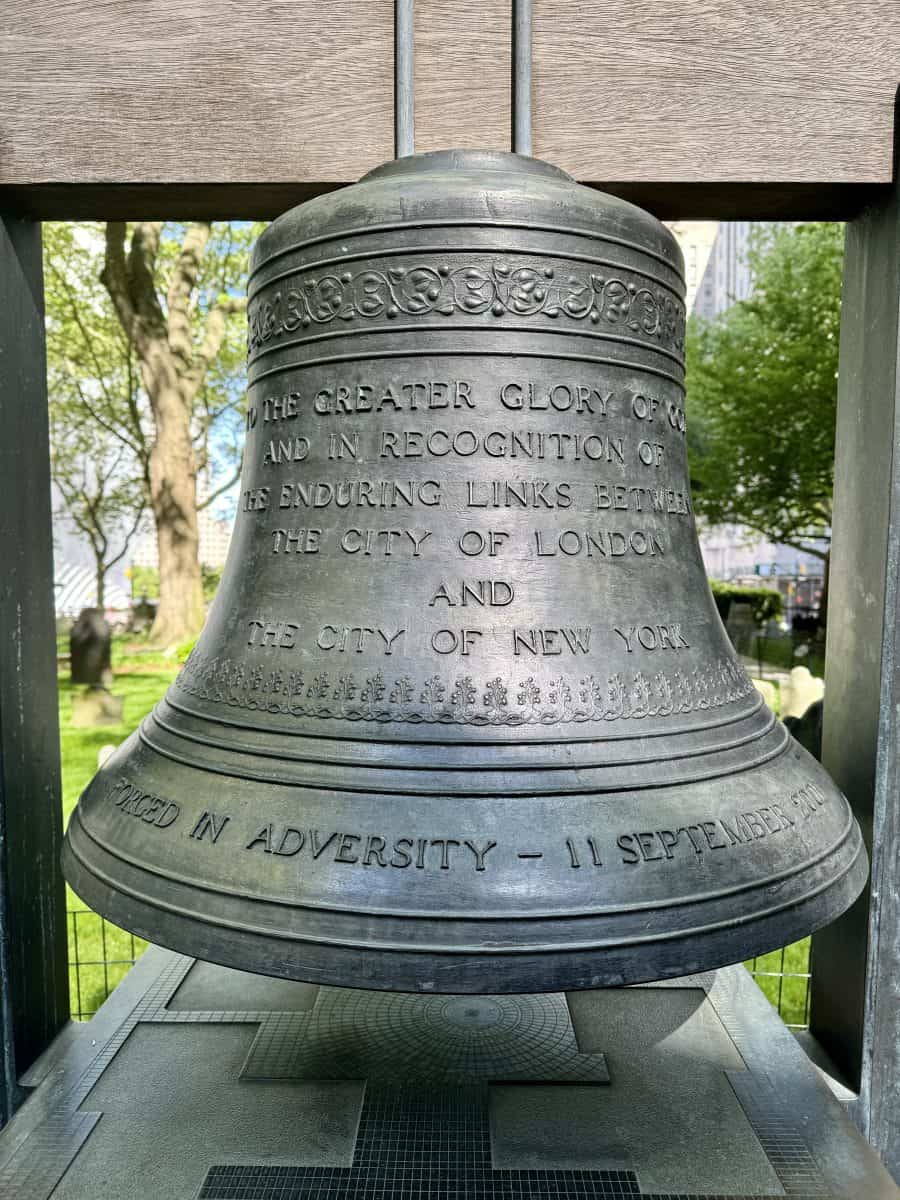
  1. The Bell of Hope, which was given by the Archbishop of Canterbury to the people of New York City on September 11, 2002, and is rung every year during September 11th commemorations. 
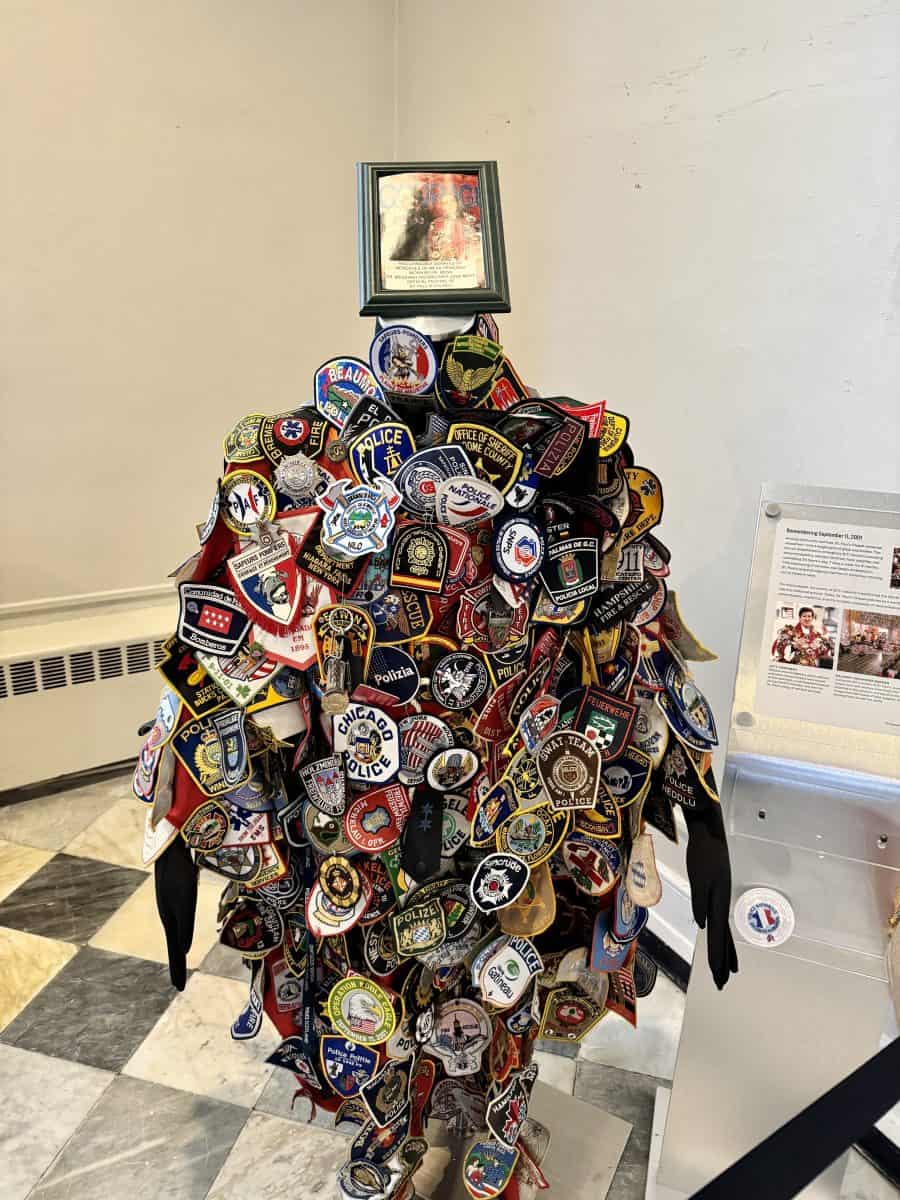
  2. The Vestment of Unity, made from patches from fire, police, and rescue workers departments from around the world, donated after the September 1th tragedy. St. Paul’s Chapel is located feet from the World Trade Center and was used 24/7 for over nine months after the attacks to house, feed, and support the greater community.
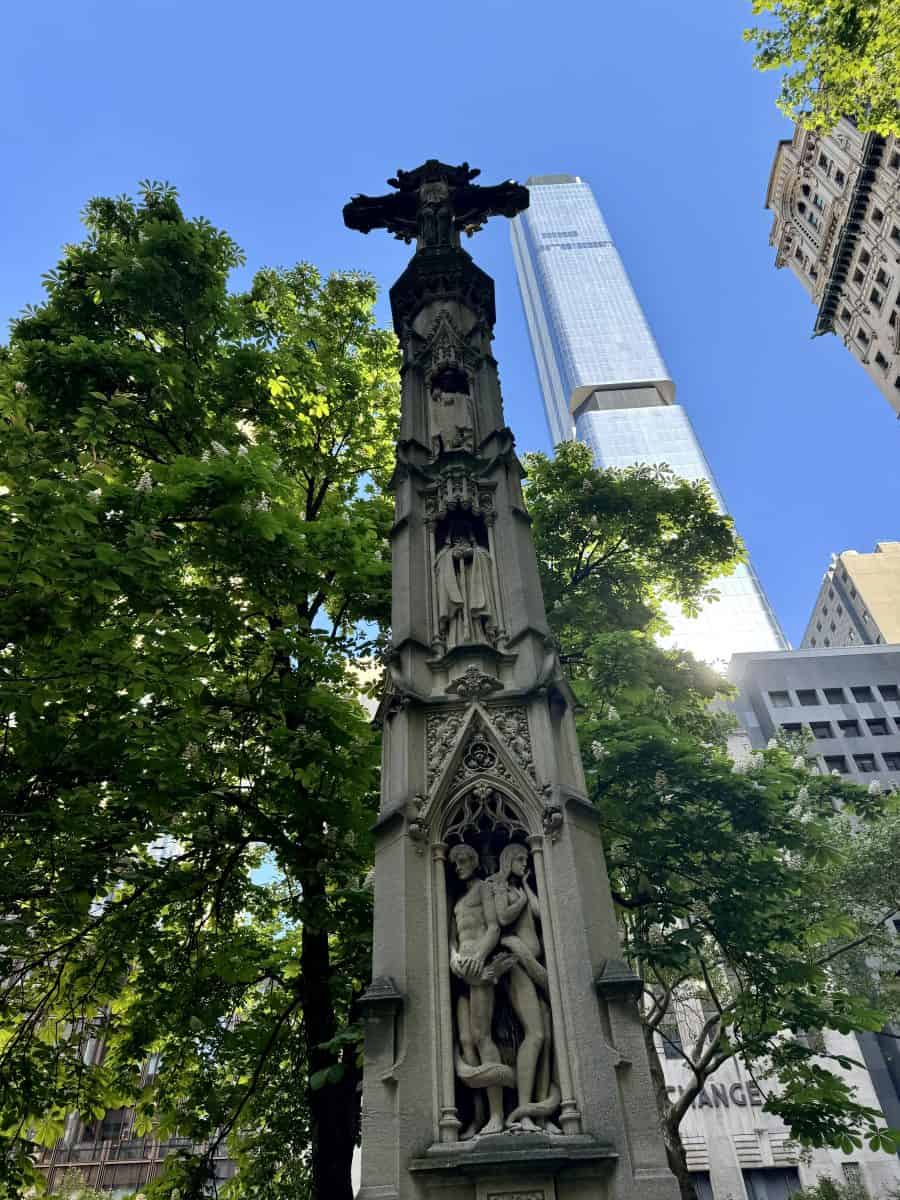
  3. Visit the memorial, located on the east porch facing Broadway,  honoring Brigadier General Richard Montgomery, the first Revolutionary War officer killed in 1775 while fighting in Quebec, who is buried under the monument. 
  4. The seven foot, 500 pound statue of St. Paul, originally displayed outside, was restored in 2016 and brought inside to be preserved. A resin replica now stands in the outdoor space, facing Broadway.
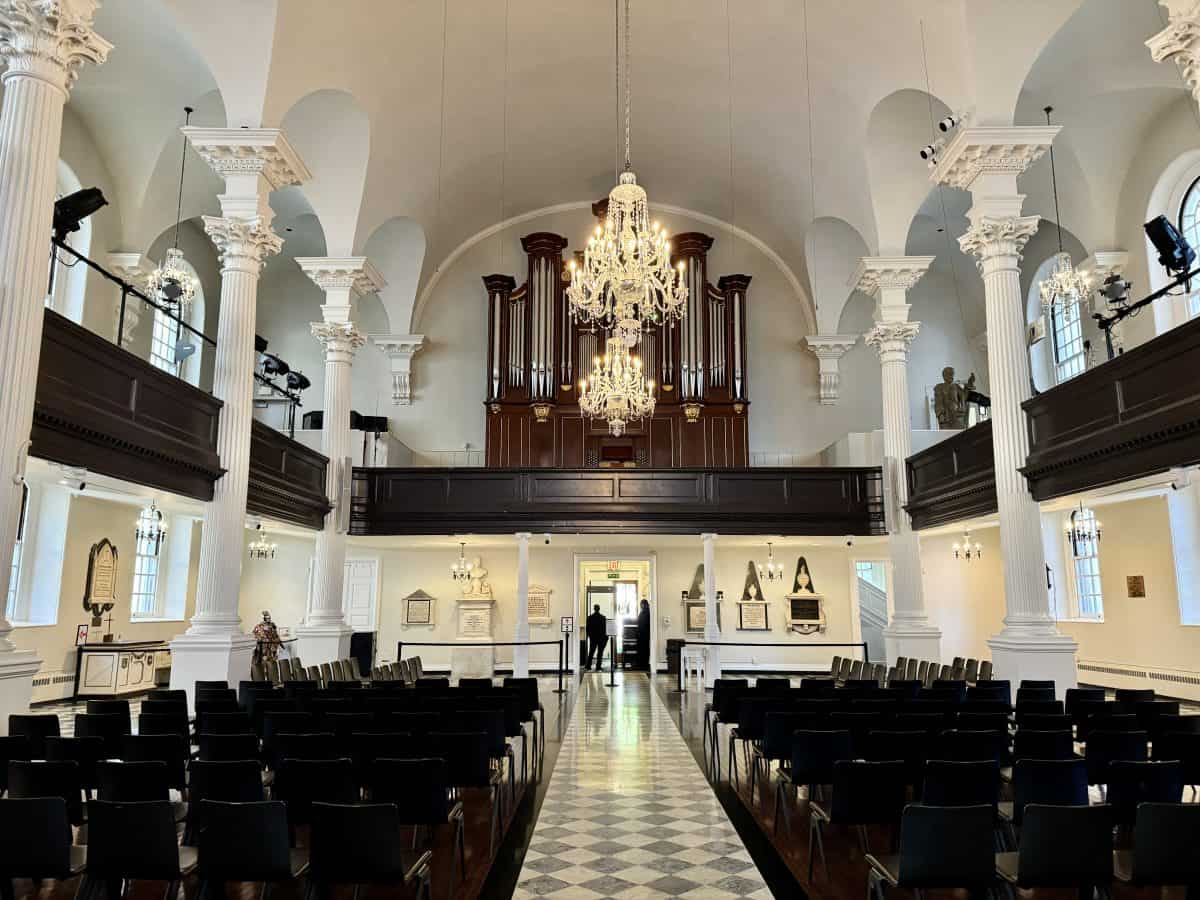
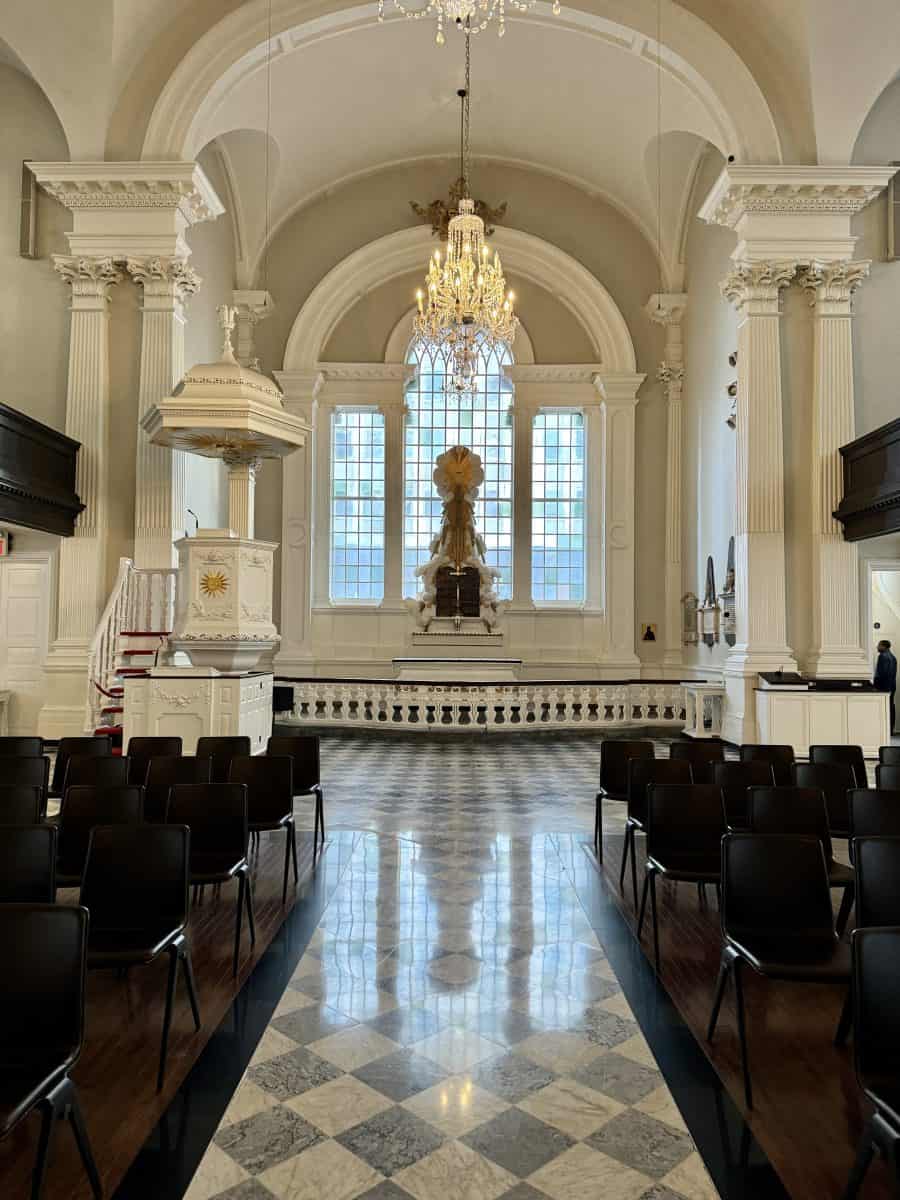
the inside of St Paul's Chapel in NYC

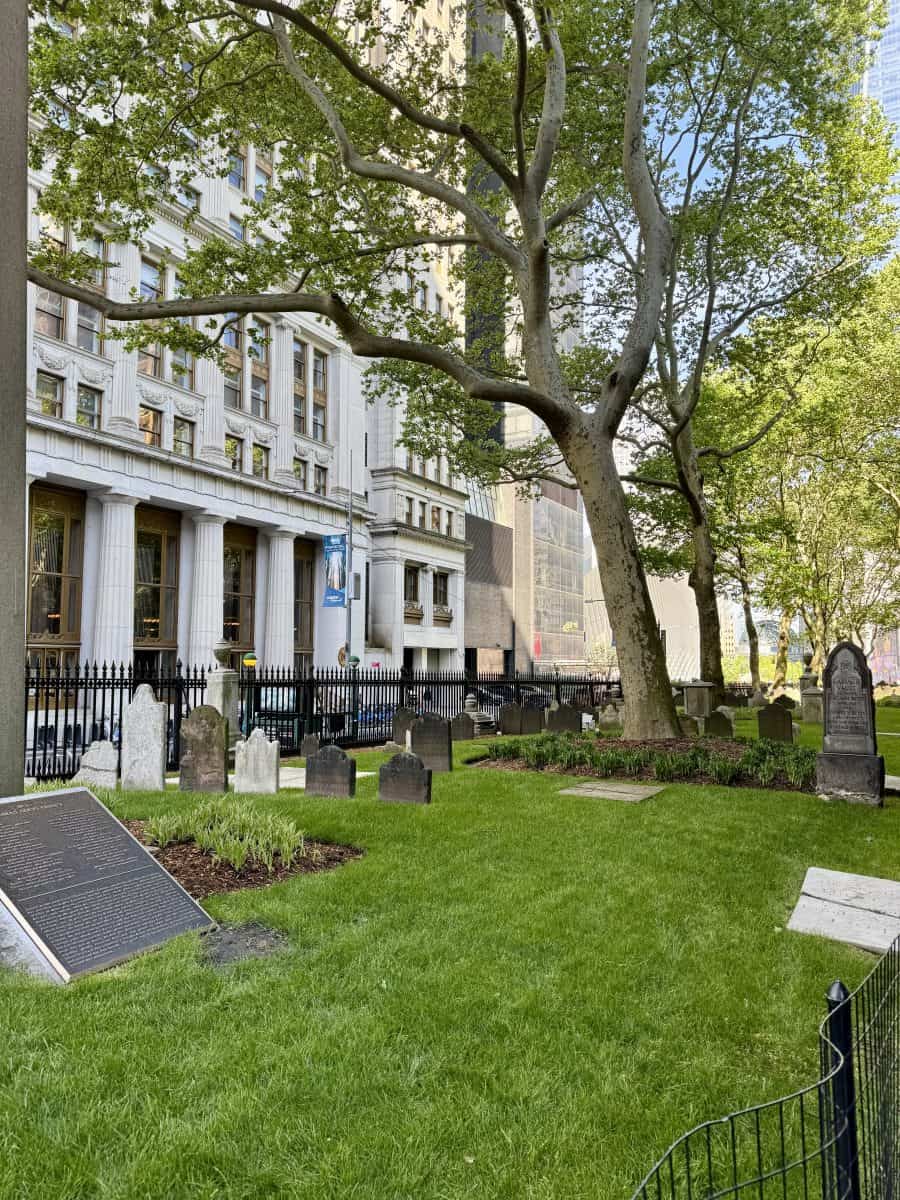
grounds outside St. Paul's Chapel in NYC

Bonus: Be sure to check out the Canyon of Heroes that runs along Broadway from Battery Place to Chambers Street (City Hall) There are over 200 black granite plaques displayed on both sides of the sidewalk that list every ticker tape parade in New York City history, with the date and name of the event.
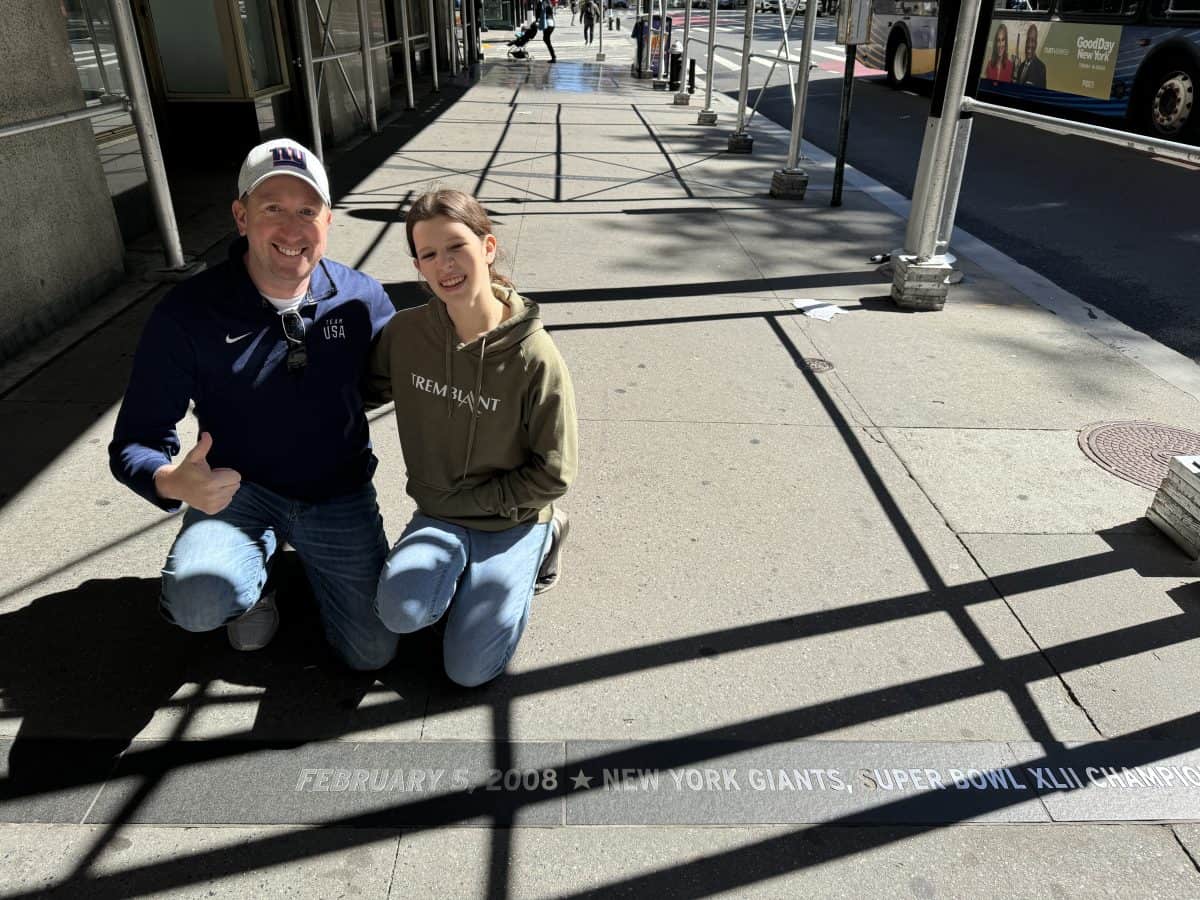
Looking for other things to do in the Financial District? Check out our posts featuring African Burial Ground National Monument, Federal Hall National Monument, National Museum of the American Indian, and our full Financial District City Guide

And follow along on our adventures on Instagram, Pinterest, Facebook, and X.

Similar Posts

  • | | | | | |

    10 New York City Holiday Events to Do with Children

    Note: I know it’s early October, and you might be thinking that I am rushing fall. But trust me, you need to plan ahead when it comes to the holidays. Having a plan (and in most cases, a firm reservation) will make any experience with children go a lot smoother- especially when you’re going to a big city like New York. I made my NYC plans back in July, but thought it might be a little risky to share this post in the summer. The holidays are a-coming and if you can, you’ll want to make time to bring the kids to New York.


    New York City is magical any time of year, but there is something extra special about visiting during the holiday season. Whether it’s the department store window displays, the streets lined with twinkling lights, or the endless concerts and shows going to “The City” will put everyone in the holiday spirit.  


    Now, while many adults could enjoy simply taking in the sites with a walk, children need to be kept busy. Entertained. Contained. Walking down a busy avenue with a toddler or young child is not a leisurely stroll. My family and I frequently go into New York, but we always have a plan. A destination. A place where my children will be contained. We usually make a stop at the Rockefeller Tree for an annual photo and we’ve done lunch at Serendipity and Carmine’s. Each year I try and find something new to do to celebrate the holidays. Here are some of my favorite activities to do with kids in New York City:

  • | | | | | | | | | | | | |

    The Best Nautical Museums on the East Coast

    Growing up near the water, I have spent many a day both IN and ON the water in a boat. Over the years, my family has enjoyed learning about the sailing and the boating industries. There are many ways, and places, to explore all types of boats throughout the Northeast. Here are 11 spots we love and 4 more we’re hoping to visit in 2021:

  • | | |

    The Paley Center for Media in Manhattan

    First opened in 1976 as the Museum of  Broadcasting, the Museum of Television and Radio changed names and moved to the heart of Midtown Manhattan in 1991, followed by another renaming and reopening as the Paley Center for Media in 2007 to honor William S. Paley. The owner of several prominent radio stations in the 1920s, William S. Paley created a larger network that became the CBS Network in the mid 20th century. 

  • | | |

    10 Things to Do at the Fenimore Museum of Art in Cooperstown, New York

    The Fenimore Art Museum, located in Cooperstown, New York, has a collection of over 4,000 pieces of art, with collections showcasing early American Indian art, fine and folk art, decorative arts, photography, and local young adult artists. Opened in 1899 as the New York State Historical Association, the NYSHA moved in the late 1930s to the home of the late James Fenimore Cooper’s farm in Cooperstown. The museum expanded in the 1990s to include generous donated collections of art, and formally became the Fenimore Art Museum in 2017. Its sister property, the Farmers’ Museum is located across the street (and definitely worthy of a visit- kids will LOVE the museum!) and visitors can purchase a combined ticket to both properties.

  • | | | | | | | | | | | |

    10 Reasons Why I Love the National Parks Service System

    Seven years ago I planned my first major road trip. My children were toddlers and we were planning on traveling almost cross country to visit good friends who were temporarily relocated to Albuquerque, New Mexico. Sharing my itinerary with my Uncle Bob, he asked if I planned on visiting any National Parks. I knew of the National Park Service system, but didn’t know much information about the various locations. Uncle Bob pulled out a worn, tattered, small blue spiral book and about an hour went by before I spoke again. (Full disclosure: Uncle Bob is a good storyteller and he does have a TON of travel experience.) His National Parks Passport book was filled with stamps dating back to the early 1970s. It was the perfect memento of his travels and I knew I had to start my own passport book.

    Since 2012, I have collected dozens of passport stamps from various stops in the National Park Service system. There are over 400 locations in the United States and American owned islands. These locations include parks, monuments, battlefields, historic sites, lakeshores, seashores, recreation areas, scenic rivers and trails, and even the White House. With every stop, I became a bigger and bigger fan of the National Parks system. Here are my top 10 reasons why:

  • | | | | | |

    10 Galleries Kids Will Love at the Cloisters in New York City

    The term “cloister” refers to an open courtyard, usually found in the center of a religious monastery or convent. Located in Fort Tryon Park in the Washington Heights section of Manhattan, the Met Cloisters are an extension of the Metropolitan Museum of Art that showcases European medieval art and architecture. There are a dozen distinct areas that include 20 galleries and gardens spread throughout the four acre space. The museum was built by architect Charles Collens and opened in 1938. Many of the artifacts and structures, which date back to the 12th through 15th centuries, were saved from various churches, monasteries, and abbeys throughout Europe and recreated throughout the museum complex. There are several stone and wood sculptures, panel paintings and tapestries on display throughout galleries that are meant to recreate the feeling of being in a medieval European monastery. The four cloisters were originally created in France, bought by art dealer and sculpture George Barnard in the early 1900s, and later bought by John D. Rockefeller and donated to the museum.

5 Comments

  1. I’ve seen St. Paul’s Chapel from the outside more times than I can count. It’s a beautiful building. With your post, I finally get to see the inside! I’ll have to stop in next time I am in NYC.

Leave a Reply

Your email address will not be published. Required fields are marked *