
10 Ways to Explore Jamestown Settlement
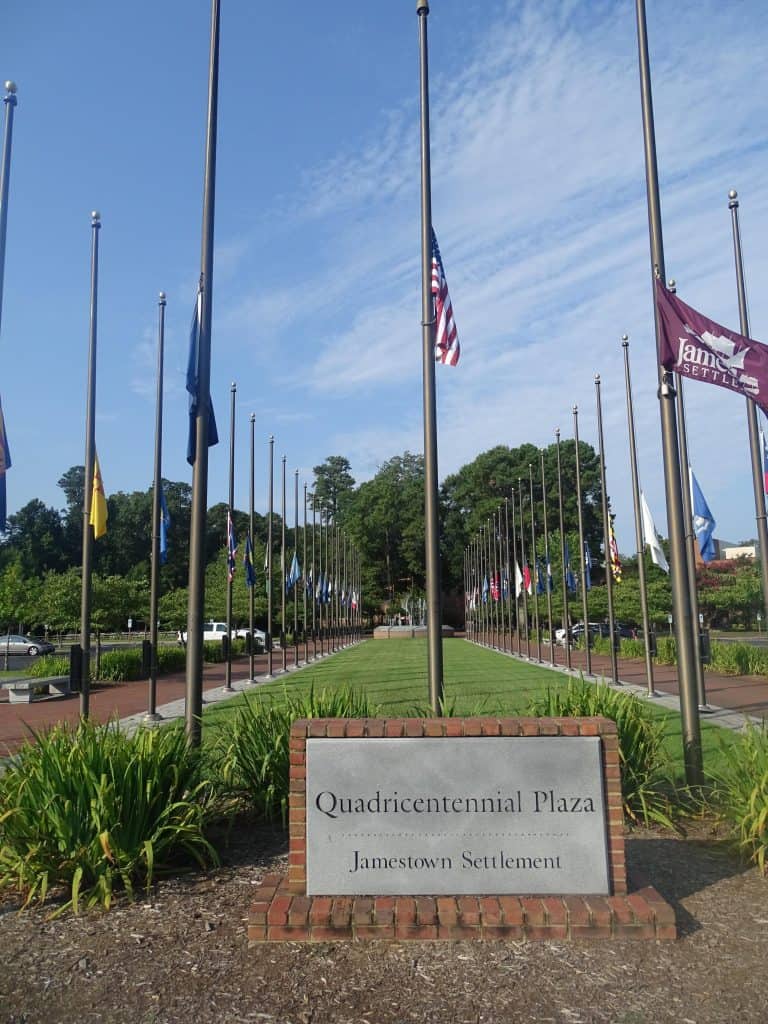
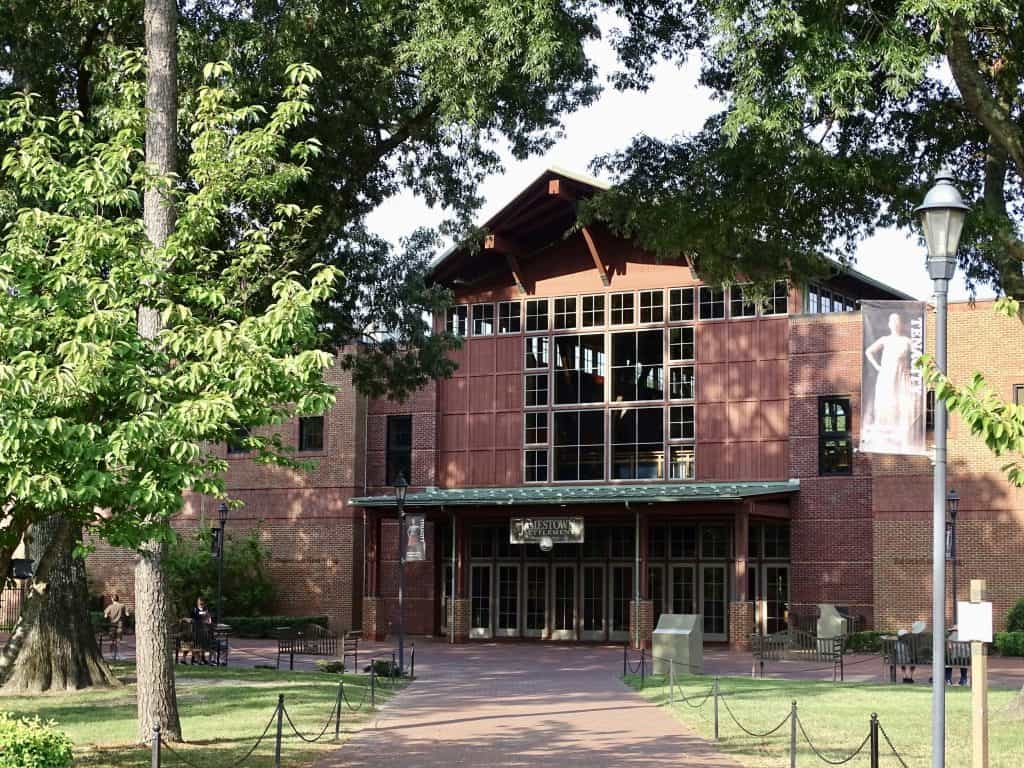
Originally opened in 1957 as the Jamestown Festival Park, Jamestown Settlement was revitalized with new exhibits and an expanded museum in 2007, ahead of Queen Elizabeth’s visit to celebrate the Quadricentennial of Jamestown.
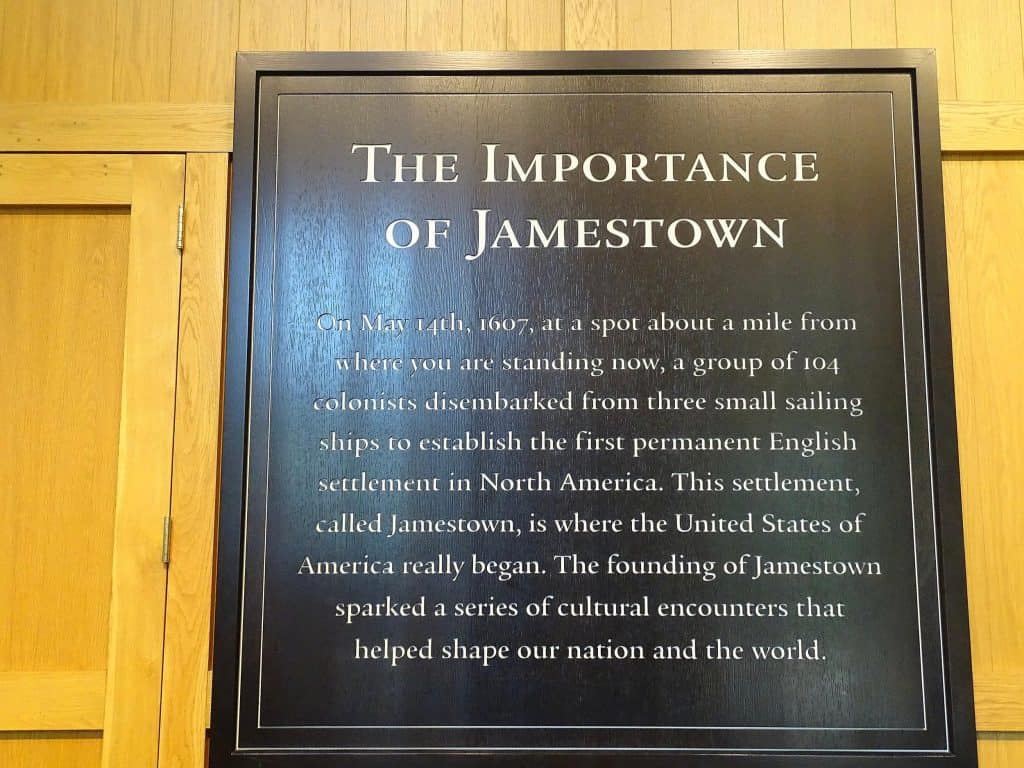
Jamestown Settlement, named in honor of King James of England, is a living history museum that includes a museum, Indian village, three reproduction ships, and a fort, all with interpreters offering stories and experiences from 1607, when 104 colonists created the first permanent English settlement in North America. Jamestown is part of the “Historic Triangle” which includes Yorktown and Williamsburg, All three locations are family friendly and offer several hands on ways to explore colonial life.
The Jamestown-Yorktown Foundation, which oversees Jamestown Settlement, is a great resource for information; visitors will especially find the itineraries section helpful.
Traveling with Kids:
The museum is open 363 days a year (closed on Christmas Day and New Years Day)
Consider purchasing a ticket that includes admission to other sites in the “Historic Triangle” such as the American Revolution Museum at Yorktown and Colonial Williamsburg. I highly recommend the America’s Historic Triangle ticket for its flexibility and discounted pricing to explore 5 locations.
The museum and access to the village and boat dock is handicap and stroller accessible.
Restrooms are located in the Visitor Center and the Riverfront Amenities Pavilion by the water and ships.
There are three gift shops: smaller ones are located at the end of the indoor galleries and on the second floor, and a larger gift shop is located near the exit to the complex in the Visitor Center.
A cafe is located to the left of the Visitor Center and sells a variety of hot and cold meals and snacks- including several gluten free items and a kids menu. Full menu here.
Wear sneakers for exploring the village and climbing aboard the ships.
Food, drinks, and photography are not allowed in the museum.
Plan on three to four hours to fully explore the complex: two hours for the museum and film and an hour or two to walk to and explore the village, fort, and ships.
10 Ways to Explore Jamestown Settlement:
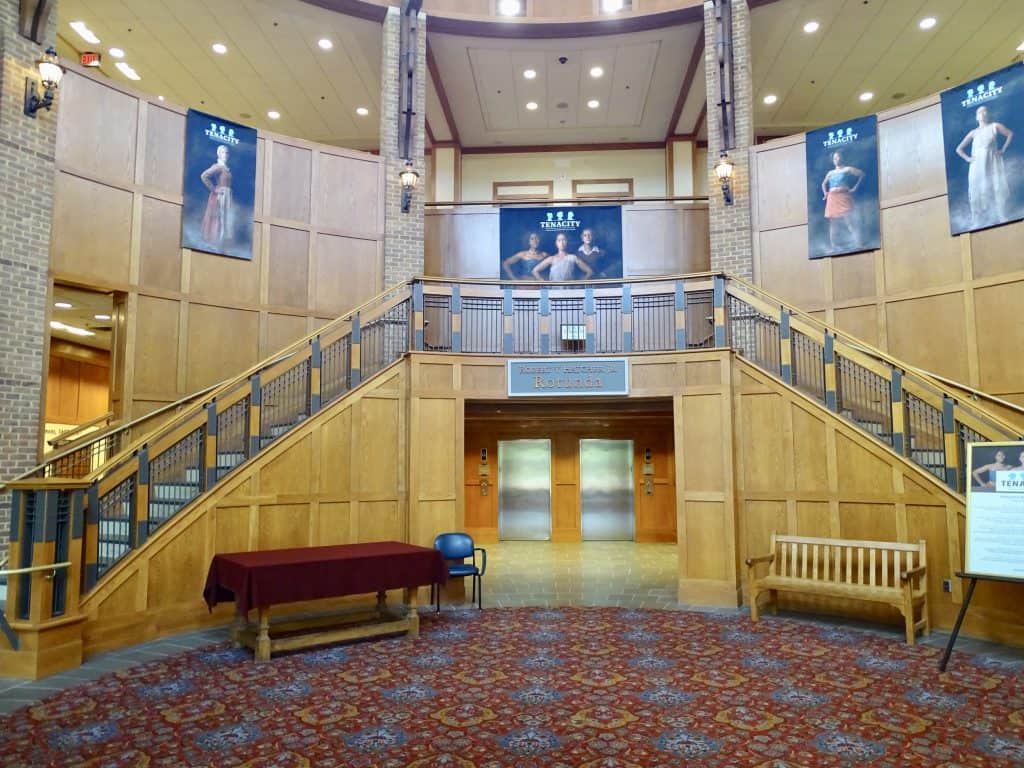
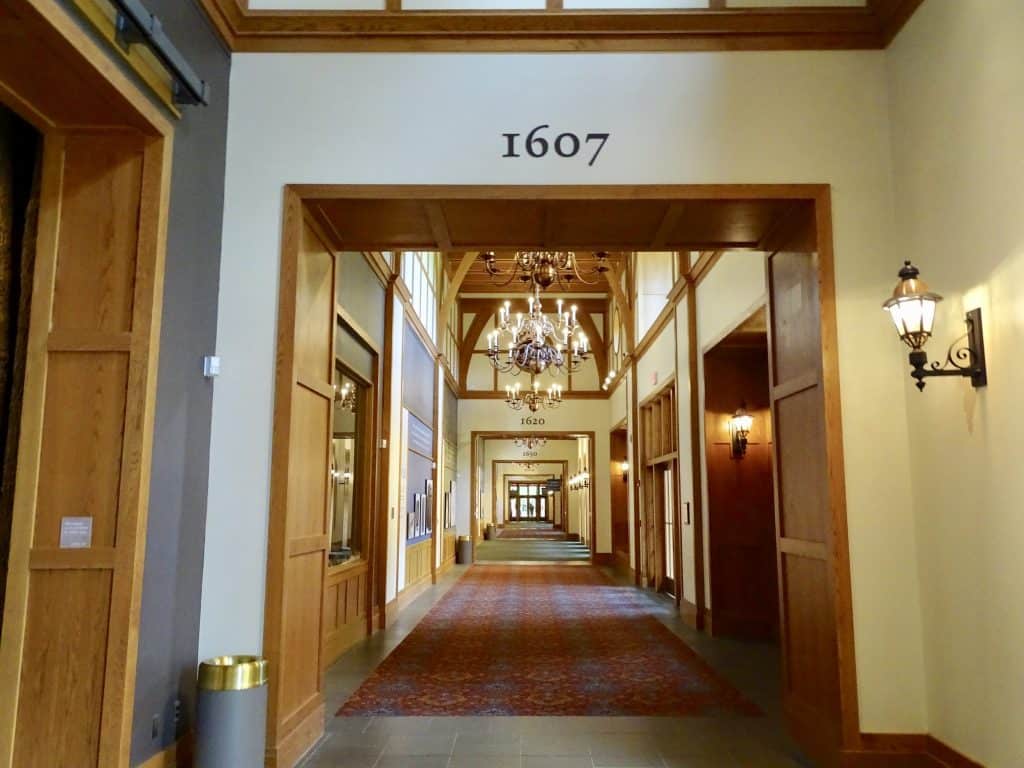
Museum: Note: Exhibit photos from the museum foundation are used with permission.
1. Watch the 24 minute introductory video “1607: A Nation Takes Root” shown every half hour.
2. Use the interactive screens throughout the museum to match cultures with clothing and take true or false quizzes about the history of the Powhatan people.
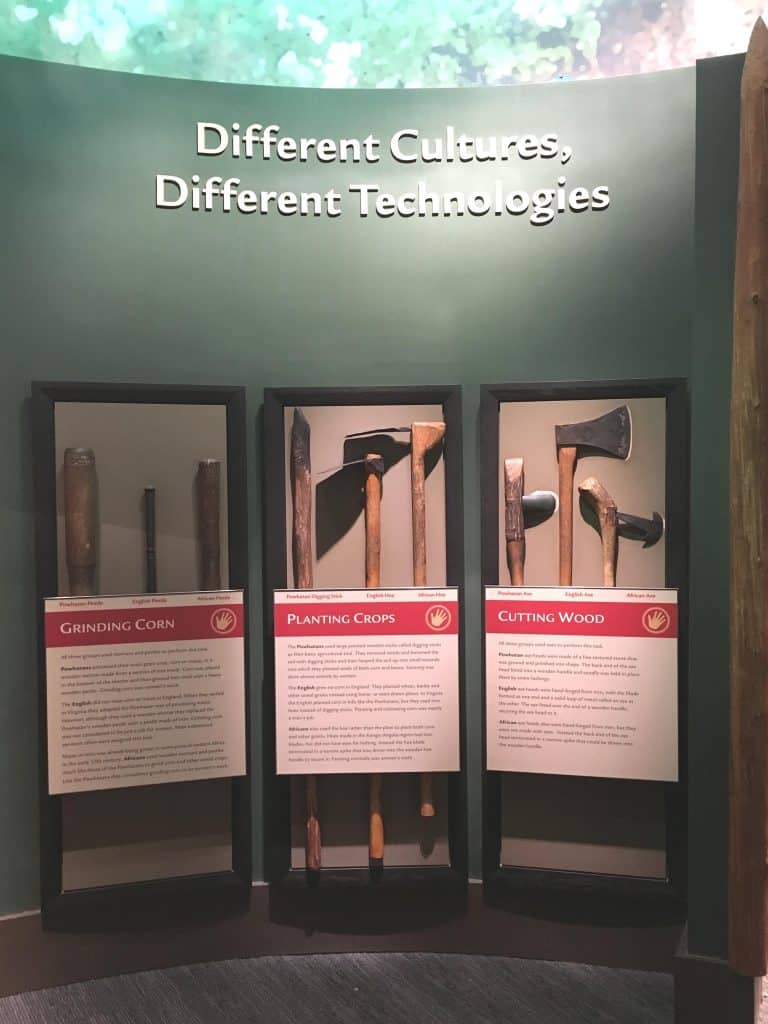
3. Compare the life for Africans coming to Jamestown to the lives of the English coming from London. Compare the tools of the Powhatan, English, and Africans used for different tasks like planting crops.
4. Read the proceedings of Virginia’s First General Assembly in July 1619.
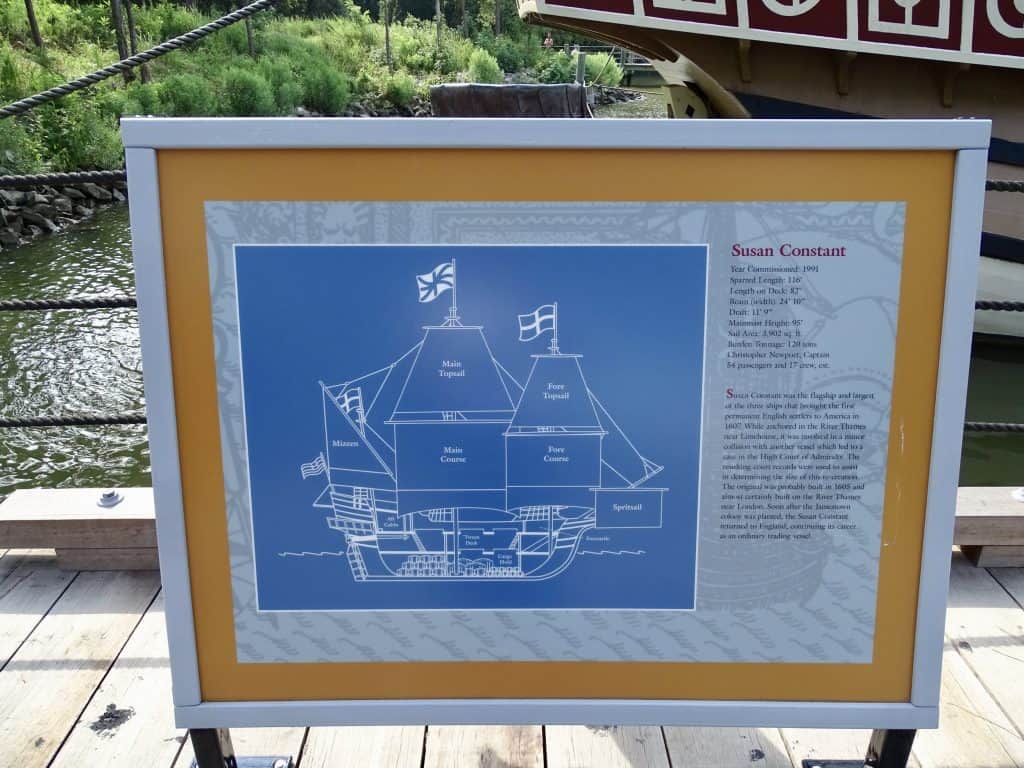
5. Climb inside a small portion of the reproduced Susan Constant, the largest of the three Virginia Company ships that came to Jamestown.
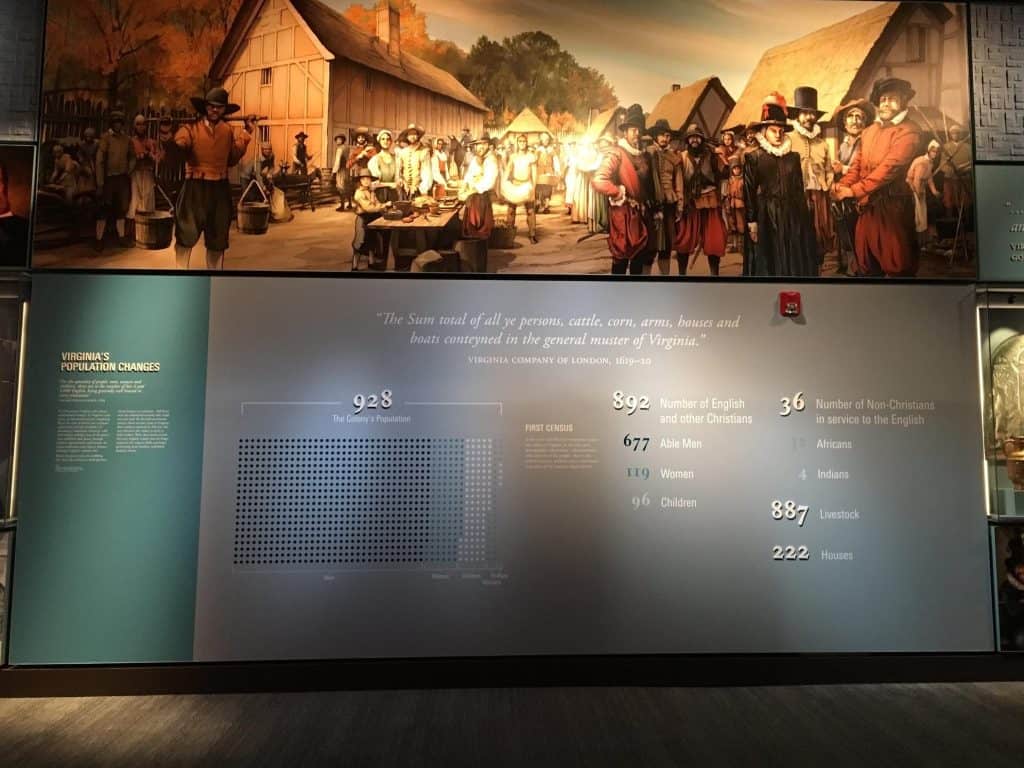
6. Tally the first census taken in 1620: men, women, children, livestock, and other categories used to identify groups of people.
7. Experience the story of “Bacon’s Rebellion” through a 15 minute film that includes special effects such as smoke, gunfire, and shooting arrows. Note: this film may scare younger children.
Kids will want to compare the way of life for the Powhatan tribe, English settlers, and the Africans.
Would you like to save this?
Powhatan Indian Village:
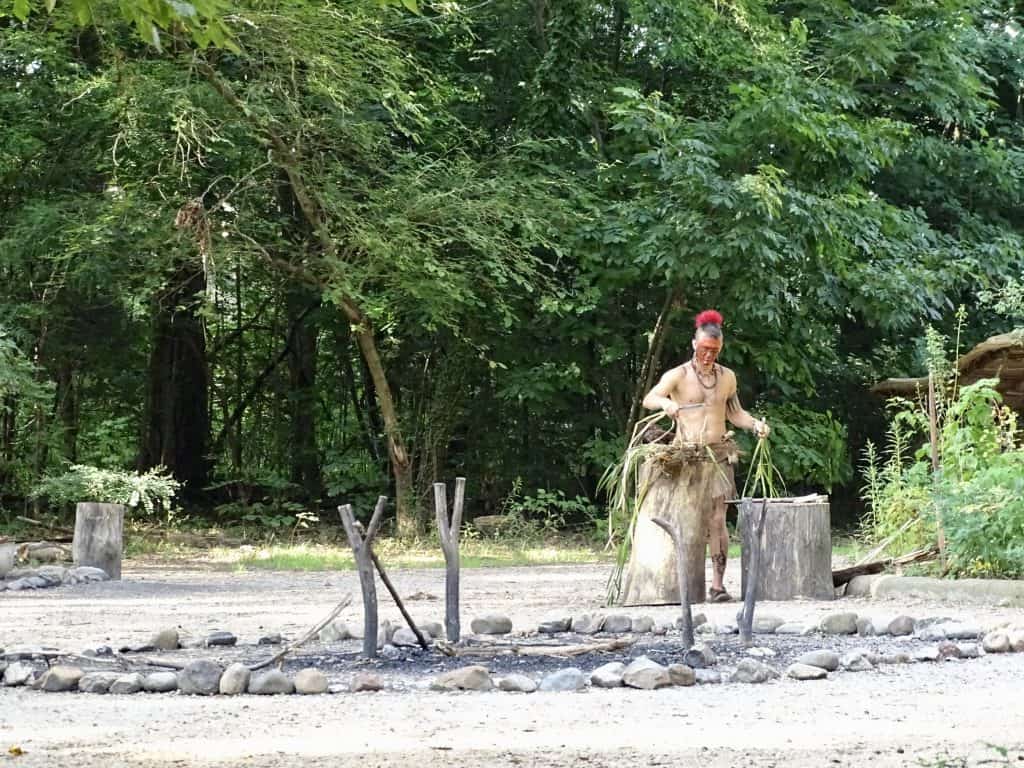
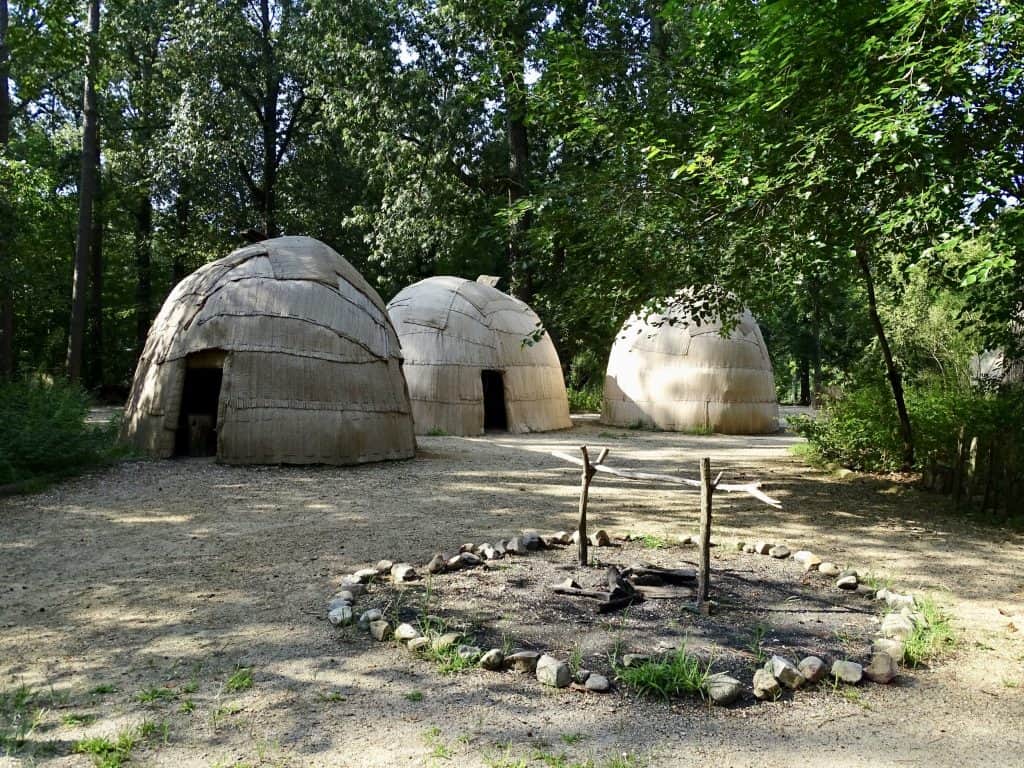
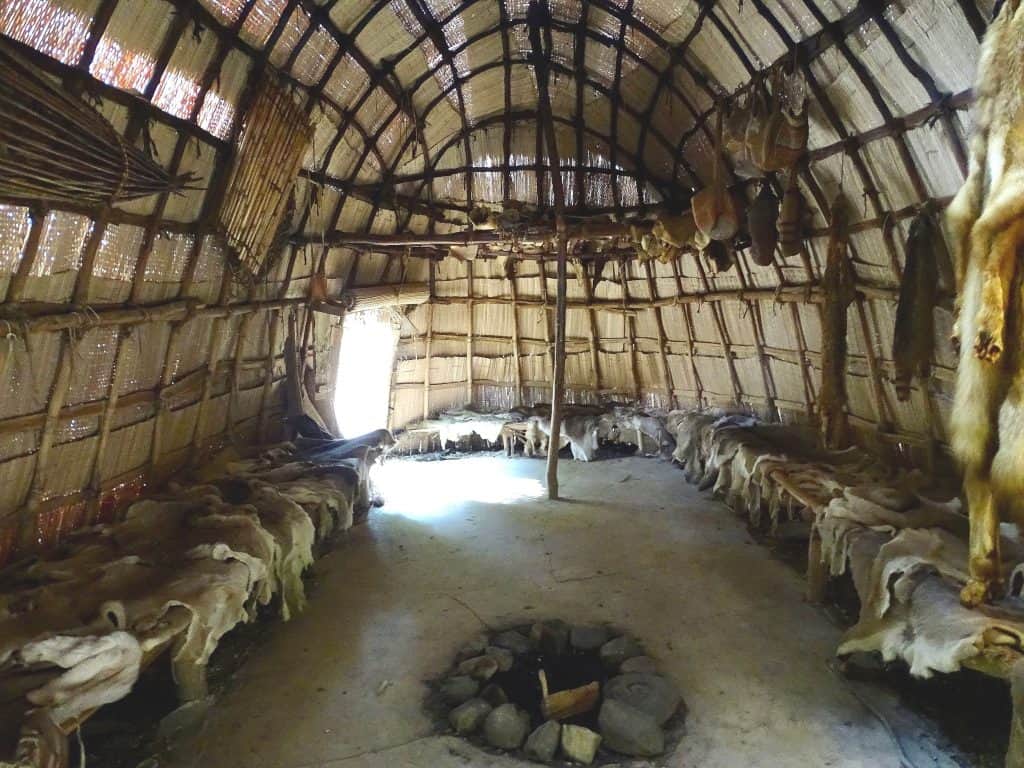
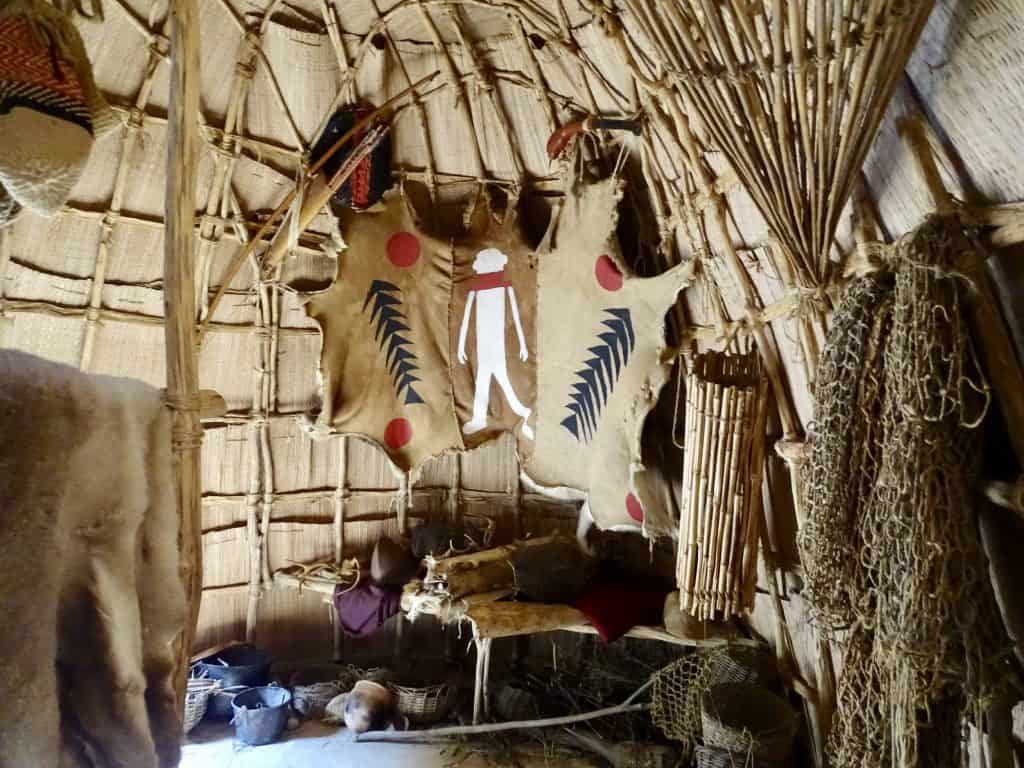
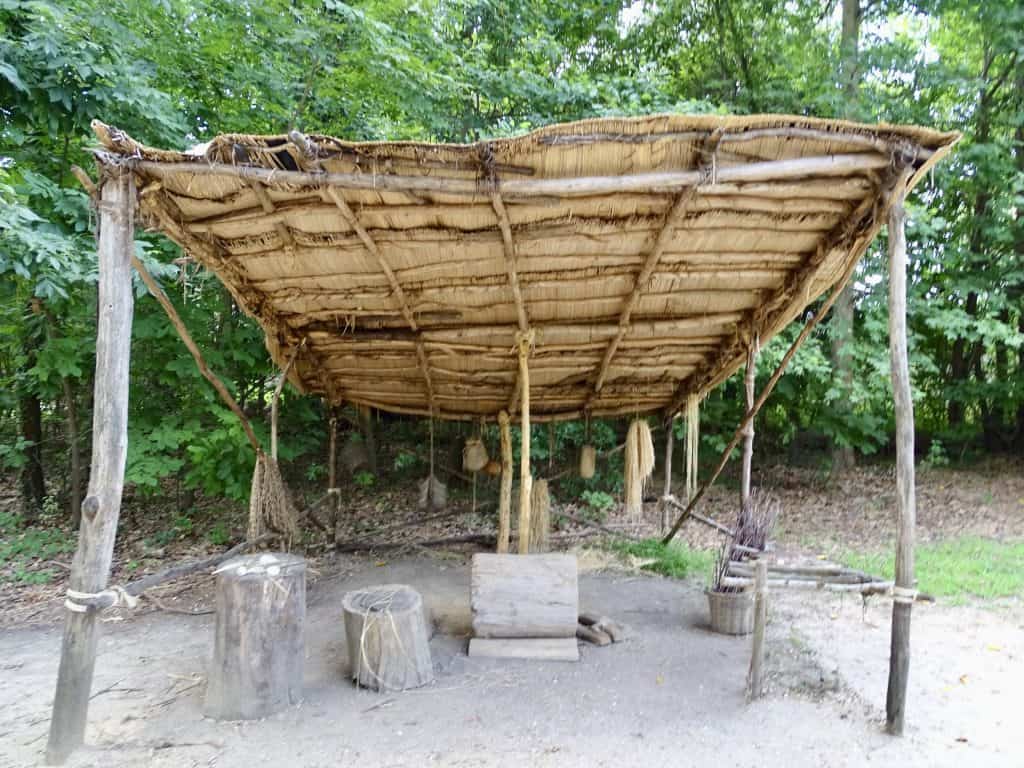
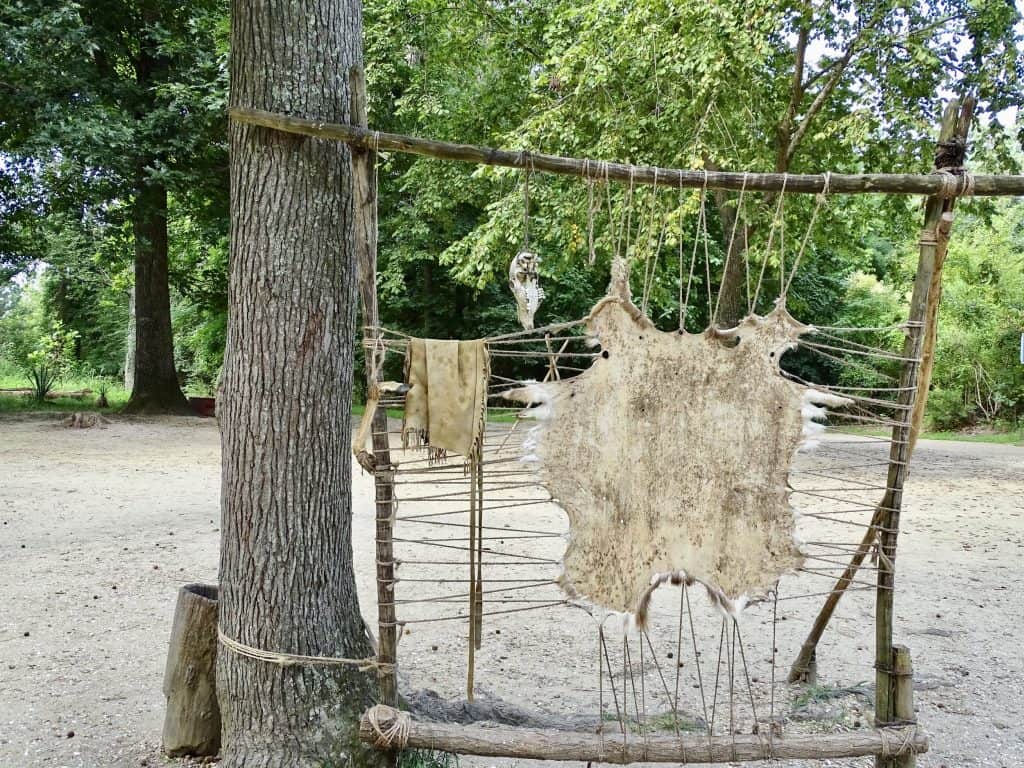
8. Explore five recreated reed covered huts and a ceremonial circle. Learn how the huts are made and how Powhatans would hunt for food and preserve all parts of the animal. Costumed interpreters offer demonstrations on tool making and cooking.
Kids will want to grind corn and play corncob darts.
Waterfront:
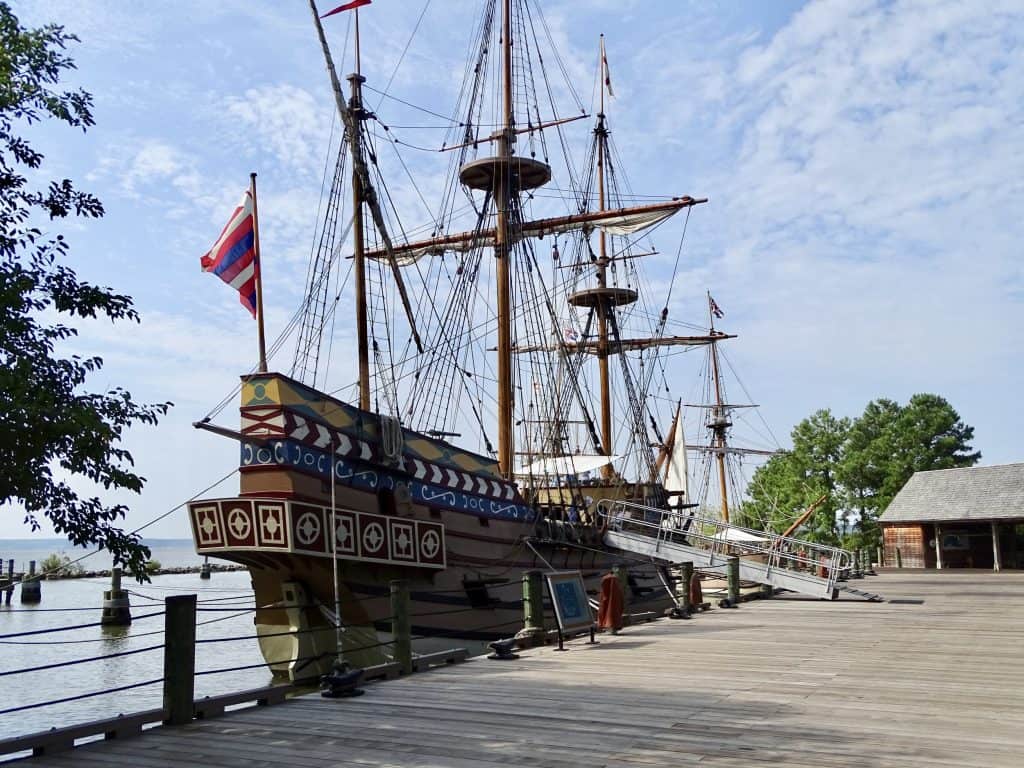
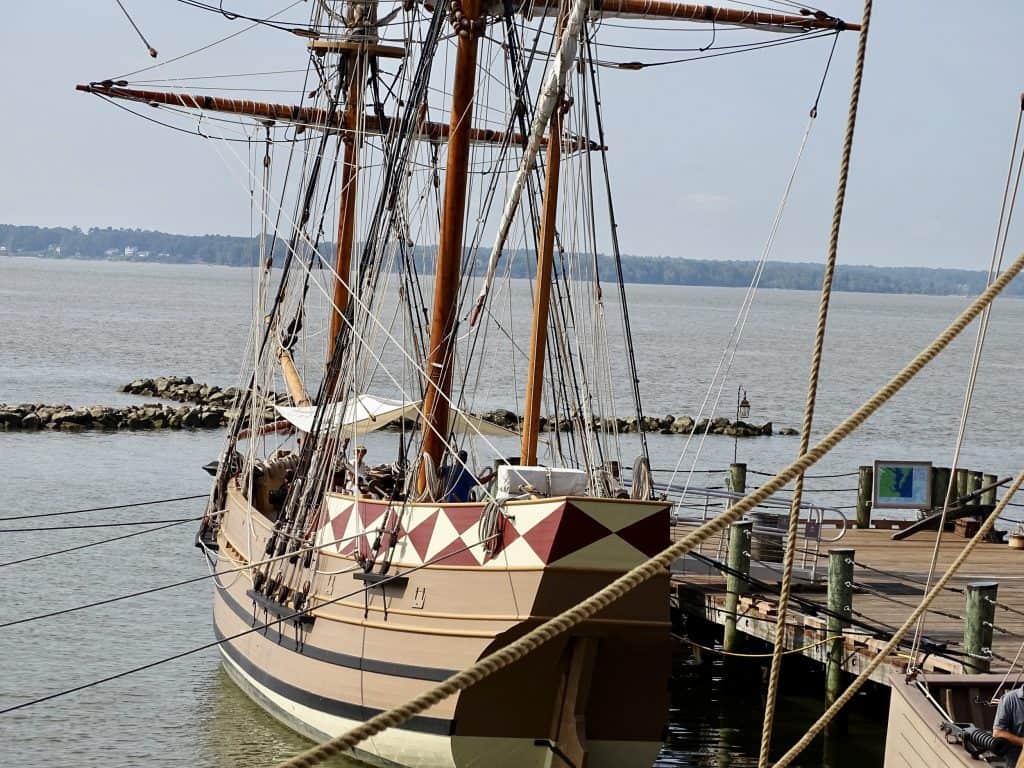
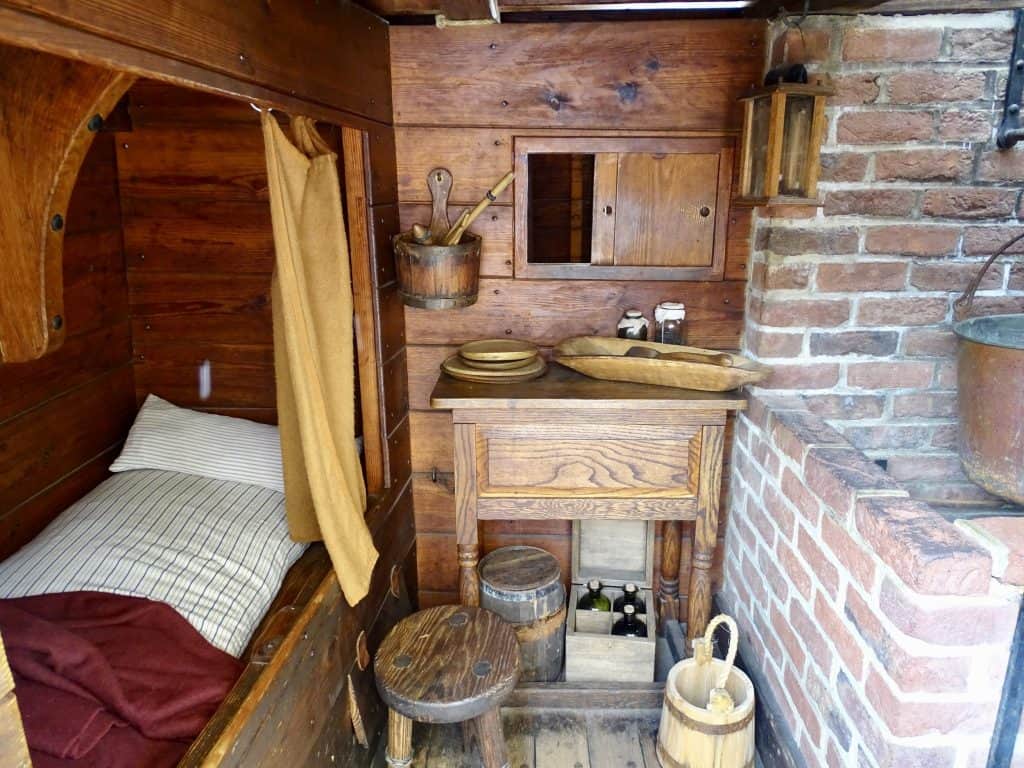
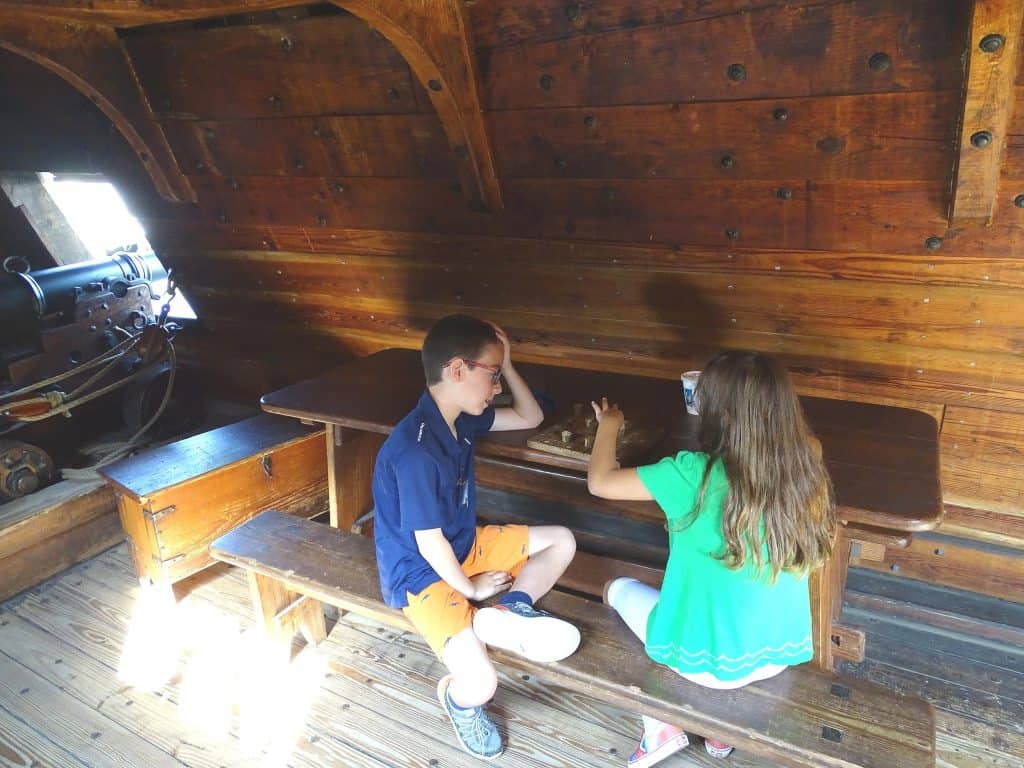
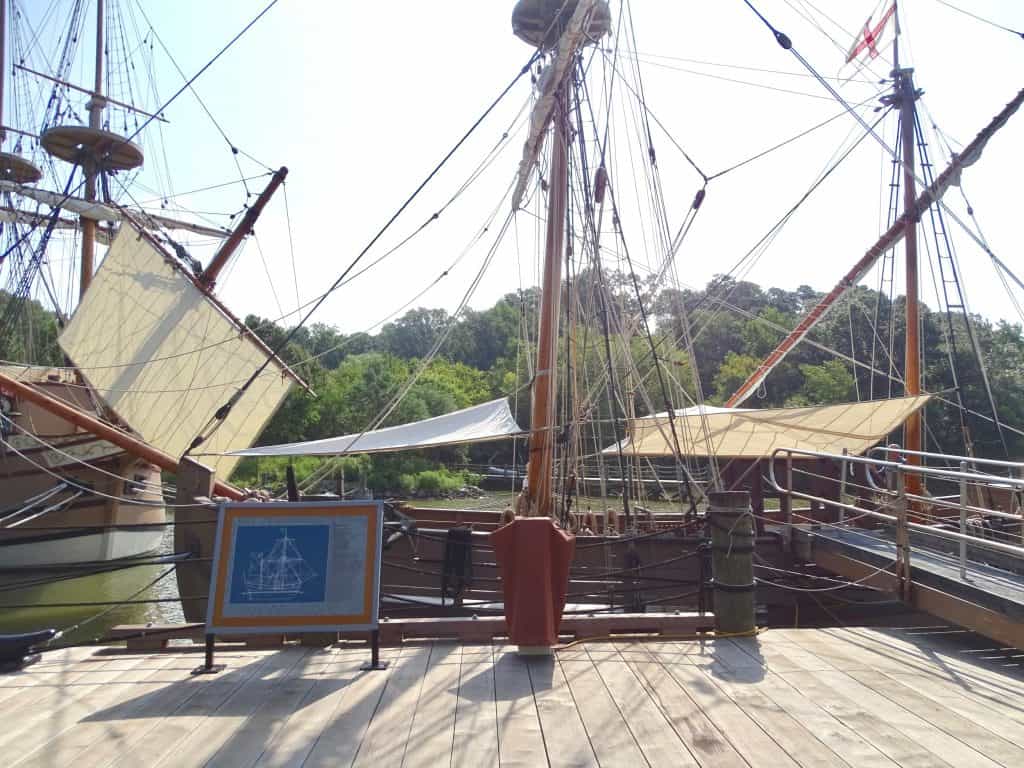
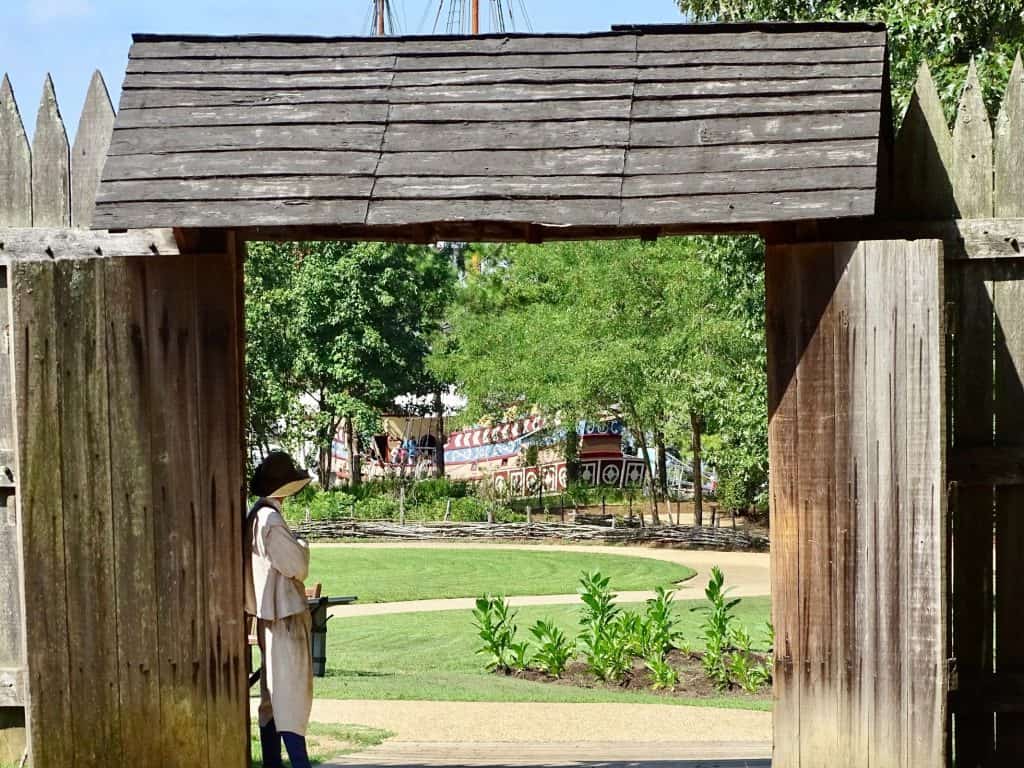
9. Climb aboard reproductions of the Susan Constant, Godspeed, and Discovery, the three ships of the Virginia Company which brought the first permanent English colonists to Jamestown in 1607. The ships were built in 1991 and occasionally set sail for events and educational programs. Costumed interpreters provide engaging details about the original voyage and life aboard the ships.
Kids will want to climb the upper and lower decks and check out the size of the sleeping quarters- watch your head!
James Fort:
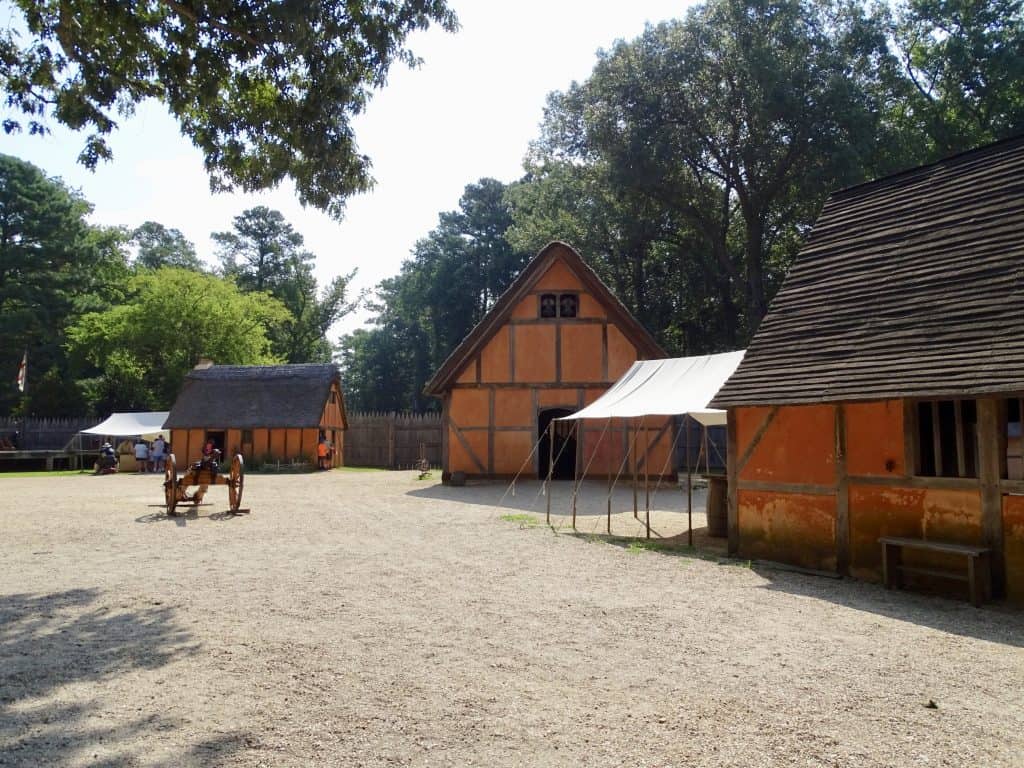
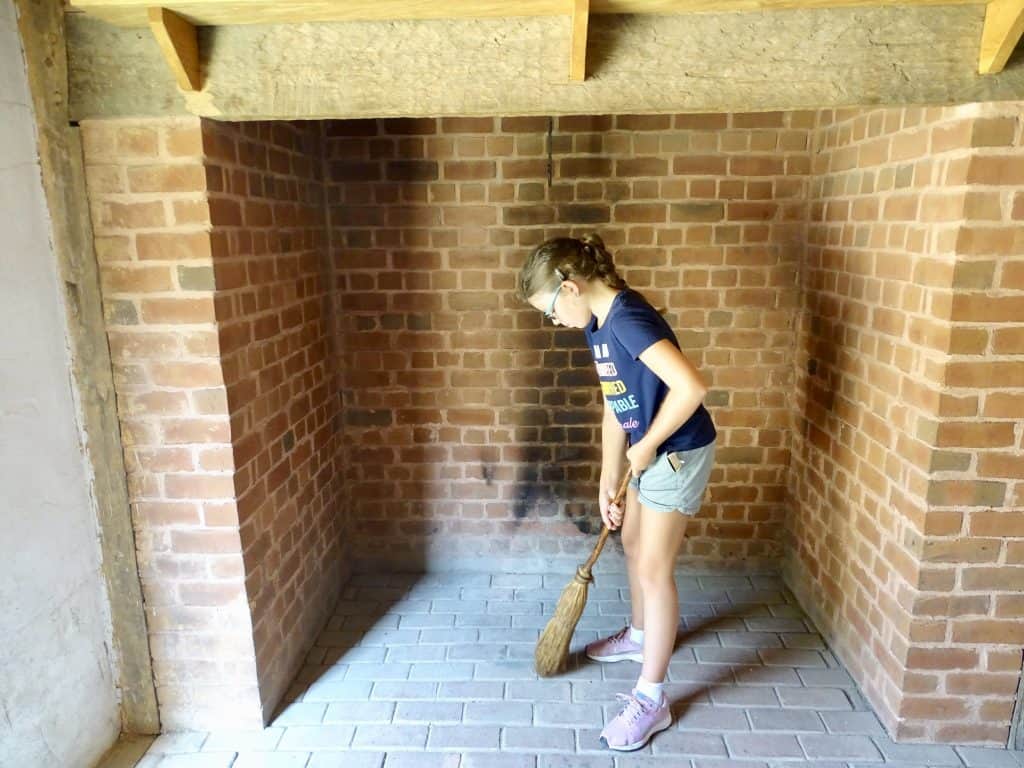
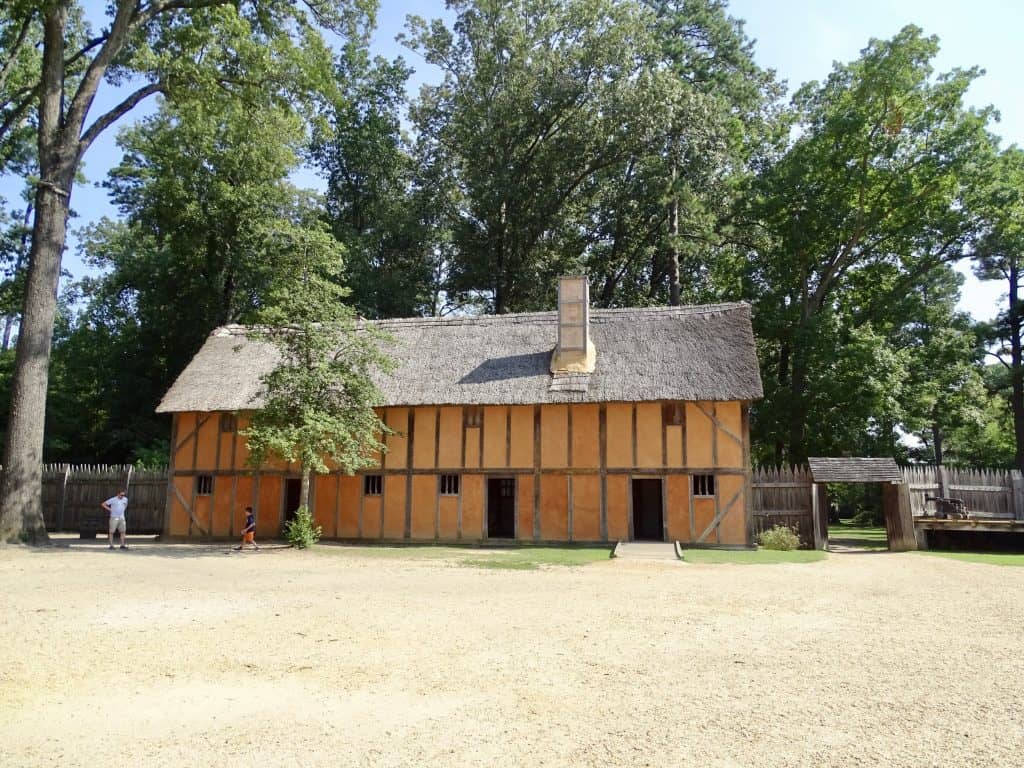
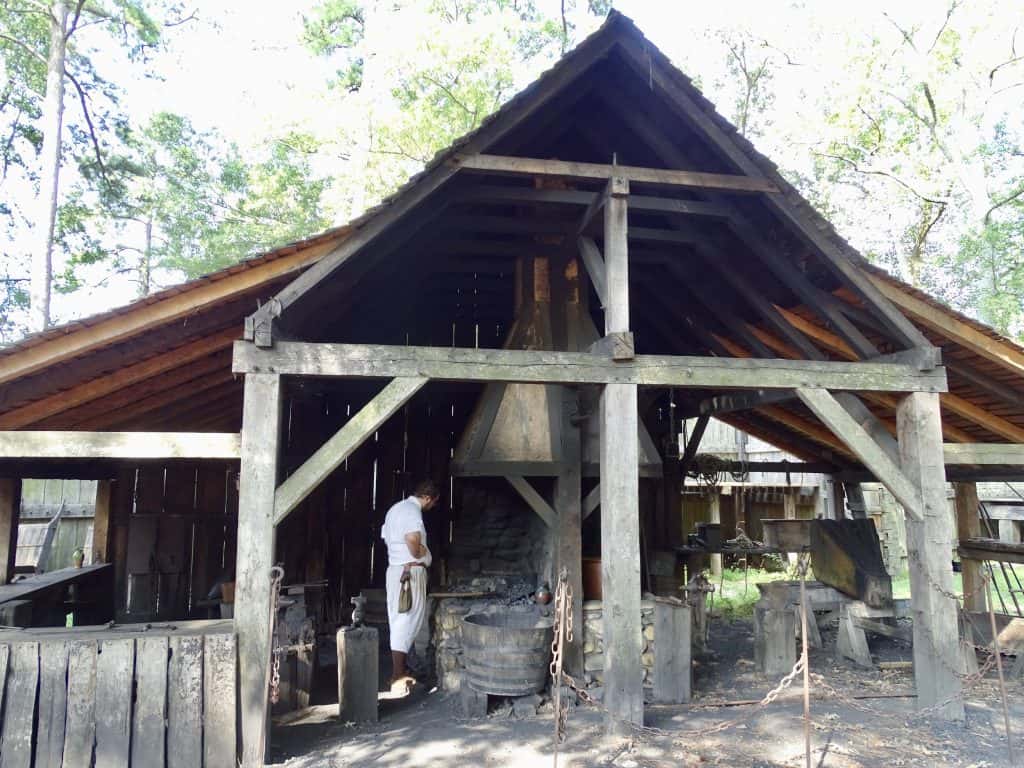
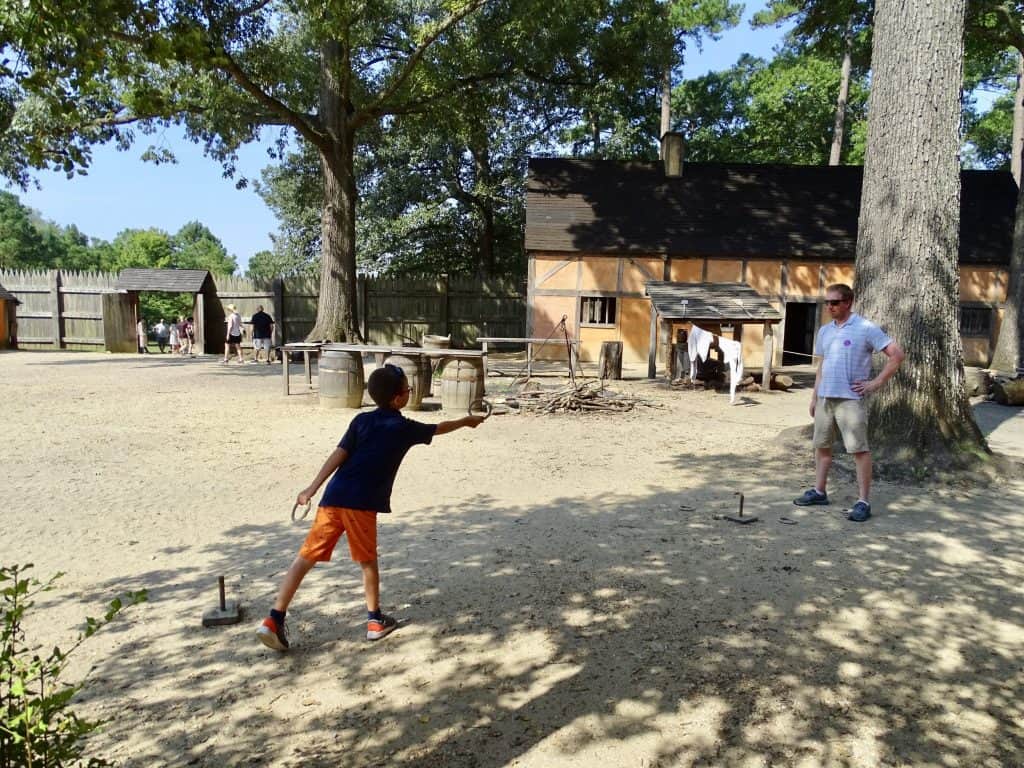
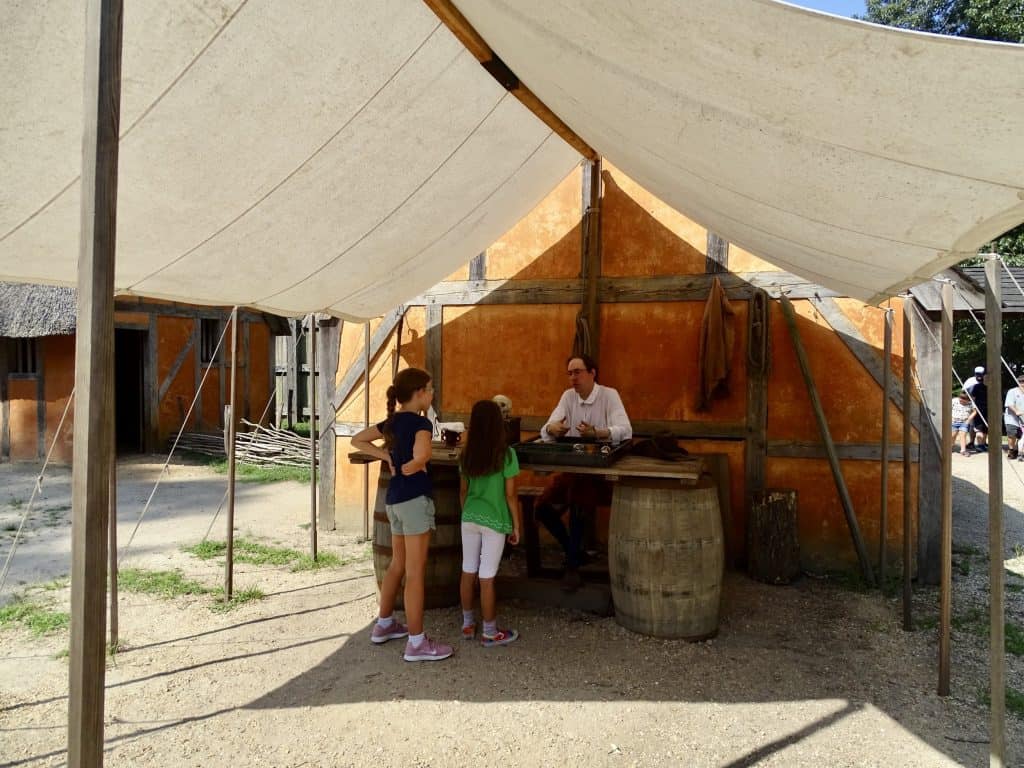
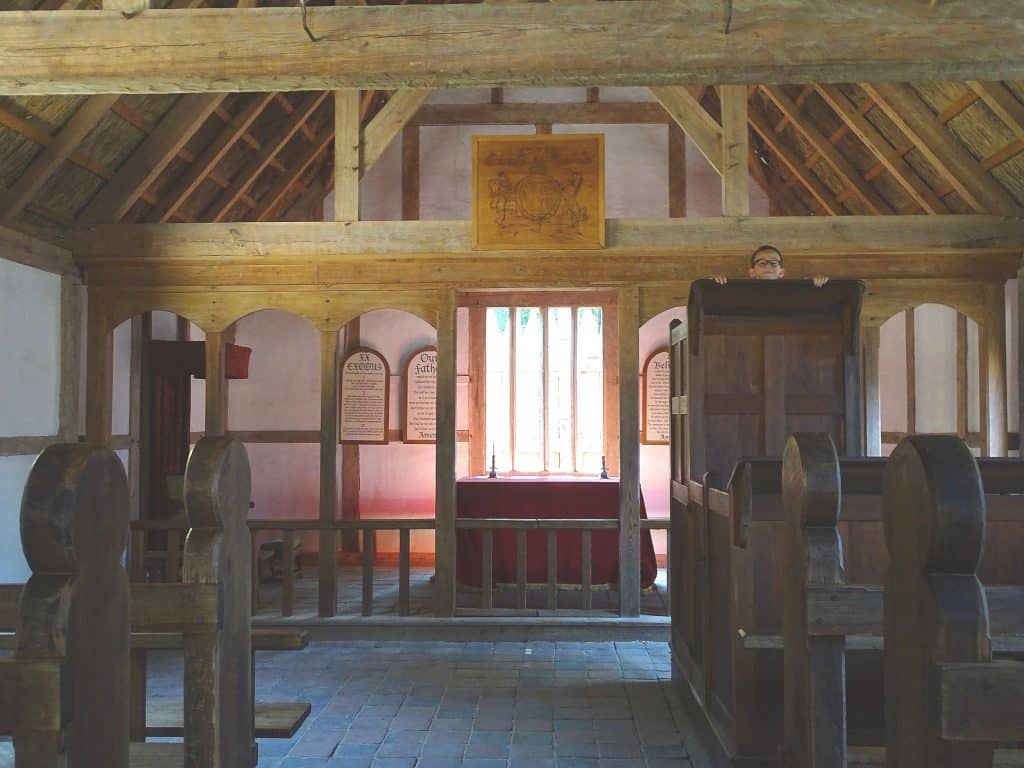
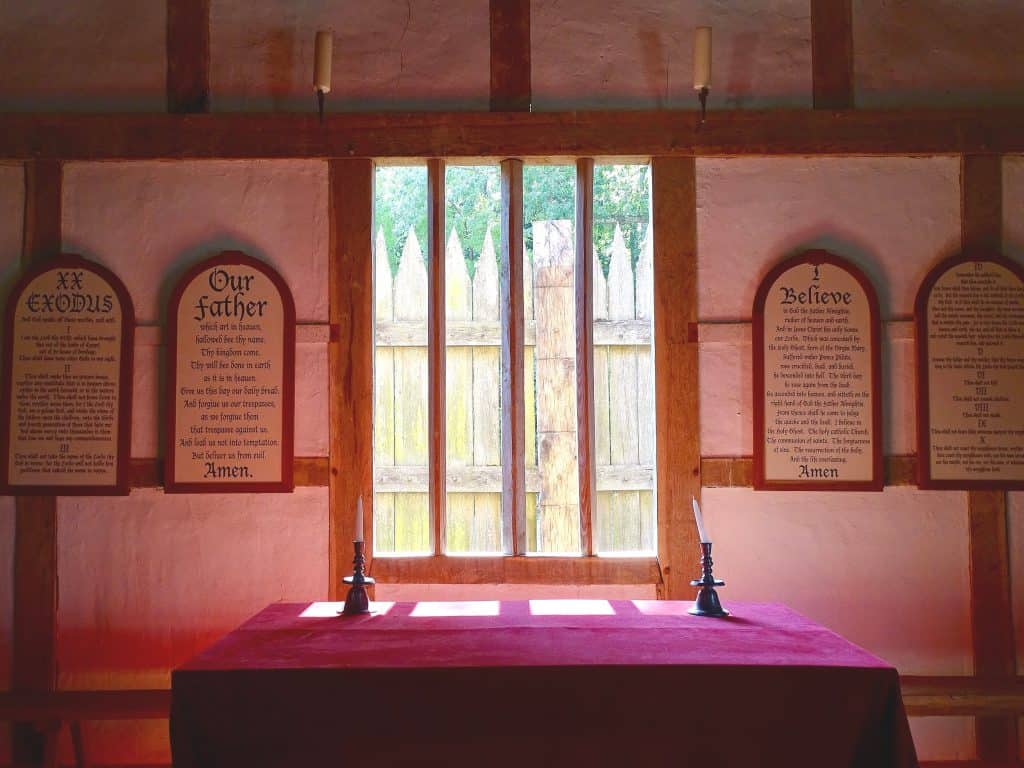
10. Spend time exploring the “fort” which recreates life during the early 1600s. The fort includes several structures depicting a church, governor’s house, barracks, and blacksmith to name a few. Costumed interpreters offer demonstrations and presentations on daily life in the fort and explanations of the buildings and artifacts.
Kids will want to play a round of horseshoes, give a sermon from the pulpit, and “clean up” in the kitchen.
For more historical fun in the area, check out our adventures at the American Revolution Museum at Yorktown.
Disclosure: My family was given a Historic Triangle pass to visit Jamestown Settlement. All opinions expressed are my own.




So much more than when our family visited! It seems so interesting out and great for children of men ages.Great job👍
So much more than when our family visited! It seems so interesting out and great for children of men ages.Great job👍
So much more than when our family visited! It seems so interesting out and great for children of men ages.Great job👍