Exploring the Chesapeake Bay Maritime Museum in St Michaels Maryland

| | | | |

A 15 acre campus in the heart of the beautiful, riverside town of St Michaels Maryland, the Chesapeake Bay Maritime Museum celebrates the environmental, historical, and cultural impacts of the Chesapeake Bay and its many maritime industries on communities throughout the East Coast. There are personal stories of individuals who helped shape the land and industries, hands-on learning and exploring of various vessels, rotating exhibits, and plenty of opportunities to get out on the water.
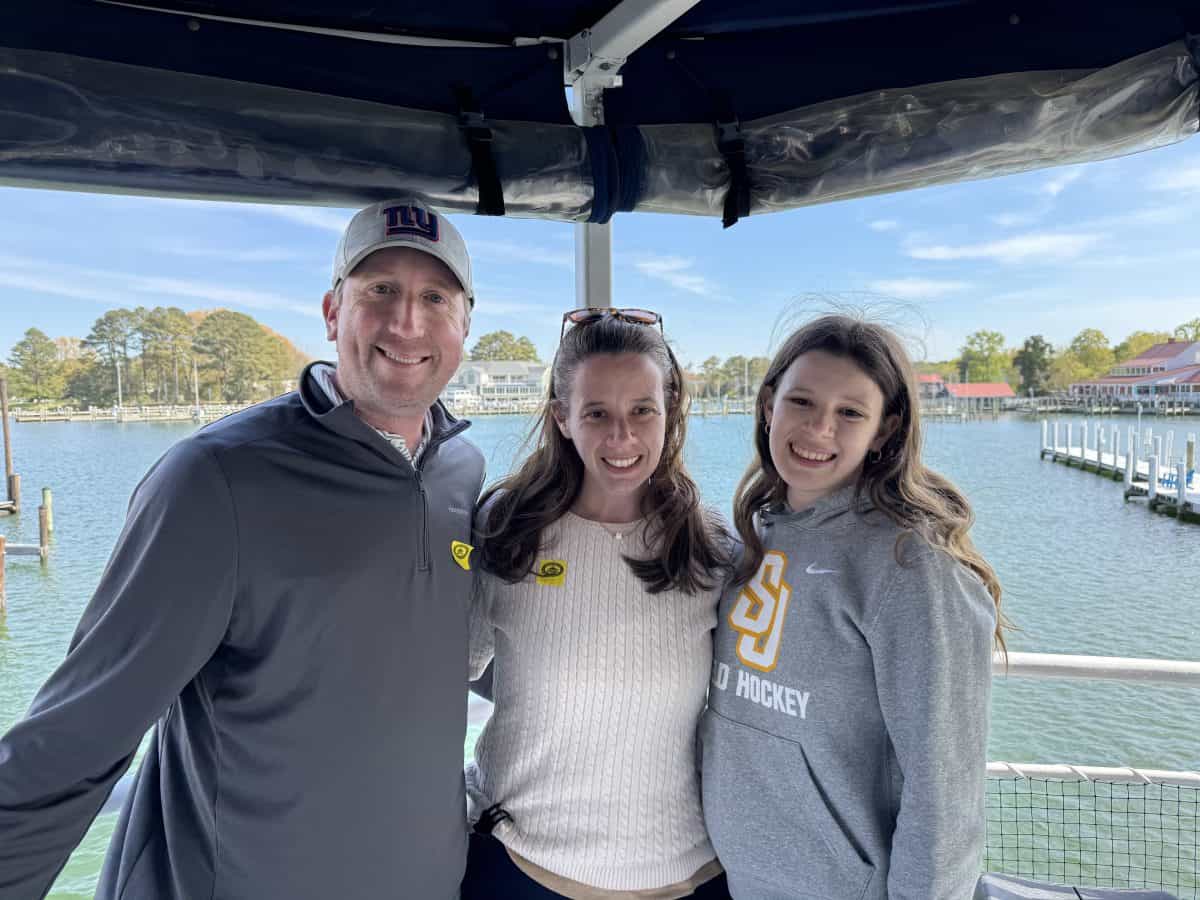
posing on board the Patriot ship at the Chesapeake Bay Maritime Museum in St Michaels, MD

The museum first opened in 1965 with a collection of boats decades old that had sailed and fished on the Chesapeake Bay. Over the decades, the museum’s collection expanded and now includes over 90,000 objects related to the Chesapeake Bay, history of the surrounding St. Michaels area, and maritime industries.

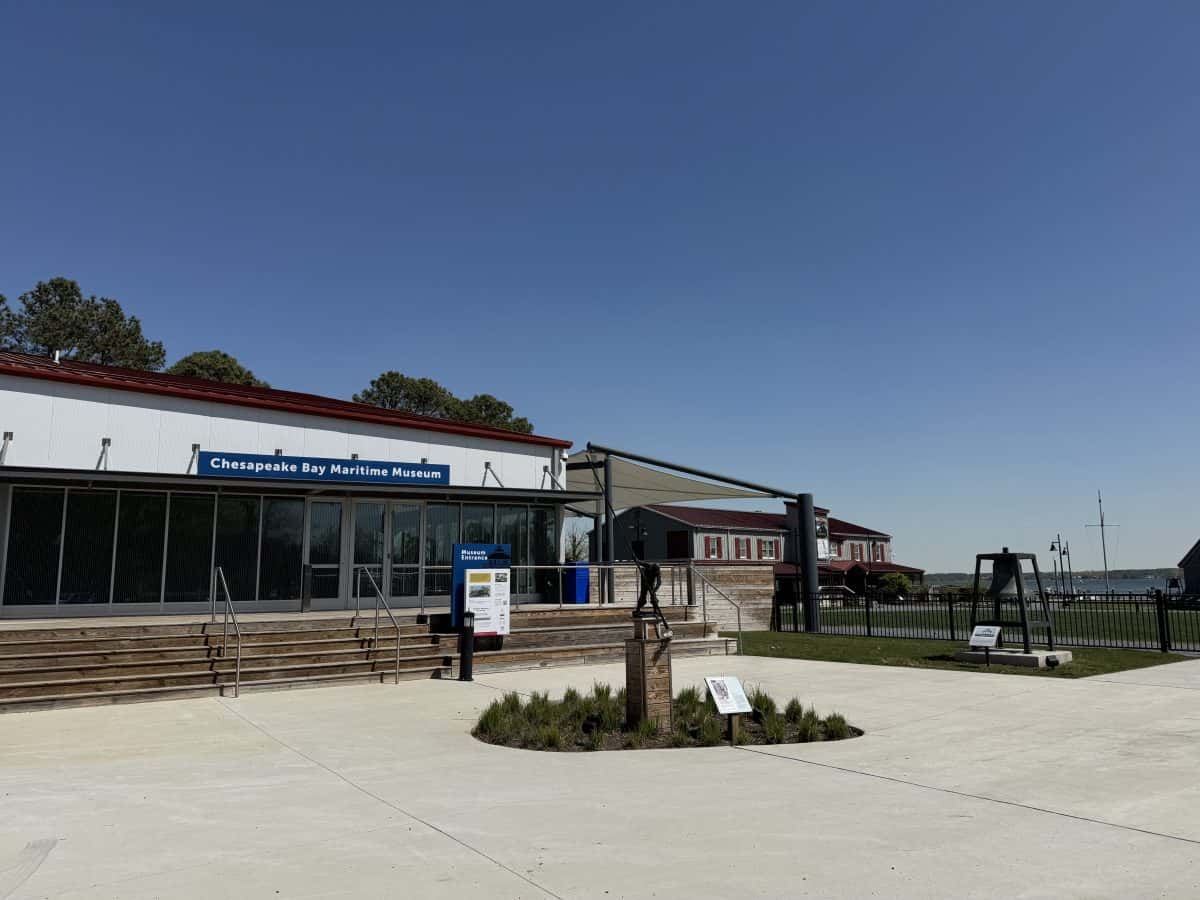
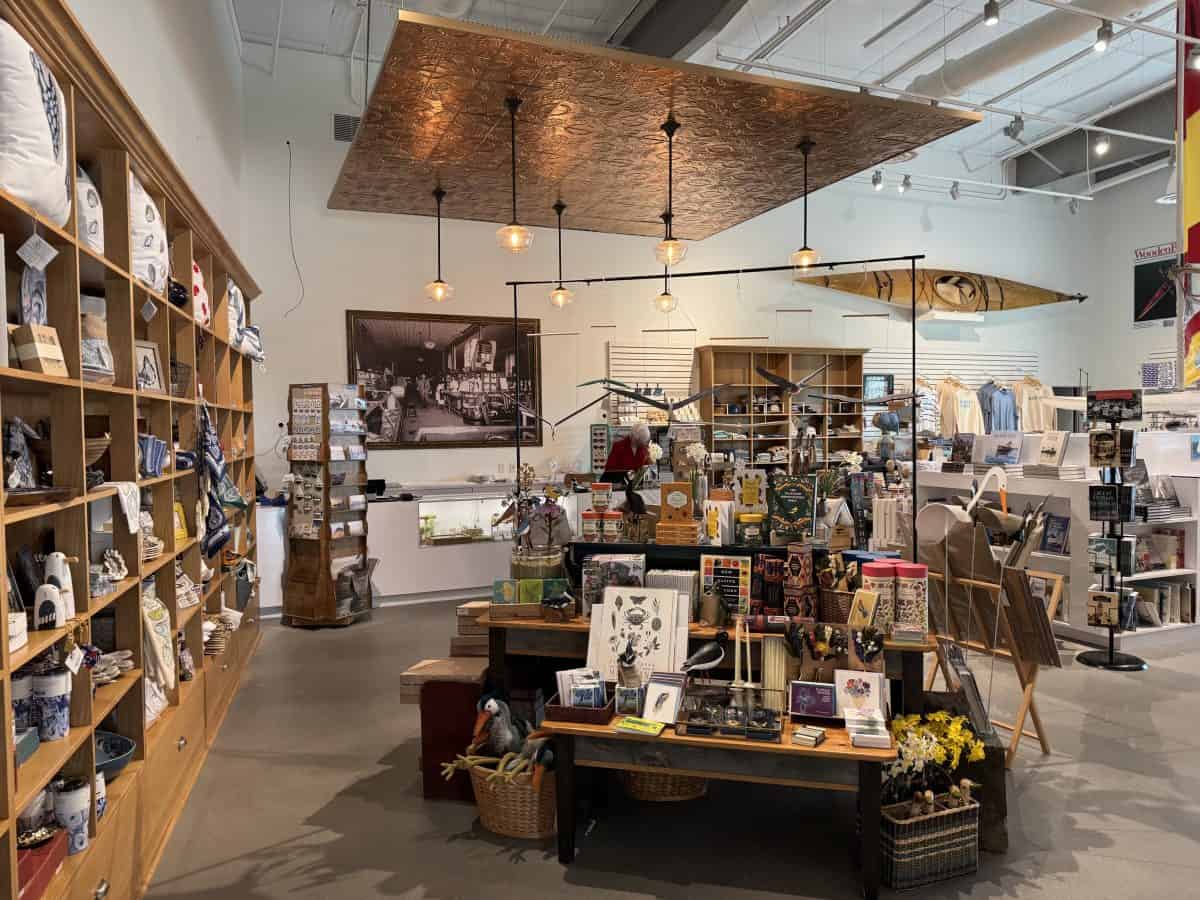
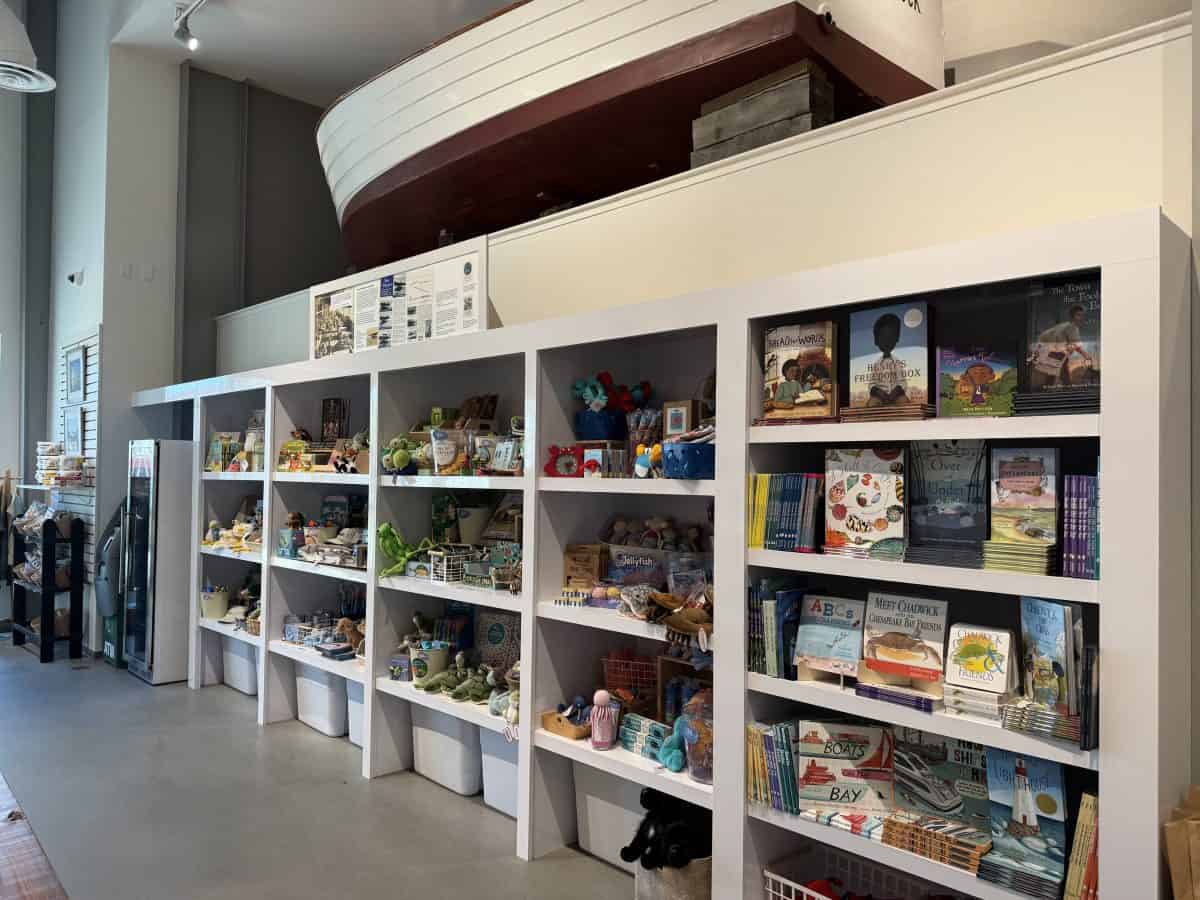
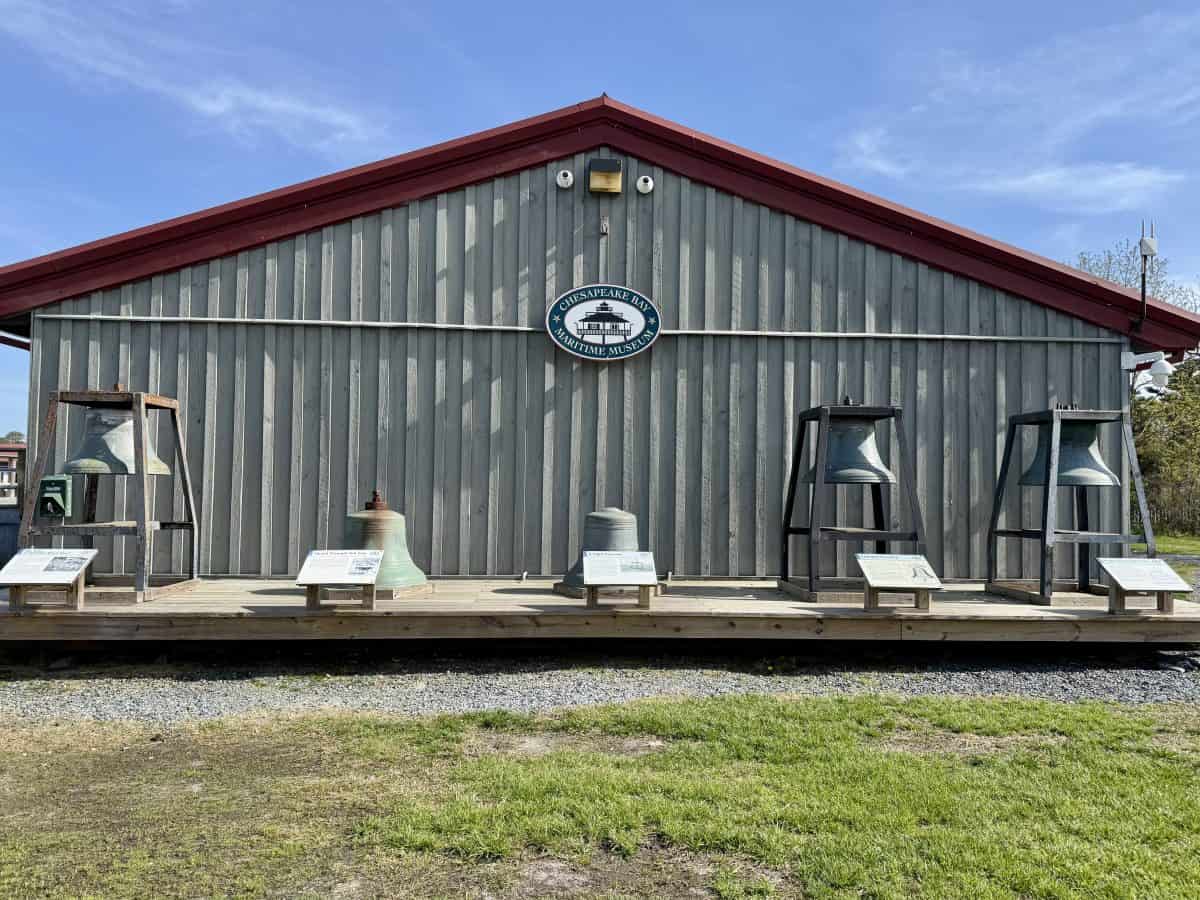
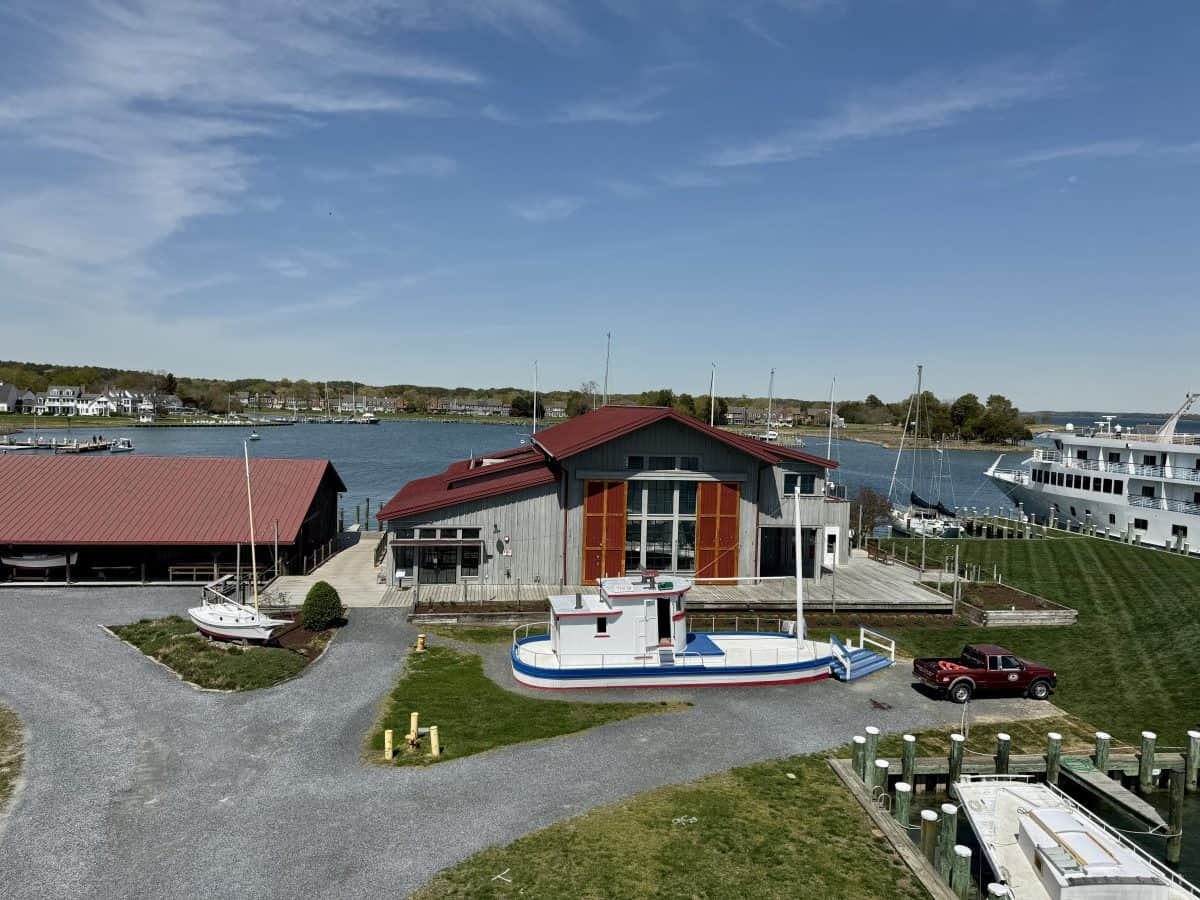
Most recently, the new Visitor Center opened in 2023 with a large exhibit of boats, Museum Store, restrooms, a covered deck with plenty of seating, and friendly knowledgeable docents who can help guests make the most of their visit. The Chesapeake Bay Maritime Museum offers a dozen buildings (some centuries old and preserved by historians) with authentic, and often interactive, exhibits the whole family will enjoy. Leave time for one of the many live demonstrations, workshops, and on the water learning opportunities. 
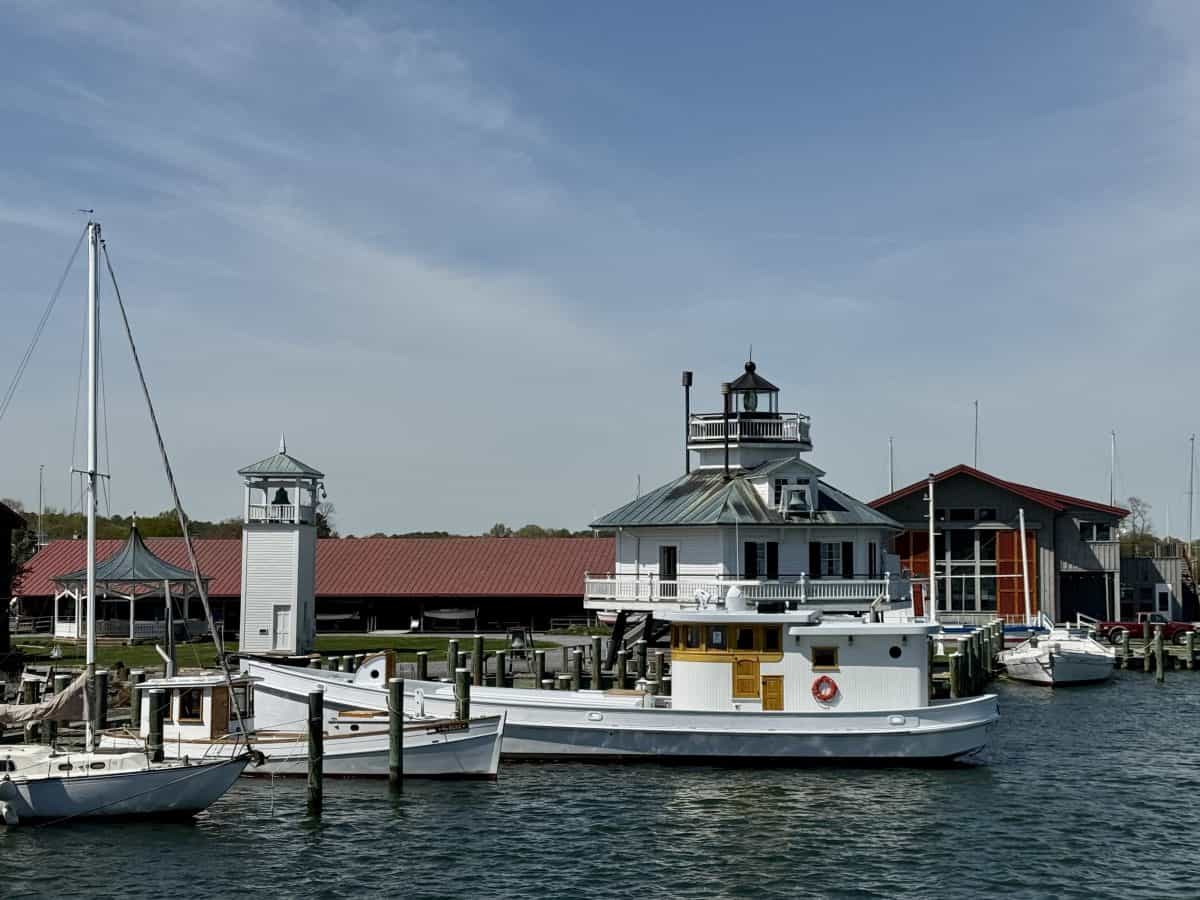
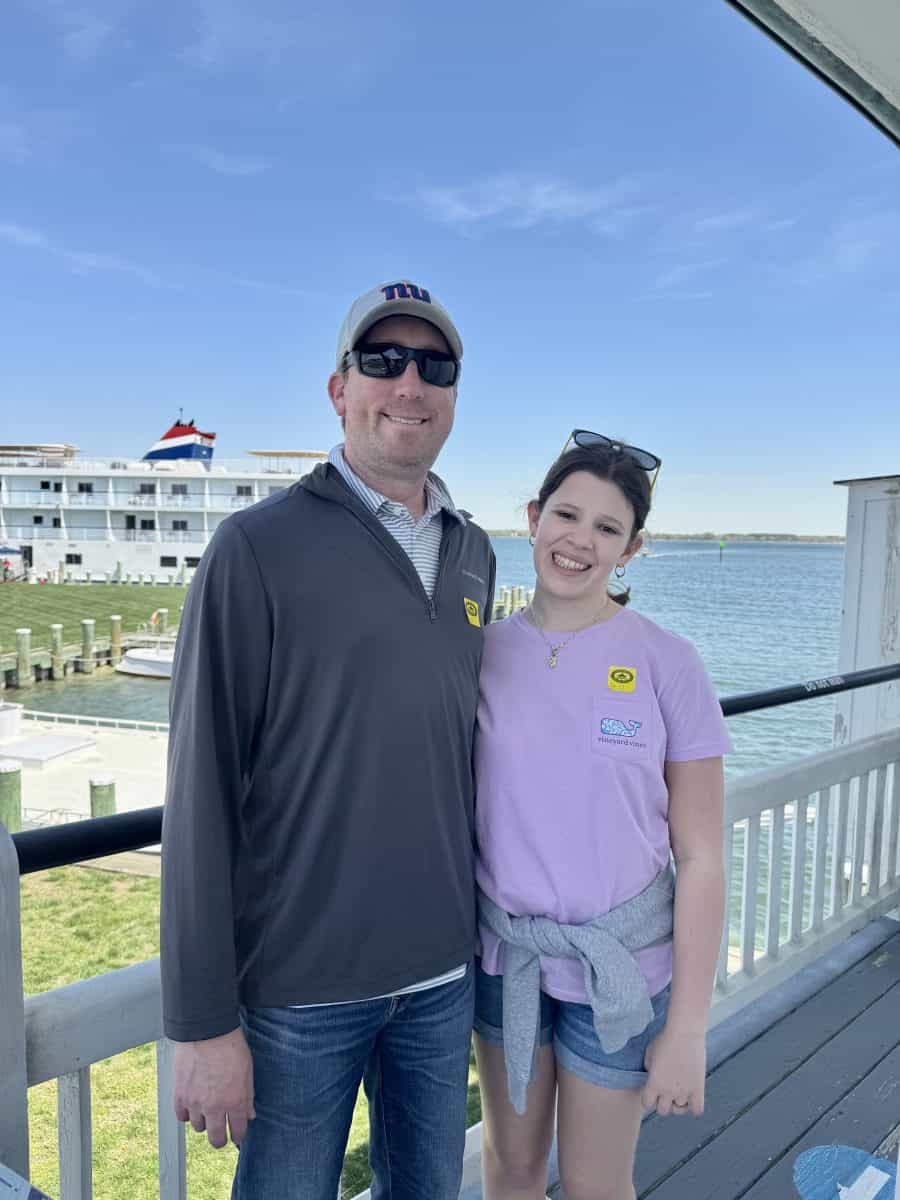
the Chesapeake Bay Maritime Museum in St Michaels, MD

Travel Tips:

  • The museum is open year round from 10am-4pm, with extended hours in warmer months; check here for up to date information on hours and admission fees. Bonus: Tickets are valid for two consecutive days and on Family Funday Sundays, kids under age 18 receive FREE admission!
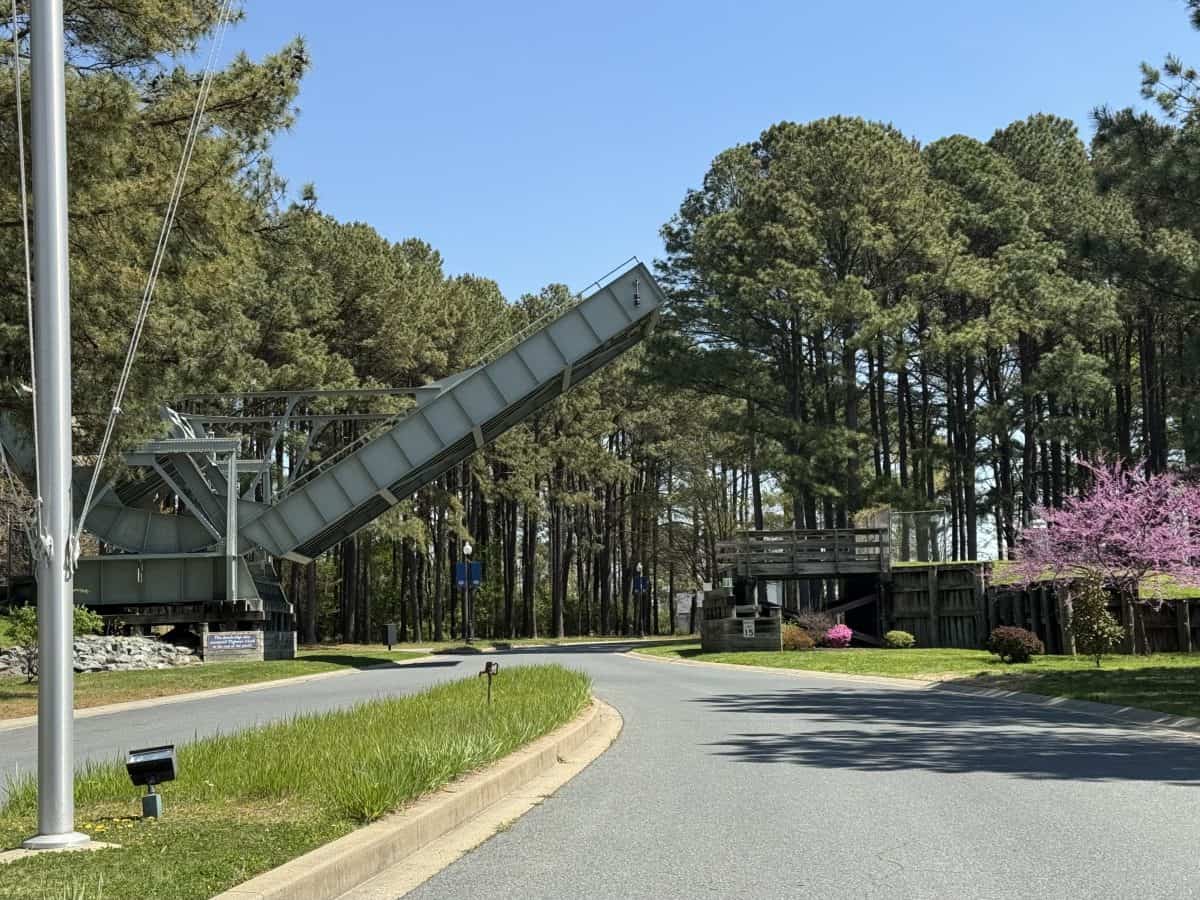
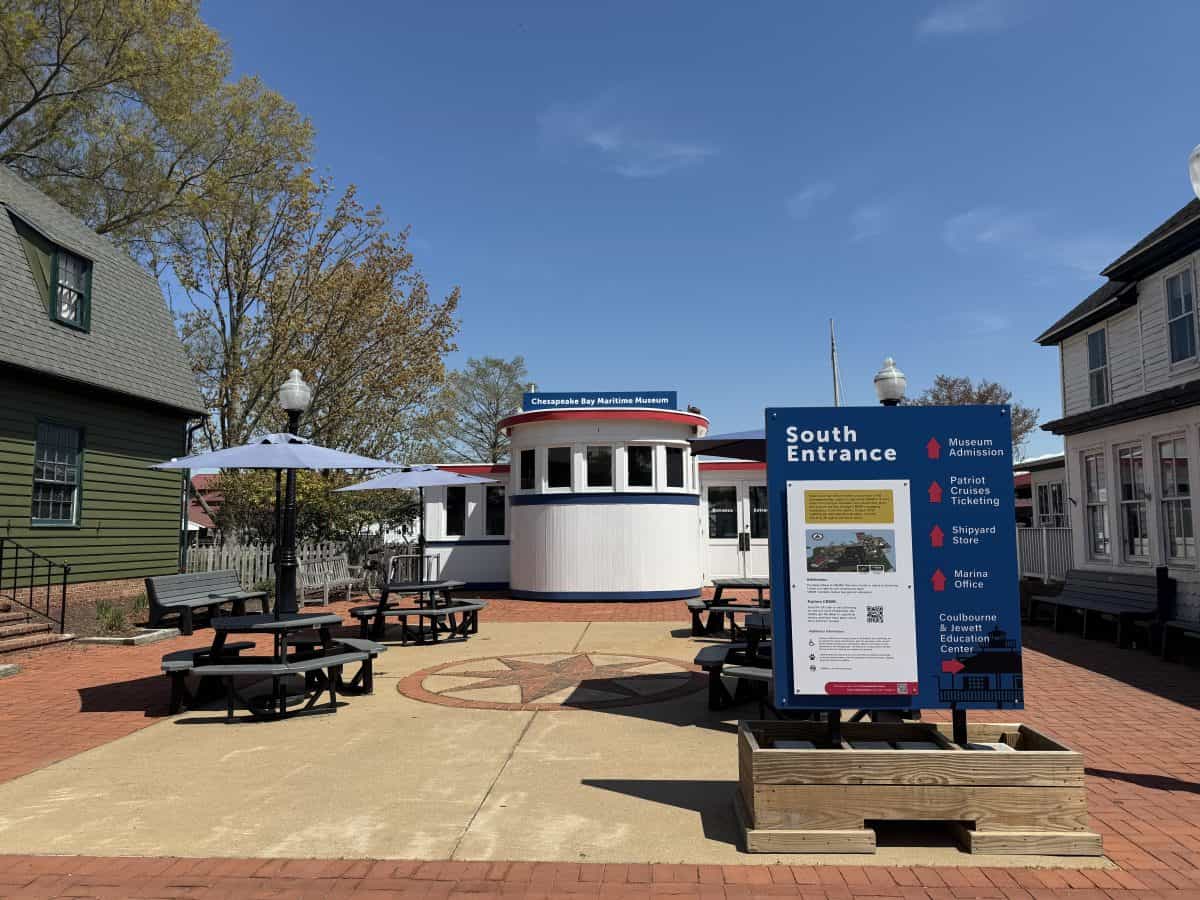
  • The main entrance to the complex is located (check out the Tilghman Island Drawbridge that cars must drive under!) on North Talbot Street, just past the downtown shops. The South Entrance is located on Cherry Street near the Crab Claw Restaurant.
  • Plenty of free parking in front of the Welcome Center. Check here for information on driving directions and arriving by boat.
  • Restrooms are located throughout the complex, including in the Welcome Center, E Dock, and rotating exhibit hall. 
  • Most of the complex is handicap accessible via ramps and elevators, with the exception of the lighthouse. Bring a stroller for the toddler crew and wear sturdy shoes as the outdoor paths are mainly gravel. 
  • The main dining option in the complex is the Crab Claw Restaurant (closed on Tuesdays; museum admission is not necessary); there are also drinks and snacks available in the Welcome Center and South Entrance. Picnic tables under an awning are available adjacent to the Welcome Center. Check here for a comprehensive list of dining options in the town of St. Michaels. 
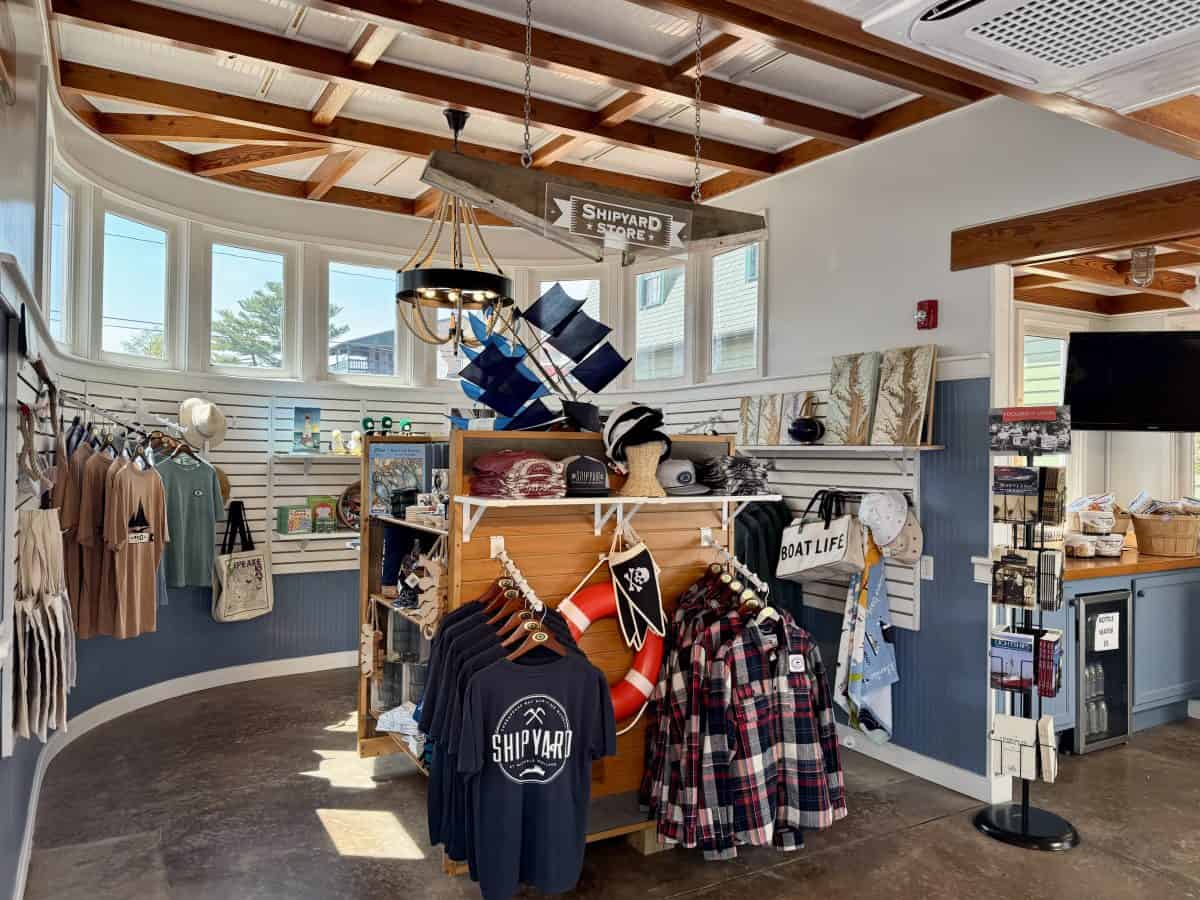
  • The Museum Store is located inside the Welcome Center (museum admission is not necessary) and there is a smaller gift shop at the South Entrance. 
  • Check here for the full calendar of festivals and events and here for special programs, including guided tours, water adventures, speaker series, and historic workboat experience.  
  • Plan on a good three hours to tour all 12 exhibit buildings, plus more time for live demonstrations, films, programs. See a complex map here.
  • A Special Note for the toddler and preschool crowd: The museum complex is set next to the Miles River and many areas are open to the water; Keep a close eye on little ones near the docks and boardwalk.

13 Ways to Explore the CBMM:

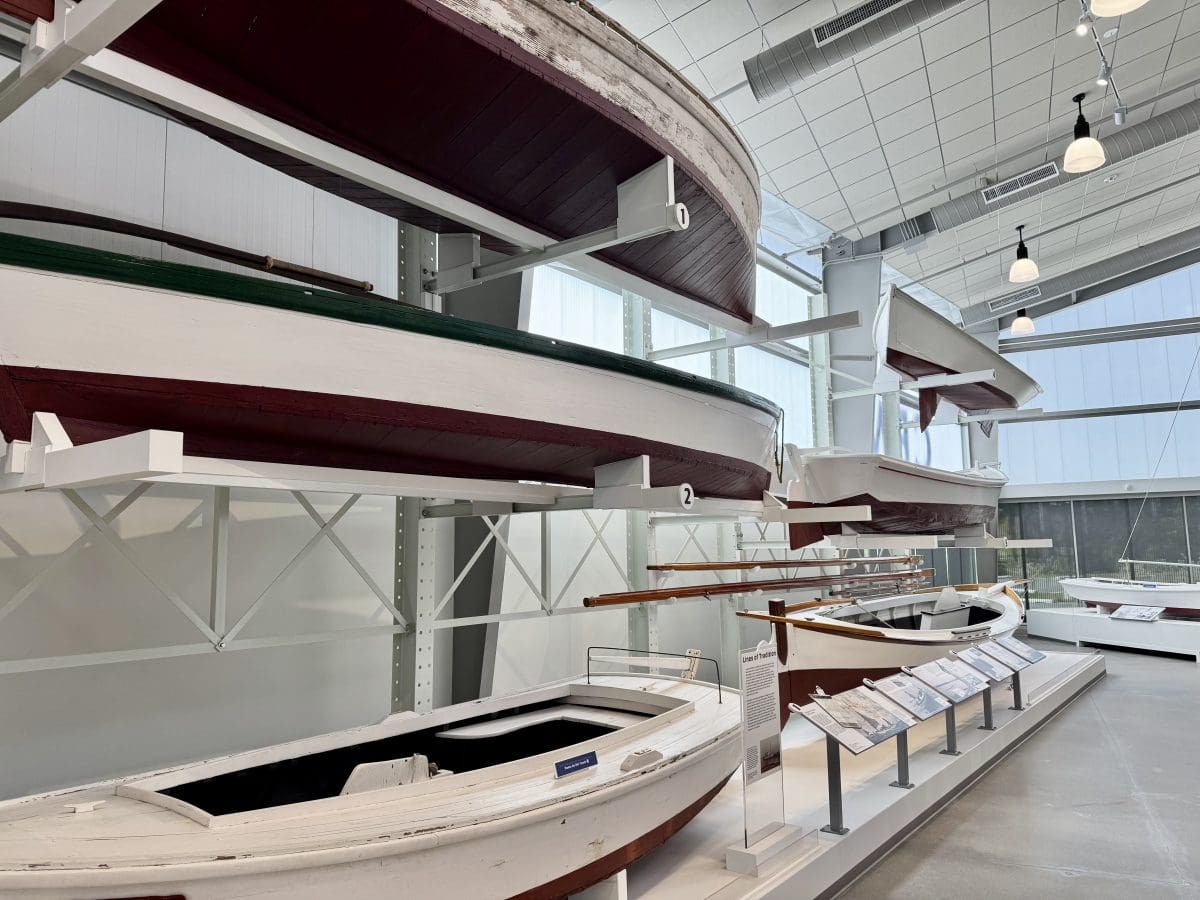
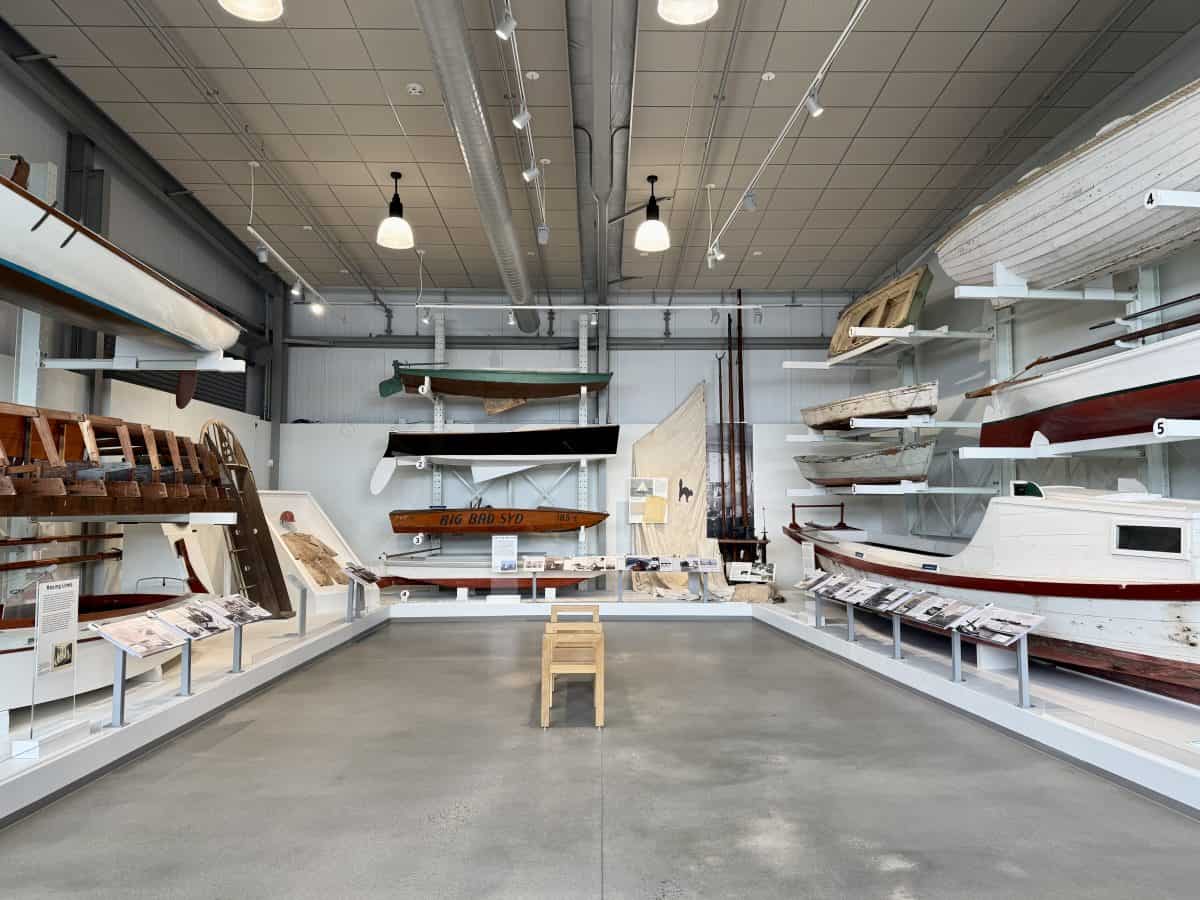
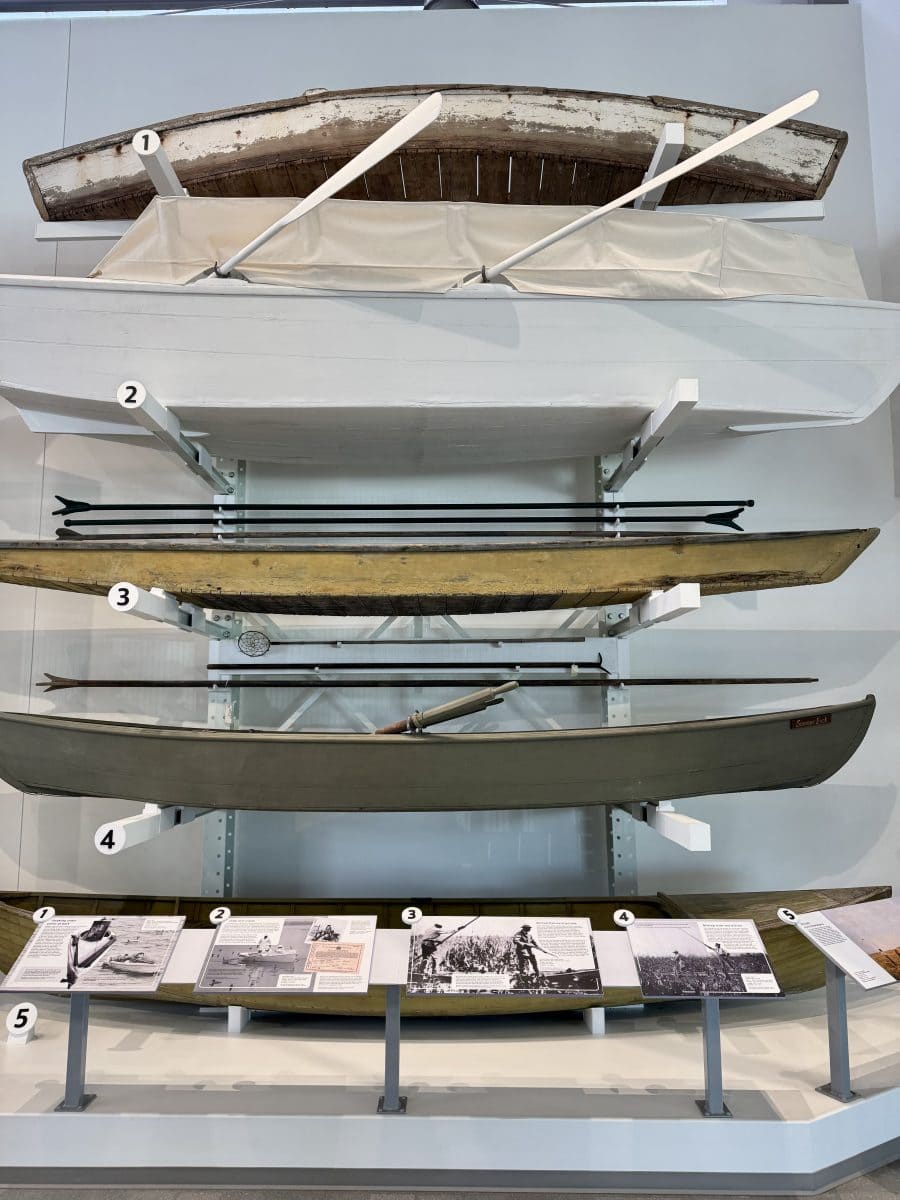
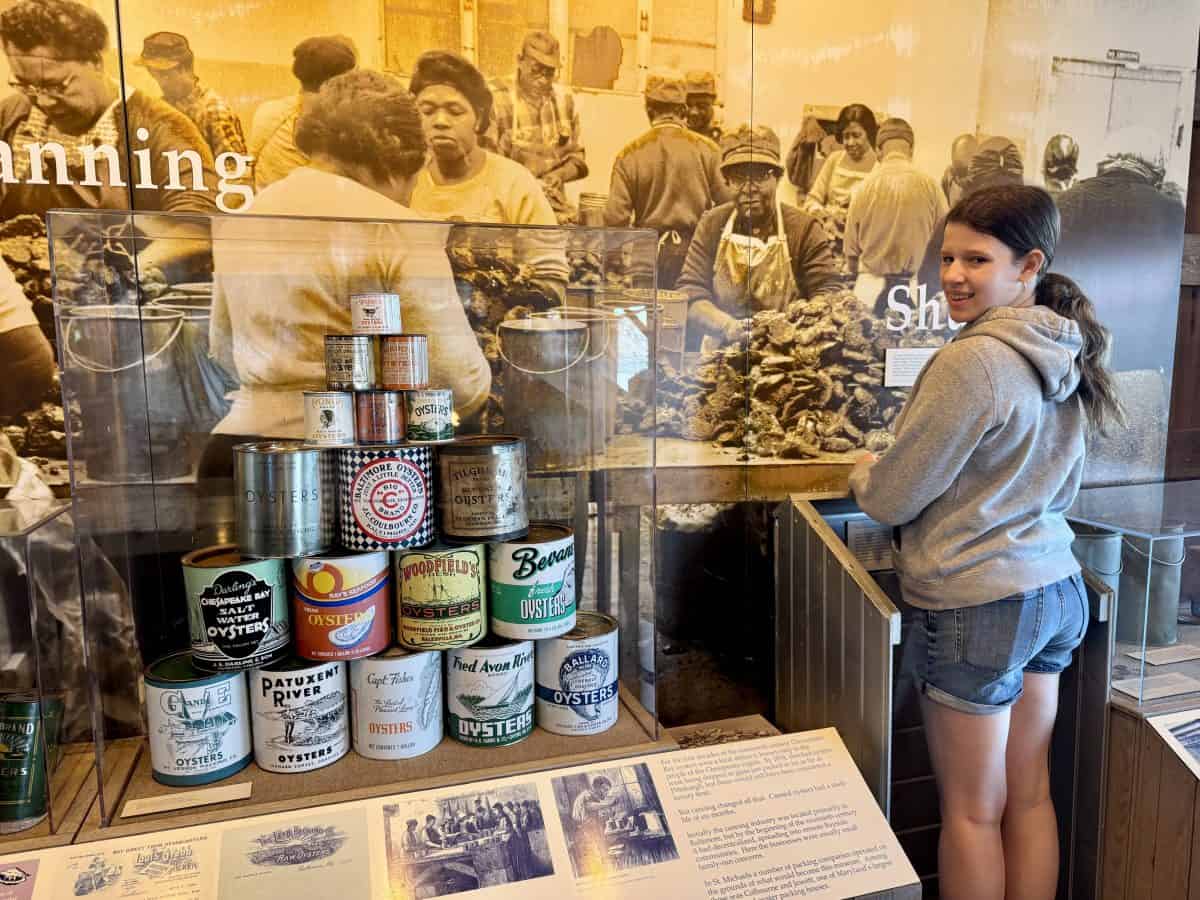
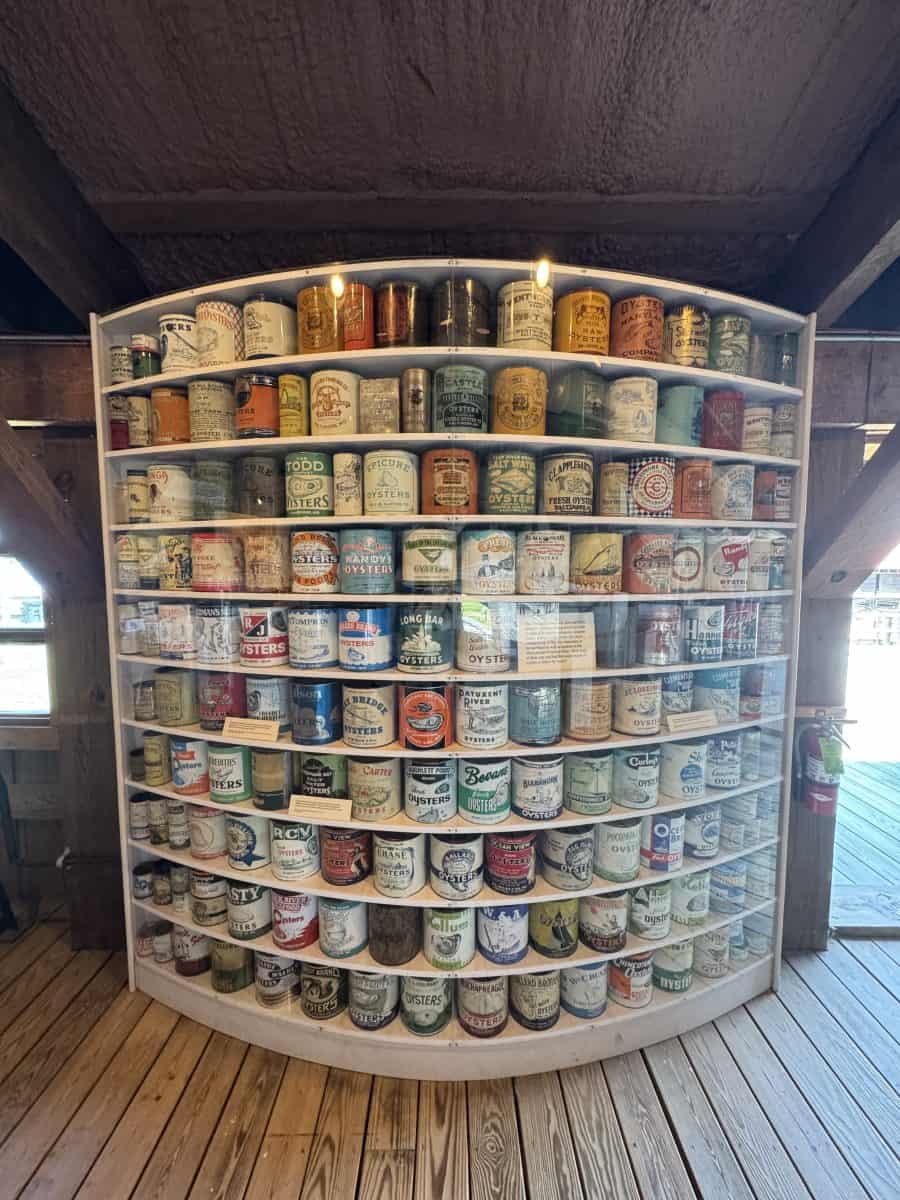
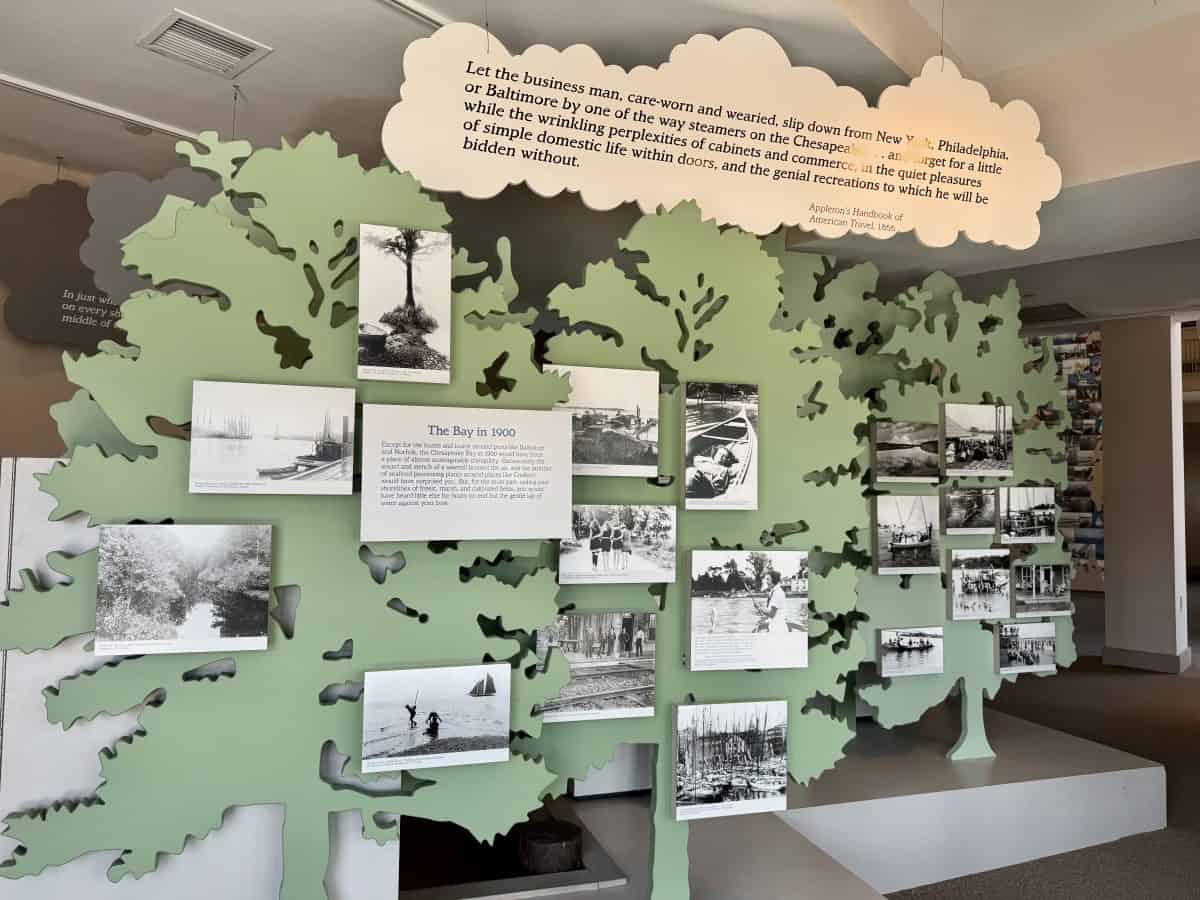
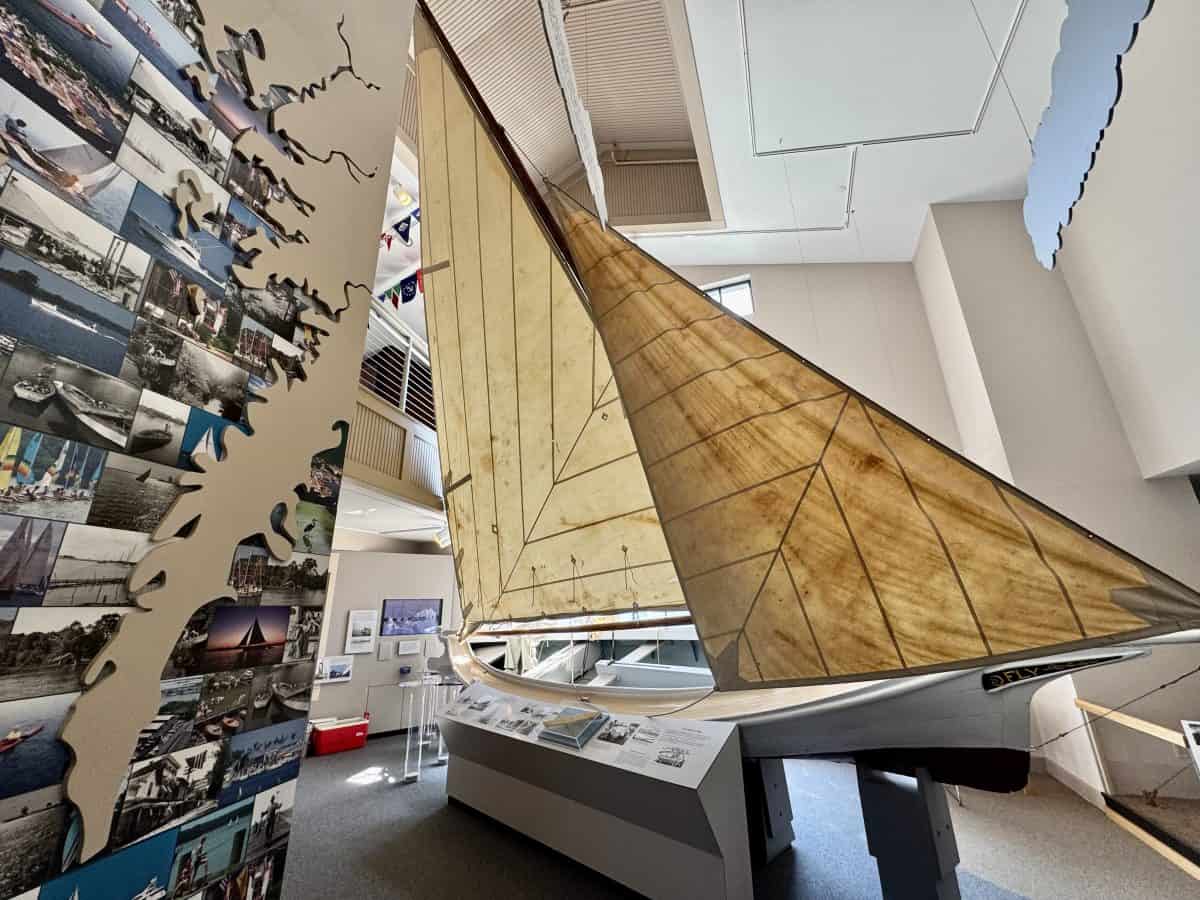
  1. Count the number of various sailing skiffs, one design boats, sailing scows, and canoes on display in the Water Lines exhibit in the Welcome Center. The gallery also has exhibits on shucking oysters (workers were paid by how many cans they could fill with oysters and could customize their standing location so they would not be permanently hunched over), “sinkboxes” and how they were used to hunt geese, and the history of the Keene family set to an original song.
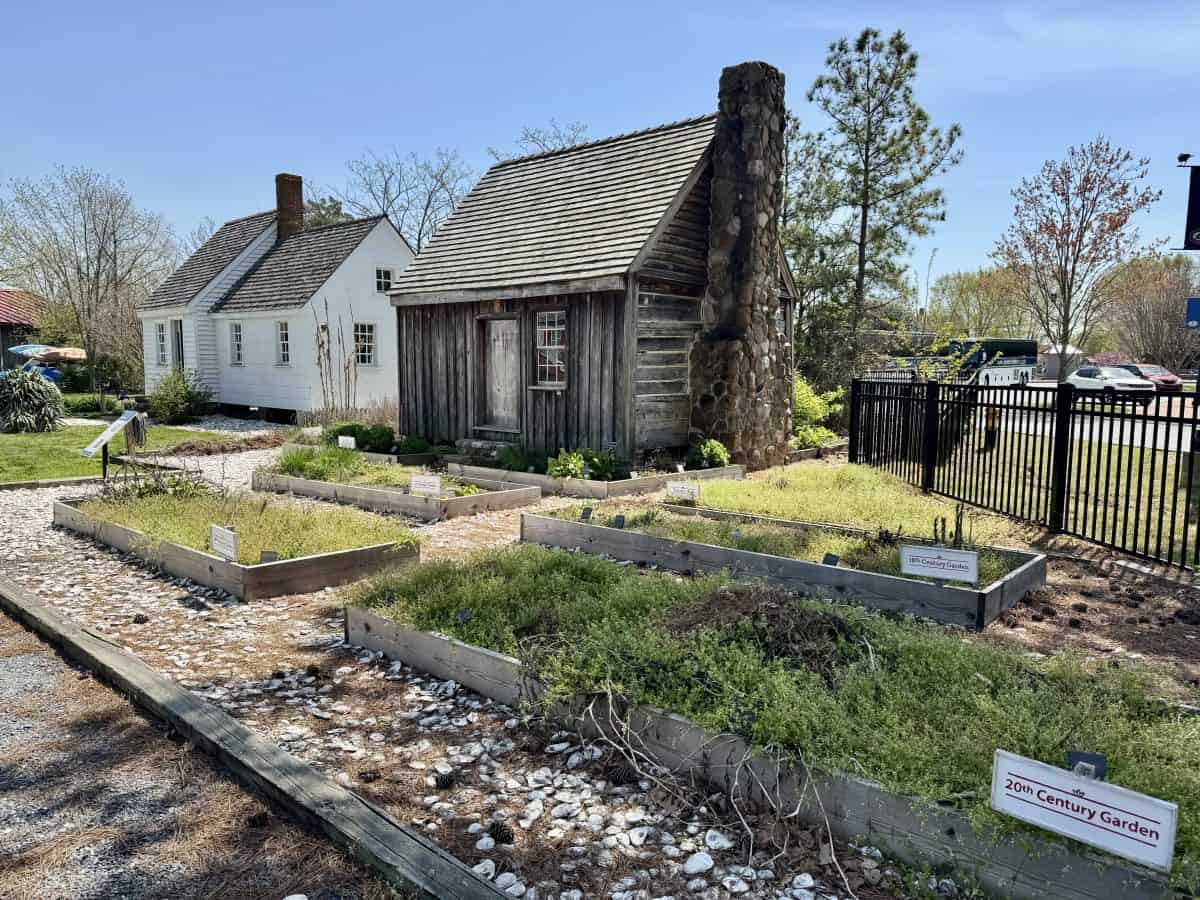
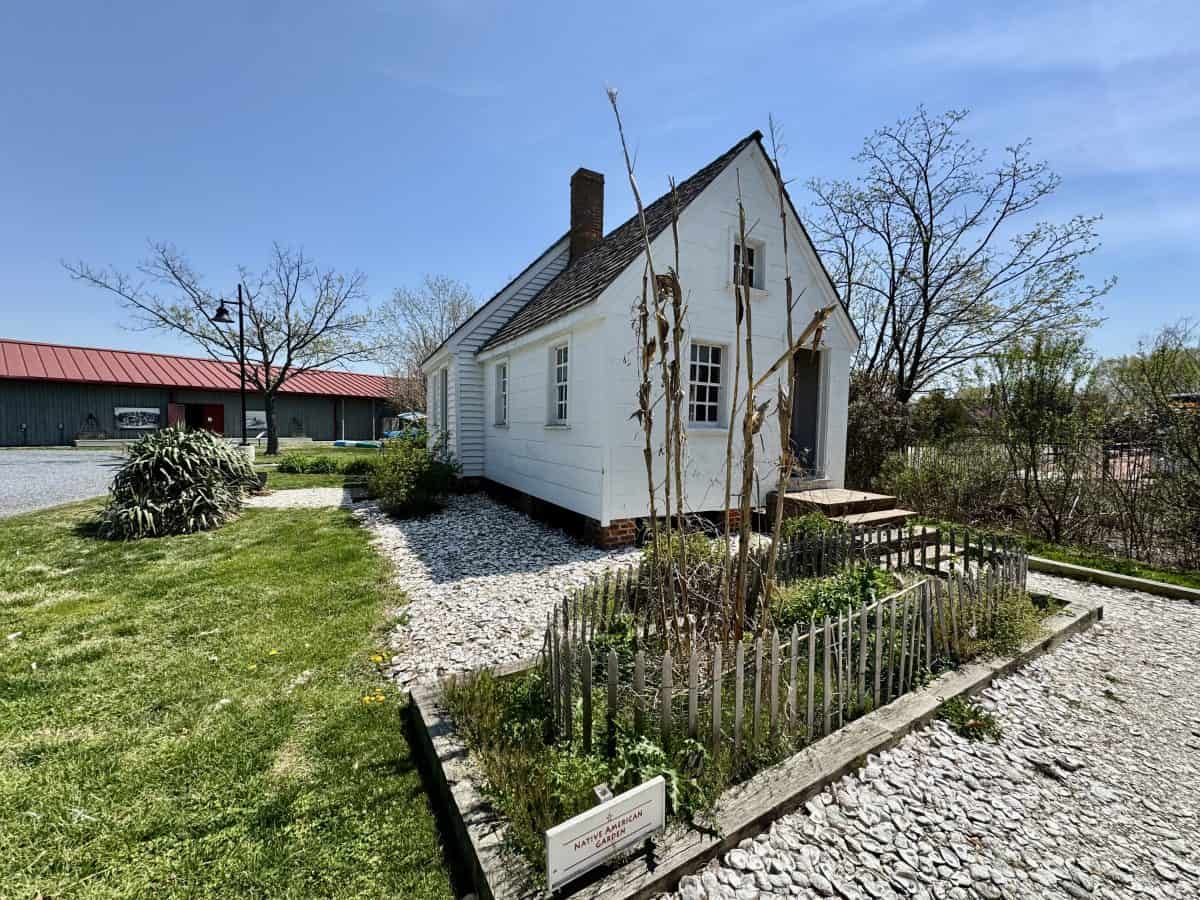
  2. Smell the various herbs and heirloom vegetables in the Heirloom Garden. Gardens are organized by century (dating back to the 1600s!) and include tobacco beds. Check here for a full list of what is grown in the gardens.
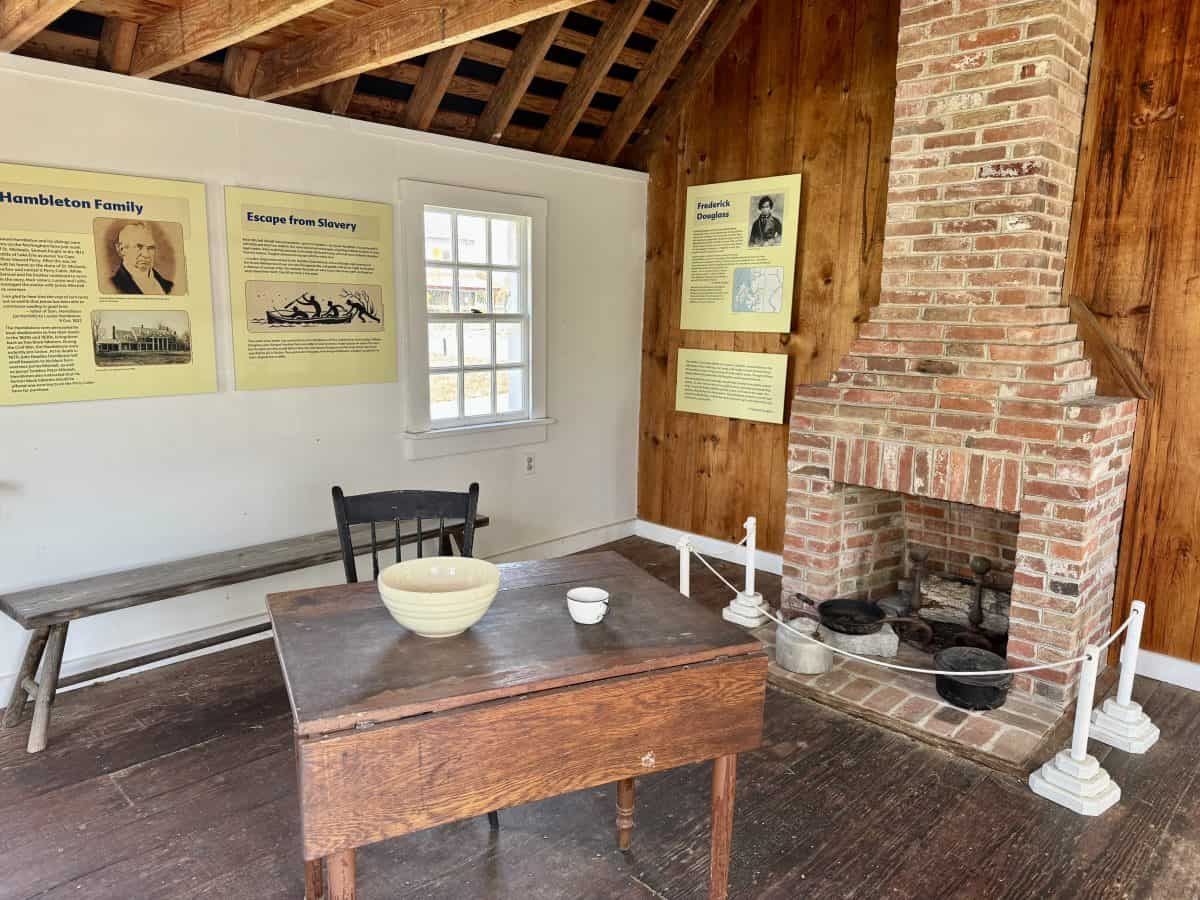
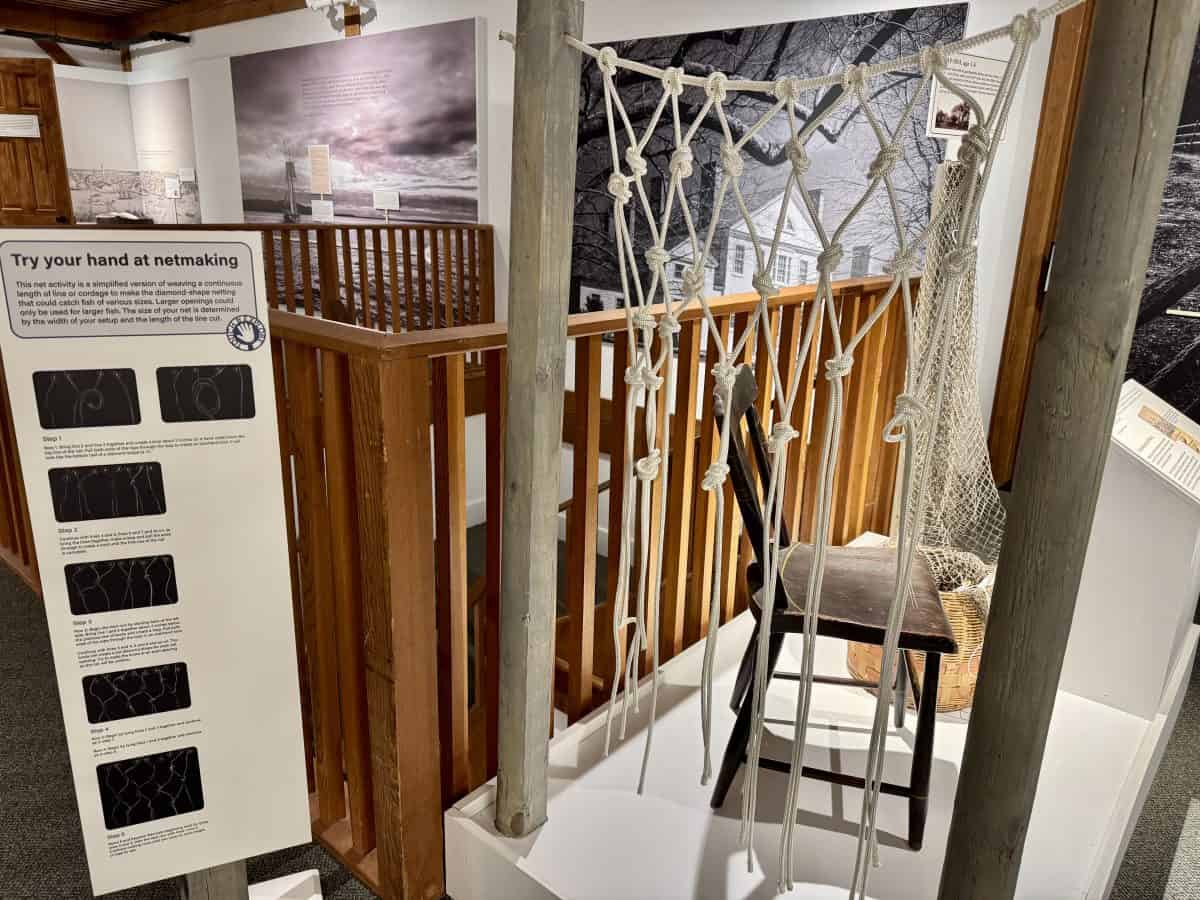
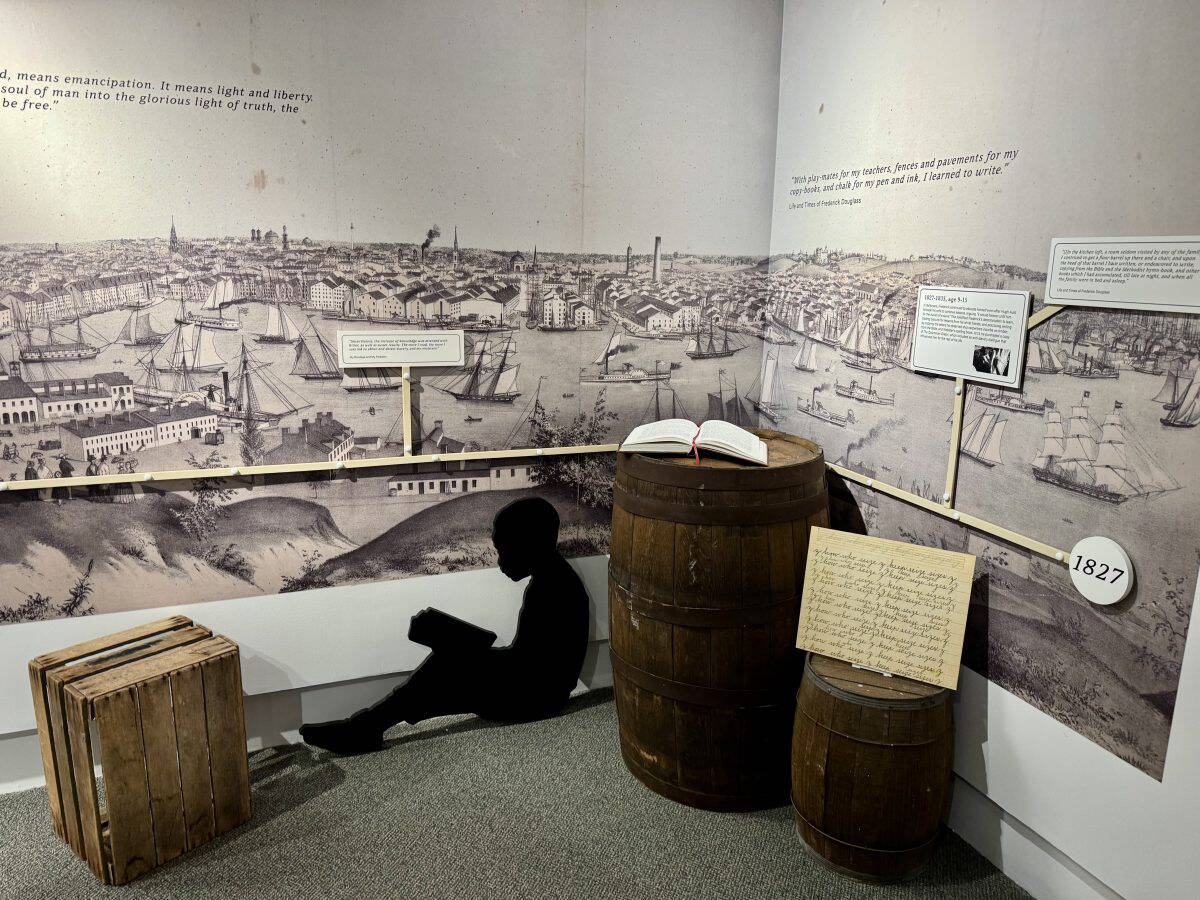
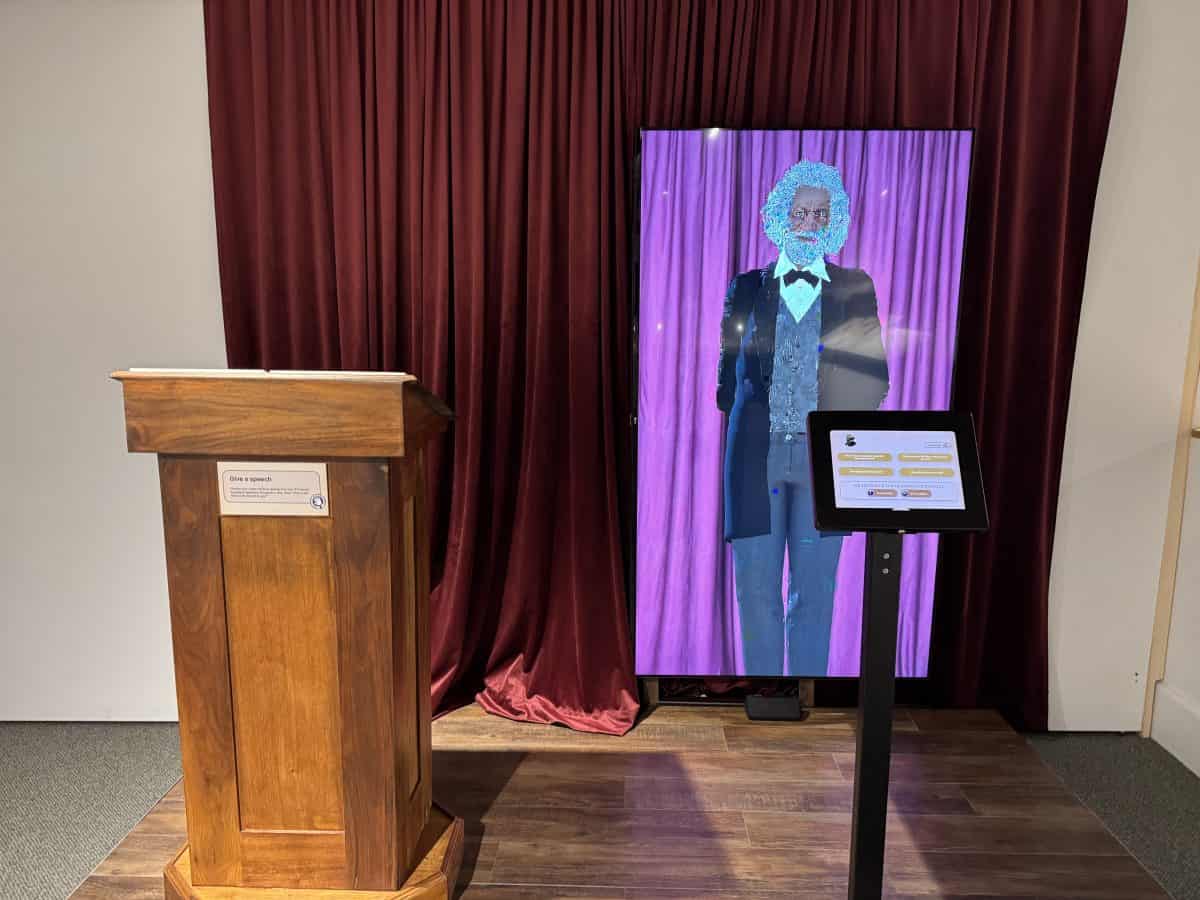
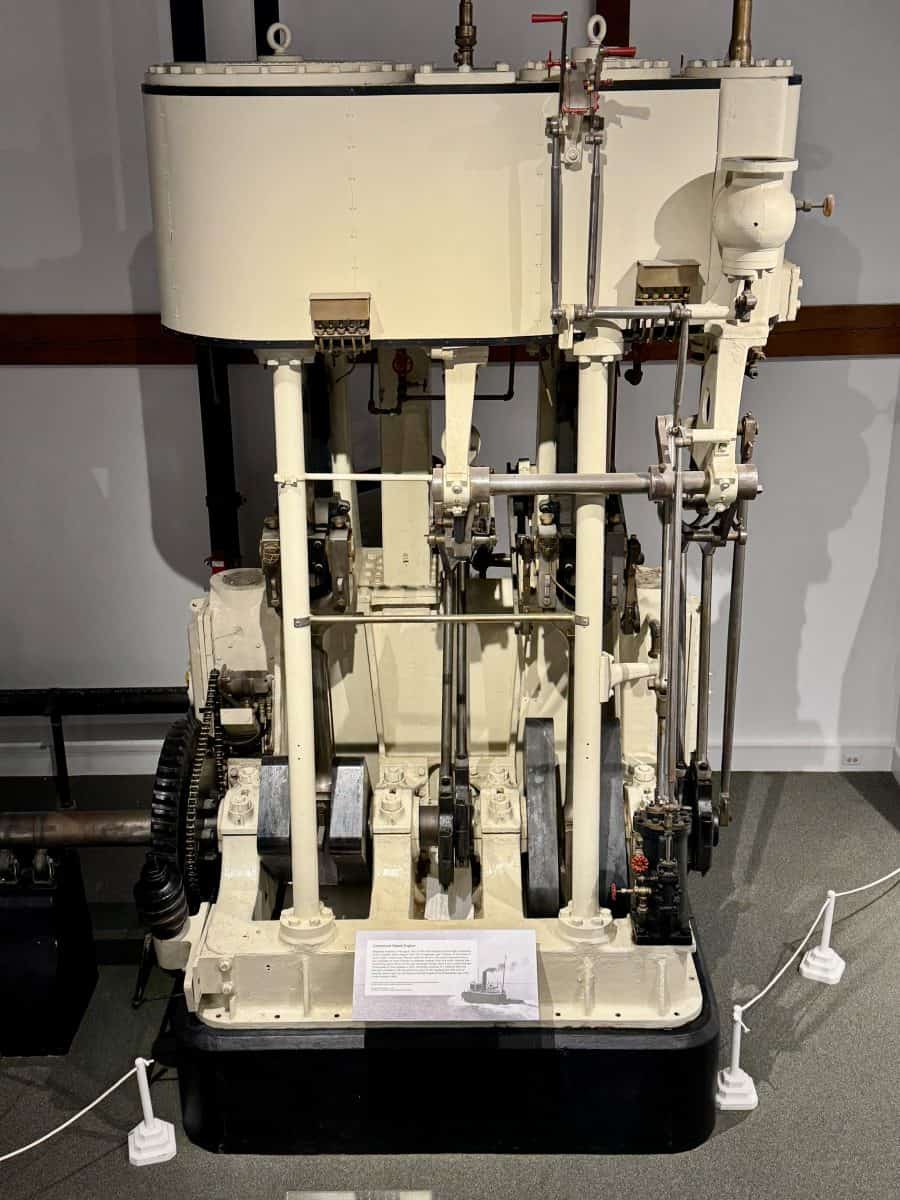
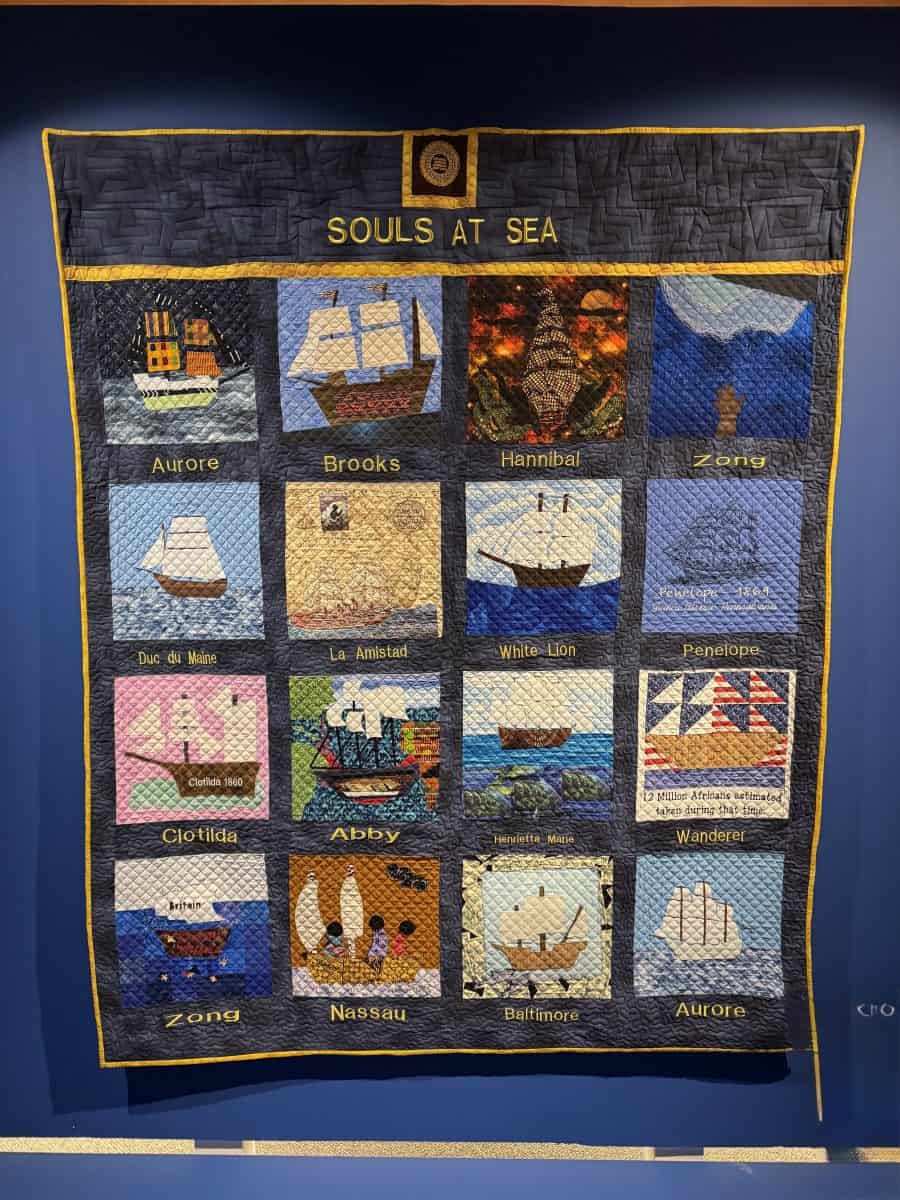
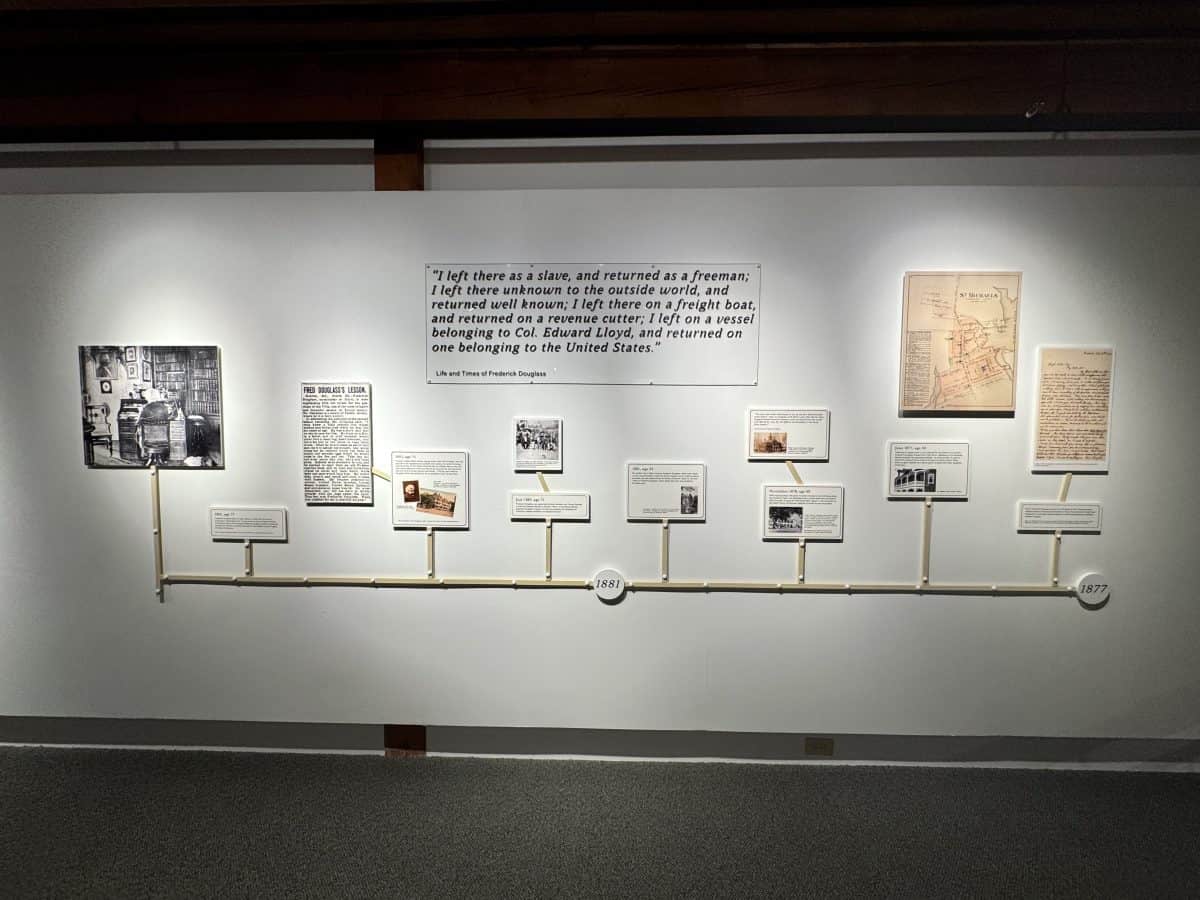
  3. Follow the chronological timeline (start on the second floor) of Frederick Douglas in the Bear Me Into Freedom and Sailing to Freedom special exhibits (through the end of 2027). The exhibit uses a historic map to trace Frederick Douglas’s life in Talbot County, starting in 1818 through his experiences as an abolitionist and writer. Try interactive parts of the exhibit, including netmaking and waving skills, caulking the ship to fill in the gaps between planks, pretending to give a speech, and asking a question to a hologram electronic version of Douglas. The first floor exhibit Sailing to Freedom honors the African American lives lost at sea and while building the underground railroad and maritime villages, and the Freedom Seekers. Check out the 12 foot compound steam engine from 1924.
  4. Walk through the Mitchell Douglas House, where Frederick Douglas’s sister, Eliza Bailey Mitchell, lived with her husband and children, and learn about their family’s lineage and their emancipation. 
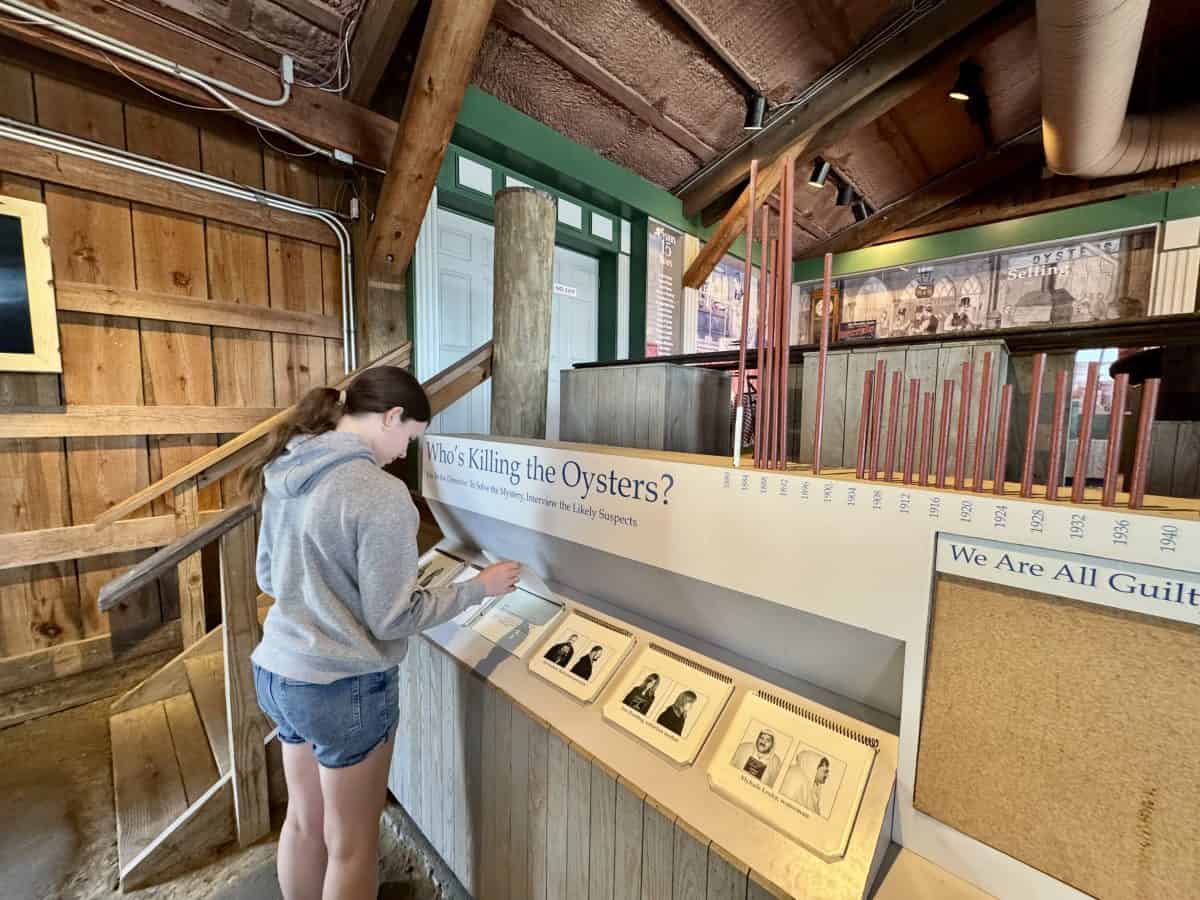
  5. Learn about the oystering industry in the Oystering on the Chesapeake exhibit by opening drawers to see maps, guessing answers to fun oyster trivia (oyster blood is blue!), seeing how the oyster industry was mined in the 19th century, and learning 15 ways to prepare oysters and how to pack as many oysters as possible in a can. 
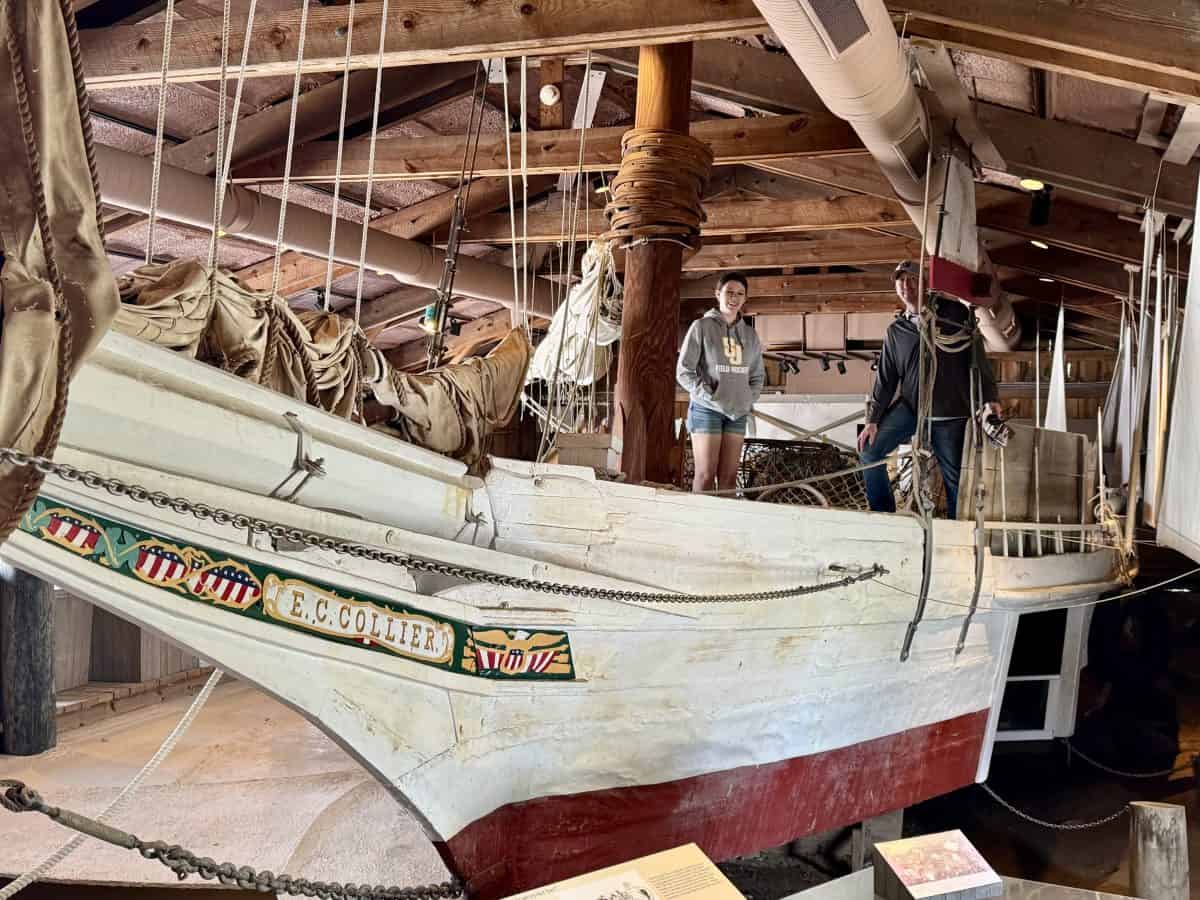
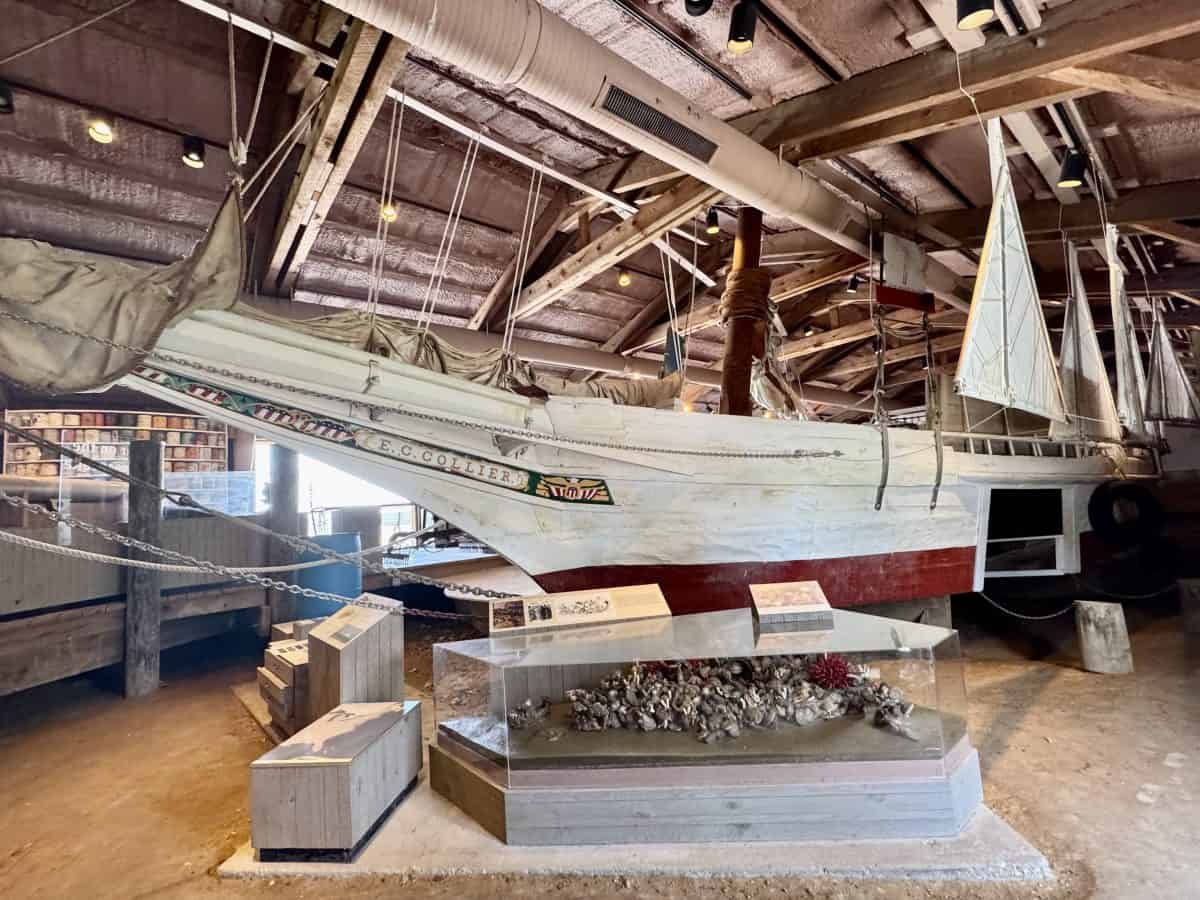
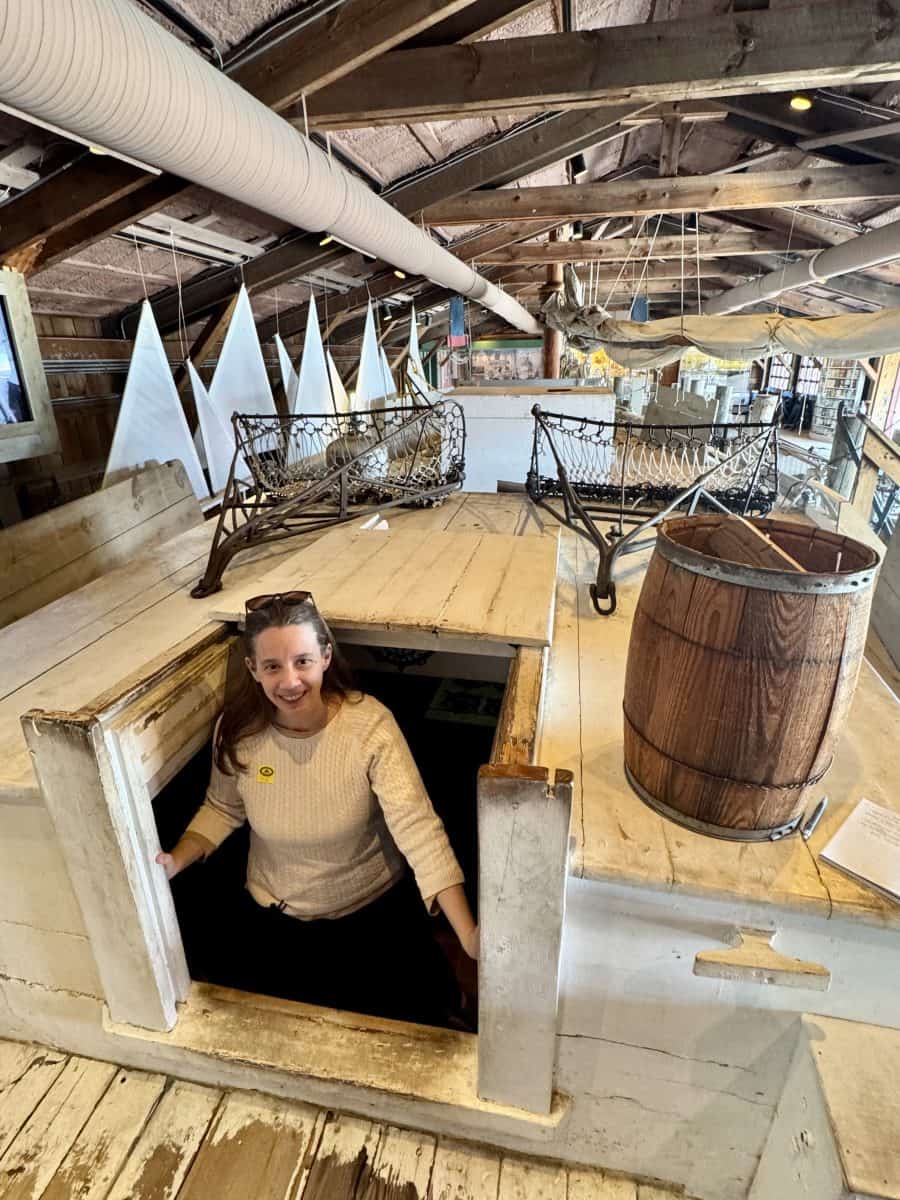
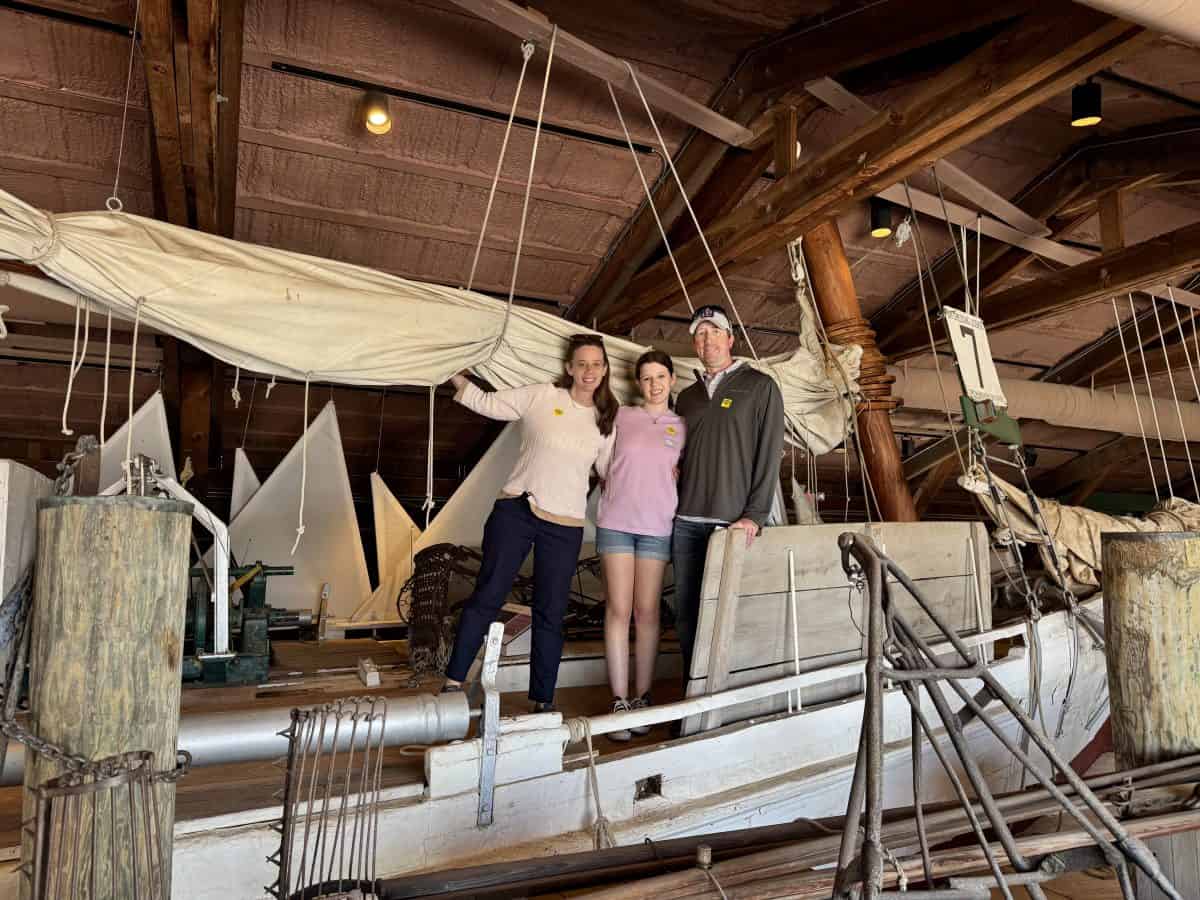
  6. Hop aboard the EC Collier, a real skipjack, and explore the boat by climbing down below deck in the Oystering on the Chesapeake exhibit.

Would you like to save this?
We'll email this post to you, so you can come back to it later.

posing on the EC Collier boat at the Chesapeake Bay Maritime Museum in St Michaels, MD

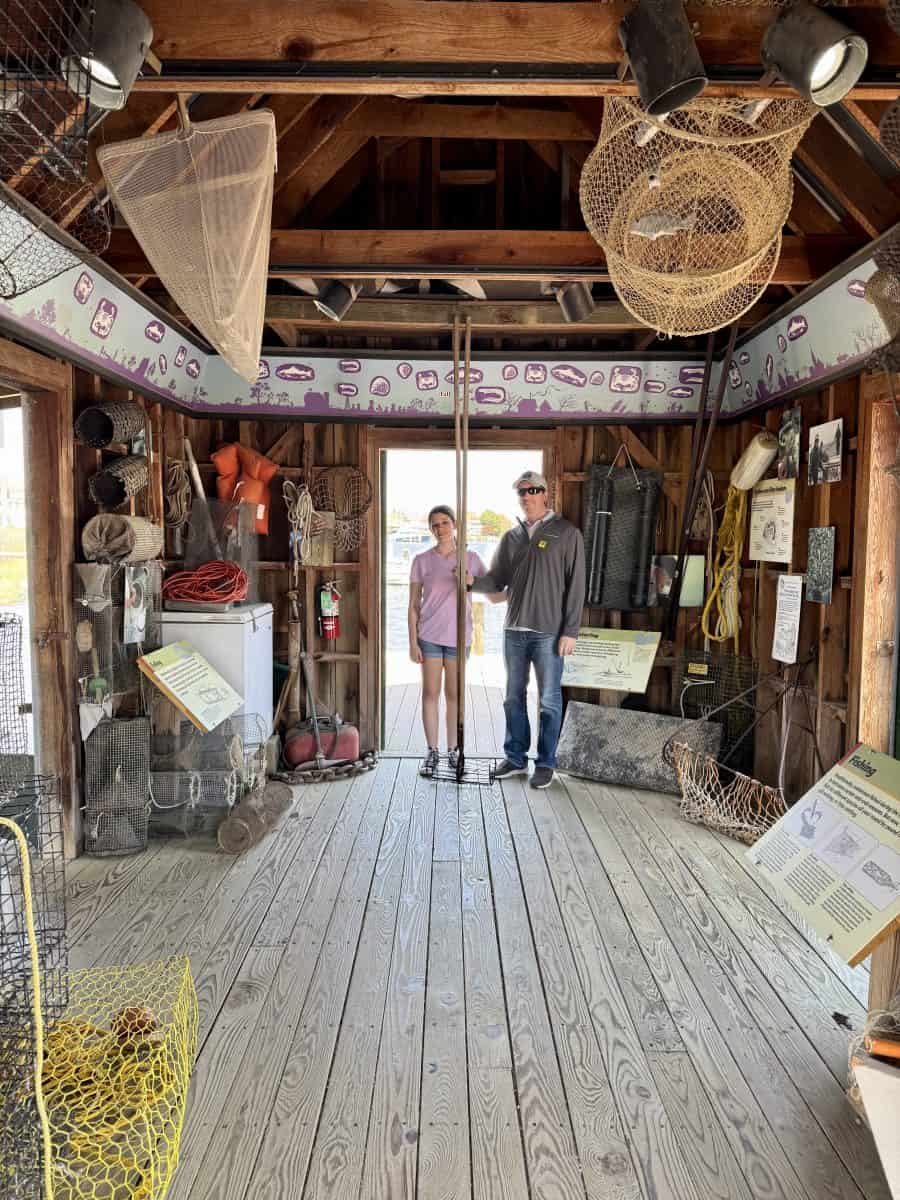
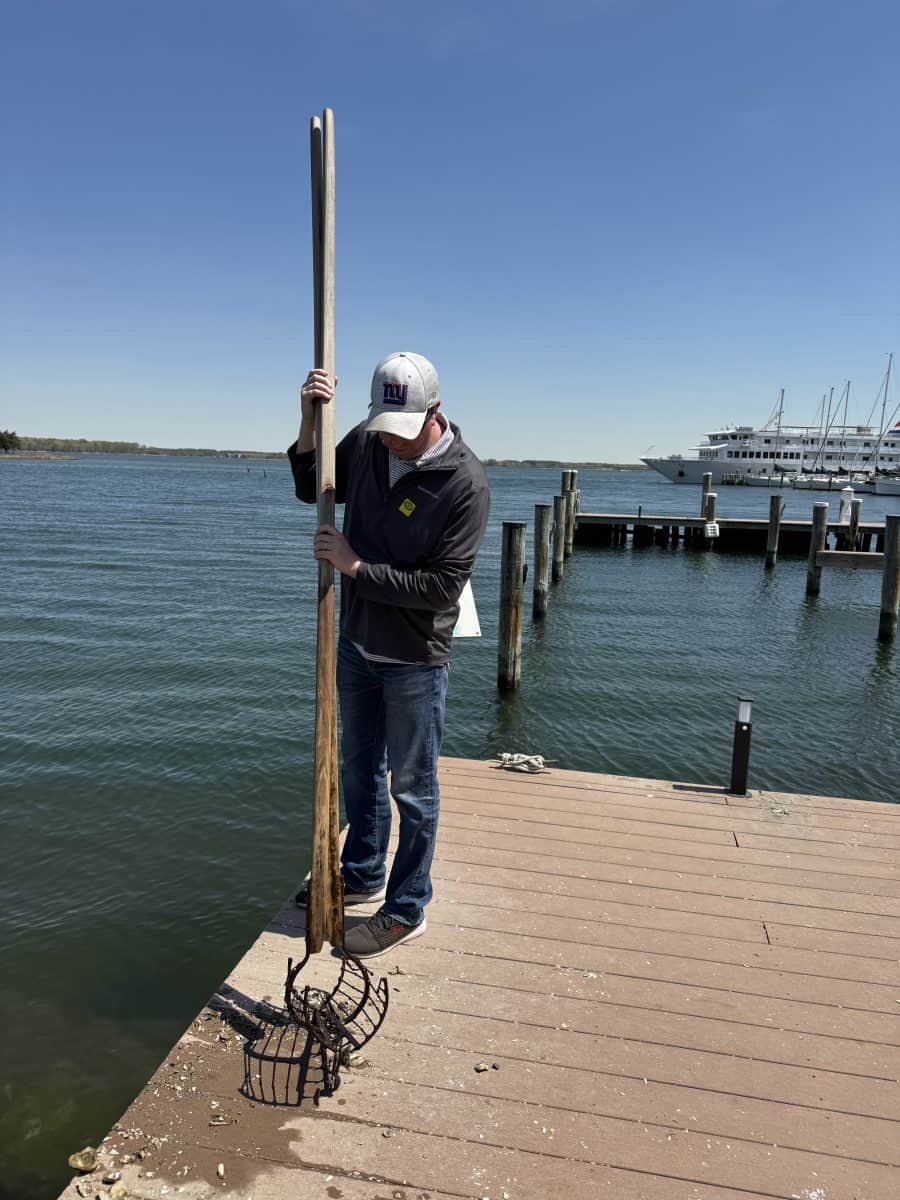
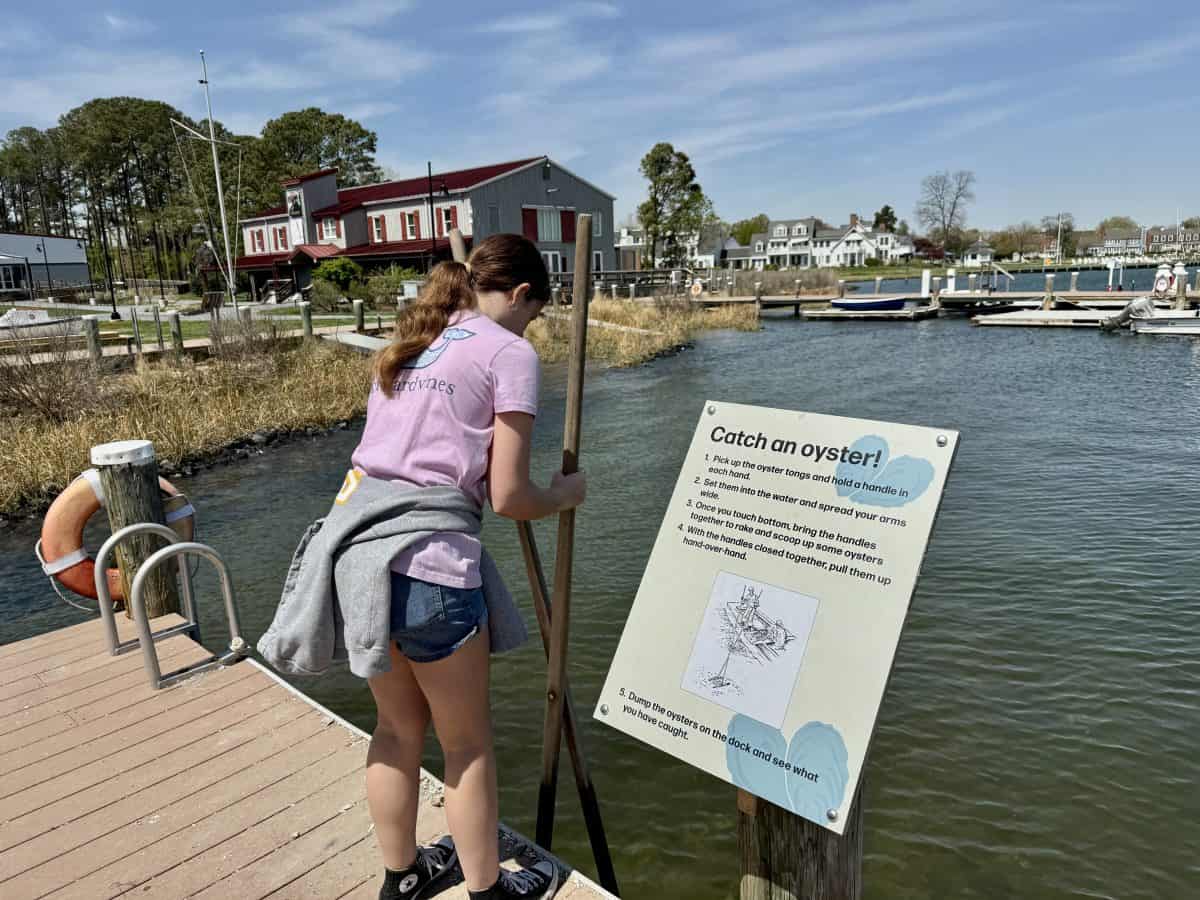
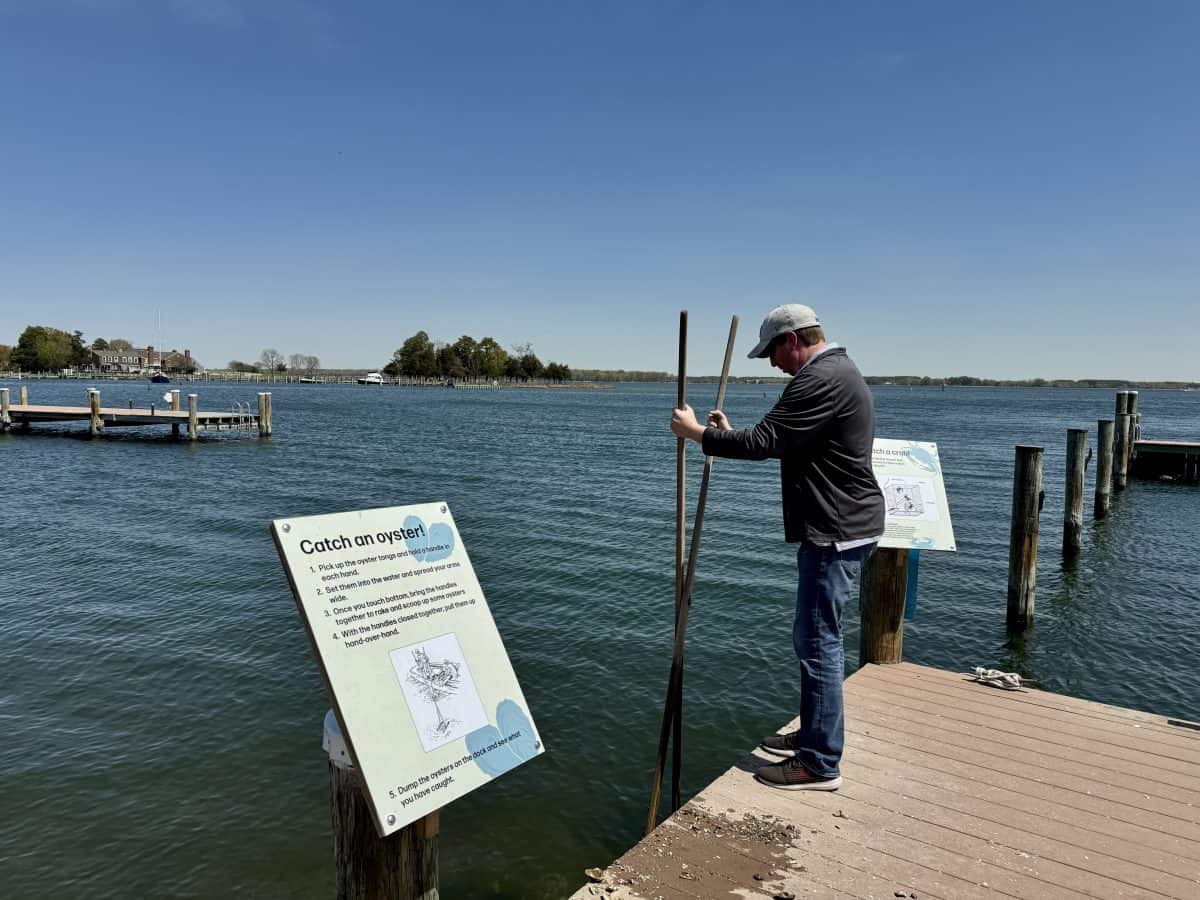
  1. Practice seafood harvesting techniques in the Waterman’s Wharf. Visitors can pull up an eel pot, use tongs to find oysters, and try and catch crabs. 
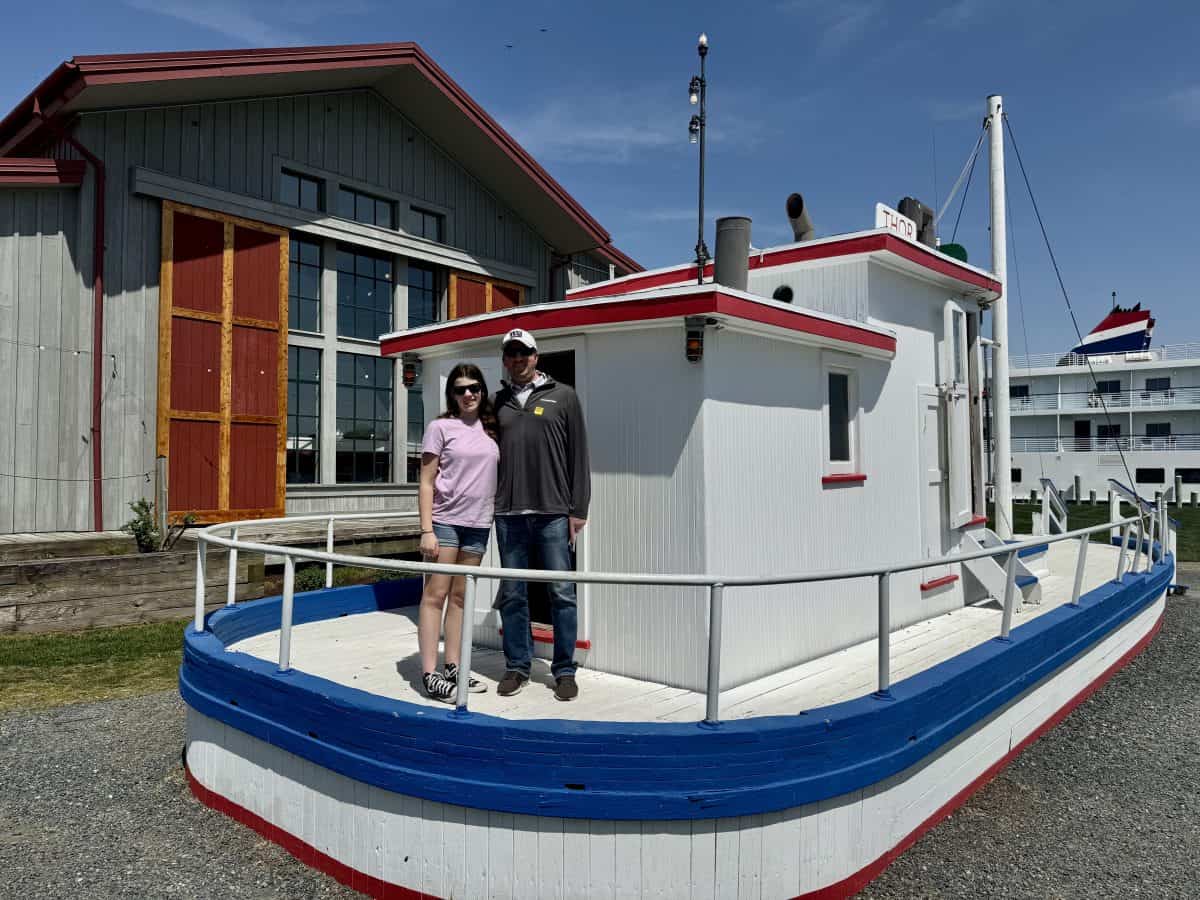
  2. Pretend to navigate your own miniature ship with the Katie G and Buy Boat Thor replicas.
  3. Watch a film (most range from 20 minutes to 45 minutes) on a variety of topics related to the Chesapeake Bay in the Water Fowling Building. 
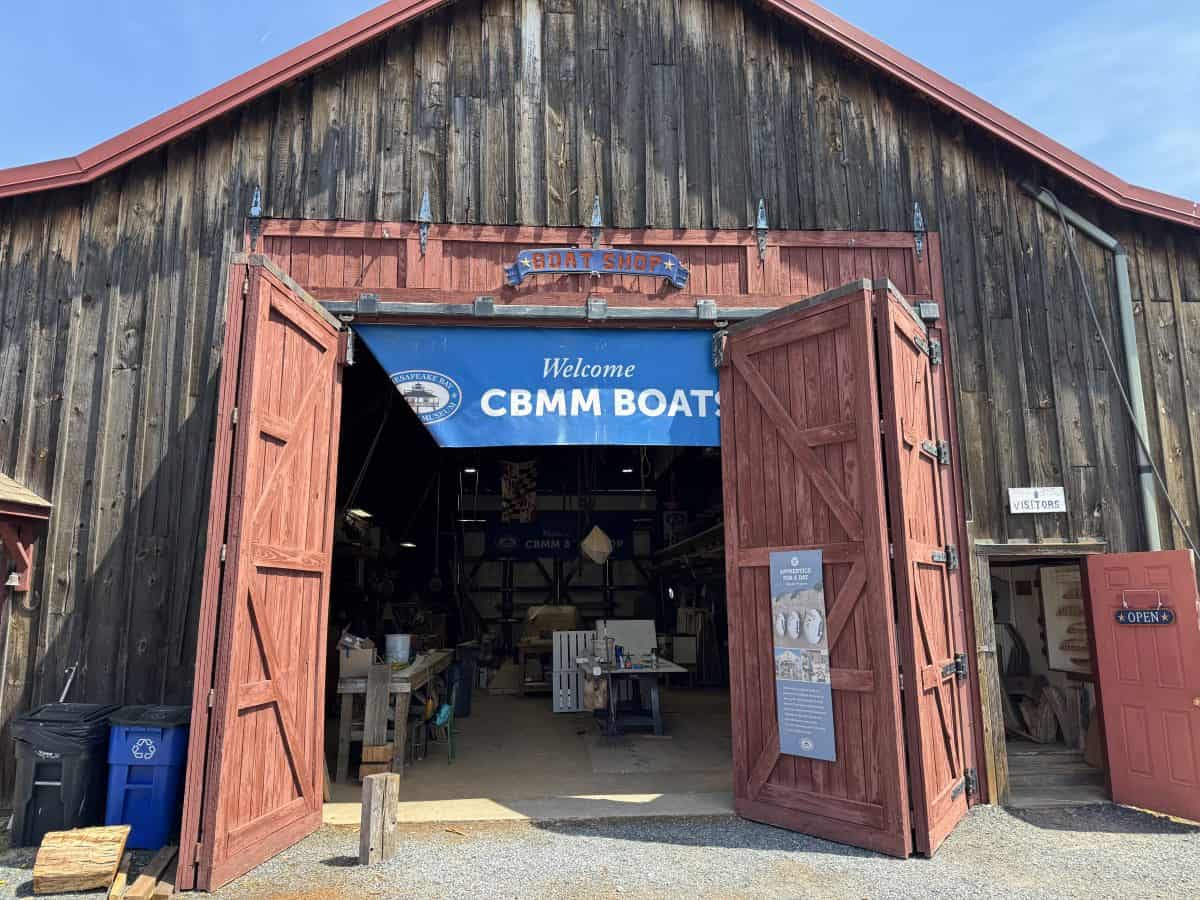
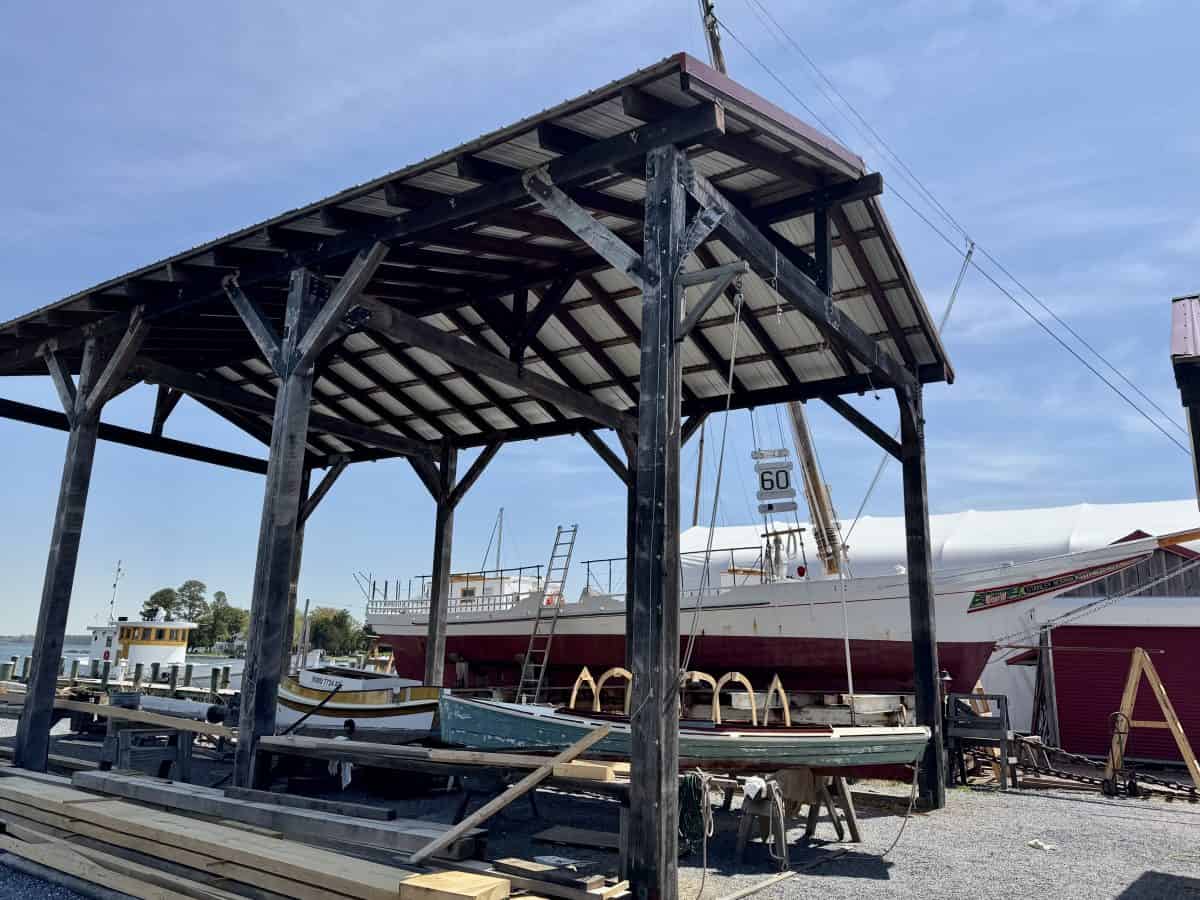
  4. Observe shipwrights and restorers and apprentices at work in the Shipyard. The team works on both wooden boats for the museum’s collections and repairs for private boat owners and can repair up to 18 boats a week (although some older boats can take months or years to repair!). We observed work being done to repair a “Buy Boat” that was used to pick up oysters from fishermen and bring them to land to be sold. See the schedule for the museum’s apprenticeship program here
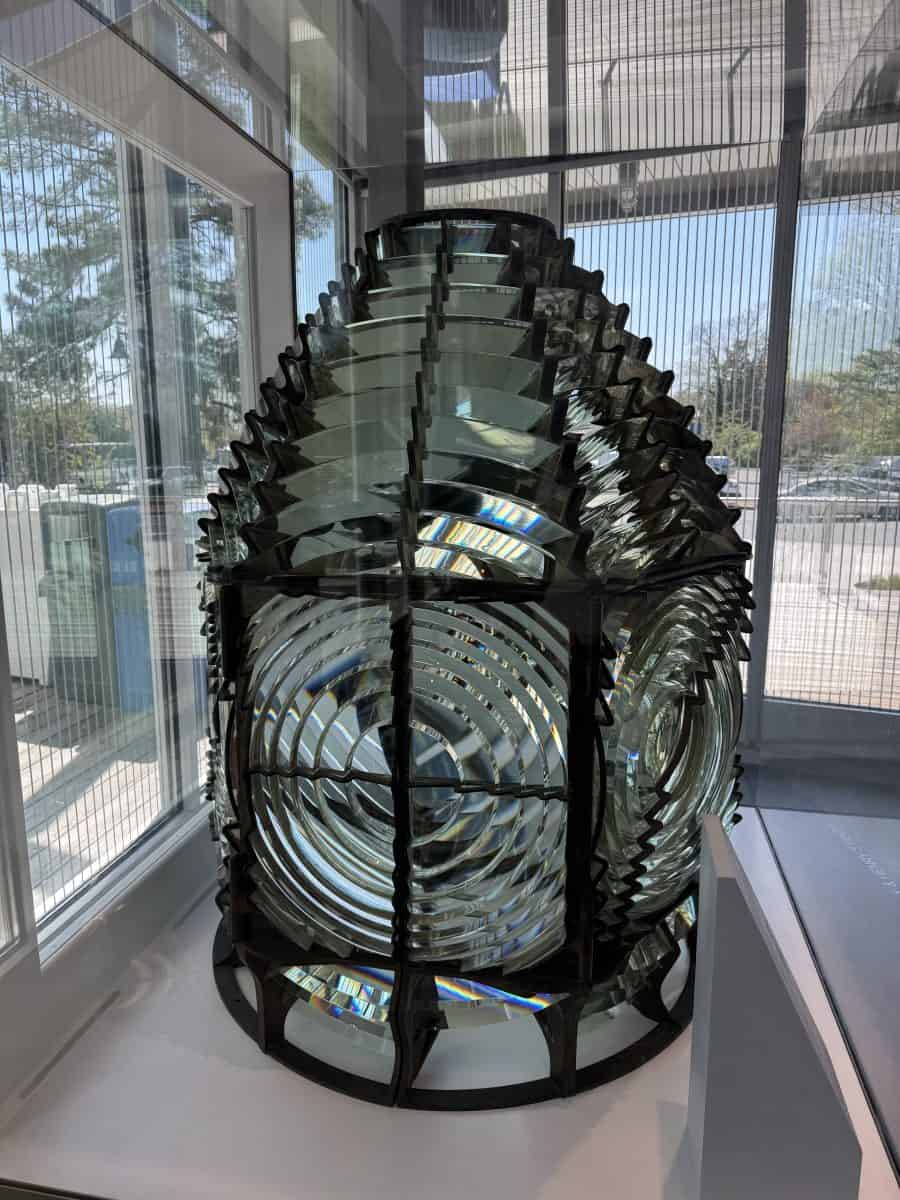
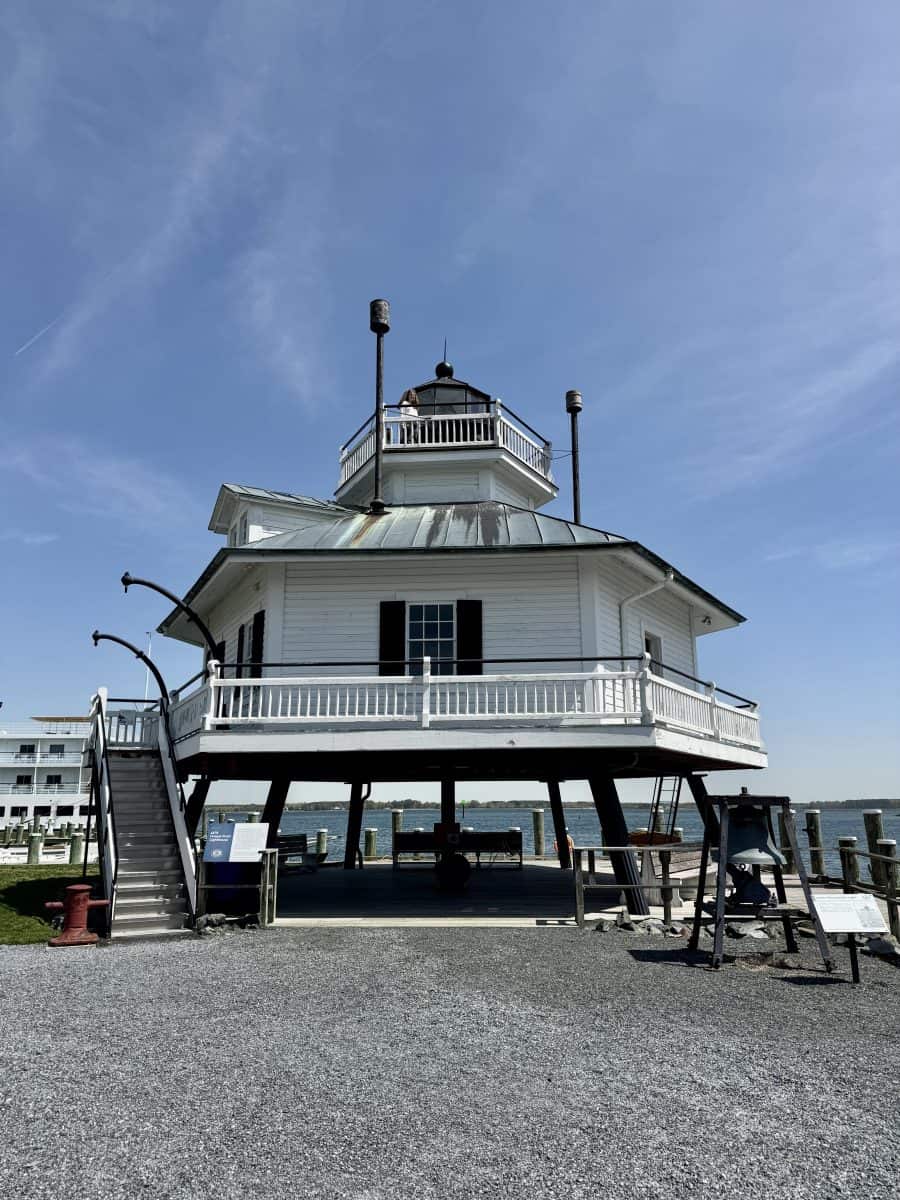
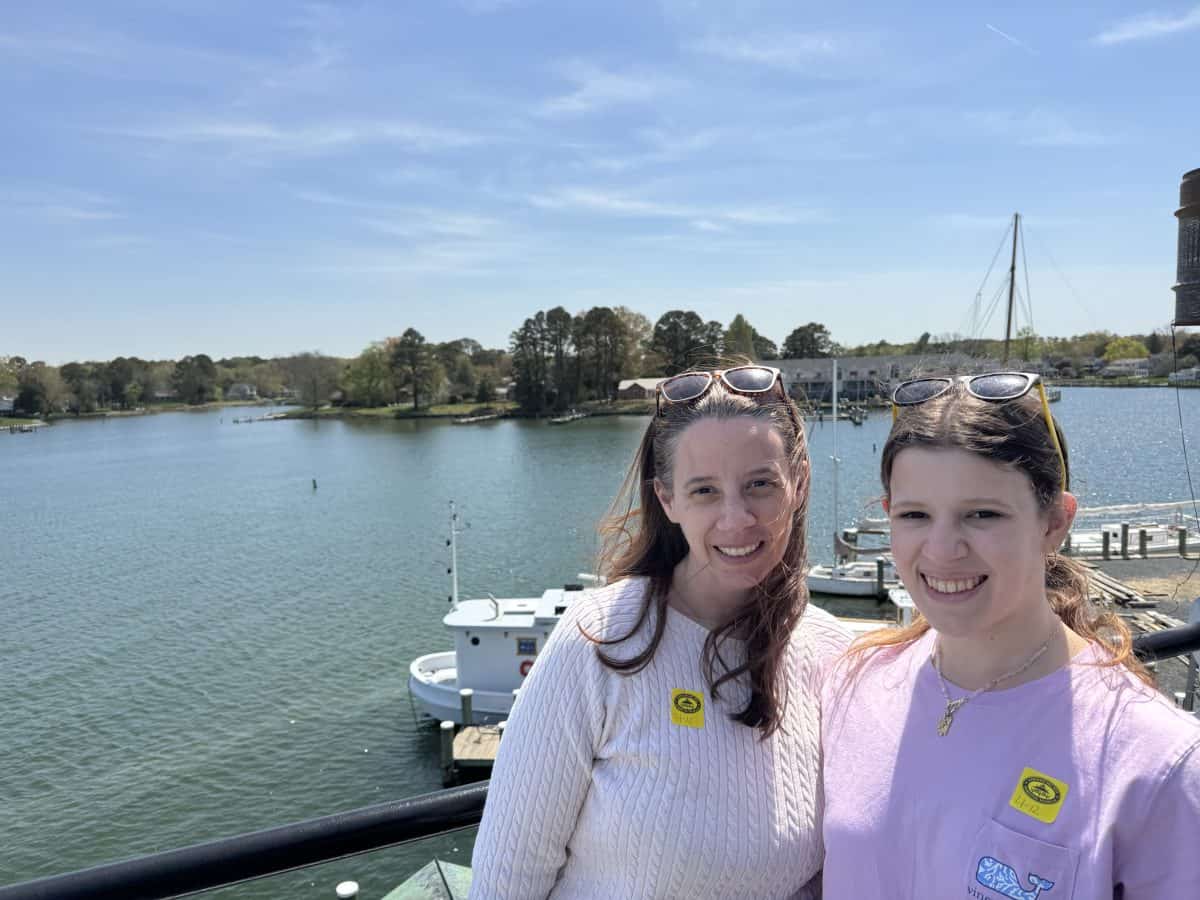
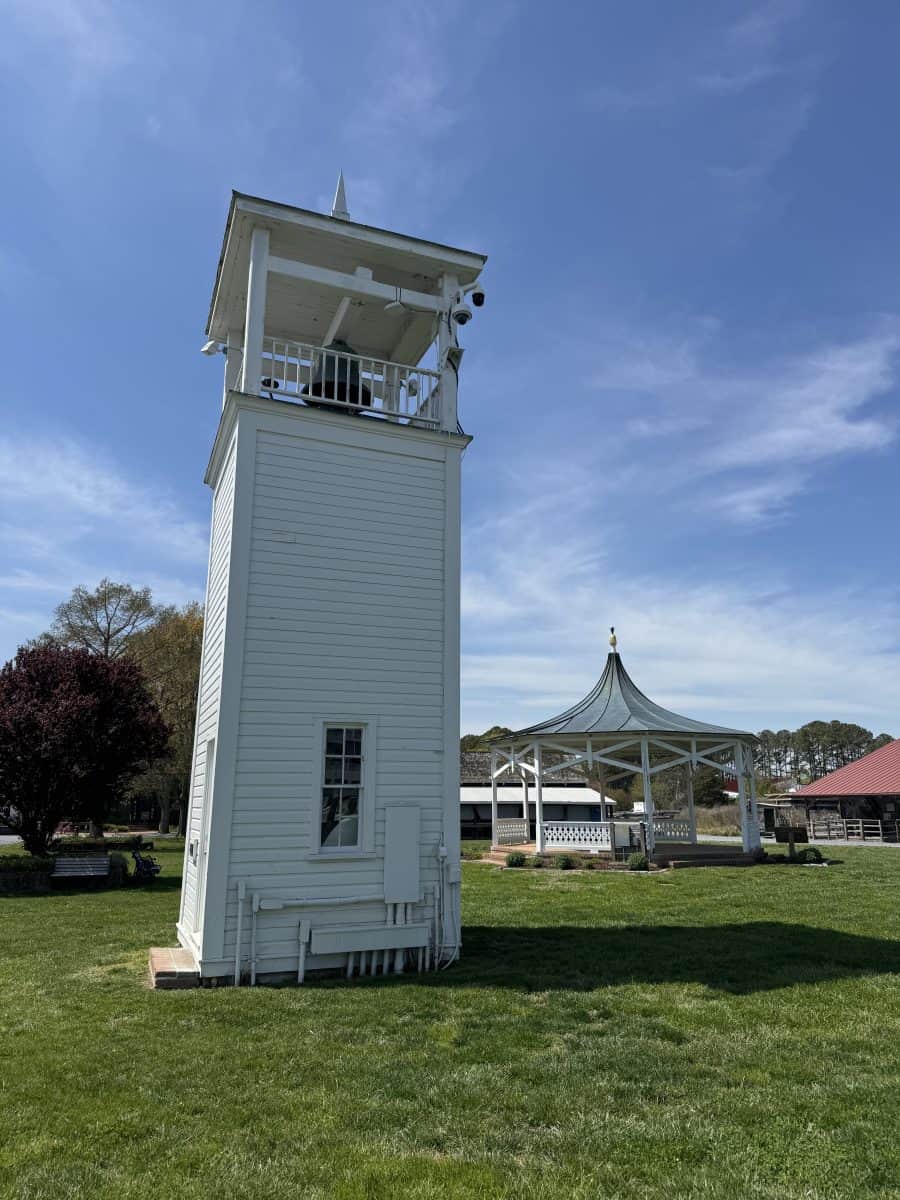
  5. Climb the stairs in the 1879 Hooper Strait Lighthouse. The lighthouse keeper guided boats through the Hooper Strait to Deal Island or other rivers. Check out the display of over 70 lighthouses throughout the Chesapeake Bay. Note: the steps are narrow and steep.
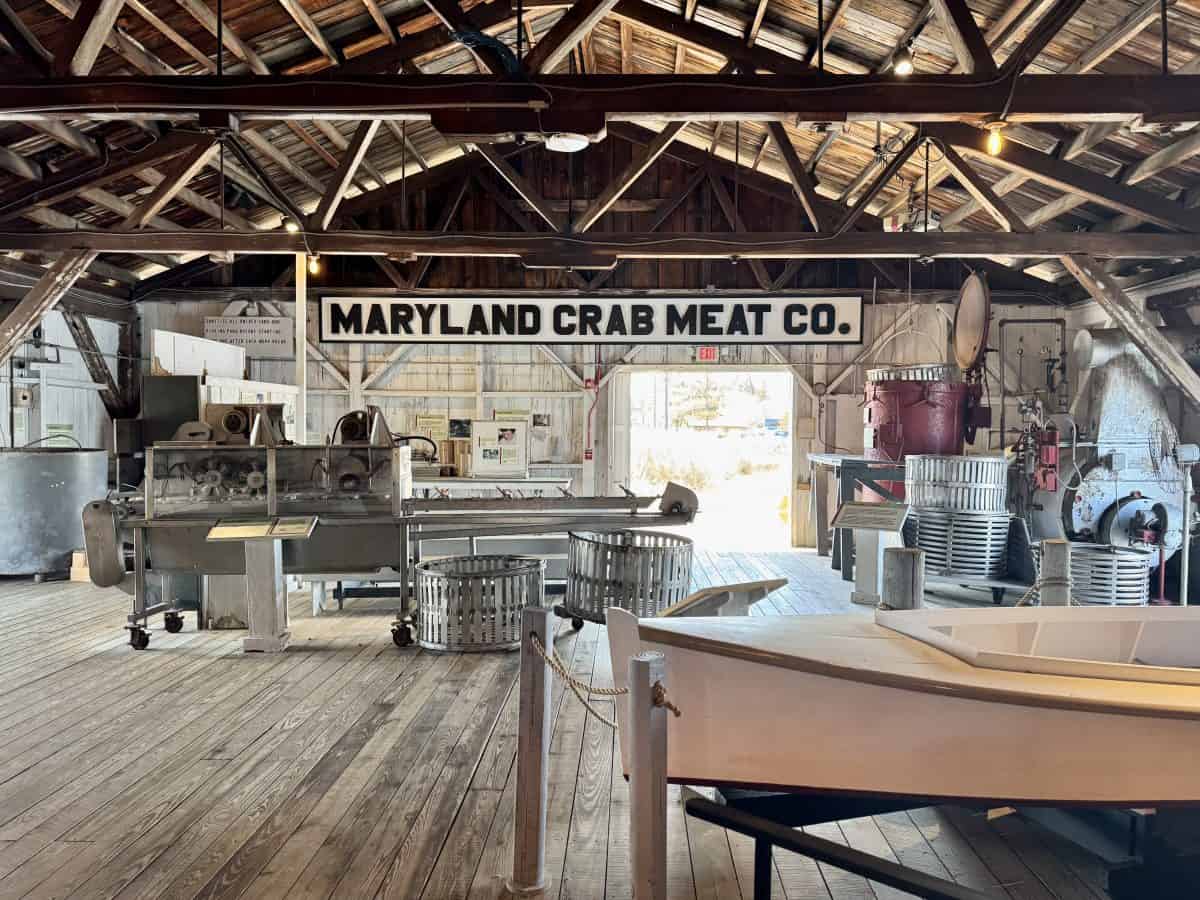
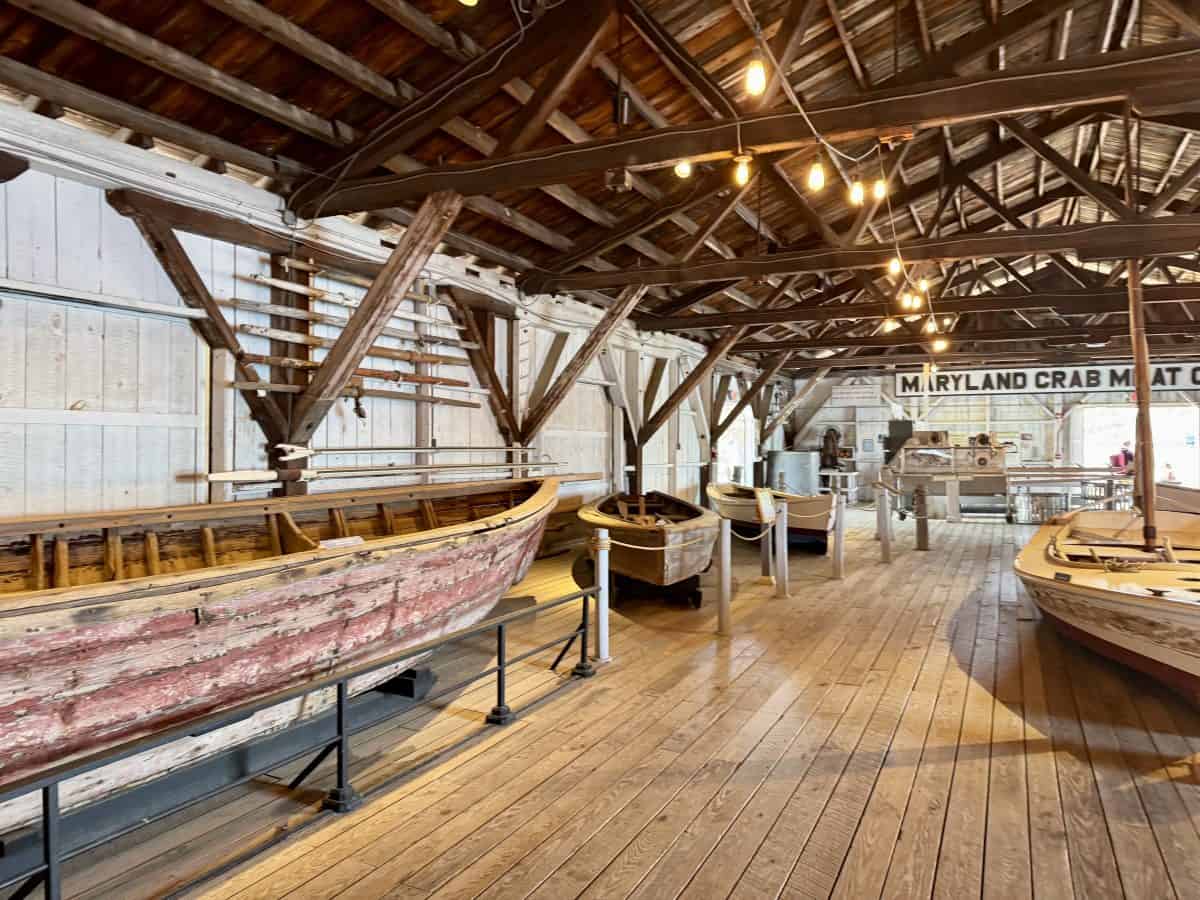
  6. Check out ten fishing vessels and a recreated crab picking machine in the Small Boat Shed, originally built in the 1890s in Clairborne, Maryland and moved to St Michael’s in 1971.
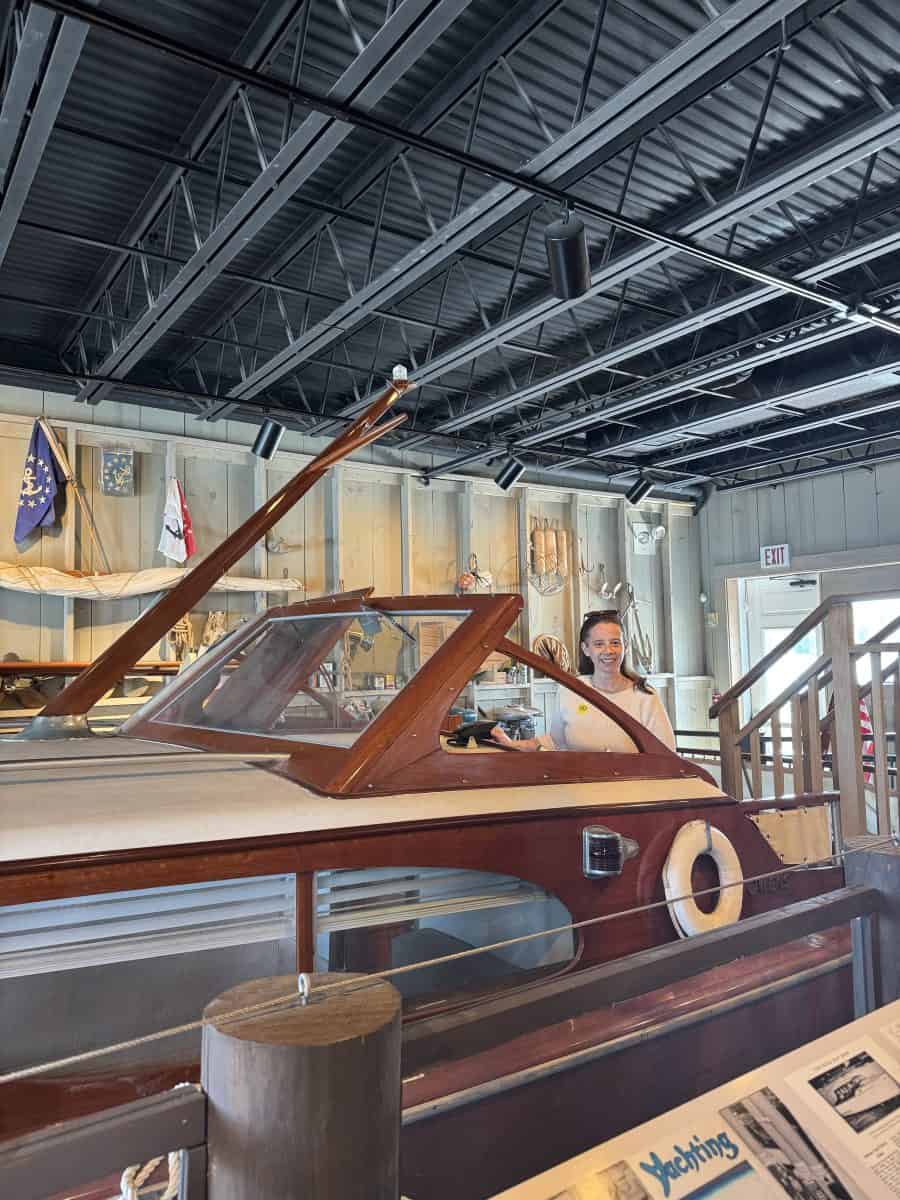
  7. Steer a 1951 Owens Six Sleeper Express in the At Play on the Bay exhibit near E Dock. The exhibit includes several outboard and inboard motor boats on display.
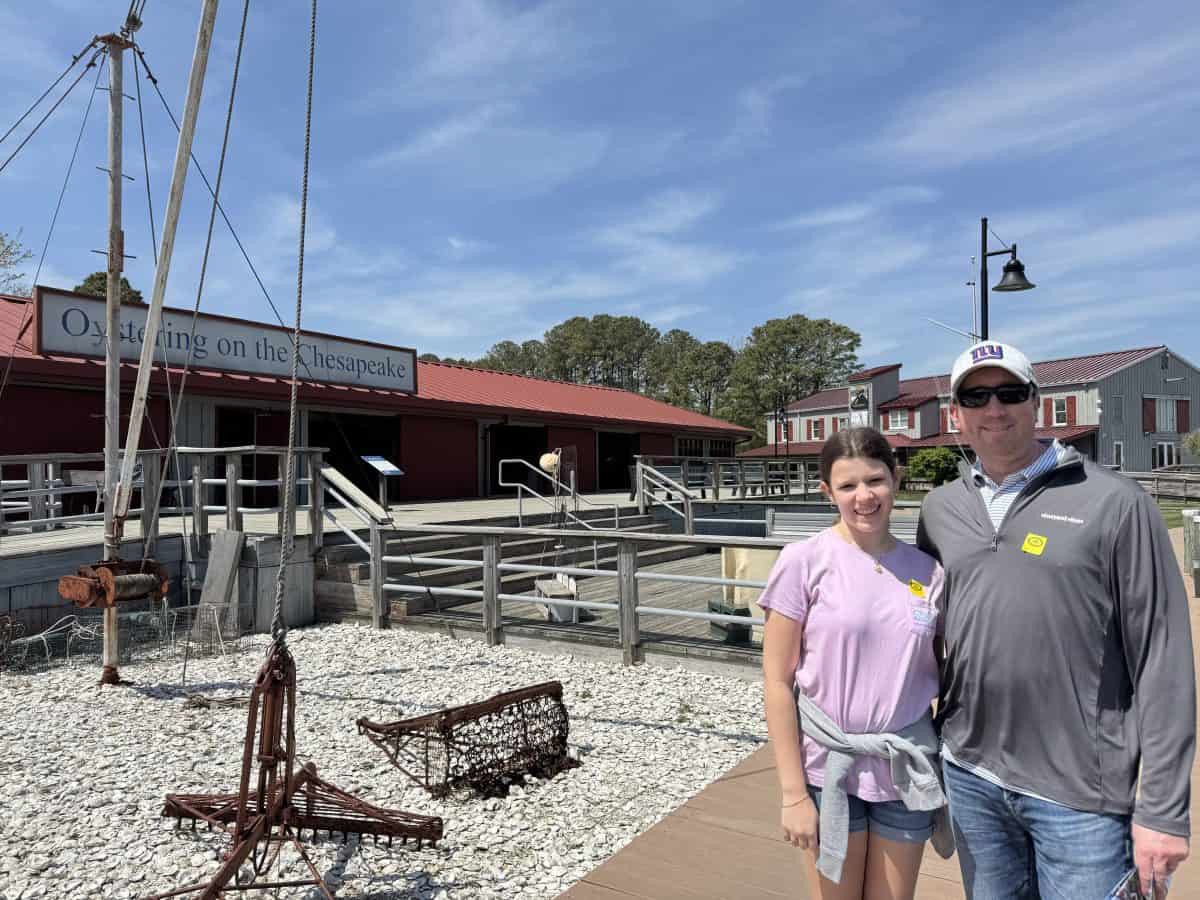
posing outside an exhibit at the Chesapeake Bay Maritime Museum in St Michaels, MD

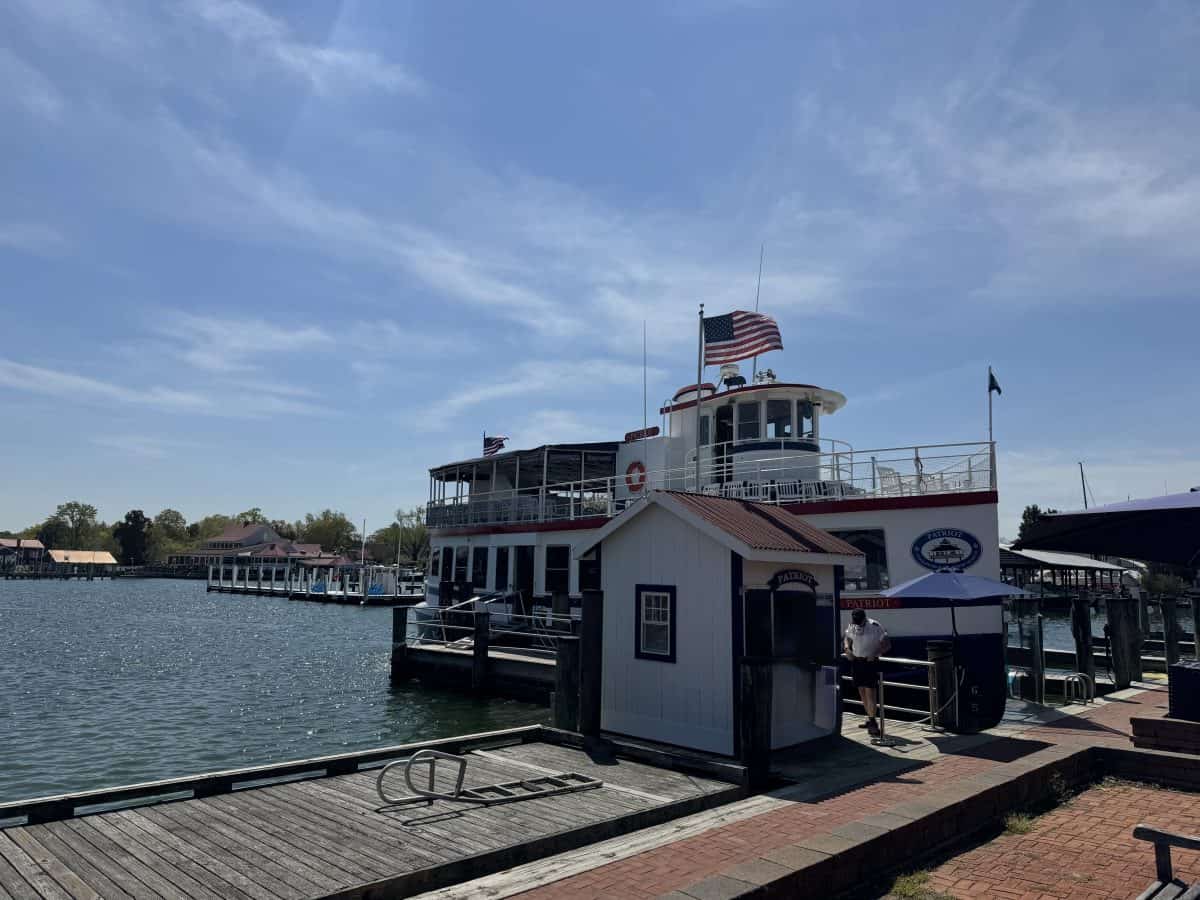
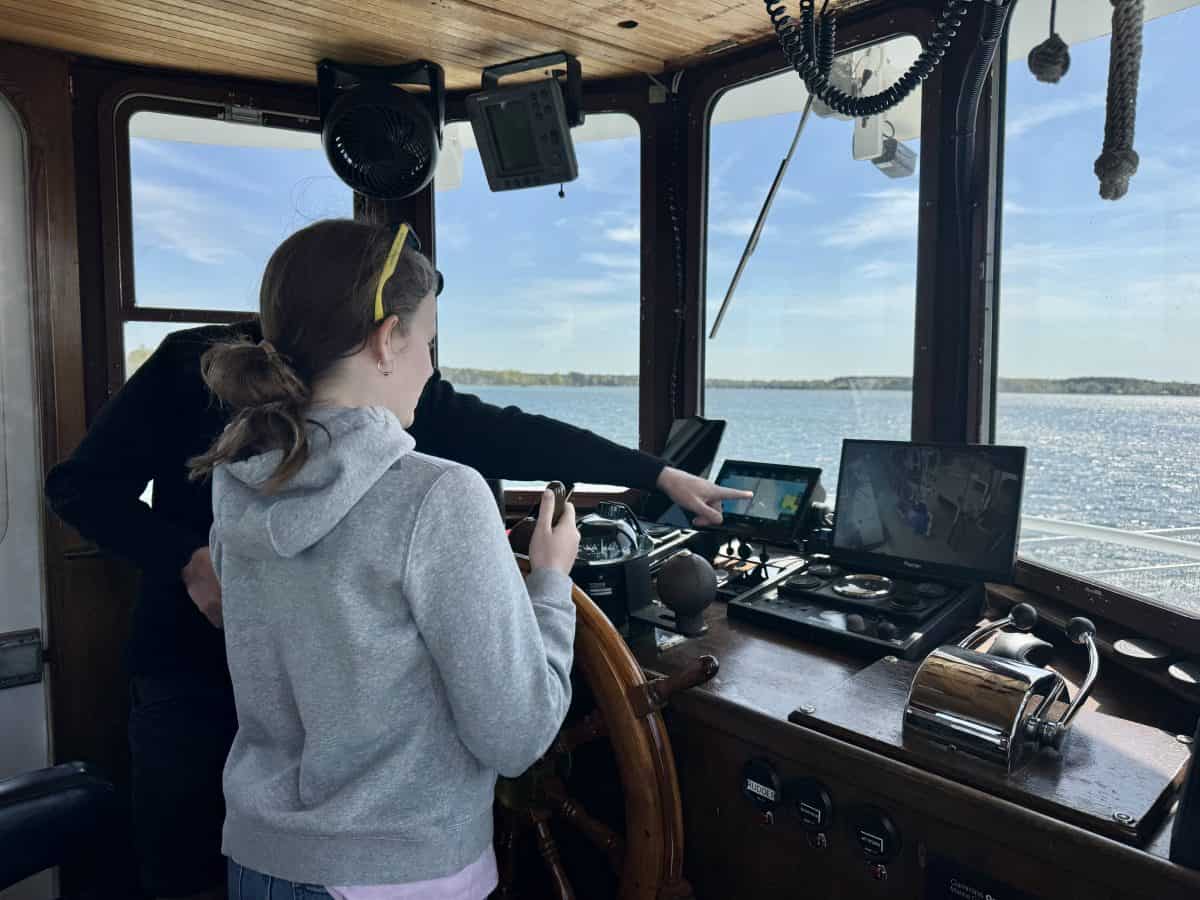
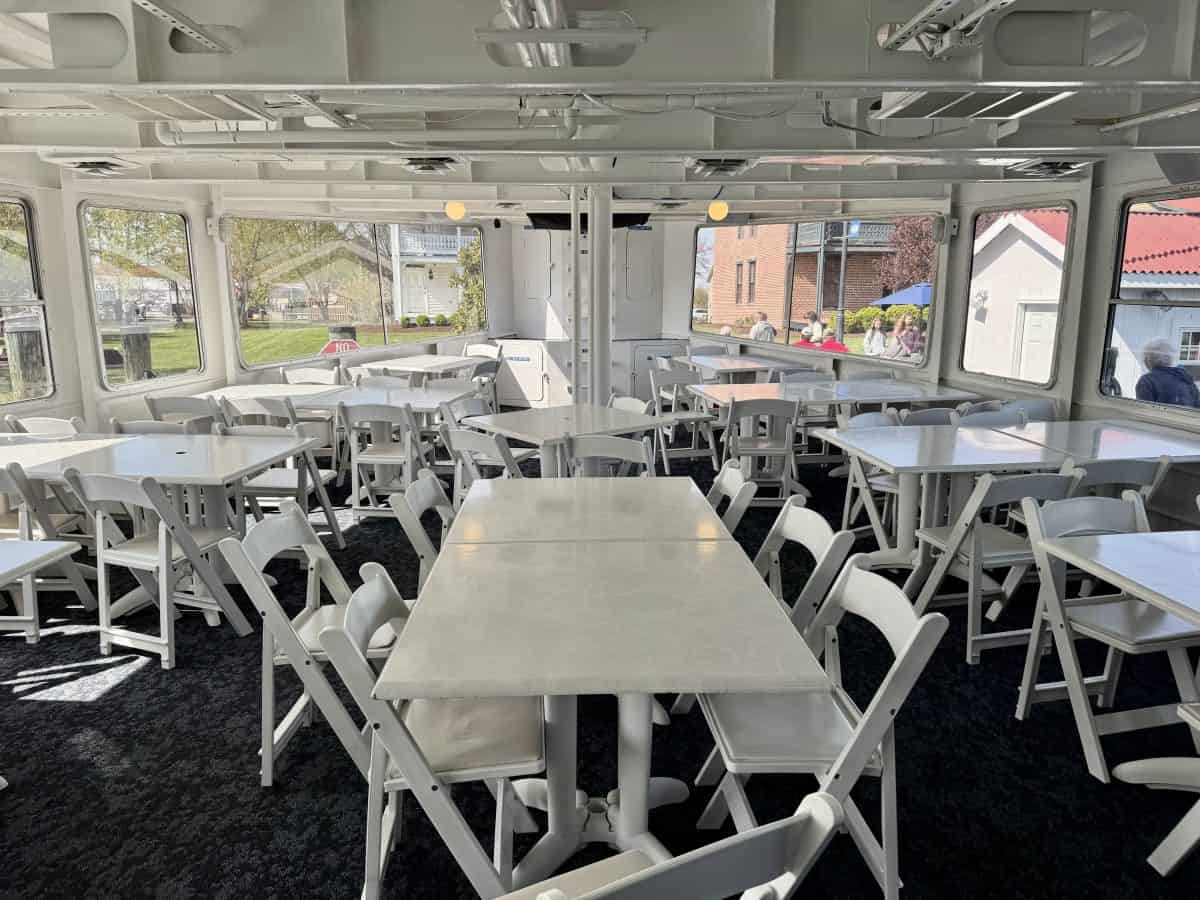
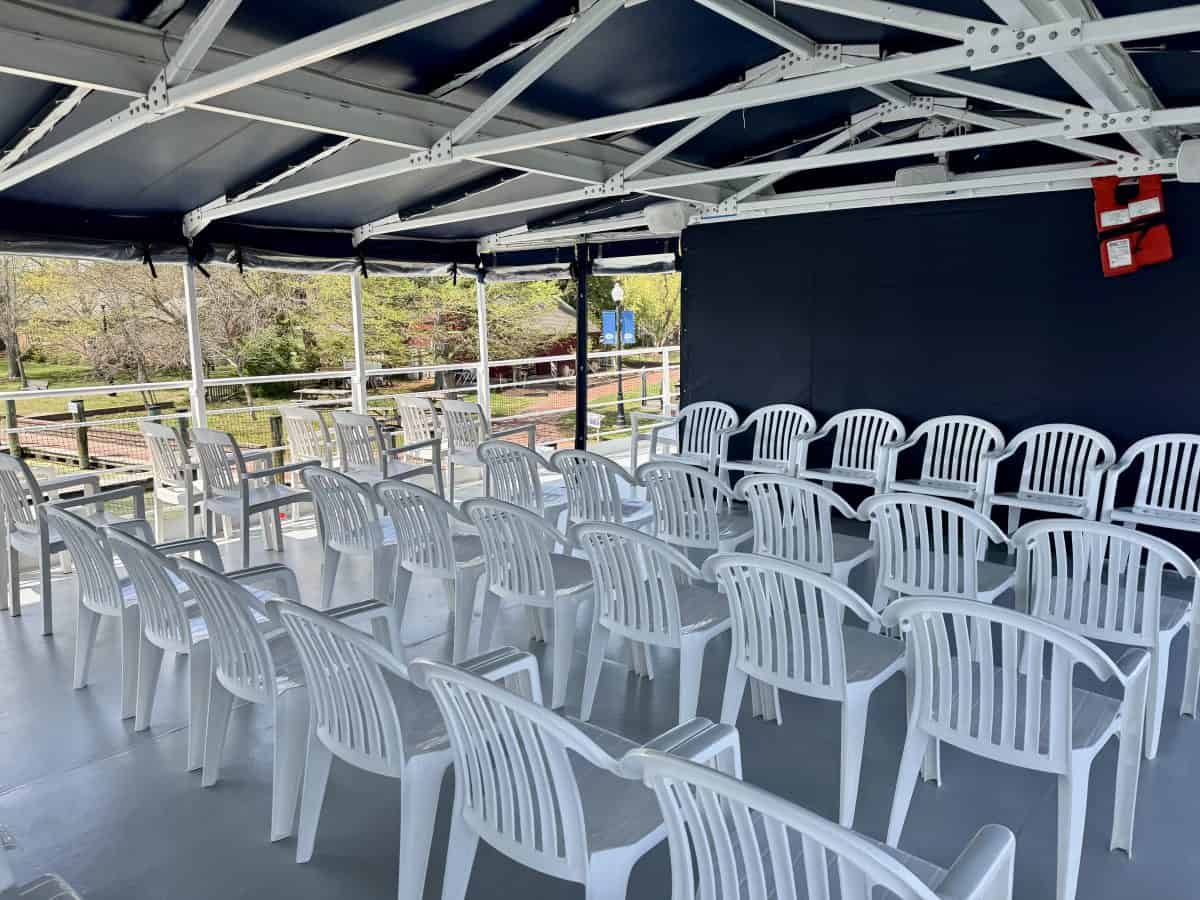
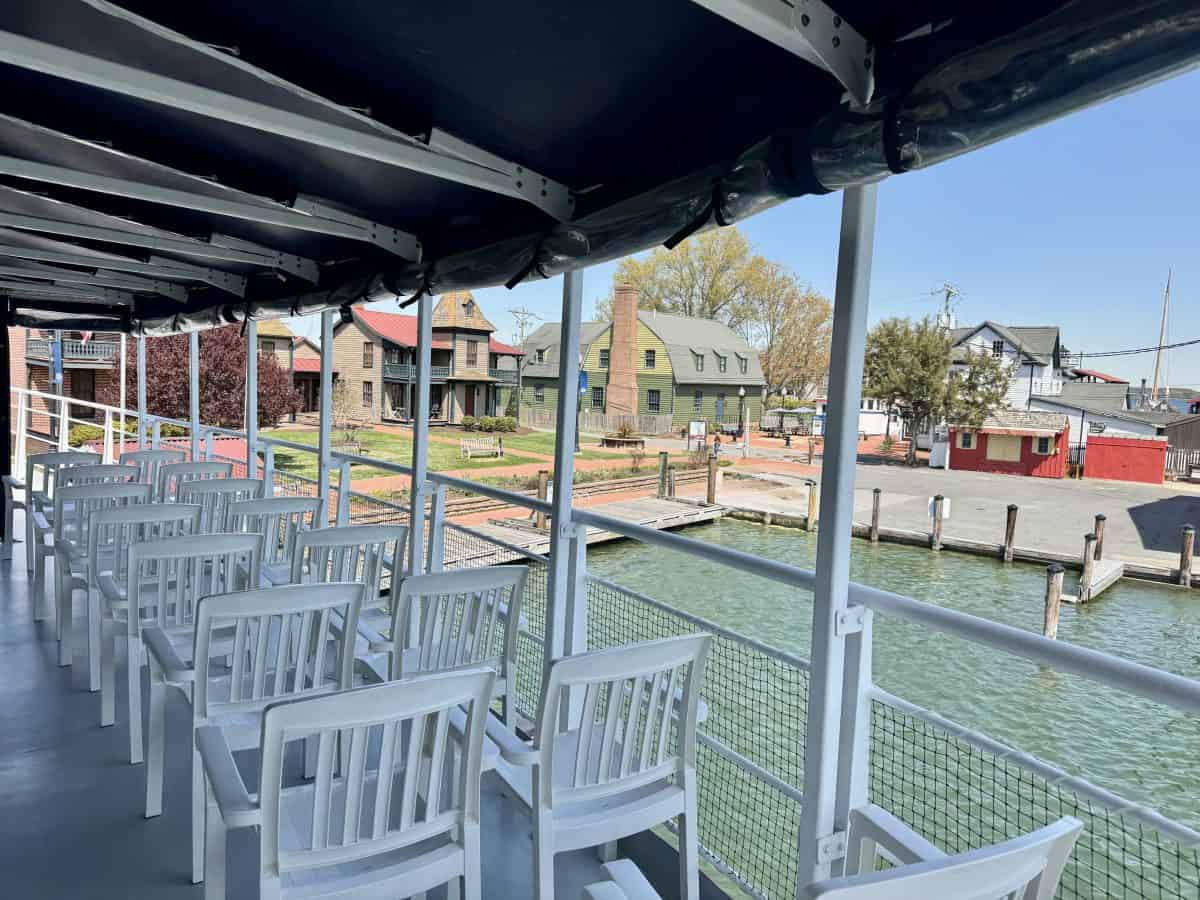
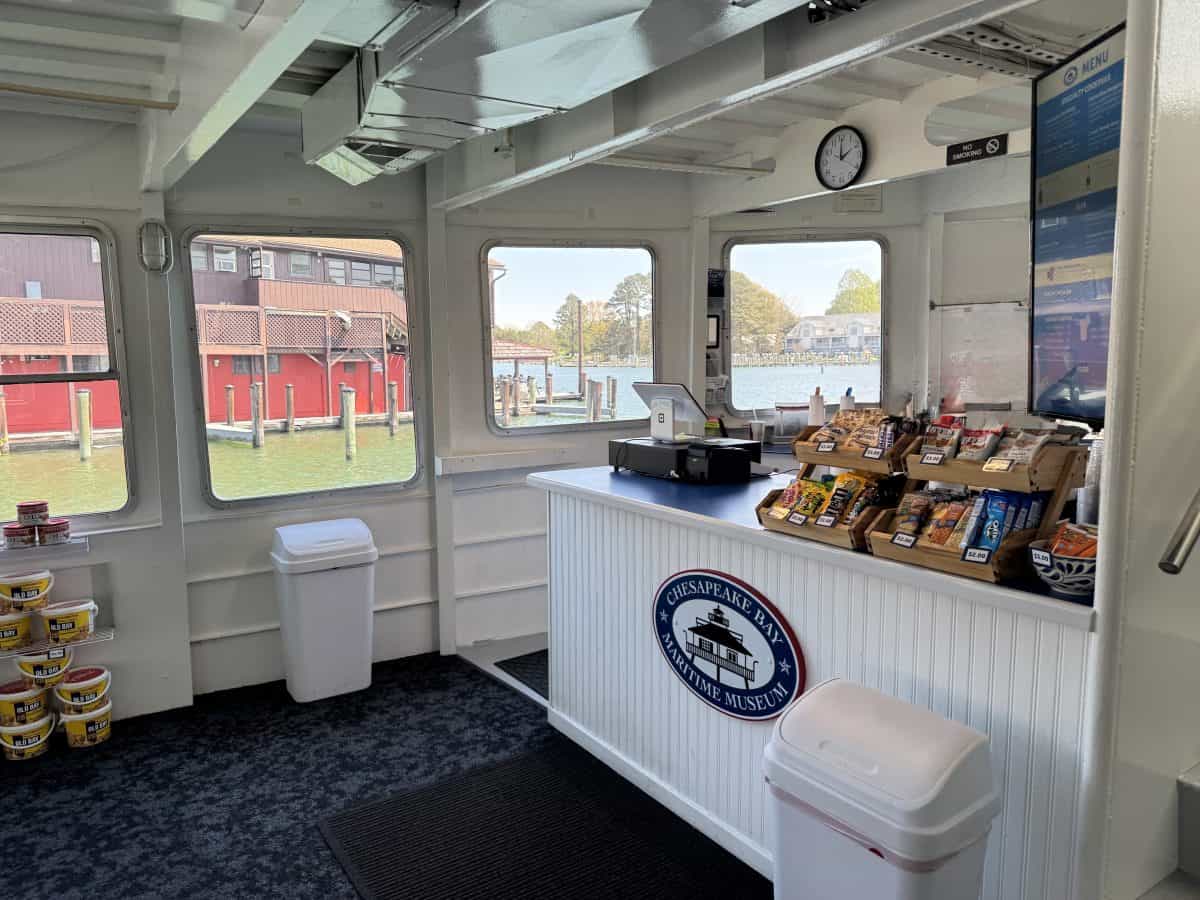
Bonus: Take a boat tour aboard the Patriot down the Miles River. The 65 foot steel hulled cruise ship holds 140 people with upper deck shaded and sunny chairs and plenty of tables and chairs on the lower level. There are also restrooms and a full concession stand aboard the Patriot (guests are also welcome to bring non-alcoholic drinks and snacks aboard). The staff is super friendly and knowledgeable and will point out various wildlife and sea life and share the history of the Miles River and St Michaels area. Free parking is available in the main lot for the Chesapeake Bay Maritime Museum and museum admission is not necessary to take the 70 minute cruise.
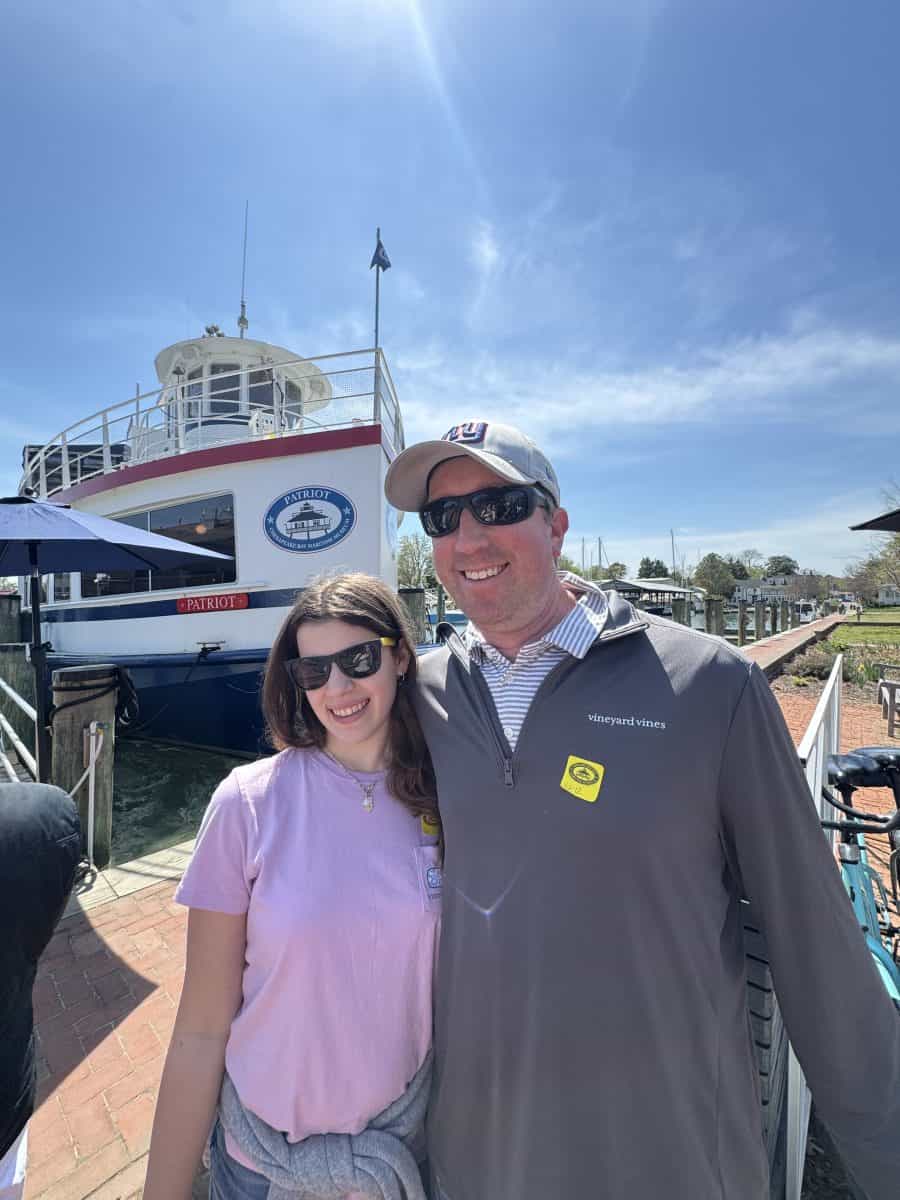
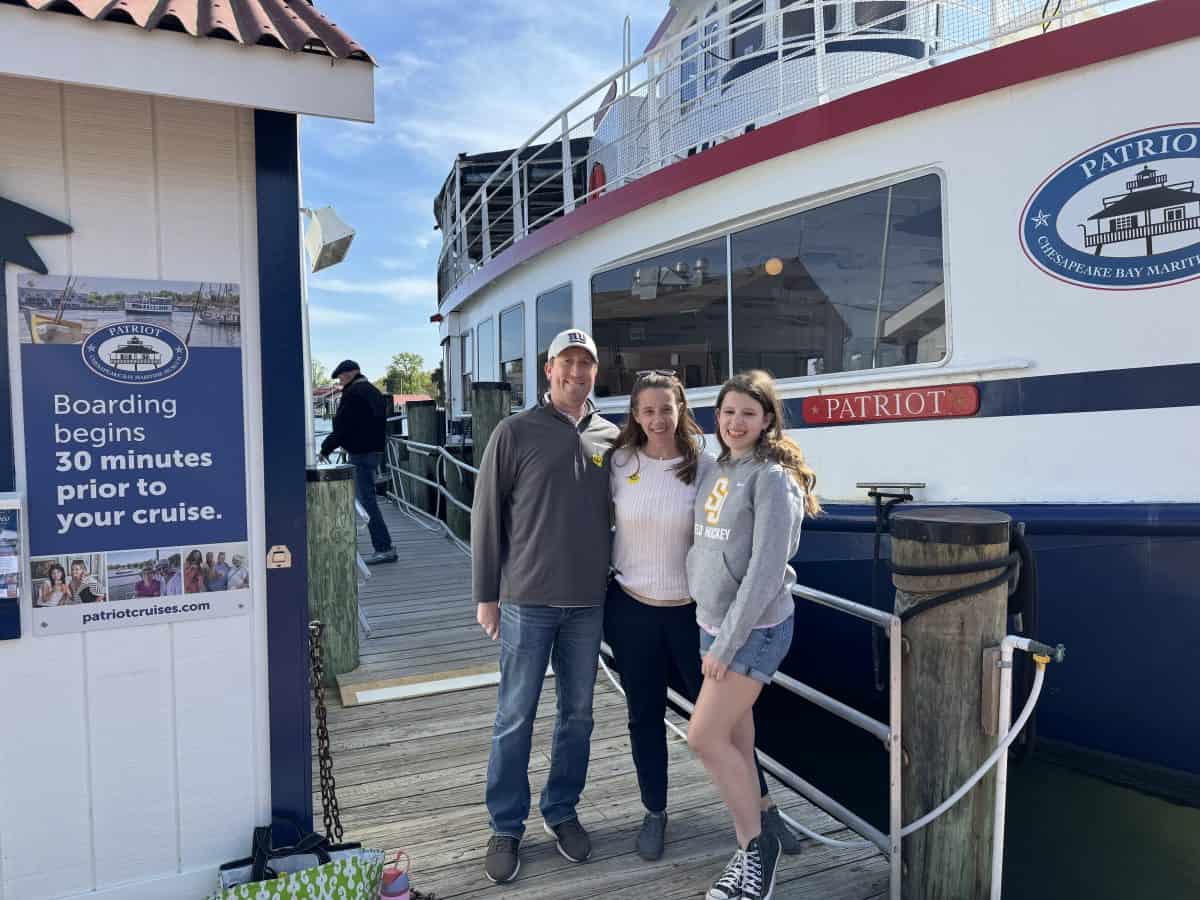
posing in front of the Patriot boat at the Chesapeake Bay Maritime Museum in St Michaels, MD

Looking for other maritime museums? Check out our features of Mystic Seaport in Connecticut, Battleship Cove in Massachusetts, South Street Seaport in New York City, the Maine Maritime Museum in Maine, and the Independence Seaport Museum in Pennsylvania. And follow along on our adventures on Instagram and Facebook.

Disclosure: Our family was given a media pass to explore the Museum; all opinions expressed are my own. 

Similar Posts

  • | | | | |

    Fort Sumter National Park in Charleston, SC

    There is plenty of architecture, southern cuisine, and water views to check out in Charleston, South Carolina but no trip would be complete without reliving a major turning point in our country’s history.

    Fort Sumter National Monument is the only structure on the man-made island, which was created in the early 1800s as a defense for the city of Charleston. In April of 1861, the Confederate army bombed the still incomplete Fort, signaling the start of the Civil War.

    Operated by the National Parks Service and Fort Sumter Tours, access to the island is by tour boats docked at both Liberty Square or Patriot’s Point. I would leave from the Liberty Square Visitor Center so you can spend some time checking out displays which chronicle the history of the fort and check out a small gift shop. Make sure you stamp your National Parks PassportNote: There are restrooms located at both locations and I would recommend using them before boarding the boat to the island. The Visitor’s Center at Liberty Square is located on the second floor, but there is an elevator.

    The 40-minute narrated boat ride to the fort explains many details about the start of the Civil War.  Once you’re on the island, you can explore the fort on your own. There are park rangers stationed at various points to give short lectures and to answer any questions. There are also placards that give detailed information about structures and objects.  I would plan on spending 45-60 minutes at the fort. When you go, be sure to look out for:

  • | | | | |

    Touring the Culinary Institute of America in Hyde Park, New York.

    I just returned from a wonderful weekend in Hyde Park, New York, home of former US President Franklin D. Roosevelt. I have been to the area before with my family (we published a whole City Guide to Dutchess County with tons of family friendly activities), but this trip was focused on catching up with old college friends and eating lots of good meals at the Culinary Institute of America. We arrived early on Friday afternoon to take a public tour of the campus and learn about the Institute’s impressive history.

  • | | | | | | |

    Five Things to Do in the Great Smoky Mountains National Park Besides Hiking

    I’m saying it from the start: I am not a hiker. Or a camper. I think I like to hike and camp. I think I like being in the wilderness and communing with nature. I think I like to be without technology and modern day conveniences like running water. But when push comes to shove, I like it for about a day.

    So here’s the disclaimer: I spent one day in the Great Smoky Mountains National Park. I want to be up front: you could spend weeks- months- inside this national park that spans over 500,000 acres across two states (Tennessee and North Carolina). But I know my limitations, and I knew at the start of an almost four week road trip it was going to be a marathon and not a sprint, so I couldn’t get burnt out right away. I researched the Great Smoky Mountains and found the most manageable places to explore that would still give me the sense of accomplishment of hiking/camping/communing with nature. Here’s what I recommend if you want to get a feel for the mountains without camping for days:

  • | | | | | |

    City Guide: 11 Places to Explore in Old Québec City during the Winter

    Last year, we were fortunate to spend during the December break exploring the beautiful city of in Old Québec City. The port town is filled with rich history, vibrant culture, inviting people, and tons of family friendly attractions. Algonquin for “where the river narrows” , the area now know as Québec was first founded in 1608 by French explorer Samuel de Champlain. The land is on the banks of the Saint Lawrence River and provided ideal access to transport good to various parts of Canada. While the city is bustling with activity all year long, winter is an especially good time to visit- the city is still decorated for the holidays well into the new year and there are plenty of outdoor adventures to enjoy (with or without snow).

  • | |

    10 Must Have Hiking Supplies

    Our 2020 rescheduled road trip is coming up soon and our whole family is getting excited. While we’re keeping our itinerary a secret, you’ll be able to gather from this post, and some of our most recently themed posts, that we will be doing a lot of hiking (which our family defines as walking outside for a few miles on a well marked path). You can read about some of the Connecticut places we have explored for hiking (again, we’re using that term loosely) in this post, this post, this post, and this post. We are NOT serious hikers, and at first thought we didn’t necessarily need anything other than sneakers for a hike.

  • | | |

    10 Ways to Explore the Plains of Abraham Museum in Québec

    Founded in 1908 as a historic area within the Battlefield Park of Québec City in Québec and deeded to the city, The Plains of Abraham is one of the largest city parks in the world. The 240+ acre park, named for Abraham Martin (former pilot to the king and friend of Samuel de Champlain) is the site of the Battle of the Plains of Abraham, part of the French and Indian War in 1759.

    The park includes the Joan of Arc Garden, the Citadelle (read our feature of the Citadel here), the Martello Towers, an old jail, nature trails, parks, playing fields, and a bandstand for summer concerts. The park welcomes over four million visitors each year and offers year round activities, entertainment, and programs for the whole family. Highlights include:

Leave a Reply

Your email address will not be published. Required fields are marked *