15 Ways to Explore Old Fort Western in Augusta Maine

| | |

On a quick layover in Augusta, Maine during our recent road trip, we had the opportunity to tour Old Fort Western, America’s oldest wooden French and Indian War era Garrison and a National Historic Landmark. The fort is very family friendly and has several hands-on opportunities kids will enjoy.
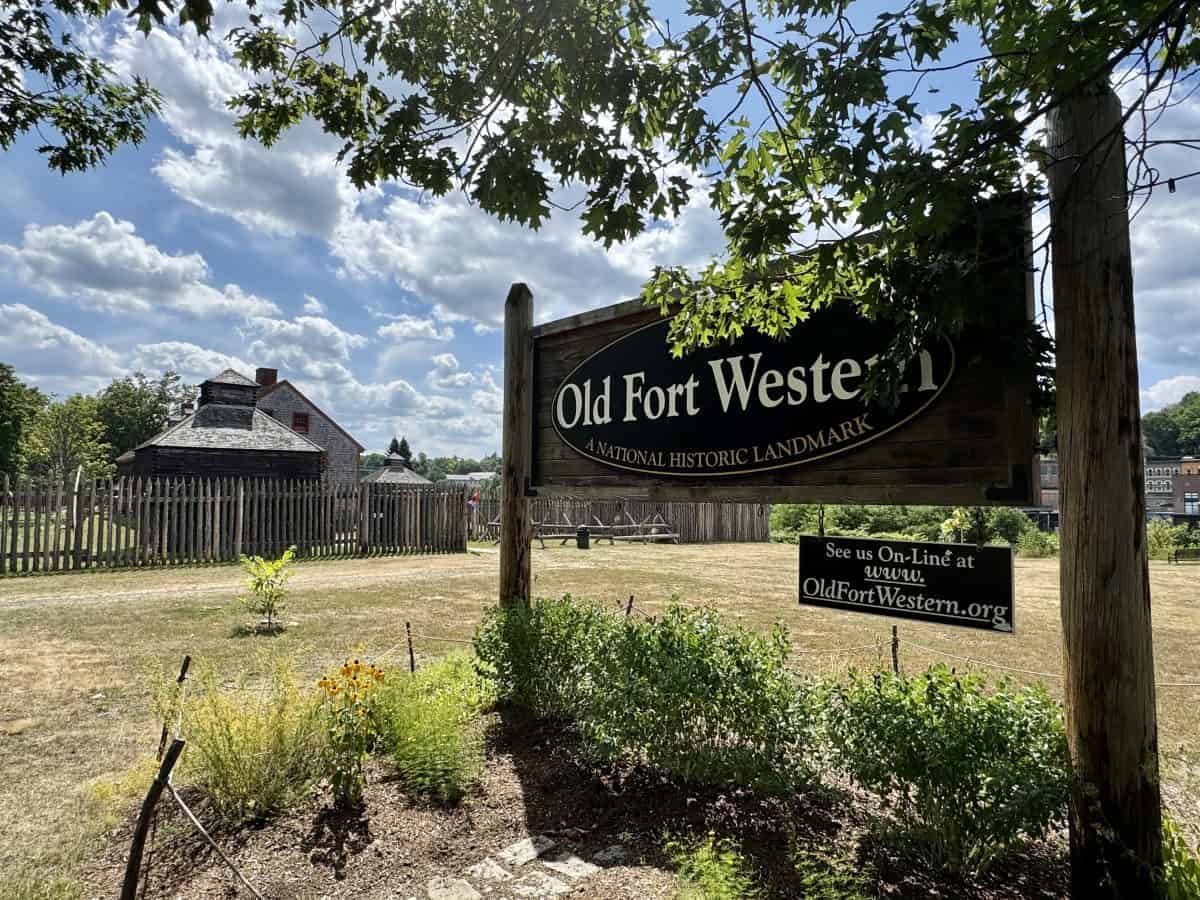
entrance to Old Fort Western in Augusta, Maine

Located on the banks of the Kennebunk River, the original Garrison building (the largest structure on the property) was constructed in 1754, at the beginning of the French and Indian War, with open air windows and very small doors- the design visitors see today was restored in the early 1920s.  The building housed a blacksmith shop, full service store for trading and purchasing, captain’s quarters, and barracks for soldiers. It was built by a Boston based company that wanted to take control of the area for their own trading and political gains. The area was an ideal location to ship supplies from Boston to the fort, and then unload and reroute supplies up the river to what was then known as Fort Halifax and is now called Winslow, Maine.

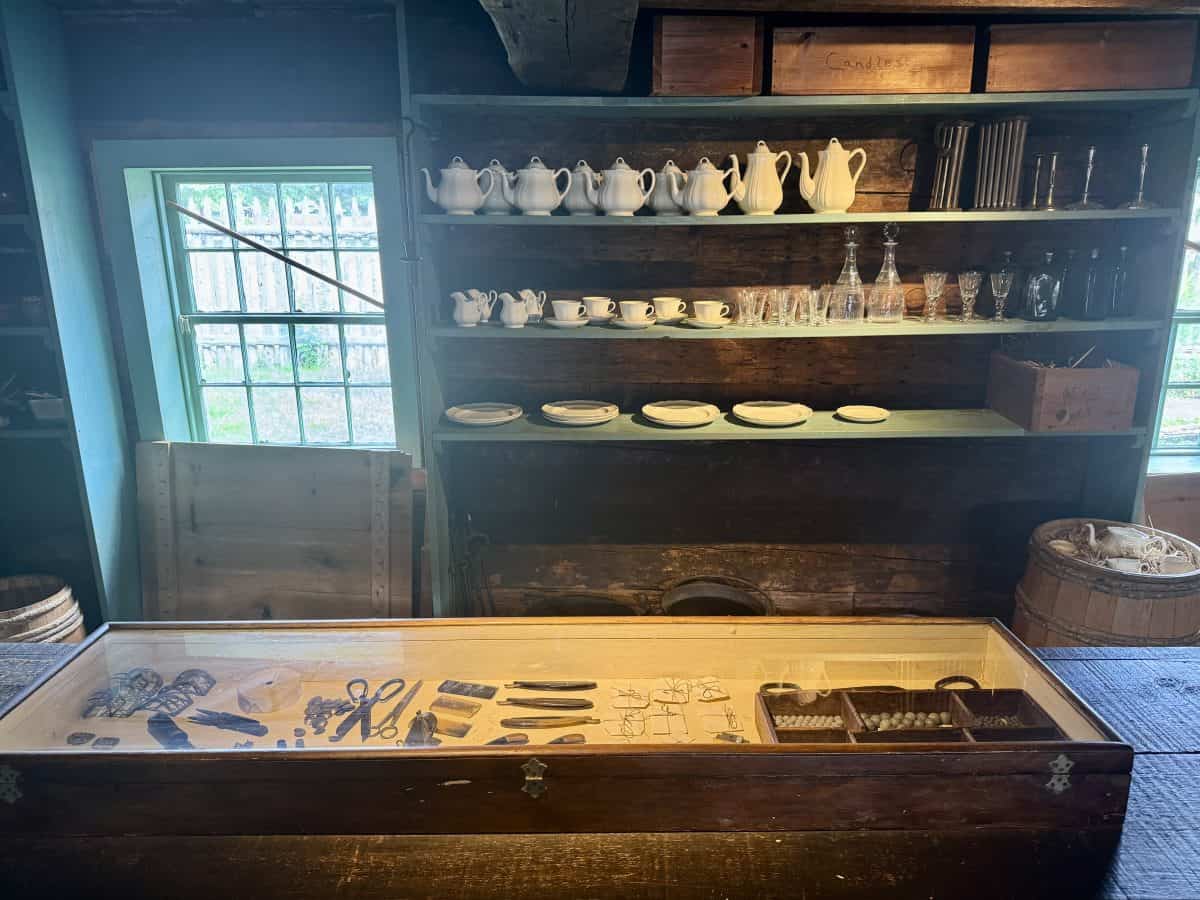
From 1755-1767 the fort was in commission and under the direction of Captain James Howard, who directed a unit of 24 men whose jobs included protecting the fort from attack, completing boat repairs, and helping to send supplies to Fort Halifax. The fort was decommissioned in 1767 and Captain Howard’s son, William, his wife, Martha, and their five children lived in the north end of the Garrison. The first floor of the Garrison became a land agency to purchase local land and then a store with items shipped from Boston. The store later grew in size and was moved down the road to a bigger space in 1807. The Garrison then became a tenement of several apartments in the mid 1850s.
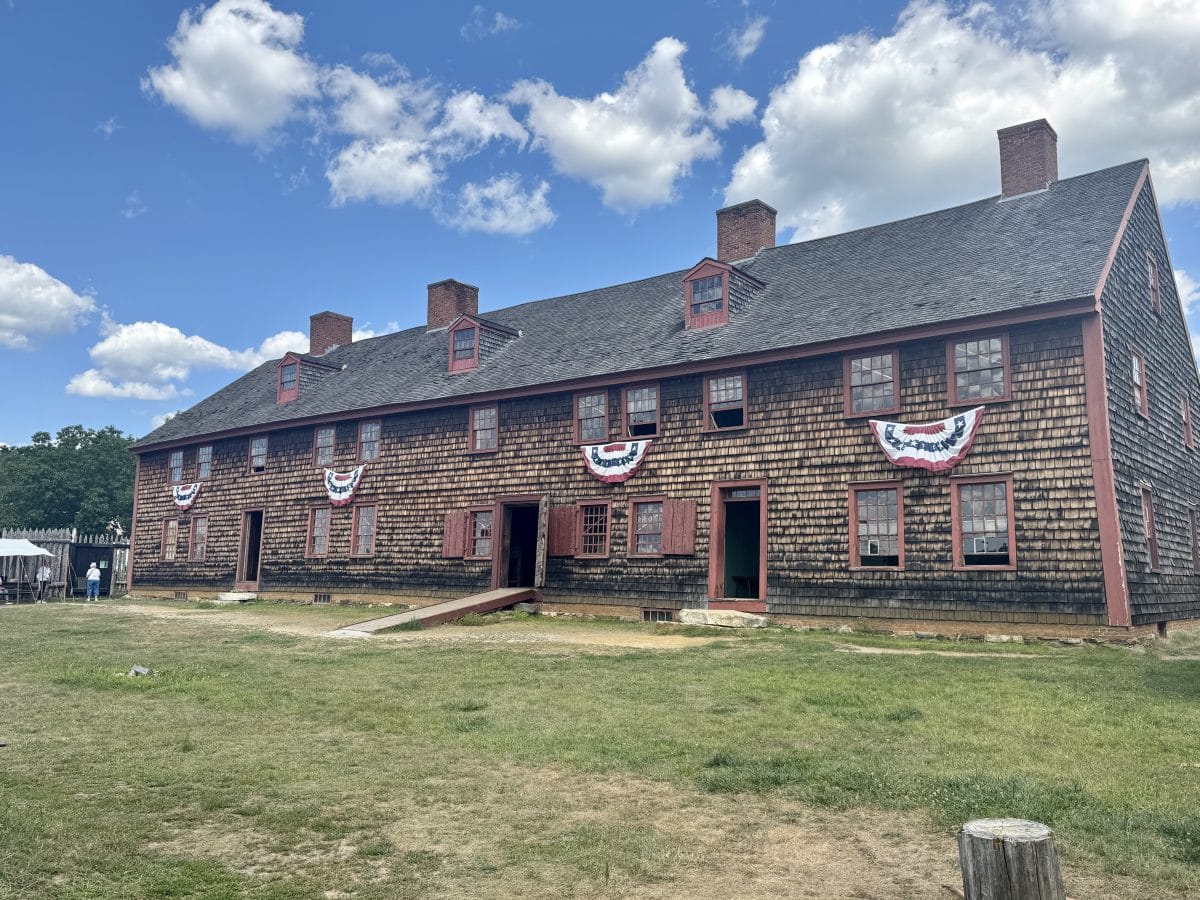
the Garrison at Old Fort Western in Augusta, Maine

The tenements lasted until 1919, when the buildings had deteriorated and became unlivable. The Gannett family, descendants of Captain Howard, asked the city to remove the tenants and relocate the stores also on the property so they could restore the property. It took two years to relocate the people, build the Blockhouses, and restore many elements of the property. The Gannett family then gifted the property to the city of Augusta to use as a museum, which opened in 1922. In the 1980s, several archaeological digs on the site unearthed over 17,000 artifacts, some dating back to the 1620s, which are on display throughout the property and are used to confirm the historical timeline of the property.

Today, visitors are invited to take guided tours of the fort and learn about the soldiers and families who defended the area and lived there for over two centuries. Our scavenger hunt will keep kids engaged while touring the complex and the whole family will enjoy learning about this important part of American history. 
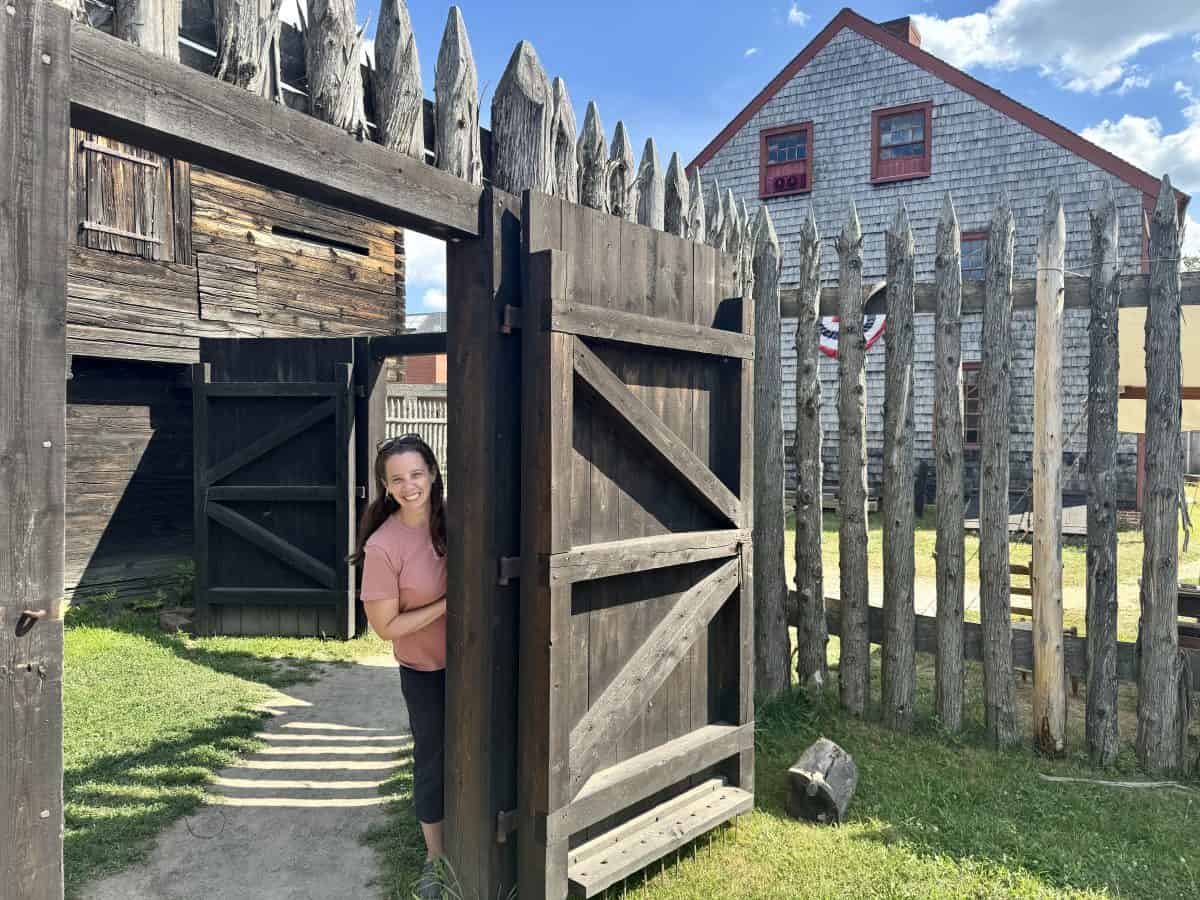
wooden fence entrance to Old Fort Western in Augusta, Maine

Travel Tips:

  • The fort is open mid May, June, September, and early October Friday through Monday from 10am-4pm, and seven days a week from 10am-4pm in July and August; get up to date information on hours and admission fees here. Active military and children under age five receive free admission.
  • Large parking lot to the behind the main entrance of the fort.
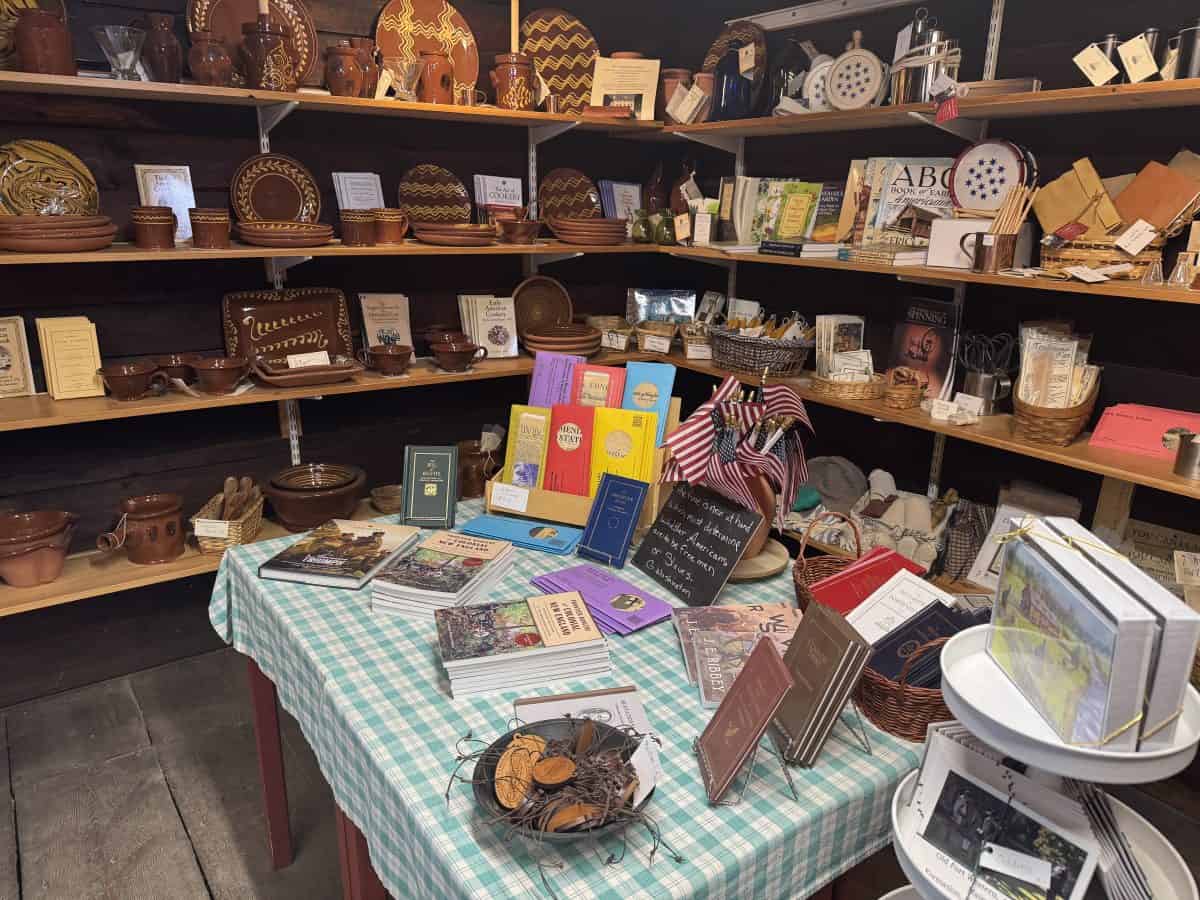
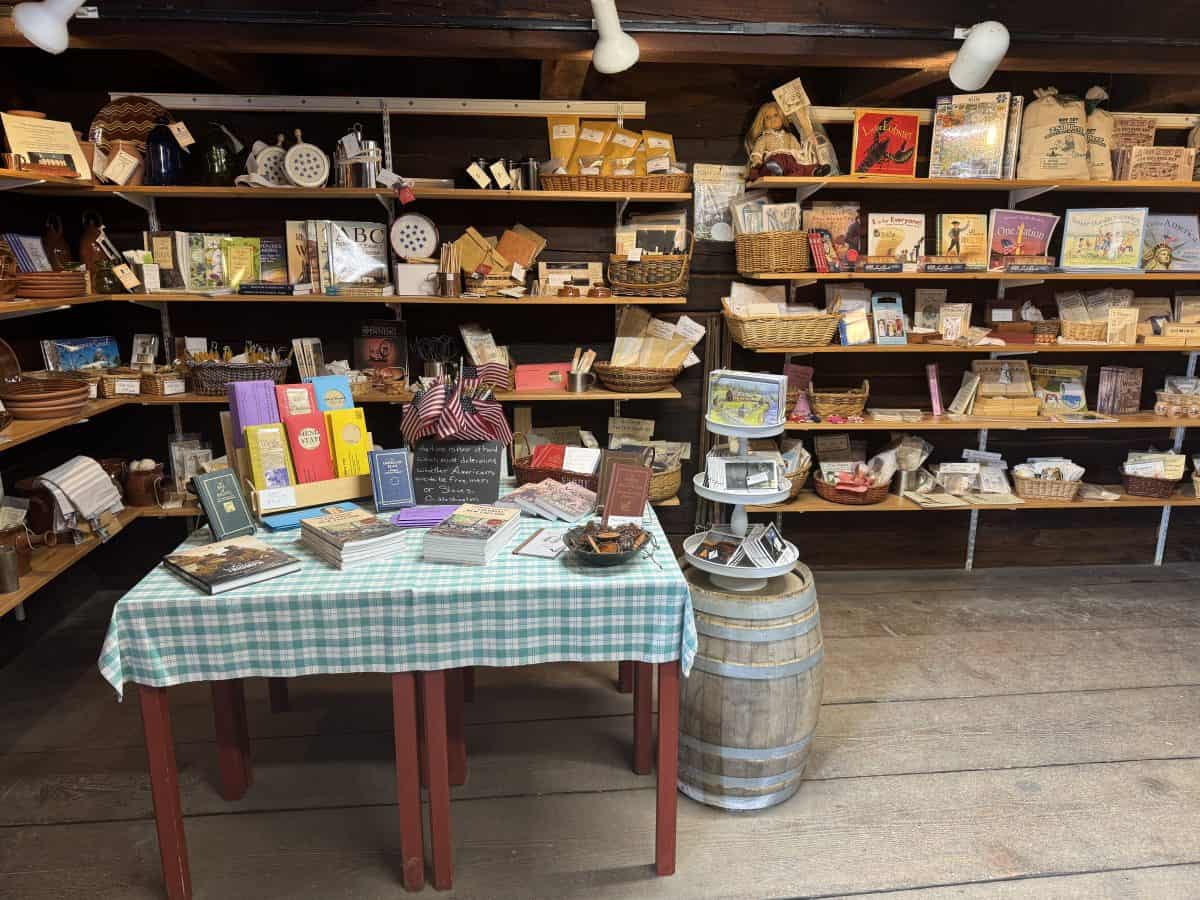
  • Admissions and a gift shop are located just inside the wooden fence in the old north Block House.
  • Restrooms available inside the fort; no dining facilities on site, but lots of options on nearby Water Street (see a good index here)
  • The first floor of the Garrison and southern Block House are handicap accessible and the gift shop has an online tour of the second floor exhibits; strollers allowed.
  • Old Fort Western offers a wide variety of programs and special events (Independence Day Celebration and Victorian Christmas are especially popular)- see the full list here.
  • Plan on 75 minutes for a guided tour of the complex and additional time to explore on your own.

15 Ways to Explore Old Fort Western:

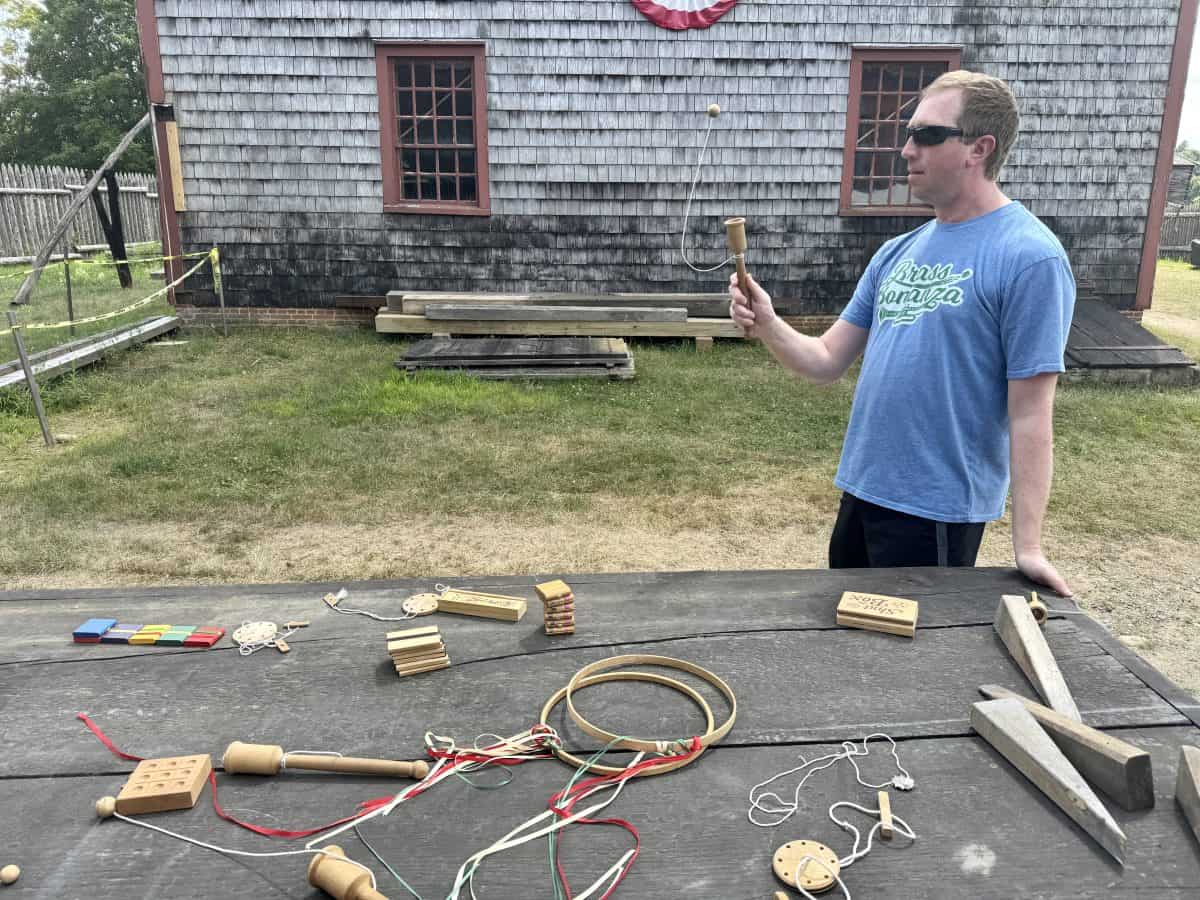
  1. Try your hand at wooden games such as Jacob’s Ladder, TicTacToe, and Ball in Cup outside the north Blockhouse.
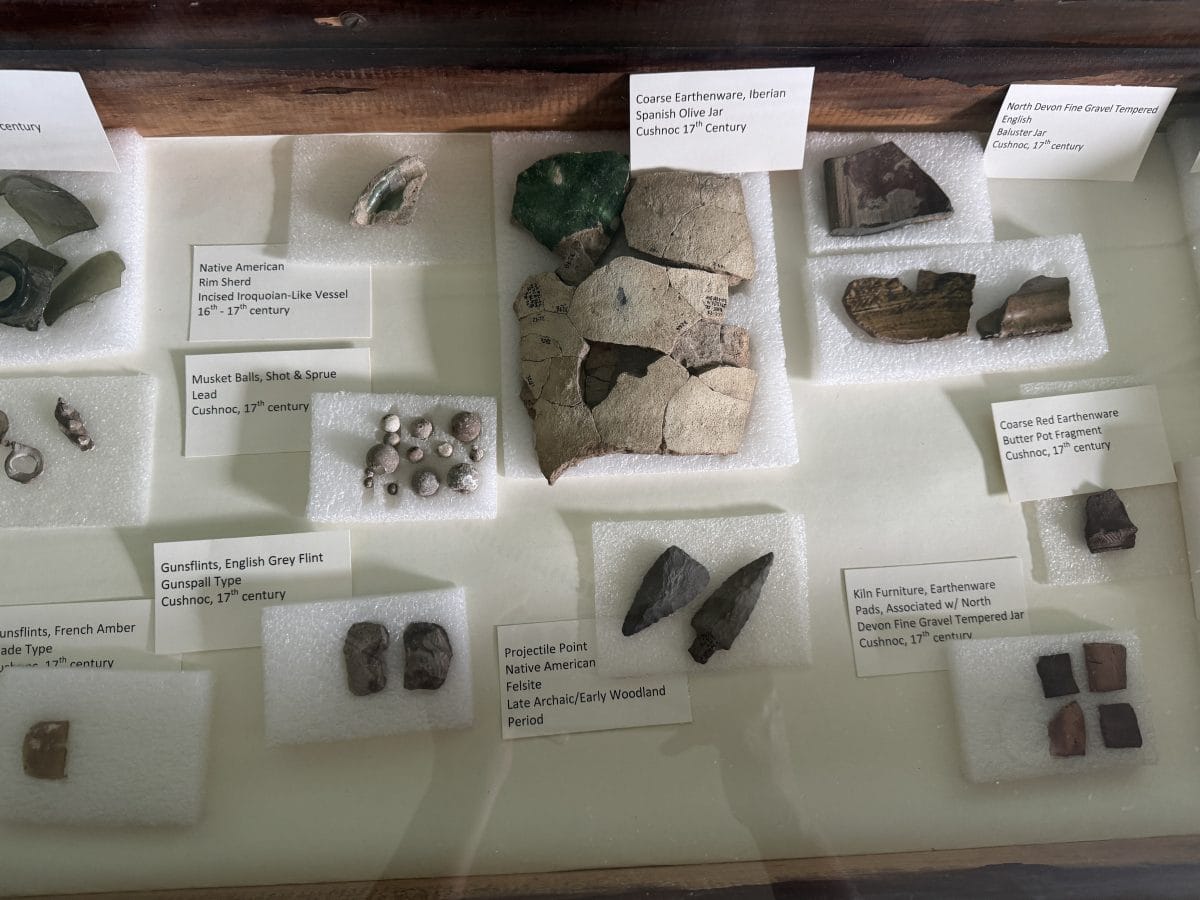
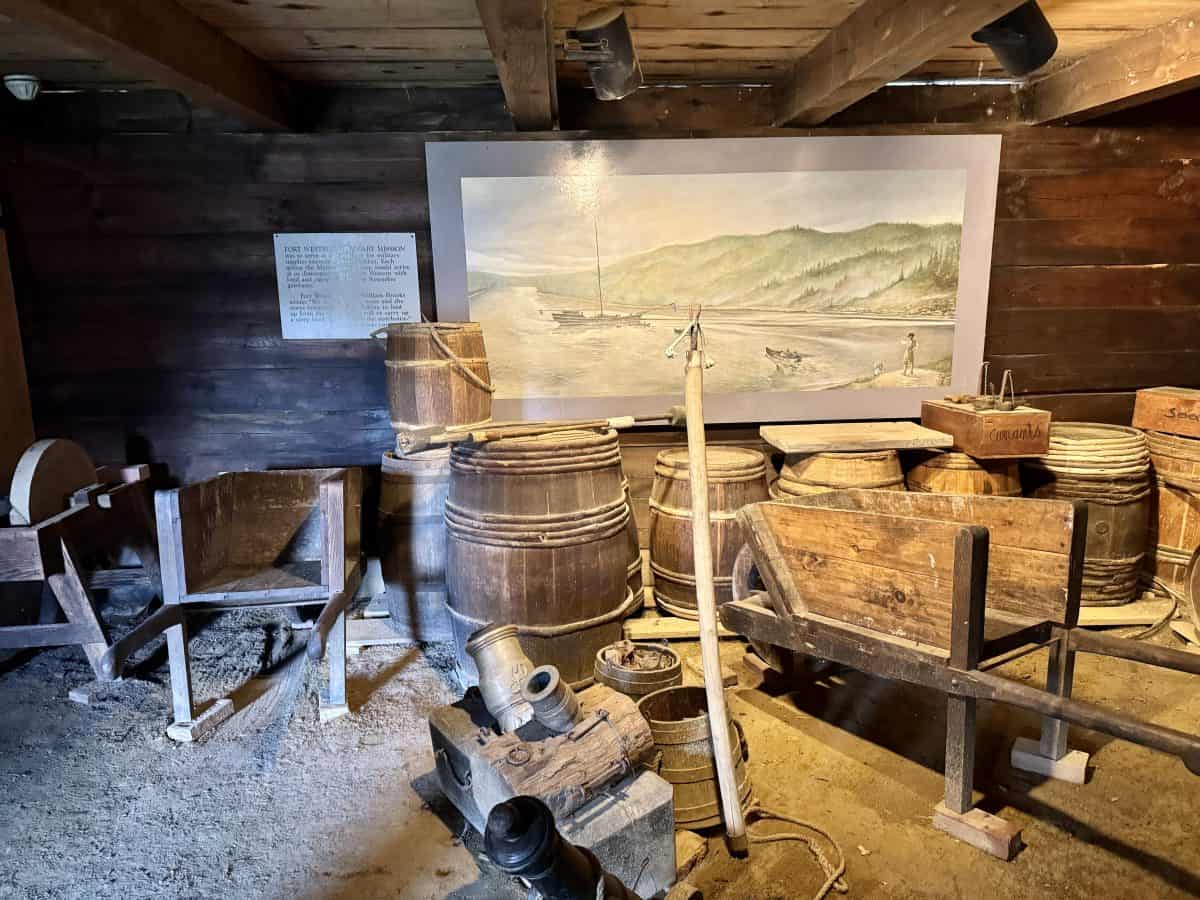
  2. Listen to the story of Pilgrims who traveled up the Kennebec River to trade and see some of the artifacts dug up in the 1980s excavations, including fragments of glass bottles, pipes, beads, and kitchenware in the Cushnoc Trading Post.
  3. Peek down into the bateau, a large row boat that took six men to row and one man to steer up the Kennebec River, and the Powder Magazine, an 18 foot deep storage unit for gun powder that was discovered during the excavation in the 1980s and was recently rebuilt.
  4. Count the oars for the bateau hanging on the walls of the Blockhouse, built in 1922. The first floor of the Block House also has murals depicting the ships coming up the Kennebunk River from Boston.
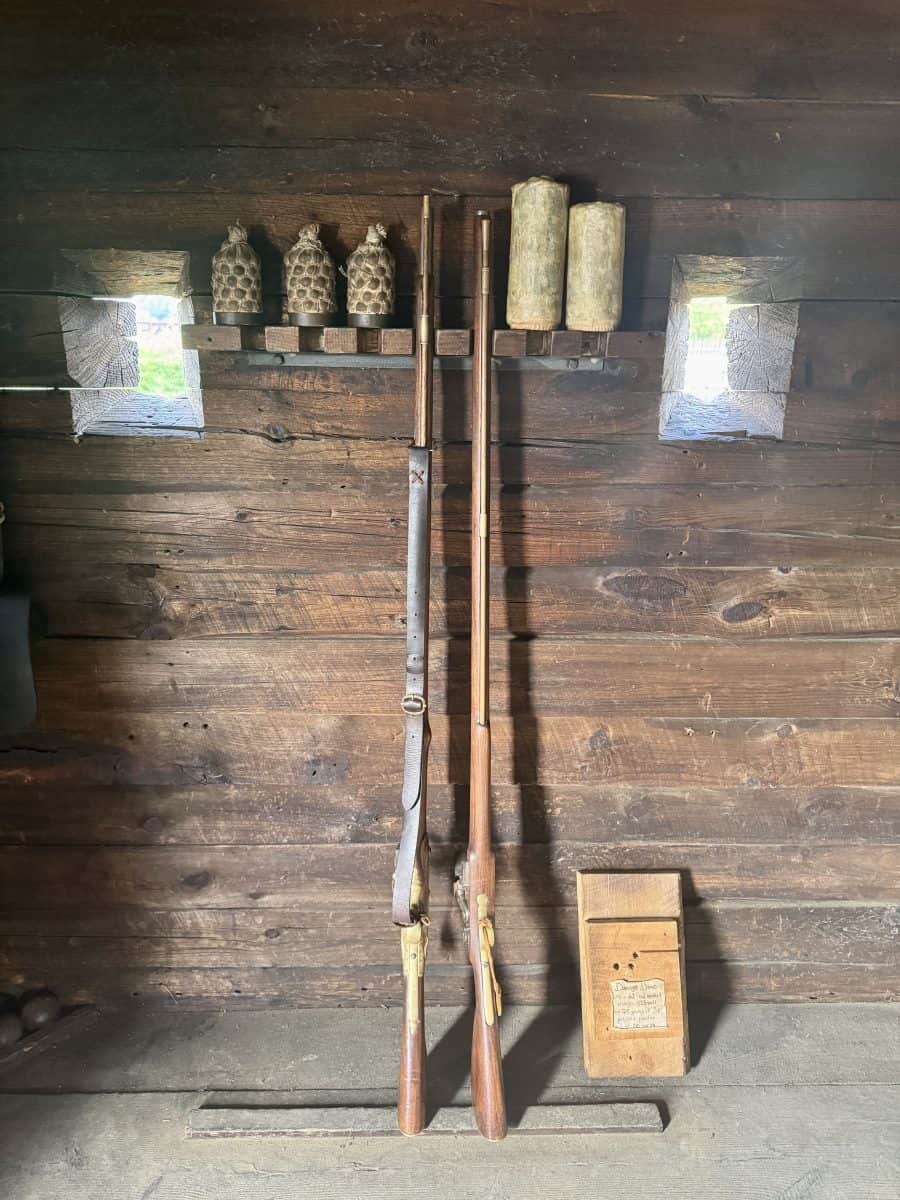
  5. Pretend to fire a cannon from the second floor of the Blockhouse. There are four 4 pound cannons and a miniature one pound cannon on display ( one of the cannons is still fired every year on July 4th- 13 times for the 13 original colonies!). Learn the various ways to attack a ship or army with either a bar shot, chain shot, or shotgun shell. The cannons are covered every night with lambskin to protect them from rusting. 
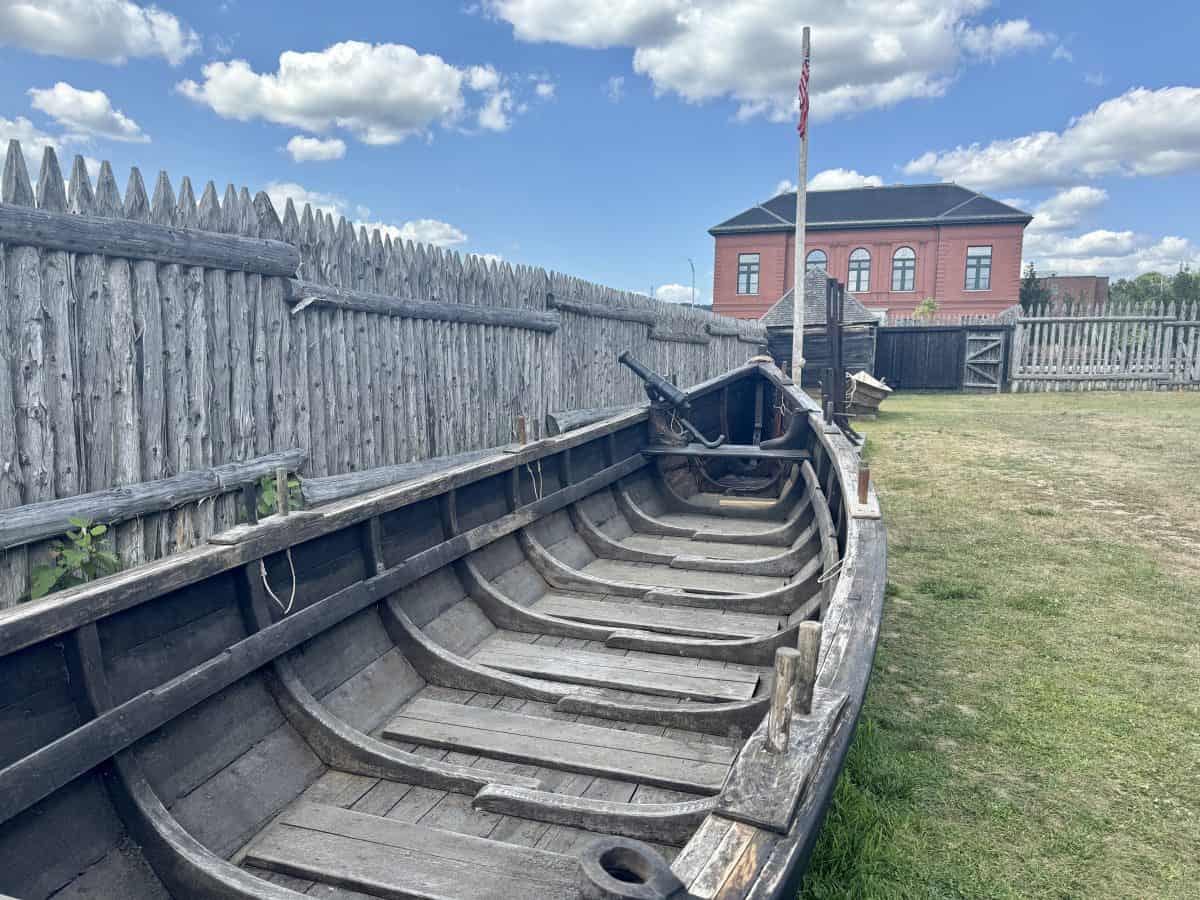
bateau at Old Fort Western in Augusta, Maine

Would you like to save this?

We'll email this post to you, so you can come back to it later.

pretending to load a cannon at Old Fort Western in Augusta, Maine
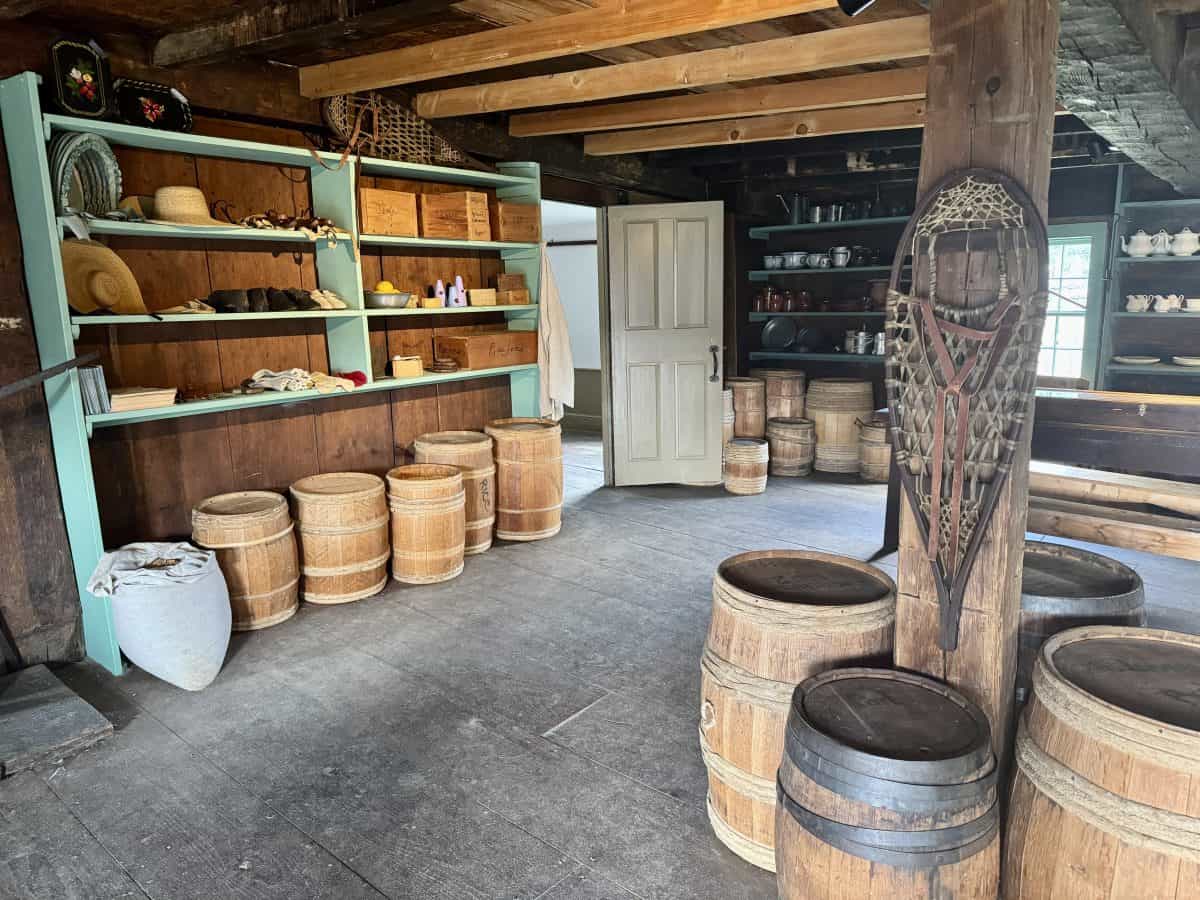
  1. Look up purchases from one of five original account books in the store inside the Garrison, and see the list of who owed what and how they paid their debts. Try and read the cursive handwriting!
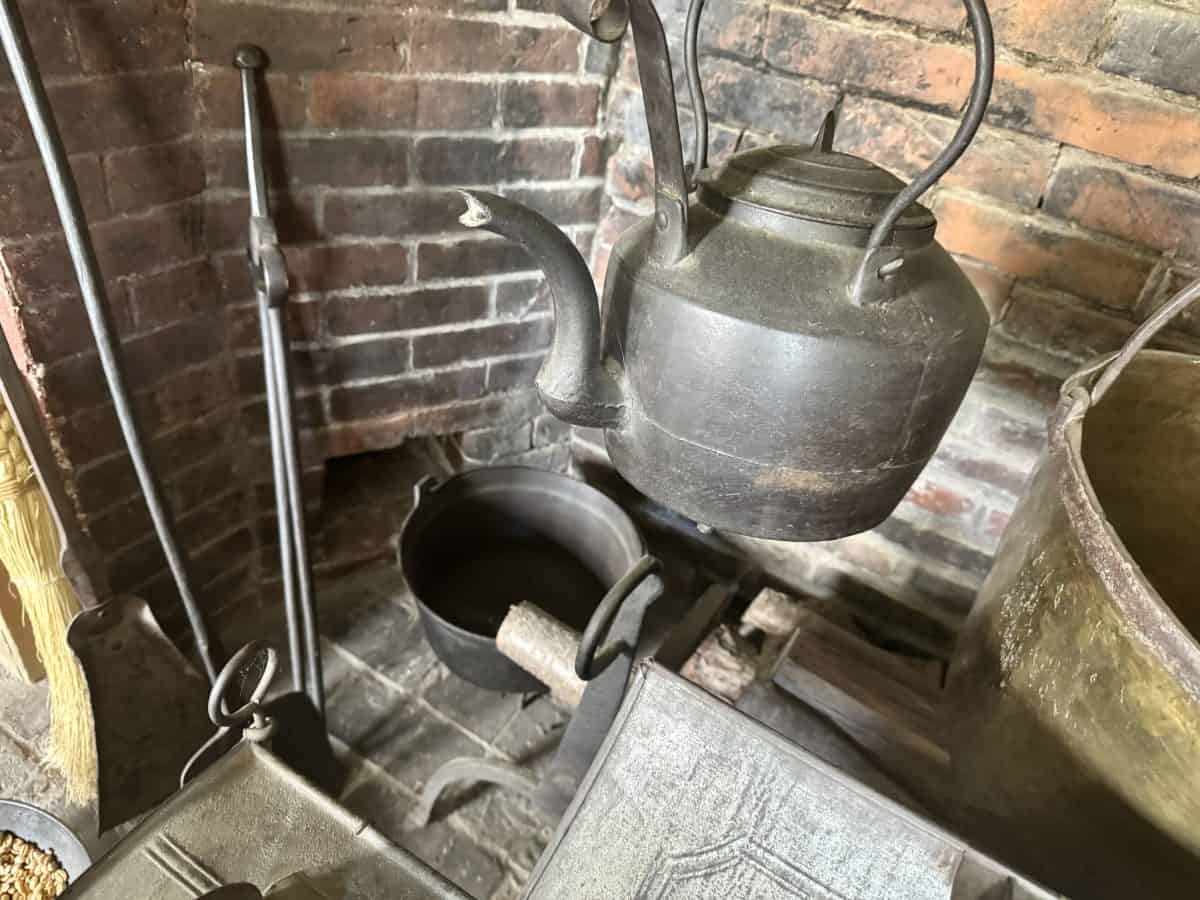
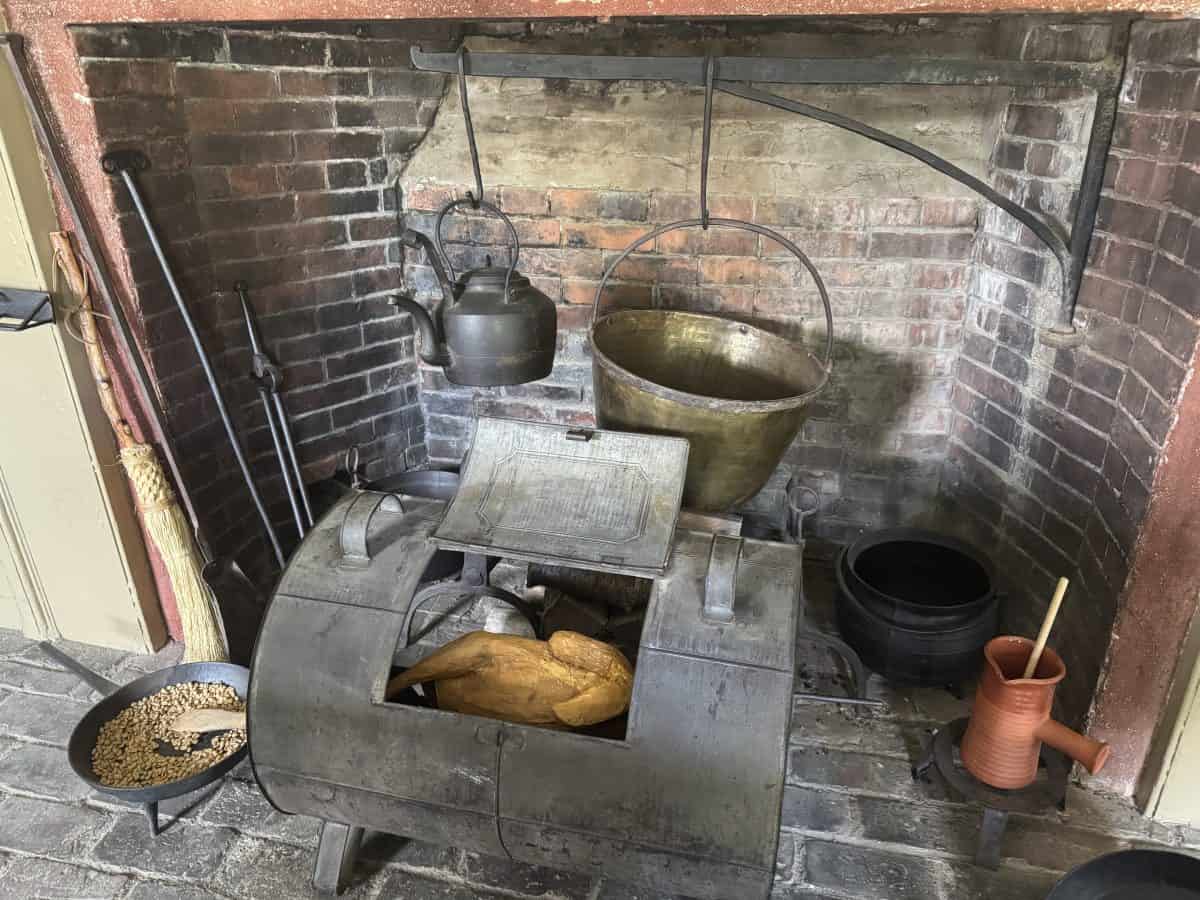
  2. Find the shoot inside the hearth of the kitchen in the Garrison. Servants would sweep ash from the hearth down the shoot, where it would mix in a barrel with water to form lye, which was used to make soap.
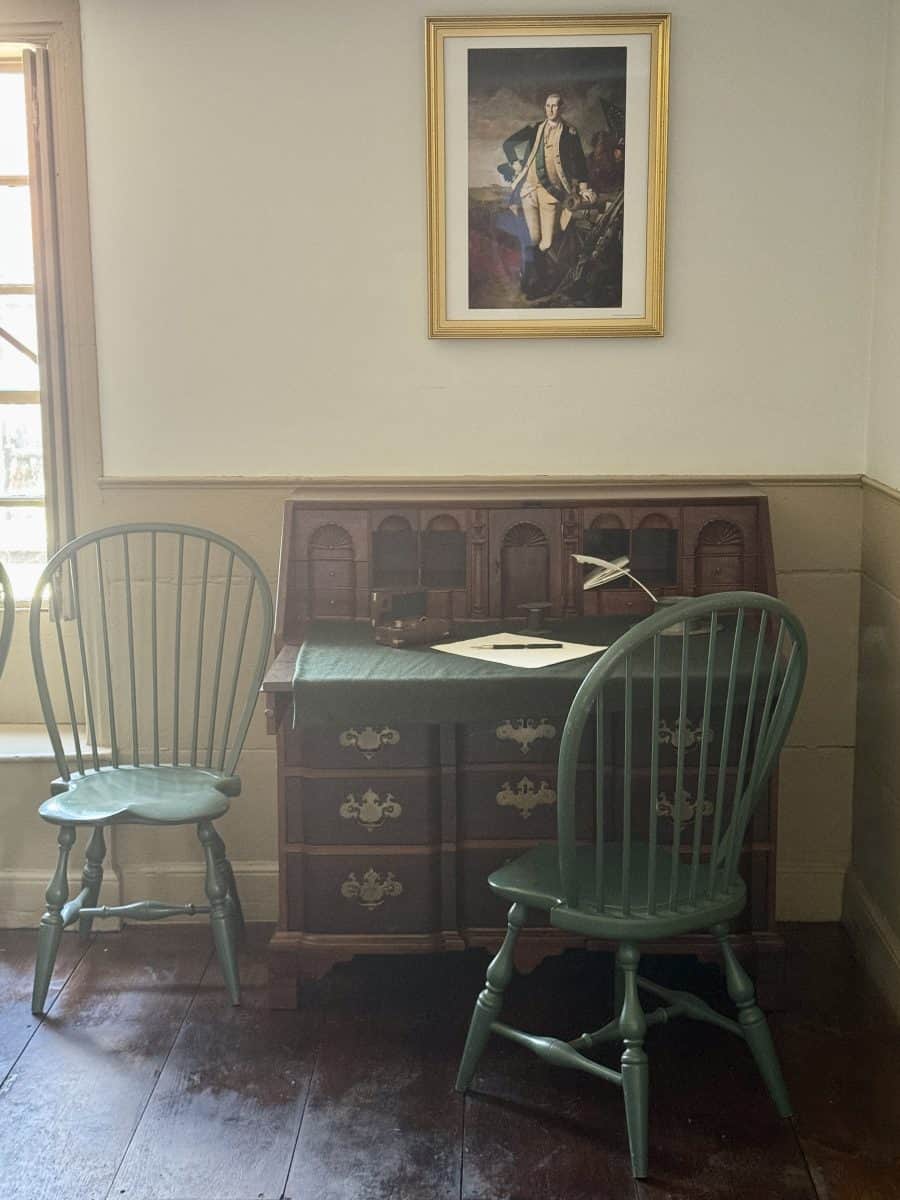
  3. See William Howard’s original desk, built in Cambridge Massachusetts in 1775, in the Eating Parlor (only for adults and well behaved children!) and the original 1799 chairs (a full set of 12 chairs donated by descendants of the family) in the Best Parlor of the Garrison. Peek inside the Best Parlor closet, which stored some of the 144 tablecloths that were listed on the home’s inventory.
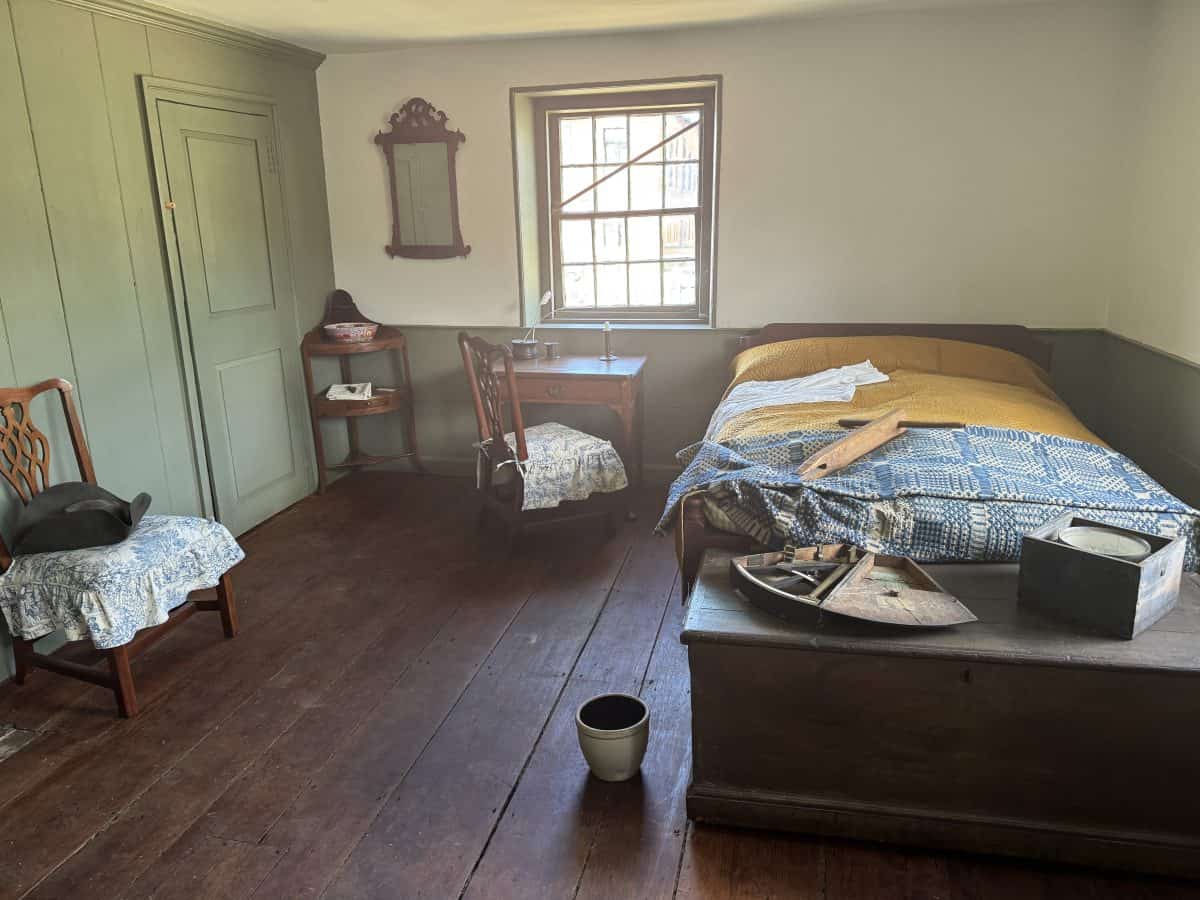
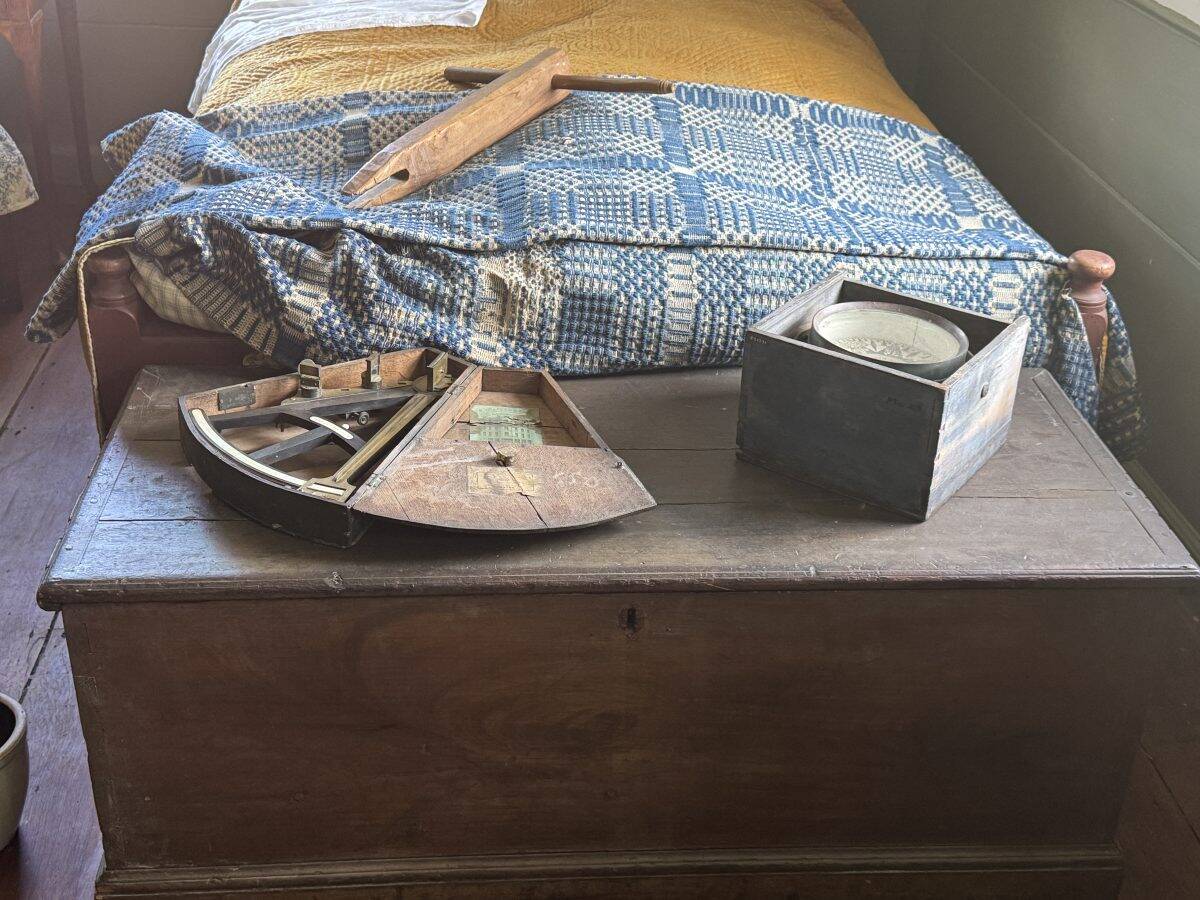
  4. Find the octant and ship’s compass in Captain Howard’s bedroom on the second floor of the Garrison
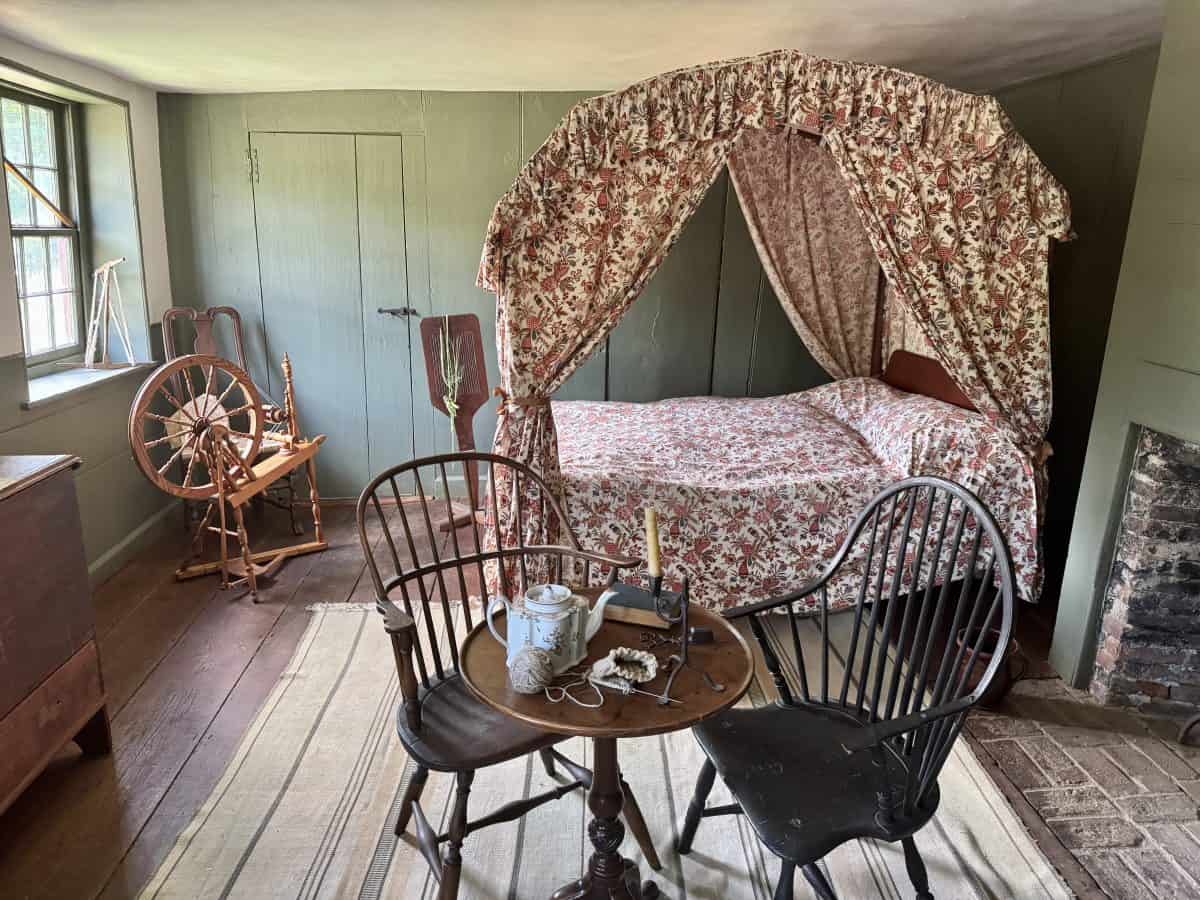
  5. See a walking wheel, a flax wheel, and paddle tape loom in Aunt Margaret’s Chamber on the second floor of the Garrison, used for making clothes and textiles.
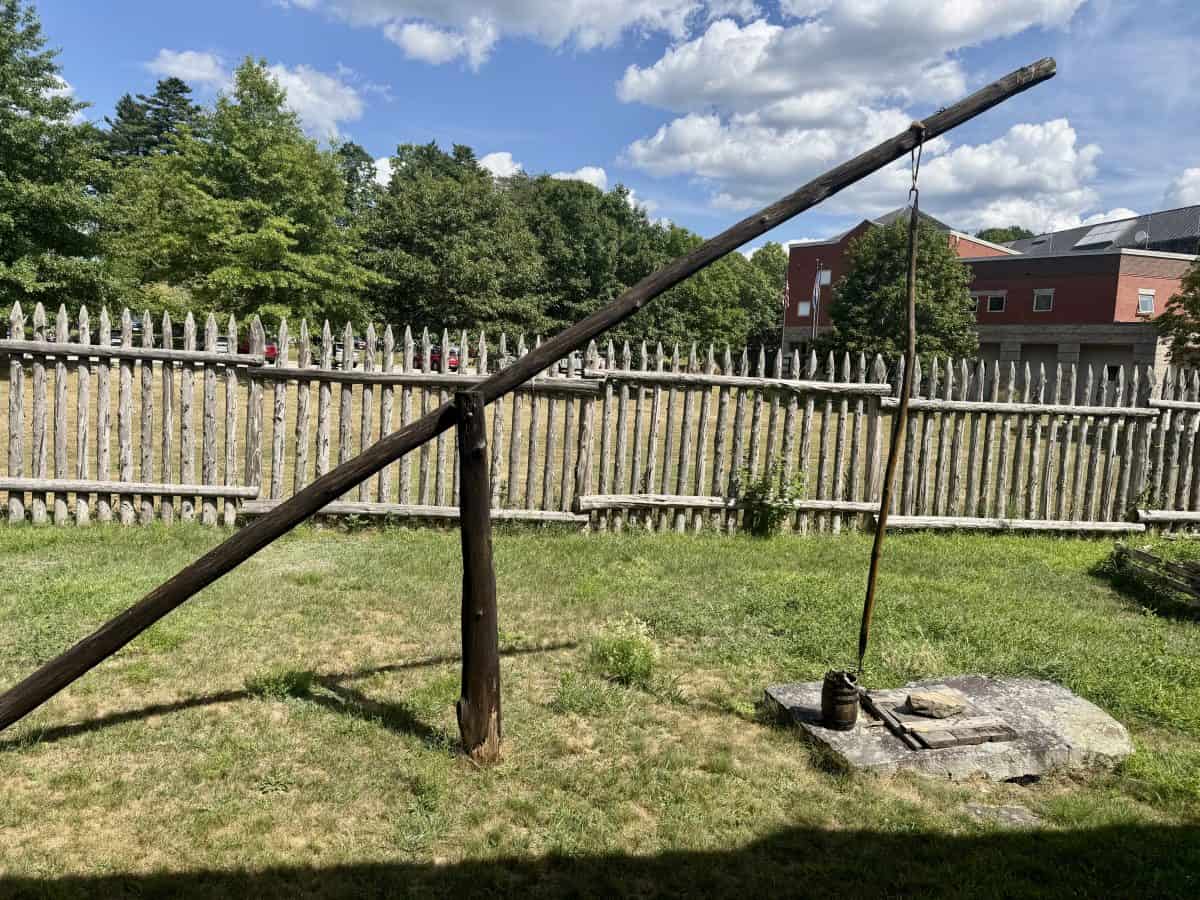
water well outside the Garrison at Old Fort Western in Augusta, Maine

Captain Howard's original 1775 desk at Old Fort Western in Augusta, Maine
  1. Learn about the technique of tightening the ropes of the bed in Martha’s Chamber. Martha and three of her five children died in 1786 from the flu and scarlet fever.
  2. Count the total number of fireplaces in the Garrison (hint: it’s over a dozen!). There is still one working fireplace that staff uses for special events and school programs.
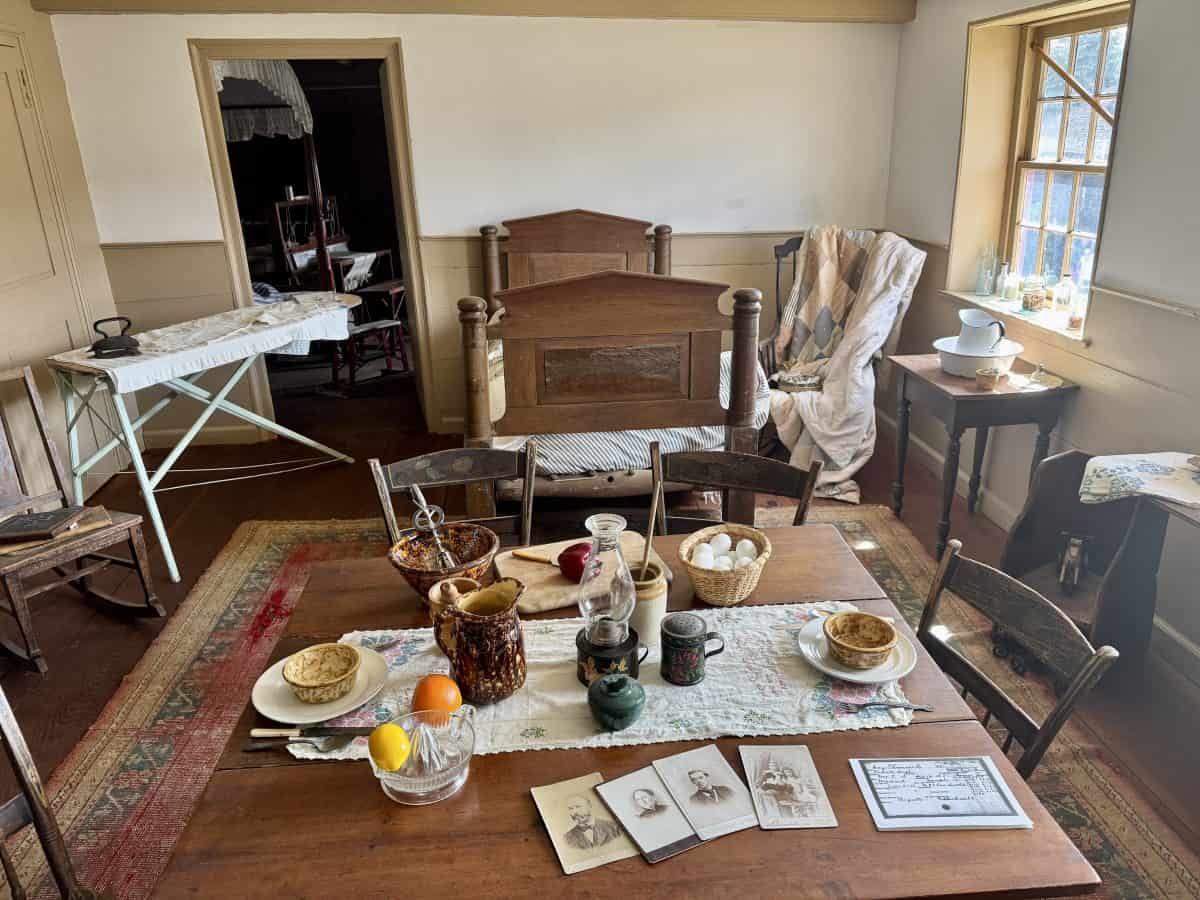
  3. See a recreated tenement from the 1880s where the Day family (Thomas, his wife Adelaide, and their three children) lived in a two room apartment on the second floor of the Garrison.
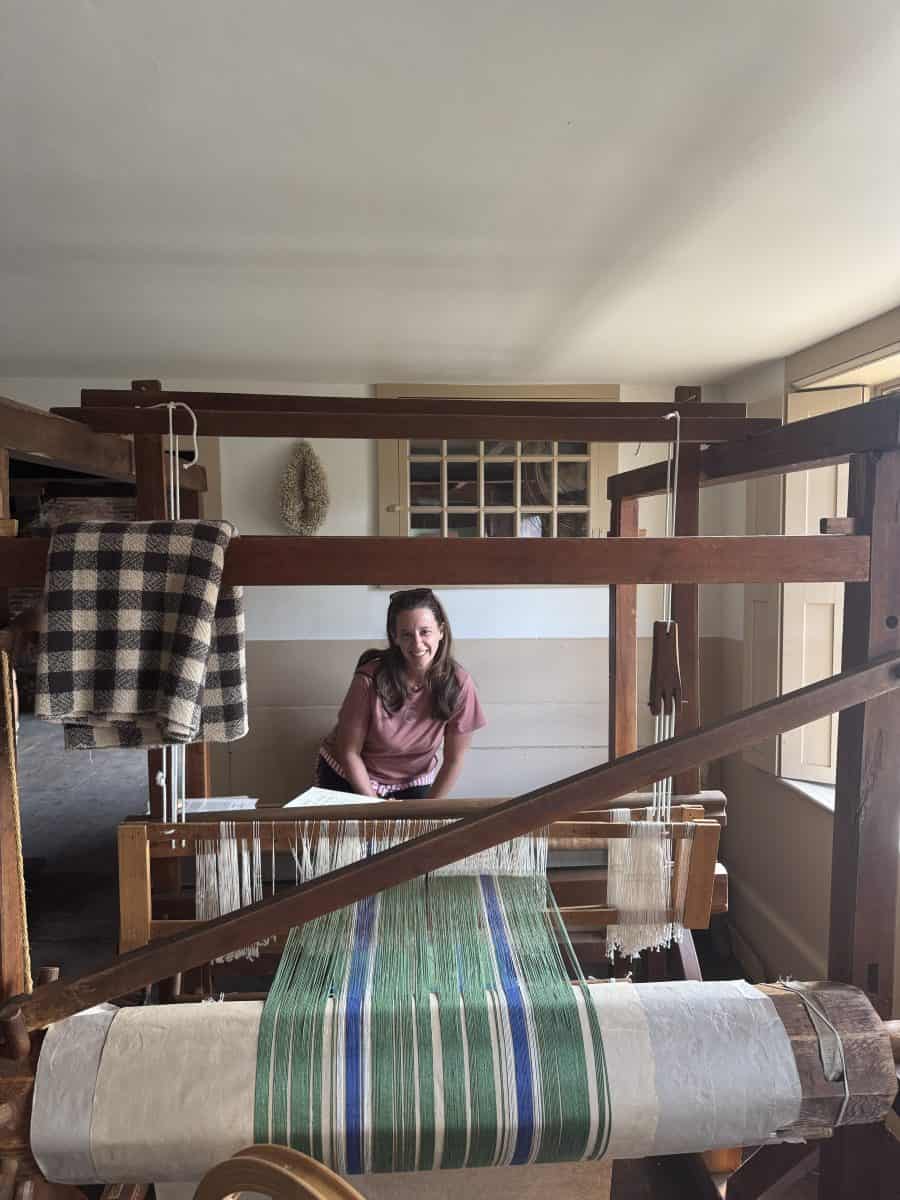
  4. Learn how to weave various patterns on a large barn loom in the Age of Homespun Room.
  5. Check the weekly calendar for a demonstration: There is often a blacksmith demonstration on the weekends and a monthly weaving demonstration using the looms in the Garrison.
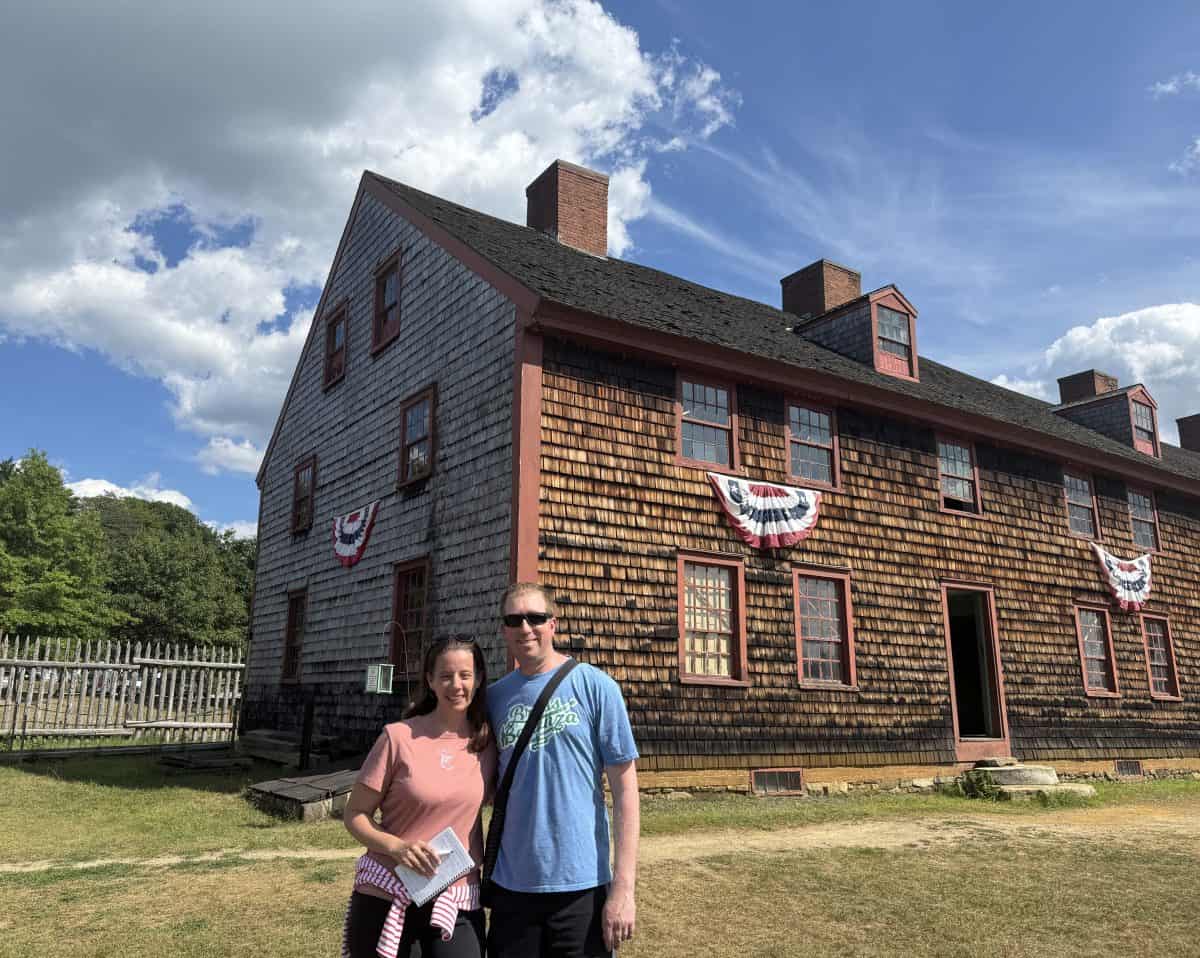
outside the Garrison at Old Fort Western in Augusta, Maine

standing in the loom exhibit at Old Fort Western in Augusta, Maine

Looking for other living history museums in New England? Check out our features of Old Sturbridge Village in MA, Hancock Shaker Village in MA, Canterbury Shaker Village in NH, and Mystic Seaport in CT.

 Disclosure: We were given a media pass to tour Old Fort Western; all opinions expressed are my own.

Similar Posts

  • | |

    Playing ‘I Spy’ at the Wyoming State Capitol

    Built in 1888, two years before Wyoming became the 44th state, the Wyoming State Capitol building sits at one end of 24th Street in Cheyenne and is the centerpiece of the Capitol Square. Wyoming is called the “Equality State” because it is home to the first female governor (Nellie Taylor Ross in 1925-1927) and the first female Justice of the Peace  (Esther Hobart Morris in 1870). The Capitol building, one of 20 state Capitols designated as a National Historic Landmark, expanded in 1890 and 1917, and went through an extensive four-year restoration process from 2015-2019. The restoration included a tunnel that connects the Capitol Building to the Herschler Building, home to many of the state agency offices.

    On our massive summer 2021 road trip through Utah, Colorado, and South Dakota, we passed through Cheyenne on our way to South Dakota. We were sad that we had not made plans to stay more than just the morning (#returnvisit coming ASAP!), but we are grateful we had the chance to explore the Capitol building.

  • | | | | | |

    Fraunces Tavern Museum in New York City

    Built as the Delancey Mansion in 1719, Samuel Fraunces purchased the building in 1762 and turned it into a tavern, later offering it as a place for political and social gatherings and distribution of news. The tavern became known as the Fraunces Tavern and is most famously recognized as the spot where George Washington said goodbye to his Continental Army officers on December 4, 1783. The tavern is also the spot where the first Sons of the Revolution in the State of New York (who own and oversee the museum) formed and the first offices of the Departments of Foreign Affairs, War, and Treasury. 

    The Fraunces Tavern Museum opened as a museum in 1907 and will celebrate its 300th birthday in 2019, with several special celebrations planned (check here for updates). The museum has over 8500 items in the permanent collection and rotates items on display.

  • | | | |

    10 Ways to Explore the New-York Historical Society and Museum in New York City

    The oldest museum in New York City (it predates even the Met by 50 years!), the New -York Historical Society opened in 1804 on New York’s Upper West Side, across the street from (what is now) the American Museum of Natural History and Central Park. Founded by eleven local merchants and politicians who wanted to preserve historical documents and artifacts post American Revolution and British occupation in New York, the museum now boasts a library of millions of archives, three floors of permanent and rotating exhibits, a devoted children’s museum, and a robust calendar of engaging programs and activities throughout the year to celebrate New York’s (and America’s) rich history.  

  • | |

    National Museum of the Marine Corps in Fredericksburg, VA

    Open in 2006, the National Museum of the Marine Corps is already expanding to include more exhibits and more presentation space. The 100,000 square foot museum also includes an outdoor Semper Fidelis Memorial Park, with 42 sculptures and memorials honoring individuals, battalions, and events; outdoor overlooks; and a chapel. The museum is situated on a 135 acre campus next to the Marine Corps base in Quantico and located less than one hour south of Washington D.C. and 30 minutes north of Fredericksburg, Virginia. It is one of the most beautiful, sobering, and enlightening museums we have visited.

  • | | | | | | | | |

    10 Things to Do with Kids in Sioux Falls, SD

    Our recent visit to Sioux Falls, the largest city (population wise) in South Dakota, was suppose to be a quick overnight, with dinner by the famous falls. But the more we researched, the list of places we “had” to visit grew longer and the more we crowdsourced, the list of places where we “needed” to dine for a meal or special treat grew larger. We ended up spending almost three full days of fun in the southeastern part of South Dakota and having so much fun!

    We loved Sioux Falls for all the public parks, green spaces, and walking and biking trails; the rich history and preserved historic homes and buildings open to the public; the daily calendar of events tailored to families at the zoo and science center and butterfly garden and aquarium; and the kind, friendly people who ALWAYS stopped to let the pedestrian tourists cross the street (such a pedestrian friendly city- motorists actually do stop!) and who always had a tip about getting around road work, a recommendation for the best ice cream flavor, and a personal story of hometown pride.

  • | |

    Samoset Resort in Rockport, Maine

    Rockport, Maine’s Samoset Resort, known for its stunning views of Penobscot Bay and Camden Hills, award winning 18 hole golf course, and first class service, has been welcoming guests from around the world since 1889. Over the past 130 years, the resort has expanded and renovated many times to include additional hotel suites, meeting and convention spaces, timeshare condominiums, and amenities such as recreational sports, a spa, and several dining options.

    While the resort is most popular in the warmer months, there is still plenty to do during the winter. Check here for information about the popular Glacier Ice Bar Lounge that is created each winter and other popular winter activities. We chose to visit Samoset recently because we knew the resort would have plenty of outdoor activities and plenty of family fun. Samoset more than delivered and we highly recommend a visit.

Leave a Reply

Your email address will not be published. Required fields are marked *