The Health Museum in Houston, Texas

| | | | |

Opened in 1996 in Houston, the John P. McGovern Museum of Health and Medical Science, aka The Health Museum for short, welcomes over two million visitors each year. Recently renovated, the museum also has plans to expand the four permanent exhibits in the near future.   The Health Museum is located in the Houston Museum District, an area encompassing 19 different museums and recreational spots, along with plenty of restaurant options.  On a recent trip to Houston (stay tuned for an upcoming post on all things family-friendly in Houston), we had the chance to explore The Health Museum.  If you’re local to the Houston area, I recommend checking out their programming schedule; there is a wide variety of classes and camps offered throughout the year (they even have real organ dissections!!).

Traveling with Children:

  • You can park for $5 (less for members) right in front of the museum. There are also several parking lots for reasonable rates throughout the Houston Museum District.
  • The entire museum is located on one floor and is handicap and stroller accessible. I think little children will be so busy exploring that I would leave the stroller in the car.
  • Plan to spend about an hour to 90 minutes to explore the museum (not including films in the auditorium).
  • A gift shop and restrooms are located to the left of the admissions desk.
  • The Health Museum participates in the Association of Science and Technology CentersPassport Program, so if you belong to another ASTC museum, you can gain reduced admissions at The Health Museum.

Eight Things Children Will Love at the Health Museum:

1. The 12 foot replica of a beating heart; every twenty minutes, it simulates a heart attack. The exhibit offers advice on heart health care.

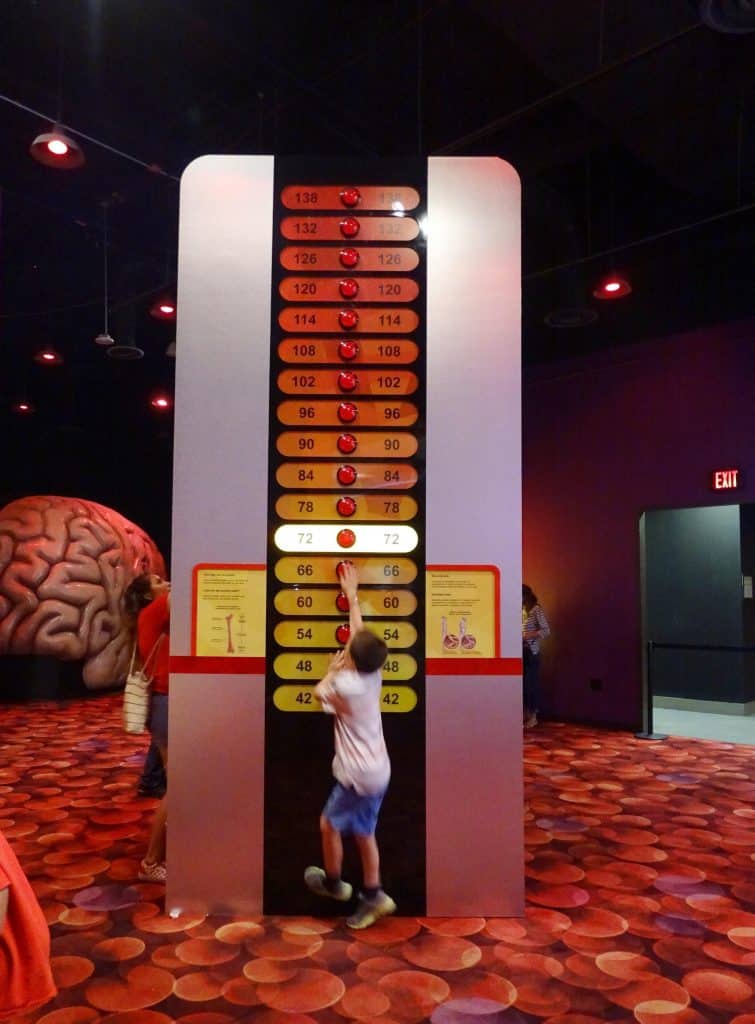
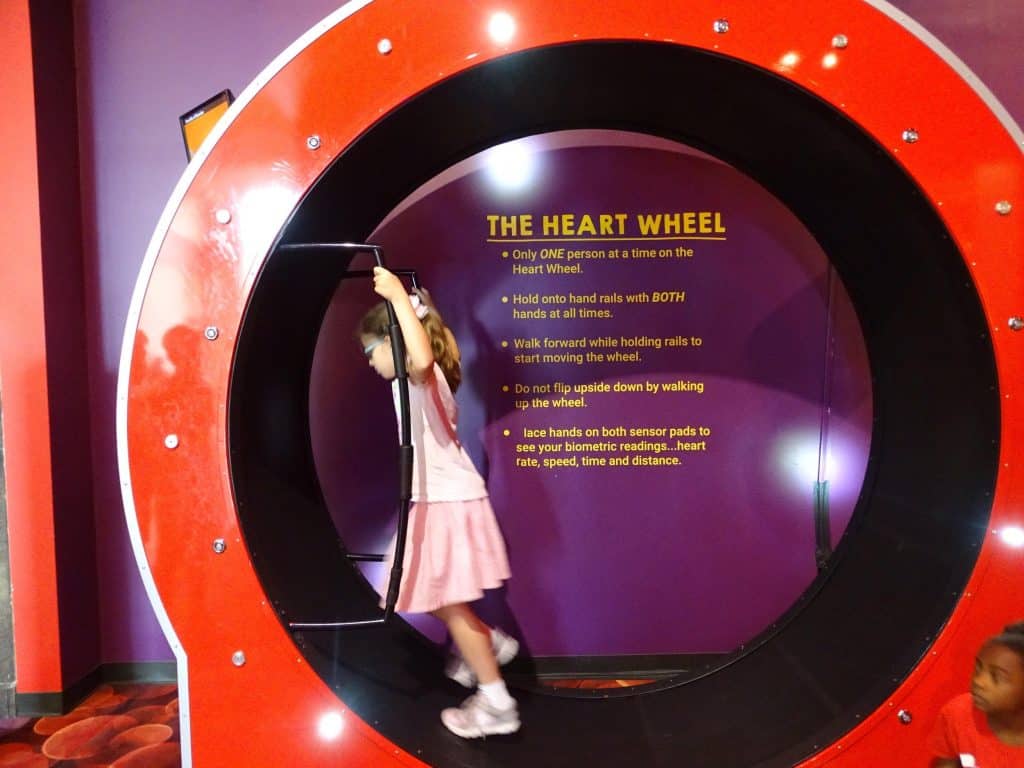
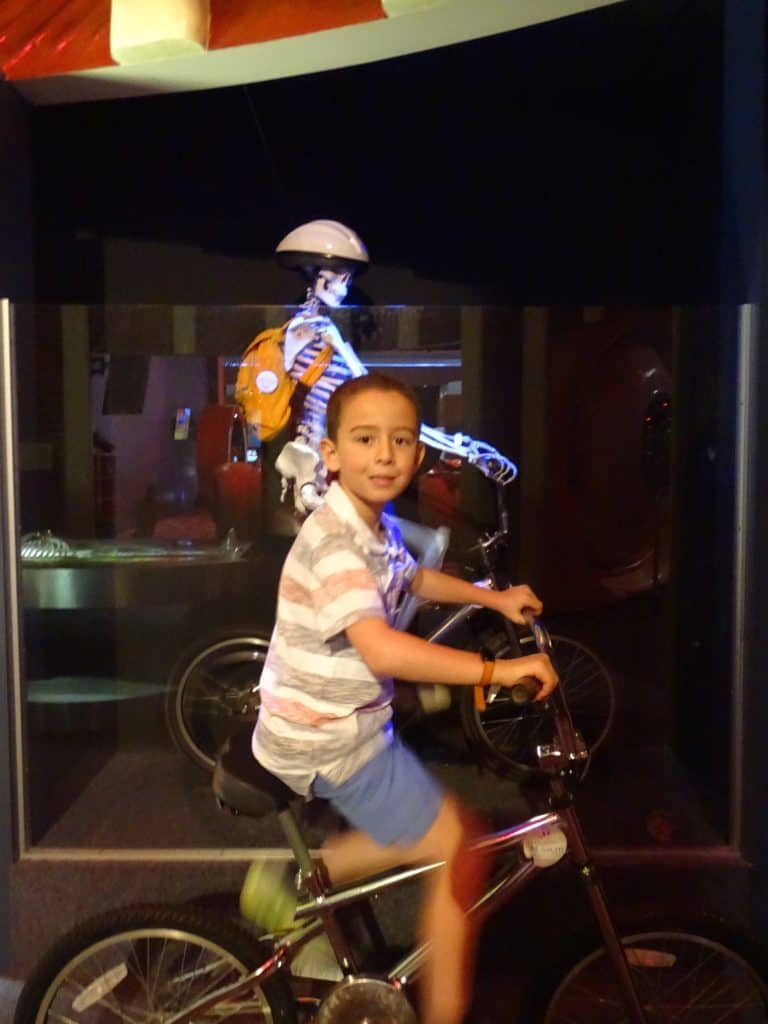
2. The physical challenges inside the Amazing Heart Gallery: the human heart wheel, the skeleton riding a bike, Calorie Crank, and Jump, Stretch, and Hang activities were favorites of my children.  

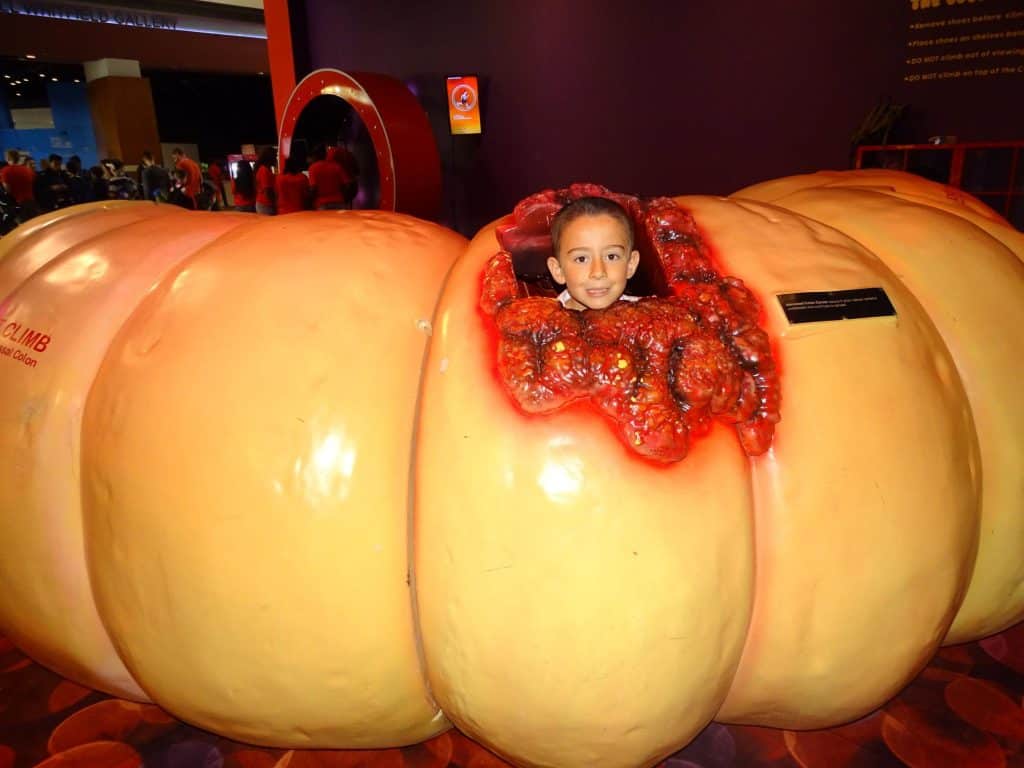
3. A larger than life piece of a colon; you climb through it and peak your head through the cancerous spot in the colon.

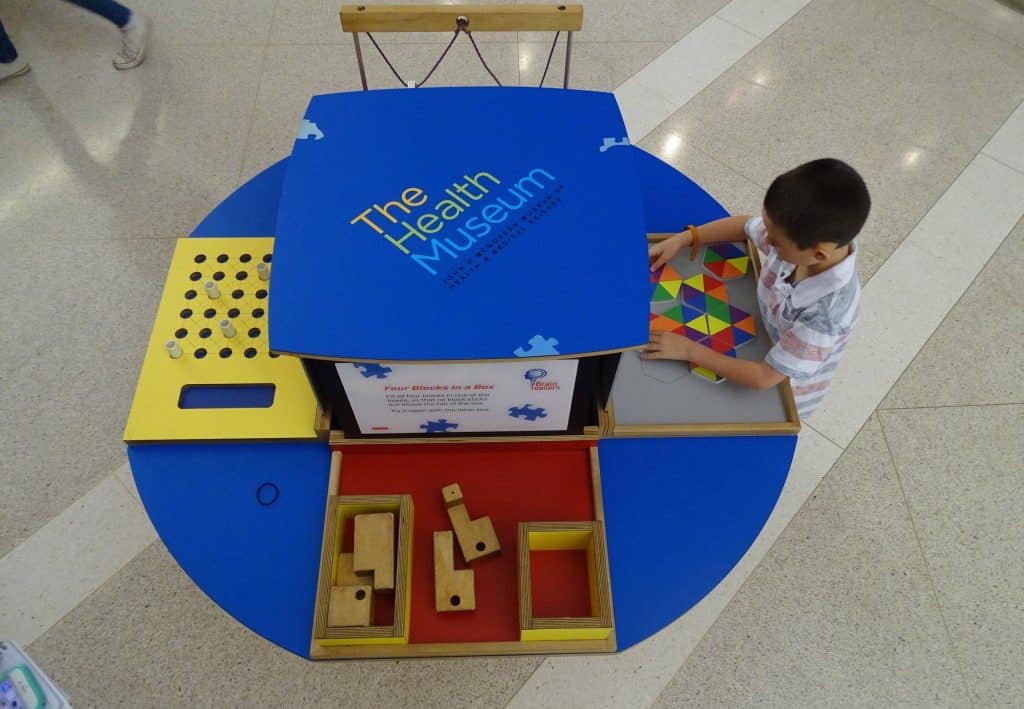
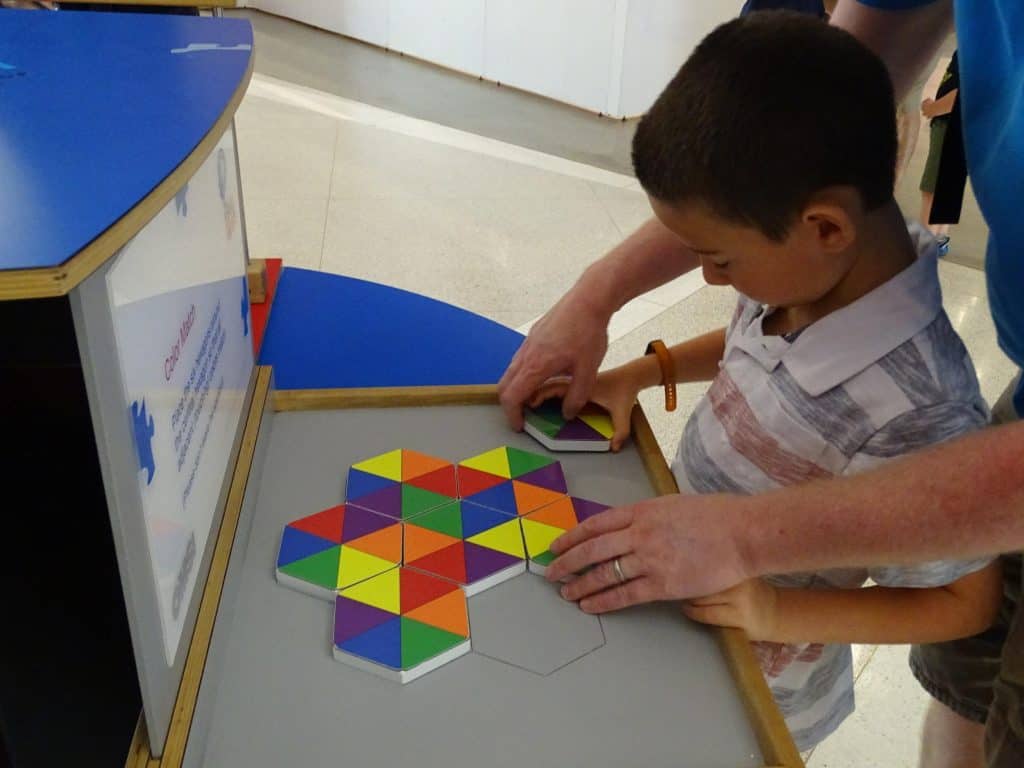
4. Puzzle tables located in the middle corridor; how many geometric puzzles can you solve?

Would you like to save this?

We'll email this post to you, so you can come back to it later.

5. The ear area and Scream Booth; which member of your group can scream the loudest? Let the recorder decide.

6. DeBakey Cell Lab (there is a separate fee) which hosts daily workshops for children ages seven and older. Future scientists don a full lab uniform and work through seven stations of experiments focused on cellular biology.  Plan on at least an additional hour to explore the Cell Lab.

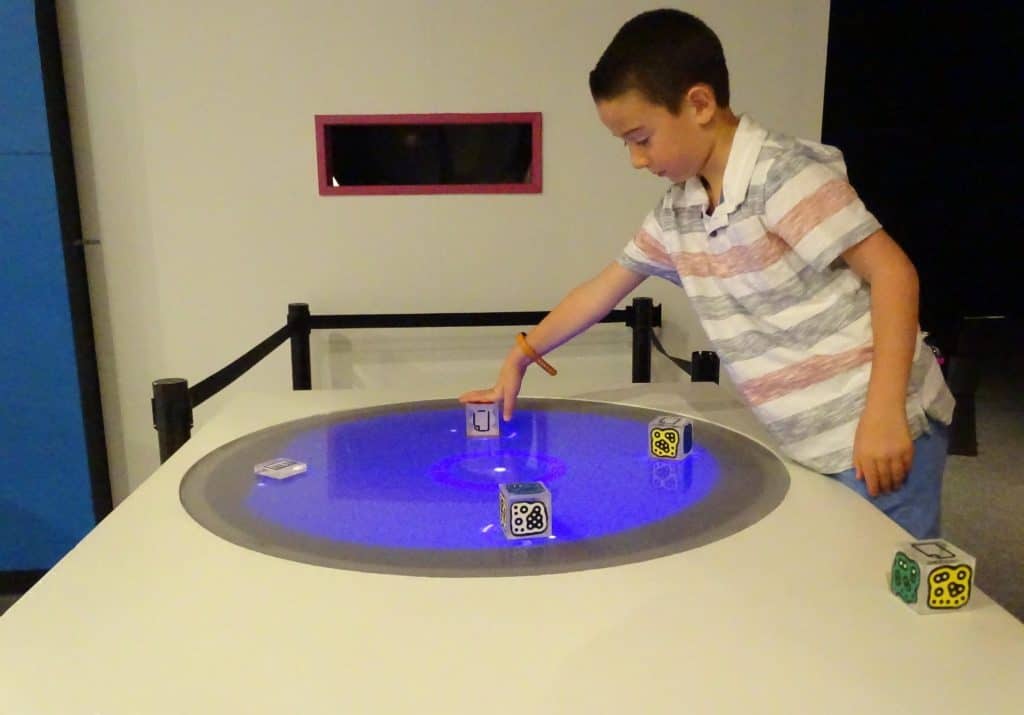
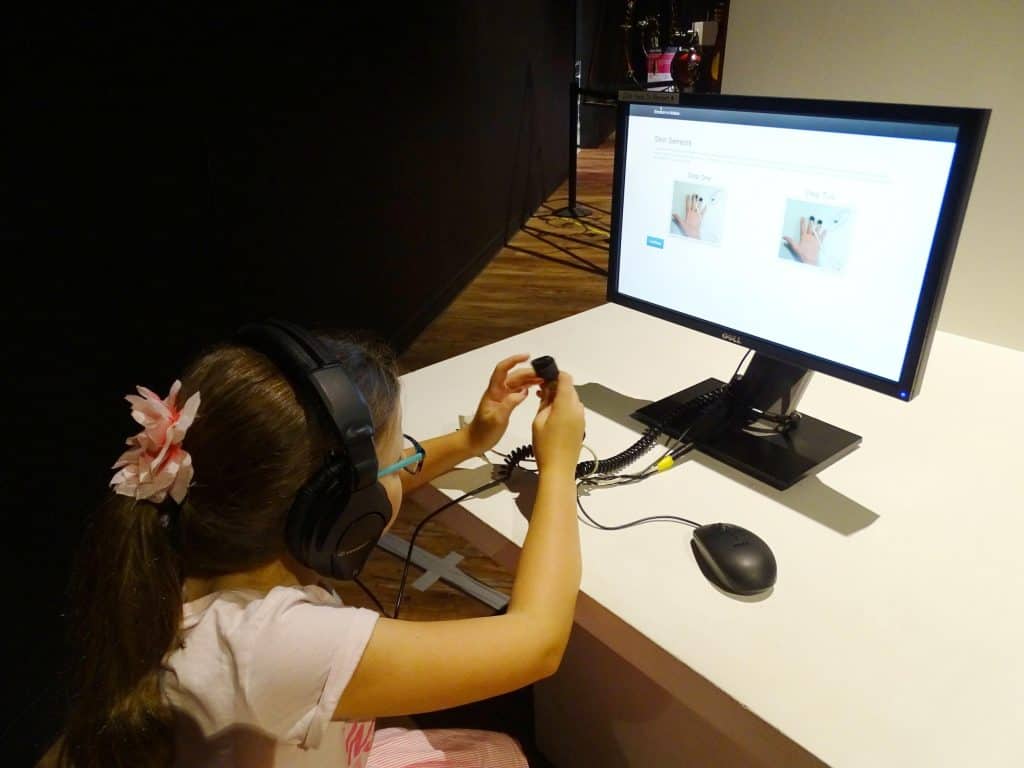
7. Special, rotating exhibits; when we visited in summer 2018, there was an exhibition on loan from the Dublin, Ireland Science Gallery entitled Bio-Rhythm: Music and the Body, with several experiments. My children especially enjoyed the acoustic bed, sonic table, Body Snatcher (where you create your own dance music) and emotion in motion experiments.

8. The McGovern Theater which shows short (approx. 30 minute) videos throughout the day. Videos are included in the admission fee.
Eating Nearby: We walked (practically) across the street to Bodegas Taco Shop for a great lunch- there is a kids menu and lots of lunch specials.

Disclaimer: I was provided media passes to visit the museum. All opinions expressed are my own.

Similar Posts

  • |

    Mystic, Connecticut

    Mystic is a small town located in the most eastern part of Connecticut and is known for its historic seaport. Mystic is part of New London County, which includes other family friendly towns and cities ranging from New London to Groton to Niantic down to Old Lyme. The area becomes flooded with visitors in the spring and summer due to its close proximity to the Long Island Sound and Atlantic Ocean. However, there is plenty to do in the “off season” too: food festivals throughout the year, the famous Pirate Invasion in the fall, the arrival of Santa via tugboat and holidays strolls in December, and the popular Mystic Irish parade in March. Recently, my family spent a few days of our April break exploring the area. We had so much fun we could have extended our trip to a few weeks! Lucky for us, the area is less than 90 minutes away, so we can return for day trips any time we wish. Here are some of our favorite spots:

  • Packing a Suitcase

    You’ll hear me say it often on this site: Be prepared. I truly believe you can never be too prepared, or plan too much. And while it’s been a personal resolution (since, about, oh… 2002) to try and be spontaneous, I have a lot of evidence to support planning ahead of a trip.

    I’ve written about how to pack the car, but if you’ll allow me to micromanage you just a little bit more, I’ve got a few suggestions on how – and what – to pack in a suitcase when traveling with the kids.

  • | | |

    Exploring Waterton Lakes National Park in Alberta, Canada

    The Waterton- Glacier International Peace Park is the first “international peace park” in the world and includes Waterton Lakes National Park in Canada and Glacier National Park in America. Established in 1931 with support from Rotary Clubs in both Alberta Canada and the US state of Montana and then officially created in 1932, the goal was to combine some of the resources, as well as preserve and protect the land and over 300 species of animals, including bears, wolves, lynx, eagles, and falcons,  as well as the Blackfeet Indians, Kootenai, and Salish Indian tribes who have lived on the land for thousands of years.

  • |

    Touring the US Naval Academy in Annapolis, Maryland

    Founded in 1845 by George Bancroft, Secretary of the Navy, the US Naval Academy, located in the heart of Annapolis, Maryland, is the college that trains officers for both the Navy and Marine Corps. What started as a 10 acre campus with 50 students and 7 faculty members has expanded to a 338 acre campus with over 600 faculty (half civilian and half military) and 4,500 students called Midshipmen (women are called Female Midshipmen), copied from the British naval ranking. Women were first admitted in 1976 and today, represent approximately 30 percent of Midshipmen. Each year, the Academy accepts approximately 1200 students, approximately 10% of applicants. All Midshipmen are on scholarship and are required to serve a minimum of five years in the Navy or Marine Corps following their four year college experience, culminating with a Bachelors of Science degree. 

    Over 80,000 people take guided tours each year, and over two million people visit the Academy each year. Our guided walking tour is one of the BEST tours we have ever taken and we think it is a must see and do when you’re exploring Annapolis, or driving through to Washington DC or Baltimore, Maryland, both a half hour away.

  • | | | |

    National Postal Museum in Washington DC

    The National Postal Museum, housed in a building that opened in 1914 as the city’s post office until 1986, opened as a museum in 1993. In addition to the 35,000 square foot public museum, the building is home to a 6,000 square foot research library, stamp store, and museum shop. The museum is part of the Smithsonian Institute, the world largest museum complex, encompassing 19 museums (and a zoo!) in Washington DC and New York City. The Postal Museum is one of my favorite museums in Washington DC and one of the most kid friendly places in town.

  • | | | | | | | | | | | | | | | |

    Presidential Libraries & Museums

    Don’t let the word “library” misguide you. While there are thousands of papers and personal records of the presidents to read, and spaces for scholarly research, there are just as many opportunities to explore, touch, see, listen, and learn about American history at the 13 presidential libraries located throughout the country. (President Obama’s Chicago library and museum is currently under construction.)

    Franklin D. Roosevelt was the first to establish a presidential library, followed by each succeeding president, as well as predecessor Herbert Hoover. The National Archives and Records Administration oversee the 13 presidential libraries. I first wrote about presidential libraries for Kidventurous in 2014, but have since visited more libraries and museums and learned lots of new things! At your first stop, be sure to pick up the passport for all 13 libraries so you can collect the stamps.

Leave a Reply

Your email address will not be published. Required fields are marked *