Fraunces Tavern Museum in New York City

| | | | | |

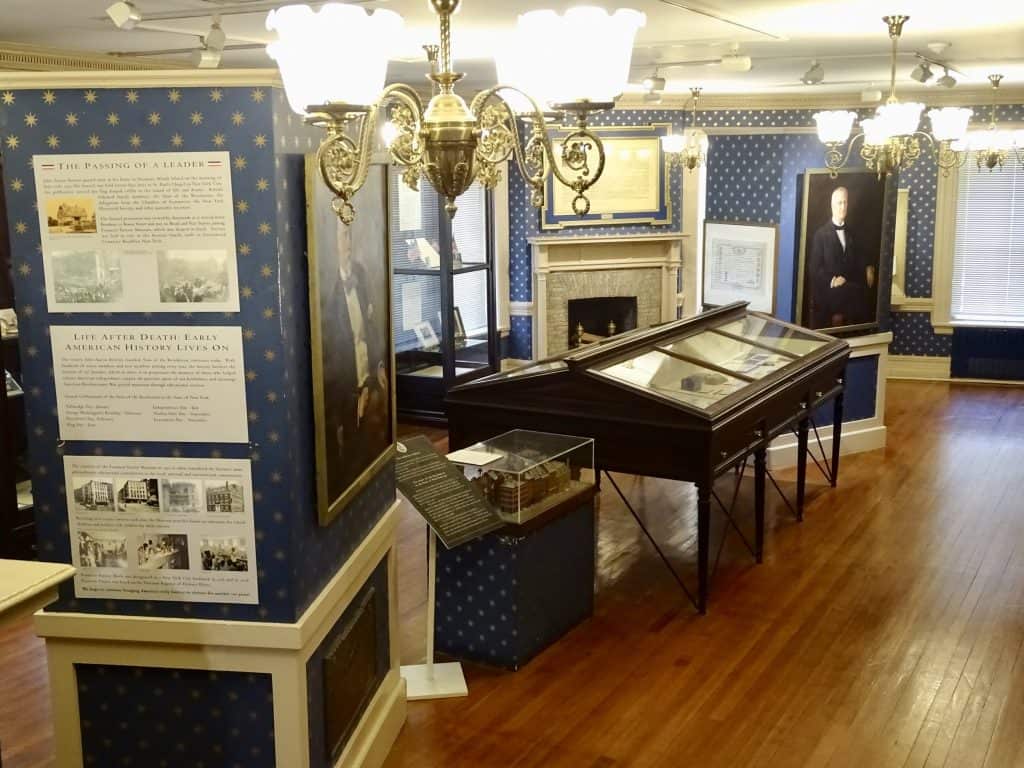
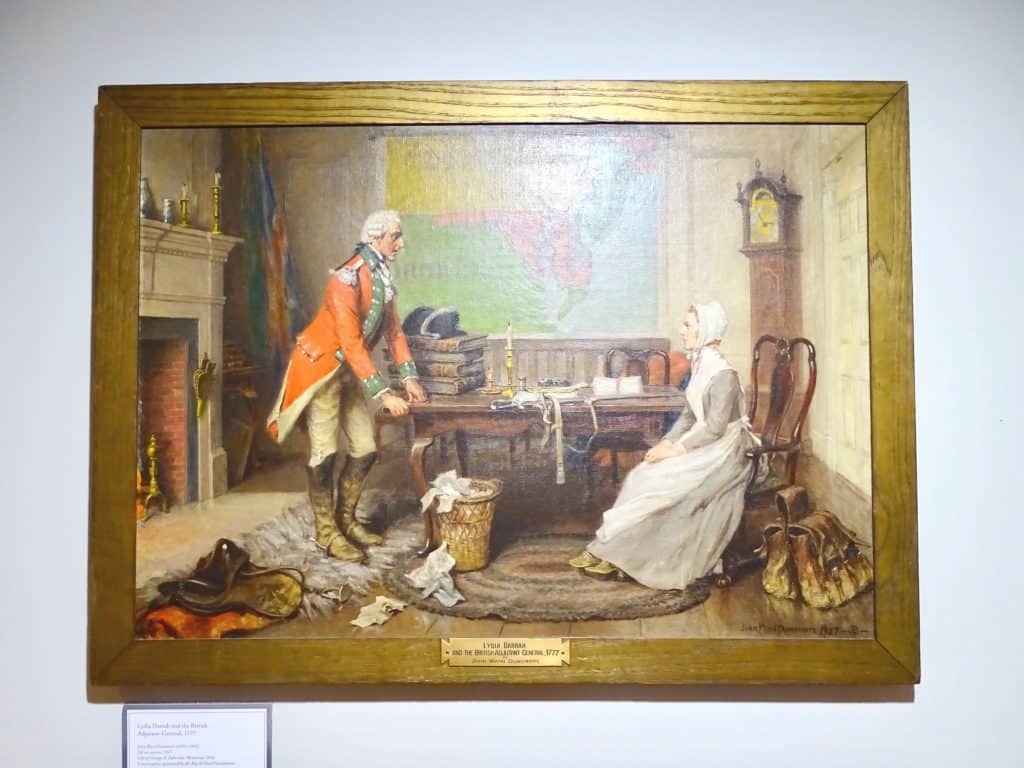
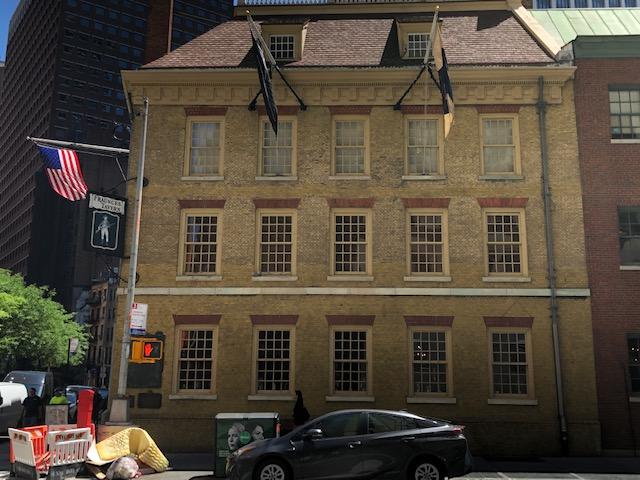
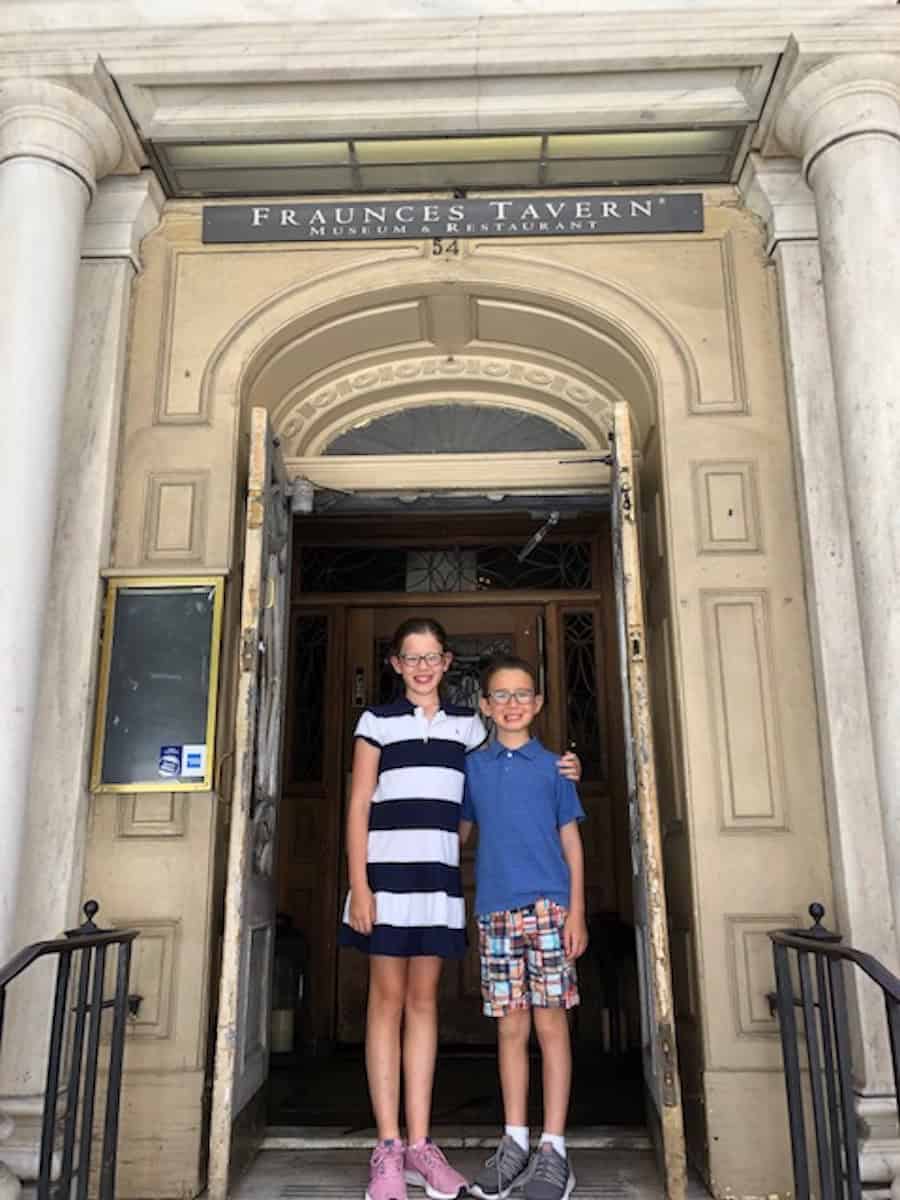
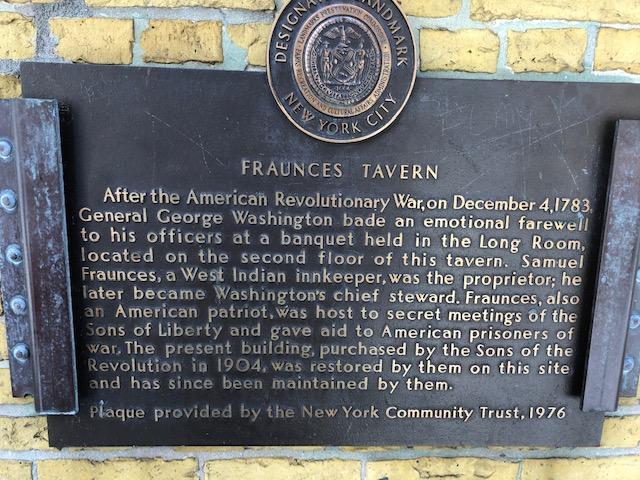
Built as the Delancey Mansion in 1719, Samuel Fraunces purchased the building in 1762 and turned it into a tavern, later offering it as a place for political and social gatherings and distribution of news. The tavern became known as the Fraunces Tavern and is most famously recognized as the spot where George Washington said goodbye to his Continental Army officers on December 4, 1783. The tavern is also the spot where the first Sons of the Revolution in the State of New York (who own and oversee the museum) formed and the first offices of the Departments of Foreign Affairs, War, and Treasury. 

The Fraunces Tavern Museum opened as a museum in 1907 and will celebrate its 300th birthday in 2019, with several special celebrations planned (check here for updates). The museum has over 8500 items in the permanent collection and rotates items on display.
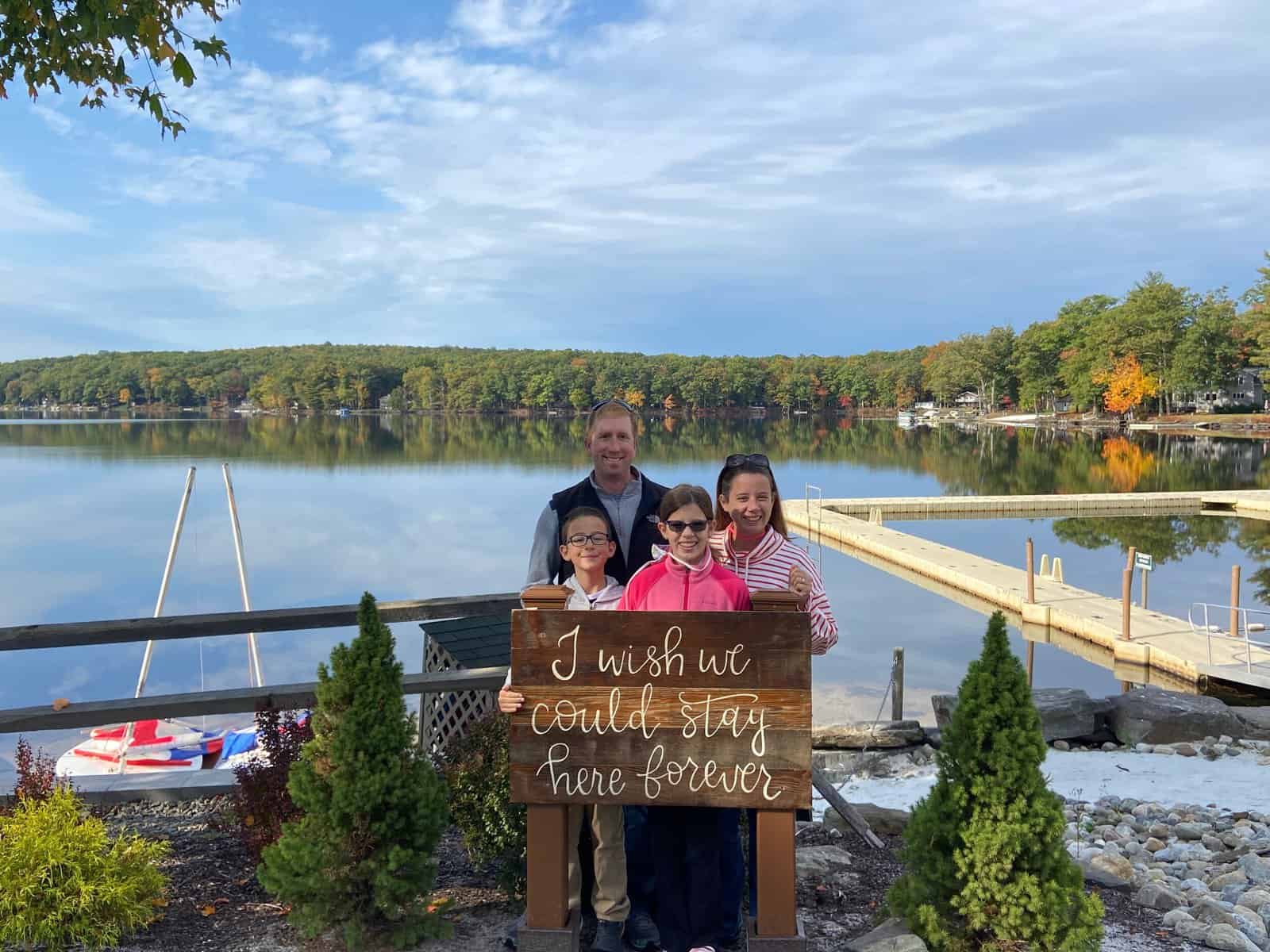
Travel with Kids:
  • The museum is located downtown, in the financial district of Manhattan in two buildings.

  • Take the subway 4 or 5 line to the Bowling Green station and the museum is across the street!

  • The museum is located on the 2nd and 3rd floors of the buildings and does allow strollers. There is a handicap elevator and ramps to make the museum handicap accessible.

  • In my opinion, the museum is appropriate for elementary school students and older children. Make sure children grab the Hamilton scavenger hunt. Tours are also offered Friday-Sunday at 1pm and 2pm.

  • The toddler set will like the flag hall and dress up area, but might not be as engaged in some of the exhibits. However, children under five are free and might enjoy the scavenger hunt with some help.

  • Restrooms are located on the 2nd floor. 

  • Check out the calendar for several walking tours and lectures scheduled throughout the year. Tickets for these programs include museum admission.  Check here for admission hours.

  • Plan to spend 60 minutes exploring the eight galleries on two floors of the museum. Start with the introductory video next to the admission desk on the 2nd floor. 

Would you like to save this?

We'll email this post to you, so you can come back to it later.

Play “I Spy” in the Fraunces Tavern Museum: 

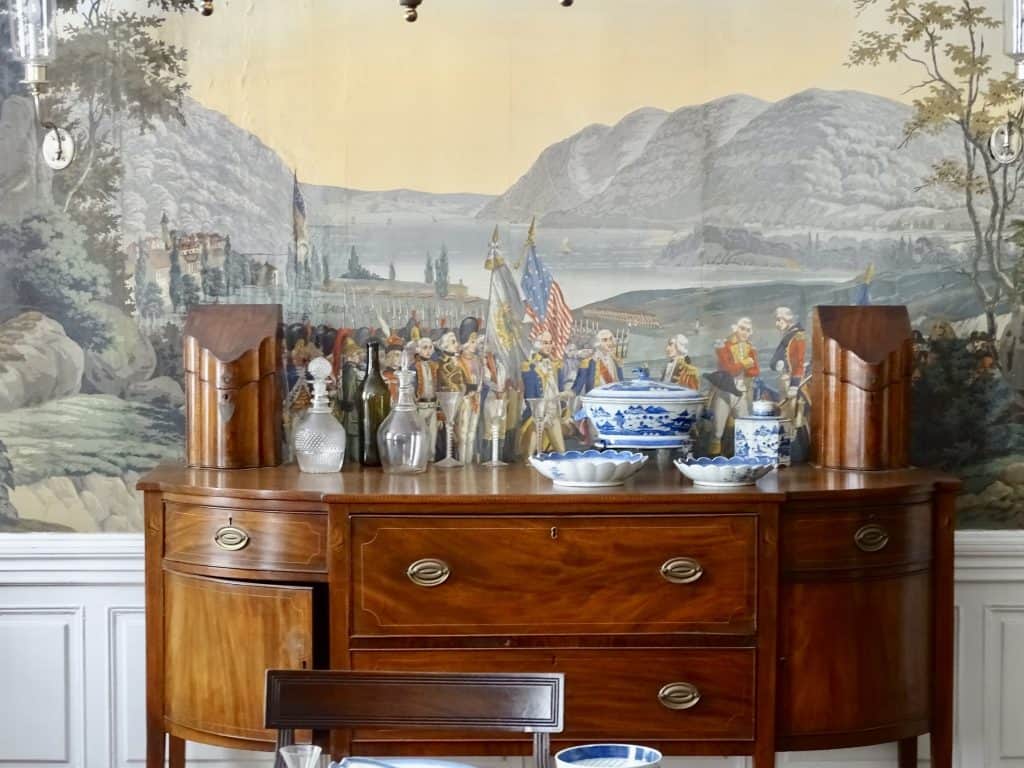
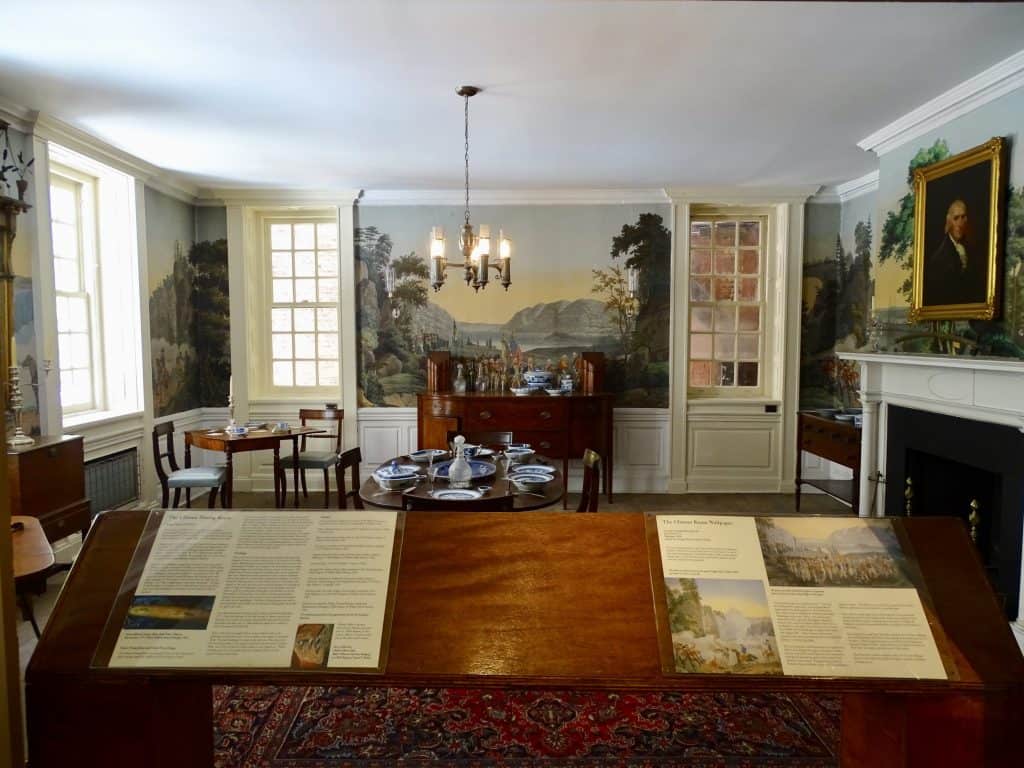
1. The rare and inaccurate Zuber wallpaper in the Clinton Dining Room. The wallpaper (which is also displayed in the White House!) is suppose to depict the Battle at Yorktown (in Virginia) but is set in New Jersey.
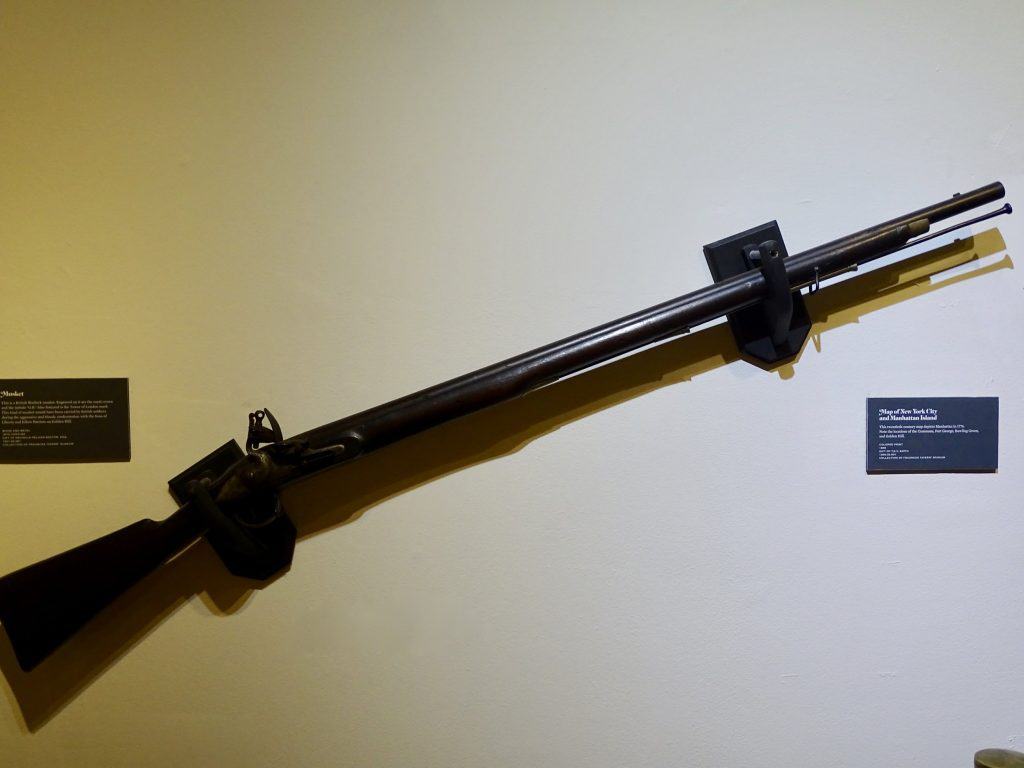
2. The sword, used by George Clinton (the Revolutionary War general and first governor of New York) in battle, in the Clinton Dining Room
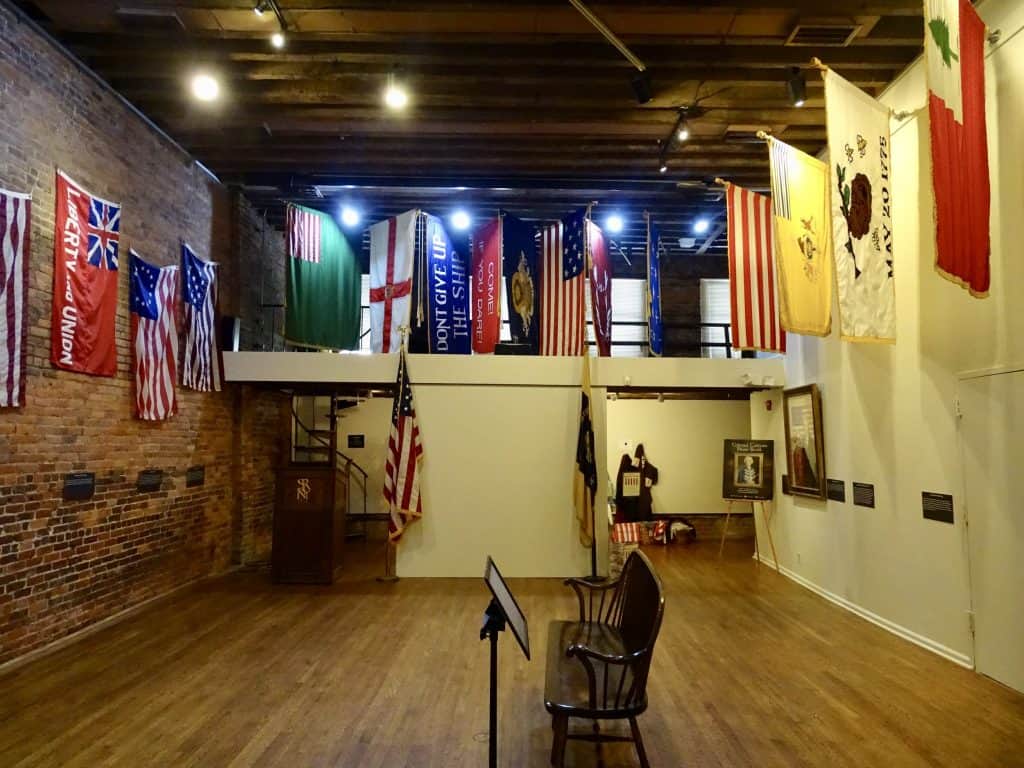
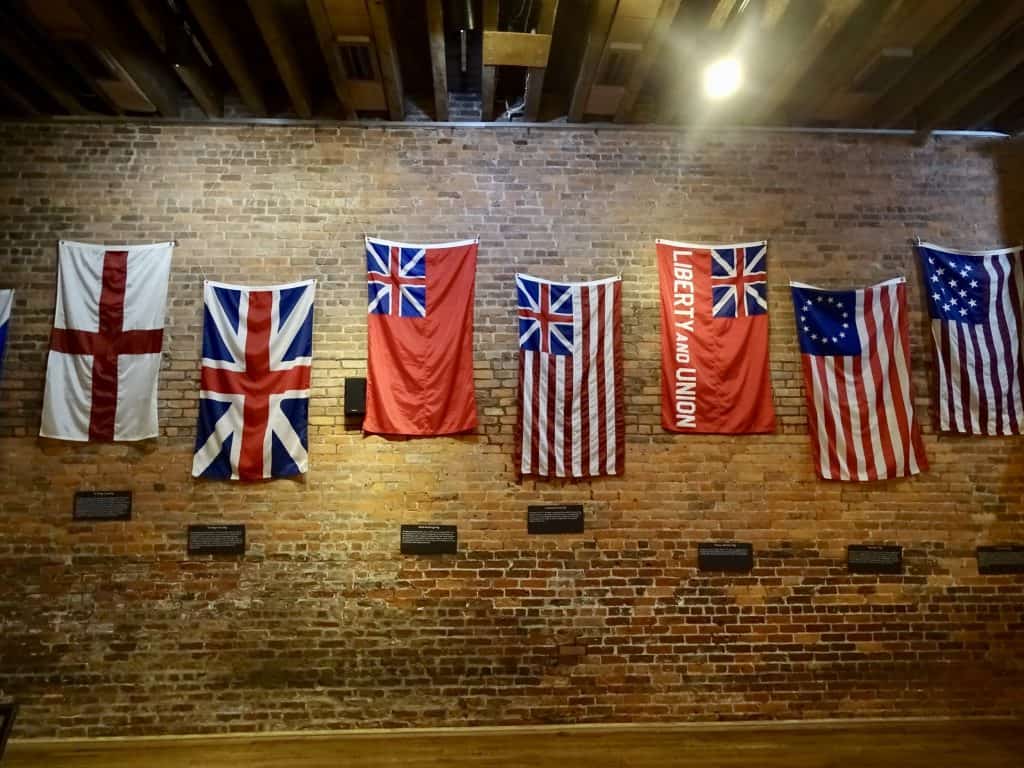
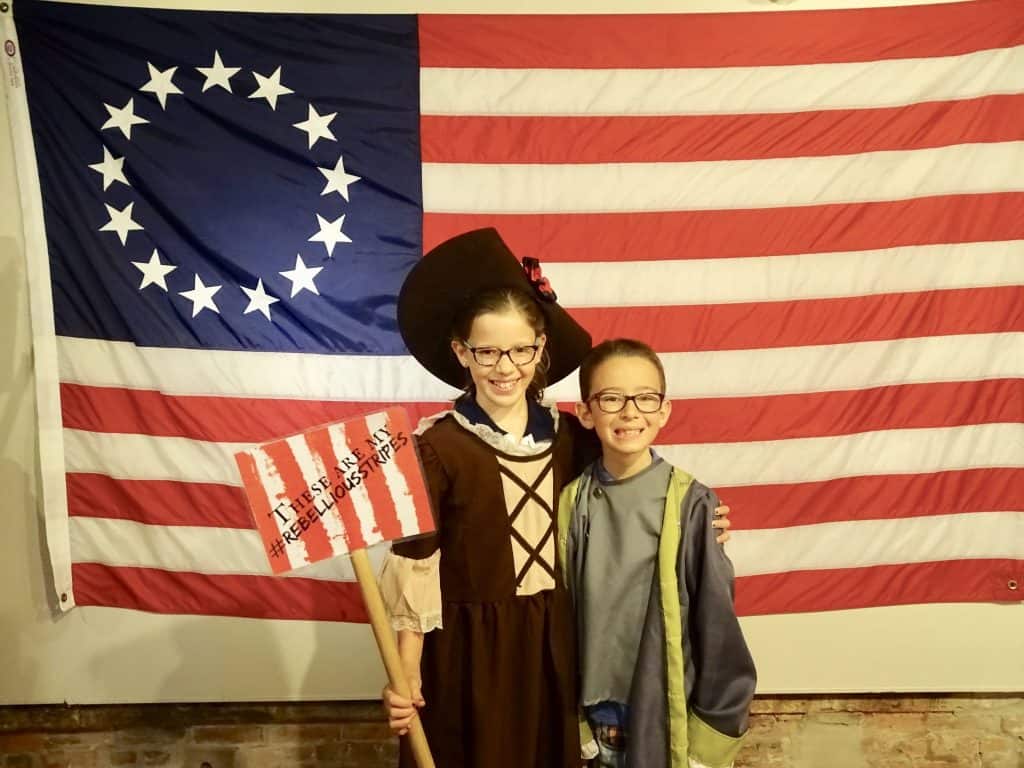
3. The collection of 40 reproduction flags used in the American Revolution, as well as regiment flags and French flags flown in service in the Flag Gallery. Check out the chronological changes made to the American flag. 
4. Replica period dress up clothes in the photo booth behind the flag gallery.
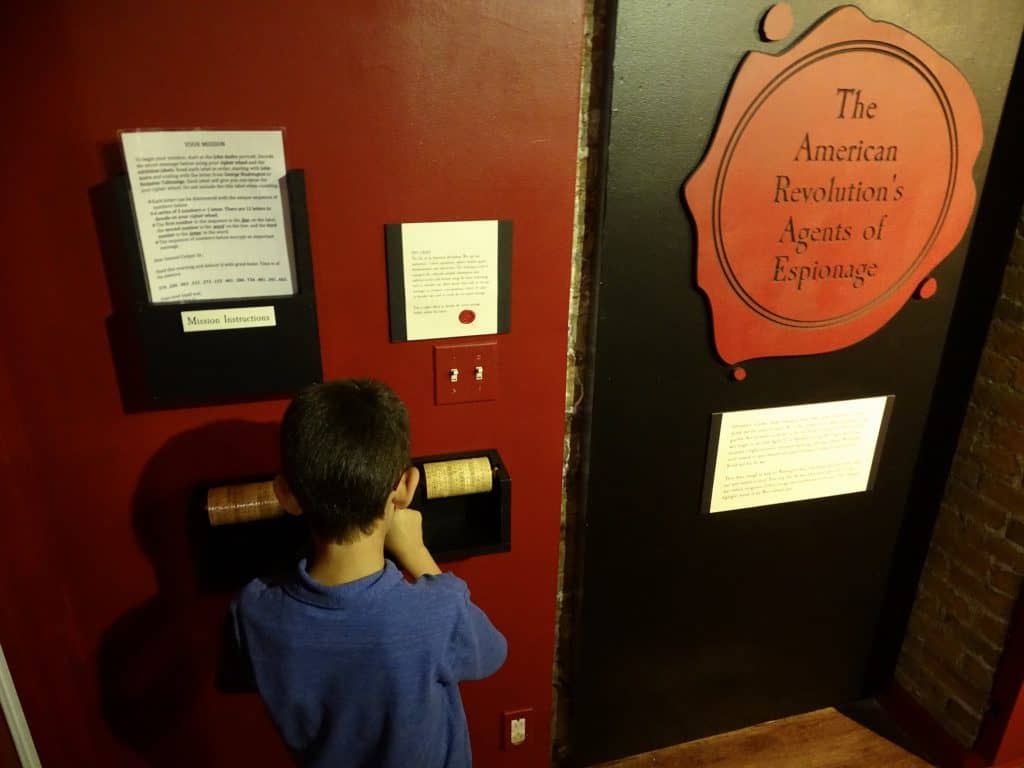
5. Decoder sheets in the Agents of Espionage exhibit. Grab a mission sheet and decode secret messages using the cipher wheel. 
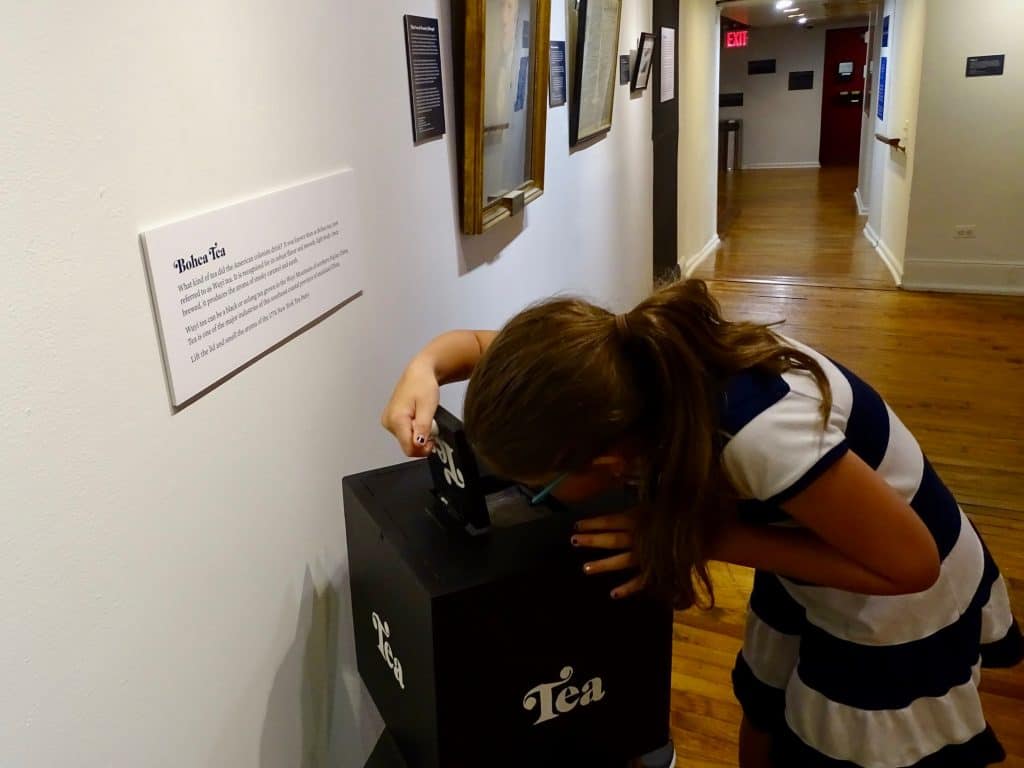
6. Tea from 1774 (that visitors can actually smell!) in the Fear and Force exhibit.
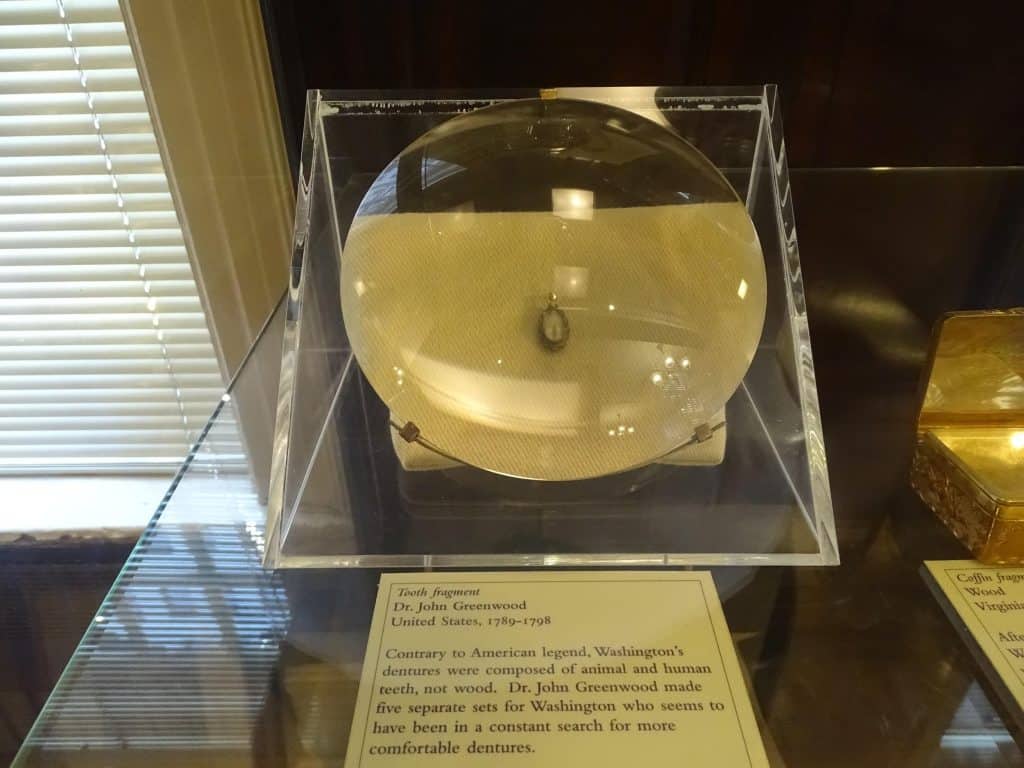
7. A lock of George Washington’s hair and piece of one of his teeth in The McEntee Gallery.
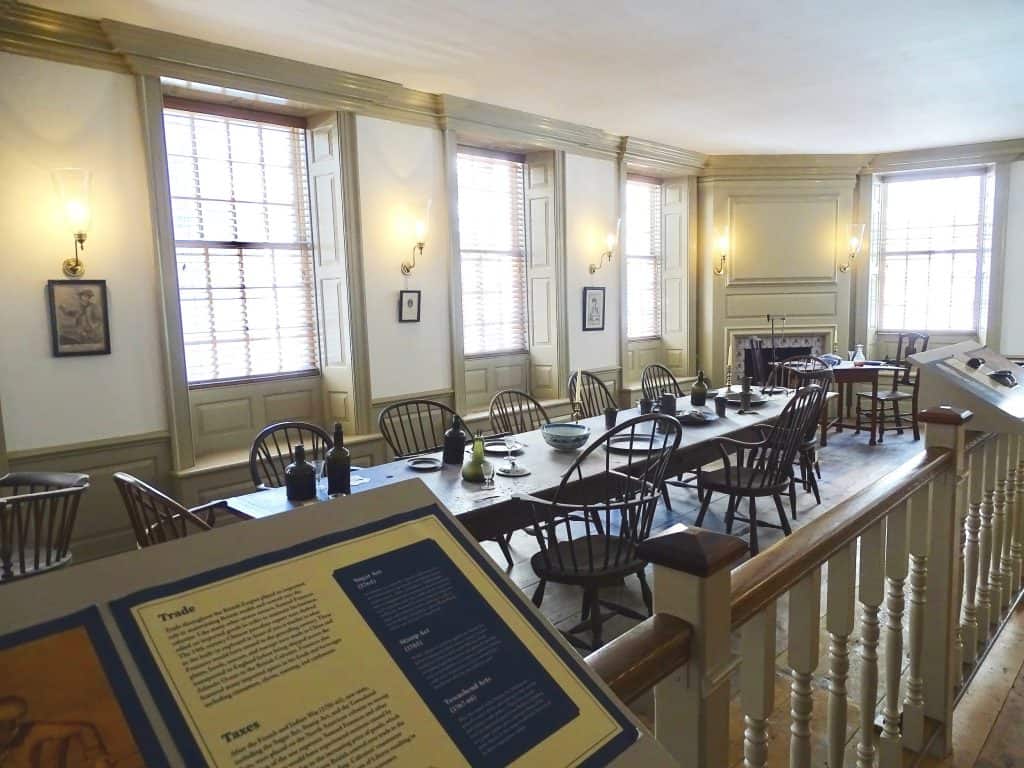
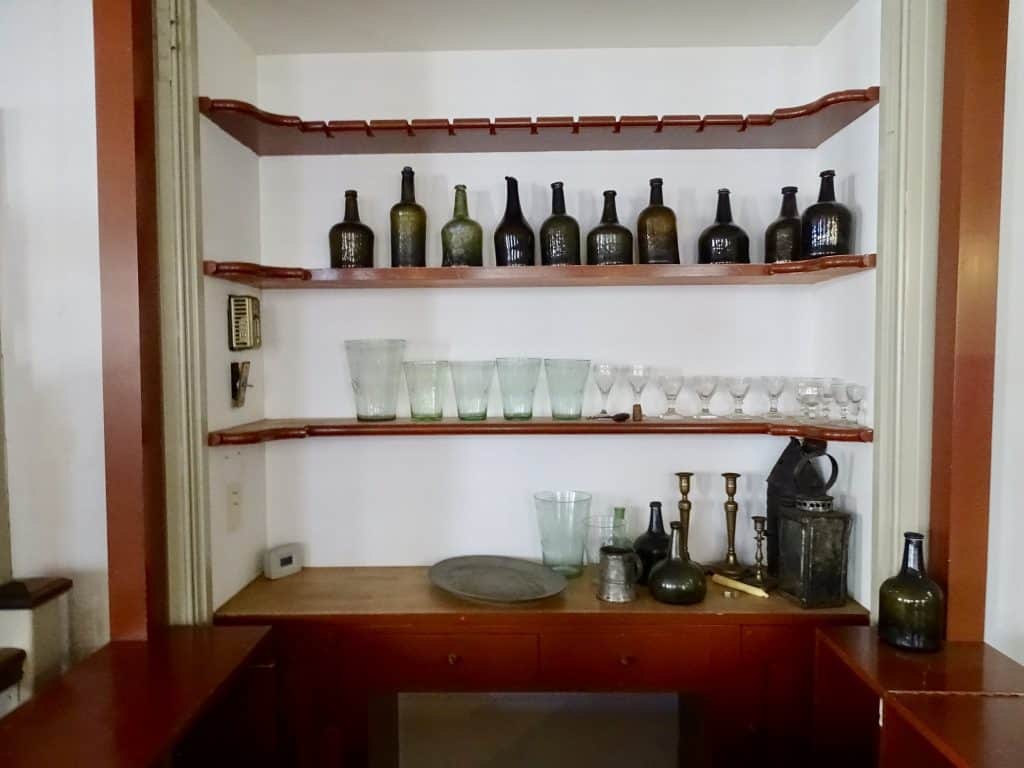
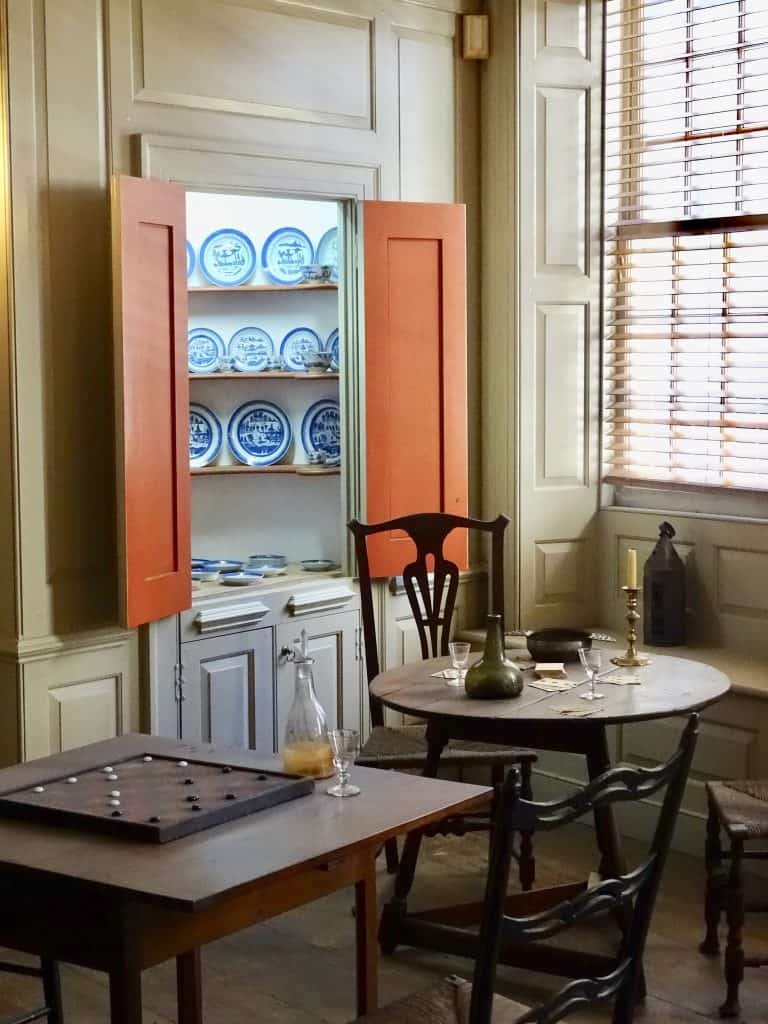
8. Oyster pieces (excavated on site!!) set on the table in the Long Room. Oysters were commonly found in nearby waters and often served at the tavern. The Long Room, the site of Washington’s farewell address, contains dozens of period pieces (although not original to the Tavern). 
9. The large punch bowl displayed on the table in the Long Room.  Fraunces was well known for his homemade spiced rum. 
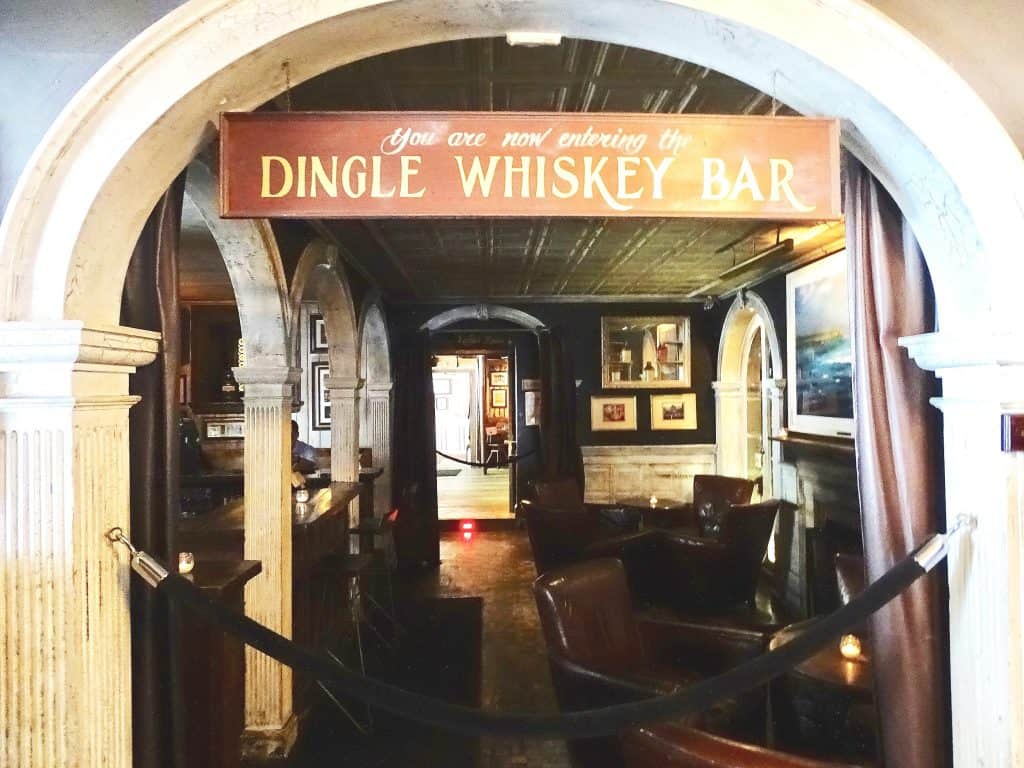
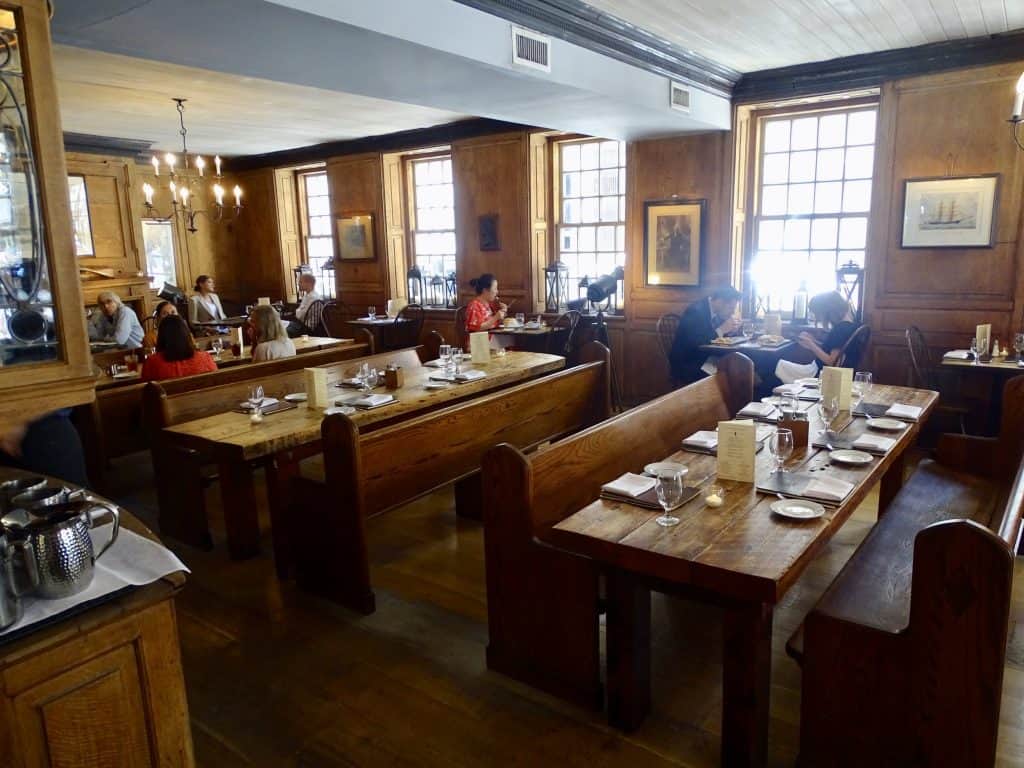
10. The Fraunces Tavern Restaurant & Bar: Eat at the tavern! The first floor is a restaurant open for lunch, brunch, and dinner. Menu here. PS- They offers over 200 whiskeys, 130 craft beers AND a kids menu!
If you’re looking for more American Revolution history, check out our adventures at the Minute Man National Historic Park. For more lower Manhattan and Financial District fun, check out our full Financial District City Guide and our posts featuring the Fraunces Tavern Museum, Federal Hall National Memorial, the National Museum of the American Indian, Statue of Liberty National Monument, Ellis Island, and Eataly. And follow along on our adventures on Instagram, Pinterest, Facebook, and X.
Disclosure: My family was given a media pass to explore the museum. All opinions expressed are my own.

Similar Posts

  • | | | | |

    Playing “I Spy” at Buckman Tavern in Lexington, Massachusetts

    Massachusetts is filled with memorable historic sites and important dates in America’s history, and one of the most famous is April 19, 1775. On the early hours of April 19th, Paul Revere and William Dawes’ rode to Lexington, Massachusetts to warn John Hancock, Samuel Adams, and other “Minute Men” that 850 British soldiers, also known as “Redcoats”, were coming to nearby Concord to steal the their supply of weapons and ammunition. The Minute Men, a group of local militia, waited at Buckman Tavern for the arrival of the British Redcoats. With the firing of a shot from an unknown source (it’s still debated today who fired the first shot), the American Revolution began.

  • | | | | | | | | | | | |

    10 Reasons Why I Love the National Parks Service System

    Seven years ago I planned my first major road trip. My children were toddlers and we were planning on traveling almost cross country to visit good friends who were temporarily relocated to Albuquerque, New Mexico. Sharing my itinerary with my Uncle Bob, he asked if I planned on visiting any National Parks. I knew of the National Park Service system, but didn’t know much information about the various locations. Uncle Bob pulled out a worn, tattered, small blue spiral book and about an hour went by before I spoke again. (Full disclosure: Uncle Bob is a good storyteller and he does have a TON of travel experience.) His National Parks Passport book was filled with stamps dating back to the early 1970s. It was the perfect memento of his travels and I knew I had to start my own passport book.

    Since 2012, I have collected dozens of passport stamps from various stops in the National Park Service system. There are over 400 locations in the United States and American owned islands. These locations include parks, monuments, battlefields, historic sites, lakeshores, seashores, recreation areas, scenic rivers and trails, and even the White House. With every stop, I became a bigger and bigger fan of the National Parks system. Here are my top 10 reasons why:

  • | | | |

    10 Ways to Explore the Florence Griswold Museum in Lyme, Connecticut

    We enjoy visiting art museums with our children. Some people may think art museums are not an ideal spot to bring children, but there are a whole variety of reasons why you should- read them in this post. We’ve recently been researching local museums in Connecticut and were pleased to see that the Florence Griswold Museum in Old Lyme is open and taking very good steps to honor pandemic restrictions and keep everyone safe and healthy.

    Home to military sea captain Robert Griswold and his family in the middle 1800s until Florence Griswold’s death in 1937, the 12 acre estate includes art galleries, the main mansion, three additional structures with exhibits, an artist trail, gift shop, and seasonal cafe. The Griswold family harvested a large collection of gardens, producing much of the food the family ate, and later served to guests. Griswold inherited the home from her family and began welcoming boarders in 1899 as a way of making money. Up to 18 artists, who became known as the Lyme Art Colony, would stay in the home at one time,. Famous guests include President Woodrow Wilson and his first wife, an aspiring artist. Old Lyme became known as one of the biggest Impressionist art colonies in America, in large part to the Griswold campus. Today, it is open to visitors and welcomes families to explore what life was like for the artists in the early 20th century.

  • | | |

    Five Ways to Explore the Jupiter Inlet Lighthouse & Museum in Jupiter, Florida

    We’ve explored Palm Beach County, Florida many times when visiting family in Delray Beach. This past trip, we finally had time to stop at the Jupiter Inlet Lighthouse and Museum that we’ve passed several times and enjoyed exploring the ever expanding complex.

    Operated by the Loxahatchee River Historical Society, the first lighthouse museum opened in 1973 and now welcomes over 800,000 visitors to the complex each year. The nonprofit manages the 1860 Jupiter Inlet Lighthouse and Oil House, 1892 George Washington Tindall House, 1929 Lighthouse Keeper’s Workshop, and 1940 Naval Housing Building (currently closed due to nearby bridge construction). The lighthouse and museums are located on a complex, owned by the town of Jupiter, which also include large sports fields, nature trails, and a large playground. 

  • | | |

    Donald M Kendall Sculpture Gardens at PepsiCo in Purchase, New York

    The Donald M. Kendall Sculpture Gardens at the World Headquarters of PepsiCo are named for the former chairman of the board and chief executive officer of PepsiCo, Donald Kendall. The sculpture collection was started in 1965, five years before the World Headquarter building opened. Today, the 160+ acre Purchase, New York campus, located one hour north of New York City, is free to visit during the spring, summer, and fall seasons and is a great spot to explore with children.

  • | | | |

    Whydah Pirate Museum In West Yarmouth MA

    Opened in June of 2016, the Whydah Pirate Museum showcases the ruins of the Whydah ship and the only full pirate treasure ever discovered in the world. The Whydah, a slave ship eventually overtaken by pirates, was built in 1715 in London and sailed to West Africa before heading to America. Captured by Sam Bellamy and fellow pirates, a Nor’Easter sank the ship off the shores of Cape Cod during the early morning hours of April 27, 1717. Only 2 of the 146 men (130 pirates and 16 prisoners) on the ship survived. 

    In 1984, Barry Clifford discovered the wreckage off the coast of Wellsfleet, Massachusetts. Archaeologists and divers search through the wreckage between June and October each year searching for more treasures and bring artifacts back to the lab for cleaning, preservation, and display at the museum. 

6 Comments

  1. Sounds like it would’ve fun to explore the museum and then go to lunch. A history lesson followed by delicious food!

  2. Sounds like it would’ve fun to explore the museum and then go to lunch. A history lesson followed by delicious food!

  3. Sounds like it would’ve fun to explore the museum and then go to lunch. A history lesson followed by delicious food!

  4. Thanks for this detailed post! I remembered your visit from Instagram and was happy to find you blogged about the experience in detail. We are especially looking forward to all things Hamilton.

  5. Thanks for this detailed post! I remembered your visit from Instagram and was happy to find you blogged about the experience in detail. We are especially looking forward to all things Hamilton.

  6. Thanks for this detailed post! I remembered your visit from Instagram and was happy to find you blogged about the experience in detail. We are especially looking forward to all things Hamilton.

Leave a Reply

Your email address will not be published. Required fields are marked *