Exploring the Saint Croix Island International Historic Site in Canada and the United States

| | | | |

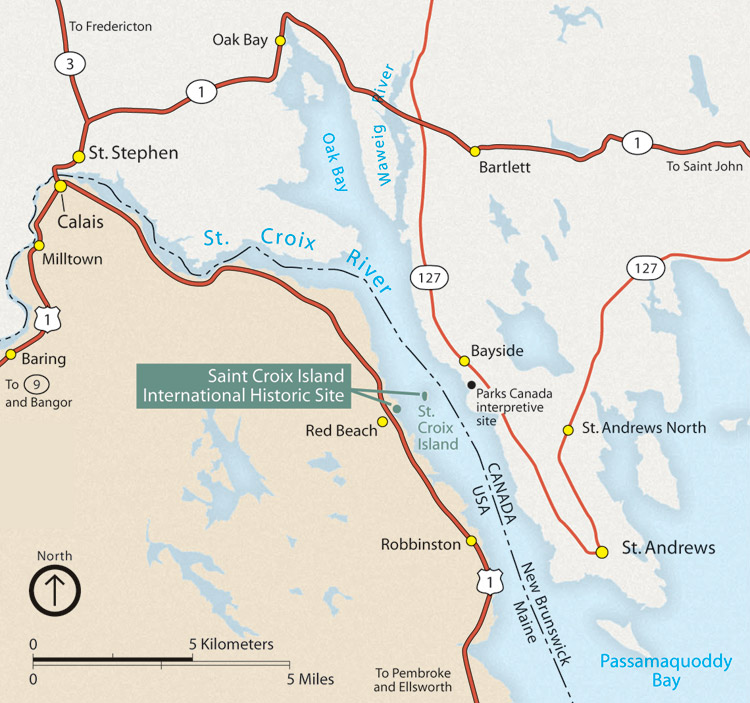
This past summer, we enjoyed a wonderful week exploring St. Andrews by the Sea in New Brunswick, Canada.  On our drive into town, we passed the Canadian side of the Saint Croix Island International Historic Park and made a note to stop on our way home. We researched the area a little bit and realized we could also explore the American side of the park, with a very short detour, once we were back in America in the state of Maine- see a good map of both areas here. Saint Croix Island was declared a national monument in 1949 and then re-designated as an international historic site in 1984. 
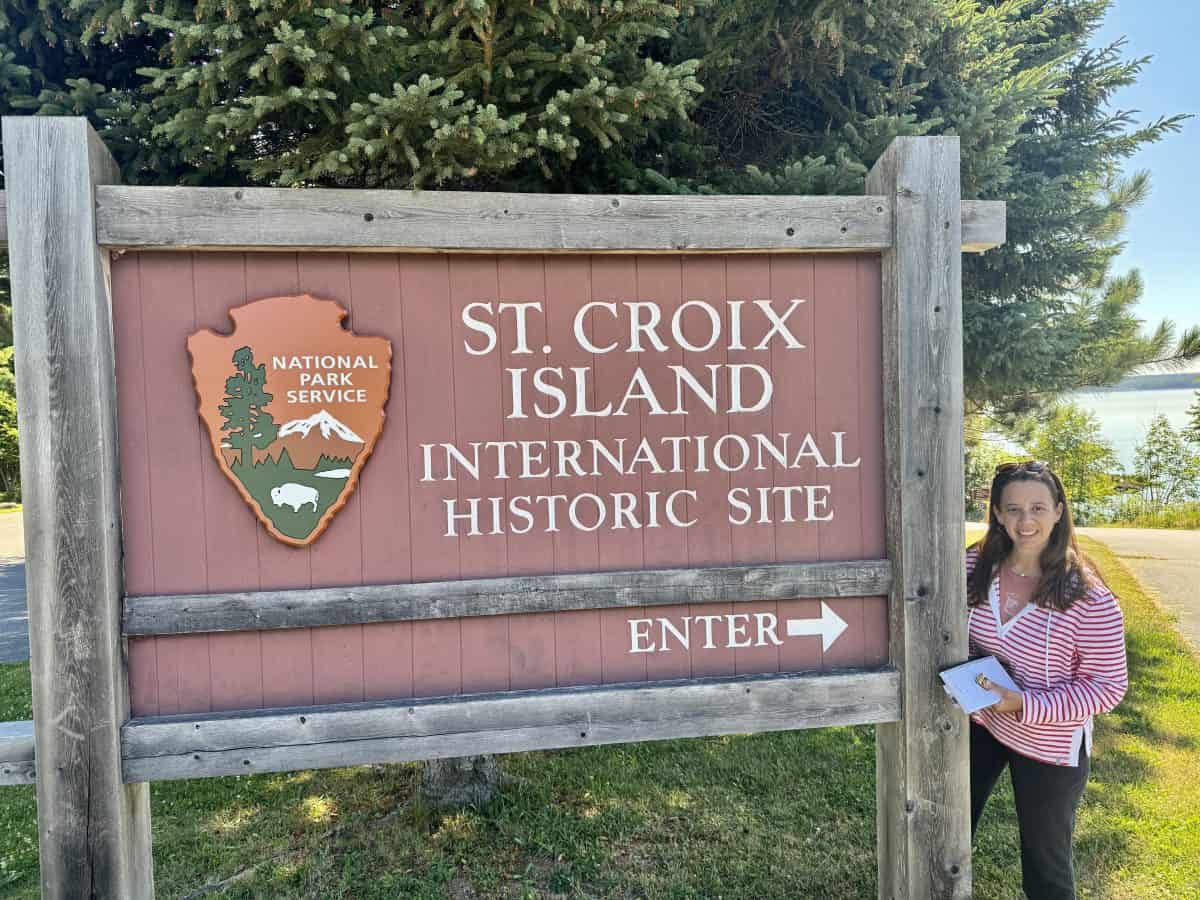
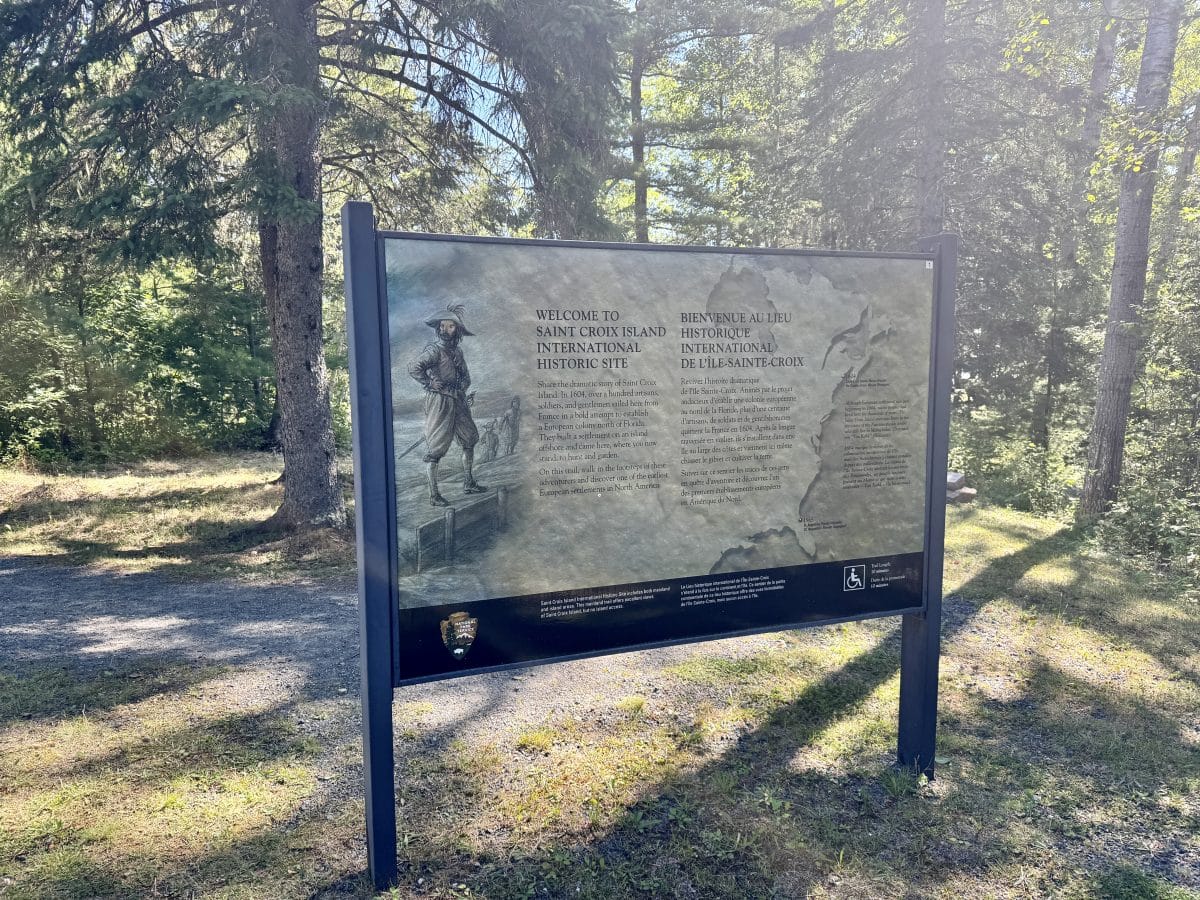
posing in front of the entrance sign to the view of the Saint Croix International Historic Park in Canada and Maine, USA
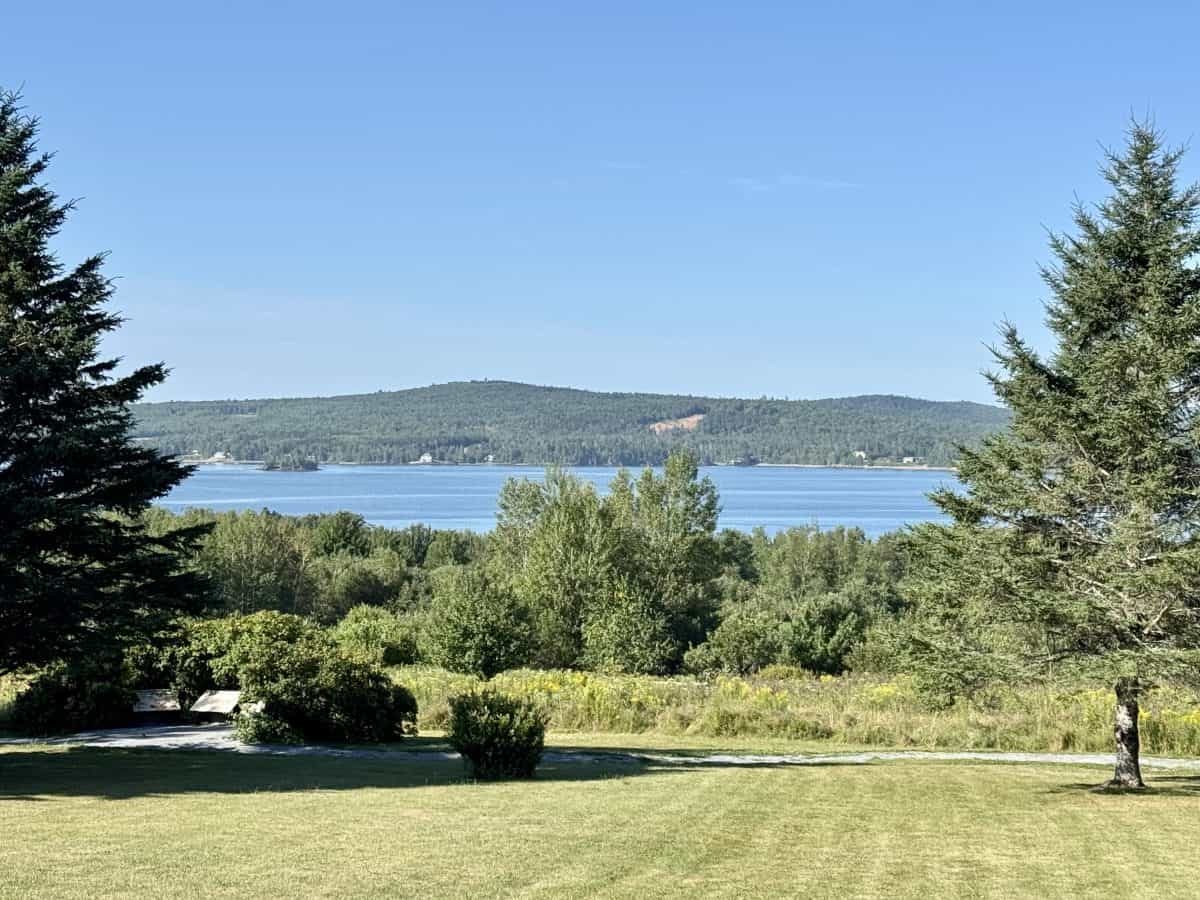
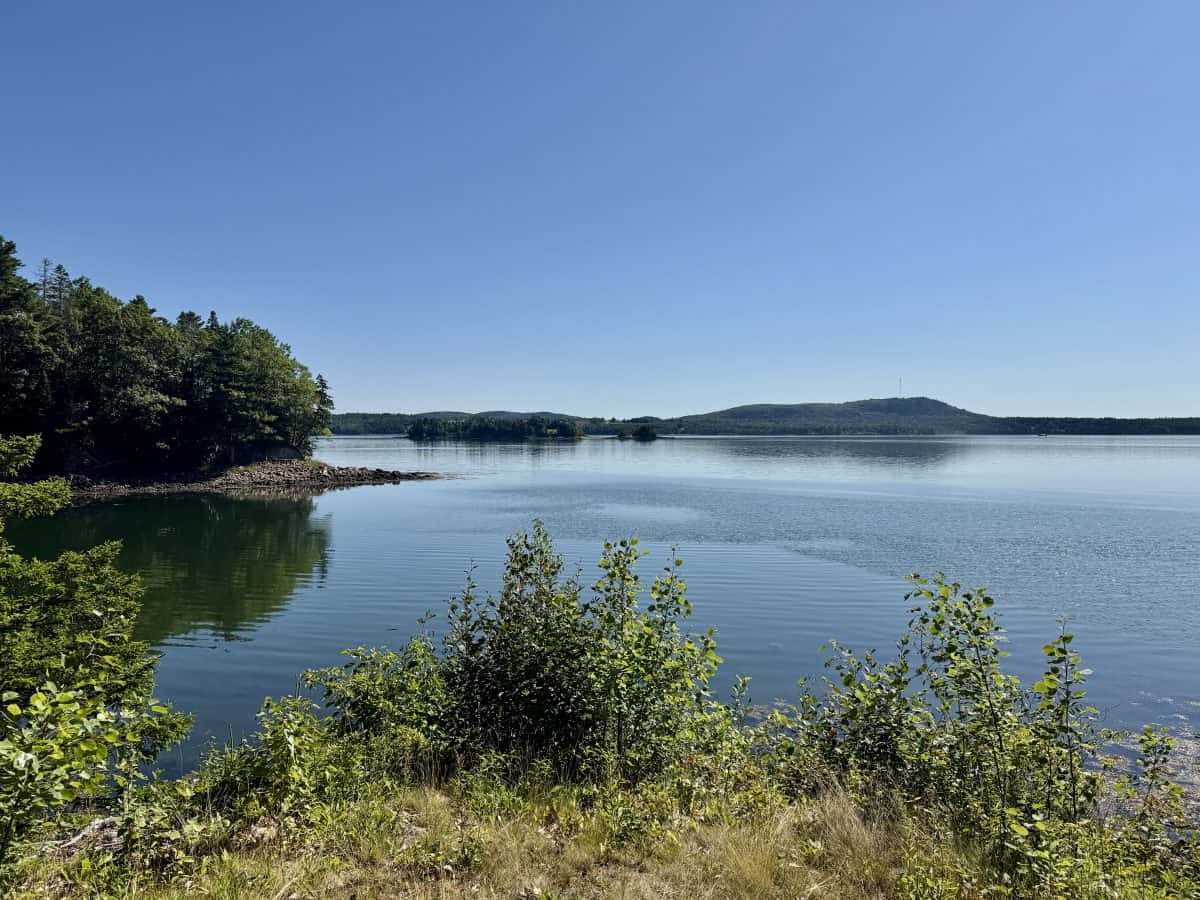
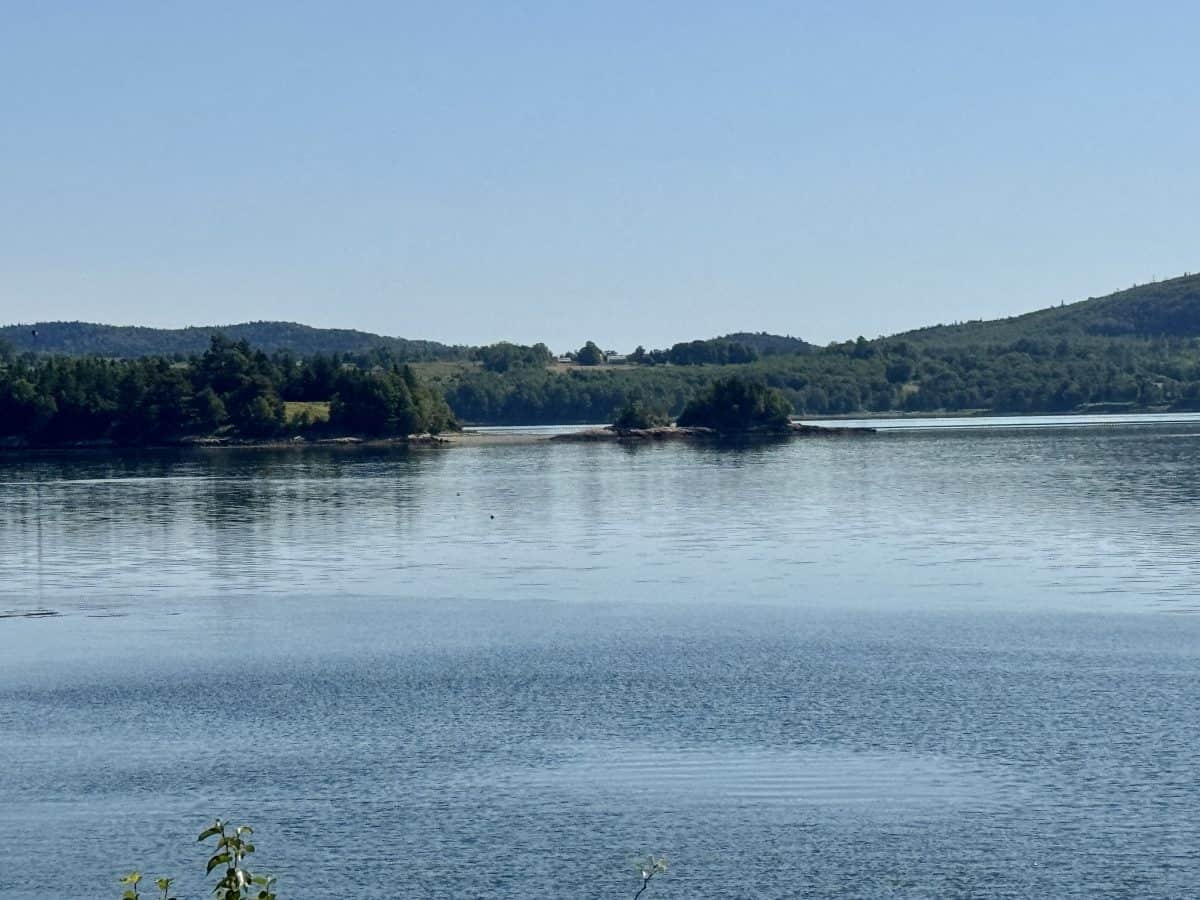
view of the view of the Saint Croix International Historic Park in Canada and Maine, USA

Both sites honor the 1604 expedition of Pierre Dudgua, Sieur deMons, and Samuel de Champlain who established a French settlement on the island, hoping to make it year round. Many of the 77 settlers died in the harsh winter of 1605 and the remaining settlers moved to Nova Scotia. While the island is not accessible to the public, visitors can stop at a designated area in the Canadian Site with views of the island and the American state of Maine.
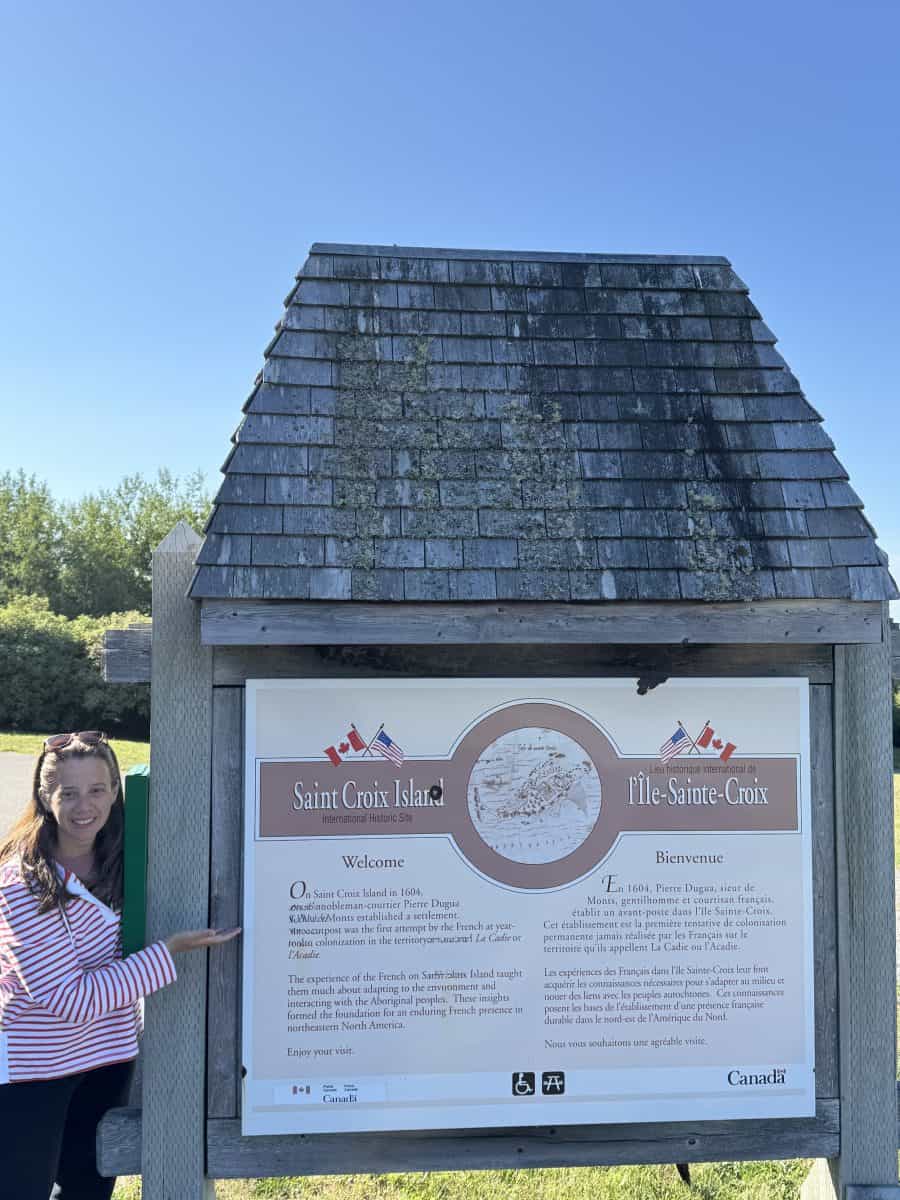
me standing in front of the Canadian entrance to view of the Saint Croix International Historic Park in Canada and Maine, USA

Travel Tips for the Canadian site:
  • The public entrance is located about 15 minutes outside of downtown St. Andrews in Bayside, New Brunswick. The park is about a half hour from the Canadian/US border.
  • There is a large, gravel parking lot.
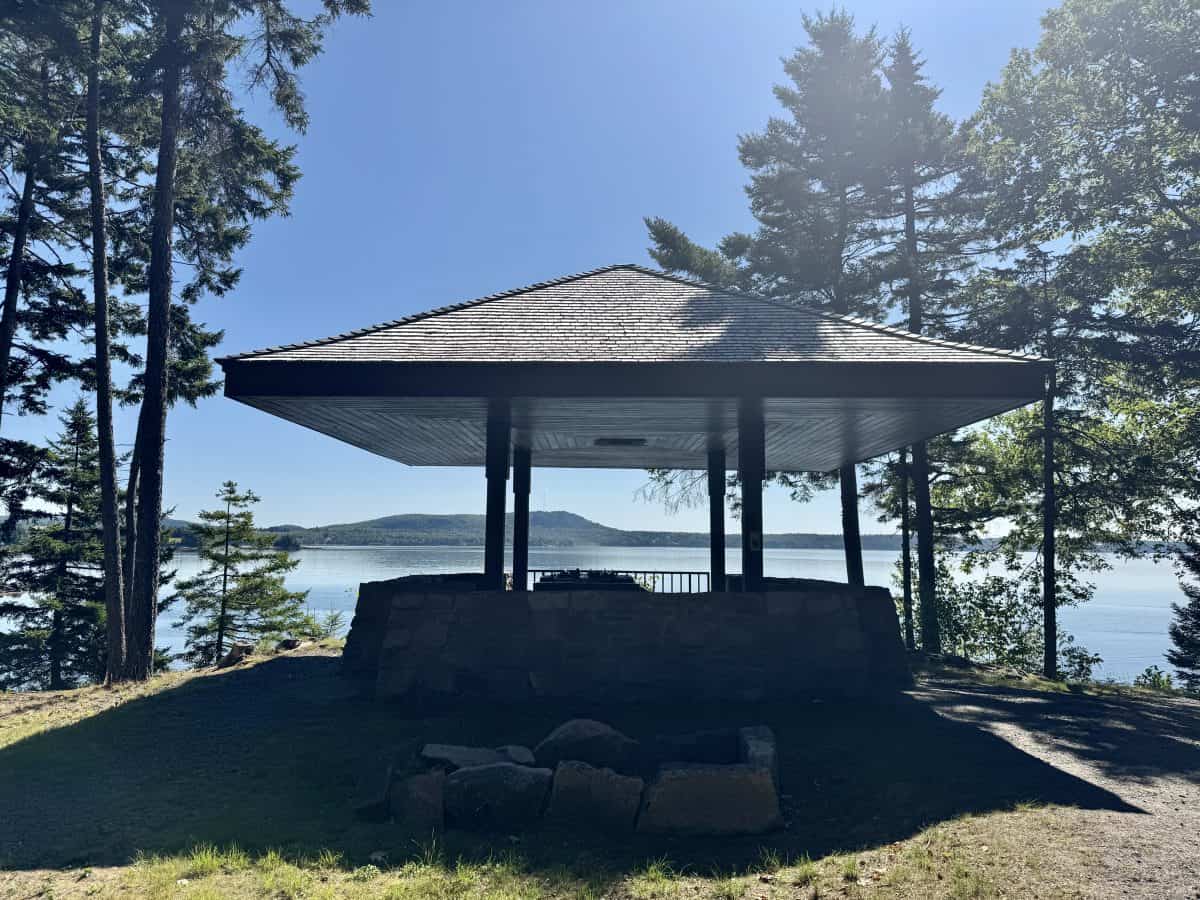
  • There are picnic tables under a shaded structure and restrooms open in season.
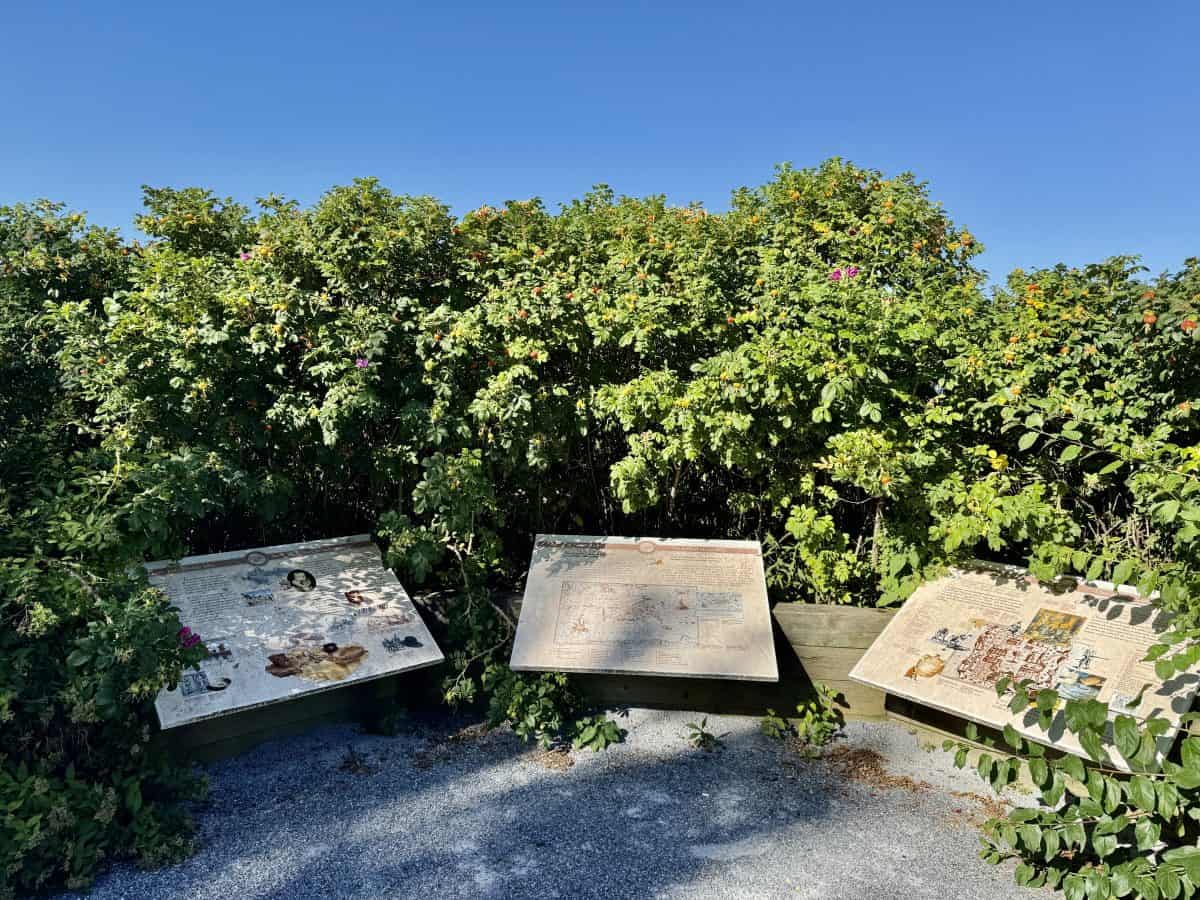
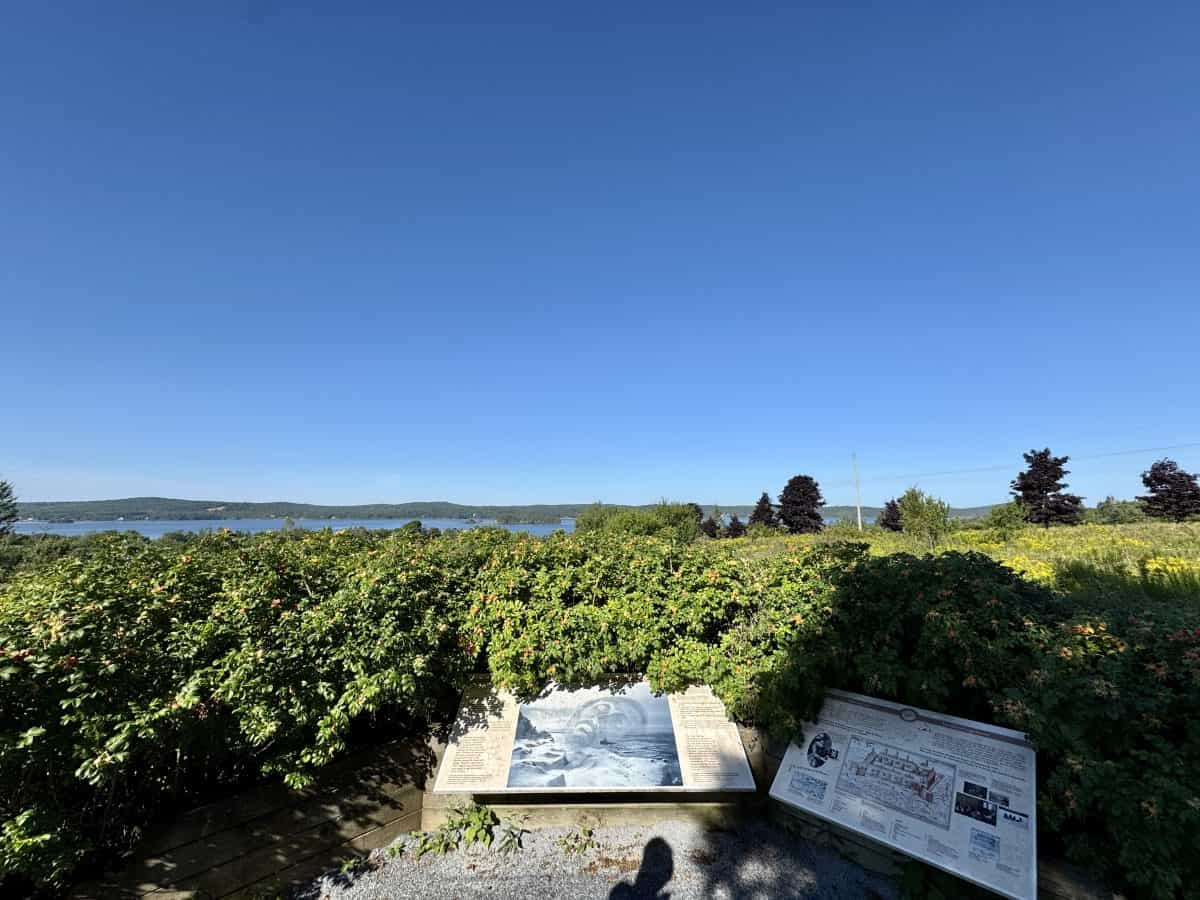
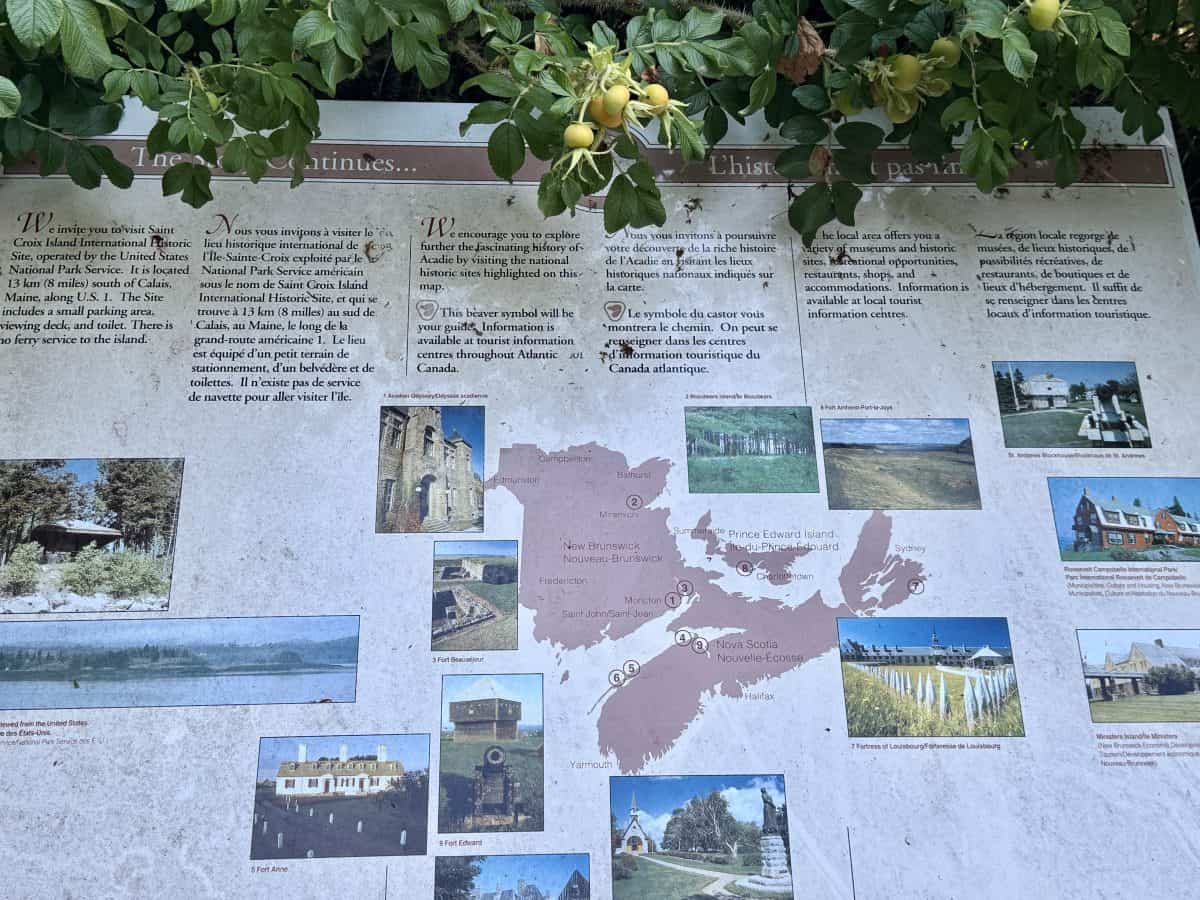
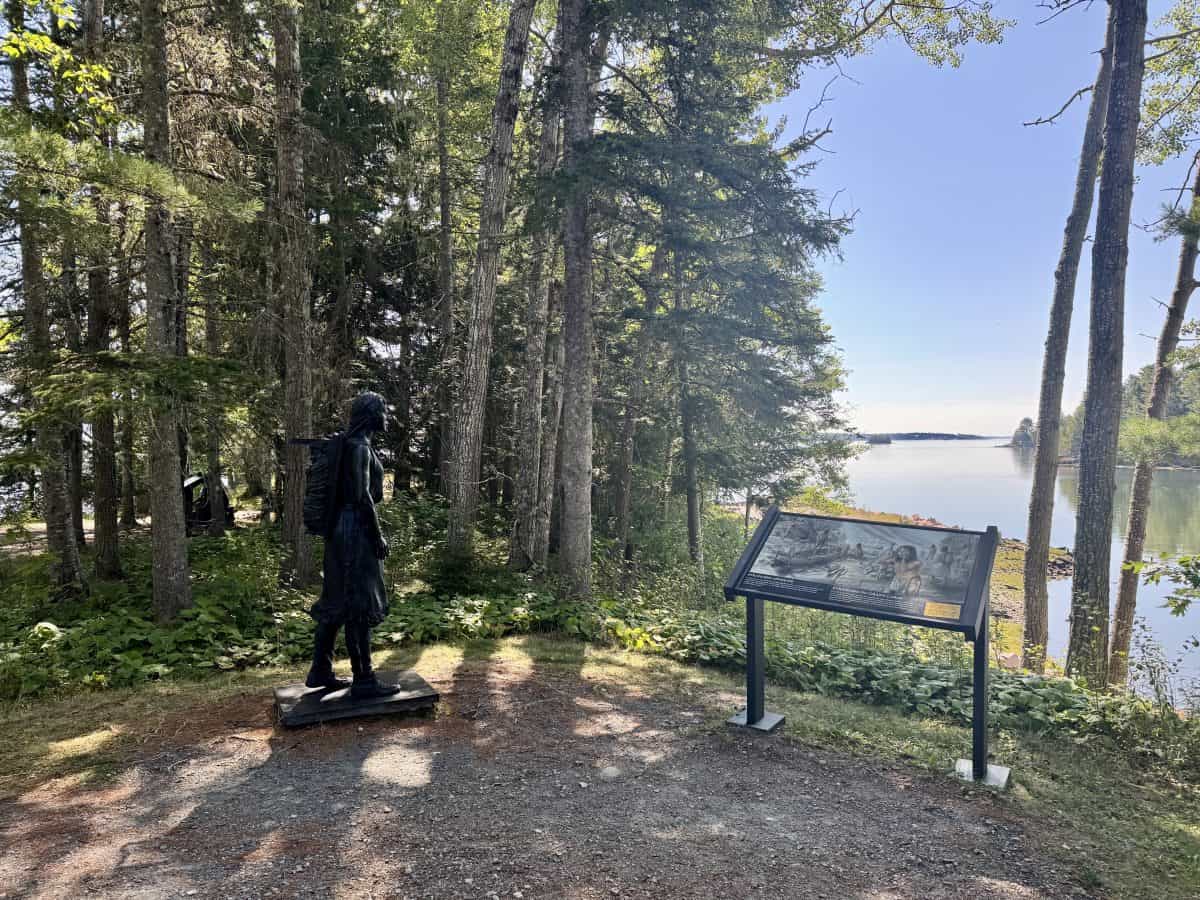
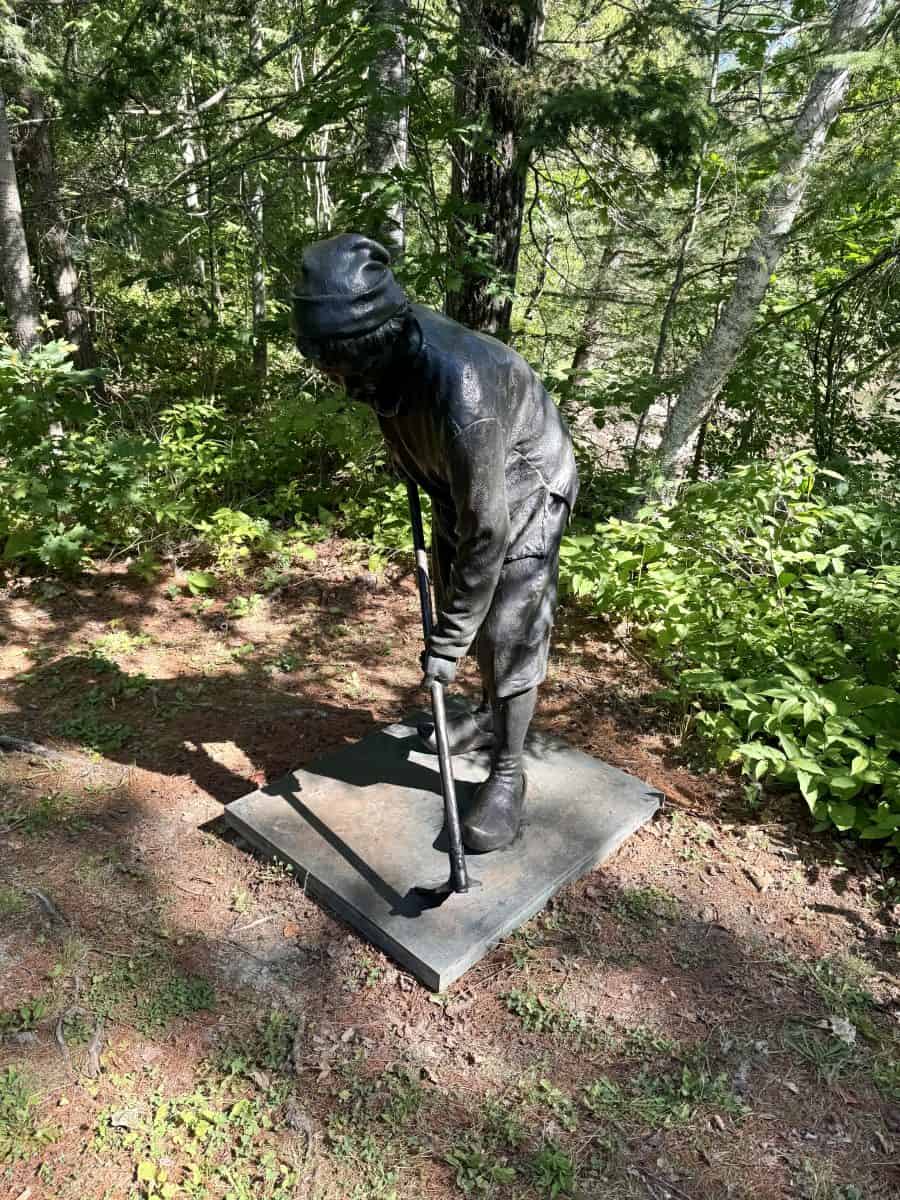
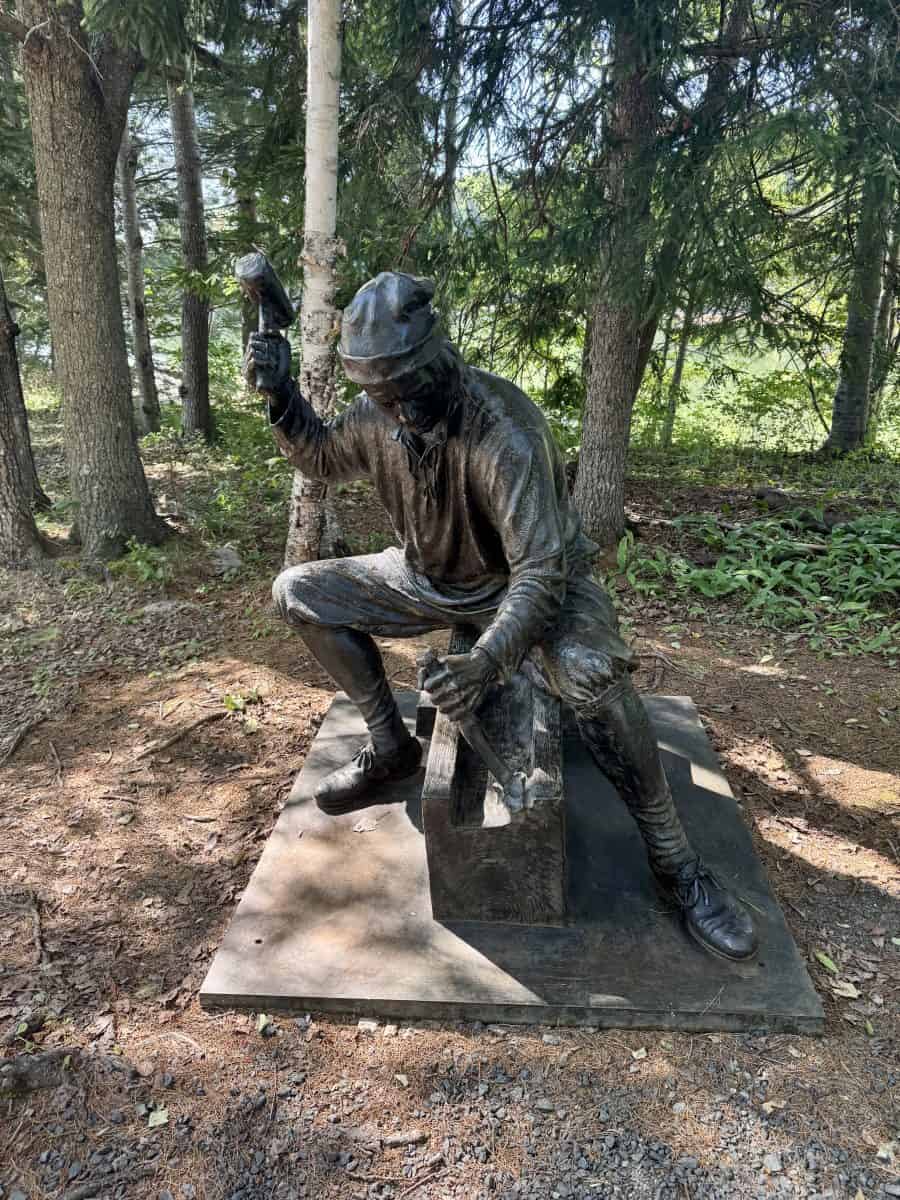
  • A short, gravel interpretive walking path with placards and bronze statues describes the history of the area.
  • No dining facilities on site, but lots of options in St. Andrews by the Sea- see a good list here
  • The area is not routinely staffed by rangers. 

Would you like to save this?

We'll email this post to you, so you can come back to it later.

About 30 minutes past the US/ Canada border is the Saint Croix Island International Historic Site in Calais, Maine. The land originally belonged to the Passamaquoddy tribe, who lived on the land for over 15,000 years and used the Island to store and protect food from wolves. When Pierre Dugua’s expedition in the harsh winter of 1605 killed almost half of his settlers, he decided to continue on to other parts of the area in the warmer summer months. 

Travel Tips for the American site:
  • The public entrance is about 8 miles off Route 1 in Calais, Maine.
  • There is a small parking lot in front of the Visitor Center building.
  • The Visitor Center is open Thursday through Monday from Late May through October- see up to date information on hours here.
  • The Visitor Center includes restrooms, a small gift shop, and a ranger station with activities for kids.
  • No dining facilities on site. 
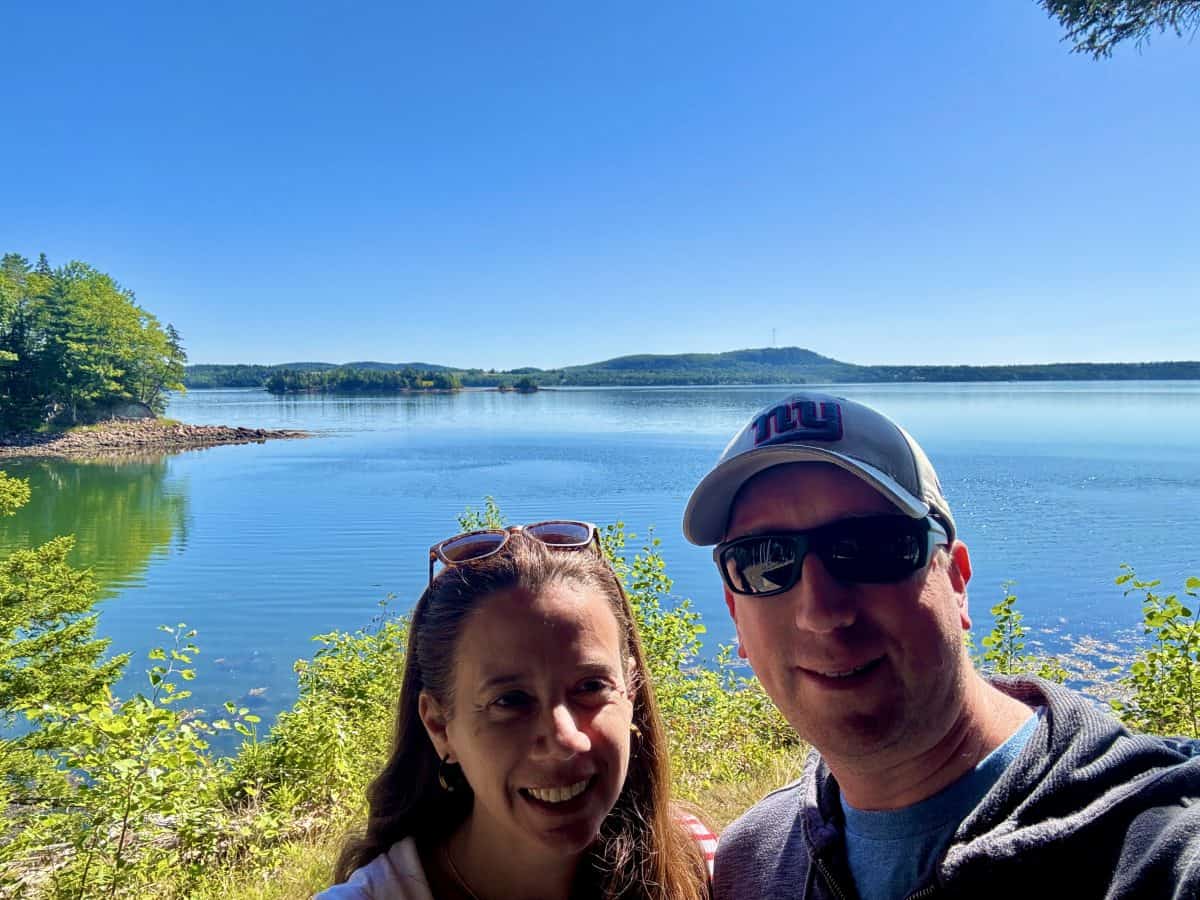
posing at the edge of the American side of the view of the Saint Croix International Historic Park in Canada and Maine, USA

Things to Do on the American Side of the Site:

  • Get two national Passport Stamps for your National Parks Passport book in the Visitor Center. 
  • Earn a Junior Ranger badge by completing the JR booklet. Start in the Visitor Center by picking five foods and seeing their ranking in order to know if you would have survived in the winter of 1604 and avoided scurvy. (Hint: the top choices need to be various fruits and vegetables)
  • Watch a short video of the history of the park
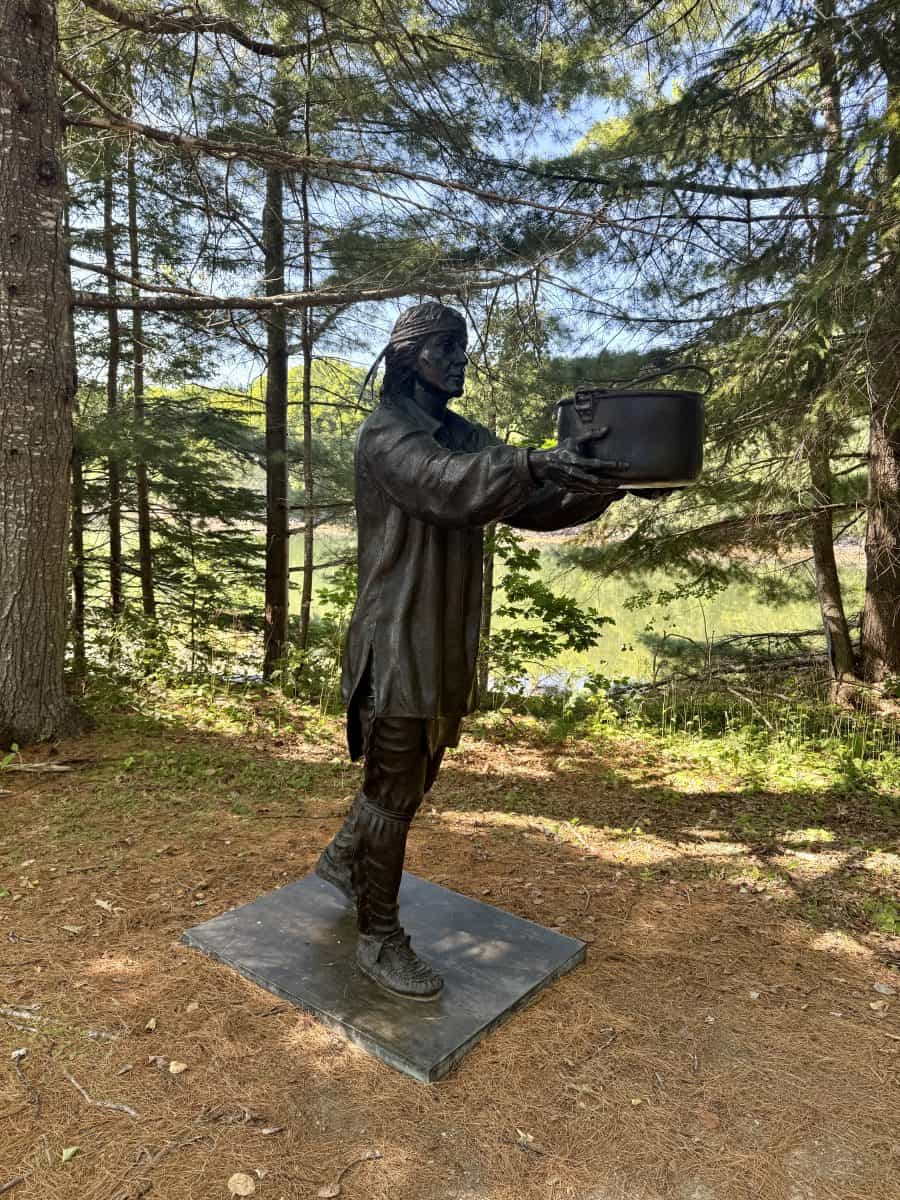
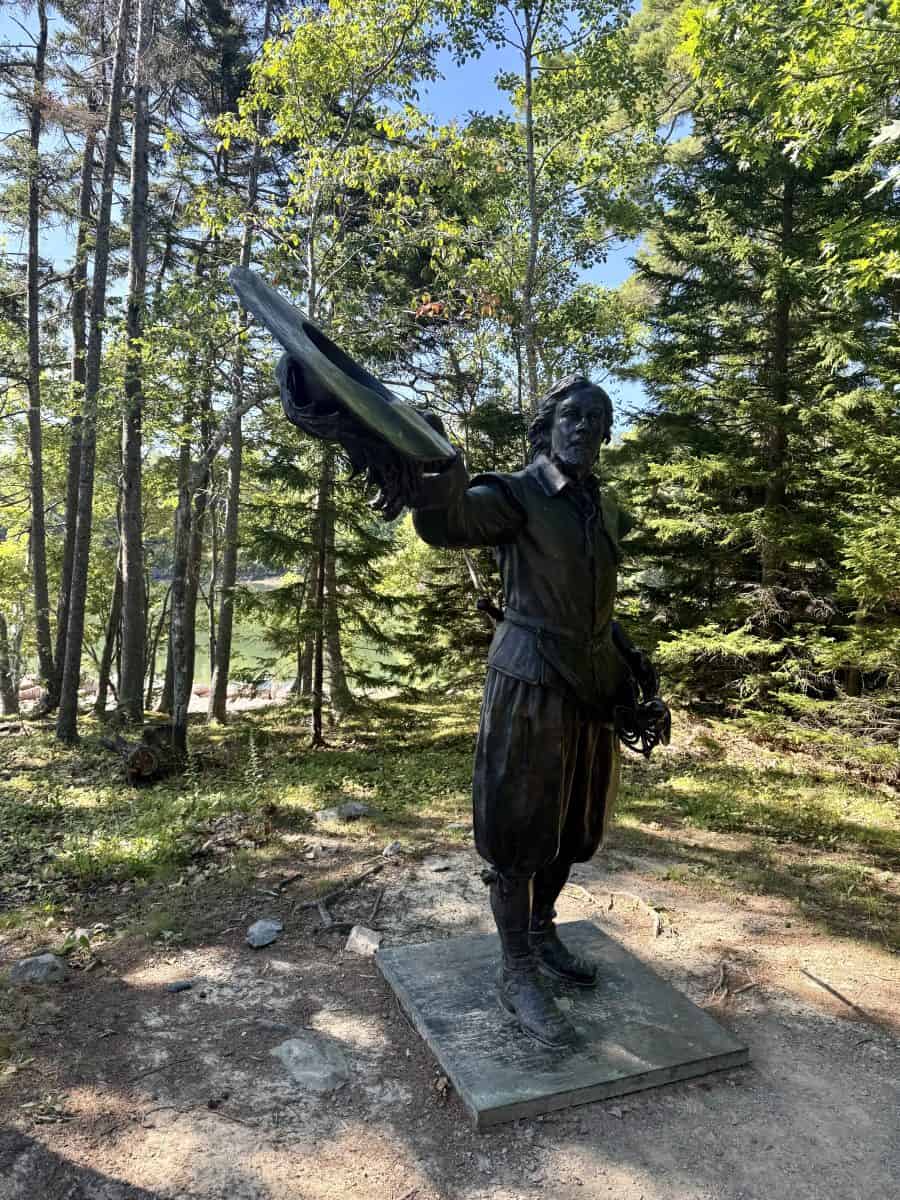
  • Walk the interpretative trail (about 300 feet long) and find all seven bronze sculptures along the path that tell the start of the area.
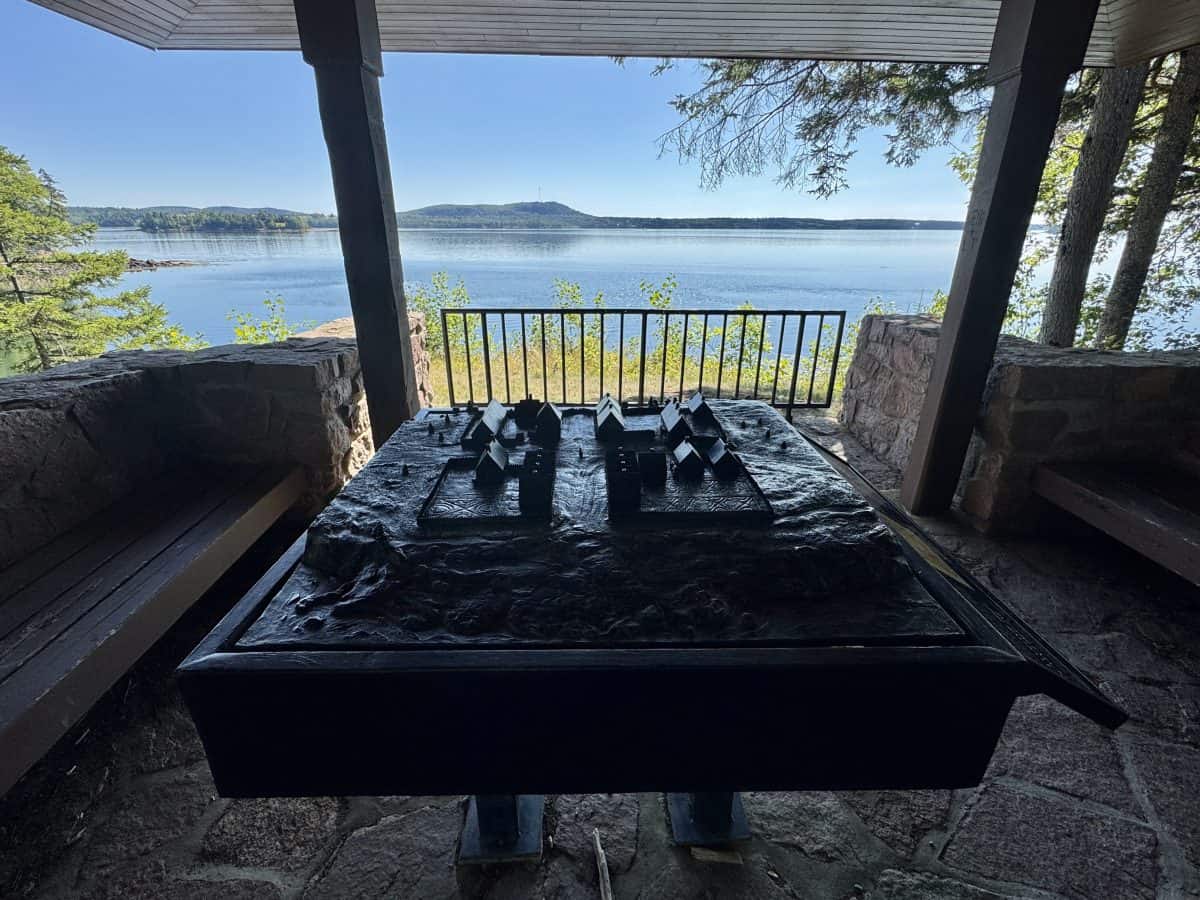
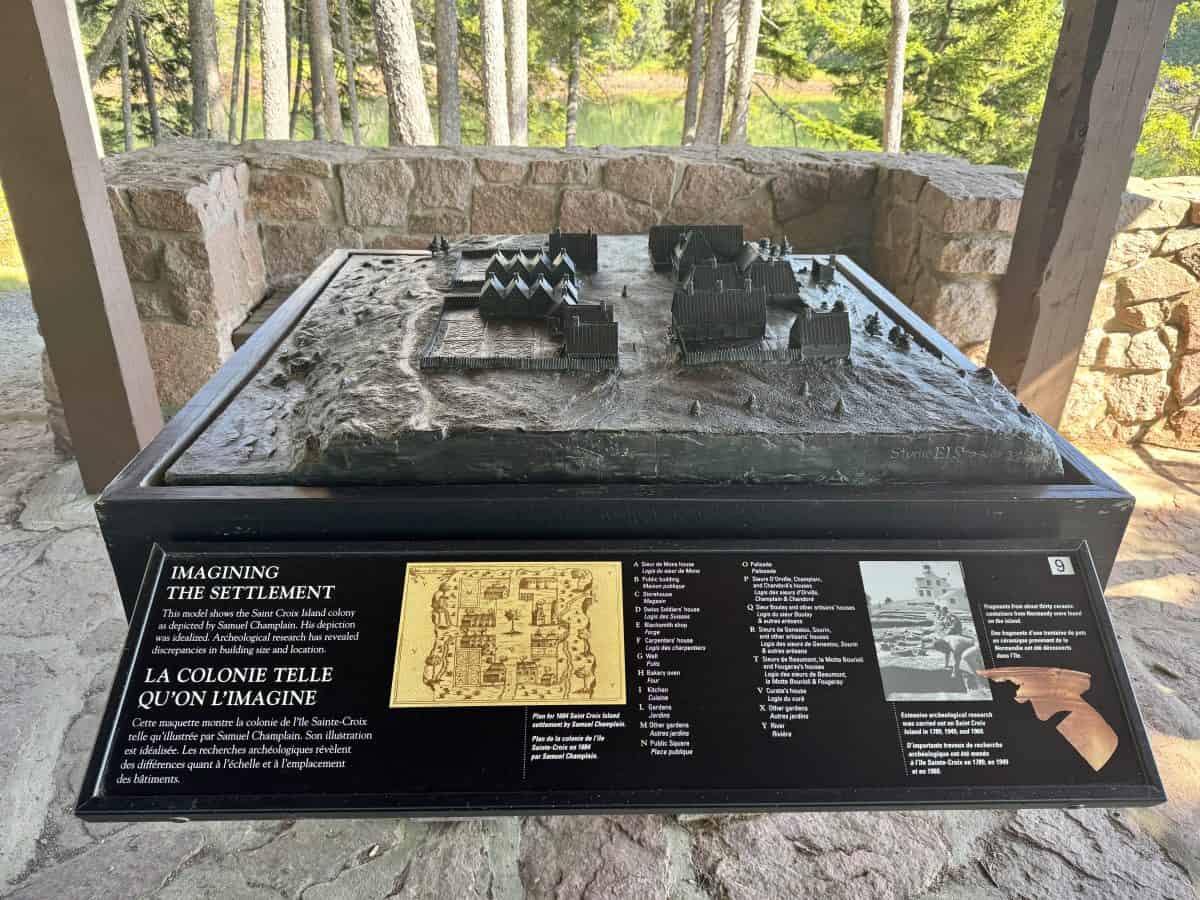
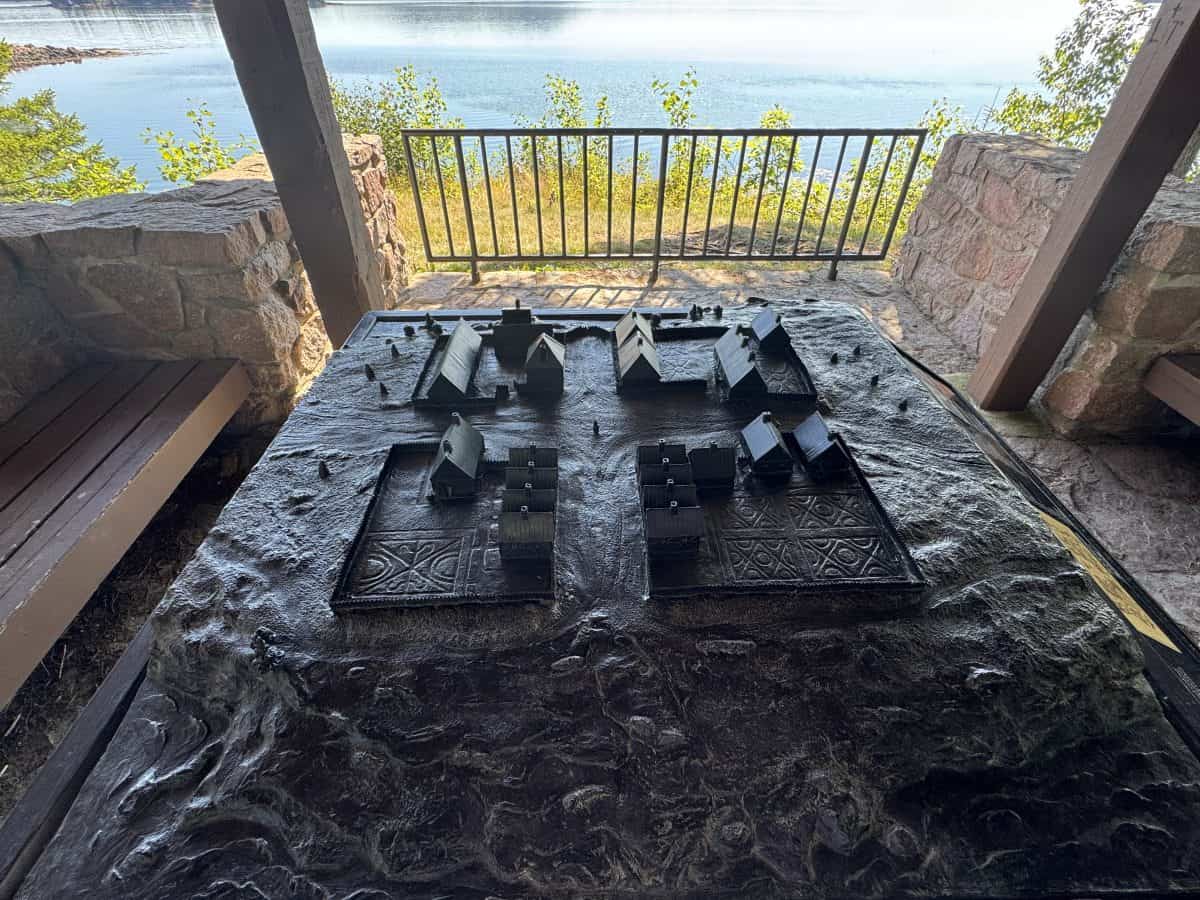
  • See the model of the colony as depicted by Samuel de Champlain. Use the worksheet in the Junior Ranger booklet to map out your neighborhood. 
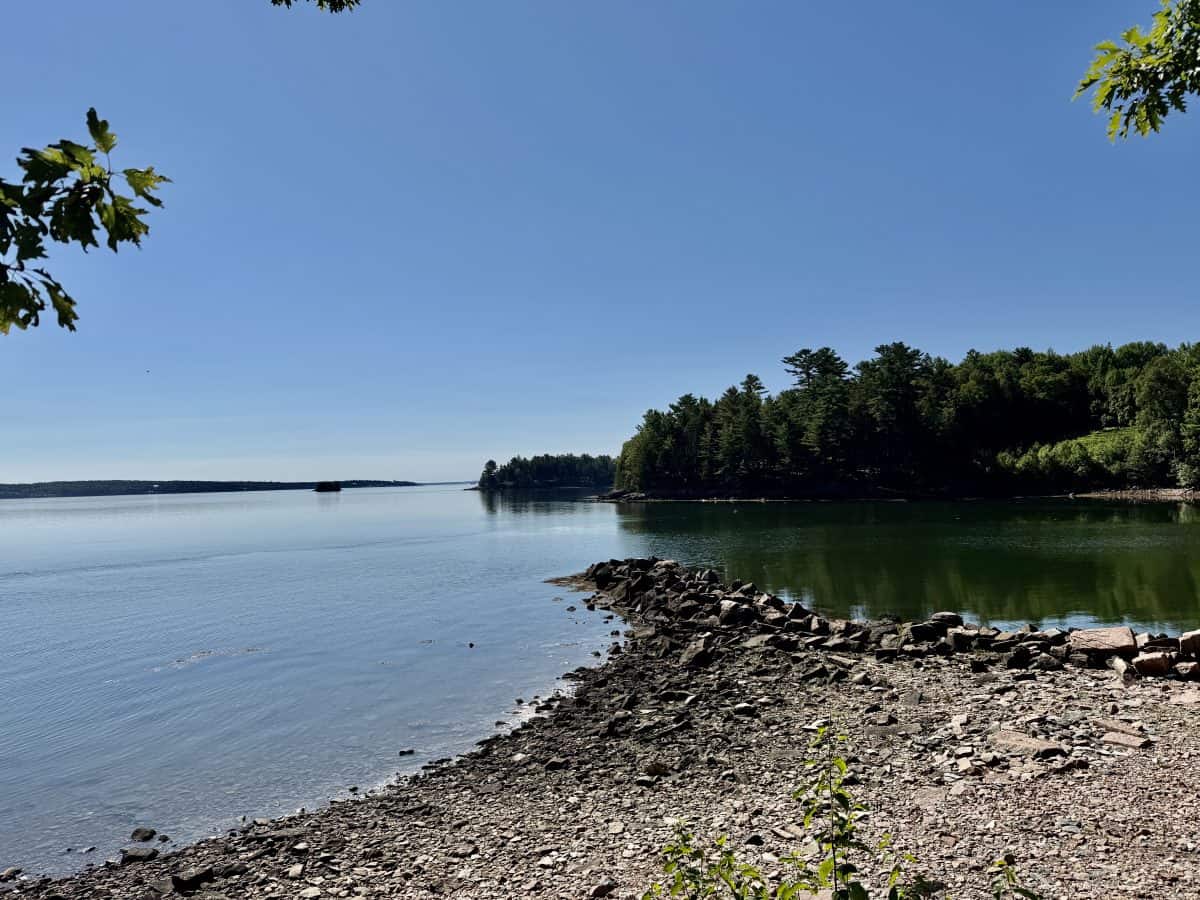
  • Walk down to the rocky beach to wade in the water– take note of the tides that reveal the Maine coastline. 
Looking for other International Historic Sites? Check out our feature of Waterton International Peace Park here and our index of National Park sites here

Similar Posts

  • | | |

    10 Ways to Explore the Pilgrim Monument and Provincetown Museum on Cape Cod

    Built from 1907-1910 to commemorate the first landing of the pilgrims on board the Mayflower on November 21, 1620, the 252 foot Pilgrim Monument is the tallest all granite structure in the United States. Visitors can climb all 170 steps and 60 ramps to the top and be rewarded with views as far away as Boston (42 miles north). Today, the monument and adjacent museum are open to the public from early April through early November.

  • | | | | |

    Lowell National Historical Park in Lowell, Massachusetts

    The city of Lowell, Massachusetts, located just 30 miles north of Boston, was built as a factory city (because of its location next to the Merrimack River and Pawtucket Falls) and became synonymous with the American Industrial Revolution. Named for Francis Cabot Lowell, who is partially credited for creating the power loom, city locals began funding and building water-powered mills in the area in the early 1800s. By 1880 Lowell had over 100 mill buildings, 18 textile corporations, 2 machine shops, and a booming population (it was the second largest city in Massachusetts in the mid 1800s), employing over 10,000 workers in the mills. 

    However, newer technological advances in more northern cotton mills took away from the businesses in Lowell and production started to decline. By the 1950s, all of the original mills and most of the textile companies closed and the buildings fell into disrepair until local citizens and businesses worked together to form the Lowell Heritage State Park in 1974. Four years later, Congress designated the space as Lowell National Historical Park and the park has continued to expand its historical exhibits, research, tours and programs for the public.

  • Legoland Discovery Center in Boston, Massachusetts

    Legos are an iconic part of everyone’s childhood. I still find myself helping my almost nine year old son recreate model villages, race cars, and “monsters” with his boxes of legos all the time (and making sure that my son cleans up every stray lego so we don’t step on them!) He can spend hours pouring over step by step directions to make a model ship or superhero.

  • | | |

    10 Ways to Explore the Kartrite Resort in the Catskills

    Opened in the spring of 2019, the Kartrite Resort and Indoor Waterpark, spread across 1,600 acres in Monticello, New York in the Catskills, is a great spot for kids of ALL ages. The resort includes a two acre, 80,000 square foot indoor waterpark- the largest in all of New York- plus an indoor entertainment center, numerous restaurants and bars, a spa, fitness room, and a huge conference center. 

    Attached to the waterpark and entertainment center is a 324 all suite hotel offering one, two, and three bedroom options.  Each suite includes amenities such as a microwave, mini refrigerator, pull out sofa; larger suites have a sitting area and dining table. All resort guests receive wristbands for access to the indoor waterpark during their stay including check in and check out days. Get the lay of the land with this resort map.

  • Presidential Libraries & Museums

    Don’t let the word “library” misguide you. While there are thousands of papers and personal records of the presidents to read, and spaces for scholarly research, there are just as many opportunities to explore, touch, see, listen, and learn about American history at the 13 presidential libraries located throughout the country. (President Obama’s Chicago library and museum is currently under construction.)

    Franklin D. Roosevelt was the first to establish a presidential library, followed by each succeeding president, as well as predecessor Herbert Hoover. The National Archives and Records Administration oversee the 13 presidential libraries. I first wrote about presidential libraries for Kidventurous in 2014, but have since visited more libraries and museums and learned lots of new things! At your first stop, be sure to pick up the passport for all 13 libraries so you can collect the stamps.

Leave a Reply

Your email address will not be published. Required fields are marked *