Exploring General Grant National Memorial in New York City

| | | | | | | |

This past week, we had the opportunity to explore another National Park Site in the city of New York: the General Grant National Memorial. Located in the Morningside Heights neighborhood of the Upper West Side, the Memorial honors Ulysses S. Grant, a decorated Civil War General of Union troops and the 18th American President, who established the first National Park (Yellowstone) and the Department of Justice and was a champion of the 15th Amendment, which gave African American men the right to vote.
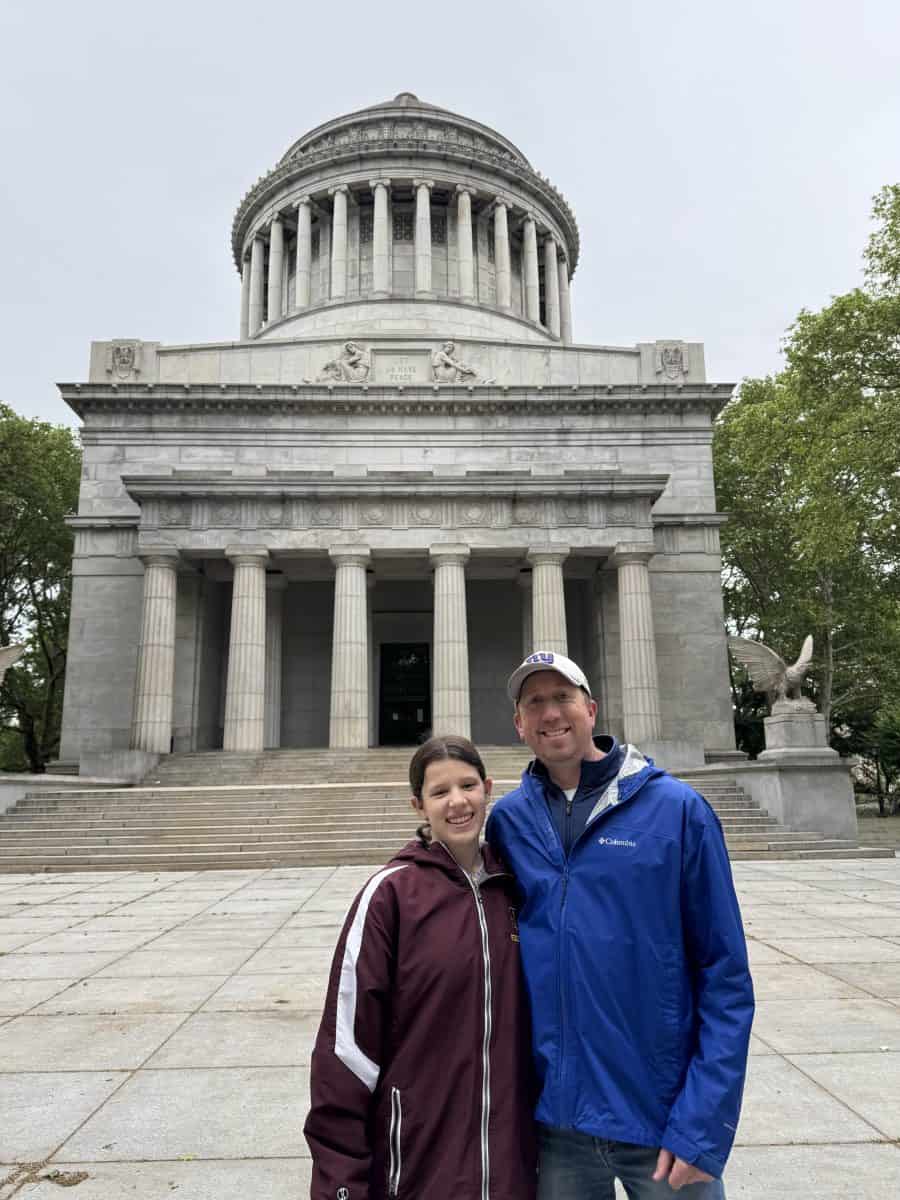
posing out front of the General Grant National Memorial in New York City

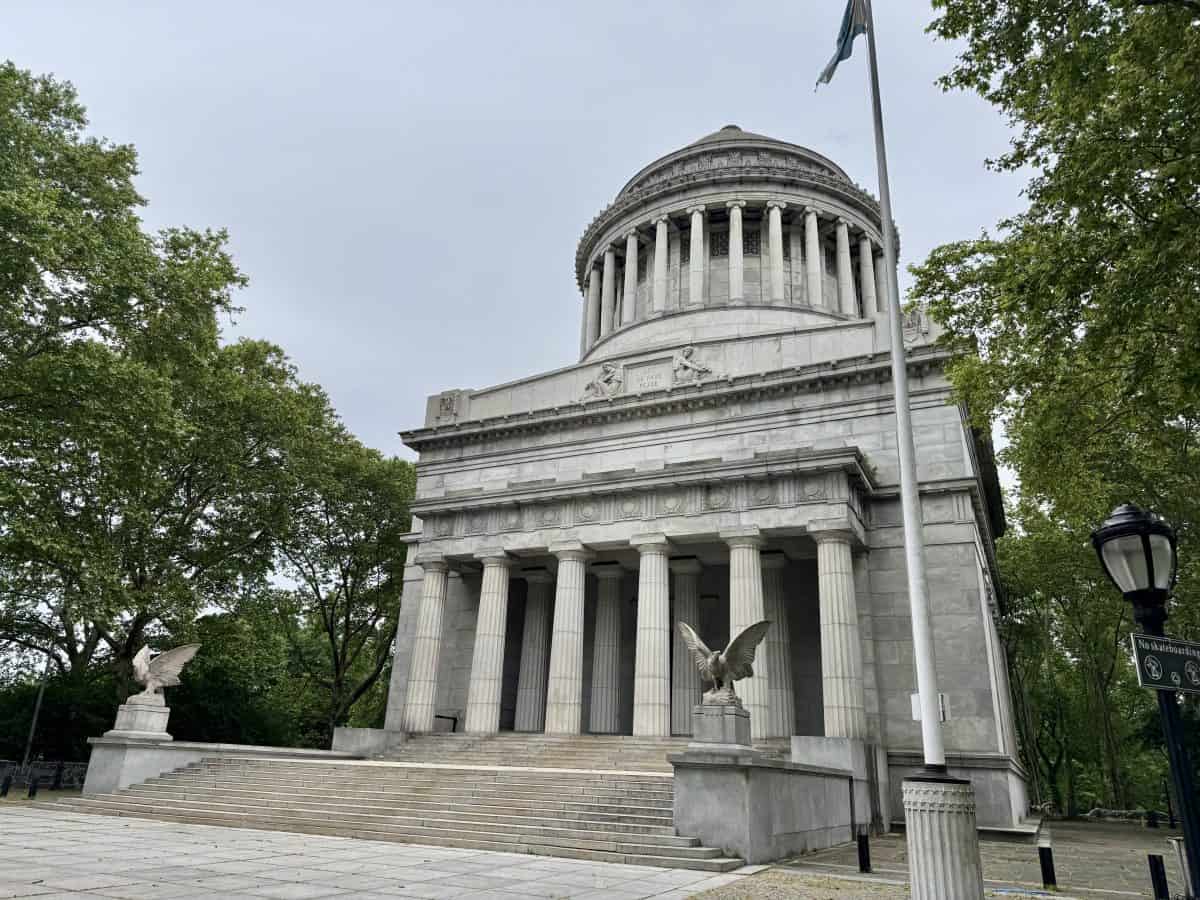
Grant passed away in 1885, shortly after writing his memoirs, which were later published with help from Mark Twain. Grant’s funeral in New York City was attended by over one million people who lined the funeral route from City Hall to Riverside Drive, with virtually every member of the federal government attending. The 150 foot Memorial opened in the spring of 1897 and was the most popular attraction in New York City for decades, welcoming close to a million visitors each year. Today, the National Park Service oversees the upkeep of the property and National Park rangers provide information and programs and special events showcasing the life and legacy of Grant. 
Travel Tips:
  • The Visitor Center is open from 10am-4pm Wednesday through Sunday. The Mausoleum is open the same hours but in half hour increments for self guided tours. Check up to date information here and information on special events and programs here. Note: The Mausoleum is very cold, especially during colder months; dress accordingly. 
  • The Visitor Center and the Mausoleum are free to visit.
  • The Visitor Center is handicap accessible with a ramp on the right side of the entrance; however, the Mausoleum and crypt are not handicap accessible (almost 50 steps into the Mausoleum and down into the crypt).
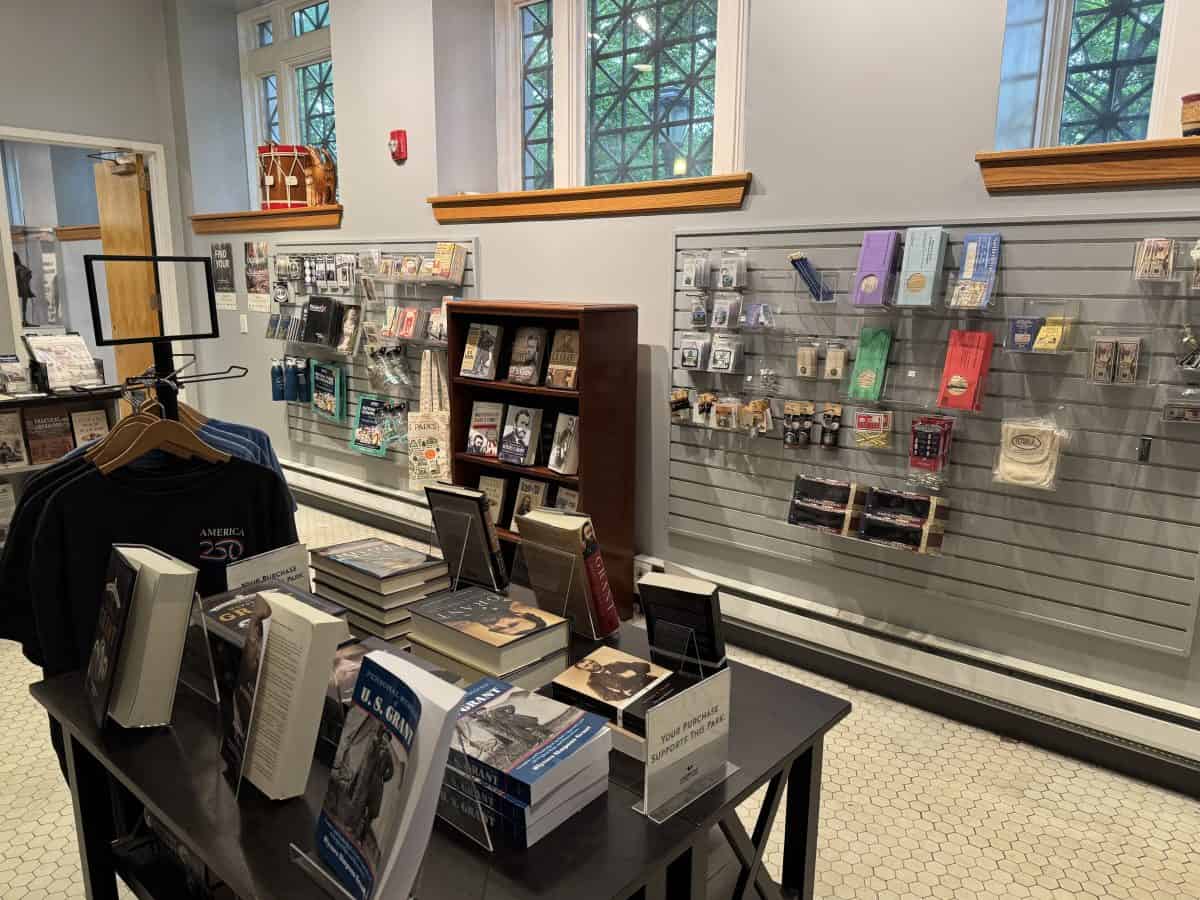
  • Restrooms and a small gift kiosk are located inside the Visitor Center.
  • No dining facilities on site.
  • Information on metered street parking and garages (no parking lots) and public transportation options here
  • Make sure to get your National Parks Passport stamps in the Visitor Center and have kids complete the Junior Ranger booklet to earn a badge. 
  • Plan on an hour to explore the entire site.
gift kiosk inside Visitor Center at General Grant National Memorial in New York City

Make Sure to Explore:

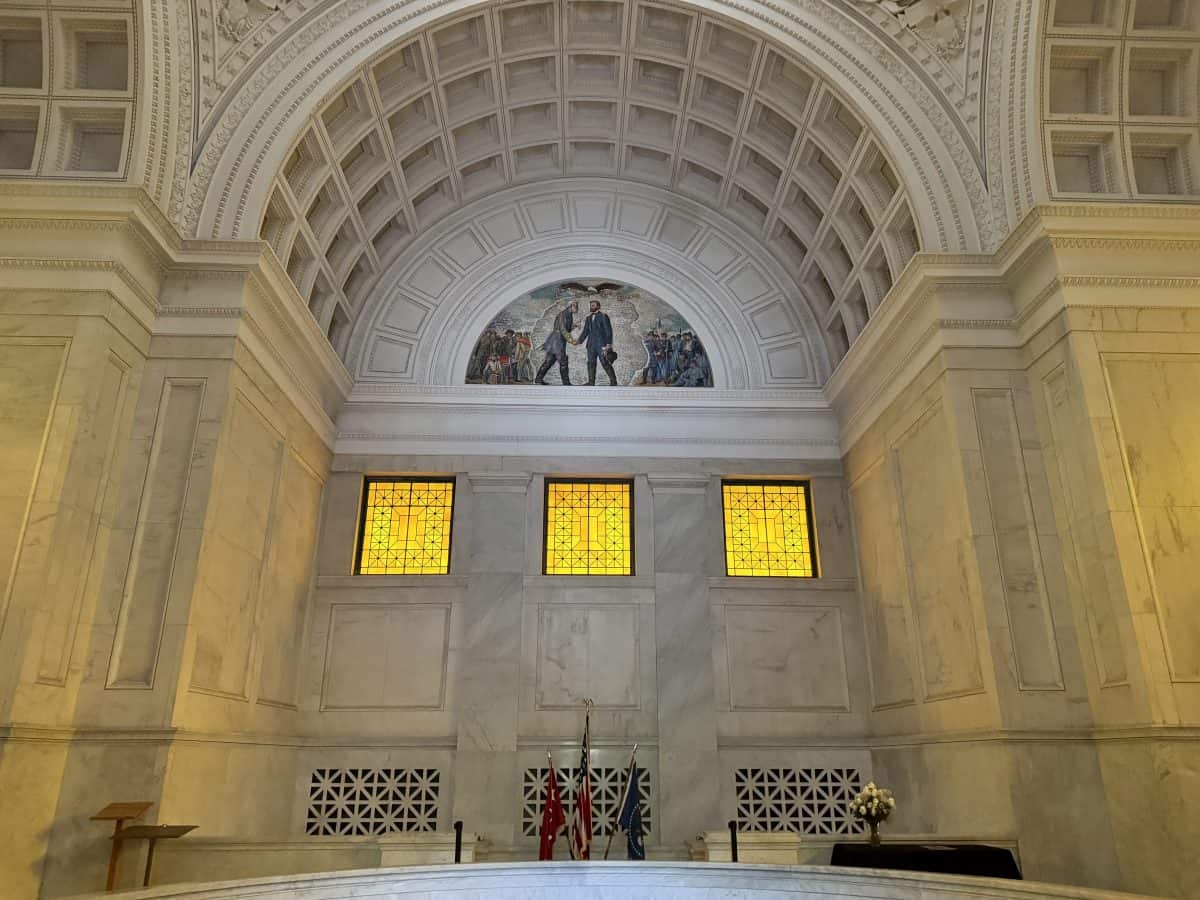
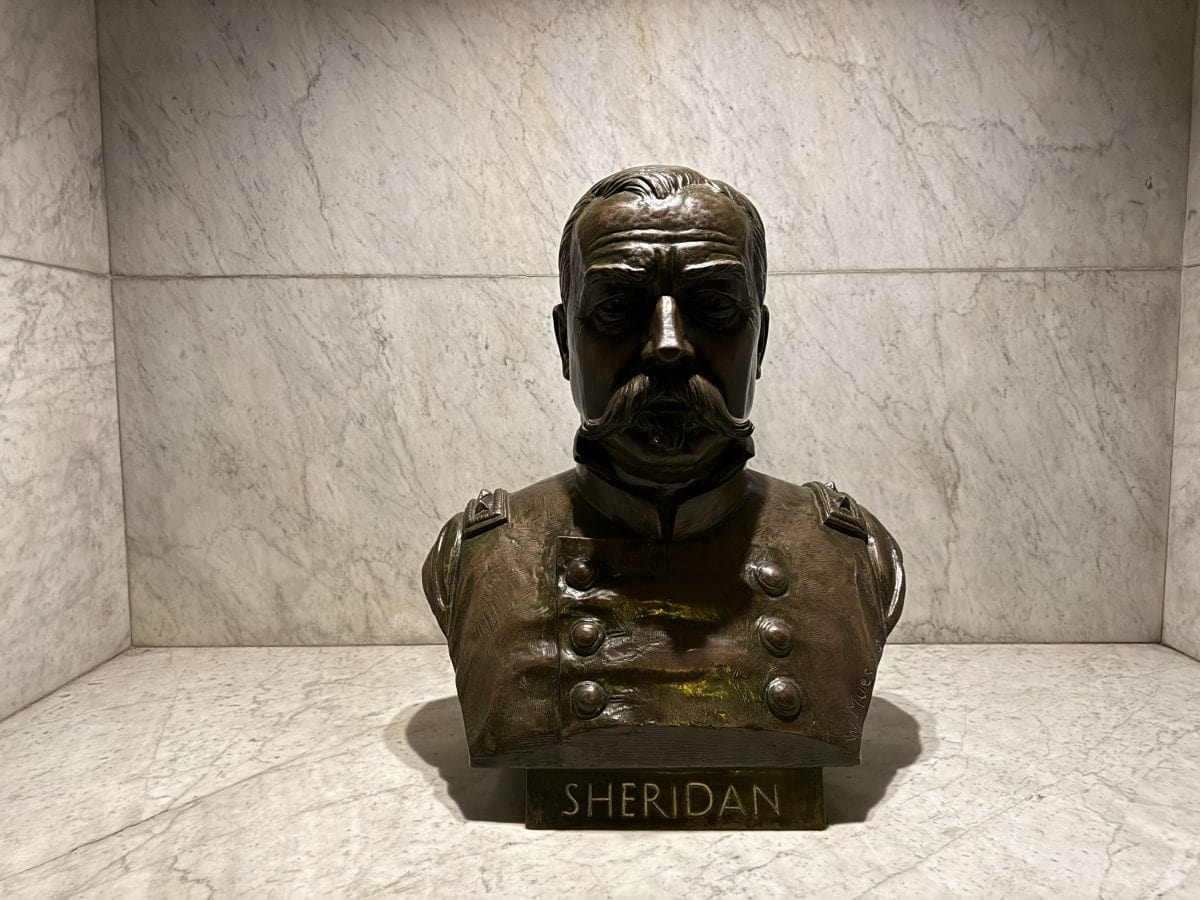
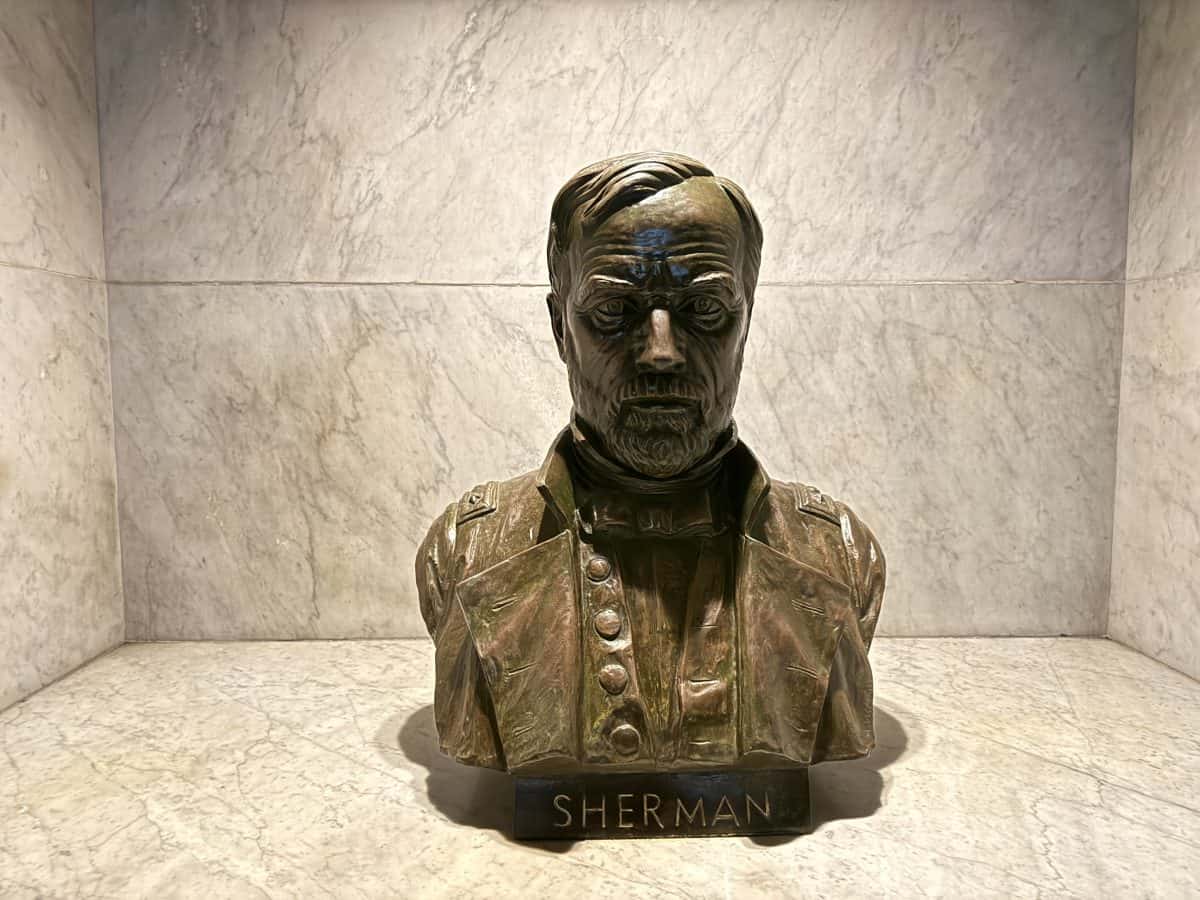
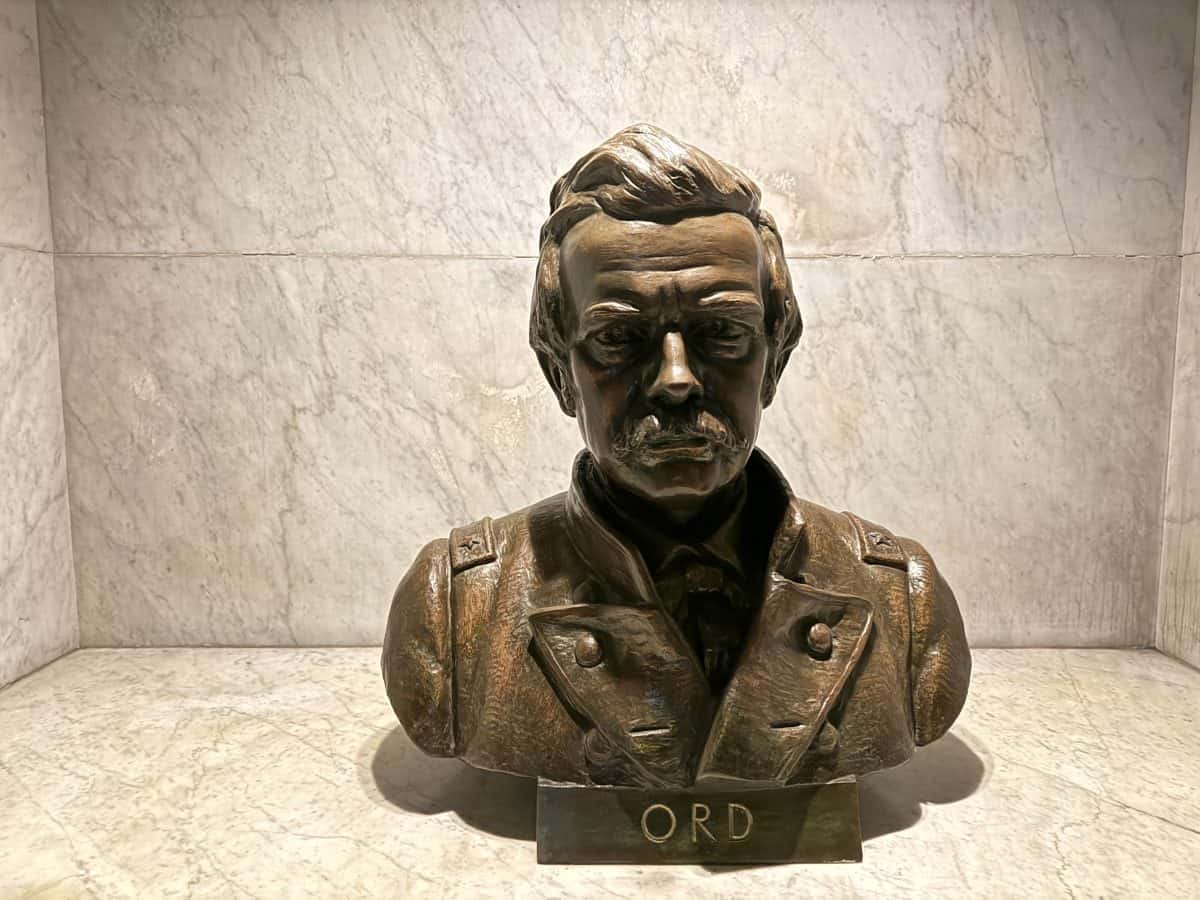
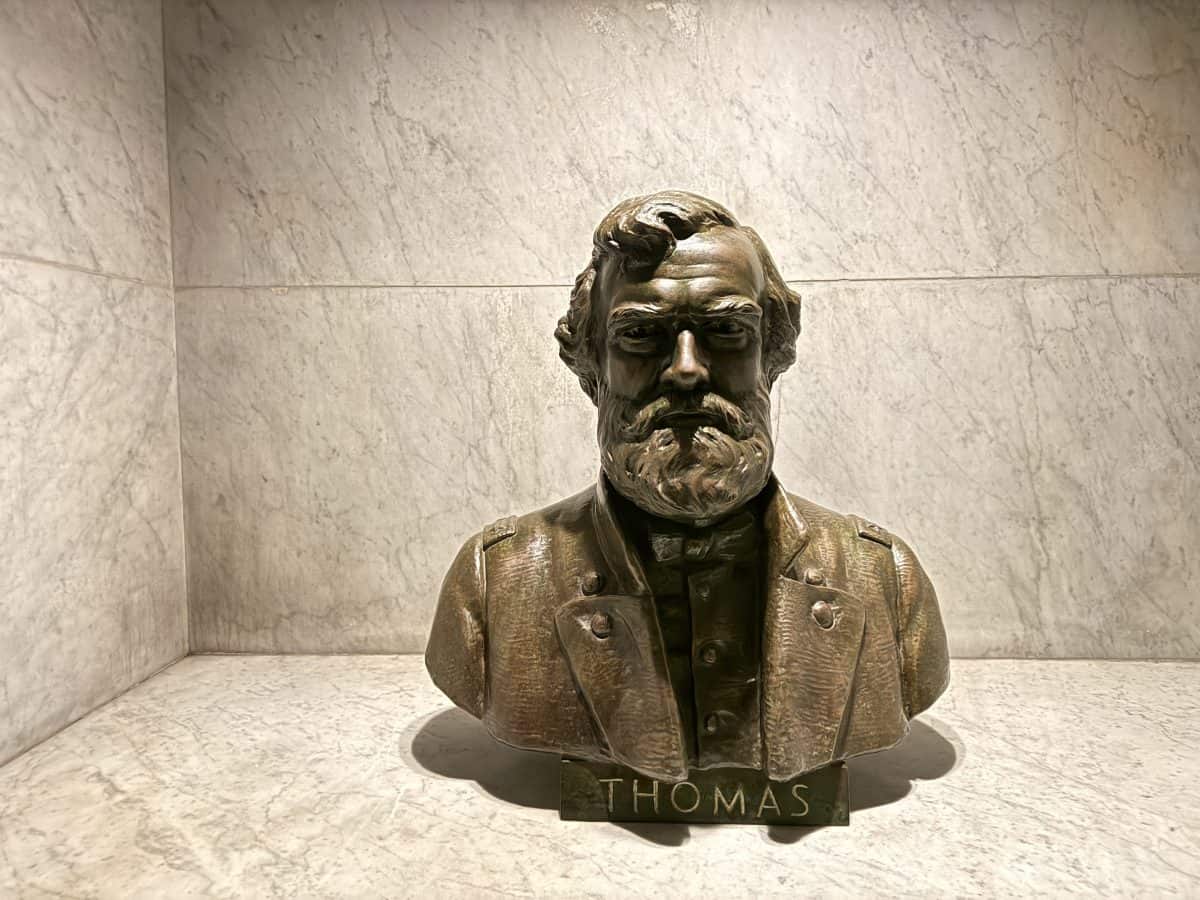
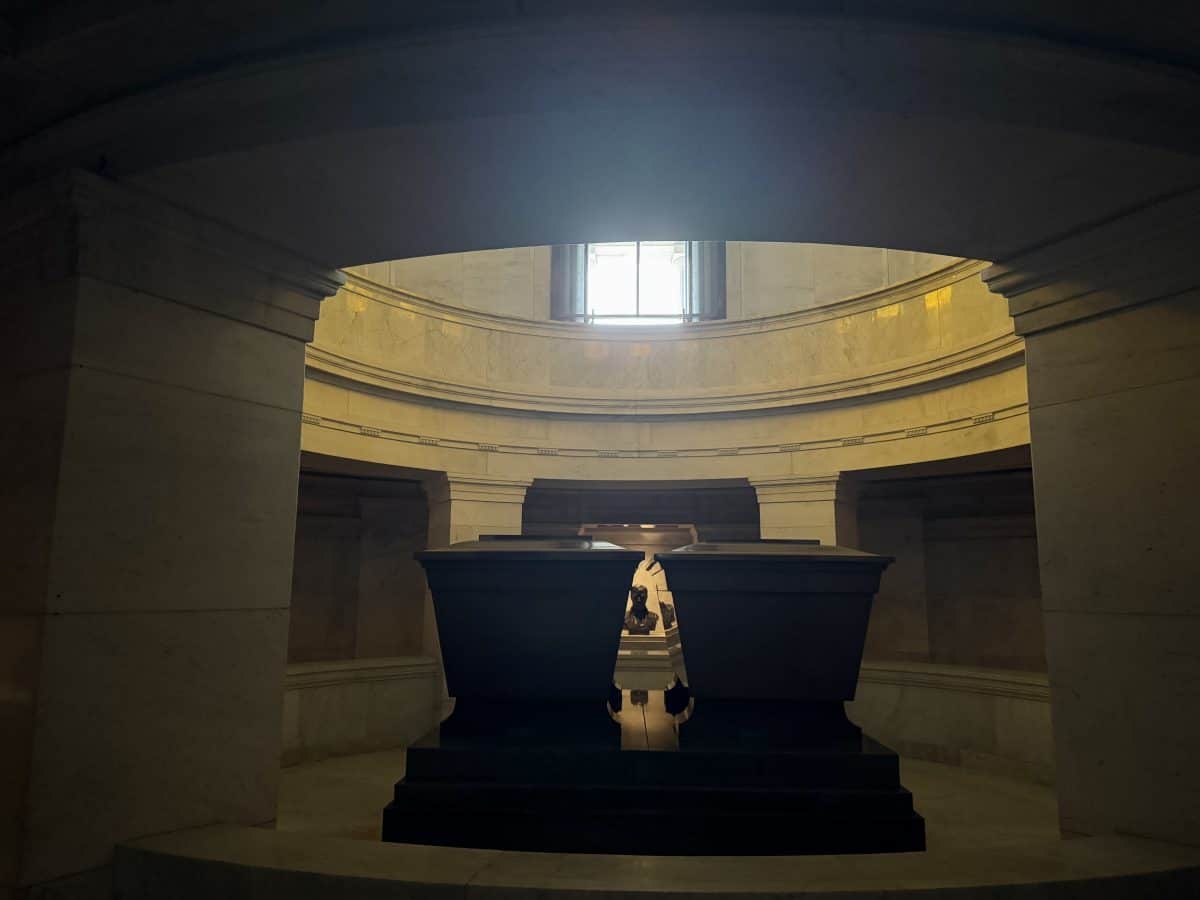
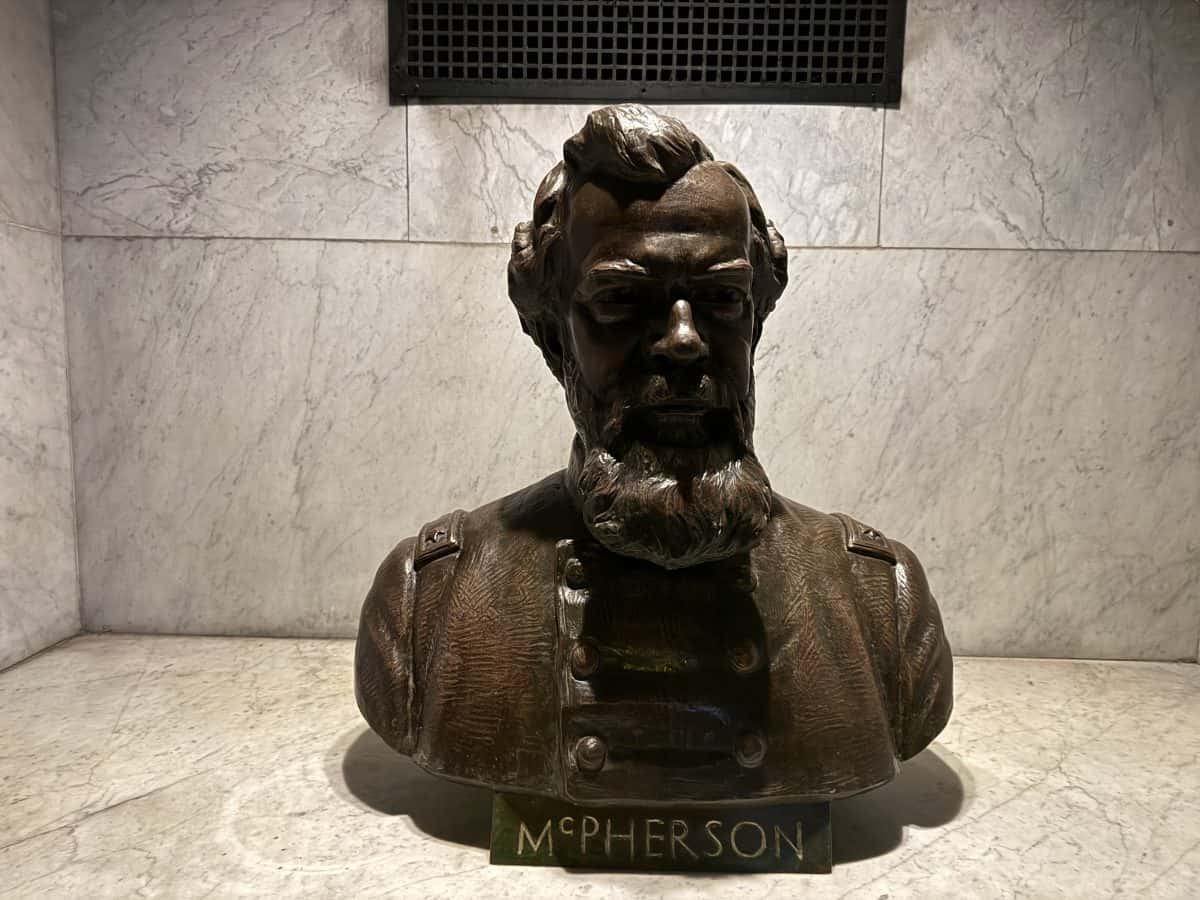
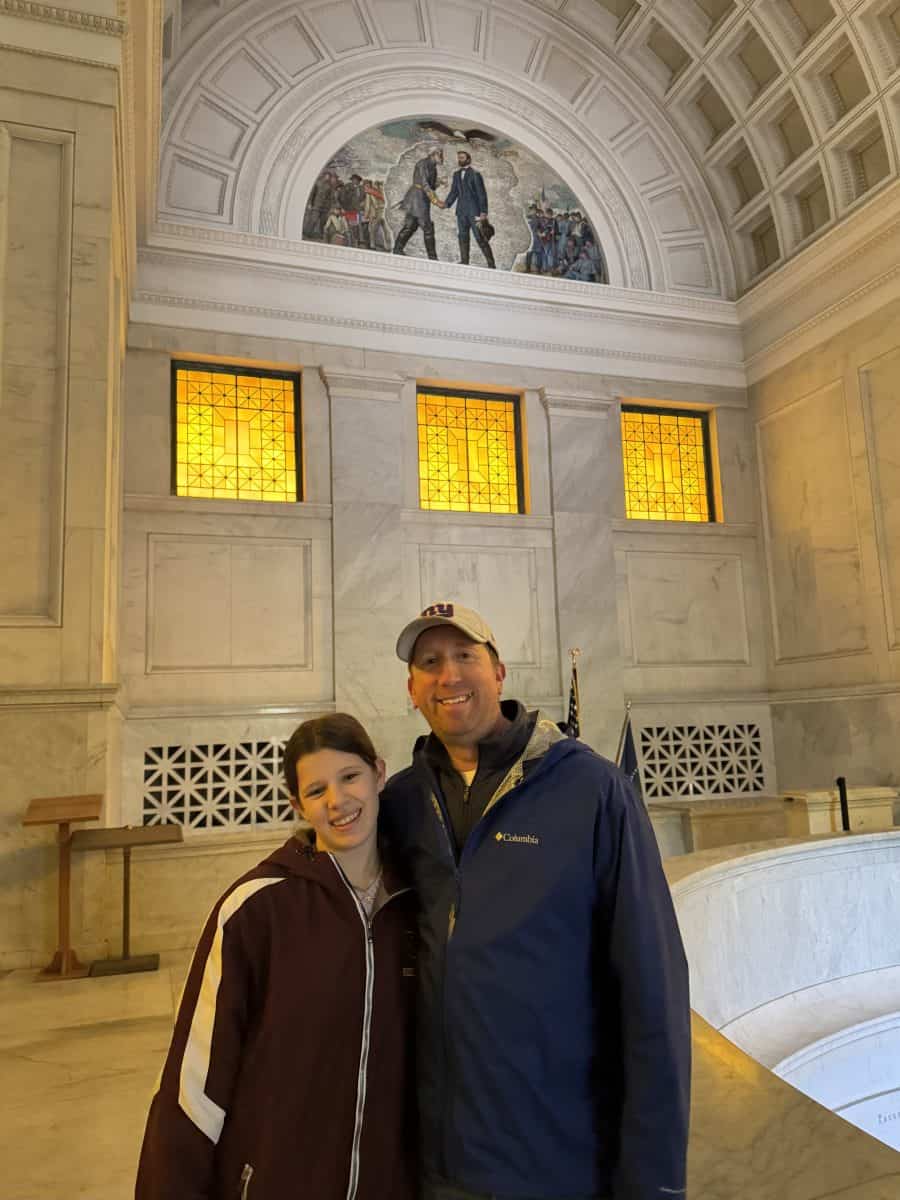
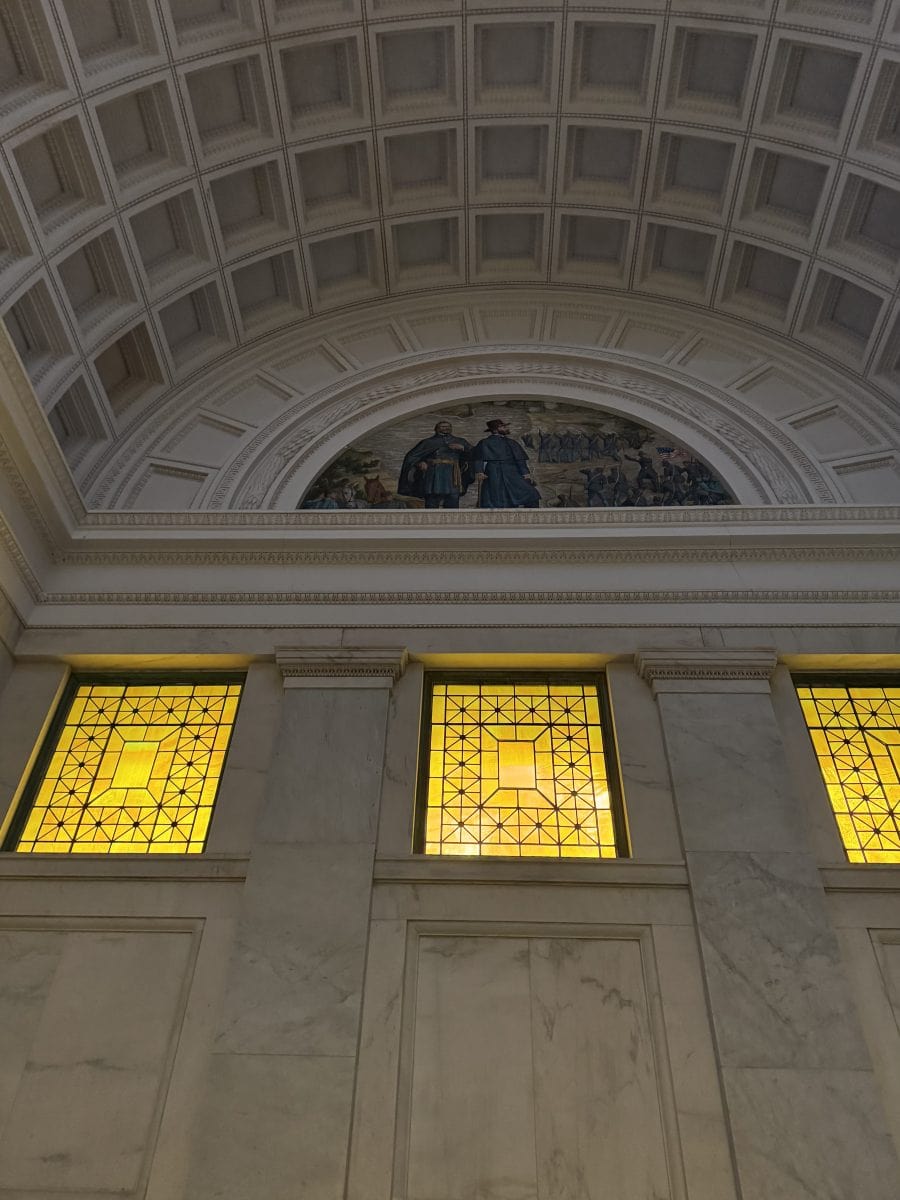
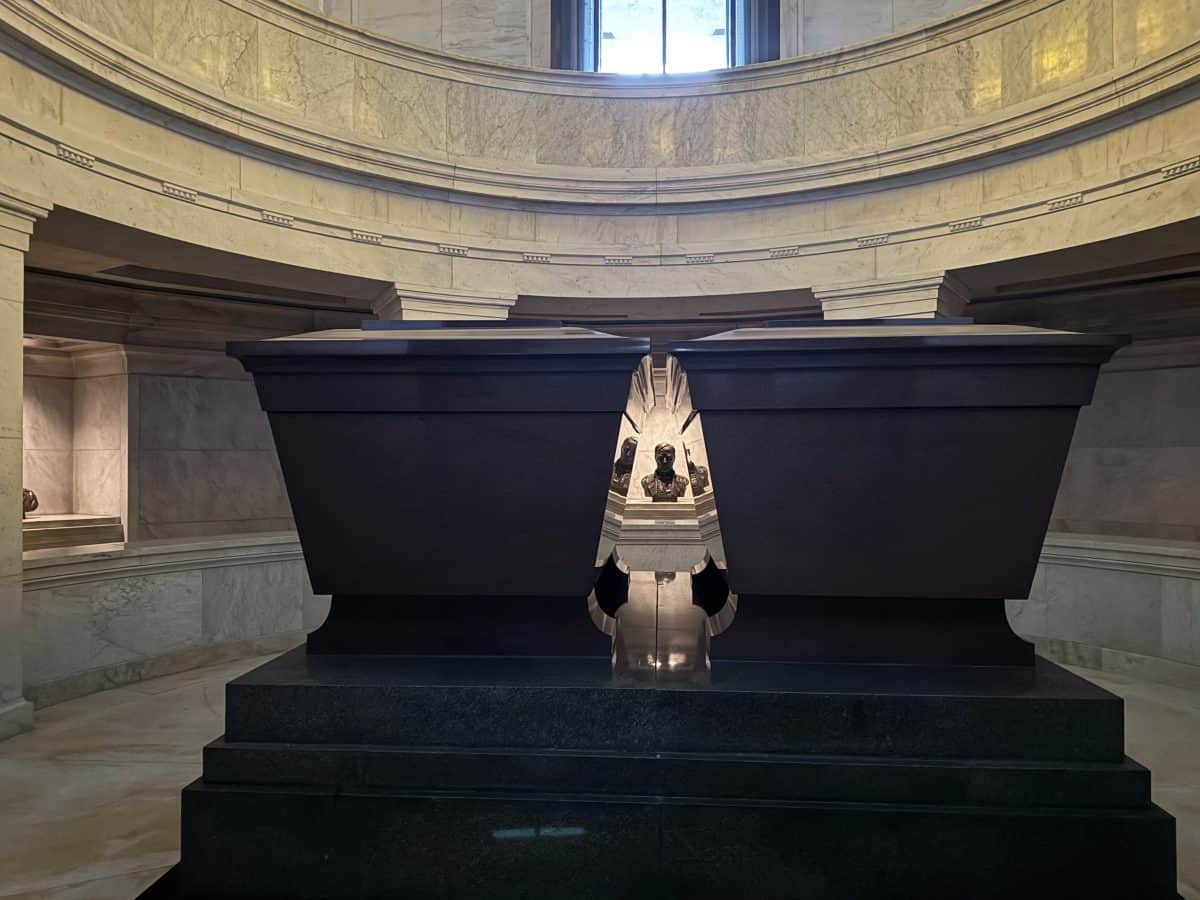
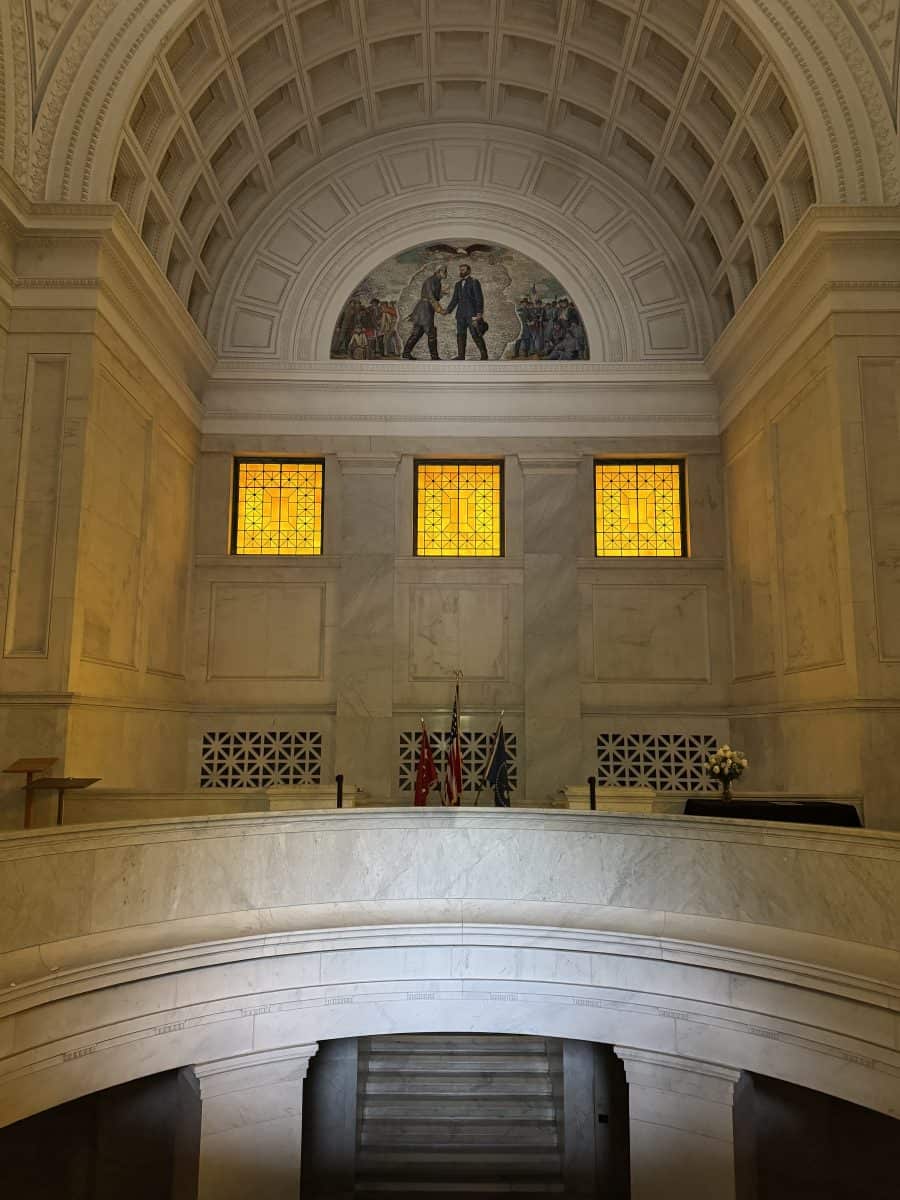
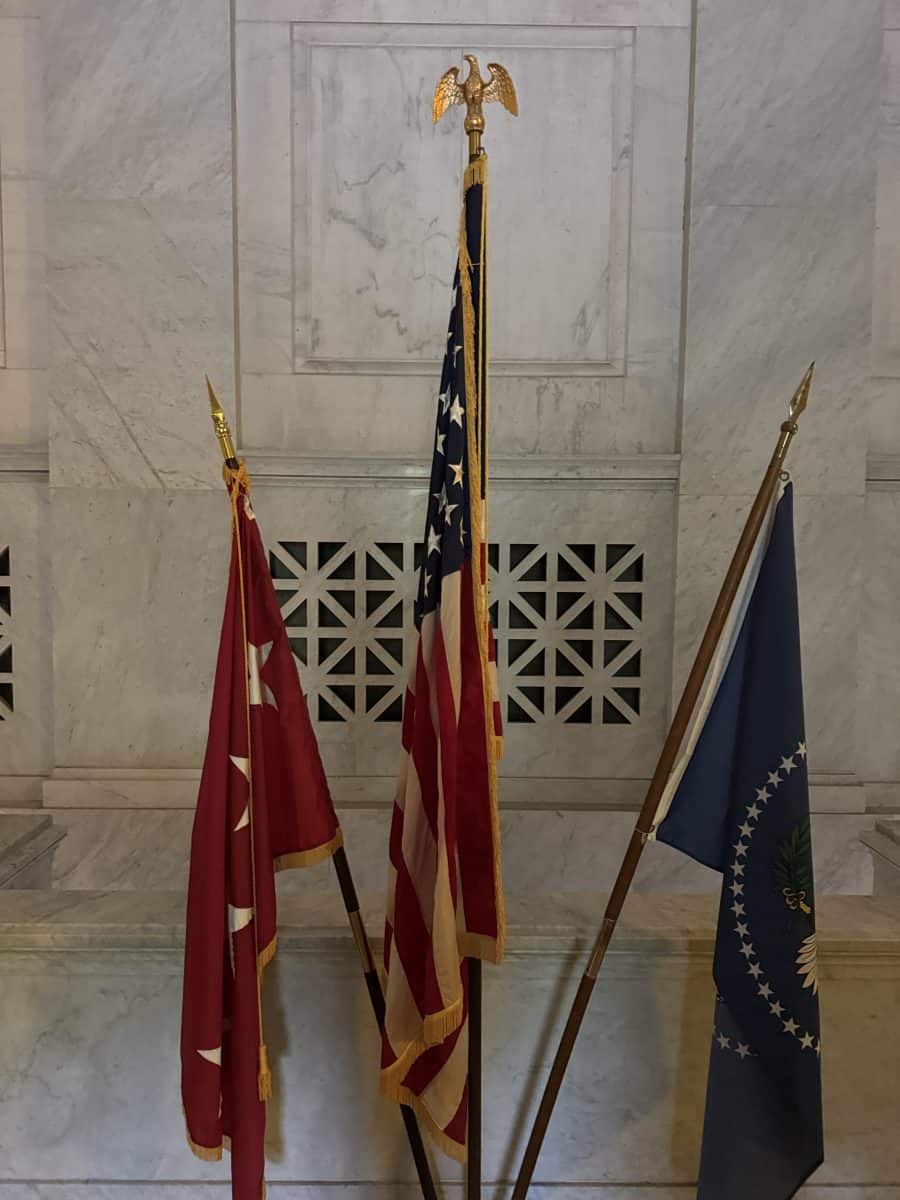
  1. The Mausoleum and crypt: Because military cemeteries did not allow women to be buried with their husbands, Grant decided to have a separate burial place where his wife, Julia, could eventually be laid to rest next to him. He chose New York City, his home after his military and governmental service, as his final resting place. An association was established to campaign and raise funds for a memorial to Grant after his death. The memorial, including the Mausoleum and crypt, opened in 1897. In 1902 Julia was laid to rest next to him in the crypt, with her tomb being slightly elevated above her husband. The crypt also includes five bronze busts of five generals Grant admired. The upper level of the Mausoleum includes three mosaic lunettes of scenes depicting Grant as a General in battle, four pendentives of Grant’s life in the angles of the dome, and replica battle flags.
the tombs of Ulysses and Julia Grant in the crypt at General Grant National Memorial in New York City

Would you like to save this?

We'll email this post to you, so you can come back to it later.

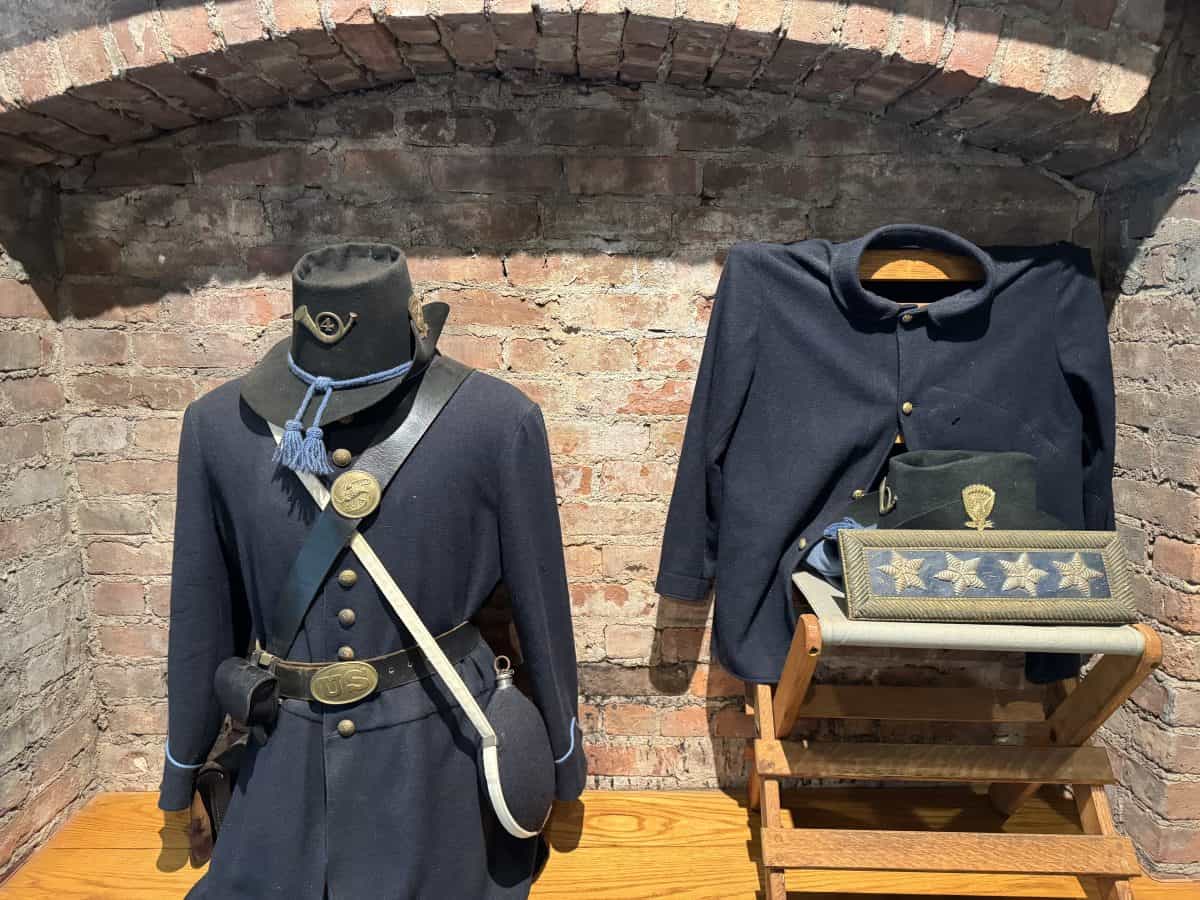
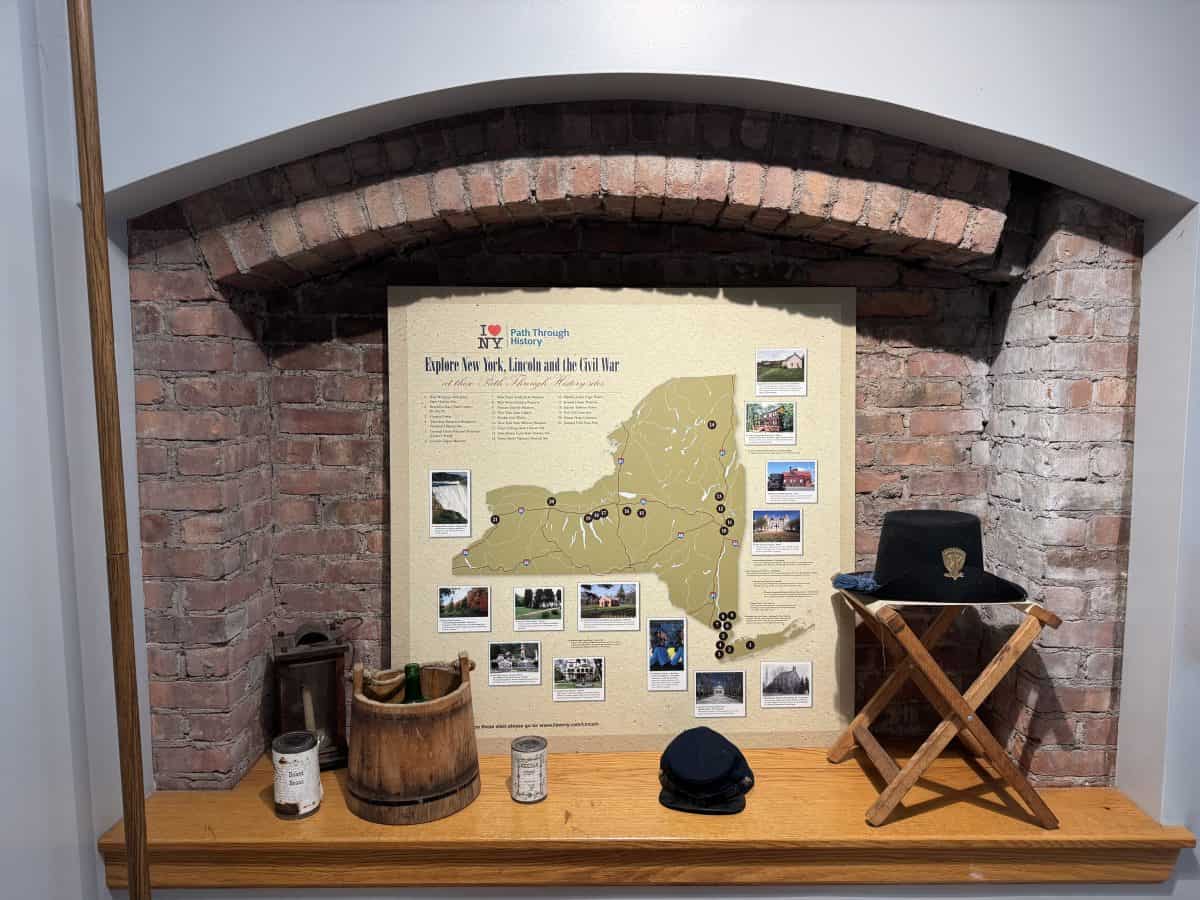
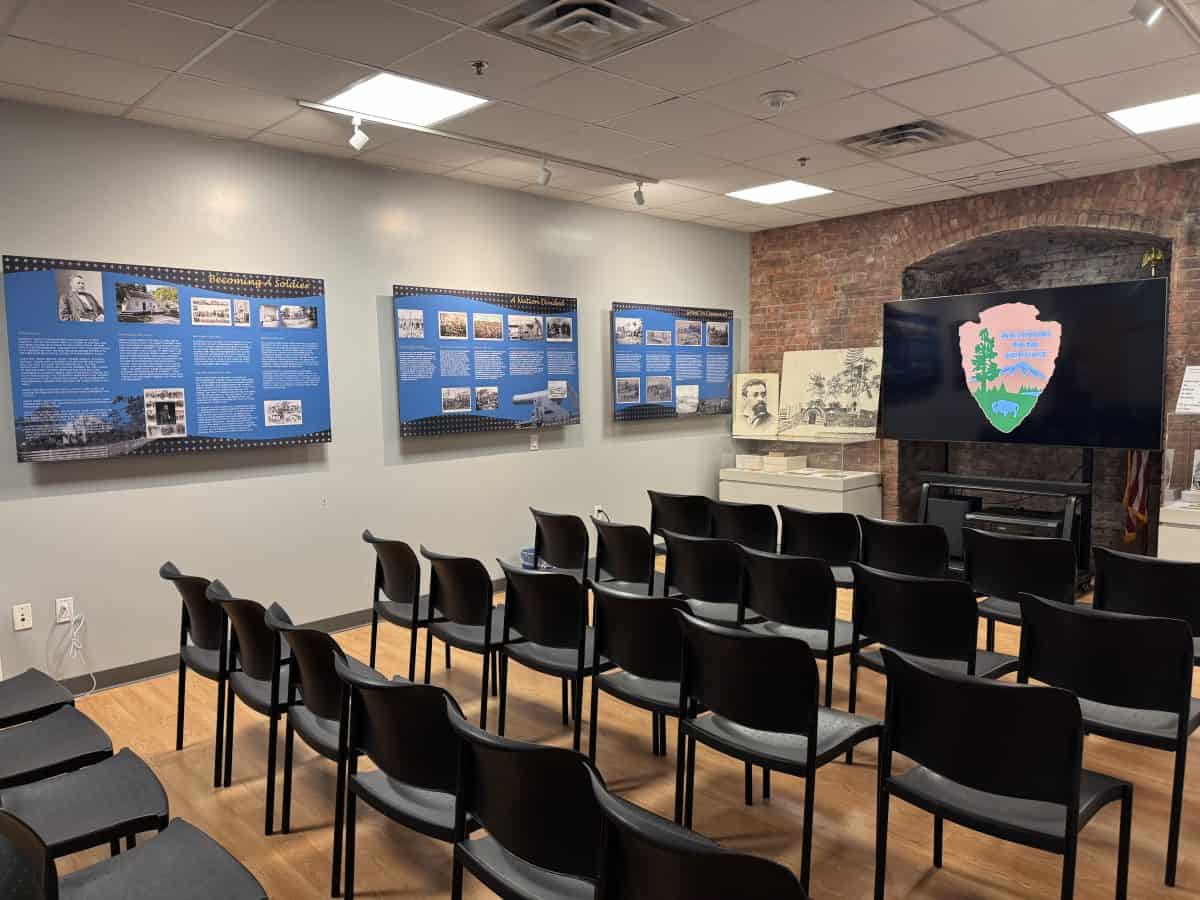
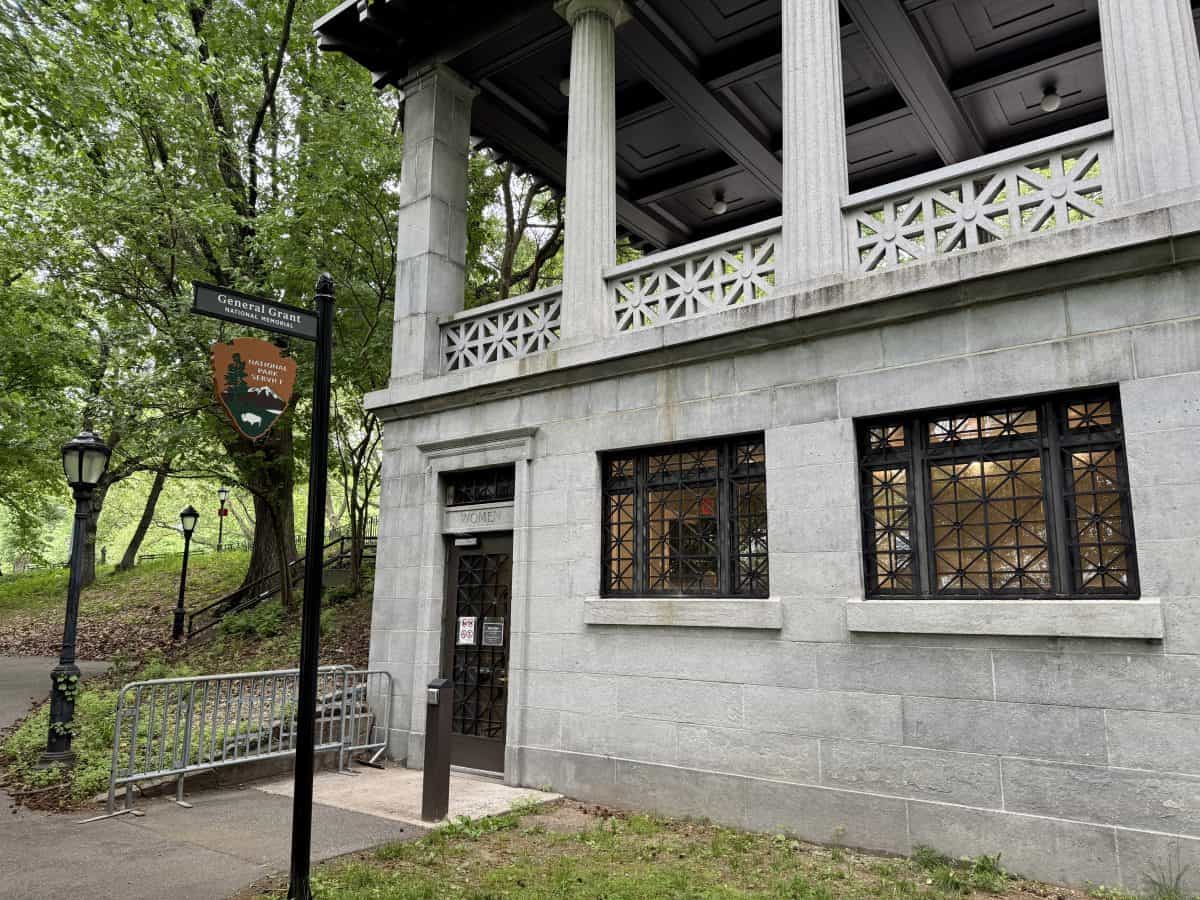
  1. The Visitor Center: Located across Riverside Drive on the west side of the Memorial, the Visitor Center, opened in 2011, is located down a flight of stairs under the Pavillion. The Center included a 20 minute video narration of Grant’s life and accomplishments and a few displays and placards featuring prominent accomplishments throughout Grant’s life. Park rangers staff the Visitor Center and offer advice and answer questions about the park site and surrounding areas. 
outside the Visitor Center of General Grant National Memorial in New York City

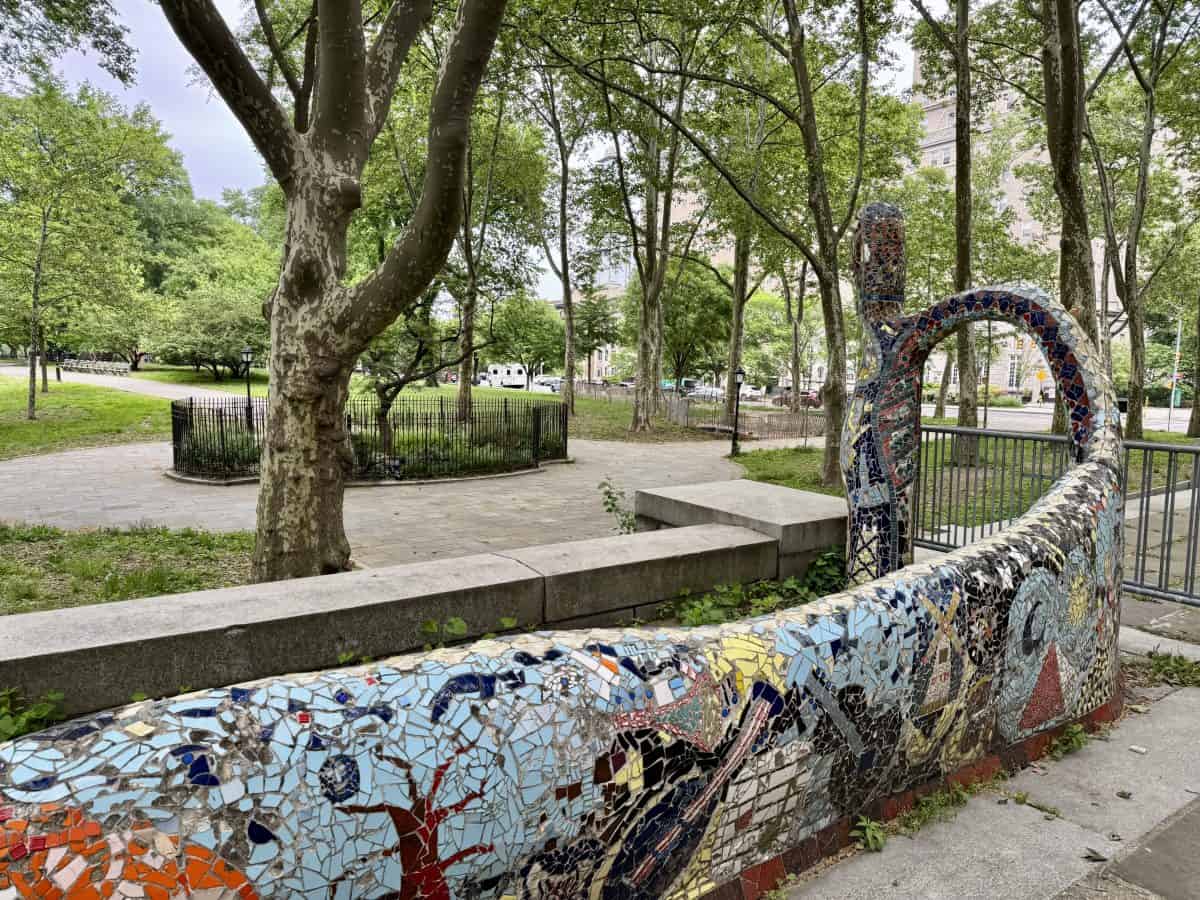
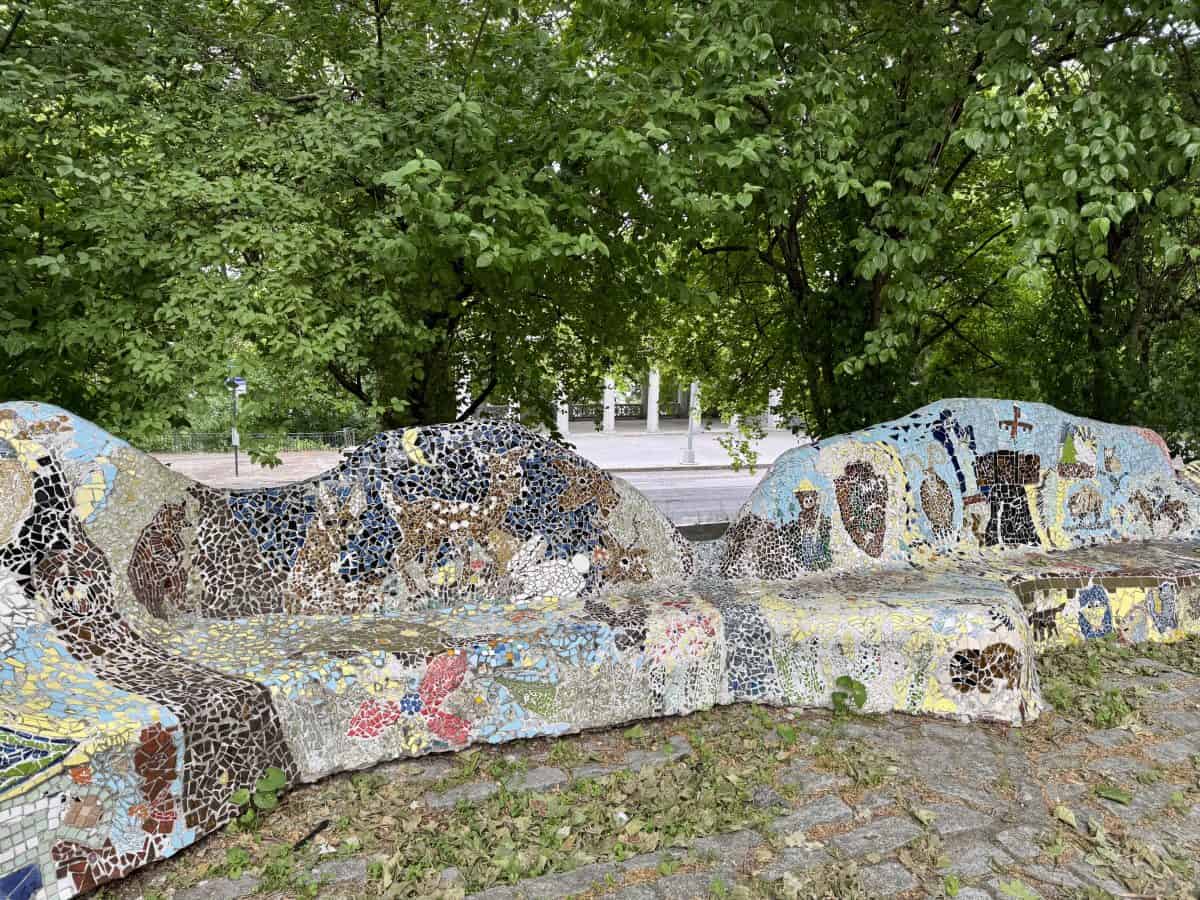
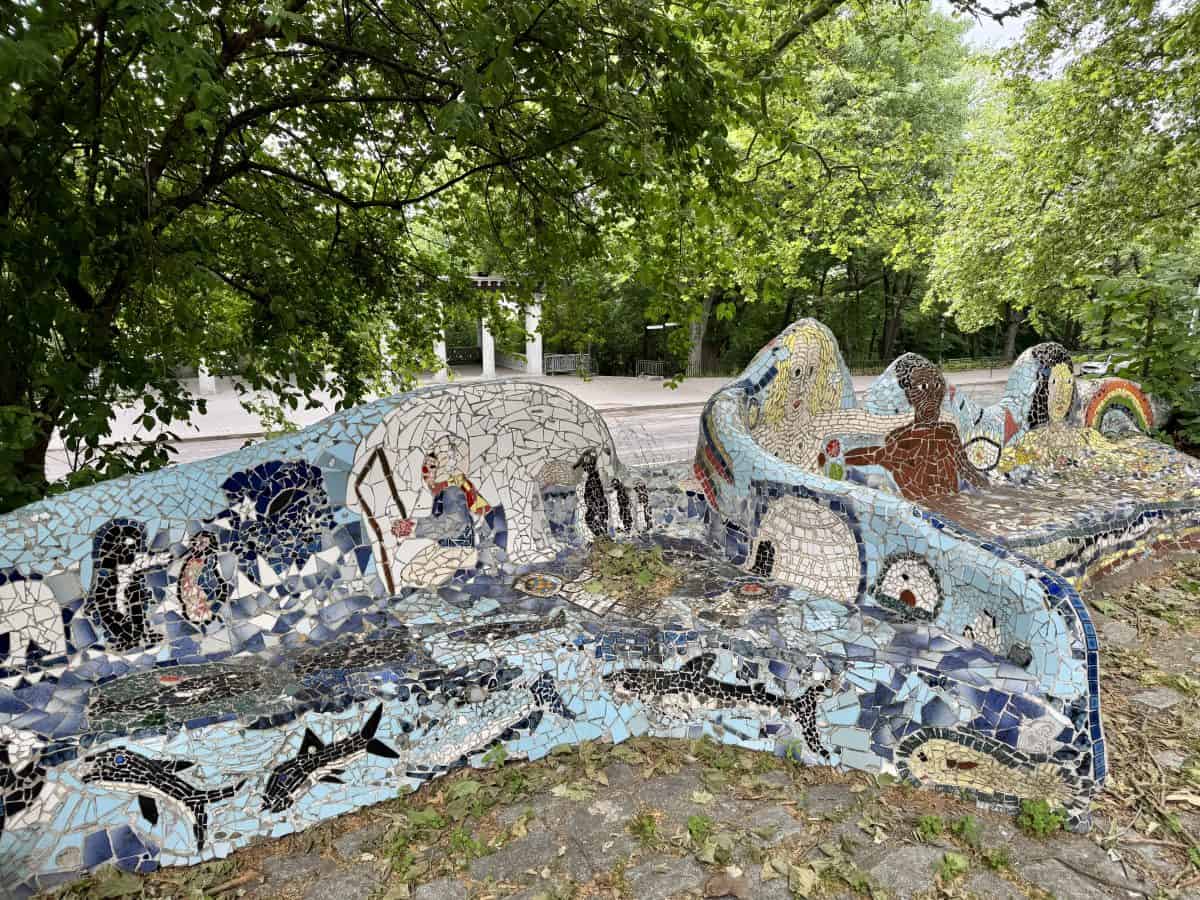
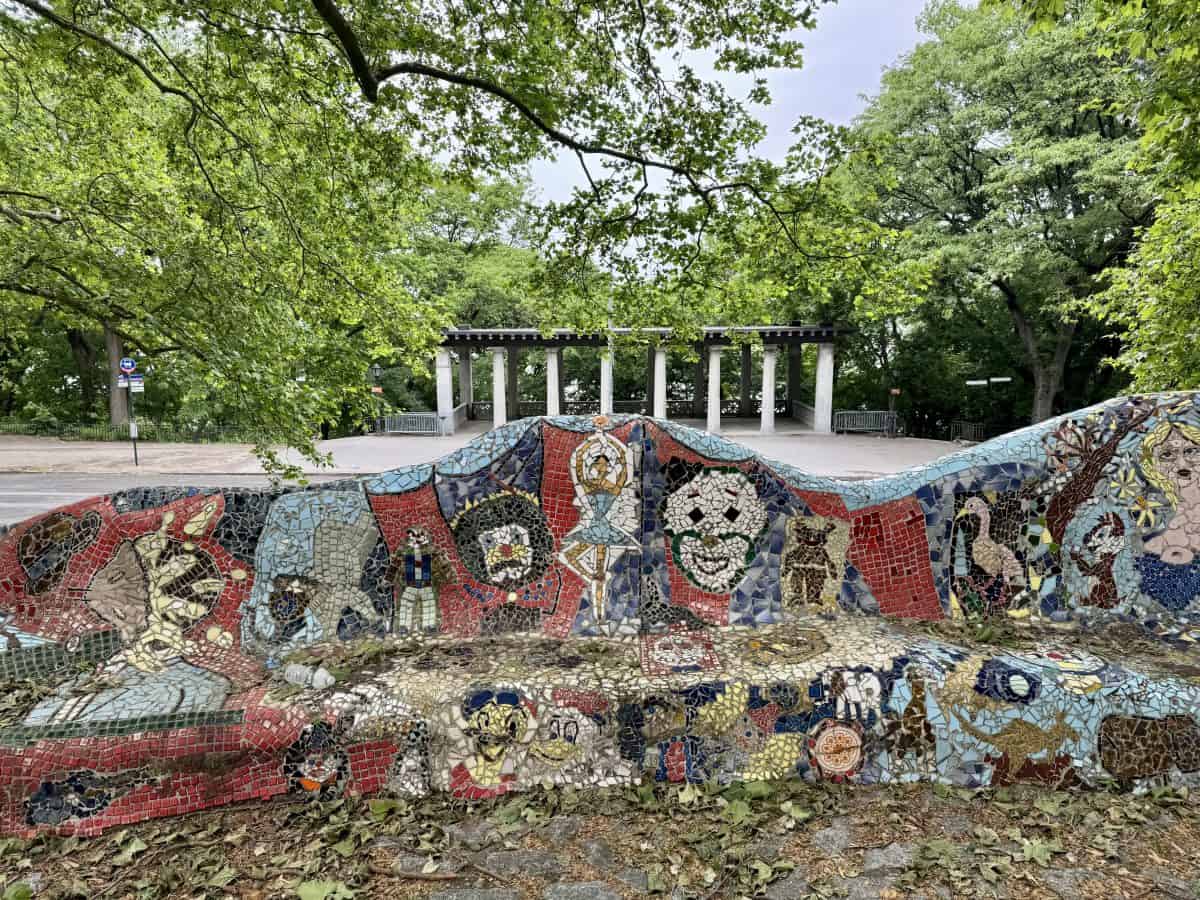
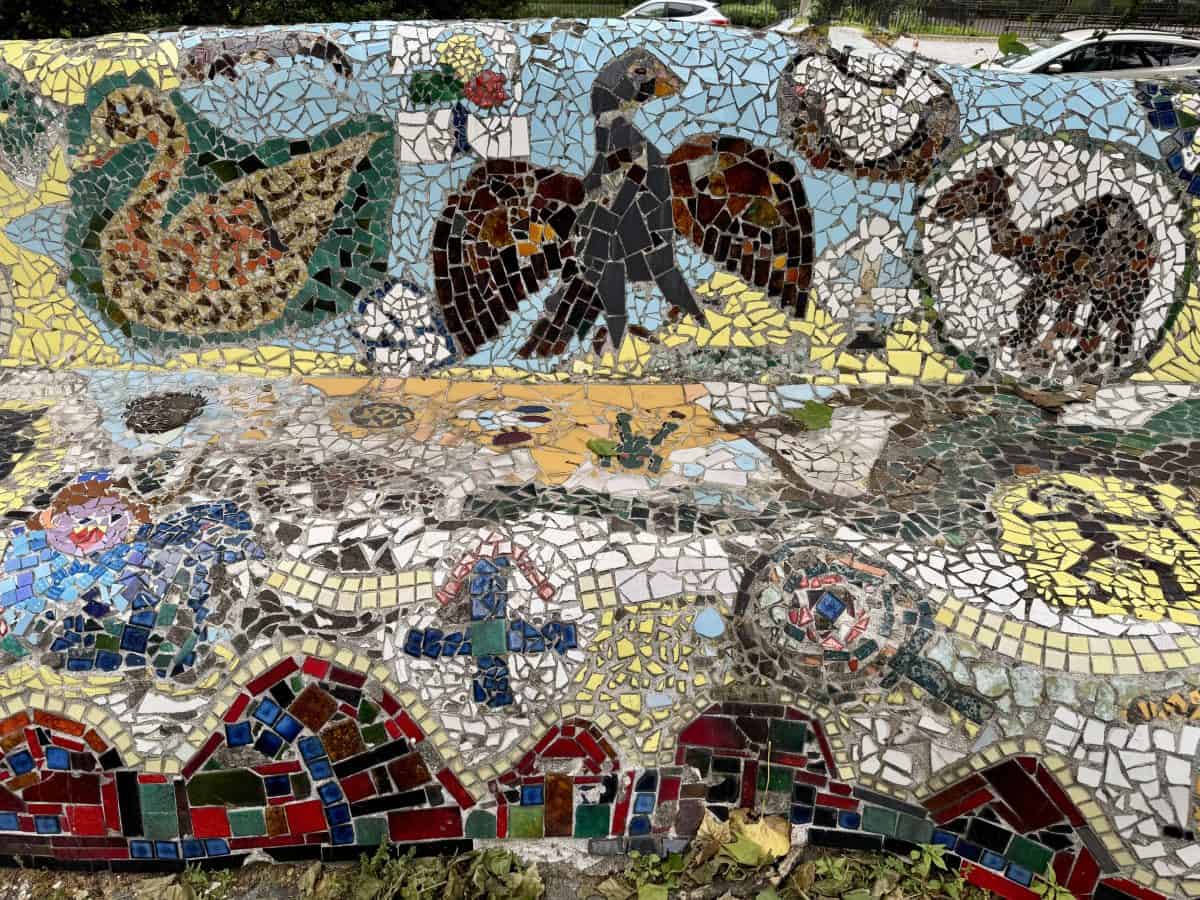
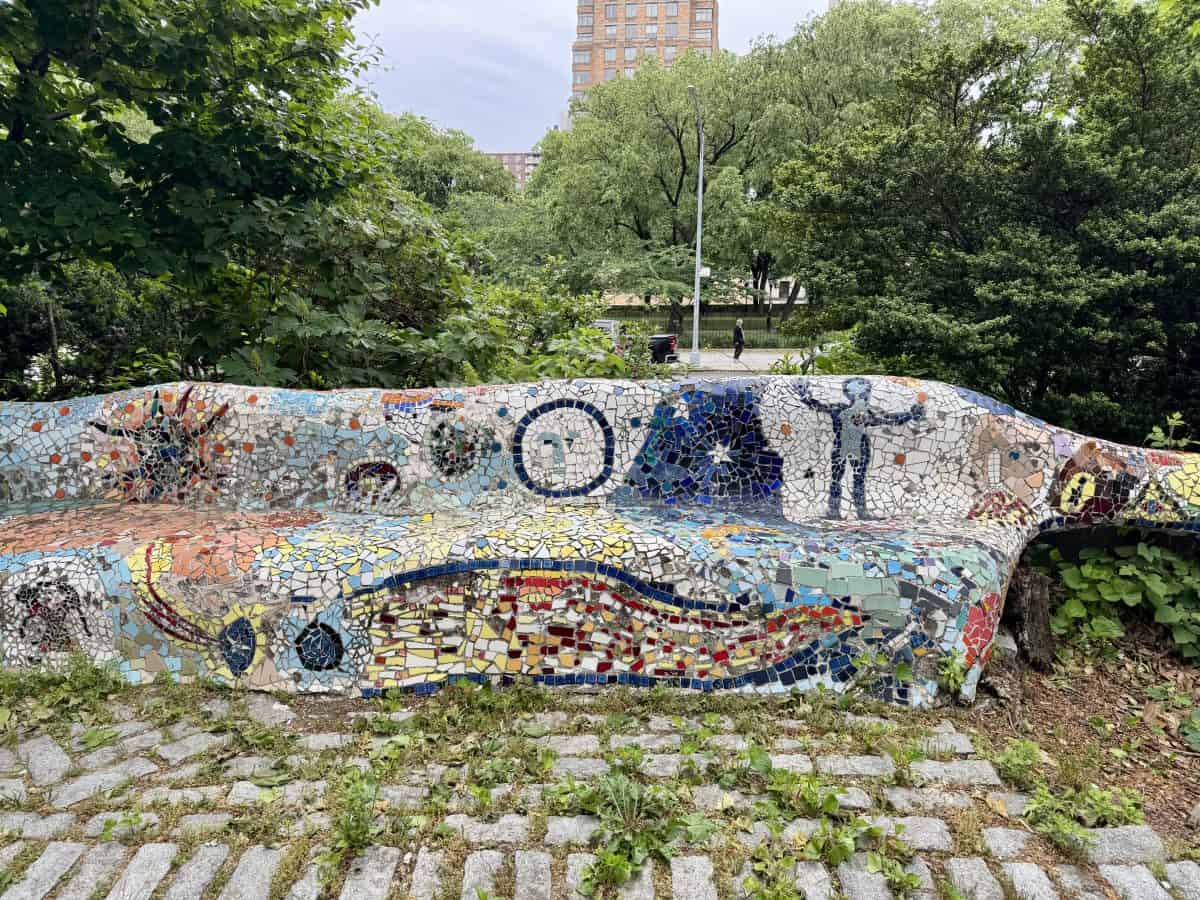
  1. The Grounds: Commemorating the 100th birthday of Grant’s designation of Yellowstone as the first National Park in America, dozens of mosaic tile benches form a 400 foot border around ¾ of the outside of the Memorial.  It took a team of hundreds of artists, architects, and local volunteers three years (1972-1974) to complete the project, whose primary goal was to beautify the area, which had become run down in the 1970s. The project is currently undergoing restoration in the 2020s. 
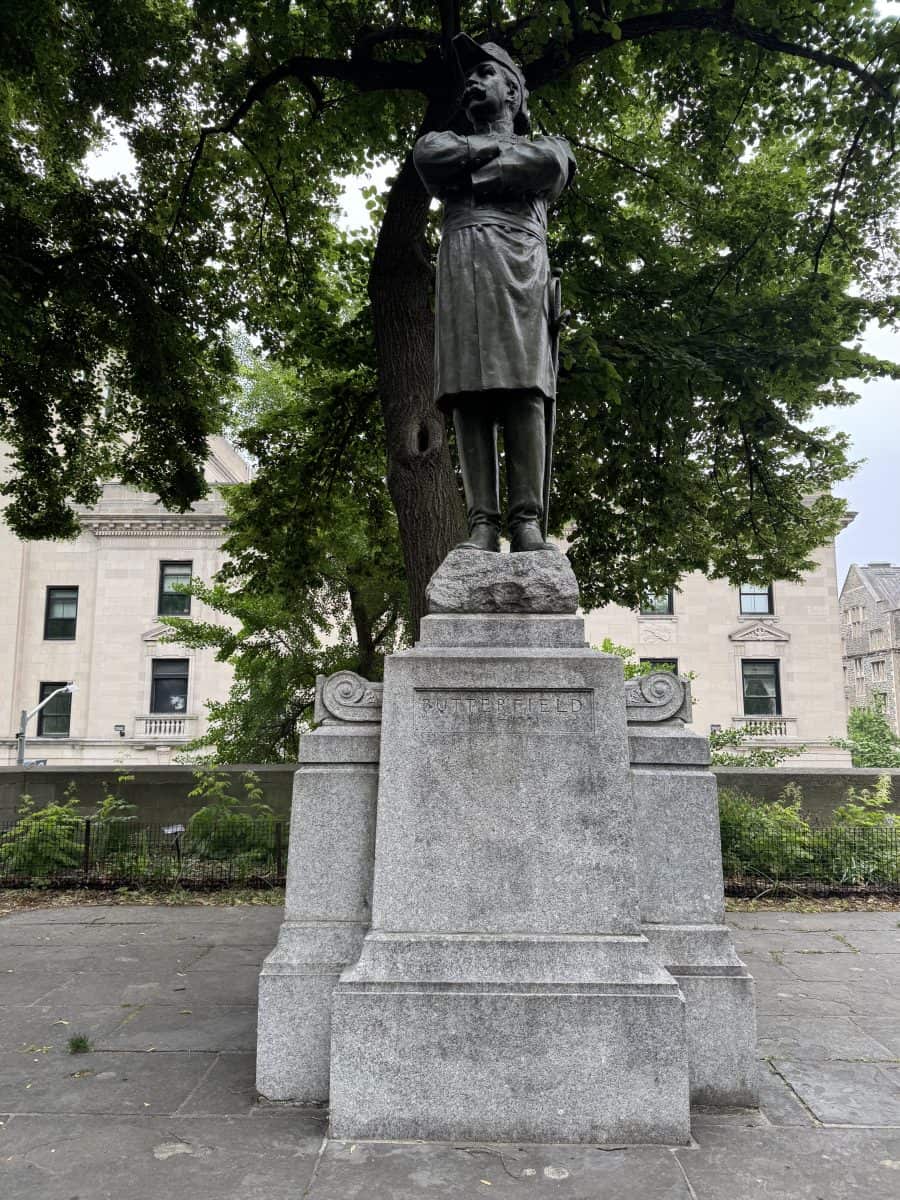
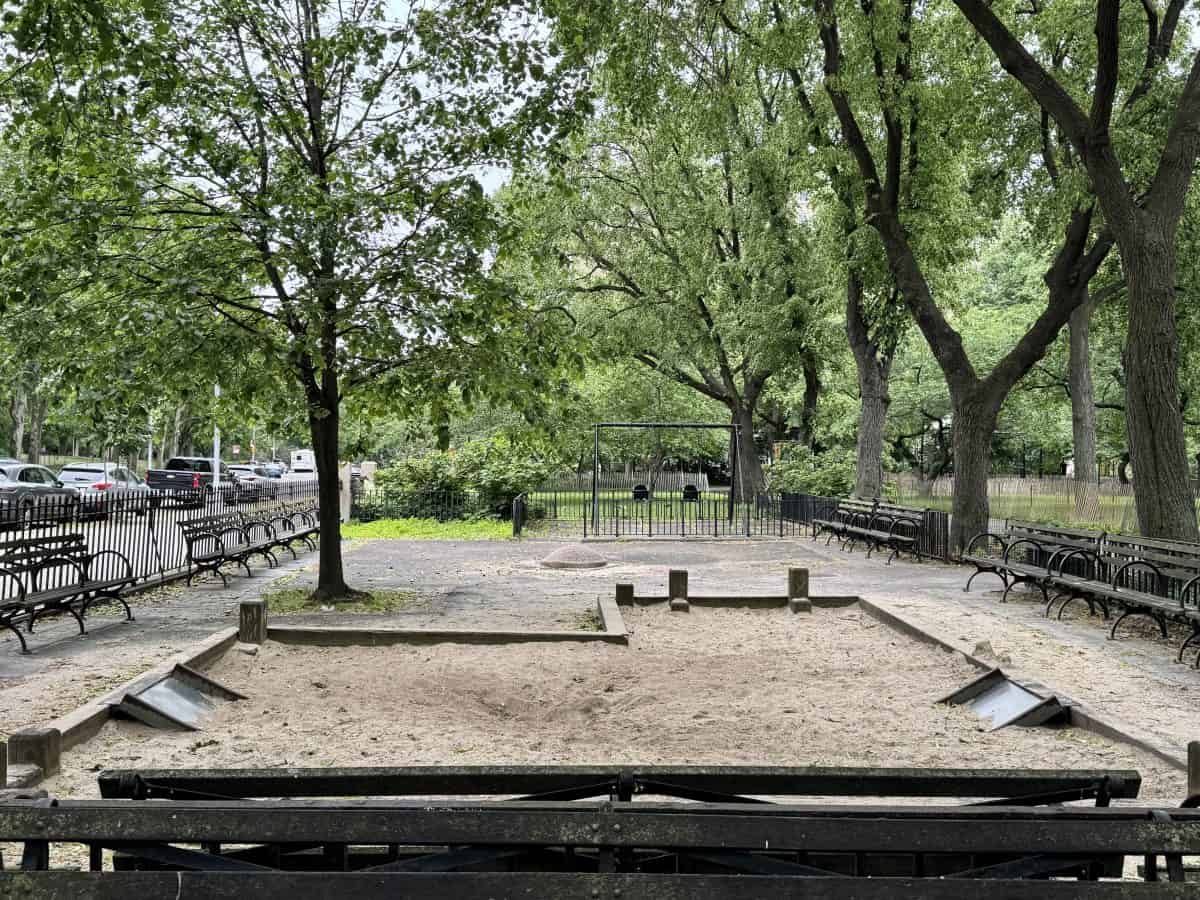
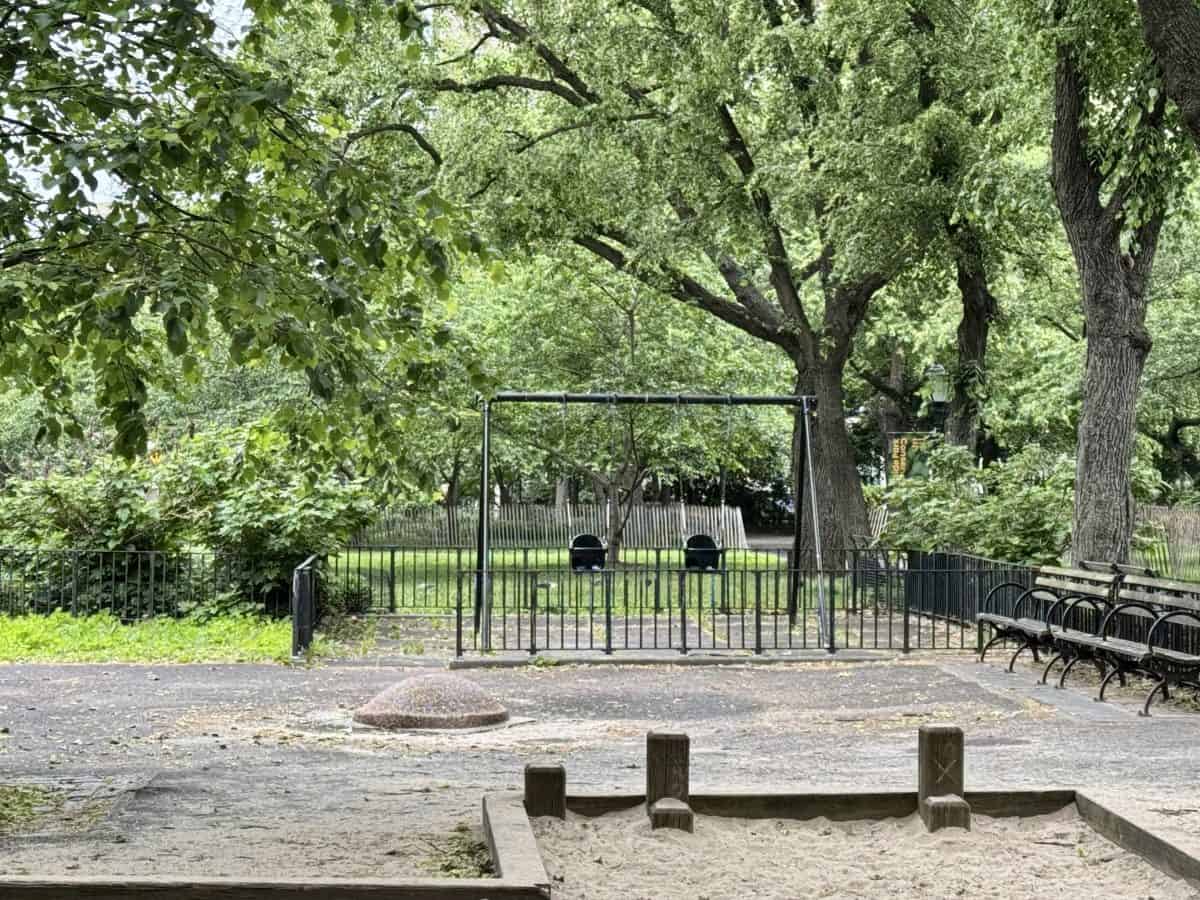
  1. Sakura Park: Located across Riverside Drive on the east side of the Memorial, the two acre Sakura Park includes walking paths, a statue honoring Civil War hero General Daniel Butterfield (known for writing the military “Taps”), and a small sand pit and swing set for children. The name Sakura is Japanese for “cherry blossom” and pays homage to the 2,000 cherry trees that were gifted to New York City in 1912 to honor Japanese New Yorkers.
statue of General Butterfield in Sakura Park at General Grant National Memorial in New York City

Looking for other adventures on the Upper West Side? Check out our features of the American Museum of National History, the New-York Historical Society, and Lincoln Center, as well as our full Manhattan City Guide. And follow along on our adventures on Instagram, Facebook, and Pinterest.

Similar Posts

  • | | |

    New York State Capitol Building

    Albany, New York, located just two hours north of famed New York City, was established by the Dutch in the early 1660s. I recently did some research for family centered activities in the area, as my family drives past Albany a few times a year on our way to visit close friends in Utica, New York. On a recent trip, we stopped to explore the New York State Capitol building, at the top of the State Street hill. The “current” Albany State Capitol took over 20 years to build, post Civil War. The building has gone through many phases of of restoration, as recently as the early 2000s.

    Tours of the Capitol are offered four times a day during the week and twice on Saturday. Tours are free, but reservations are highly recommended (go here), as they are usually limited to 25 people and quickly fill up. Tours are very different during the week, when everything is in session and the entire building is bustling with elected officials. If you prefer a calmer experience, the weekend tour is a safer bet, but you’ll miss the chance to possible see elected governmental officials.

  • | | | | |

    We All Scream for Ice Cream!

    While I know some of you might agree with me that ice cream is always in season, for many people a sign of summer is the opening of seasonal ice cream parlors. Someday, I hope to have a state by state directory of top ice cream spots (of course, personally vetted), but until I have the time, I thought a list of some places where you can tour ice cream being made would suffice:

  • | | | |

    Yale Peabody Museum of Natural History in New Haven, CT

    New Haven, Connecticut is practically in my backyard. My husband and I frequently head to New Haven for date night with friends; there are so many great restaurants. I’ve also taken some professional development courses as a teacher at Yale University and have attended performing arts shows and concerts at some of the local theaters. However, we don’t bring the kids to New Haven as often as we should. I keep a running list of places to visit, and on a recent free morning, we decided to explore the Yale Peabody Museum of Natural History.

  • | | | | | | |

    Seven Things to Do in York, Maine

    I’m lucky enough to have first cousins all over the country. We’ve been trying to get everyone together every few years and this past month, we reconvened in York, Maine for “CousinFest”. The oceanside community did not disappoint. The people were so friendly and welcoming, and I have never met a more pedestrian friendly place in all of my travels. York, Maine consists of four distinct areas: York Village, rich in history; York Harbor, with lots of cottages looking out at Long Sands Beach; York Beach, with many tourist attractions; and Cape Neddick, mostly residential, ocean front properties.  Here’s a list of some things we all enjoyed in York: 

  • | | | | |

    10 Things Kids Will Want to Do at Hancock Shaker Village

    Traveling during a still present pandemic: If you’ve been following our adventures this summer, you know that our family has taken precautions to stay safe. We’ve limited our exploration to nearby states with lower COVID cases and to mainly outdoor spaces that take proper precautions to keep staff and visitors safe. Hancock Shaker Village was an easy choice- tons of open space to socially distance, only one family in a building structure at a time (with all doors and windows open to allow for better ventilation), and absolutely nothing to touch. While Hancock Shaker Village is a great place to visit anytime, it’s a very safe bet for family fun during these uncertain times.

    Celebrating its 60th anniversary in 2020, the Hancock Shaker Village is the oldest working farm in the Berkshires part of western Massachusetts. The Village was originally home to the Shaker community from the late 1700s until 1959, when it was turned into a museum that includes over 22,000 original artifacts and a research library. The 750 acre complex has a 20 acre working farm, 20 buildings with live interpreters, a massive garden with a very popular Community Supported Agriculture (CSA), and tons of hiking trails, meadows, and woodlands that abut the Pittsfield State Forest.

  • | | | | |

    25 Ways to Have Fun at Mystic Seaport in Mystic, Connecticut This Summer

    The largest maritime museum in America, Mystic Seaport Museum is an indoor and outdoor living history museum that is one of the most popular attractions in Connecticut. Spread across 19 acres on the banks of the Mystic River in Mystic, Connecticut, the property was originally the site of the Charles Mallory & Sons shipyard and nearby Greenman shipyard, both of which built wooden clipper ships, barks, and steamships during the 19th century. Founded in 1929, the museum has expanded several times to include more historic structures, exhibits, and sailing vessels in its fleet.

Leave a Reply

Your email address will not be published. Required fields are marked *