Exploring Fort Mackinac State Park on Mackinac Island, Michigan

| | | | |

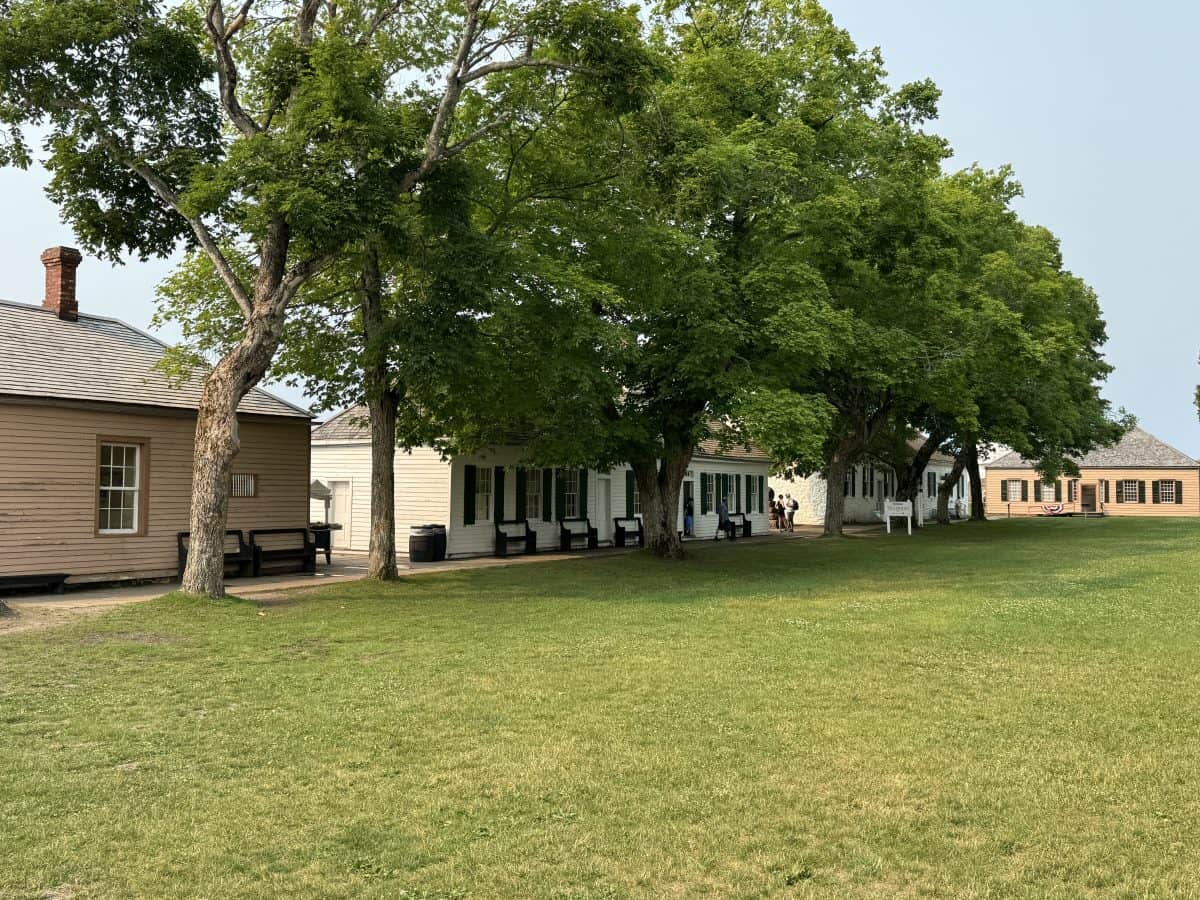
This past summer, we enjoyed exploring several areas in Michigan and one of our favorite highlights was an overnight trip to Mackinac Island in northern Michigan. We loved our stay at The Grand Hotel and we enjoyed learning more about the history of the island by exploring Fort Mackinac, part of the Mackinac State Historic Parks system.
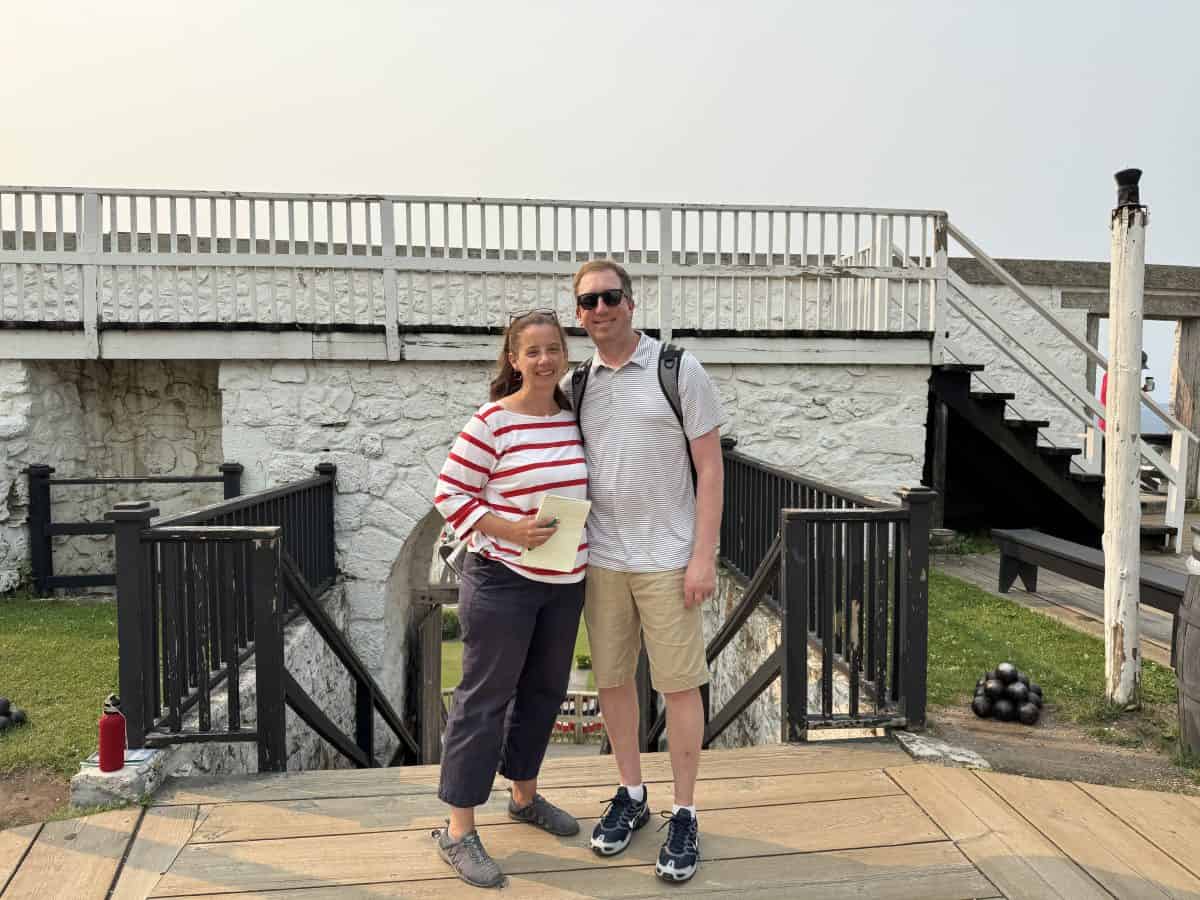
posing in front of a cannon at Fort Mackinac on Mackinac Island in Michigan

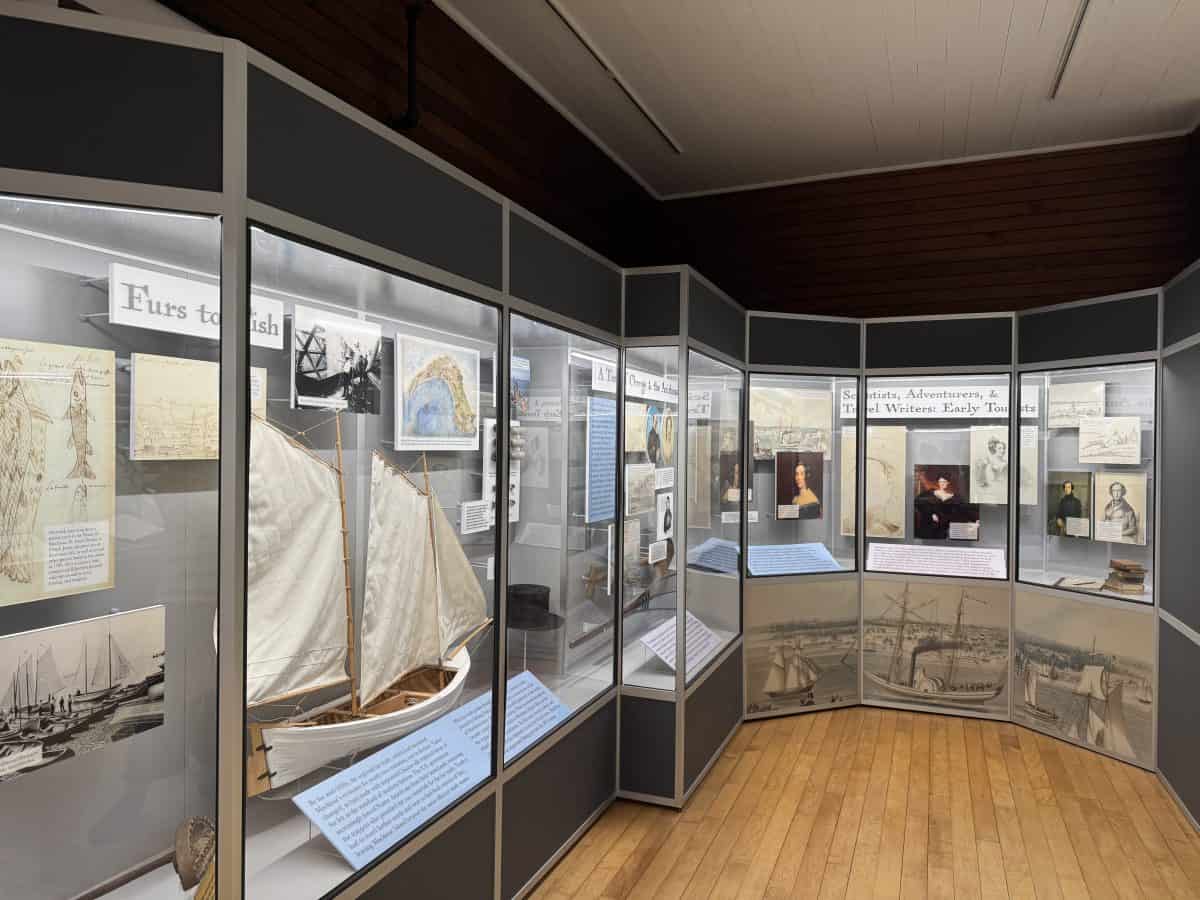
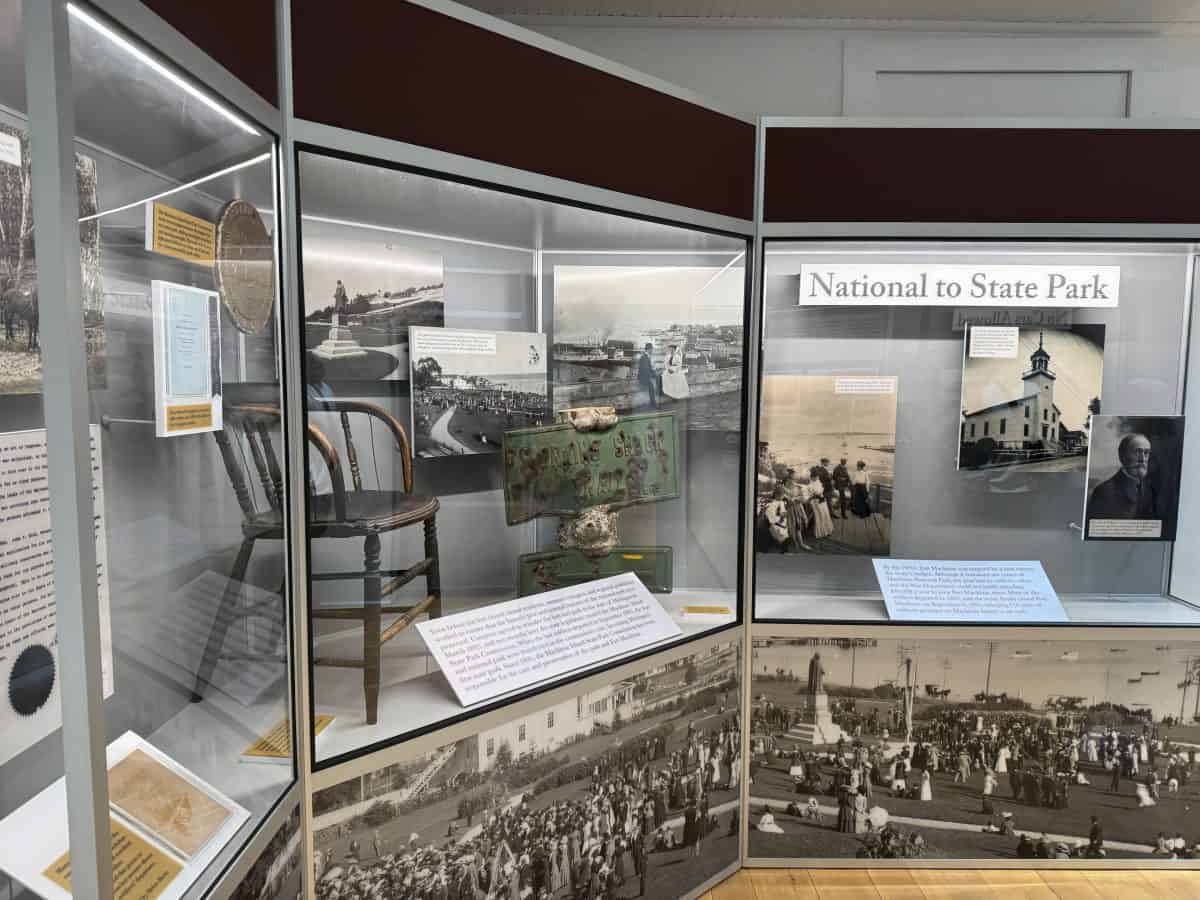
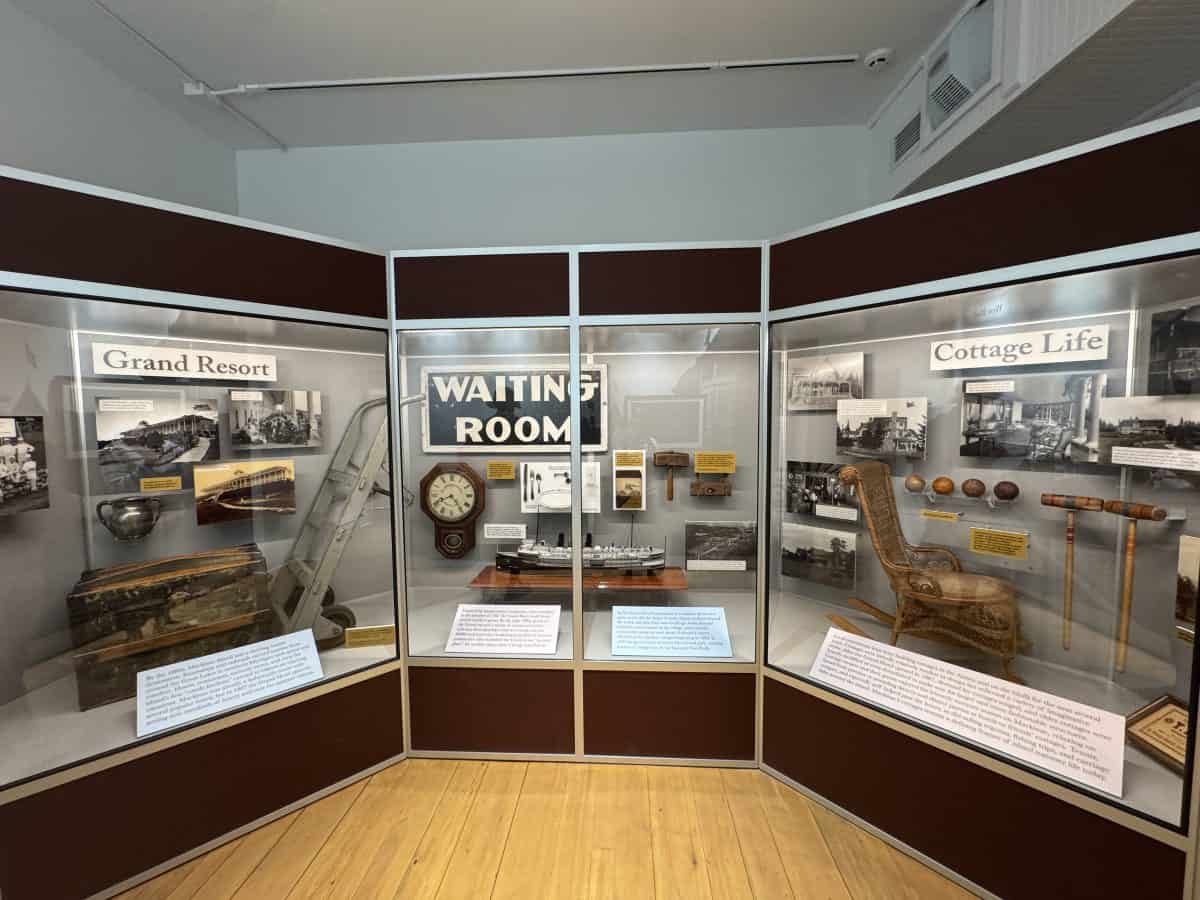
Founded during the American Revolution, the fort was originally built across Straits of Mackinac in Mackinaw City, but the British military moved the fort to the island in 1780 to better protect it from American troops, who, did in fact, take over the fort in 1796. The fort was temporarily reclaimed by the British during the War of 1812, but then returned to the United States after the war ended in 1814. In 1875, Mackinac National Park, the second National Park in America, opened and the island became a very popular tourist destination and summer home of many Michiganders. The fort remained active until 1895, when it closed and the park was returned to the state of Michigan and became a state park. Some of the buildings inside the fort were rented as summer cottages, until 1914 when the first historic museum was established inside the fort. During the 1930s and 1940s many structures were restored and the entire fort opened as a living history museum in 1959. 
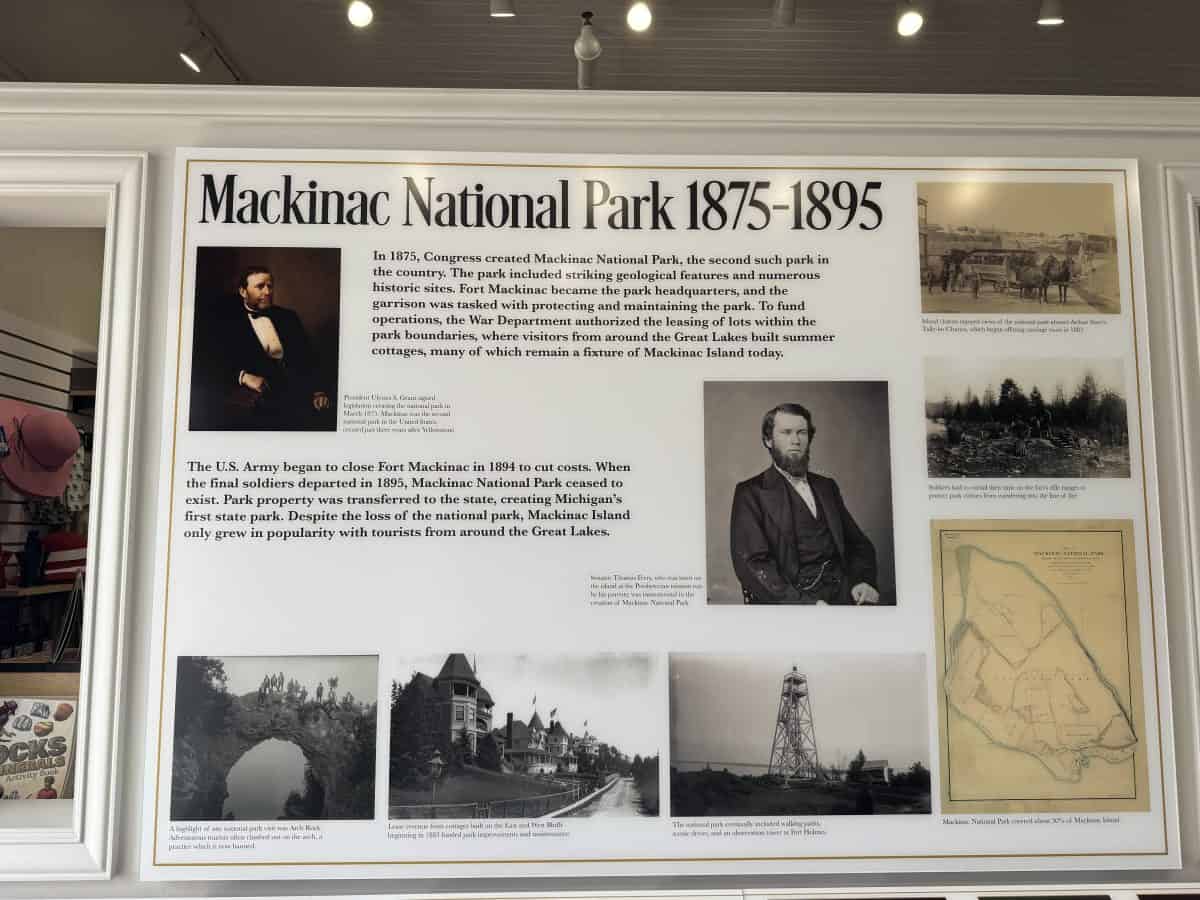
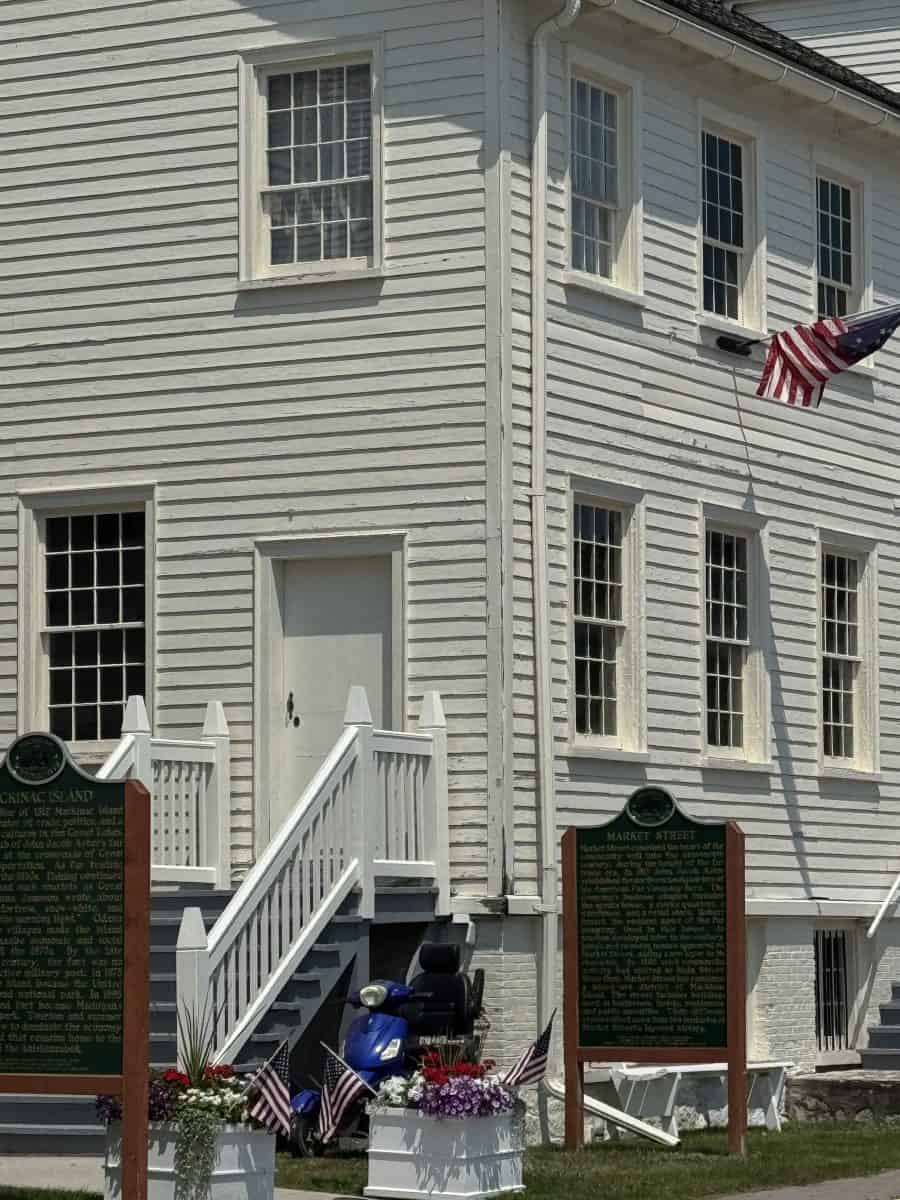
sign about Mackinac National Park at  Fort Mackinac on Mackinac Island in Michigan

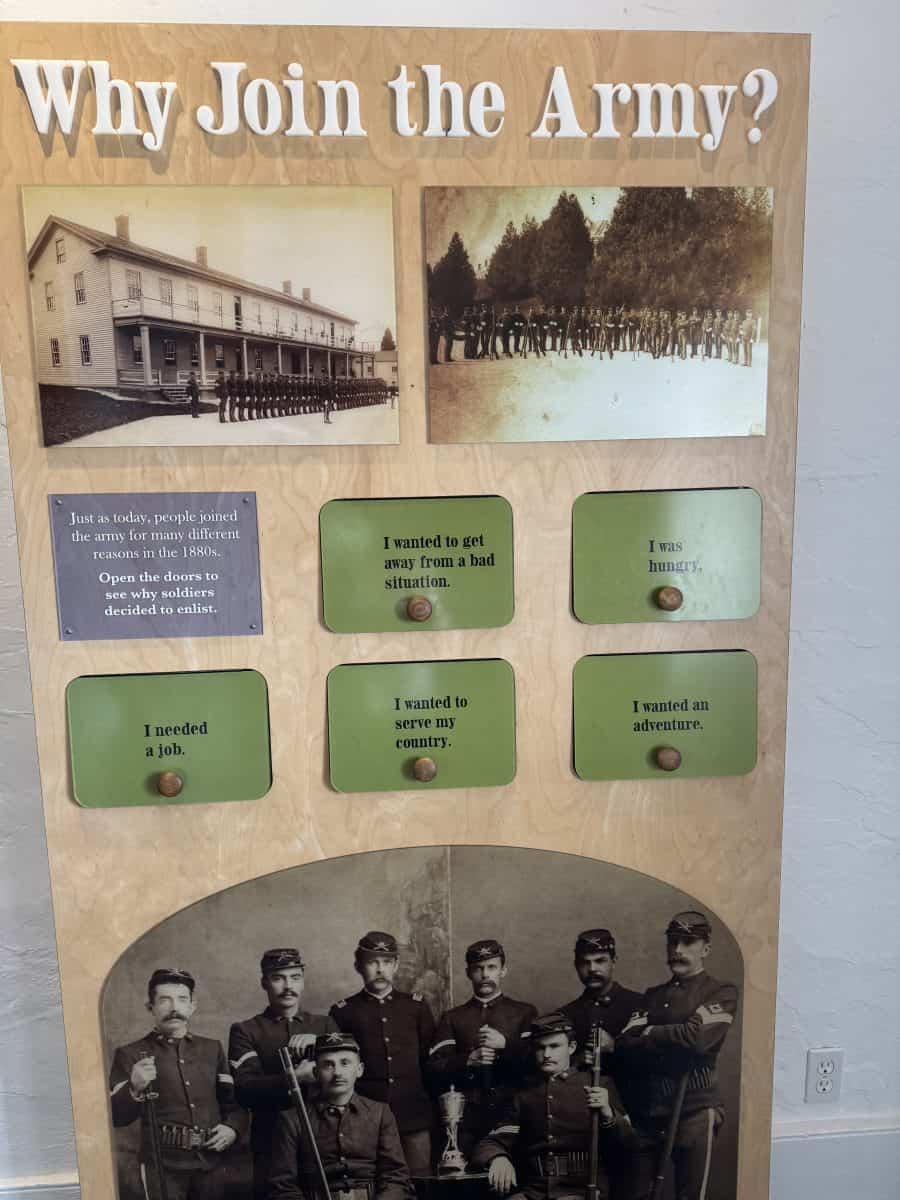
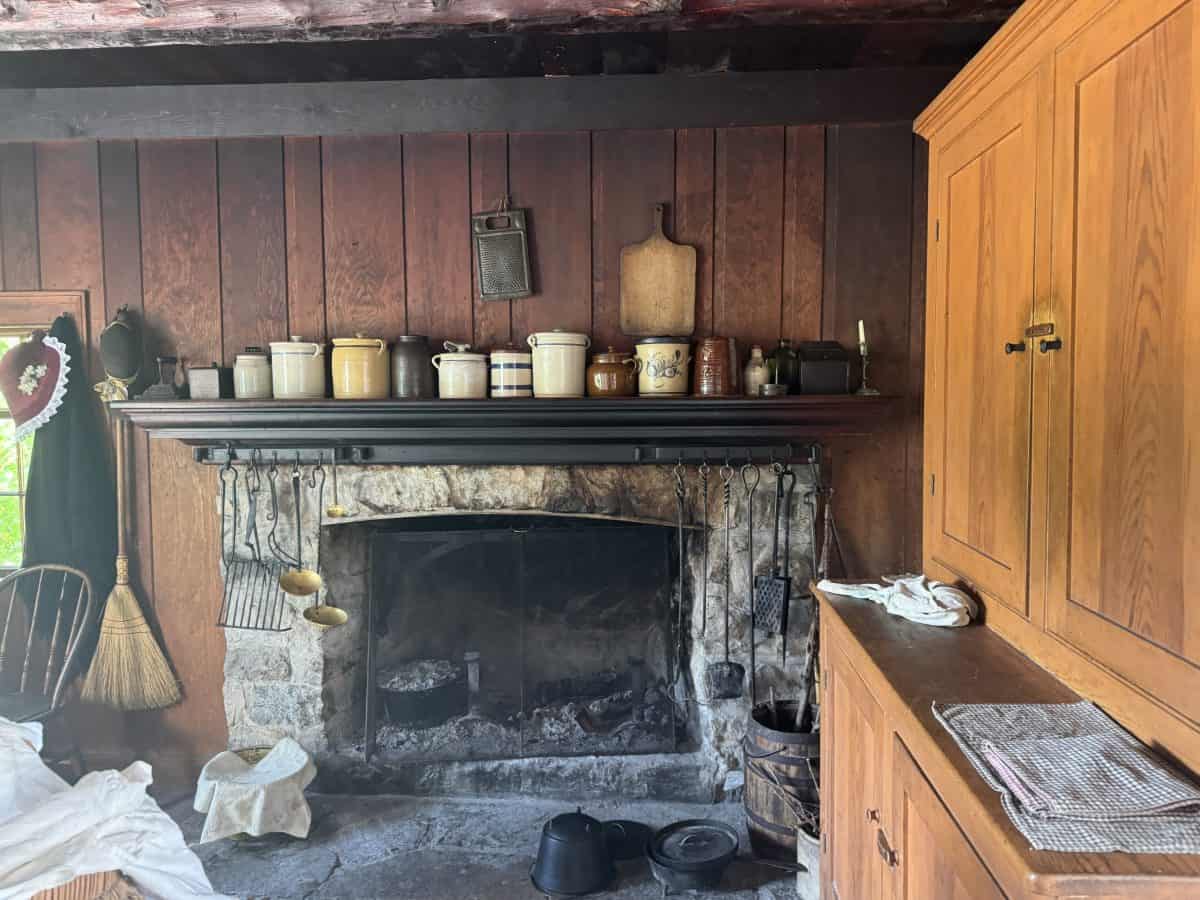
Fort Mackinac has restored 14 historic structures within the fort confines that are open to the public, recreating important parts of the island’s history: military training, medical services, and “typical” life for soldiers and their families. There are daily demonstrations, including cannon firing, hearth cooking, and soldier marches, as well as programs tailored to children. A visit to Fort Mackinac is a must when “on island” and the best way to learn about the history of the Anishnaabek people and the first traders and explorers to the island. 

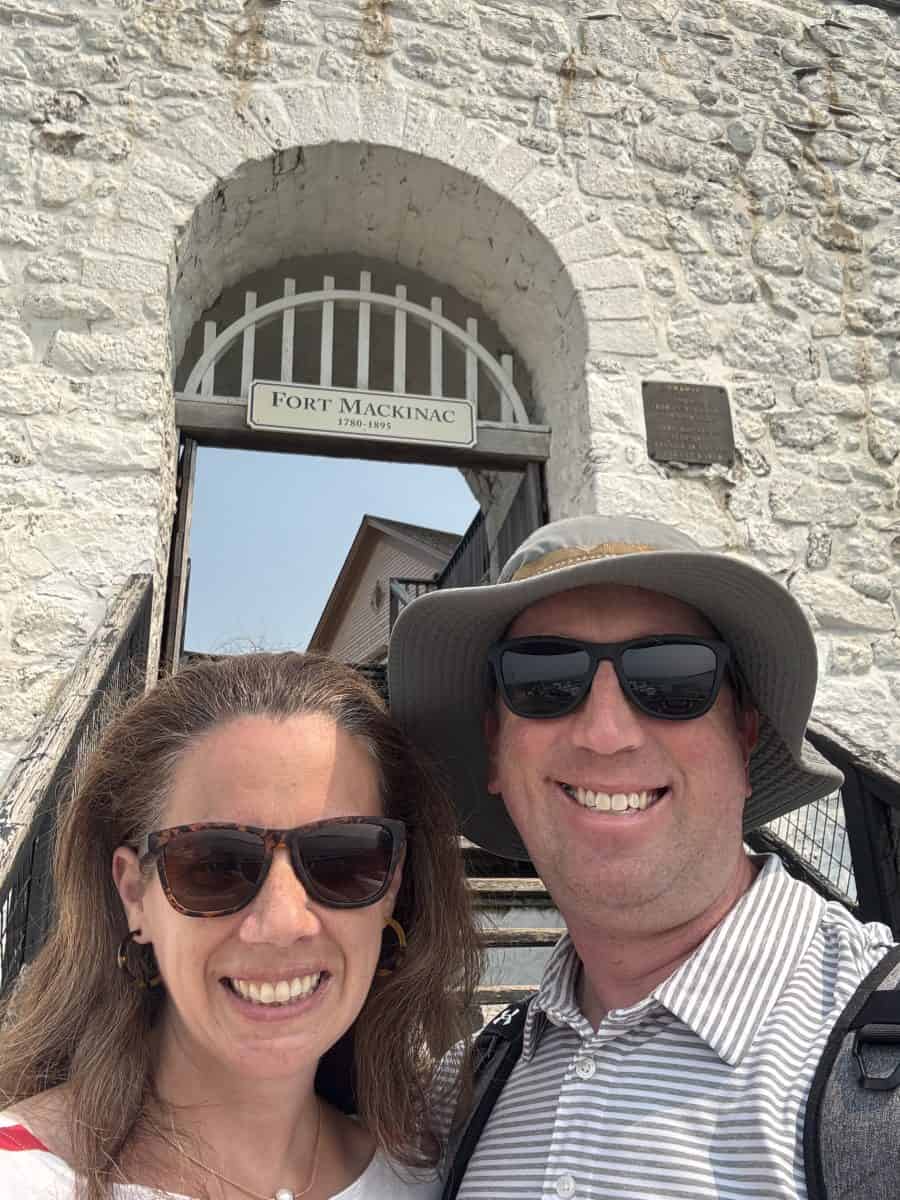
entrance to Fort Mackinac on Mackinac Island in Michigan
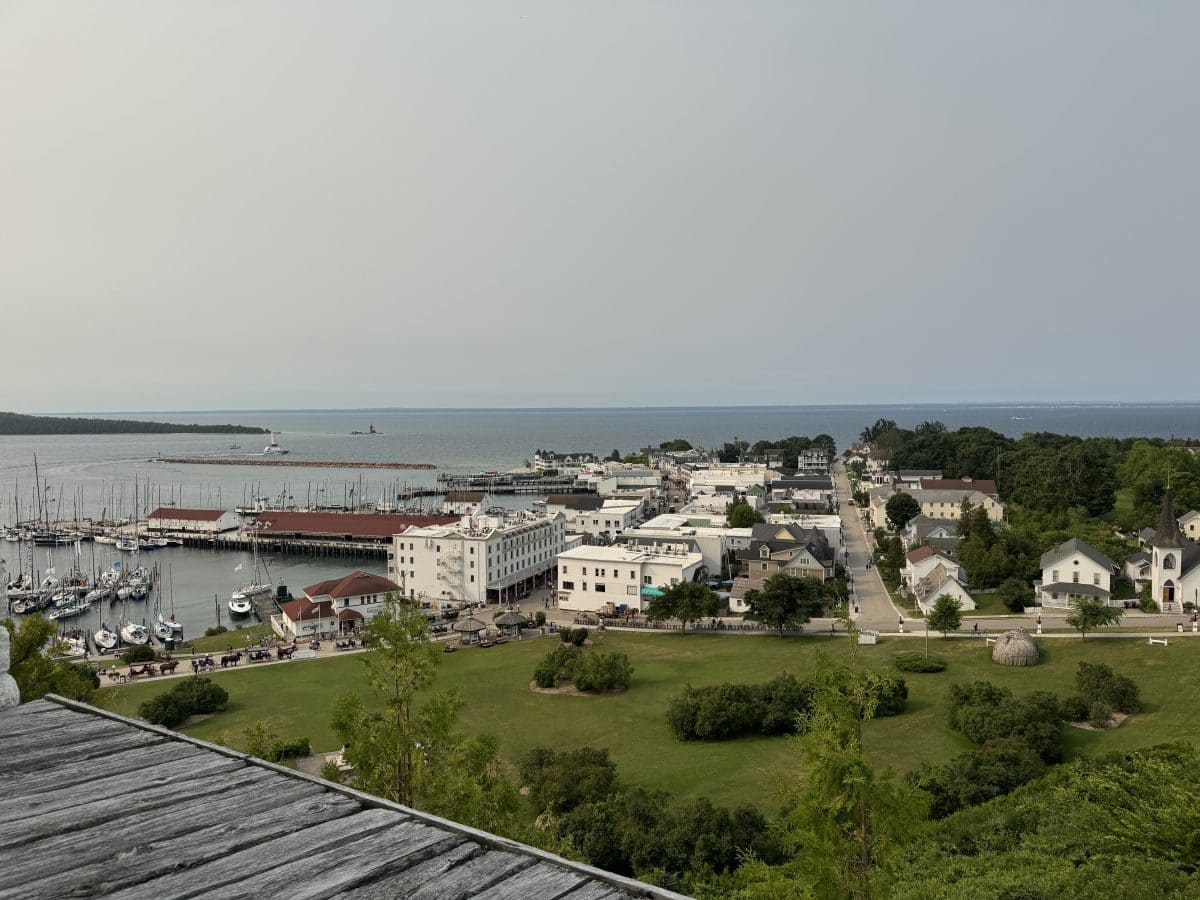
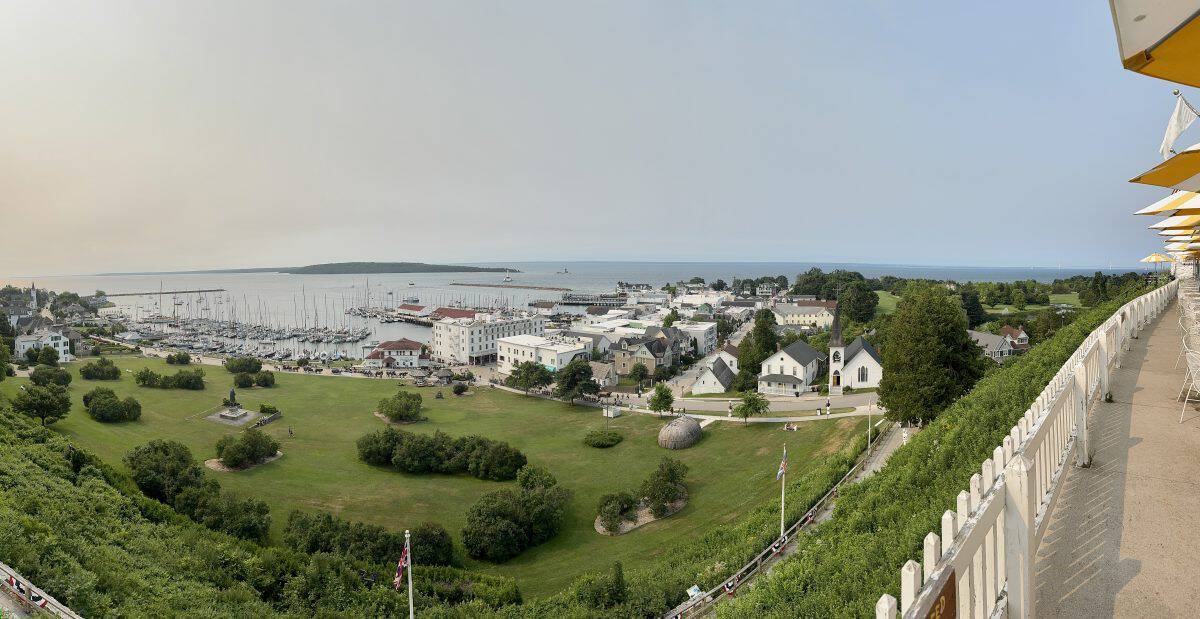
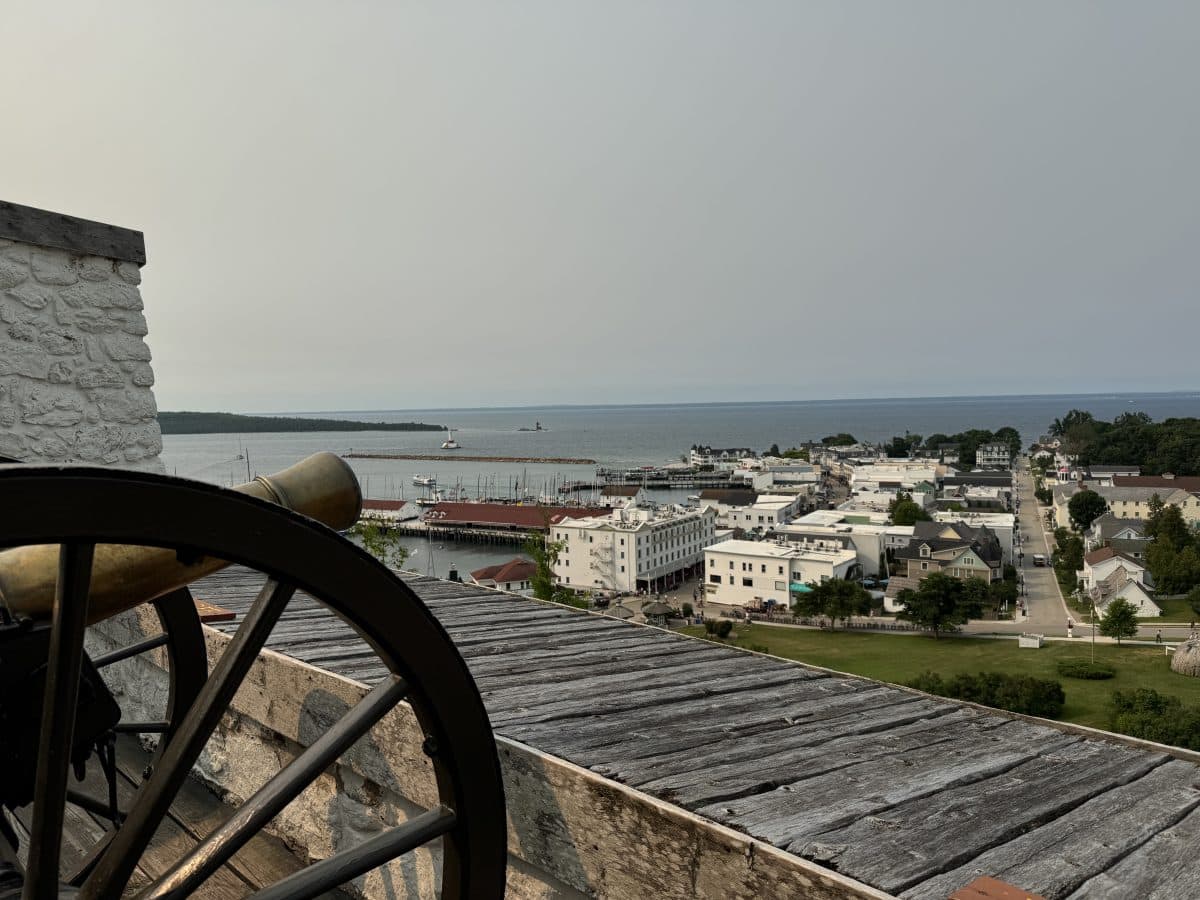
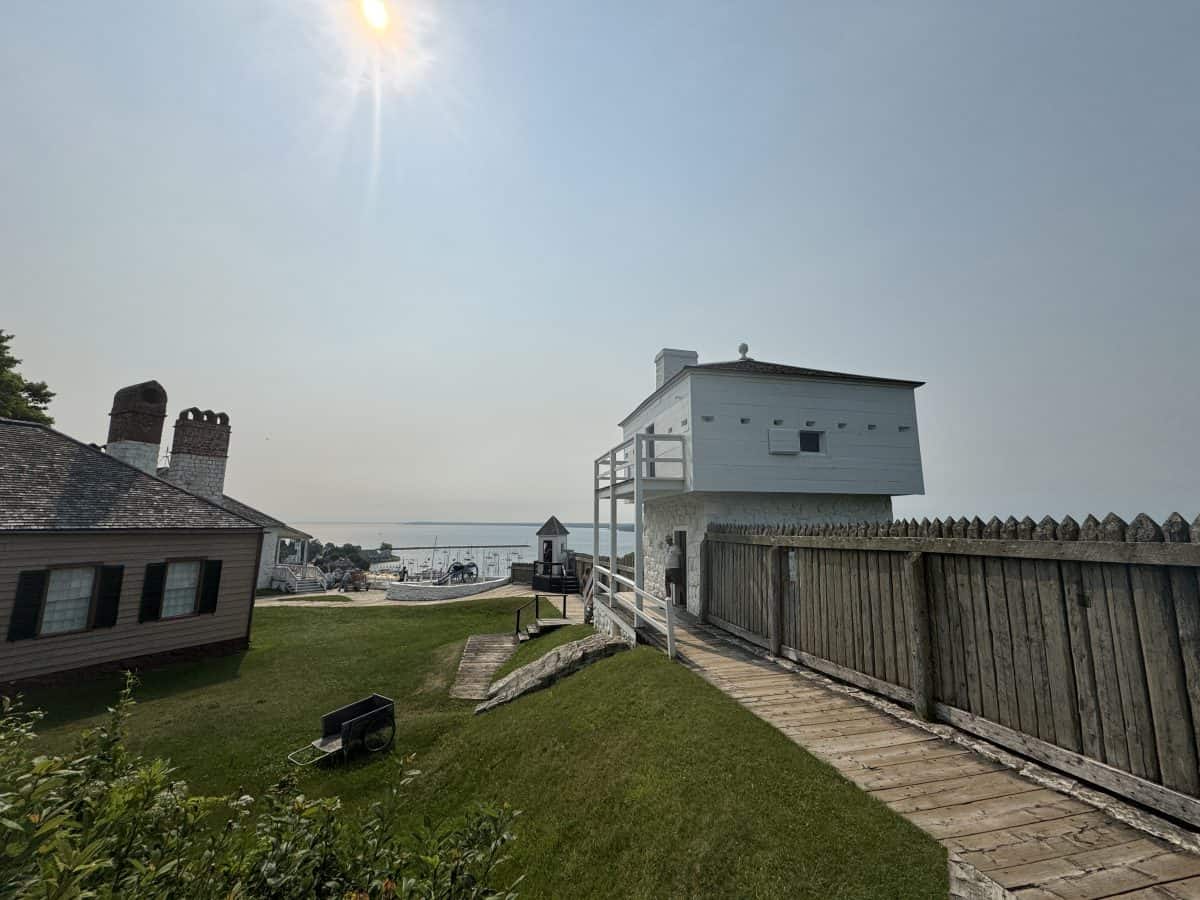
view of the harbor on Fort Mackinac on Mackinac Island in Michigan

Travel Tips:

  • Fort Mackinac is open from late spring through mid fall with seasonal hours (usually from about 9am-5pm); check here for up to date information on hours and admission fees. Fort Mackinac tickets include admission to several historic sites throughout the island; see our notes at the end of this post and be sure to leave time to explore all locations.
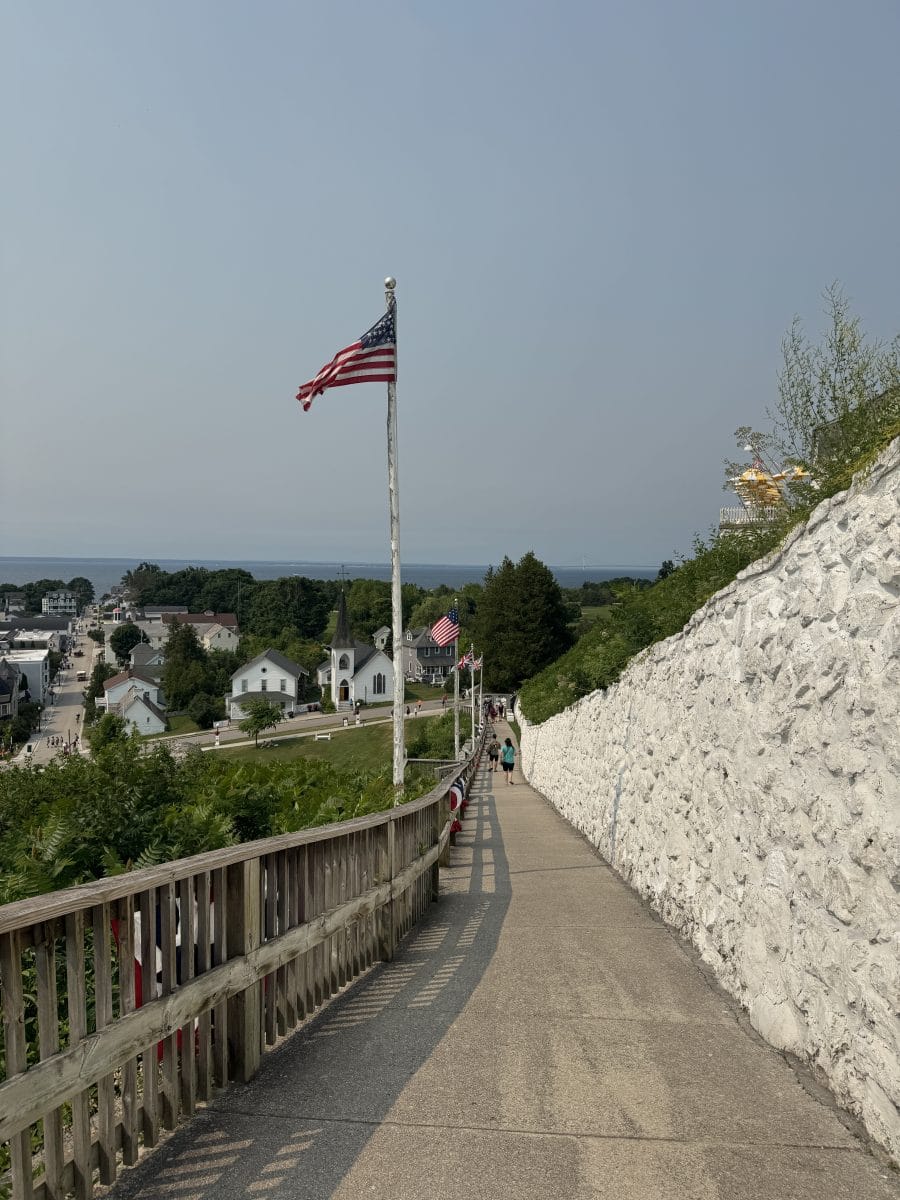
  • There are two entrances to the Fort: South Sally Port (there is a ramp off Fort Street downtown, but it’s a bit of a steep walk up) and North Sally Port off Huron Road. We found it easier to enter via North Sally Port.
  • No parking to worry about because cars are not allowed on the island!
  • Restrooms are located past the Soldiers Barracks. Most of the fort is handicap accessible; bring the stroller for the toddler crew.
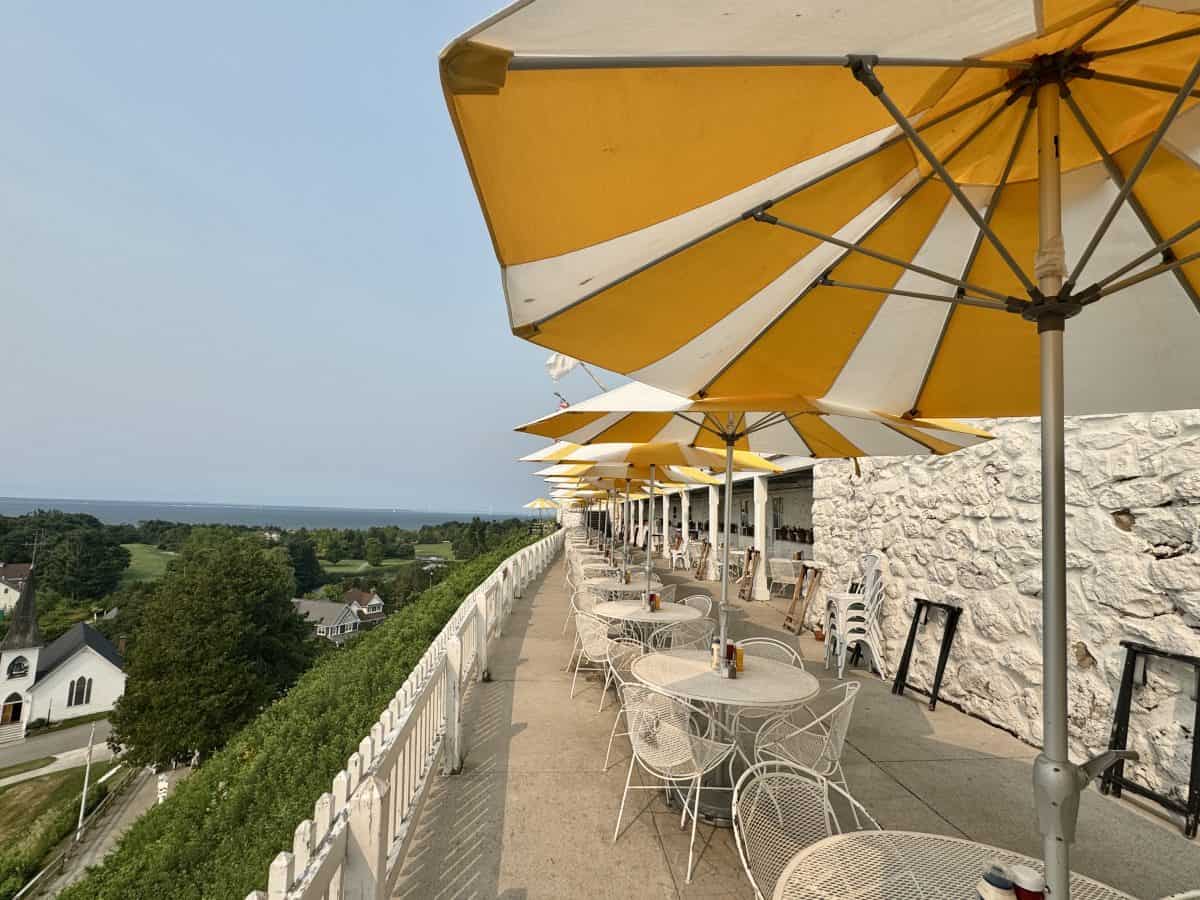
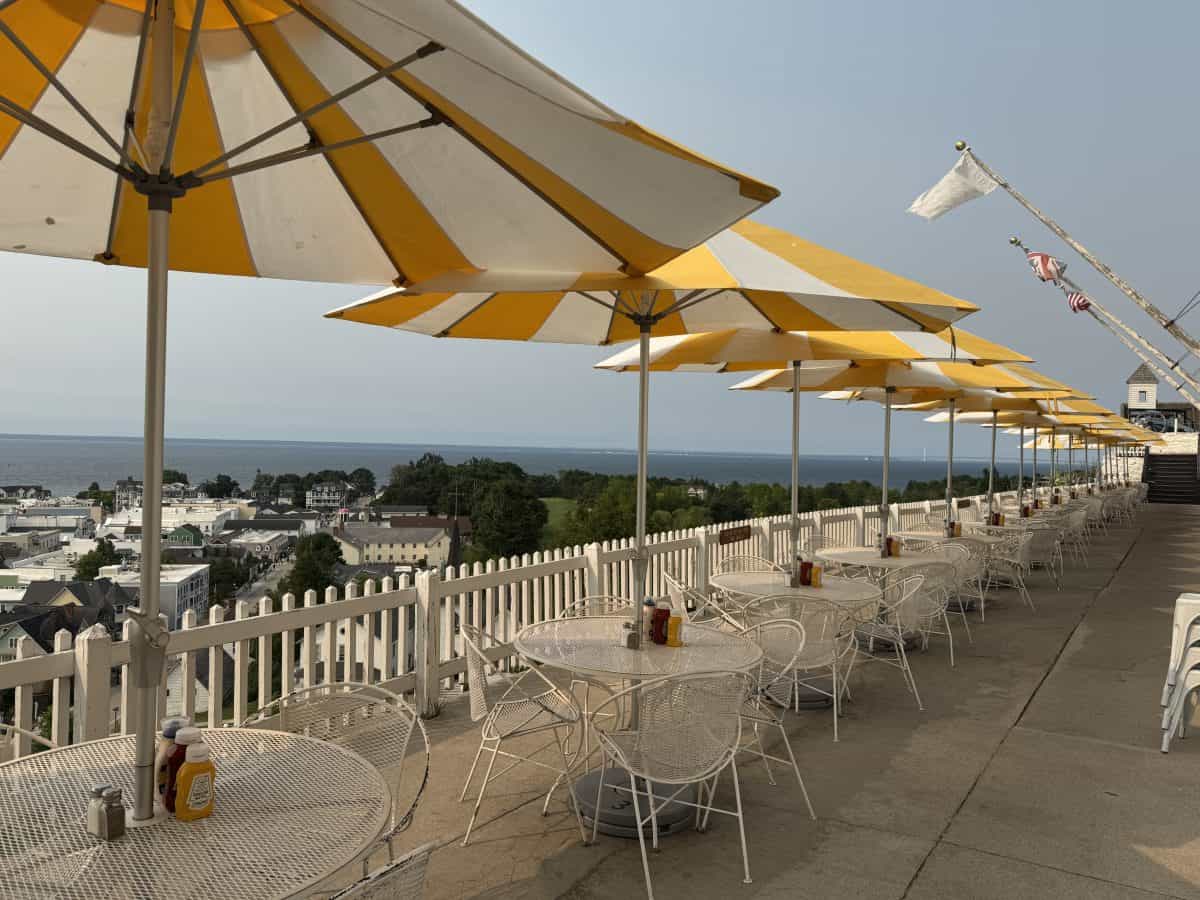
  • Dining options inside the fort include The Tea Room Restaurant, which serves lunch daily and snacks and drinks throughout the day, with great views of the harbors and ferries and boats entering the harbor.
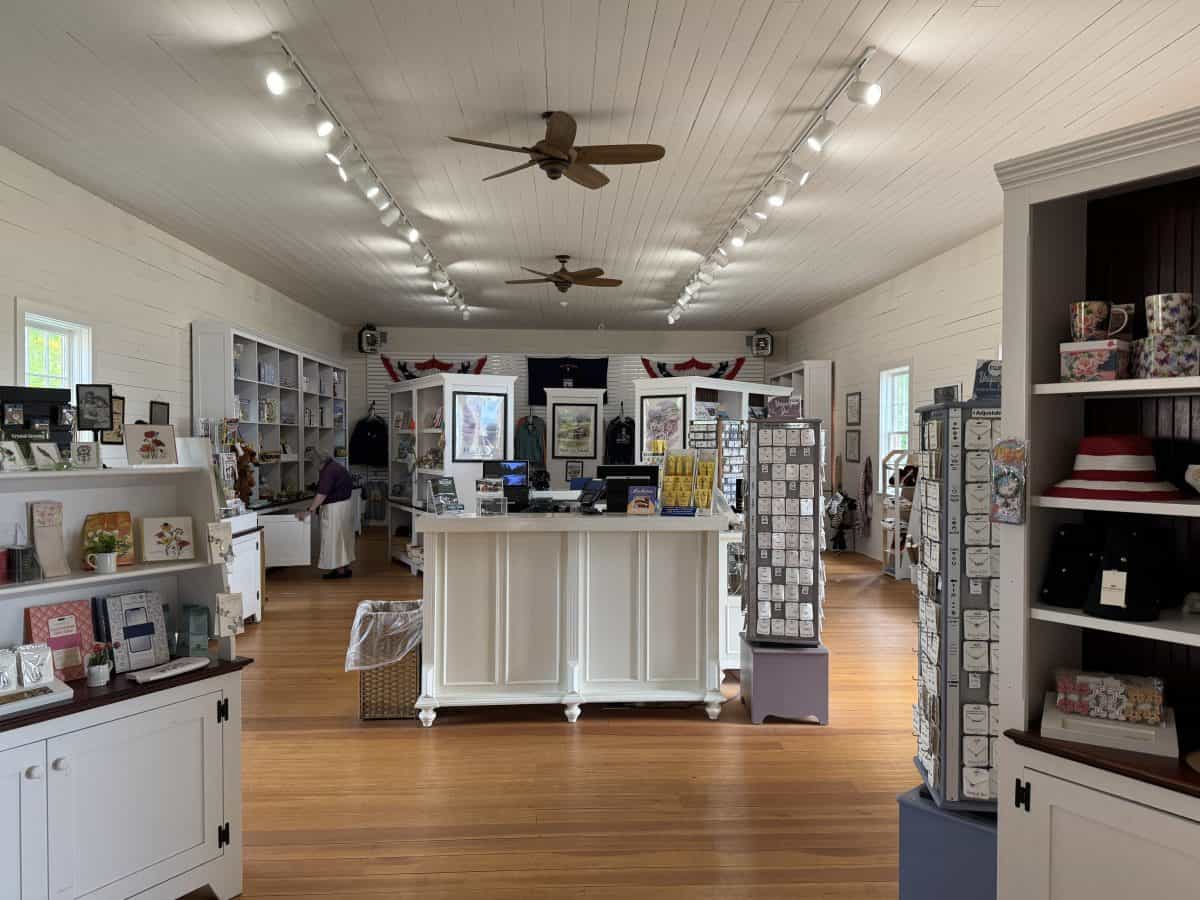
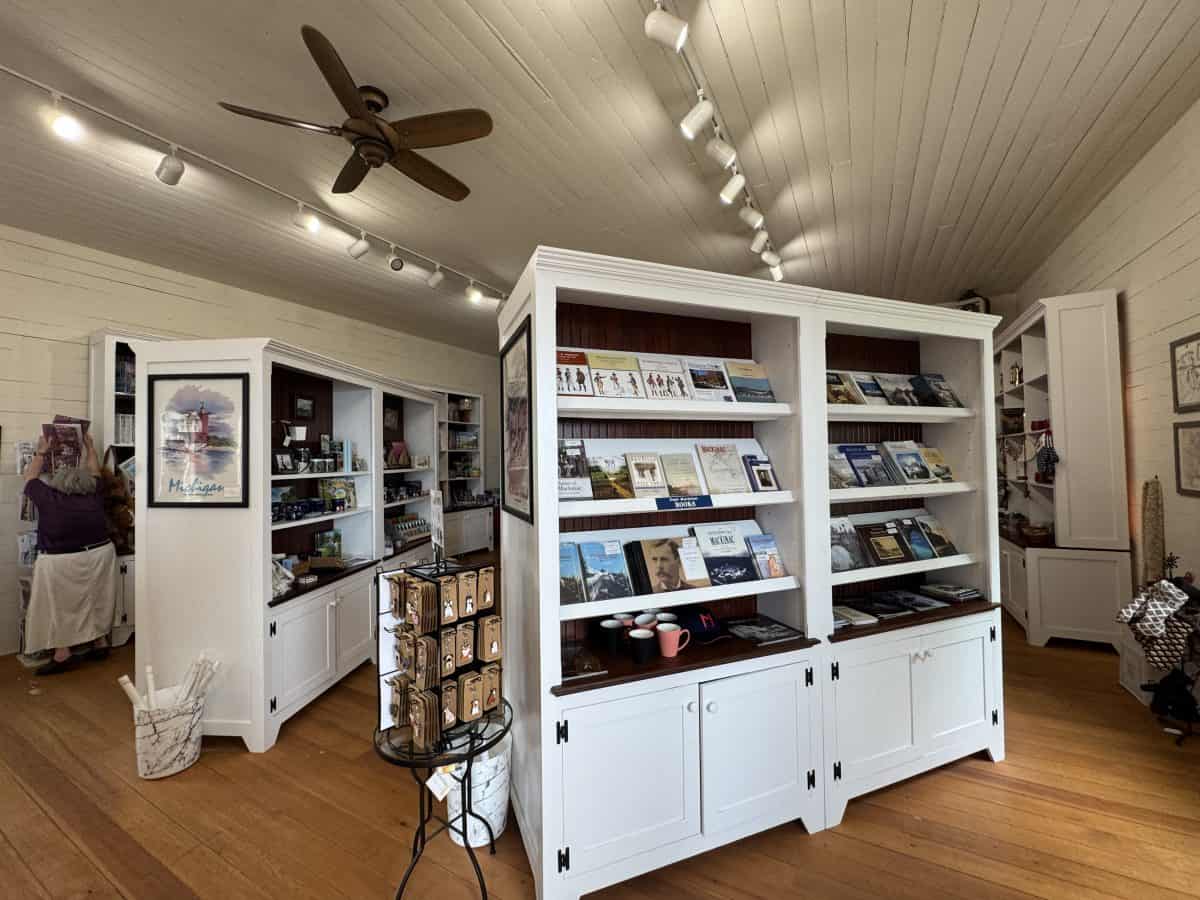
  • There is a Museum Shop located inside the Post Commissary and an online shop with lots of publications related to the history of the Fort and island, as well as souvenirs and apparel. 
  • Plan on 90 minutes to fully explore the fort and see a demonstration or short program; see the full map here. 

Would you like to save this?

We'll email this post to you, so you can come back to it later.

the view from the Tearoom at Fort Mackinac on Mackinac Island in Michigan

10 Ways to Explore Fort Mackinac:

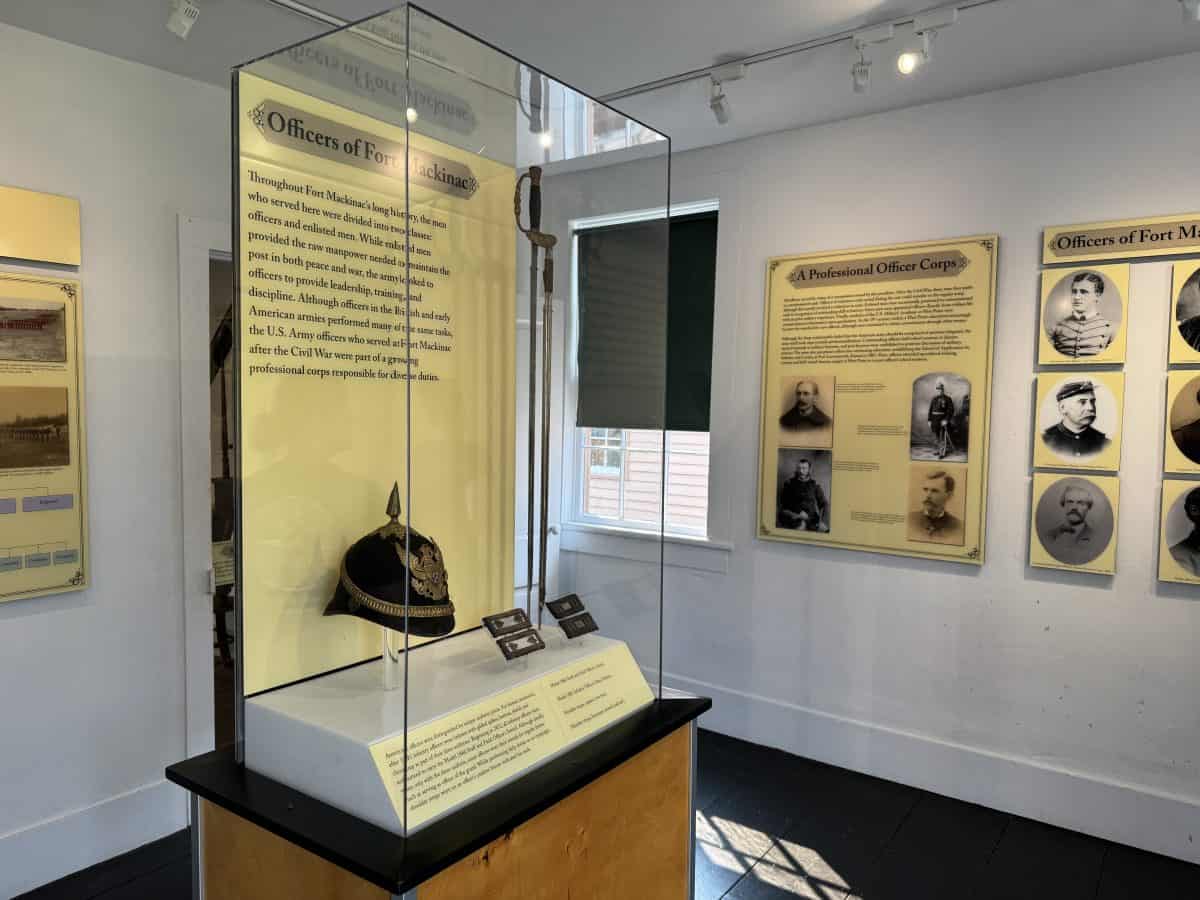
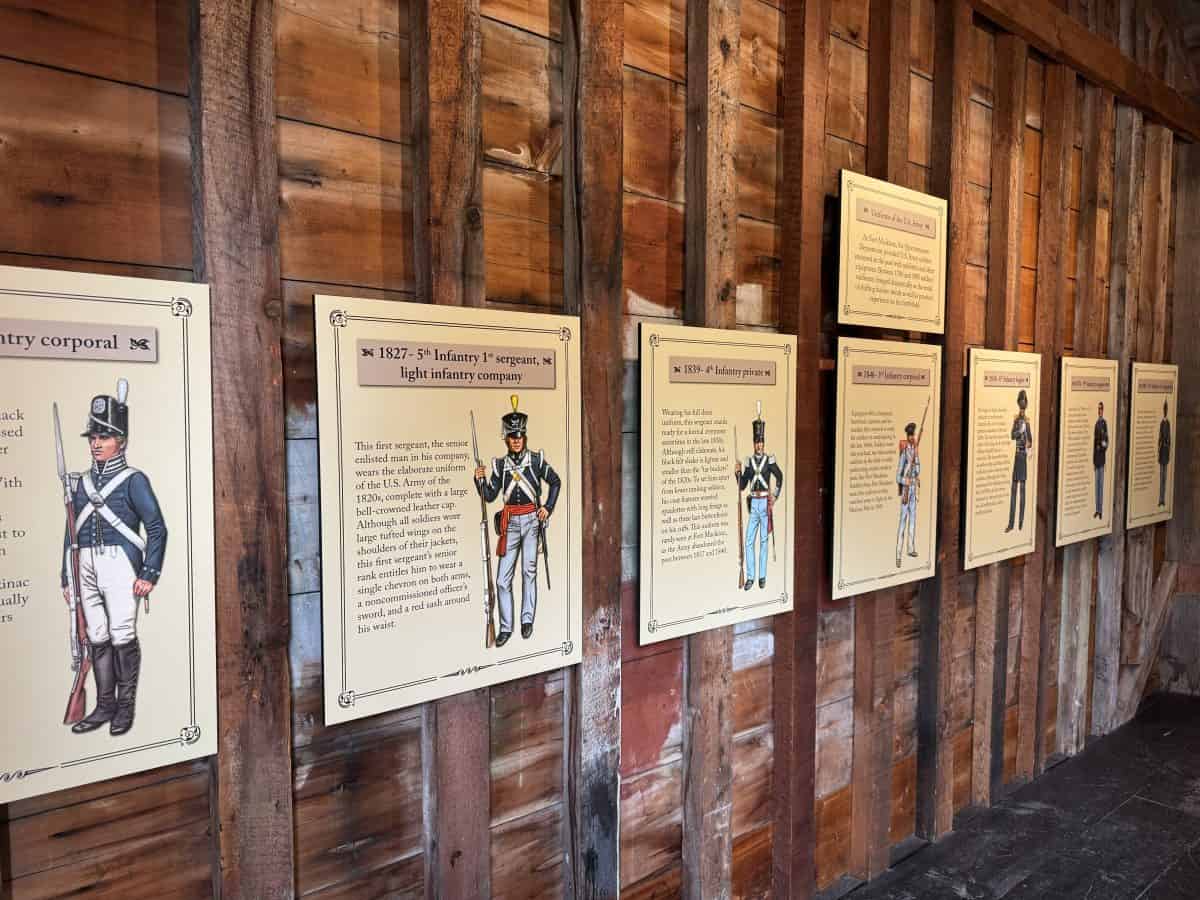
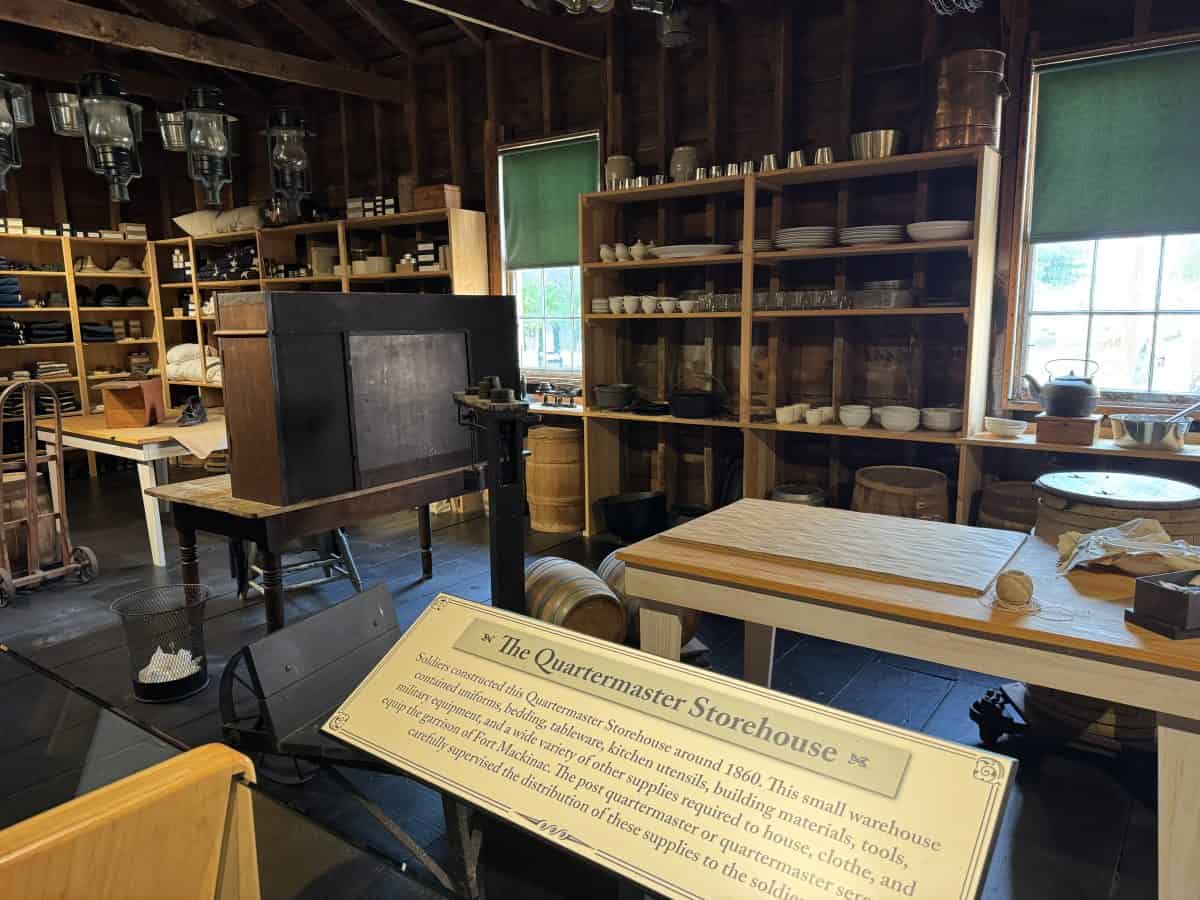
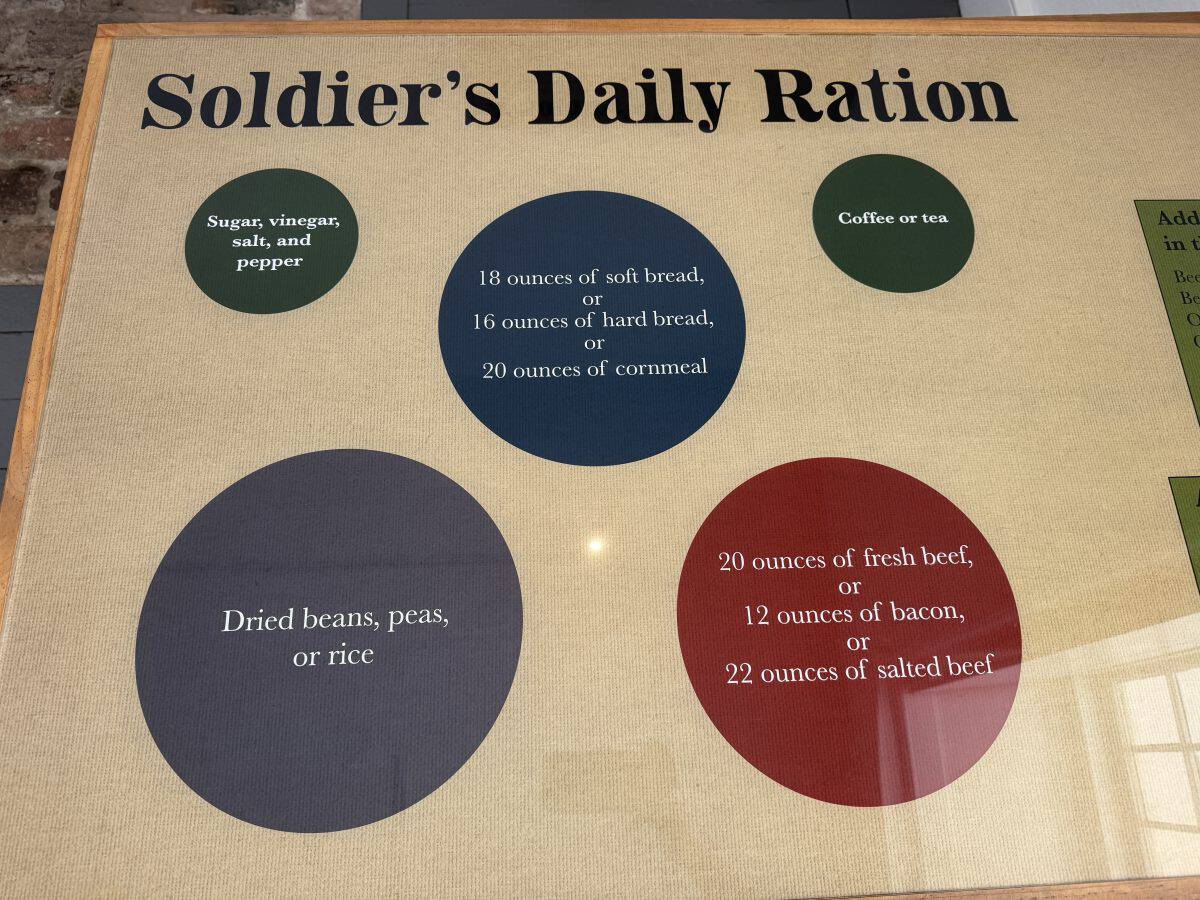
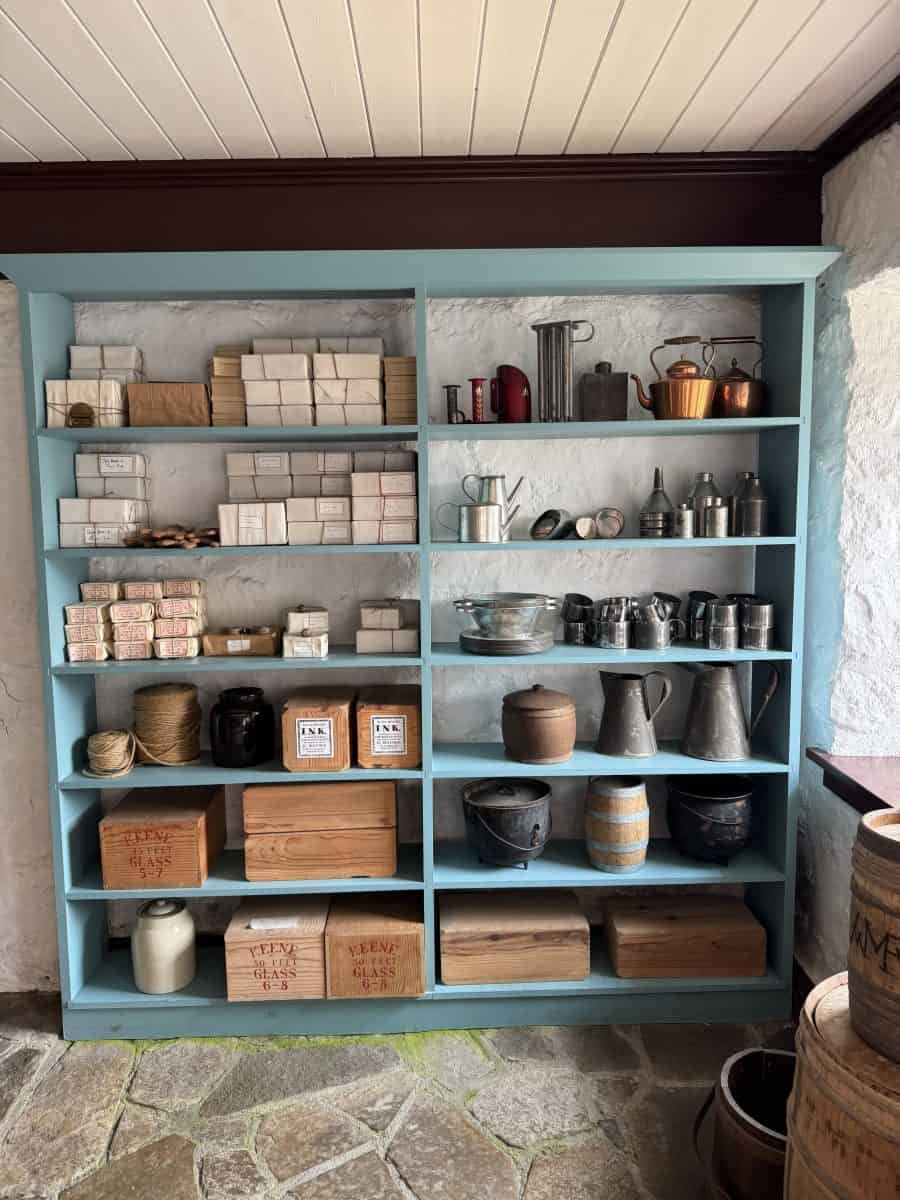
  1. Learn to identify the uniforms of the US army from an 1815 Infantry Corporal to a 1889 Sergeant in the Quartermaster’s Storehouse. The Storehouse, dating back to1860, shows all of the supplies used.
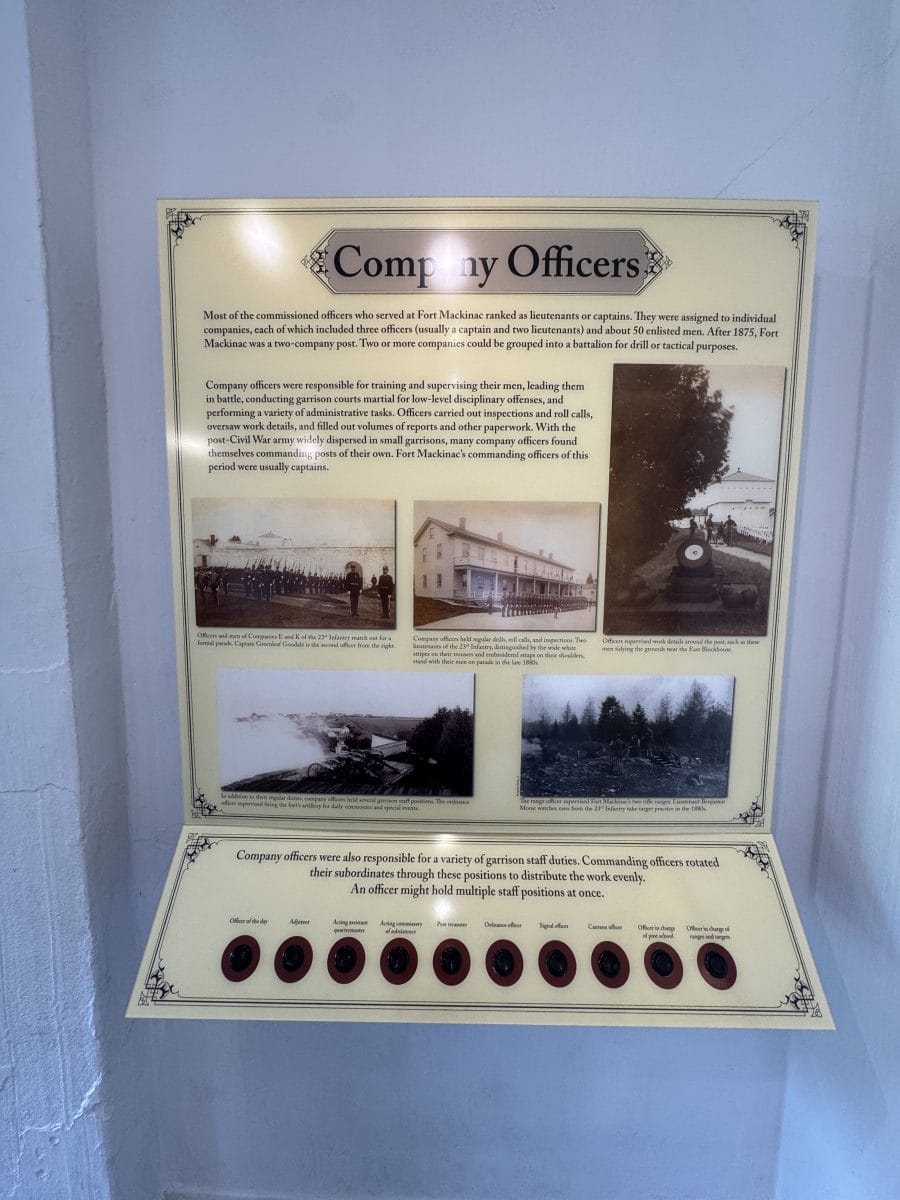
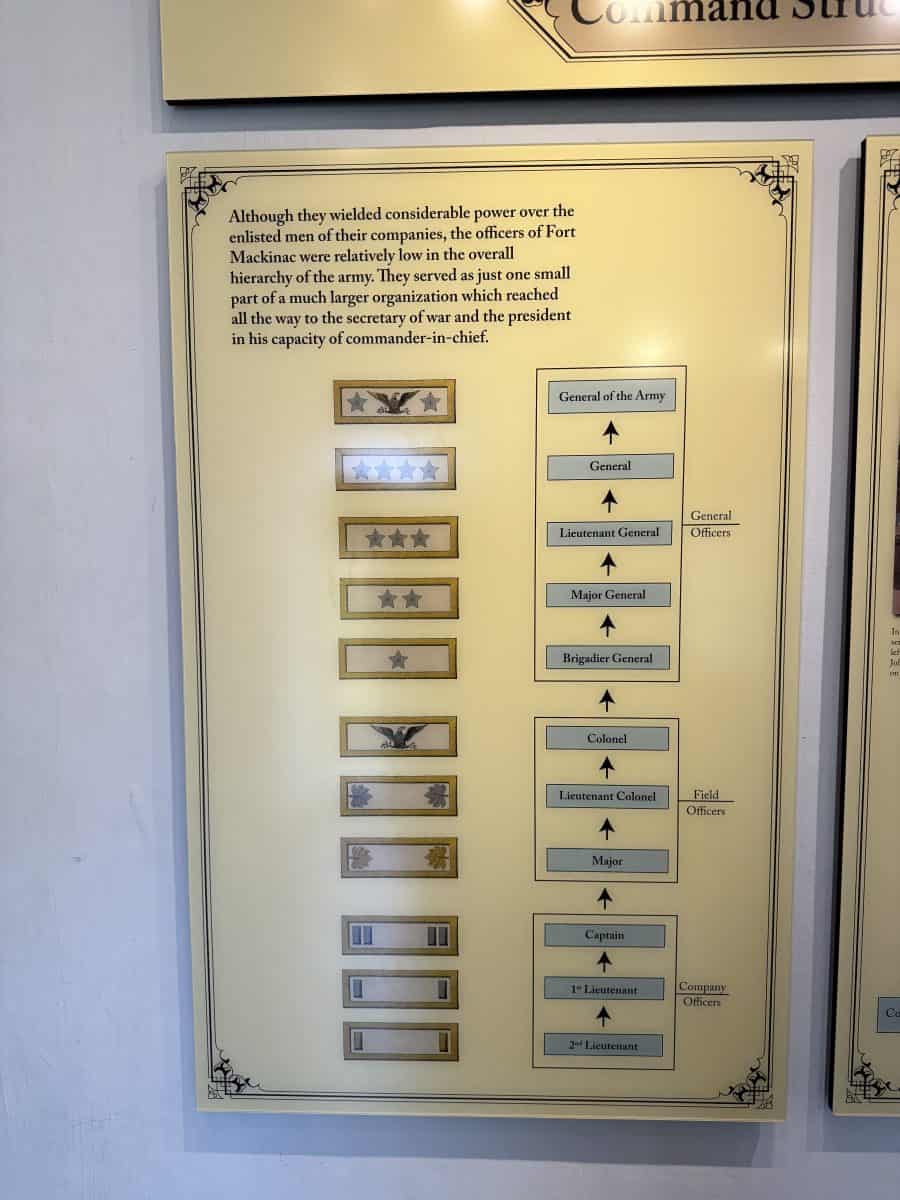
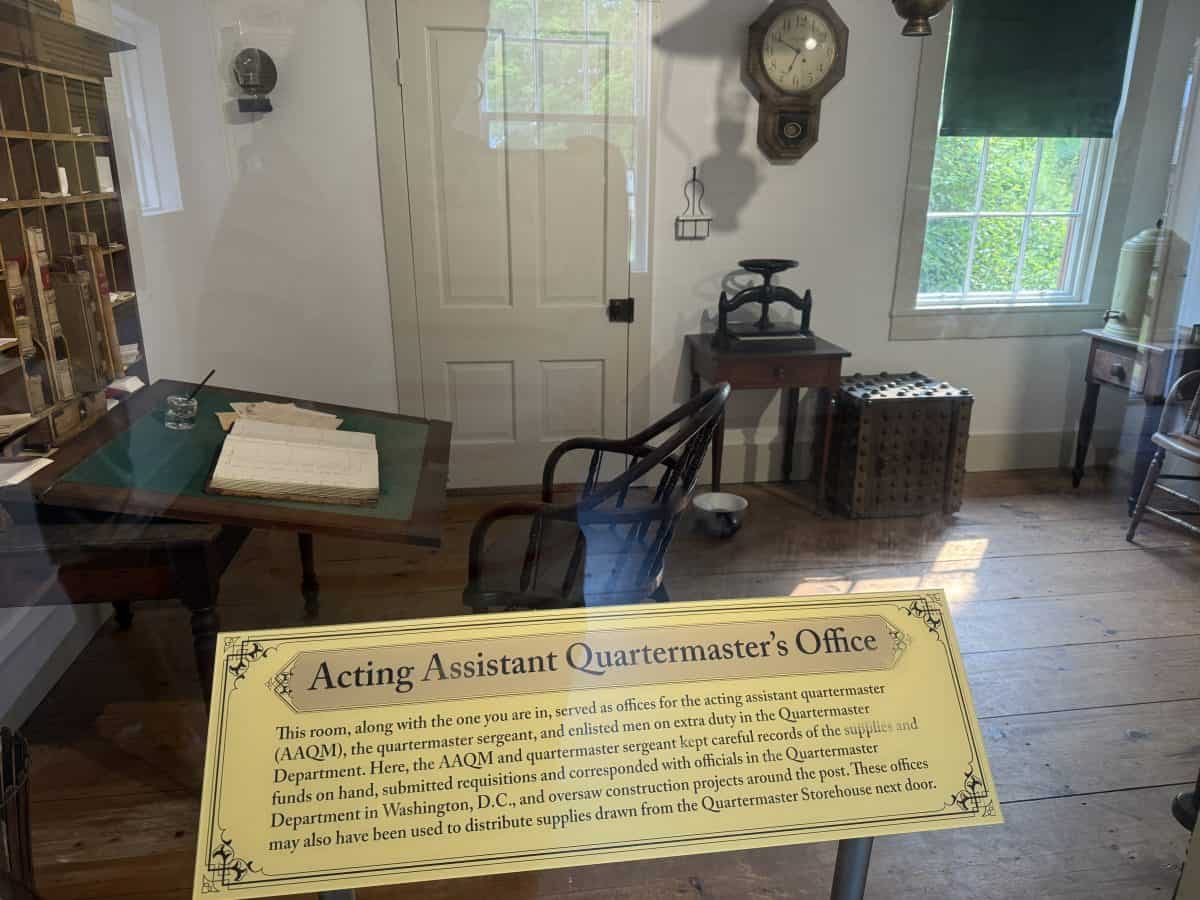
  2. Read the list of all Park Superintendents from 1875-1898 in the Acting Assistant Quartermaster’s Office and learn about the command structures. Visitors can also research their ancestors to see if they served on Fort Mackinac. 
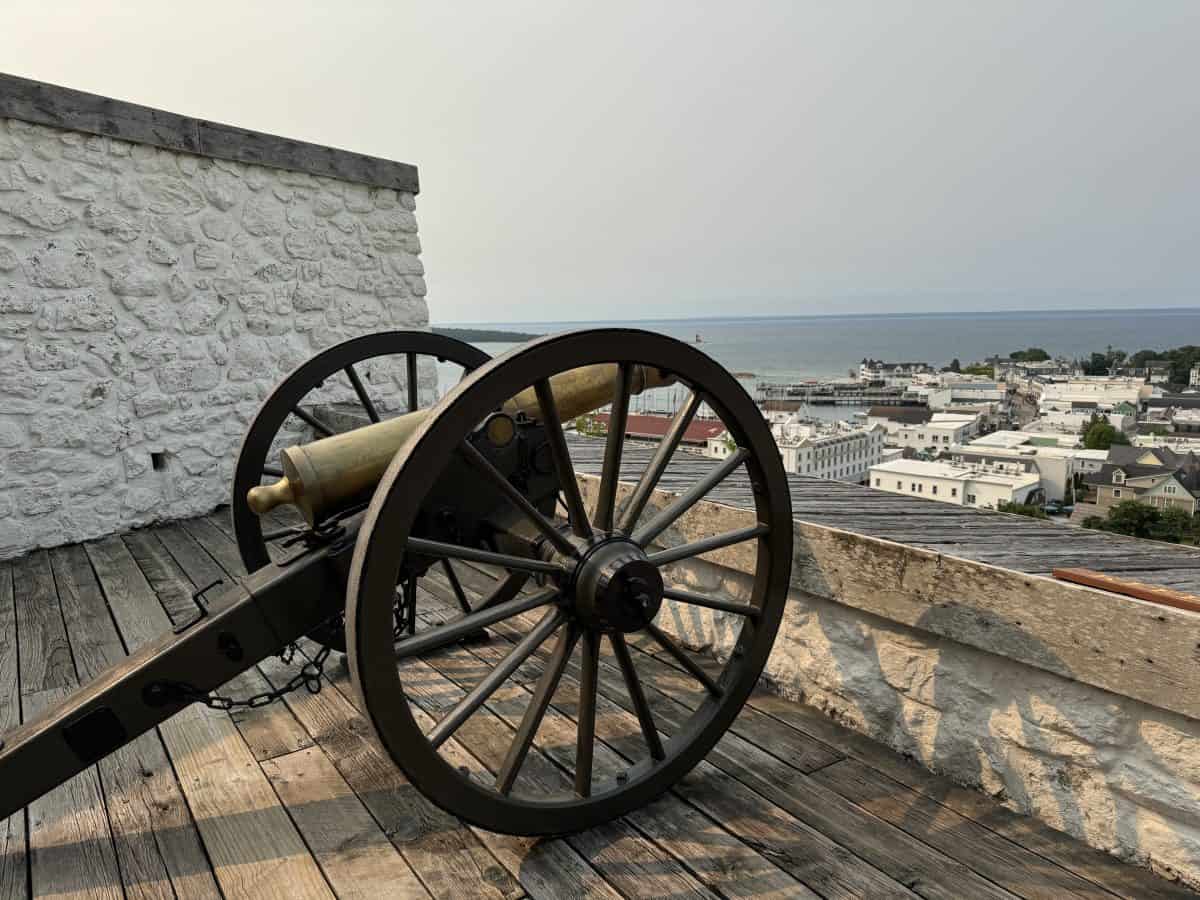
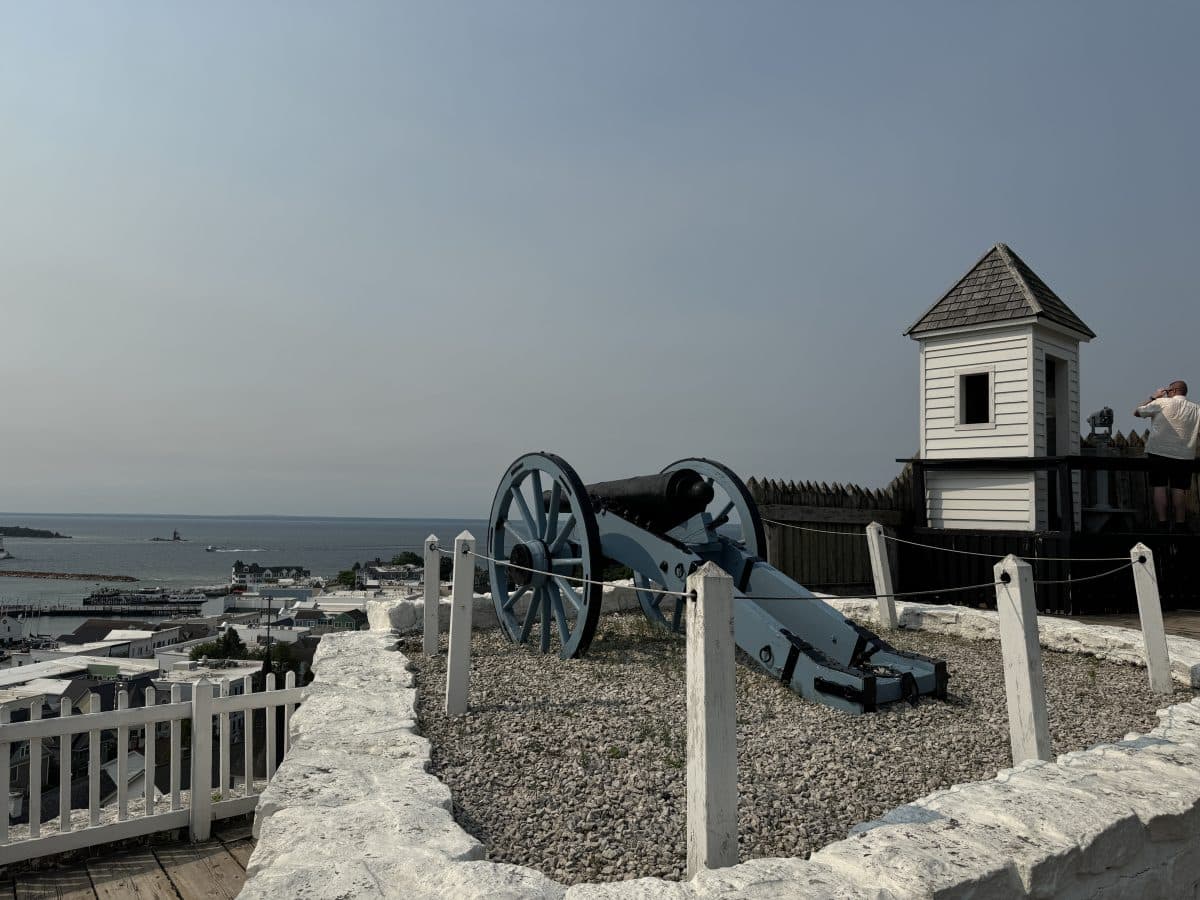
  3. Climb to the cannon firing platform for views of the harbor and to witness a live firing demonstration a few times throughout the day. 
  4. See the list of daily guard duties and exhibits of soldiers on trial in 1888, as well as audio narrations of their time in jail, in the Guardhouse, built in 1828. 
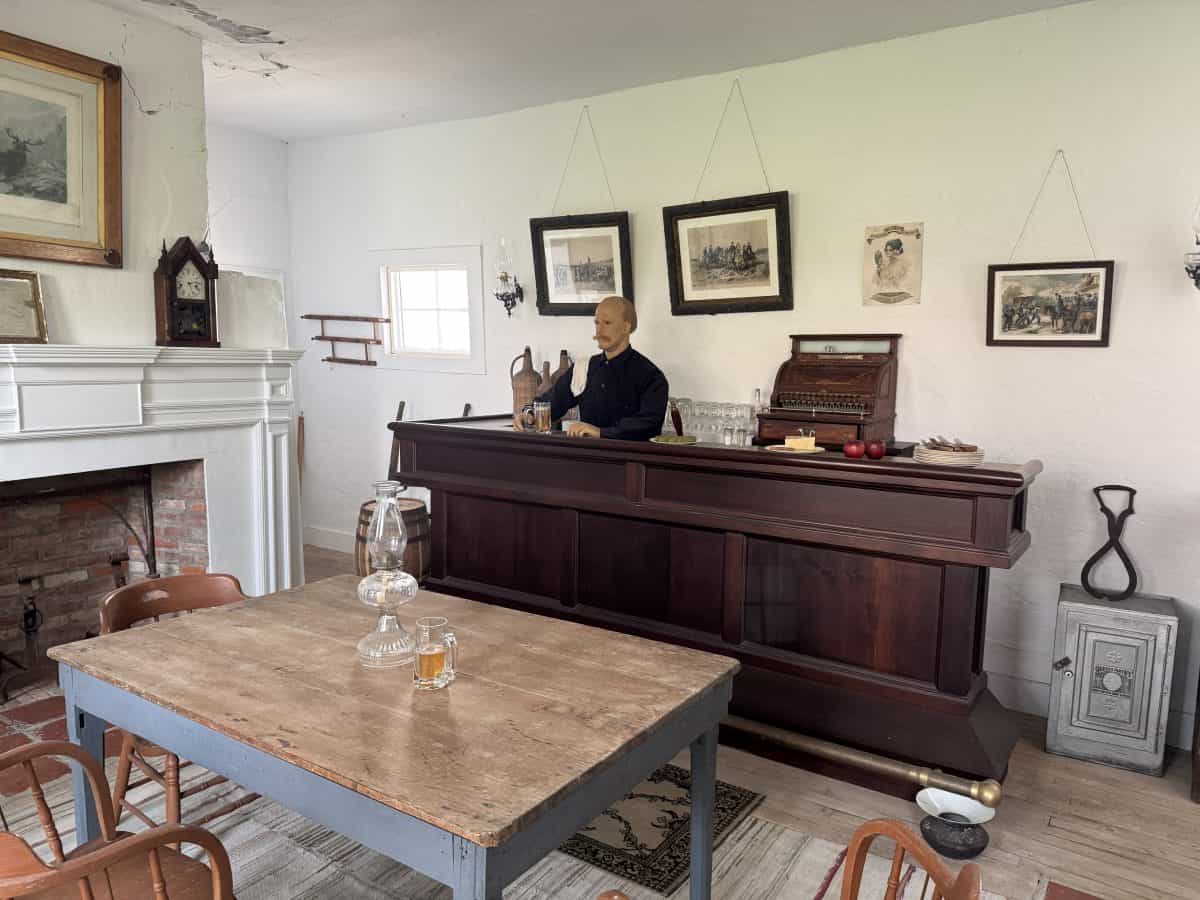
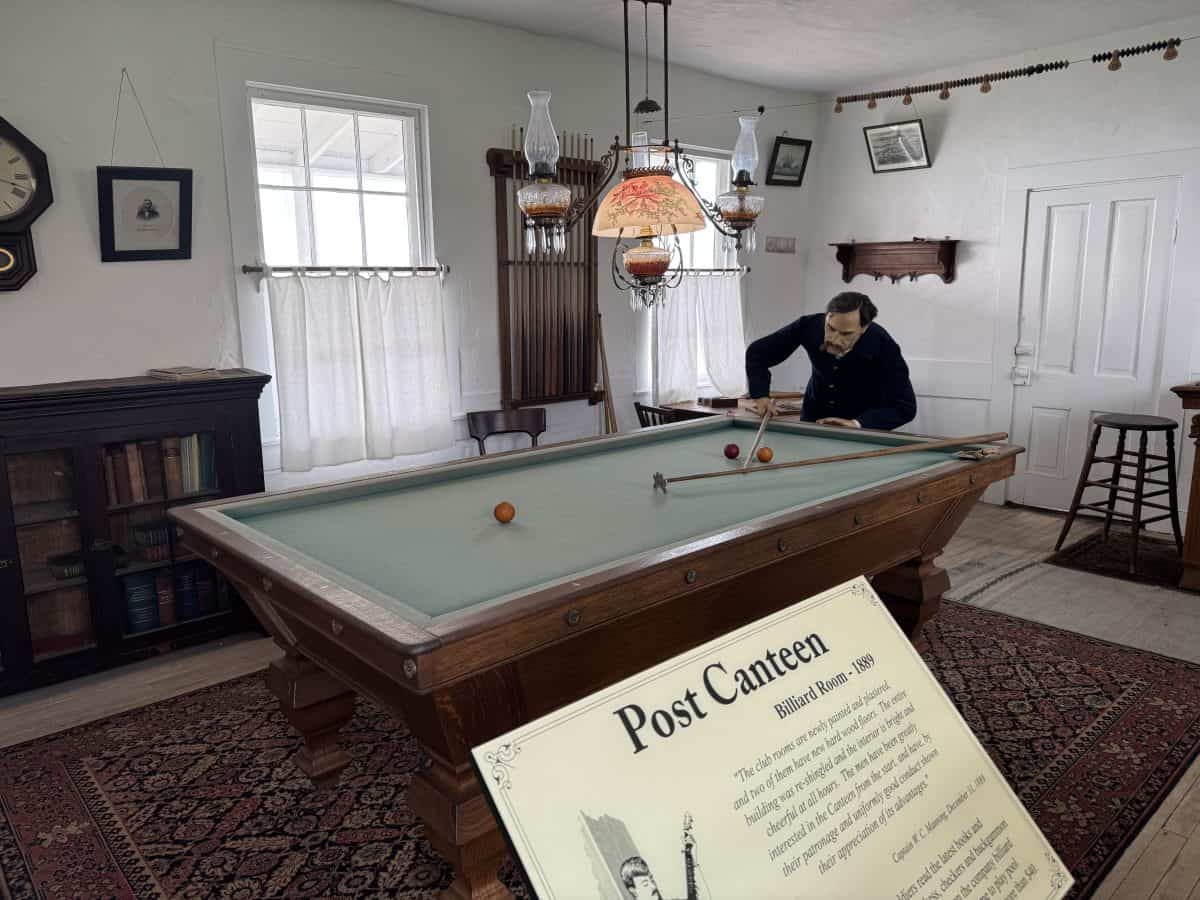
  5. Learn about the games soldiers would play, like chess, checkers, backgammon, and billiards and see a billiard table in the 1816 Canteen in the Wood Quarters.
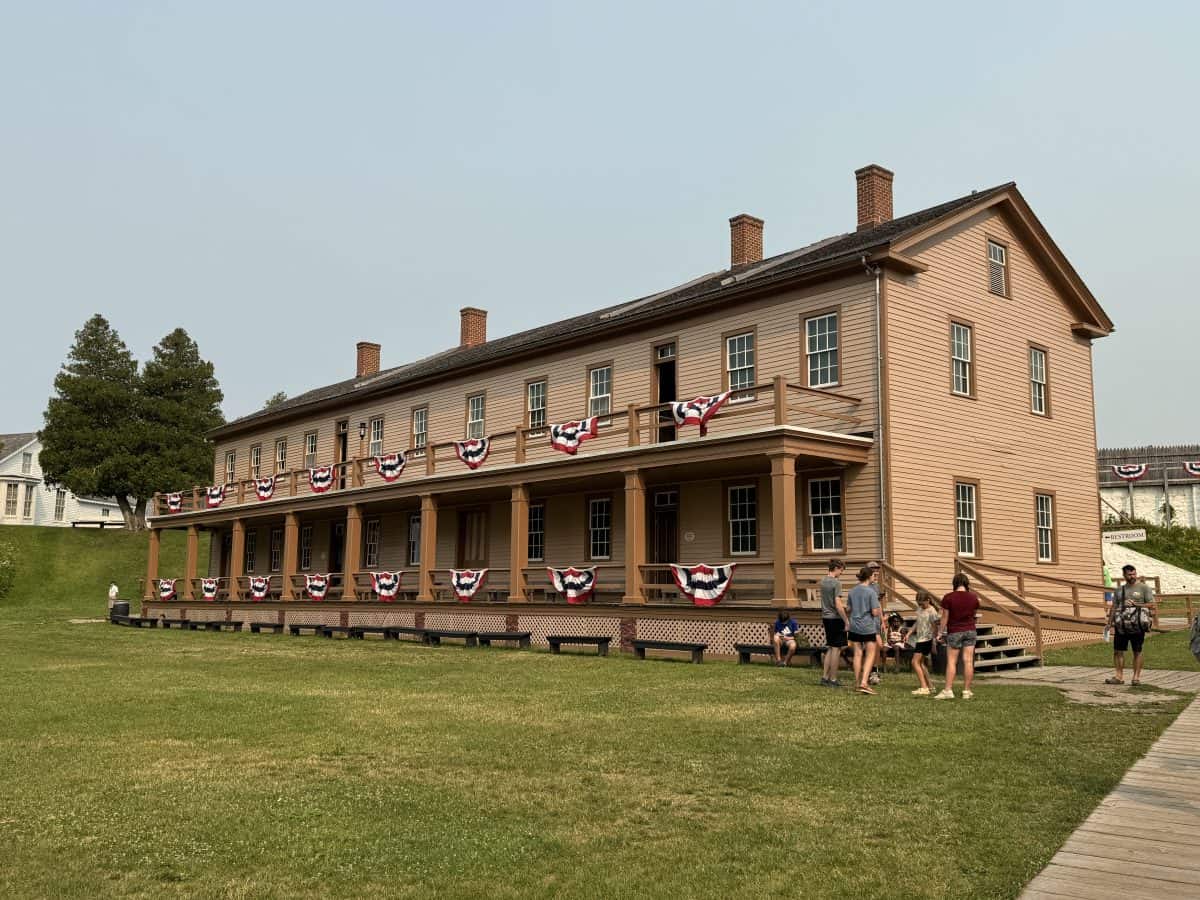
Soldiers' Barrack at Fort Mackinac on Mackinac Island in Michigan
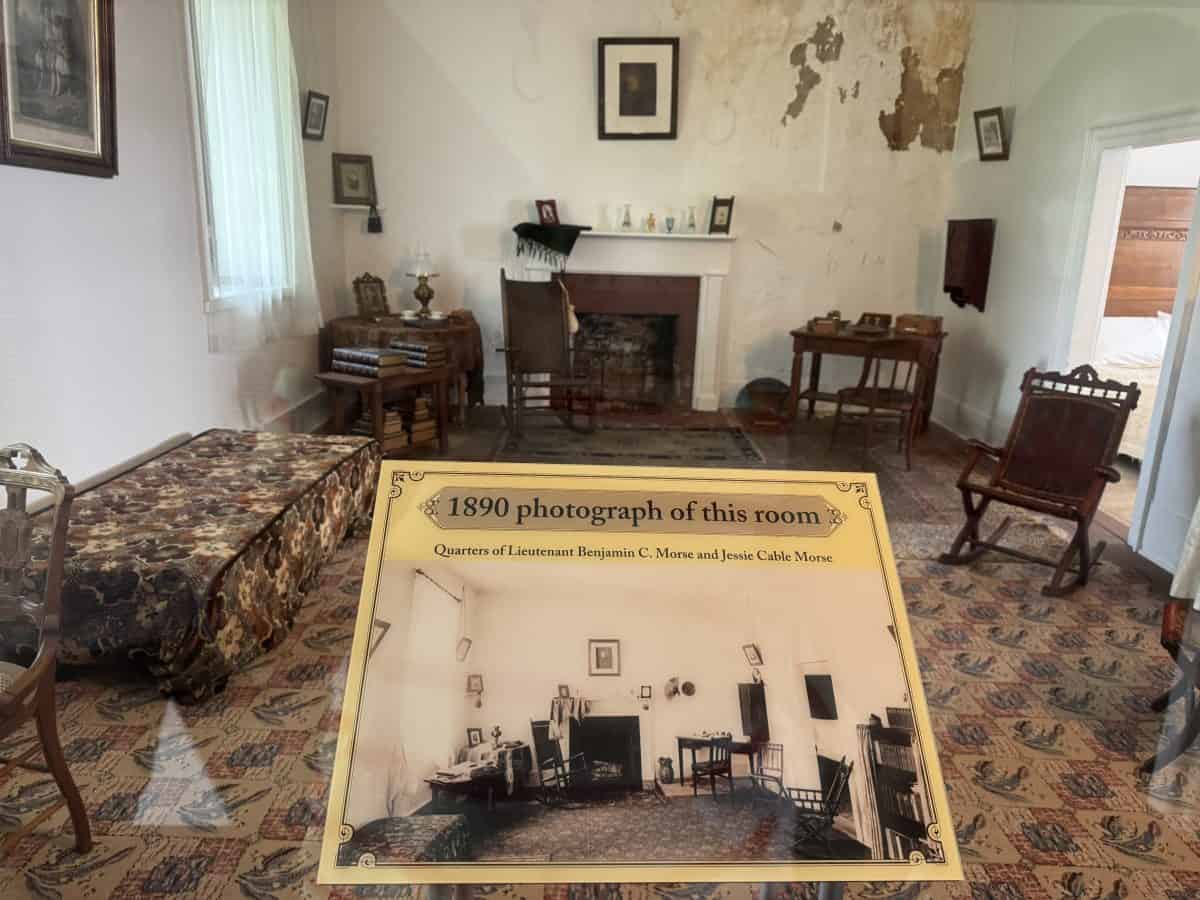
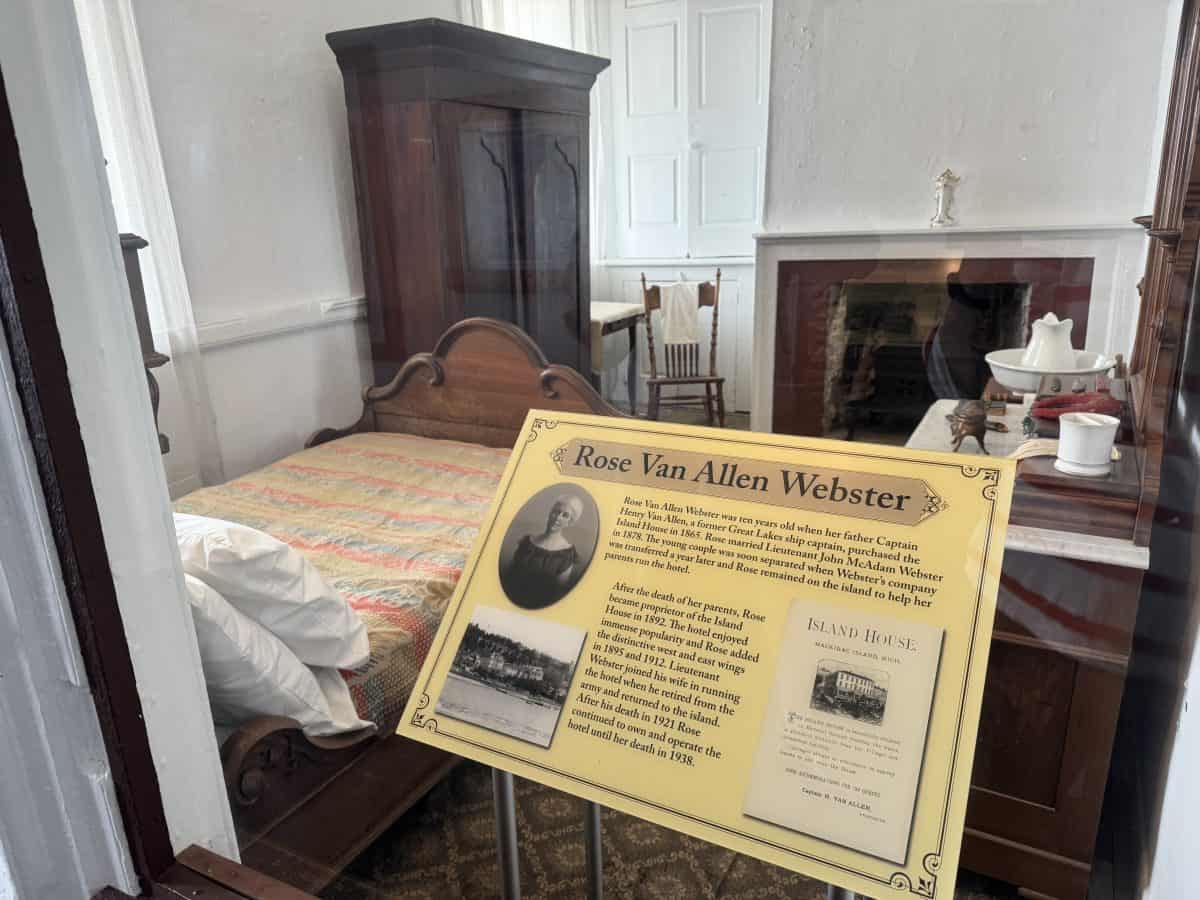
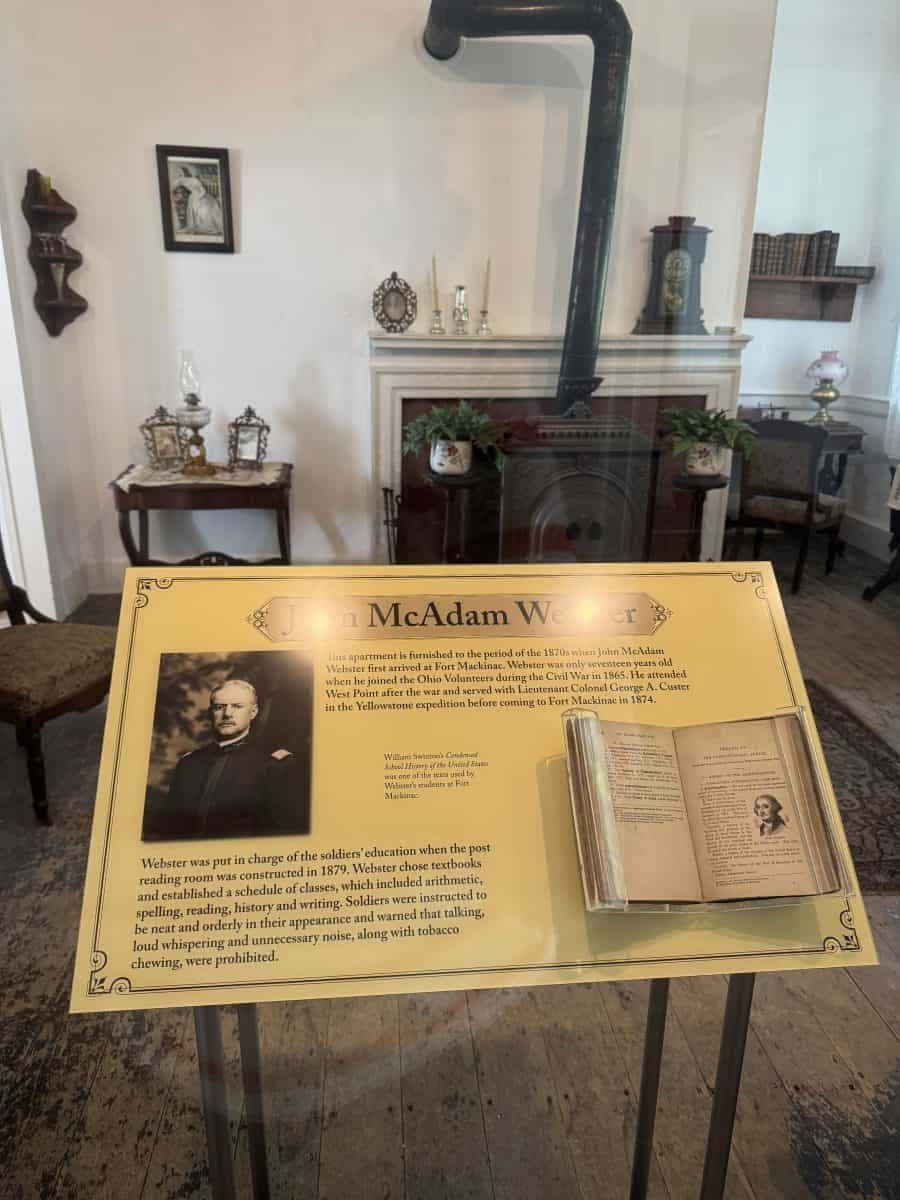
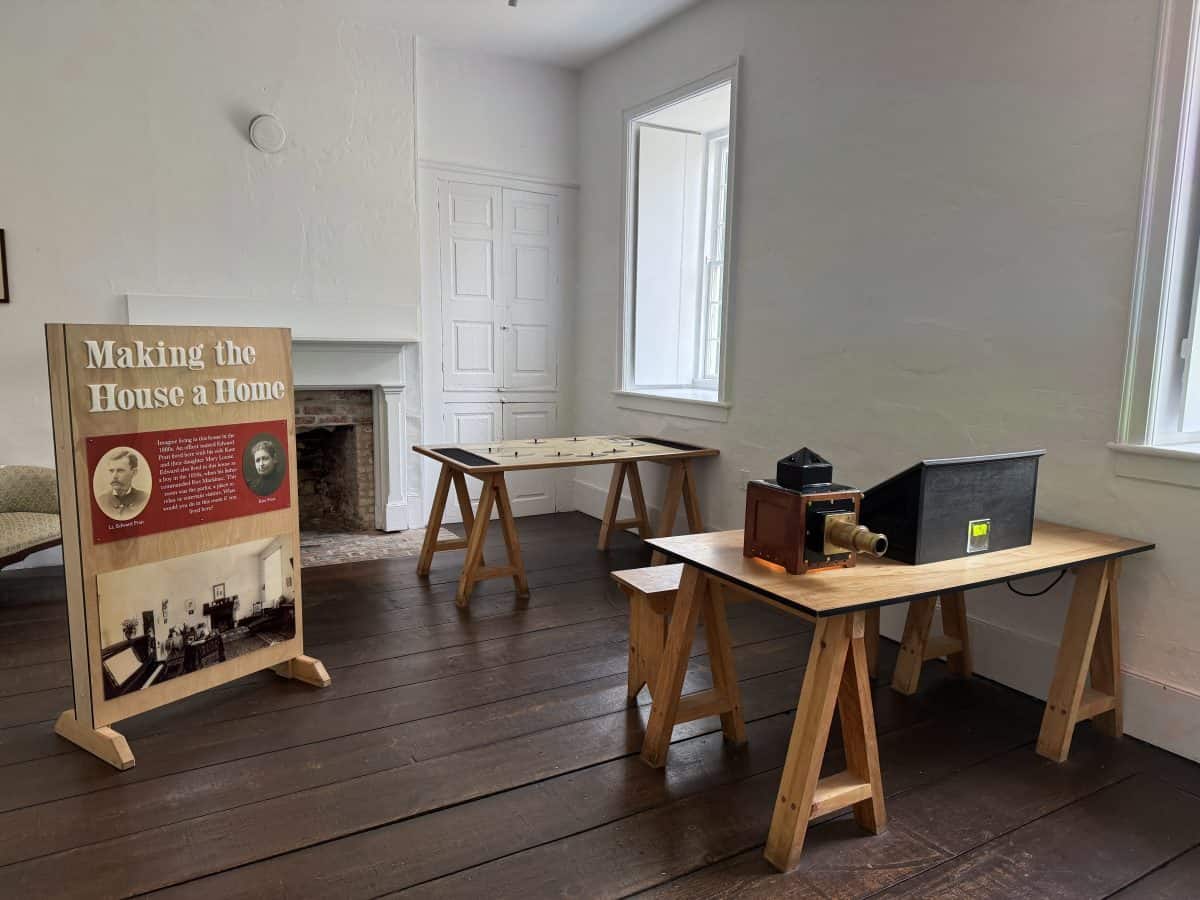
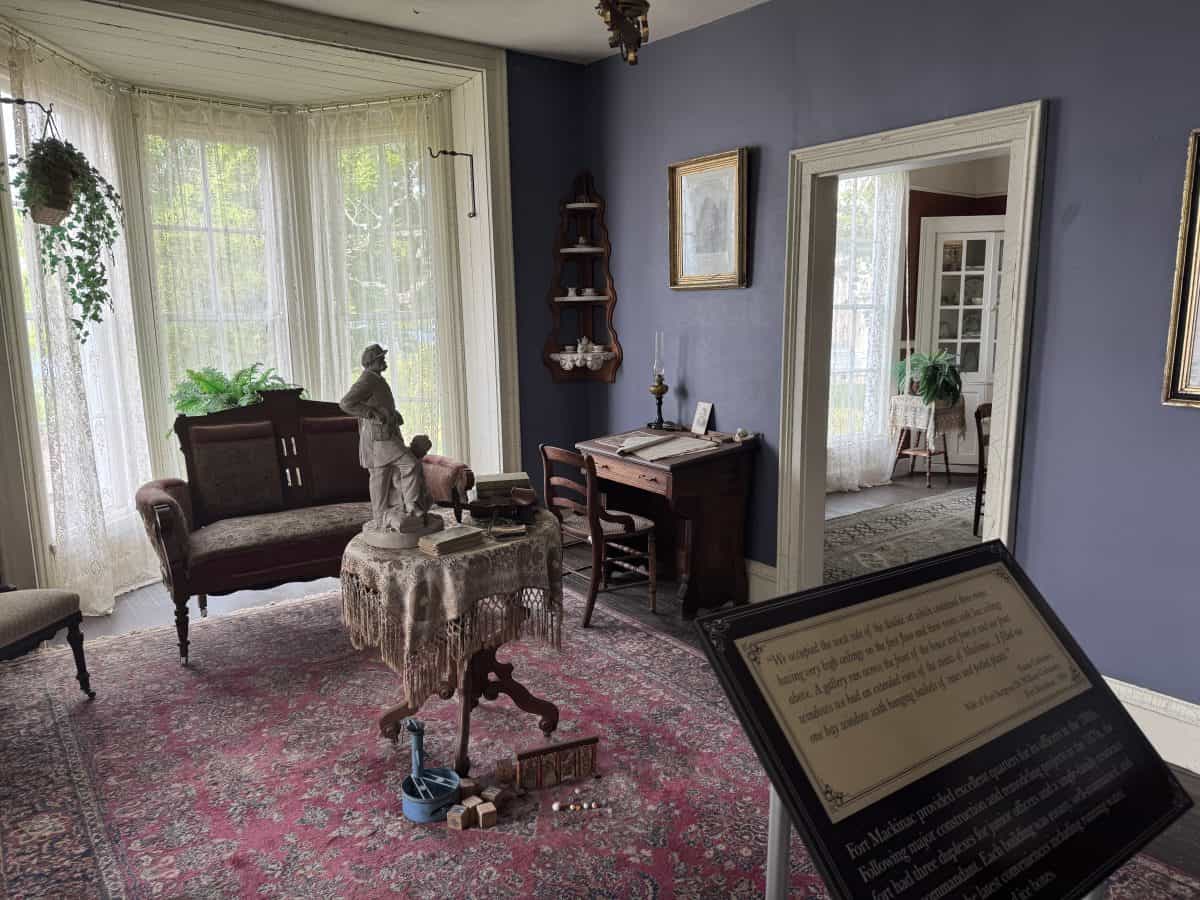
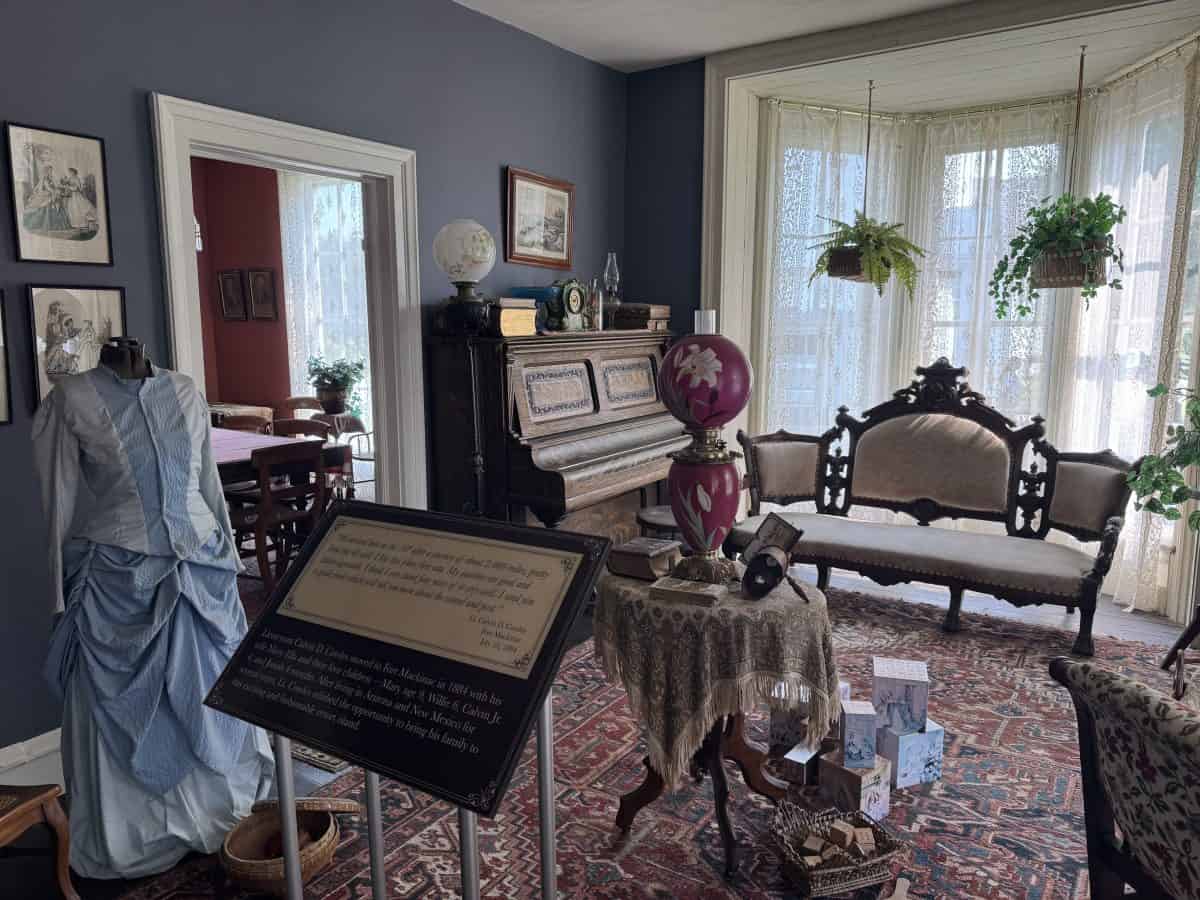
  1. Explore the Stone Quarters 1780 Officer’s Apartments, home of John McAdams Webster and his wife Rose Van Allen Webster, as well as the furnishings of the home.
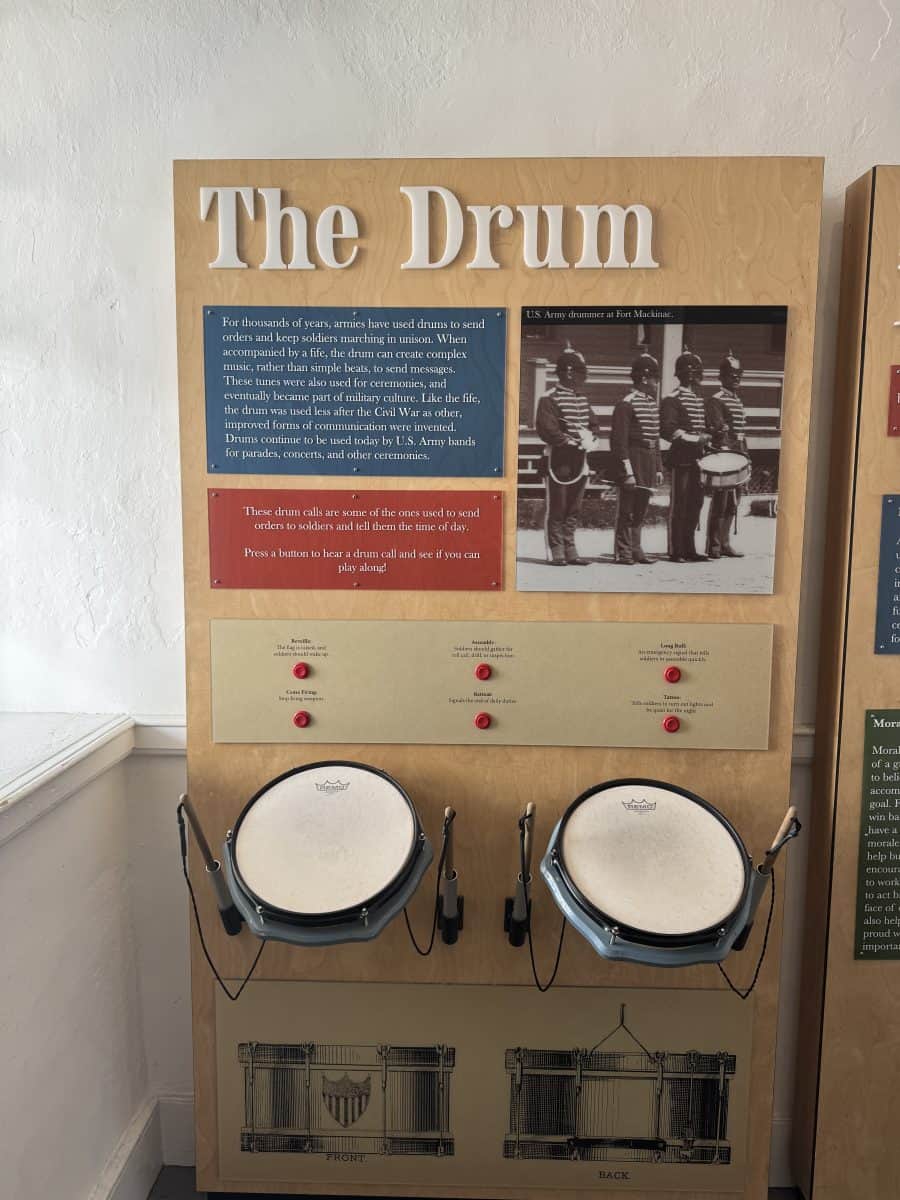
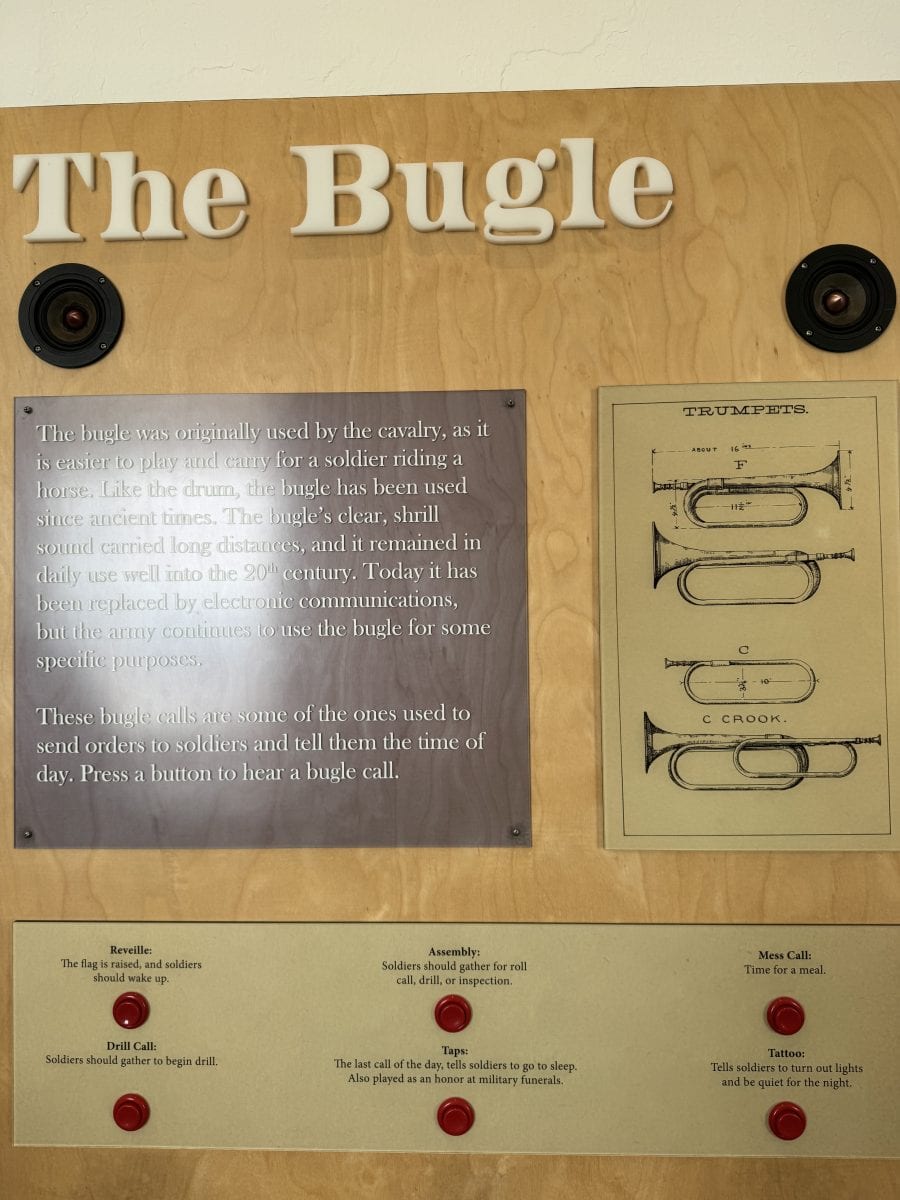
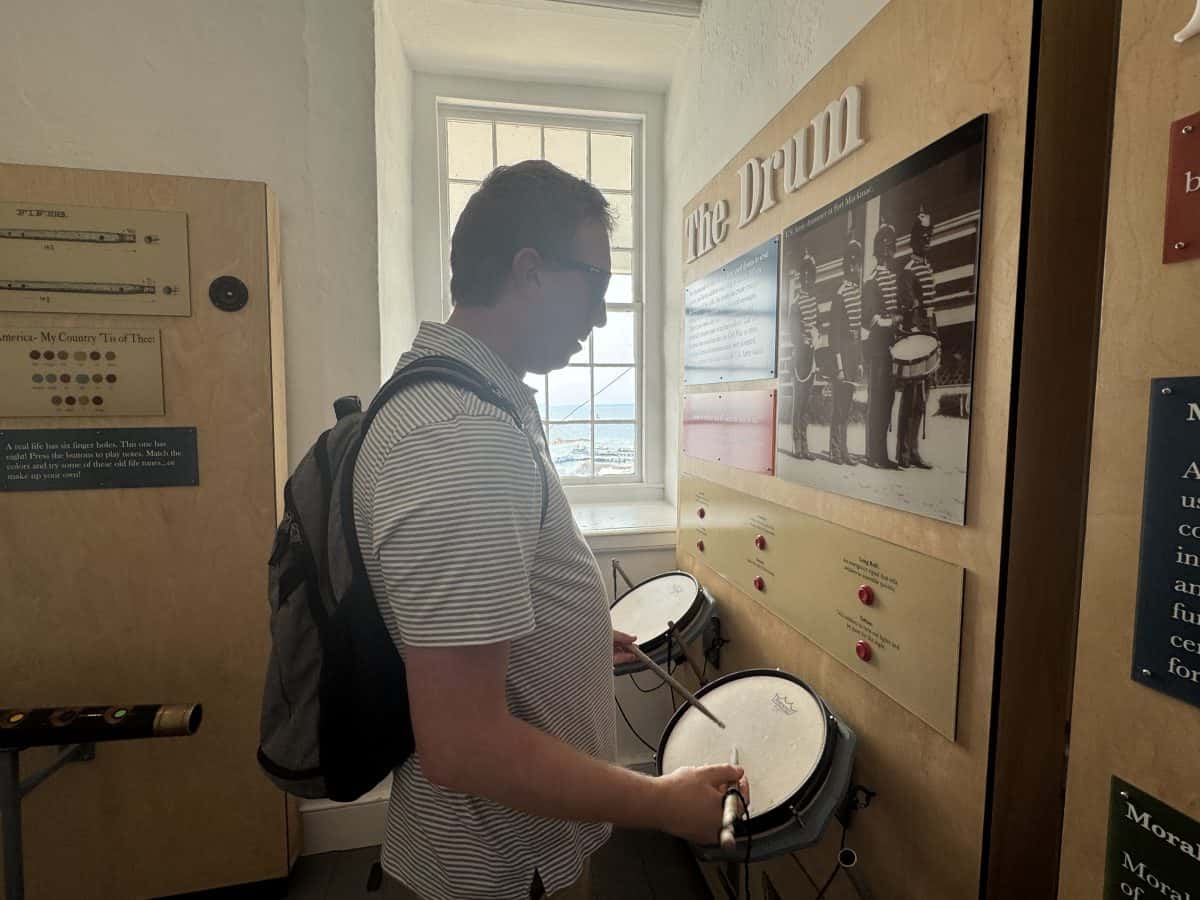
  2. Have kids design their own version of a fort using blocks, play in a replica drum and fife march, and dress like a soldier in the Kids Quarters.
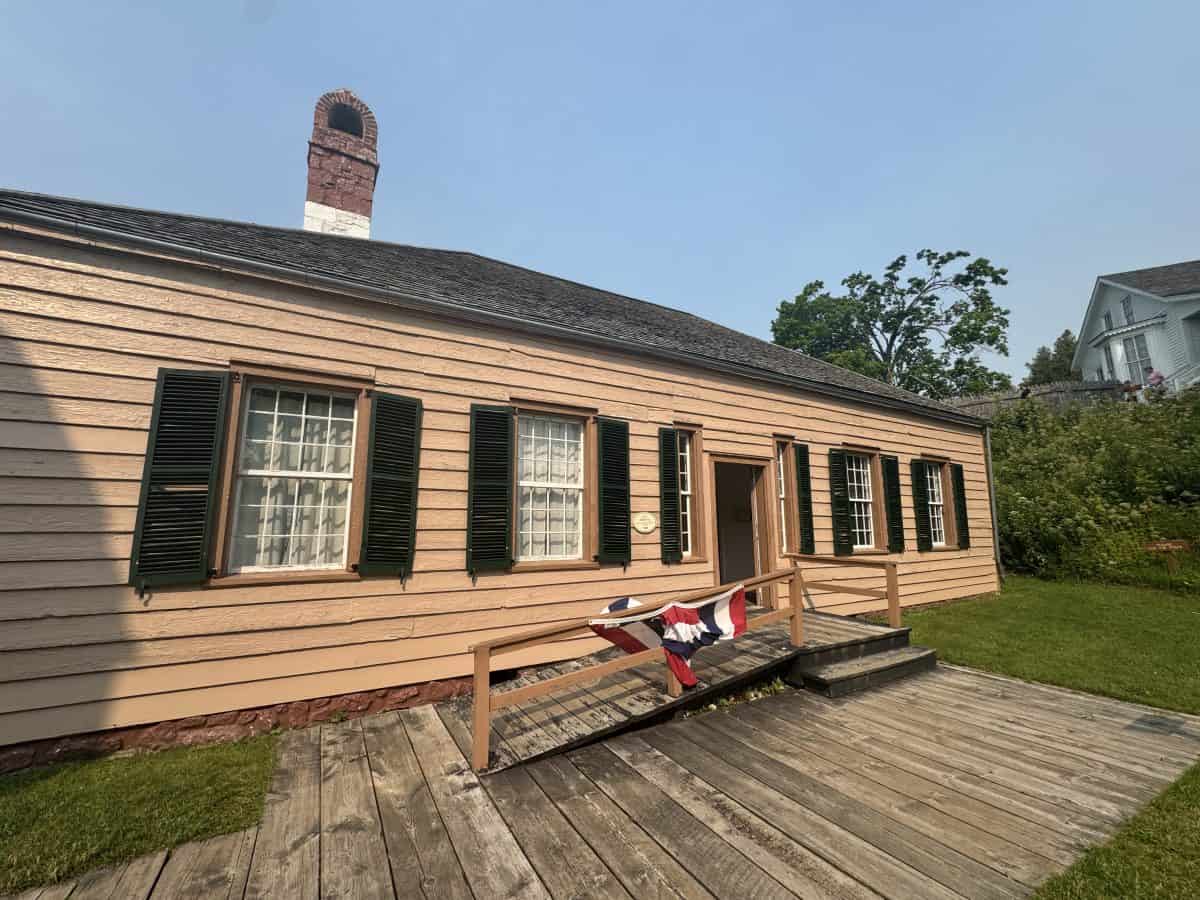
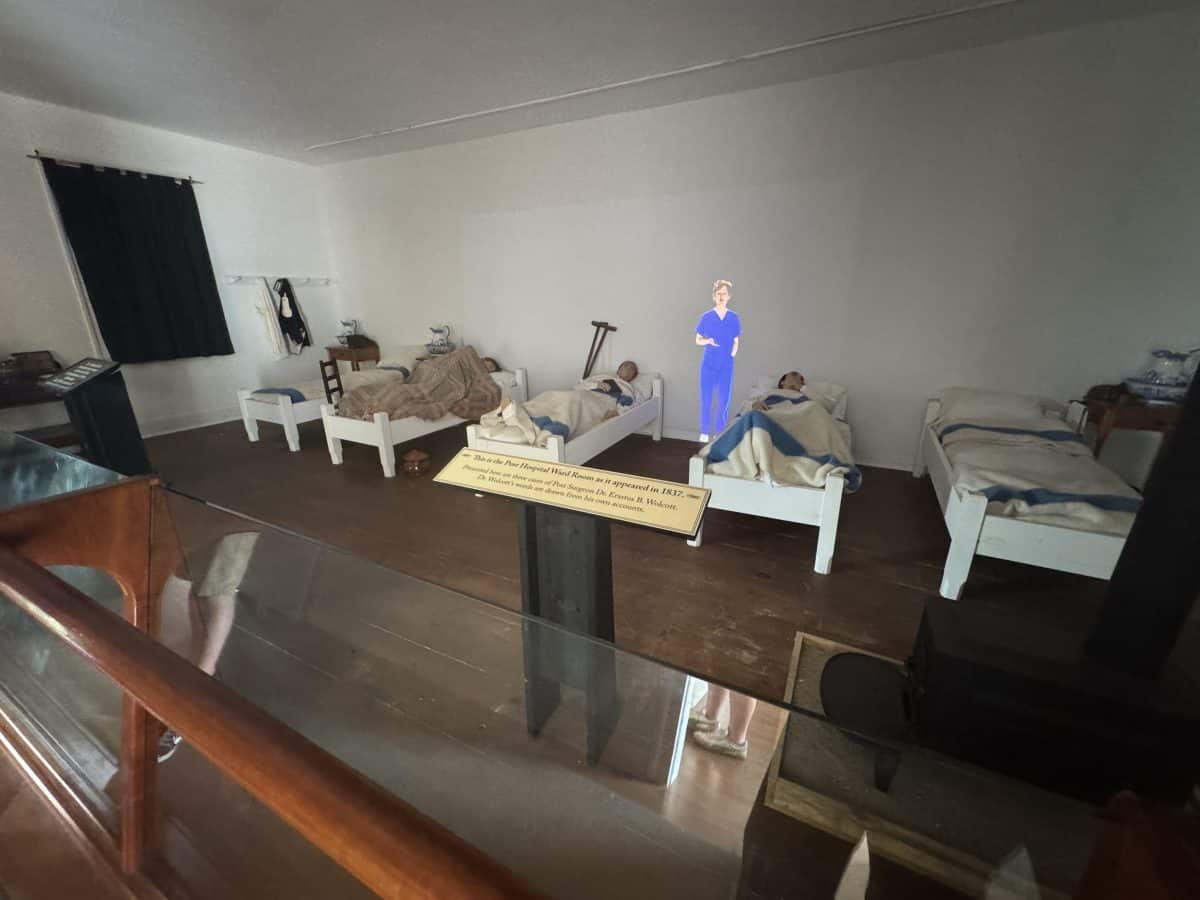
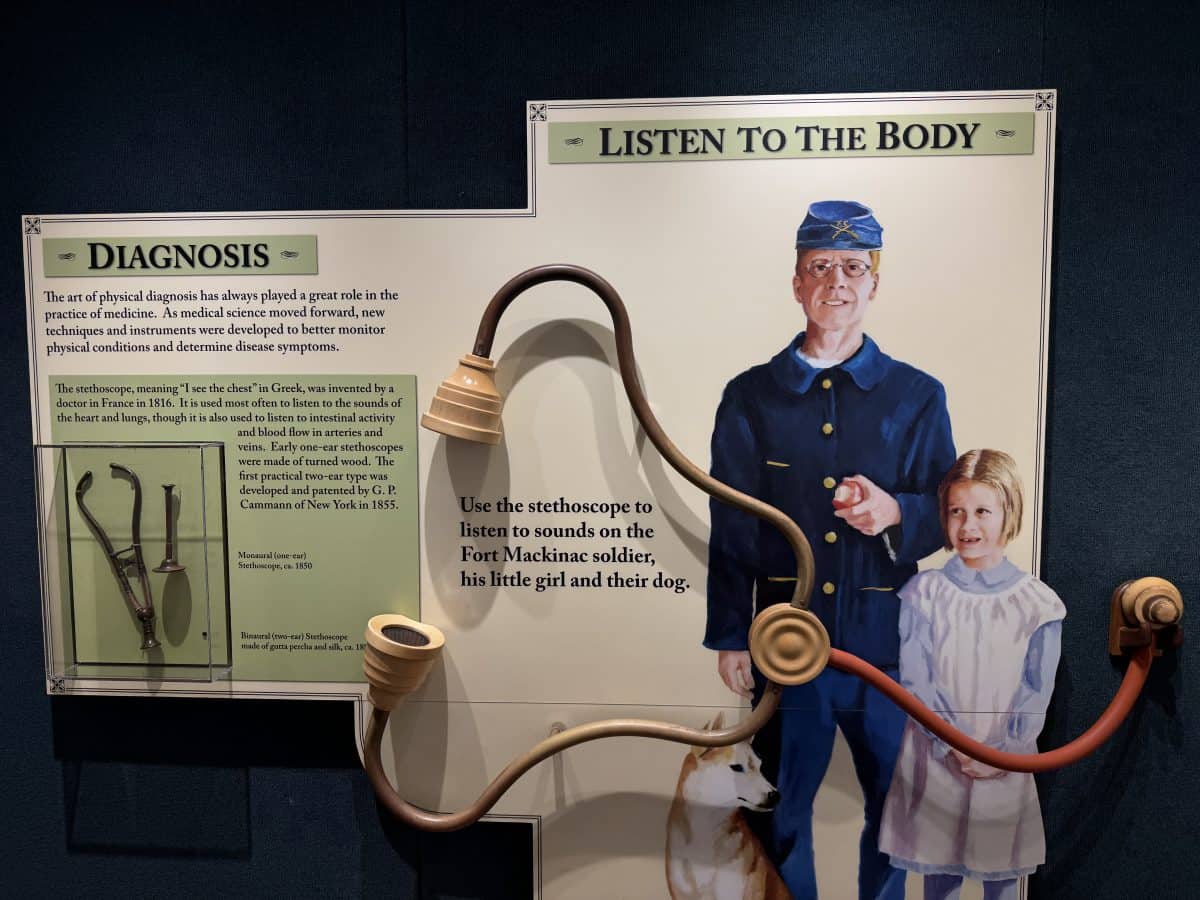
  3. Read about common illnesses of the time, and see exhibits explaining diagnosis and treatment in the Old Hospital, the oldest standing hospital in Michigan, dating back to 1828. The exhibit also celebrates the eradication of smallpox.
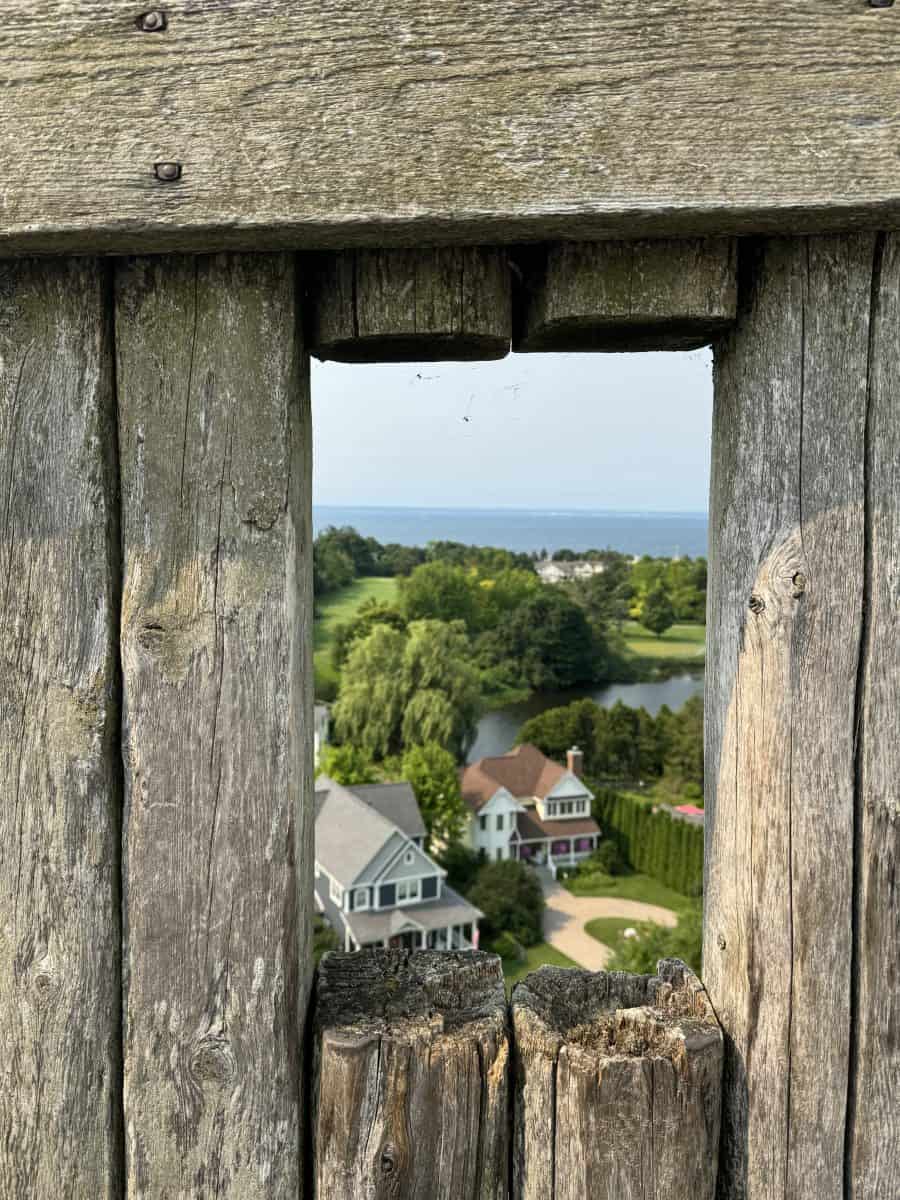
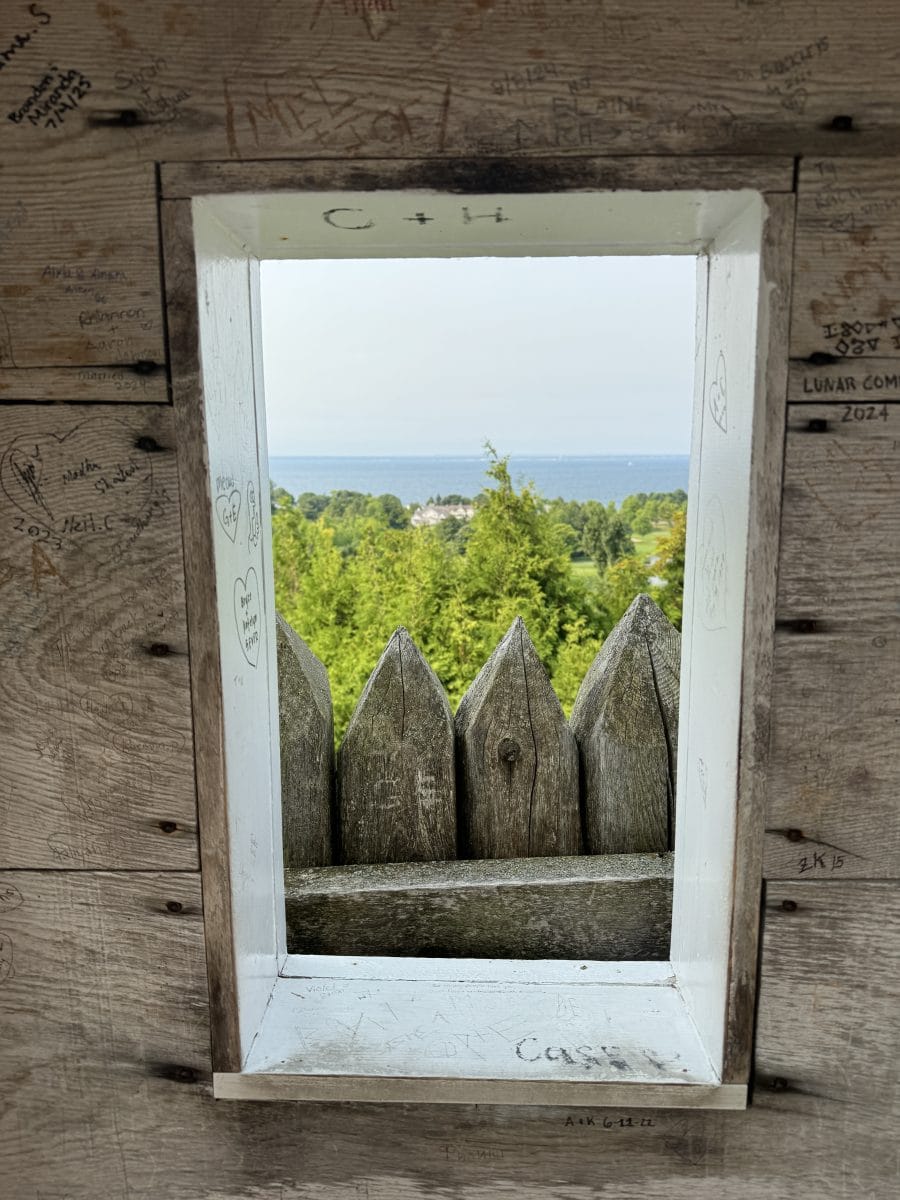
  4. Look through the square holes in the West Blockhouse out to the water and read the timeline of the changes to Fort Mackinac.
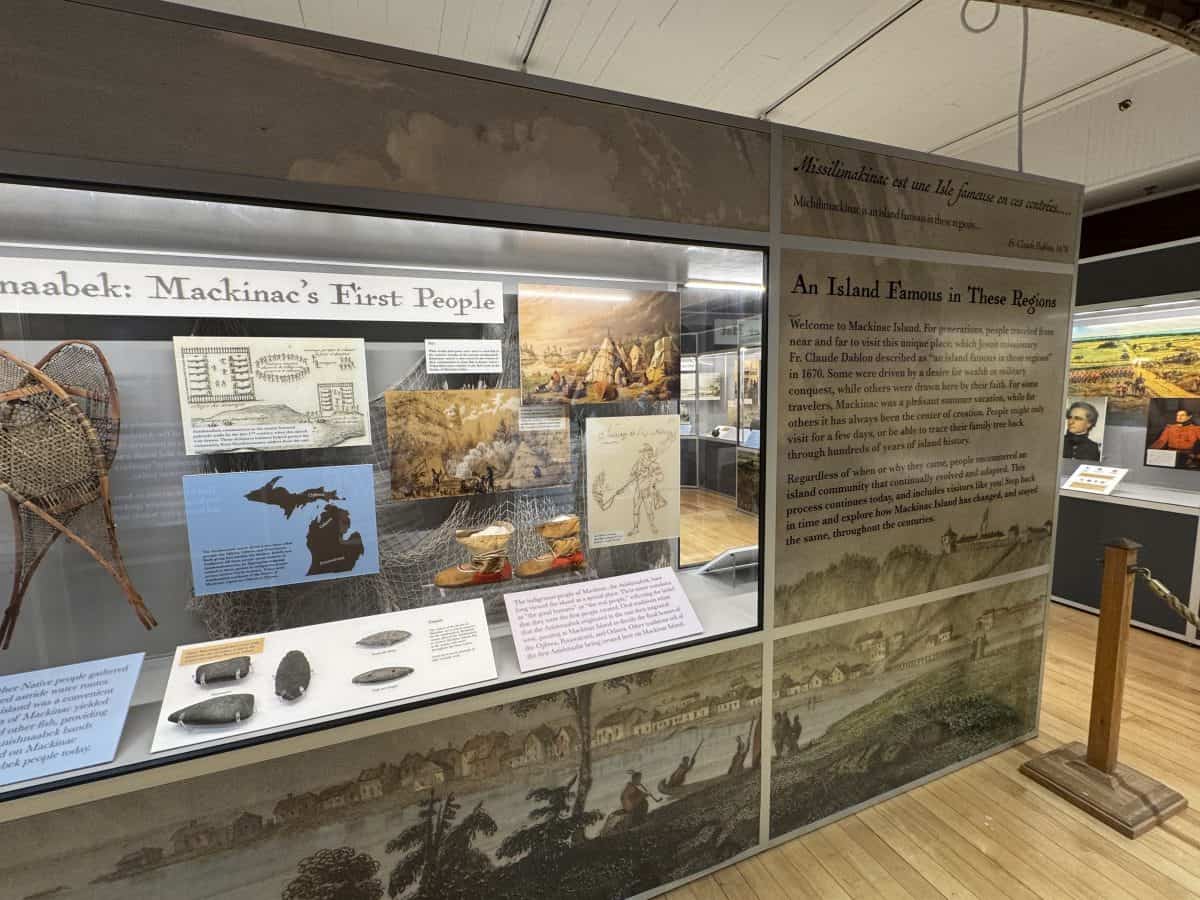
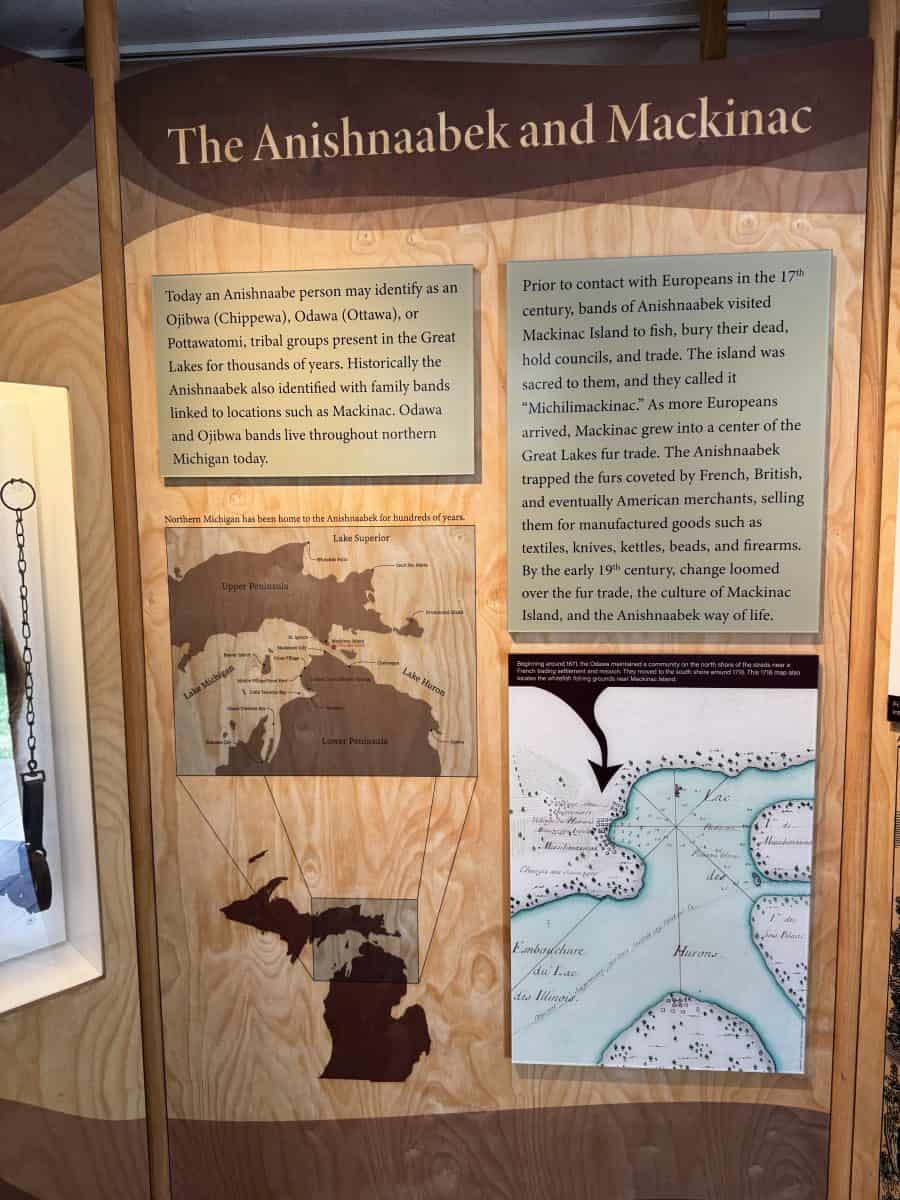
  5. Watch a show in the (air conditioned!) theater in the 1859 Soldiers Barracks. The Barracks building also has exhibits featuring the Anishnaabek people who gathered on the island every summer because of the ideal location for trading routes and fishing. Today, the burial grounds for the Anishnaabek people are located on the island and are considered sacred space.
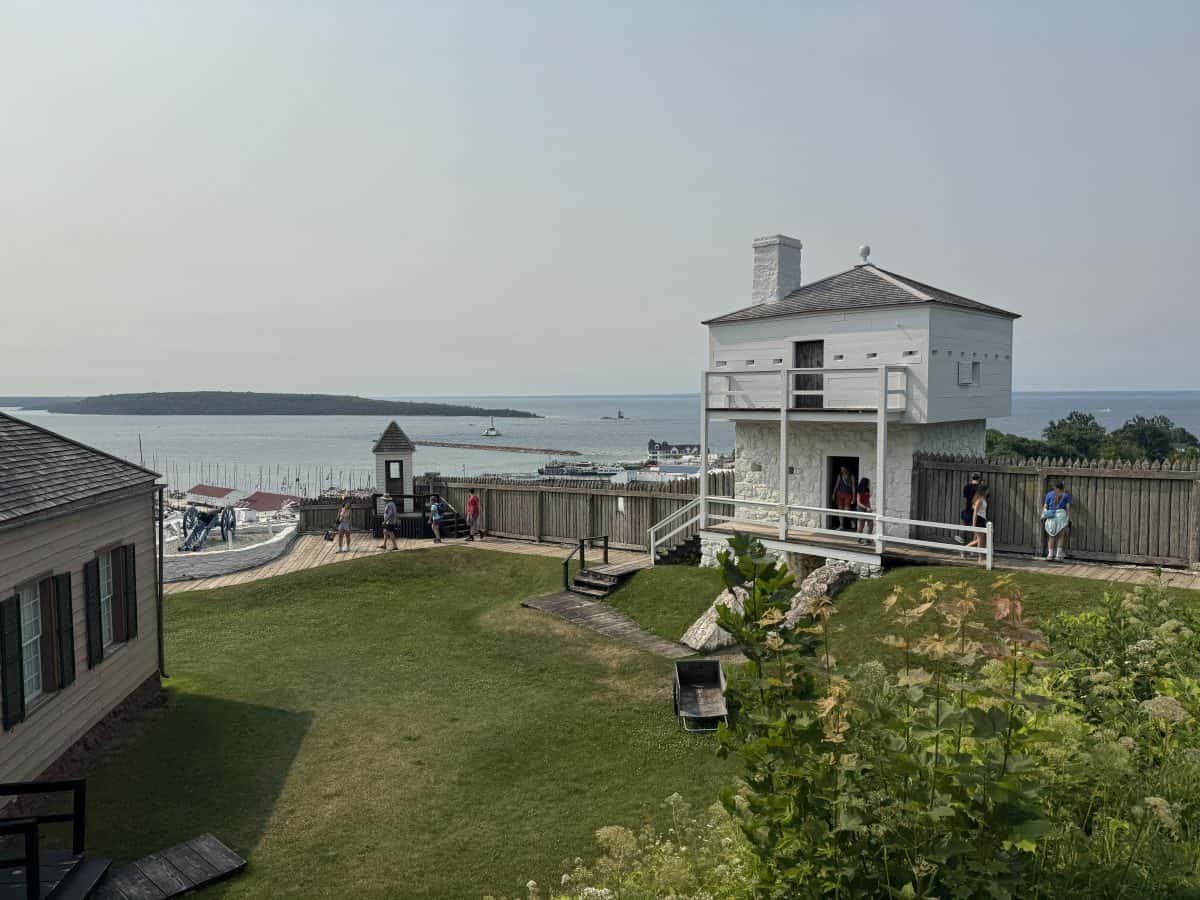
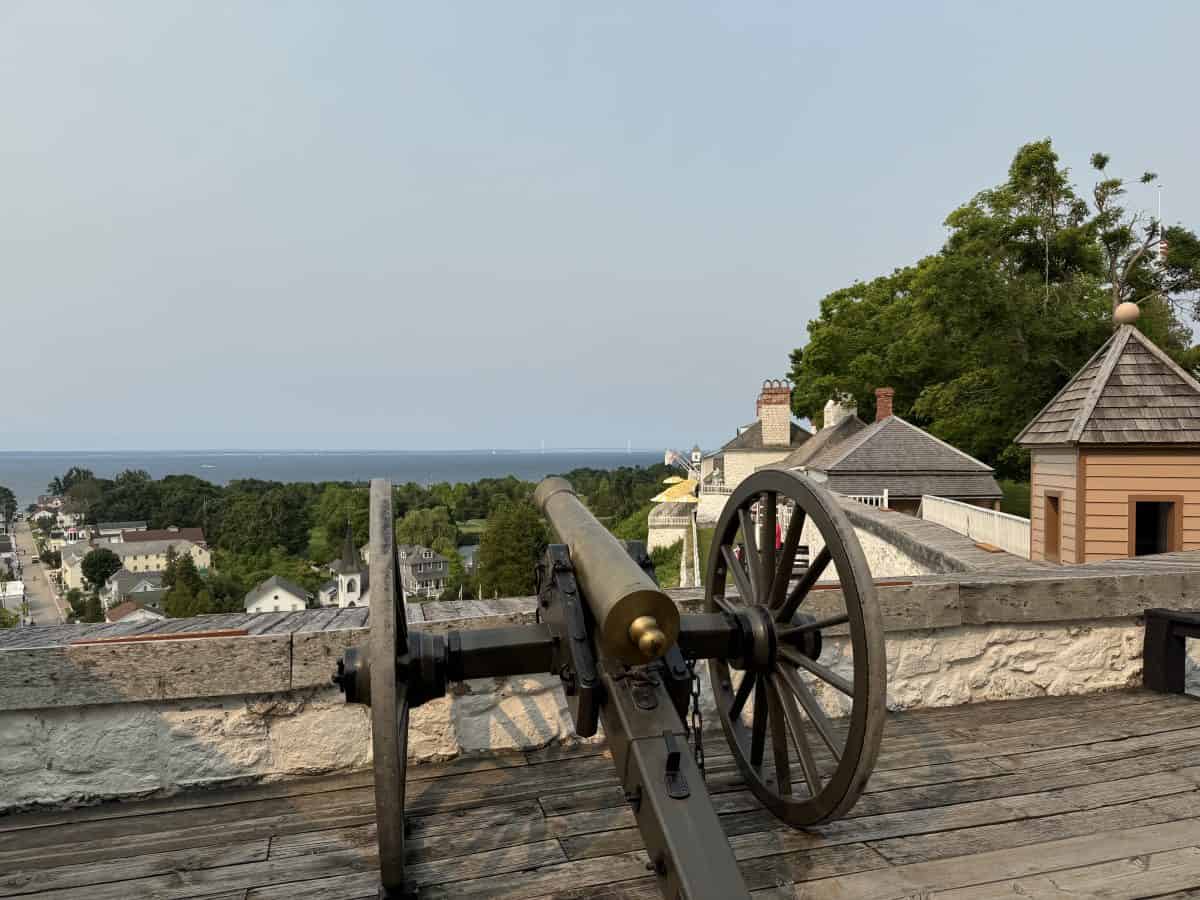
overlooking Fort Mackinac on Mackinac Island in Michigan

Admission tickets to Fort Mackinac also include admission to the following locations: Note: Hours and season of operation vary, check here for up to date information.

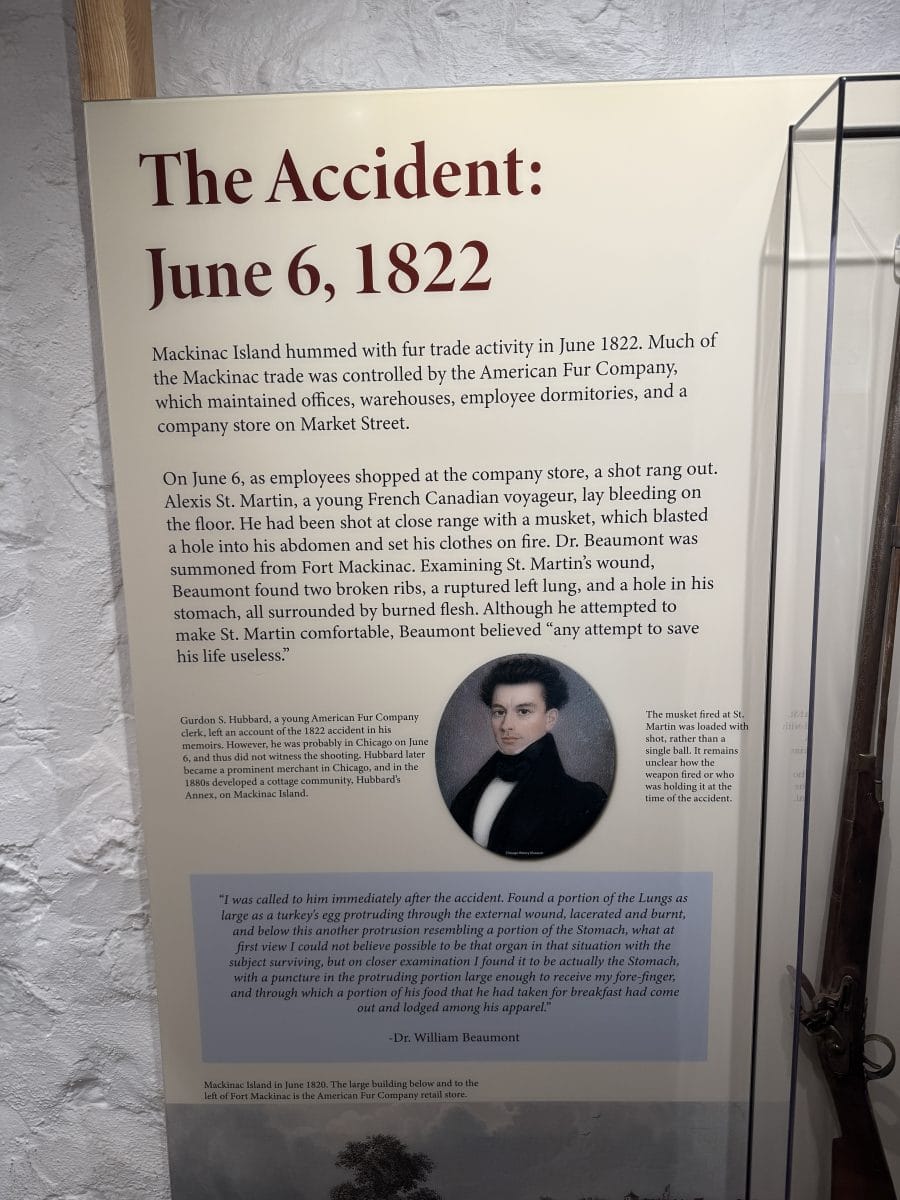
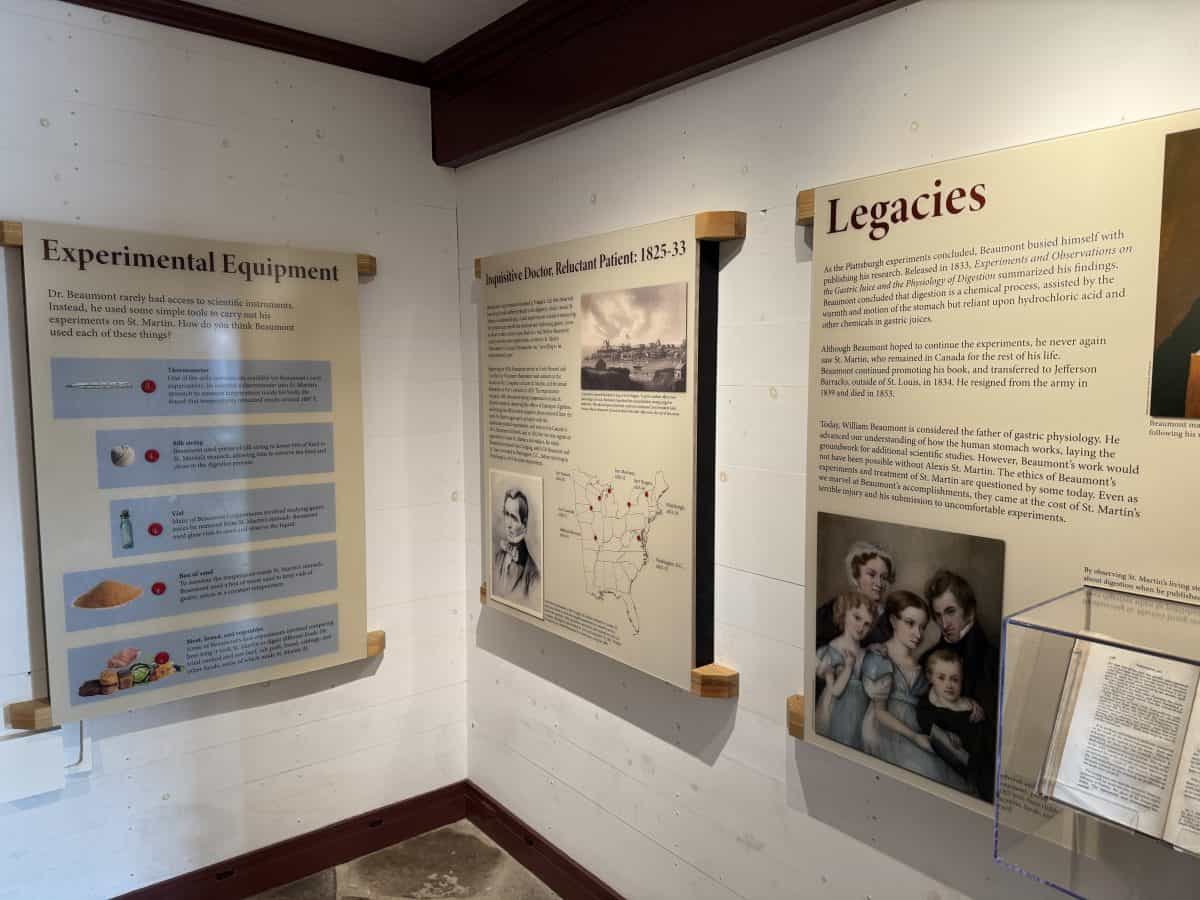
  1. American Fur Company Retail Store was one of the first American fur trade stores, selling a variety of items to locals on the islands In 1822, local surgeon Dr. Williams Beaumont helped save the life of French Canadian voyageur Alexis St. Martin, who had been shot in the stomach. Dr. Beaumont studied the digestive system through the hole in St. Martin’s stomach that never healed. Dr. Beaumont conducted 250 experiments and was instrumental in the ways the medical profession understands the digestive system. 
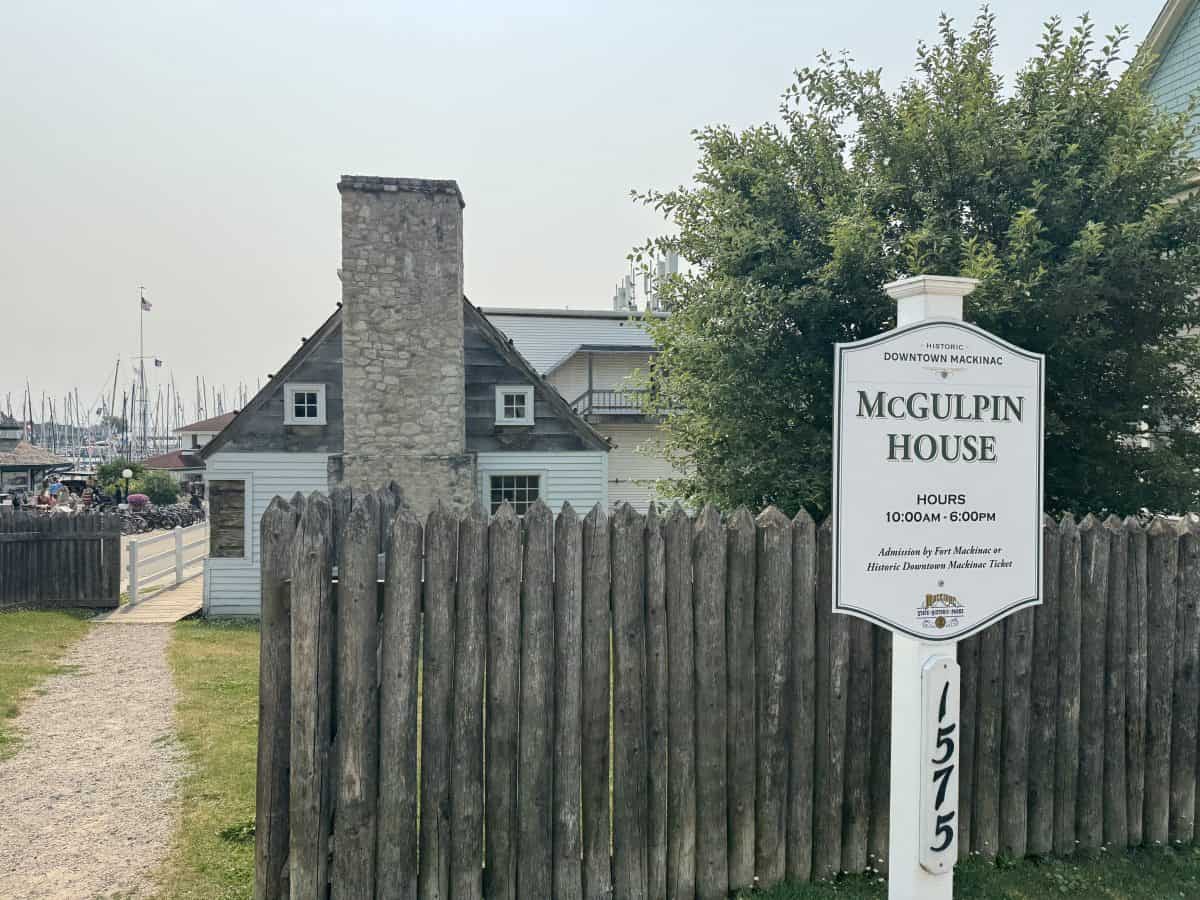
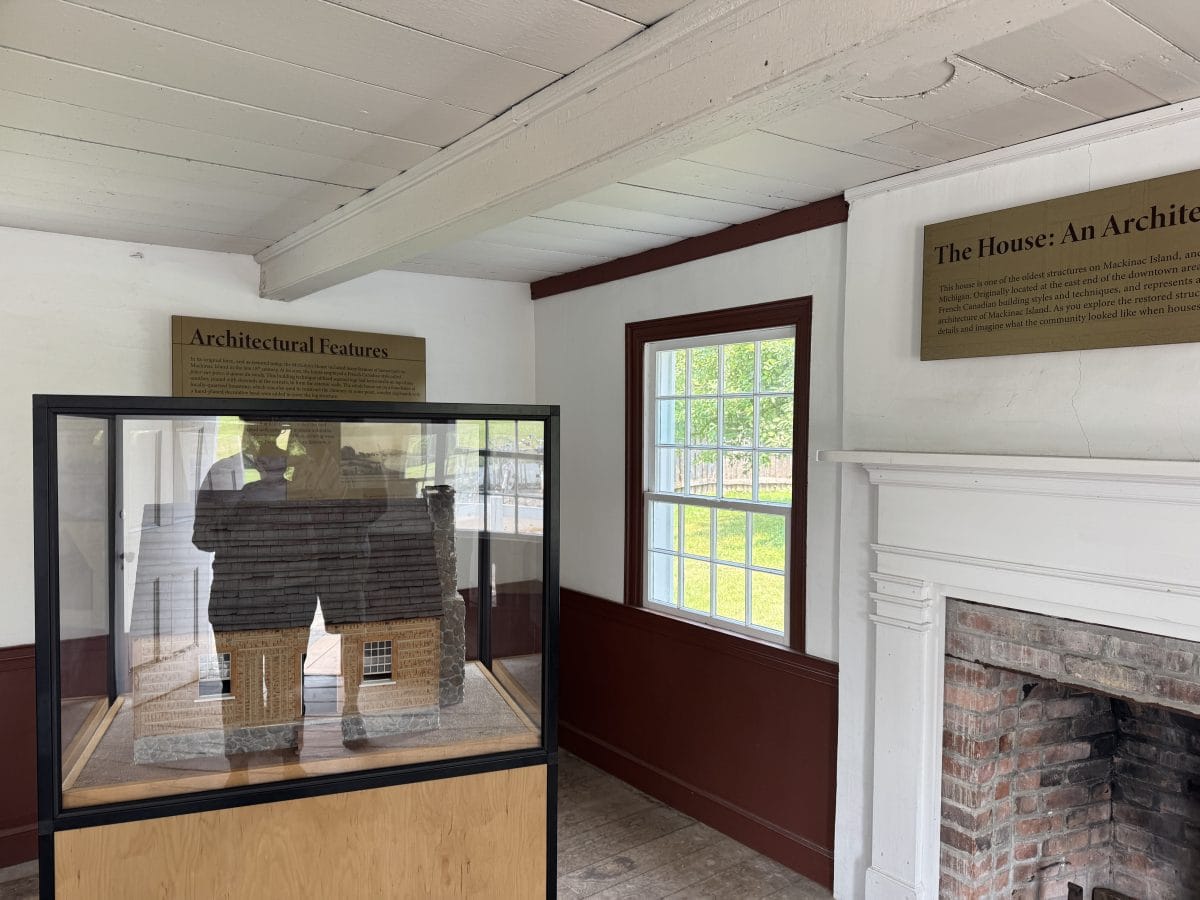
  2. McGulpine House is one of the oldest structures on Mackinac Island, dating back to the late 18th century. The French Canadian domestic style building was moved from the east end of town to its current location in 1982 when it was fully restored to show how the structure was used over three centuries. Displays inside the structure share the story of the house and the island.  
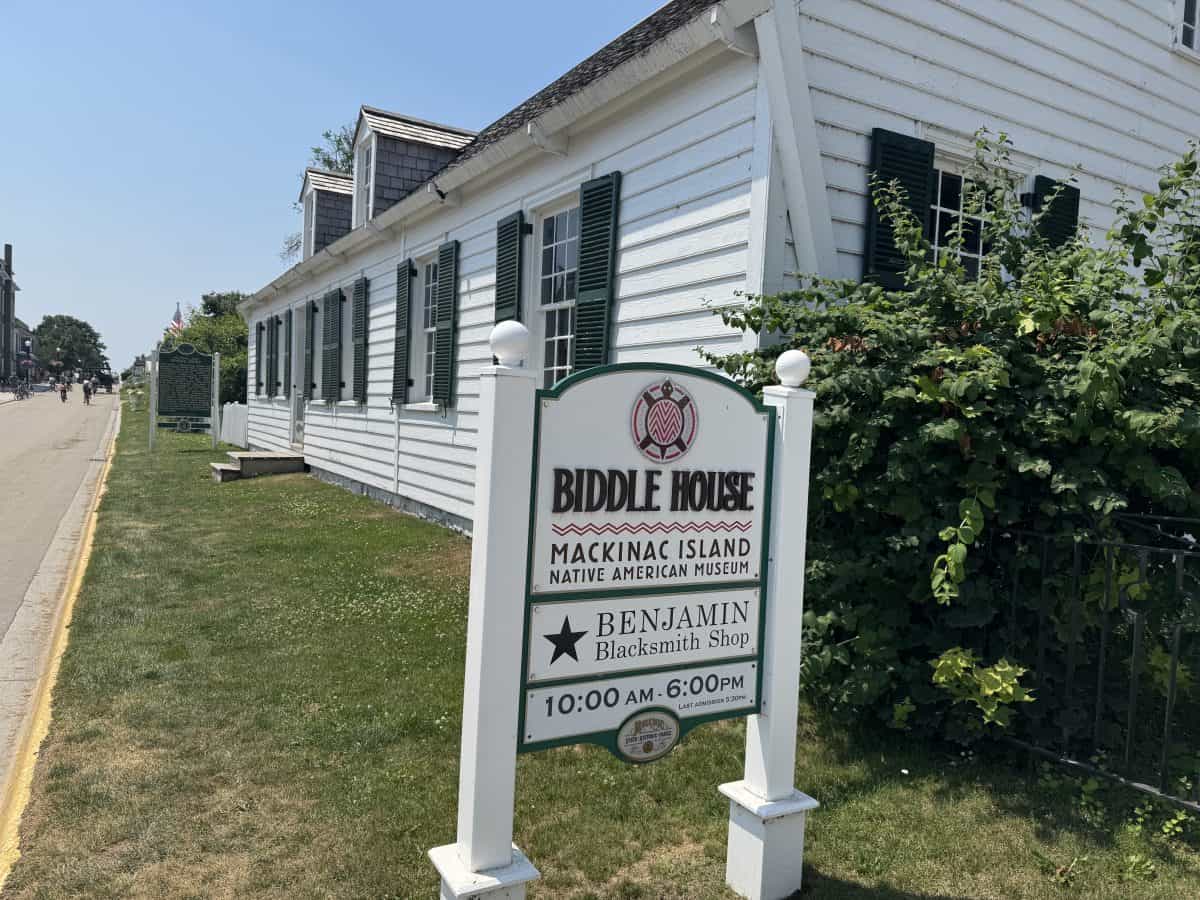
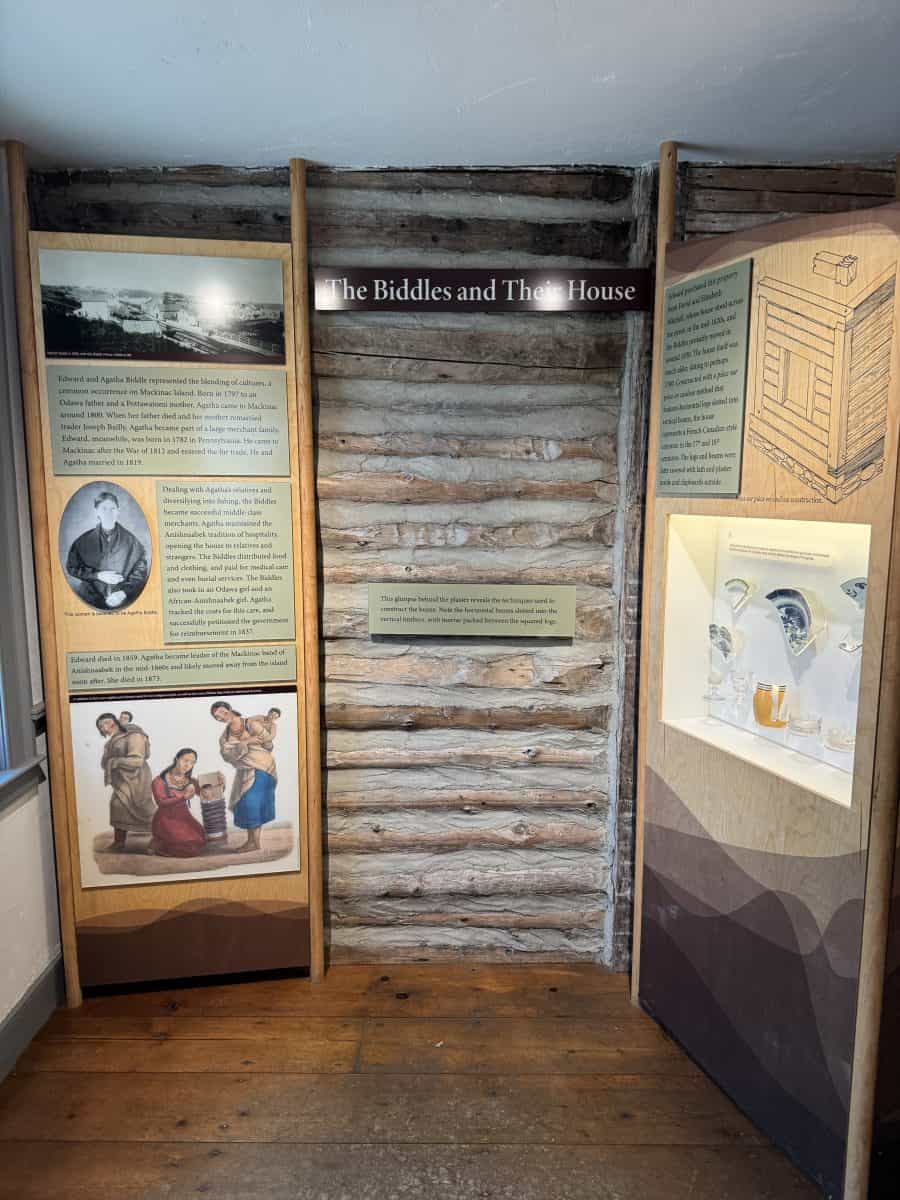
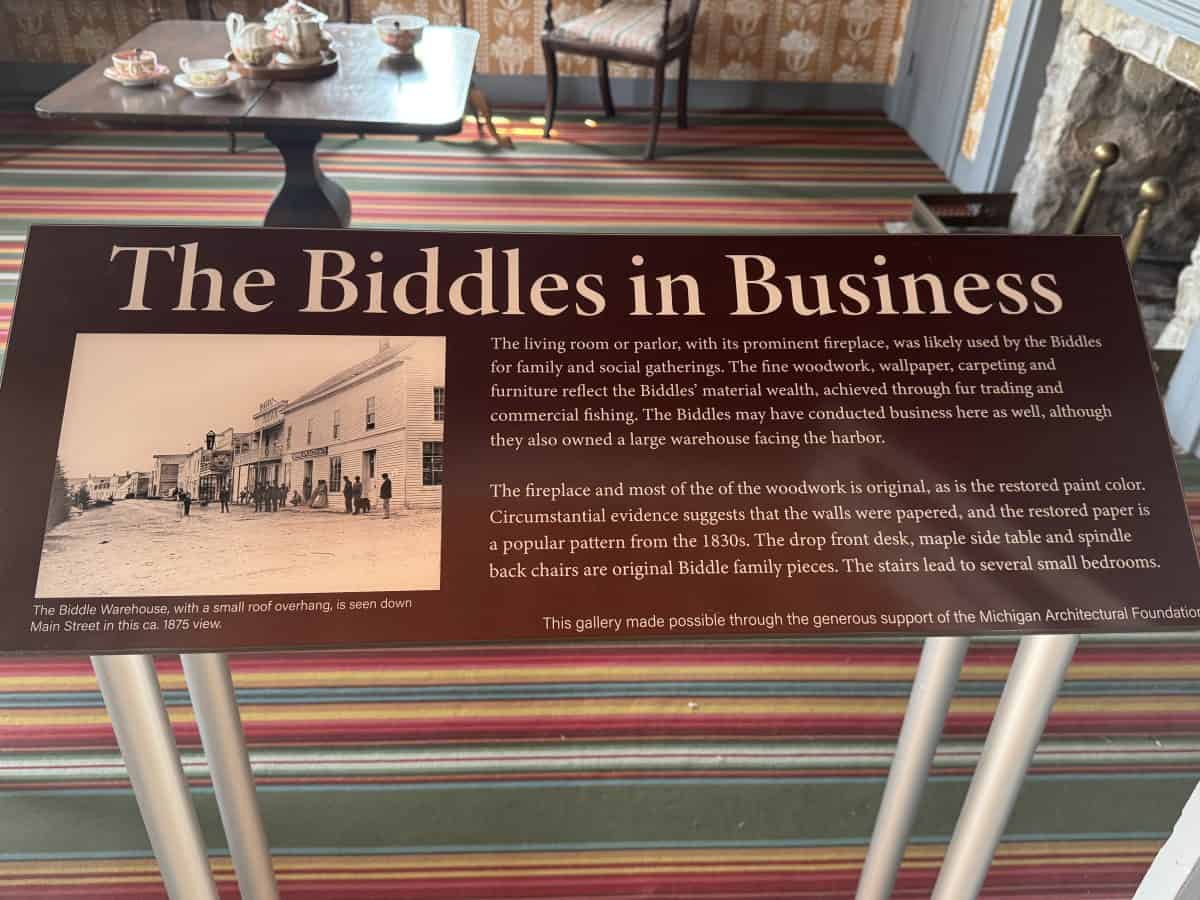
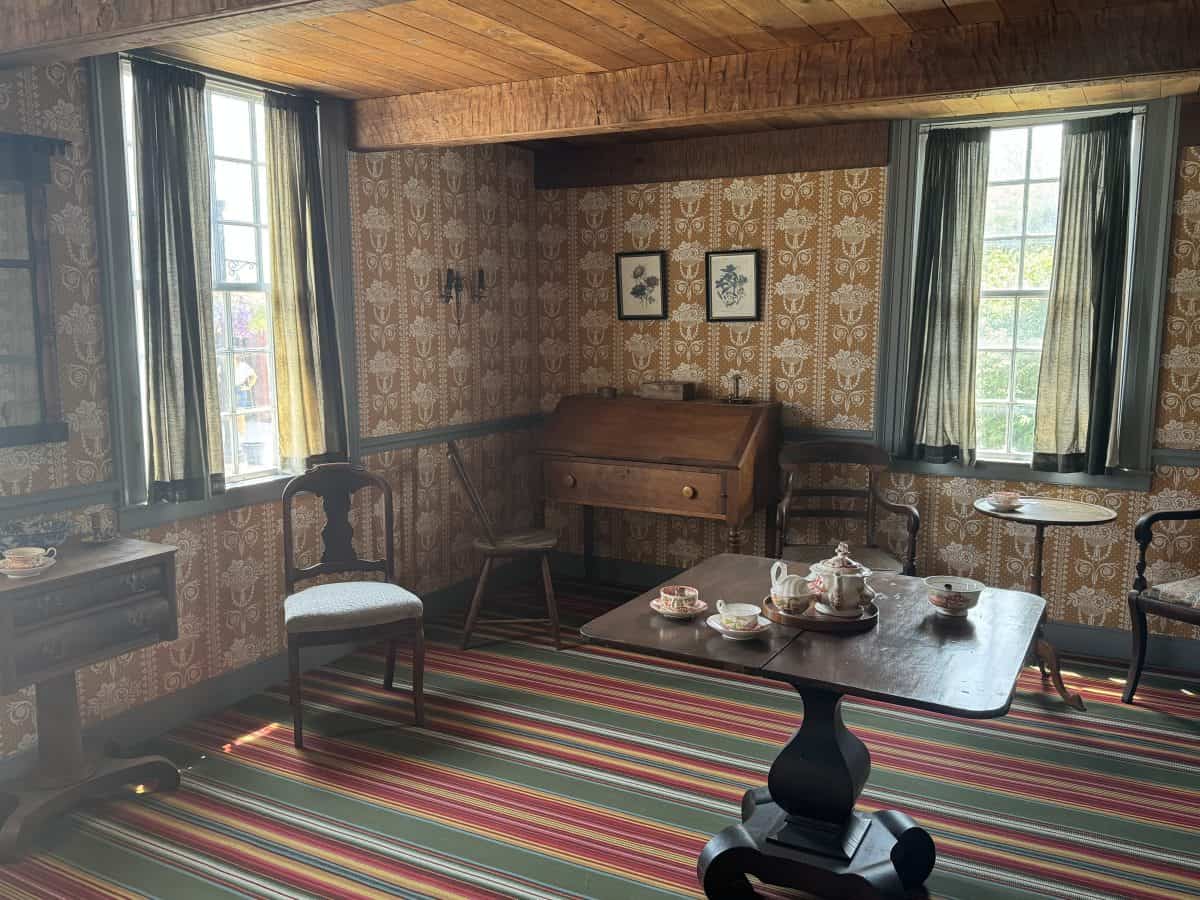
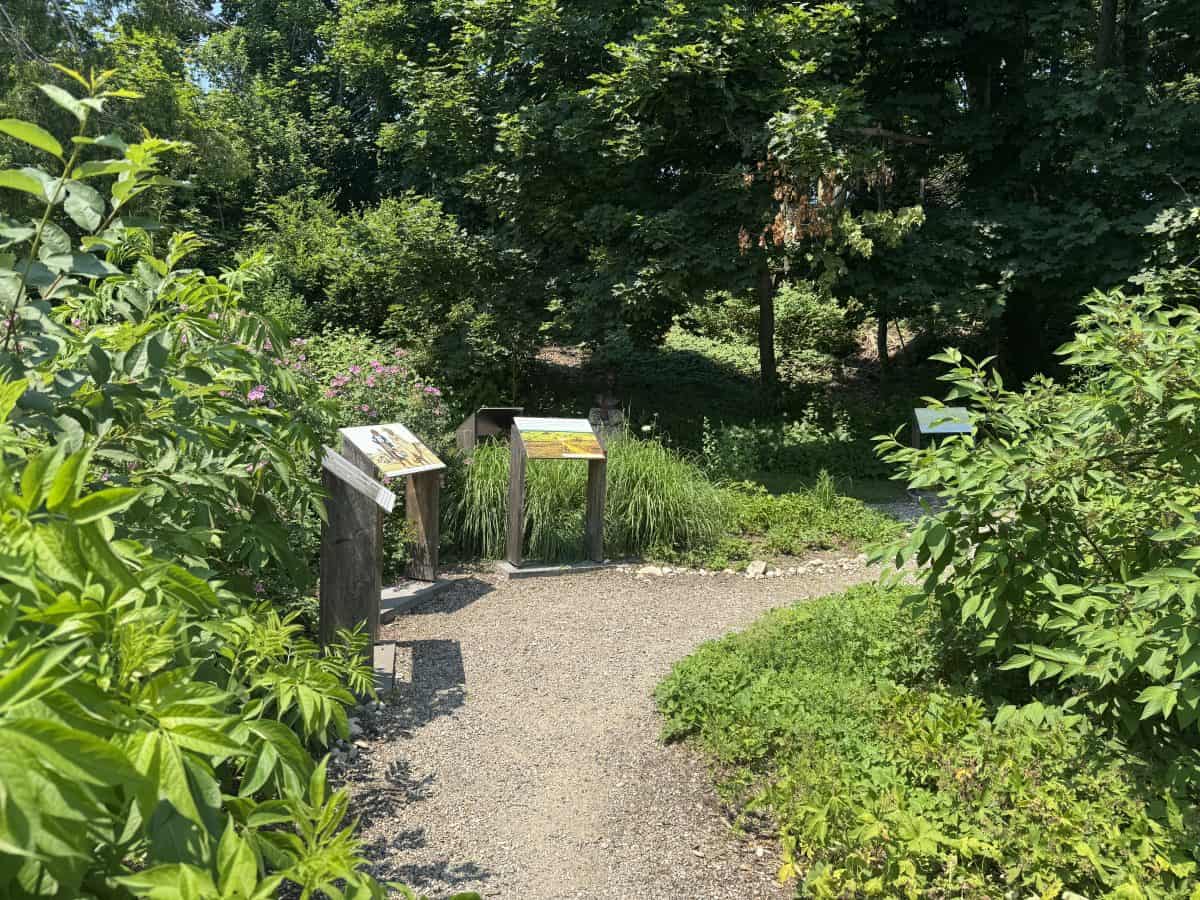
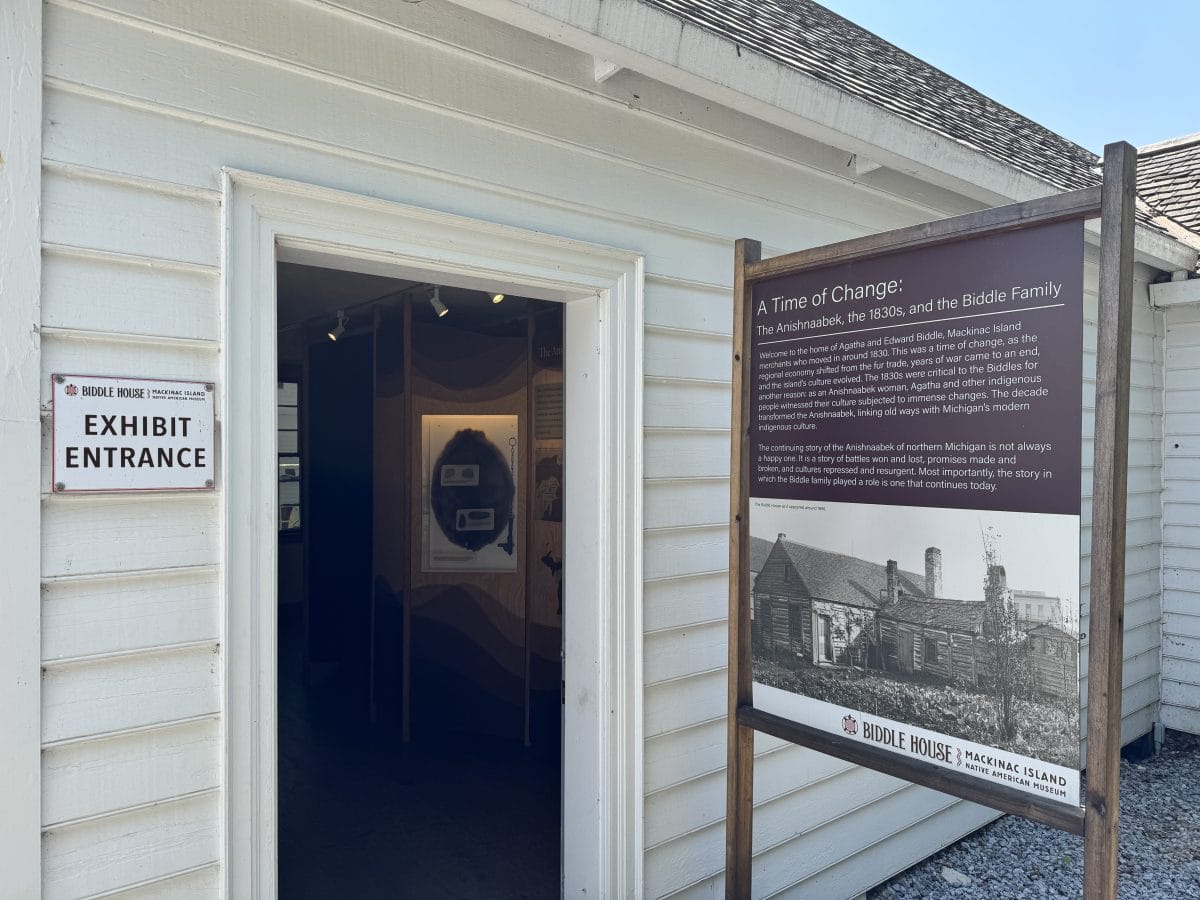
  3. Biddle House, featuring the Native American Museum, was the 1830s the home of Agatha and Edward Biddle. Exhibits follow two centuries of Anishnaabek living on the island and the impact traders had on their land and people. Costumed docents share cooking demonstrations, tours of the recreated house, and themed programs featuring policies and laws that impacted Anishnaabek people. Don’t miss the outdoor trail on the property. 
  4. The Richard and Jane Manoogian Mackinac Art Museum, located on the east side of the island (not ideally walkable from the rest of the sites on this list), features a collective of photographs, decorative arts, maps, and Native American artwork.
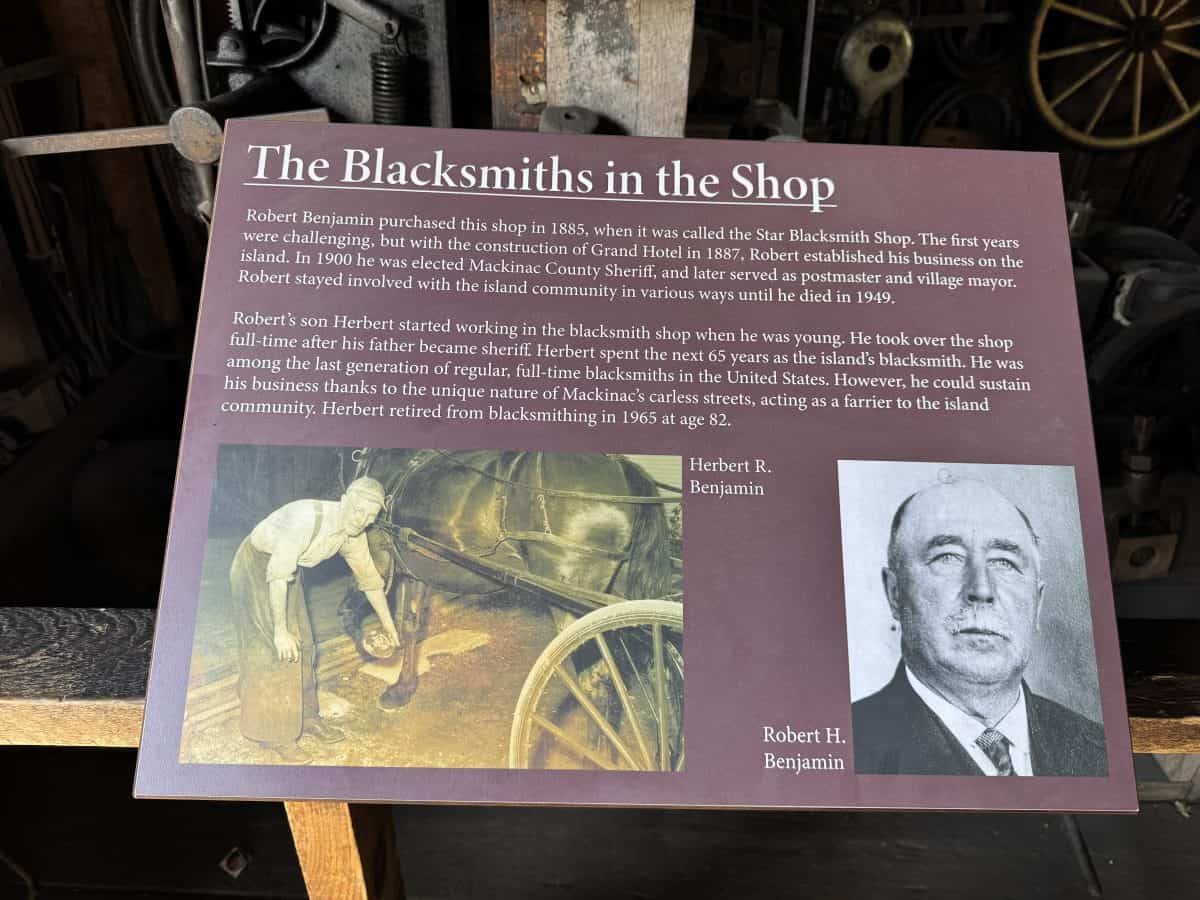
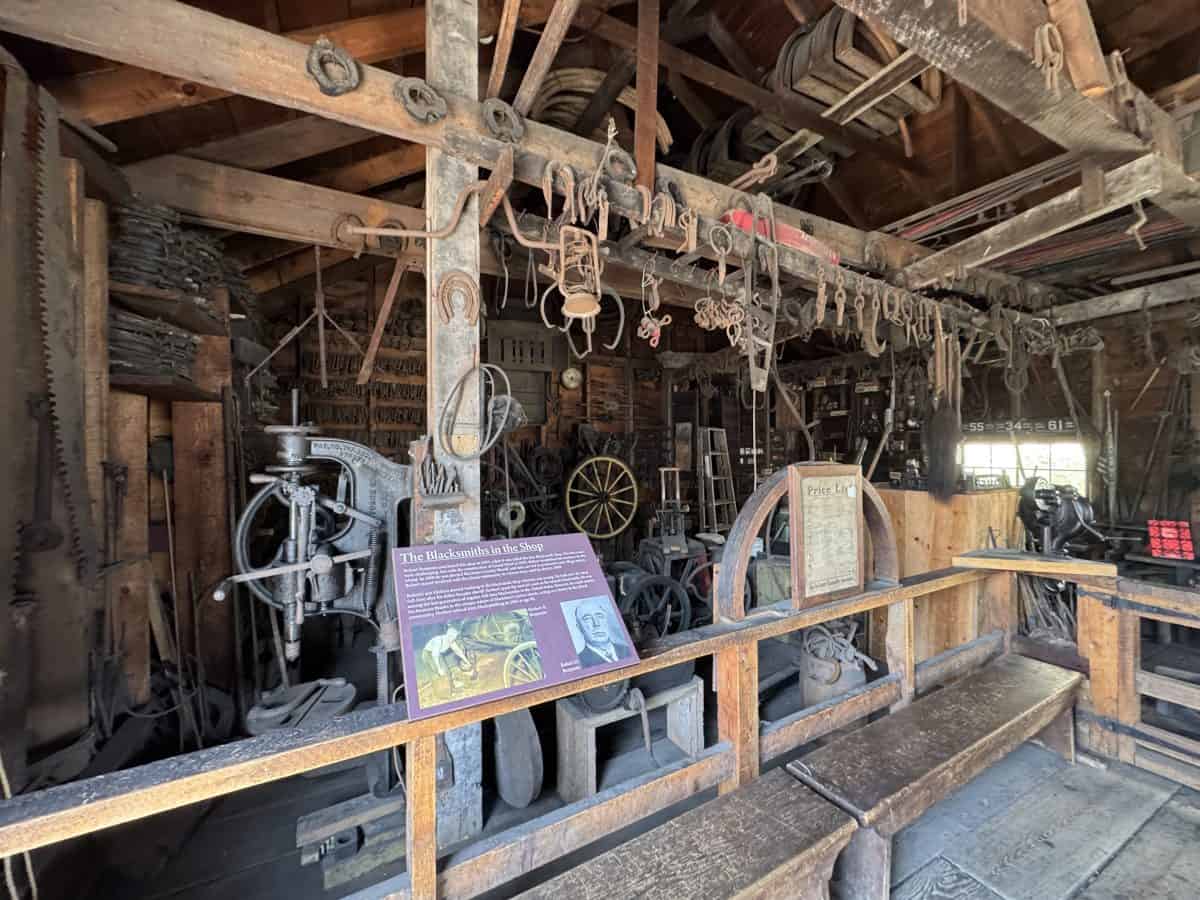
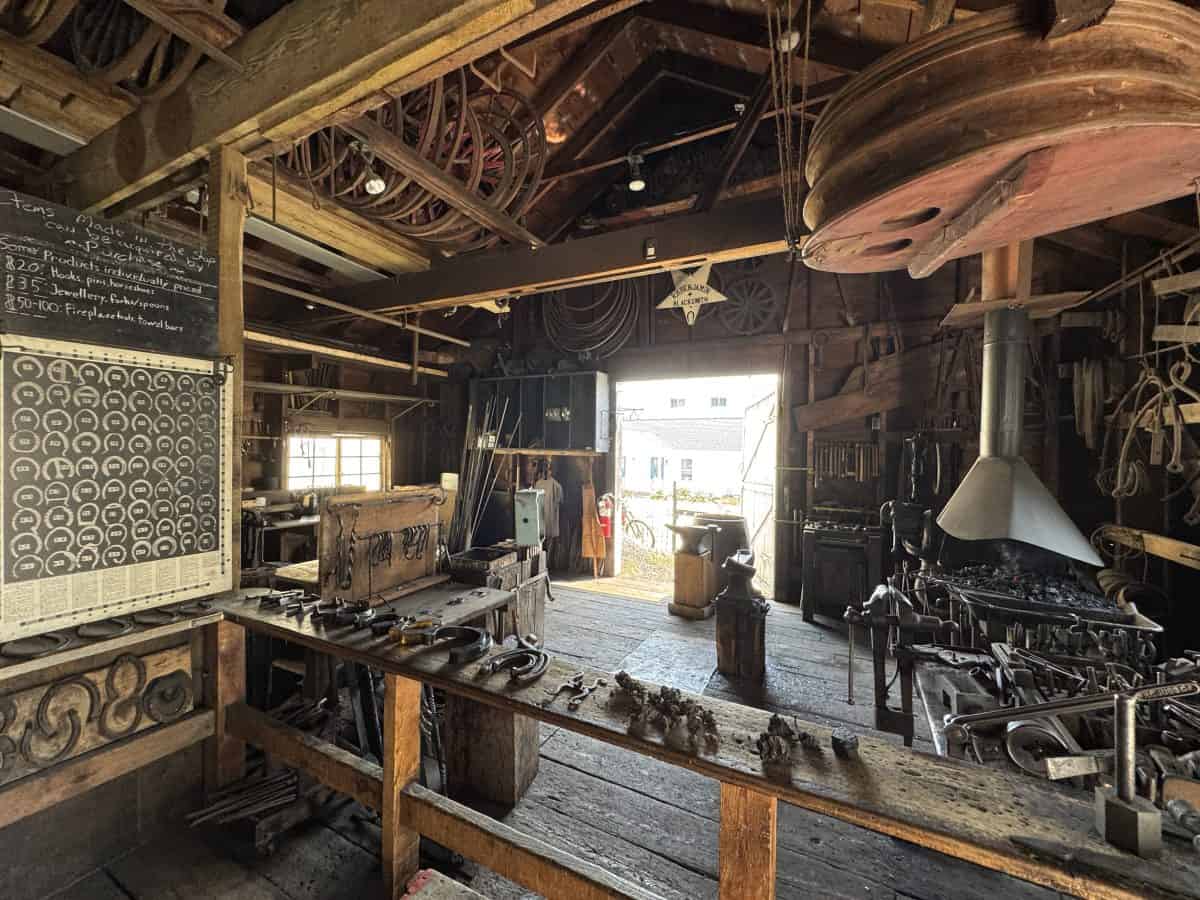
  5. The Benjamin Blacksmith Shop was originally built in the 1880s by Robert Benjamin to fix carriage wheels and horseshoes. Robert’s son Herbert took over the shop until the 1960s, expanding his skills to repair lawnmowers and boat motors into the 1960s. Visitors can see blacksmiths at work, demonstrating how to create various tools. 
Looking for other adventures nearby? Check out our feature of Colonial Michilimackinac and Old Mackinac Point Lighthouse, located over the bridge in the city of Mackinaw. And follow along on our adventures on Instagram, Pinterest, and Facebook.

Similar Posts

  • | | | | | | | | |

    20 Family Friendly Places to Explore in Philadelphia, PA

    Philadelphia, Pennsylvania’s largest city, is known for many things: being the “City of Brotherly Love”; the home of the cheesesteak, the first bank, and the Liberty Bell; and the place where “eagles fly.” Home to over one million people and less than a two hour drive from both New York City and Baltimore, it’s probably most know for being the first capitol of America and the location of the signing of the Declaration of Independence. There certainly is a lot of history “preserved” in Philadelphia, but there’s also a ton of other ways to explore the city with kids. Before you head to Philadelphia, check out VisitPhilly.com for tons of recommendations, itineraries, and calendars. The website is well organized and has suggestions organized by neighborhood, season, or family friendly activities. If you’re planning on visiting for a few days, consider purchasing a CityPass or Philadelphia Pass, both of which offer substantial savings if you visit multiple locations (most of which are on my top 20 list).

  • | | | |

    Playing “I Spy” at the Yale University Art Museums in New Haven, CT

    The city of New Haven, Connecticut is most notably home to Ivy league Yale University, and Yale University (amongst other things) is home to two exceptional art museums, both free and open to the public year round. The Yale University Art Gallery (YUAG), founded in 1832, features nearly 300,000 objects in its collection. The YUAG is the oldest university art museum in America and includes plenty of classrooms, workshops, and opportunities for the public to both visit and study at the museum. The Yale Center for British Art  (YCBA) (located directly across the street) is the largest museum, located outside the United Kingdom, dedicated to British art, with over 20,000 drawings, 2,000 paintings, 250 sculptures, and 40,000 volumes in the museum’s research library. The museum opened to the public in 1977 and features four floors of permanent and rotating exhibits.

  • | |

    10 Lessons We Learned from Exploring National Parks

    We just wrapped up a pretty great summer that included an awesome (in the real denotation of that word) road trip from Nevada to Connecticut. We explored nine National Parks, bringing our total to 12 National Parks (read about our adventures at Acadia and Great Smoky Mountains). We wrote a post about why we love National Parks a few years ago and have since added more reasons to explore NPS sites.

    In the coming weeks, we will share guides to all nine parks we explored this summer (Zion, Bryce Canyon, Capitol Reef, Canyonlands, Arches, Rocky Mountains, Mount Rushmore, Wind Cave, and Badlands). But first, we thought we’d start with some of lessons we learned and how they translate outside of the parks, too:

  • Before You Go

    Whether you’re planning your first vacation or are an experienced adventurer, traveling with children can be a challenge. Without proper planning and preparation, even a local weekend getaway can quickly take a turn for the worse. In all of my experience planning and embarking on driving vacations with my family throughout the United States, I have found that these simple guidelines can make a huge difference, and will lead to an exciting, stress-free vacation that creates lasting memories, and strengthens family bonds. So before you go, run through this list to make the most out of your trip.

  • | | |

    Playing “I Spy” at Victoria Mansion in Portland, Maine

    Ruggles Sylvester Morse and his wife Olive Ring Merrill Morse were prominent New Orleans hotel proprietors in the 1850s when they decided to leave the summer heat of the South and build a house in Portland, Maine. The house, built in the Italian Villa style, was finished in 1860 and the couple lived there until Morse passed away in 1893. Olive sold the mansion, and all its contents, to J.R. Libby, who lived there with his wife and five children until the parents died in the early 1920s. After the Great Depression of the 1930s, the children could not afford the upkeep and taxes on the mansion and abandoned it. William Holme, a local teacher and historian who loved the Queen Victorian era, bought it to be preserved as a museum, named after Queen Victoria. 

    The Victoria Mansion Museum opened in 1941 to the public, who are welcome to tour two of the four floors of the mansion. Each room has been restored to its original, mid 1860s glory, with authentic furnishings purchased by the Morse family. 

  • | | |

    The Titanic Museum in Pigeon Forge, Tennessee

    Most people know of the Titanic disaster from the popular 1998 film by James Cameron starring Leonardo DiCaprio and Kate Winslet. But how much do you really know about the ship that was the length of 4 city blocks took 15,000 people two years to build, and less than three hours to sink in the early morning hours of April 14, 1912, with only 712 of the 2208 passengers and crew members surviving?

    On a recent visit to Pigeon Forge, Tennessee, we spent the morning exploring the Titanic Museum, located right on Route 441 in the heart of all the action (and less than a half hour from an entrance to the Great Smoky Mountains National Park. Read about our adventures in the park here). The other Titanic Museum in America is located in Branson, Missouri.

Leave a Reply

Your email address will not be published. Required fields are marked *