Exploring Colonial Michilimackinac in Mackinaw City, Michigan

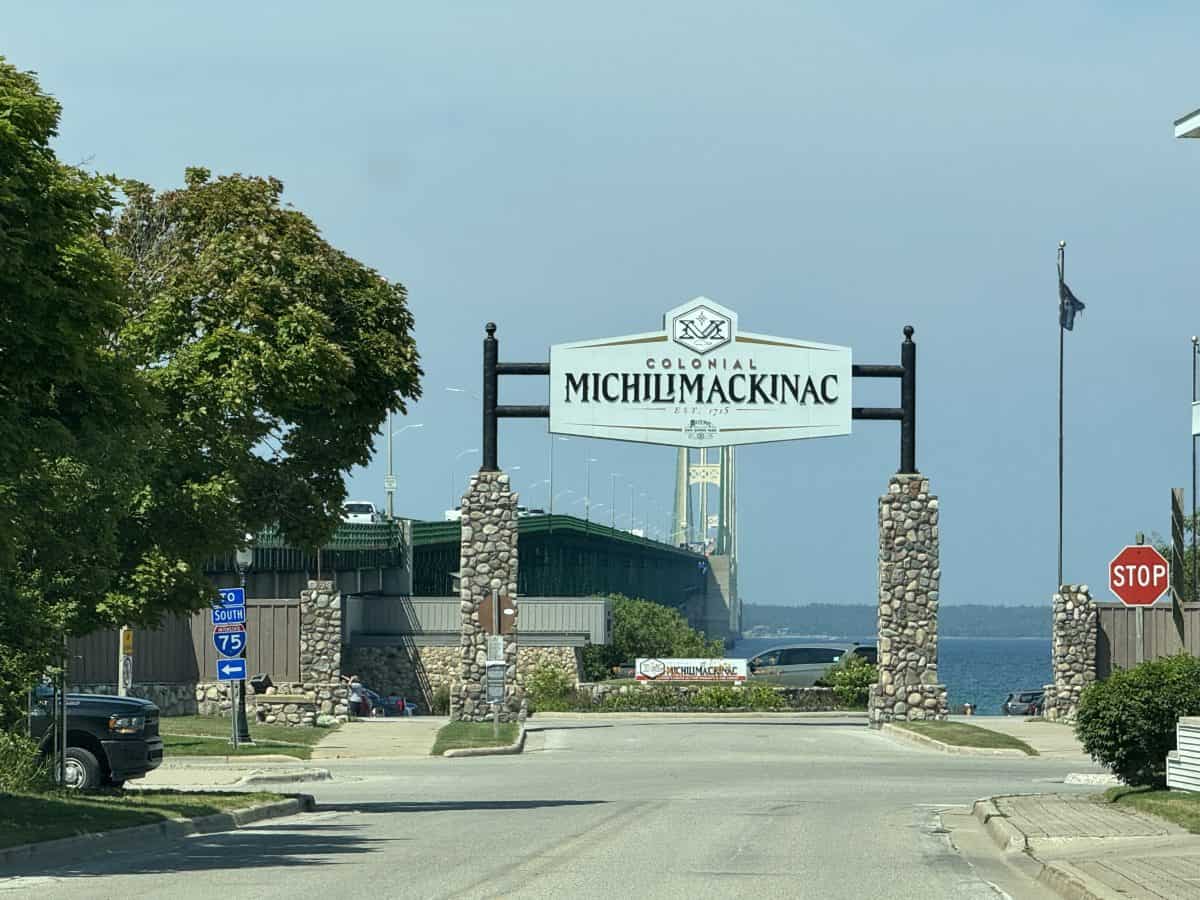
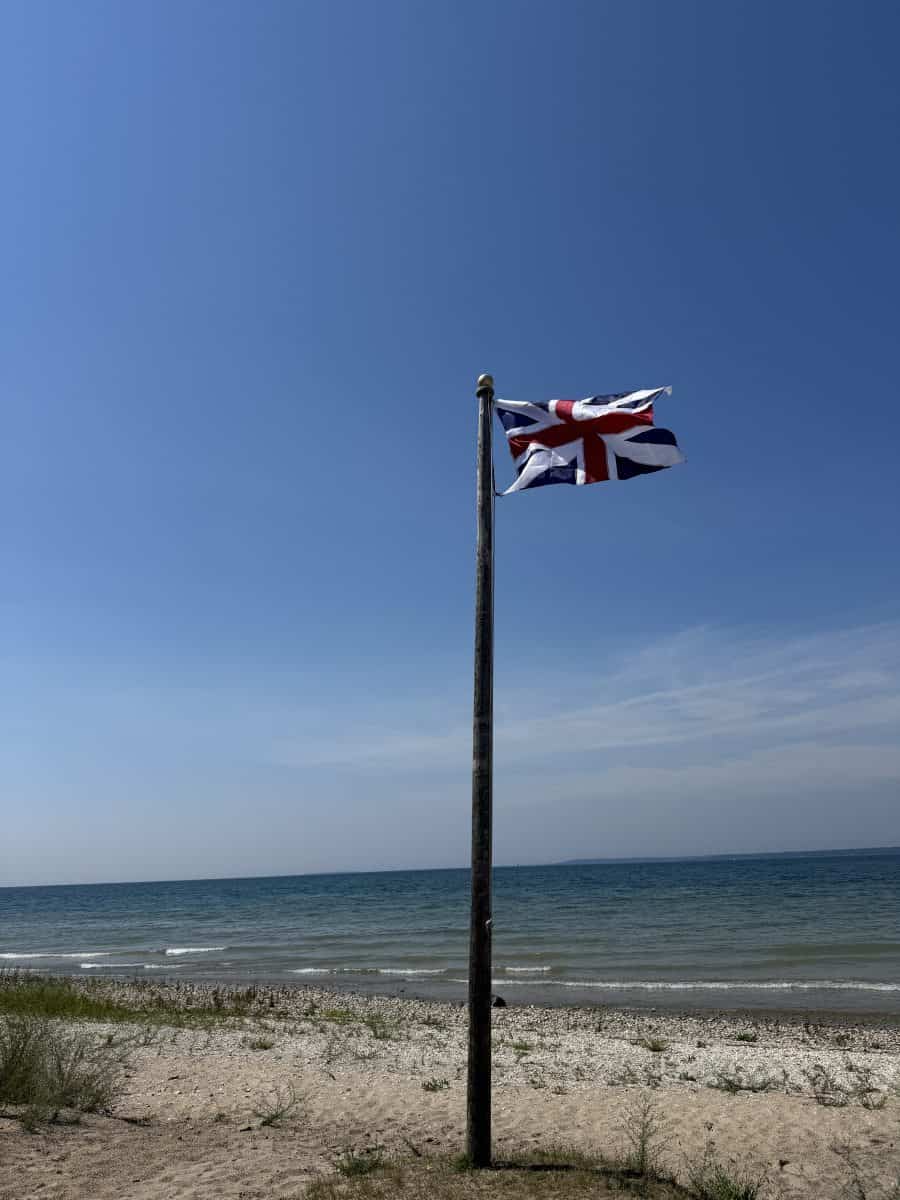
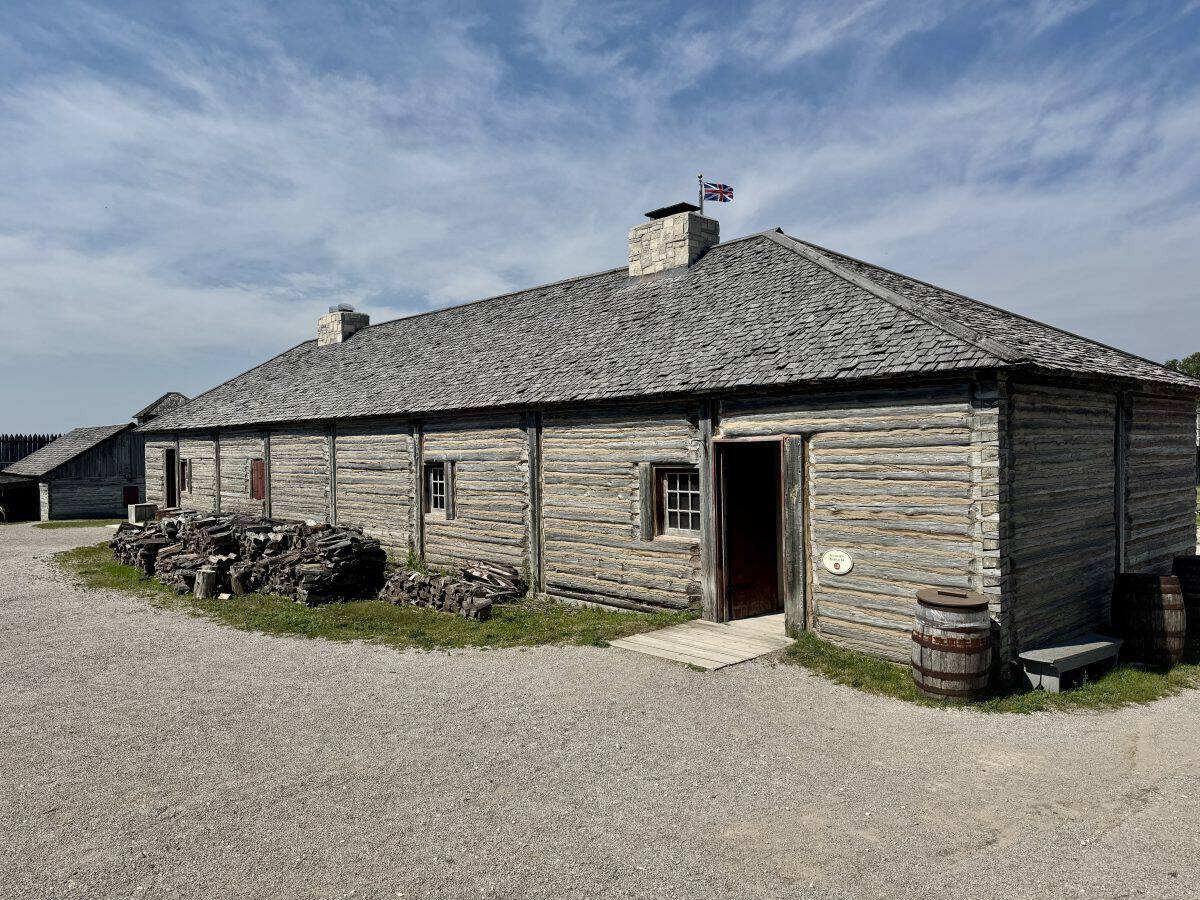
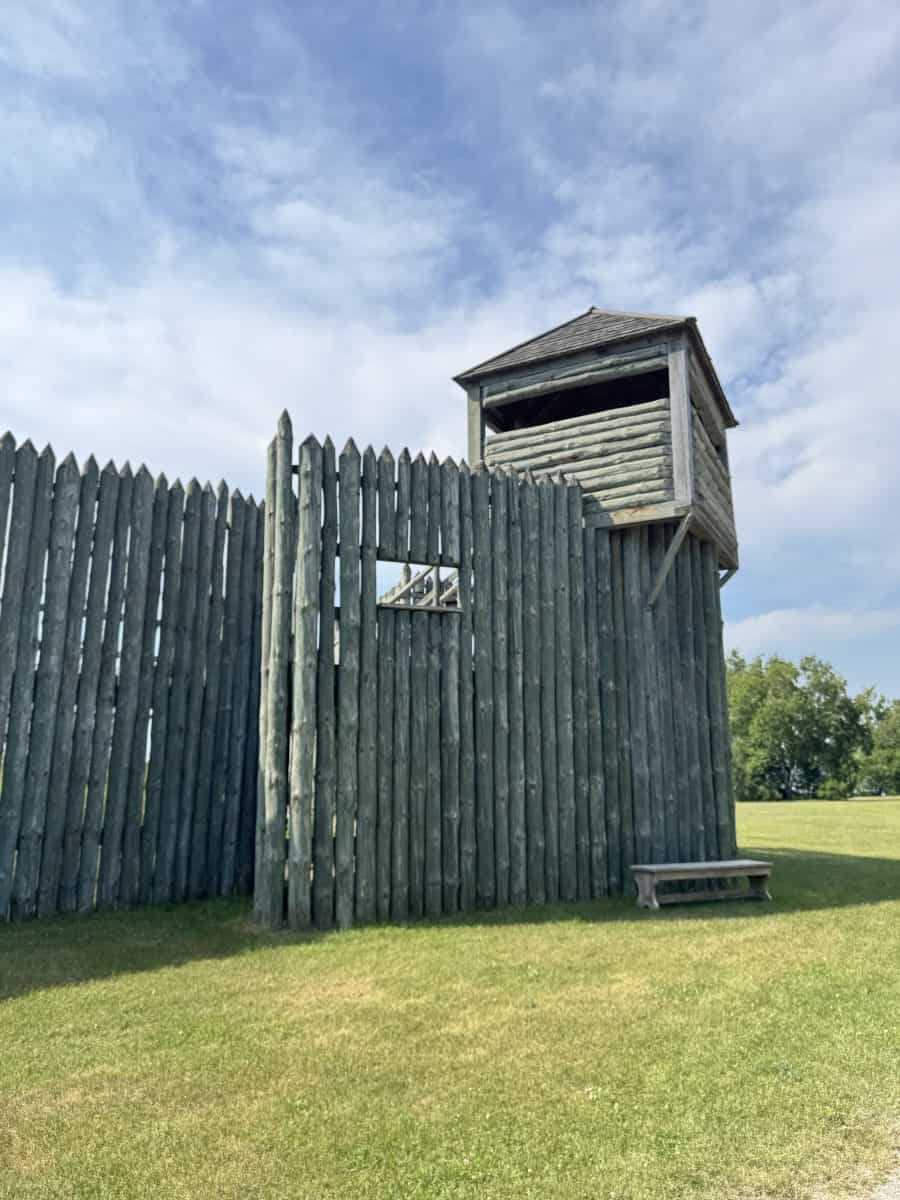
A visit to Colonial Michilimackinac in Mackinaw City, Michigan, is like traveling through a time machine to 1776, when British forces were overtaking land in northern Michigan and the American Revolution was beginning. Located on the shores of Lake Michigan and the Straits of Mackinac and next to the Mighty Mac Bridge (bringing travelers to St. Ignace in the Upper Peninsula of Michigan), the area was originally occupied by the Ottawa traders. French soldiers came to the area, an ideal spot for fur trading, refueling, and getting new supplies between the northern and southern areas. They built the original fort in 1715 and the area thrived throughout the mid 18th century. After the British defeated the French in the French and Indian War, they seized the fort in 1761 and gained control of the trade industry in the area.

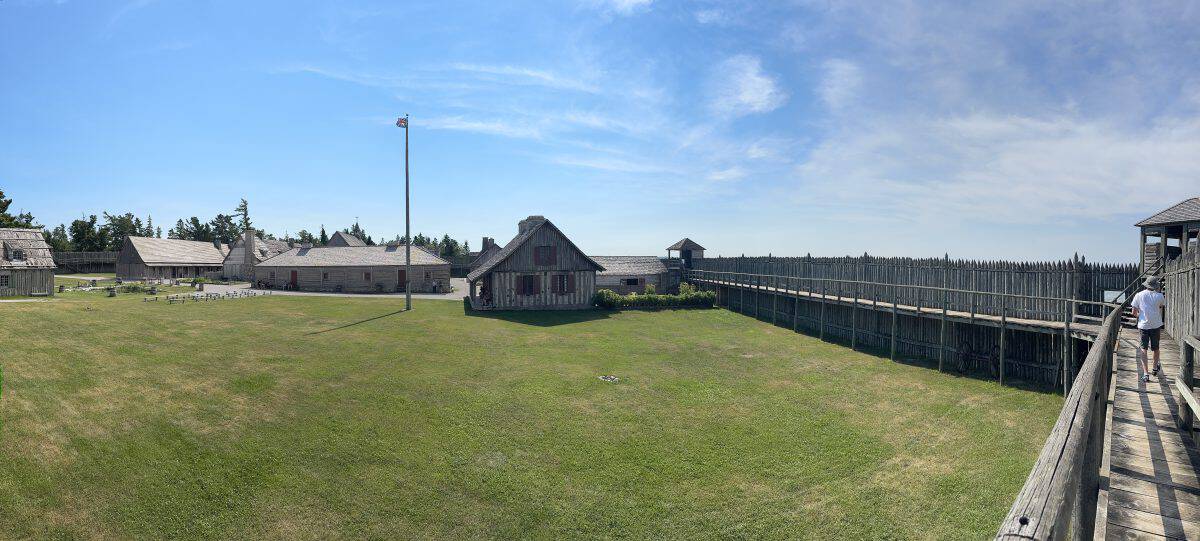
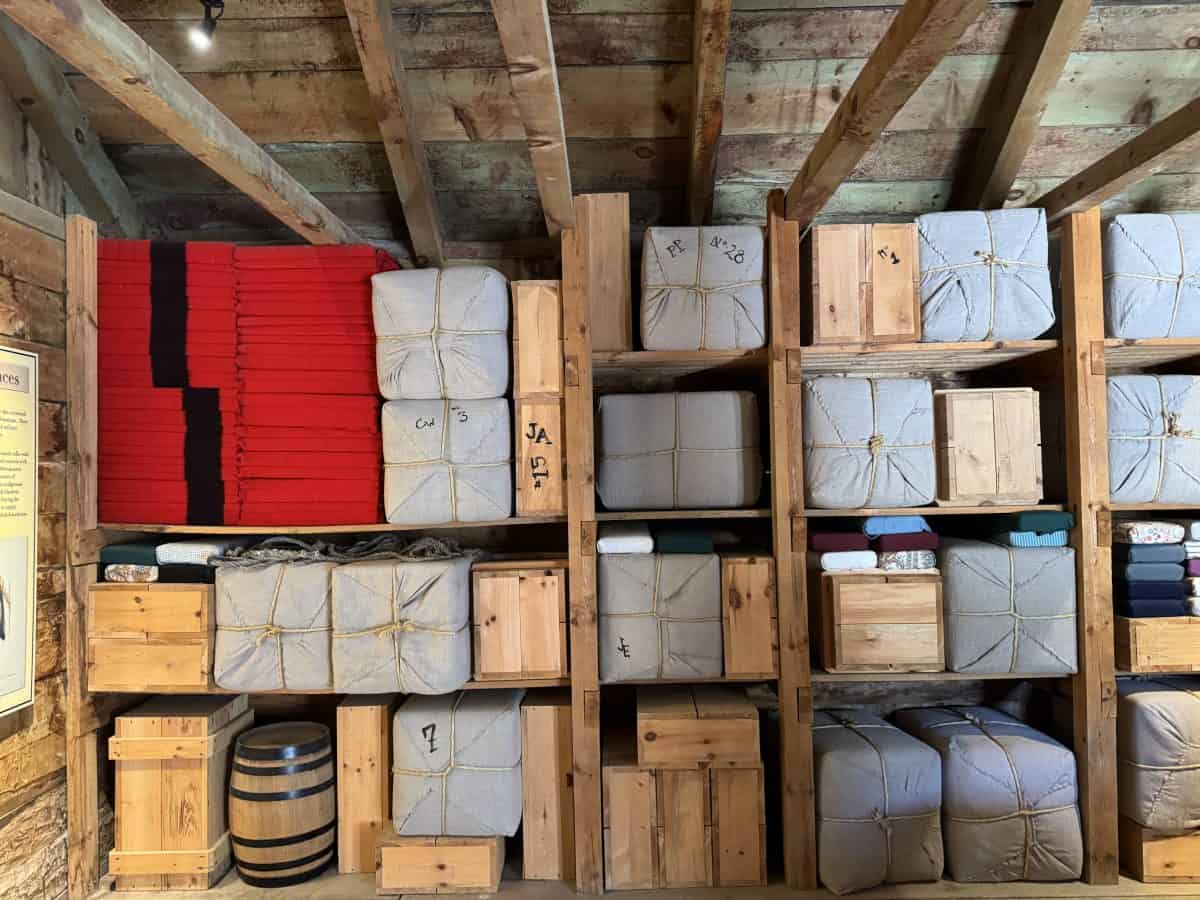
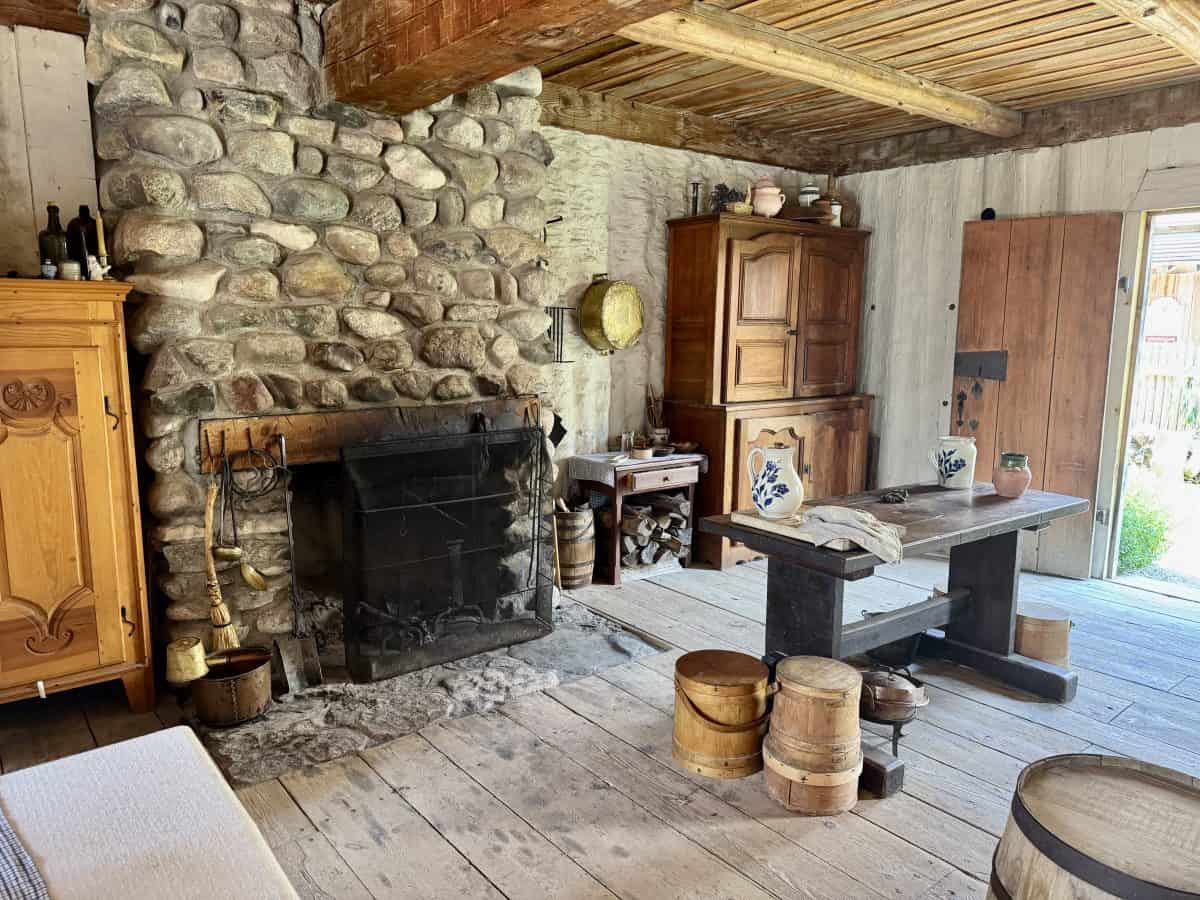
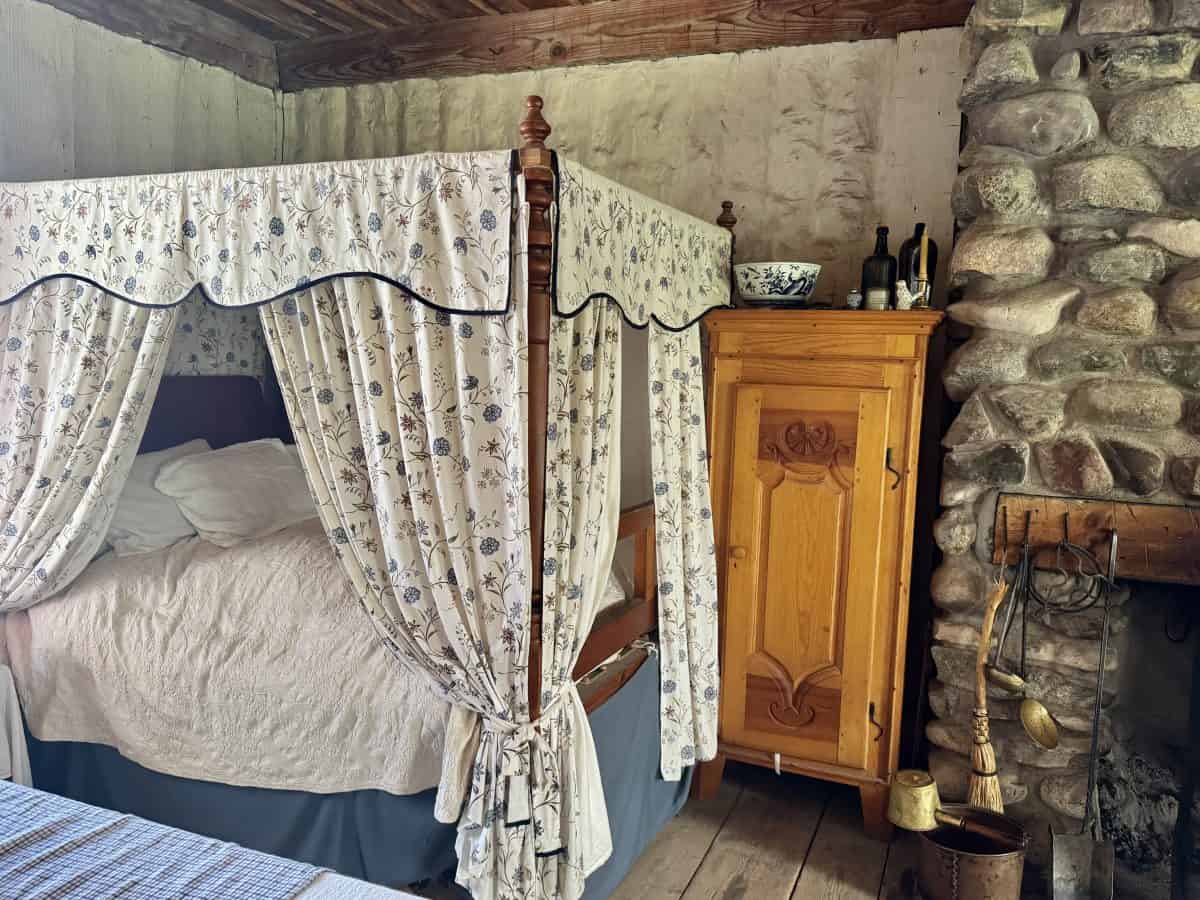
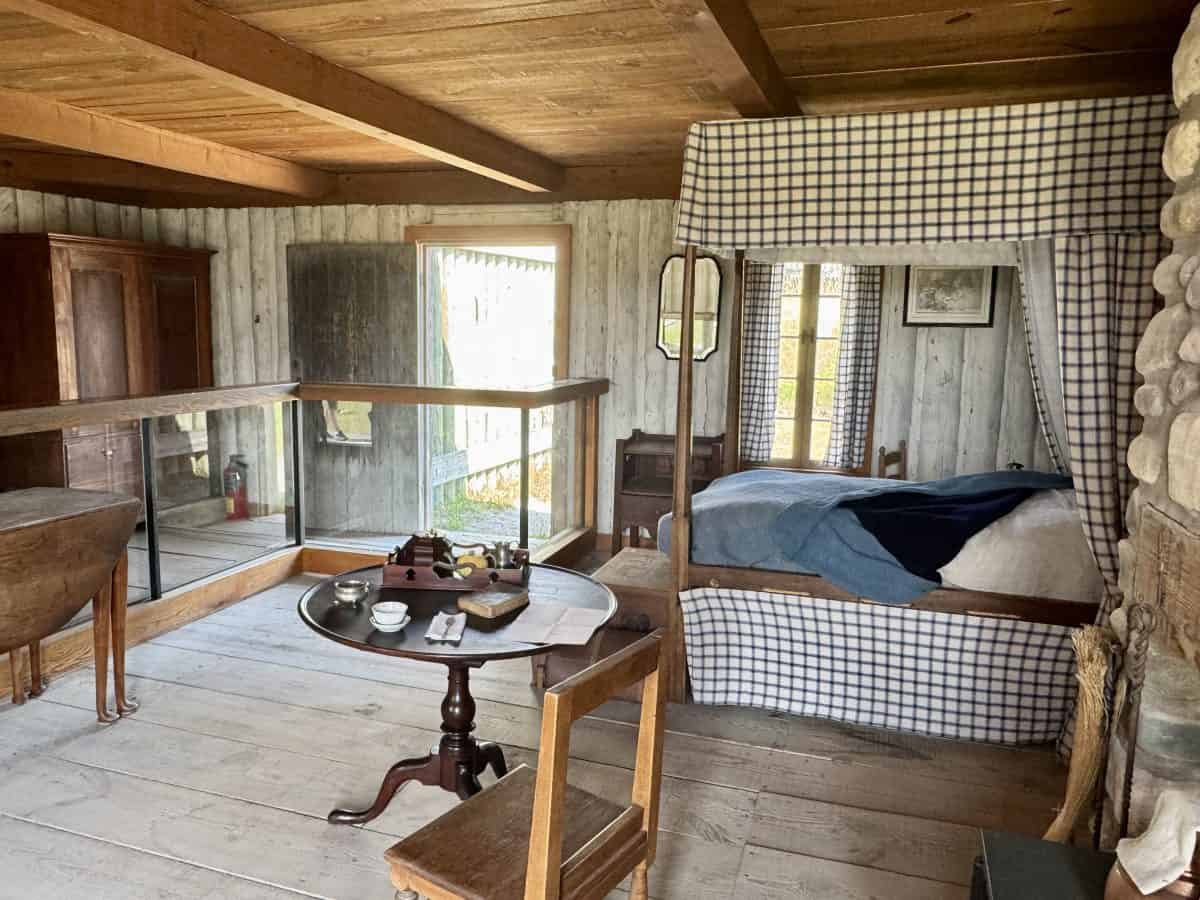
inside the Fort at Colonial Michilimackinac in Maciknaw City, Michigan

In 1781, British troops moved their entire community, and some of their structures and supplies, to nearby Mackinac Island and ordered that everything that remained at the fort be burned and destroyed. Almost a century later, in the 1870s European settlers arrived in the area and established a post office and railroad system, adding two lighthouses before 1900. 
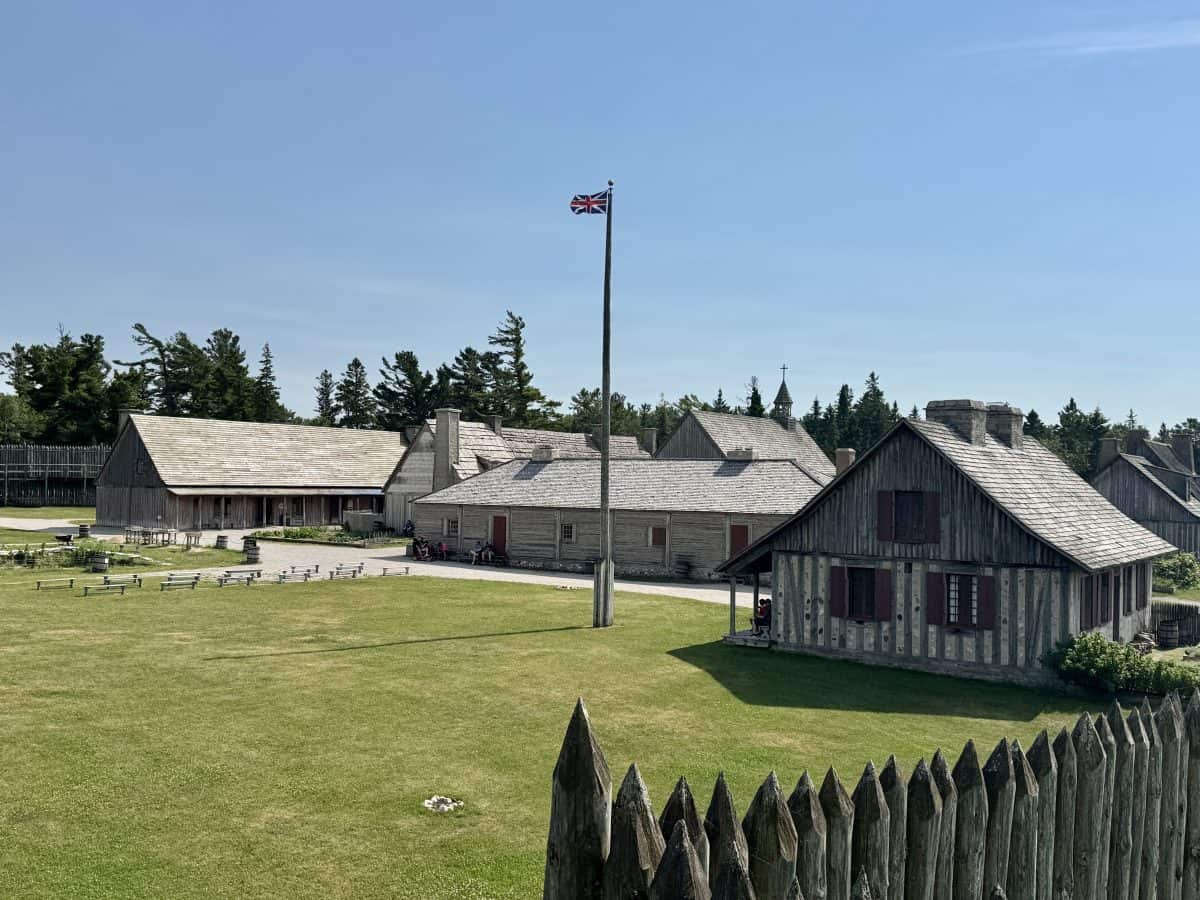
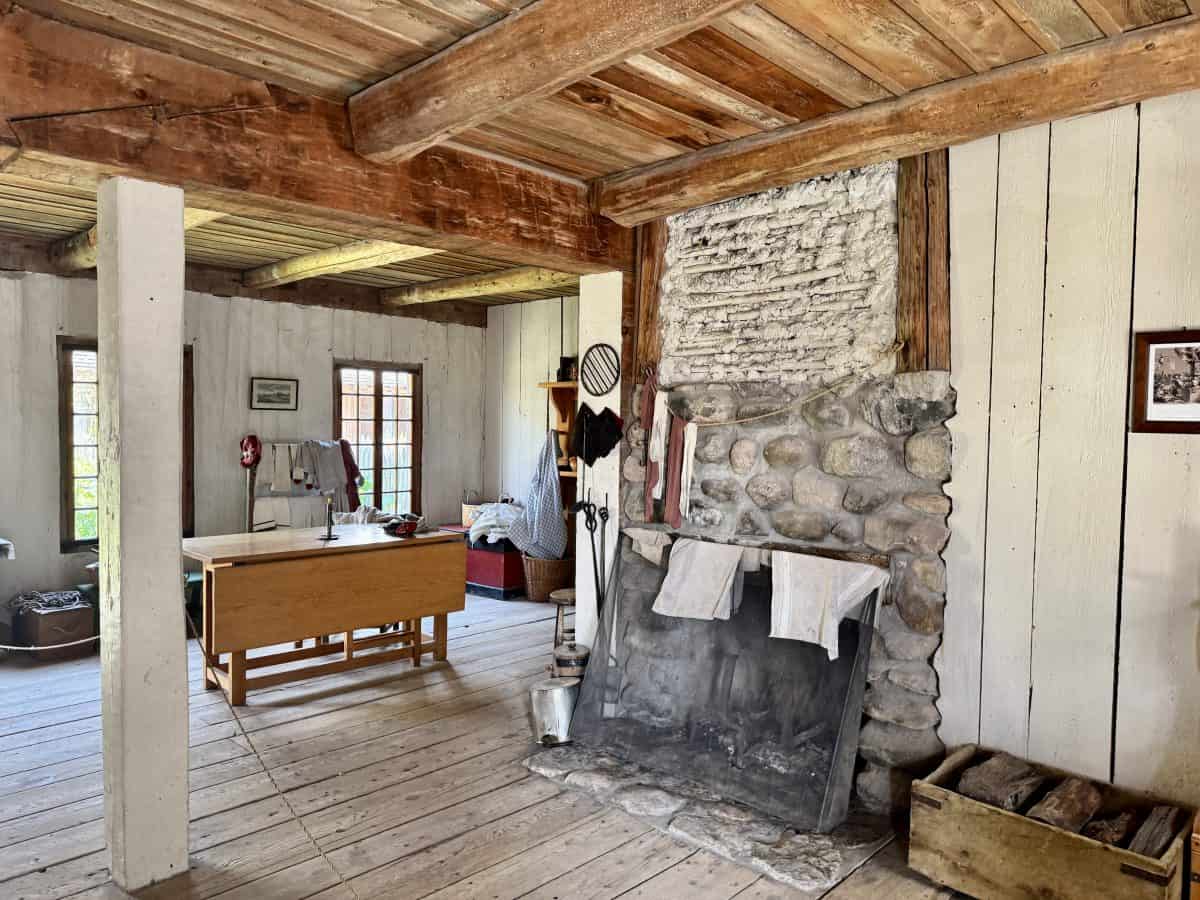
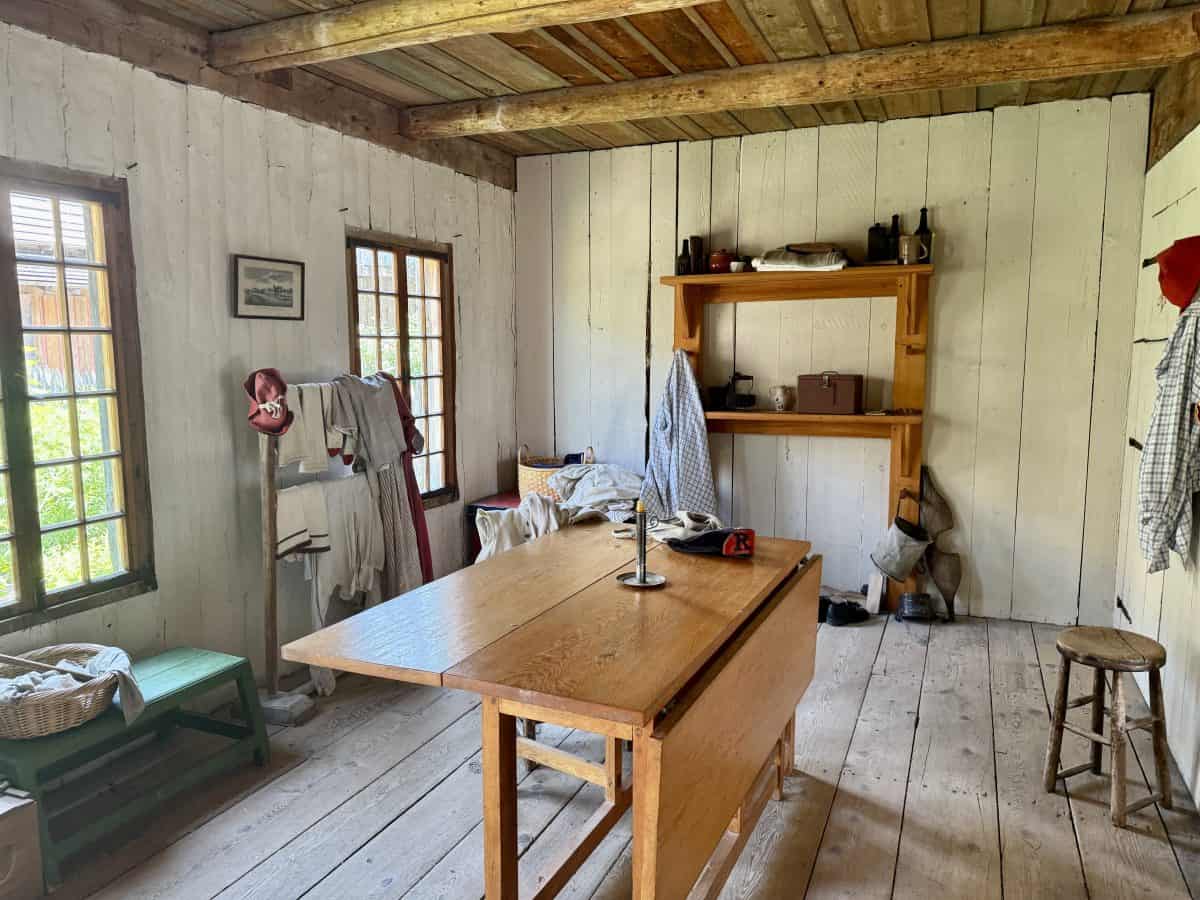
inside the Fort at Colonial Michilimackinac in Maciknaw City, Michigan

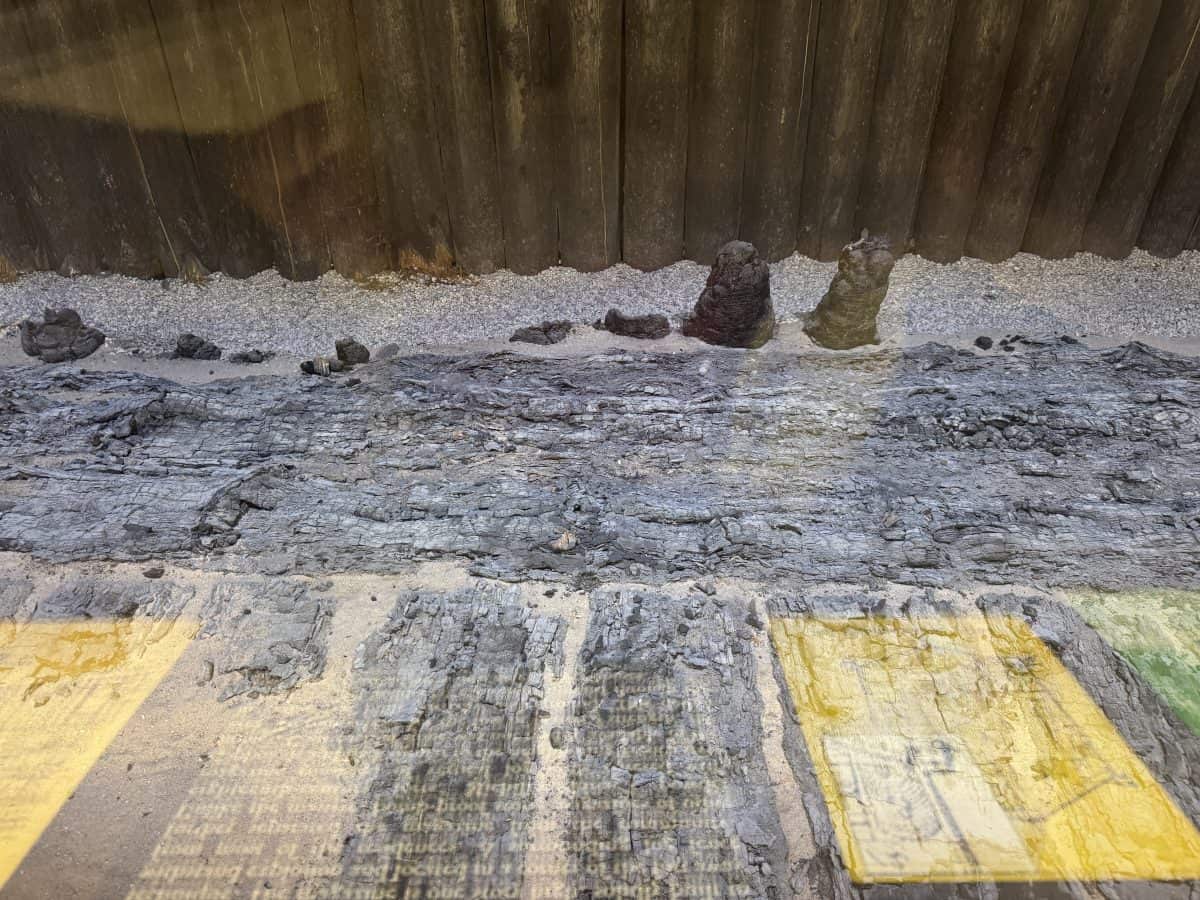
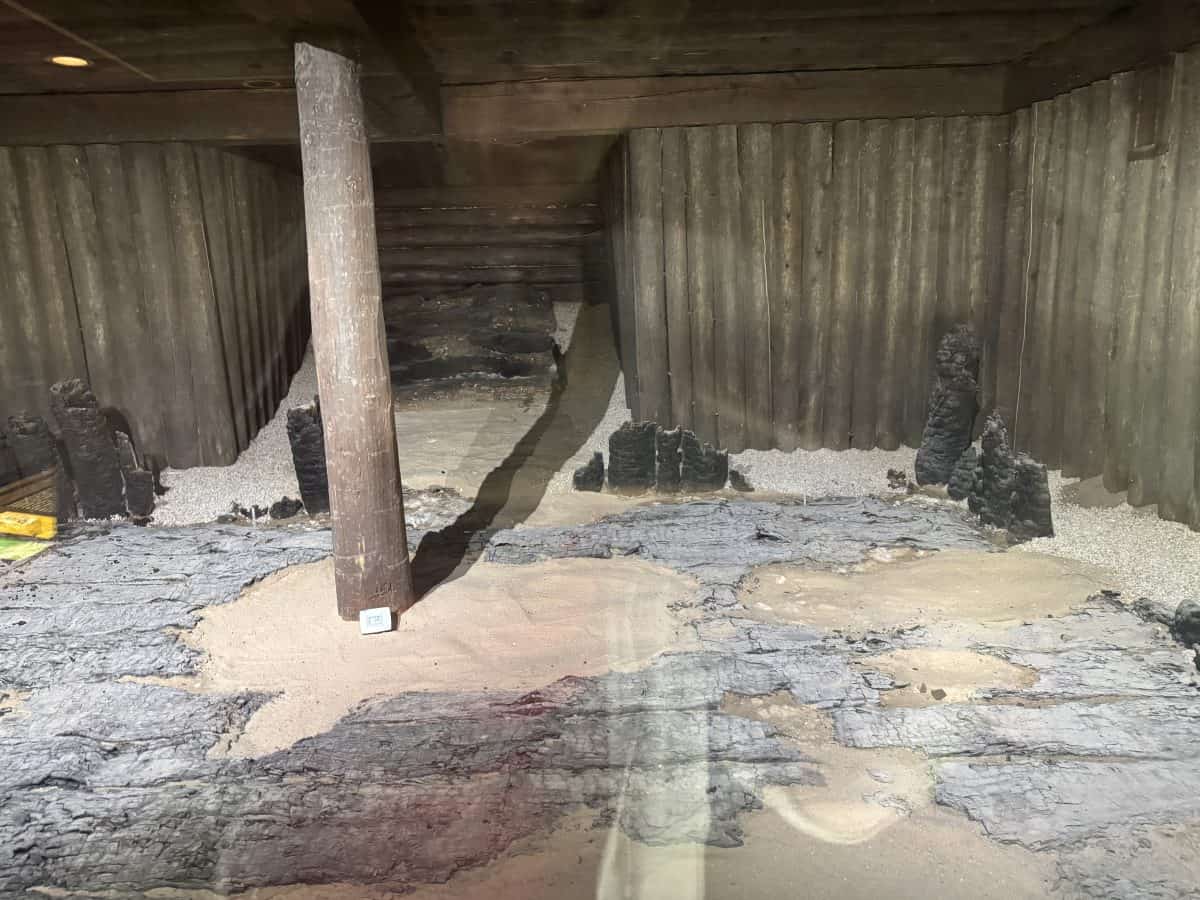
In the early 20th century the state of Michigan designated the 37 acre area a state park and it became a popular summer campsite. A few decades later, the general fort perimeter was reconstructed and a small museum opened to the public. In the late 1950s archaeologists began excavating thousands of buried artifacts, including underground structures, and as of the mid 2020s, approximately 65% of the fort has been excavated. By the 1970s, the campground closed and a formal Visitor Center opened and preservation of the fort became permanent. The Visitor Center was recently renovated in 2025 and now includes a larger gift shop and amenities for visitors. 
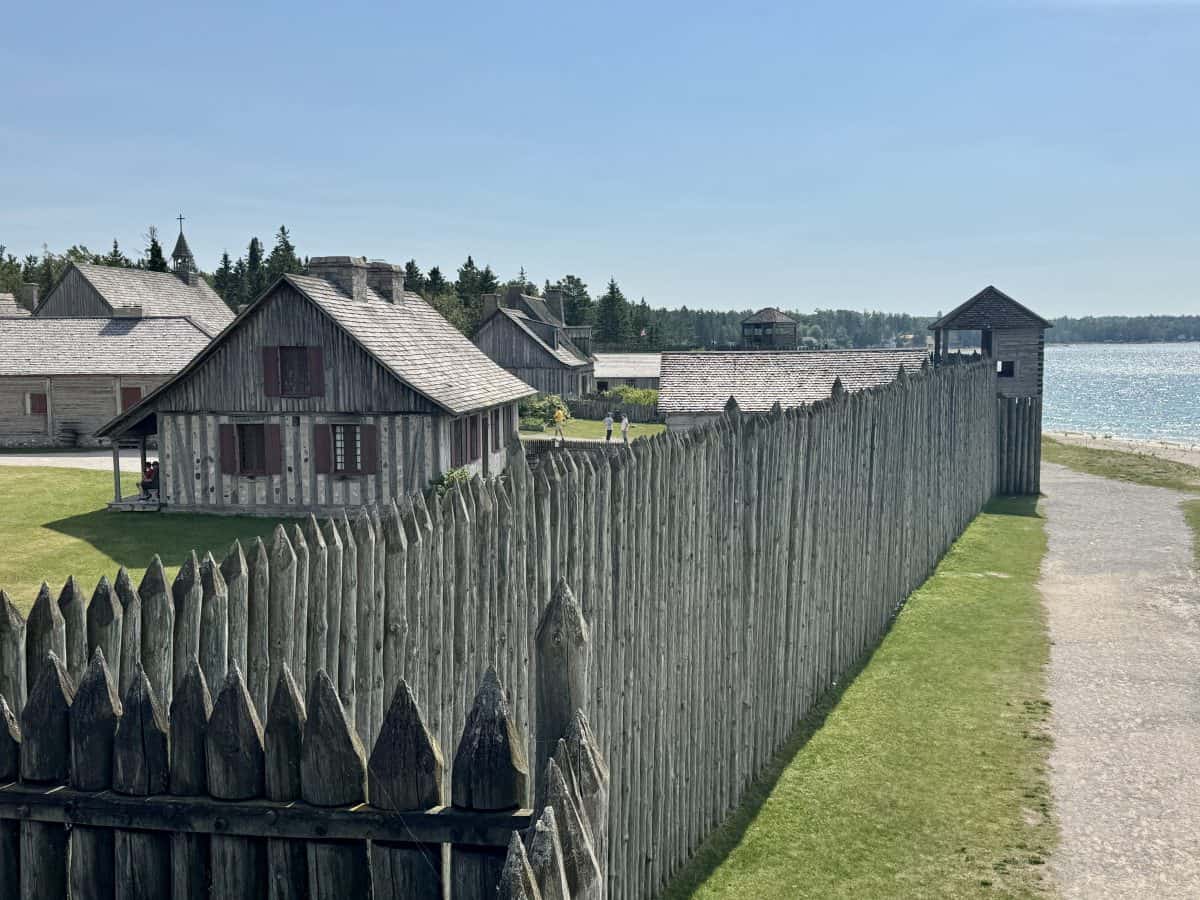
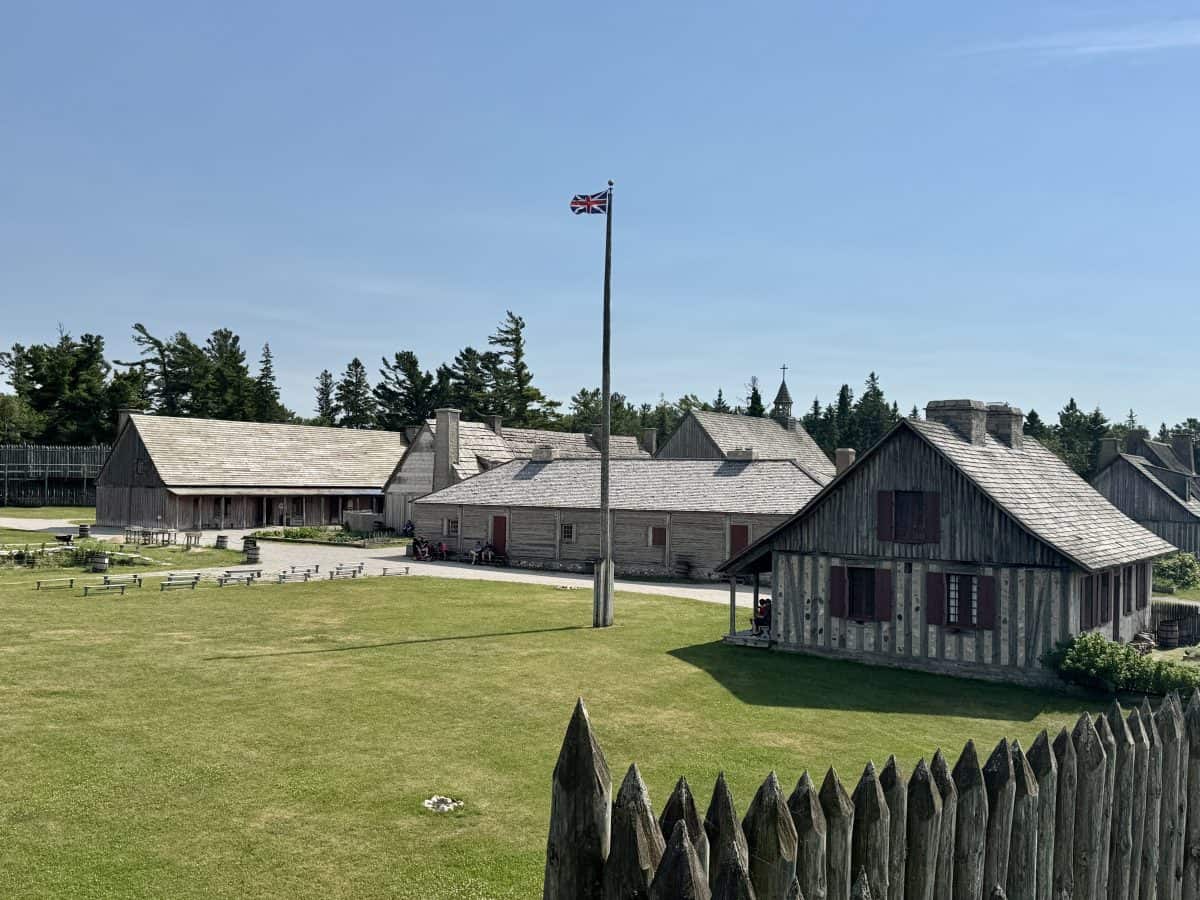
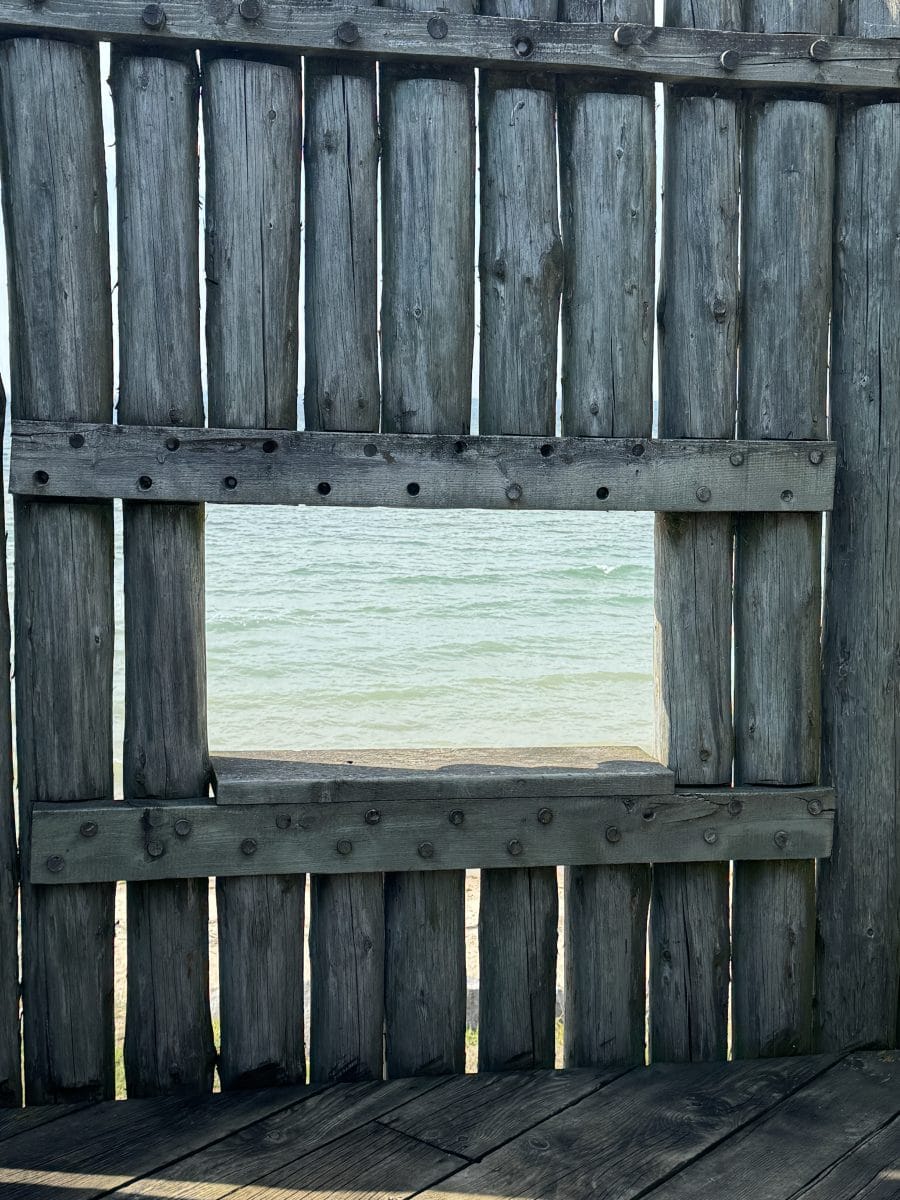
Fort at Colonial Michilimackinac in Maciknaw City, Michigan

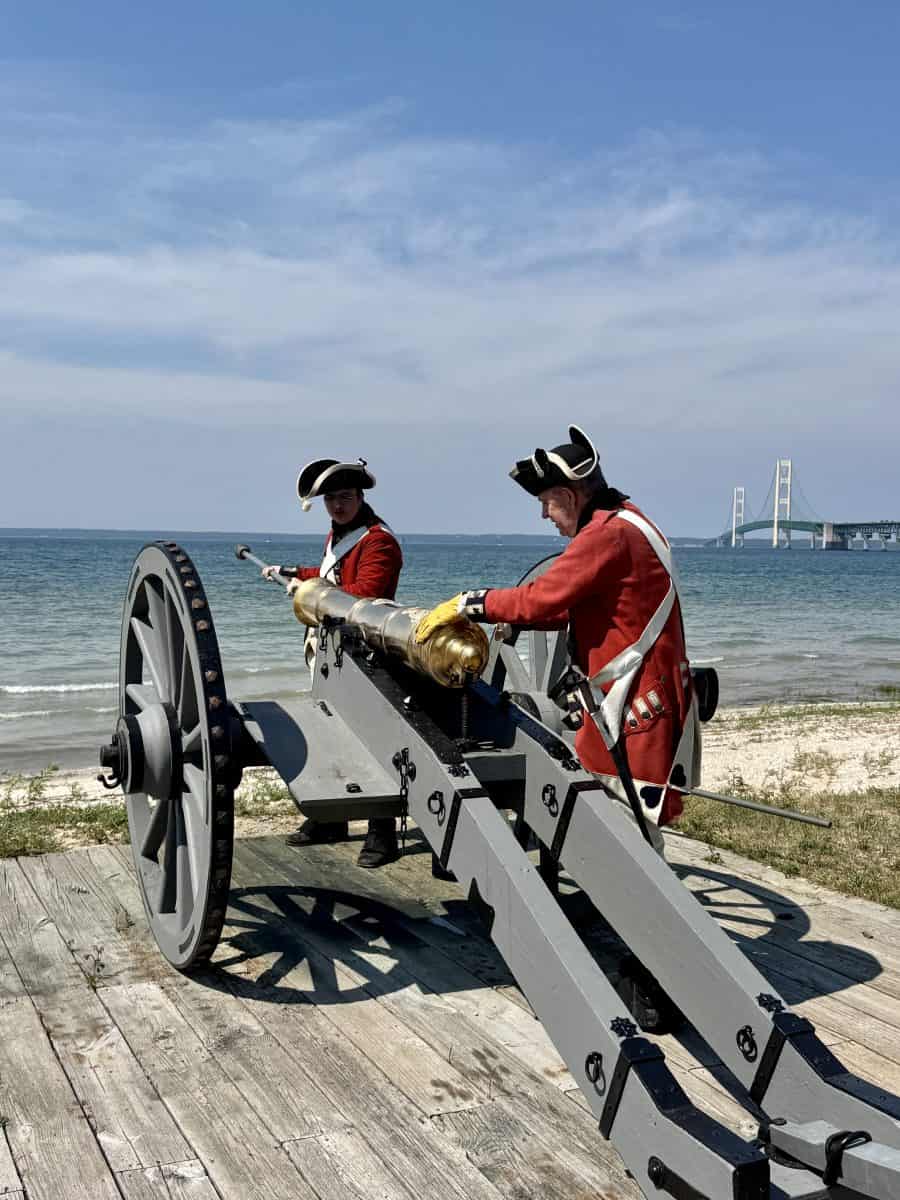
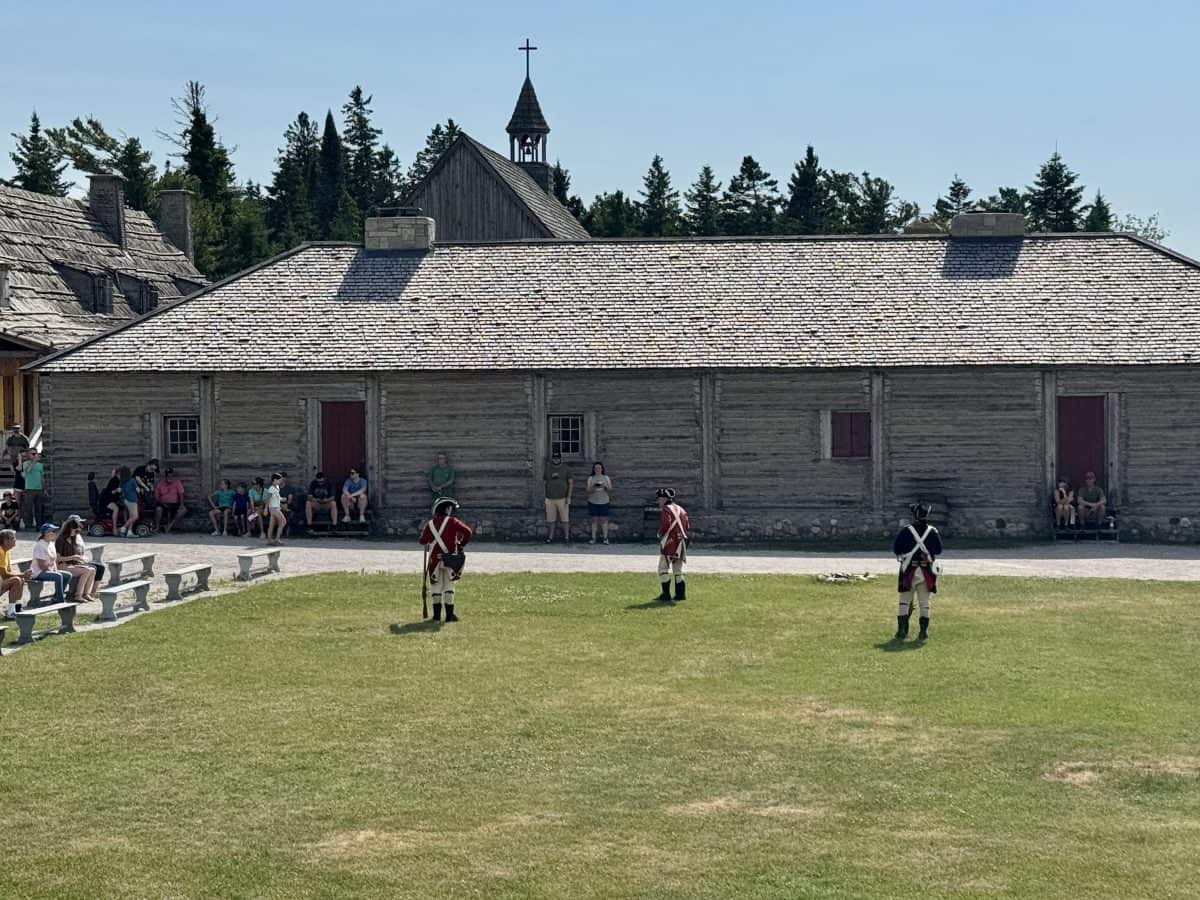
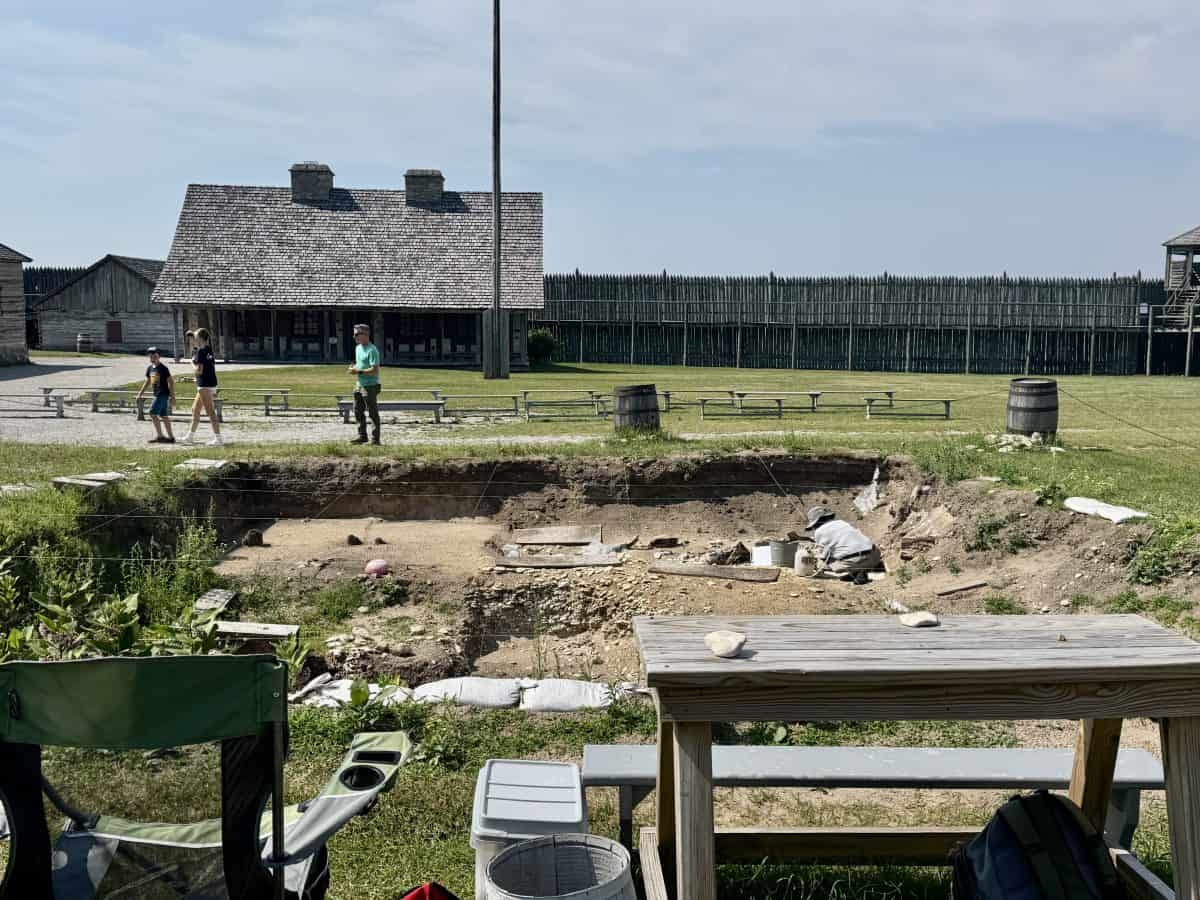
Since the summer of 1959, Colonial Michilimackinac has been the longest, ongoing archaeological program in the United States, with archaeologists working throughout the season uncovering artifacts and even structures of what once stood in the fort. There are also interpreters representing Anishnaabek traders, British soldiers and French Canadian merchants who engage with visitors, answering questions, telling stories (based on verified documentation of what happened at the fort!), and reenacting weapons firing and trade skills. The entire complex is very family friendly and makes learning about history engaging and fun!
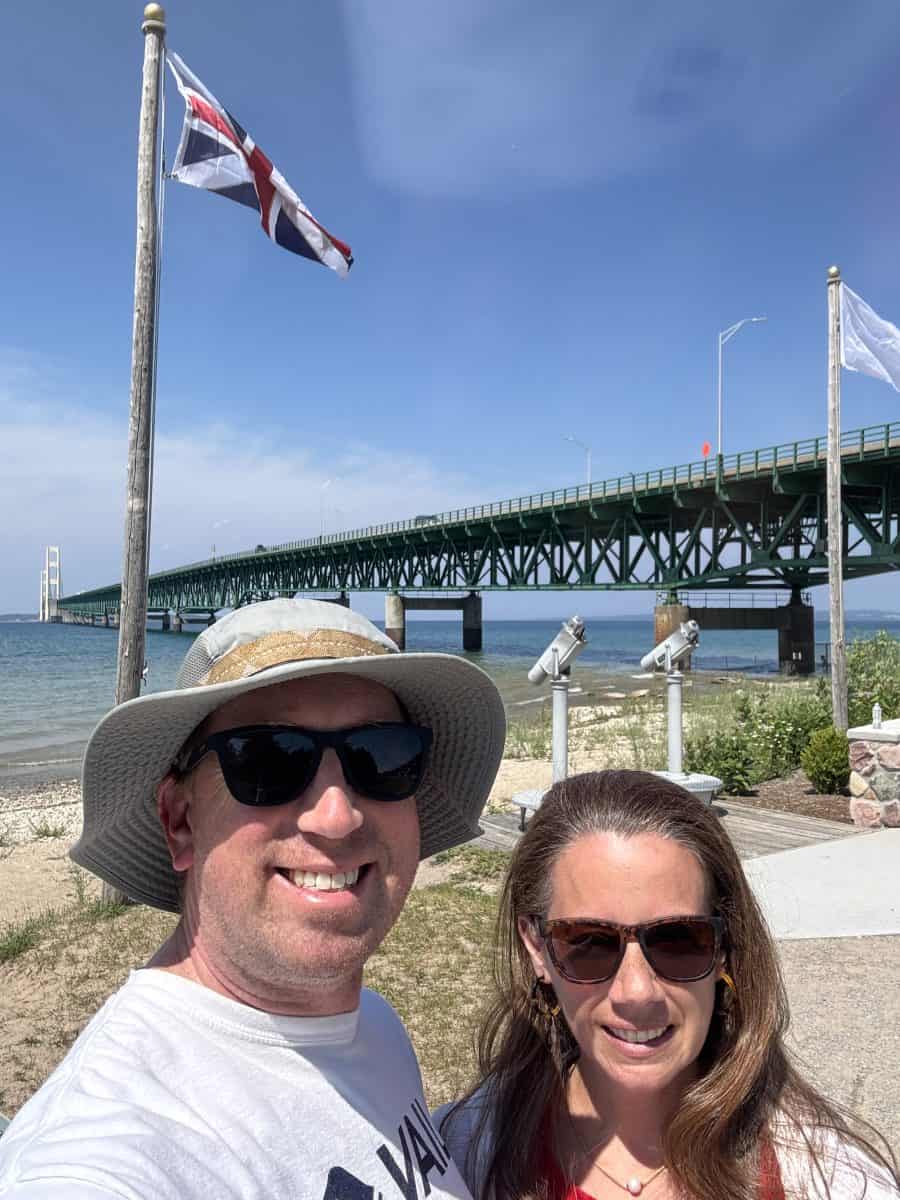
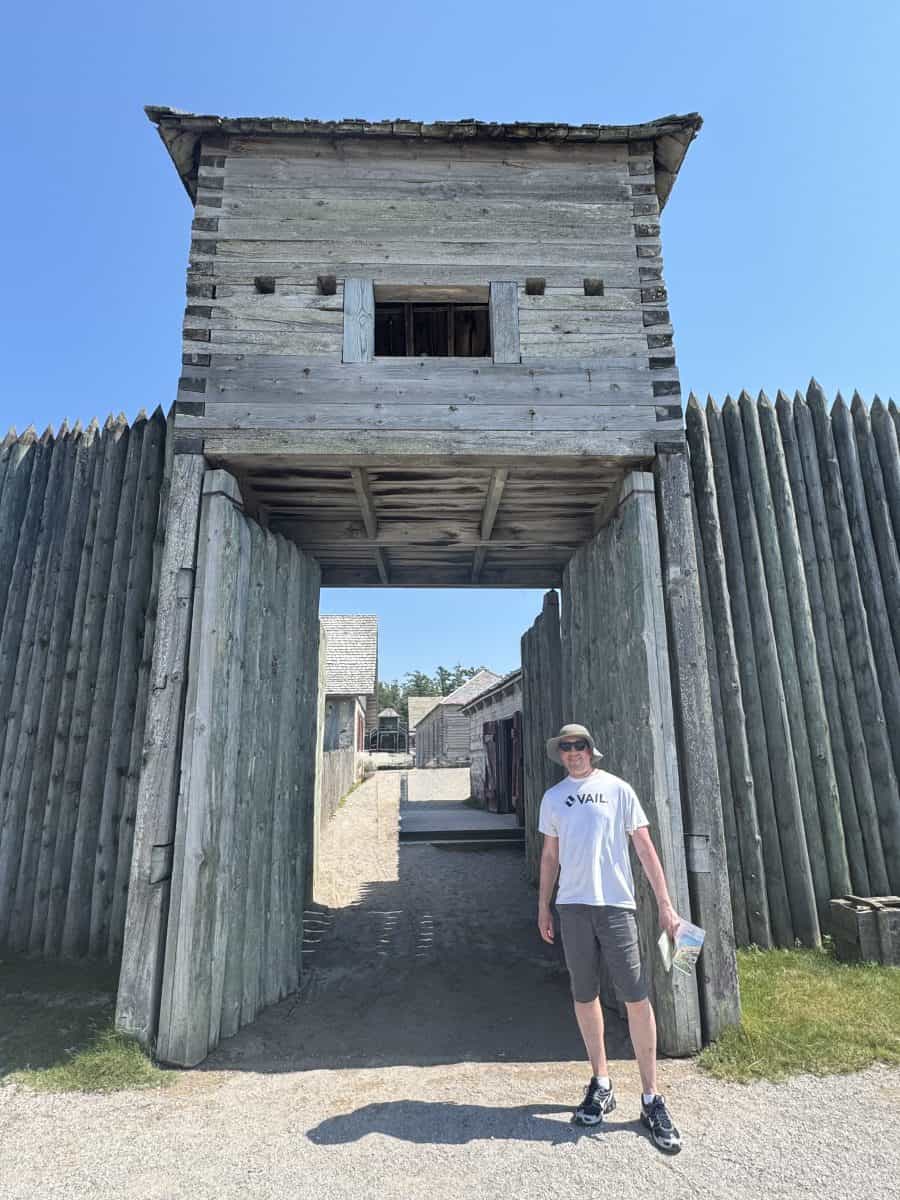
view of the Fort at Colonial Michilimackinac in Maciknaw City, Michigan

Travel Tips:

  • If your family is planning on a visit to Mackinac Island and exploring Mackinaw City, it’s a great value to purchase a seven day All Access Family Pass, which includes admission to several sites both on island and in Mackinaw City for seven consecutive days. See more information and admission rates here.  
  • Colonial Michilimackinac is open from June through mid October, usually opening at 9:30am each with varying closing hours– check here for up to date information.
  • There is plenty of free parking under the highway to the bridge, in front of the Visitor Center.
  • Restrooms are available in the Visitor’s Center, along the pathway to the fort entrance, and in the Southwest Rowhouse.
  • Shopping options include the Hearthside Museum Gift Shop in the South Southwest Rowhouse inside the Fort and in the Visitor’s Center. See the online shop here. 
  • No formal dining options inside the fort. The Visitor’s Center sells cold drinks and snacks. There are plenty of dining options within walking distance of the Fort and Park- see a good index of options here. 
  • Bring the stroller for the toddler crew. The path is mainly stone to and from the Visitor Center and the village. Some buildings in the village are not fully handicapped accessible, like the below ground exhibits. However, the upper level displays a film version of tours. The Visitor Center also loans wheelchairs and motorized scooters.  See more information about accessibility here and a print brochure here. 
  • There are daily demonstrations and programs– see the 2026 schedule here and here. 
  • Plan on 2-3 hours to fully explore the Fort, more time for extended programs or demonstrations. See an interactive map here and brochure with print map here. 
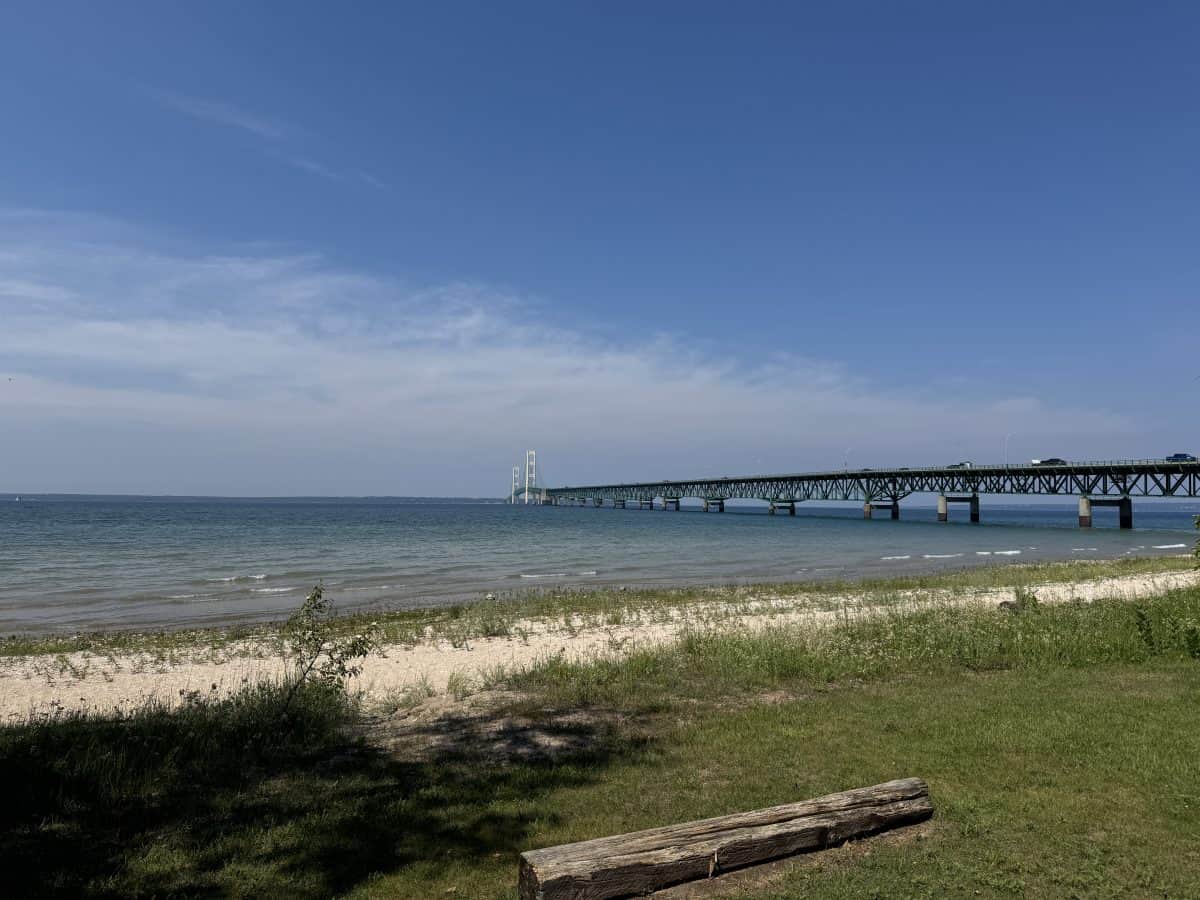
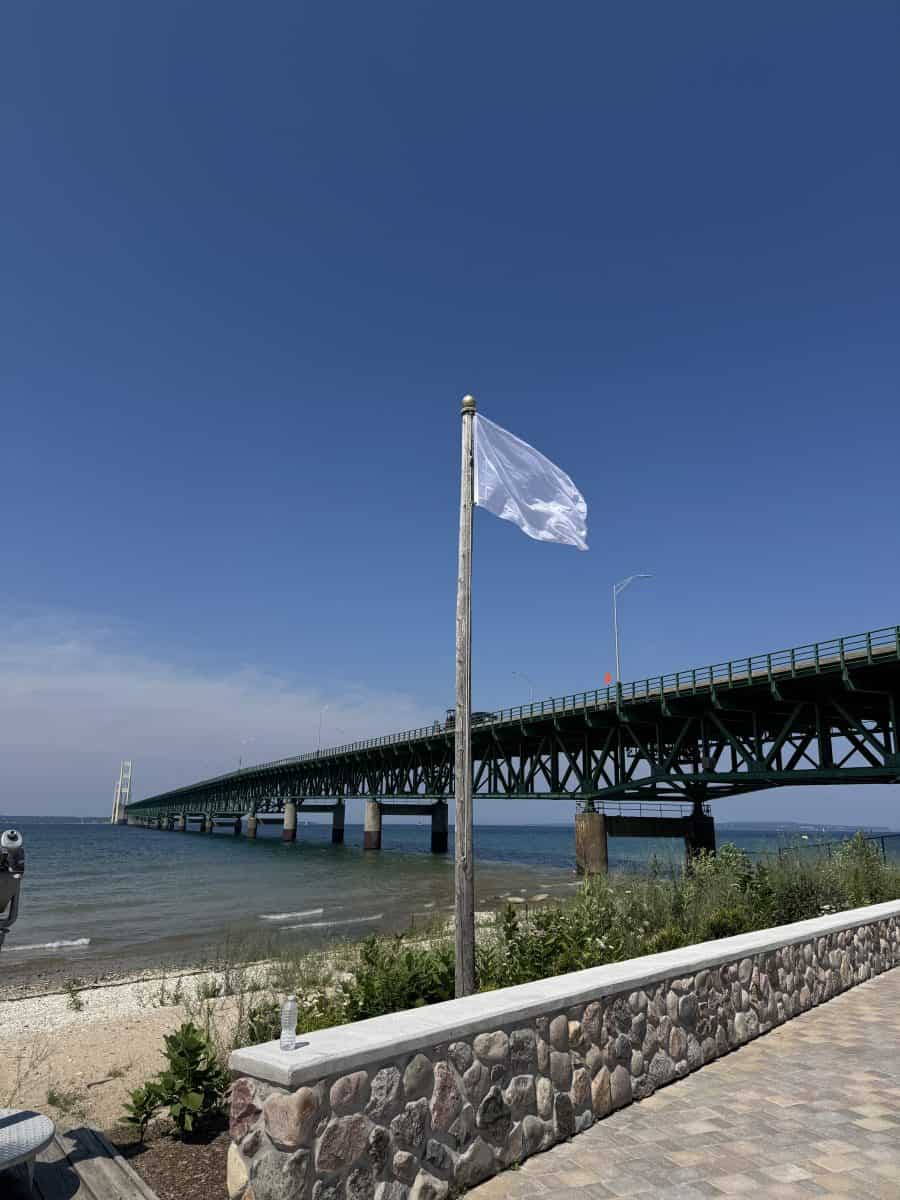
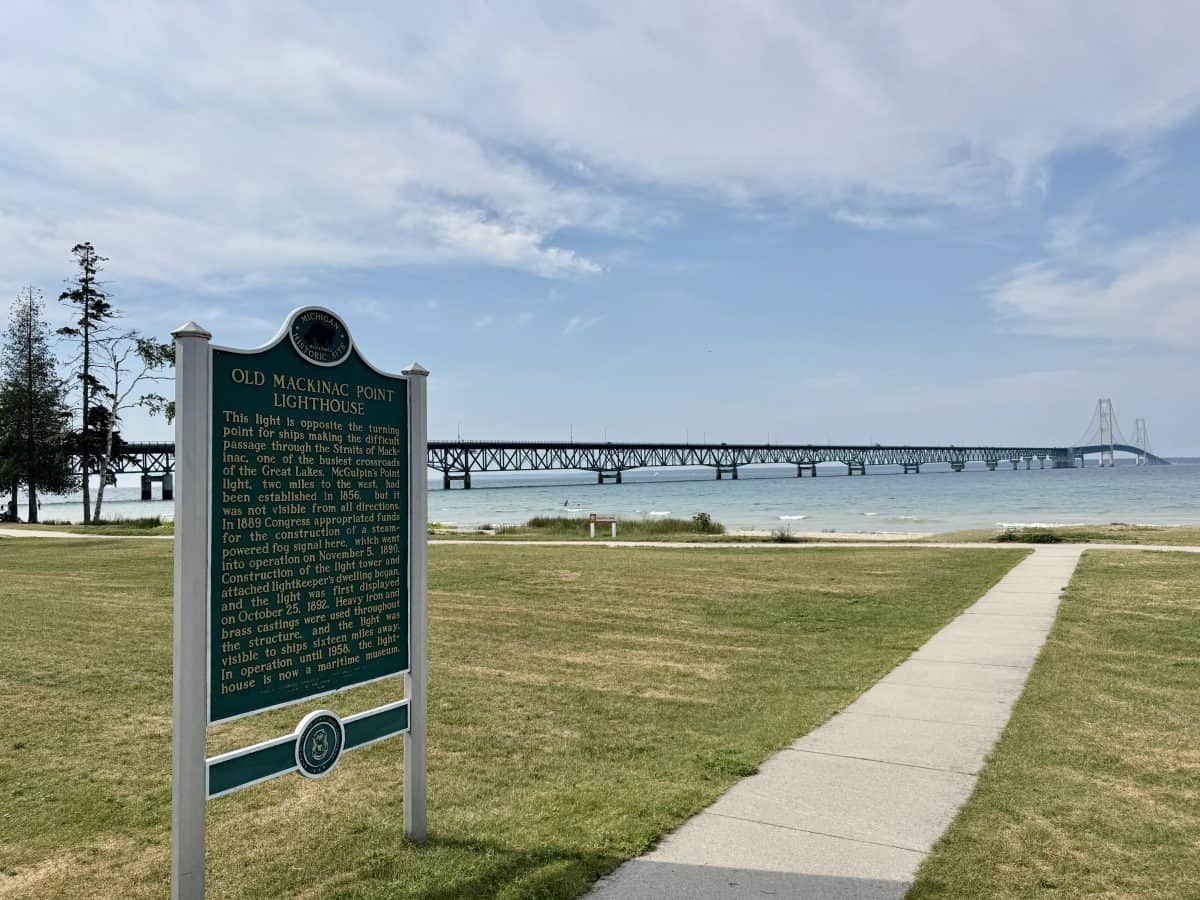
view of the Mighty Mac Bridge next to Colonial Michilimackinac in Mackinaw City Michigan

15 Ways to Explore Colonial Michilimackinac:

Would you like to save this?

We'll email this post to you, so you can come back to it later.

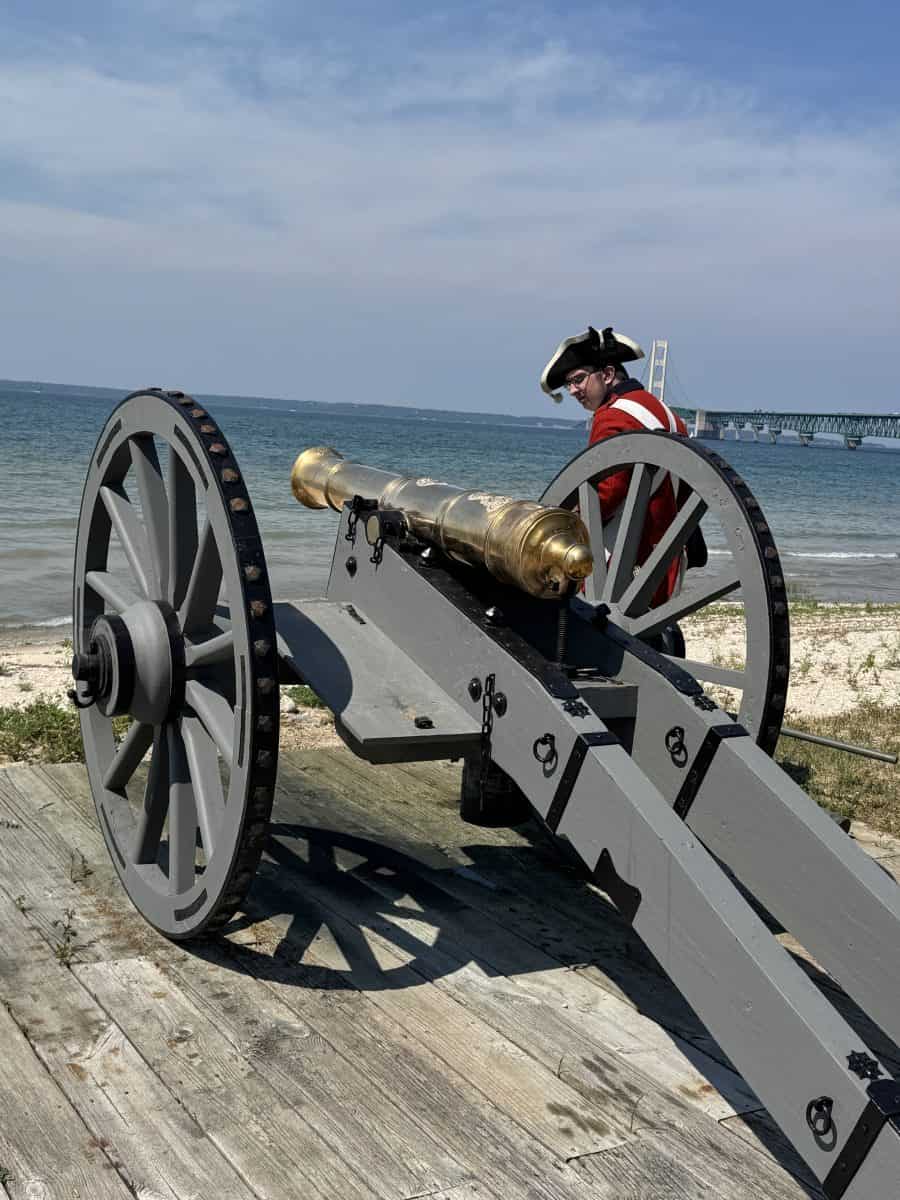
  1. Check the daily schedule for live demonstrations and programs: Each day the Fort and its live interpreters perform a morning cannon salute, artificially firing demonstrations, musket firing demonstrations, and special programs featuring people who lived and worked in the fort. 
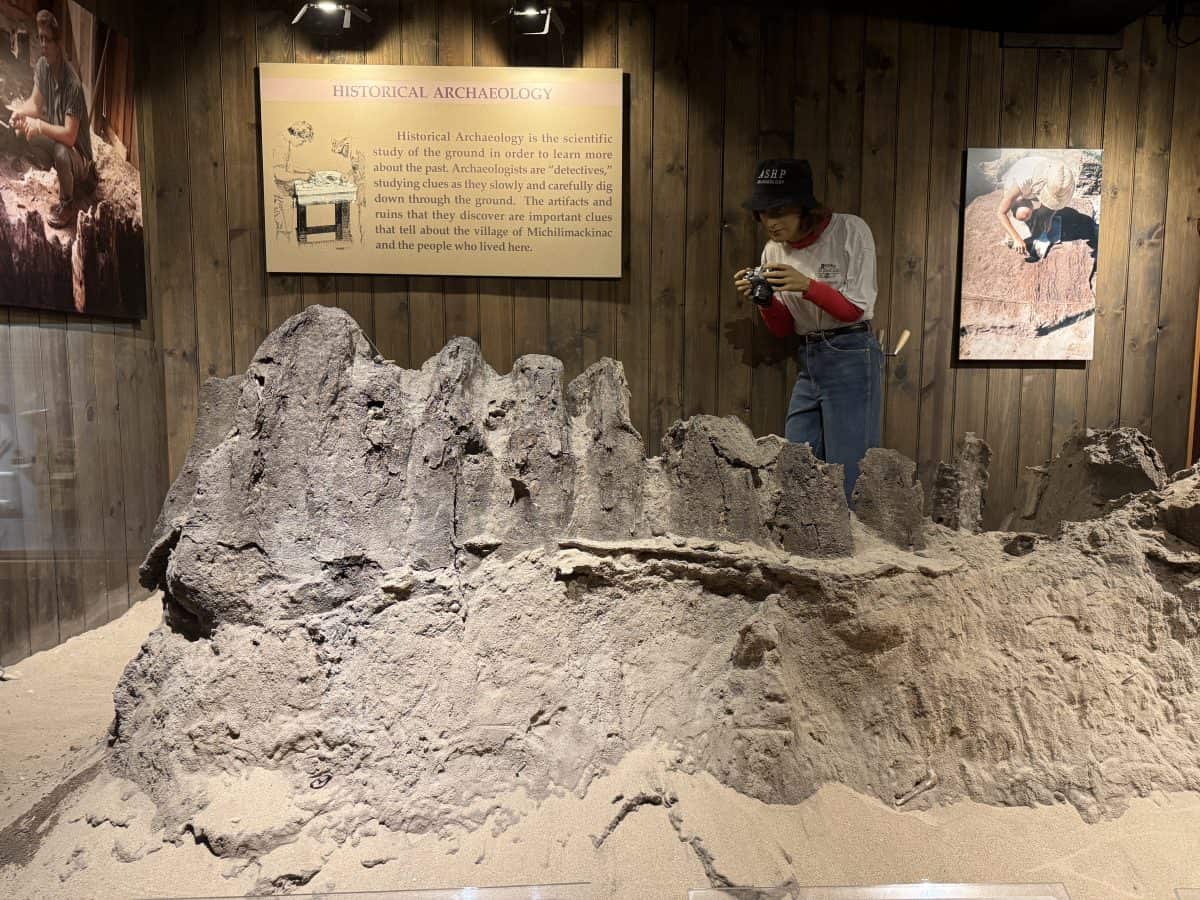
  2. Watch as archaeologists continue their ongoing excavation of the Fort: The dig is one of the longest ongoing excavations in America, dating back to 1959. Teams of archaeologists work throughout the entire season; when we visited in summer 2026, the team was in the middle of the Fort. Learn more here. 
  3. Watch videos throughout the fort: an overview video entitled Crossroad of the Great Lakes in the Storehouse and Attack! At Michilimiackinac in the Southwest Rowhouse, which recreates the 1763 capture of the fort.
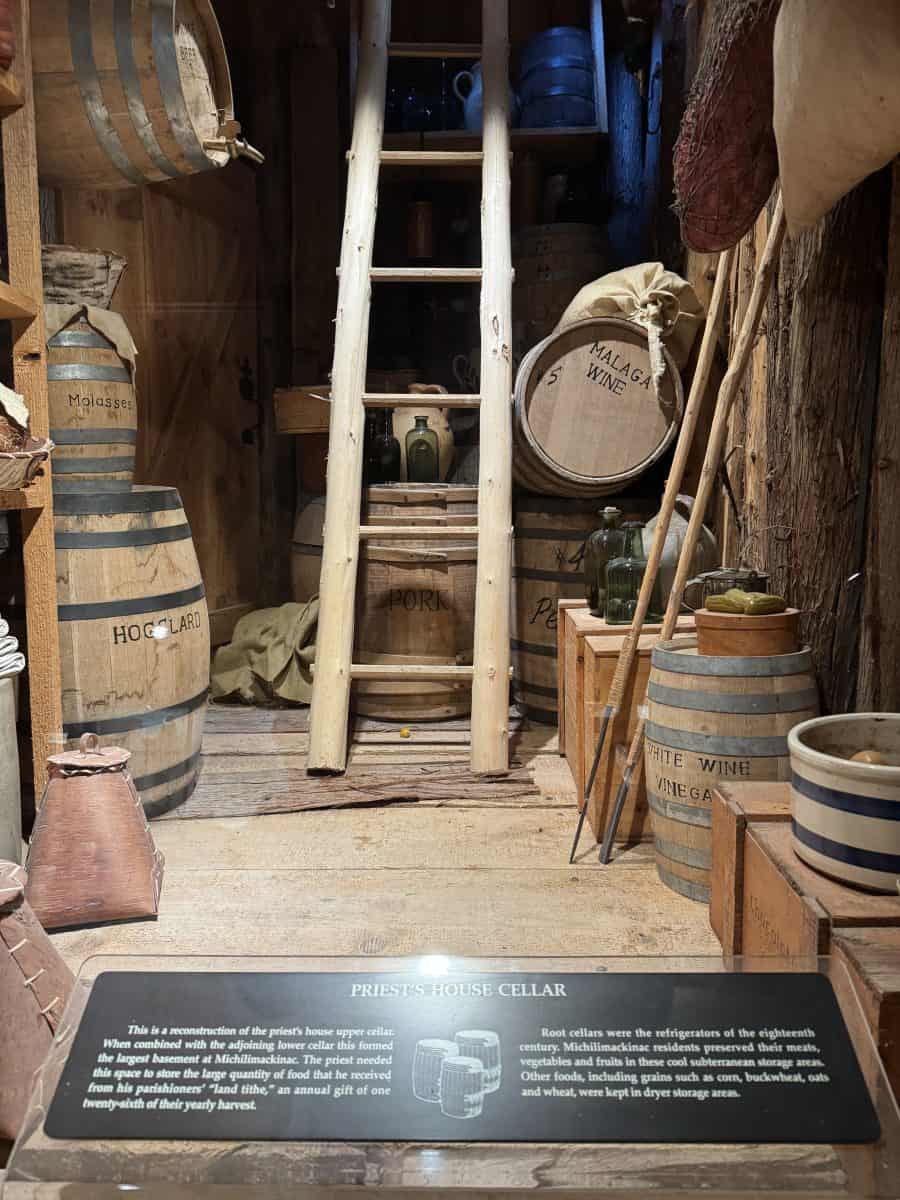
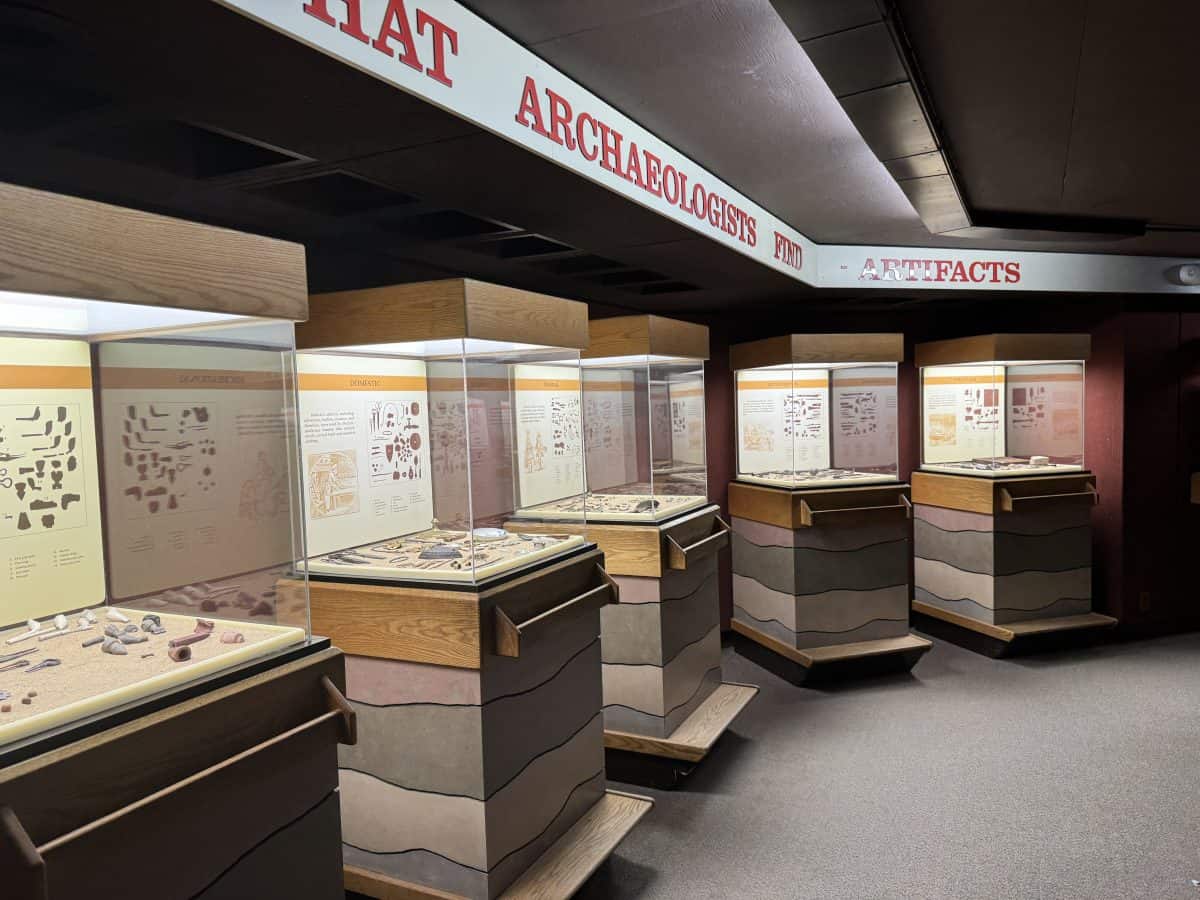
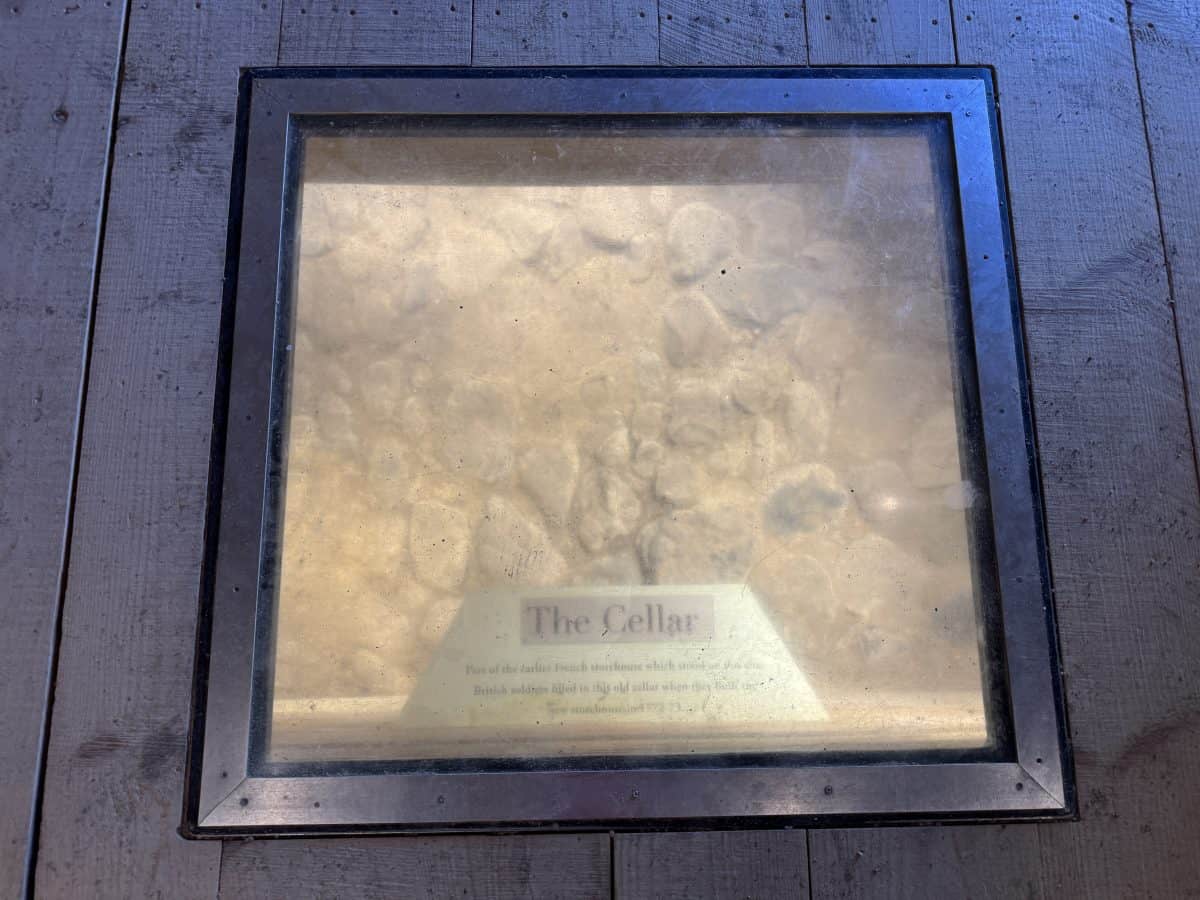
  4. Peek down into the original root cellar in the Northwest Rowhouse #7 used as a warehouse and living house. Go underground to the Treasurers from the Sand exhibit, which describes how archaeologists safely uncover and preserve artifacts.
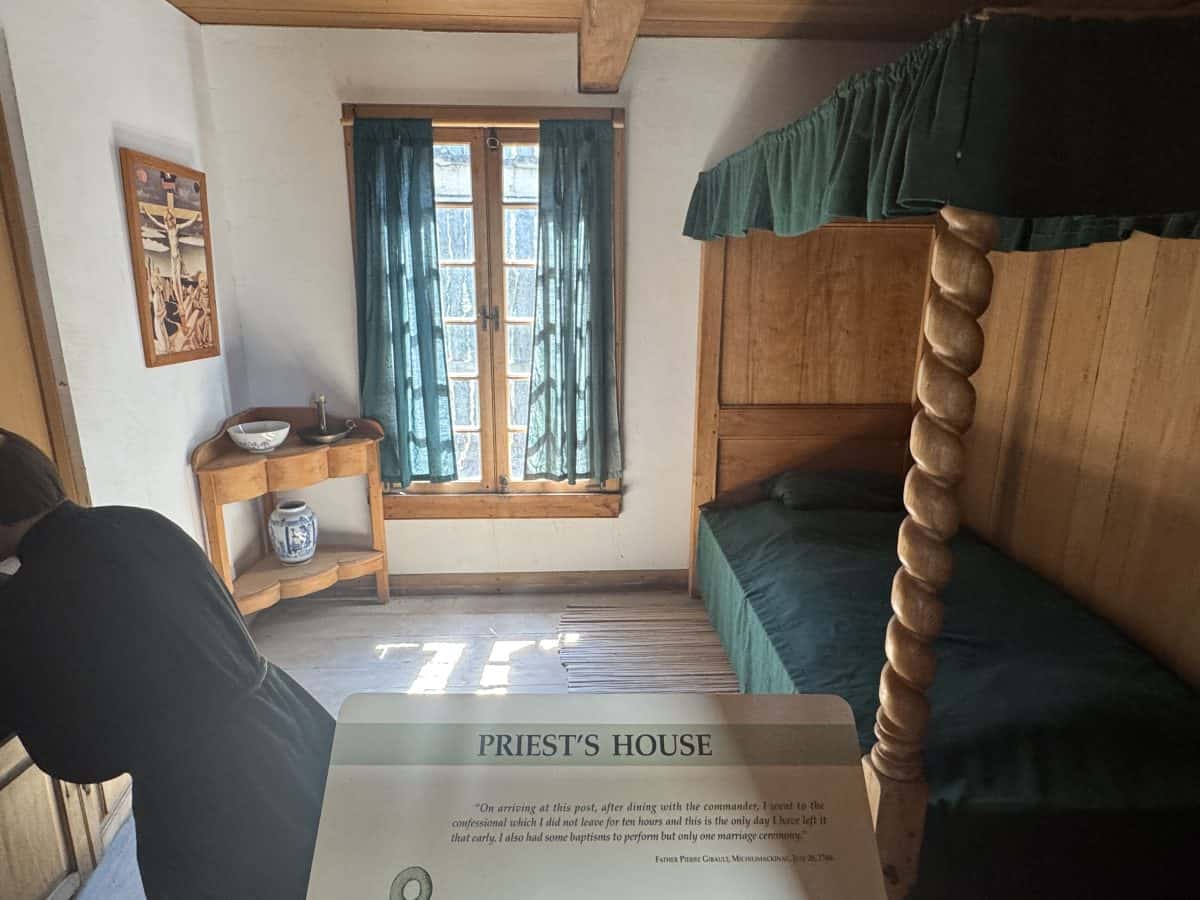
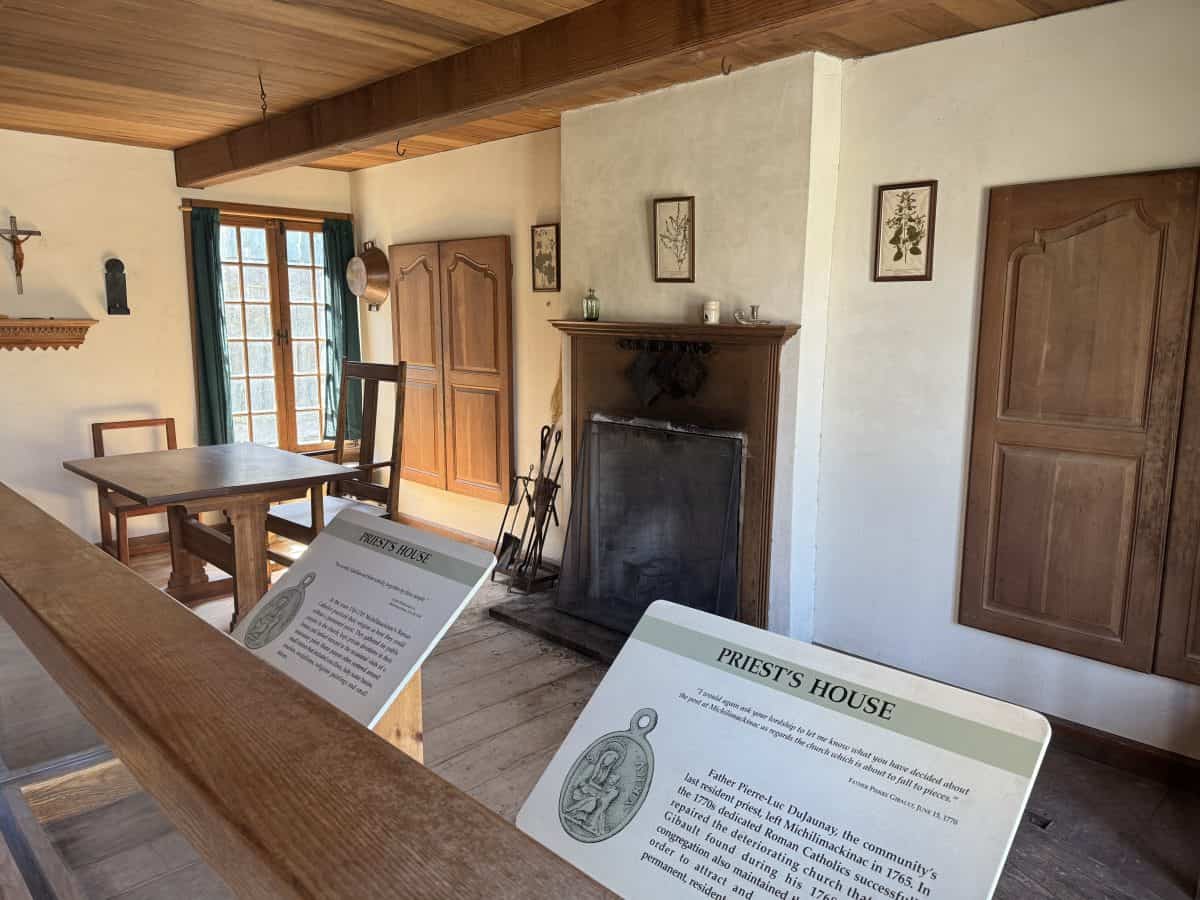
  5. Count the number of Roman Catholic priests (seven in total) who lived in the Priest’s House from 1765 through 1781 and look for signs of other religions of the Anishinaabe people and British soldiers. 
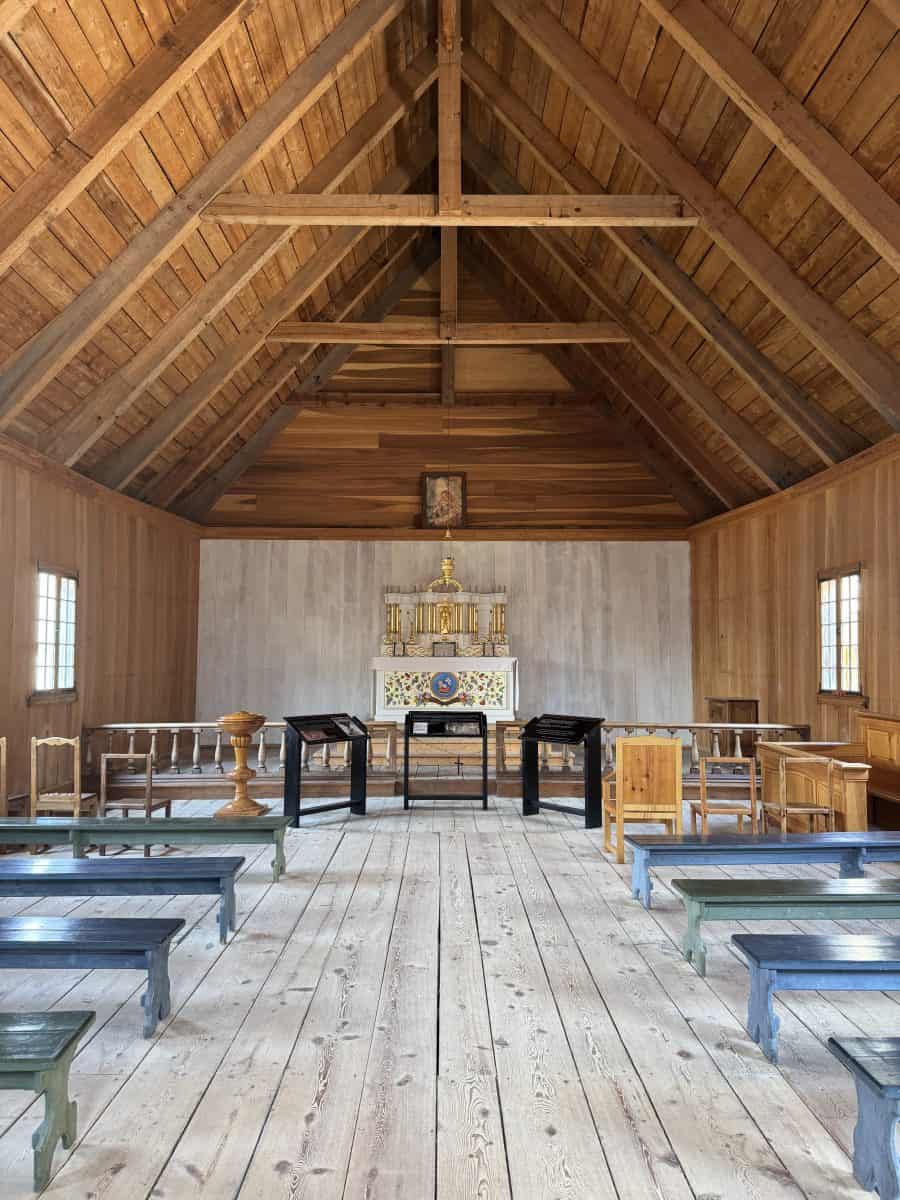
  6. Step inside the Reconstructed Church from 1742, with a baptismal font and confessional.
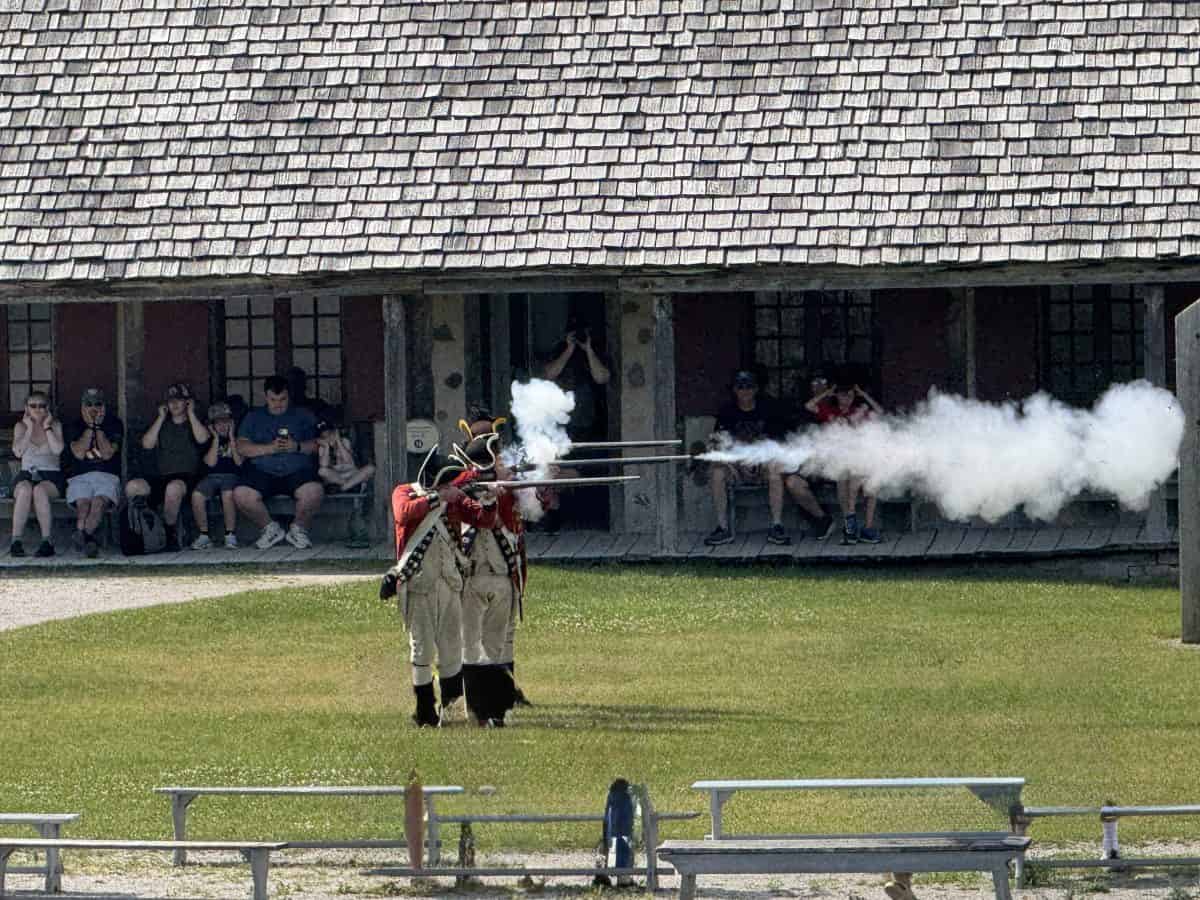
musket firing at the Fort at Colonial Michilimackinac in Maciknaw City, Michigan
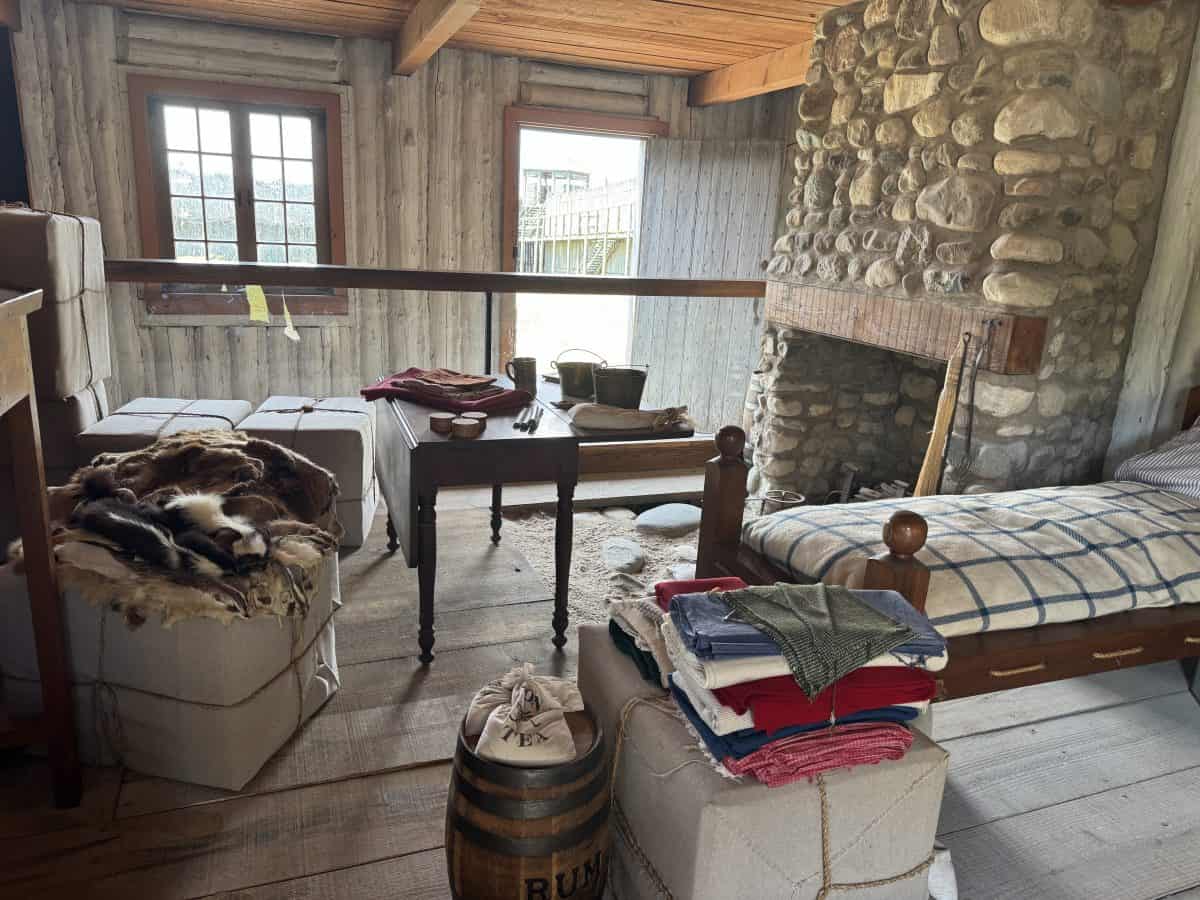
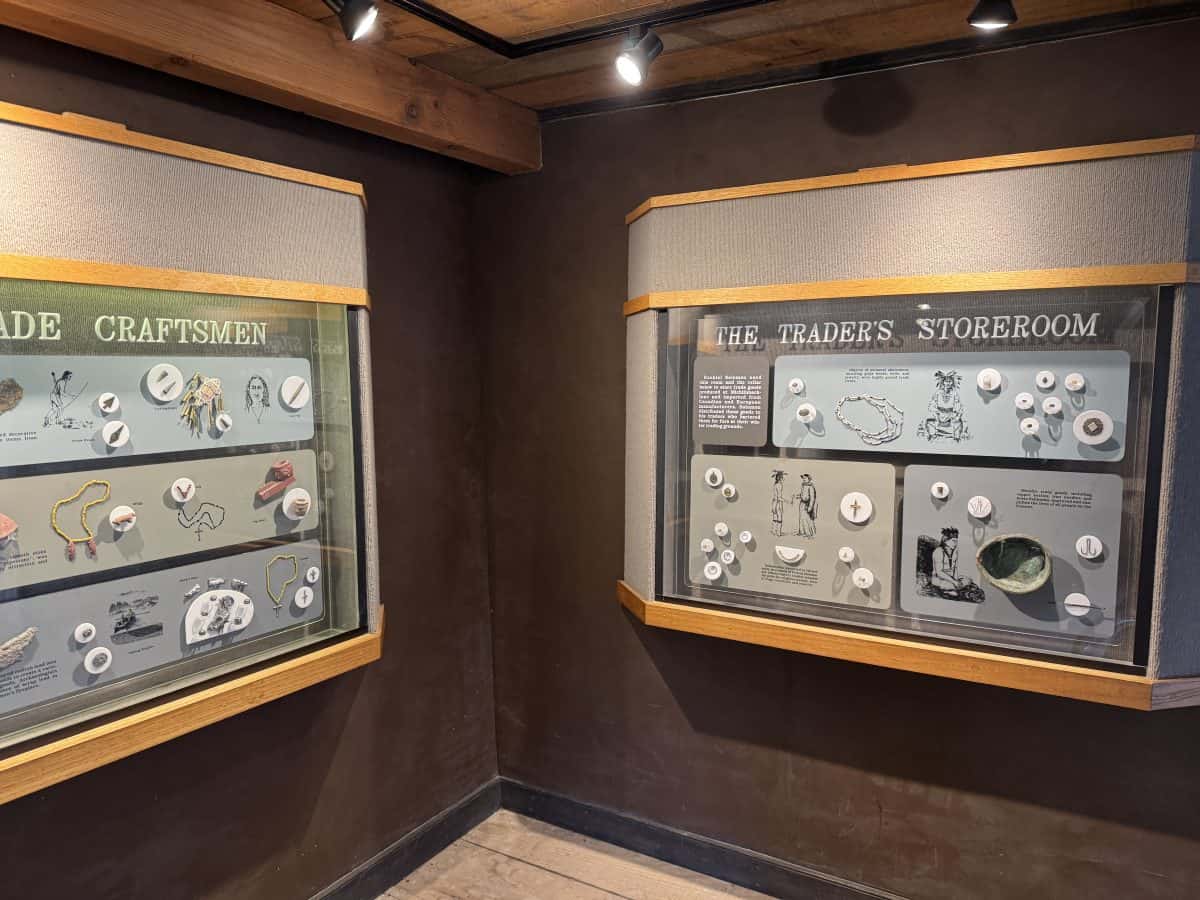
  1. Guess which items were personal possessions of the soldiers and which items were issued by the military in the Merchant’s House  and Soldier’s House exhibit in the Southwest Rowhouse. Some items were more worthy of financial and social status than others. 
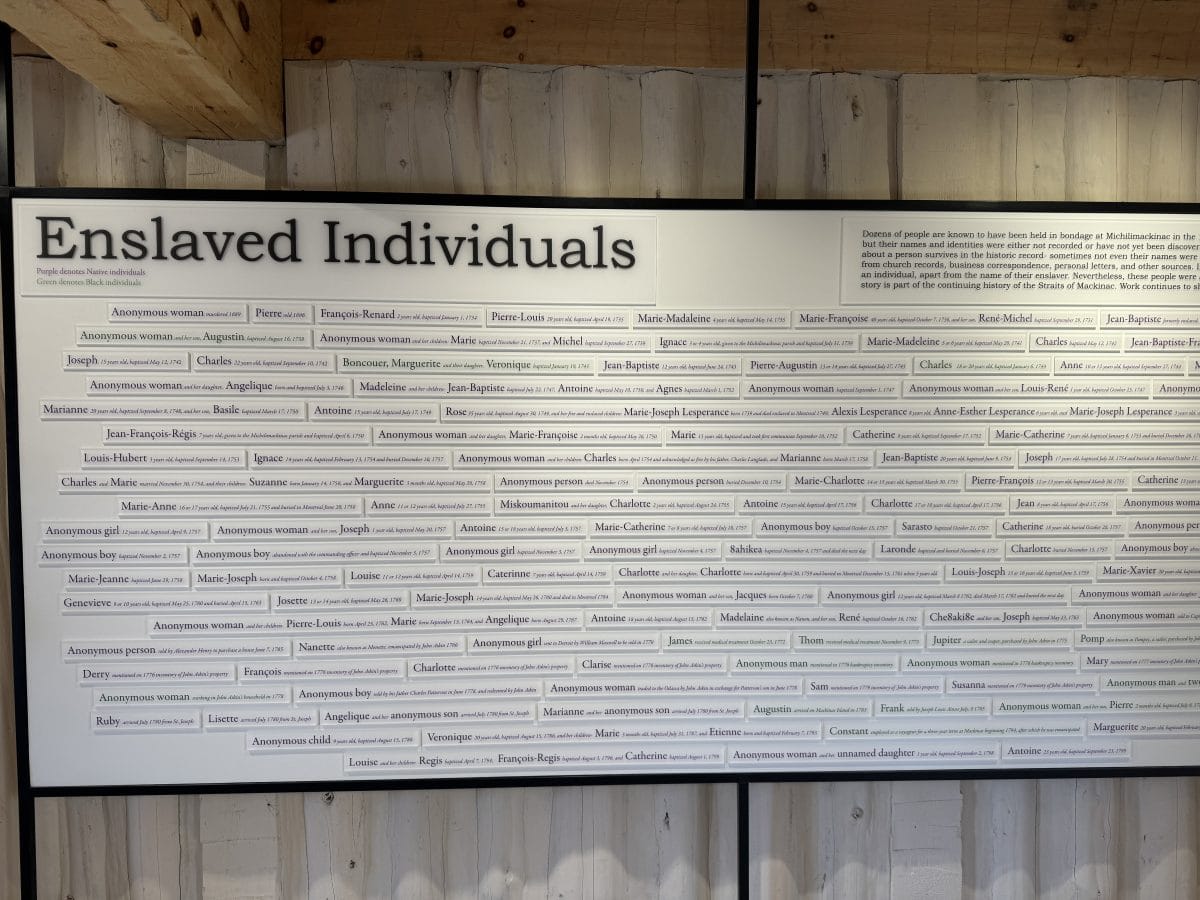
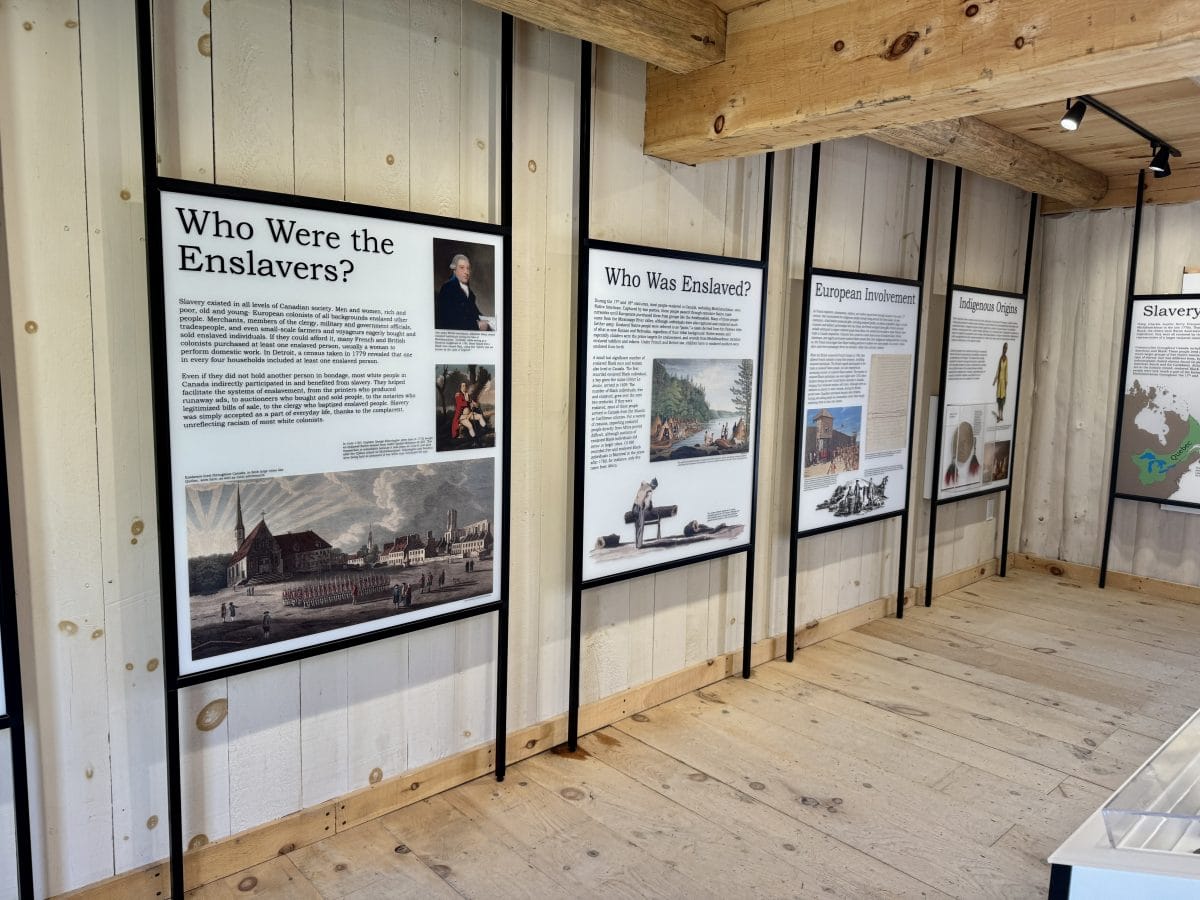
  2. Read through the color coded lists of Native (purple) and Black (green) enslaved people and their treatment in society in the Slavery at the Straits exhibit in the Southwest Rowhouse. Take note of the dates of the first enslaved persons and the last enslaved person recorded on the wall. 
  3. Sample seasonal produce from the vegetable gardens, with permission from the docents. 
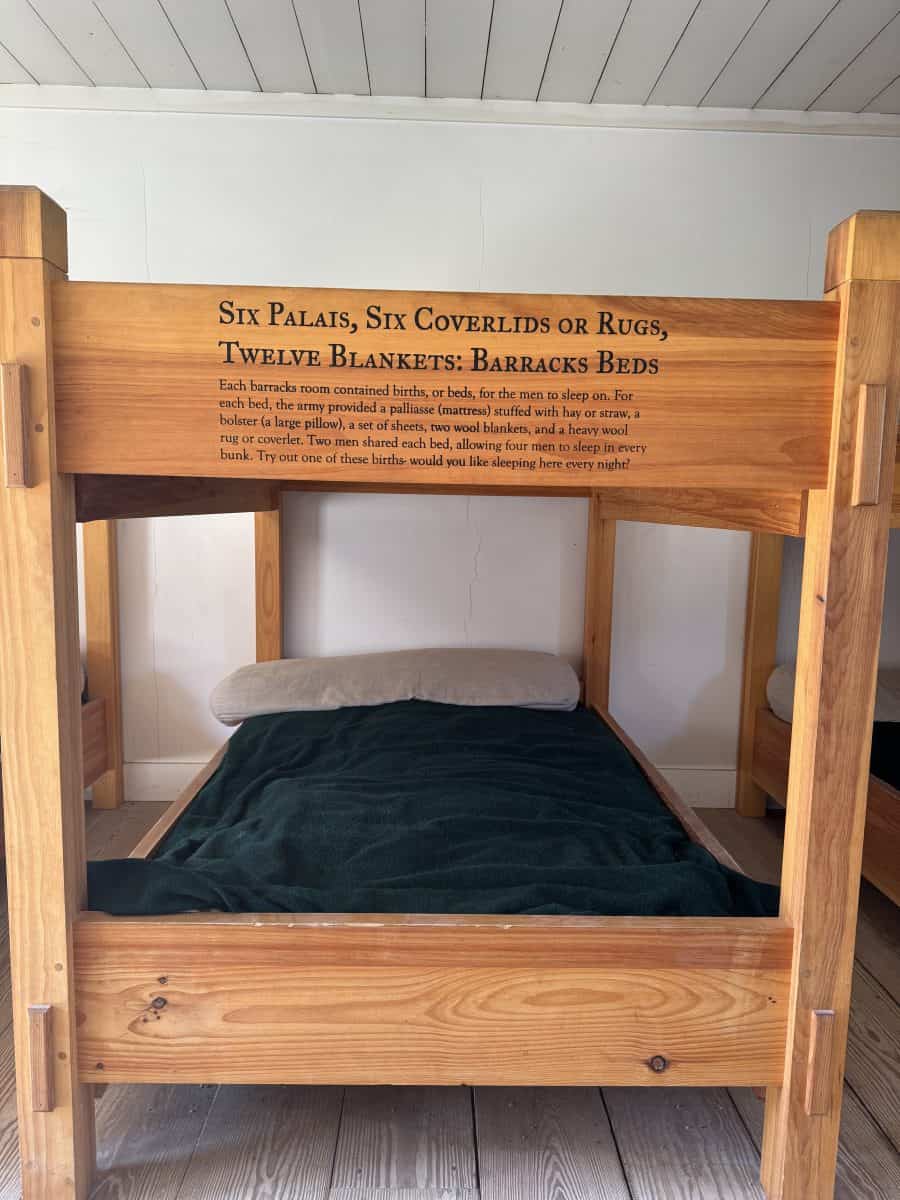
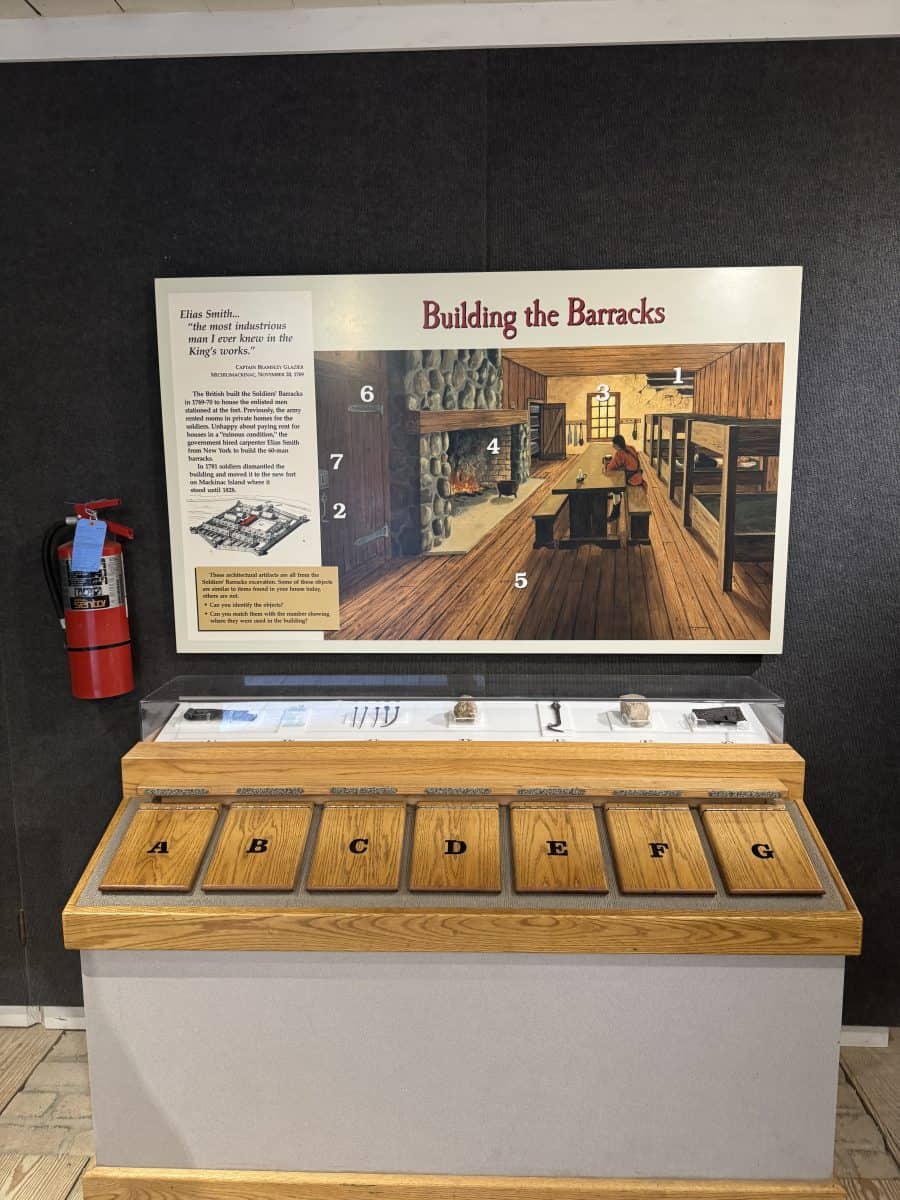
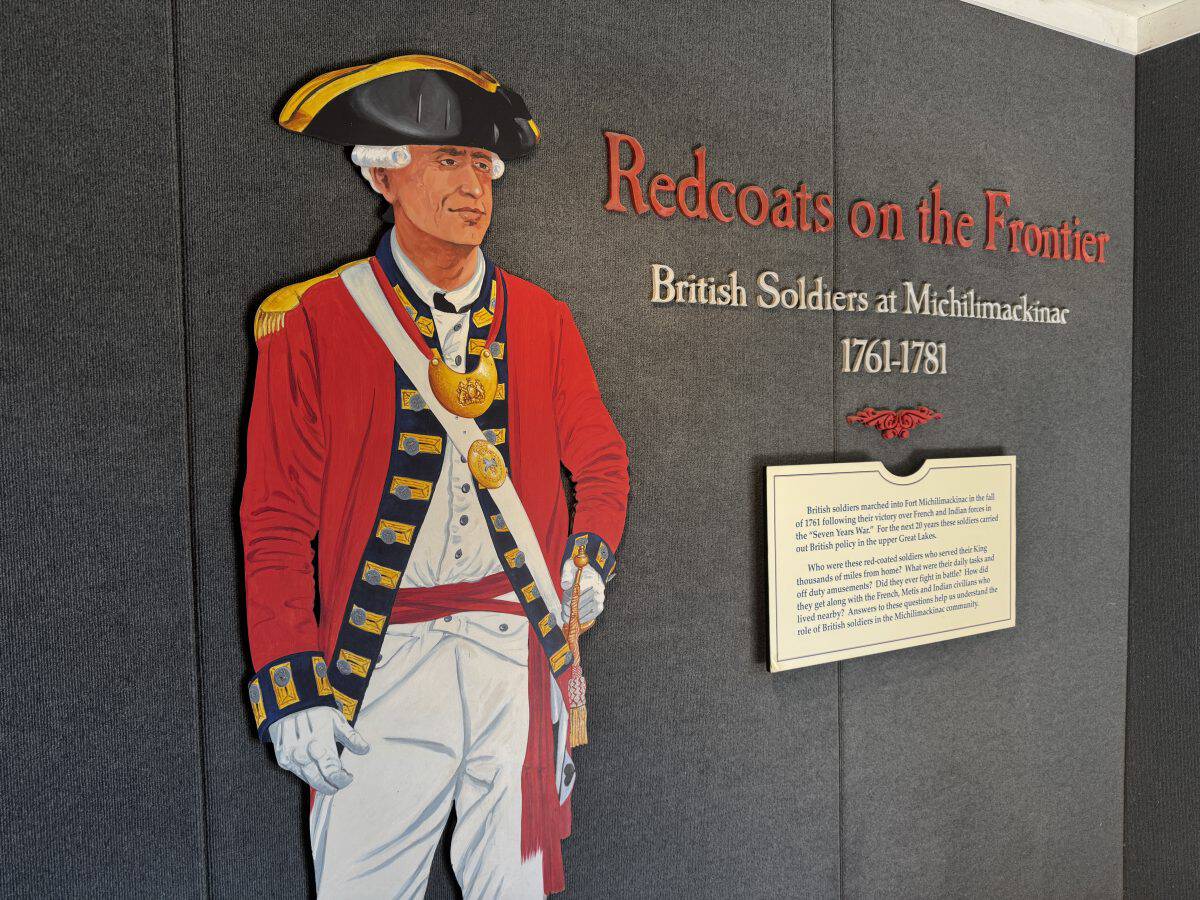
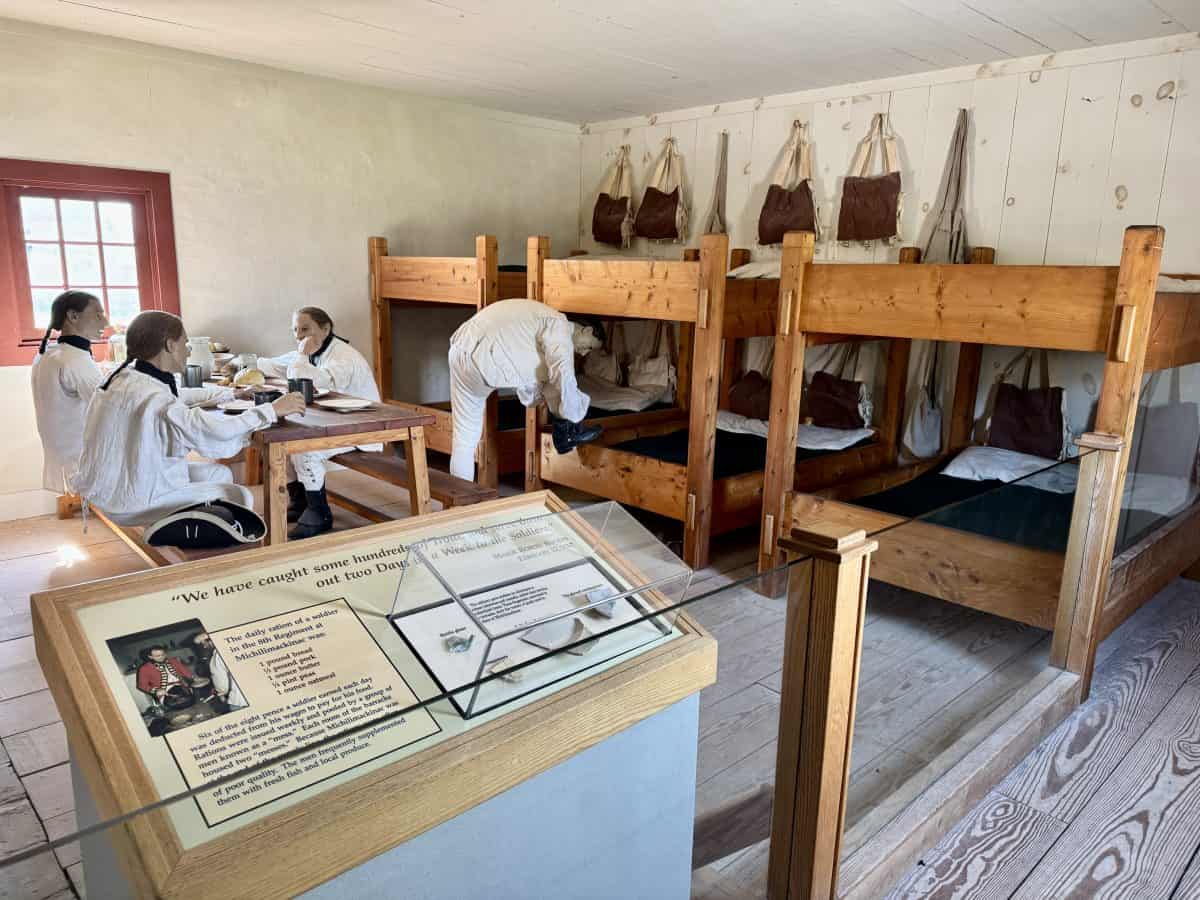
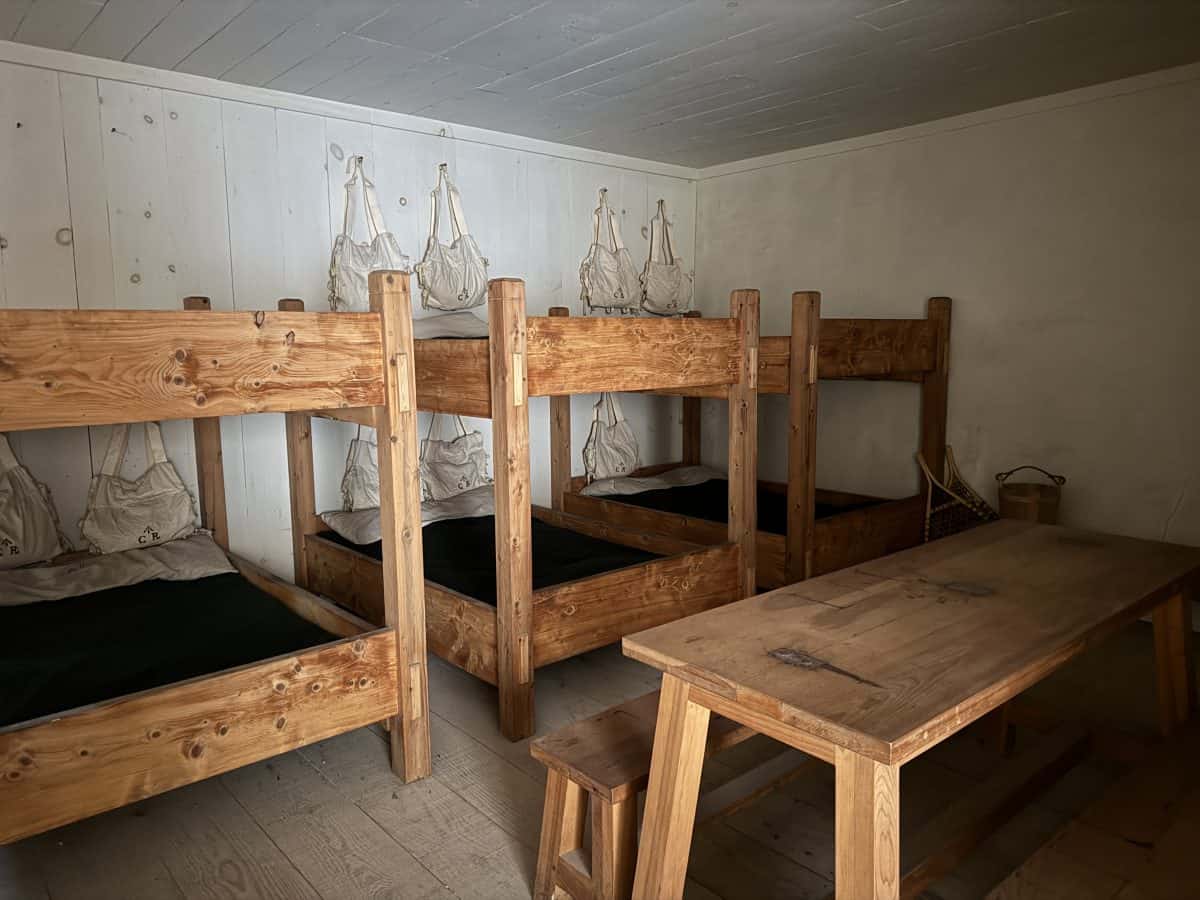
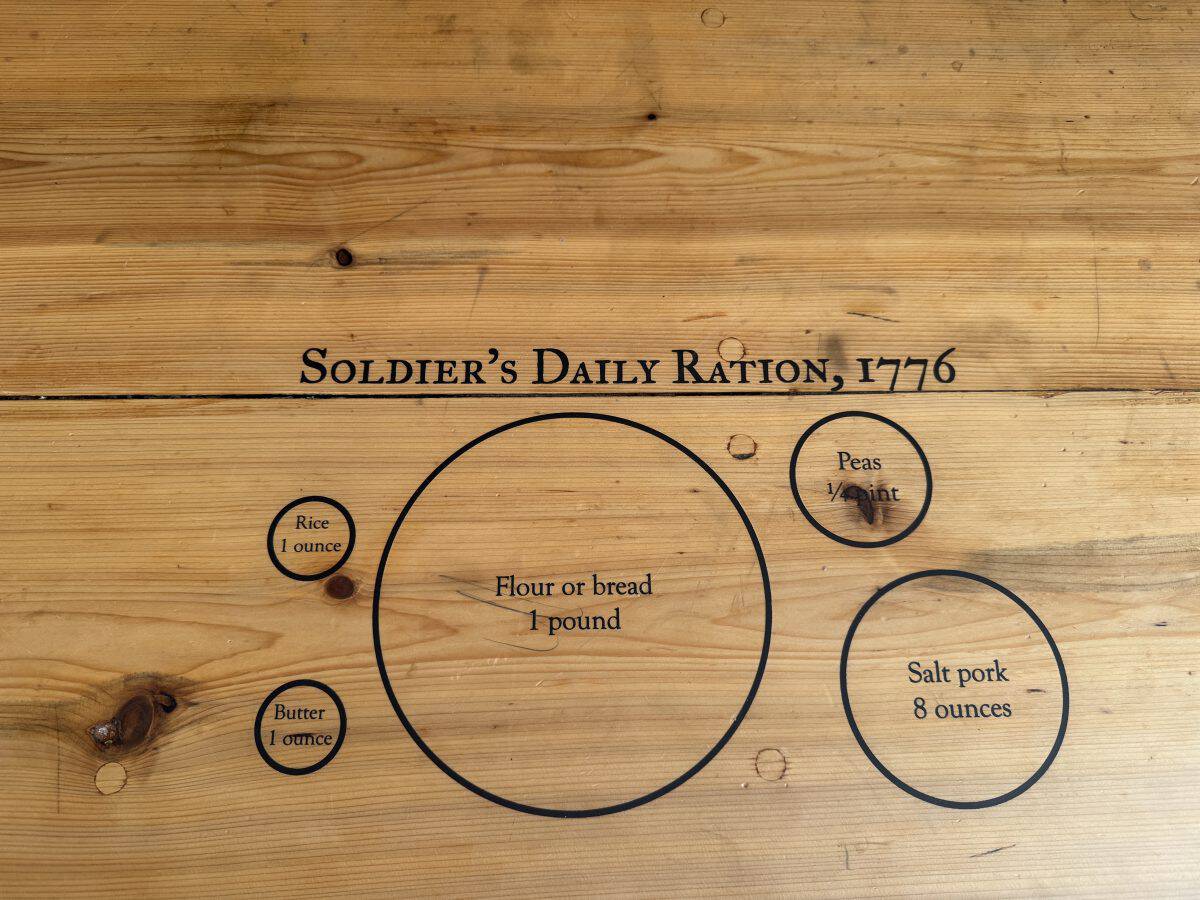
  4. Reimagine what life was like as a British soldier in the Redcoats on the Frontier exhibit: Match items with where they were used in the barracks, try on a soldiers’ uniform and even lie in a bed to feel what it was like for a British soldier. Take note of the daily rations for the day; usually soldiers just received one meal a day at 1pm.
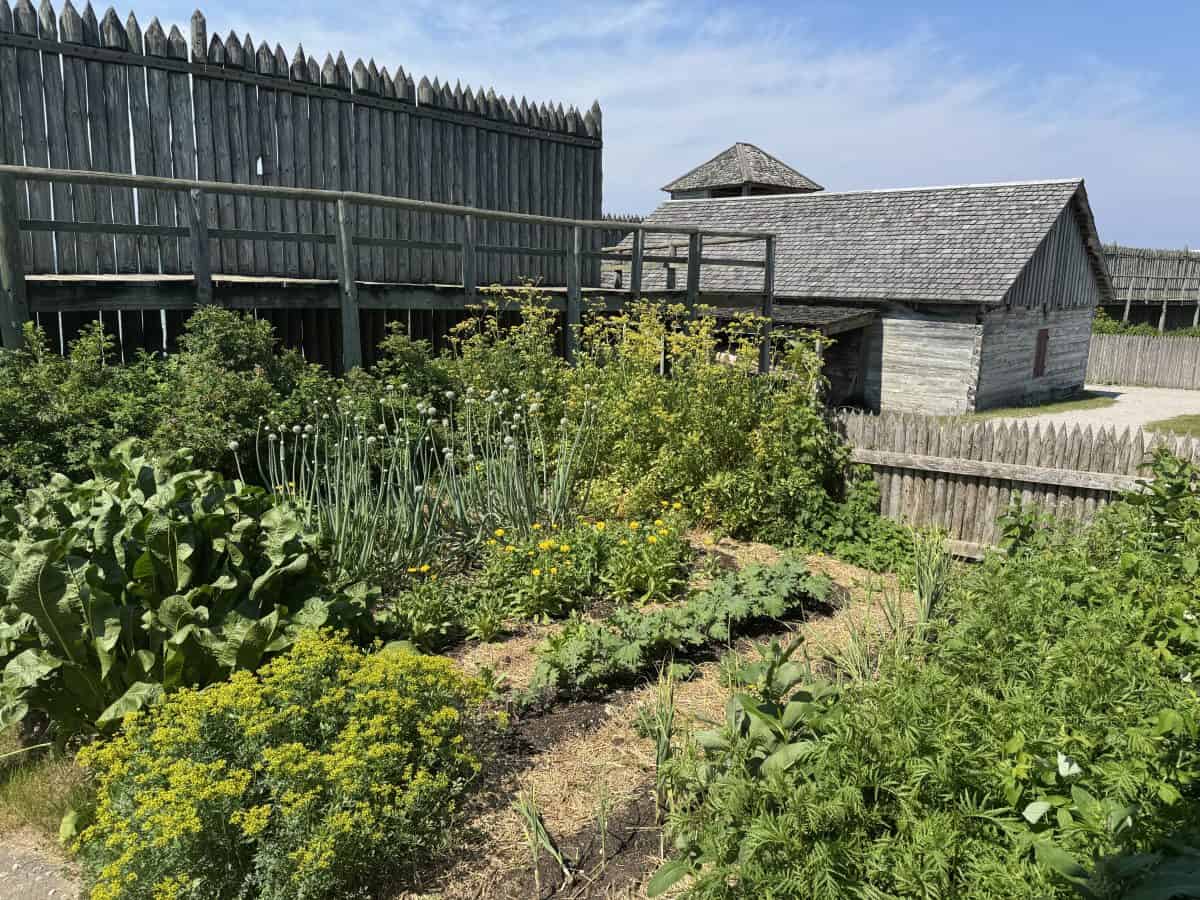
  1. Watch as broken tools and weapons are repaired in the 1740s Blacksmith Shop.
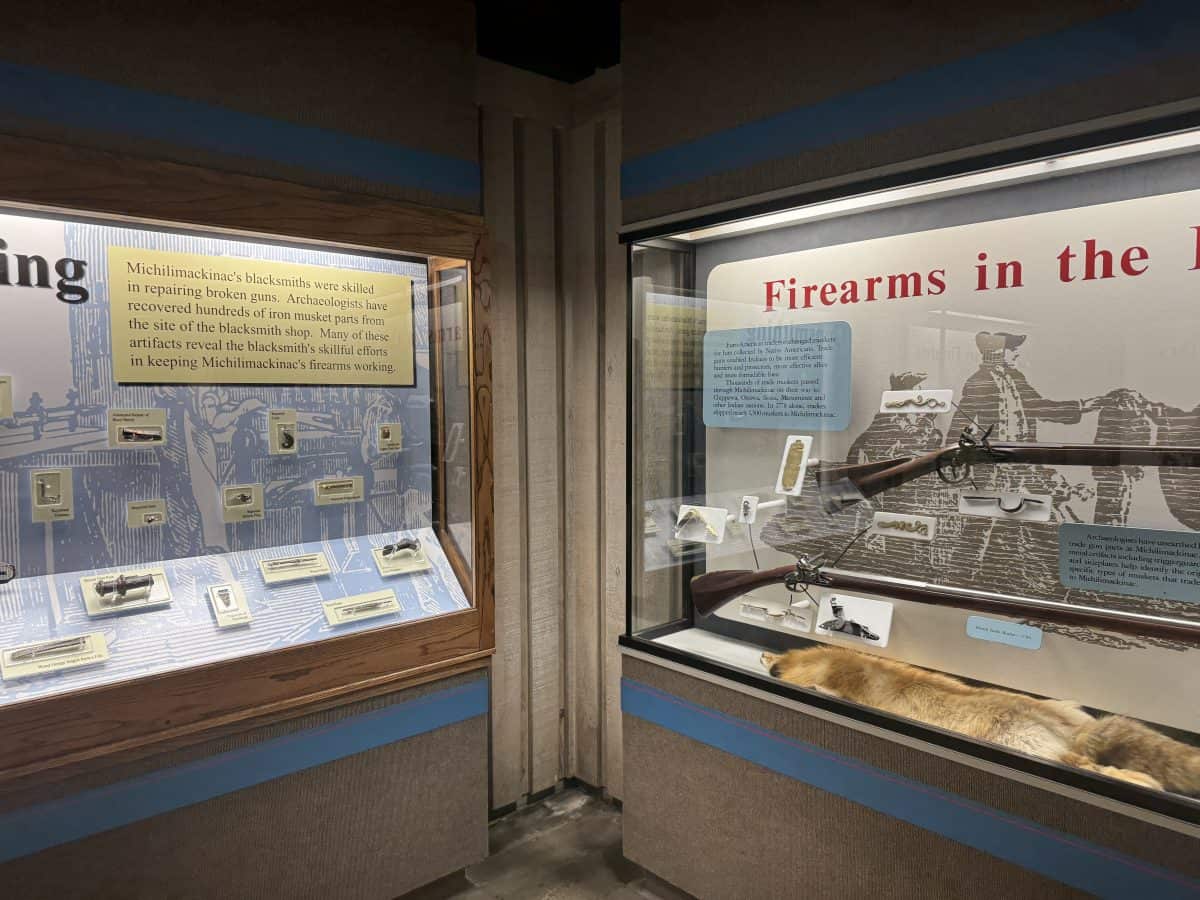
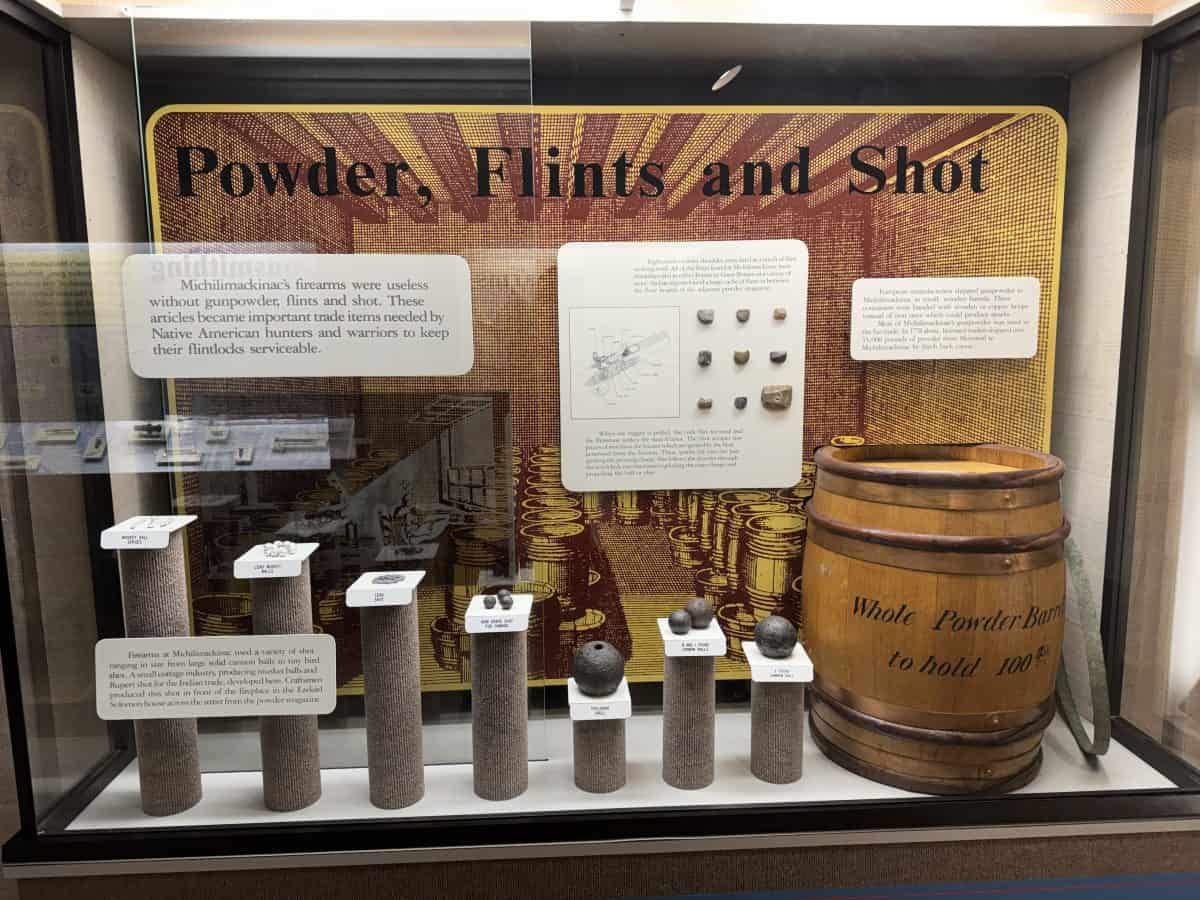
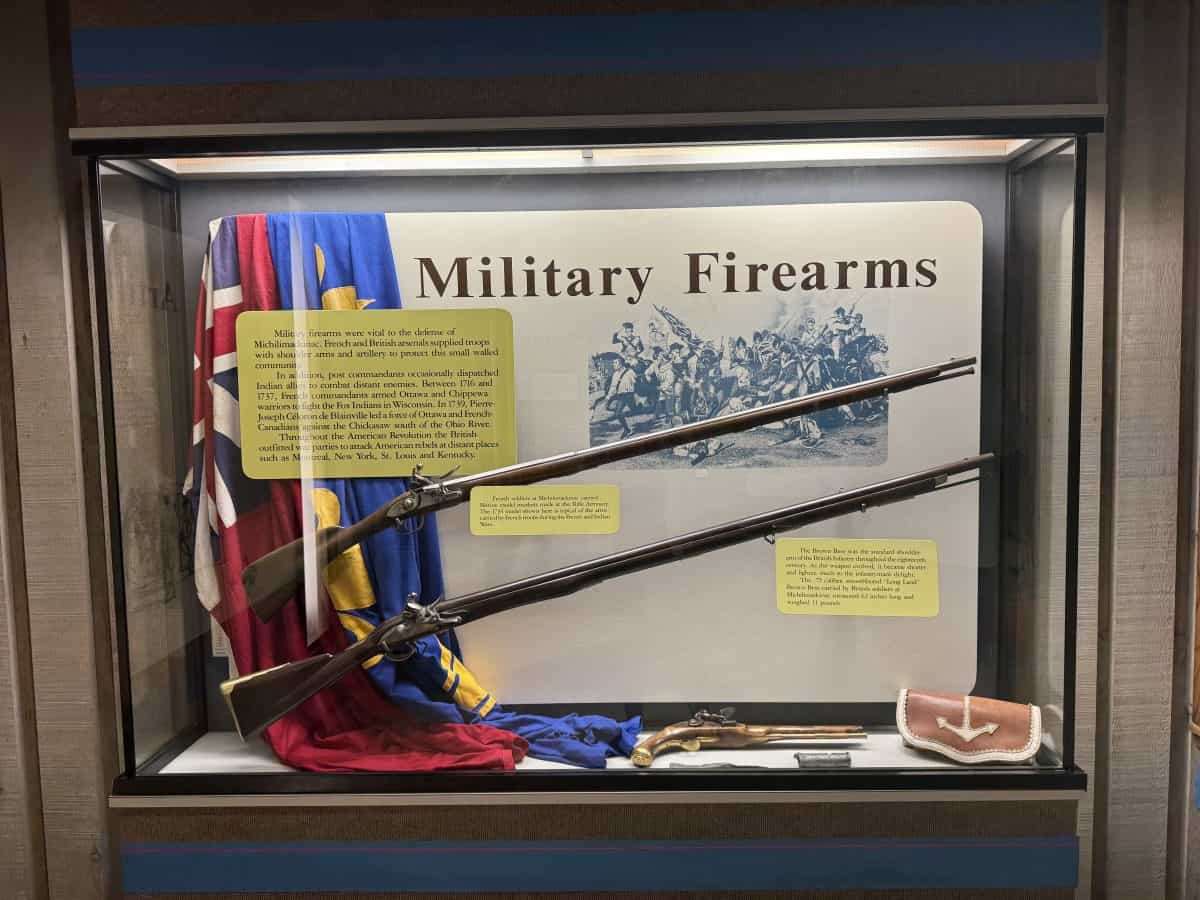
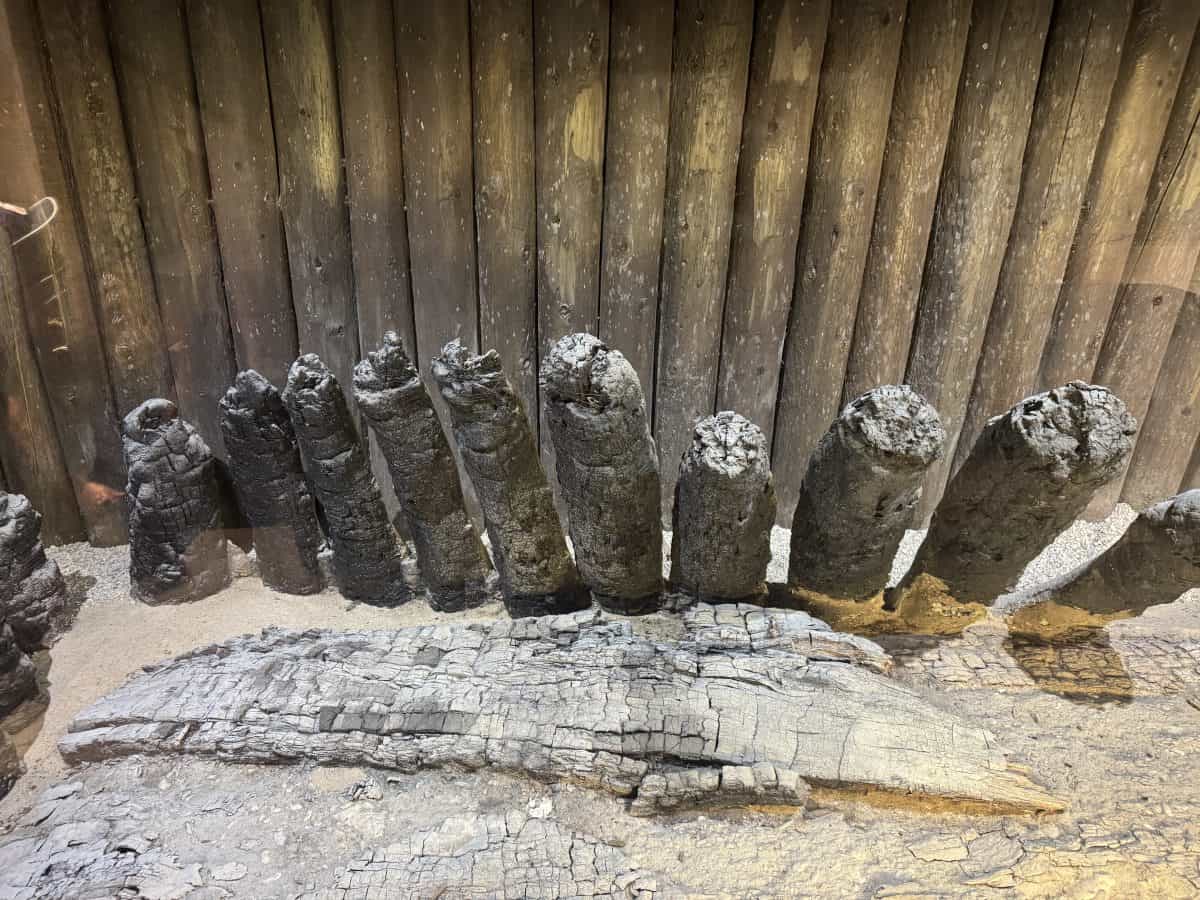
  2. Head underground to see the uncovered ruins of the original fort powder magazine storage in the Southwest RowHouse. The Firearms in the Frontier exhibit explains the  history of gun smithing and artillery. 
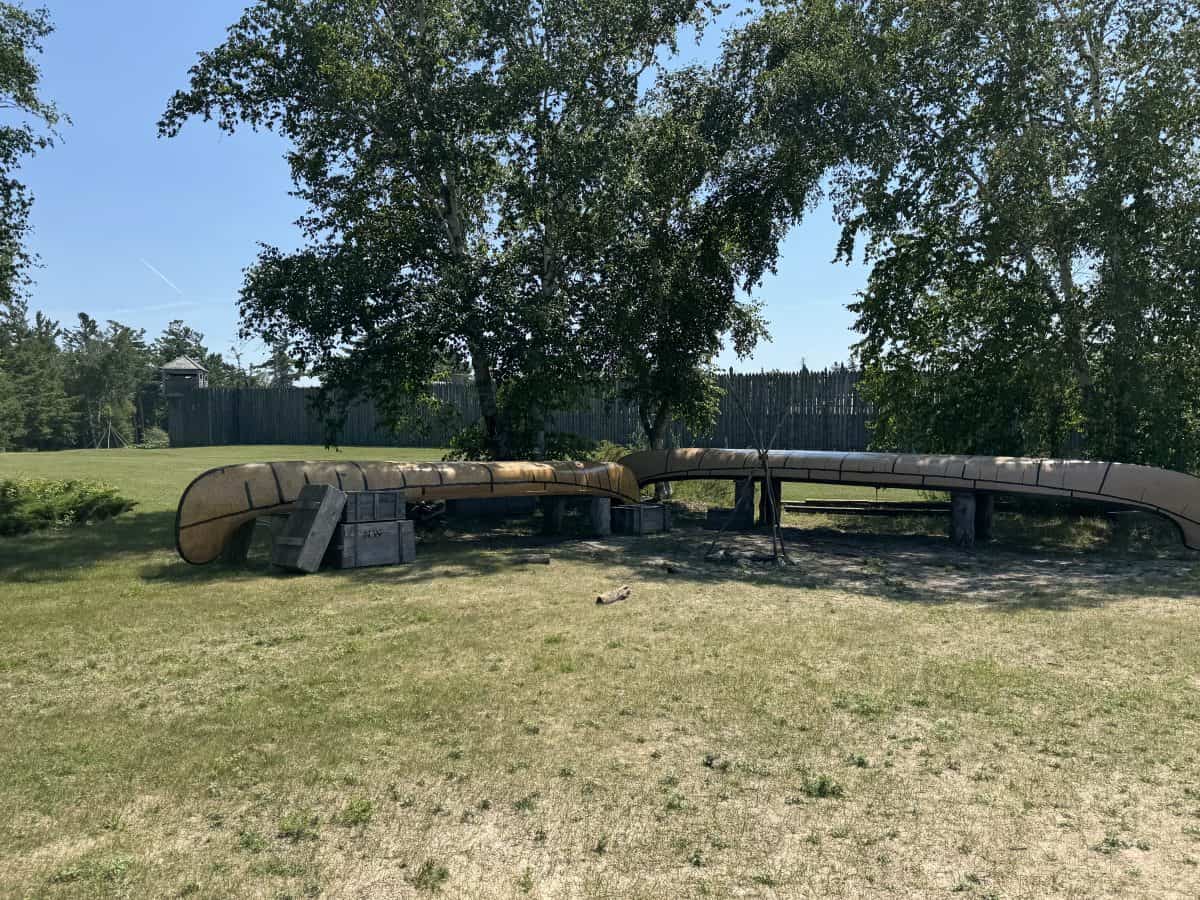
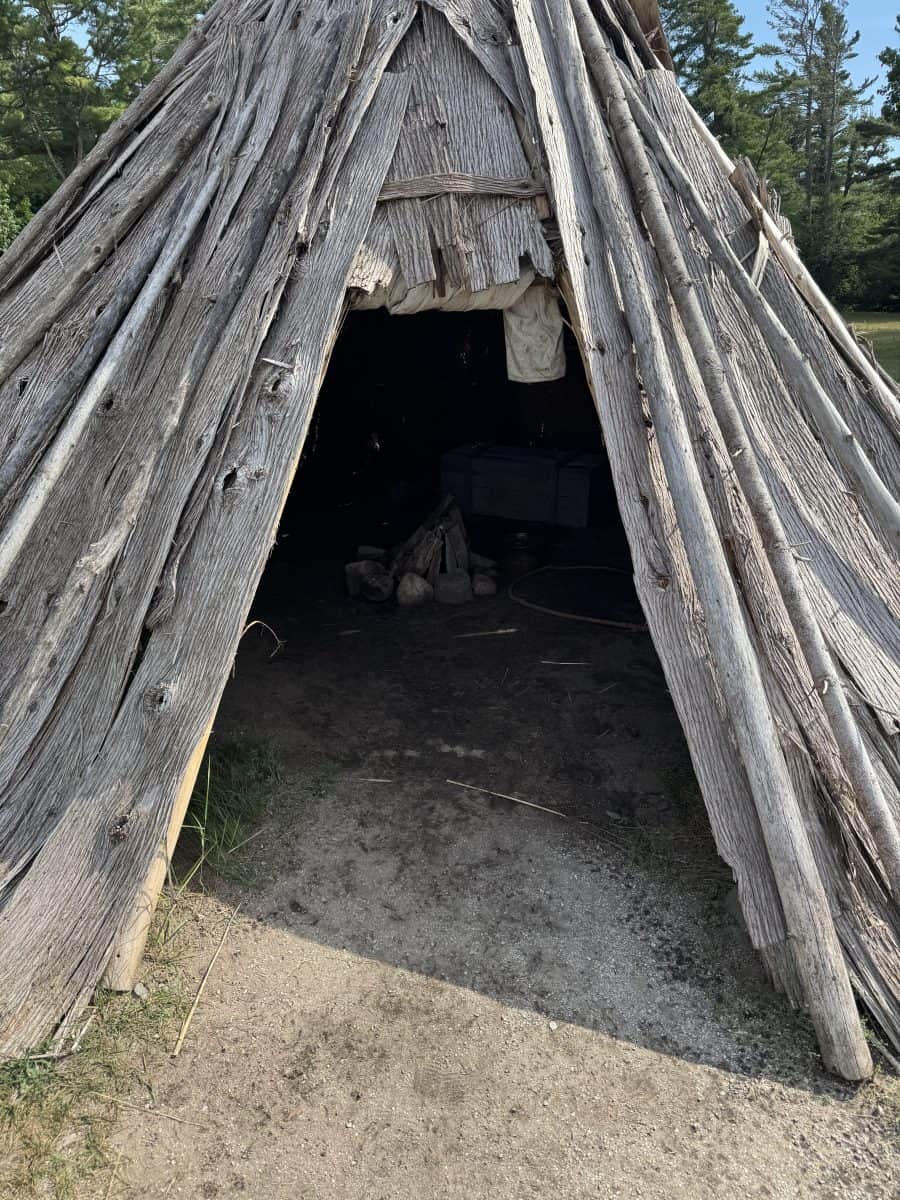
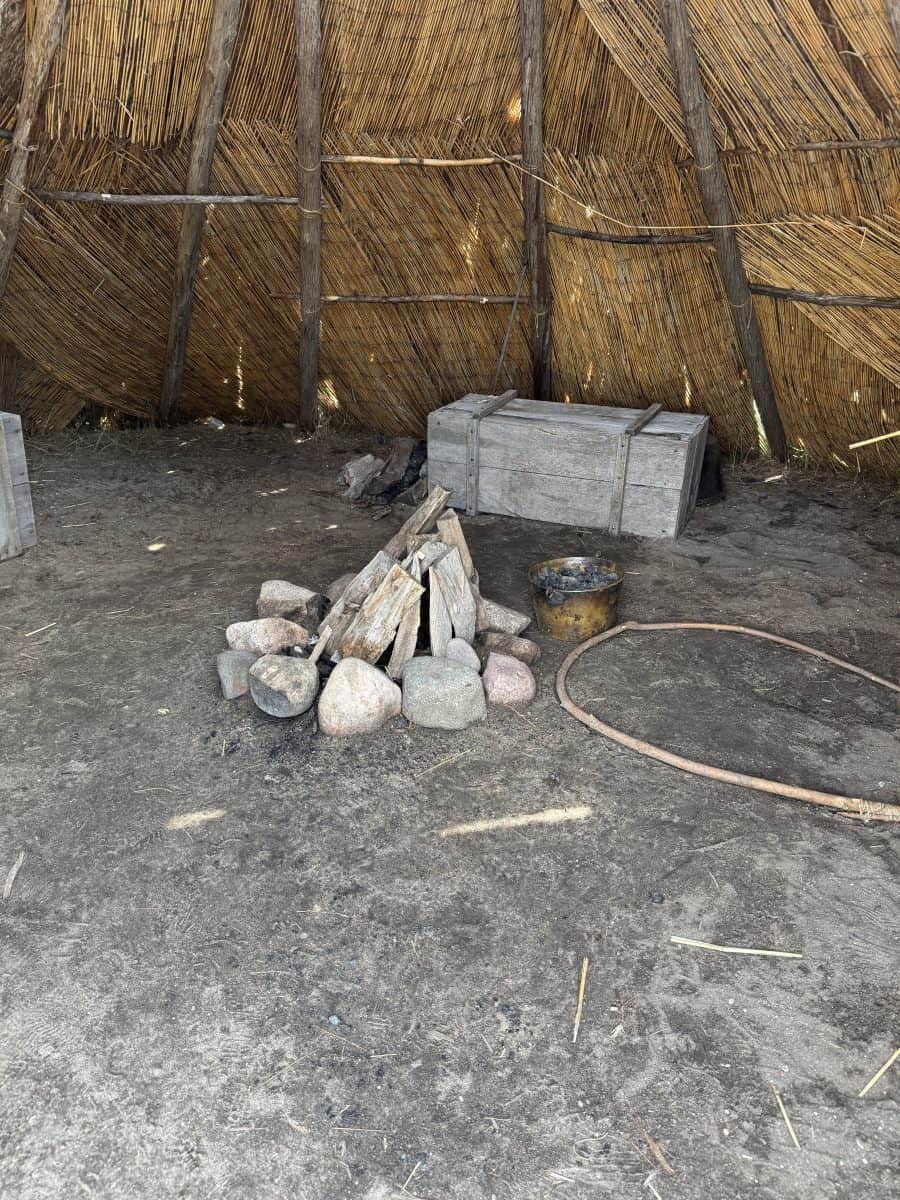
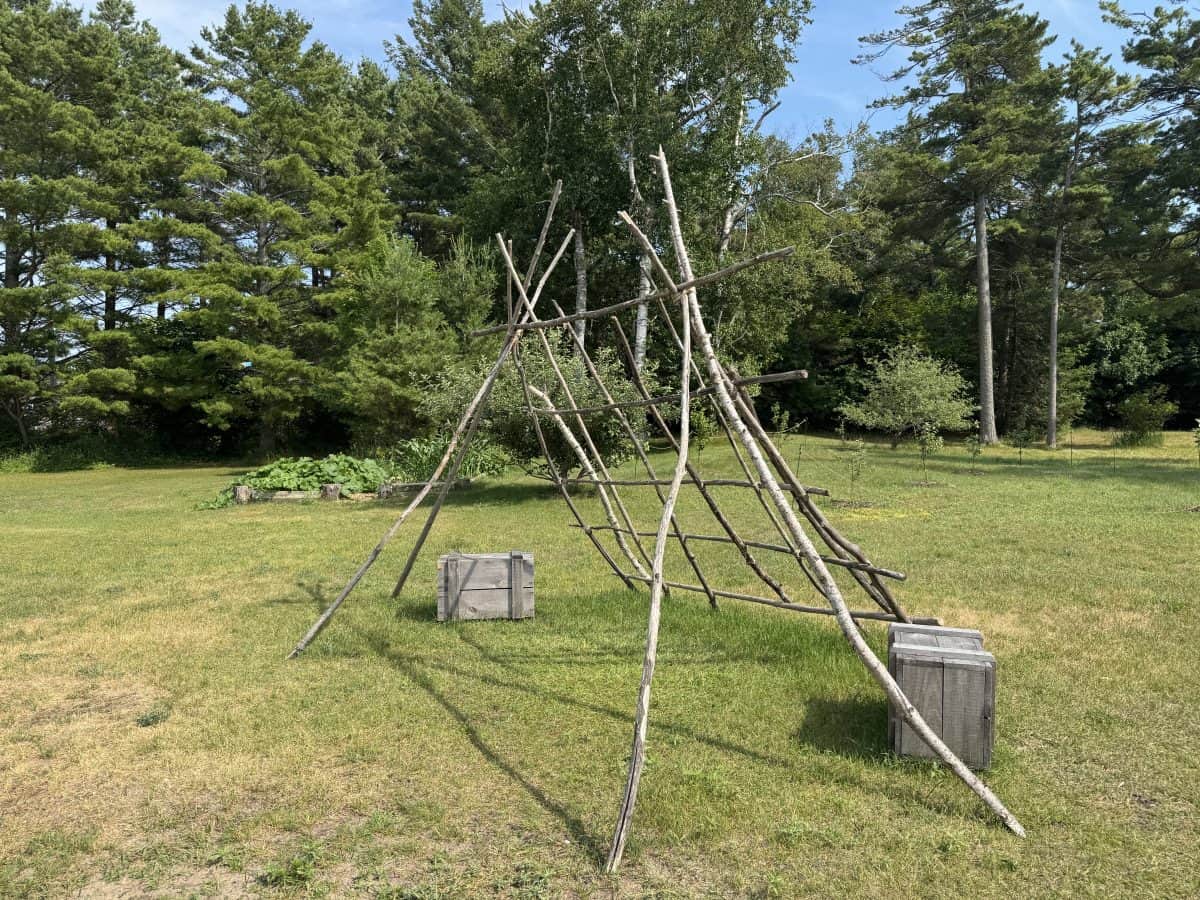
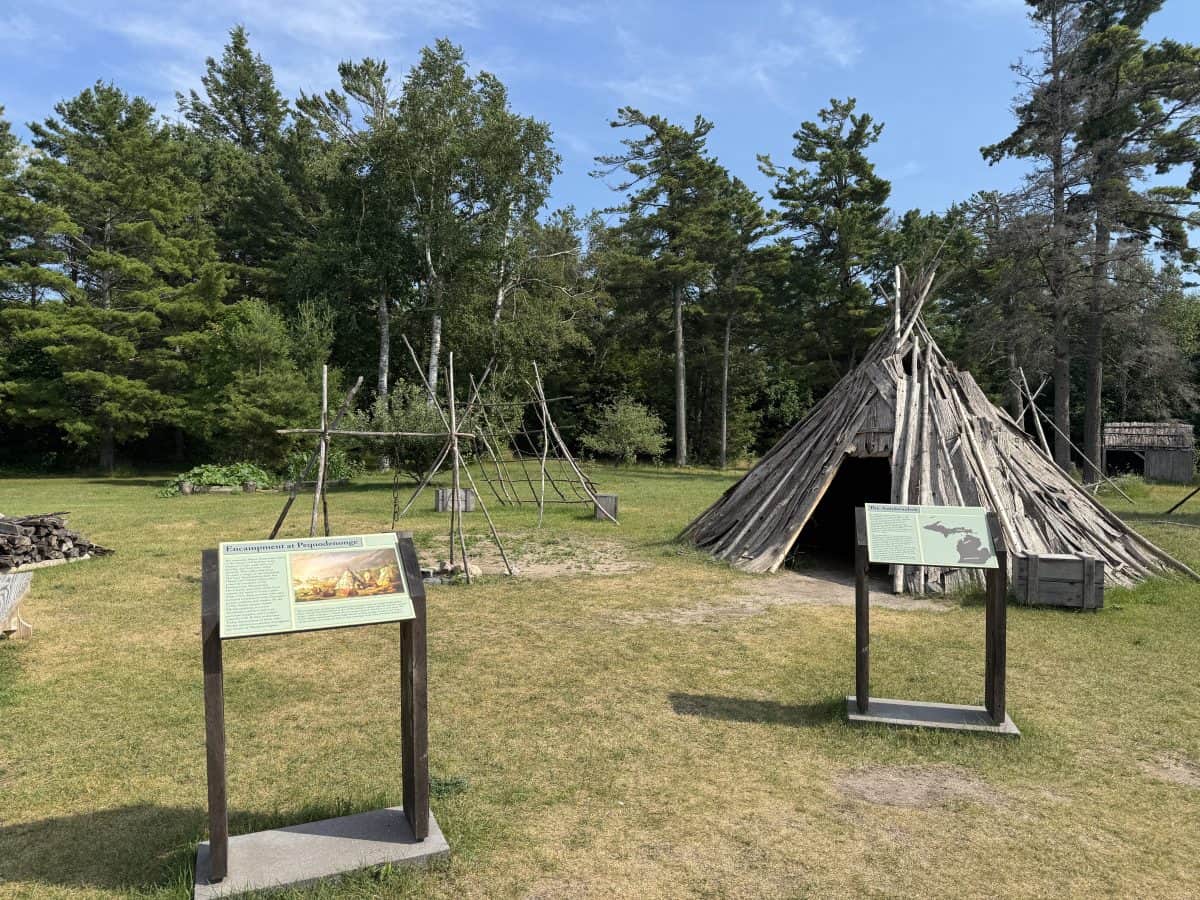
  3. Walk through the Native American Encampment, just outside the fort’s gates, and see reconstructed structures of the Odawa, Potawatomi, and Ojibwe tribes. There are also displays of items used in hunting and making canoes. 
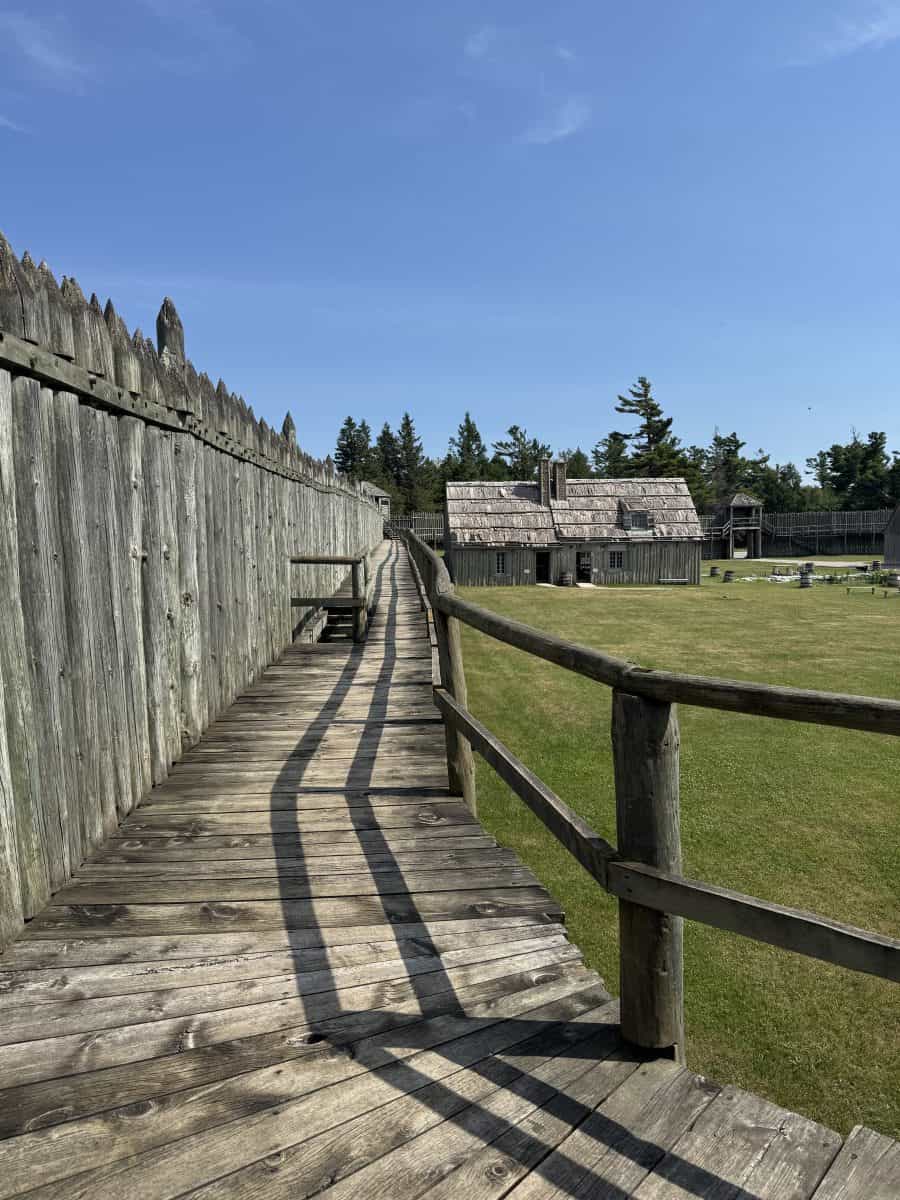
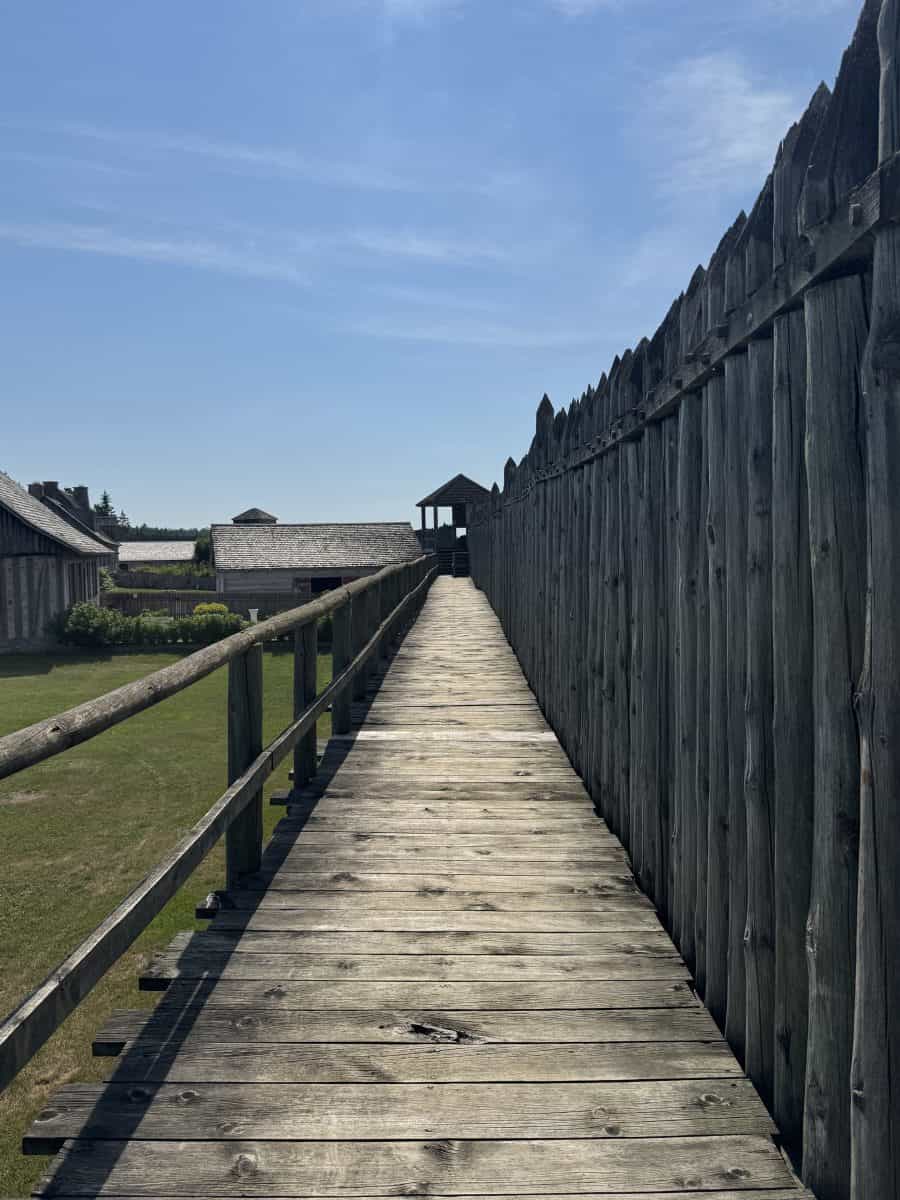
  4. Walk the upper boardwalks of the Fort,  called the Chemin de Ronde, for views of the entire complex, the Mighty Mac Bridge to St. Ignace, and the Straits of Mackinac.
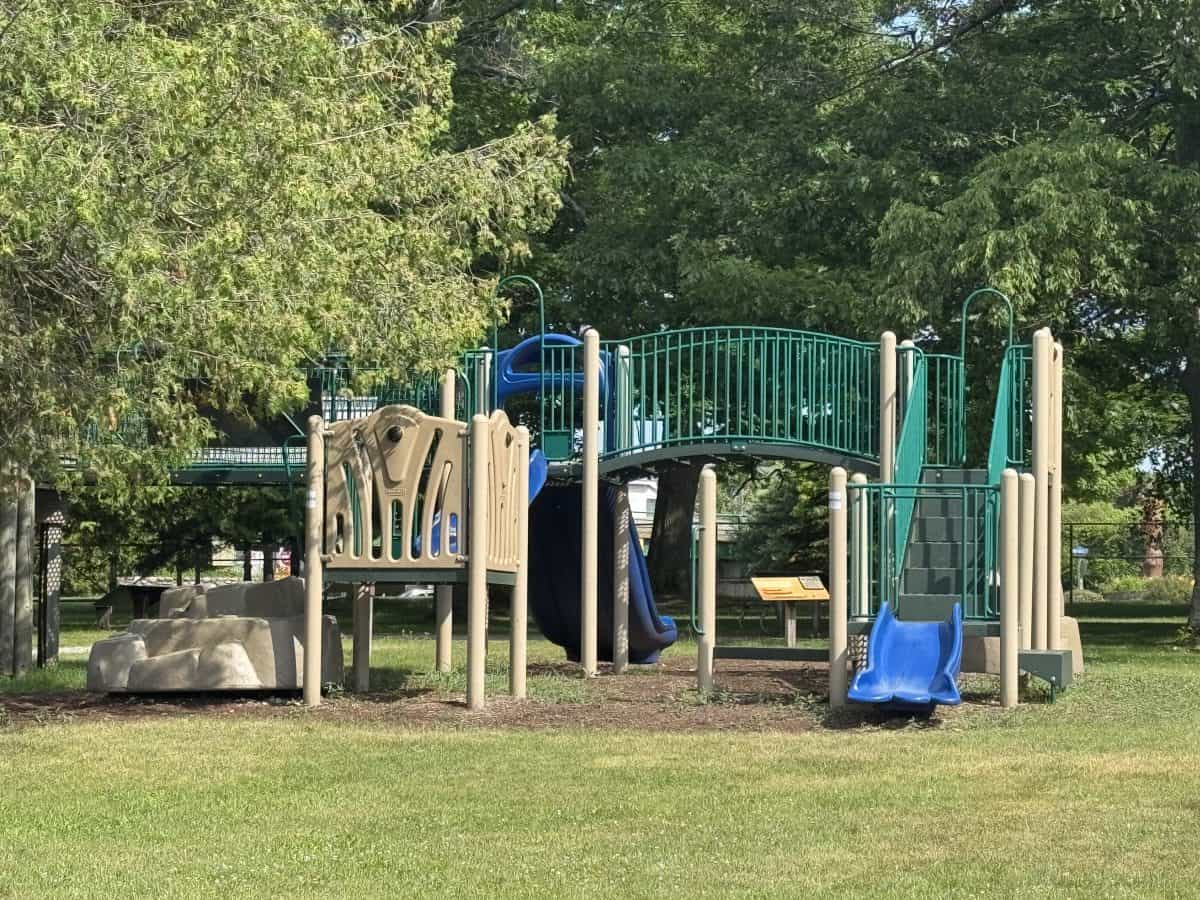
  5. Climb and explore the playground near the entrance to the fort.
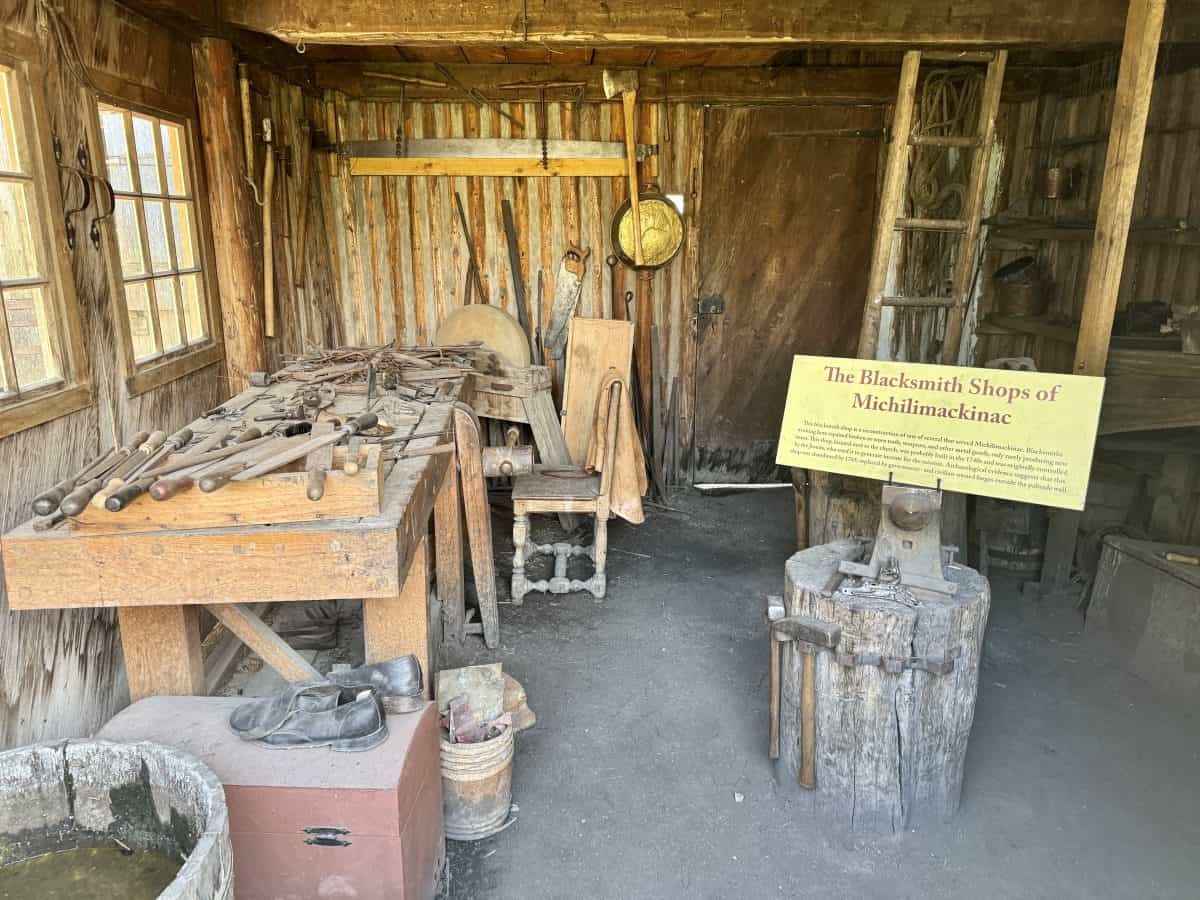
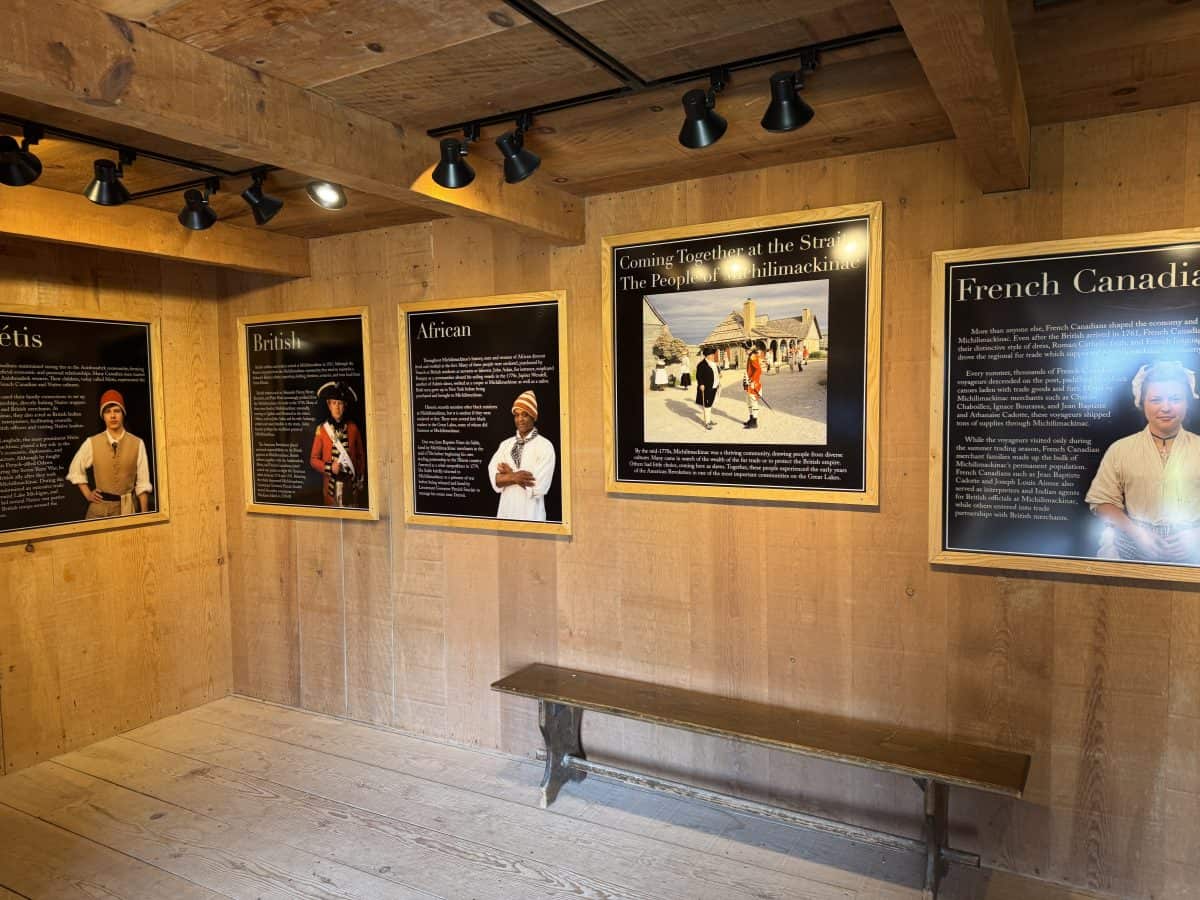
an exhibit at Colonial Michilimackinac in Mackinaw City Michigan

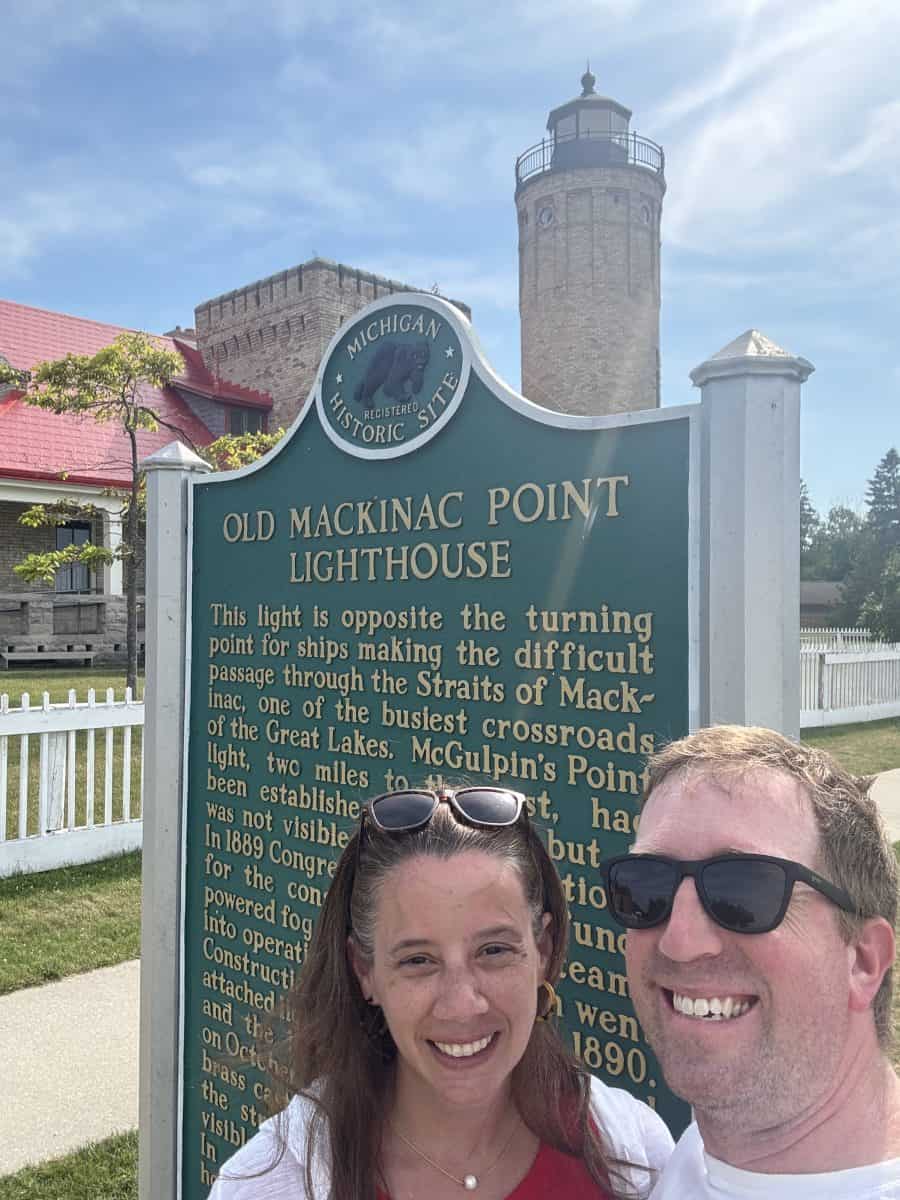
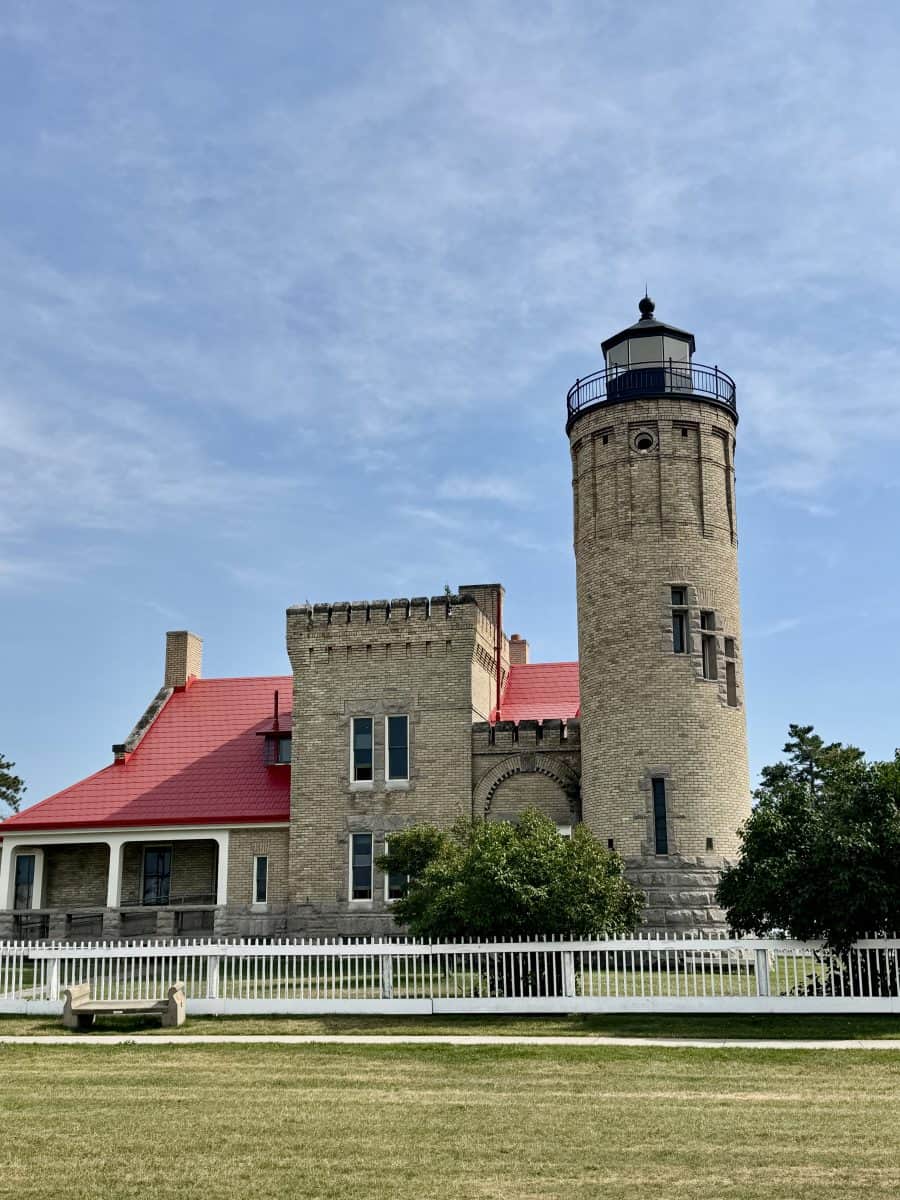
Bonus: Walk through the waterfront state park (lots of green space, a public beach, and benches for resting) to the Old Mackinac Point Lighthouse, built in 1889 to help guide ships through the waters of the Straits of Mackinac until its closing in 1957. Ticketed admission includes touring the second floor of the house, the lighthouse tower, the Shipwreck museum with a featured movie, the Barn, and The Fogg Signal Building. Enter through the Fogg Signal Building. Note: The Lighthouse Complex is open from May through early September. 
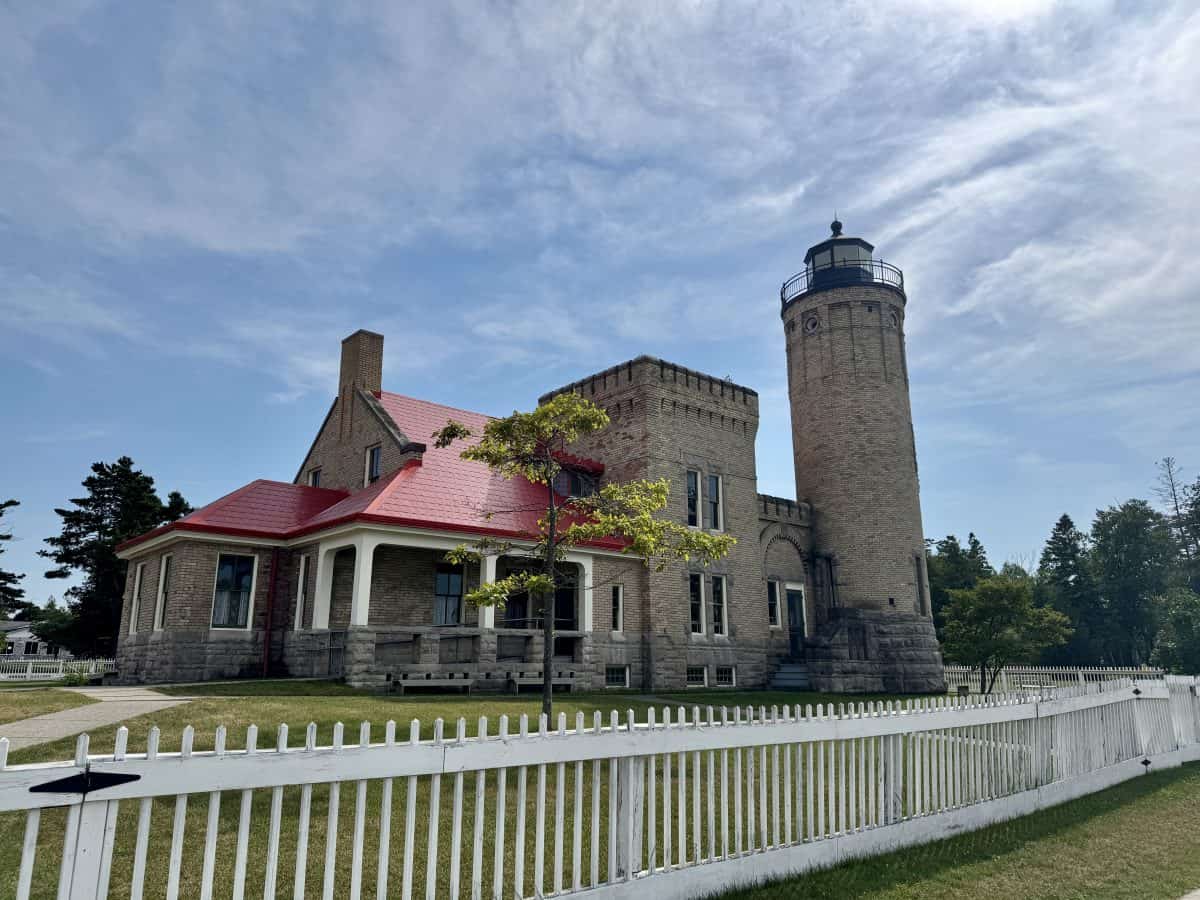
Old Mackinac Point Lighthouse at Mackinac State Park in Mackinaw City, Michigan

Looking for other nearby fun? See our feature of the Grand Hotel on Mackinac Island and more fort tours around the country here. And follow along on our adventures on Instagram, Facebook, and Pinterest.

Disclosure: We were given a media pass to tour Colonial Michilimackinac. All opinions expressed are my own.  

Similar Posts

  • | | |

    Mark Twain House & Museum in Hartford, Connecticut

    Sometimes, we travel out of state so much, my family forgets to visit all of the great spots right in our own “backyard.” With that in mind, we decided to check out a popular spot in Hartford: The Mark Twain House & Museum. For our tips on visiting the nearby Connecticut Science Center, read our post here.

    American author Samuel Clemens, better known as Mark Twain, moved around the country, but spent 17 years raising his three daughters in the Nook Farm neighborhood of Hartford. The late 1800s was a time when Hartford was a thriving industrial city and Nook Farm was one of the most exclusive neighborhoods in the city. Fellow author Harriet Beecher Stowe lived next door (and penned Uncle Tom’s Cabin 20 years before Twain came to town). During the family’s time in Hartford, Clemens wrote dozens of his most popular novels and stories including The Adventures of Tom Sawyer, The Adventures of Huckleberry Finn, and A Connecticut Yankee in King Arthur’s Court.

  • | | | | | | | | | | | | | | | | |

    Why I Love Staying at Marriott Hotels

    Airbnb and Homeaway are popular ideas when it comes to housing while traveling and I love the idea of staying in a neighborhood and really becoming part of a community. I also know several people who love hitting the road in their camp or trailer, or even camping in an old fashioned tent, communing with nature. For me, and my husband and young(er) children, it’s less hassle and gives me more of a “vacation” versus “trip” feel to stay in a hotel when we’re traveling as a family. I like the idea of someone making my bed with fresh sheets each day, whipping up breakfast, and helping me navigate around a new place.

    My family has become loyal fans of the Marriott company. You’ll read specifics about my favorite Marriott properties in some of my posts, but my favorite brand of the company is the Residence Inn. Residence Inns are designed to feel more like a home than a “regular” hotel room. Plus, they’re consistent in many ways I appreciate:

  • | | | | | | | | |

    10 New England Cities to Enjoy This Fall (and what to do besides leaf peeping!)

    Arguably, one of the best things about living in New England is fall: fall weather, fall food, and fall foliage. People travel from all over the country world to see the vibrant colors of New England landscapes. Over the years, we have enjoyed exploring many parts of each New England state, in every season. And while children might be entertained by many things during a long car ride, foliage usually isn’t one of them. 

    So this week we’re sharing 10 great spots (all four hours or less from our Connecticut home and the greater New England area) that showcase the beautiful colors of fall in their scenery (and each spot has tons of public recreational spaces and walking and biking trails) as well as many family friendly attractions.

  • | | | | | |

    The Amazing World of Dr. Seuss, Springfield, MA

    Springfield, Massachusetts, located about 90 minutes west of Boston, is known as the birthplace of basketball and is home to the Basketball Hall of Fame; a post on the Hall of Fame is coming soon. However, there are plenty of other places to visit if you’re in town; especially if you’re visiting with young children.   

    Since 2002, the Dr. Seuss National Memorial Sculpture Garden has been a popular spot for children to enjoy climbing and exploring 14 Seuss-themed sculptures.  Featured in a grassy “quad”, the sculptures are surrounded by five museums: the George Walter Vincent Smith Art Museum, the Springfield Science Museum, the Michele & Donald D’Amour Museum of Fine Arts, the Lyman & Merrie Wood Museum of Springfield History, and the brand new Amazing World of Dr. Seuss Museum.  Purchasing one ticket (or a membership) will allow you to explore all five museums and there is lots of free parking in nearby parking lots. 

  • | | | | | | | | | | |

    Nine Ways to Explore Dallas, Texas in the Spring

    There are SO many places to explore in Dallas- my family could have stayed for a year and still not have seen everything! Unfortunately, we couldn’t stay that long, but we vow to return soon! I did most of my research on VisitDallas.com, which has great lists and suggestions. Click here to request a print copy of the Visitor’s Guide.  If you’re planning on exploring multiple spots on my list, consider purchasing a CityPass, which will give you discounts and allow you to skip many lines. More info here. While many locations having parking lots and there are several metered options on main roads, consider riding with DART, Dallas’ public transportation system. Learn more about it here. Like I mentioned, there was too much to do while we were in town to cover the entire city, but I wanted to share some spots we enjoyed:

  • |

    Touring the US Naval Academy in Annapolis, Maryland

    Founded in 1845 by George Bancroft, Secretary of the Navy, the US Naval Academy, located in the heart of Annapolis, Maryland, is the college that trains officers for both the Navy and Marine Corps. What started as a 10 acre campus with 50 students and 7 faculty members has expanded to a 338 acre campus with over 600 faculty (half civilian and half military) and 4,500 students called Midshipmen (women are called Female Midshipmen), copied from the British naval ranking. Women were first admitted in 1976 and today, represent approximately 30 percent of Midshipmen. Each year, the Academy accepts approximately 1200 students, approximately 10% of applicants. All Midshipmen are on scholarship and are required to serve a minimum of five years in the Navy or Marine Corps following their four year college experience, culminating with a Bachelors of Science degree. 

    Over 80,000 people take guided tours each year, and over two million people visit the Academy each year. Our guided walking tour is one of the BEST tours we have ever taken and we think it is a must see and do when you’re exploring Annapolis, or driving through to Washington DC or Baltimore, Maryland, both a half hour away.

Leave a Reply

Your email address will not be published. Required fields are marked *