Packing a Suitcase

You’ll hear me say it often on this site: Be prepared. I truly believe you can never be too prepared, or plan too much. And while it’s been a personal resolution (since, about, oh… 2002) to try and be spontaneous, I have a lot of evidence to support planning ahead of a trip.

I’ve written about how to pack the car, but if you’ll allow me to micromanage you just a little bit more, I’ve got a few suggestions on how – and what – to pack in a suitcase when traveling with the kids.
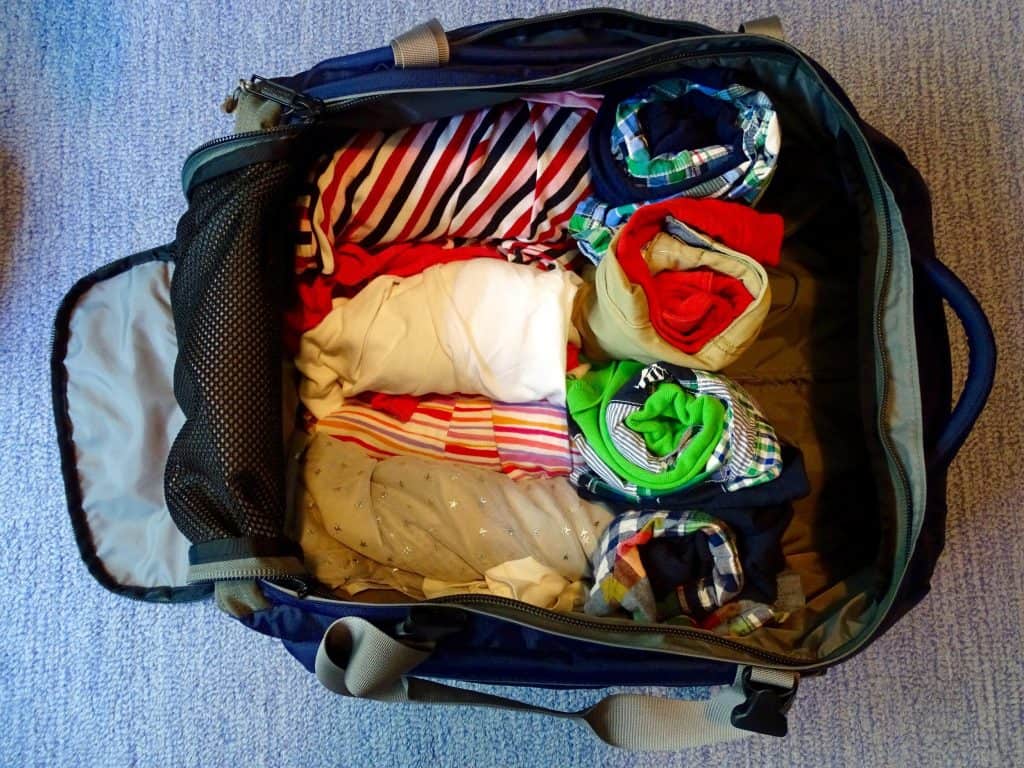
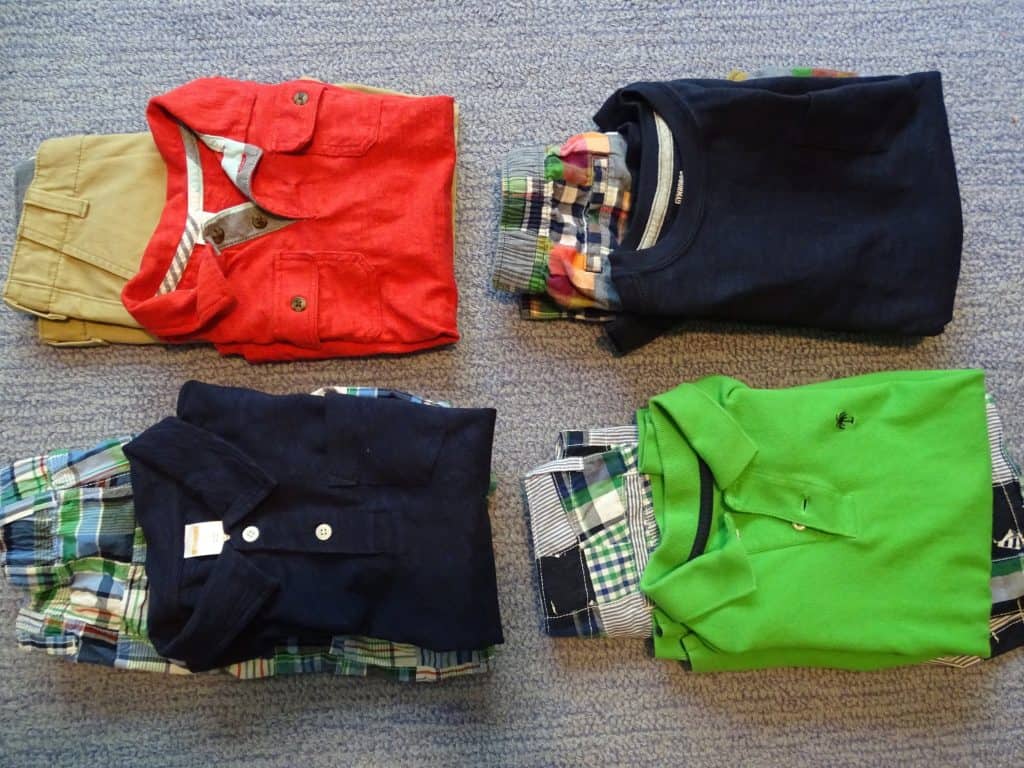
Pack a whole outfit for each whole day
For each member of my family, I pack underwear, socks, tops and bottoms in one set. I used to try and coordinate my children’s clothes so they matched, but they stopped letting me do that years ago. I stack the items flat, with either the bottom or top item on the bottom, and then roll everything. This prevents the clothes from wrinkling, and I can easily see the colors and patterns.

Night time stuff
We shower at night, and recycle pajamas throughout the trip. I keep the pajamas in a separate compartment, so they’re easy to find after a long day, and will let them air-out on the desk or sofa to keep them fresh. Then I pull out a “roll-up” for the next day, so the kids can get dressed quickly in the morning. This prevents them from rummaging through the suitcase and making a mess.

Toiletries and cosmetics
We have two cosmetic bags we use: one to hold stuff we use on a daily basis – hygiene items like shampoo, deodorant, toothbrushes, etc, and one exclusively for my husband I that holds razors, lotions, and makeup. Hotels provide most of the necessities, but one of my nonprofit’s most popular community service projects involves making hygiene kits for homeless shelters using hotel toiletries… So, I often save the hotel toiletries for that, and bring along the products that fit our needs.
Would you like to save this?

We'll email this post to you, so you can come back to it later.

How many suitcases
I carry the “togetherness” philosophy right down to the suitcases. We don’t pack suitcases for each member of the family, but instead pack a few suitcases to share, that way we only have to lug around one suitcase at a time (as long as I can convince my husband he doesn’t need 2 shirts each day and multiple sweatshirts when traveling down South). I can usually fit 4-5 days of clothing for two adults and two small children in one suitcase. At the end of a hotel stay, we put the dirty clothes in a plastic bag in the trunk. When we’ve emptied a suitcase, we fill it back up with the bags of dirty clothes, leave it in the trunk, and move on to the next suitcase. Each suitcase has one set of pajamas and one bathing suit, so we don’t have to worry about switching things from one place to another. It’s important to have a spare blanket or retractable cargo shield that blocks the view of your belongings in the trunk, to help prevent a break-in.

What the kids are allowed to bring
Each child gets their own travel bag, which they’re responsible for carrying. The rule is: you bring it, you tote it. For night time, we only allow one small stuffed animal, and keep any special blankets in the suitcase with their pajamas, to keep everything clean. Our children are voracious readers. It’s a good problem to have, but the hardest part of packing is limiting the huge load of books our children want to bring with them. So we use a cloth basket in-between their car seats as a library and just leave it in the car. They can choose what books fill the library before each trip, and then select one book for nighttime reading, while the others stay in the car.

For other tips about staying healthy and happy while traveling, check out my posts here and here

Similar Posts

  • | | | | | | | |

    Bristol, Rhode Island

    Rhode Island may be the smallest state, size wise, in the country, but what it lacks in size, it makes up for in inviting beaches, interactive history, and plenty of family friendly activities.

    Bristol, a town of about 23,000 people, is located between Newport (look for upcoming posts!) and the state capitol, Providence. A few years ago, my husband and I taught academic courses for Johns Hopkins University’s Center for Talented Youth summer program on the campus of Roger Williams University. We were able to spend time getting to know this beautiful town that separates Narragansett Bay and Mount Hope Bay. Here are some of our favorite spots: (and I did fact check to make sure information is up to date as of June 2017)

  • | | | | | | | |

    City Guide: St Augustine, Florida

    Located in the northern part of Florida, St Augustine has the distinction of being known as the oldest continually occupied European settlement in North America. It was founded in 1565 by Pedro Menendez and his soldier and colonists, fifty years after Ponce de Leon claimed the area now known as Florida for Spain in the early 1500s. St. Augustine was under Spanish rule until 1763 when Britain took over for 20 years, followed again by Spain until the United States took over in 1821. Florida later became a state in 1845. The St. Augustine area became popular with tourists in the 1820s as a spot to escape cold northern winters, and the popularity grew when Standard Oil co-founder Henry Flagler founded the Florida East Coast Railway and began building hotels, churches, and a hospital throughout the area. Today, St. Augustine is a popular spot to be immersed in rich history and culture and the city offers plenty of family friendly adventures. 

  • | | |

    Where to Stay inside Glacier National Park in Montana

    We just returned from an epic trip out west and enjoyed almost a full week at Glacier National Park in western Montana, one of our most favorite parks to date. Glacier National Park, one of the most popular American National Parks with close to three million visitors each year, covers over a million acres across 1,500 square miles (with over 750 miles of marked hiking trails!) There are over 750 lakes inside Glacier National Park (about 130 of them are named), many of which are glacier fed (which gives the lake water the appearance of the vibrant turquoise color in some of our photos). In 2024, there remain approximately 26 glaciers, but each year that number shrinks as the glaciers melt. 

  • | | | |

    AT&T Stadium, home of the Cowboys, in Arlington, Texas

    Full disclosure: We’re NY Giants fans. Like, season-ticket-holder NY Giants fans. So when our friends and family heard we were going to visit the home of our arch rivals, the Dallas Cowboys, they asked if they should have bail money on hold. Not to worry – real Giants fans keep it classy! Plus, we’d heard how beautiful and enormous (if you can use those words to describe a sporting venue) AT&T Stadium is, so we had to check it out for ourselves. Our son still insisted on frowning or “booing” in every photo.

  • How to Pack the Car

    The days of spontaneously hopping in a car and hitting the road ended when our daughter was born. After that point, even a simple trip to the grocery store required careful planning and a car full of “just in case” items.  Nowadays, we can pare down some of the items necessary (yay, no more lugging the Pack N’ Play!) , but packing the car still requires a lot of care and thought. The Boy Scouts had it right: Be Prepared.  Being prepared pays off in many respects. I recently wrote about items I take on a trip for CTinStyle, one of my favorite blogs, here but I thought I would update some of my suggestions.

  • | | | | | |

    10 Galleries Kids Will Love at the Cloisters in New York City

    The term “cloister” refers to an open courtyard, usually found in the center of a religious monastery or convent. Located in Fort Tryon Park in the Washington Heights section of Manhattan, the Met Cloisters are an extension of the Metropolitan Museum of Art that showcases European medieval art and architecture. There are a dozen distinct areas that include 20 galleries and gardens spread throughout the four acre space. The museum was built by architect Charles Collens and opened in 1938. Many of the artifacts and structures, which date back to the 12th through 15th centuries, were saved from various churches, monasteries, and abbeys throughout Europe and recreated throughout the museum complex. There are several stone and wood sculptures, panel paintings and tapestries on display throughout galleries that are meant to recreate the feeling of being in a medieval European monastery. The four cloisters were originally created in France, bought by art dealer and sculpture George Barnard in the early 1900s, and later bought by John D. Rockefeller and donated to the museum.