
Seven Ways to Explore the Boston National Historical Park and The Old State House in Boston, Massachusetts
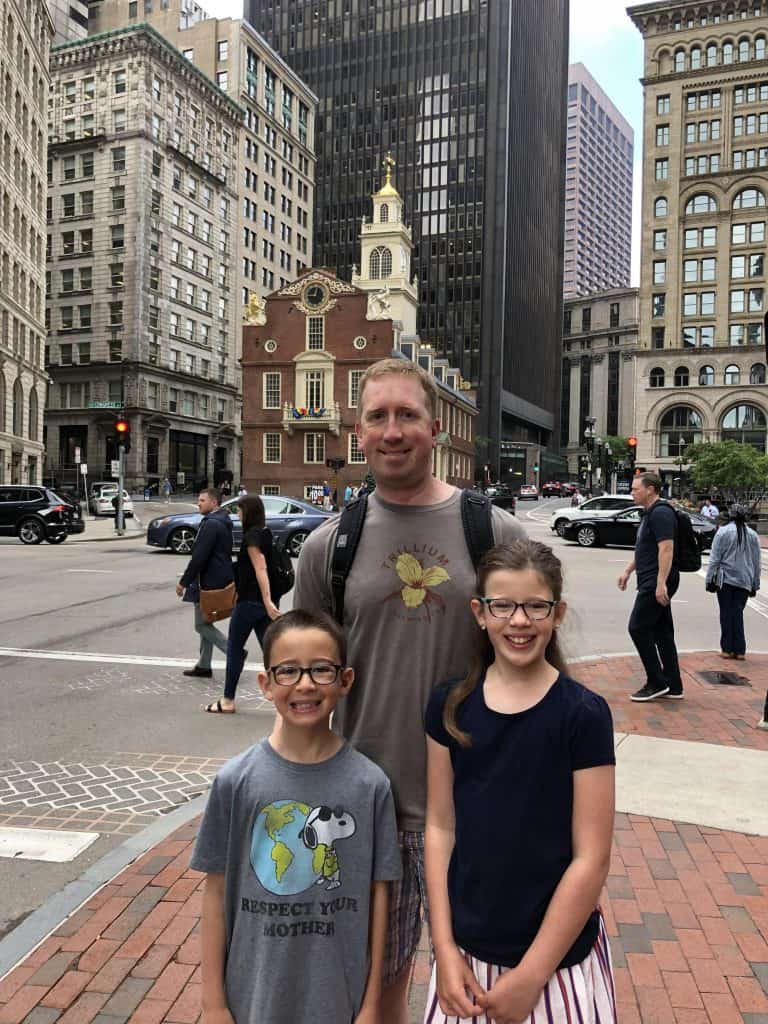
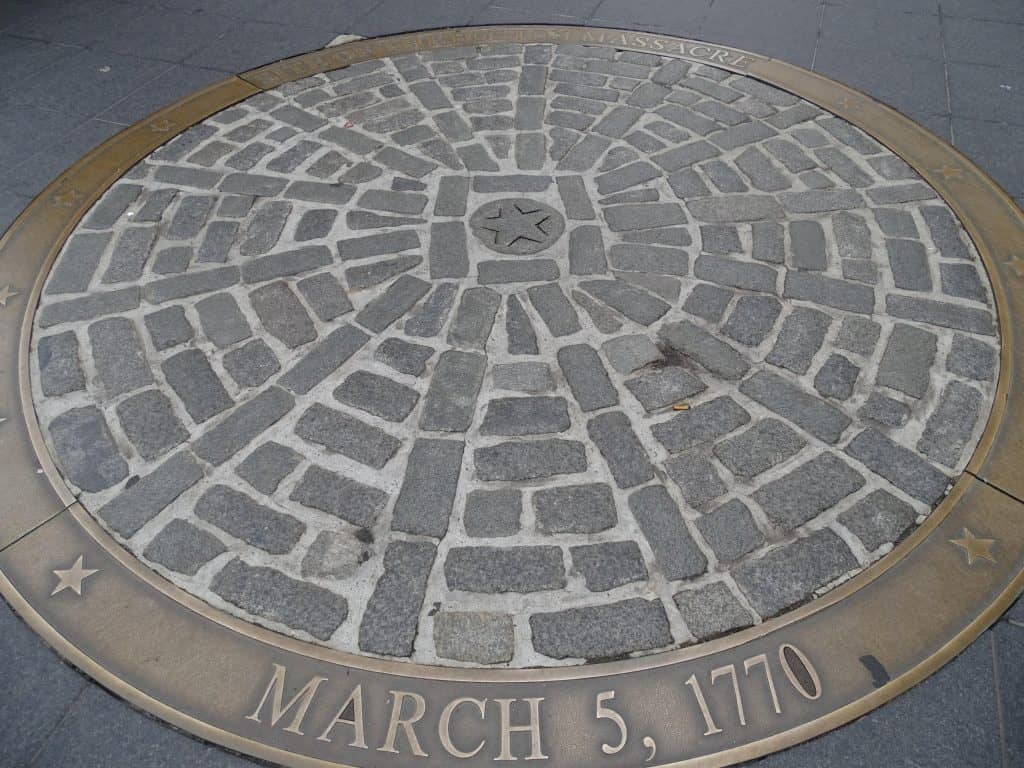
The Old State House, built in 1713, is the oldest building in Boston. It has been restored several times since it was saved by demolition in 1881. In addition to being the State House, the building also served as City Hall in the mid 1800s. It’s famous for overlooking the Boston Massacre and being the site of the first reading of the Declaration of Independence in Boston. In 1903 a branch of the subway was installed.
With your admission ticket, each guest receives a lanyard and card and assigned historical figure from the Revolution Era. Each card includes biographical information, social rank, and age. Use this information at several exhibits throughout the museum.
Traveling with Kids:
Kids ages 18 and under receive free admission and the museum also offers free admission to Blue Star families and Massachusetts teachers- info here.
Tours are every hour hour and brief presentations are offered throughout the day
If you’re driving, park in the nearby Dock Street Garage. It’s $25 to park all day if you park before 9am. Check here for other parking options; most places charge around $40 for the day. If you’re taking the T (subway), take the Orange or Blue line to the State Street station- it’s located right under the museum!
The museum is not handicap accessible and does not allow strollers. There are about 7 steps into the main floor, and then about 17 steps to the upper level and 17 steps down to the lower level.
Restrooms are located on the lower level. There are no dining facilities on site; Faneuil Hall Marketplace and Quincy Market are close by and have tons of dining options. Check here for the list. If you have a food allergy or intolerance, you’ll find this guide helpful.
A large gift shop with a wide variety of souvenirs is located on the main floor.
Visitors must check all bags in monitored (but not locked) cubbies behind the admission desk
Make sure to get your National Parks Passport stamps– the location is part of the Boston National Historic Park.
Plan on 60 minutes to fully explore the museum and 30 minutes for a guided tour. List of tour options here.
Ten Must Do Activities at the Old State House:
1. Look for the lion and unicorn (royal symbols) on the East gable of the building, and an American eagle and Massachusetts seal on the West gable.
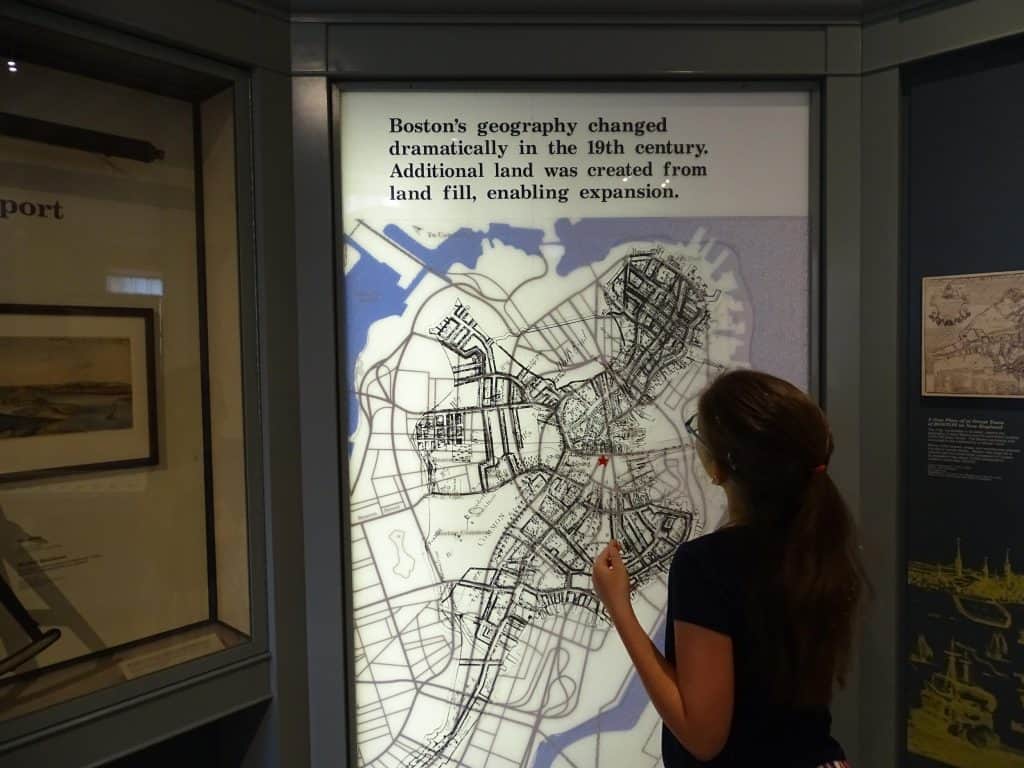
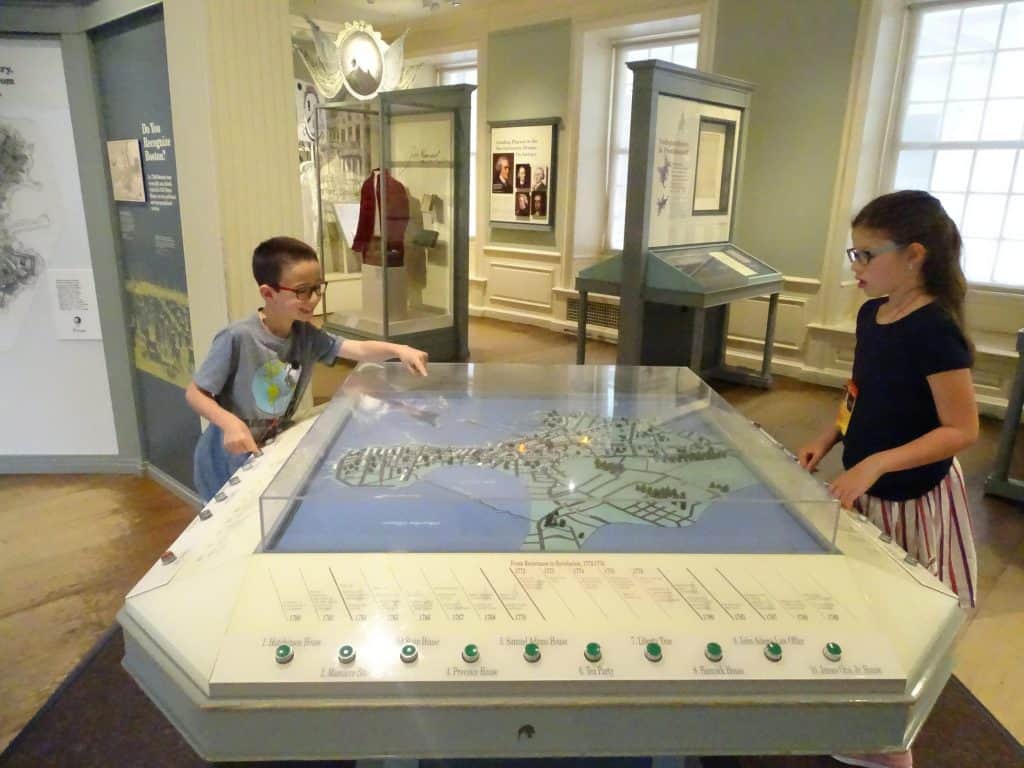
2. Press the buttons to light up various locations on the Freedom Trail on a replica map
3. Find one of the original lanterns that hung on the Liberty Tree celebrating the repeal of the Stamp Act
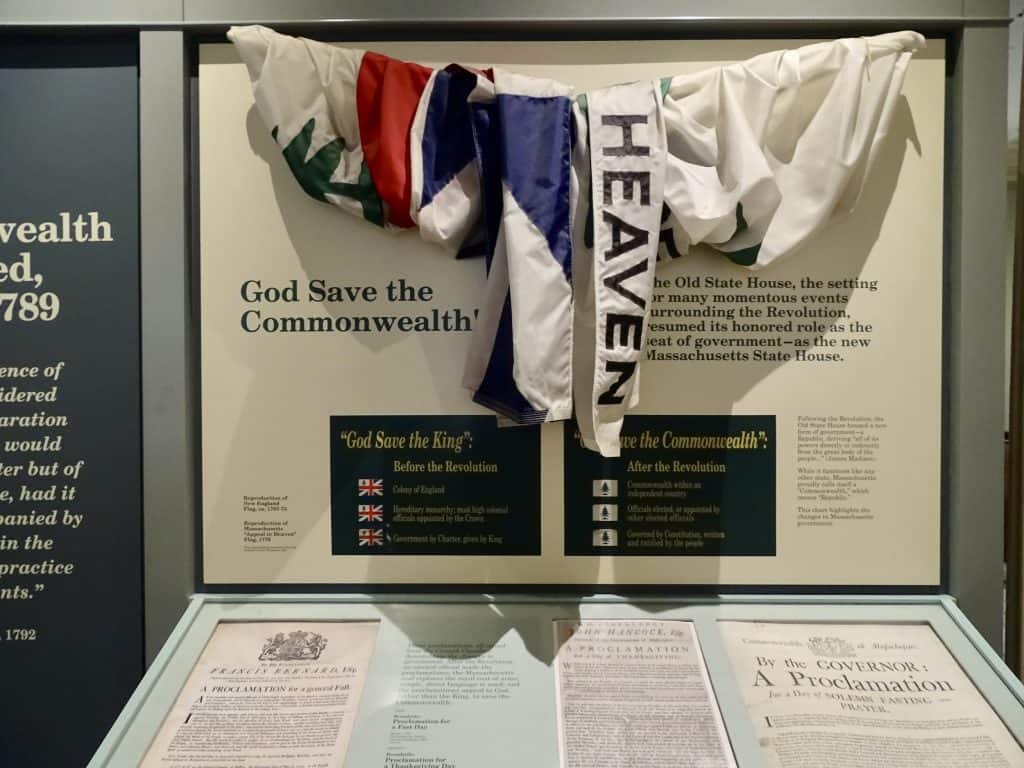
4. Compare life before and after the Revolution
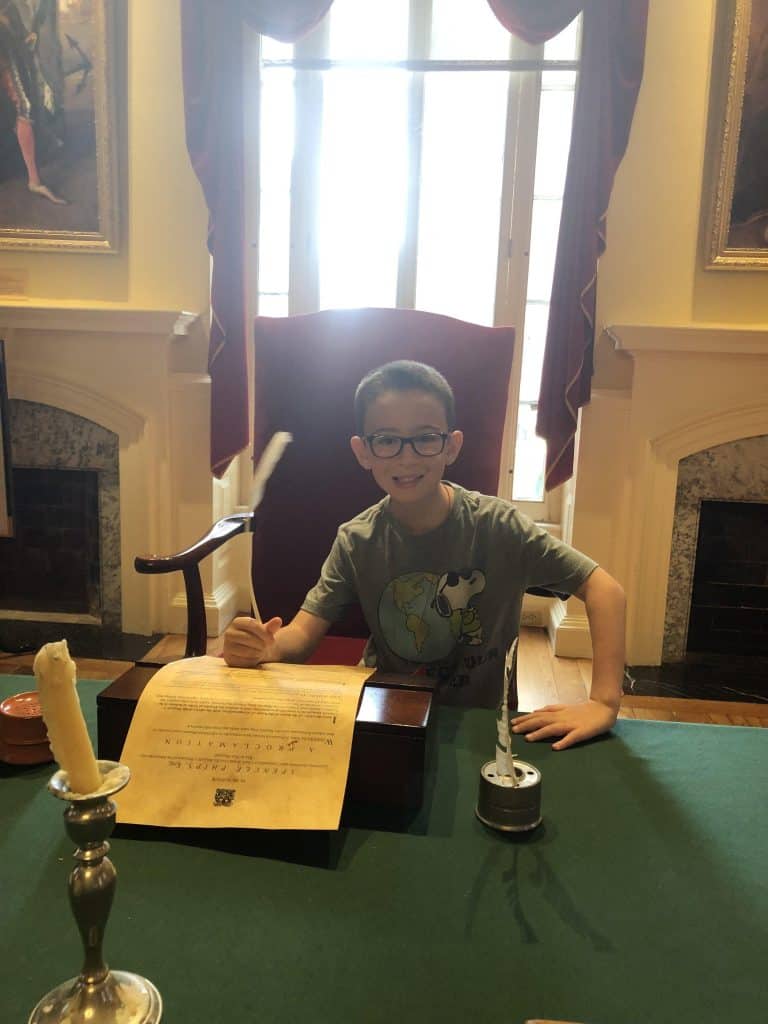
5. Sit at the dining table in the Council Chamber of 1764 room


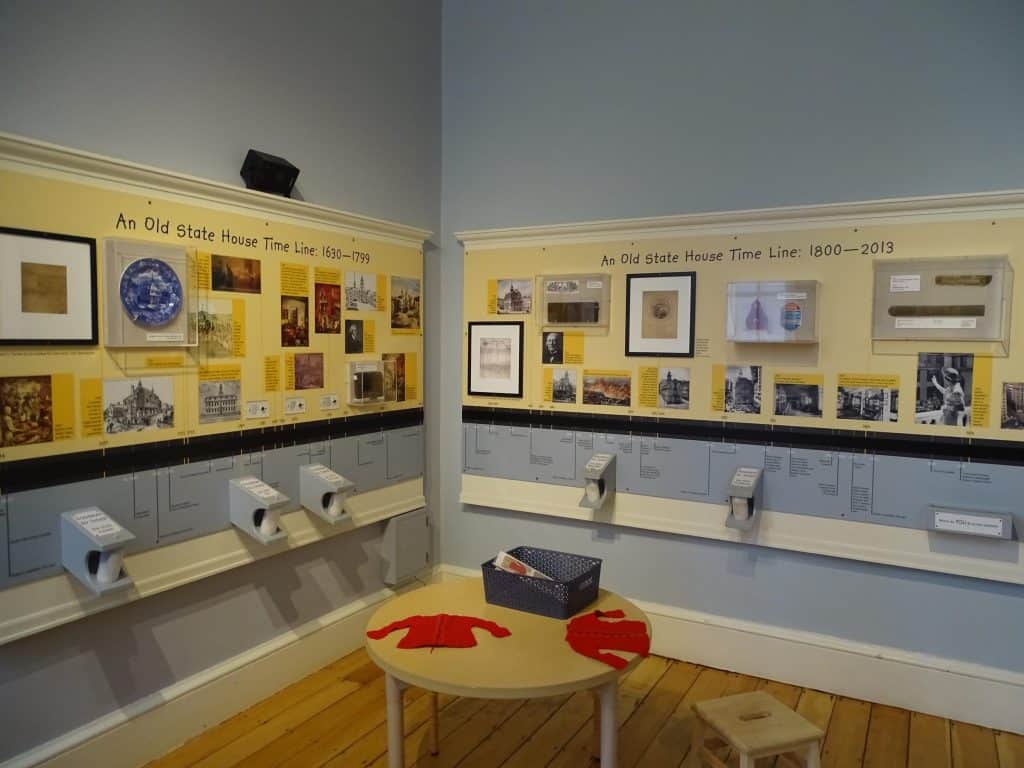
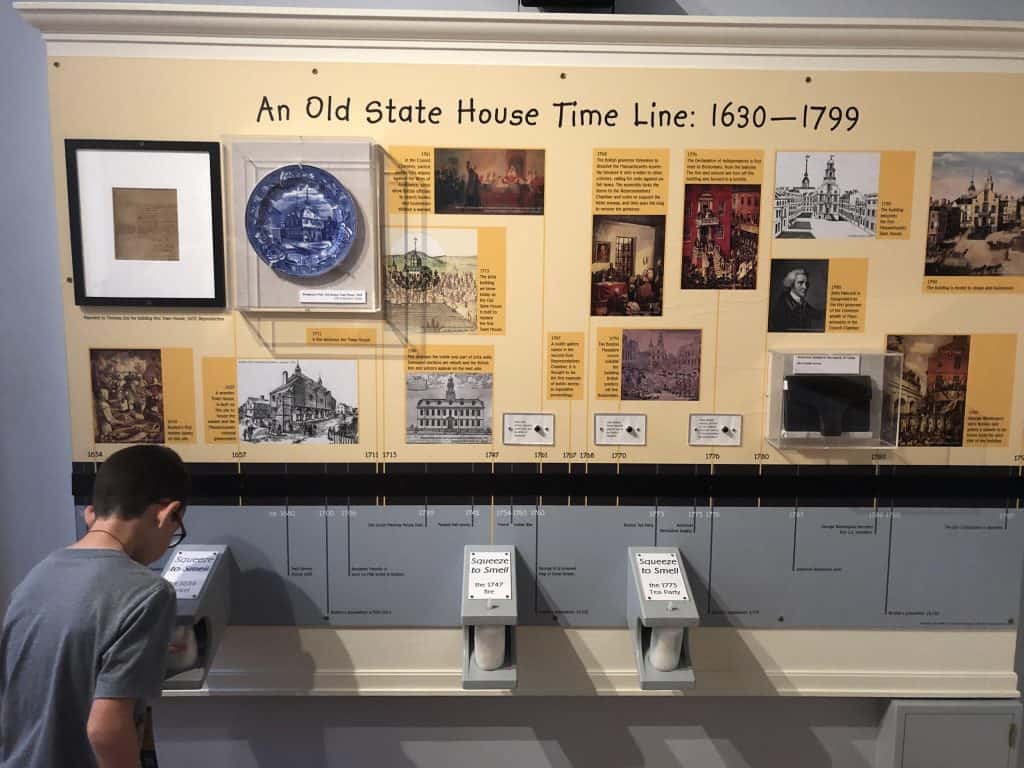
6. Squeeze bottles to smell various scents at the timeline in Room 3
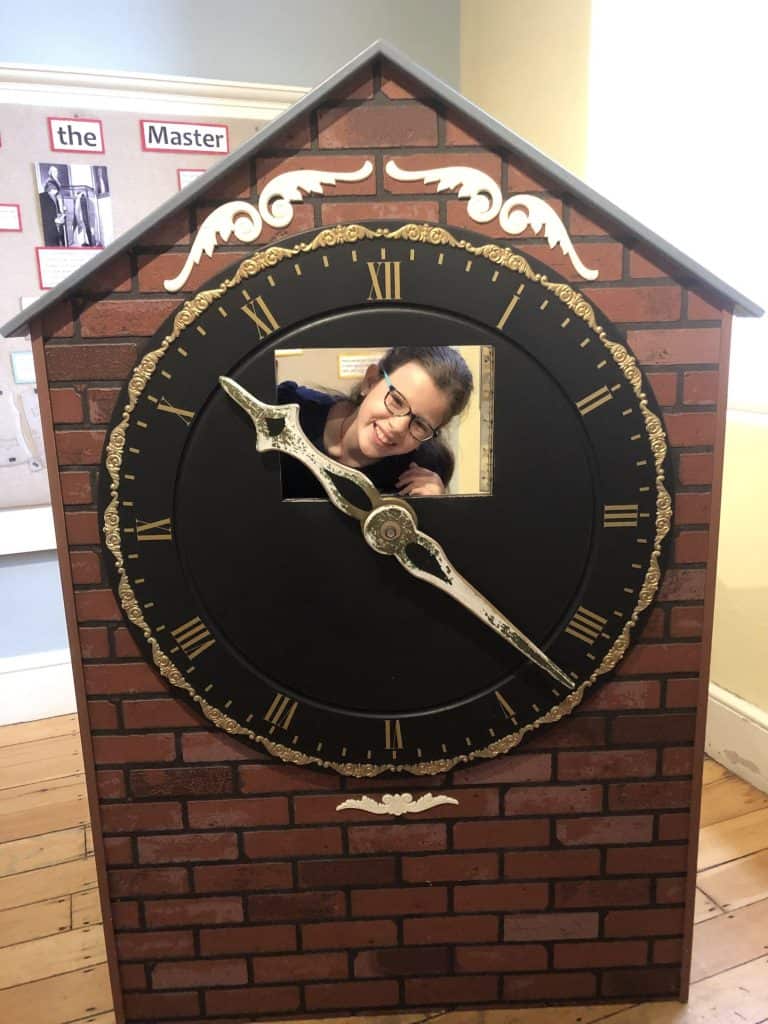
7. Reset the giant replica clock. The actual clock outside the building served as one of the only public clock pieces in Boston and was commonly used to tell time.
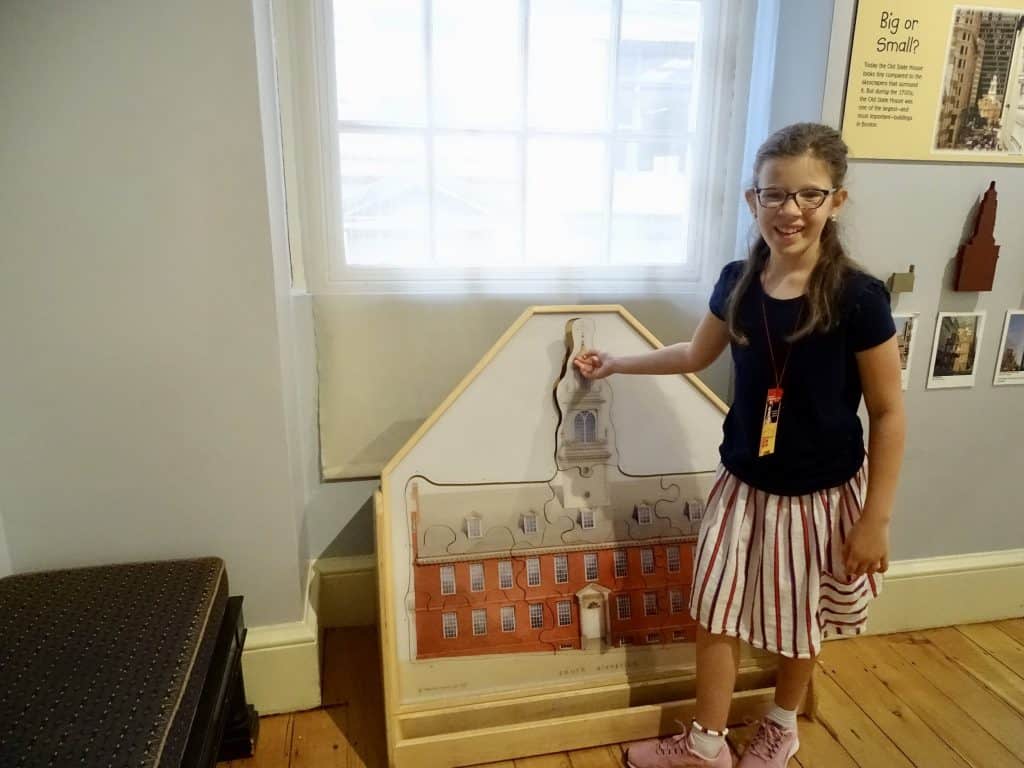
8. Put together a giant puzzle of the State House in Room 2
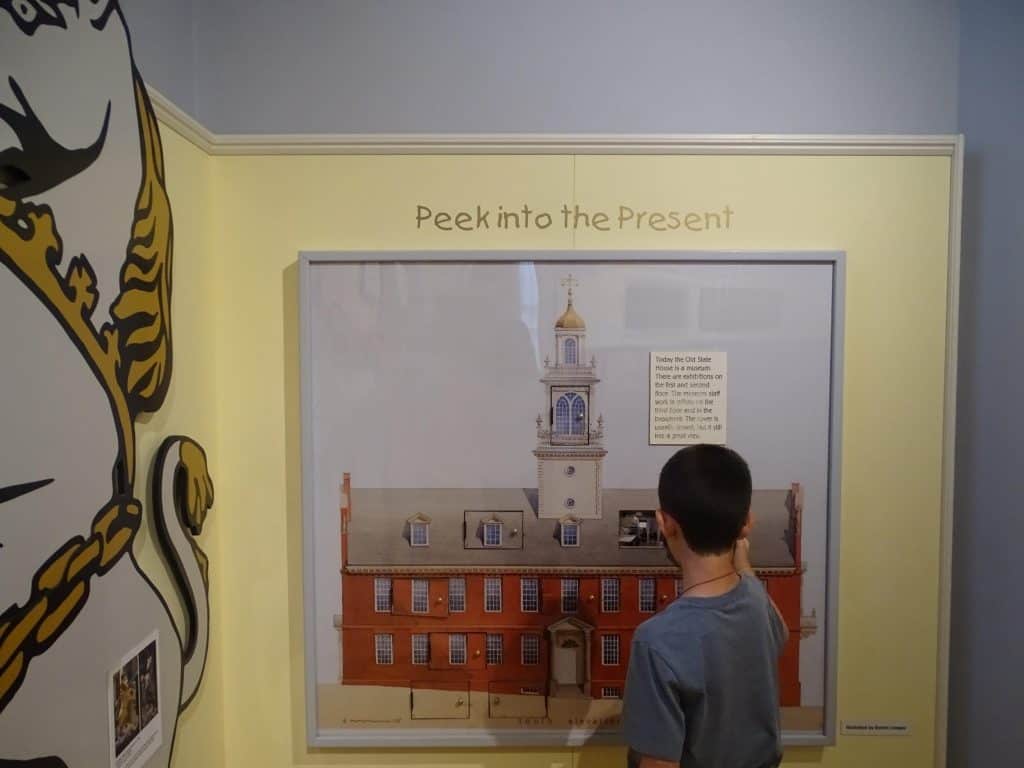
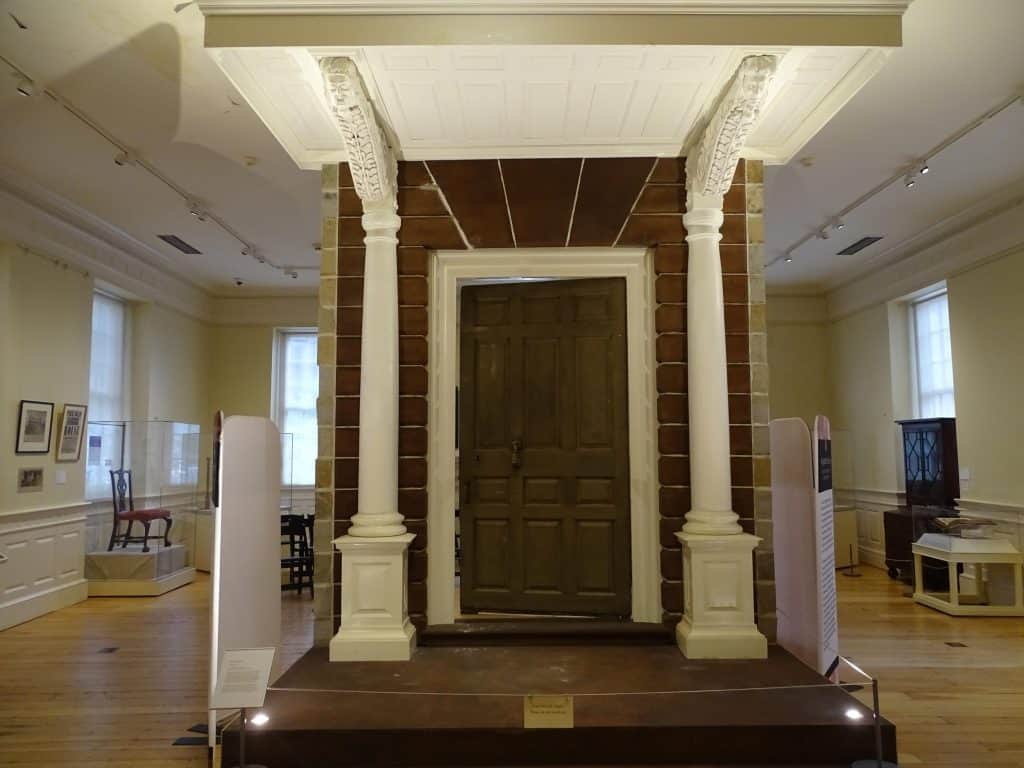
9. Peek through the various rooms of a replica State House
10. Watch a six minute multi media film about the Boston Massacre
Bonus: Take a 30 minute tour of the upper floor which includes historical background and information about your assigned character or a 30 minute tour about the Boston massacre.
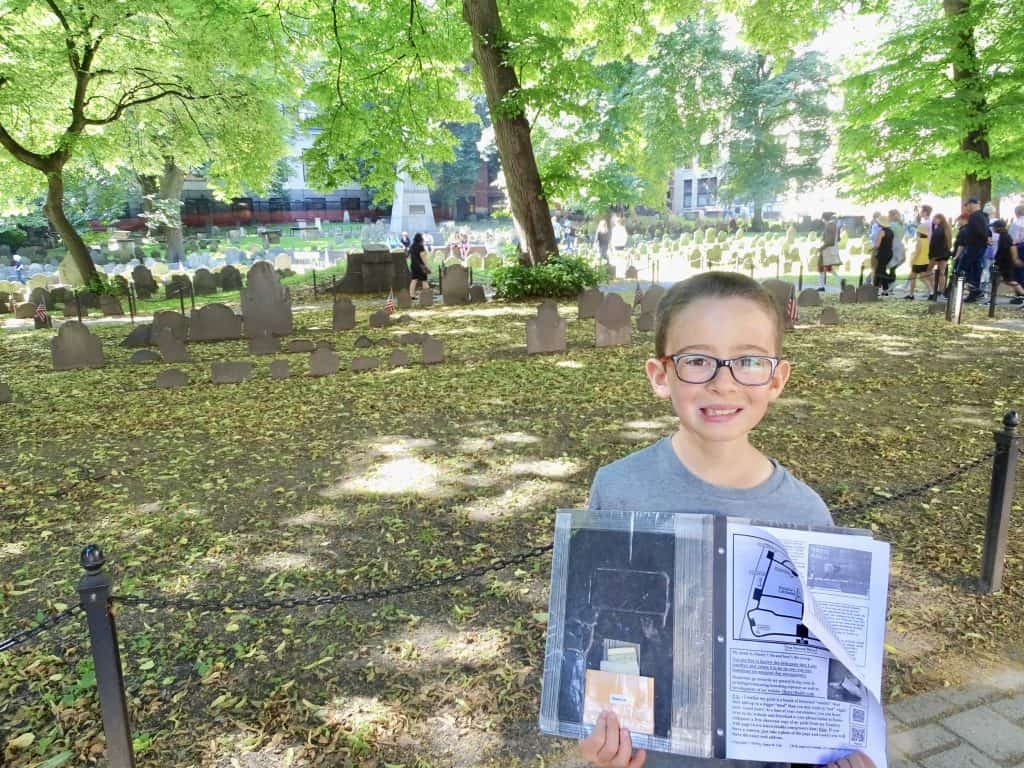
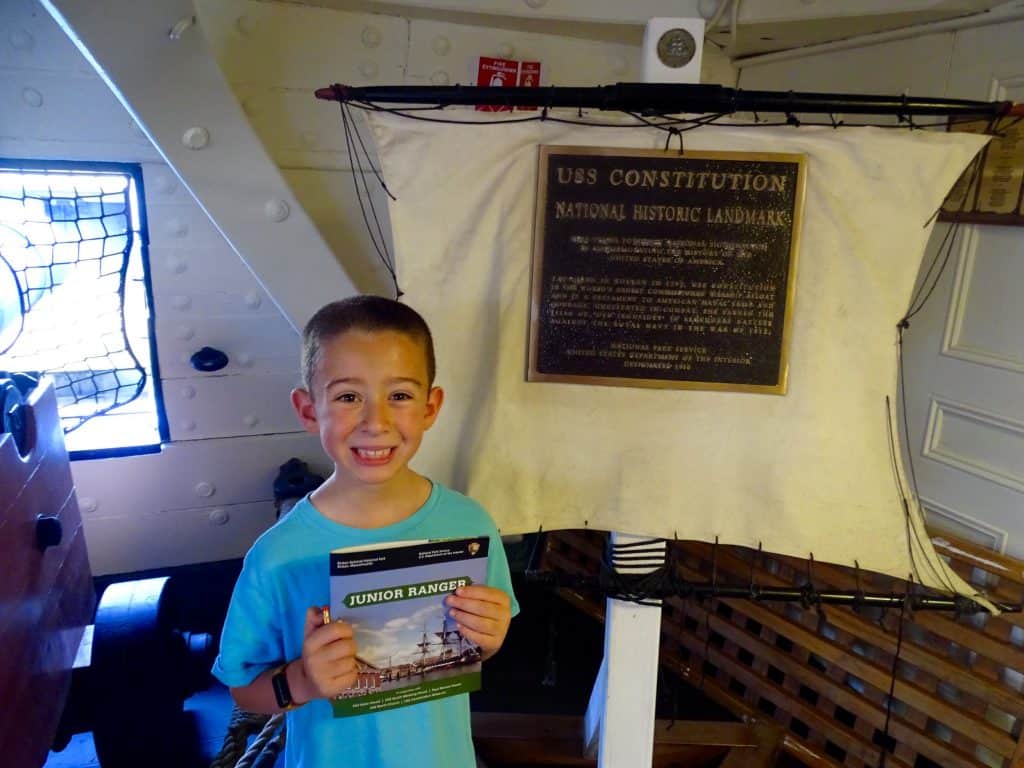
The Old State House is part of the Boston National Historic Park and many sites are also included in the Boston Freedom Trail. Stop by a Visitor’s Center and pick up (or download ahead of time) a Junior Ranger booklet so children can earn a badge and other souvenirs. Check here if you are interested in ranger led tours of the area. The Park includes the following sites (in addition to the Old State House Museum):
1. The Paul Revere House is located in the North End of Bostons in “Little Italy”. Built in 1680, it is the only remaining example of 17th century architecture in Boston. Revere purchased the house in 1770 and sold it in 1800. Parts of the house are handicap accessible with an elevator. No photographs are allowed inside the home. There is a small gift shop and restrooms in the Visitor Center connected (by outdoor walkway) to the house. Self guided tours include four rooms: the hall, kitchen, Best Chamber, and Back Bedchamber. There are docents to answer questions.

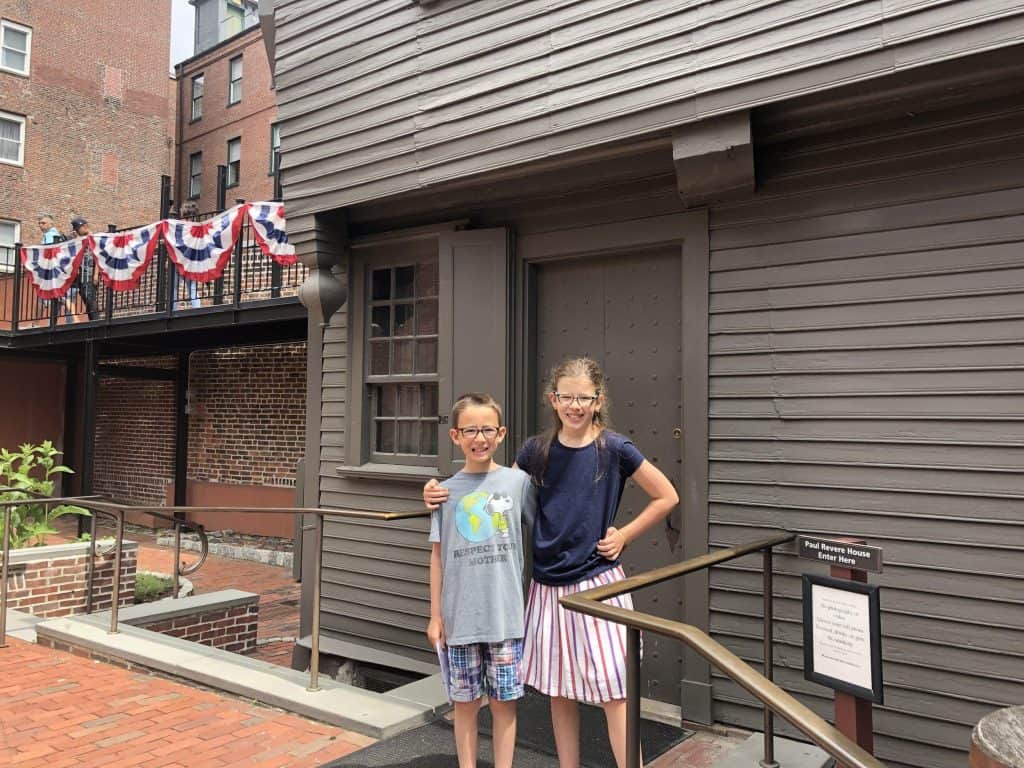
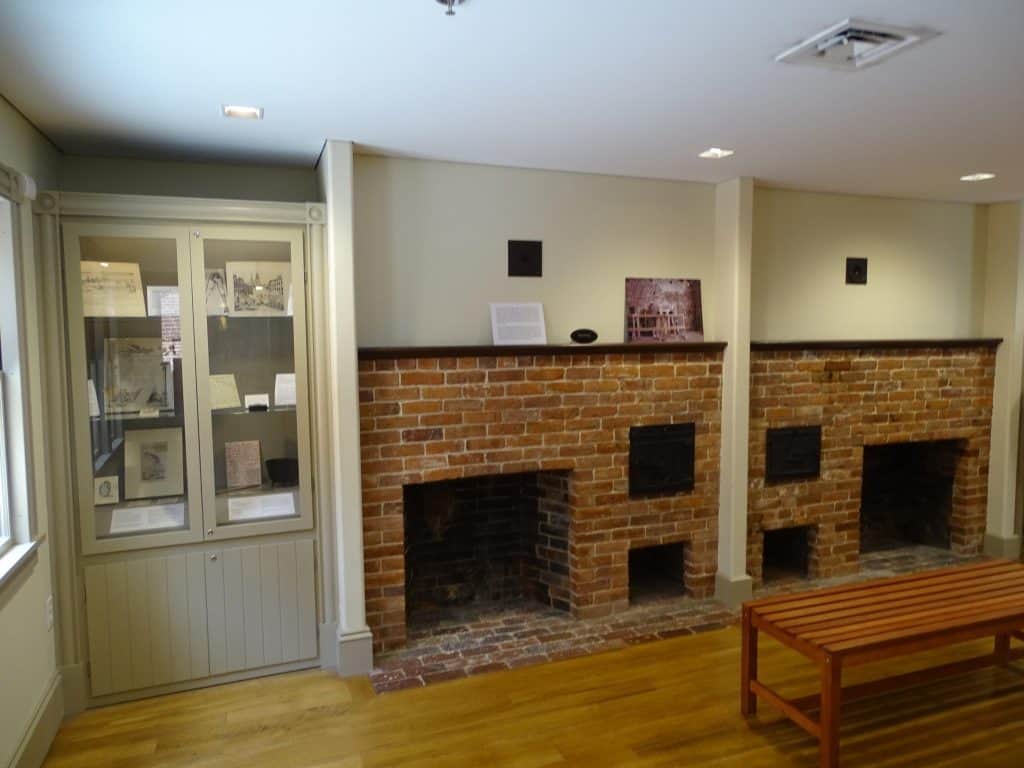
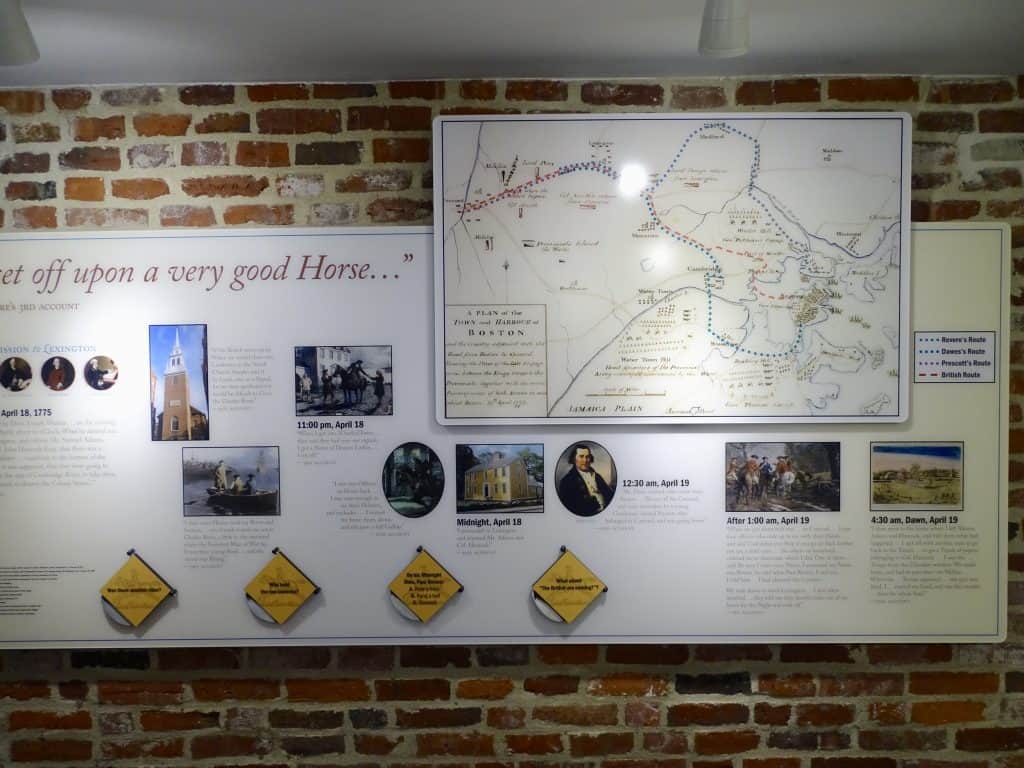
Would you like to save this?
2. The Old South Meeting House, built in 1723, is the site of the December 1773 meeting which thousands of colonists protested the shipment of taxed nearby destroying over 300 chests of imported tea. Everyone will want to complete a scavenger hunt (there are versions for kids and adults) and several exhibits explaining the history. Check here for admission information.
3. The Old North Church is the oldest church, founded in 1723, and is most well known for Paul Revere’s midnight ride, when he had two lanterns hung from the steeple signaling that the British were coming. Visitors can tour the church all year- information here. Make sure to leave time to explore Captain Jackson’s Historic Chocolate Shop and see the 18th century chocolate making process in action, as it was created by Captain Newark Jackson who operated the shop in the 1740s. There are also several gardens to explore on site.
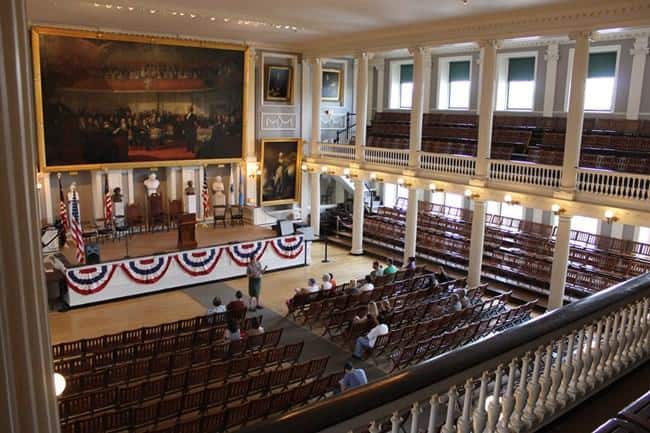
4. Faneuil Hall was built as a market in 1742 and currently houses over 100 stores and shopping carts and 40 dining options inside Quincy Market Food Colonnade. The 2nd floor is home to The Great Hall, which has hosted meetings, debates, and protests dating back to the 1700s. The fourth floor is home to an armory museum. The Hall is also the home base of the Visitor’s Center, which is staffed by Park Rangers who are knowledgable about the area and can offer plenty of suggestions. There are informational films, maps, and National Parks passport stamps. Note: photo of the Great Hall taken rom the National Park Service website.
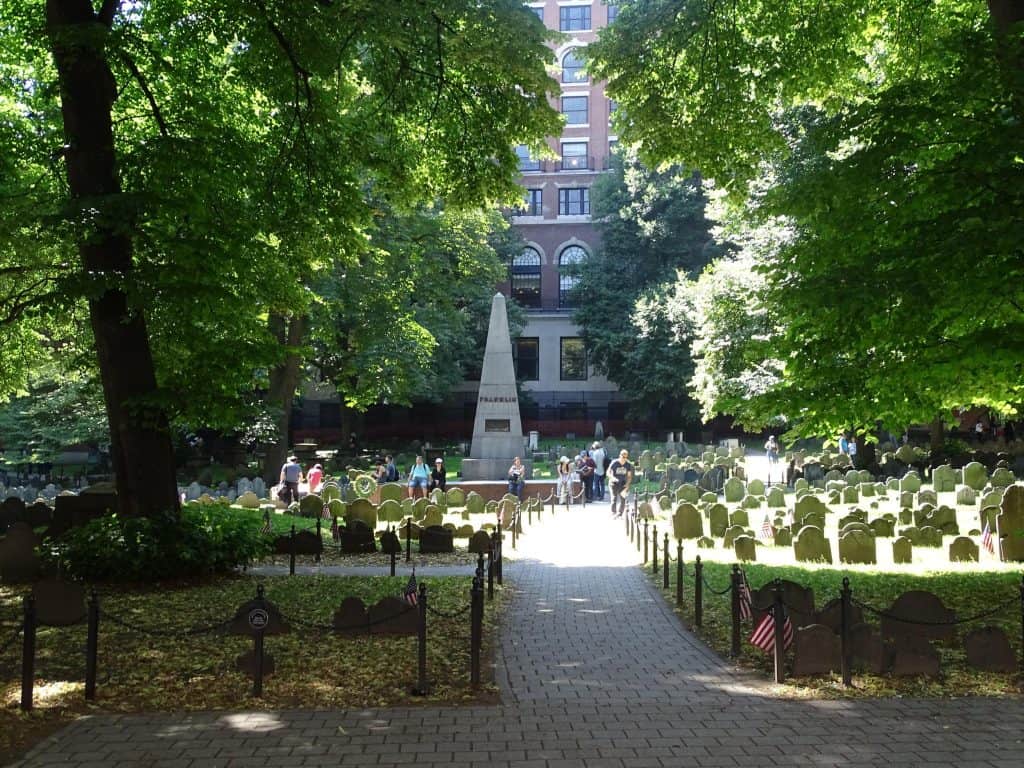
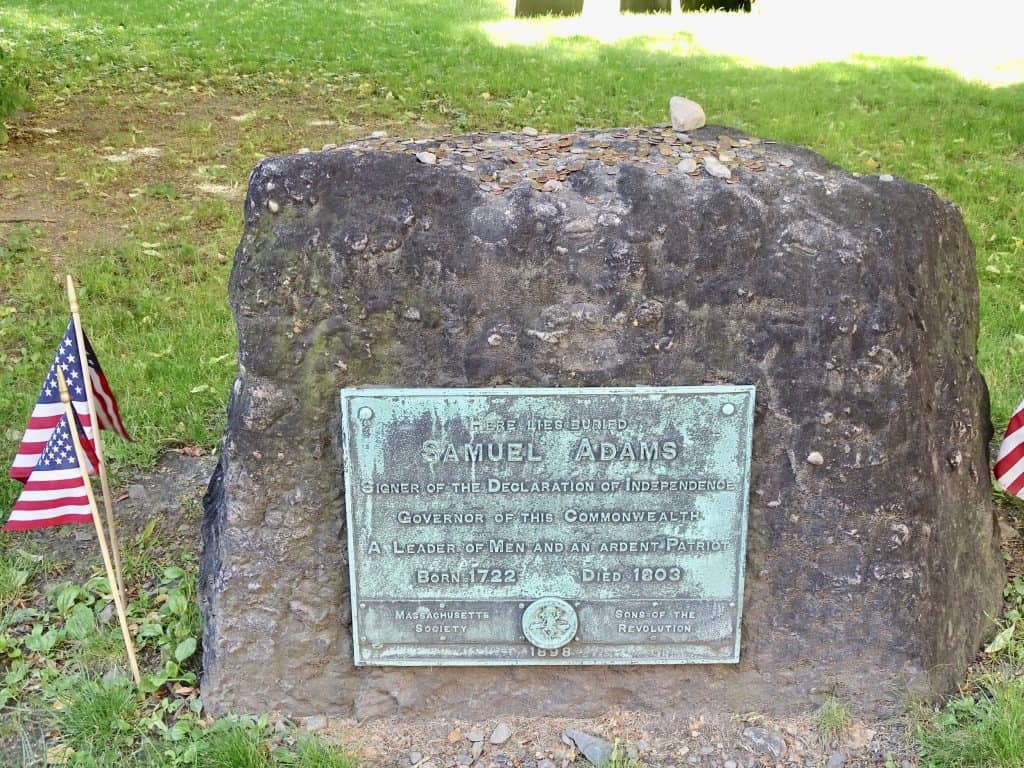
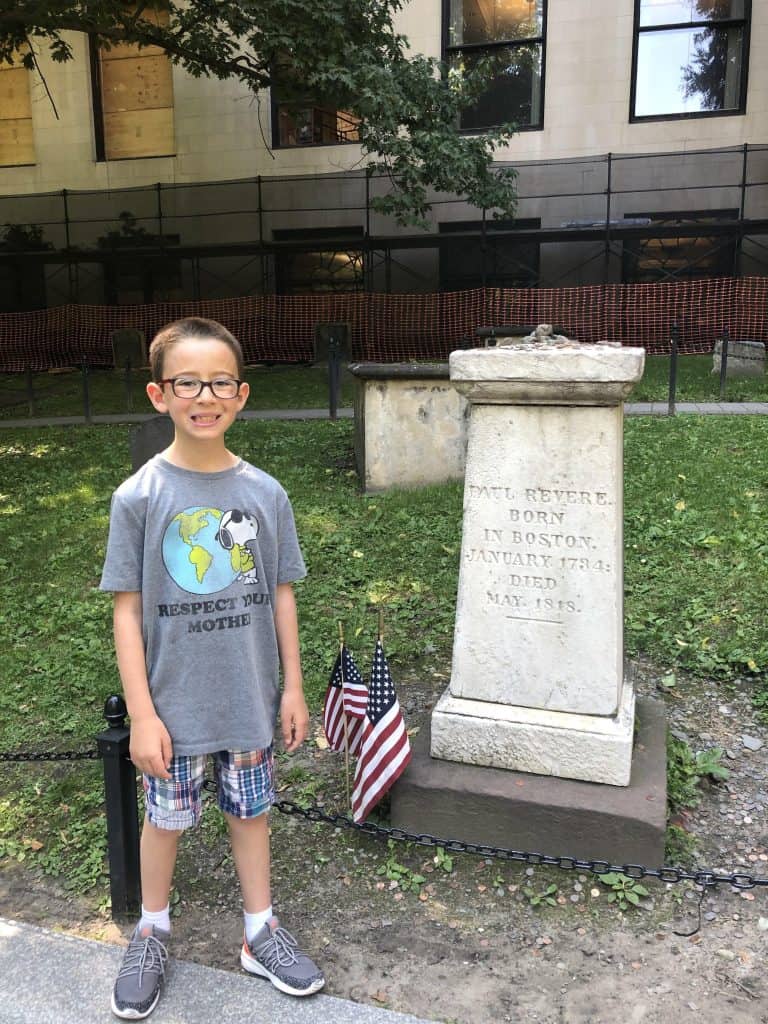
5. The Granary Burial Ground, dating back to 1660, is the third graveyard in Boston and is the site of the tombstones of the victims of the Boston Massacre, Paul Revere, Samuel Adams, and John Hancock to name a few. The two acres site contains over 2300 gravestones and 200 tombs. It is open to the public during daylight hours.
6. The Bunker Hill Monument is displayed on the grounds where a June 1775 battle occurred between New England soldiers and the British army. The 221 foot tower is built of quarried granite, popular in nearby Quincy. Visitors can climb the almost 300 steps to the top (not handicap accessible). Across from the monument is a museum (housed in an old branch of the Boston Public Library) which has several exhibits on the battle, Boston history, and the construction of the monument.
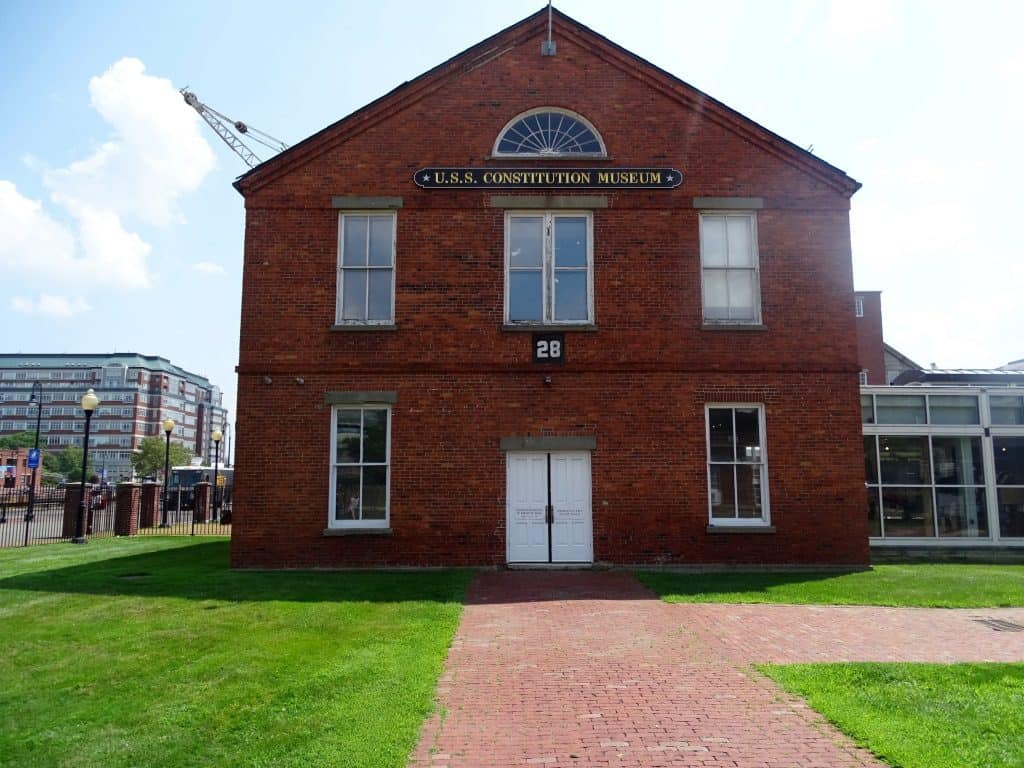
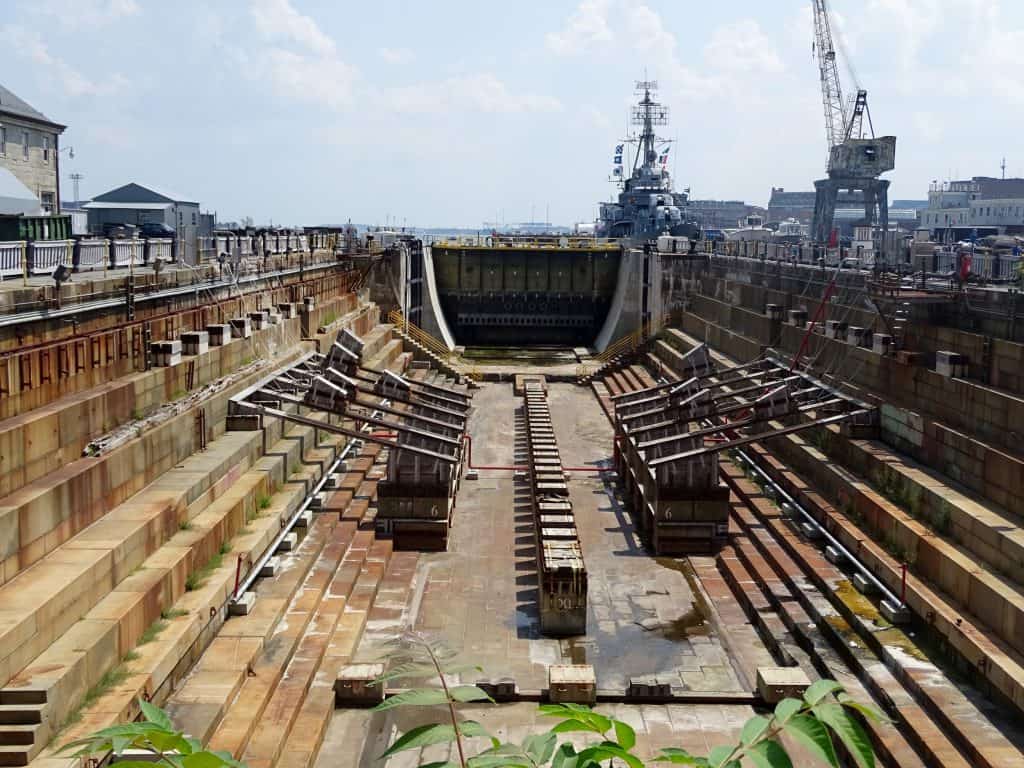
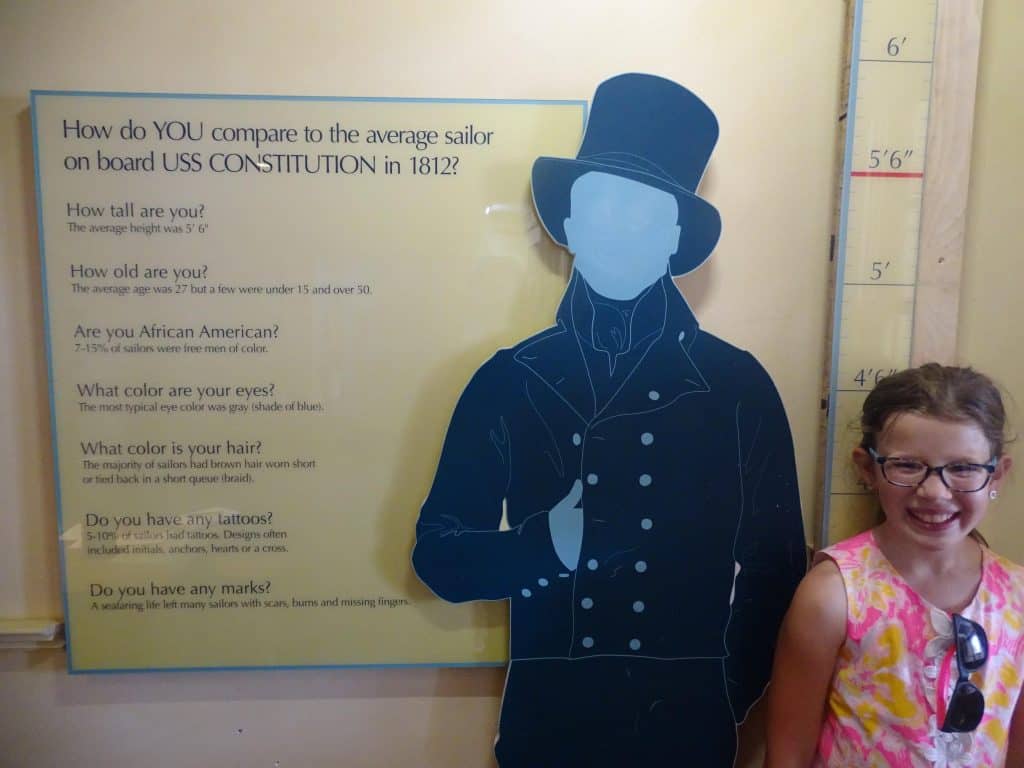
7. The Charleston Navy Yard is one of America’s original navy yards, dating back to 1880. It’s home to the USS Constitution and USS Cassin Young. There is a National Park exhibit hall, separate museum, and the chance to explore both ships. Read our full post on the Navy Yard here.


If you’re looking for other Boston fun, check out our adventures at the Museum of Fine Arts, Boston Tea Party Ship and Museum, the Charlestown Navy Yard and USS Constitution and Museum, Massachusetts State House, and Legoland Discovery Center.
Disclosure: My family was given a media pass to tour the Old State House. All opinions expressed are my own.



So much to see and do, we enjoyed the history and the talks and we had an enthusiastic docent.The children seemed to enjoy the hands-on activities and learning about the person on the lanyard they wore. I had never taken the tour but I thought it interesting and prompted a lot of discussion with our grandchildren.
So much to see and do, we enjoyed the history and the talks and we had an enthusiastic docent.The children seemed to enjoy the hands-on activities and learning about the person on the lanyard they wore. I had never taken the tour but I thought it interesting and prompted a lot of discussion with our grandchildren.