Exploring the Annapolis Maritime Museum

| | |

On a recent visit to Annapolis (check out our post featuring one of the BEST tours we have ever taken- the historical walking tour of the US Naval Academy. and our tour of the Maryland State House) we stopped at the Annapolis Maritime Museum to learn about the nautical history of the area. (Looking for other great, seaside spots? Check out our posts featuring New Bedford, Massachusetts; Gloucester, Massachusetts; and Newport, Rhode Island).

What was once the home of the McNasby Oyster Company throughout most of the 20th century, the property became the Eastport Historical Committee and Barge House Museum in the 1980s and then developed Annapolis Maritime Museum in 2000 with expansions less than a decade later. The museum showcases the history of  the local watermen (the term for men who ) and the harvesting, and over-harvesting of oysters. By the start of the 21st century, less than one percent of oysters were left  and today there is a massive restoration project to save the oysters, with the goal to reharvest 10 BILLION oysters by 2035. 

The museum also highlights the Chesapeake Bay, the largest estuary in the United States, fed by 150 freshwater rivers and streams; water from six states flows into the Bay every day. The 11,000+ miles of tidal shoreline are home to over 3,600 spies of plants and animals. The name “Chesapeake” is the Native American term for “Big Water.”
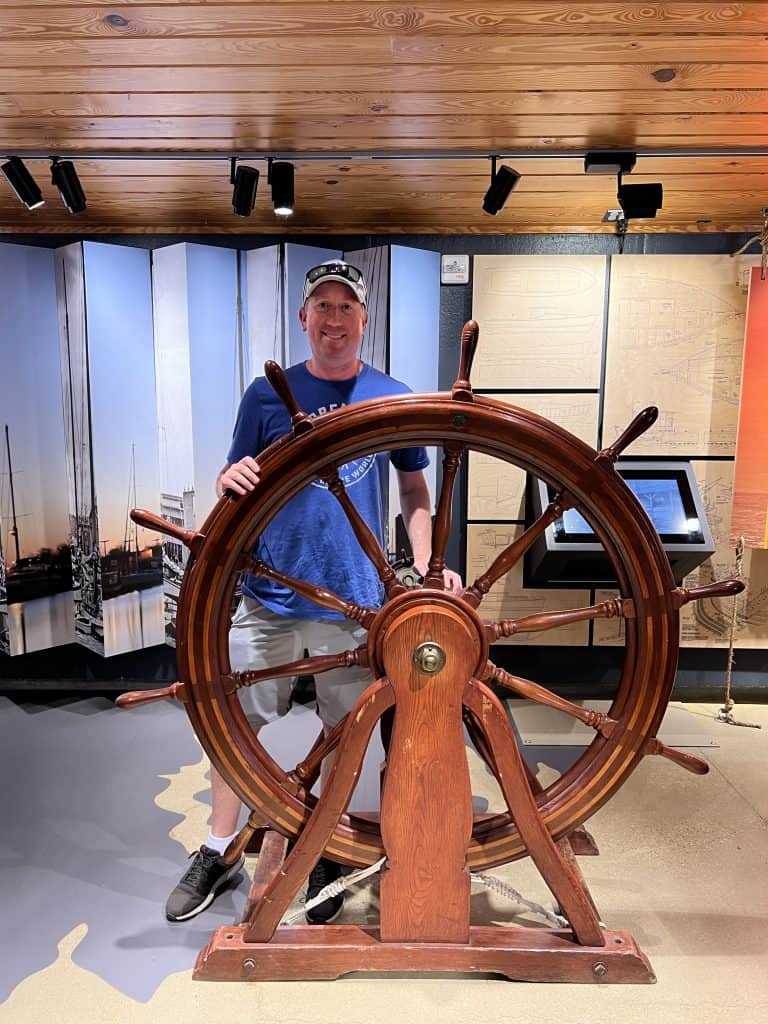
The main maritime Museum property, on the site of the McNasby Oyster Company building, has two 500 gallon aquariums, virtual reality experiences, and hologram exhibits), an outdoor boardwalk, boatyard exhibits, and beautiful views of the Chesapeake Bay Bridge. The 12 acre Park Campus is situated on the shores of Back Creek and has indoor and outdoor spaces for function and events, a large boardwalk, kayak launch and rentals and the Skipjack Wilma Lee which has weekly cruises for visitors. 

Travel Tips:

Would you like to save this?

We'll email this post to you, so you can come back to it later.

  • The museum is open Tuesday through Sunday from 10am-3pm- check here for up to date information on hours and admission fees. Children under age three are free. 
  • There is a small parking lot behind the museum; additional two hour side street parking is also available- check here for information on parking throughout Annapolis. 
  • There is a small gift kiosk near the admission desk; restrooms are located in the back of the museum.
  • The museum is one level and the entire indoor and outdoor spaces are handicap accessible and stroller accessible (although most toddlers won’t want to sit in a stroller).
  • There are no dining facilities on site; for a good list of dining options in Annapolis, check out this list and this list
  • The museum offers a wide variety of cruises and special events; check here for more information about cruises on the Wilma Lee and here for other types of tours. 
  • Plan on 60-75 minutes to explore the indoor and outdoor exhibits, more time for special events.

12 Things to Do at the Annapolis Maritime Museum:

  1. Start by viewing the five minute introductory video in the art gallery (and spend time checking out the artwork).
  2. Compare the Bay Health Aquarium tanks in 1608 (with plentiful oysters and clear water) and the bay today (with pollution and over harvesting of oysters) and compare the tanks of bay water from the 1600s, 1700s, 1800s, 1900s, and 2000s.
  3. Learn about the process of oystering (harvesting, buying, shucking, cleaning, canning and packing, and shipping)
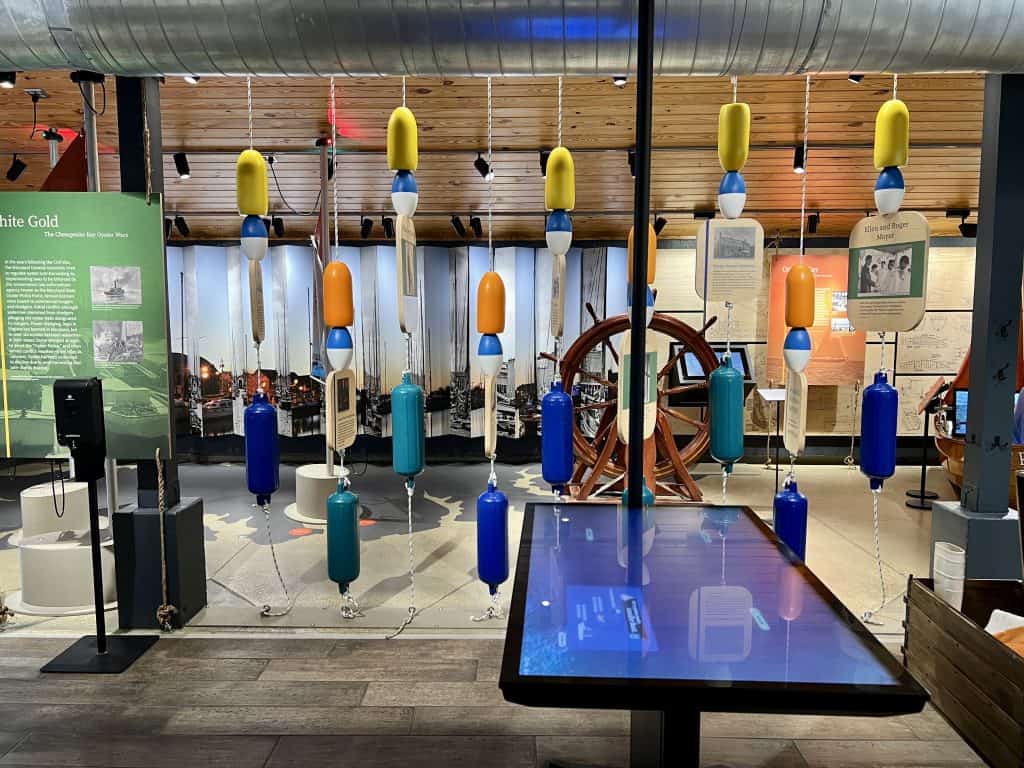
  4. Flip hanging buoys to learn about the McNasby Oyster Company and other local watermen.
  5. Read the Magic Book, a hologram book to learn about the watershed
  6. Experience life on a canoe, waterman trip, and sailboat race with a virtual reality set.
  7. Play the Half Shell game on the huge interactive screen.
  8. Figure out which tools are best for oyster harvesting.
  9. Find new recipes using oysters in a variety of oyster themed cookbooks.
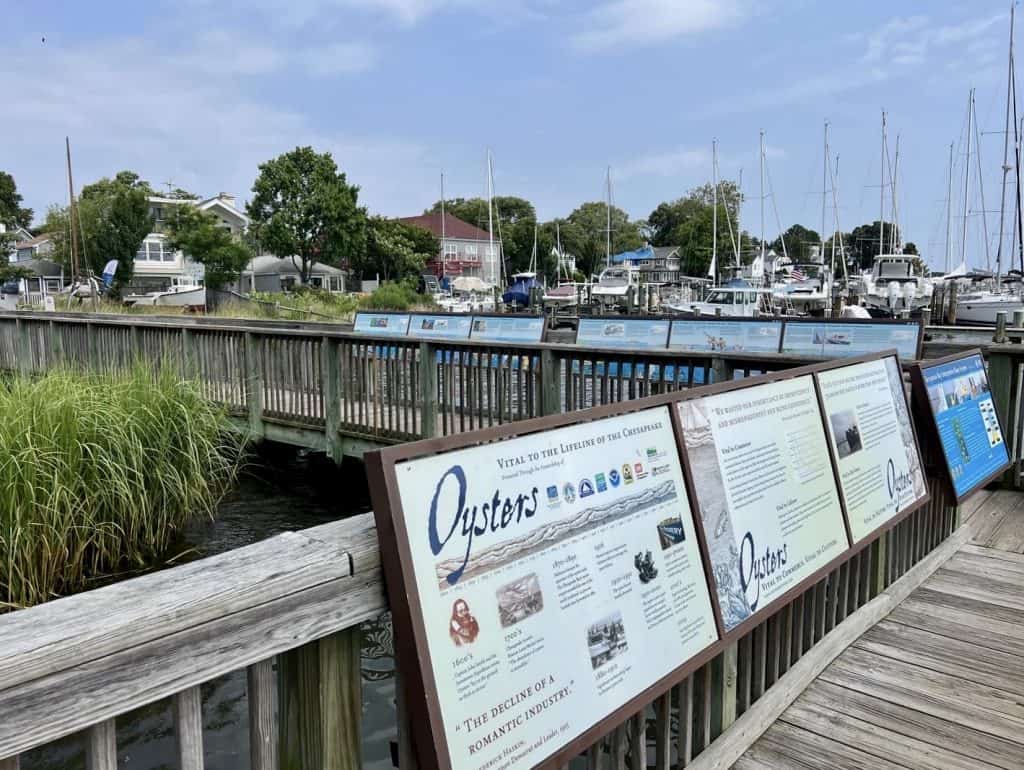
  10. Walk the outdoor boardwalk and read about the history of oysters in the Chesapeake Bay from 1608-1998. 
  11. Head to the Boatyard and peek inside the Draketrail Peg Wallce and the Skipjack Lydia D boats outside.
  12. Follow the timeline of boat oystering boats from a dugout in the 1600s to a Tonger in the 1900s.

Looking for other things to do in Annapolis? Check out our post featuring the US Naval Academy. and the Maryland State House. And for more maritime history, check out our posts featuring New Bedford, Gloucester, and Newport. And follow along on our adventures on Instagram, Facebook, Pinterest, and Twitter

Disclosure: Our family was given a media pass to explore the museum; all opinions expressed are my own. 

Similar Posts

  • | | | | | | | | |

    Salem, Massachusetts

    Salem Village, now known as the town of Danvers, dates back to 1626 when Puritans came to the area from England, seeking religious freedom. The town of Salem, where most of the now famous, and infamous, sites are located is on the North Shore of Massachusetts, about 30 minutes north of Boston, and has a beautiful harbor downtown. It’s most well known for it’s involvement in one of America’s darkest period, the witch hysteria of 1692.

    I grew up visiting Salem each October and I have been wanting to recreate some of those memories with my own children. However, I wanted to wait until they were old enough not to be too scared. This year seemed like the perfect time and I started planning back in June. The fall is the most popular time of year to visit Salem (yay for Halloween!) and I wanted to visit early in September. I started my research on Salem.org. This website is the perfect planner: it’s well organized, has frequent updates of events, and plenty of suggestions of places to stay, eat, and explore. I used this website to research every stop we made.

  • | | | | | | | | |

    10 Ways to Explore Coastal Connecticut during the Summer

    Coastal Connecticut is the title often given to the area spanning from Branford to Old Lyme, which includes the towns of Branford, Guilford, Madison, Clinton, Westbrook, Killingsworth, Essex, Deep River, Old Saybrook, Lyme, and Old Lyme. The area is beautiful all times of year, but especially comes to life during warmer summer months. Conveniently located along Interstate 95 (which runs from the New York to Rhode Island state lines), many of the towns border the Connecticut River or Long Island Sound and offer plenty of riverfront and beachfront activities and open spaces. The area is also known for its numerous contributions to the arts and many museums and educational institutions honor the legacy of famous residents.

  • | | |

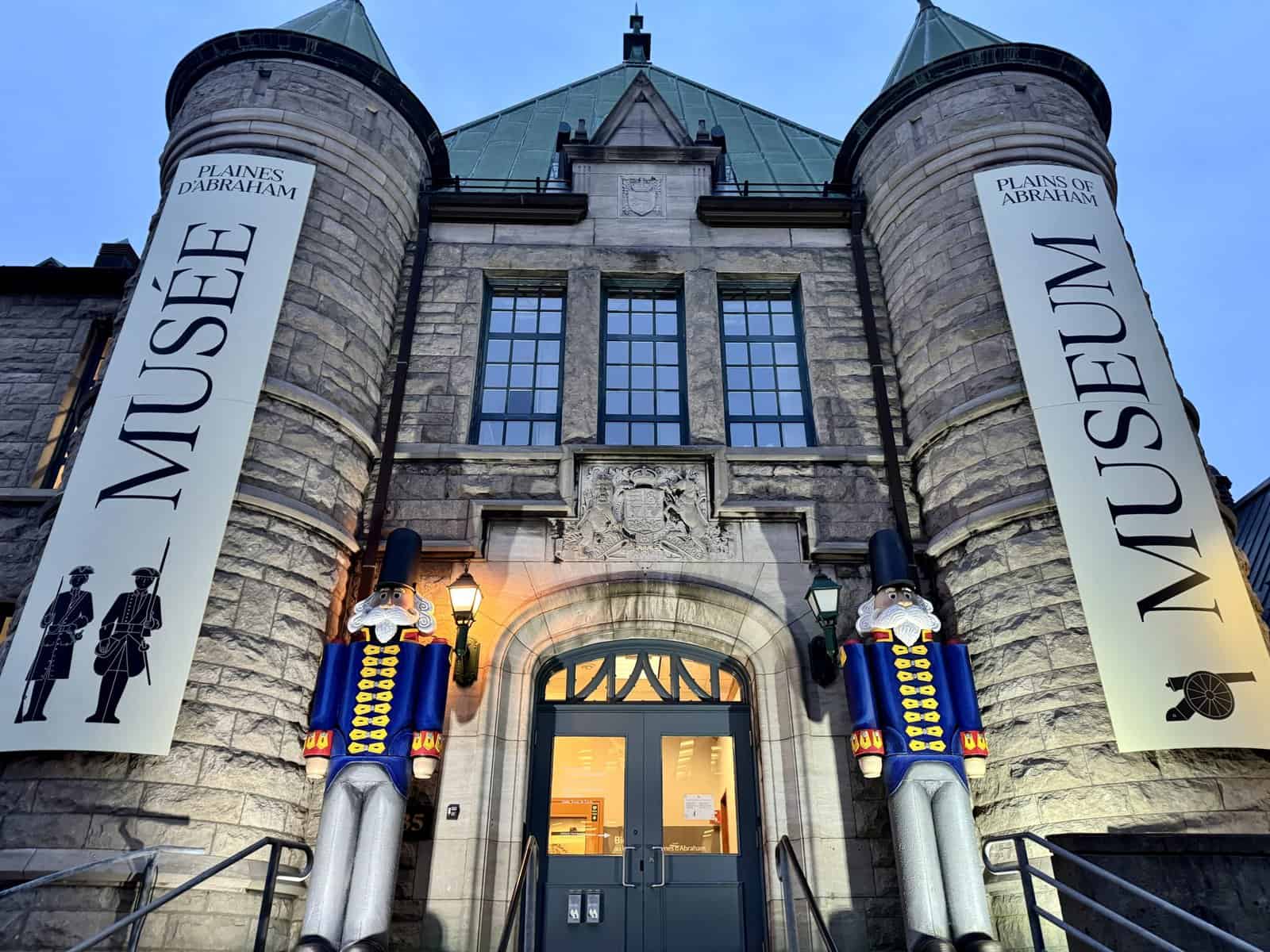
    10 Ways to Explore the Plains of Abraham Museum in Québec

    Founded in 1908 as a historic area within the Battlefield Park of Québec City in Québec and deeded to the city, The Plains of Abraham is one of the largest city parks in the world. The 240+ acre park, named for Abraham Martin (former pilot to the king and friend of Samuel de Champlain) is the site of the Battle of the Plains of Abraham, part of the French and Indian War in 1759.

    The park includes the Joan of Arc Garden, the Citadelle (read our feature of the Citadel here), the Martello Towers, an old jail, nature trails, parks, playing fields, and a bandstand for summer concerts. The park welcomes over four million visitors each year and offers year round activities, entertainment, and programs for the whole family. Highlights include:

  • | | | | | |

    10 Ways to Explore the Connecticut River Museum

    The Connecticut River runs over 400 miles from the Connecticut Lakes near the Canadian border down through Vermont, New Hampshire, Massachusetts, and Connecticut to Long Island Sound in Old Saybrook. The Connecticut River Museum began as a volunteer organization in the 1970s, housed in a 1870s Steamboat Warehouse, and has since expanded into a museum with an impressive collection of artifacts and art, a replica sailing ship, a combat submarine, and a calendar filled with special events, programs, and workshops.

    The museum is spread out over three floors of exhibits: a rotating exhibit on the 3rd floor and permanent exhibits on the first and second floors. There is also a small display in the boathouse room. We found the exhibits engaging and informative and appropriate for upper elementary aged students and older. Toddlers might have a hard time not touching everything and won’t be able to read all the informative signage; however, ALL ages will LOVE the train show (so bring kids of all ages to the train show and hold on to toddlers closely).

  • | | | | | | | | | | |

    Summer 2023 Connecticut Bucket List

    Every summer, our family makes individual bucket lists of things we want to do and places we want to explore. We usually have a good mix of perennial favorites and new-to-us spots. This week, we thought we’d share some suggestions of things to do in Connecticut this summer (most of which can easily be modified for your neck of the woods).  We’re sharing this list now because 1. We always like to be ahead of the game and 2. Some of these activities require reservations that will fill up quickly. 

  • | | |

    10 Ways to Explore the NY Transit Museum in Brooklyn, New York

    One of the most popular historical attractions in Brooklyn, New York, the NY Transit Museum celebrates the history of the Metropolitan Transportation Authority (MTA), which began in 1900 with the construction of the subway system. The NY Transit Museum was founded in 1976 and is housed in a decommissioned 1936 subway station in downtown Brooklyn. The museum features permanent exhibits that tell the stories of the over seven thousand workers who built the first subway line that opened in 1904 (today there are over 70,000 MTA employees!) as well as rotating exhibits about the changes in technology and culture of New York City. 

2 Comments

  1. So thorough and complete coverage, as usual. I live about an hour from Annapolis and have enjoyed the Naval Academy tour very much, but now you’ve peaked my interest to return and add this Museum to our list. I do believe our guests would enjoy this spot very much. Thank you!

  2. What fascinating information about this important industry to the Middle Atlantic area!This is also a great example of the importance of caring for natural resources. The area is beautiful and I would love to see this museum on our next trip. Wonderful job!

Leave a Reply

Your email address will not be published. Required fields are marked *