15 Ways to Explore the Crane Estate on Castle Hill in Ipswich, Massachusetts

| | |

On a recent visit to the North Shore of Massachusetts, we explored one of the most beautiful Gilded Age estates, the Crane Estate, set high on a hill above one of the most beautiful beaches, Crane Beach, in Ipswich, Massachusetts. The estate has been carefully restored and preserved by the Trustees, who oversee more than 100 properties throughout Massachusetts. 

The Crane Company, founded by Richard Teller Crane, in 1855 was well known for their brass fixtures and bells, most famously used to help build the Golden Gate Bridge in San Francisco.  Later, his son, Mr. Richard T. Crane, who focused the company on manufacturing various bathroom fixtures, purchased Castle Hill and began renovating and expanding the property. The Cranes, who were based in Chicago, had summer homes in London, England and Jekyll Island, Georgia. The first home on the Ipswich property was built in 1912 but later torn down as it was properly outfitted to withstand the elements of the nearby ocean. The current estate, with 59 rooms, was built in a timeless English style similar to the Cranes’ London estate and finished in 1929. Over the years, the Cranes restored over 3,500 acres in Essex Bay, Choate Island, and Ipswich. The estate also includes the 700 acre Crane Wildlife Refuge, made up of Castle Neck (which borders Crane Beach), five islands, and salt marshes. 

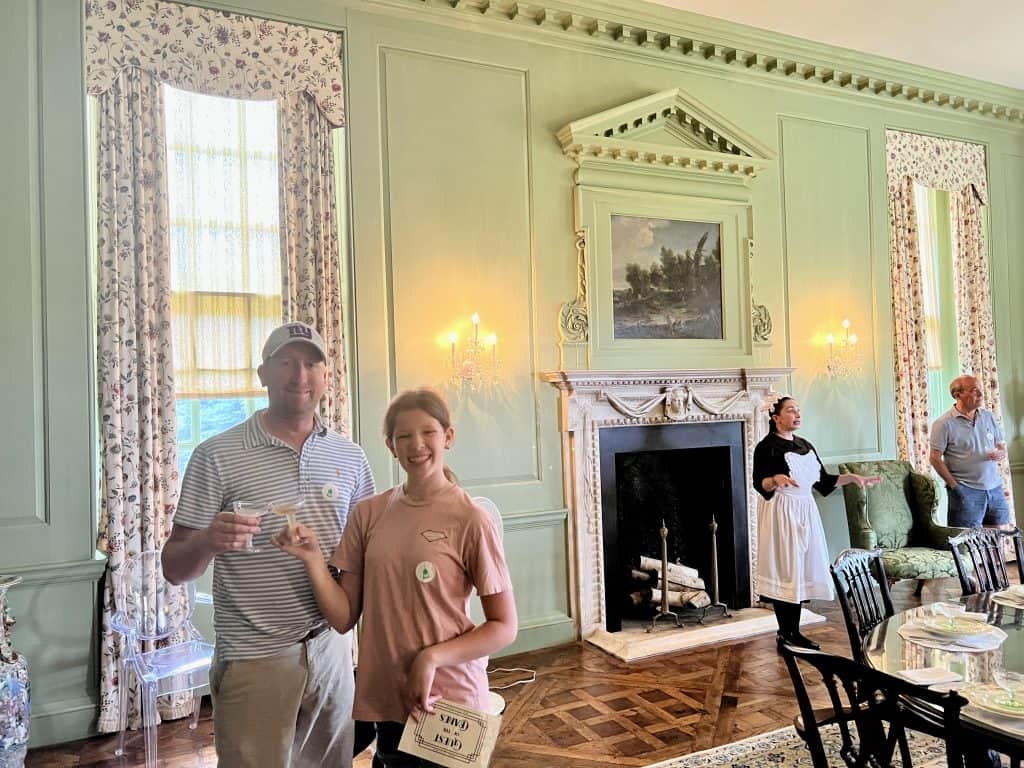
Today, the 165 acre estate is a National Historic Landmark overseen by The Trustees. The public is welcome to enjoy tours of the Great House (seasonally), stay at the Inn at Castle Hill (previously the Brown Cottage), walk and hike the grounds and hiking trails, enjoy the beauty of Crane Beach, and even attend summer camp. More than 300,000 people visit the estate each year. We highly recommend the Guests of the Cranes guided tour for families (really, anyone) as costumed docents lead the tours and engage (quite humorously!) with guests. 

Travel Tips:

  • The Great House is typically open for tours  June through October (Tuesday through Saturday, and holiday Mondays), from 10am-4pm. The Great House is also open on weekends in April, May, and November. The grounds, gardens, and trails are open from 9am-5pm year round and free for guests to explore. Check updated hours and admission rates to the Great House here
  • Passes for Crane Beach are released twice a week (Monday and Thursday) during peak summer season and cost $40 per vehicle for weekdays, $45 for weekends and holidays, and $15 after 4pm. Get up to date information here.  The beach is open from 8am-sunset (with daily sunset times posted at the entrance). 
  • There is plenty of free parking at the top of the hill, adjacent to the Great House, as well as a very large lot at nearby Crane Beach (parking fee applies at Crane Beach).
  • Restrooms are located inside the Great House; portapotties are available next to the parking lot. Crane Beach has a seasonal bathhouse with restrooms.
  • There is a gift shop located inside the Great House.
  • The Great House is not handicap accessible, as there are 30 steps up from the first to second floor. 
  • No dining facilities on property, but there is a seasonal concession stand at Crane Beach. A good guide to local restaurants can be found here and here
  • Check here for a schedule of special events including concerts. 
  • See the full list of over 100 The Trustees properties through Massachusetts here; check out our post featuring Naumkeag here
  • Plan on 60-75 minutes for the Guests of the Cranes tour and allow more time to explore the gardens and property. See the property map here and check out the Tour Trustees app for more information, maps, and guides. 

Would you like to save this?

We'll email this post to you, so you can come back to it later.

15 Ways to Explore the Crane Estate:

  1. Pick a card to assume the identity of a real guest of the Cranes and pay attention on the tour to learn about your connection to the family and estate. 
  2. Step inside the Silver Safe lined with velvet to protect the silver flatware and serving pieces from tarnishing or being damaged. 
  3. Check the direction and speed of the wind with one of the estate’s four wind indicators mounted to the walls. They are tied to the master wind indicator in the Gallery  and were recently restored. Richard Crane Jr., and his children, was an avid sailor and checked the conditions before setting sail.
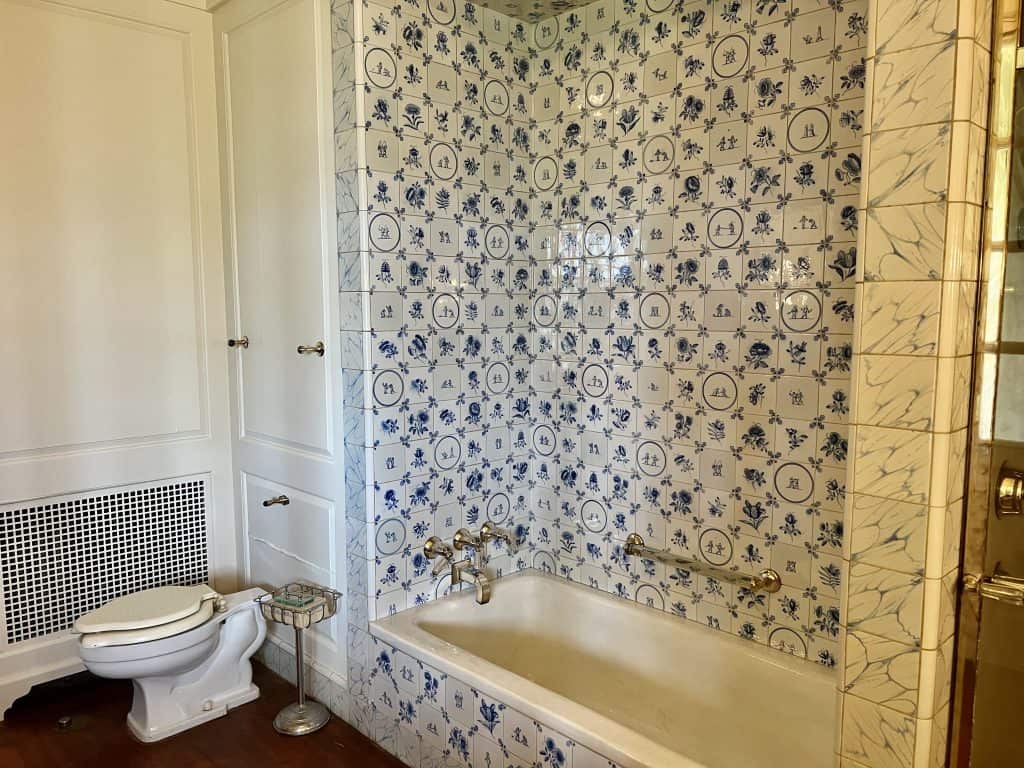
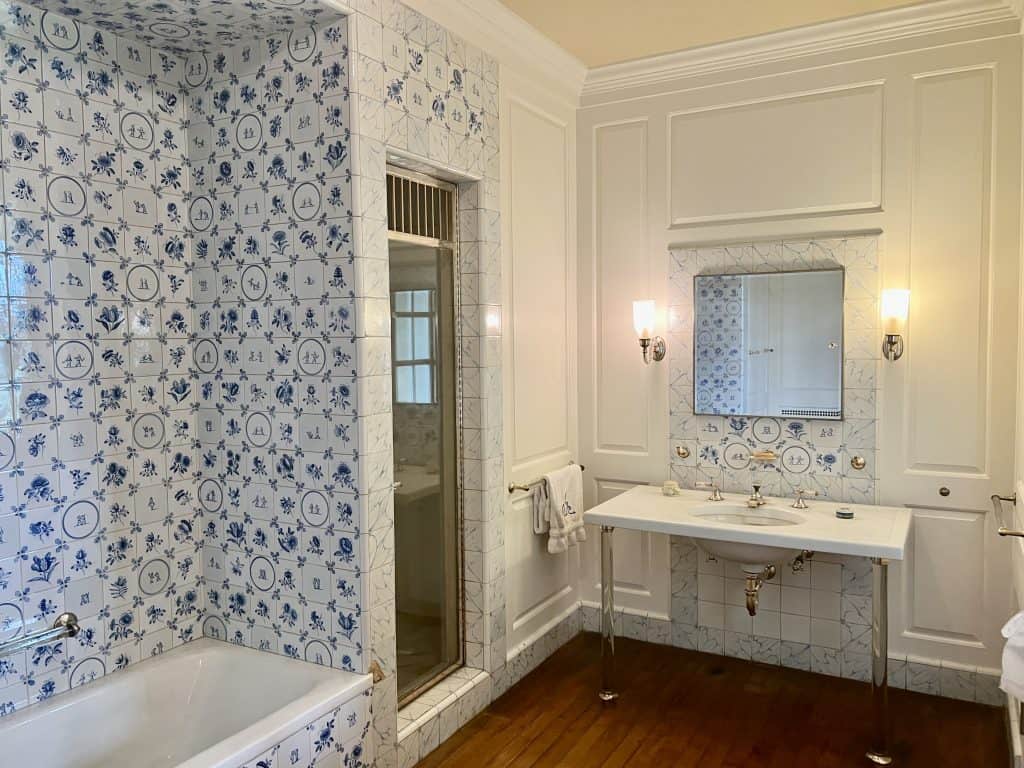
  4. Count the tiles in son Cornelius’ bathroom that depict young children playing (and fighting!). Note that only men had standing showers in their bathrooms. 
  5. Find the mechanism used to flush a toilet (it’s not where you expect it to be!)
  6. See if you can tell the difference between the real marble and the faux marble (wood brought over from London and painted to look like marble) in Mrs. Crane’s bathroom.
  7. Ring the maids with the call buttons. As head of the household, Mrs. Crane was the only one to have FOUR buttons on her call box (for her lady’s maid, chambermaid, butler, and secretary) that were part of the Private Automatic Exchange, an internal phone system.  
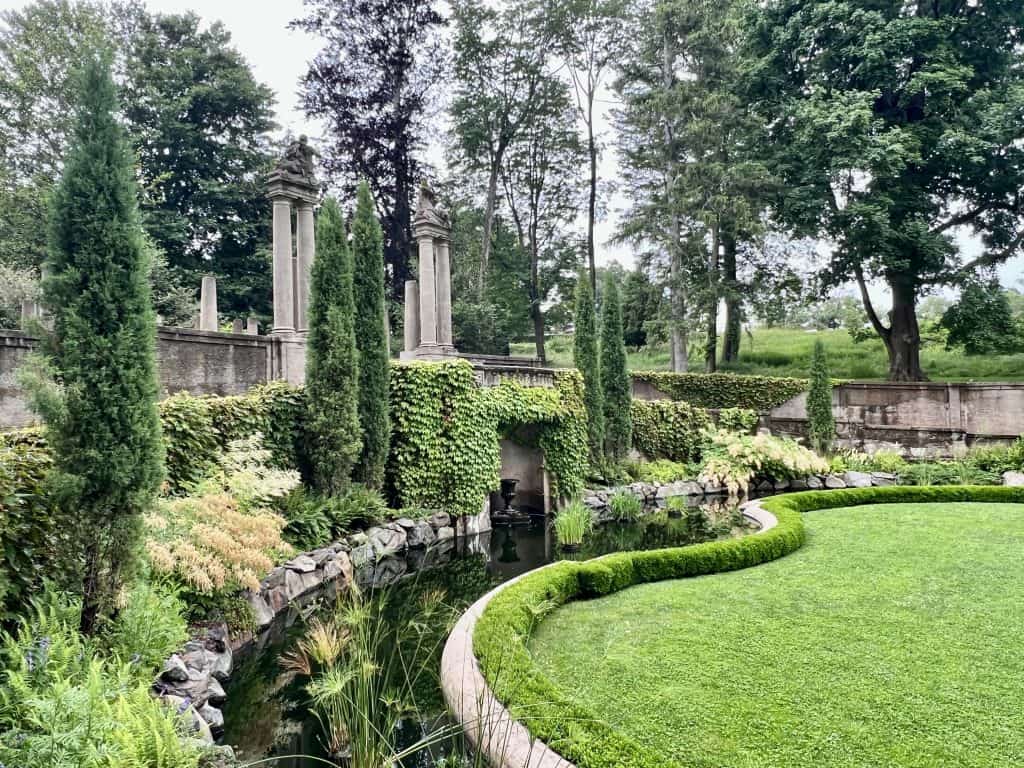
  8. Peek out the windows at the sunken garden that was once a hedge maze for the children. The grounds of the Crane Estate, at one time, included a grass tennis court, a bowling green, and, finally, a hedge maze. It took gardeners over a decade to grow the maze and deer less than two years to eat it!
  1. Choose your favorite guest room from the wide selection.  The Great House had almost 60 rooms!
  2. Find one of 10 fire hoses stashed inside the house. Being from Chicago, Crane was often worried about a fire in his home and had fire hoses installed throughout the property, including one outside his bedroom. 
  3. Measure your height and compare it to the Crane children on daughter Florence’s sleeping porch.
  4. Count the silver ships etched in eglomise tiles on the walls of Florence’s bathroom. 
  5. Drink “champagne” (aka ginger ale) while touring the dining room. Truly, each guest is offered a champagne glass of ginger ale to toast the Cranes!
  6. Explore the gardens, which include the formal “Italian” Garden dating back to 1910 (there are several, well spaced out steps down to the garden), the Rose Garden dating back to 1913 with a large water fountain, and the Wild Garden and Woodland Trail. There are several trails on the property that range from a half mile to two miles- see the map here. Use the landscape app Tour Trustees for information about the various flowers and landscape architecture.  
  7. Leave time to drive down the road to Crane Beach. There is an entrance fee during the summer season, along with concessions, restrooms, one manned lifeguard station, and picnic areas. There is a separate, large parking lot for the ebach. There are wooden ramps and a few steps from the parking lot to the beach. 

Looking for other nearby adventures? Check out our full City Guides to nearby Gloucester and Salem, Massachusetts, and dozens of posts featuring popular Boston landmarks here. And follow along on our adventures on Instagram, Pinterest, Facebook, and Twitter.

Disclosure: Our family was given a media pass to tour the estate; all opinions expressed are my own.


Similar Posts

  • Five Whaling Museums in the Northeast Kids Will Love

    For our family, there are two necessary ingredients for a perfect adventure: water and history. We love being by, on, and even IN the water (ocean water is our favorite) and we love studying history. Even better, we love when we can combine them and learn a little nautical history. A couple of years ago, we featured this post with over a dozen attractions dedicated to boats and the boating industry and it received a lot of great feedback.  This week, we’re sharing five museums in the Northeast that include the important history of the whaling industry. The northeast has a rich history of whaling, and some ports were once known as the Whaling Capitals of the World. All five spots offer plenty of hands-on ways to engage the entire family.

  • | | | | |

    Fort Sumter National Park in Charleston, SC

    There is plenty of architecture, southern cuisine, and water views to check out in Charleston, South Carolina but no trip would be complete without reliving a major turning point in our country’s history.

    Fort Sumter National Monument is the only structure on the man-made island, which was created in the early 1800s as a defense for the city of Charleston. In April of 1861, the Confederate army bombed the still incomplete Fort, signaling the start of the Civil War.

    Operated by the National Parks Service and Fort Sumter Tours, access to the island is by tour boats docked at both Liberty Square or Patriot’s Point. I would leave from the Liberty Square Visitor Center so you can spend some time checking out displays which chronicle the history of the fort and check out a small gift shop. Make sure you stamp your National Parks PassportNote: There are restrooms located at both locations and I would recommend using them before boarding the boat to the island. The Visitor’s Center at Liberty Square is located on the second floor, but there is an elevator.

    The 40-minute narrated boat ride to the fort explains many details about the start of the Civil War.  Once you’re on the island, you can explore the fort on your own. There are park rangers stationed at various points to give short lectures and to answer any questions. There are also placards that give detailed information about structures and objects.  I would plan on spending 45-60 minutes at the fort. When you go, be sure to look out for:

  • | | | | | | |

    Acadia National Park, Maine

    I may not be a huge hiker or camper, but I am a huge fan of the water, especially the ocean water, and love any view that involves water or mountains. I’m also a HUGE fan of the National Parks Service system and have been visiting historic sites, monuments, museums, and parks for years, learning all about our country’s history and collecting stamps for my National Parks Passport. So, it seemed logical to put Acadia National Park in Maine on my bucket list. This summer, I helped to plan a family reunion in York, Maine (post coming next week) and I seized the location and added a visit to Acadia National Park.

    Acadia National park is a 47,000 acre park (the only National Park located in New England) It’s located on Mount Desert Island, right next to the beautiful village of Bar Harbor. Acadia is unique in the sense that there is no one, defined entrance and exit site. There are multiple spots to enter and the park weaves in and out of the community. There are sections that require a park pass, which for 2017, was a $25 fee for a week pass for a noncommercial vehicle. Lucky for us, the Every Kid in a Park program allows fourth graders, and their families, to receive entrance to all National Parks all year long, so we got in for free! There is SO much to do in Acadia, it would take days to cover it all. Here are some of my family’s top spots:

  • | | | |

    Eights Exhibits Kids Will Love at the Brooklyn Museum in Brooklyn, N.Y.

    One of the oldest- and largest- art museums in America, the Brooklyn Museum, located in the heart of the borough of Brooklyn in New York City, is home to over 500,000 objects of art from around the world and spanning over 5,000 years of history. The museum originally began as the Brooklyn Apprentices’ Library in the 1820s, joined the Brooklyn Lyceum in the 1840s to form the Brooklyn Institute before deciding to establish itself as a permanent fine art museum in 1846. The first wing of the museum officially opened to the public in 1897, with many additions and renovations throughout the 20th century and early 2000s.

  • | | | | | | | | | |

    10 Ways to Explore St Andrews in New Brunswick, Canada

    We just returned from a few days in St. Andrews, one of Canada’s first seaside resort areas. We originally were using the stop as a layover before another destination, but ended up spending three days enjoying all of the historical sites, attractions, and beautiful beaches and parks.   One of the most popular maritime communities in Canada, St. Andrews is a designated National Historic District in the province of New Brunswick, less than 30 minutes from the American border.

  • | | | |

    Whydah Pirate Museum In West Yarmouth MA

    Opened in June of 2016, the Whydah Pirate Museum showcases the ruins of the Whydah ship and the only full pirate treasure ever discovered in the world. The Whydah, a slave ship eventually overtaken by pirates, was built in 1715 in London and sailed to West Africa before heading to America. Captured by Sam Bellamy and fellow pirates, a Nor’Easter sank the ship off the shores of Cape Cod during the early morning hours of April 27, 1717. Only 2 of the 146 men (130 pirates and 16 prisoners) on the ship survived. 

    In 1984, Barry Clifford discovered the wreckage off the coast of Wellsfleet, Massachusetts. Archaeologists and divers search through the wreckage between June and October each year searching for more treasures and bring artifacts back to the lab for cleaning, preservation, and display at the museum. 

7 Comments

  1. Thanks for sharing all your helpful tips and recommendations for Ipswich, Massachusetts! All your pictures of the gardens look so dreamy! I’ll be adding this place to my bucket list after reading this post.

  2. As a life member of the National Trust in UK/Australia etc, I absolutely love a historic house and estate. This looks like a wonderful day out, oozing with history and charm!

  3. I live in Western Mass. so I have kayaked around Crane Beach. I’ve seen the Crane Estate from a distance but was never tempted to visit until I read this. You have made it sound so wonderful and interesting. I particularly like the unique ways you have given to explore the Crane Estate.

  4. What a comprehensive and helpful guide to exploring the Crane Estate on Castle Hill in Ipswich, Massachusetts! You have given us 15 ways to enjoy this historic and scenic place, from touring the mansion, to hiking the trails, to relaxing on the beach. You have made it easy for anyone who wants to visit this place to plan their trip and convinced me that the Crane Estate is a must-see destination!

Leave a Reply

Your email address will not be published. Required fields are marked *