10 Things to Do at the Museum of Math in New York City

| | | |

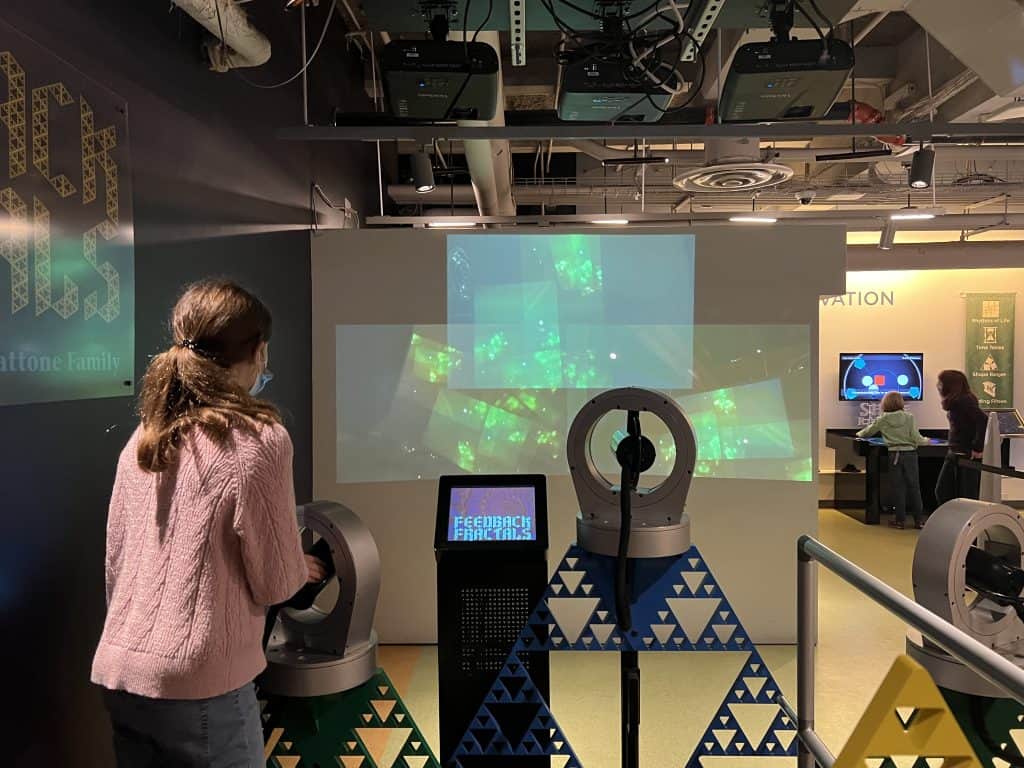
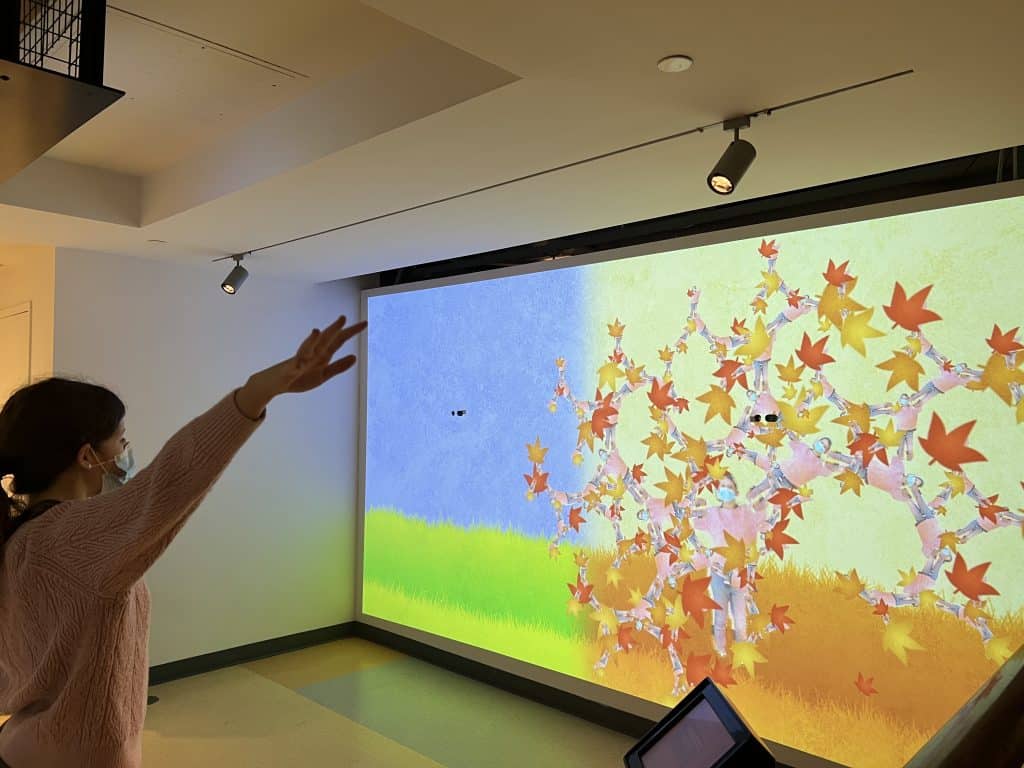
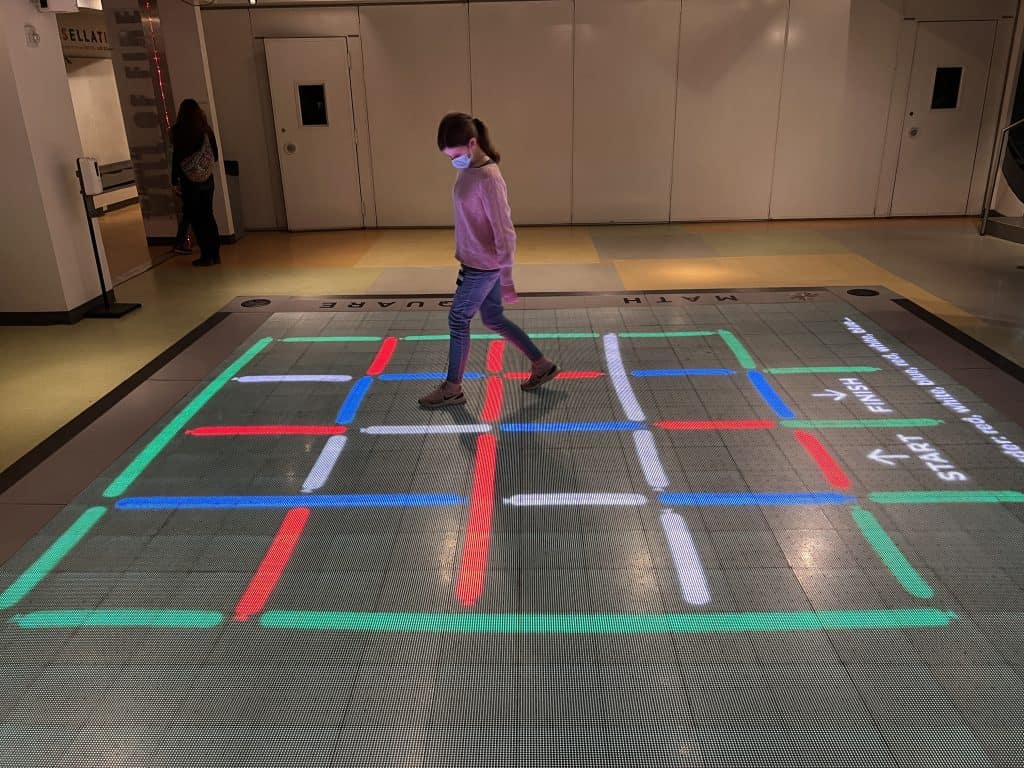
YES! There is actually a museum to celebrate math; a museum filled with dozens of hands-on, interactive puzzles, challenges, and activities that celebrate all facets of mathematics. Located across the street from Madison Square Park, the National Museum of Mathematics opened in 2012 and welcomes visitors of all ages through daily family friendly activities, field trips, after school programs, enrichment workshops for teachers and students, and a museum that is open all year.

Travel Tips:

  • The museum is open 364 day a year (closed on Thanksgiving Day) from 10am-5pm but does close early on some Wednesdays; more information on admission rates and hours here.
  • The museum covers two floors (floor zero and floor -1) and is handicap accessible with an elevator; strollers are allowed, but we don’t think the toddler set will want to sit for long. Check out the exhibition map here.
  • There is a coat room located behind the gift shop near the entrance.
  • Restrooms are located on both exhibit floors.
  • Information on how to get to the museum and where to park here.
  • No dining facilities on site, but check out this list of nearby restaurants that offer a discount.
  • Check out the list of special events with both online and in person options, including MathPlay  and MathDiscovery, here.
  • Plan on 90-120 minutes to explore all exhibition spaces.

Would you like to save this?

We'll email this post to you, so you can come back to it later.

Our favorite Ways to Explore the Museum of Mathematics:

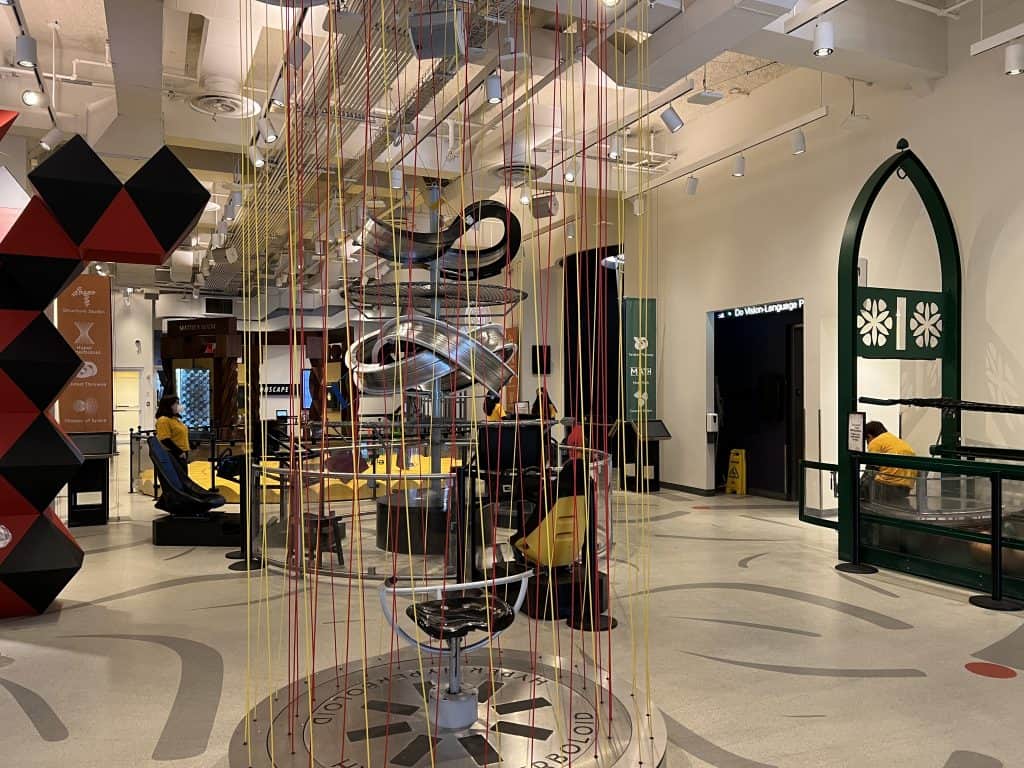
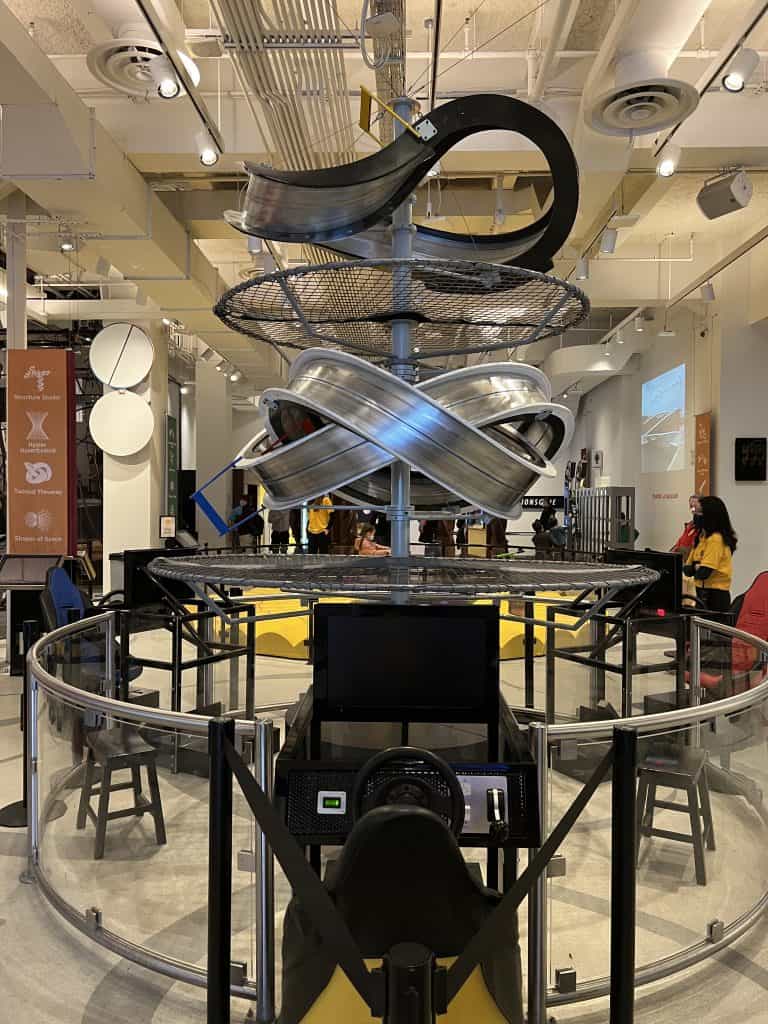
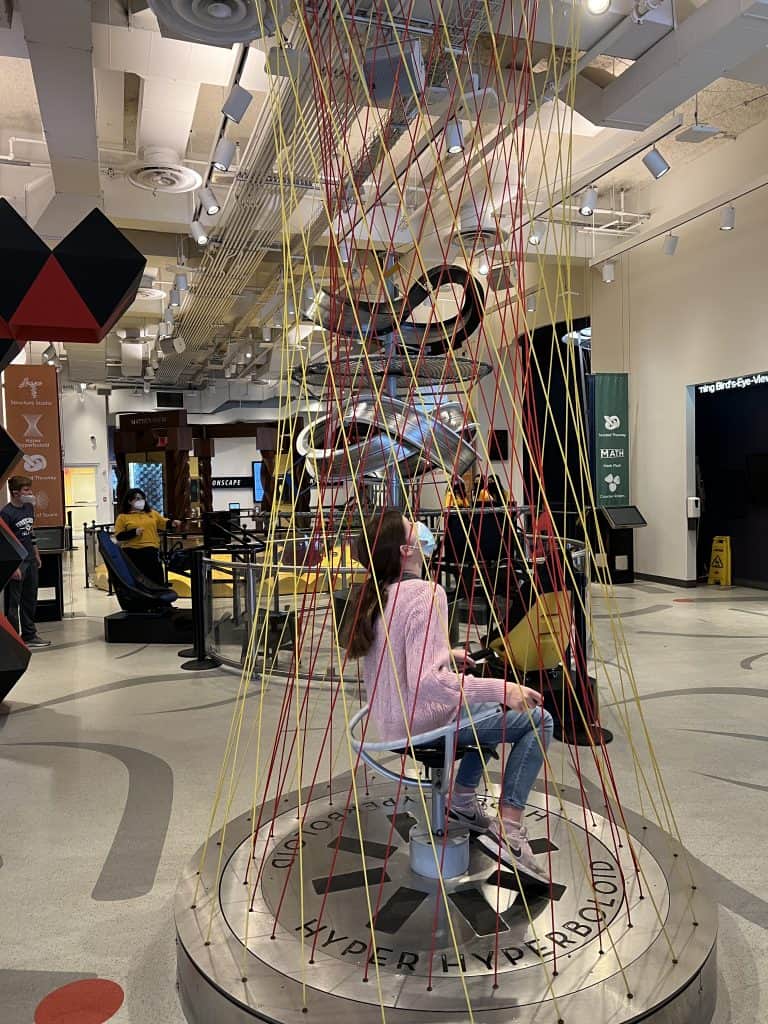
  1. Spin the chair inside the cylindrical chamber to create curves in the Hyper Hyperboloid
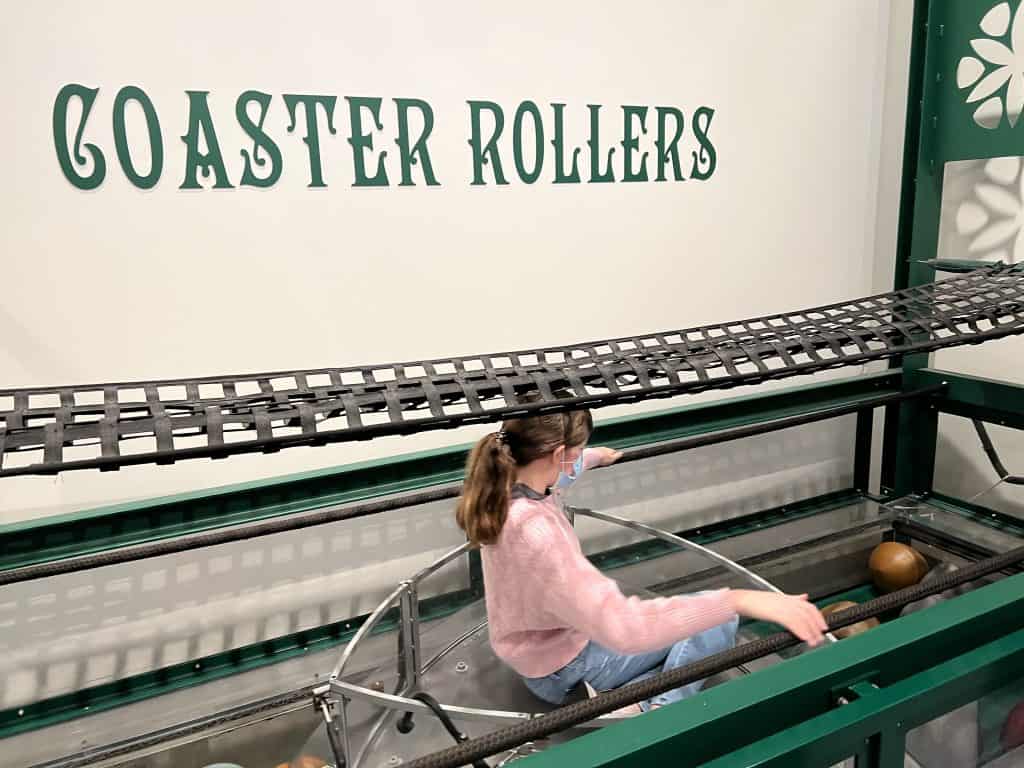
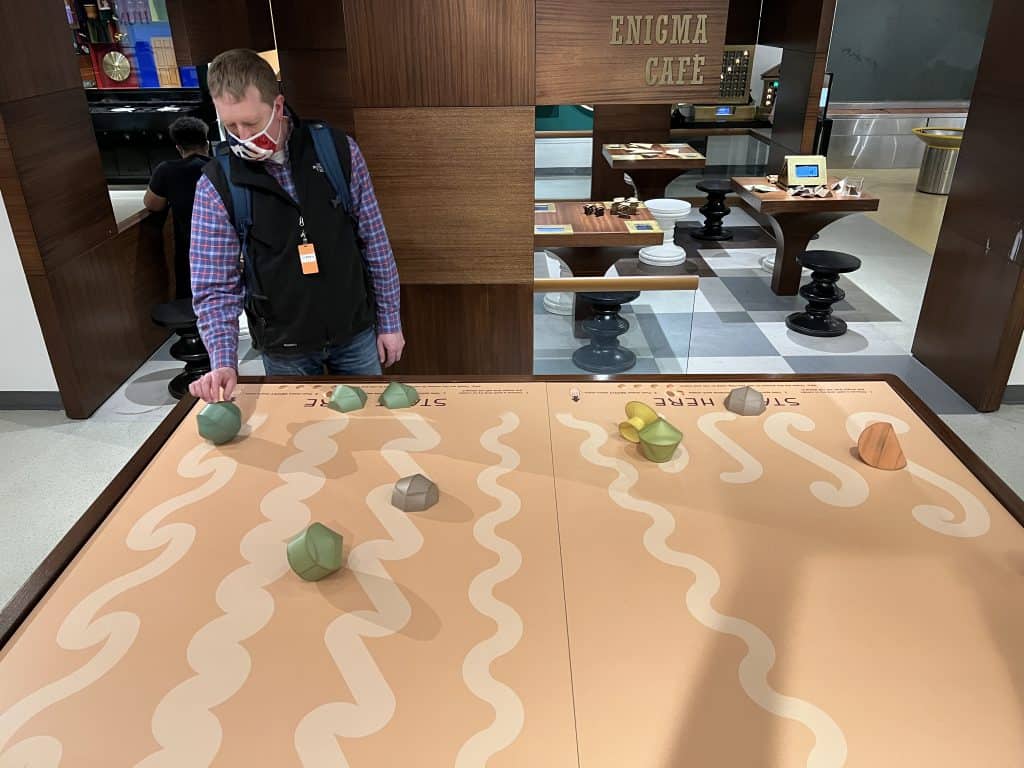
  2. Roll over uniquely shaped acorns for a smooth ride on the Coaster Rollers 
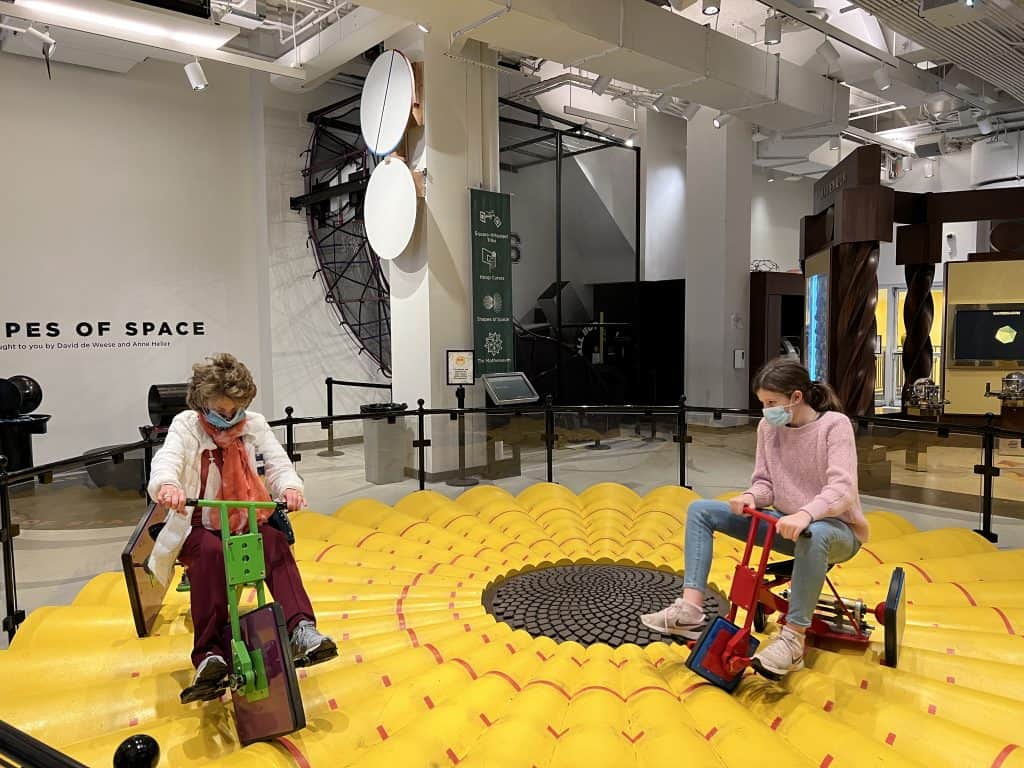
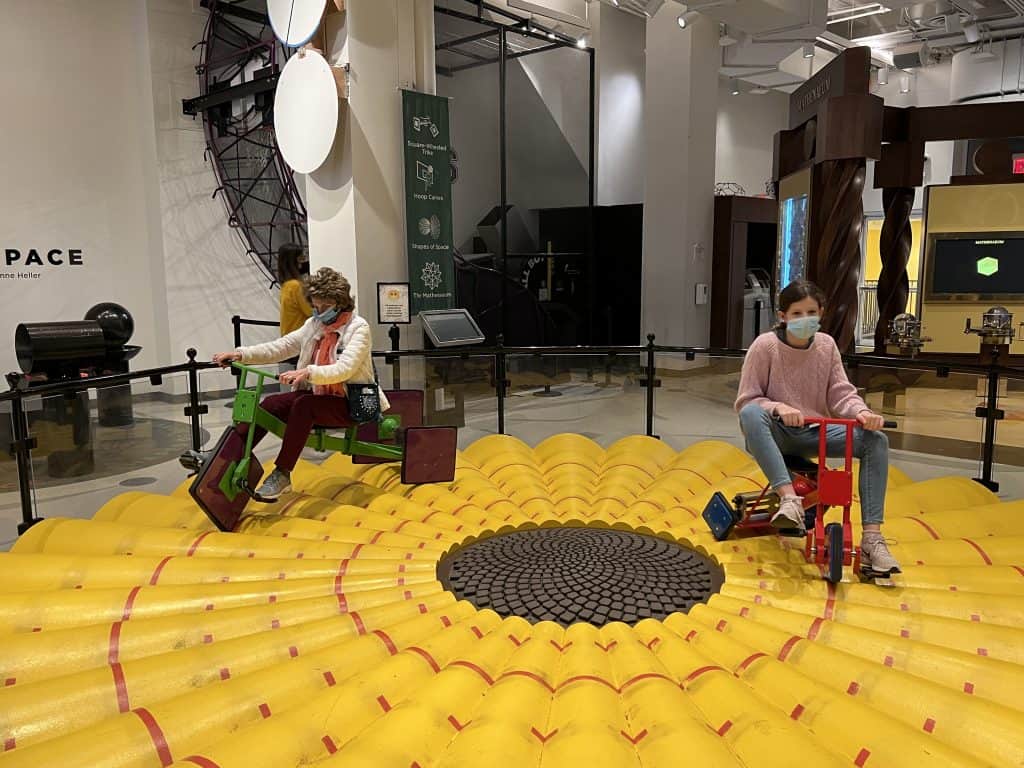
  3. Pedal a square wheeled trike round and round in the circular track
  4. Keep the pace in the full body velocity challenge in Motionscape
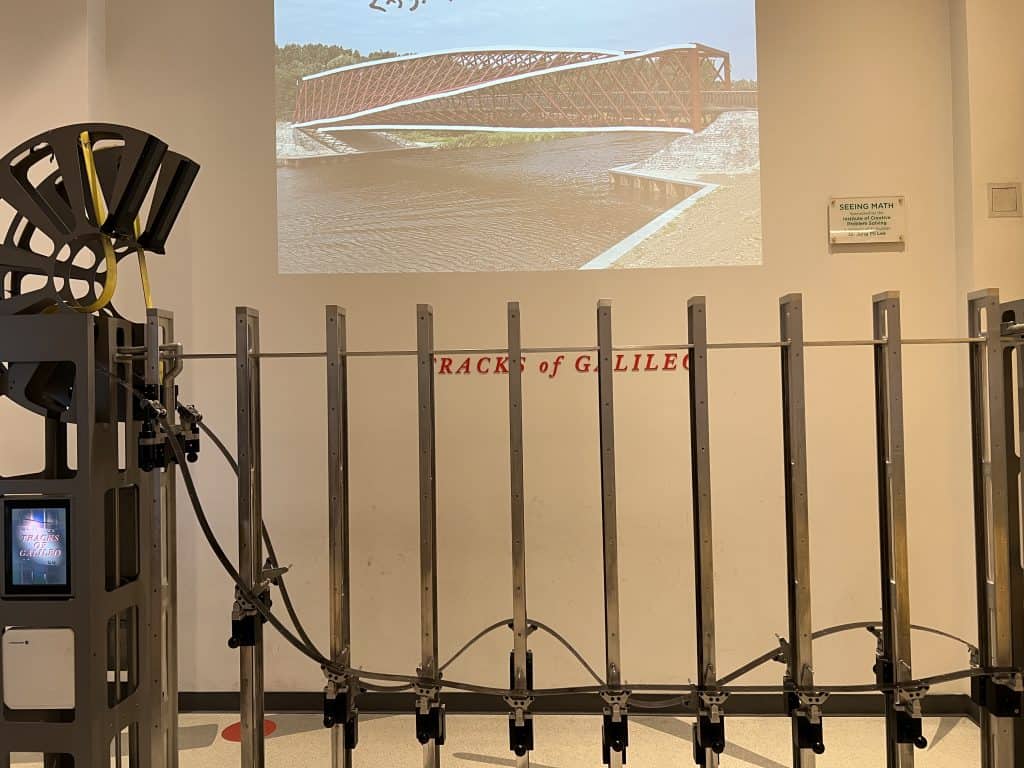
  5. Figure out the fastest track for the cart by adjusting the path in Tracks of Galileo
  1. Position the basketball shooter just right to make the shot in Hoop Curves
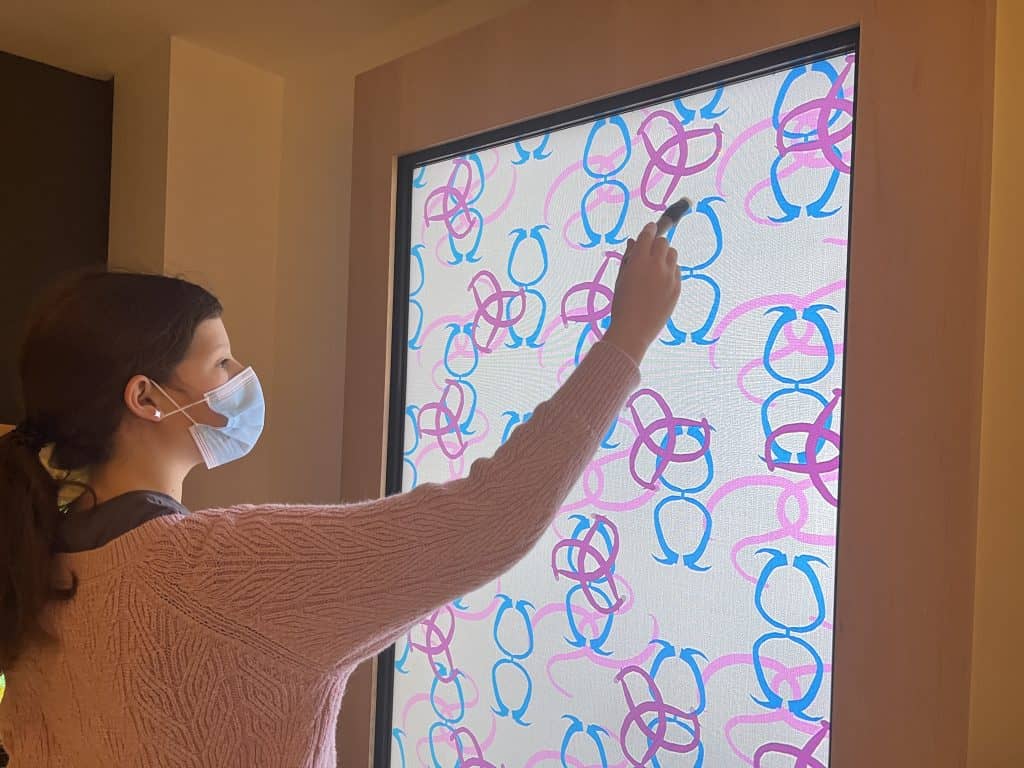
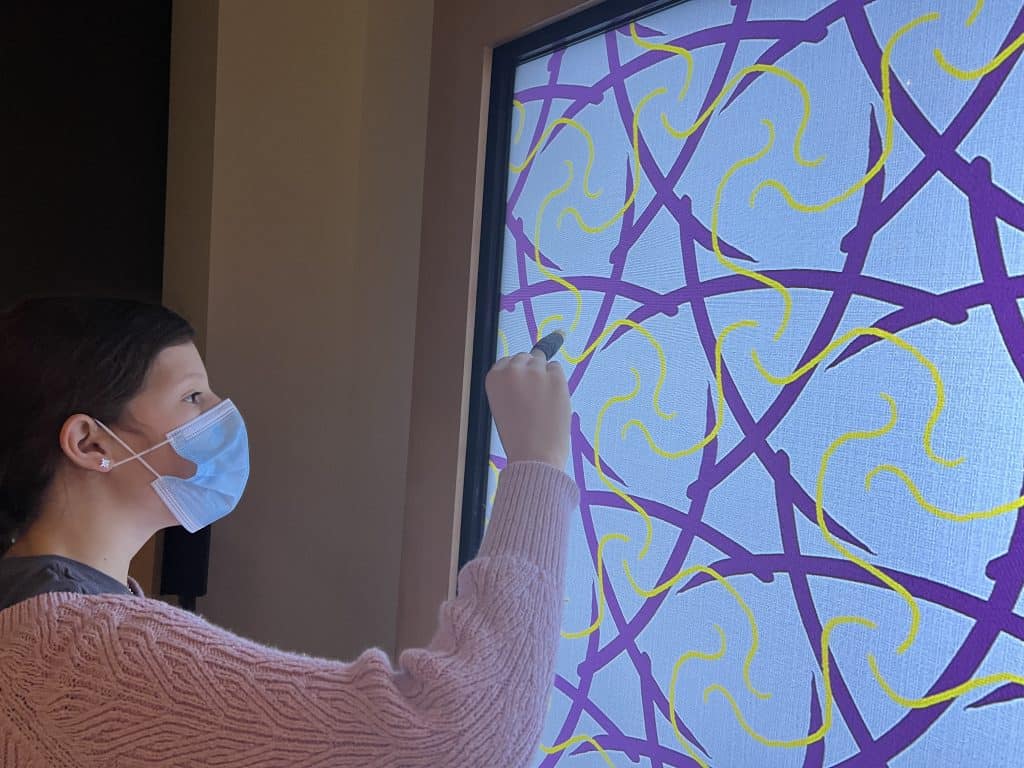
  2. Design your own symmetric pattern in Polypaint
  3. Create original designs in both Tessellation Station and Water Frieze
  4. Try collecting the exact number of balls in each tube in Mind Over Matter
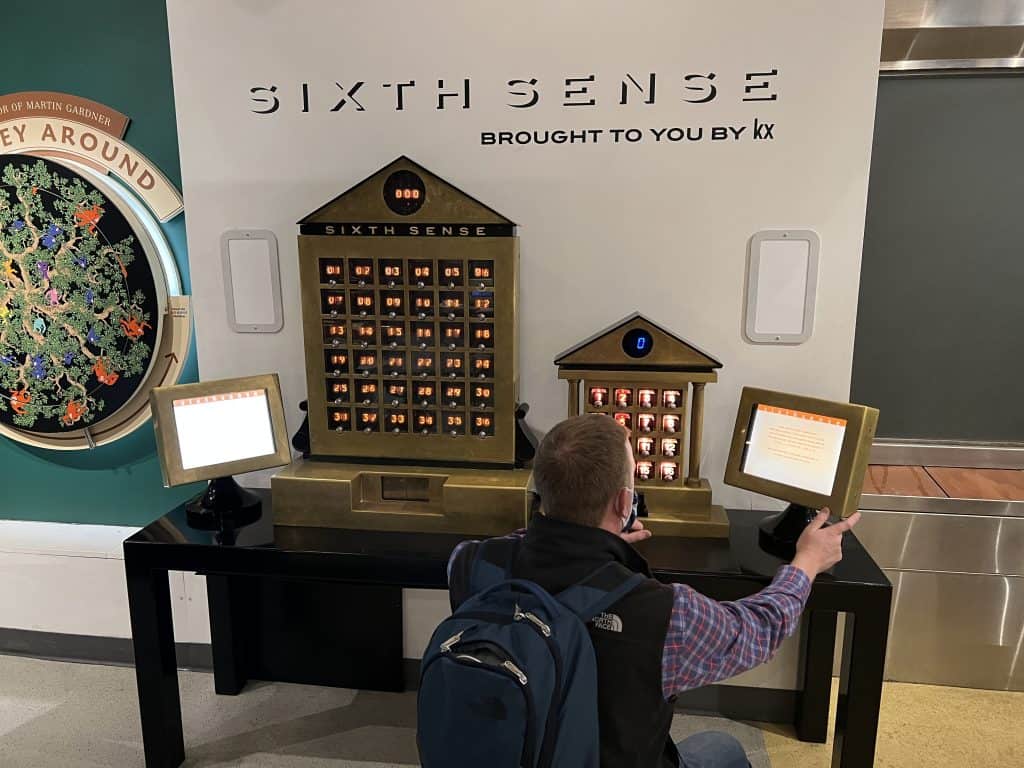
  5. Take a seat in the Enigma Cafe and try some of the brainteasers

Looking for more fun in New York City? Check out our index of posts here and our recent post on family friendly places to eat in New York City here. And follow along on our adventures on Instagram, Twitter, Facebook, and Pinterest.

Disclosure: My family was given a media pass to explore the museum; all opinions expressed are my own.

Similar Posts

  • | | |

    Food Trail #7: Bakeries in Milford, Connecticut

    Milford, Connecticut, a small city located on the edge of New Haven County along the Coastal Connecticut I95 corridor, is home to over a dozen named beaches (5 are open to the public), a state park, great shopping and restaurant hubs, and plenty of yummy bakeries. For our seventh food trail (check out #1, #2, #3, #4, #5, and #6), we started on the south side and made our way north, stopping at seven bakeries serving up plenty of homemade pastries, desserts, salads, sandwiches, full meals, and drinks. Here are our top picks:

  • | | |

    Fort Adams in Newport, Rhode Island

    This is the 3rd post in a series detailing my recent visit to Newport, Rhode Island. To read about celebrating the holiday season in Newport, click here and to read about the International Tennis Hall of Fame, click here.

    Fort Adams has the honor of being both the largest fort in the United States and the only fort never attacked. Although, because it was never attacked or “officially in use”, it is not part of the National Parks program like many other forts throughout America. Fort Adams, located in Newport, Rhode Island, is one of twenty fortresses built after the War of 1812, took over 30 years (from 1820-1850) to complete, and is named after the second American President, John Adams. It was most effectively used as a training facility for West Point graduates before their official postings.

    The entire complex is a state park and open to the public, free of charge.  The public is welcome to use the restrooms, walk (leashed) dogs, fish, picnic, and even use the public beach. Sail Newport, housed on the property, rents sailboats and also gives lesson.

    On a recent visit to Newport, my family took the 90 minute, guided tours. We loved it. All of us, adults and children alike, found it interactive, informative, and even a little scary.  Steve Marino, our tour guide, made sure to engage our children throughout the tour.  You’ll need to start in the Visitor’s Center to purchase tickets. They offer a AAA discount. There are restrooms and a gift shop with snacks, drinks, and souvenirs. Strollers are allowed on most aspects of the tour, and you can leave strollers outside some “indoor” and tight spaces. 

  • | | | |

    Playing “I Spy” at the Connecticut State Capitol

    Visiting state capitol buildings is one of the first things we do when visiting the capital city. It’s a little ironic that it took our family, who has lived in Connecticut for almost 20 years, this long, but we recently, finally made it to the CT Capitol for a tour.

    Connecticut was founded in 1662 and is known as the Constitution State, as it was the first state to adopt a constitution.  Built in 1878, the Connecticut Capitol building, located in downtown Hartford, was designed by Richard M. Upjohn to replicate a Victorian Gothic style. The building overlooks Bushnell Memorial Park’s 41 acres in the heart of Hartford and was restored in the 1980s to the original colors and design. The addition of the Legislative Office Building (LOB), which opened in 1988, allowed for office space for Connecticut’s 151 Representatives (each representing approximately 25,000 constituents)  and 36 State Senators (each representing approximately 90,000-100,000 constituents). The “LOB” also allows for more public meeting spaces and opportunities for state officials to meet as committees and with public interest groups. The first and second floors of the LOB and the first floor of the Capitol are both open to the public; upper level floors house private offices and chambers and guests must be accompanied by officials. 

  • | | | | |

    Fort Sumter National Park in Charleston, SC

    There is plenty of architecture, southern cuisine, and water views to check out in Charleston, South Carolina but no trip would be complete without reliving a major turning point in our country’s history.

    Fort Sumter National Monument is the only structure on the man-made island, which was created in the early 1800s as a defense for the city of Charleston. In April of 1861, the Confederate army bombed the still incomplete Fort, signaling the start of the Civil War.

    Operated by the National Parks Service and Fort Sumter Tours, access to the island is by tour boats docked at both Liberty Square or Patriot’s Point. I would leave from the Liberty Square Visitor Center so you can spend some time checking out displays which chronicle the history of the fort and check out a small gift shop. Make sure you stamp your National Parks PassportNote: There are restrooms located at both locations and I would recommend using them before boarding the boat to the island. The Visitor’s Center at Liberty Square is located on the second floor, but there is an elevator.

    The 40-minute narrated boat ride to the fort explains many details about the start of the Civil War.  Once you’re on the island, you can explore the fort on your own. There are park rangers stationed at various points to give short lectures and to answer any questions. There are also placards that give detailed information about structures and objects.  I would plan on spending 45-60 minutes at the fort. When you go, be sure to look out for:

  • | | |

    Playing “I Spy” at Victoria Mansion in Portland, Maine

    Ruggles Sylvester Morse and his wife Olive Ring Merrill Morse were prominent New Orleans hotel proprietors in the 1850s when they decided to leave the summer heat of the South and build a house in Portland, Maine. The house, built in the Italian Villa style, was finished in 1860 and the couple lived there until Morse passed away in 1893. Olive sold the mansion, and all its contents, to J.R. Libby, who lived there with his wife and five children until the parents died in the early 1920s. After the Great Depression of the 1930s, the children could not afford the upkeep and taxes on the mansion and abandoned it. William Holme, a local teacher and historian who loved the Queen Victorian era, bought it to be preserved as a museum, named after Queen Victoria. 

    The Victoria Mansion Museum opened in 1941 to the public, who are welcome to tour two of the four floors of the mansion. Each room has been restored to its original, mid 1860s glory, with authentic furnishings purchased by the Morse family. 

  • | | | | |

    10 Things Kids Will Want to Do at Hancock Shaker Village

    Traveling during a still present pandemic: If you’ve been following our adventures this summer, you know that our family has taken precautions to stay safe. We’ve limited our exploration to nearby states with lower COVID cases and to mainly outdoor spaces that take proper precautions to keep staff and visitors safe. Hancock Shaker Village was an easy choice- tons of open space to socially distance, only one family in a building structure at a time (with all doors and windows open to allow for better ventilation), and absolutely nothing to touch. While Hancock Shaker Village is a great place to visit anytime, it’s a very safe bet for family fun during these uncertain times.

    Celebrating its 60th anniversary in 2020, the Hancock Shaker Village is the oldest working farm in the Berkshires part of western Massachusetts. The Village was originally home to the Shaker community from the late 1700s until 1959, when it was turned into a museum that includes over 22,000 original artifacts and a research library. The 750 acre complex has a 20 acre working farm, 20 buildings with live interpreters, a massive garden with a very popular Community Supported Agriculture (CSA), and tons of hiking trails, meadows, and woodlands that abut the Pittsfield State Forest.

6 Comments

  1. It was great fun especially for a math person to show children how math affects everything. Love the pictures! So many activities, Thank you!It was great fun.

  2. I had no idea there was a museum of math in NYC! This looks like such a fun and interactive way to explore math concepts with kids.

  3. I had no idea there was such thing as a Museum of Math! I think my husband would love this place. It also seems like such a great interactive museum for kids. Thanks for sharing!

Leave a Reply

Your email address will not be published. Required fields are marked *