Fort Stanwix National Monument Rome, New York

| | | | |

My family has been on a National Parks “tour” this summer (we’ve been to seven different spots in less than two months), and unintentionally, have been learning a lot about the “birth” of America at each location.. It was only fitting, then, when we drove to upstate New York this week to visit our best friends that we make a stop at Fort Stanwix National Monument. Commissioned by General Stanwix and built in 1758 by the British, with the permission of the Oneida Indians, the fort became known as “the fort that never surrendered.”  Fort Stanwix also has the honor of being the first historic park in the country.  I highly recommend exploring the fort for a couple of hours. Your children will most enjoy:
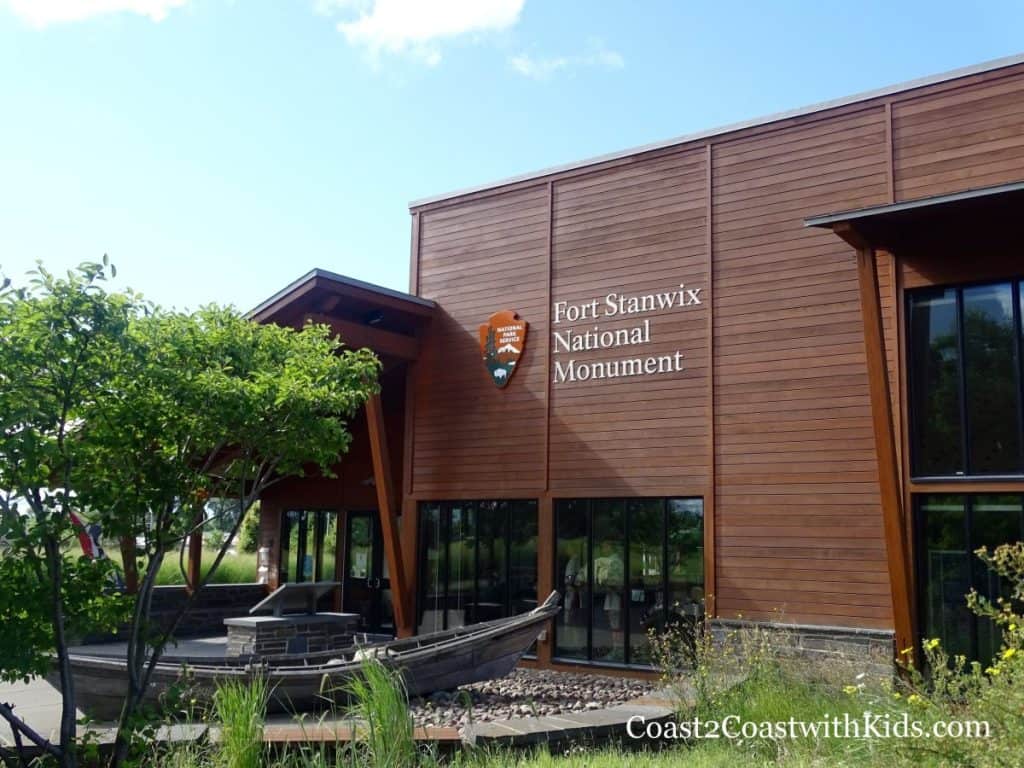
The Visitor’s Center:  Start your exploration in this building, which has:

  • Two short films about the time period
  • A display of everyday items used by Native Americans, including tools, utensils, and weapons
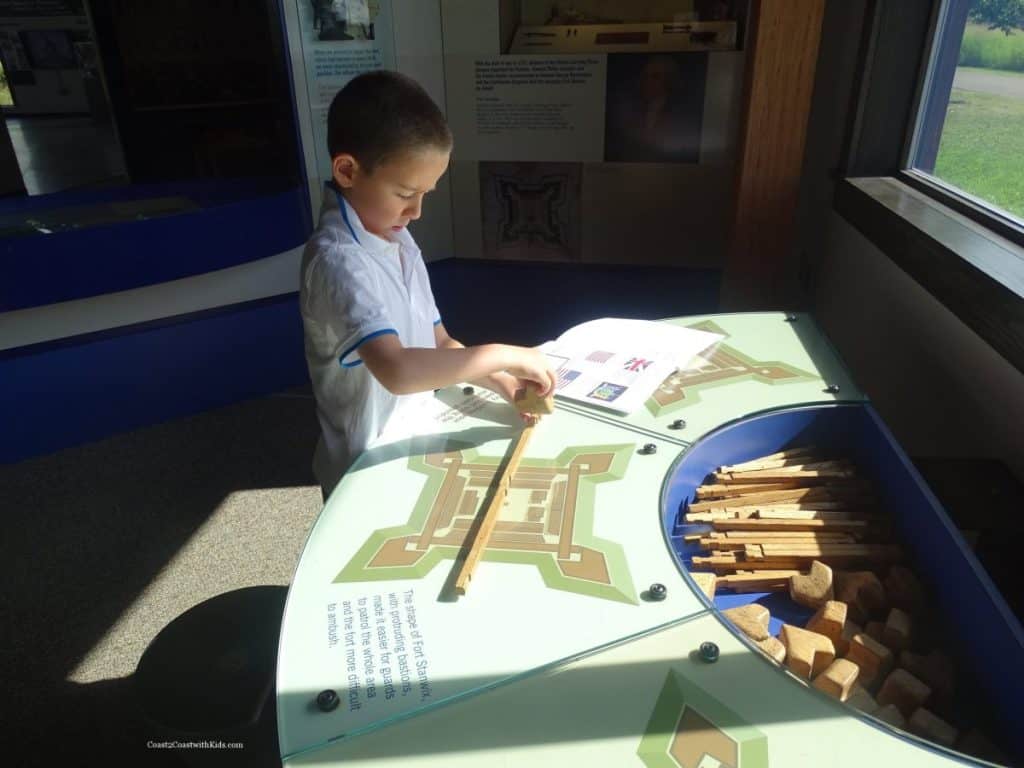
  • A building table to recreate the fort using wooden blocks
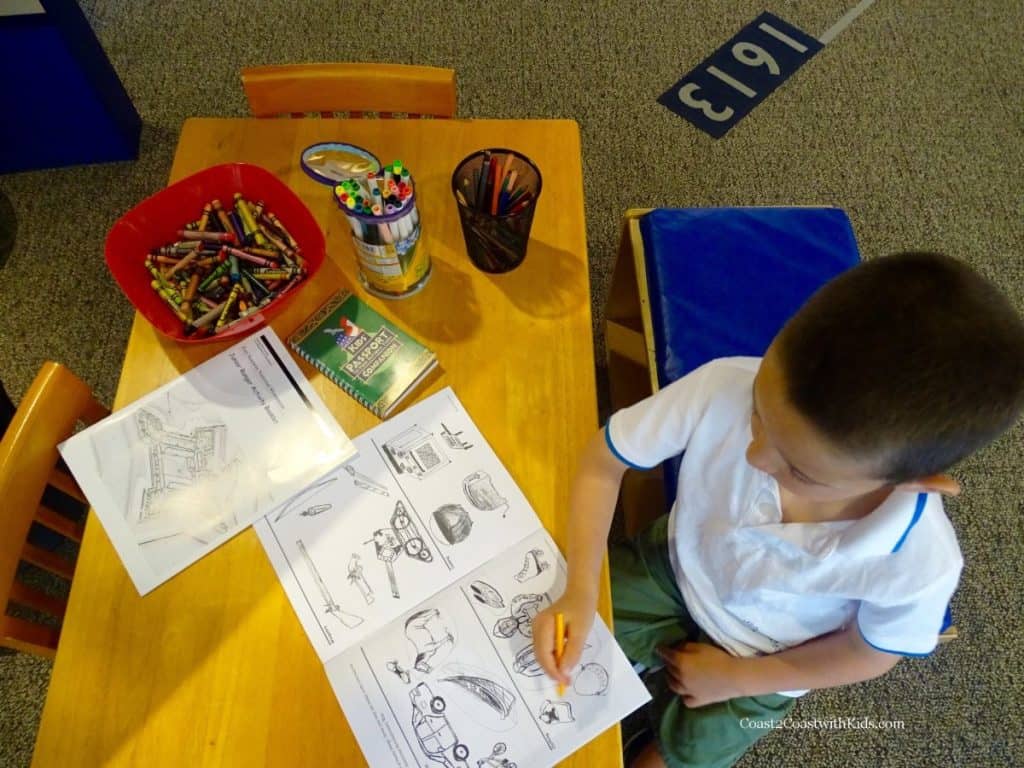
  • A children’s table to color worksheets about the fort
  • A rug delineating the timeline American history (even my nine year old loved “jumping” from one year to the next)

Don’t forget to get your (six!) passport stamps and have your child(ren) grab a Junior Ranger book to earn their badge(s).
The Fort: Children will love the walk over the bridge into the fort (bring the stroller for the baby), and exploring the various buildings, including:

Would you like to save this?

We'll email this post to you, so you can come back to it later.

  • A replica refugee camp for the families of lower ranking soldiers. (There was barely enough room for the soldiers inside the camp and only the highest ranking soldiers were allowed to have their families stay with them.)
  • The Gregg Barrack with a model of the fort labeled with technical terms, dress up period costumes, and a theater with a 17 minute film about battles that took place around the fort.
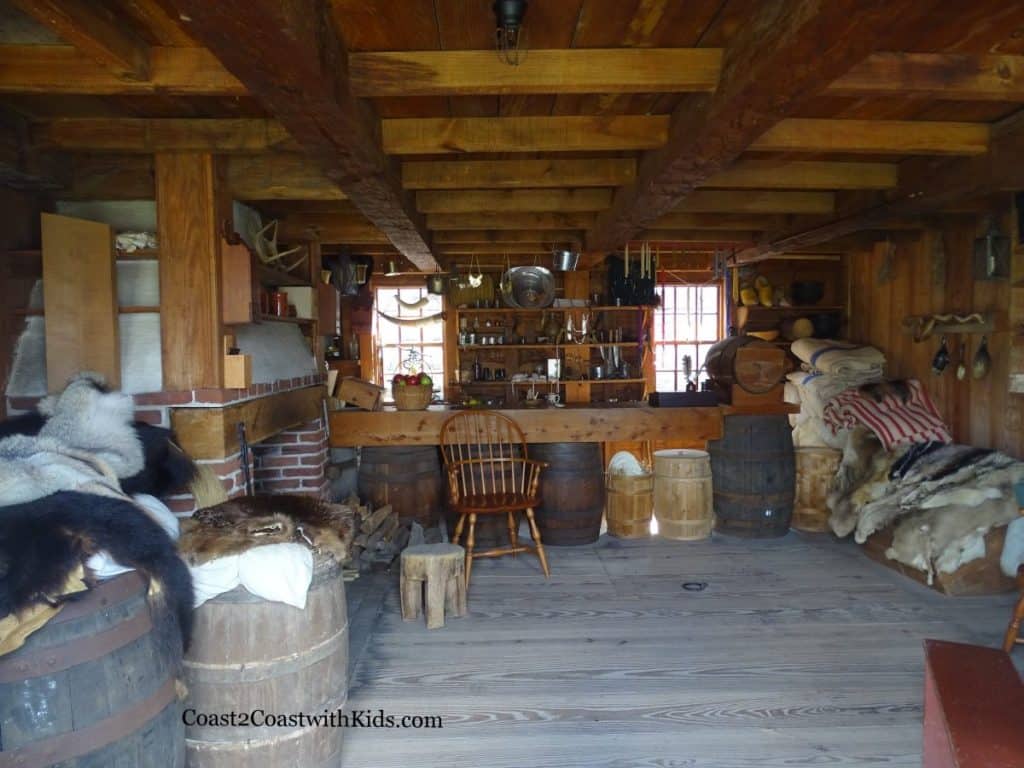
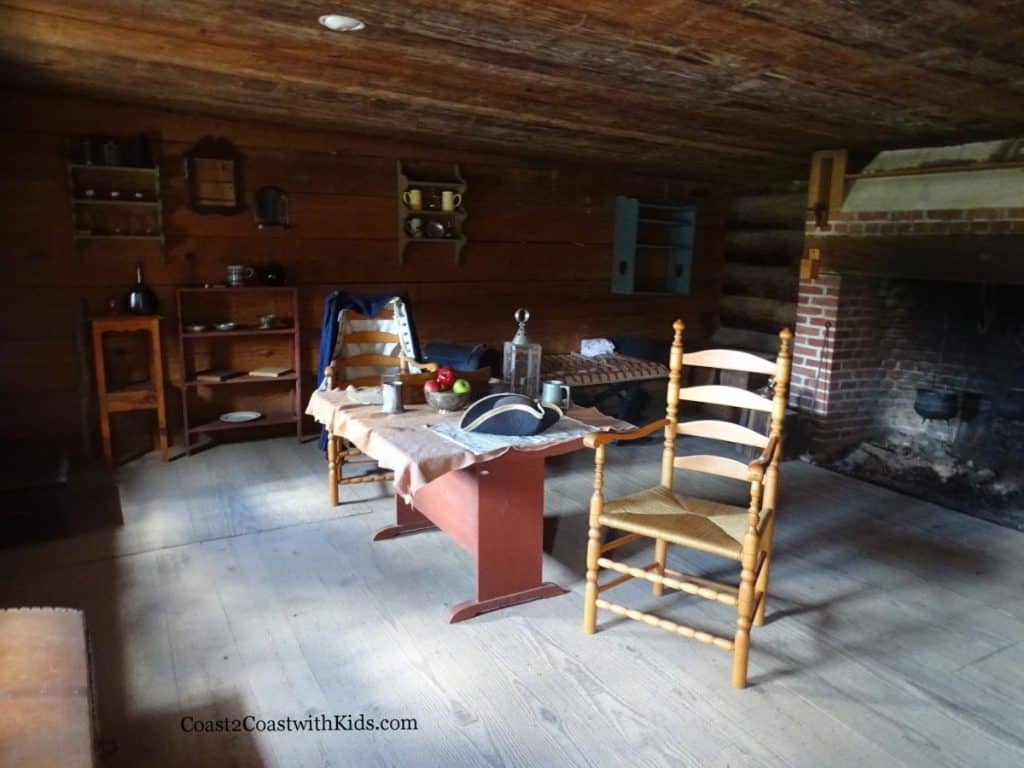
  • Reproductions of the commander’s quarters, officer’s bunks, and “sutter” (the name for a civilian trader, and a room where soldiers and their families could purchase items like food, rum, and tobacco).
  • A bombproof storeroom and make shift hospital. Note: You must travel down a very dark path to get to the storeroom.
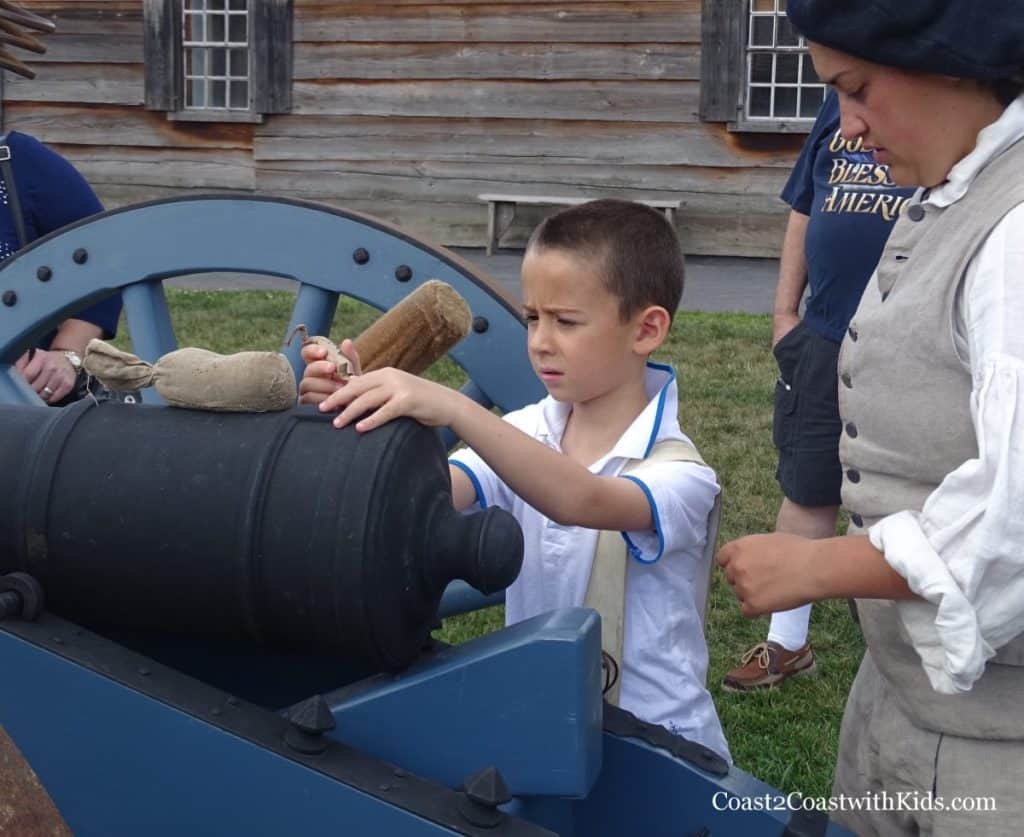
  • Cannon firing demonstration in the middle of the fort. My kids quickly volunteered to be part of the crew led by a ranger who explained with step-by-step instructions. The best part? No actual firing, or loud noises, so no need for children to be afraid.
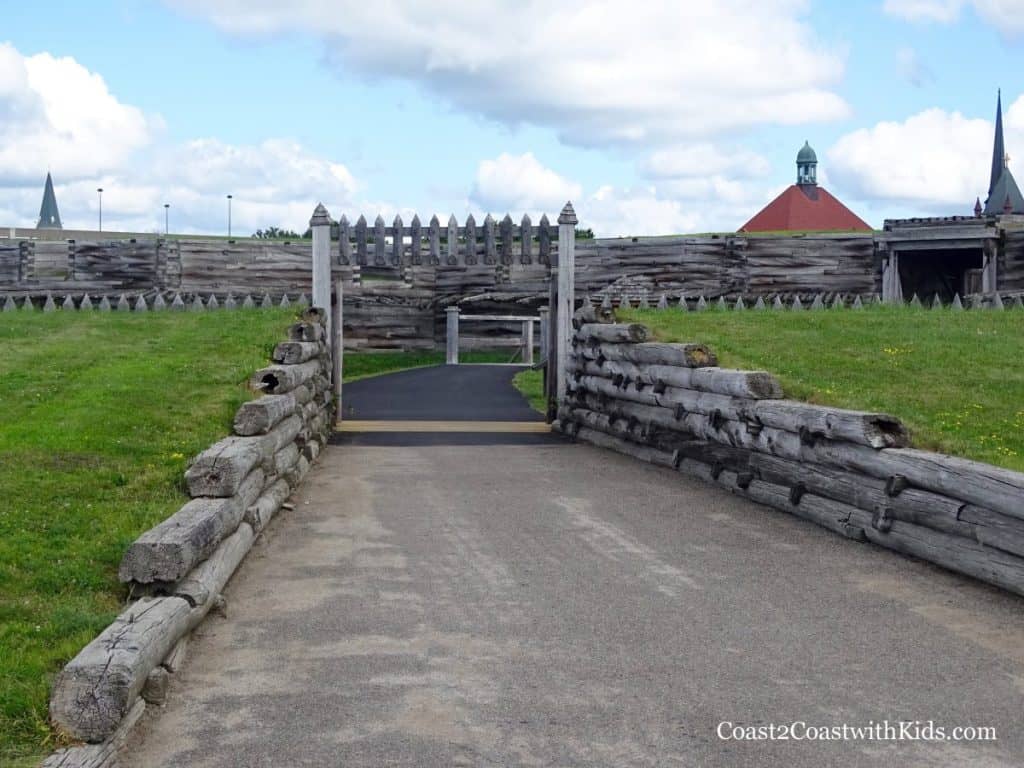
Notes: Have your crew wear sneakers to avoid getting bare feet dirty from the sandy path.  One nice element of the fort is that there are only two areas where you can climb a short flight of stairs to the top to explore secured areas to walk around, so I consider it safer than other forts we have visited. Most forts are completely open on top so it’s very difficult to keep children (really, anyone) safe.
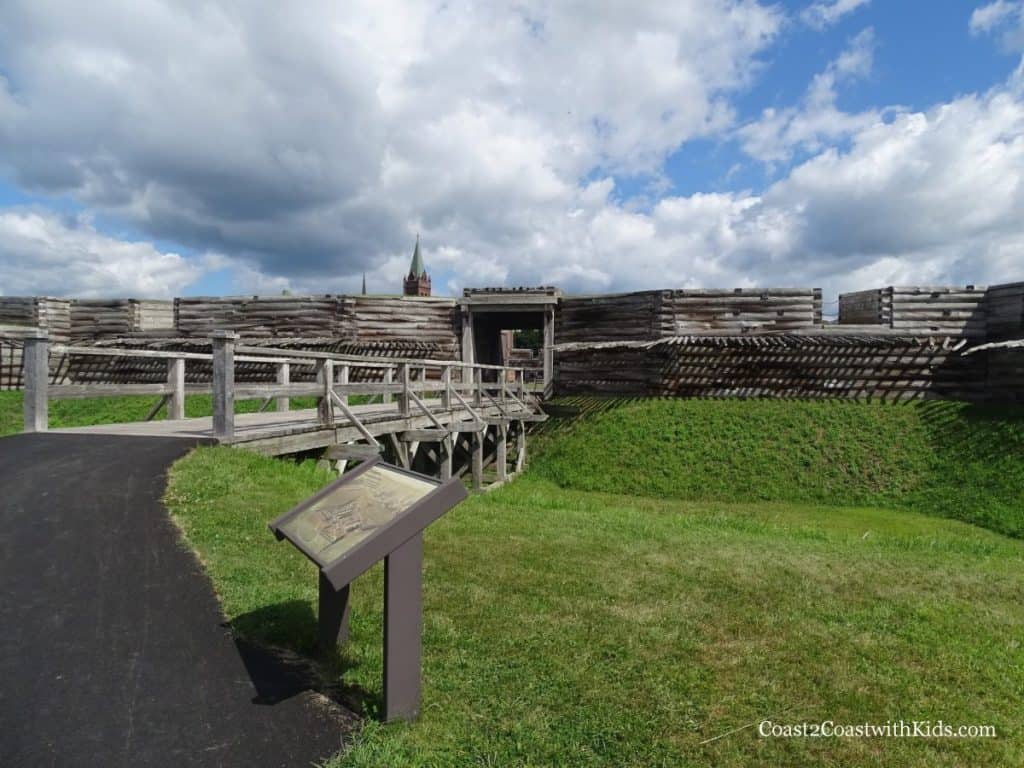
There is a 45 minute ranger led tour offered twice a day, which starts inside the Visitor Center and then continues inside the fort at the Gregg Barrack. We learned A LOT of American history in that short time frame, and while interesting to the adults on the tour with us, my children grew restless pretty quickly, as there was not much interaction on the tour. They enjoyed exploring the fort itself much more; your children might agree.

If your family enjoys exploring forts, check out our visits to Fort Sumter in South Carolina and Fort Adams in Rhode Island.

Similar Posts

  • | | |

    Five Ways to Explore the Jupiter Inlet Lighthouse & Museum in Jupiter, Florida

    We’ve explored Palm Beach County, Florida many times when visiting family in Delray Beach. This past trip, we finally had time to stop at the Jupiter Inlet Lighthouse and Museum that we’ve passed several times and enjoyed exploring the ever expanding complex.

    Operated by the Loxahatchee River Historical Society, the first lighthouse museum opened in 1973 and now welcomes over 800,000 visitors to the complex each year. The nonprofit manages the 1860 Jupiter Inlet Lighthouse and Oil House, 1892 George Washington Tindall House, 1929 Lighthouse Keeper’s Workshop, and 1940 Naval Housing Building (currently closed due to nearby bridge construction). The lighthouse and museums are located on a complex, owned by the town of Jupiter, which also include large sports fields, nature trails, and a large playground. 

  • | | |

    Where to Eat in Sioux Falls, South Dakota

    A recent, unexpected stay in Sioux Falls, South Dakota was one of our top highlights of a four week road trip. We explored over a dozen spots throughout the city- read the full City Guide here- and dined at several great restaurants and bakeries. We crowdsourced recommendations for restaurants from fellow travel bloggers, checked with locals at our hotel and places we explored, and read up about local favorites on ExperienceSiouxFalls.com. While we didn’t get to every spot on our original list, here are 10 places we did enjoy. Please note: This post, especially hours, promotions and menu items is accurate as of July 2021, but it is always a good idea to check online before heading out to explore Sioux Falls.

  • | | | |

    Isabella Stewart Gardner Museum in Boston, MA

    A New Yorker married to a Bostonian in the late 1860s, Isabella Stewart Gardner and her husband, John, travelled extensively and were inspired by the art they saw throughout the world. Gardner began collecting art and built a home, which she named Fenway Court, in Boston in the early 1900s. Today, all three floors of the Palace, as it is now referred to, are opened to the public, as part of the Isabella Stewart Gardner Museum. Some of Gardner’s collection of 7500 pieces of art, 1500 books, and 7000 artifacts are on display throughout the Palace and the new Renzo Pino Wing, which houses a reception area and services, administrative offices, Calderwood Hall, Bertucci Education Studio, the Living Room, Cafe G, and museum store.

  • | | | | | |

    The Hew Hampshire State House in Concord, New Hampshire

    The New Hampshire State House, located in the capital city of Concord, is the home base of New Hampshire’s 24 State Senators, each Senator representing 55,000 residents, and 400 House Representatives, one for every 3,500 residents. State House members have other full time jobs and several college student members are current House members (the minimum age to be a House Representative is 18 years old). The House Chamber, 204 years old (in 2023) is the oldest, continuously used House Chamber in the United States- the only additions over the years have been carpet, electricity, and female representatives.   The original State House was built between 1816-1819, with additions in the 1860s and the addition of elevators and restrooms in 1910.

  • | | | | | | | | | | | | |

    Dutchess County, New York

    Dutchess County, located in southeastern New York, spans from Fishkill and Beacon to Rhinebeck and Red Hook covering (in total) thirty cities, towns, and villages. There are literally hundreds of ways to explore the area, but I thought I would share twelve ways families can enjoy all that Dutchess County has to offer together. The county borders western Connecticut and is about 90 minutes from Manhattan. Driving from the north end of Red Hook south to Beacon takes less than an hour, so you won’t spend days in the car exploring the area.

    Start your planning by checking out DutchessTourism.com, which is a well organized, well informed network of suggestions for eating, staying, and exploring the county.  They have a section dedicated to family fun and even have itineraries broken up in one, three, and five day stays (in additional to organizing suggestions for shopping, craft beer, spa, LGBT and other themed trips).

  • | | | |

    New York Public Library, New York City

    My children are OBSESSED with reading (good problem to have, I know). They can’t get enough of books. Exactly one year ago, we were in New York City to see a Broadway play for my daughter’s birthday. We were exploring Bryant Park and saw the New York City Library. We had an hour before the show and it was too cold to “walk around the city” so we decided to check out the library. We ended up spending most of our time in the children’s room, but I made note of the tour group that passed us and vowed to return. We did, exactly one year later.

    The Stephen A. Schwarzman Building of the New York City Library opened in 1911 and probably the most well known of the 92 properties in the library system. It’s one of four research centers, in addition to the 88 circulation branches located throughout Manhattan, the Bronx, and Staten Island. Some areas of the library are open to the general public and some are reserved for credentialed people who visit to complete research. The library offers audio tour for a nominal fee at any time the library is open, but also offers free, guided tours tour twice a day. Check in at the docent desk in Astor Hall. Make sure you check times and get there early, as tour spaces are limited.