Saratoga Race Course, Saratoga Spring, NY

| | |

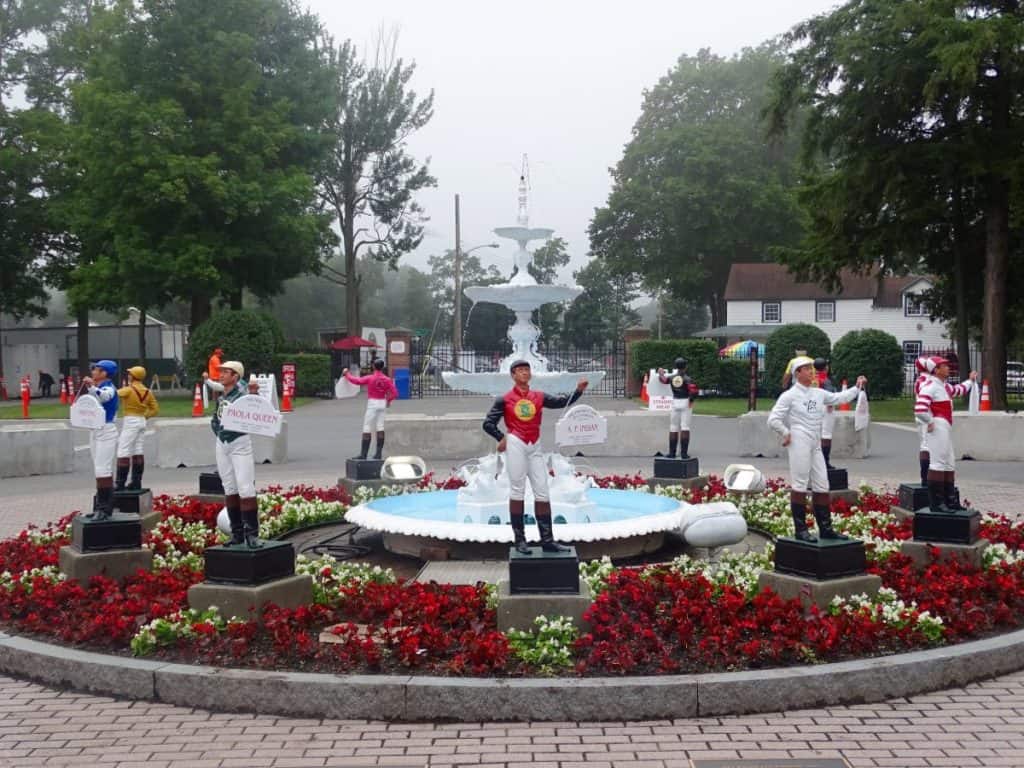
It’s the oldest sporting venue in the country, dating back to 1863: Saratoga Race Course in Saratoga Springs, New York.  Held between late July and Labor Day weekend each year, they race registered thoroughbred horses six days a week (it goes dark on Tuesdays) and have 9-13 races each day.
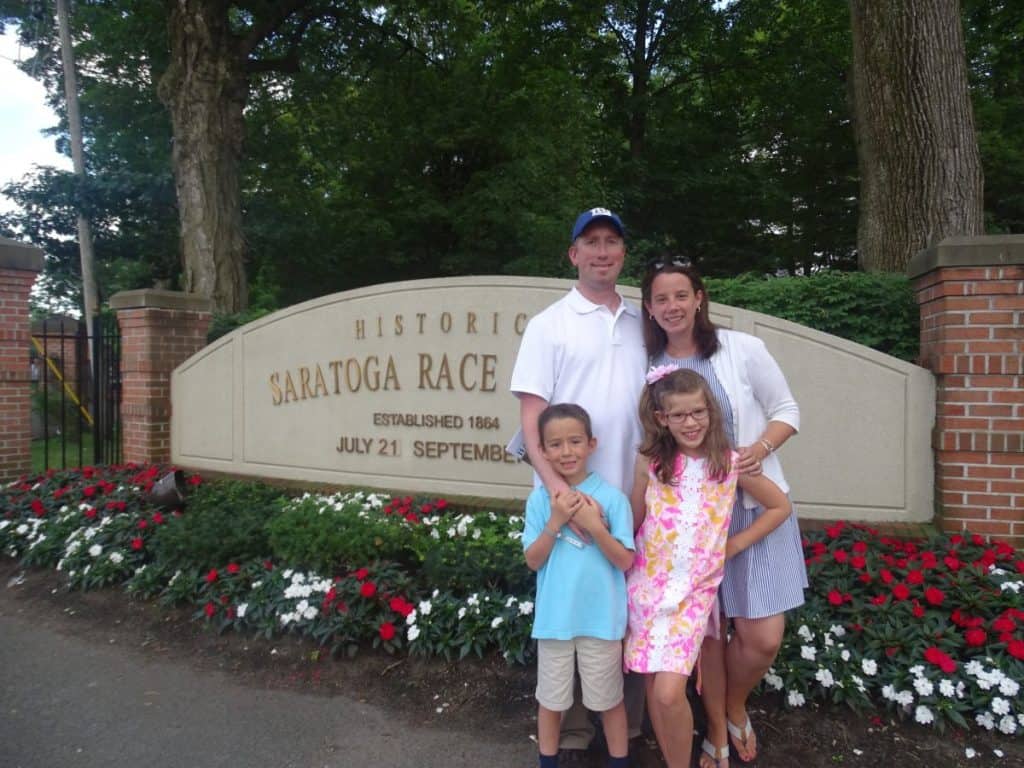
My husband and I took our daughter when she was just six months old (as an add on to our visit to see the New York Giants training camp, when it was held at the University of Buffalo). We had a lot more fun this time, now that both of our children are old enough to sit and watch the races. (I had flashbacks to nursing my daughter on a bench while dozens of men around me screamed at a tv screen in the picnic area). We decided to go the first week the track was open this summer.  We made some stops on our way to the track: Saratoga National Historic Park (read about our visit here) and National Museum of Dance and Hall of Fame (read about our visit here). Here are some of our highlights from the race course:

The “Back Track” tram tour runs every fifteen minutes each morning 7:30am-9am. I had been warned to get there early, as it’s first-come, first-serve and the later timed trams fill up quickly. There is no fee for this 45 minute tour which brings you to the “Back Track” opposite the main concourse. This tour is very child friendly and there are lots of fun facts that will keep children entertained and giggling. The guide greets you where the tram drops you off and give you a tour of:

  • Clear Court: a half mile track that is used to train the ponies before they prepare for the big races or for therapy for injured horses
  • the graves of the four horses buried on the property
  • the housing area for the 1,000+ workers who stay on site for the season
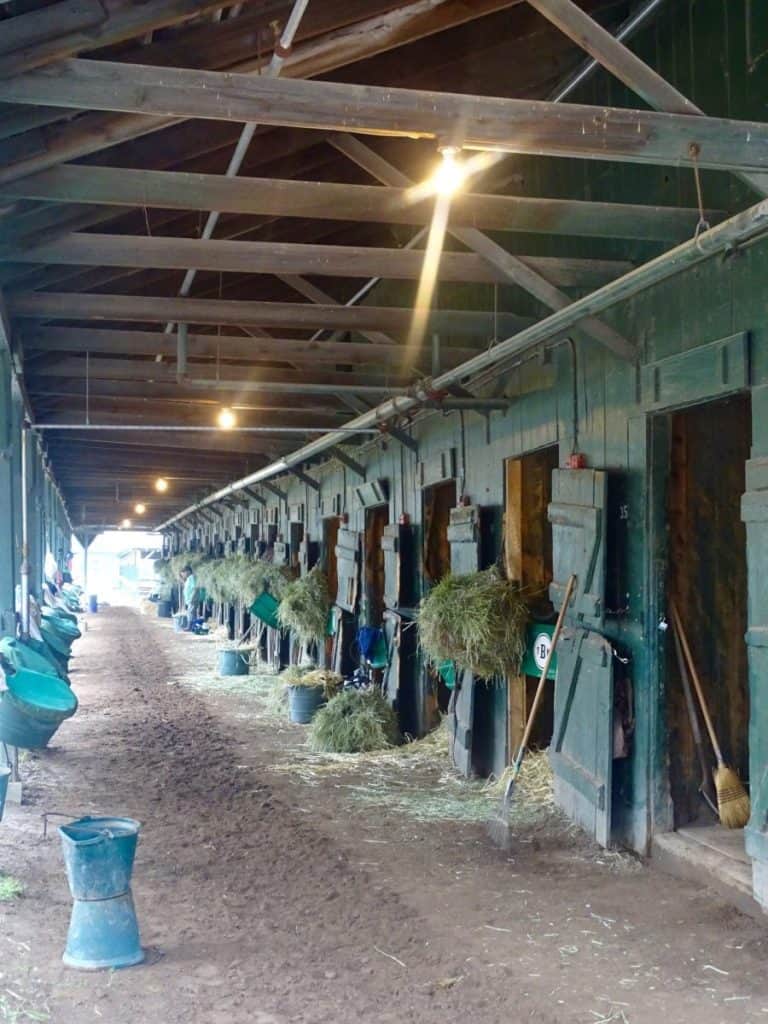
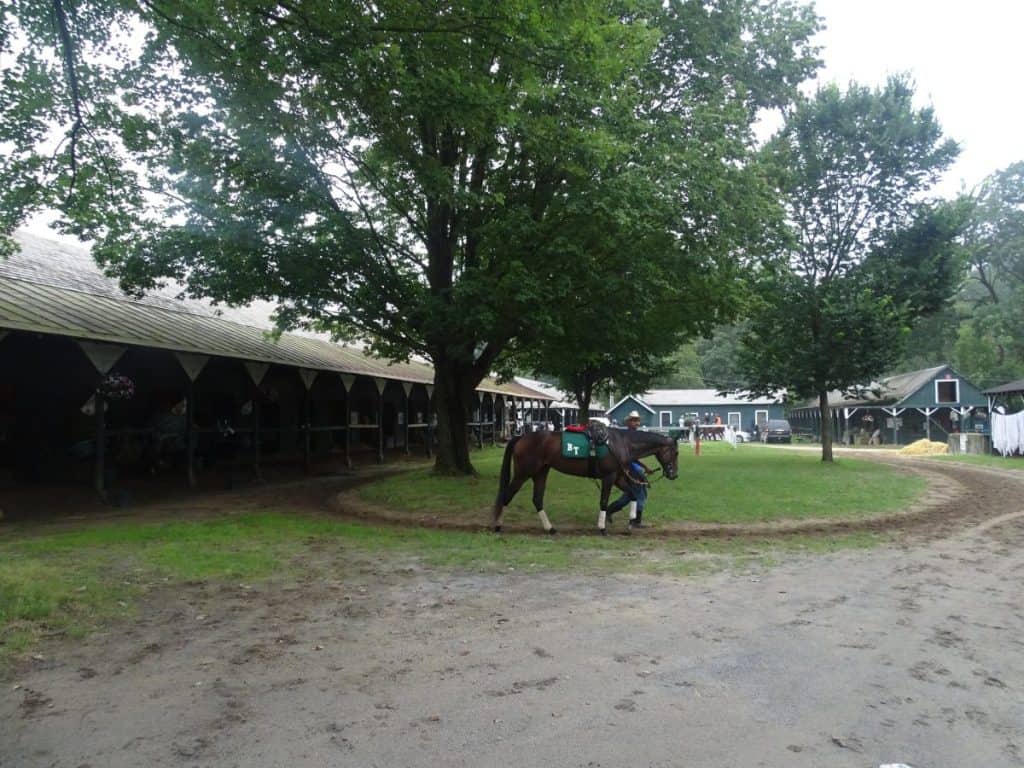
  • the various barns where 2,000 horses are housed. Various owners pay to rent the stalls, and some will decorate the outside with hanging flowers. We saw chickens and goats in the barn area, which we were told are allowed to roam free because they are a calming influence for the boisterous thoroughbreds.
  • the starting gate, run on electromagnets, which is portable (it moves around the course based on the length of each race)
  • my children’s favorite: the manure pit. Twice a week, trucks from Pennsylvania come to load to the manure and bring it back to Pennsylvania to fertilize mushrooms. My son’s still giggling about that fact.
The Walking Tour runs each hour, starting at 9:30am, on the half hour, until 2:30pm and has a nominal charge (it was $10 for our family of 6 to attend).  Some of the info from the Back Track tour was duplicated, but there was also plenty of new information. On the walking tour we saw areas of the main club house, including:

  • The Winner’s Circle
  • The jockey scale (no way I was stepping on that; most jockeys weigh just over 100 pounds!)
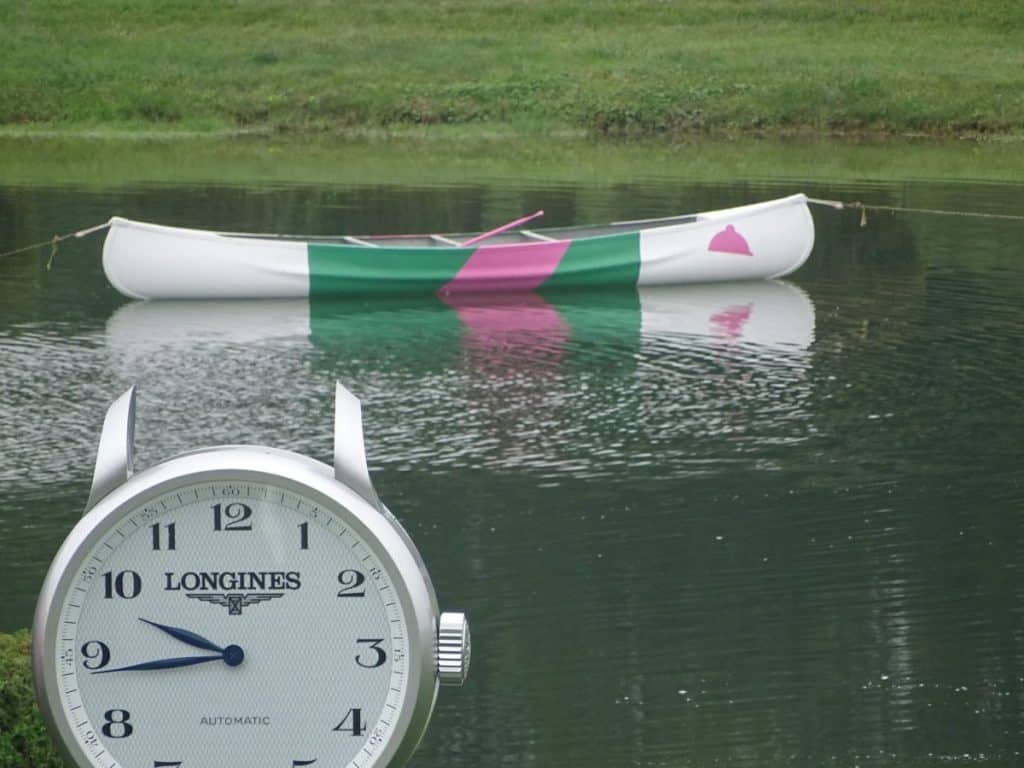
  • the pond in the center of the track, with a canoe painted in the colors of the winner of the Travers Stakes
  • The ceremonious bell that is rung 17 minutes before the post of each race
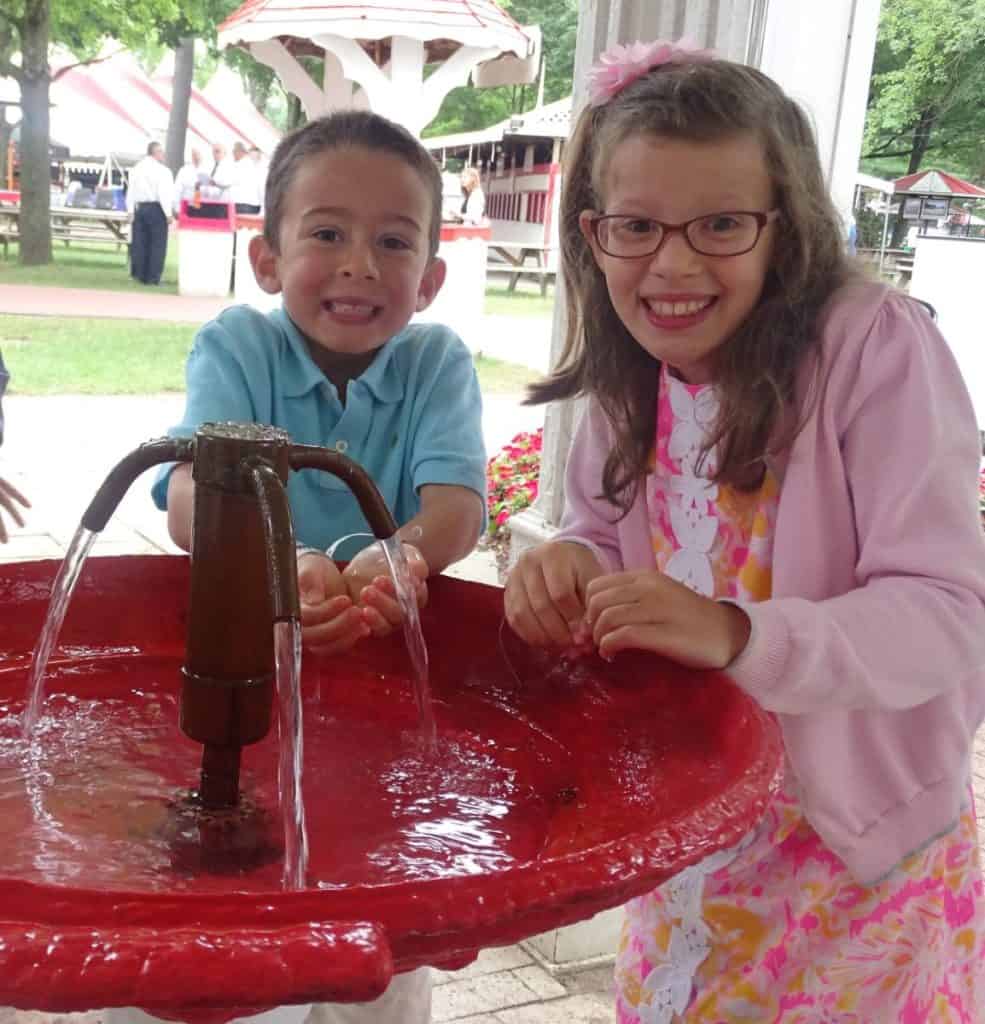
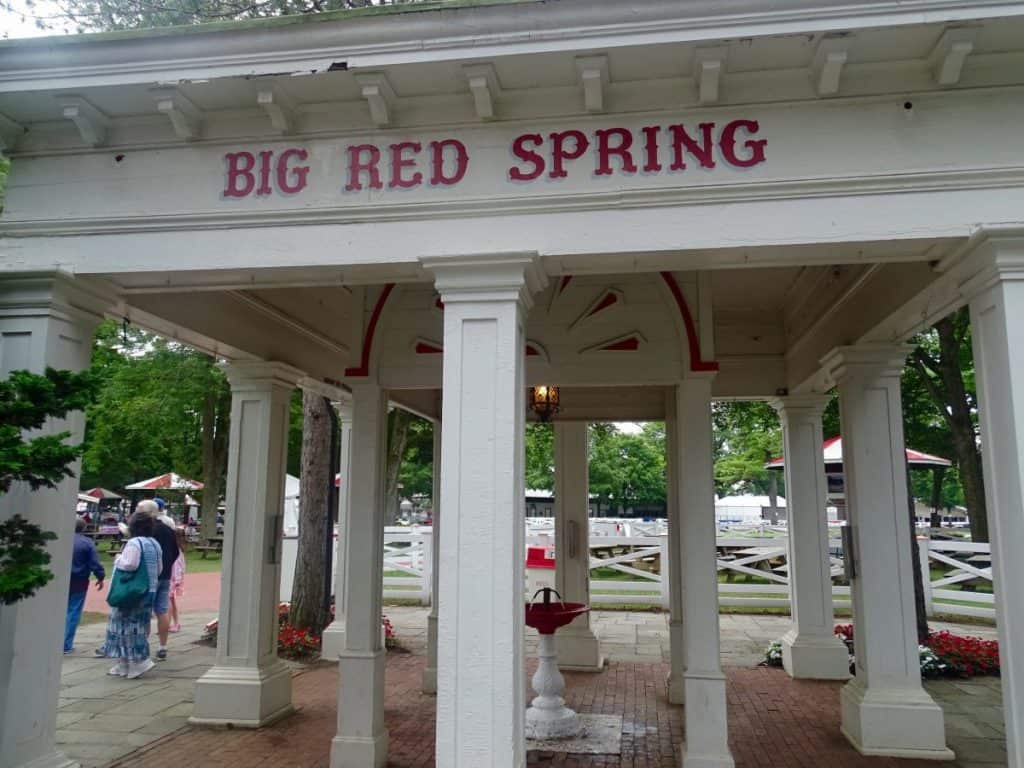
  • The Big Red Spring which has a fountain of mineral spring water- we were warned it has a peculiar taste, and sure enough, everyone in our group did not care for the taste of the water.

Would you like to save this?
We'll email this post to you, so you can come back to it later.

The track is open from 7am-10:45am each morning, and breakfast is served from 7-9:30am.  Many people line up for the 7am opening to reserve a picnic table for the day. It’s common courtesy that if you place an item on a picnic table or set up a blanket or chairs, no one will remove those items and you’ve staked your claim to the spot for the day. We even saw people putting blankets on benches around the area. The Backyard picnic area has approximately 950 tables available to the public, free of charge.

There are also three areas you can pay for premium seating in the picnic area: the Festival Tent area, with 48 tables for rent; the Big Red Spring Tent, a party space for 50 people; and the Miller Lite picnic area, which has tables and chairs for rent. There’s also a Shake Shack and Dunkin’ Donuts on site.
Around 10:45am, they ask everyone who has come for the morning to leave, and then reenter to pay the admissions fee if you’re coming to watch the races. After the walking tour, we had some free time, so we walked across the street to the National Racing Museum and Hall of Fame. You can read about our highlights here.

General admission is $5 and you can pay an additional $3 to gain access to the Clubhouse where there is a variety of reserved seating options: grandstand seats, tables, and more formal restaurants. We chose to pay to have a table for the day at the Turf Terrace, which provides shade, a tv kiosk where we could place bets, table service (there was a per person minimum for food) and best of all, a prime view of the track.

There are plenty of spaces to move around and walk if little ones are getting antsy in their seats. There is even a playground located in the East Grandstand, near the box office. Young children will probably like the picnic area best as they will have more space to move and you can bring in small tables, blankets, coolers, food, and any reasonably sized toys (like legos, books, board games). There are televisions mounded under “umbrellas” at just about every angle throughout the picnic area so you won’t miss a thing!


Similar Posts

  • | | |

    12 Ways to Explore theNew England Air Museum in Connecticut

    Located in the same area as Bradley International Airport and the National Guard base, the New England Air Museum has 90,000 square feet of exhibition feet spread across 3 hangars, and an additional outdoor space, to display 60 of the 110+ aircrafts in the museum’s collections. The museum library includes a collection of over 6,000 aviation related books, over 10,000 aviation manuals, and thousands of pieces of artwork, drawings, blueprints, and photographs.

    The museum has tons of open space to spread out and explore the 60+ aircrafts at a leisurely pace. Guests are able to peer through, look under, and sit in many of the aircrafts. However, what is most impressive, and truly priceless, are the docents, many of whom are veterans who flew the aircrafts on display. They are eager to share their adventures and explain how the aircrafts work, and they are incredibly patient with children.

  • | | | | | |

    The Amazing World of Dr. Seuss, Springfield, MA

    Springfield, Massachusetts, located about 90 minutes west of Boston, is known as the birthplace of basketball and is home to the Basketball Hall of Fame; a post on the Hall of Fame is coming soon. However, there are plenty of other places to visit if you’re in town; especially if you’re visiting with young children.   

    Since 2002, the Dr. Seuss National Memorial Sculpture Garden has been a popular spot for children to enjoy climbing and exploring 14 Seuss-themed sculptures.  Featured in a grassy “quad”, the sculptures are surrounded by five museums: the George Walter Vincent Smith Art Museum, the Springfield Science Museum, the Michele & Donald D’Amour Museum of Fine Arts, the Lyman & Merrie Wood Museum of Springfield History, and the brand new Amazing World of Dr. Seuss Museum.  Purchasing one ticket (or a membership) will allow you to explore all five museums and there is lots of free parking in nearby parking lots. 

  • | |

    Turkey Hill Experience in Lancaster PA

    Who loves ice cream? Who loves Turkey Hill ice cream? If you now have your favorite flavor in mind and you’re about to check the freezer for a cartoon, then put a visit to Turkey Hill Experience on your next road trip itinerary! While it’s not the production site of the company, there is still plenty of ice cream and sweet teas available for tasting and plenty see and do.

  • |

    Touring the US Naval Academy in Annapolis, Maryland

    Founded in 1845 by George Bancroft, Secretary of the Navy, the US Naval Academy, located in the heart of Annapolis, Maryland, is the college that trains officers for both the Navy and Marine Corps. What started as a 10 acre campus with 50 students and 7 faculty members has expanded to a 338 acre campus with over 600 faculty (half civilian and half military) and 4,500 students called Midshipmen (women are called Female Midshipmen), copied from the British naval ranking. Women were first admitted in 1976 and today, represent approximately 30 percent of Midshipmen. Each year, the Academy accepts approximately 1200 students, approximately 10% of applicants. All Midshipmen are on scholarship and are required to serve a minimum of five years in the Navy or Marine Corps following their four year college experience, culminating with a Bachelors of Science degree. 

    Over 80,000 people take guided tours each year, and over two million people visit the Academy each year. Our guided walking tour is one of the BEST tours we have ever taken and we think it is a must see and do when you’re exploring Annapolis, or driving through to Washington DC or Baltimore, Maryland, both a half hour away.

  • | | | | | |

    10 Ways to Have Fun at the Vermont Institute of Natural Science in Quechee, VT

    The Vermont Institute of Natural Science (VINS) in Quechee, Vermont is a 47 acre complex that includes indoor and outdoor exhibits, the Forest Canopy Walk, three hiking trails, a Meadow Walk, a Center for Wild Bird Rehabilitation, adventure playscape, and plenty of classrooms and exhibition spaces. Opened in 1972, the programs featured at VINS focus on conservation, preservation, and rehabilitation of wildlife. The center is the perfect, family friendly way to explore nature and learn about the local wildlife.

  • | | | | | | | | |

    10 Things to Do with Kids in Sioux Falls, SD

    Our recent visit to Sioux Falls, the largest city (population wise) in South Dakota, was suppose to be a quick overnight, with dinner by the famous falls. But the more we researched, the list of places we “had” to visit grew longer and the more we crowdsourced, the list of places where we “needed” to dine for a meal or special treat grew larger. We ended up spending almost three full days of fun in the southeastern part of South Dakota and having so much fun!

    We loved Sioux Falls for all the public parks, green spaces, and walking and biking trails; the rich history and preserved historic homes and buildings open to the public; the daily calendar of events tailored to families at the zoo and science center and butterfly garden and aquarium; and the kind, friendly people who ALWAYS stopped to let the pedestrian tourists cross the street (such a pedestrian friendly city- motorists actually do stop!) and who always had a tip about getting around road work, a recommendation for the best ice cream flavor, and a personal story of hometown pride.