The Green Bank Observatory and Science Center in West Virginia
This week, we’re spending time in Snowshoe Resort in the Allegheny Mountains of West Virginia. Our main itinerary is a family reunion, but we always enjoy finding new places where we can learn about the area. Every post I read had the Green Bank Observatory at the top of a “must see” list and we’re super glad we went.
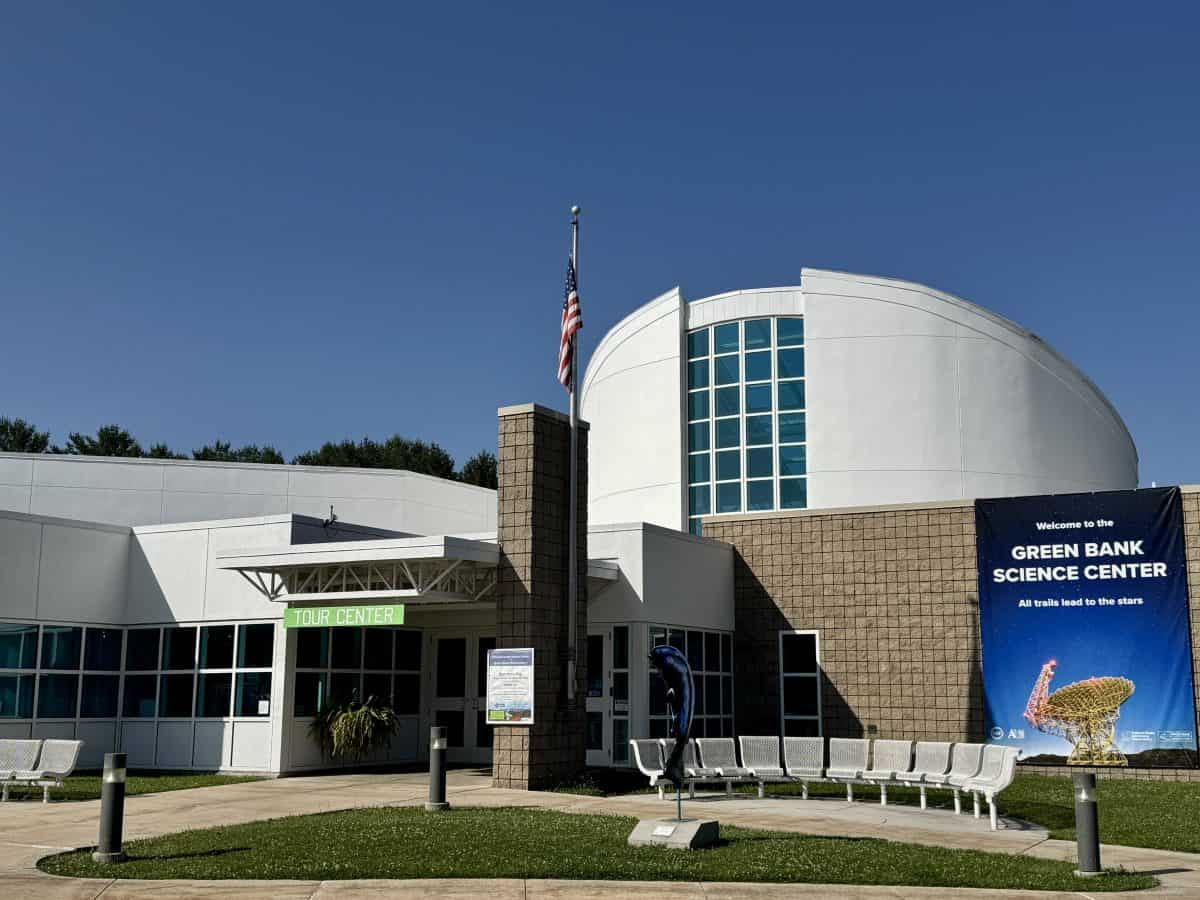
Founded in 1957, the Green Bank Observatory is America’s first national radio astronomy observatory. The area of Green Bank, West Virginia was chosen for its valleys protected by the Allegheny Mountains, which help prevent disruptions from radio and television station transmissions. Construction for the site began in 1958 and the first telescopes were used for observations in 1959. Since then, several telescopes have been built on site and several more have been added from other parts of the country. The most well known telescope is the Robert C. Byrd Green Bank Telescope, the world’s largest steerable radio telescope. It took ten years to build and opened in August of 2000. Former West Virginia Senator Robert Byrd secured federal funding for the building of the Telescope and it is named in his memory.
Important Notes Ahead of a Visit:
- Cell phone service is very spotty getting into the area of Green Bank Observatory and non-existent once on property. Be sure to download maps ahead of time and have anything of importance printed out.
- No digital photography of any kind can be taken while on the guided bus tour or while walking around the complex (photography inside the Science Center is allowed). Guests can use disposable cameras (available for purchase in the gift shop) or their own analog camera. Guests are asked to place all electronic devices and car key fobs in a Faraday Cage aboard the bus.
Travel Tips:
Ways to Explore the Green Bank Observatory:
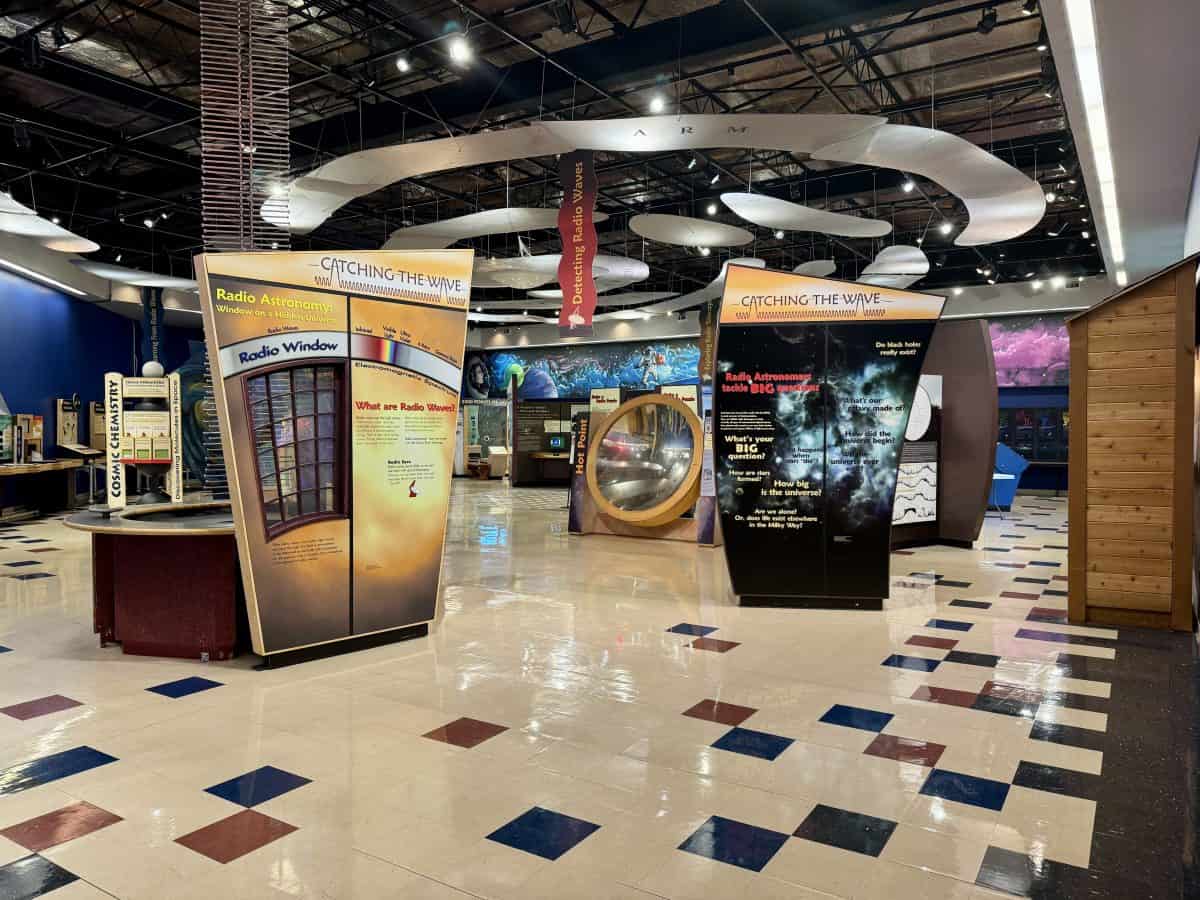
Inside the Exhibit Hall:
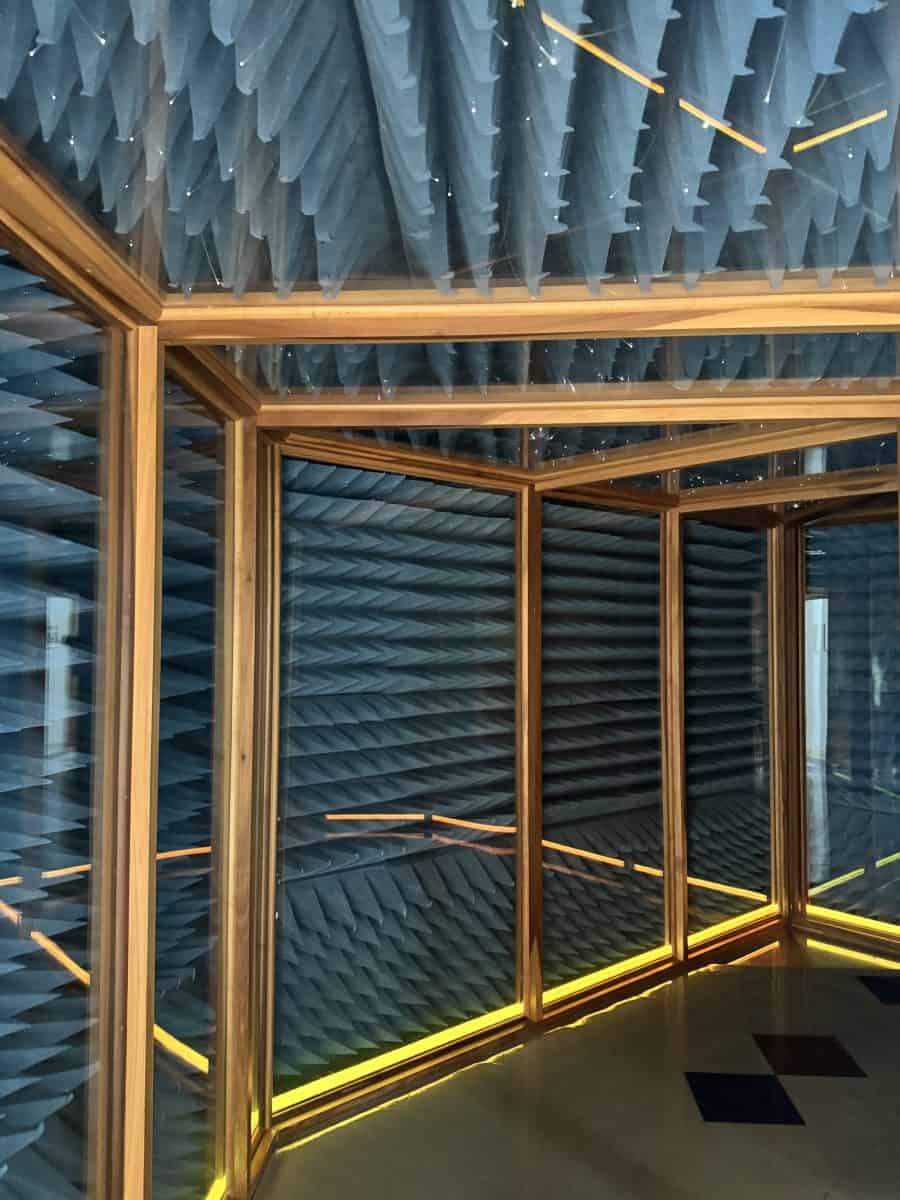
- Walk through the walkway called an “Anechoic Chamber” and see how soundproof it is (it also does a good job of blocking radio waves!).
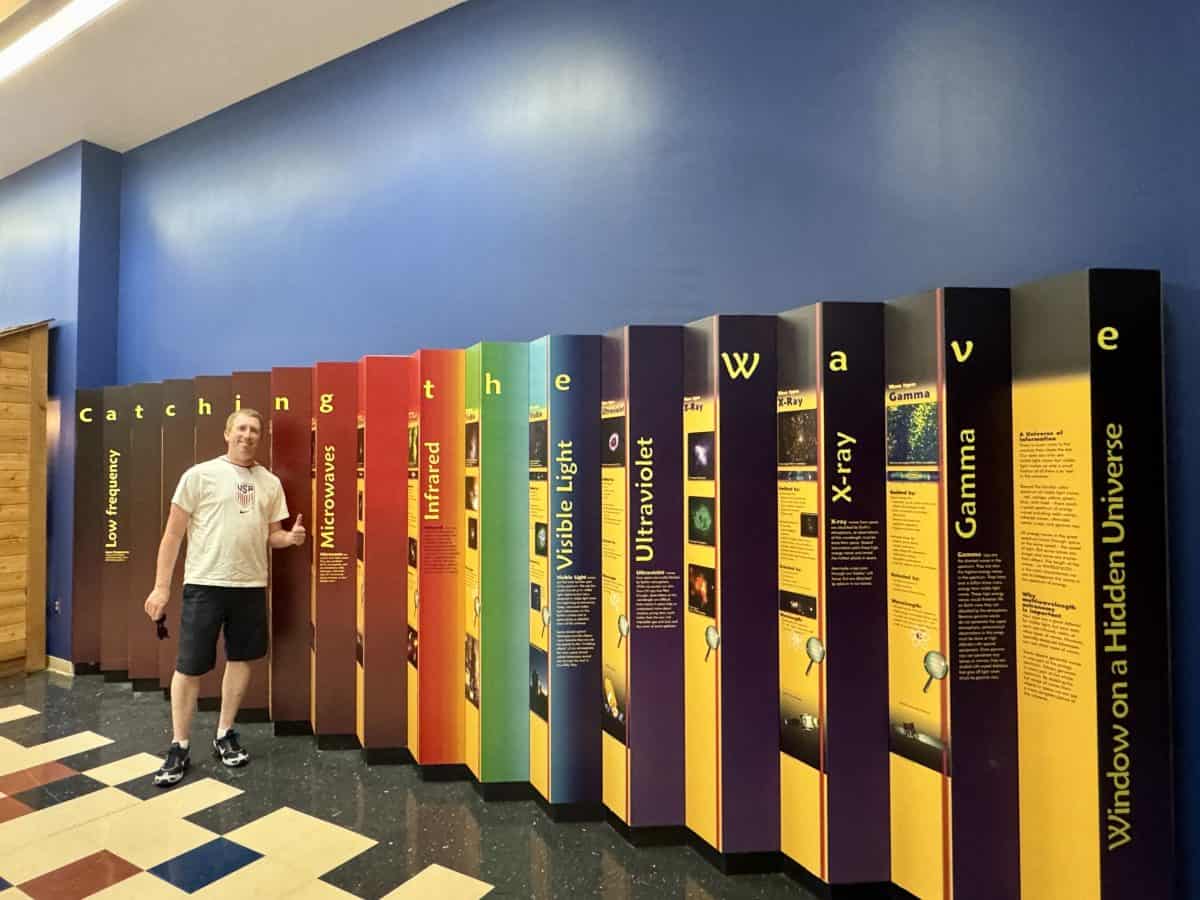
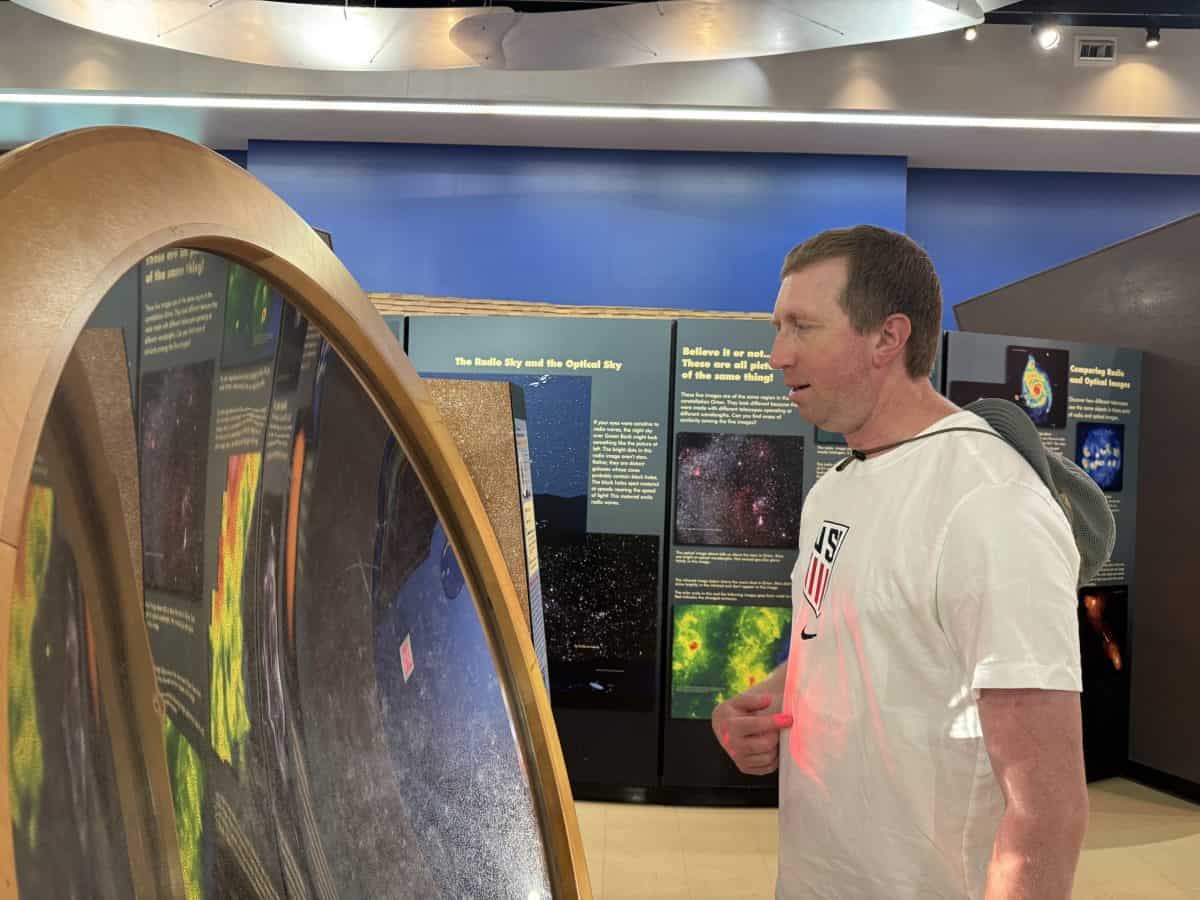
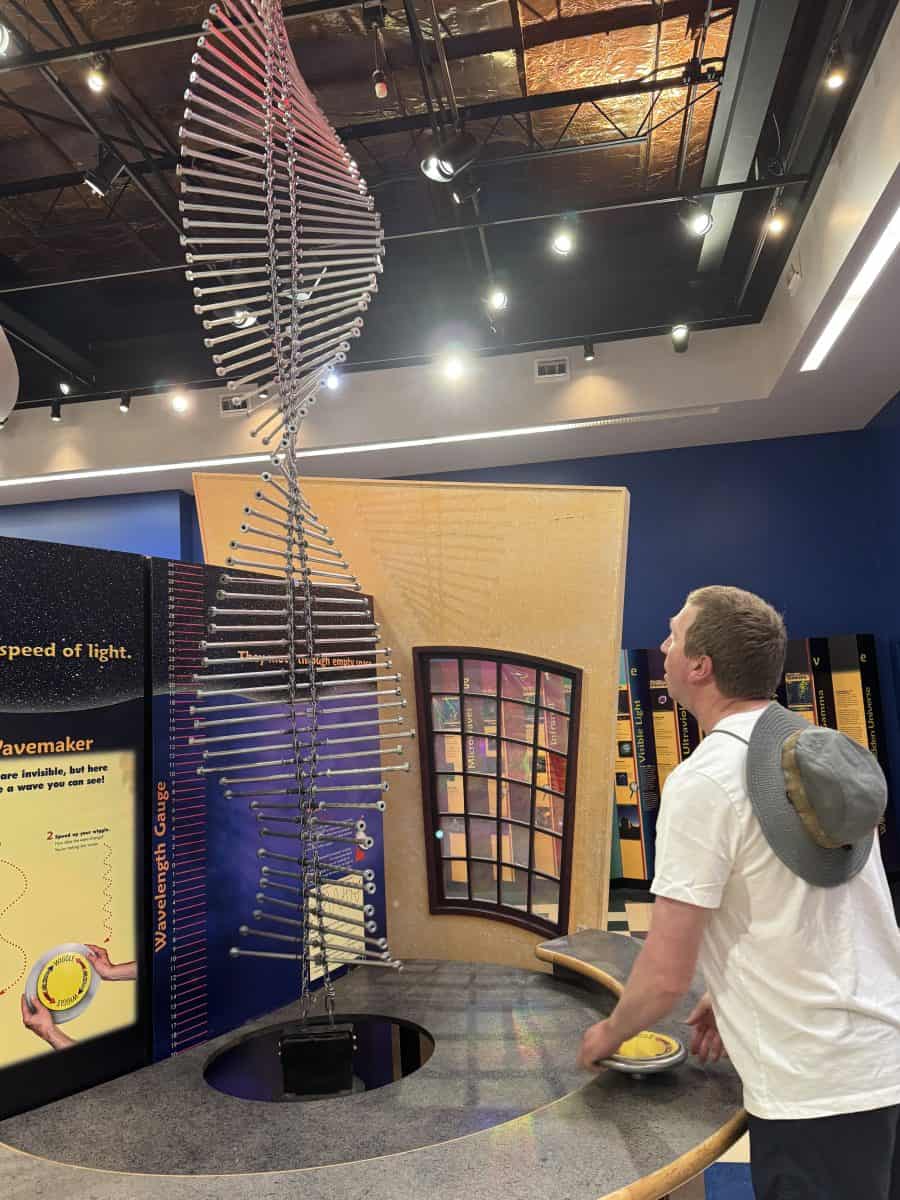
- Learn about the electro-magnetic spectrum in the Catching the Wave exhibit.
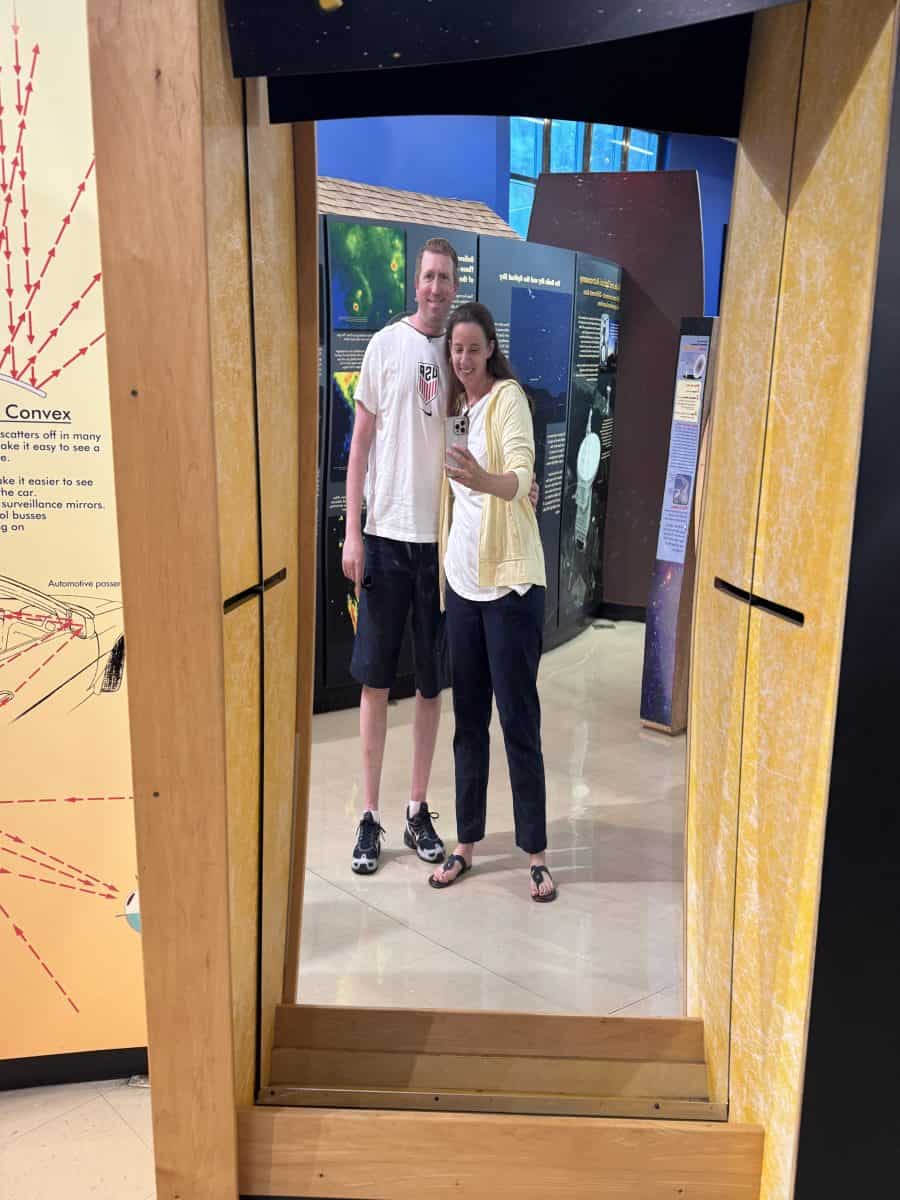
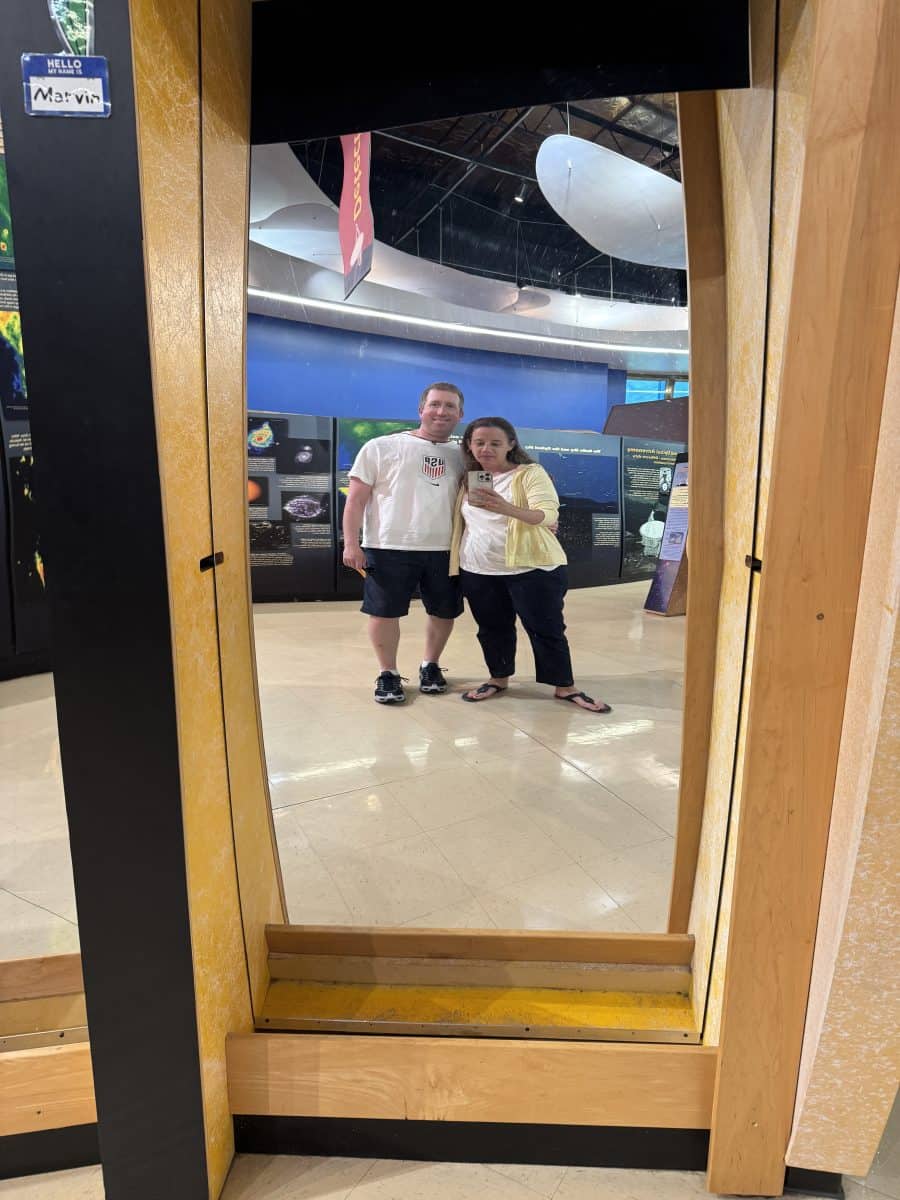
- Change your image by peering into the Fun House Mirrors (flat vs concave vs convex mirrors)
- Find the Hot Point on the Parabolic Mirror,
- Assemble the radio image of the sun puzzle pieces.
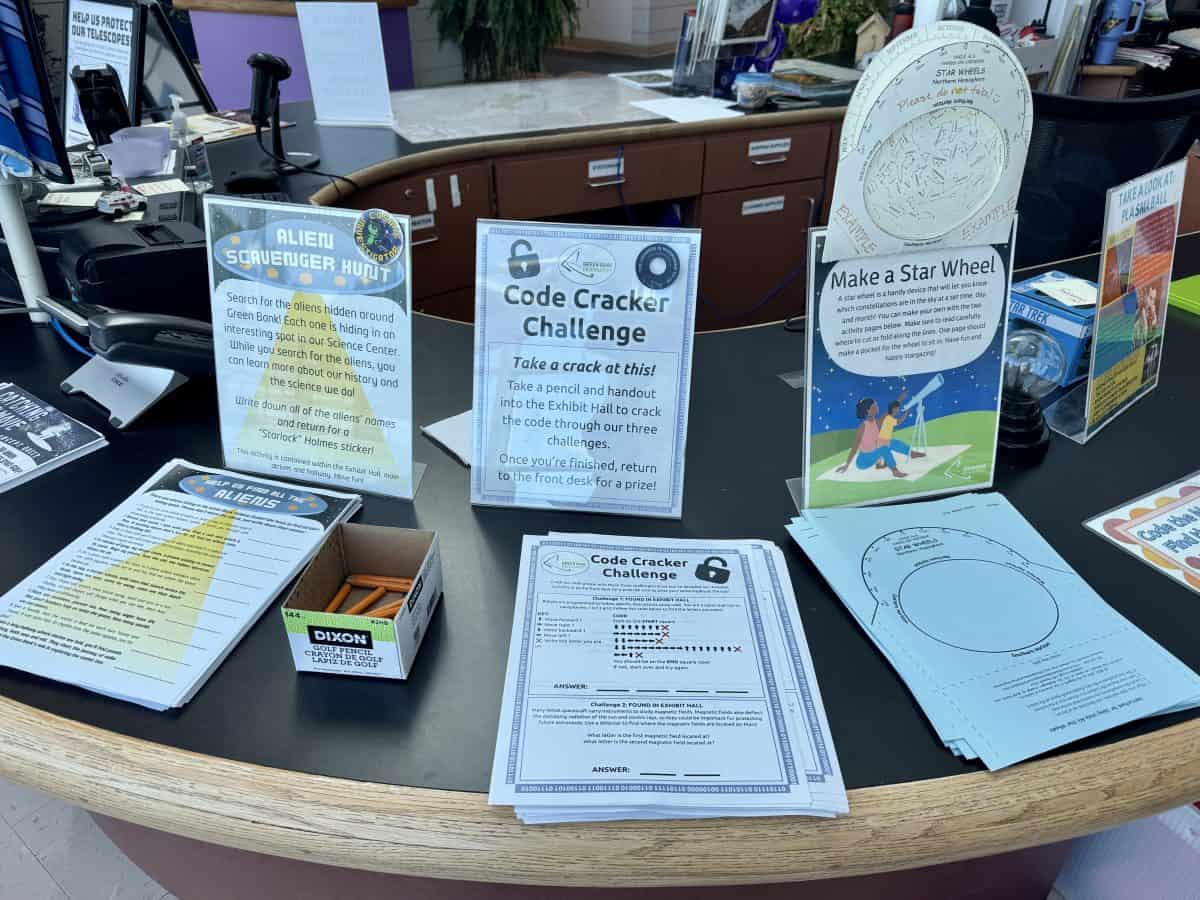
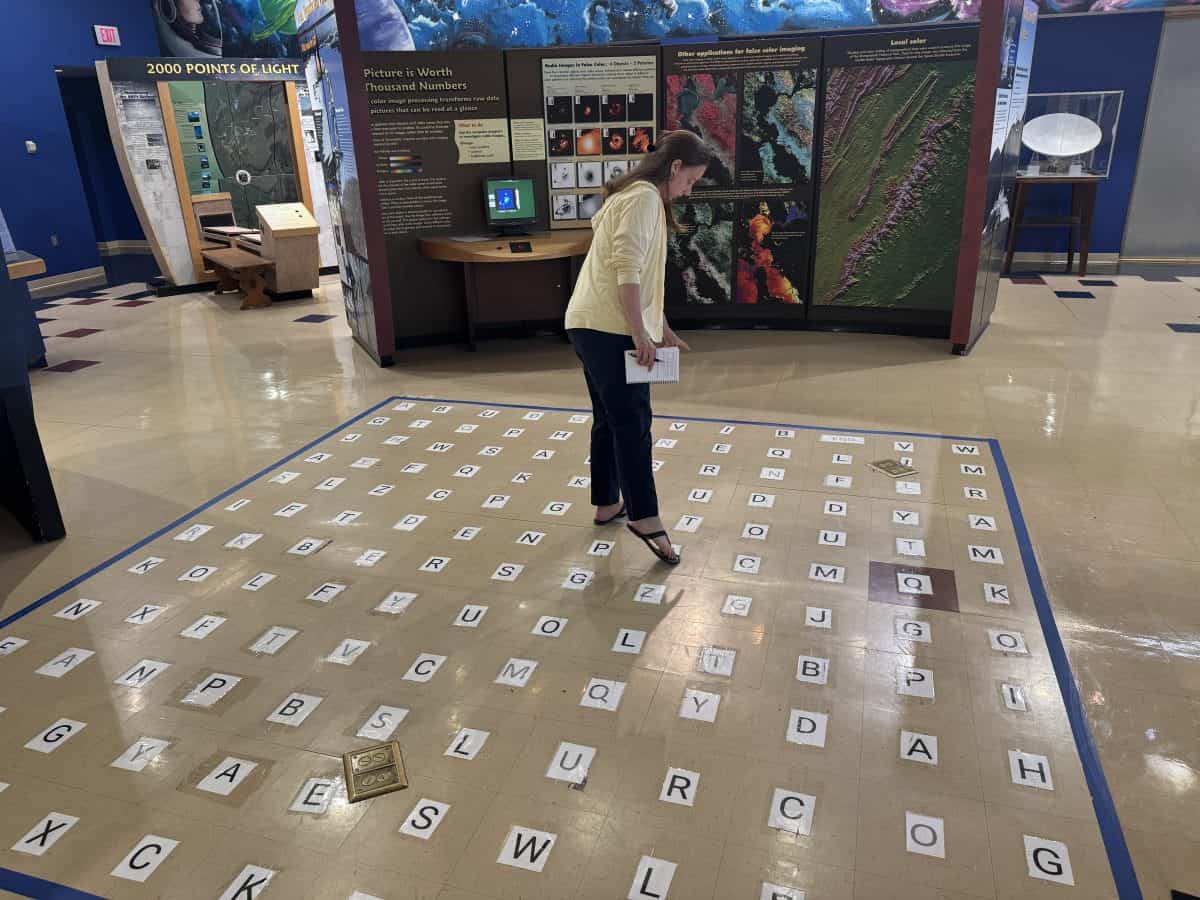
- Crack the code on the floor puzzle.
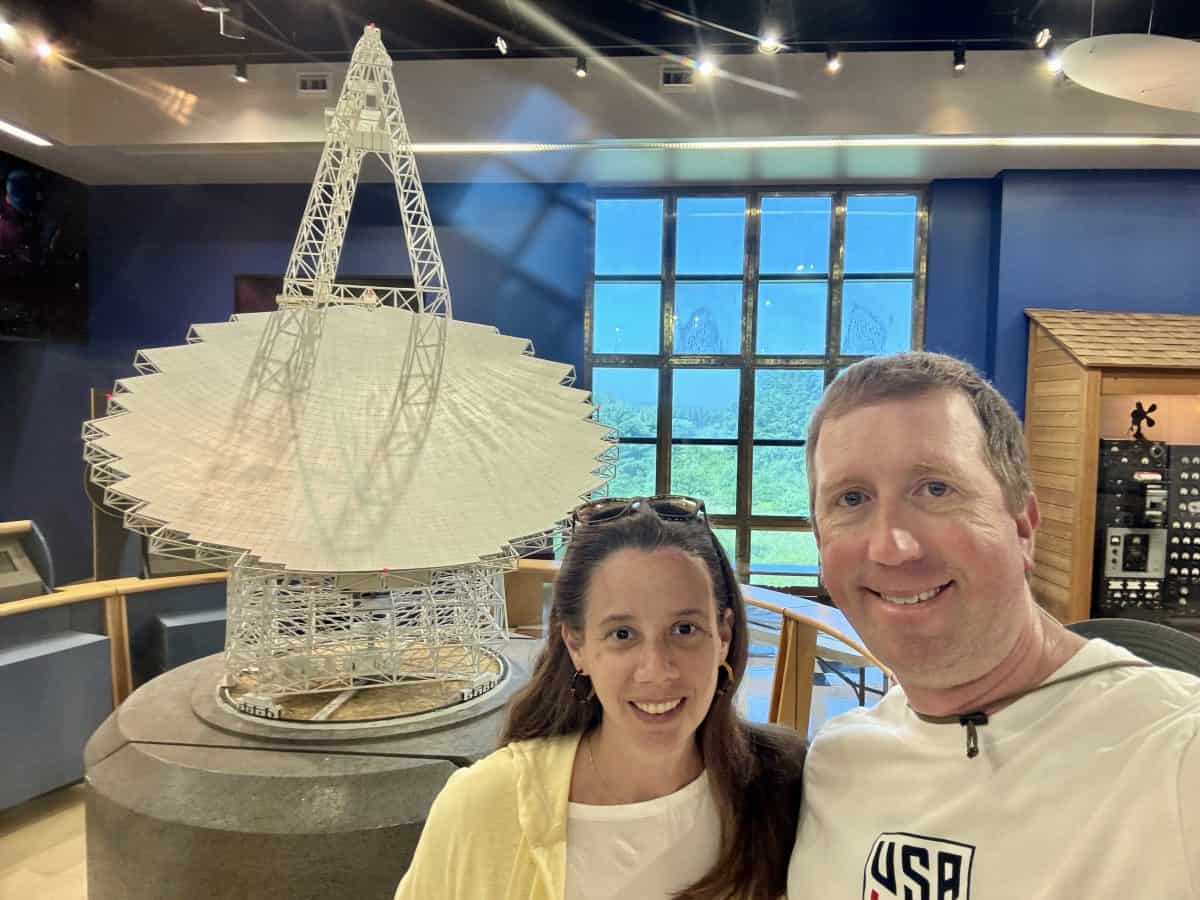
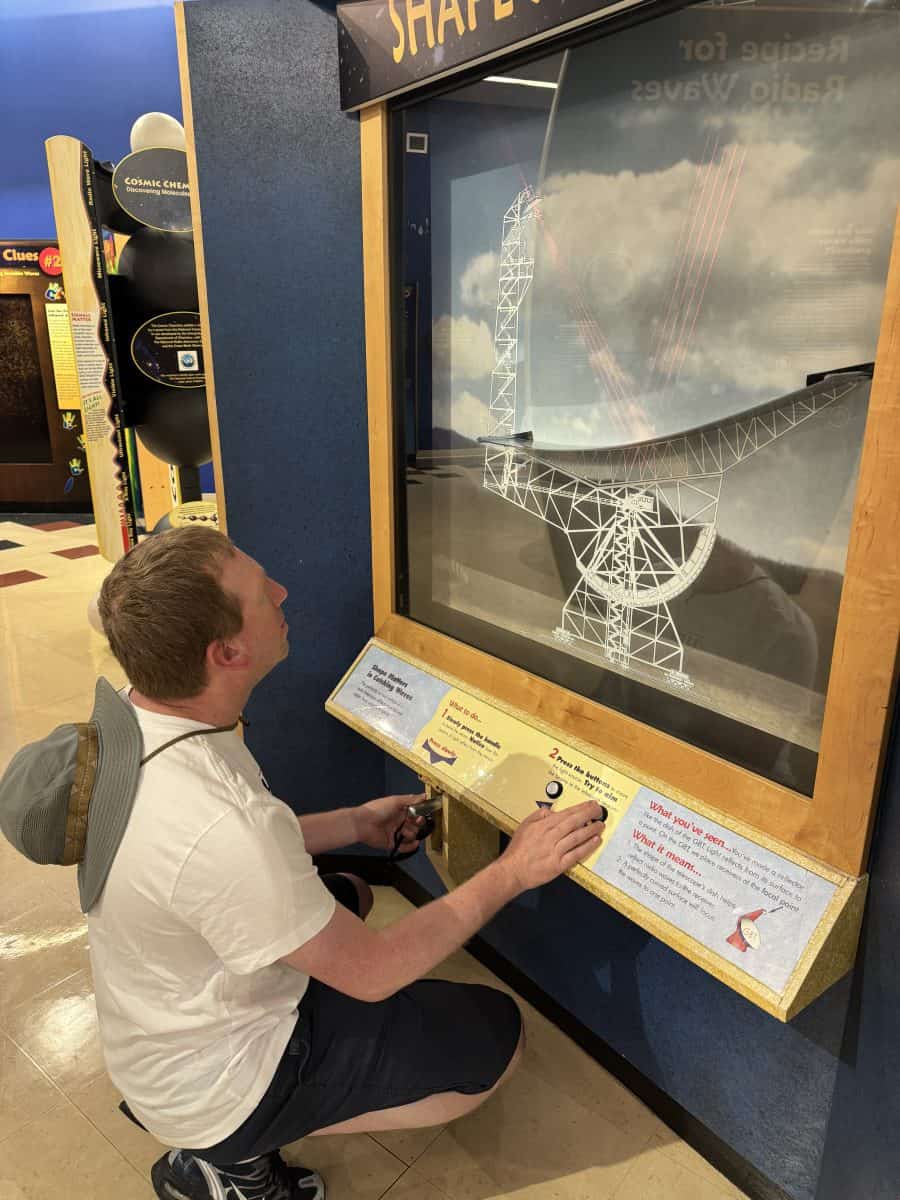
- Rotate the replica radio telescope.
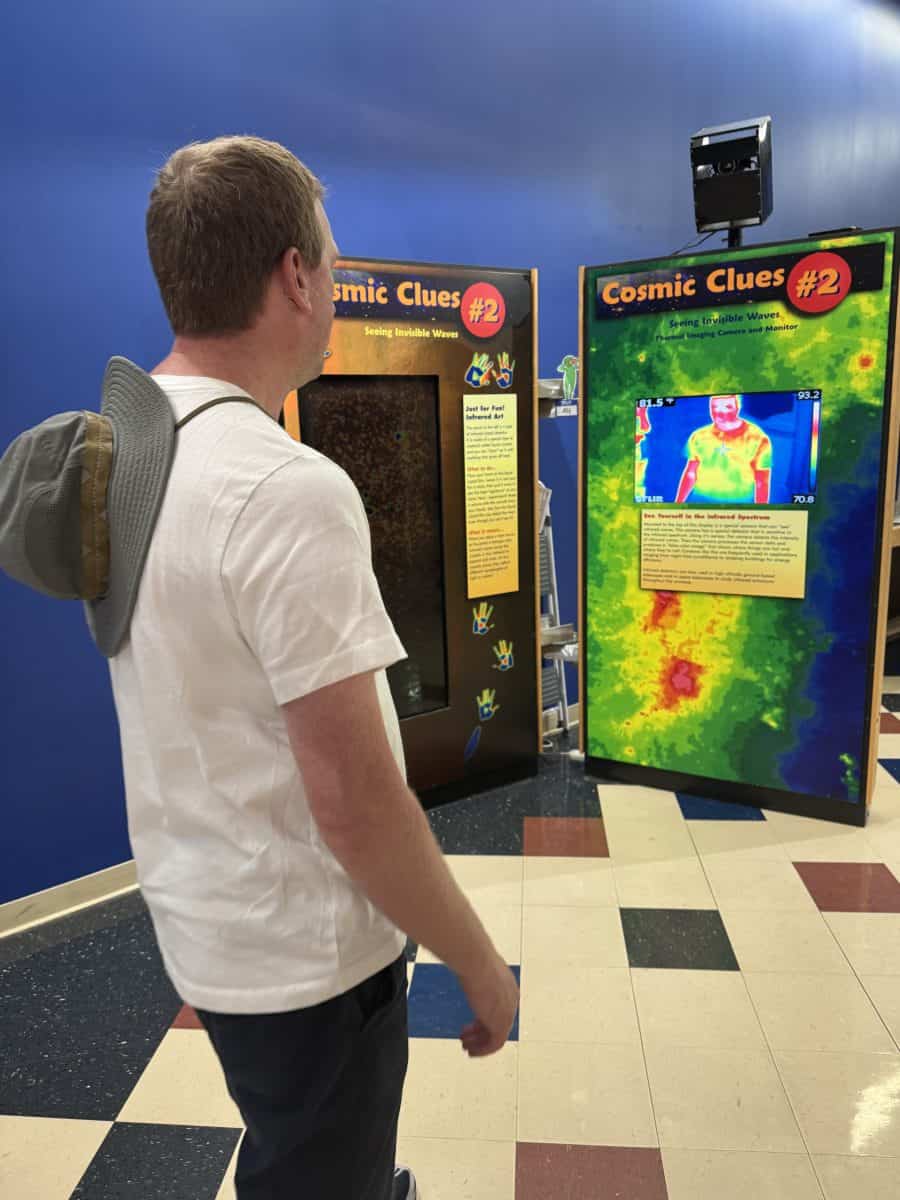
- View thermal imaging using infrared spectrum.
- Light up locations of various Green Bank Observatory telescopes on the large map of the area.
- See how fast you can crank the pulsar.
- Compare the smell of the surface of Uranus versus a cloud in the constellation of Taurus and see which one you prefer (we think it’ll be Taurus!).
- Spin the racks of rods to see how high and low frequency waves affect wavelength.
Bonus: The toddler crew will like the quieter Launch Pad play area with a book nook.
Would you like to save this?
Guided Tour Bus: The tour starts in the auditorium with an introduction from a staff member about the history and 10 minute video highlighting the evolution of the Center and impressive statistics of the telescopes. Visitors then hop aboard an air conditioned/heated bus with a docent around the property. Make sure you don’t miss:
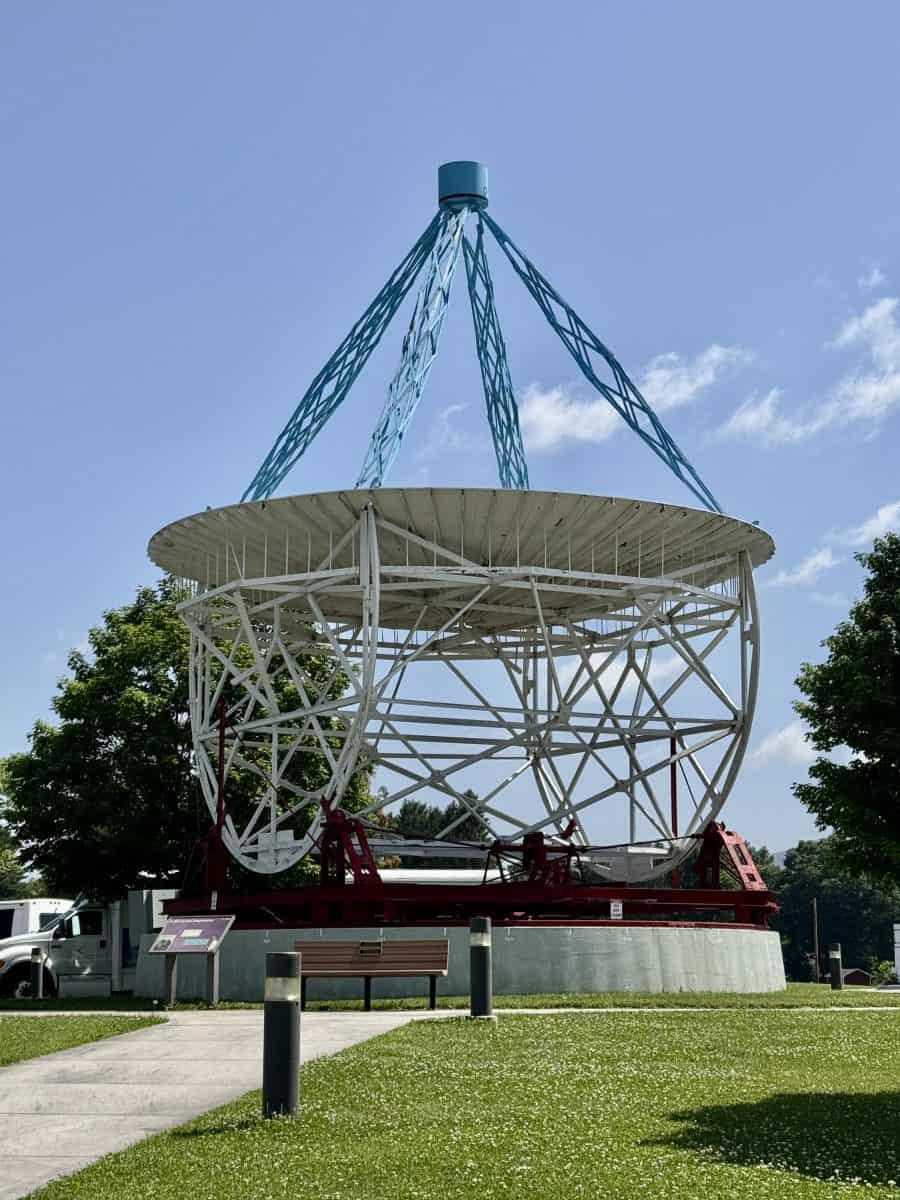
- The original Reber Radio Telescope on display outside the Science Center. The world’s first purpose-built parabolic radio telescope, it was in use until the 1940s when Grote Reber donated it to the US government. The telescope was declared a National Historic Landmark in 1989.
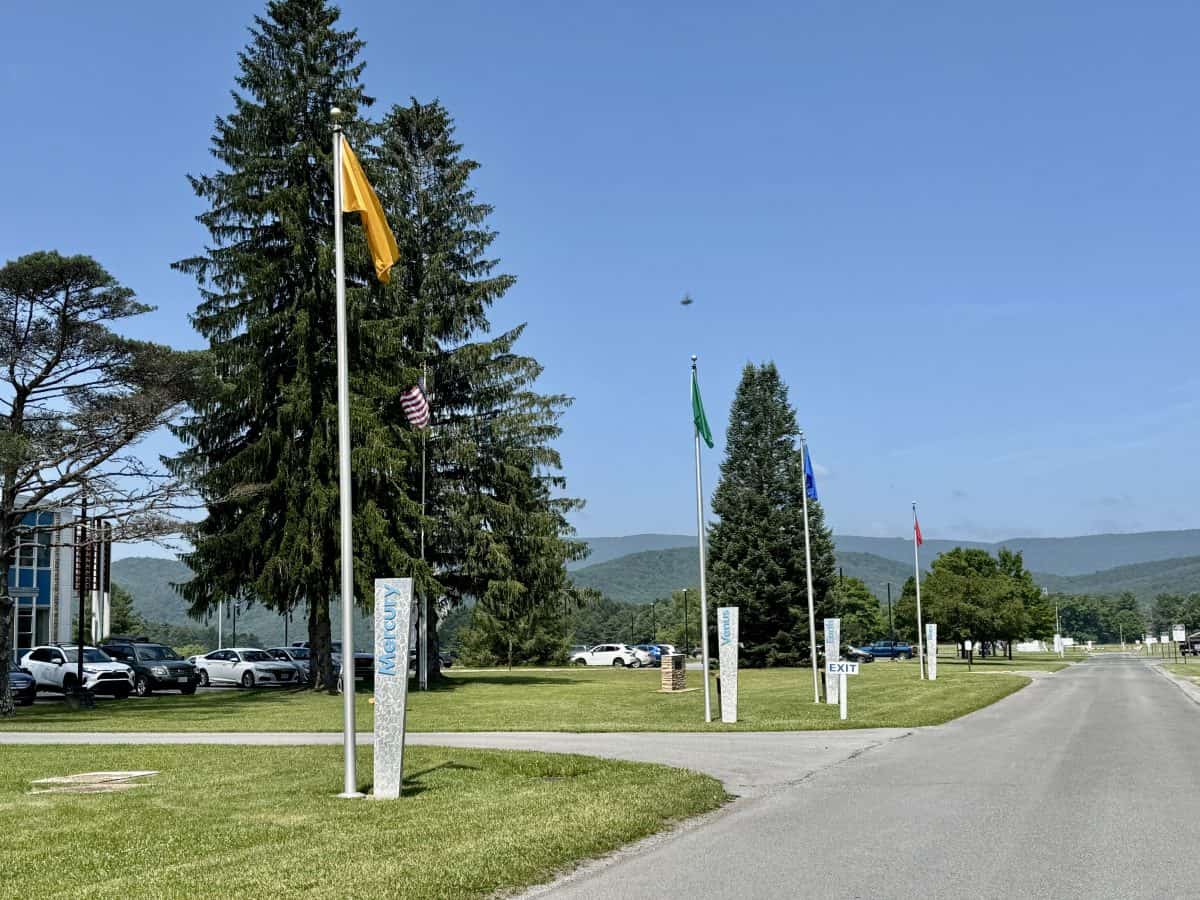
- The scale model of the solar system, displayed by flags on display, measured by one foot on land equalling three billion feet in space.
- Various weather stations that help monitor drastic changes in weather patterns that can affect data and research.
- A variety of telescopes ranging in size from 20 feet to 85 feet in diameter. Each telescope can be reserved for research and observations from credentialed individuals from around the world. Be sure to look for a variety of unique features: some telescopes rest on wheels for easy moveability, one telescope has its own moveable tower to access it from 40 feet off the ground since it has no stairs, one telescope was built in the 1960s to study the possibility of extraterrestrial life.
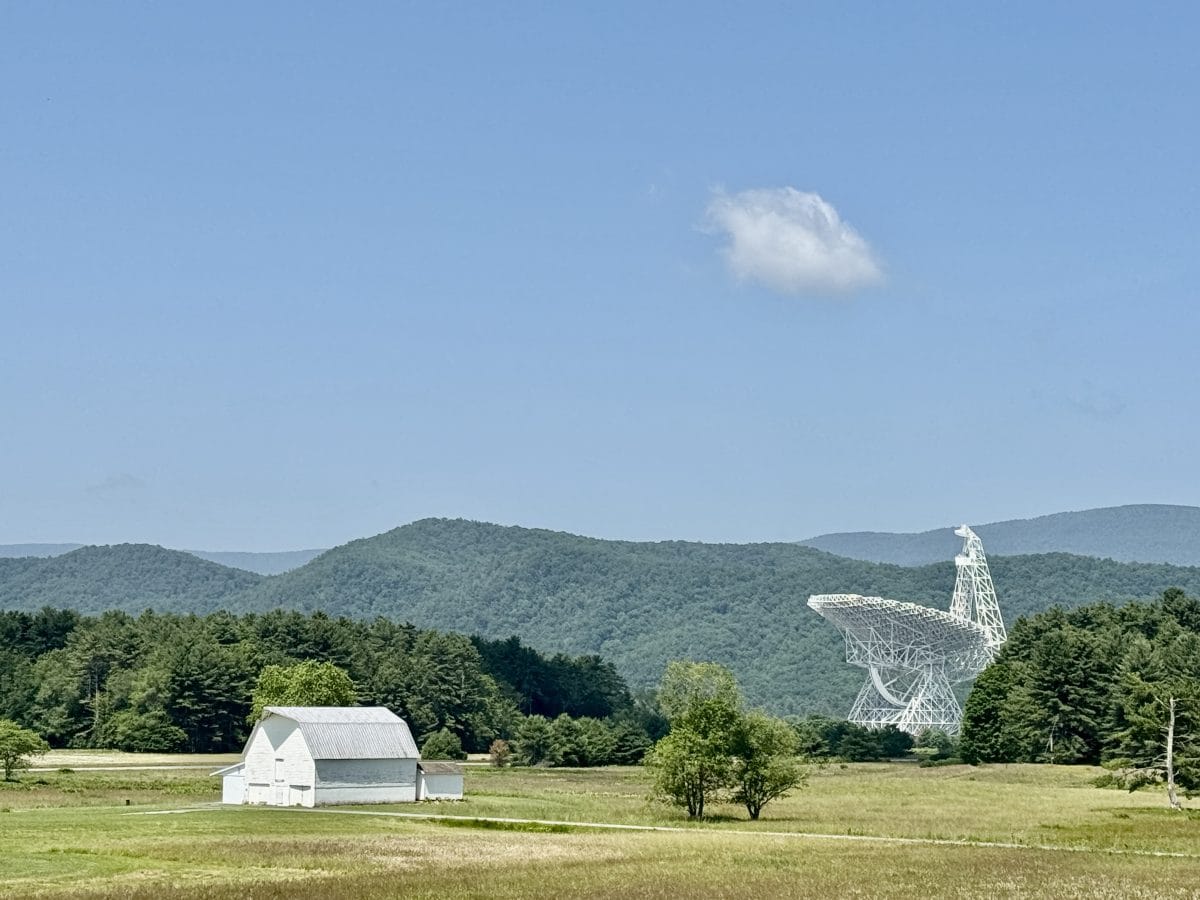
- The Green Bank Telescope, the world’s largest steerable telescope. The closest visitors can get it outside the security fencing, where signage showed just what a cell phone would look like if you did try to take one. The 485 foot telescope (that’s taller than the Statue of Liberty) is made up of 2,004 individual plates (all the size of a queen size mattress) and weighs 17 million pounds; yet it takes less than nine minutes for the telescope to rotate 360 degrees. The reflector is almost 2.5 acres in area.
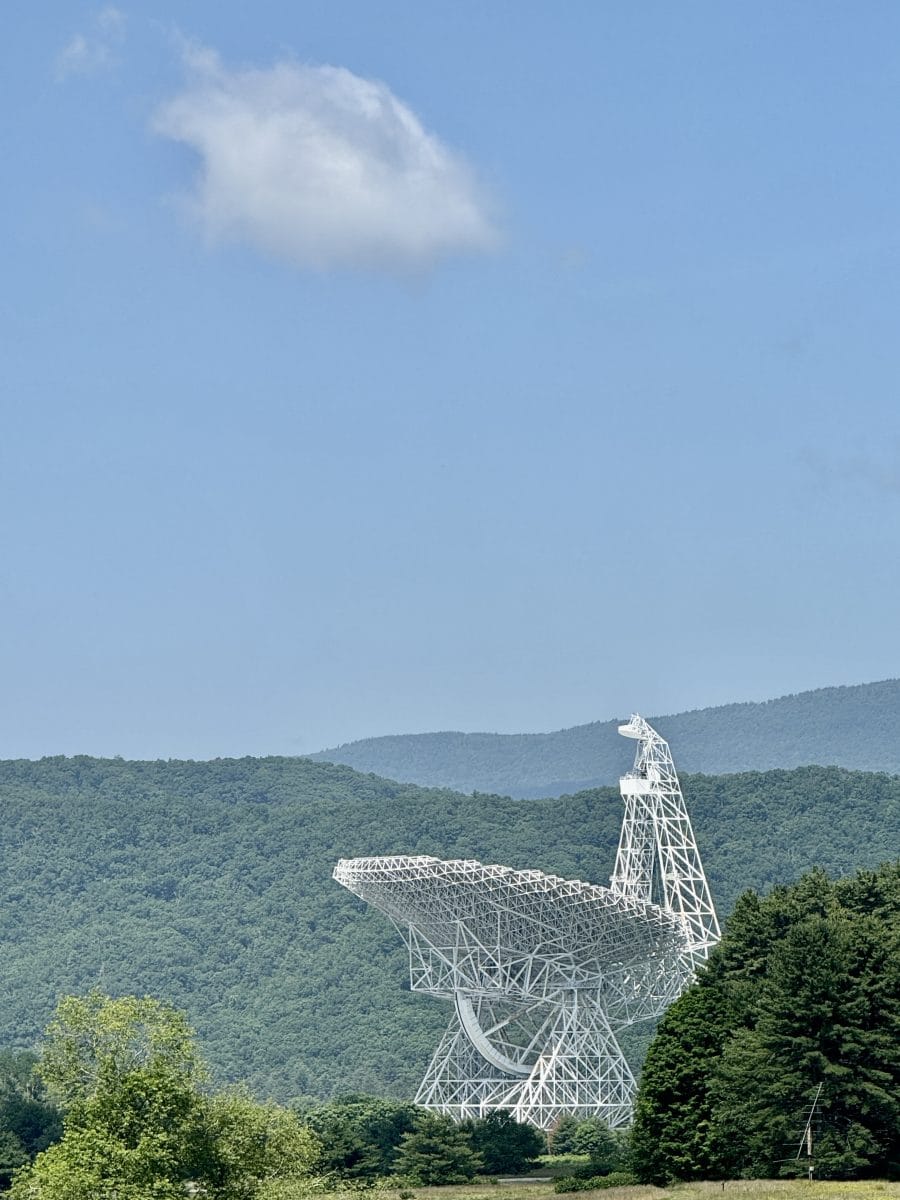
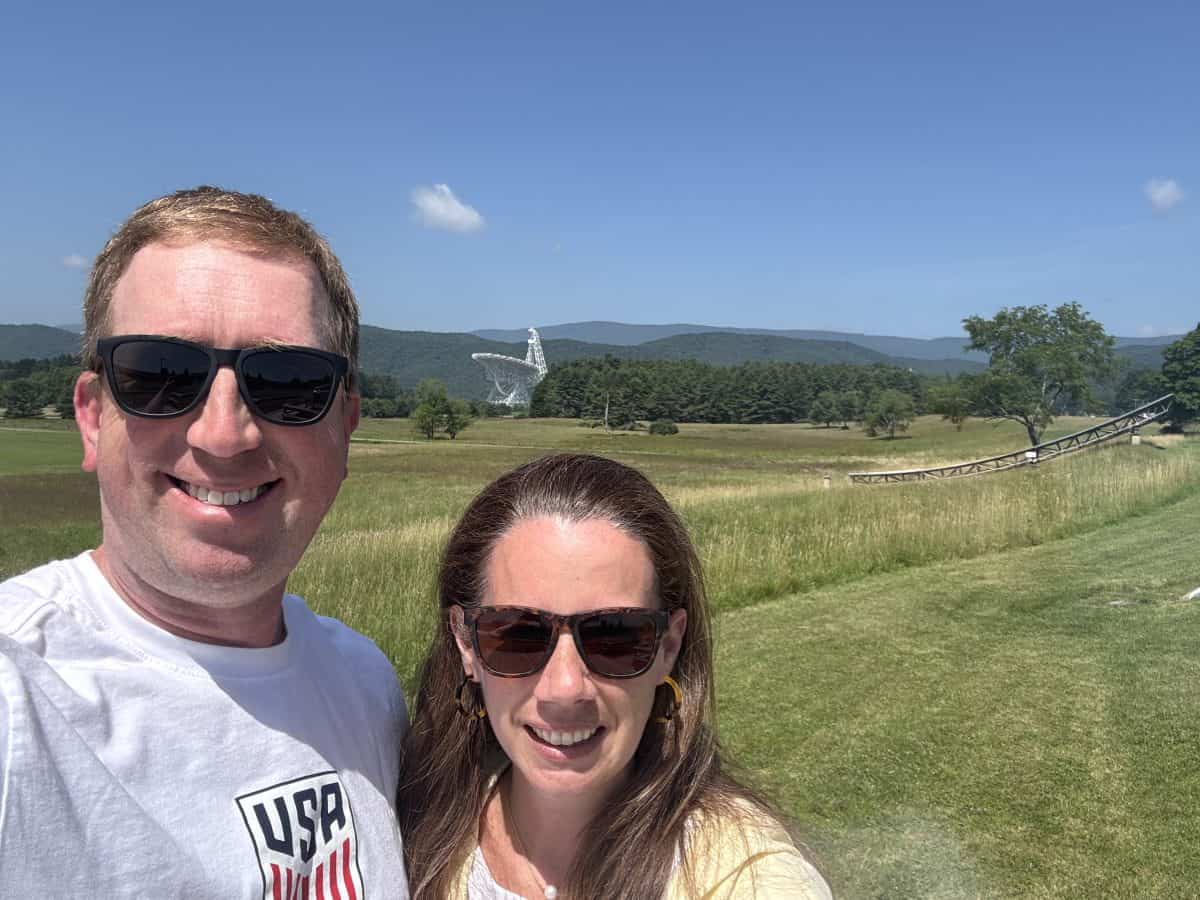
Observatory Deck: An easy walk from the Science Center, the wooden observatory deck is the closest visitors can get for personal electronic photos of the Green Bank Telescope. There is parking available in front of the observation deck.
Hiking and Biking: The entire 2,700 acre property is open to the public (except for designated areas around the telescopes) with lots of hiking and biking trails- see the map here. Be careful of some poisonous plants (found on this brochure). The grounds are also home to animals ranging from bears, foxes, and deer to owls, snakes, and birds.
Looking for other adventures in West Virginia. Check out our full feature of the Greenbrier Resort, just over an hour’s drive from Green Bank.
Disclosure: We were given a media pass for a guided bus tour; all opinions expressed are my own.