20 Ways to Have Fun at the Museum of Life and Science in Durham, NC
On a recent visit to Durham, North Carolina we spent a wonderful morning exploring the impressive Museum of Life and Science in the Northgate Park neighborhood of Durham. It’s easy to see why the Museum of Life and Science is consistently ranked as one of the most popular attractions in Durham, and one of the top museums in North Carolina.
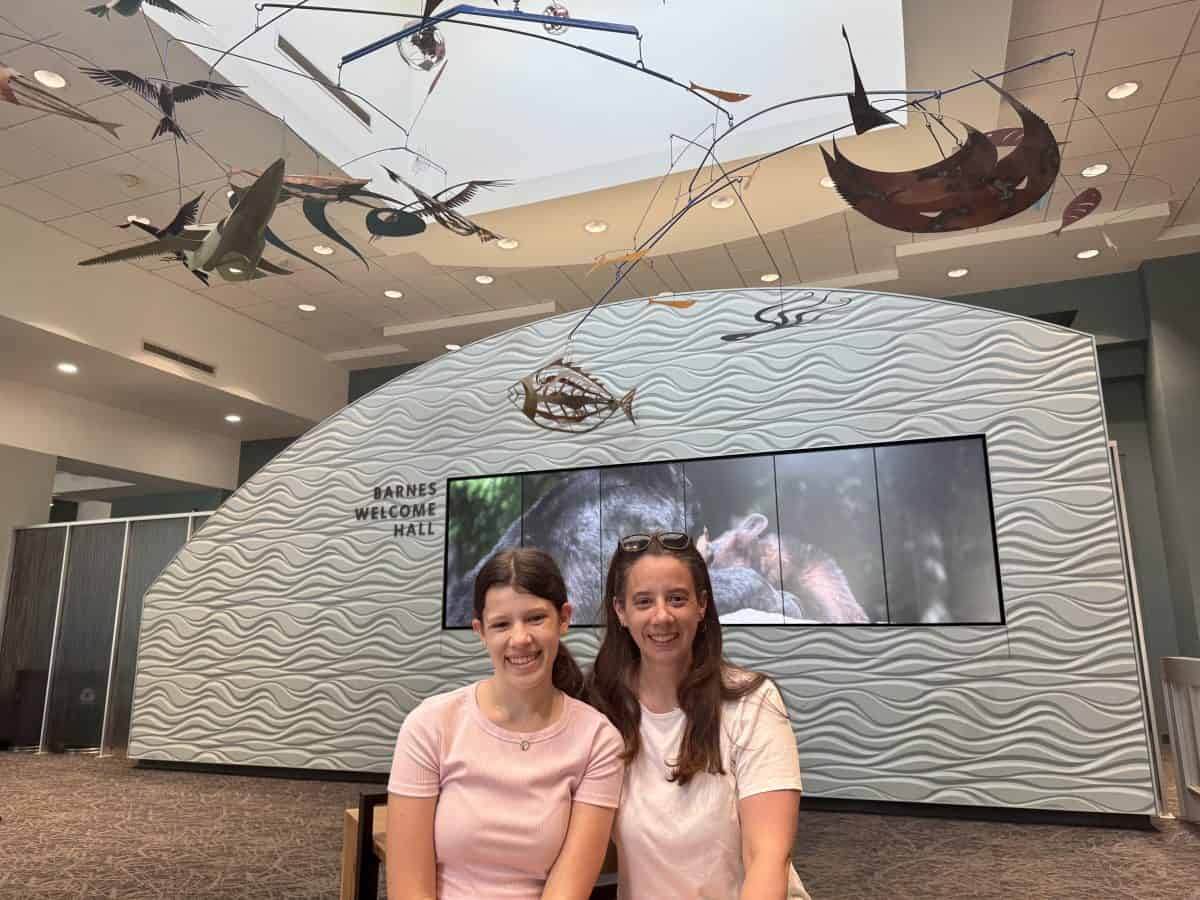
Begun as The Children’s Museum in 1946 with a small nature center and preschool, the museum has moved and expanded many times over the past (almost) 80 years, and is now an 80+ acre campus with miles of trails that include popular outdoor exhibits such as the Farmyard, Dinosaur Trail, multiple animal habitats, Earth Moves, and Hideaway Woods and indoor exhibits including a three story Butterfly Conservatory, Aerospace Center, and native North Carolina animal habitats.
You’re never too old to enjoy seeing animals up close, testing scientific principles and formulas, climbing among the trees and splashing in a river, and learning something new; that’s why we’re so glad we had the chance to explore this engaging museum campus. We think the Museum of Life and Science is perfect for ANY age and a must see when in Durham (or even making a stop in Durham).
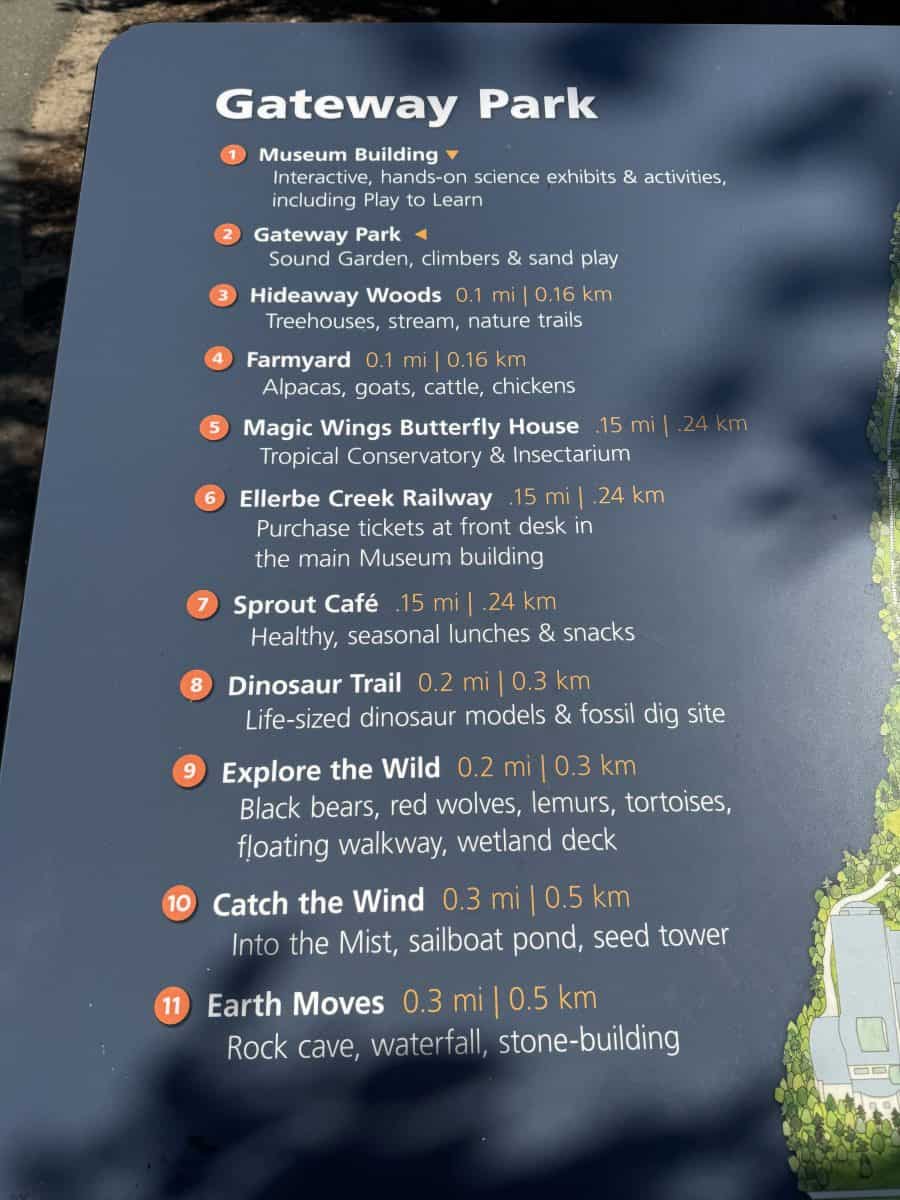
Travel Tips:
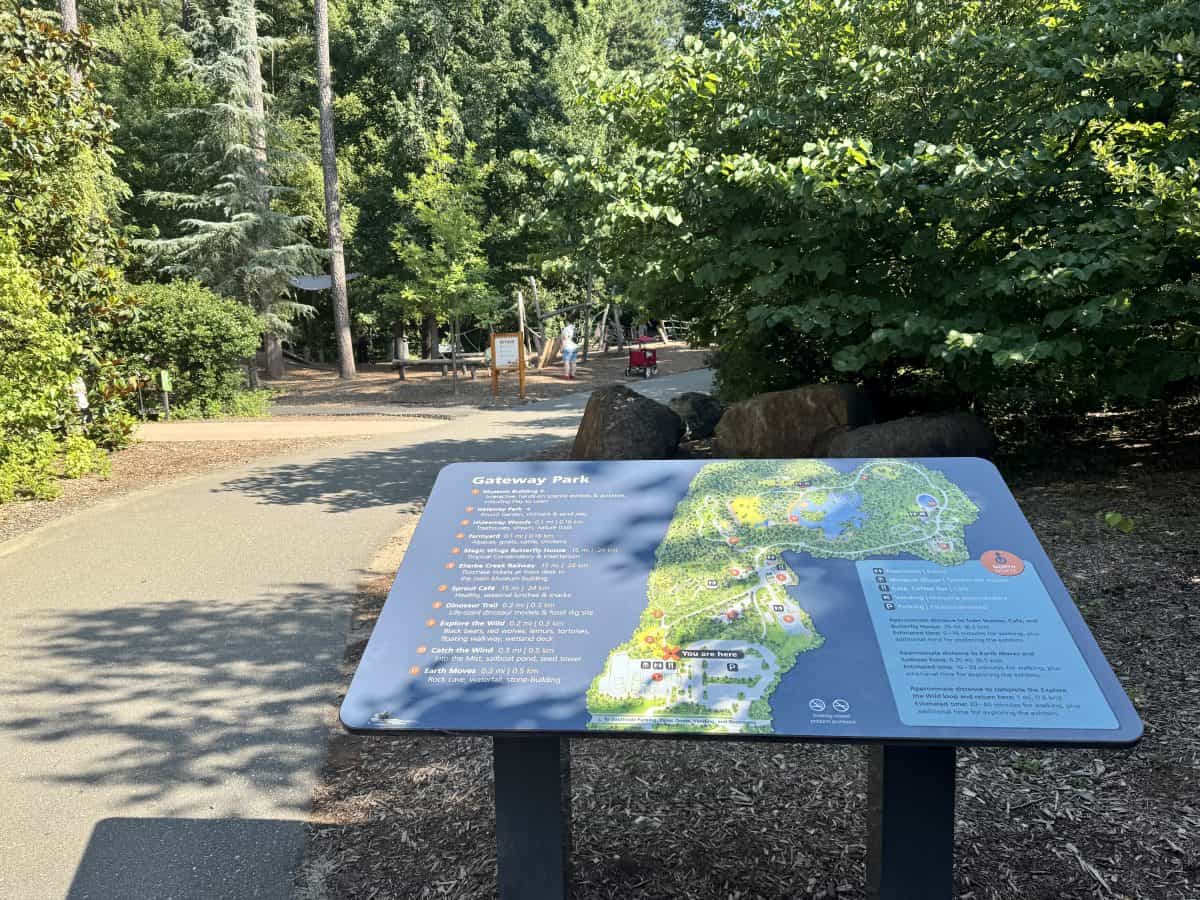


20 Ways to Have Fun at the Museum:
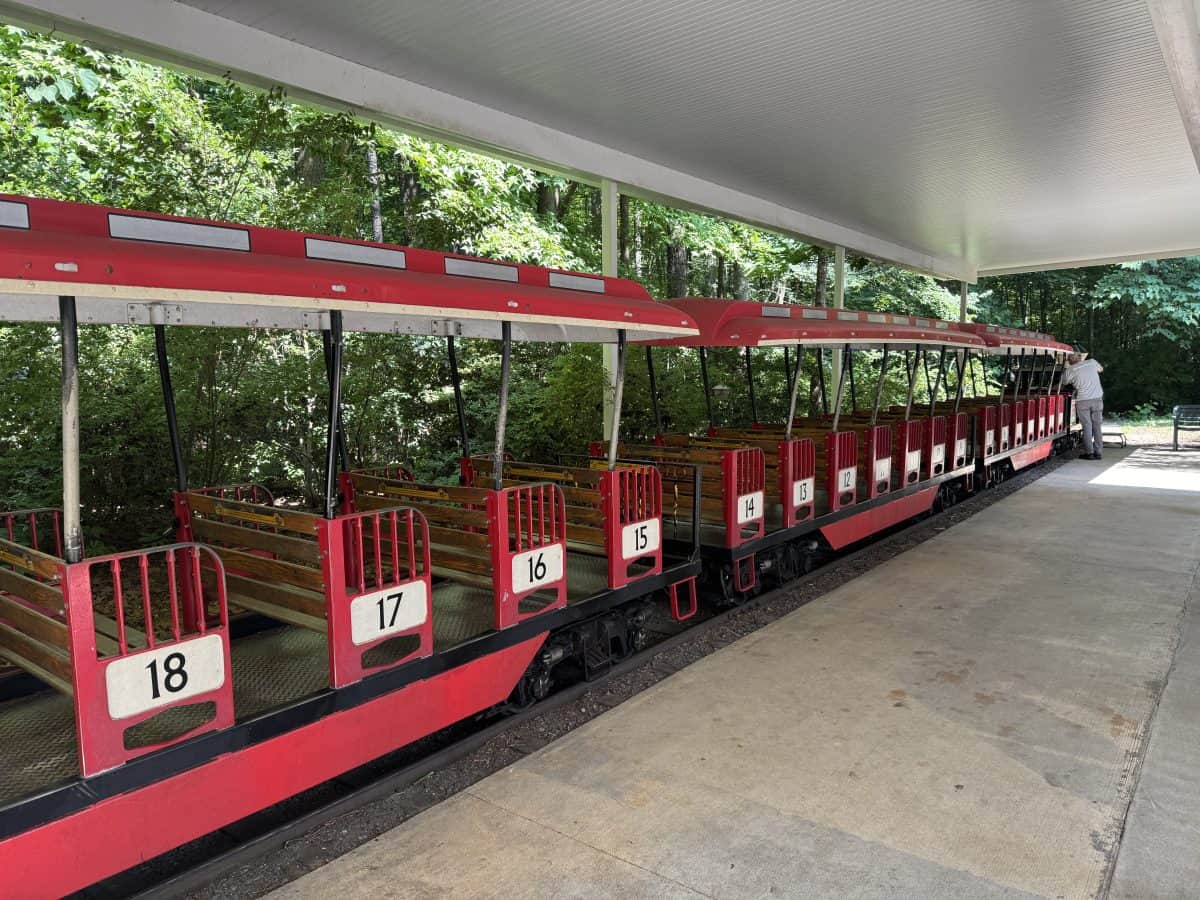
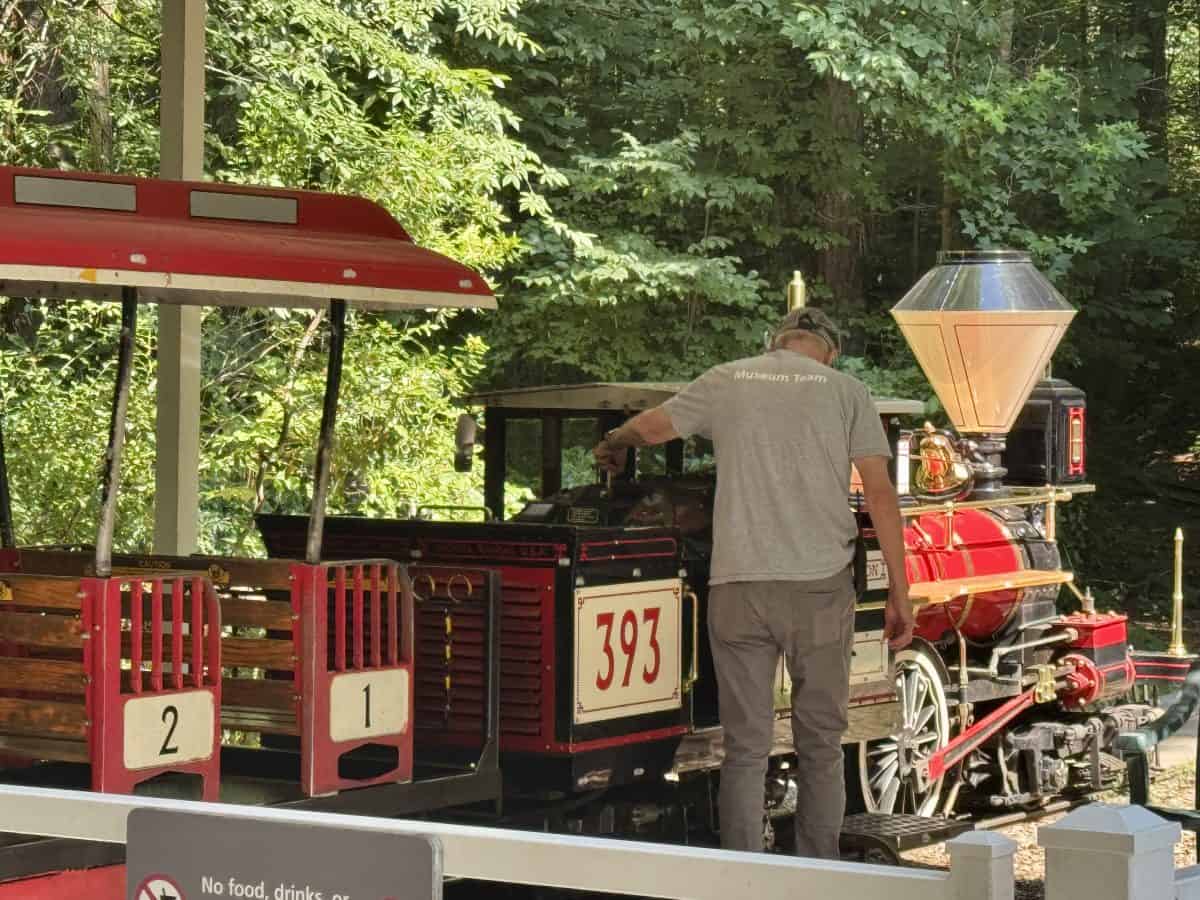
- Take a 10 minute train ride through the complex aboard the Ellerbe Creek Railway. Each train ride is two laps around the track and offers unique views of the outdoor exhibits. The train is handicap accessible. Gateway Park **additional fee
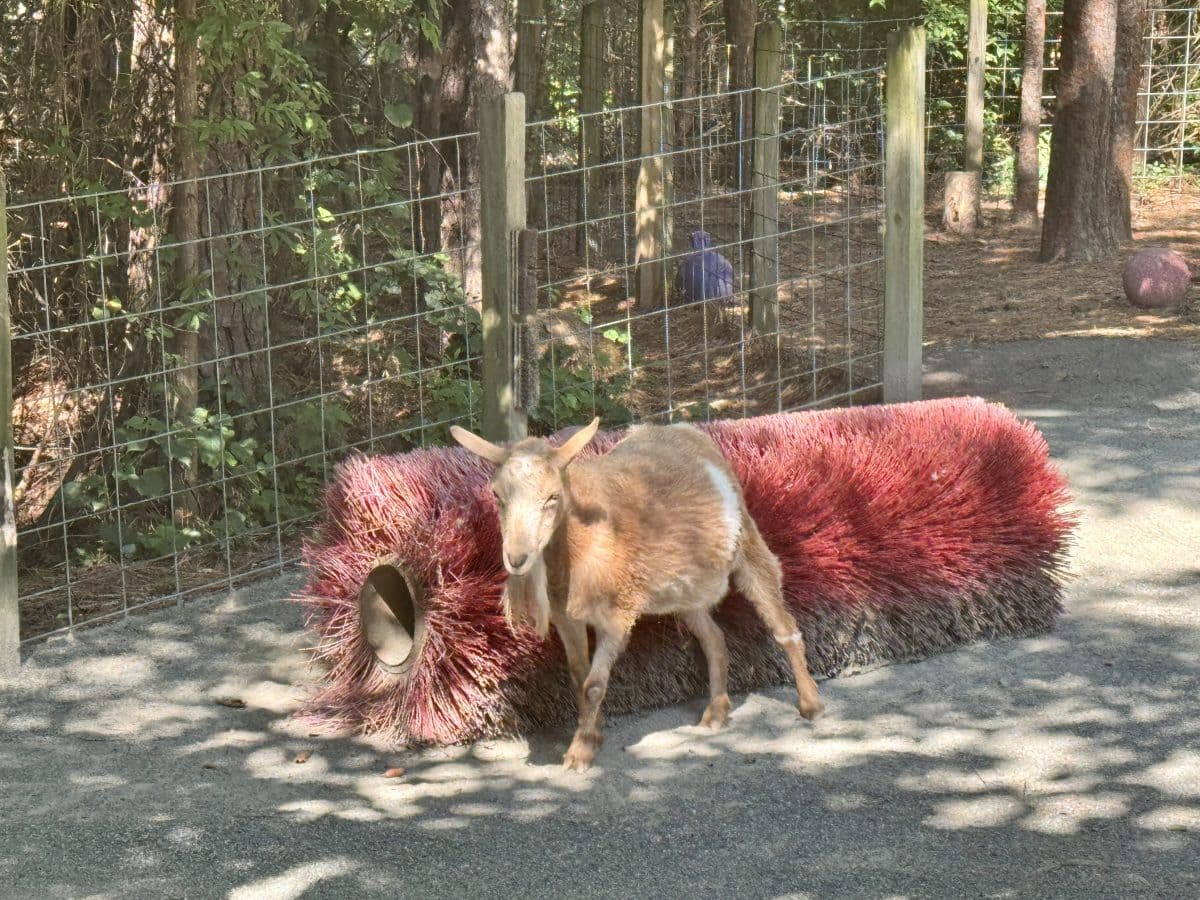
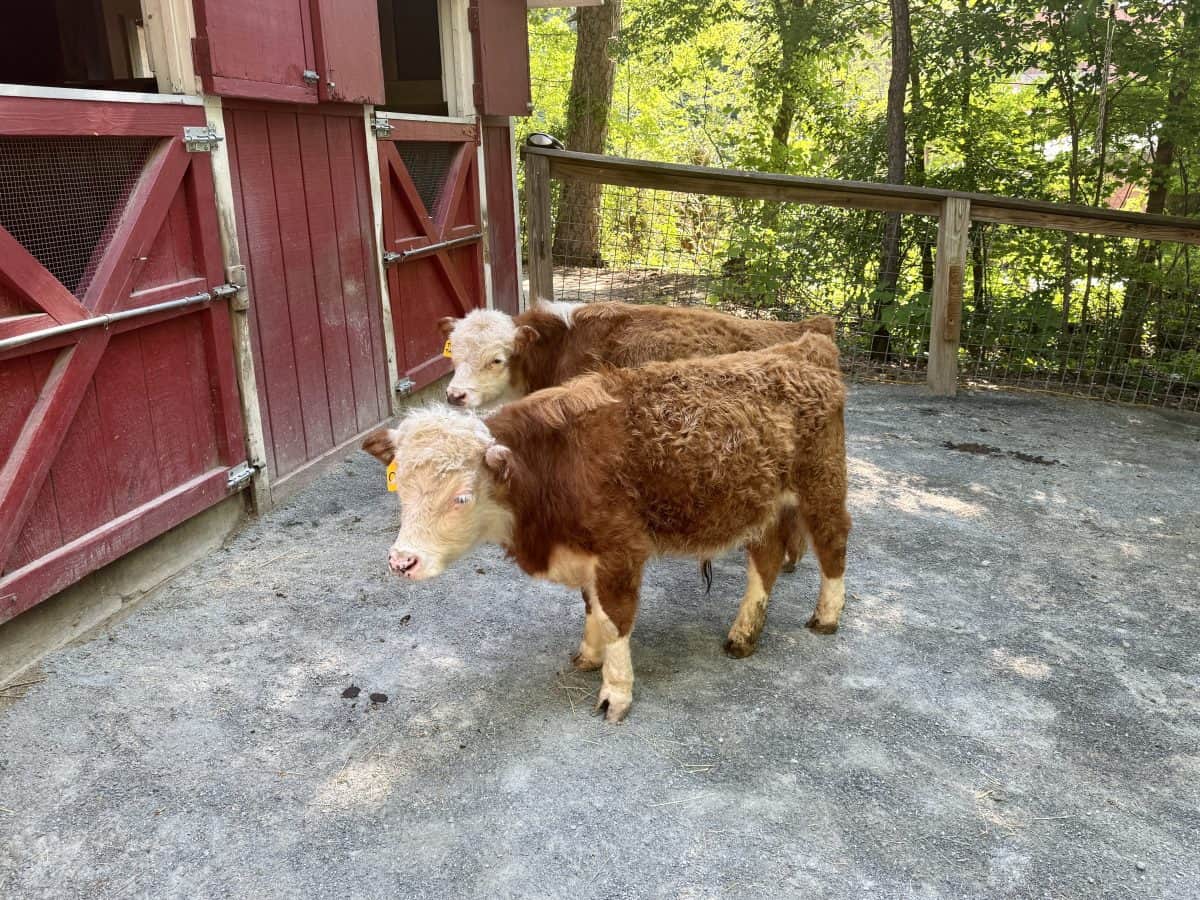
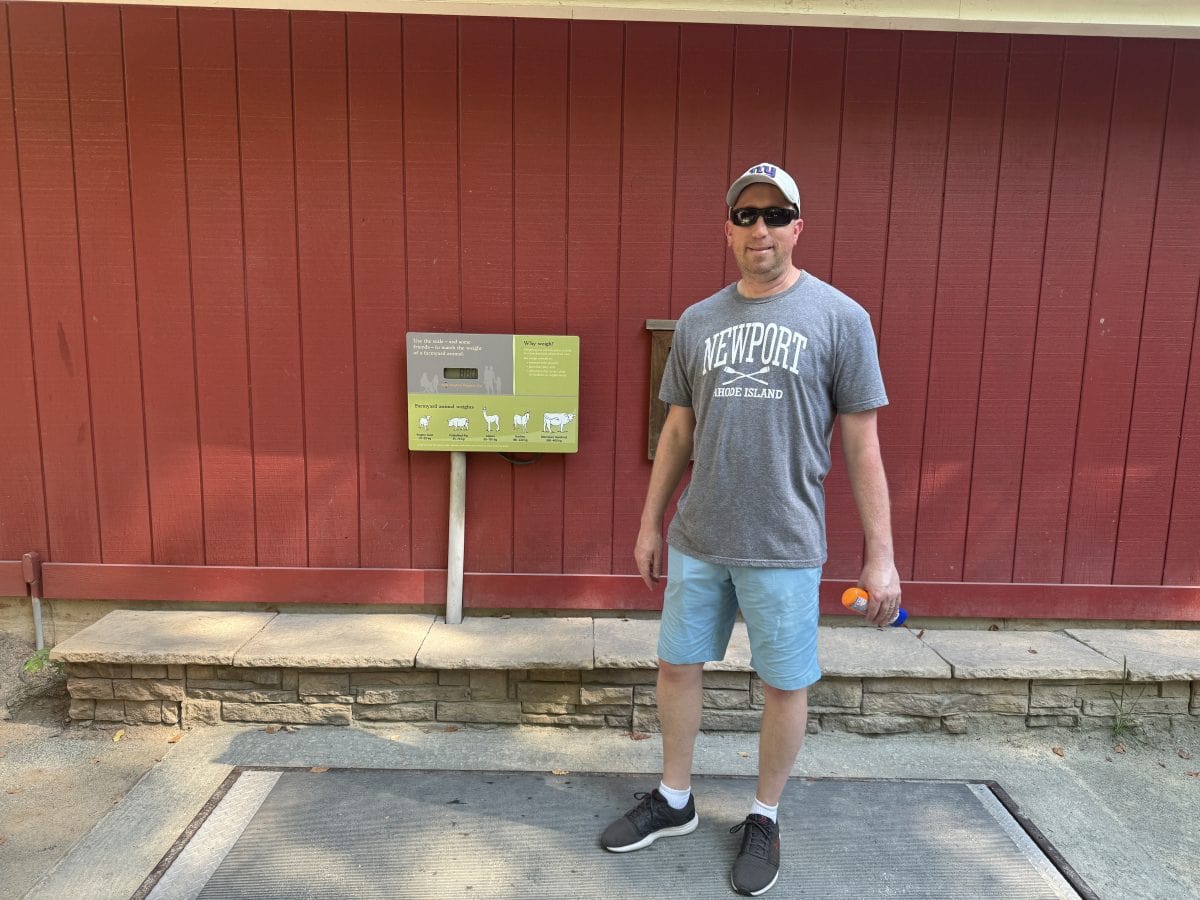
- Weight yourself to match your weight to the weight of farm animals in the Farmyard. Home to goats, chickens, alpacas, pigs, and horses, the Farmyard’s most recent residents include Owen and Tom, miniature Hereford bulls born in the fall of 2024 on loan from a nearby ranch. Watch as the Animal Care team shares how to feed and care for the animals.
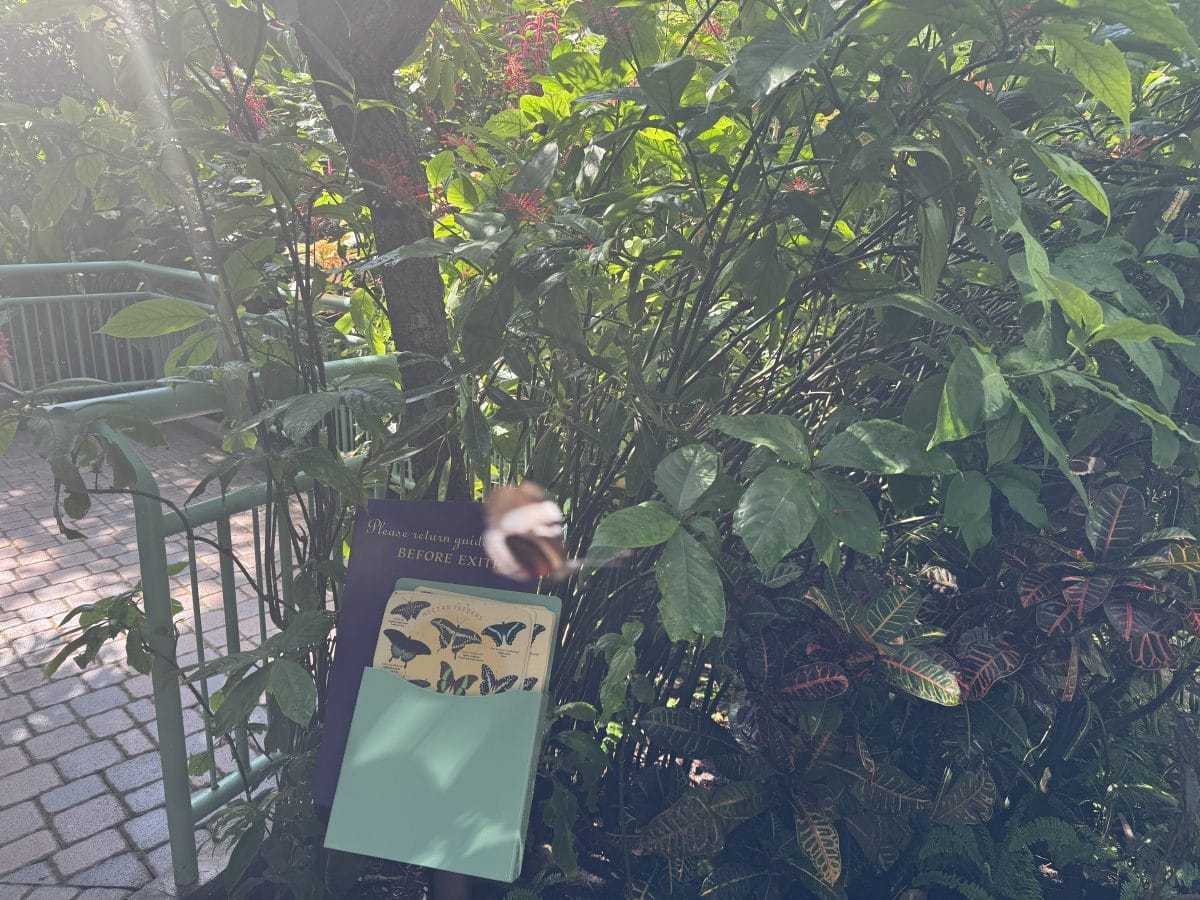
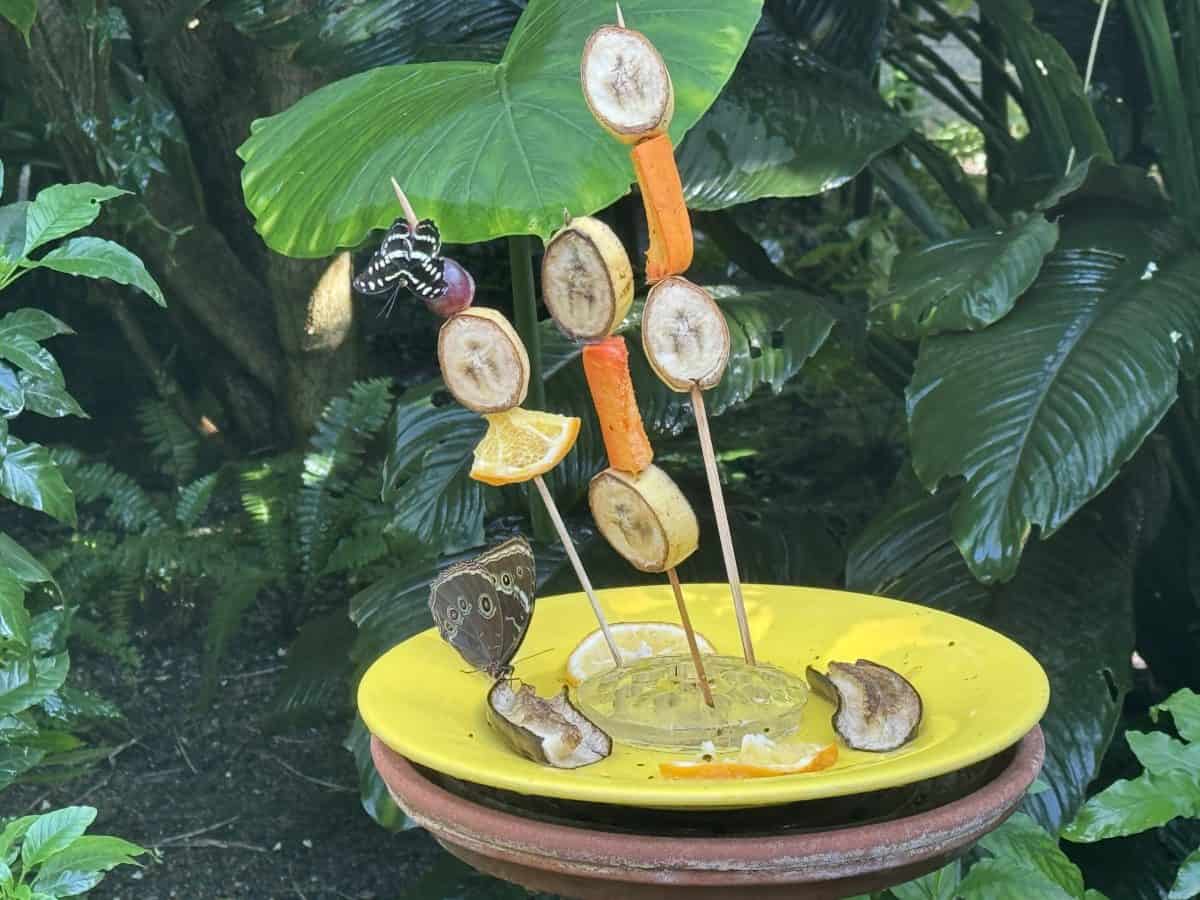
- See if you can get a butterfly to land on you in the Magic Wings: Tropical Butterfly Conservatory. There are over 50 species of butterflies from all over the world hiding among 200 species of tropical plants and flowers Learn about the life cycle of a butterfly and learn what they like to eat and be sure to use one of the provided ID Guides to identify each species of butterfly; just be sure to not touch the butterflies or let them “hitchhike” out of the exhibit on you!
- Get an up close look at insects (orb weavers! Tarantulas! Honey Bees!) in the World of Insects exhibit in the Insectarium. There are lots of hands-on activities to get a closer look, like microscopes, touch screens, and visits from museum staff to share more on the background and habits of the insects.
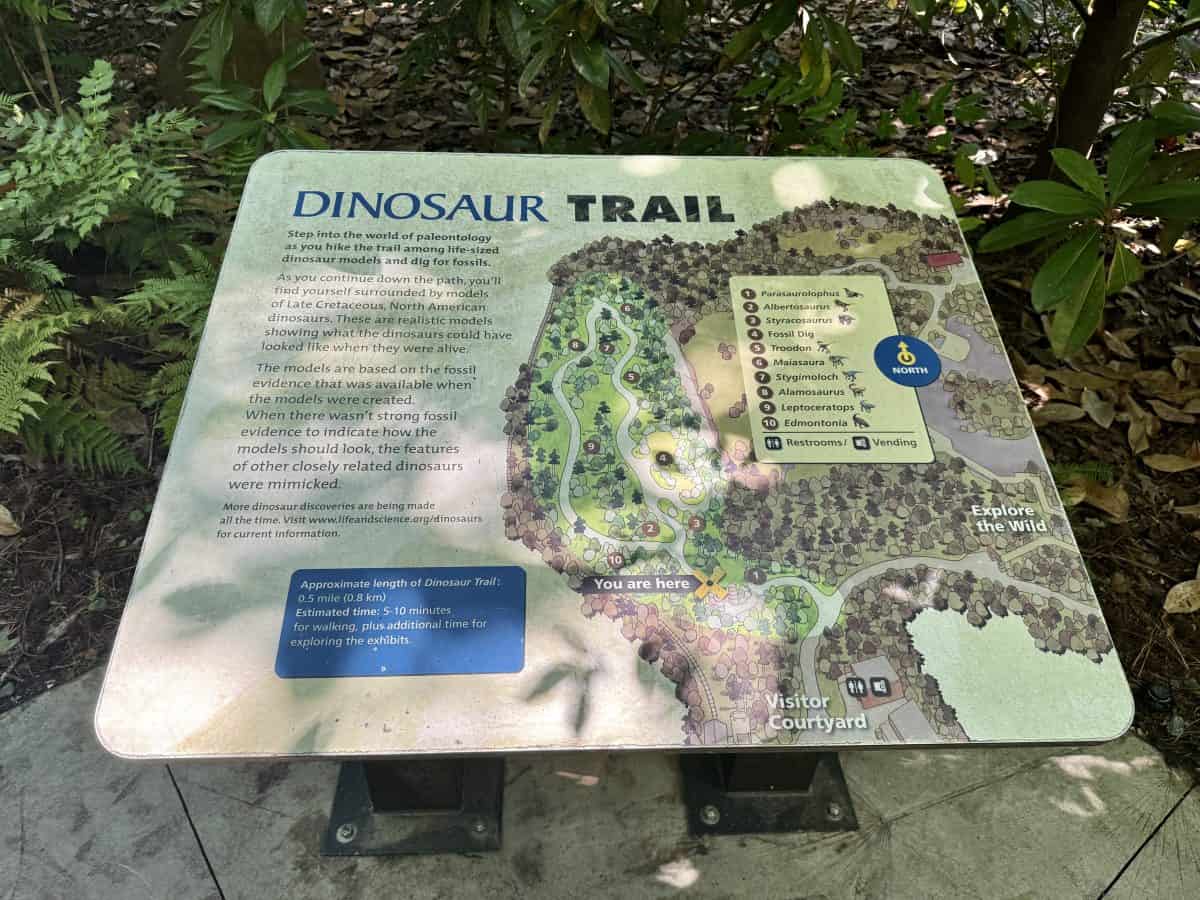
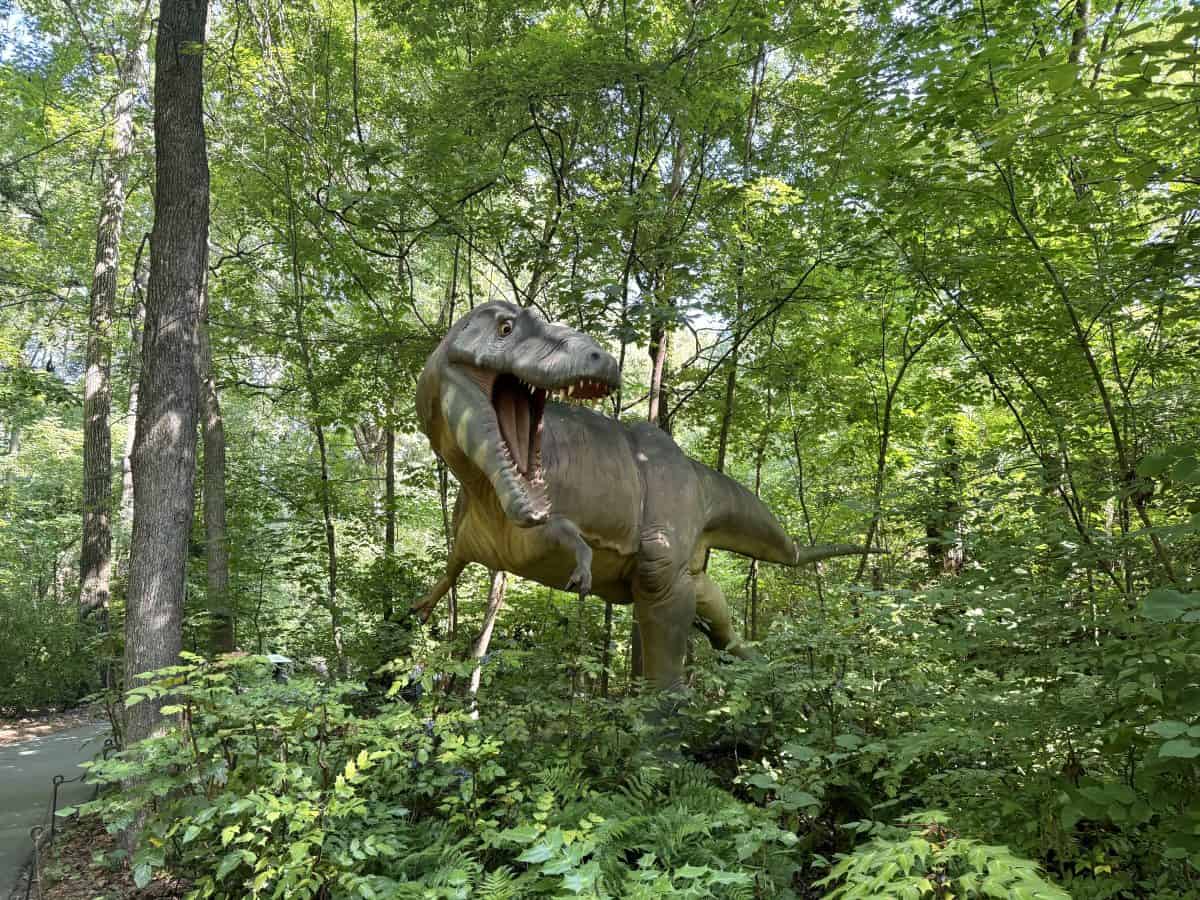
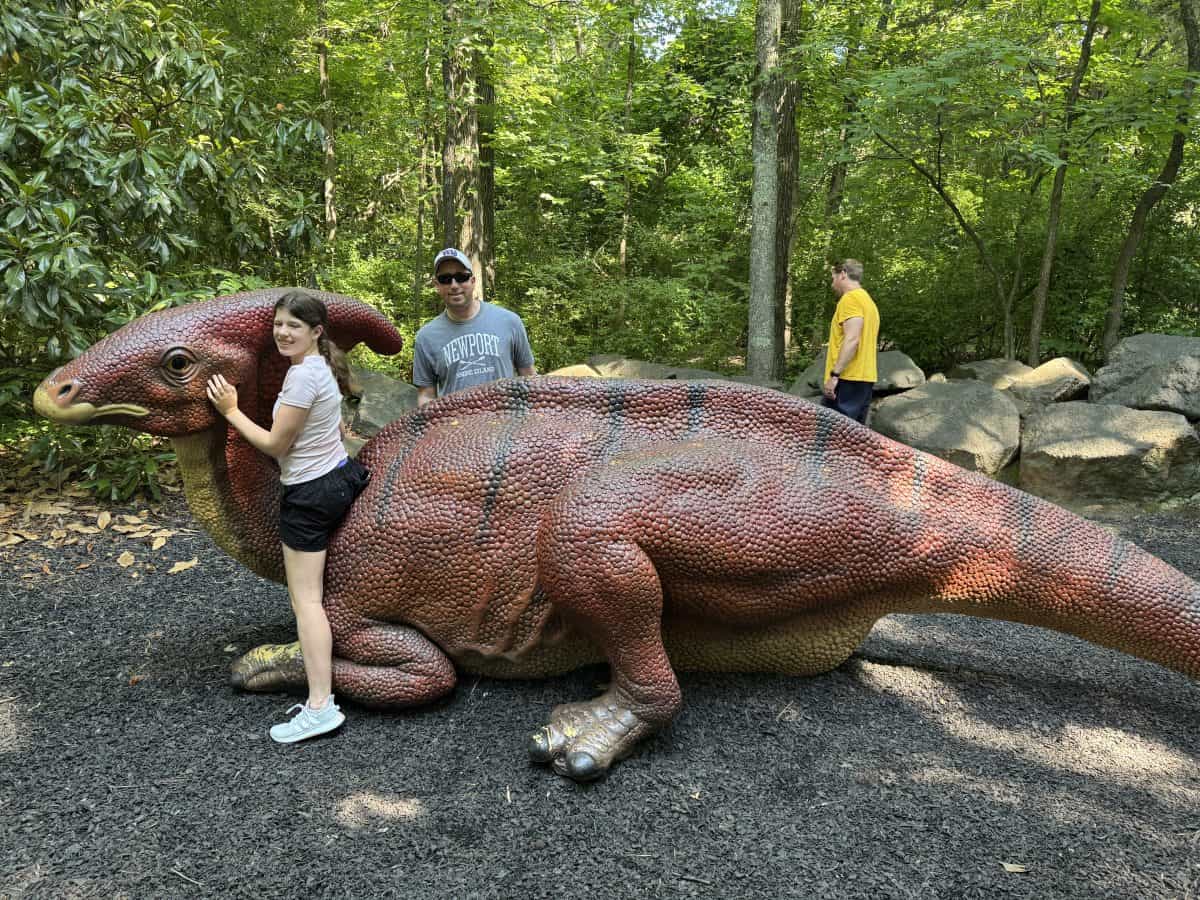
- Hop on top of a Parasaurolophus in the Dinosaur Trail. Follow the quarter mile trail and see how many dinosaurs (hint: there are close to a dozen!) you can find hidden in the forest. You can even dig for fossils in the Fossil Dig Site.
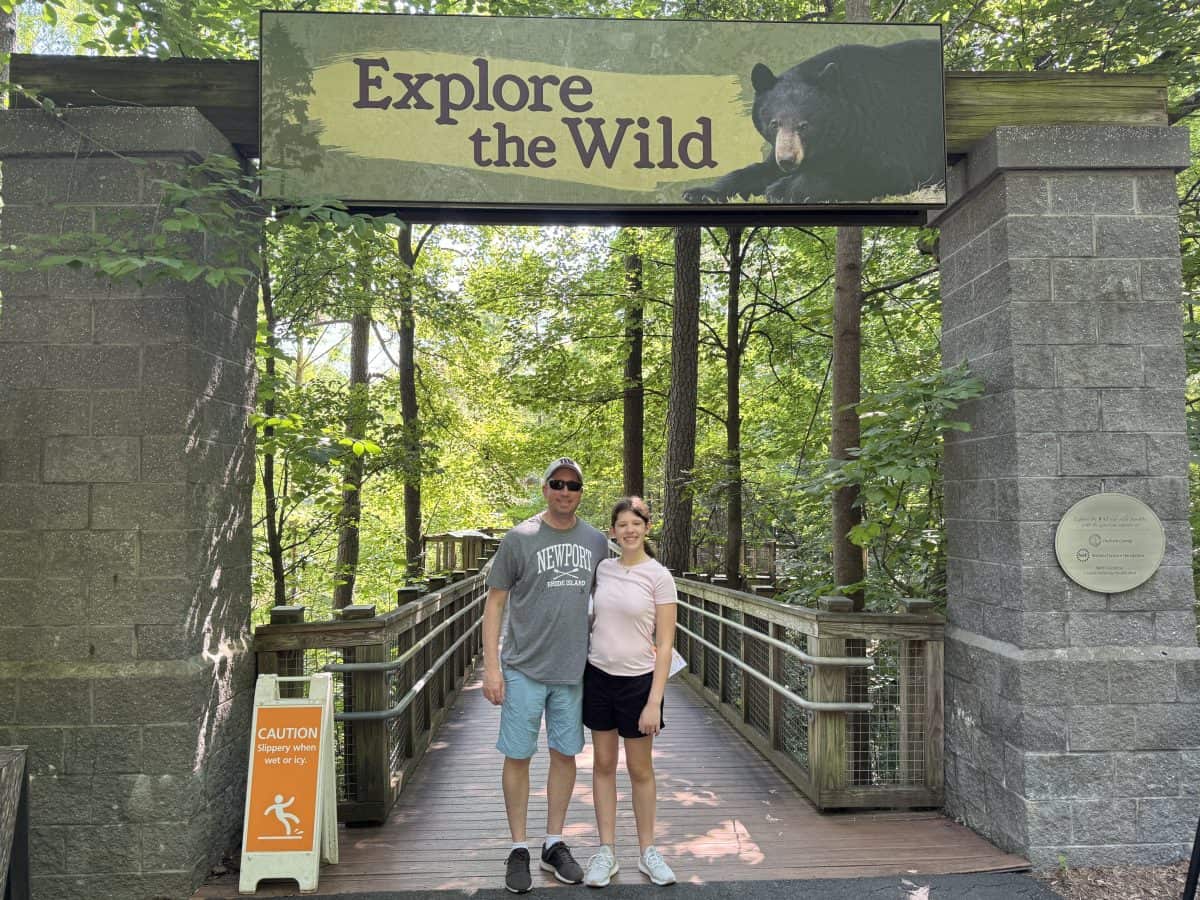
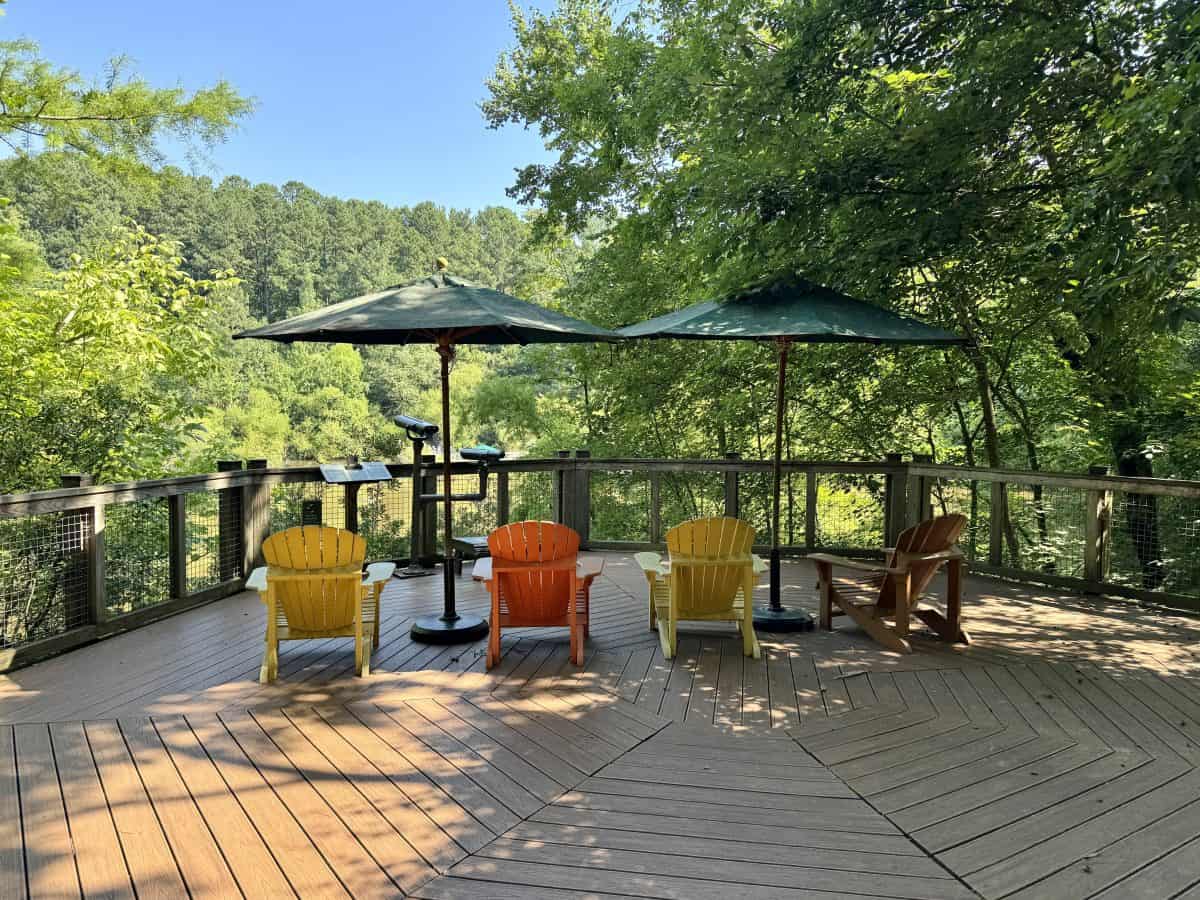
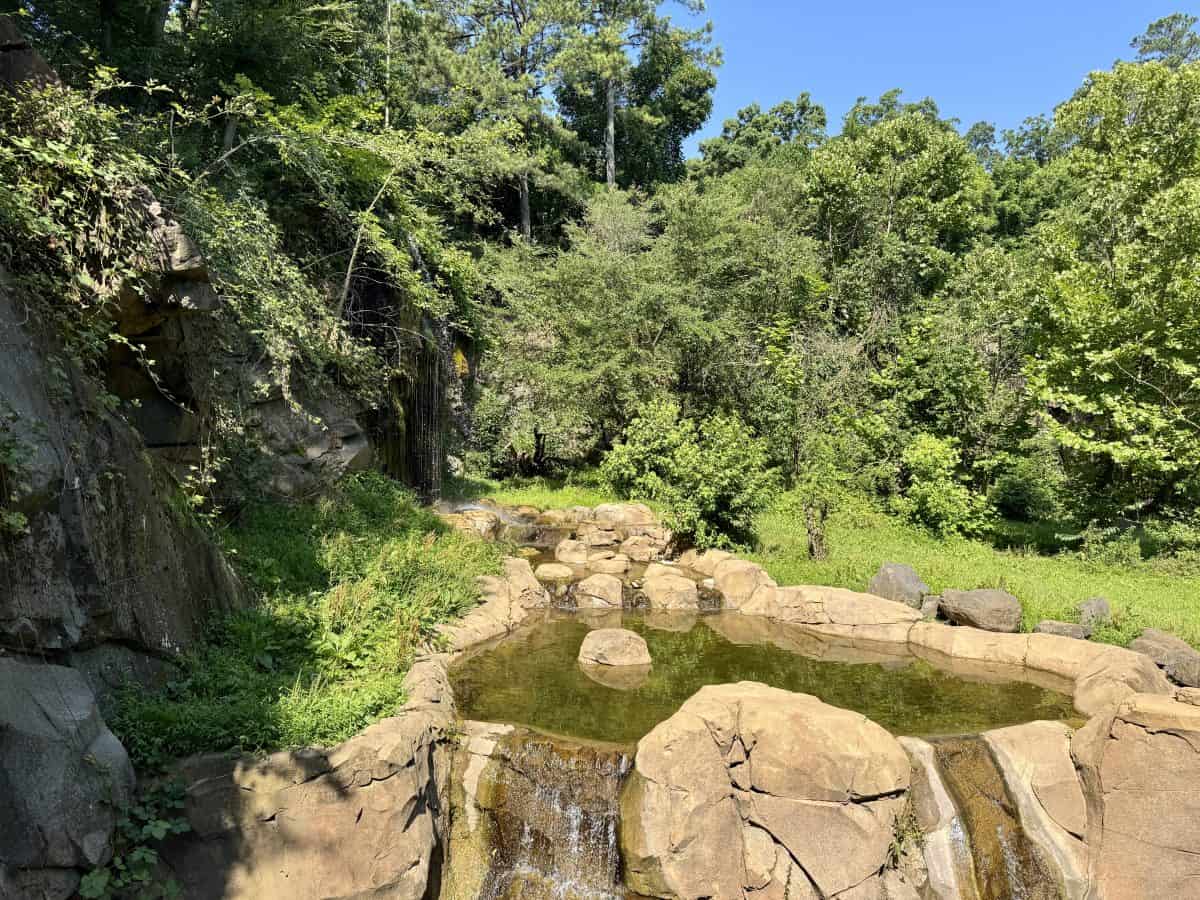
- Look for bears, lemurs and tortoises, and red wolves from the Explore the Wild wooden ramp path through the woods. There are plenty of observation decks and sitting areas to watch for the wildfires (each animal species has their own habitat) and most of the .7 mile loop path and the observation decks are shaded.

Would you like to save this?
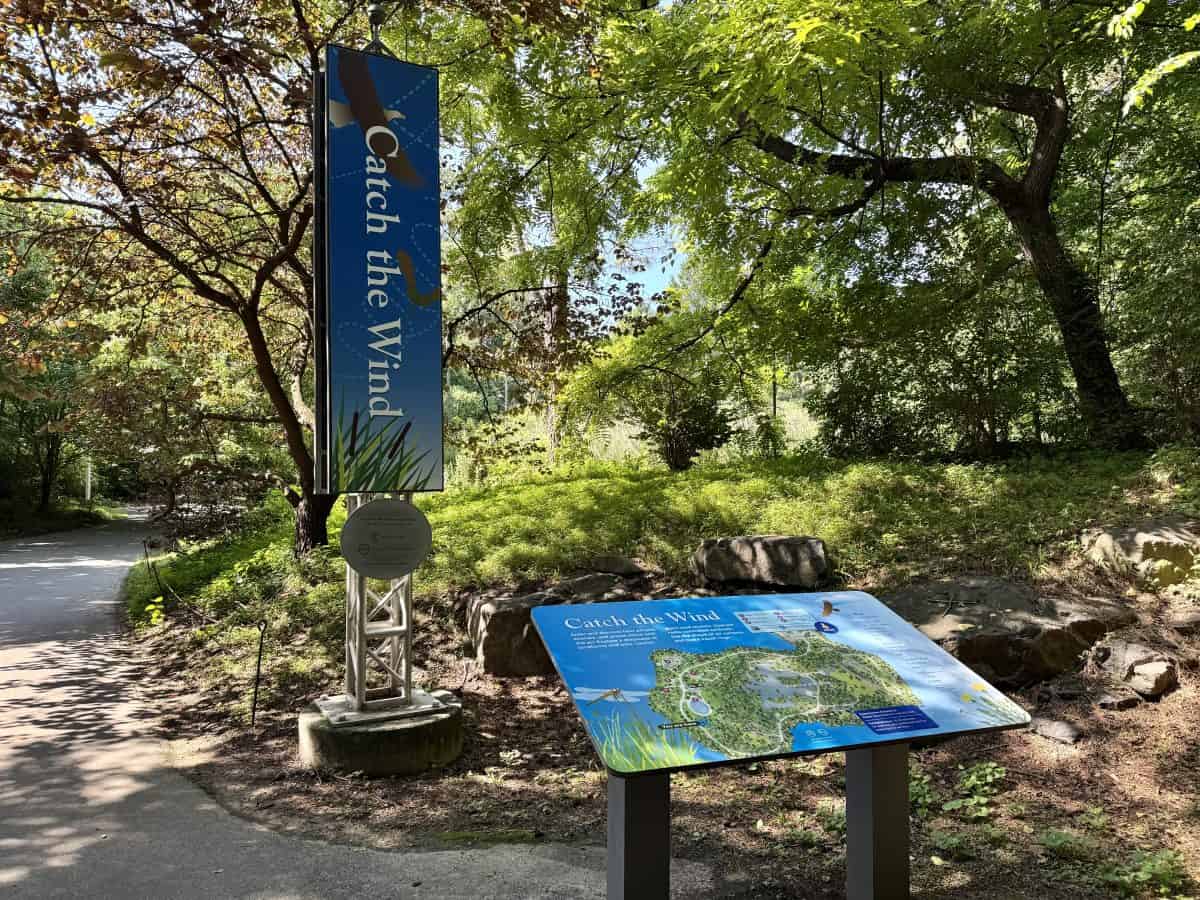
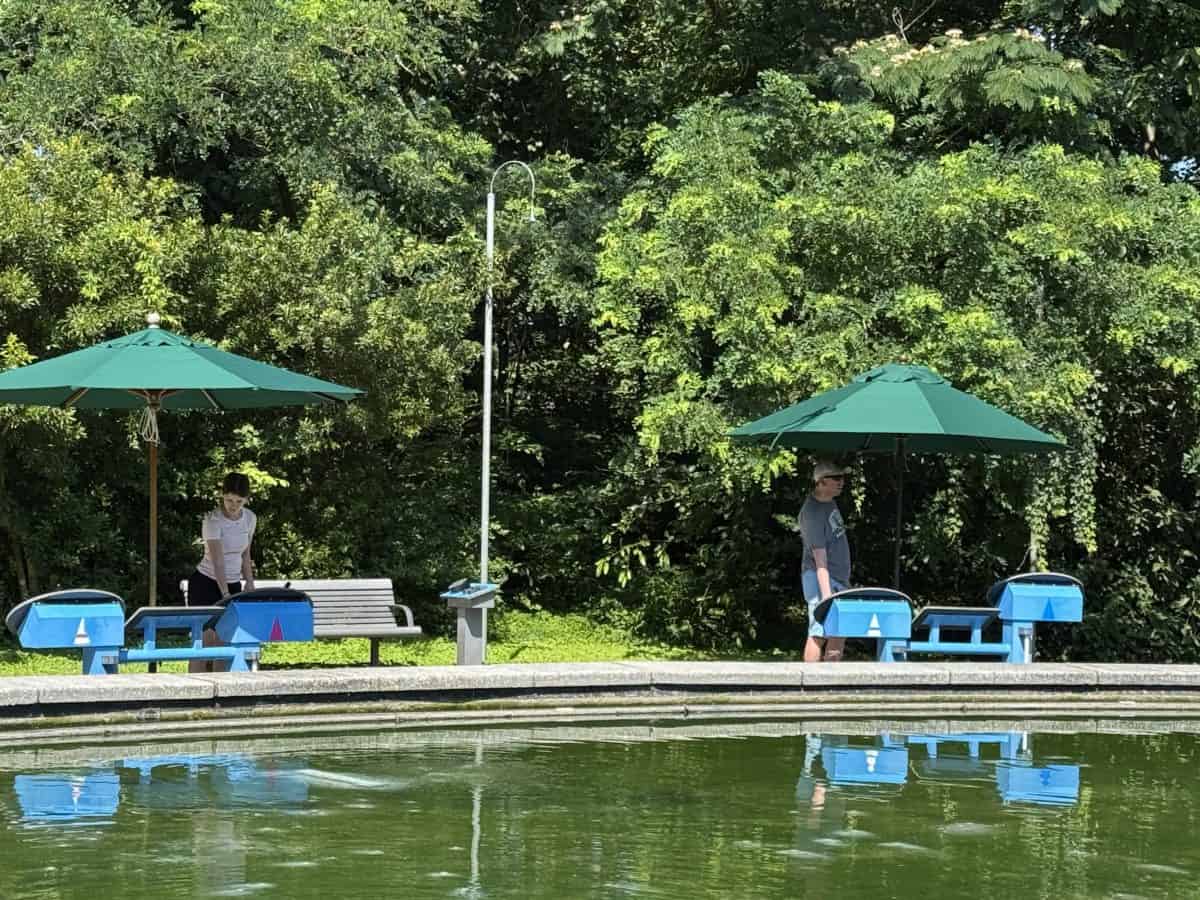
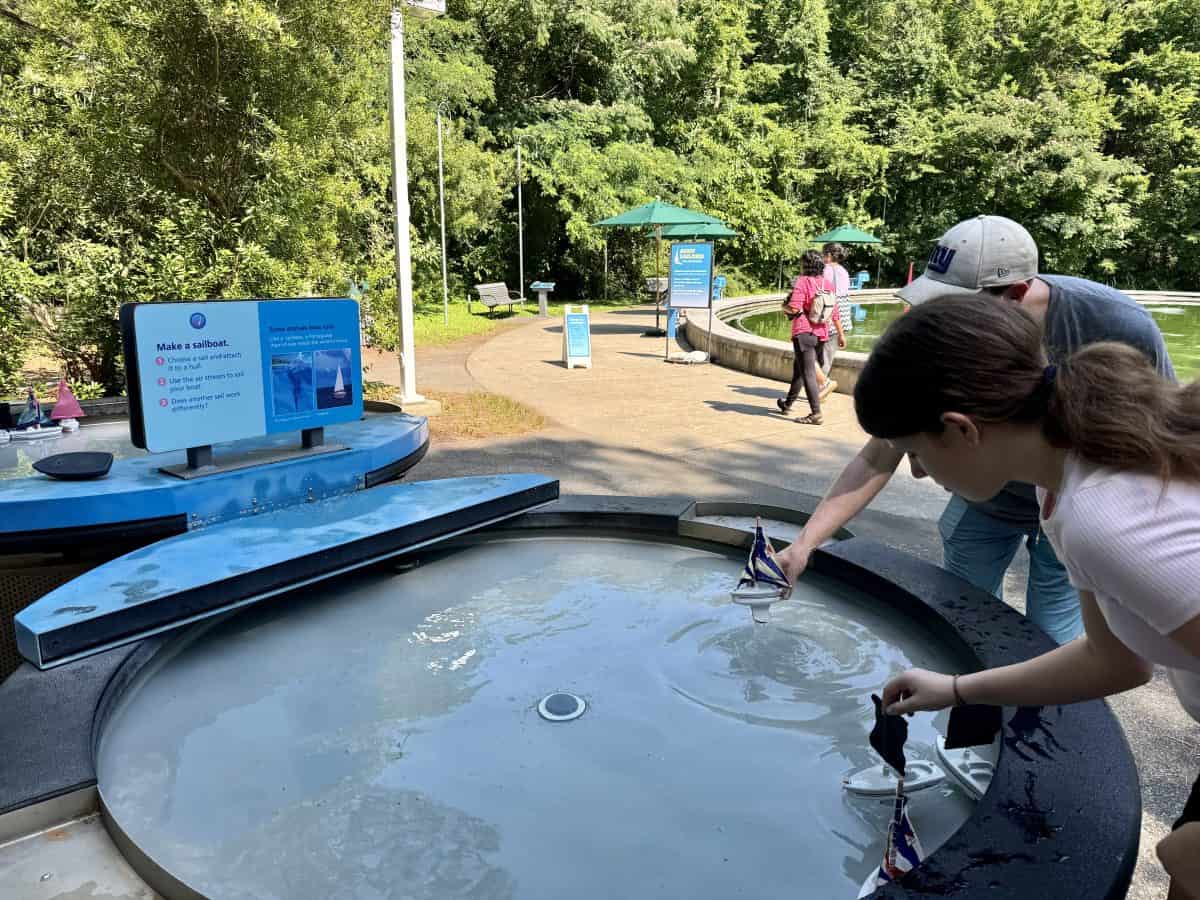
- Learn how to sail a sailboat at a control station in the 5,000 square foot pond and how to assemble a sailboat in the small pool in the Catch the Wind exhibit.
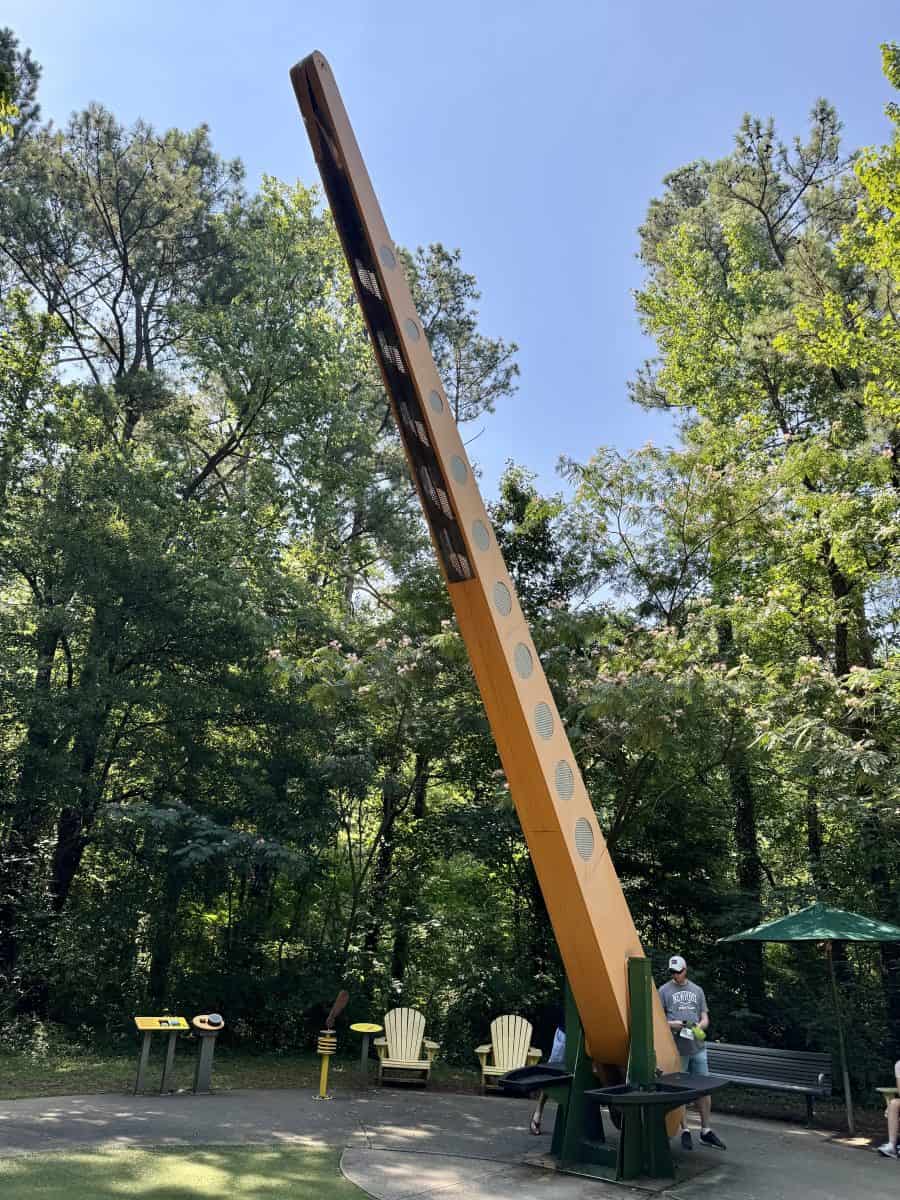
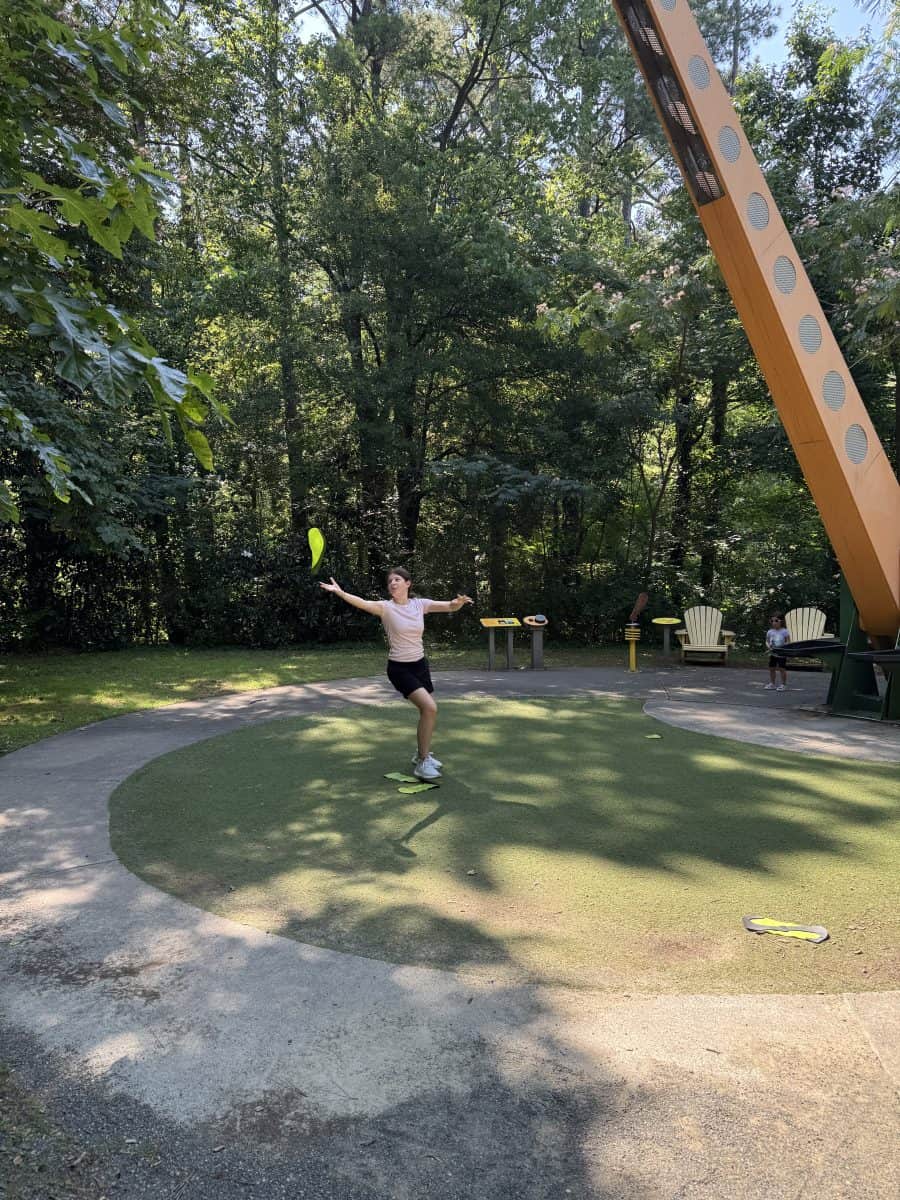
- Catch a flying seed in the Vapor Rings section of the Catch the Wind exhibit. Launch the seed models from the 30 foot Seed Tower and how far it goes from the launch site.
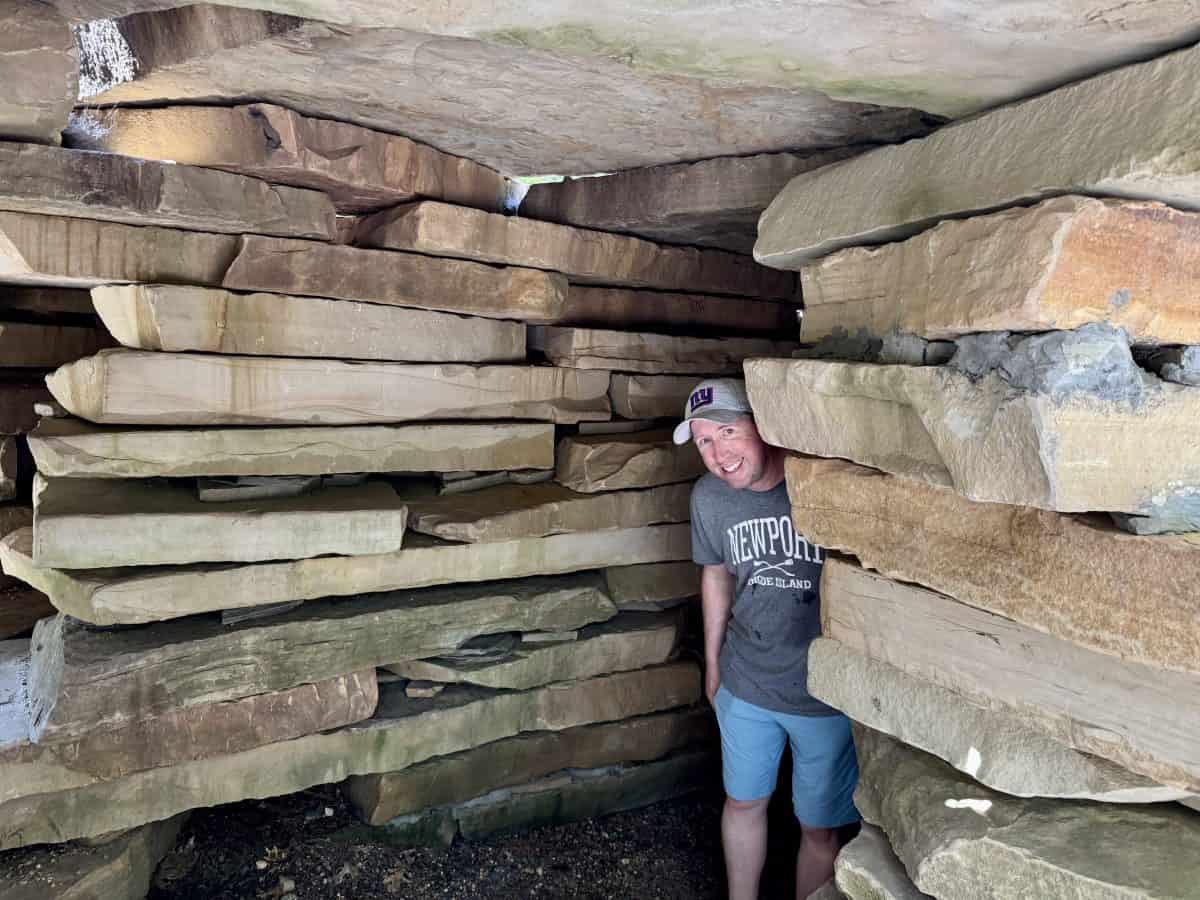
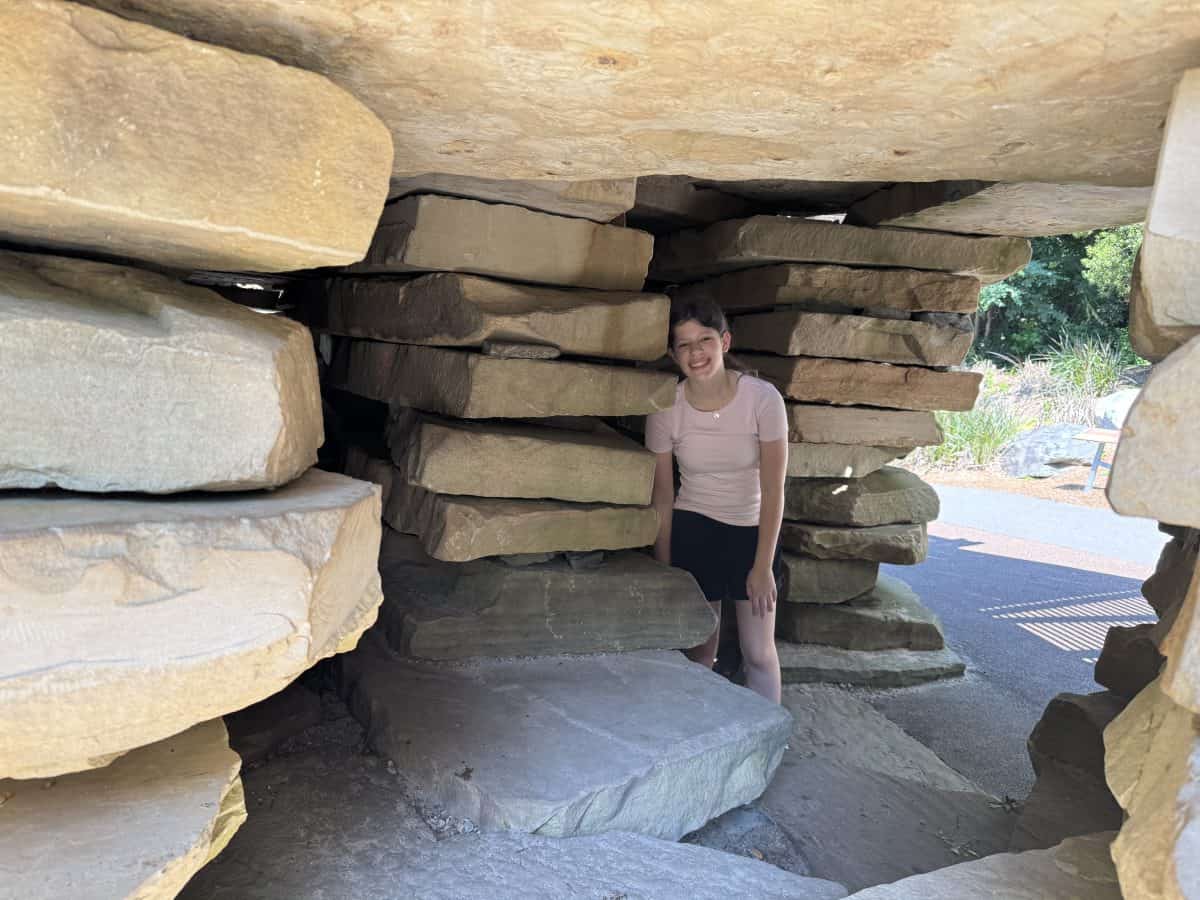
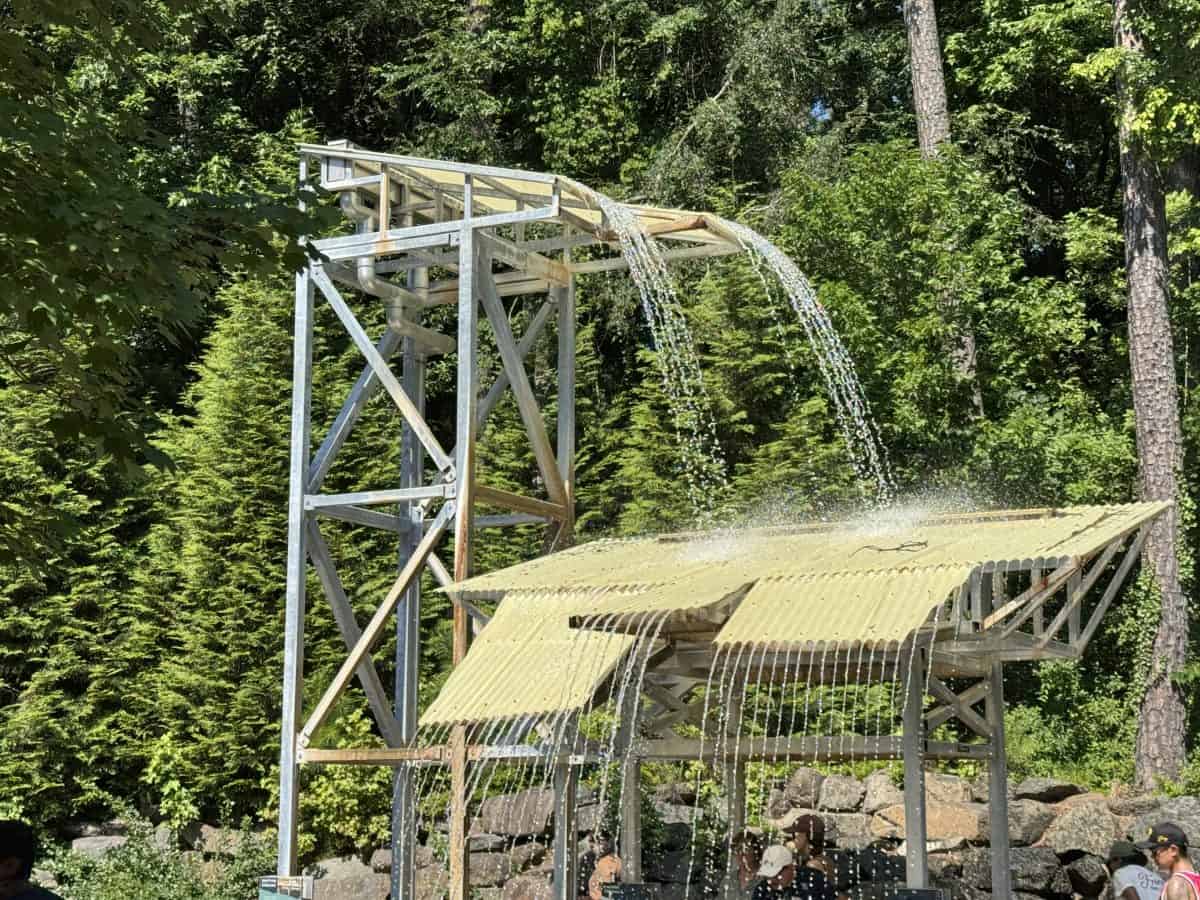
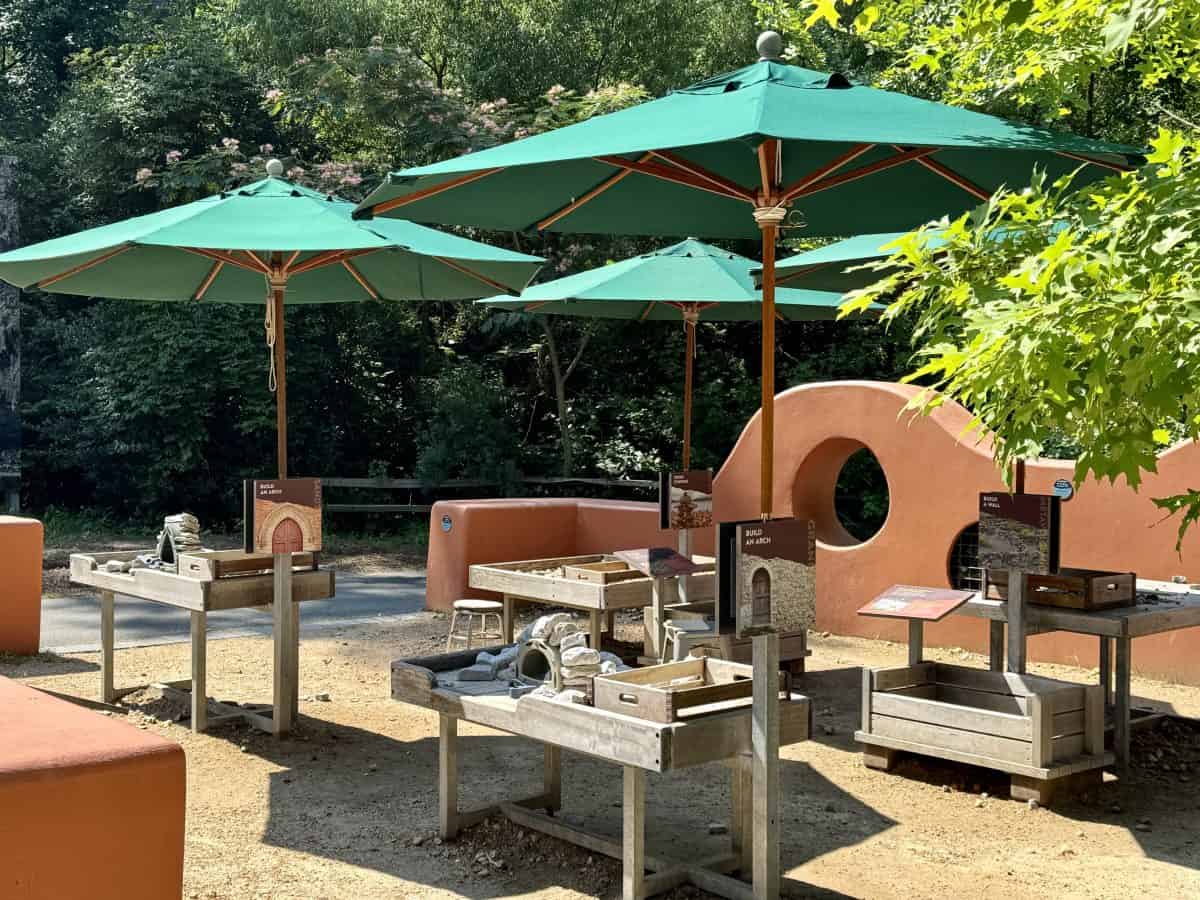
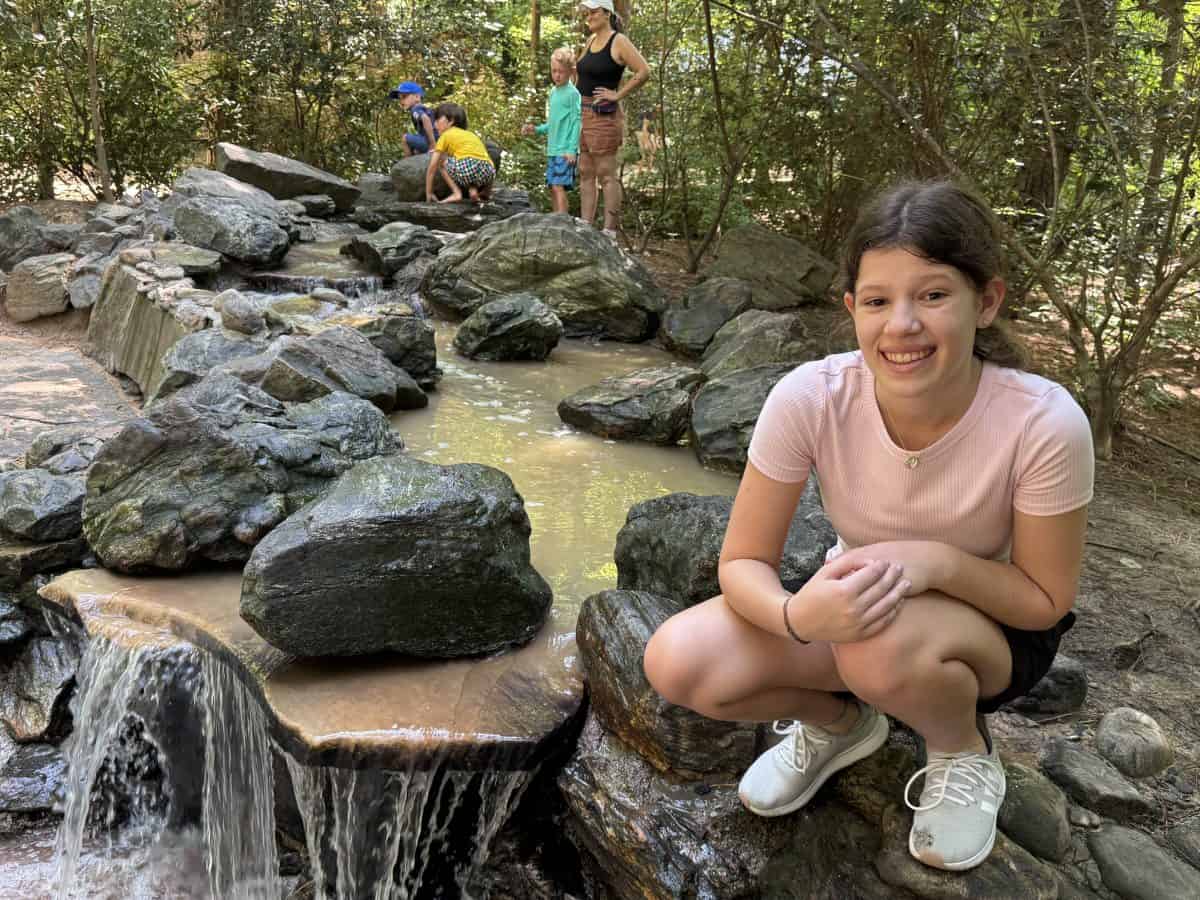
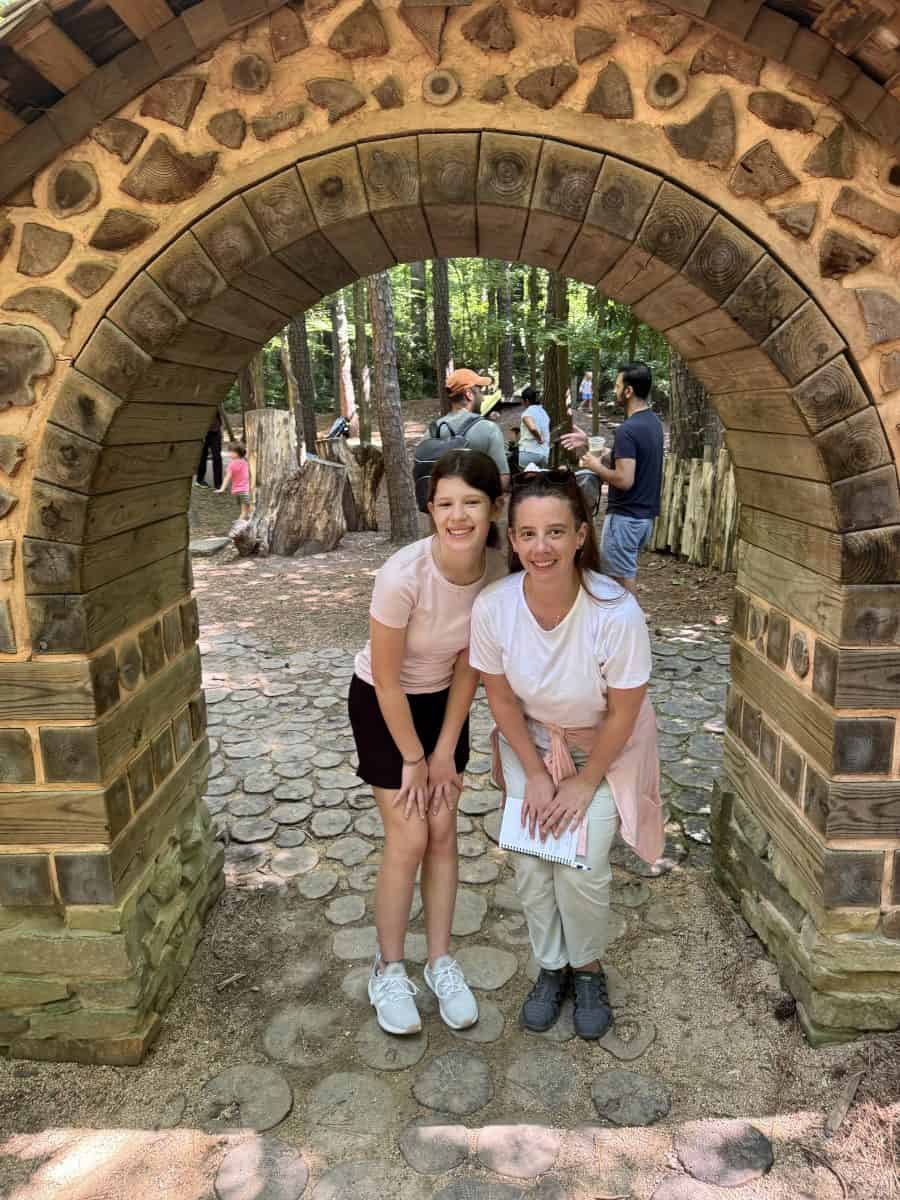
- Get wet in the Earth Moves: Rocks Move aqua exhibits. There are misting stations; a splash pad with a 20 foot waterfall; stone yard with building stations for arches, stone stacking, and wall building; and a sandstone cave.
- Feel the mist on your face as you walk through the Into the Mist play structures and paths- there are tunnels, a mist dome, and obstacles courses to traverse! Be sure to look out for rainbows created by the mist and sunlight (and learn more about how rainbows are made!)
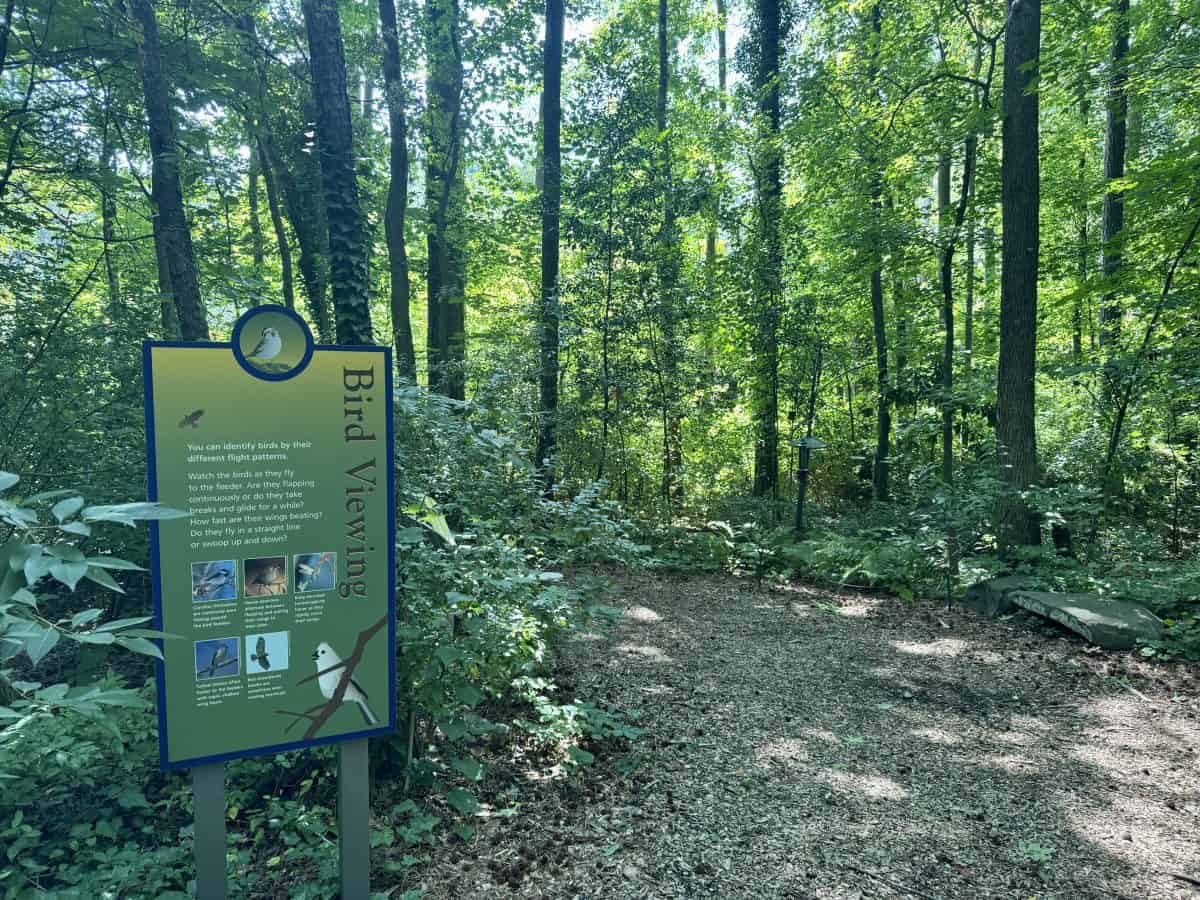
- Look for chickadees, sparrows, and titwice flying in to snack from the bird feeders in the Bird Viewing exhibit.
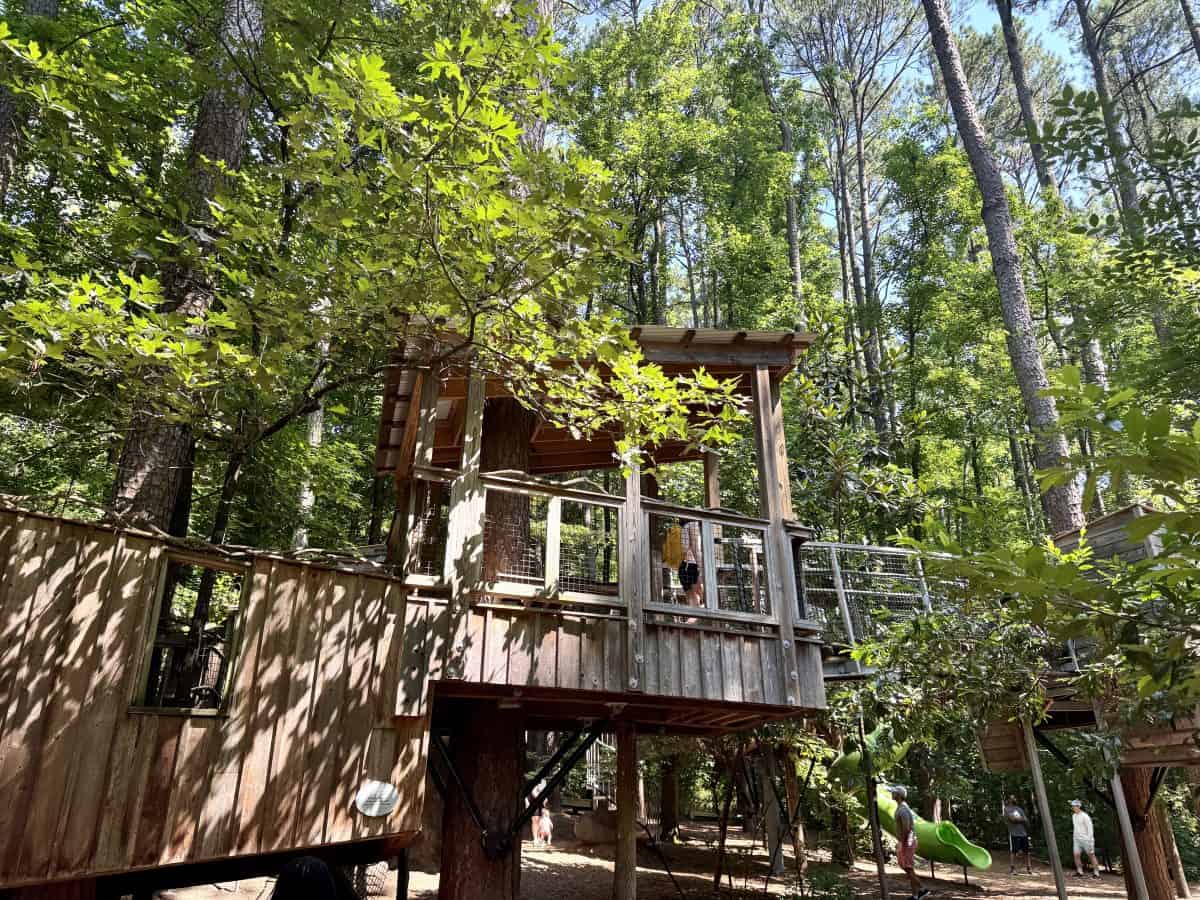
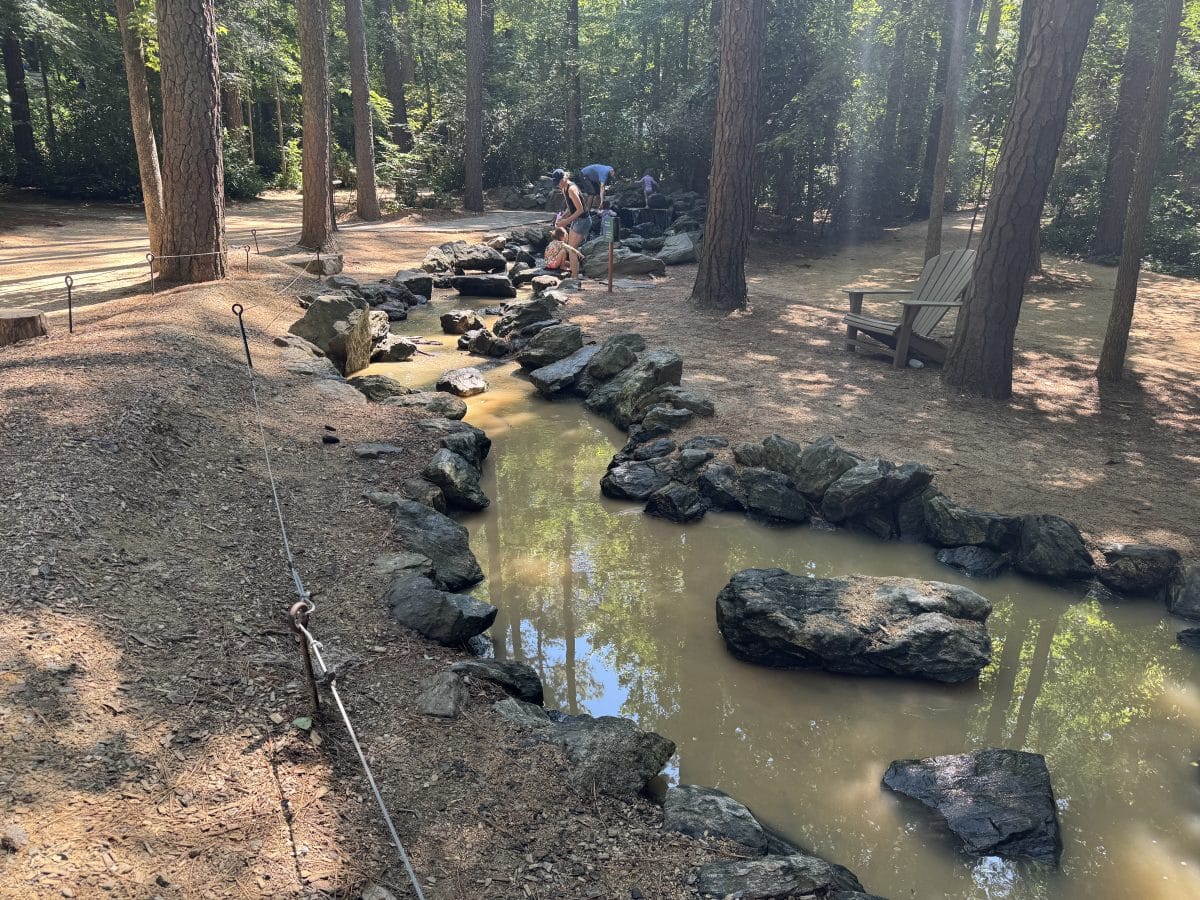
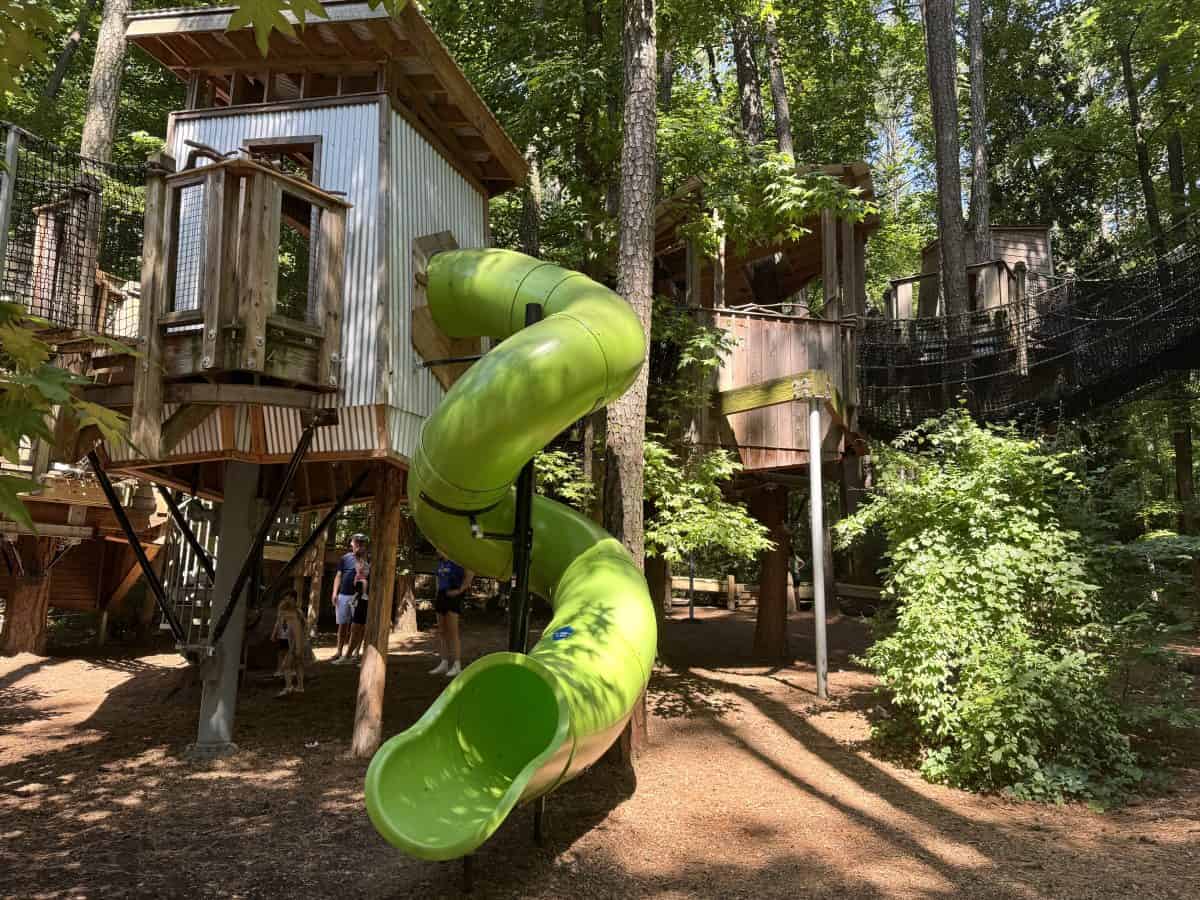
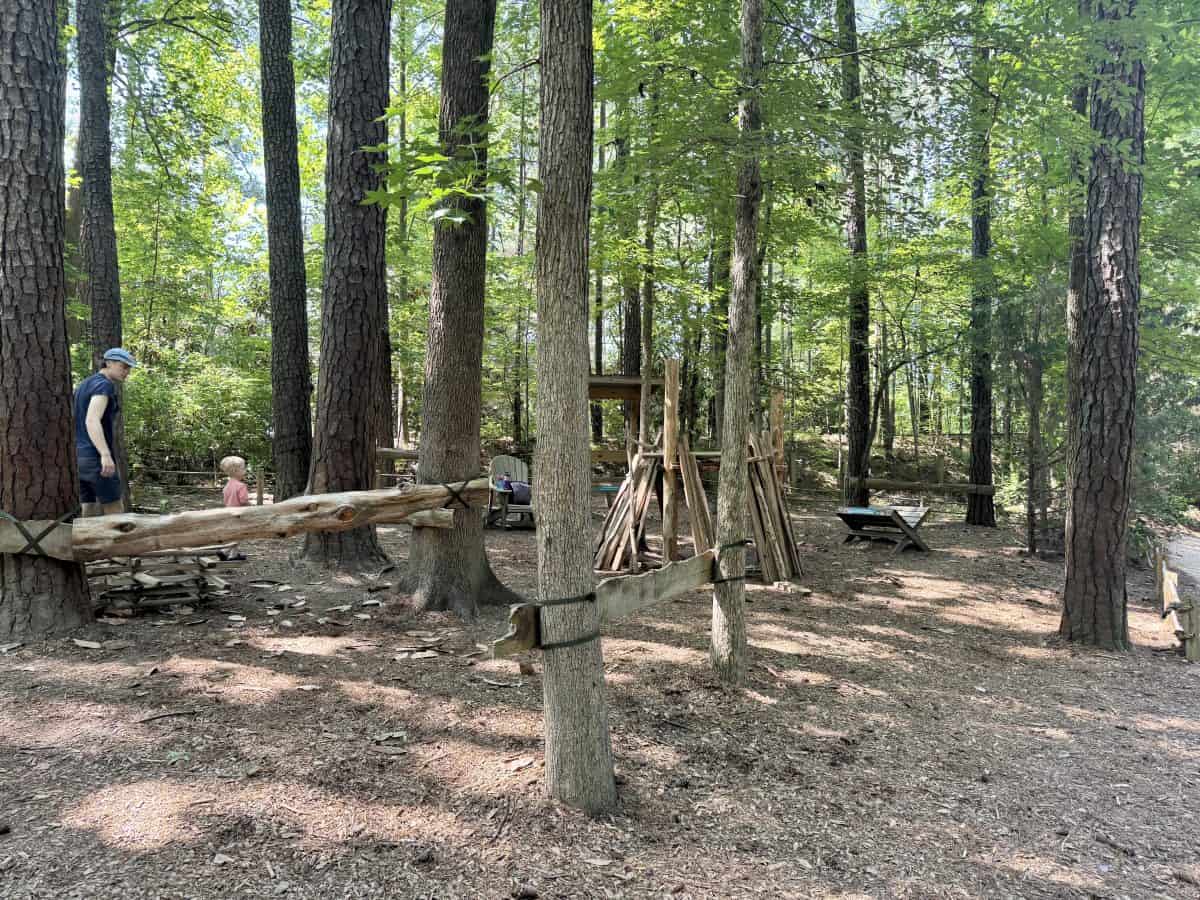
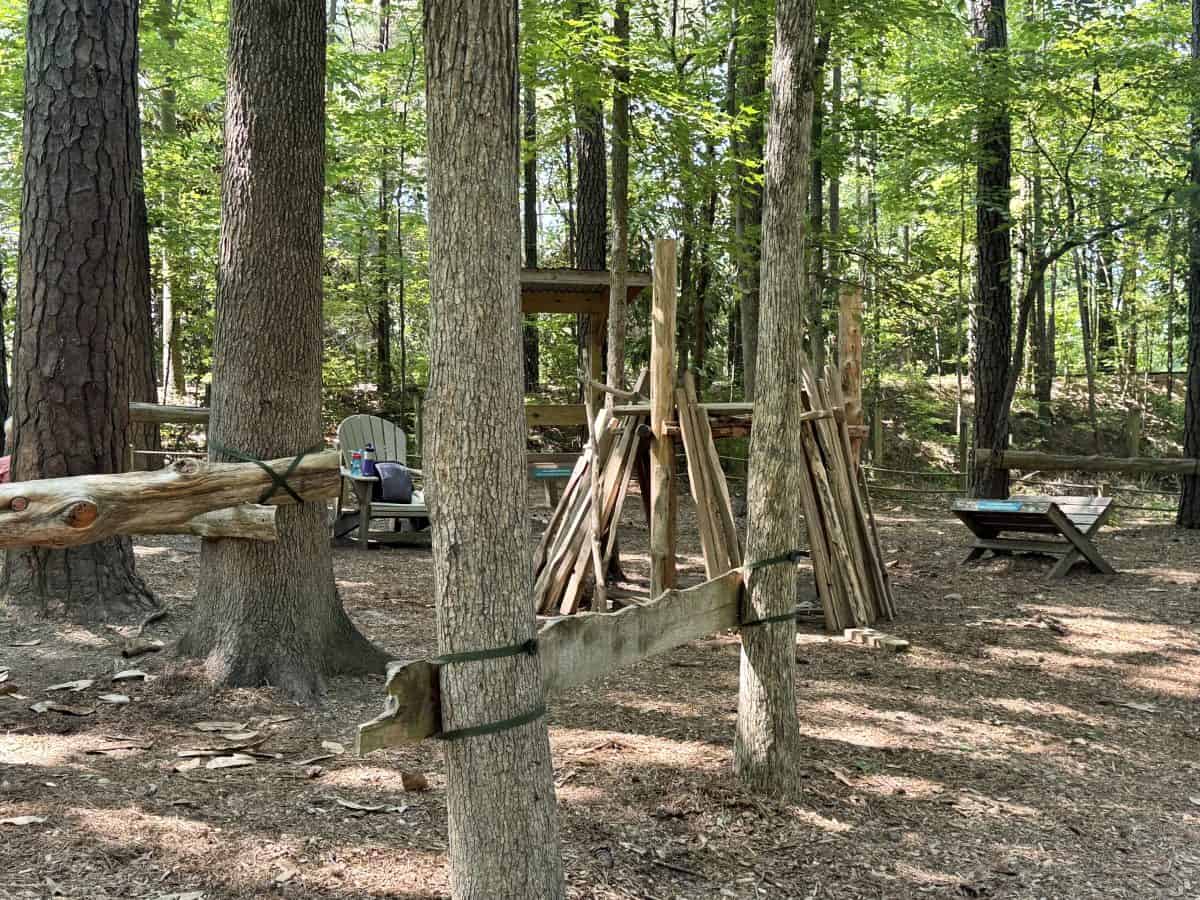
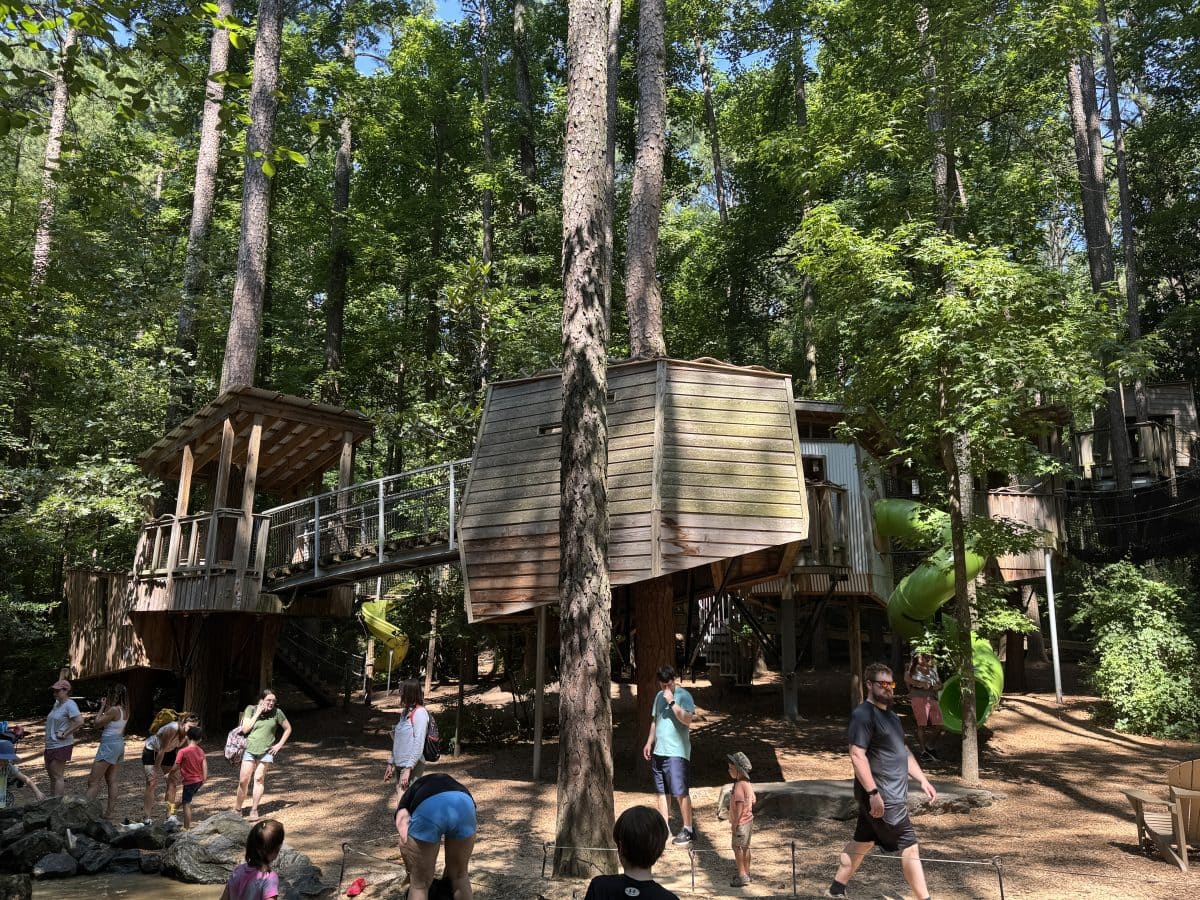
- Climb between tree houses in the Hideaway Woods exhibit.The two acre space has a massive treehouse village (with bridges, a ropes course, and slides!), a separate miniature treehouse and play space for the under seven crowd (with special programs each week and StoryTime every Wednesday) and a Woodland Stream where everyone can cool off and get a little wet.
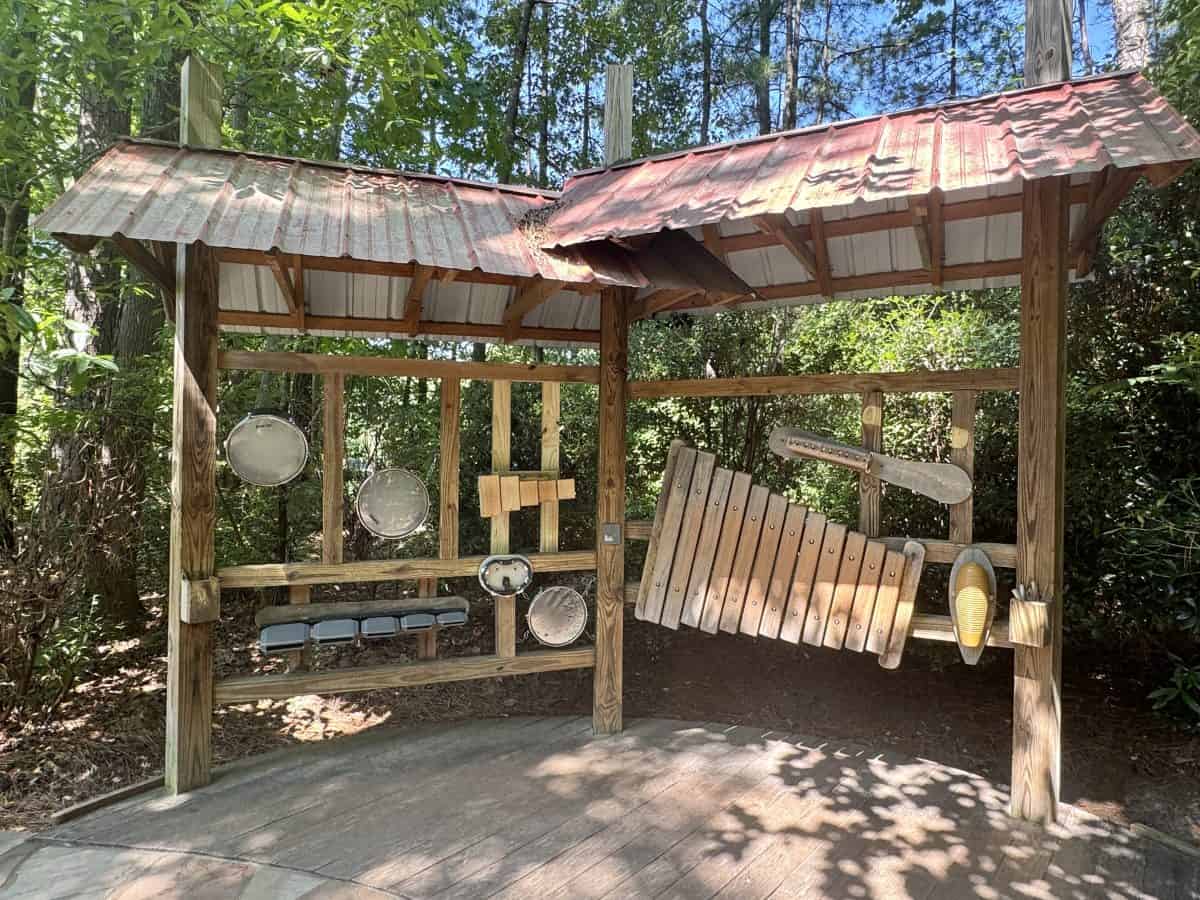
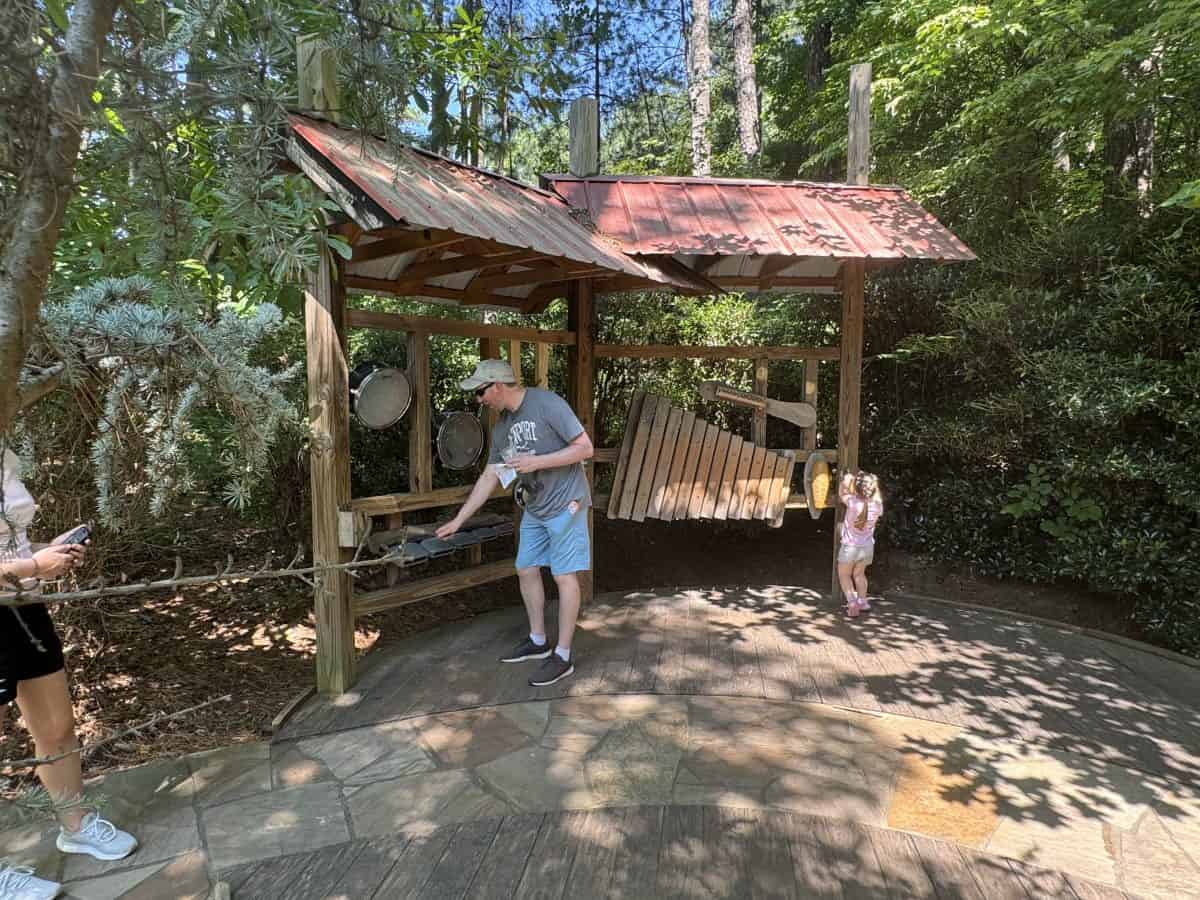
- Create your own song in the Sound Garden exhibit. There’s a whole set of tongue drums, a variety of bells, a xylophone, and an amadinda, an African wooden instrument.


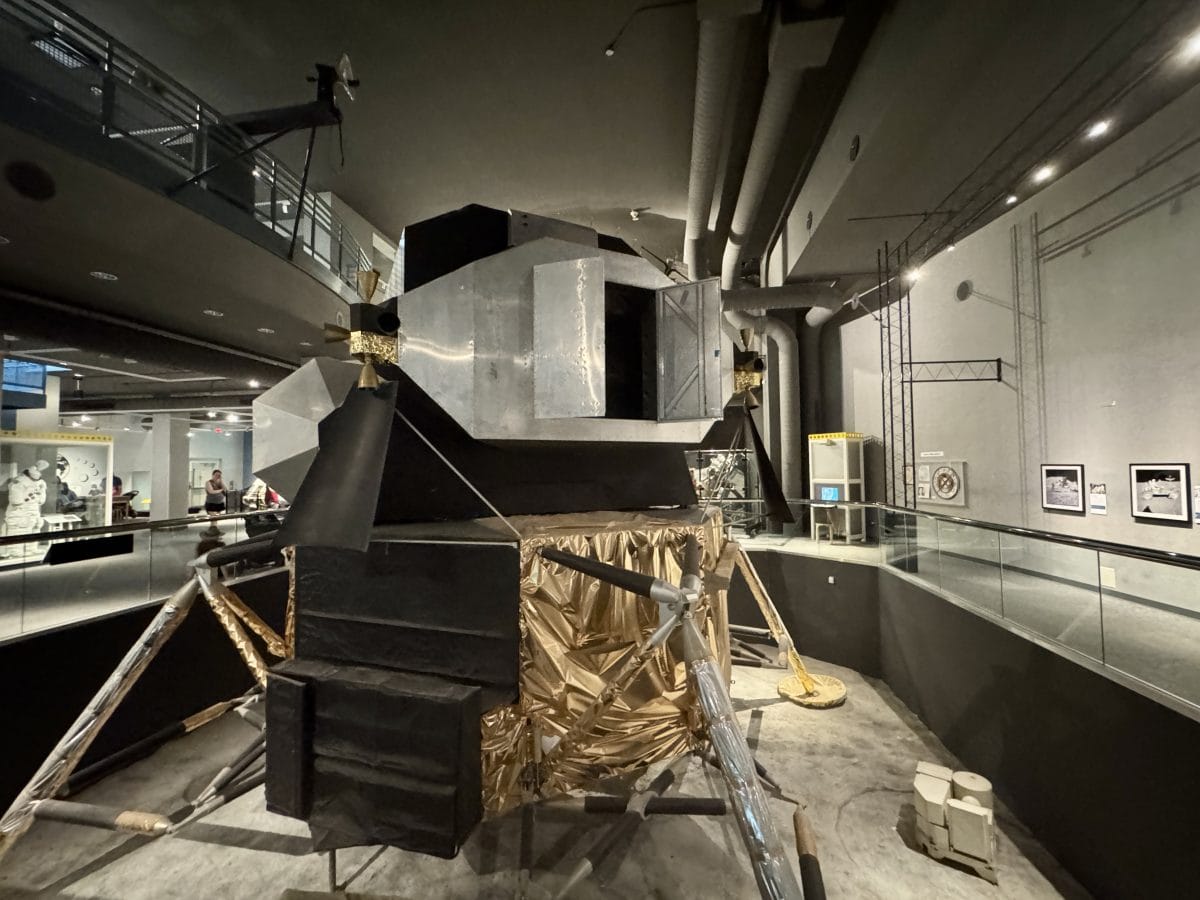
- Peek inside Mercury-Atlas 5, the first American spacecraft to orbit Earth with a passenger (a chimp named Enos), in the Aerospace exhibit.
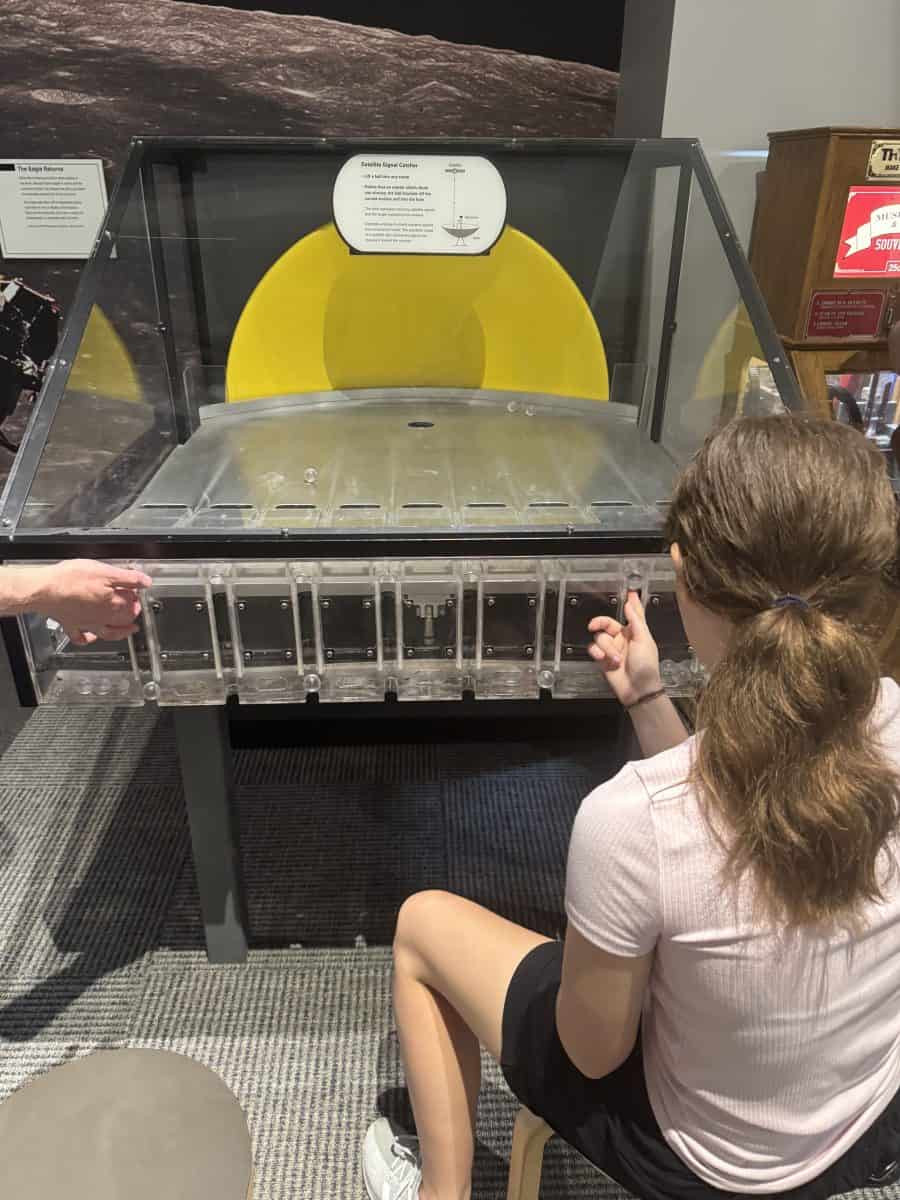
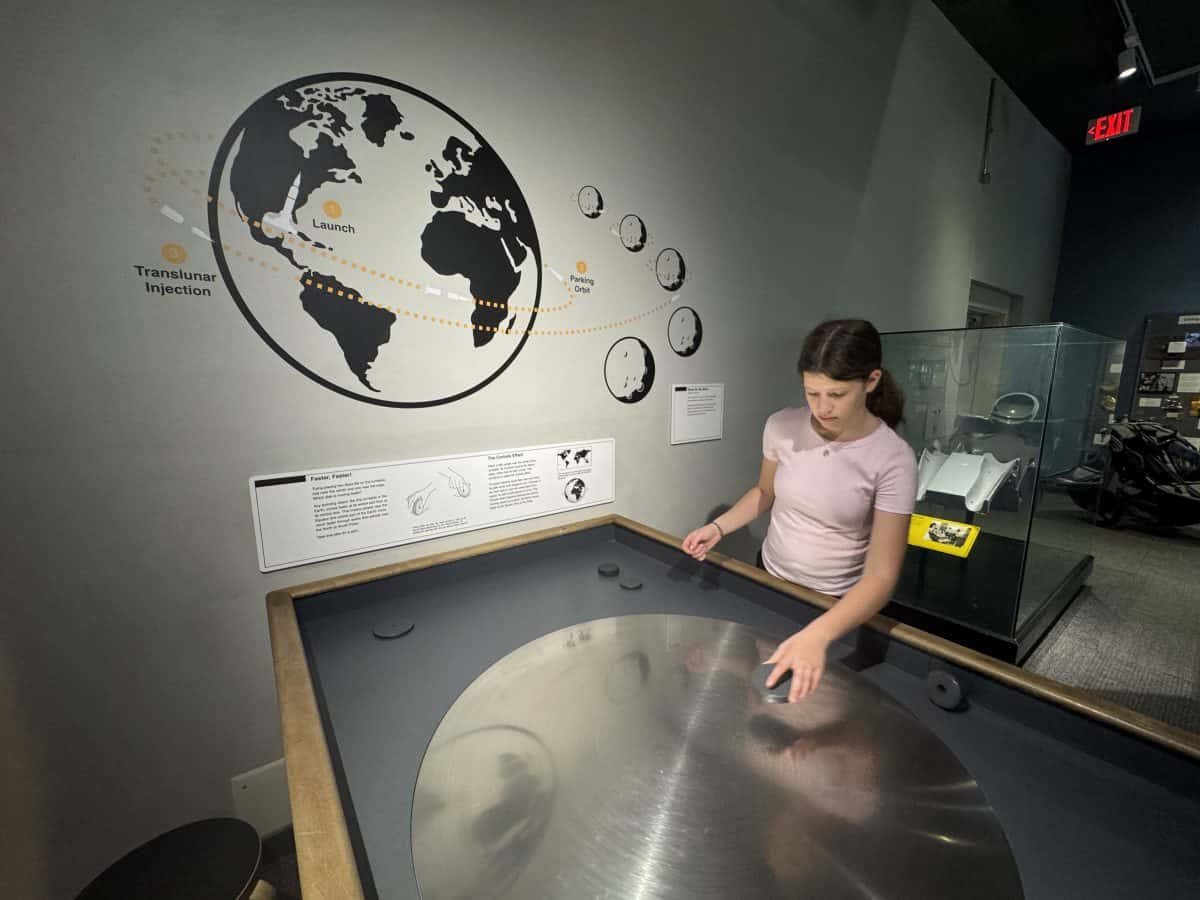
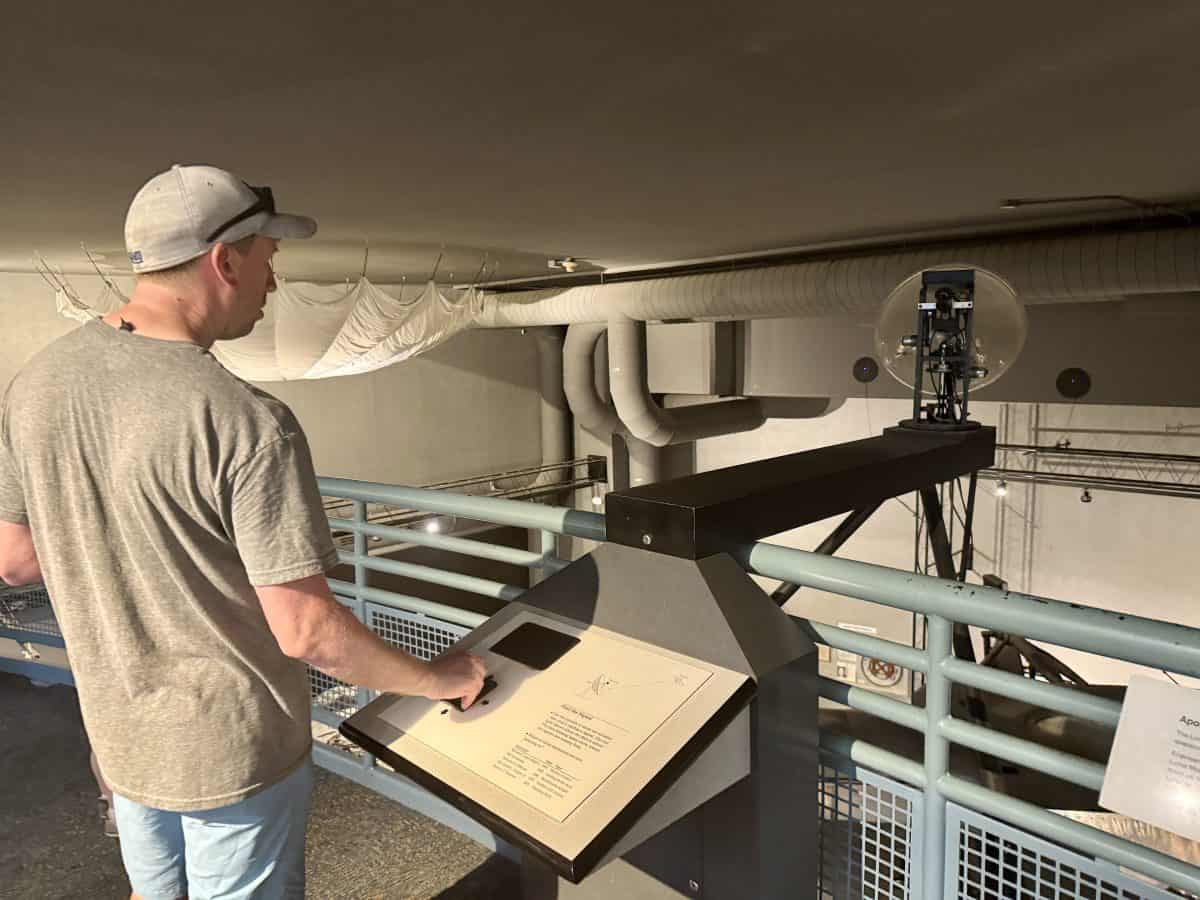
- Learn all about living in space with activities about the Coriolis Effect and other challenges in the Aerospace exhibit.
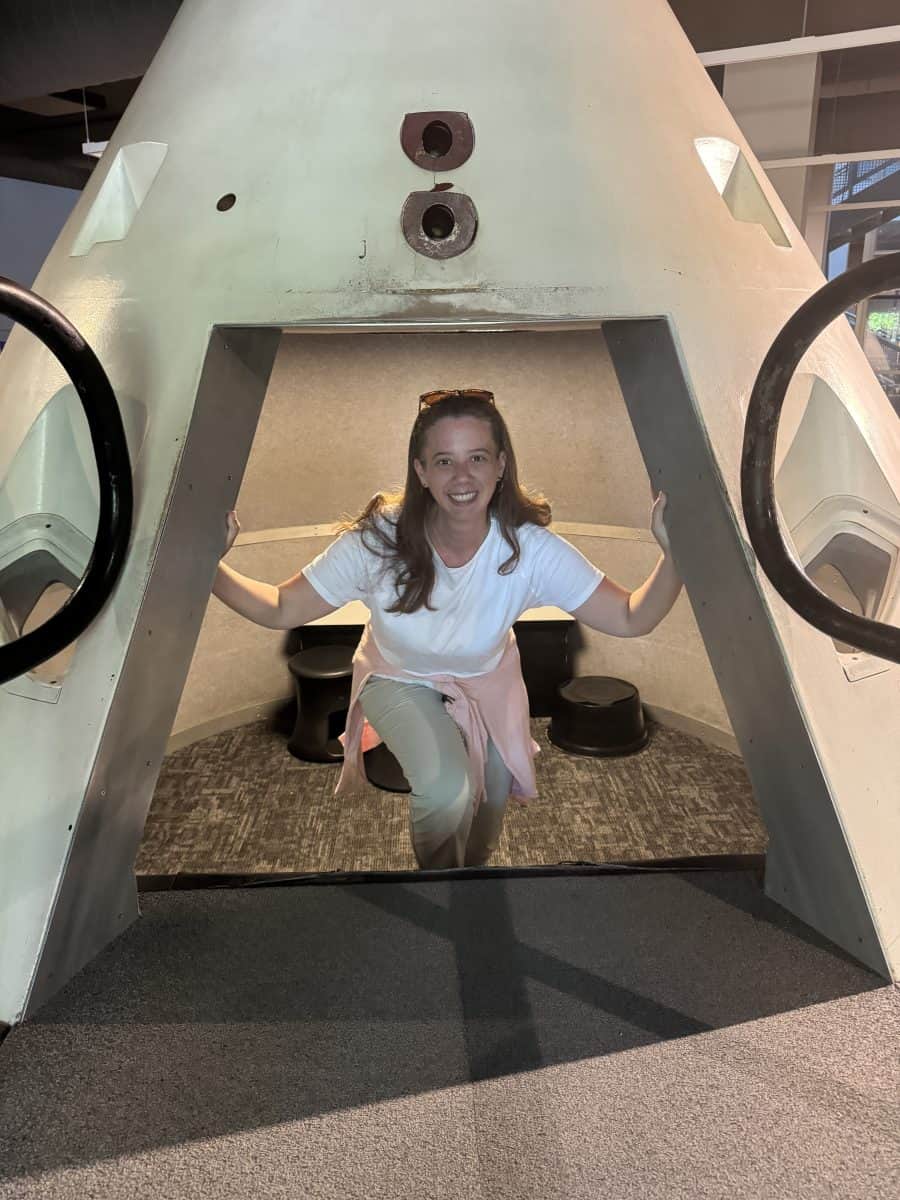
- Sit inside the Apollo Command module test vehicle in the Aerospace exhibit.
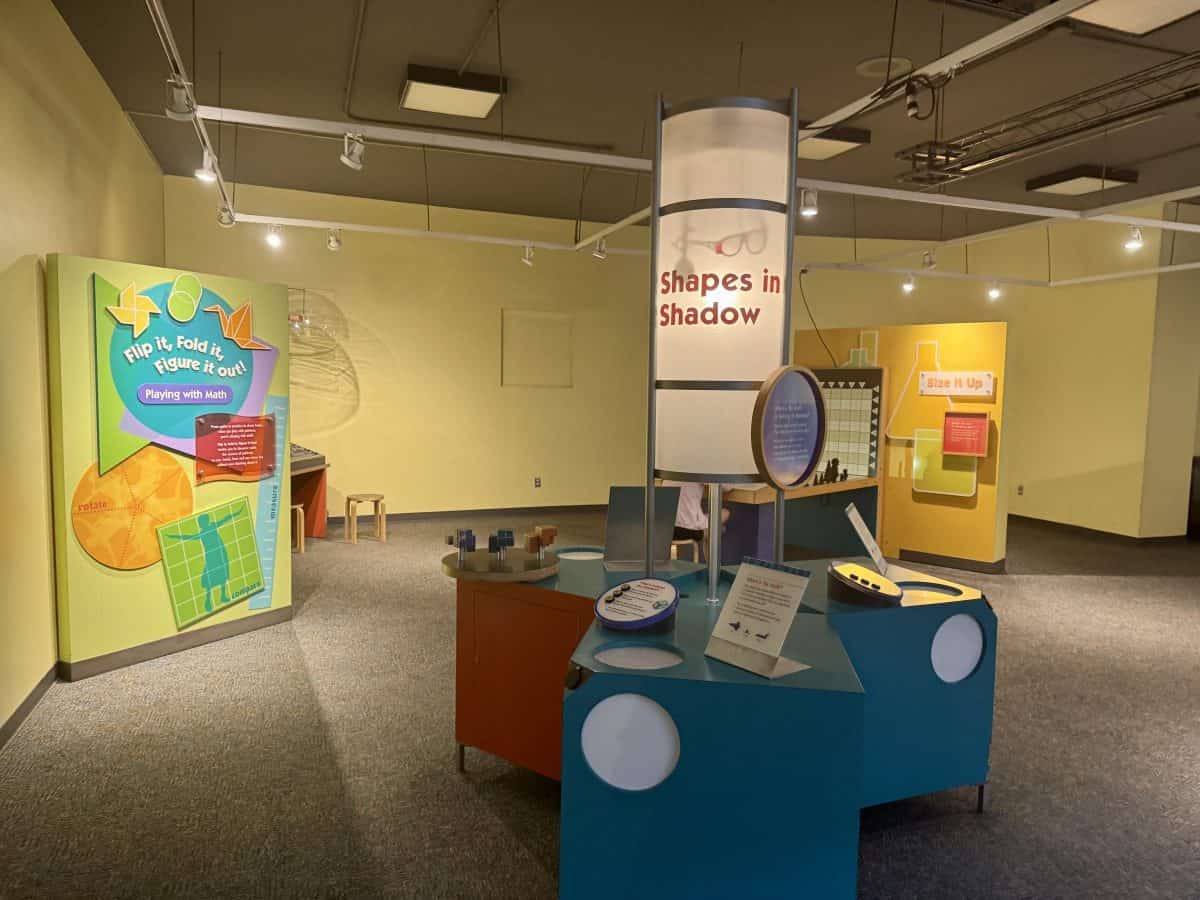
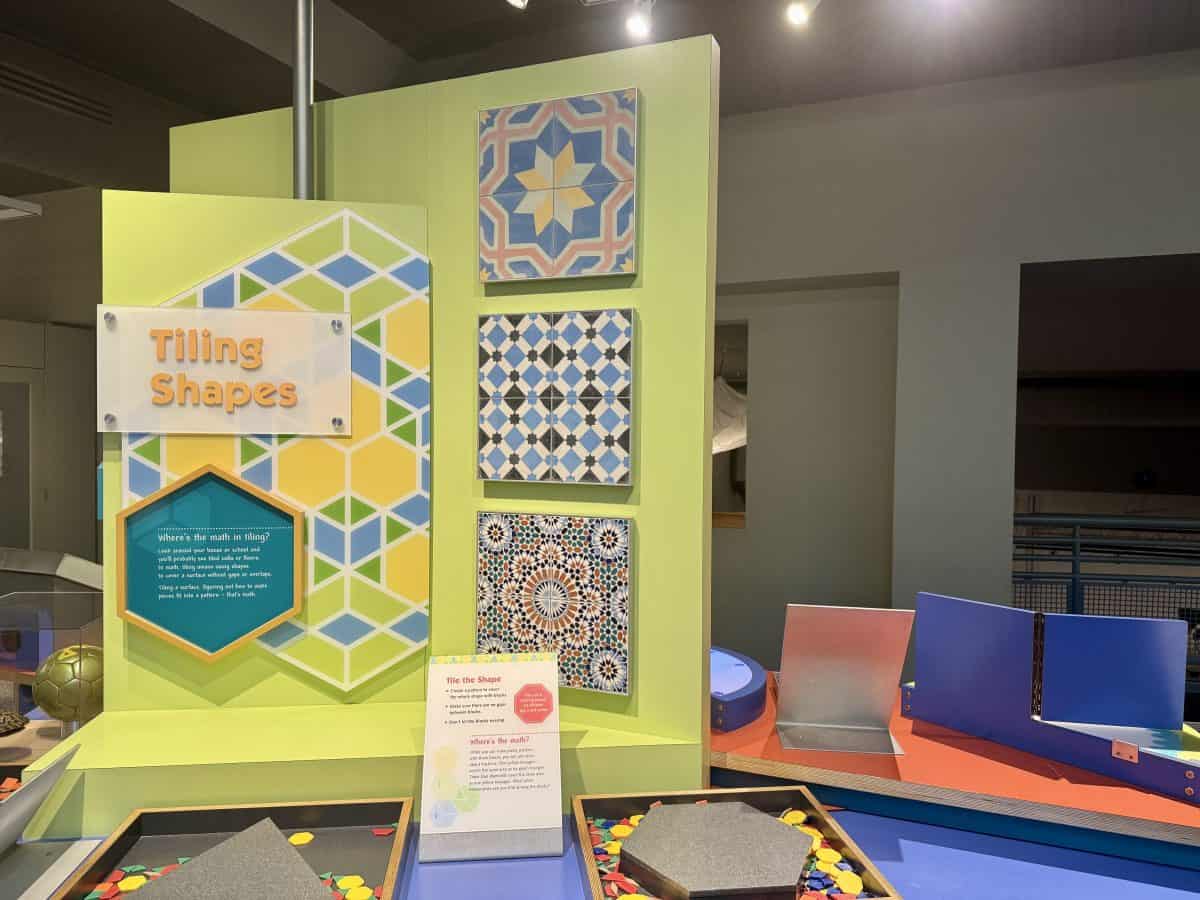
- Test your puzzle skills with brainteasers and pattern puzzles in the Playing with Math exhibit. Guests can also create their own origami cranes and butterflies.
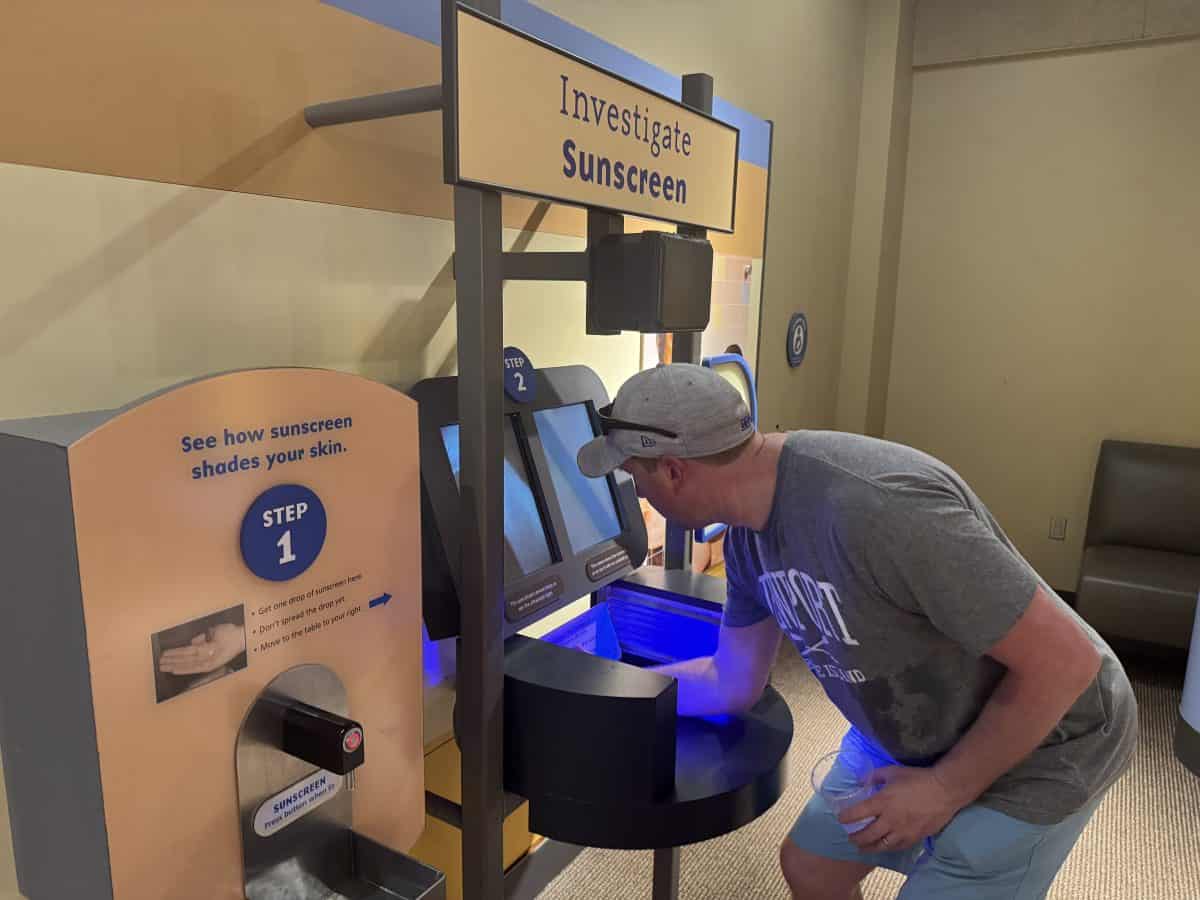
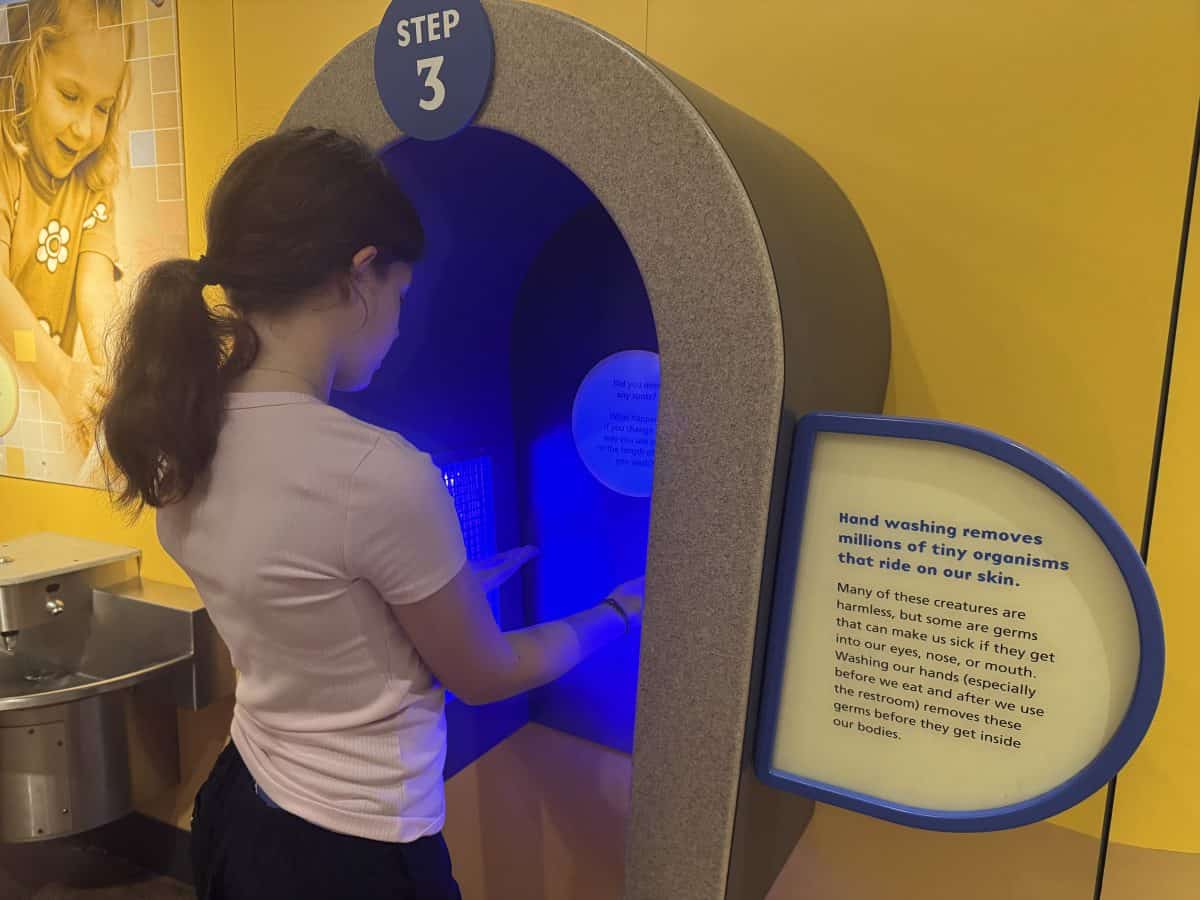
- Test how well you can wash your hands in the Investigate Health exhibit experiments.
- Make your own airplane, test the strength of a miniature parachute, and learn all about the laws of gravity in the Launch Lab.
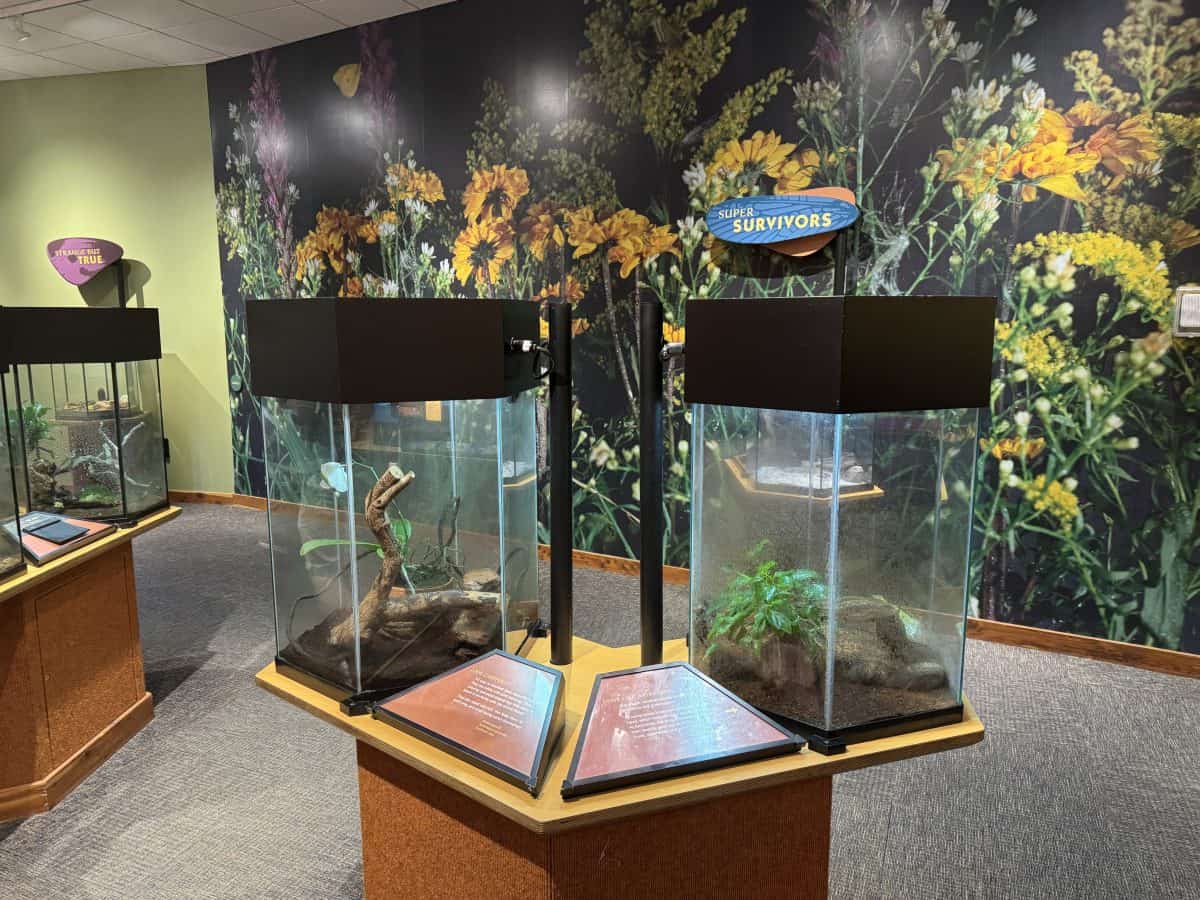
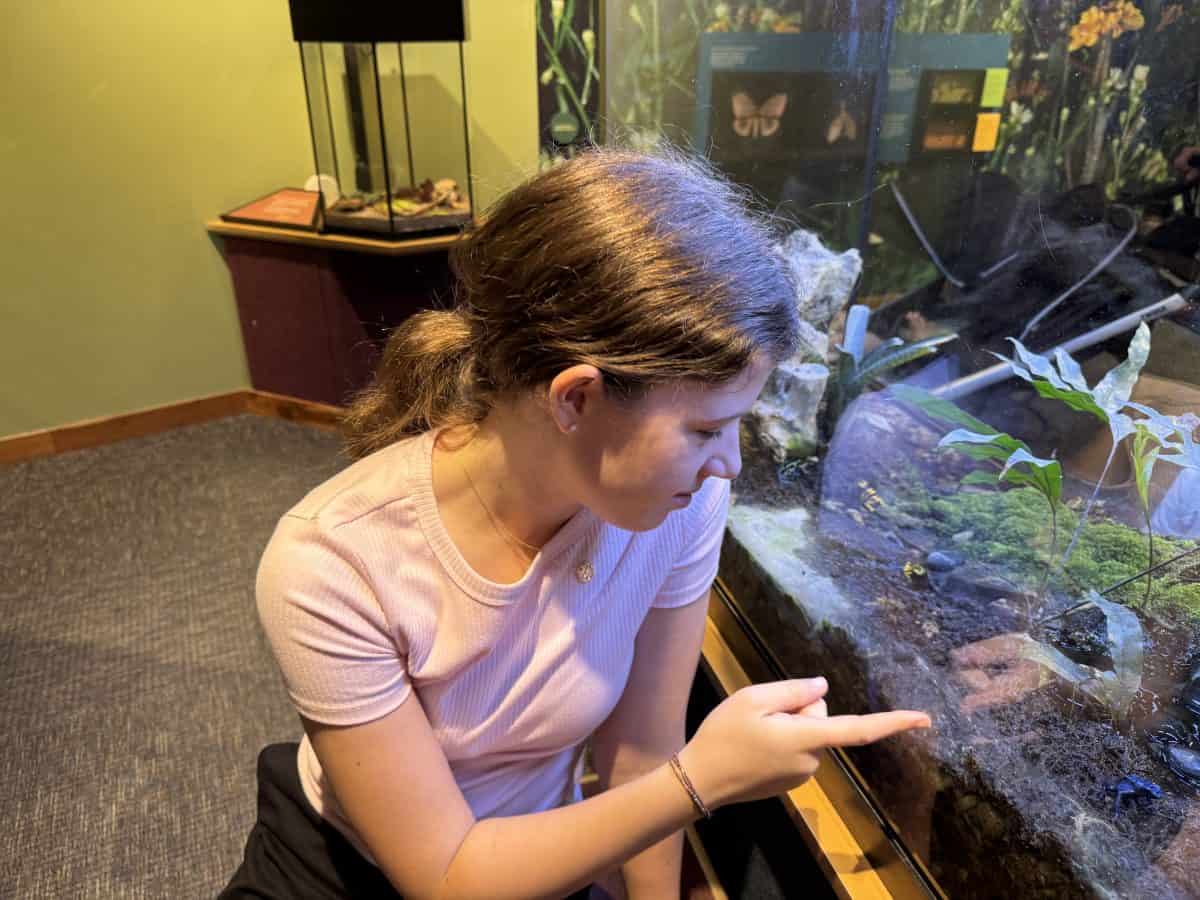
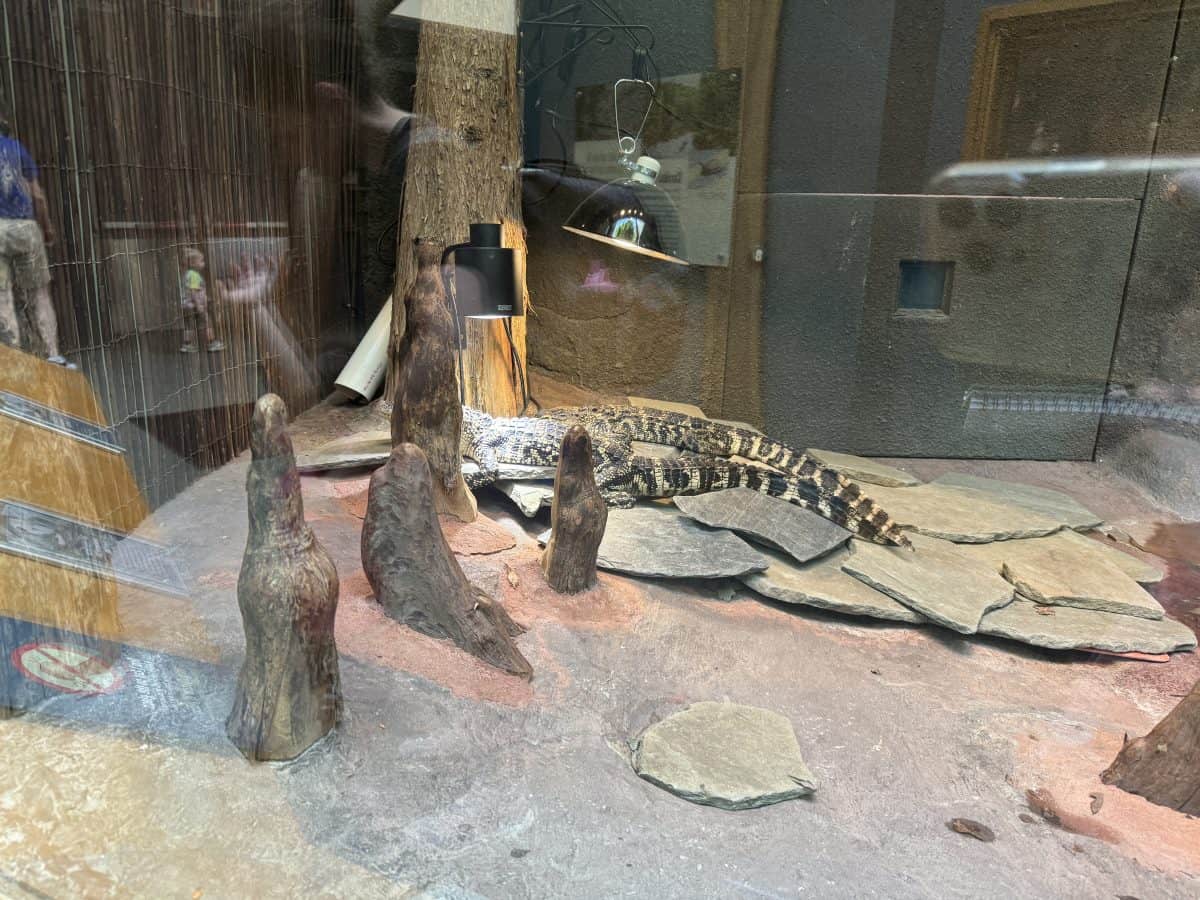
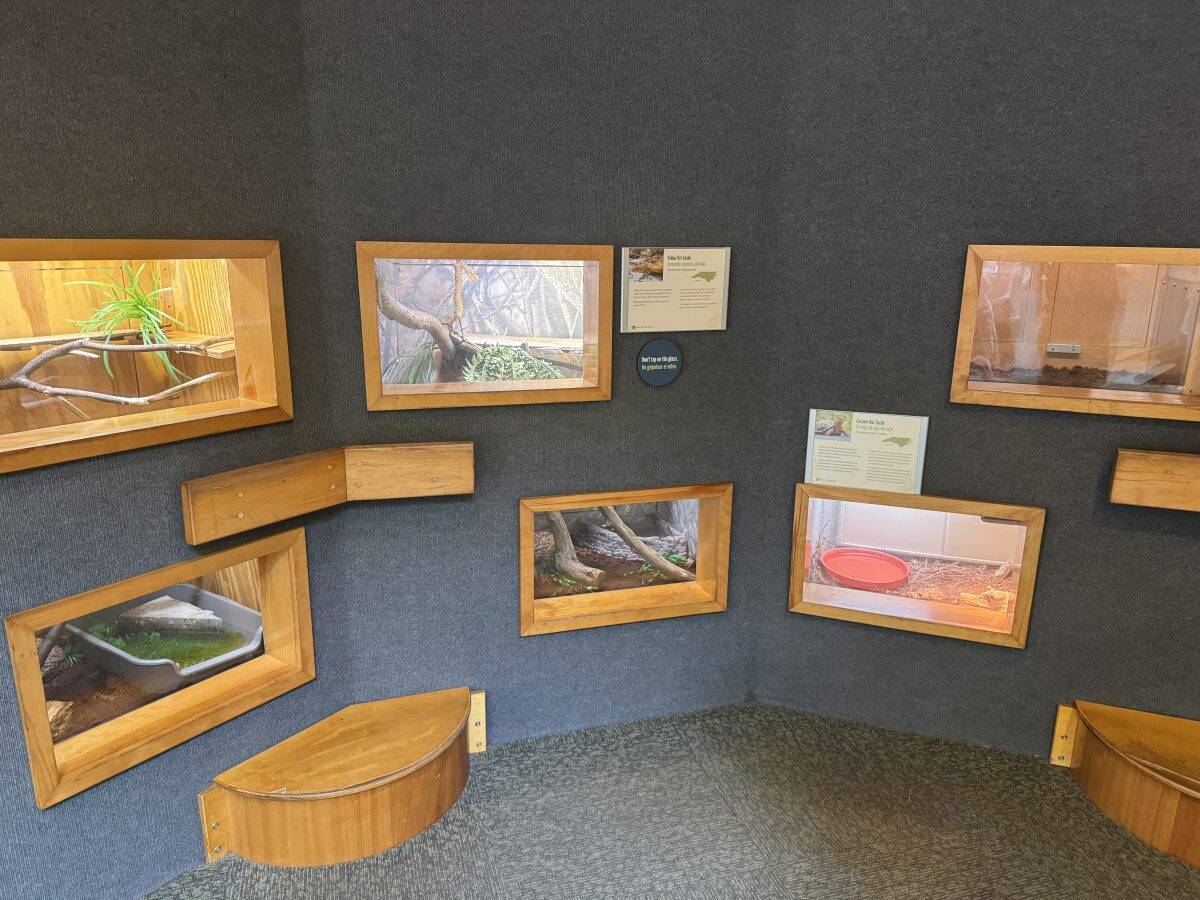
- See possums, snakes, alligators, turtles, fish and salamanders, species who are all native to North Carolina, up close in the Carolina Wildlife indoor exhibits. These animals have all been injured and cannot survive in the wild and are now protected and cared for by the museum staff.
Bonus: The under five crowd will definitely want to check out the Play to Learn exhibit (indoors) just for them, with age appropriate (and sized!) activities, games, and climbing structures.
Looking for other adventures throughout Durham? Check out our feature of Eight FREE Things to Do in Durham. And follow along on our adventures on Instagram, Facebook, and Pinterest.
Disclosure: Our family was given a media pass to explore the museum; all opinions expressed are my own.