Saratoga Race Course, Saratoga Spring, NY

| | |

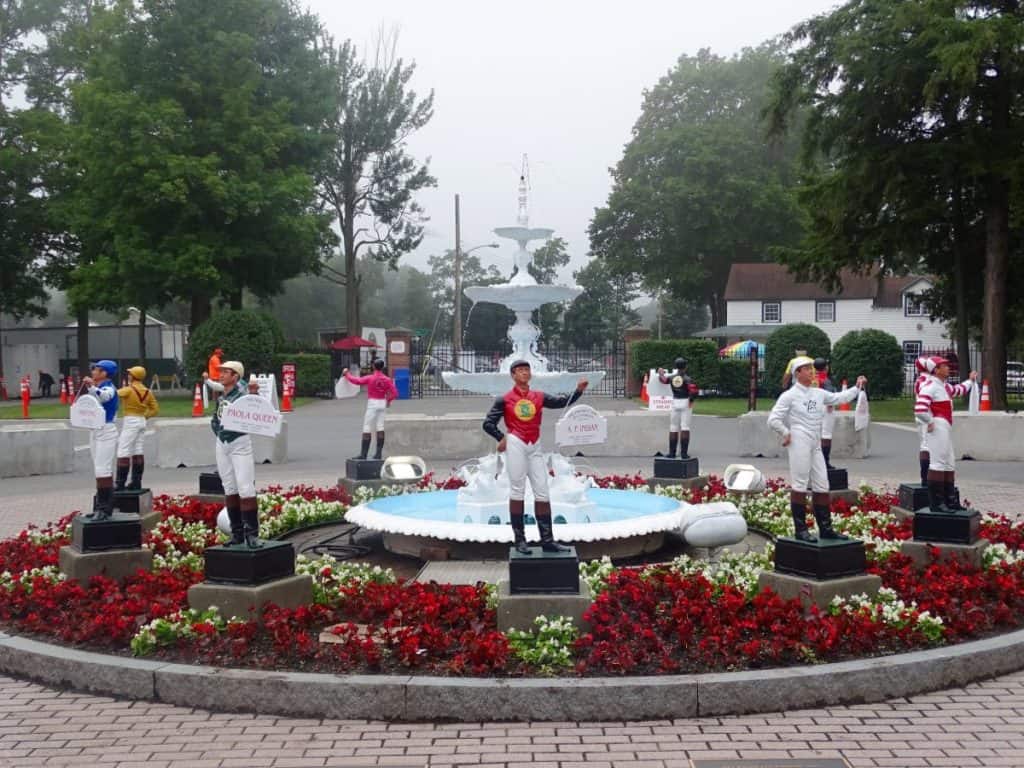
It’s the oldest sporting venue in the country, dating back to 1863: Saratoga Race Course in Saratoga Springs, New York.  Held between late July and Labor Day weekend each year, they race registered thoroughbred horses six days a week (it goes dark on Tuesdays) and have 9-13 races each day.
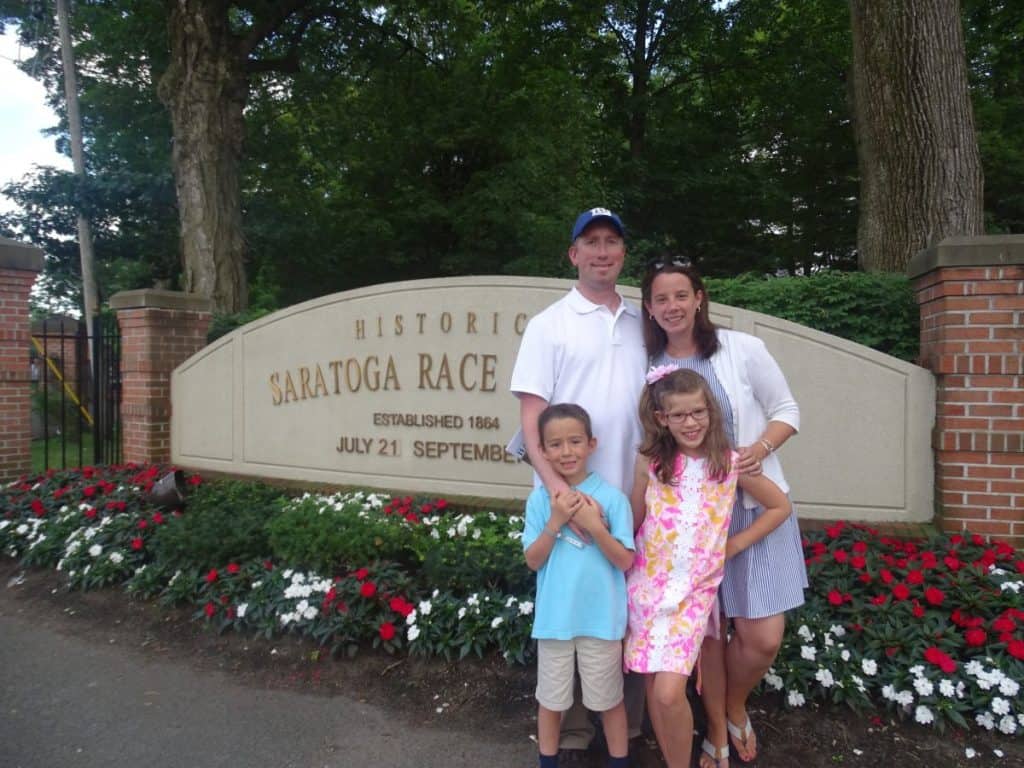
My husband and I took our daughter when she was just six months old (as an add on to our visit to see the New York Giants training camp, when it was held at the University of Buffalo). We had a lot more fun this time, now that both of our children are old enough to sit and watch the races. (I had flashbacks to nursing my daughter on a bench while dozens of men around me screamed at a tv screen in the picnic area). We decided to go the first week the track was open this summer.  We made some stops on our way to the track: Saratoga National Historic Park (read about our visit here) and National Museum of Dance and Hall of Fame (read about our visit here). Here are some of our highlights from the race course:

The “Back Track” tram tour runs every fifteen minutes each morning 7:30am-9am. I had been warned to get there early, as it’s first-come, first-serve and the later timed trams fill up quickly. There is no fee for this 45 minute tour which brings you to the “Back Track” opposite the main concourse. This tour is very child friendly and there are lots of fun facts that will keep children entertained and giggling. The guide greets you where the tram drops you off and give you a tour of:

  • Clear Court: a half mile track that is used to train the ponies before they prepare for the big races or for therapy for injured horses
  • the graves of the four horses buried on the property
  • the housing area for the 1,000+ workers who stay on site for the season
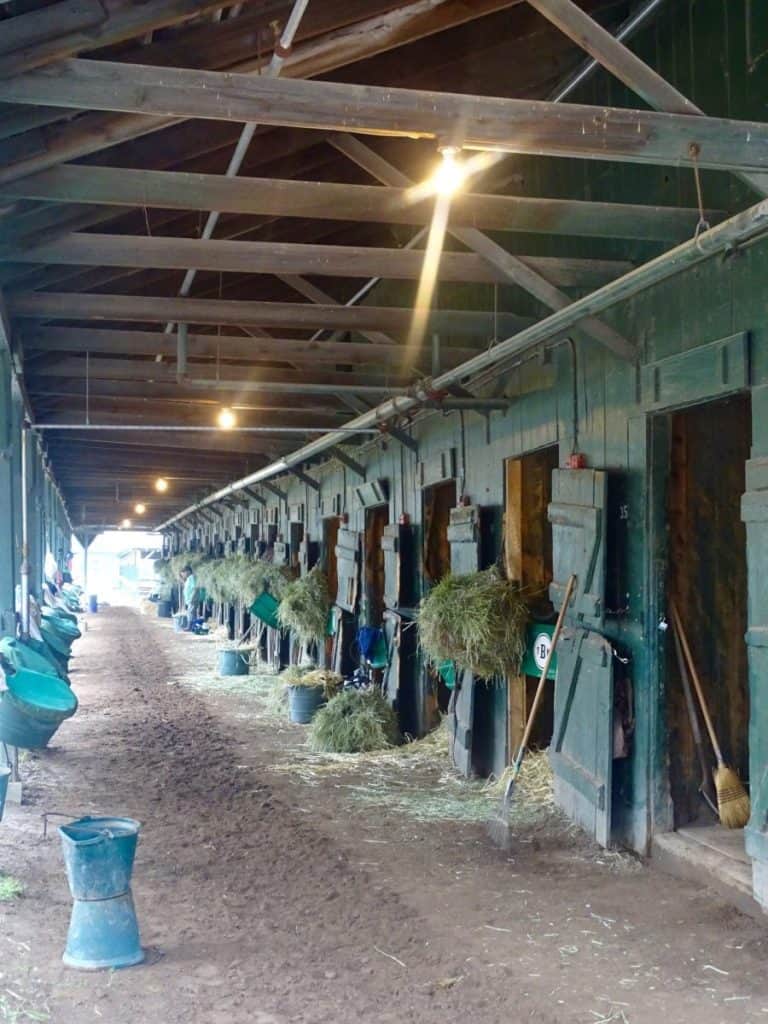
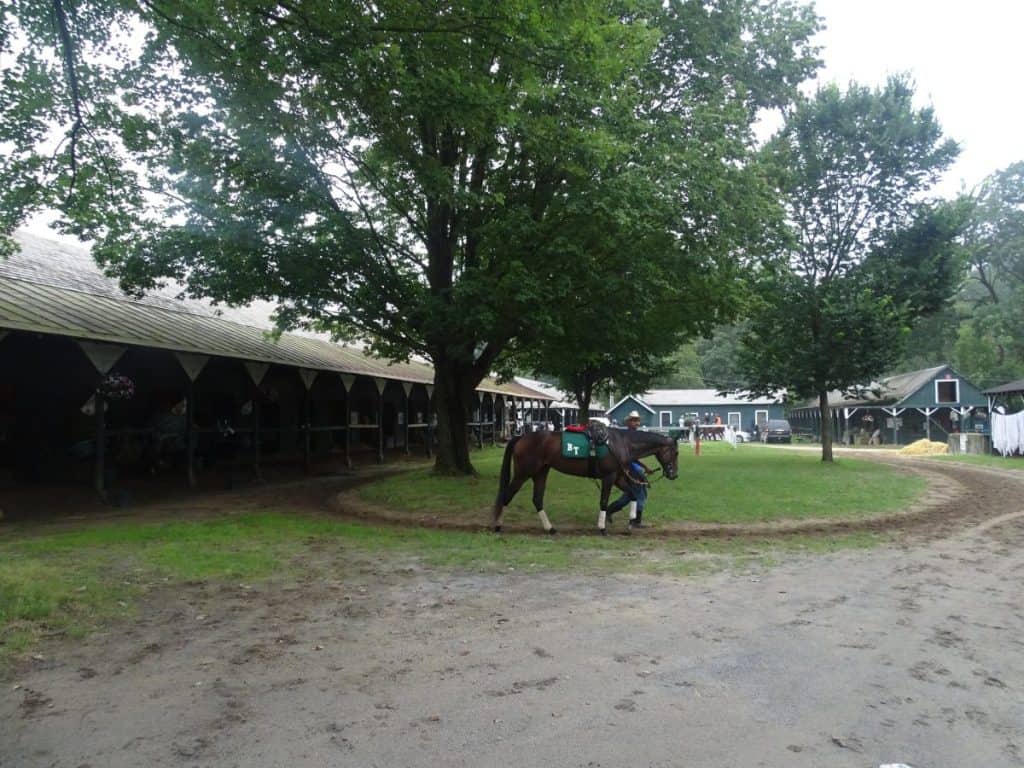
  • the various barns where 2,000 horses are housed. Various owners pay to rent the stalls, and some will decorate the outside with hanging flowers. We saw chickens and goats in the barn area, which we were told are allowed to roam free because they are a calming influence for the boisterous thoroughbreds.
  • the starting gate, run on electromagnets, which is portable (it moves around the course based on the length of each race)
  • my children’s favorite: the manure pit. Twice a week, trucks from Pennsylvania come to load to the manure and bring it back to Pennsylvania to fertilize mushrooms. My son’s still giggling about that fact.
The Walking Tour runs each hour, starting at 9:30am, on the half hour, until 2:30pm and has a nominal charge (it was $10 for our family of 6 to attend).  Some of the info from the Back Track tour was duplicated, but there was also plenty of new information. On the walking tour we saw areas of the main club house, including:

  • The Winner’s Circle
  • The jockey scale (no way I was stepping on that; most jockeys weigh just over 100 pounds!)
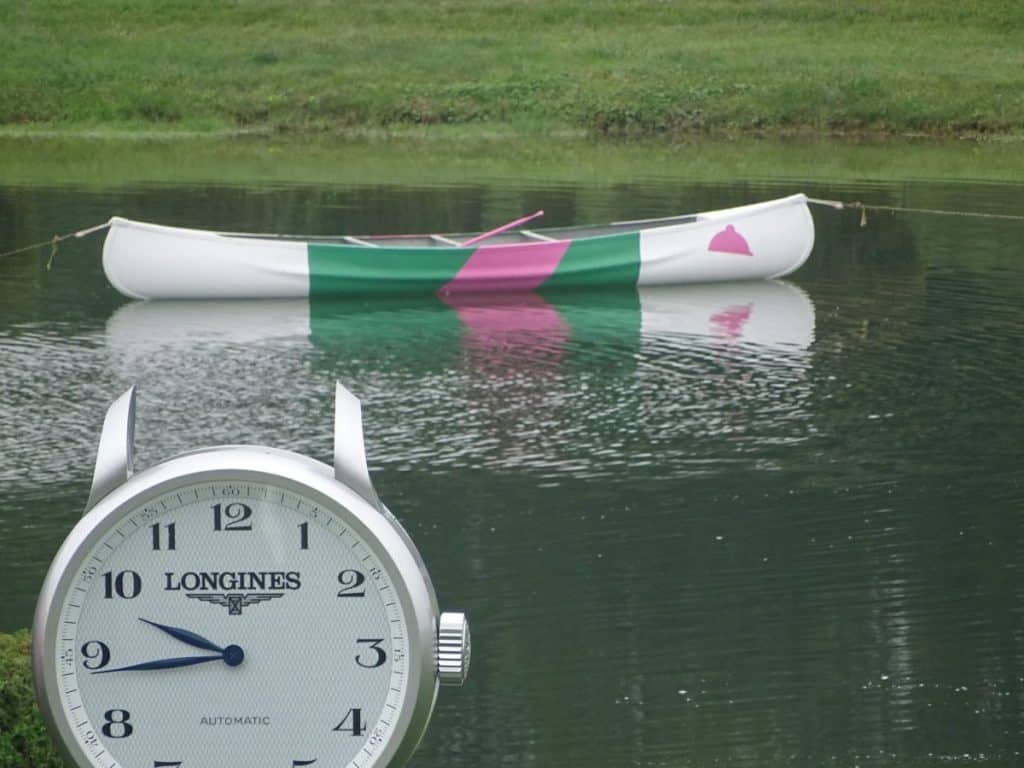
  • the pond in the center of the track, with a canoe painted in the colors of the winner of the Travers Stakes
  • The ceremonious bell that is rung 17 minutes before the post of each race
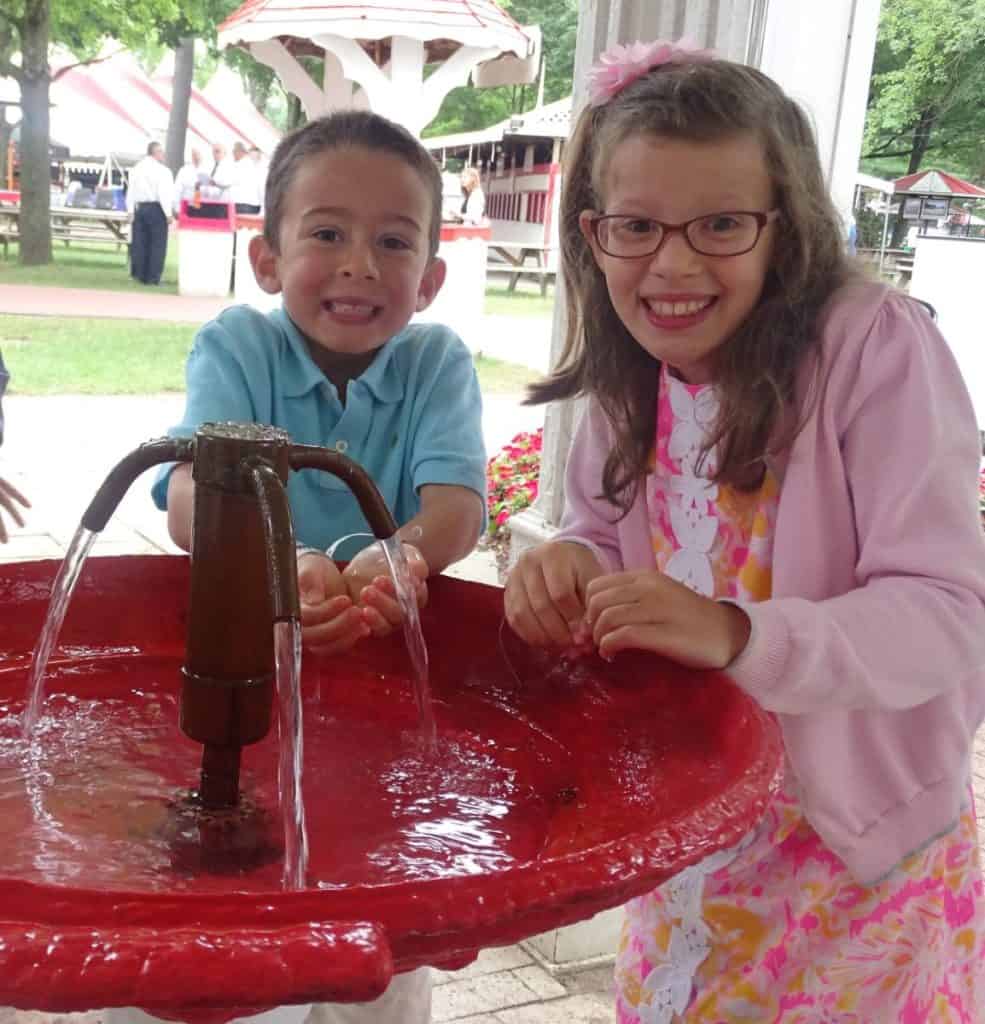
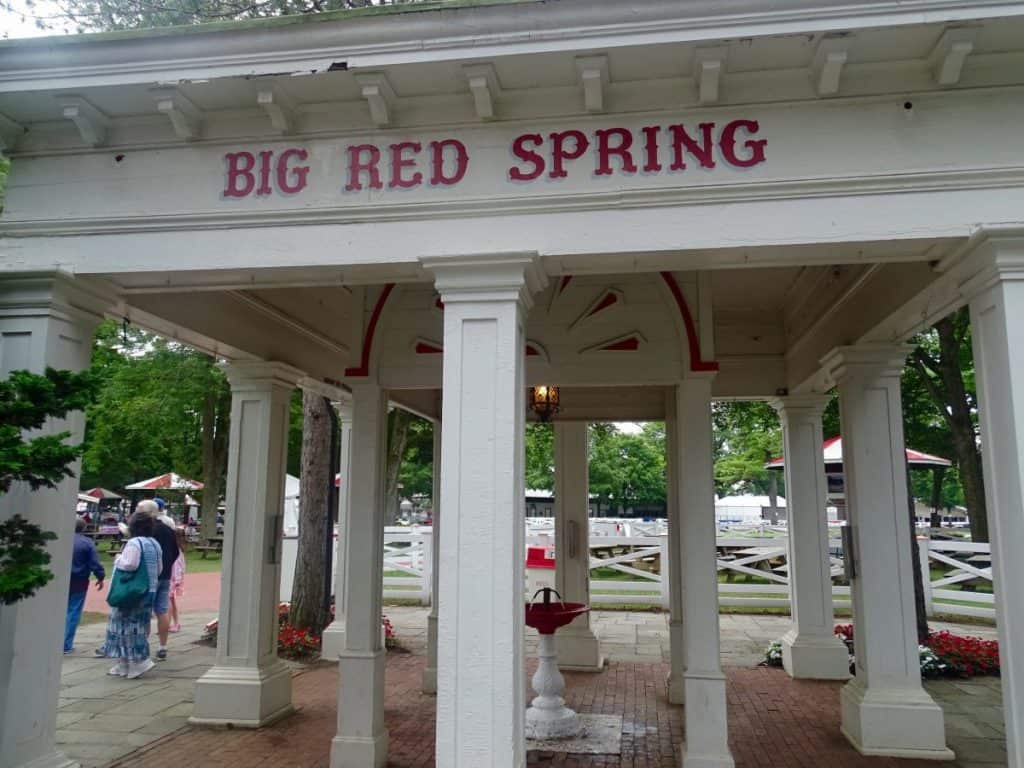
  • The Big Red Spring which has a fountain of mineral spring water- we were warned it has a peculiar taste, and sure enough, everyone in our group did not care for the taste of the water.

Would you like to save this?
We'll email this post to you, so you can come back to it later.

The track is open from 7am-10:45am each morning, and breakfast is served from 7-9:30am.  Many people line up for the 7am opening to reserve a picnic table for the day. It’s common courtesy that if you place an item on a picnic table or set up a blanket or chairs, no one will remove those items and you’ve staked your claim to the spot for the day. We even saw people putting blankets on benches around the area. The Backyard picnic area has approximately 950 tables available to the public, free of charge.

There are also three areas you can pay for premium seating in the picnic area: the Festival Tent area, with 48 tables for rent; the Big Red Spring Tent, a party space for 50 people; and the Miller Lite picnic area, which has tables and chairs for rent. There’s also a Shake Shack and Dunkin’ Donuts on site.
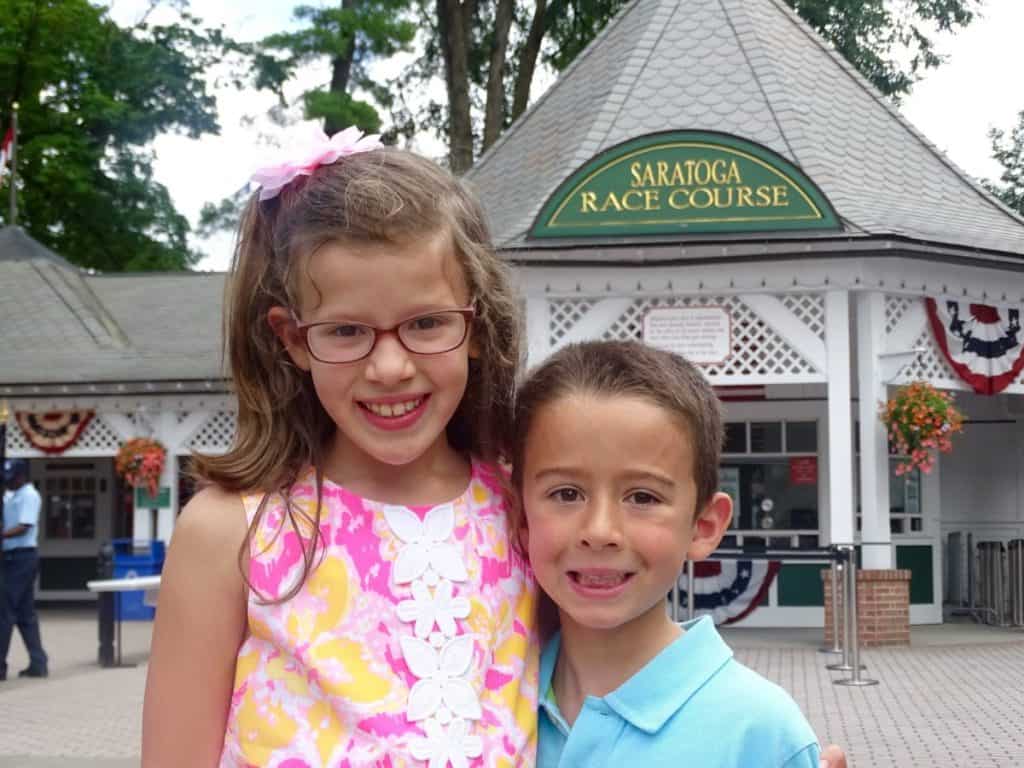
Around 10:45am, they ask everyone who has come for the morning to leave, and then reenter to pay the admissions fee if you’re coming to watch the races. After the walking tour, we had some free time, so we walked across the street to the National Racing Museum and Hall of Fame. You can read about our highlights here.

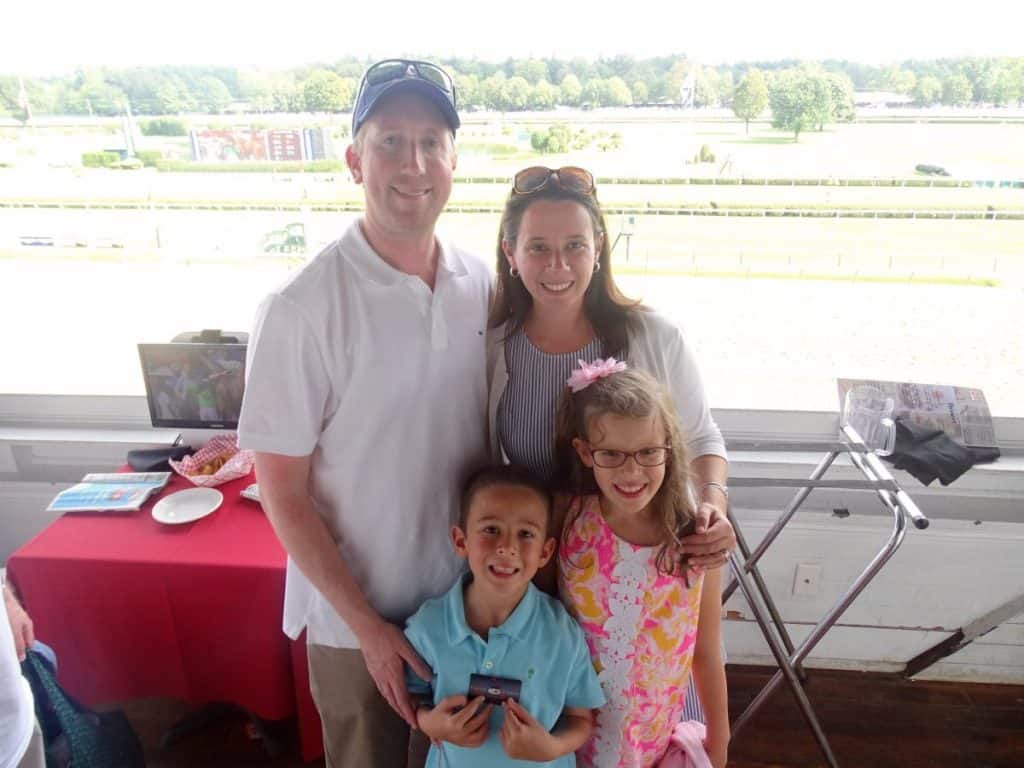
General admission is $5 and you can pay an additional $3 to gain access to the Clubhouse where there is a variety of reserved seating options: grandstand seats, tables, and more formal restaurants. We chose to pay to have a table for the day at the Turf Terrace, which provides shade, a tv kiosk where we could place bets, table service (there was a per person minimum for food) and best of all, a prime view of the track.
There are plenty of spaces to move around and walk if little ones are getting antsy in their seats. There is even a playground located in the East Grandstand, near the box office. Young children will probably like the picnic area best as they will have more space to move and you can bring in small tables, blankets, coolers, food, and any reasonably sized toys (like legos, books, board games). There are televisions mounded under “umbrellas” at just about every angle throughout the picnic area so you won’t miss a thing!


Similar Posts

  • | | | |

    10 Ways to Explore the Florence Griswold Museum in Lyme, Connecticut

    We enjoy visiting art museums with our children. Some people may think art museums are not an ideal spot to bring children, but there are a whole variety of reasons why you should- read them in this post. We’ve recently been researching local museums in Connecticut and were pleased to see that the Florence Griswold Museum in Old Lyme is open and taking very good steps to honor pandemic restrictions and keep everyone safe and healthy.

    Home to military sea captain Robert Griswold and his family in the middle 1800s until Florence Griswold’s death in 1937, the 12 acre estate includes art galleries, the main mansion, three additional structures with exhibits, an artist trail, gift shop, and seasonal cafe. The Griswold family harvested a large collection of gardens, producing much of the food the family ate, and later served to guests. Griswold inherited the home from her family and began welcoming boarders in 1899 as a way of making money. Up to 18 artists, who became known as the Lyme Art Colony, would stay in the home at one time,. Famous guests include President Woodrow Wilson and his first wife, an aspiring artist. Old Lyme became known as one of the biggest Impressionist art colonies in America, in large part to the Griswold campus. Today, it is open to visitors and welcomes families to explore what life was like for the artists in the early 20th century.

  • |

    10 Ways to Explore Butterfly World in Coconut Creek, Florida

    The blog has been filled with posts featuring Florida attractions this year (see the complete index here). This week, we’re sharing a post we never got the chance to publish from the last time we visited family in the Delray Beach area: our top 10 guide to Butterfly World, located 45 minutes north of Miami and 45 minutes south of West Palm Beach. 

    Butterfly World in Coconut Creek is located in Tradewinds Park, which includes dozens of outdoor activities- see the full list “here. Opened in 1988, it is the largest butterfly park in the WORLD and home to over 20,000 butterflies, as well as insects, birds, macaw and more!  Butterfly World typically has up to 50 varieties of live butterflies for guests to see each visit. There are both indoor and outdoor exhibits and most guests follow the one way path (and walk over the suspension bridge) through six aviaries, gardens, and a tropical rainforest.

  • | | | |

    Playing “I Spy” at the Connecticut State Capitol

    Visiting state capitol buildings is one of the first things we do when visiting the capital city. It’s a little ironic that it took our family, who has lived in Connecticut for almost 20 years, this long, but we recently, finally made it to the CT Capitol for a tour.

    Connecticut was founded in 1662 and is known as the Constitution State, as it was the first state to adopt a constitution.  Built in 1878, the Connecticut Capitol building, located in downtown Hartford, was designed by Richard M. Upjohn to replicate a Victorian Gothic style. The building overlooks Bushnell Memorial Park’s 41 acres in the heart of Hartford and was restored in the 1980s to the original colors and design. The addition of the Legislative Office Building (LOB), which opened in 1988, allowed for office space for Connecticut’s 151 Representatives (each representing approximately 25,000 constituents)  and 36 State Senators (each representing approximately 90,000-100,000 constituents). The “LOB” also allows for more public meeting spaces and opportunities for state officials to meet as committees and with public interest groups. The first and second floors of the LOB and the first floor of the Capitol are both open to the public; upper level floors house private offices and chambers and guests must be accompanied by officials. 

  • | | | |

    National Museum of African American History & Culture in Washington D.C.

    Part of the Smithsonian Institute, the National Museum of African American History and Culture is one of the newer museums in Washington DC and opened in September of 2016. The museum was first conceptualized in 1915 but almost 100 years of obstacles and debates prevented it from becoming a reality until a presidential commission in 2001. Since its opening, the museum has welcomed over three million visitors in three years. The location was chosen for its intersection with the Lincoln Memorial, Jefferson Memorial, Capitol building, and White House. The museum is nearly 400,000 square feet and currently displays 3,000 of the 37,000 items in its collection

  • | | | | | | | |

    25 Ways to Love the Springfield Museums in Springfield, Massachusetts

    One of the most popular attractions in the Western part of Massachusetts, the Springfield Museums are a collection of five museums that showcase over 130,000 artifacts related to the areas of science, history, art, and culture. Located in downtown Springfield, the third largest city in Massachusetts, 90 minutes west of Boston and 30 minutes north of Hartford, Connecticut,  the Springfield Museum welcome close to 400,000 visitors each year and offer dozens of exhibits that will engage families of all ages.

  • | | | | | | | |

    Playing ‘I Spy” in Gettysburg, Pennsylvania

    Gettysburg, Pennsylvania, a town of less than 10,000 people, is the site of the largest Civil War battle ever fought, lasting three days in early July 1863. Over 51,000 soldiers were captured, wounded, or killed. The Battle is considered the turning point of the American Civil War, as the Union won the battle over Robert E. Lee and the Confederate army.

    Each year, over three million people visit Gettysburg to learn about American history; to explore the museums, shops, and restaurants; and to enjoy the outdoors- there are over 31 miles of hiking trails. Many locations around town honor the people who fought in the battle and the civilians who supported them during and after the battle. The town also has strong ties to former Presidents Lincoln and Eisenhower.