National Geographic Encounter: Ocean Odyssey, New York City
Times Square is known for being one of the most popular destinations in the world. There are Broadway shows, the famous New Year’s Eve ball drop, dozens upon dozens of restaurants and stores, and now, several family friendly experiences. Recently, I was invited to check out the National Geographic Encounter with my family. I had a feeling the “Ocean Odyssey” would involve a lot of water, but was relieved we never actually got wet!
Opened in October 2017 and covering over 60,000 square feet of space in the middle of Times Square, The Encounter: Ocean Odyssey is described as an “immersive entertainment experience” and truly was unlike anything else we have done. Visitors go “underwater” in the south Pacific Ocean, travel past Hawaii, and end back on land in California. You’ll hear authentic sounds from dozens of sea creatures over 200 loudspeakers.

Traveling with Kids:
- You’ll need to check strollers (and coats in the winter). You’ll go down an escalator to begin your journey and up a flight of stairs at the end of the tour. There is an elevator available.
- Restrooms are located at guest services in the lobby and in the middle of the tour, near scene 7.
- Your tickets are for a specific time and this helps the flow of crowds. I always like to go to exhibits and tours first thing in the morning, and I think it helped having the 10am (first time slot) ticket. I noticed when we wrapped up around 11:30am, a line had started to form and you might have a short wait, even with a timed ticket. I recommend purchasing timed tickets ahead of time online here. You’ll bypass a good portion of the line. Alternatively, going after dinner should also have smaller crowds.
- Plan on spending about 90 minutes for the whole experience. You’ll travel through 8 scenes (plus a couple of hallways) and spend 5-10 minutes in each scene. The last scene is Exploration Hall, where you’re free to wander and explore without an end time.
- You’ll travel in groups of approximately 25 people (never more than 30) and it’s the perfect size. Some scenes you sit and watch together, other scenes you go through one family at a time, and some scenes are in an open room with plenty of space to move. There was no pressure to be first, we did not feel confined, and every spot has unobstructed viewing for the scene.
- A couple of the scenes are very dark and loud and will surely startle little children; I have noted them below. If you think your child might get scared, just ask the friendly staff and they’ll bring you to the next area to wait for the group.
- The tour ends with a retail store filled with sea themed stuffed animals, clothing, souvenirs; a variety of drinks; and a good collection of National Geographic books. I also spied a refillable filtered water cooler.
The 10 scenes take you through an adventure in the Pacific Ocean which explore:
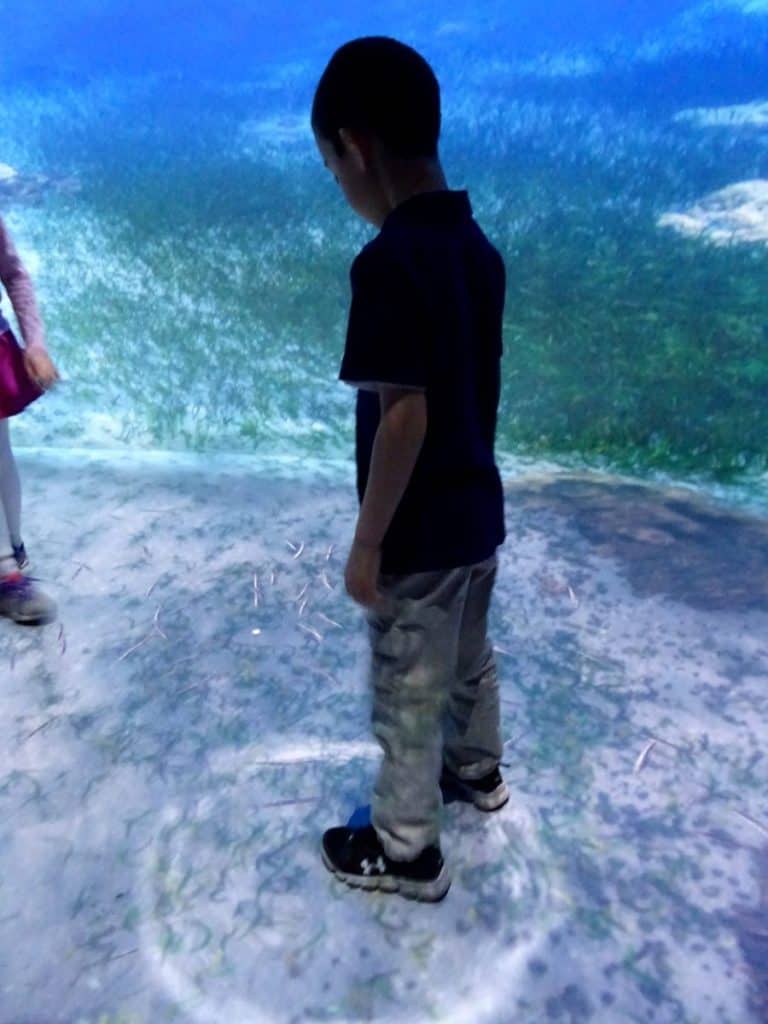
1. The Solomon Islands in the South Pacific, where fish “swim” under your feet on large projectors
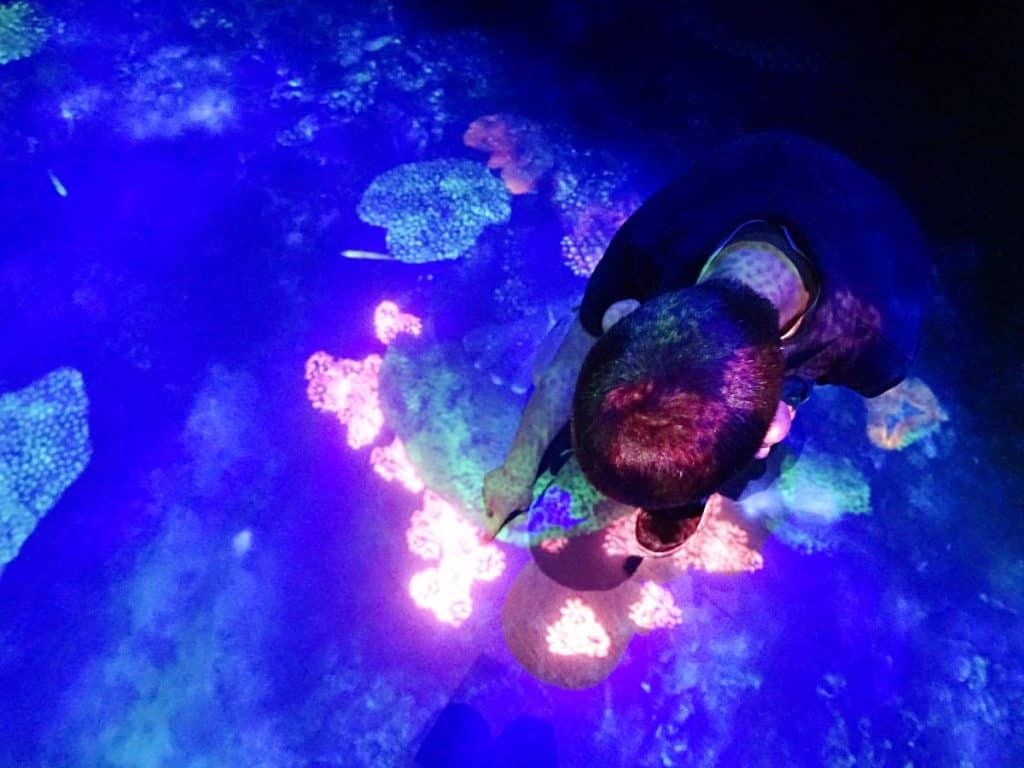
2. The Coral Reef at night, with narration about ocean life 20 feet below sea at night
3. The deep ocean south of Hawaii late at night, where you’ll sit on padded benches and listen to the sounds of sea life. *Note: this scene is extremely dark with occasional loud noises that could scare young children.
4. The Humboldt Squid room, where the 5 ½ foot, very aggressive “Red Devil” squids will wrestle and attack one another. They’ll “jump” from one side of the room to the other side on massive screens. *Note: this scene is dark very with very loud noises as the squids attack (and eventually kill) one another.
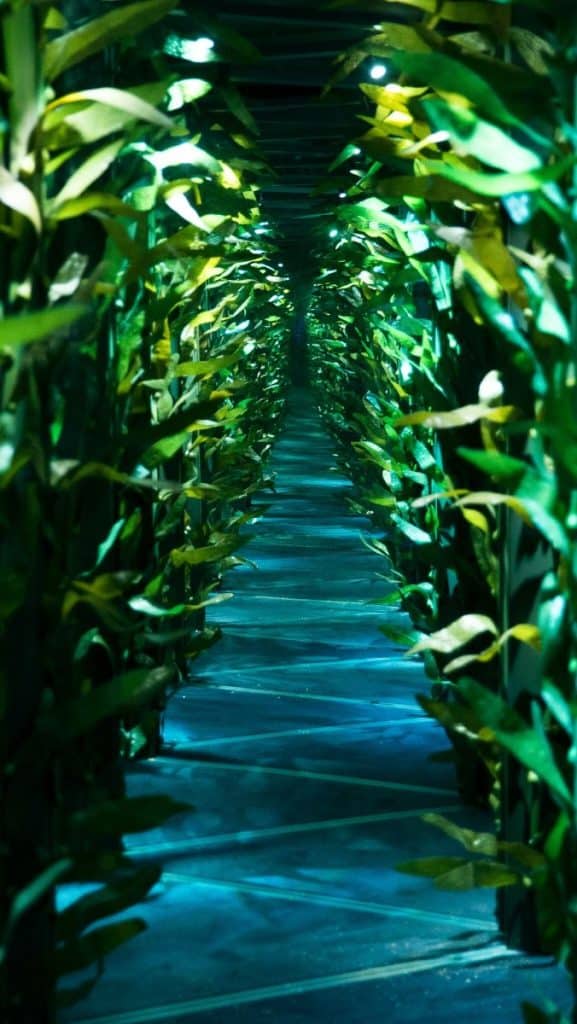
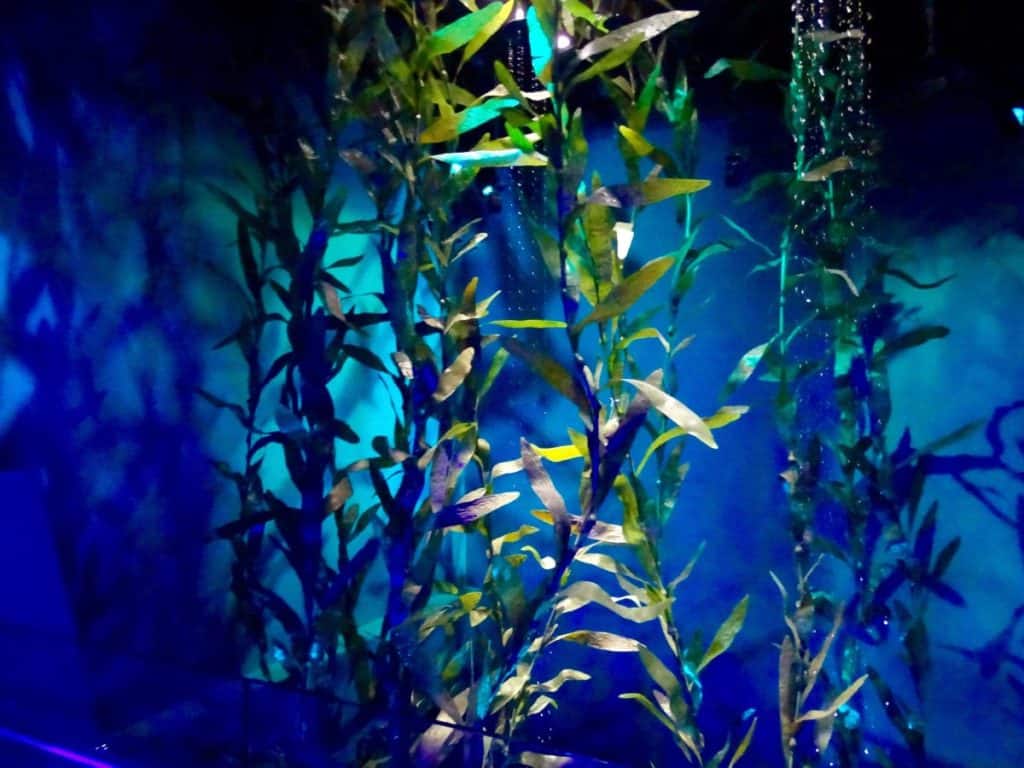
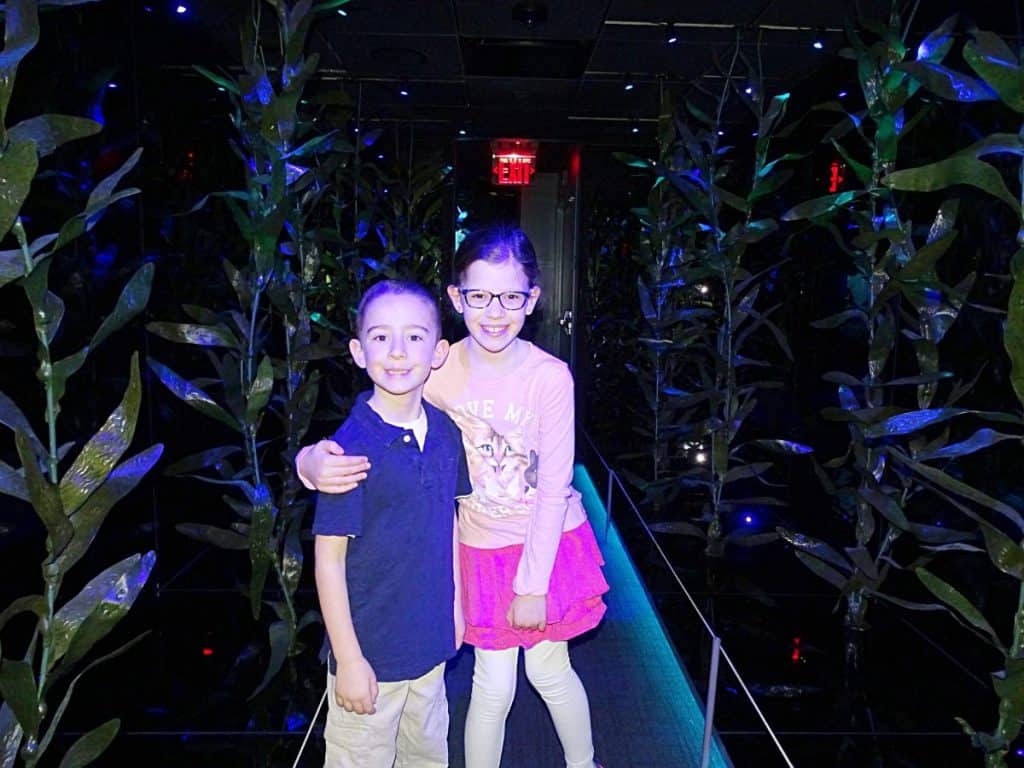
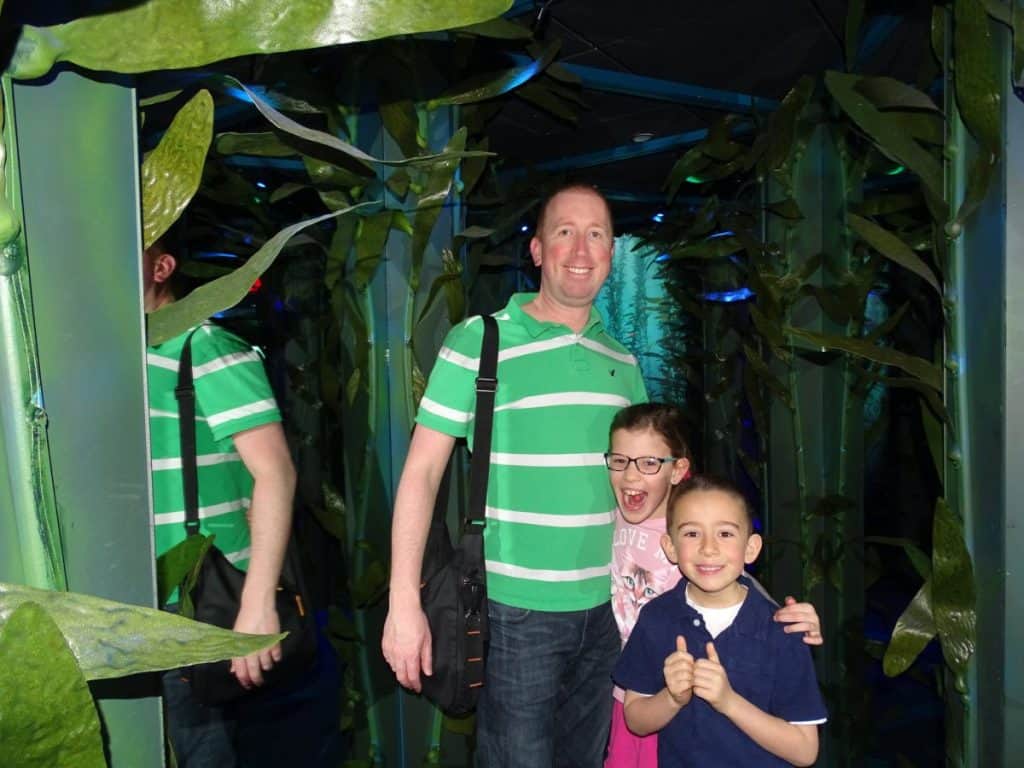
5. Southern California and the Kelp Forest, where you’ll need to escape the maze of mirrors
Would you like to save this?
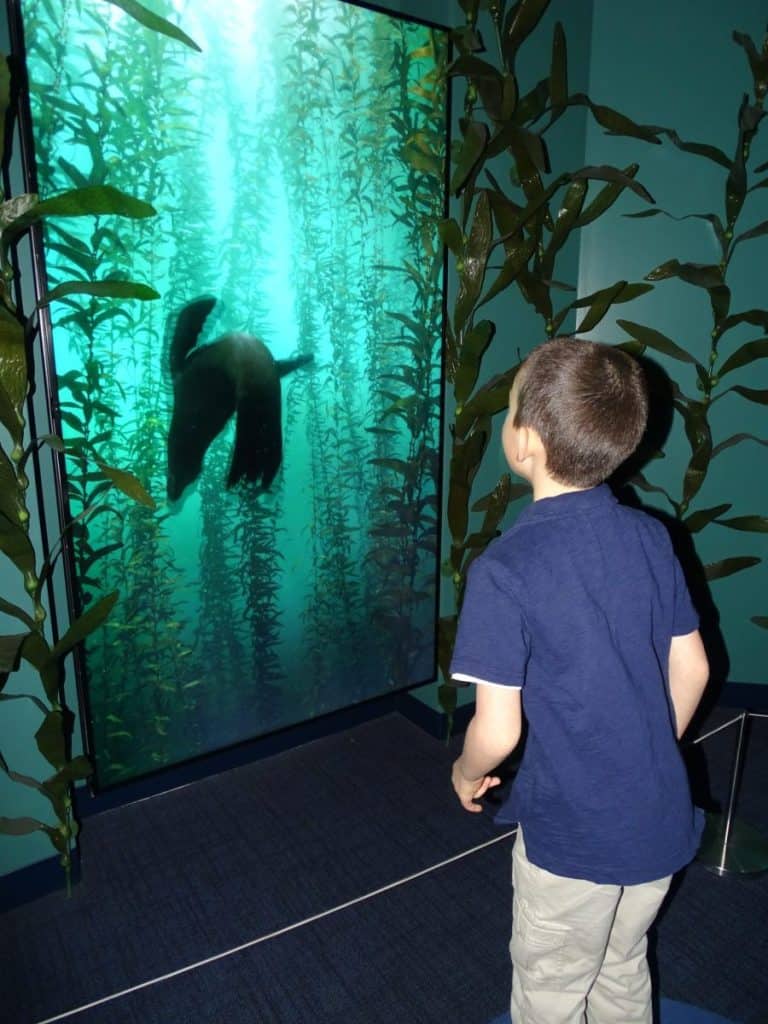
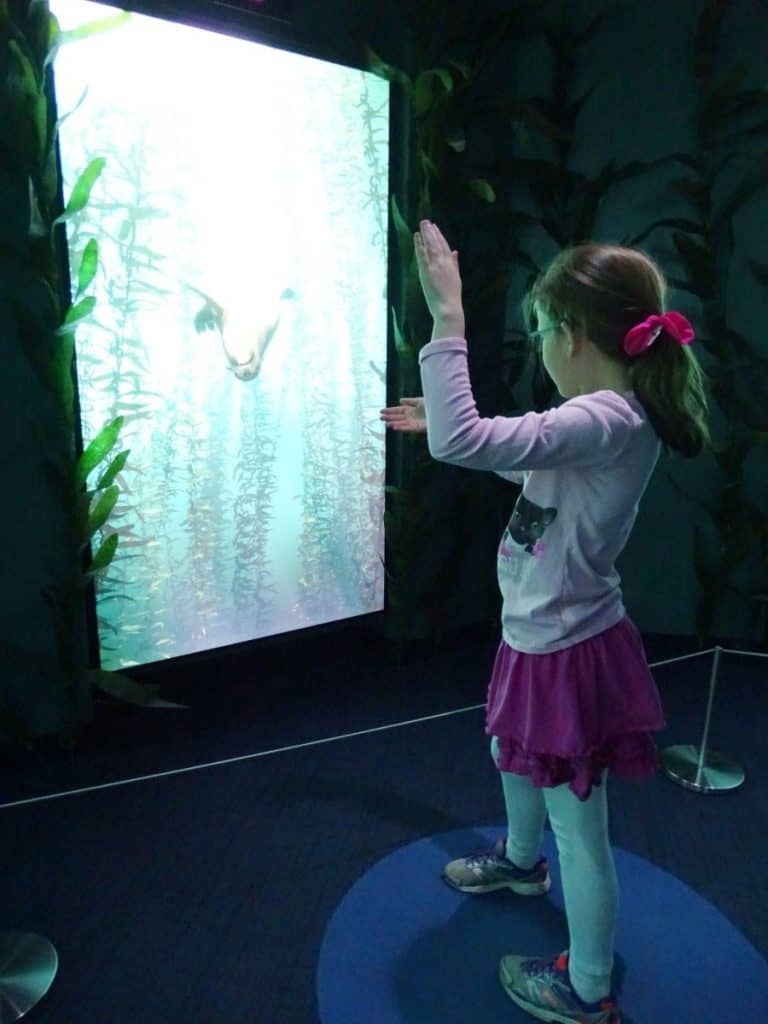
6. More of southern California, where you’ll be greeted by sea lions who will mimic your every move. My children especially loved this part of the journey!
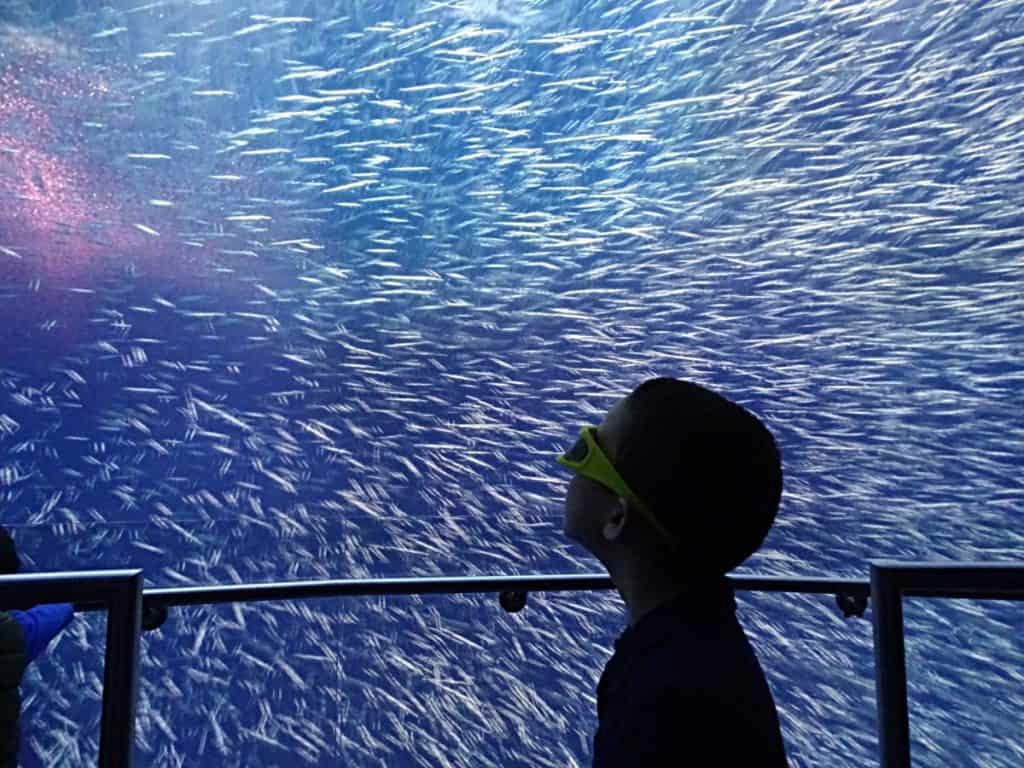
7. The “Bait Ball” (the term for how anchovies swim to avoid being eaten), where you’ll need to don 3D glasses to watch a whale attack a school of “raining anchovies”.
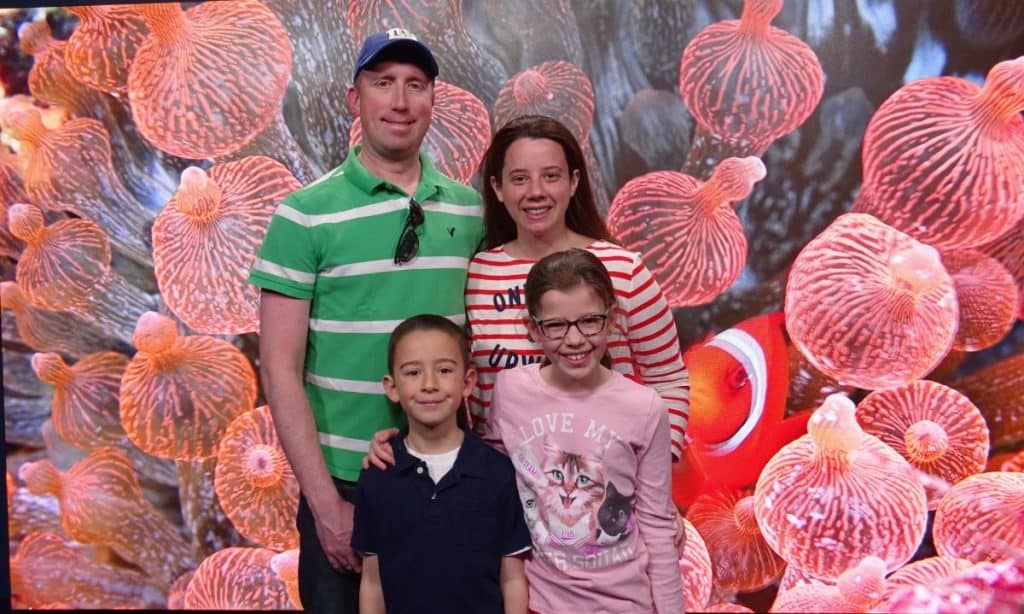
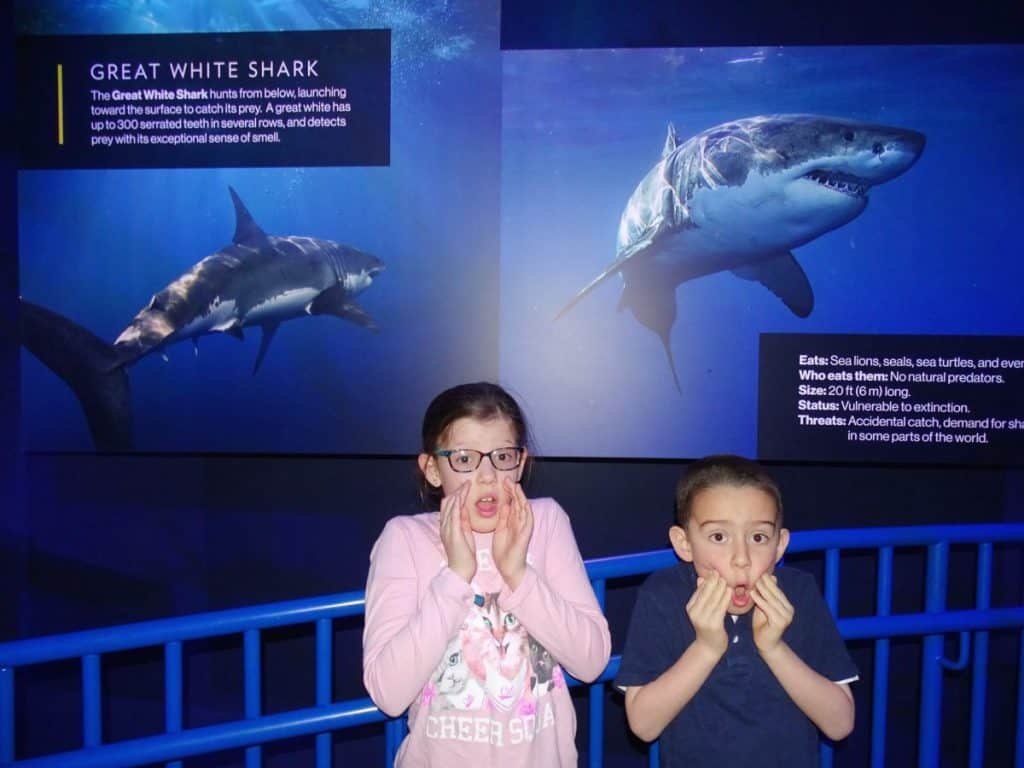
8. The Hall of Heroes, with videos of the actual footage used to create the various exhibits in the Encounter, and a photo encounter to put yourself in the midst of the Pacific Ocean.
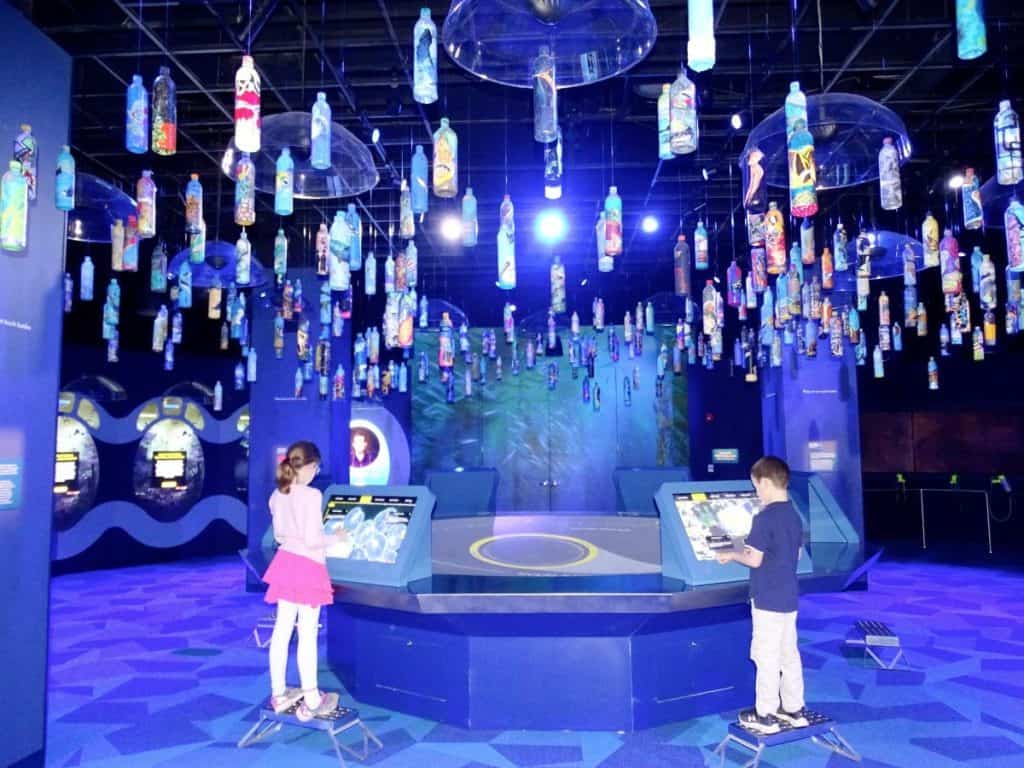
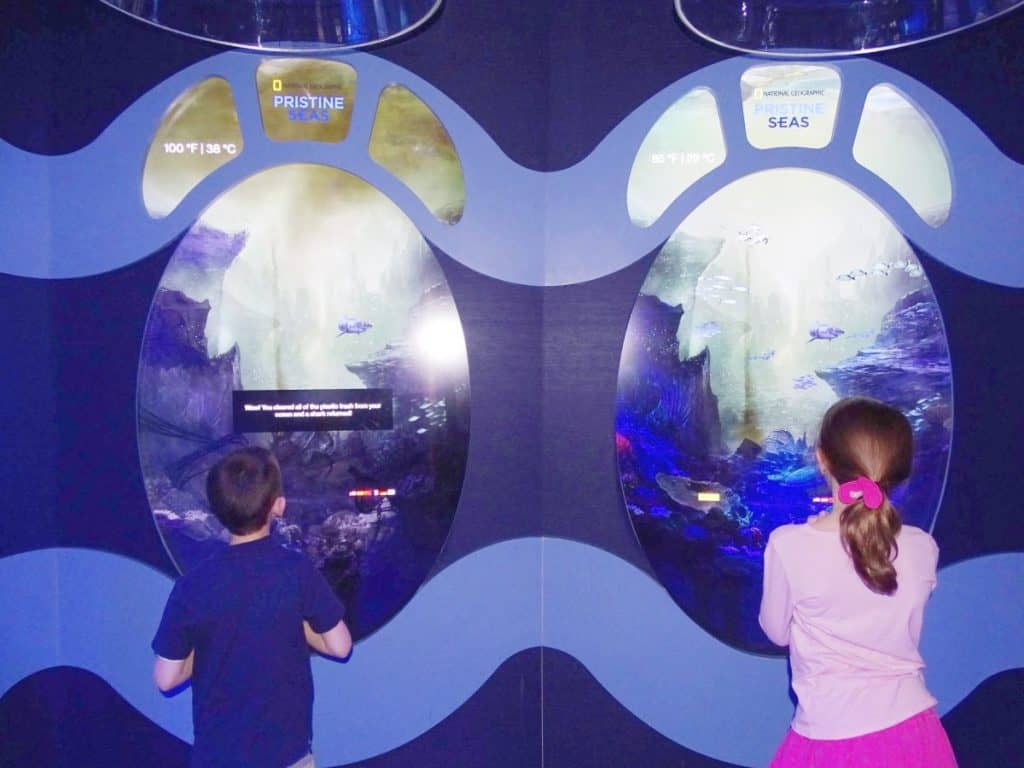
9. Exploration Hall, with a dozen interactive screens which test your sea life and conservation knowledge and rate your ability to make decisions that positively affect sea life and our planet. There are also puzzle pieces where you can write a pledge to protect sea life and display it on a massive wall.
If you want more nearby fun, check out Gulliver’s Gate next door; it’s a miniature world with over 300 models of scenes from around the world. You can read about my family’s adventures at Gulliver’s Gate here.
Eating Nearby: Literally next door and across the street are three popular, family friendly options: Carmine’s (Italian, served family style with HUGE portions), Sardi’s (the “place with all the famous caricatures on the walls” and a $14 kids meal option) and Junior’s (open for breakfast, and serving yummy sandwiches, burgers, and fries).
Disclosure: I was given a press pass for my family to experience this Encounter. The photo of the Kelp Forest was taken by National Geographic, and used with permission. All opinions expressed are my own.