
Five Spots to Explore at the George Washington Masonic National Memorial in Alexandria

Built from 1922 to 1932 to honor George Washington, a Freemason at the age of 20 in 1752, the George Washington Masonic National Memorial overlooks Alexandria, Virginia high atop Shooter Hill. The nine story Memorial is 333 feet tall, just 100 feet shorter than the Washington Memorial in nearby Washington. It is the home to a museum, active Masonic temple, research library, and performing arts auditorium. It was named a National Historic Landmark in 2015.
At the peak of membership in the 20th century, there were over three million Freemasons in the United States, and membership includes 14 US Presidents and other prominent figures. Guided, one hour tours tell the history of the brotherhood of Freemasons, who seek to positively contribute to their communities.
Travel Tips:
- The Memorial is open seven days a week all year, except for major holidays; guided tours are offered five times a day. Children ages 12 and under receive free admission; information here. Visiting the Observation Deck of the Memorial is part of Alexandria’s Keys to the City pass; more info here.
- The Memorial is handicap accessible with elevators and ramps.
- Plenty of free parking (a 200 car lot) is located to the right of the memorial. Visitors should climb the stairs and enter through the front. The handicap accessible entrance is the main exit (located to the right, near the parking lot). Information on public transportation can be found here.
- A small gift shop and restrooms are located on the lower level near the exit to the parking lot.
- Plan on one hour for the tour, more when visiting the Observation Deck of the Memorial.

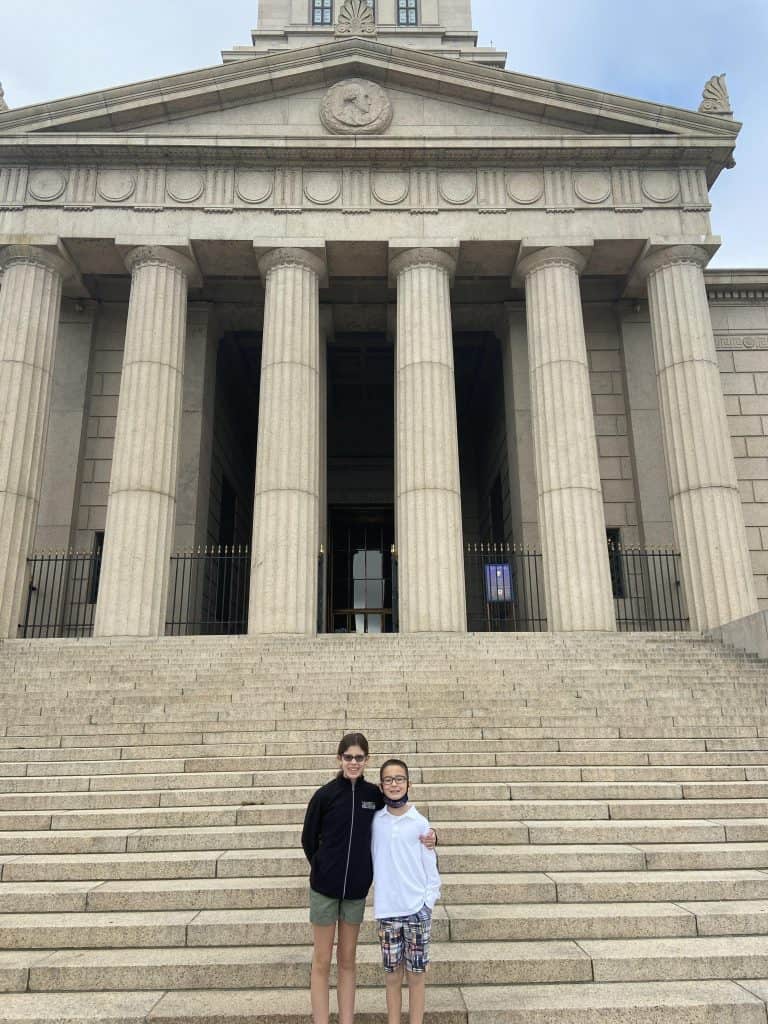
Five Can’t Miss Spots on the Tour:
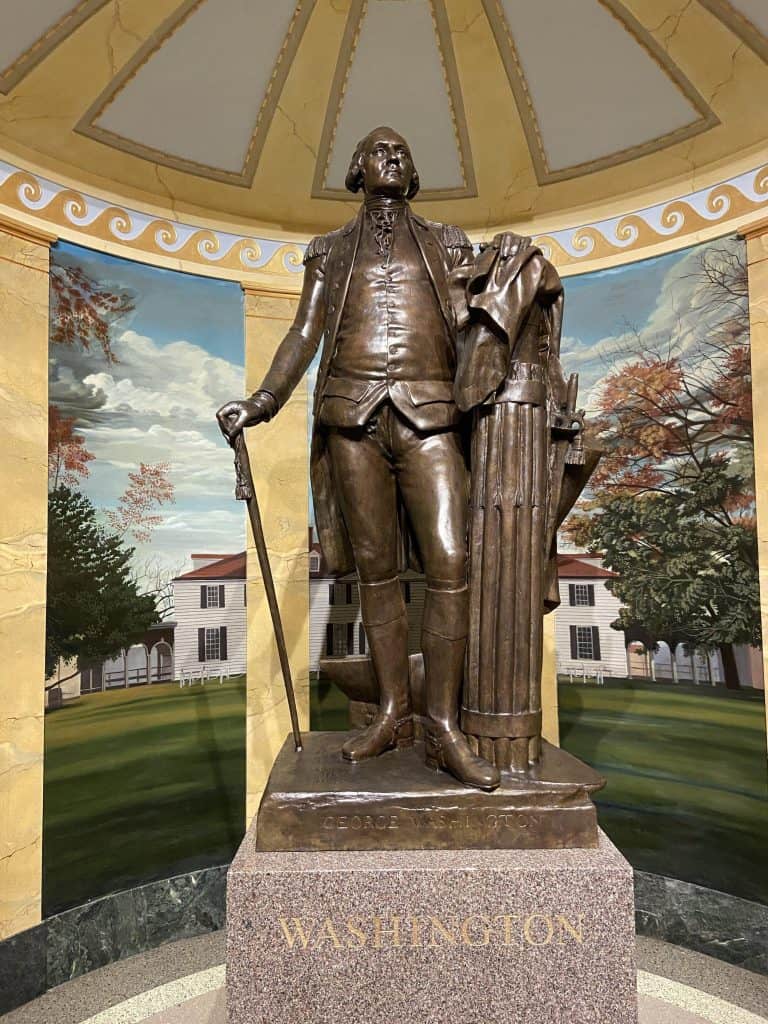
1. Memorial Hall is the start of the tour, with the massive portico centering around a 1950 statue of George Washington, dressed in Masonic regalia, created by Brother Bryant Baker. There are eight granite columns standing 40 feet tall, and behind them are two murals that depict Washington and his officers attending a St. John’s Day observance in 1778 on one side, and Washington laying the cornerstone of the US Capitol in 1793.

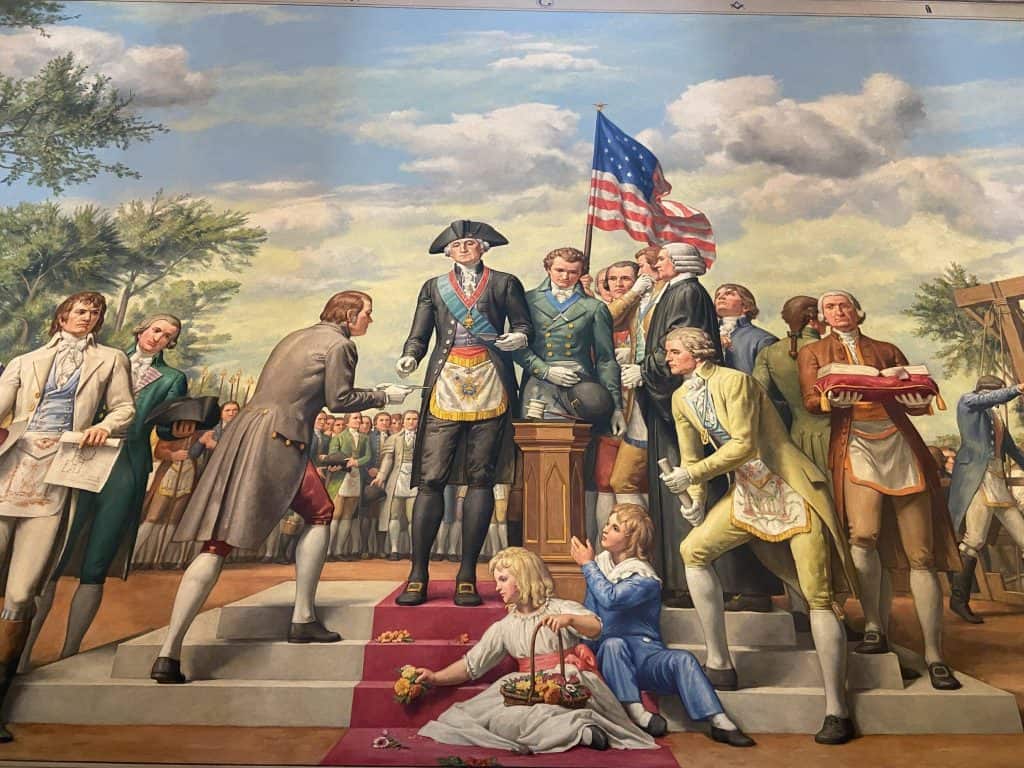
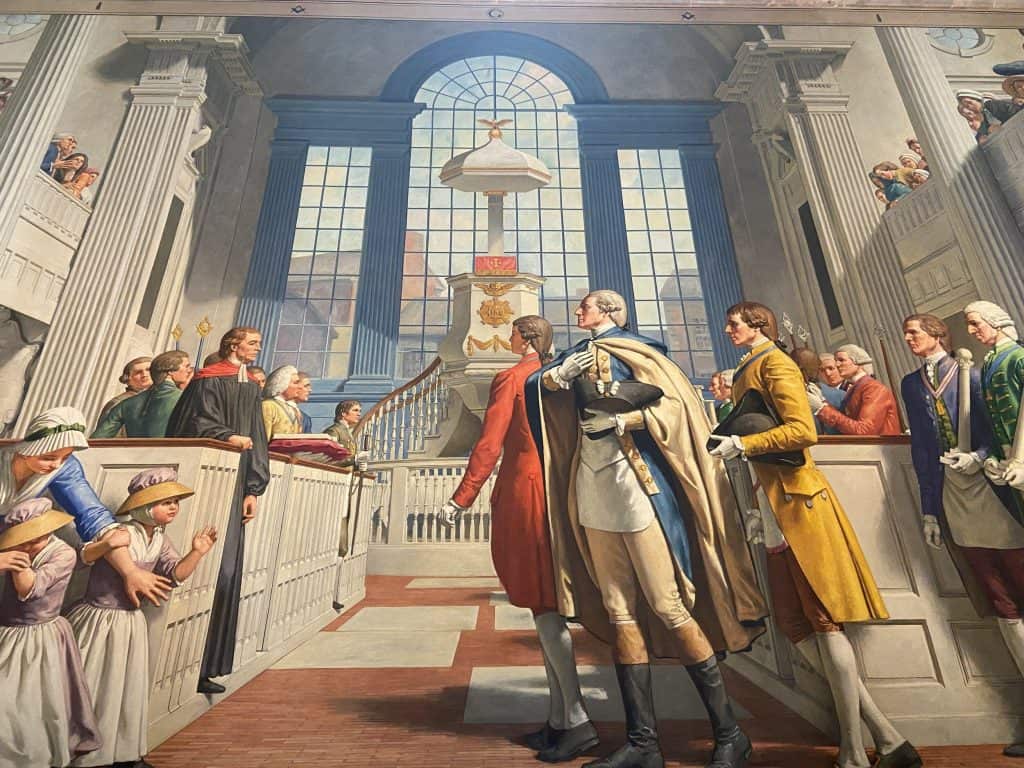
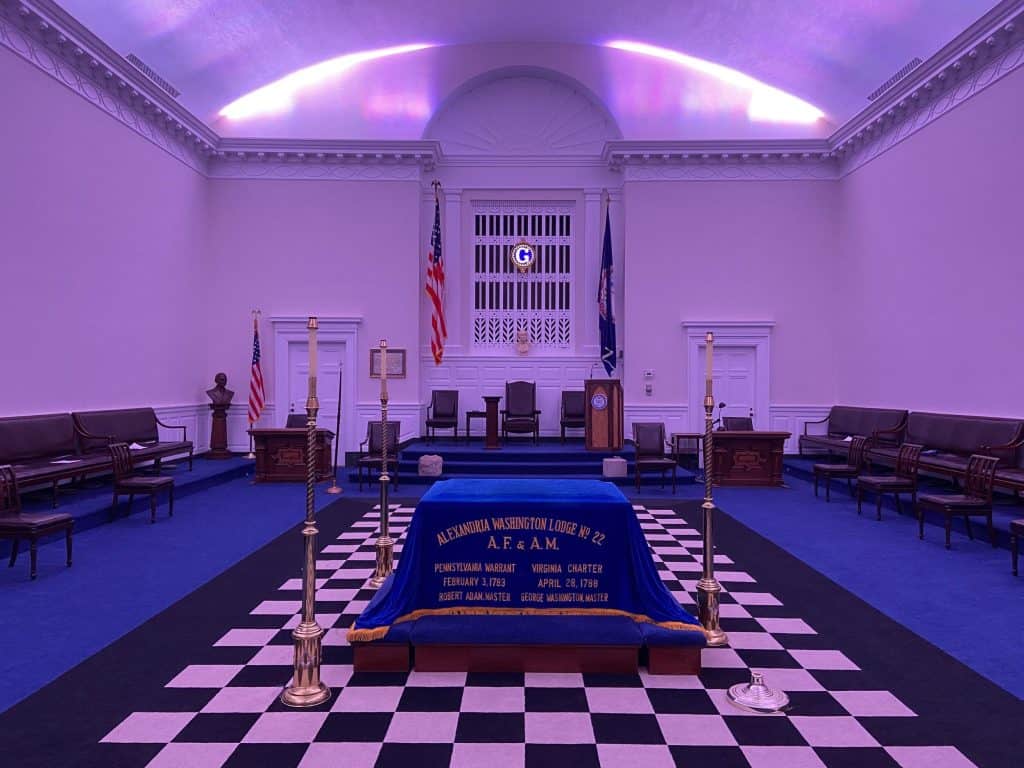
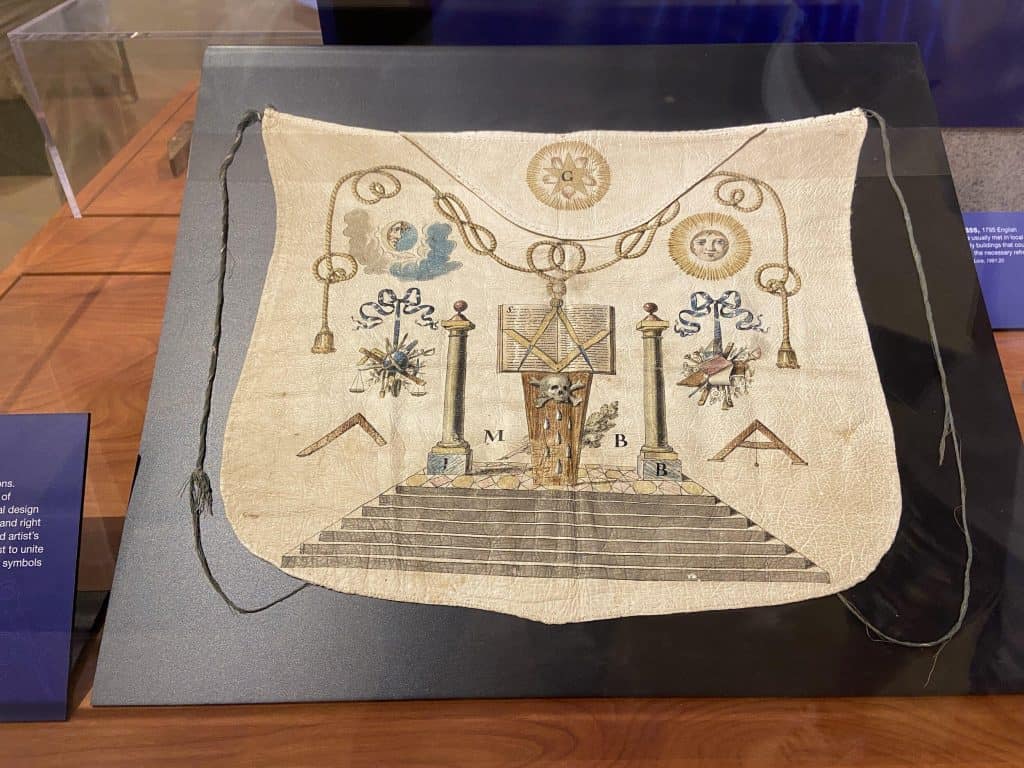
2. The Replica Lodge Room is a model of the original, local Alexandria-Washington Lodge No.22 from the early 1800s. On display are original lodge furniture, a 1794 Williams Joseph Williams portrait of Washington, and artifacts such as masonic tools, a replica Watson-Cossoul apron, and china.

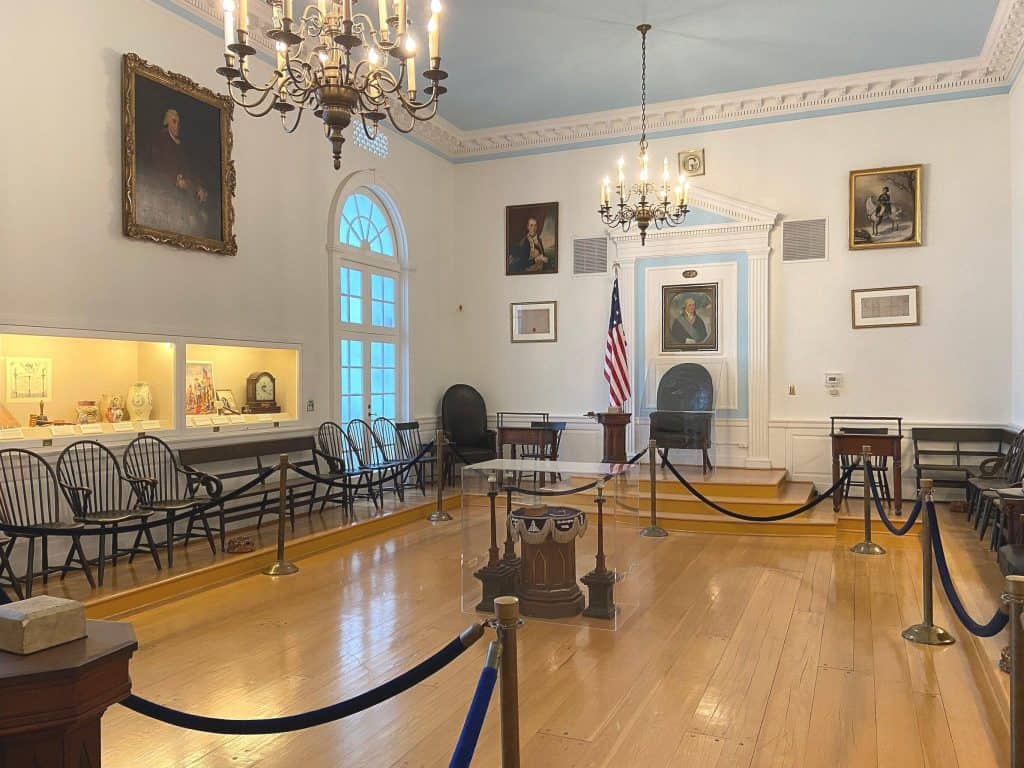
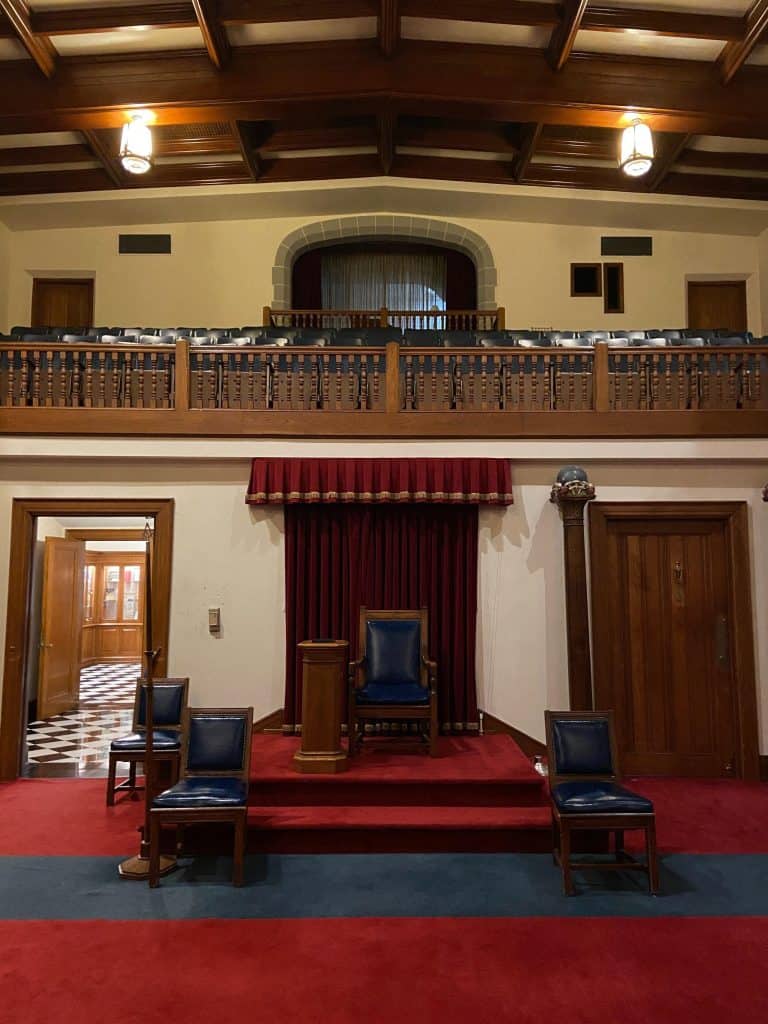
3. The South Lodge Room, the current home of the Alexandria- Washington Lodge No. 22, and the North Lodge, and includes many paintings and portraits of past Masters of the Lodge. The South Lodge Room has a neoclassical style and the North Lodge has a Gothic Style and has the most recent additions to the Memorial’s collection.

Would you like to save this?
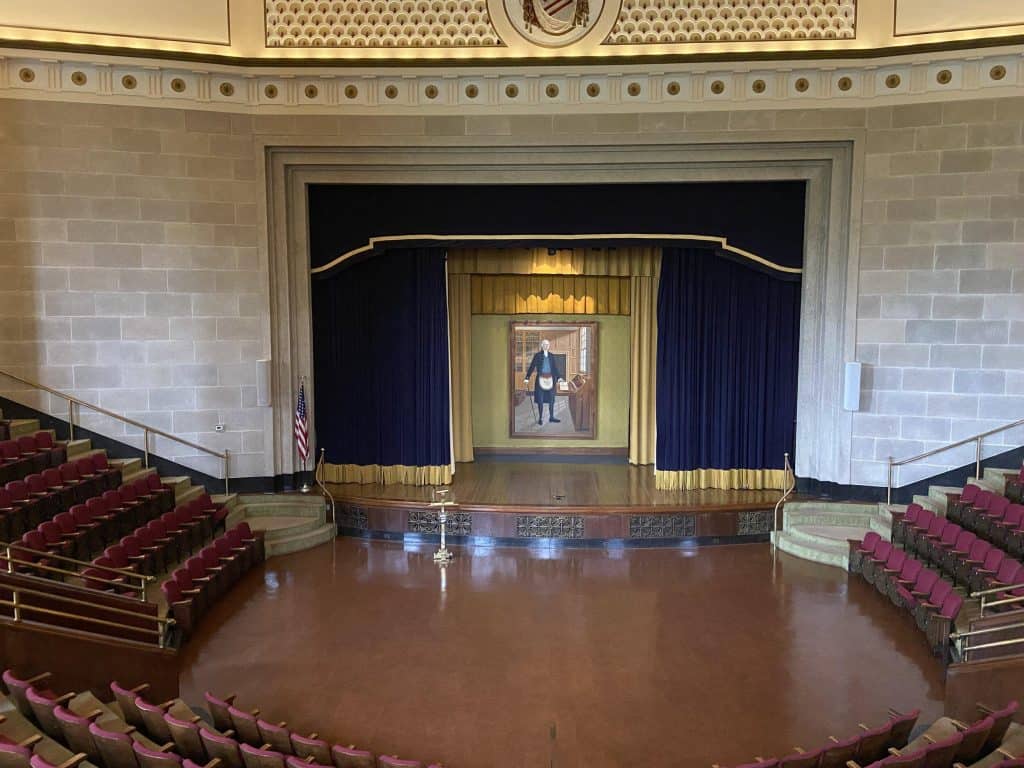
4. The Keystone State Auditorium is an impressive 400 seat theater used for a variety of public and private performances, lectures, and presentations. There are 14 bronze plaques of former Presidents of the United States who were Freemasons on display throughout the mezzanine level.

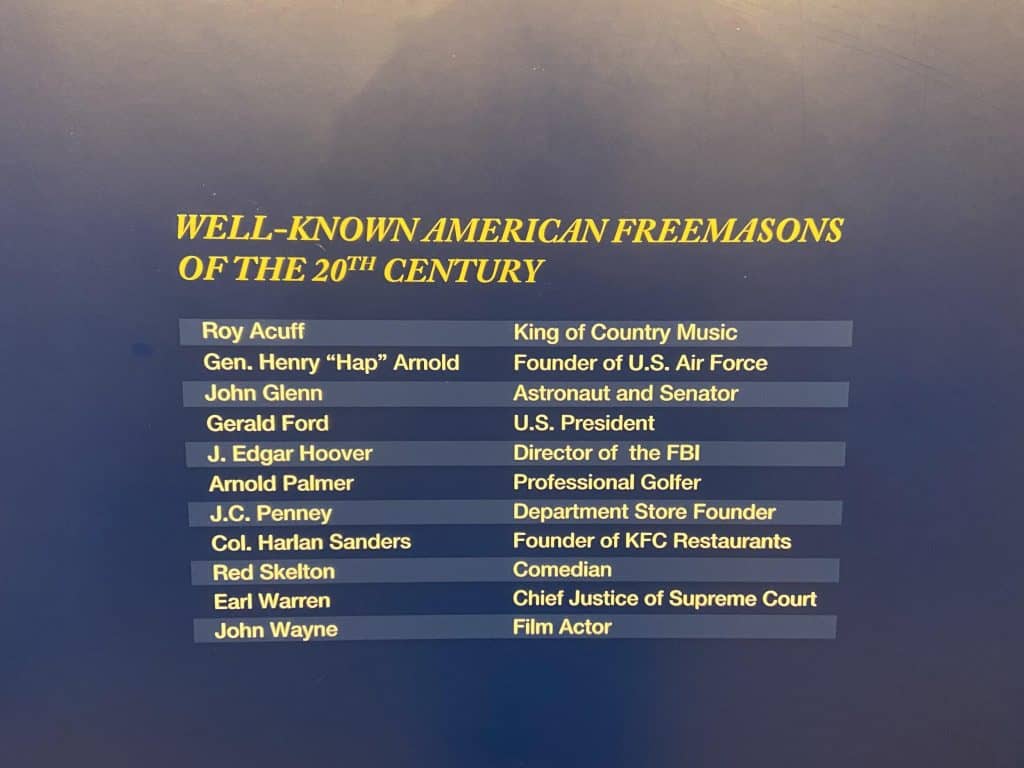
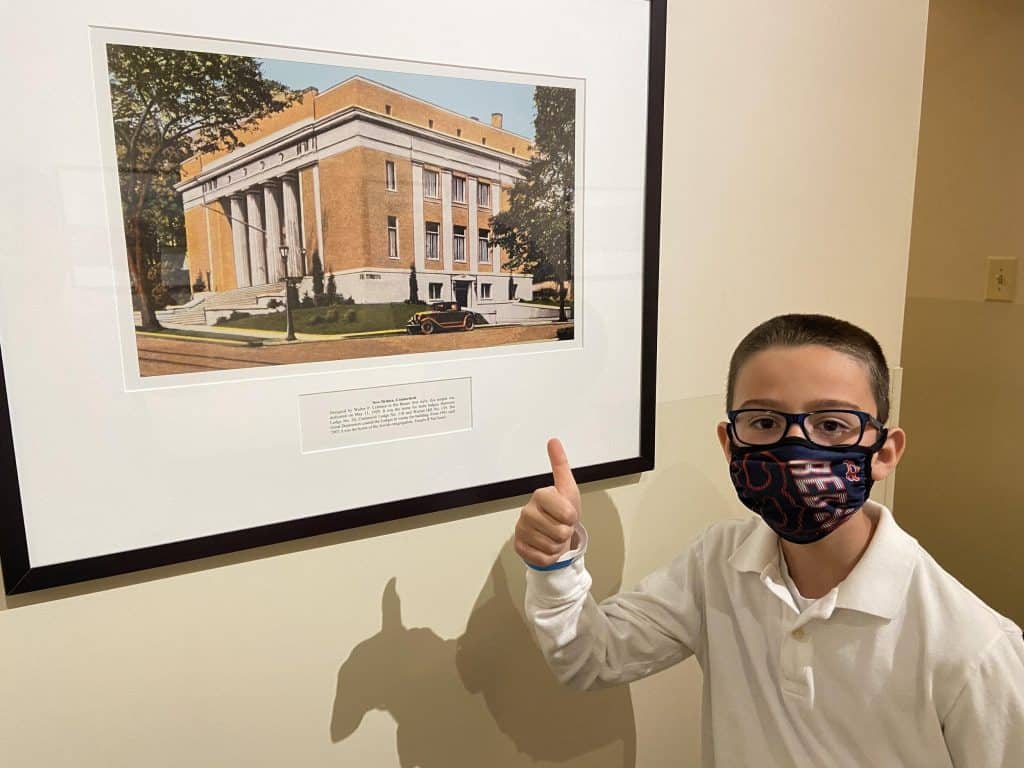
5. The Form and Function of American Freemasonry exhibit is a chronological display of Freemasonry’s history, with fun trivia about former presidents and well known 20th century Americans who were Freemasons. The hallway leading to the museum exhibit is lined with drawings of some of dozens of masonic buildings in the United States (look for your state’s building). Pause in the Grand Masonic Hall (often used for social events) to look at the bronze casting replica of the 1791 statue of George Washington.

There were a few areas of the Memorial we could not visit due to the pandemic, but we want to mention them here for future visitors and virtual tours:
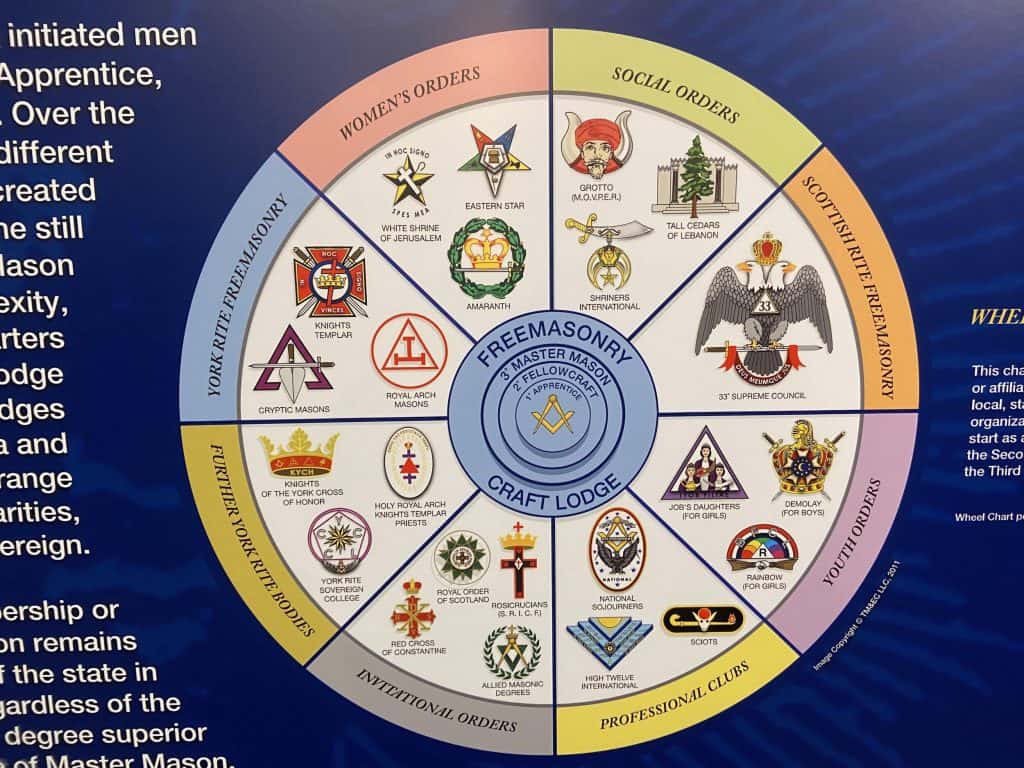
- The Family of Freemasonry Exhibit features related organizations, such as The Order of the Eastern Star and Youth Order.
- The George Washington Museum features background on President Washington and numerous artifacts from nearby Mount Vernon and the building of the Memorial.
- The Knight Templar Chapel, located on the 8th level and dedicated in 1957, features four stained glass windows.
- The Observation Deck on the 9th floor features 360 degree views of Alexandria and Washington DC and indoor photography exhibit of the construction of the Memorial.

While on the tour, have kids keep an eye out for the following:
- “Masonic paving”, the checkered pattern on the flooring (rugs and tile), symbolic of the dualities of life.
- The single “Eye of Providence”, symbolic of God watching over society
- “Rough and perfect ashlers” displayed at the base of the position for the
- The religious book, square, and compass; the most important tools of the Freemasons
- The letter “G”, dual symbolism for both “God” and “geometry”
Looking for more nearby fun? Check out our posts on Mount Vernon here and Washington DC here, and follow along on our adventures on Instagram, Twitter, Facebook, and Pinterest.
Disclaimer: We were given a media pass to visit the Memorial; all opinions expressed are my own.



I havent seen this museum and I know there’s so much to explore. Thank you for the tips 🙂
I havent seen this museum and I know there’s so much to explore. Thank you for the tips 🙂
I havent seen this museum and I know there’s so much to explore. Thank you for the tips 🙂
Well done! Interesting to find the relationship between God and Geometry. I know they have had a philanthropic reputation as well.
This is such an interesting place! Also, a great way to teach history to kids!
This is such an interesting place! Also, a great way to teach history to kids!
This is such an interesting place! Also, a great way to teach history to kids!
We will have to plan for this the next time we visit.
We will have to plan for this the next time we visit.
We will have to plan for this the next time we visit.