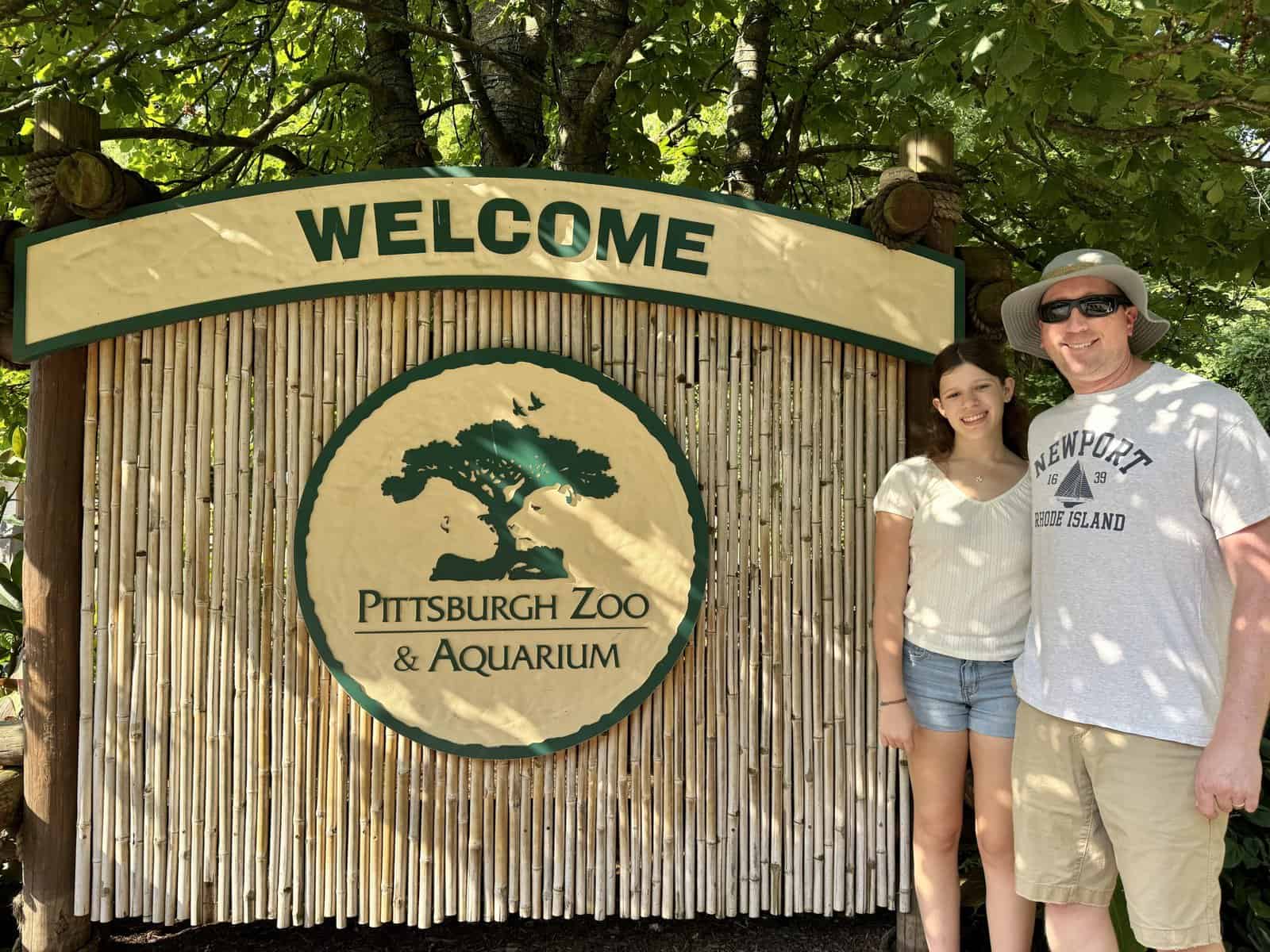
Exploring the National Zoo in Washington D.C.

| |

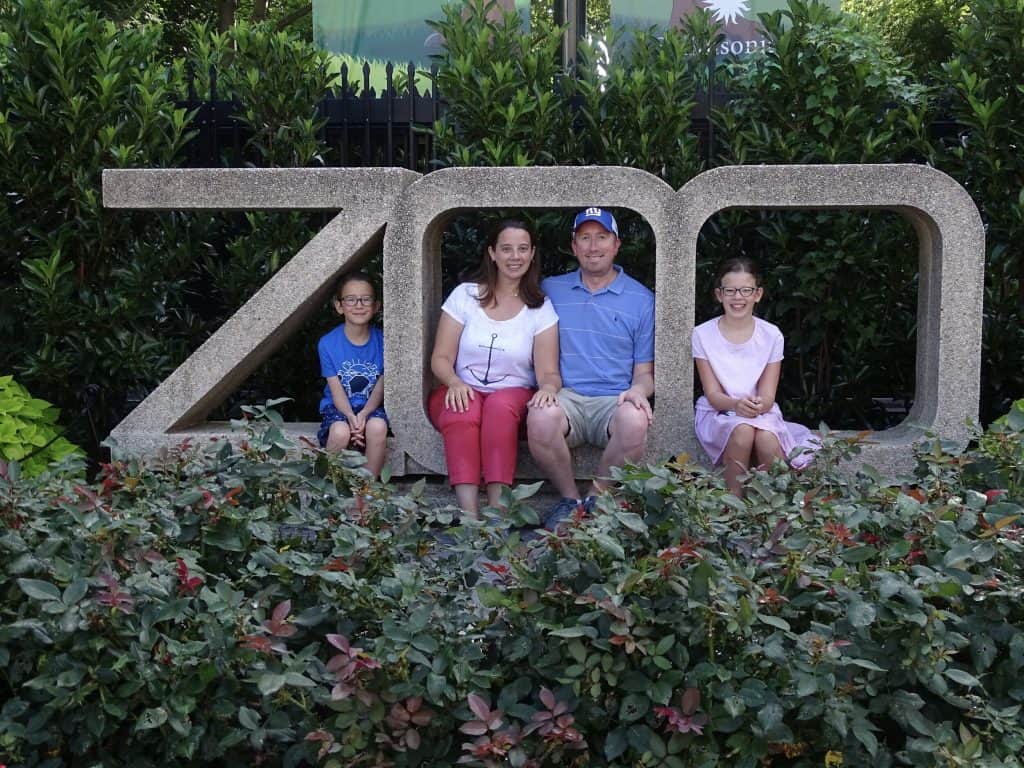
The National Zoo, located in Washington DC, is the only zoo in the Smithsonian’s collection of 19 museums in Washington DC and New York City. The National Zoo is home to almost 400 species and 2,700 animals in a 163 acre park in the northwest section of Washington DC.  The zoo was founded in 1889 and is free to visitors all year. This year we’re sharing the best things to see and do at the National Zoo:
Travel Tips:

  • The zoo is FREE to explore 363 days a year; check here for updates on seasonal hours. 

  • There are several ways to enter the zoo by car and on foot but the main entrance is on 3000 Connecticut Avenue NW. Information on accessing the zoo by car, public transportation, bike, and walking can be found here

  • There is a shuttle that runs between Panda Plaza and Kids Farm every 15 minutes.

  • We strongly recommend bringing a stroller for the toddler set and definitely wear comfortable sneakers. Visitors can also rent a stroller- more information here

  • Information on accessibility and sensory services can be found here

  • Gift shops and kiosks are located in the Visitor’s Center, Panda Plaza, and near the carousel.

  • Restrooms are located at the Visitor’s Center, Panda Plaza, Amazonia, Elephant Outpost, and near the Kids’ Farm. 

  • Dining options include the Mane Grill, Hot Dog Diner, Seal Rock Cafe, Panda Grill, and Panda Overlook Cafe. There are also several food trucks that rotate daily. More information on dining can be found here. Visitors are allowed to bring food (no alcohol) into the zoo; there are plenty of outdoor picnic tables throughout the exhibits.  

  • Check here for daily programs and here special programs and family activities. Check here for information about a daily guided tour. 

  • Kids might enjoy the Zoo Webcams so they can check on the pandas, elephants, and lions once they are home.  There is also a great mobile app and self guided narrated tour- find it here


Our Favorite Animal Exhibits:

1. The Rubenstein Family Panda Habitat is home to a pair of pandas, named Mei Xiang and Tian Tian and their cub Bei Bei, born in 2015. There are daily programs featuring the pandas. 

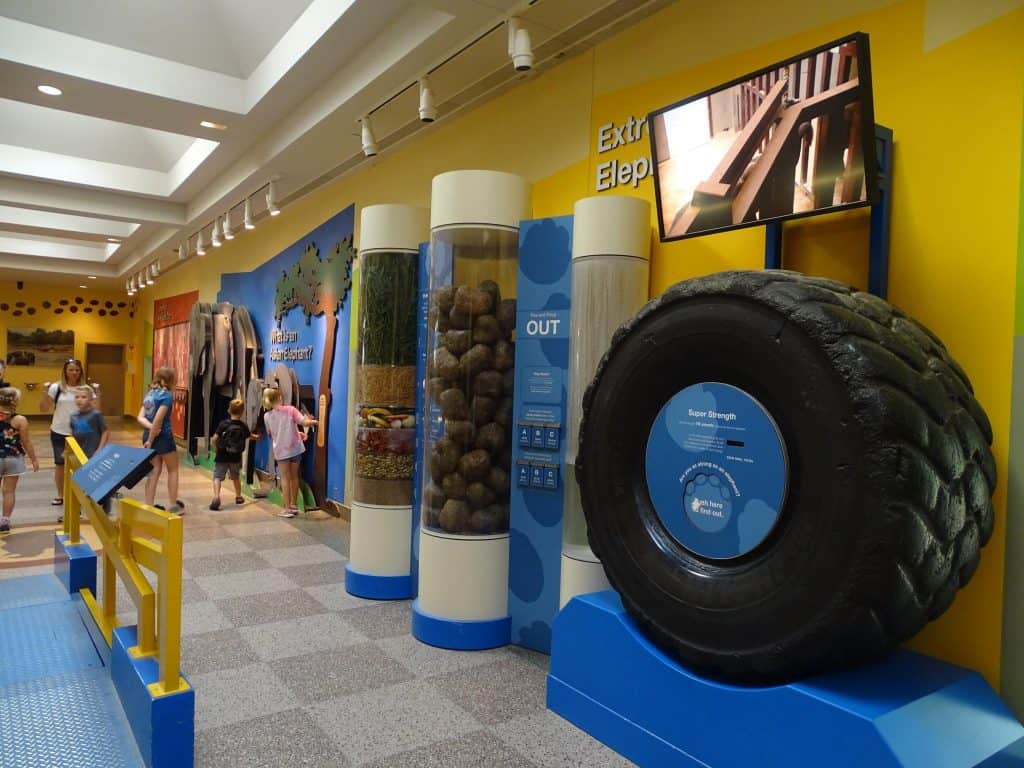
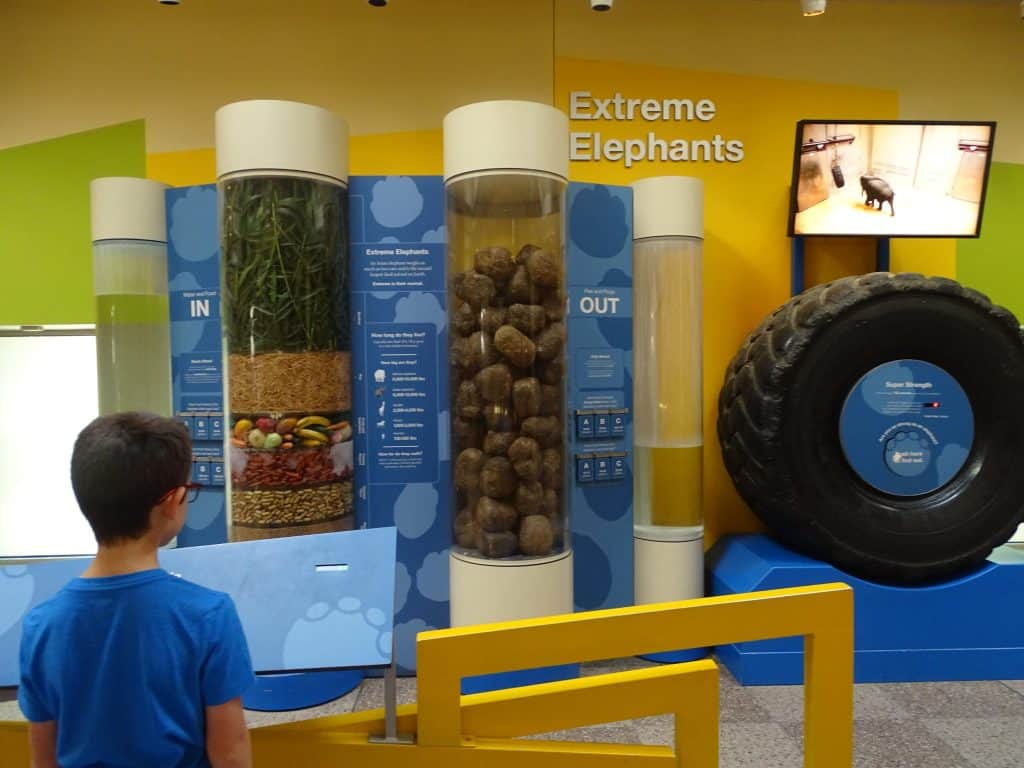
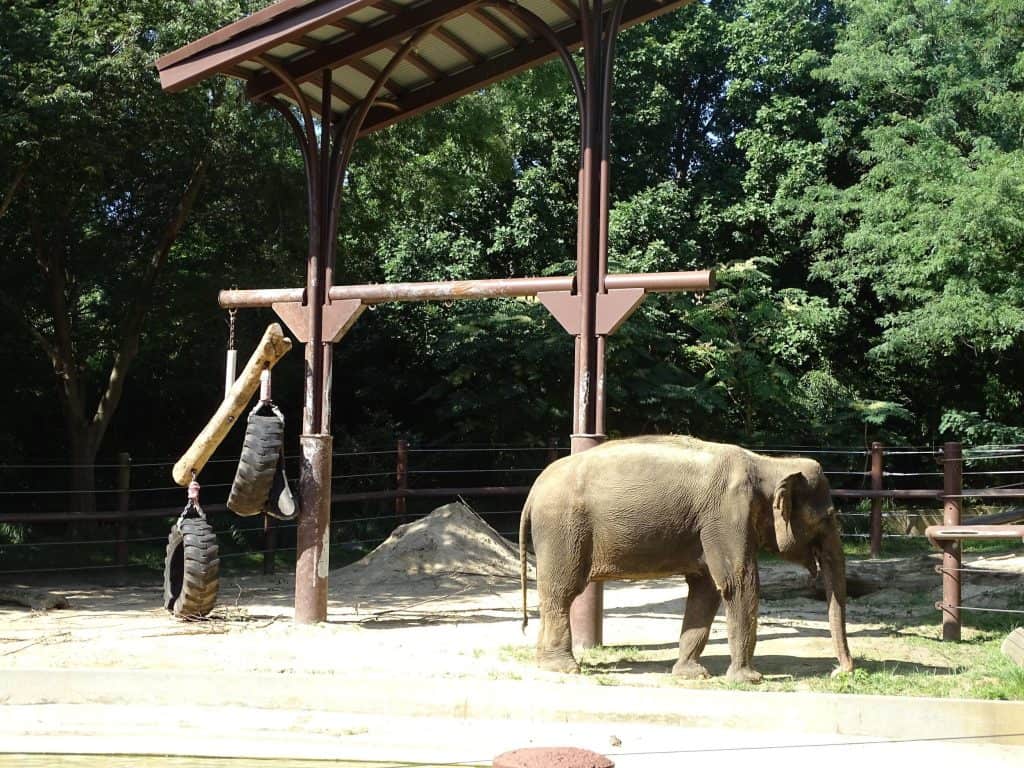
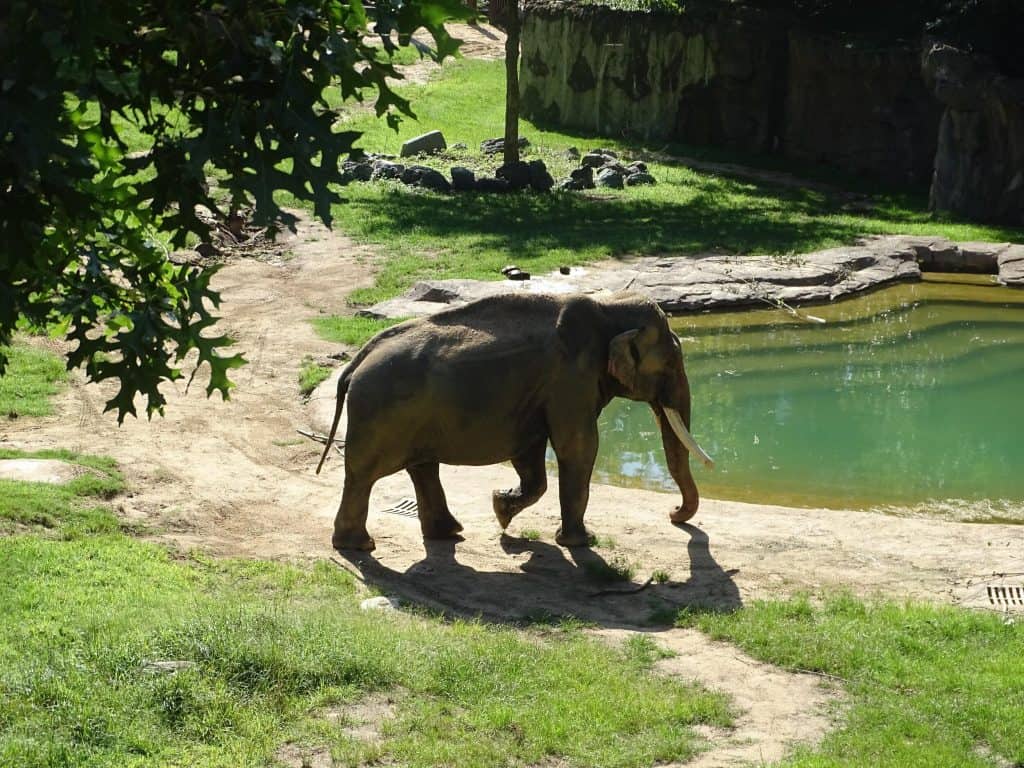
2. Elephant Trails is a large exhibit home to a multi generational herd of Asian elephants. There are daily demonstrations featuring the elephants in their Community Center or Elephant Trek. 

Would you like to save this?
We'll email this post to you, so you can come back to it later.

3. The Cheetah Conservation Station is home to some of the most endangered species in the world, including cheetahs, Dama Gazelles, zebras, and scimitar-horned oryx.

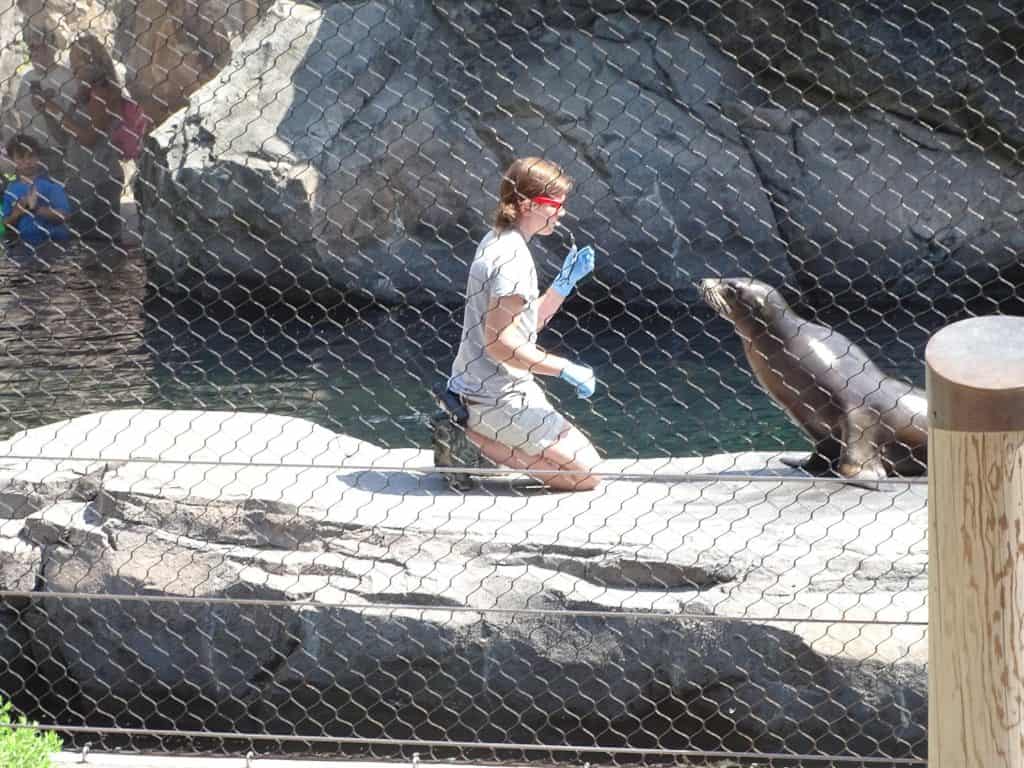
4. The American Trail allows visitors to visit up close with everything from sea lions and North American Otters to Bald Eagles and Brown Pelicans. Kids will enjoy cooling off in the nearby splash area. 

5. Kids’ Farm provides opportunities for kids (and adults) to meet and pet many types of farm animals including alpacas, cows, donkeys, goats, hogs, and chickens. There is in indoor barn and Me and the Bee Playground in the complex. 
If you’re interested in some of the other zoos we have explored, check out our posts on the Roger Williams Zoo in Rhode Island, and zoos in Philadelphia, Memphis, Dallas, and Dutchess County New York. 

Looking for other adventures in Washington DC? See our index of posts here, our full Washington DC City Guide here, and our posts featuring the Kennedy Center for Performing Arts, the National Zoo, the Library of Congress, the Smithsonian American Art Museum and National Portrait Gallery, the National Museum of American History, the National Museum of African American History & Culture, the National Museum of the American Indian, the International Spy Museum, the National Building Museum, the National Postal Museum, and Mount Vernon. And follow along on our adventures on Instagram, Facebook, Pinterest, and X.

Similar Posts

  • | | |

    The Portland Observatory in Portland, Maine

    Earlier this summer, we enjoyed a few days in Portland, Maine, a beautiful seaside city on Casco Bay. One of the highlights of our visit was a guided tour of the Portland Observatory.

    Built in 1807 by Captain Lemuel Moody and one of the oldest marine signal stations in America, the six floor tower was used commercially until 1923 when it was abandoned. It is not technically considered a lighthouse because, although it does light up at night from the interior rooms, it does not emit light outwards. In the late 1930s, the tower was used as a lookout in World War II. The location of the observatory, and the unique octagonal shape, offered numerous views of the harbor. The Observatory went through several restorations throughout the 20th century and finally opened as a museum in 2007. 

  • | | | | |

    Submarine Force Museum and HS Nautilus, Groton Connecticut

    When I mention I live in Connecticut, many people will exclaim “Oh you must know a lot of maritime and submarine history having the sub base nearby.”  I’ve driven by Groton for the past 38 years and yet, until recently, I had not visited the area, known as the “Submarine Capital of the World.” On a spring break trip to nearby Mystic, Connecticut we stopped for the morning in Groton to finally explore the Submarine Force Museum, and tour the HS Nautilus.  While the actual Naval Submarine Base in New London is closed to the public, keep driving past the base until you hit the waterfront: On the left is the library, museum, and gift shop; straight ahead is the HS Nautilus; and to the right is the parking lot and various memorials.

  • | | |

    Exploring the John Michael Kohler Arts Center and Art Preserve in Kohler, WI

    On our recent holiday trip to Kohler, Wisconsin, we had the opportunity to explore many popular sites in the village, as well as attractions in the adjacent city of Sheboygan. One of the most well known museums in Sheboygan is the John Michael Kohler Arts Center, a 100,000 square foot complex that includes eight galleries showcasing contemporary art, a hands on art studio open to the public, performance spaces, and an established Arts/Industry residency program. The JMK Center hosts many concerts, performances, workshops and camps, and special events throughout the year- see the full calendar here. 

  • | | | |

    National Park Guide: Capitol Reef National Park in Utah

    Capitol Reef National Park, located in Surrey, Utah, opened as a National Monument in 1937 and officially became a National Park in 1971. The entire state of Utah was once a sand dune (200 million years ago) and overtime, various geological feats created the park. The geology of the park is quite complex (attend a ranger talk to learn more!), but the headline involves various rock layers that, through tectonic plate activity, raised the Colorado Rocky Mountains and Colorado Plateau, which caused a fault line running through the area to develop into the park. Over time, the western part of the park raised over 7,000 feet higher than the eastern part of the park. Today, the Visitor Center sits 5,500 feet above sea level.

  • | | |

    New York State Capitol Building

    Albany, New York, located just two hours north of famed New York City, was established by the Dutch in the early 1660s. I recently did some research for family centered activities in the area, as my family drives past Albany a few times a year on our way to visit close friends in Utica, New York. On a recent trip, we stopped to explore the New York State Capitol building, at the top of the State Street hill. The “current” Albany State Capitol took over 20 years to build, post Civil War. The building has gone through many phases of of restoration, as recently as the early 2000s.

    Tours of the Capitol are offered four times a day during the week and twice on Saturday. Tours are free, but reservations are highly recommended (go here), as they are usually limited to 25 people and quickly fill up. Tours are very different during the week, when everything is in session and the entire building is bustling with elected officials. If you prefer a calmer experience, the weekend tour is a safer bet, but you’ll miss the chance to possible see elected governmental officials.

  • 10 Ways to Explore the Betty Ford Alpine Gardens in Vail, CO

    On a recent visit to Vail, Colorado, we spent a wonderful morning at the Betty Ford Alpine Gardens and enjoyed our visit so much, we decided to devote a full post to the gardens. The Betty Ford Alpine Gardens is considered the highest (8,200 feet above sea level!) botanical garden in the world. The word alpine means “above treeline” and the gardens are organized by regions, including the Eastern Himalayas, Patagonia, and Scottish Highlands. Vail’s higher evaluation and cool, dry climate make it possible to grow alpine plants from around the world. The complex, located inside the Ford Park, includes 19 gardens with well marked walking paths and plenty of signage to explain the name and origin of each plant, flowers, bush, and tree. Betty Ford, wife of US President Gerald Ford (who is the namesake of the adjacent amphitheater and park) “gave her name” to the center in 1988. Today, the gardens are one of the most popular attractions in Vail Valley and for good reason.

Leave a Reply

Your email address will not be published. Required fields are marked *