10 Ways to Explore the Betty Ford Alpine Gardens in Vail, CO

On a recent visit to Vail, Colorado, we spent a wonderful morning at the Betty Ford Alpine Gardens and enjoyed our visit so much, we decided to devote a full post to the gardens. The Betty Ford Alpine Gardens is considered the highest (8,200 feet above sea level!) botanical garden in the world. The word alpine means “above treeline” and the gardens are organized by regions, including the Eastern Himalayas, Patagonia, and Scottish Highlands. Vail’s higher evaluation and cool, dry climate make it possible to grow alpine plants from around the world. The complex, located inside the Ford Park, includes 19 gardens with well marked walking paths and plenty of signage to explain the name and origin of each plant, flowers, bush, and tree. Betty Ford, wife of US President Gerald Ford (who is the namesake of the adjacent amphitheater and park) “gave her name” to the center in 1988. Today, the gardens are one of the most popular attractions in Vail Valley and for good reason.

Travel Tips:

  • The gardens are open 24 hours a day with two entrances, one near the Education Center and one near the museum and gift shop side of Ford Park.
  • The Education Center is open year round from and museum and gift shop are open Memorial Day weekend through Labor day weekend 9:30am-4pm. There is also a second gift shop located in nearby Vail Village, open year round from 11am-7pm, closing at 5pm on Sundays.
  • There is no admission fee, but donations are encouraged.
  • Restrooms and water fountains are located in Education Center.
  • Themed tours of the gardens are given three times a week during summertime for a $10 per person fee- more information here. There are also tons of special programs like Yoga in the Gardens, Chefs in the Gardens, and special guest lectures. Read more about programs and events here.
  • Most of the gardens are handicap accessible; there are two sets of natural stone staircases. There are several benches throughout the garden to sit and enjoy the beauty of nature.
  • Free daytime parking is available in the Vail Village parking garage during the summer; it is less than a ½ mile walk alongside the Gore Stream. Another option during the summer is the Ford Park Parking Lot, but fees many apply during events in the park. Consider taking the free Vail bus- more information on routes here.
  • There are dozens of dining options in the nearby Vail Village- here is a good index.
  • Plan on one to two hours to fully explore the gardens, more time for a guided tour.

 10 Ways to Explore the Betty Ford Gardens 

  1. Start in the Education Visitor Center and check out the exhibits which explain the various regions of alpine plants. There are hands on activities for kids such as coloring stations, microscopes, and matching games.
  2. Walk through the warm alpine house indoor garden, featuring dozens on small plants, succulents, and cacti from around the world.
  3. Learn about how plants survive in various weather conditions by reading the many placards on display throughout the gardens.
  4. Notice the details of the recreated miniature wetlands and Aspens in the upper level gardens.
  5. Choose a favorite variety of plant of flower spread throughout the 18 acres of gardens.

Would you like to save this?

We'll email this post to you, so you can come back to it later.

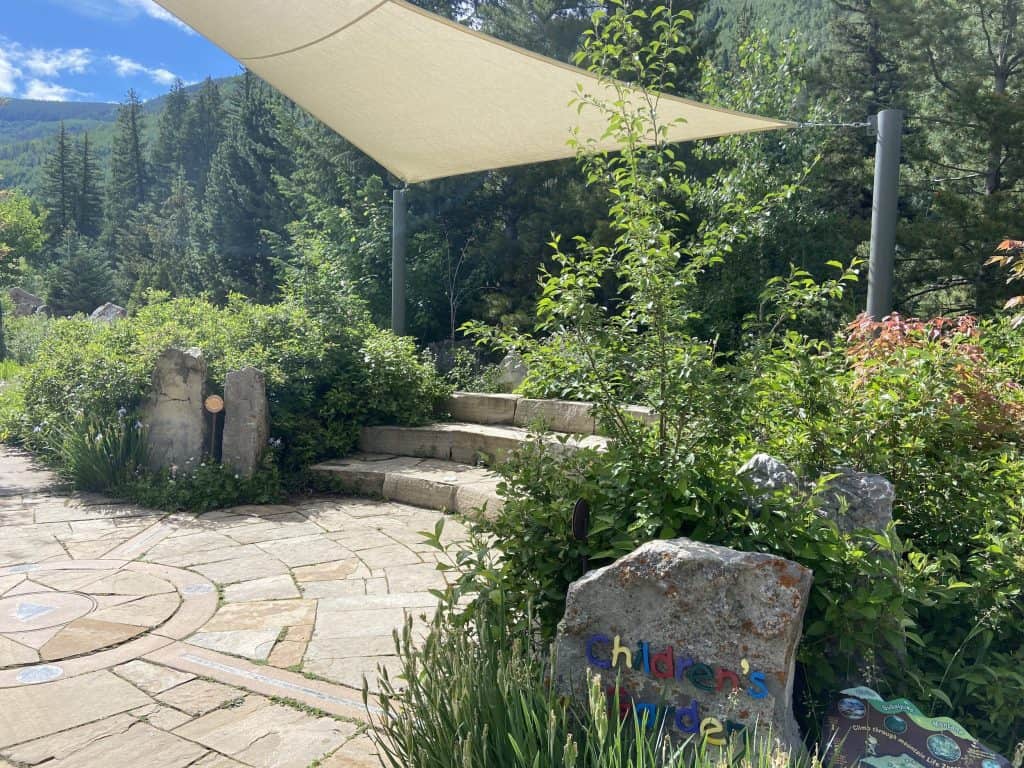
6. Ignite all 5 senses throughout the sensory garden in the Children’s Garden section.

7. Read about the original schoolhouse (now home to a small museum and gardens gift shop), built in 1922 in West Vail and used for over 15 years for grades kindergarten through grade 8. Because of the extreme winter conditions, the school year ran from late spring through December. The schoolhouse was later used as a shepherd’s cottage and ski cabin until it was moved to its current location as part of the gardens.

8. Play pretend at Betty’s Market, a replicated miniature market.

9. Skip over the rock path in the stream and explore the Children’s Garden. Check here for daily activities and weekly events.

10. Check out the adjacent Ford Park, which includes athletic fields, two playgrounds (toddler and larger), half-court basketball court and four square court, swings, and several picnic tables.

For more fun throughout the Vail area, check out our Vail City Guide. And follow along on our adventures on Instagram, Facebook, Twitter, and Pinterest.

Similar Posts

  • | | | | | | |

    Seven Things to Do in York, Maine

    I’m lucky enough to have first cousins all over the country. We’ve been trying to get everyone together every few years and this past month, we reconvened in York, Maine for “CousinFest”. The oceanside community did not disappoint. The people were so friendly and welcoming, and I have never met a more pedestrian friendly place in all of my travels. York, Maine consists of four distinct areas: York Village, rich in history; York Harbor, with lots of cottages looking out at Long Sands Beach; York Beach, with many tourist attractions; and Cape Neddick, mostly residential, ocean front properties.  Here’s a list of some things we all enjoyed in York: 

  • | | | | | | | | |

    10 Ways to Have Fun in the Berkshires in Massachusetts

    The Berkshires, compromised of over 30 towns and villages, is located in the most western part of Massachusetts. It includes towns ranging from Sheffield and Great Barrington in the southern part of the state, bordering Connecticut, to the towns of Wiliamstown and North Adams in the northern part of the state, bordering Vermont. The region is popular year round for outdoor activities, performing arts venues, galleries, museums, and historic homes and landmarks. The Berkshires have been home well known figures such as authors Edith Wharton, Nathaniel Hawthorne, Herman Melville, and activist W.E.B. DuBois. Dubbed the “Inland Newport” during the Gilded Age of the 20th century, the area became well known for its over 75 estates, in addition to its thriving farming industry. Today, there are many spots to learn about the important history of the area and many preserved outdoor spaces to enjoy nature all year long.

  • | | | | |

    Fort Sumter National Park in Charleston, SC

    There is plenty of architecture, southern cuisine, and water views to check out in Charleston, South Carolina but no trip would be complete without reliving a major turning point in our country’s history.

    Fort Sumter National Monument is the only structure on the man-made island, which was created in the early 1800s as a defense for the city of Charleston. In April of 1861, the Confederate army bombed the still incomplete Fort, signaling the start of the Civil War.

    Operated by the National Parks Service and Fort Sumter Tours, access to the island is by tour boats docked at both Liberty Square or Patriot’s Point. I would leave from the Liberty Square Visitor Center so you can spend some time checking out displays which chronicle the history of the fort and check out a small gift shop. Make sure you stamp your National Parks PassportNote: There are restrooms located at both locations and I would recommend using them before boarding the boat to the island. The Visitor’s Center at Liberty Square is located on the second floor, but there is an elevator.

    The 40-minute narrated boat ride to the fort explains many details about the start of the Civil War.  Once you’re on the island, you can explore the fort on your own. There are park rangers stationed at various points to give short lectures and to answer any questions. There are also placards that give detailed information about structures and objects.  I would plan on spending 45-60 minutes at the fort. When you go, be sure to look out for:

  • | | |

    Exploring the John Michael Kohler Arts Center and Art Preserve in Kohler, WI

    On our recent holiday trip to Kohler, Wisconsin, we had the opportunity to explore many popular sites in the village, as well as attractions in the adjacent city of Sheboygan. One of the most well known museums in Sheboygan is the John Michael Kohler Arts Center, a 100,000 square foot complex that includes eight galleries showcasing contemporary art, a hands on art studio open to the public, performance spaces, and an established Arts/Industry residency program. The JMK Center hosts many concerts, performances, workshops and camps, and special events throughout the year- see the full calendar here. 

  • | | | | |

    10 Things to Do in Historic Yorktown, Virginia

    Yorktown, Virginia, a tiny town located on the banks of the York River, is synonymous with the American Revolution, as it is the sight of the last major battle of the Revolution in the fall of 1781, when British General Cornwallis surrendered to General George Washington. The town is also known for its port, the largest between Charleston and Philadelphia, and tobacco trading. Today, the town honors its role in American history with several historical sites, museums, and activities to help visitors better understand the American Revolution.

  • | | |

    Giveaway: Taste of Fairfield

    I am SO excited to share my first giveaway with my readers!


    For all of my local Connecticut readers, there is a SUPER fun, SUPER tasty event coming to Fairfield on October 8th: The Taste of Fairfield. Sponsored by Fairfield Magazine, the Taste of Fairfield will bring together over two dozen local restaurants and a variety of food trucks at the Delamar Hotel in Southport.  Fairfield, Connecticut, and the surrounding towns, has a vibrant restaurant scene, and many local hot spots will offer samples of their signature dishes and drinks. This year, they’ve added “Food Truck Alley” to the event, which kicks off Fairfield Restaurant Week. 

4 Comments

  1. It looks beautiful there! We’re going to Colorado next spring for a wedding, and I think we’re going to make a trip out of it. 😊

Leave a Reply

Your email address will not be published. Required fields are marked *