10 Things to Do at the Cave and Basin National Historic Site in Banff, Alberta

| |

On a recent summertime visit to Banff National Park and the town of Banff, we enjoyed exploring the Cave and Basin National Historic Site, one of the most historic (and preserved!) and popular sites in the heart of downtown Banff. 

When the Canadian Pacific Railway opened in the 1880s, it brought many visitors to the Banff area. Frank McCabe and brothers William and Tom McCardell were some of the first visitors to “find” the cave and thermal springs in 1883 and immediately wanted to develop the area around it. The Prime Minister of Canada created the hot springs reserve to protect the property. 

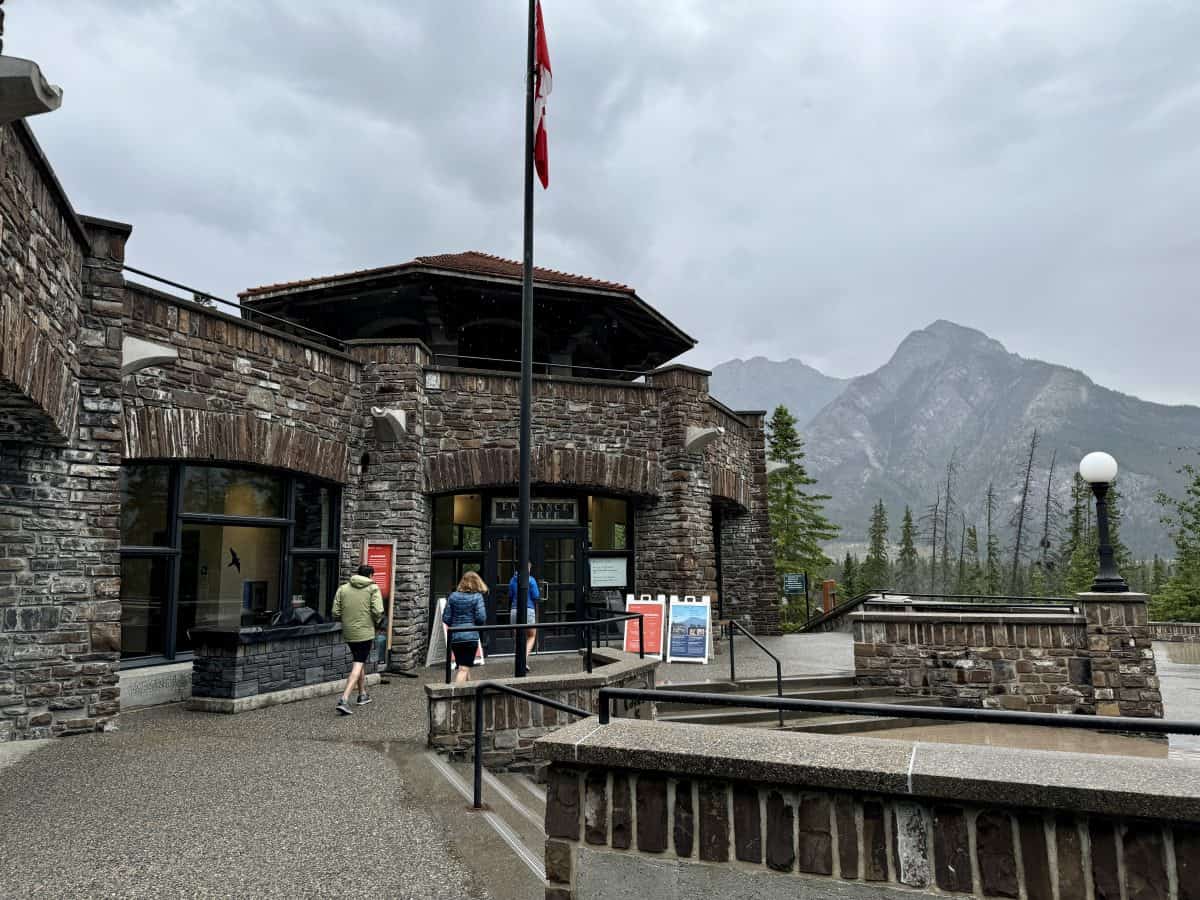
entrance sign to Cave and Basin National Historic Site

The bathing pavilion officially opened in 1914 and stayed open until 1976, when it closed due to structural damage. The site reopened in 1985 as a public pool, with swimming allowed until 1992. From 1992 until 2013, guests were welcome to visit the site as a reflecting pool with limited facilities. In 2013, a museum and walking trails open, along with renewed programming, allowing visitors to explore more areas of the property while preserving the hot springs.  Today, the National Historic Site is overseen by the Parks Department, welcoming visitors year round to enjoy the hot springs, learn about the history of the area, and walk the trails around the property. 

entrance to the Cave and Basin National Historic Site

Travel Tips:

  • The site is open from 9:30am-5pm every day from mid May through mid October and from 11am-5pm Thursday through Monday mid October through mid May; information on admission fees here (it is included in National Parks Discovery passes and kids ages 17 and younger are free).
  • Plenty of free parking in the large lot in front of the main admissions building and gift shop.
  • Washrooms are located in the main admissions building, in Story Hall, and in the Galletly Building
  • A Gift Shop near the parking lot sells a variety of park themed gifts and souvenirs as well as snacks and drinks.
  • There is a short walk uphill from the parking lot to the main exhibits; the walking paths are paved. Bring the stroller for the toddler crew.
  • Make sure kids grab the Explorers booklet at admission and complete it while touring the site to earn a special keepsake
  • Check here for special events and programs, most of which are kid friendly, and here for guided tours. 
  • Plan on 90 minutes to tour all the exhibits, more time for the walking trails. See the full brochure and map here
entrance to the Cave and Basin National Historic Site

Ten Things to Do at the Cave and Basin NHS:

Would you like to save this?

We'll email this post to you, so you can come back to it later.

  1. Learn how to make hot spring soup and all about the famous Banff Springs snails in the Hot Springs History exhibit.
  2. Look for flowstone, speleothem, the vent hole, and the waterfall inside the cave (and watch your head if you’re taller than 5’6”!) Note the strong sulfur smell.
  3. Follow the important dates of the springs from 1885 through modern day on the life size timeline in the Story Hall exhibit. 
  4. Check out the styles of bathing suits from when the bathing pavilion opened in 1914.
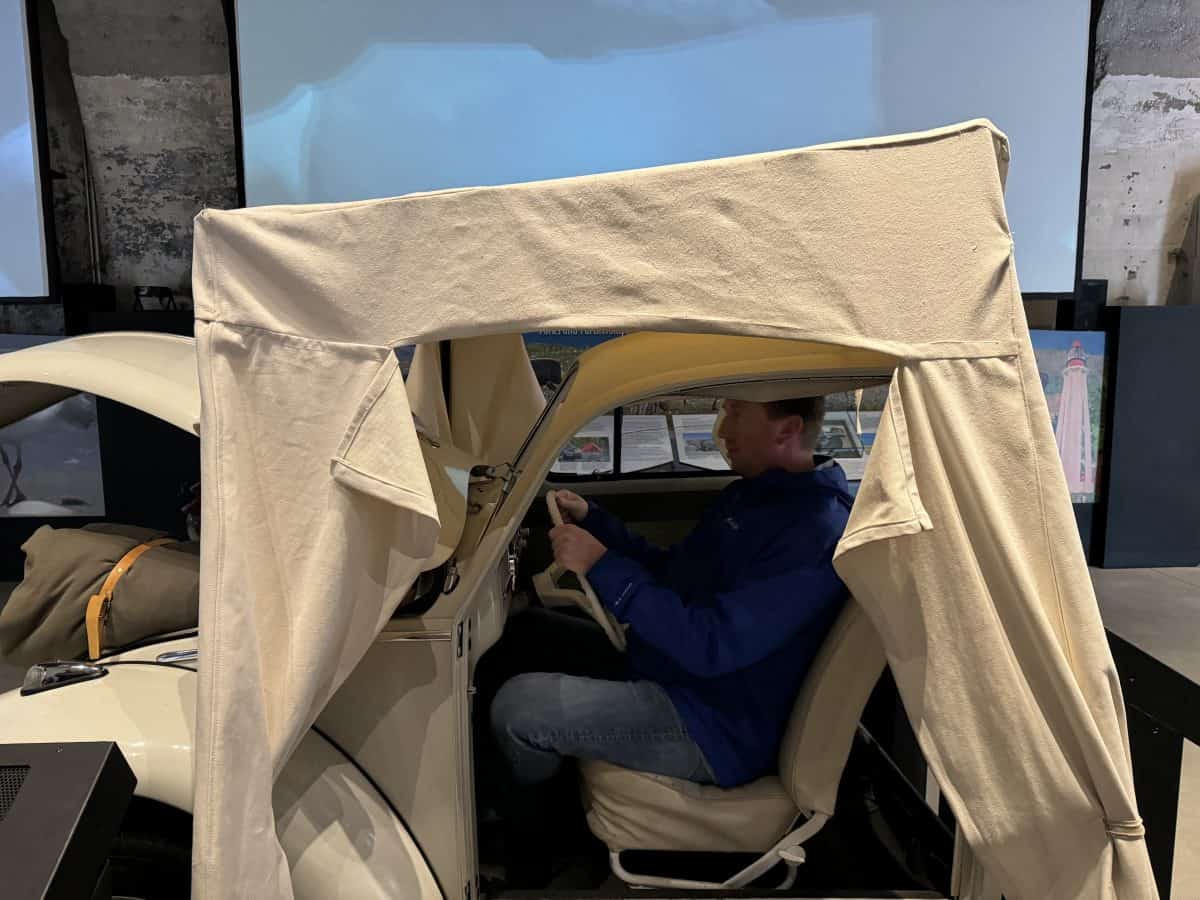
  5. Hop inside a 1967 Volkswagen Beetle Buggy that was common to find inside Banff National Park during the surge in visitors in the late 1960s and 1970s.
 Cave and Basin National Historic Site in Banff, Alberta
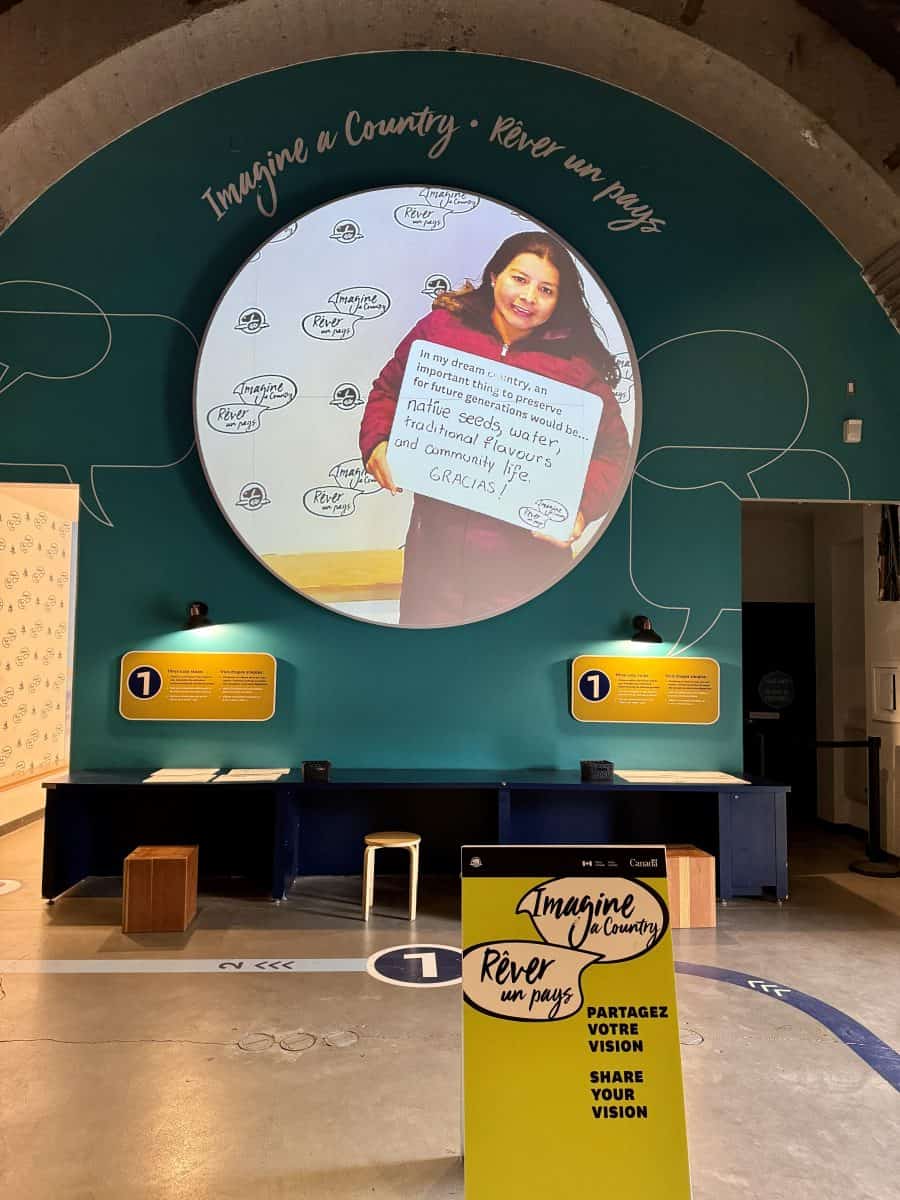
  1. Share your vision for the world on a white board and upload it to the projection screen in the Story Hall exhibit.
  2. Check out the outside basin for micro animals in the pools. And be sure to climb the stairs and get an aerial view from the upper platforms. 
  3. Enjoy a variety of kids activities, including Snakes and Snails and Tower Tumble games, in the Galletly Building. There’s also coloring stations, reading nooks, and a series of Indigenous Voices short films (nine short films about the indigenous people of the Canadian Rockies). 
  4. Play a lifesize version of Snakes and Snails outside next to the basin.
  5. Learn about the forces physical labor or interments in the Enemy Aliens, Prisoners of War exhibit. During and after World War I, Canada operated 24 internment camps for prisoners of war, mainly civilians. Women and children were not subject to internment, but 81 women and 156 opted to go to the camps with their husbands and fathers. 
Cave and Basin National Historic Site in Banff, Alberta

outdoors at Cave and Basin National Historic Site in Banff, Alberta

Bonus: Hike, bike, or even snowshoe on the Sundance Trail.

Looking for other adventures in Banff National Park? See our full City Guide to Banff here. And follow along on our adventures on Instagram, Facebook, Pinterest, and X.  

Similar Posts

  • | | |

    Please Touch Museum in Philadelphia, PA

    The Please Touch Museum is one of the most popular spots for kids of all ages in Philadelphia- up to 5,000 people visit each (busy) day! The museum is located inside Memorial Hall, site of the Art Gallery for the 1876 Centennial Exhibition celebrating America’s 100th birthday. There is over 60,000 square feet of exhibits open to the public and various classrooms and meeting spaces. The museum is best for ages ten and under, but there are many exhibits even older children will enjoy. The best part? Visitors are encouraged to “touch” everything!

  • | | |

    Fort Adams in Newport, Rhode Island

    This is the 3rd post in a series detailing my recent visit to Newport, Rhode Island. To read about celebrating the holiday season in Newport, click here and to read about the International Tennis Hall of Fame, click here.

    Fort Adams has the honor of being both the largest fort in the United States and the only fort never attacked. Although, because it was never attacked or “officially in use”, it is not part of the National Parks program like many other forts throughout America. Fort Adams, located in Newport, Rhode Island, is one of twenty fortresses built after the War of 1812, took over 30 years (from 1820-1850) to complete, and is named after the second American President, John Adams. It was most effectively used as a training facility for West Point graduates before their official postings.

    The entire complex is a state park and open to the public, free of charge.  The public is welcome to use the restrooms, walk (leashed) dogs, fish, picnic, and even use the public beach. Sail Newport, housed on the property, rents sailboats and also gives lesson.

    On a recent visit to Newport, my family took the 90 minute, guided tours. We loved it. All of us, adults and children alike, found it interactive, informative, and even a little scary.  Steve Marino, our tour guide, made sure to engage our children throughout the tour.  You’ll need to start in the Visitor’s Center to purchase tickets. They offer a AAA discount. There are restrooms and a gift shop with snacks, drinks, and souvenirs. Strollers are allowed on most aspects of the tour, and you can leave strollers outside some “indoor” and tight spaces. 

  • | | |

    Staying at the Fairmont Chateau Lake Louise in Alberta, Canada

    On a recent trip to Banff National Park in Alberta Canada, we were lucky enough to spend a couple of days at the Fairmont Chateau Lake Louise in the Lake Louise section of the park. The Fairmont Chateau Lake Louise is one of the most magical resorts we have ever visited, in one of the best locations we have ever explored.

  • | | |

    10 Things to Do at Earthplace in Westport, Connecticut

    Founded as the Mid Fairfield County Youth Museum in 1958, Earthplace has grown and expanded into a 62 acre open space complex that includes hiking trails, a 120 seat amphitheater, indoor and outdoor animal exhibits, playground, and classrooms. Located in the lower Fairfield County town of Westport, Earthplace is the perfect spot for the toddler, preschool, and elementary crews with plenty of hands-on learning.

  • | | | |

    Kykuit in Sleepy Hollow, New York

    Kykuit is a Dutch word meaning “lookout.” John D. Rockefeller appropriately used it as the namesake for the 1908 mansion he built 500 feet above sea level on the banks of the Hudson River. “JDR” Rockefeller, the founder of Standard Oil and widely considered one of the richest men in history, originally purchased 400 acres at the start of the twentieth century.

    Kykuit was home to four generations of Rockefellers until JDR’s grandson Nelson, upon his death in 1979, left Kykuit to the National Trust for Historic Preservation instead of his own children. Now, the Historic Hudson Valley nonprofit coordinates public tours and the house remains as it was in 1979. We’ve been members of the HHV for a couple of years and enjoy exploring their properties and program. One of our most favorite fall traditions is the Great Jack O’Lantern Blaze at Van Cortlandt Manor. You can read about our adventures at the Blaze here.

  • Where to Eat in Mont Tremblant, Quebec

    We recently returned from a wonderful visit to Mont Tremblant for Christmas. The resort of Tremblant is well known for their world class skiing and snowboarding, as well as year round outdoor activities. While there was not much snow when we visited, there were plenty of wonderful restaurants- see the full list of Village restaurants here. We did not have enough time to try them all, but here are 9 spots we did LOVE.

4 Comments

  1. I loved visiting the Cave & Basin. Such an interesting site. I find so many people who visit Banff miss it because it’s not right downtown, but it’s somewhere I always recommend. I especially love seeing the vintage bathing suits

Leave a Reply

Your email address will not be published. Required fields are marked *