
Touring the United Nations in New York City
Over one million people visit the United Nations, located on the banks of the East River in Manhattan, each year. The charter for the United Nations, a name proposed by President Roosevelt in 1942, was signed in 1945 with 51 countries as founding members. Today, there are 193 member states and countries must apply for admission. New York became the permanent home of the United Nations in 1949 and construction on the complex was finished two years later. The United Nations is a meeting place for all members to “settle disputes, prevent future conflicts, find solutions to global issues, and protect all humanity”. Public tours include opportunities to visit three or four of the six main organs of the UN, as well as many displays and art installations.


Travel Tips:
- It’s worth it, but there are a lot of “hoops” to jump through to get on a tour. Order tickets ahead of time here. They do sell out quickly, so order as soon as you pick a date. Children will be interested in the Children’s Tour offered most days at 3:50pm. If you go on a Friday, get there early for story time!
- Most tours, including the Children’s Tour, last 45- 60 minutes and are capped at 20 guests. Tours are offered Monday through Friday.
- Consider downloading the United Nations Visitor Centre app here, which shows over 60 works of art located throughout the complex.
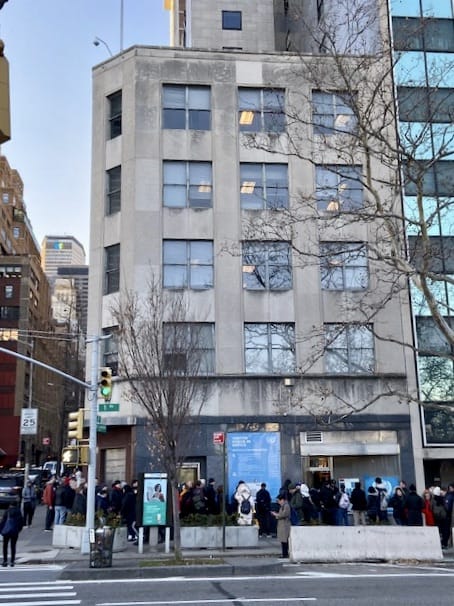
- The first check in spot is on the corner of 1st Avenue and East 45th Street. Get in line at least one hour ahead of your scheduled tour. We waited outside in line for 45 minutes. A security guard checks the ID of one adult per group and sends him or her inside to an office to wait in another line to go through security. Staff will scan your ID, take your photograph and require you to wear a sticker badge. Due to the cold weather, the staff did allow younger children to wait inside. All other adults had to wait outside.
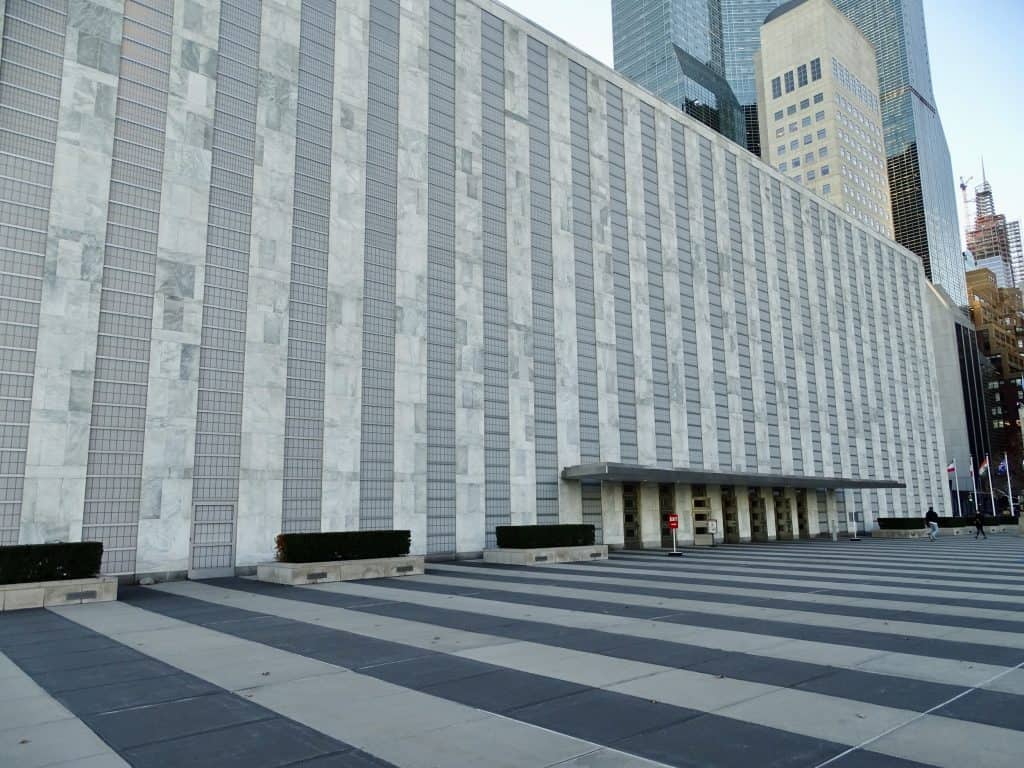
- The second round of security is across the street, where all guests must go through metal detector screenings before proceeding through the plaza courtyard.
- Guests with advanced tickets should proceed to the back section of the lobby, where staff will check your reservation and ticket information. A full list of security checks and what visitors can and cannot bring into the complex is listed here.
- Restrooms are located on the main level and lower level (at the end of the tours) and the tour is handicap accessible.
- The lower level also includes a large gift shop, bookstore, and snack cafe with plenty of tables and chairs. There is also an information office with plenty of brochures and staff who are happy to answer questions.

10 Places to Explore on the United Nations Tour:
1. The main floor art exhibit Mind the Earth, one of several art displays throughout the complex, donated by member states.
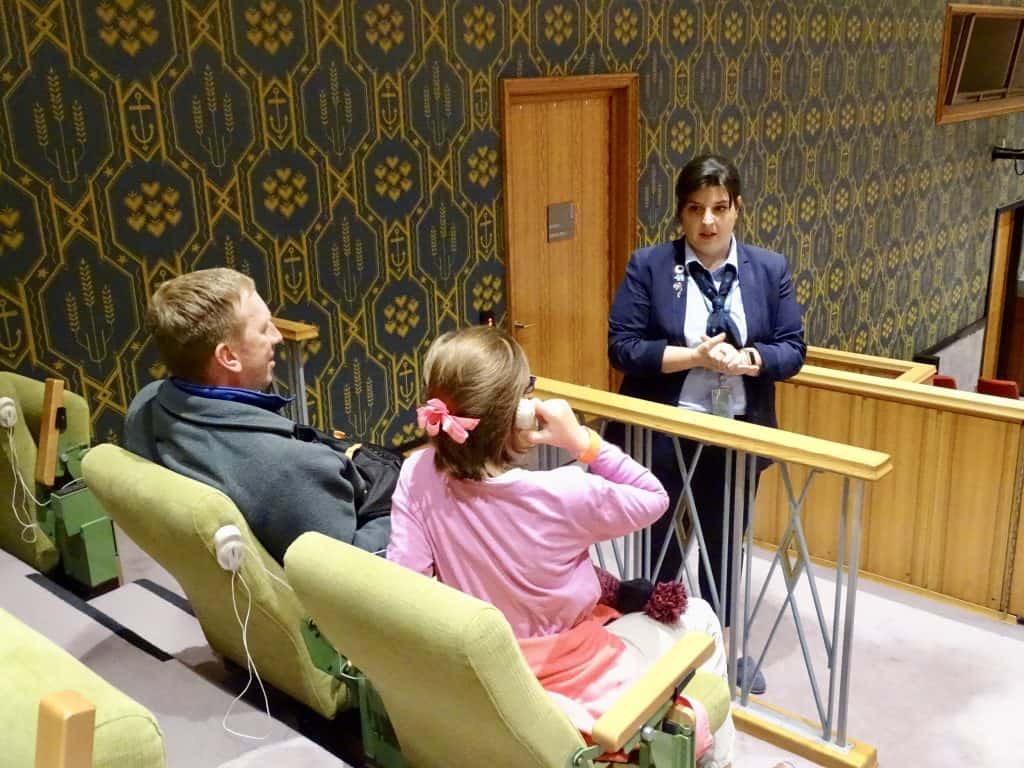
2. The Security Council Room, which has only 15 members (5 permanent and 10 non permanent, rotating members elected by the General Assembly for two year terms), focused on international peace and security. The Council can choose to meet at any time and the decisions of the council are legally binding. The room was designed by a Norwegian designer and donated by Norway.
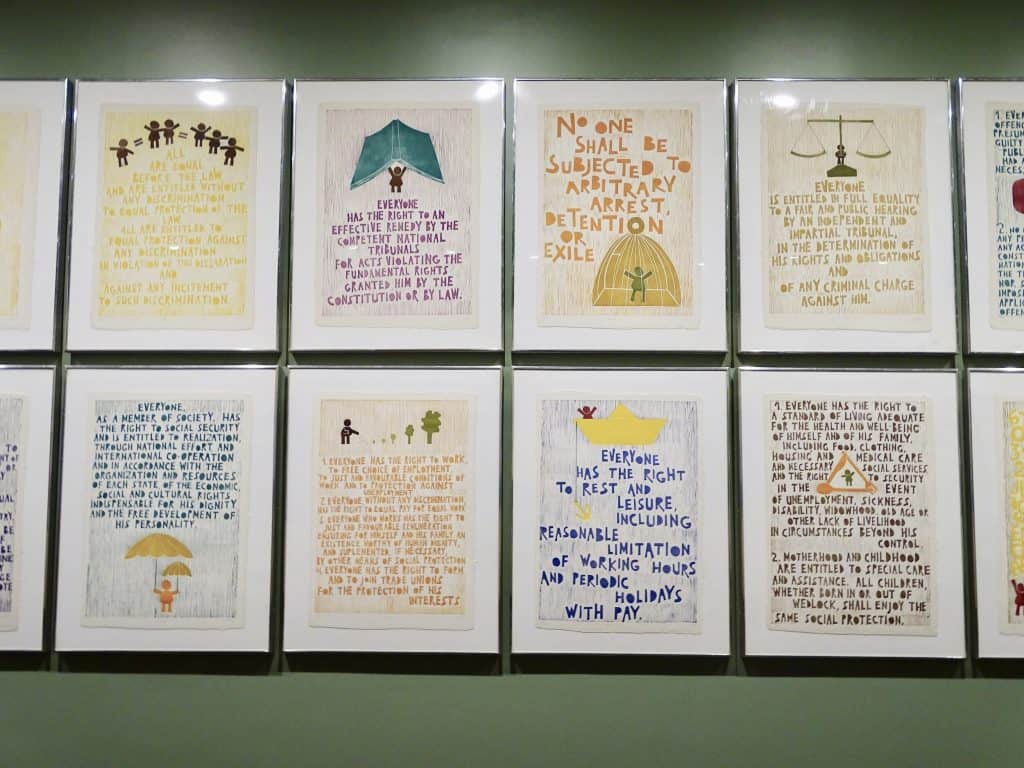
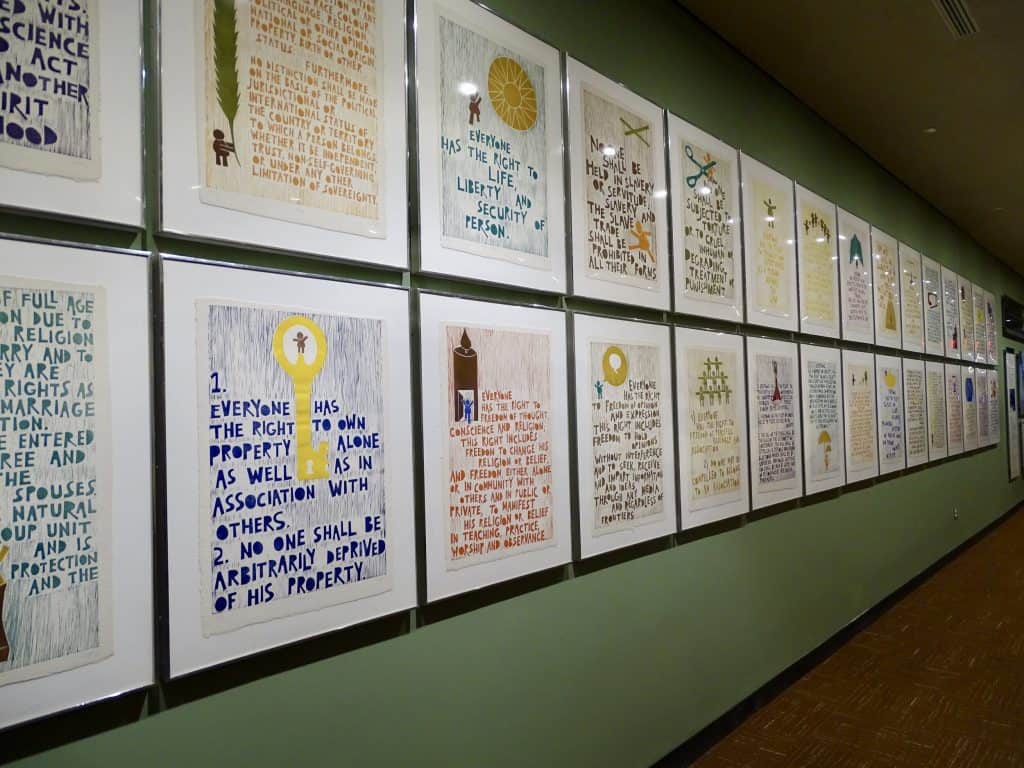
3. The framed illustrations of the 30 articles of the Declaration of Human Rights. These articles were established in 1948 and represent human rights for all people on Earth.
4. The 1988 Nobel Peace Prize awarded to the Un Peacekeepers (you’ll learn about the who the Peacekeepers are and what they do on the tour).



Would you like to save this?
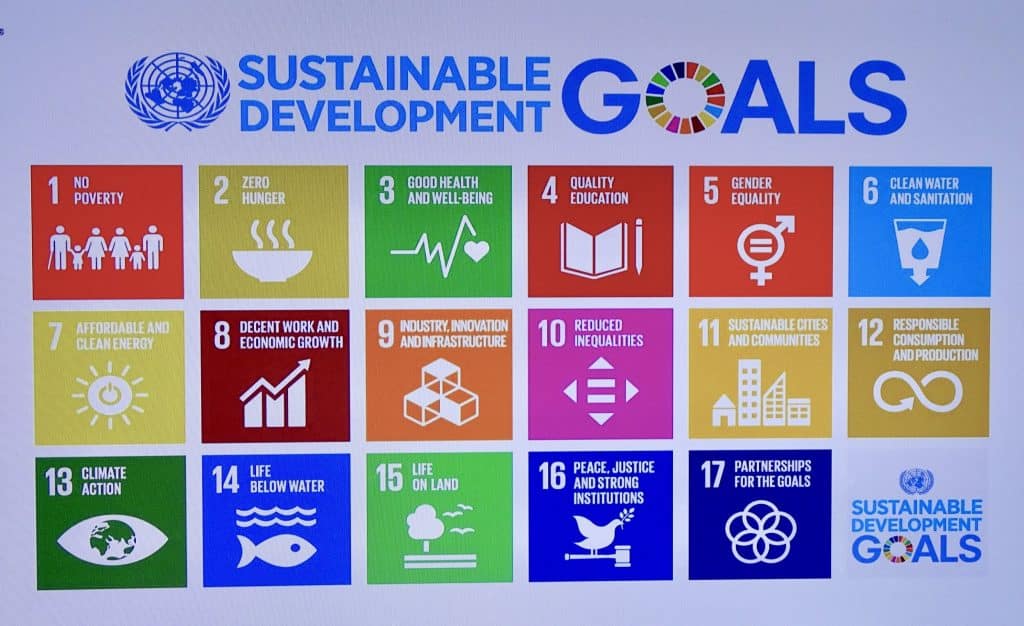
5. The explanation of 17 sustainable Development Goals of the UN, which focus on ending poverty, protecting the planet, and ensuring peace and prosperity for all, and have a deadline of 2030 for completion.
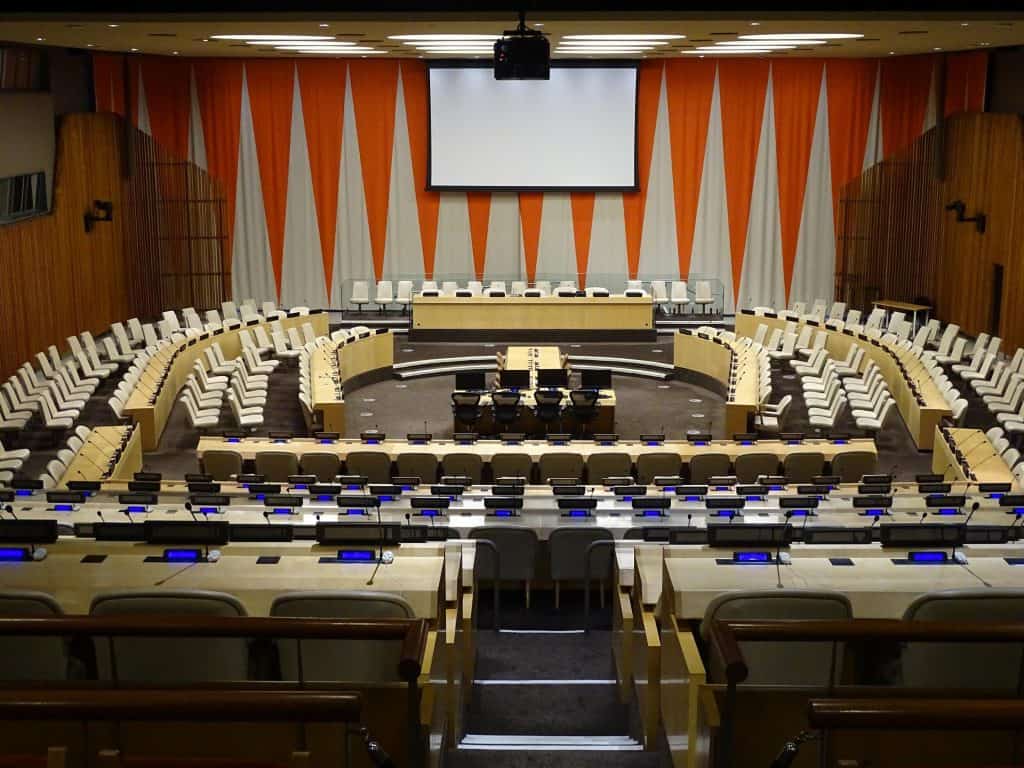
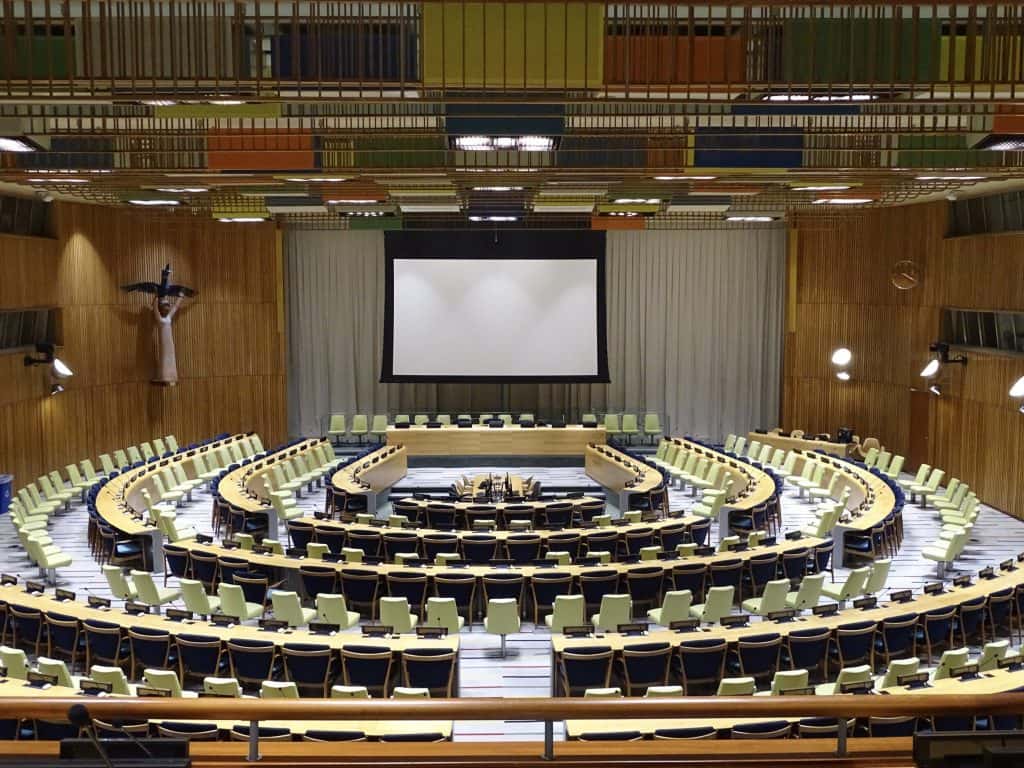
6. The Economic and Social Council Room (aka the “Red Room”), gifted by Sweden, has 54 members who coordinates the economic and social work of the UN. Take note of the symbolically unfinished ceiling, meant to represent the never ending work of the UN.
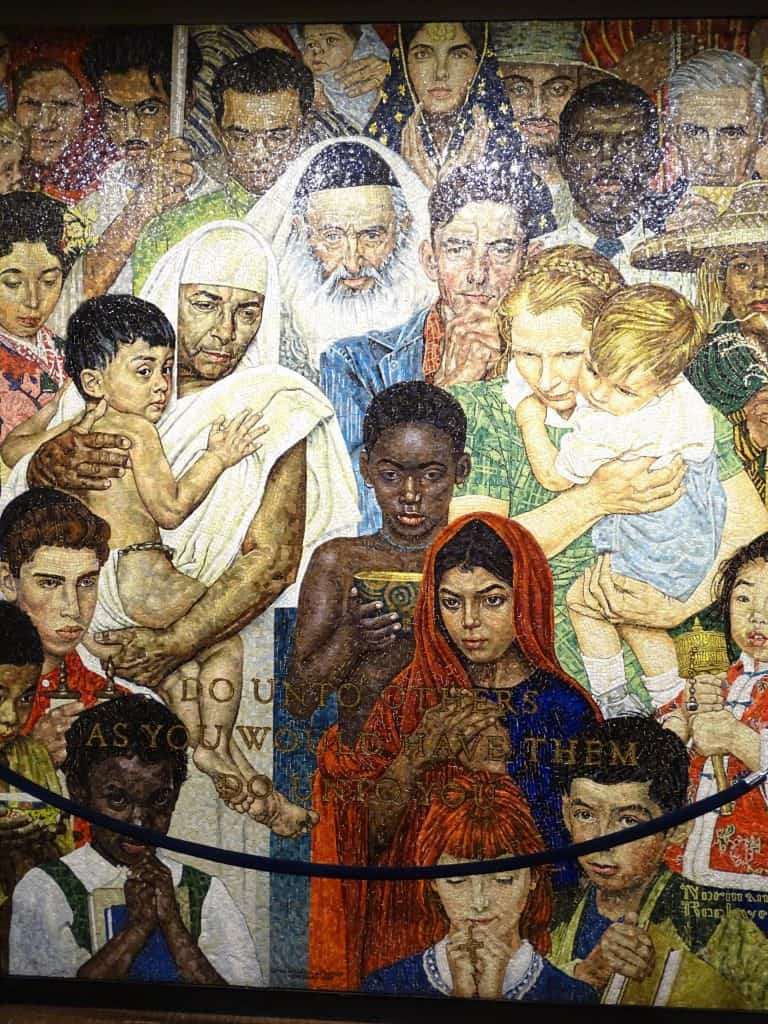
7. The 23,000 piece glass mosaic of a Norman Rockwell painting of the Golden Rule. It was gifted to the UN in 1985 by the United States.
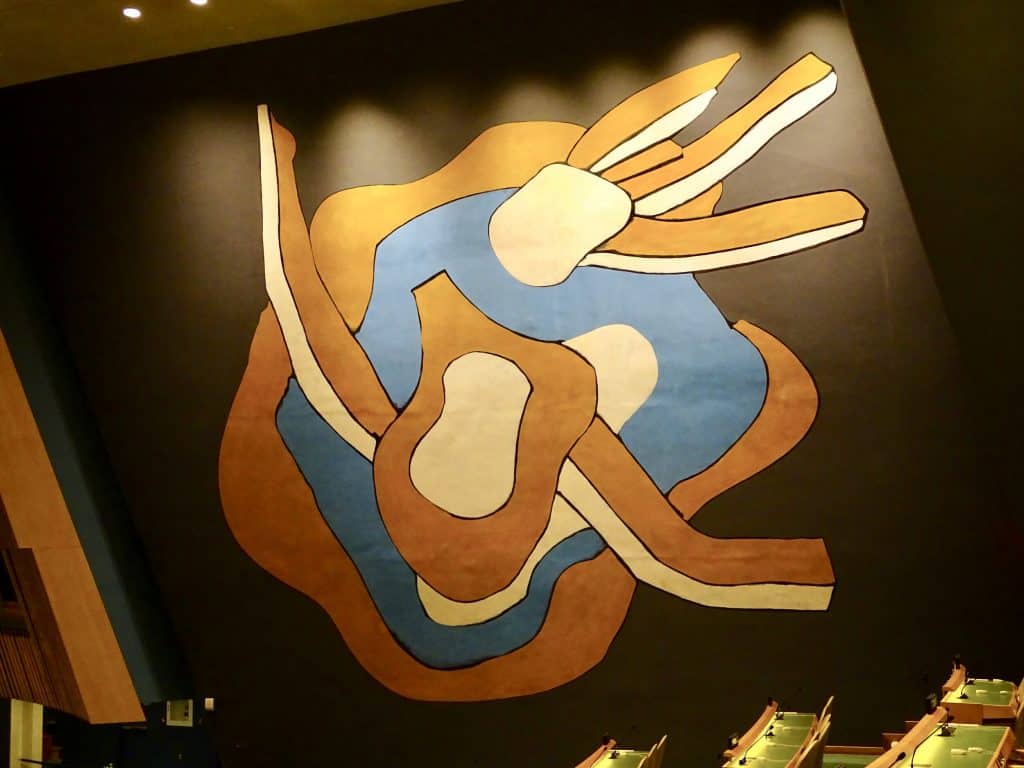
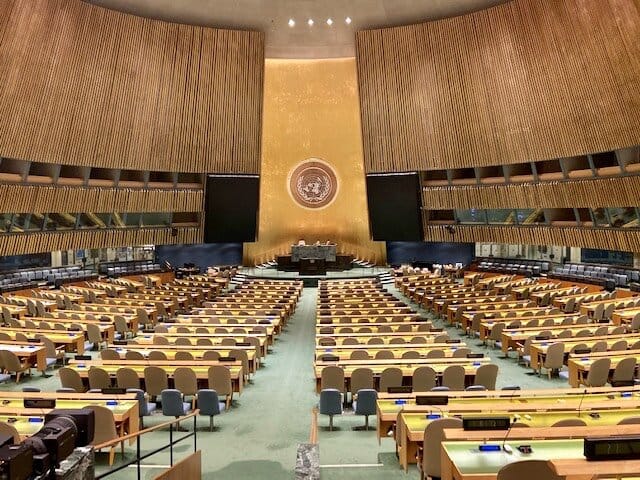
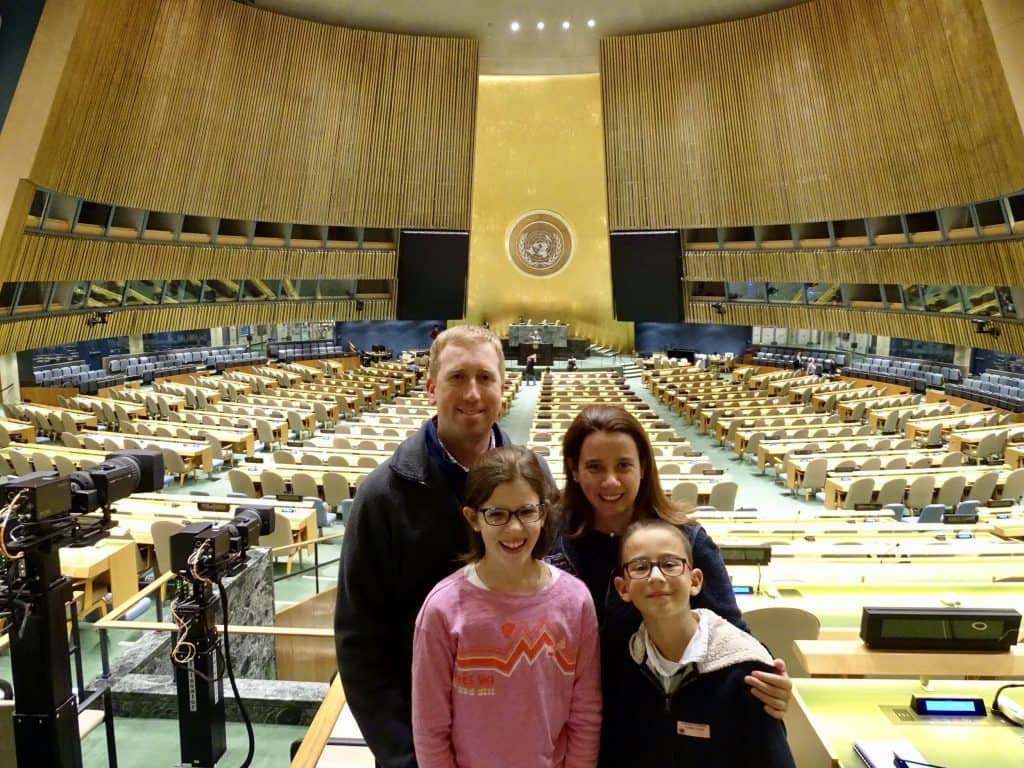
8. The General Assembly Room, arguably the most famous room of the UN. Countries are seated by random lottery each year. Most deliberations occur in the General Assembly Room and resolutions are only recommendations, not laws. Every September, at the start of the new year, each head of state is given the opportunity to present their views on any issue of concern. A new president of the UN is also elected during the two week general debate.

9. The lower level, which includes a post office (the UN even has its own stamps!) , book store, gift shop, and inquiry office where visitors can get any remaining questions answered.
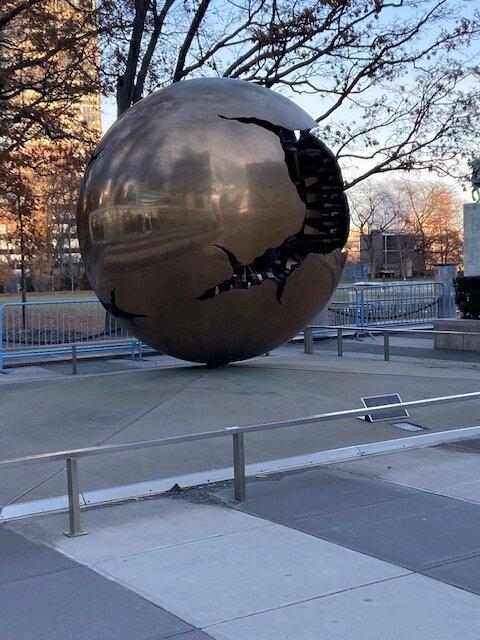
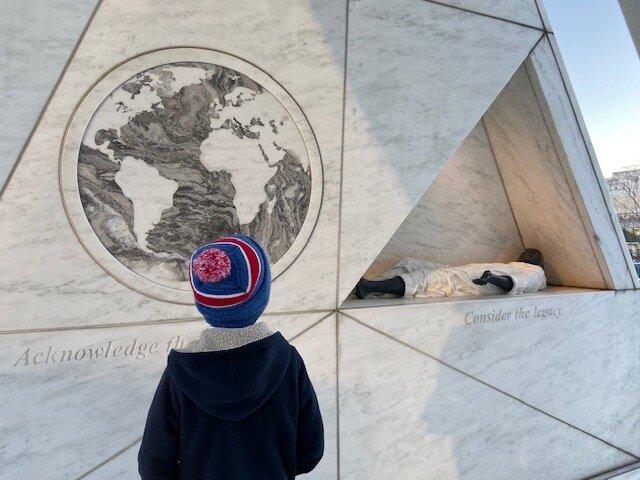
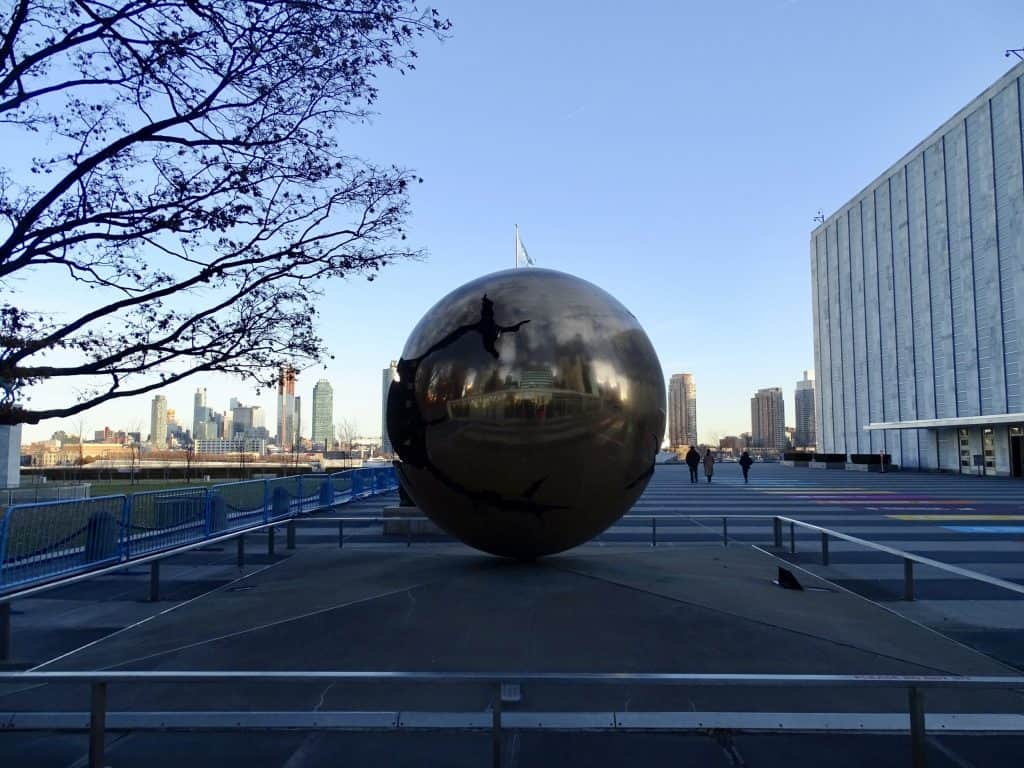
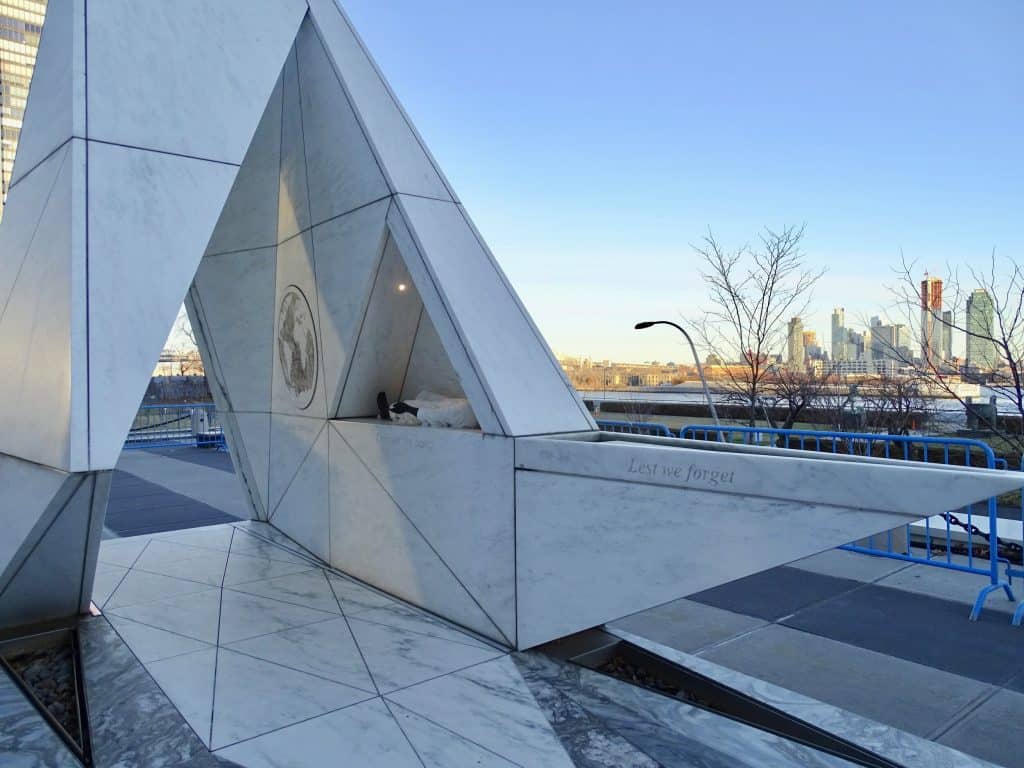
10. Bonus: Before (or after) you go inside the UN, check out the memorial sculptures and statues on the Visitors Plaza. More information about them here. The latest memorial honors the International Day of Remembrance of the Victims of Slavery and the Transatlantic Slave Trade.

If you’re looking for more fun in New York City, check out our full Manhattan City Guide here and our index of posts here.


